

Why go
Cosenza lies at the end of the Vallo del Crati, the valley that separates the Sila plateau from the Catena Costiera, at the point where the Busento flows into the Crati. The two rivers, the Ministry's tourism portal writes, split the city in two: on one side the old town, climbing Colle Pancrazio and dominated by the castle, on the other the modern city, which grew from the end of the nineteenth century.
You come for the old town, which the Enciclopedia Italiana described as a "very dense cluster of buildings rich in architectural character and artistic motifs", crossed by narrow stepped streets. Down below, Corso Telesio leads to the cathedral, consecrated in 1222 in the presence of Emperor Frederick II; up above stands the Swabian Castle. This is the city of the Bruttii, who made it their capital, and of the Accademia Cosentina, which in the sixteenth century, with Bernardino Telesio, won a European name.
Beyond the Busento, Corso Mazzini is an open-air museum, with eighteen works by contemporary artists; on the river, Santiago Calatrava's bridge and the Planetarium tell the story of the city's recent years. And behind it rises the Sila, with its National Park: Cosenza is where you set out for the plateau.
Cosenza is a municipality in the province of Cosenza, in Calabria. Its ISTAT code is 078045. It is the capital of the province of Cosenza. On 1 January 2025 it had 63,240 residents. The municipal territory covers 37.86 km² and ranges from 182 to 587 metres above sea level; the town hall stands at about 241 metres.
Sources: Treccani, Enciclopedia on line — Cosenza · Italia.it (Ministero del Turismo) — Cosenza · Treccani, Enciclopedia Italiana (1931) — Cosenza · Arcidiocesi di Cosenza-Bisignano — Cenni storici · Museo dei Brettii e degli Enotri — I Brettii · Comune di Cosenza — MAB, Museo all’aperto Bilotti · Comune di Cosenza — Il ponte di Calatrava è già nella storia di Cosenza (27 gennaio 2018) · Comune di Cosenza — Cosenza ha il suo Planetario (7 aprile 2019) · Italia.it (Ministero del Turismo) — Parco Nazionale della Sila in Calabria · ISTAT, Codici statistici delle unità amministrative territoriali: elenco dei comuni al 21 febbraio 2026 · ISTAT, Popolazione residente per età, sesso e stato civile al 1° gennaio 2025 (POSAS) · ISTAT, Principali statistiche geografiche sui comuni: superficie e altimetria al 31 dicembre 2021
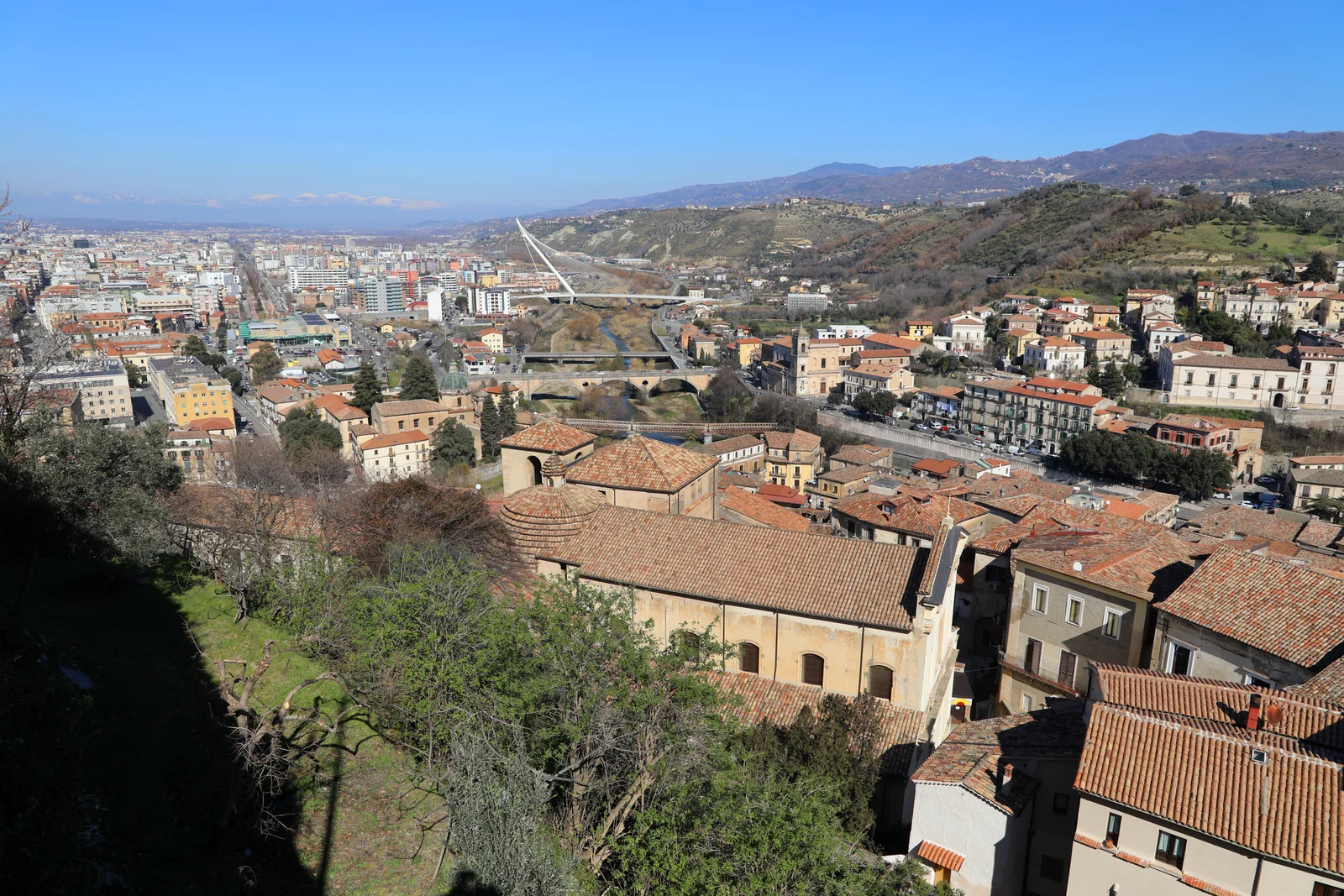
Photo: Sailko / Wikimedia Commons — CC BY-SA 4.0 · Resized and converted to WebP.
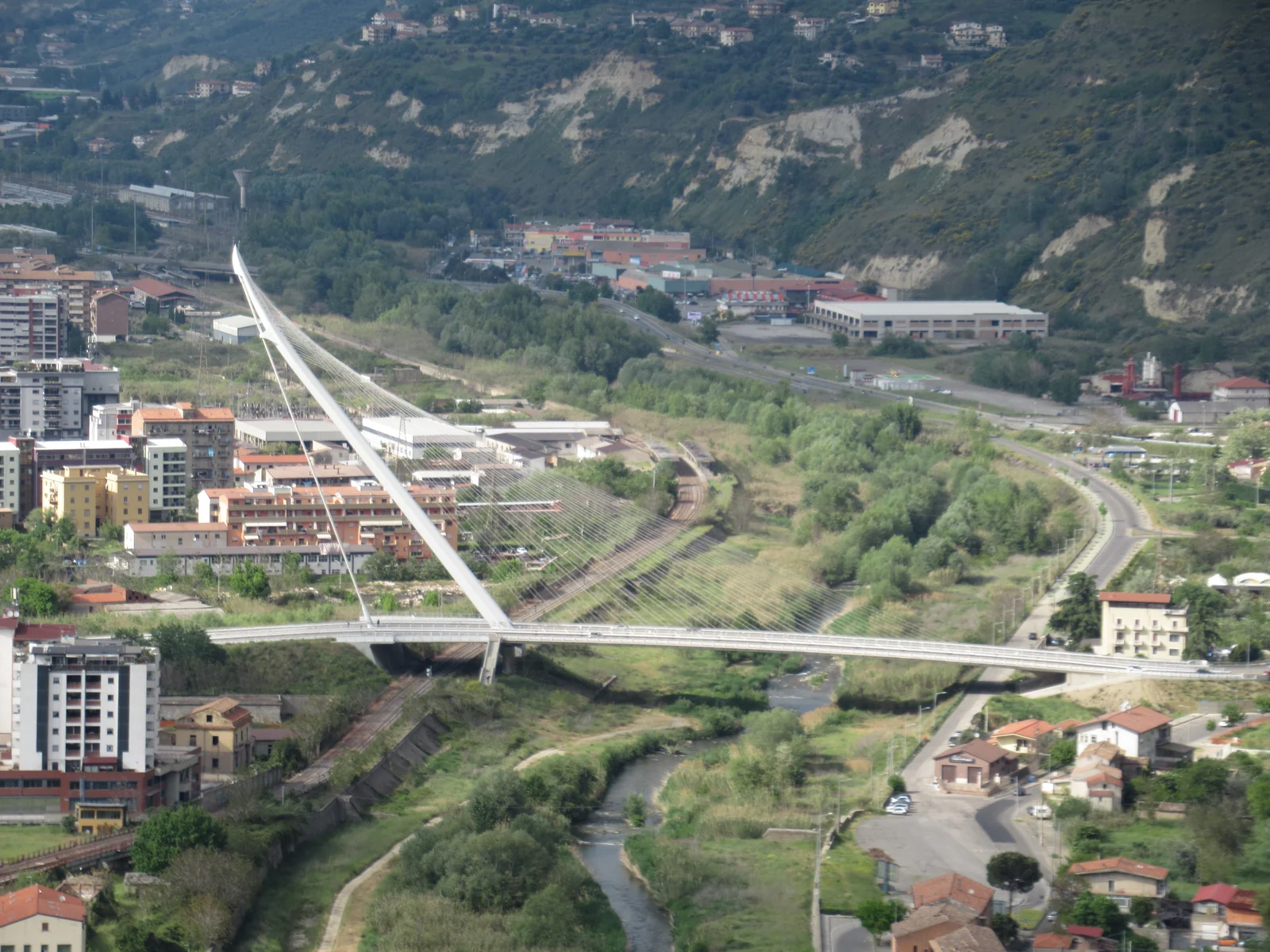
Photo: Superchilum / Wikimedia Commons — CC BY-SA 4.0 · Resized and converted to WebP.
History
Strabo mentions Cosentia as the metropolis of the Bruttii. The Museo dei Brettii e degli Enotri tells the story of this Italic people, whom ancient sources place in Calabria from the second half of the fourth century BC: they founded a confederation with Cosenza as its capital, around 356 BC, and made it a stronghold on Colle Pancrazio, protected by the natural cliffs and by a sandstone wall. They spoke Oscan and Greek, and lived on farming, herding, wool and the pitch of the Sila. Allies of Carthage in the Second Punic War, they ended up under Rome, and the Latin city of Consentia was the most important stop on the Via Popilia, from Capua to Reggio.
According to the Enciclopedia Italiana, Alaric, king of the Visigoths, was buried here in 410. Then came the Gothic War, the Lombards of Benevento and the return of the Byzantines; Saracen raids drove part of the population into the surrounding mountains, where the Casali di Cosenza, its hamlets, were born. Norman and Swabian rule revived the city. The earthquake of 1184 destroyed the cathedral, and Archbishop Luca Campano, a disciple of Joachim of Fiore, completed its rebuilding: on 30 January 1222 it was consecrated in the presence of Frederick II, who on that occasion donated the staurotheca, the reliquary of the Cross. The Angevins made Cosenza the seat of the royal administration of the Sila; in 1458-59 the Sila peasants rose against the Aragonese and the repression was harsh.
Between the fifteenth and sixteenth centuries Cosenza was pointed to as the learned city of the kingdom. In 1478 a dialogue on the origin and immortality of the soul by G. Camphora was printed here, the first of the very rare fifteenth-century books of Cosenza; in the early sixteenth century Aulo Giano Parrasio founded the Accademia Cosentina. In 1799 the city's patricians proclaimed the Republic; the city took part in the uprisings of 1813, 1829 and 1837, and in 1844 it rose again: the revolt had already been put down when the Bandiera brothers arrived, and the Rovito ravine, at the entrance to the city, recalls their martyrdom. In 1860 Cosenza was among the first cities to proclaim Victor Emmanuel king of Italy.
The new city was born to the north, with a town plan of broad straight streets and large tree-lined squares, begun in 1917 and truly under way from 1923. Since the 1970s growth has followed the floor of the Crati valley, forming a kind of conurbation with Castiglione Scalo and Arcavacata di Rende. The most recent works are on the river: Calatrava's bridge, inaugurated on 26 January 2018, and the Planetarium, inaugurated on 6 April 2019.
Sources: Treccani, Enciclopedia Italiana (1931) — Cosenza · Treccani, Enciclopedia on line — Cosenza · Museo dei Brettii e degli Enotri — I Brettii · Museo dei Brettii e degli Enotri — Il museo e la sua storia · Arcidiocesi di Cosenza-Bisignano — Cenni storici · Comune di Cosenza — Il ponte di Calatrava è già nella storia di Cosenza (27 gennaio 2018) · Comune di Cosenza — Cosenza ha il suo Planetario (7 aprile 2019)
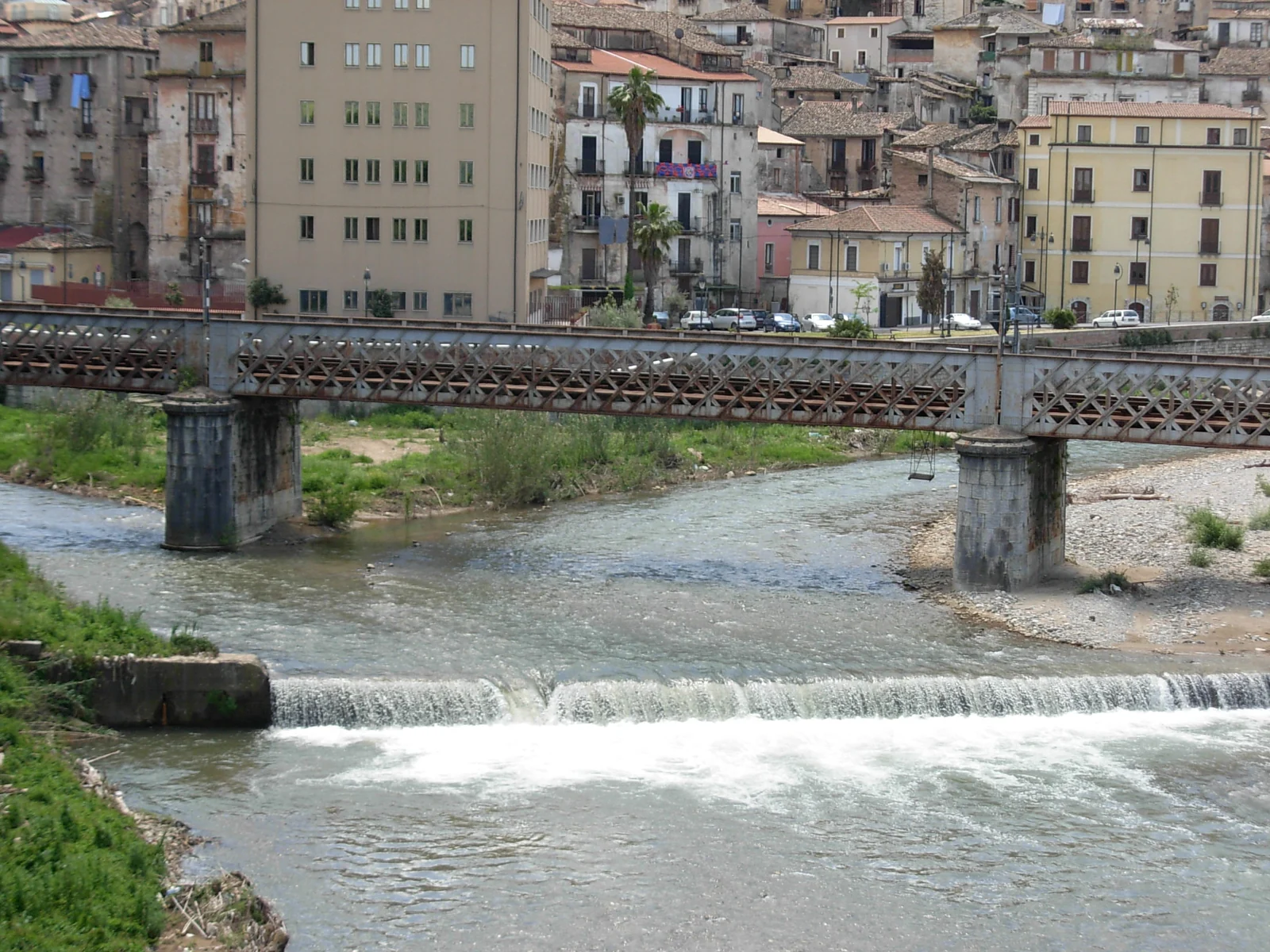
Photo: Salvatore Migliari / Wikimedia Commons — CC BY 3.0 · Resized and converted to WebP.
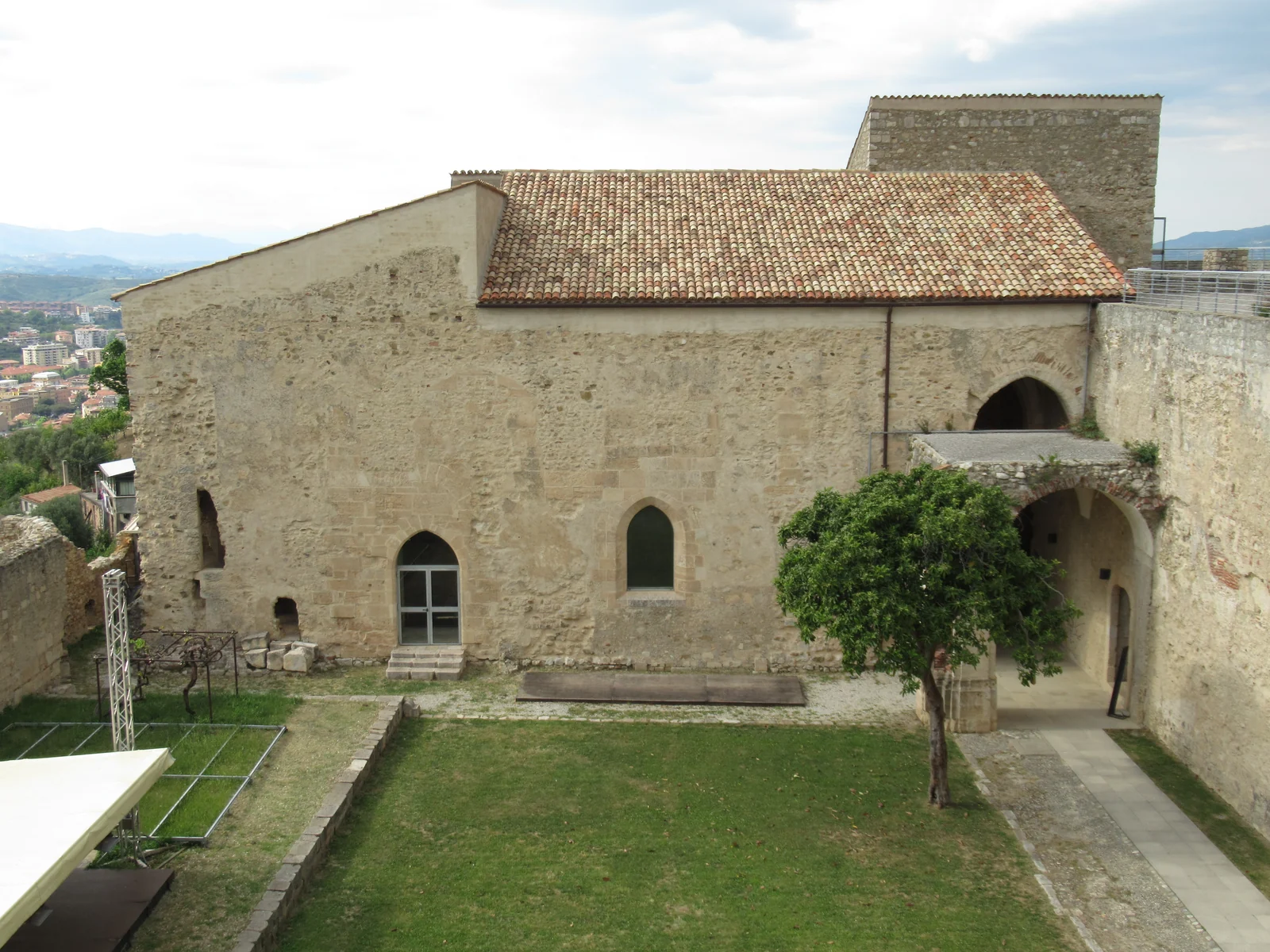
Photo: Superchilum / Wikimedia Commons — CC BY-SA 4.0 · Resized and converted to WebP.
What to see
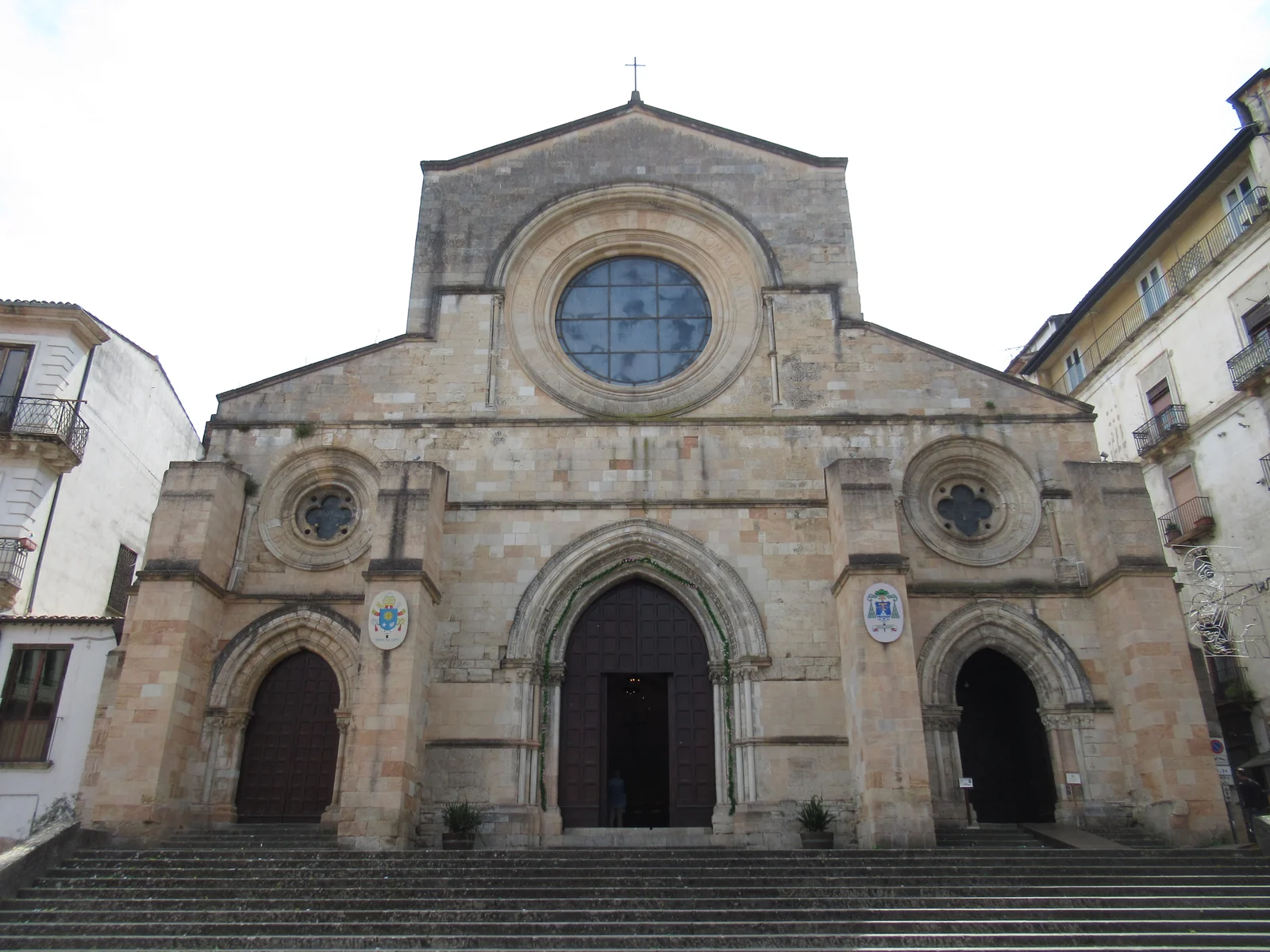
The cathedral, dedicated to the Assumption, opens onto Piazza Duomo, along Corso Telesio. It is the church consecrated in 1222, with the Romanesque plan of its naves and the forms of Cistercian Gothic; inside is the funerary monument of Isabella of Aragon, wife of King Philip III of France, who died in Cosenza. The chapel of 1607 keeps the icon of the Madonna del Pilerio, from the twelfth century: the Virgin with a veiled head nursing the Child, with the mark on her face that tradition links to the plague of 1576. Excavations beneath the floor have brought to light what may be a fourth-century baptismal font.
At the top of Colle Pancrazio, at around 380 metres, stands the Swabian Castle, which the municipality calls the symbol of the city. Tradition says it was built in 970; the Enciclopedia Italiana describes it as the work of master builders of Frederick II's age, with fine Angevin vaults, while the Ministry's portal calls it Norman. The restoration led by Marco Dezzi Bardeschi uncovered, in 2012, a very old floor in the so-called Fireplace Hall, and the restored castle was inaugurated in 2015.
Between the castle and the rivers, the old town revolves around the church of San Francesco d'Assisi, from the thirteenth century, in Piazza Marco Berardi: around it are houses with external pergola staircases and fifteenth-century buildings of Neapolitan or Catalan style. At the confluence of the Crati and the Busento rises the dome of San Domenico, with its fifteenth-century Gothic façade. In Piazza XV Marzo, where Corso Telesio ends, is the Teatro Rendano, named after the pianist Alfonso Rendano and recognised as a teatro di tradizione on 16 November 1976.
The Museo dei Brettii e degli Enotri occupies the sixteenth-century cloister of the Sant'Agostino complex, founded in 1507 in the Massa quarter and turned into a museum with the 1990 restoration: it ranges from Upper Palaeolithic remains from the Cirella caves to the grave goods of the Torre Mordillo necropolis, from Bruttian finds made in the city to the Roman coin collection, and on to a section on the Risorgimento. The Galleria Nazionale, in the sixteenth-century Palazzo Arnone, shows painting from the sixteenth to the nineteenth century, with Mattia Preti and Luca Giordano, Umberto Boccioni's studies for "The Laugh" and, on loan, the Intesa Sanpaolo collection.
In the new city, along Corso Mazzini, the MAB – Museo all'aperto Bilotti shows eighteen works: among them Sacha Sosno's Riace Bronzes, Giorgio De Chirico's "Hector and Andromache" and "Great Metaphysician", Giacomo Manzù's "Great Standing Cardinal", Mimmo Rotella's "The Wolf of the Sila" and Salvador Dalí's "Saint George and the Dragon". On the river, Calatrava's bridge, named after Saint Francis of Paola, is 104 metres high and tilted at 52 degrees, with stays that recall the strings of a harp; nearby is the Planetarium, named after the sixteenth-century Cosenza astronomer Giovan Battista Amico. Opening times and tickets are on the venues' own sites, among the sources.
Sources: Italia.it (Ministero del Turismo) — Cosenza · Treccani, Enciclopedia Italiana (1931) — Cosenza · Arcidiocesi di Cosenza-Bisignano — Cenni storici · Arcidiocesi di Cosenza-Bisignano — Madonna del Pilerio · Comune di Cosenza — Castello Svevo: sopralluogo dopo il rinvenimento di una pavimentazione antica (5 aprile 2012) · Comune di Cosenza — Speciale televisivo sull’inaugurazione del Castello Svevo (20 giugno 2015) · Comune di Cosenza — Teatro A. Rendano · Comune di Cosenza — Museo dei Brettii e degli Enotri · Museo dei Brettii e degli Enotri — La sede · Museo dei Brettii e degli Enotri — Il museo e la sua storia · Musei nazionali della Calabria (MiC) — Galleria Nazionale di Cosenza · Comune di Cosenza — MAB, Museo all’aperto Bilotti · Comune di Cosenza — Il ponte di Calatrava è già nella storia di Cosenza (27 gennaio 2018) · Comune di Cosenza — Cosenza ha il suo Planetario (7 aprile 2019)
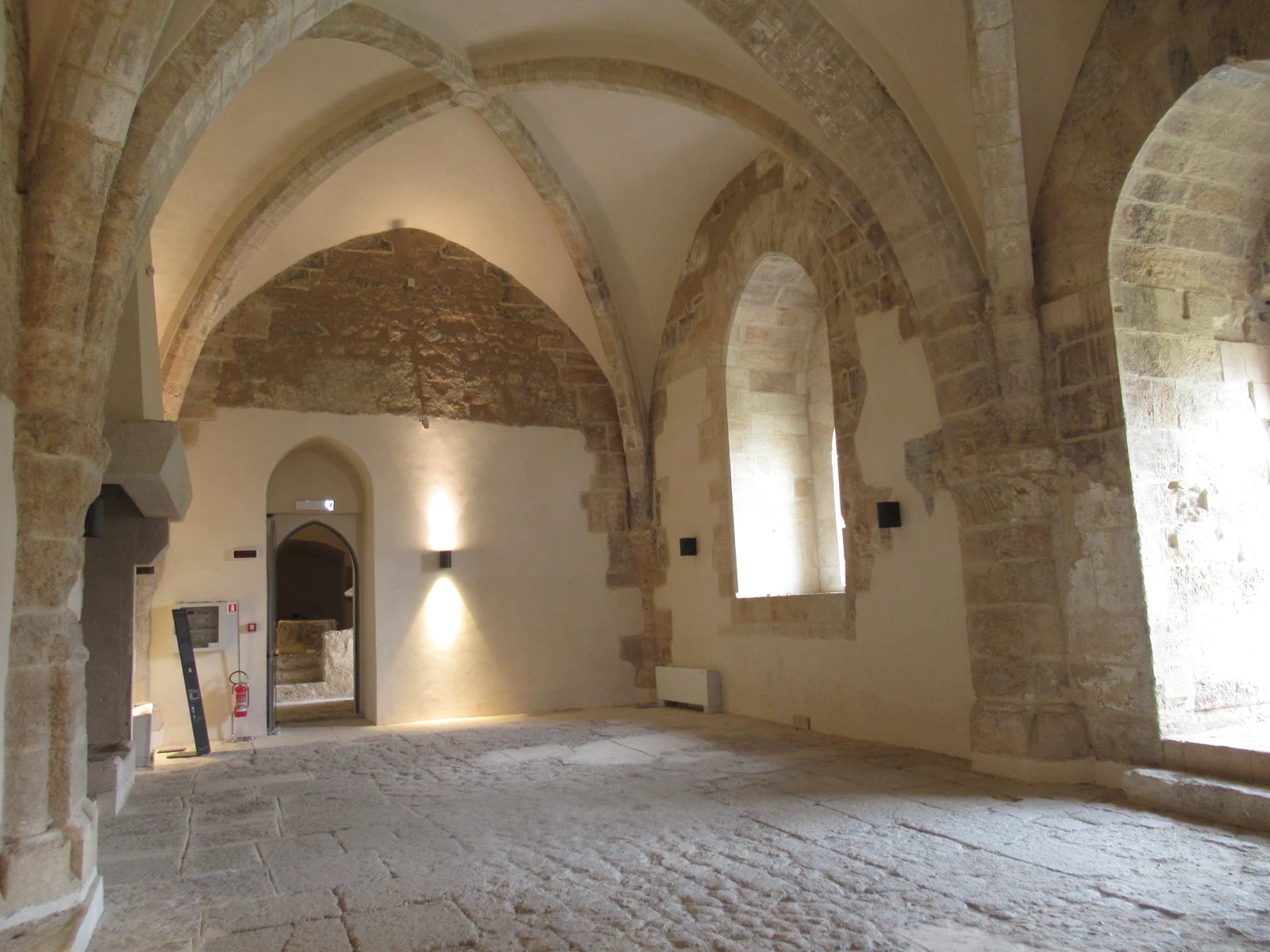
Photo: Superchilum / Wikimedia Commons — CC BY-SA 4.0 · Resized and converted to WebP.
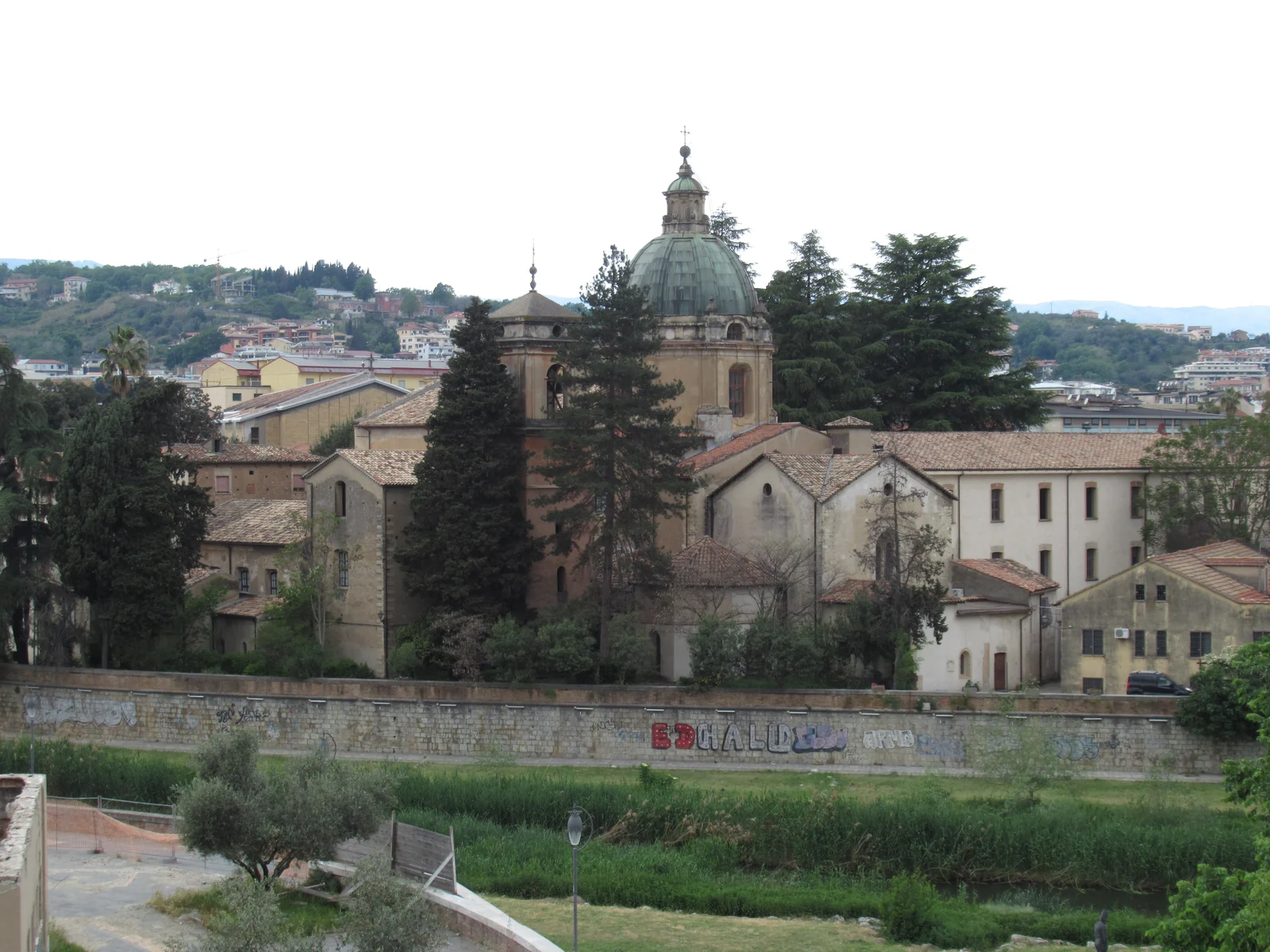
Photo: Superchilum / Wikimedia Commons — CC BY-SA 4.0 · Resized and converted to WebP.
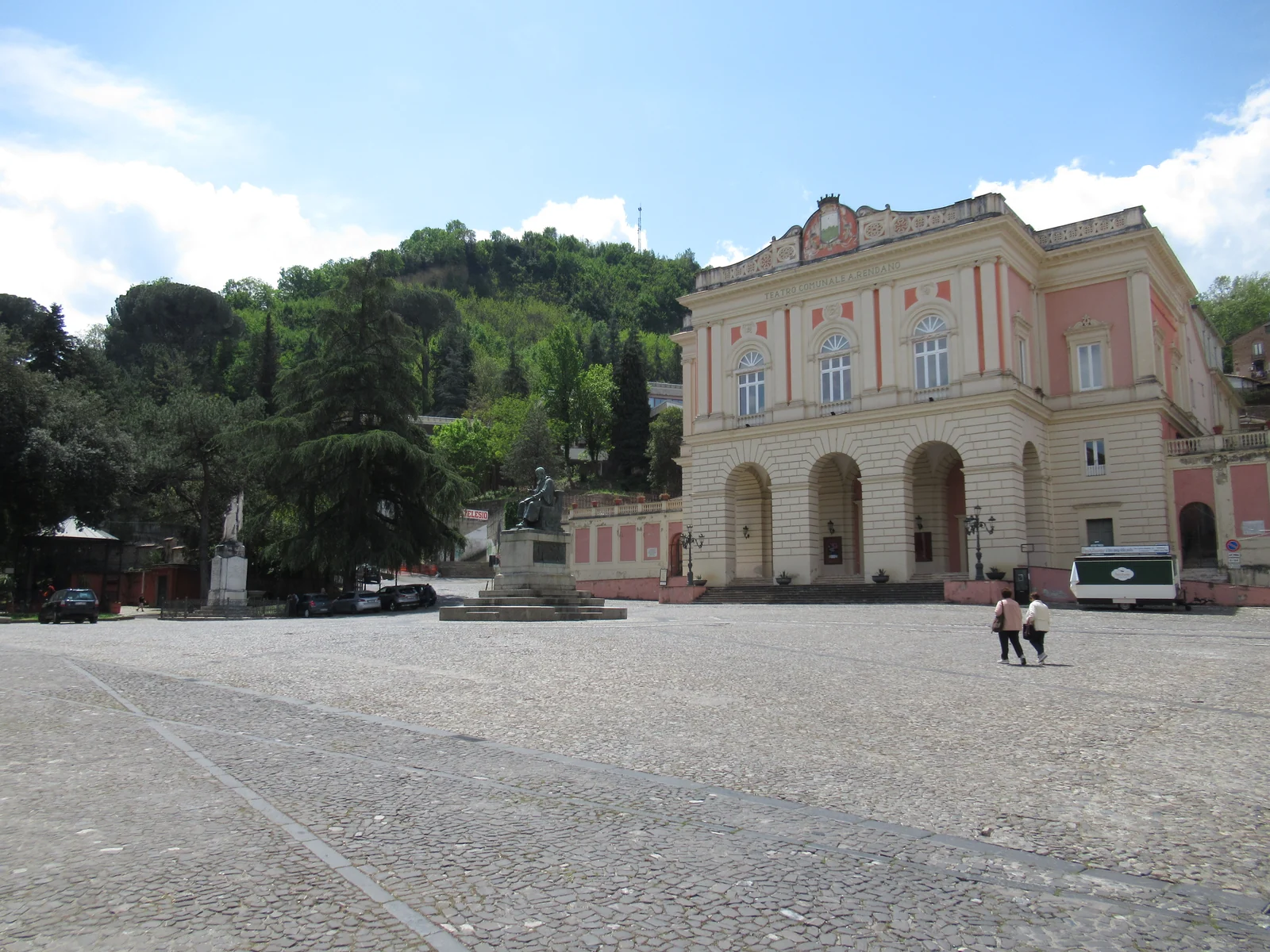
Photo: Superchilum / Wikimedia Commons — CC BY-SA 4.0 · Resized and converted to WebP.
Flavours
Cosenza's cooking is that of its valleys and of the Sila. Fichi di Cosenza PDO are the dried figs of the Dottato variety, the "ficu siccati" or "ficu janchi": the production area covers the Crati and Savuto valleys, the fruit withers on the tree and is picked by hand between 10 August and 10 October. The figs become crocette, nocchette stuffed with walnuts or almonds and orange peel, braids, balls wrapped in fig leaves, and fig "honey", the syrup used at home to make turdilli.
From the Sila come Caciocavallo Silano PDO, a stretched-curd cheese of cow's milk aged for at least thirty days, sweet when fresh and sharper as it ages, and Patata della Sila PGI, grown in 13 municipalities of the province of Cosenza and 13 of the province of Catanzaro, which the Region lists as the ingredient of "mpacchiuse" potatoes, of baked pasta and potatoes and of the potato frittata.
The wine is that of the Terre di Cosenza PDO, with the sub-zones Verbicaro, Pollino, Donnici, Colline del Crati and Esaro. In May 2026 the municipality presented it with the "Viaggio nelle Terre di Cosenza", a tasting route through five themed areas set up in the Villa Vecchia.
Sources: Regione Calabria, ARSAC — DOP, IGP e PAT: i prodotti DOP e IGP della Calabria · Comune di Cosenza — Viaggio nelle Terre di Cosenza nella Villa Vecchia (27 maggio 2026)
Things to do
The classic walk starts from the bottom: Corso Telesio to Piazza Duomo, then up the stepped streets towards San Francesco d'Assisi and the castle, and back towards Piazza XV Marzo, the Teatro Rendano and the Villa Vecchia. Comfortable shoes are a good idea: the old town is all slopes and steps.
The Villa Vecchia, the historic garden beyond Piazza XV Marzo, is the oldest green space of the historic city: the Enciclopedia Italiana praised its view of the old town and of the western flank of the Sila Grande. It has an amphitheatre where shows and festivals are held and the Fountain of the Thirteen Spouts, which once fed the garden's water channels.
Corso Mazzini is walked among the sculptures of the MAB, an open-air museum that is always on view. Calatrava's bridge can be crossed on foot, and the Giovan Battista Amico Planetarium has a Zeiss Starmaster projector, which the municipality presented as one of the most advanced in Italy.
In the evening you go to the Teatro Rendano, with its seasons of opera, drama, classical and jazz concerts and dance. The Museo dei Brettii e degli Enotri, besides its collection, organises exhibitions, educational activities and small classical concerts in the Sant'Agostino cloister.
Sources: Treccani, Enciclopedia Italiana (1931) — Cosenza · Italia.it (Ministero del Turismo) — Cosenza · Comune di Cosenza — Viaggio nelle Terre di Cosenza nella Villa Vecchia (27 maggio 2026) · Comune di Cosenza — Ristrutturazione dei giardini storici della Villa Vecchia (19 aprile 2001) · Comune di Cosenza — MAB, Museo all’aperto Bilotti · Comune di Cosenza — Il ponte di Calatrava è già nella storia di Cosenza (27 gennaio 2018) · Comune di Cosenza — Cosenza ha il suo Planetario (7 aprile 2019) · Comune di Cosenza — Teatro A. Rendano · Comune di Cosenza — Museo dei Brettii e degli Enotri
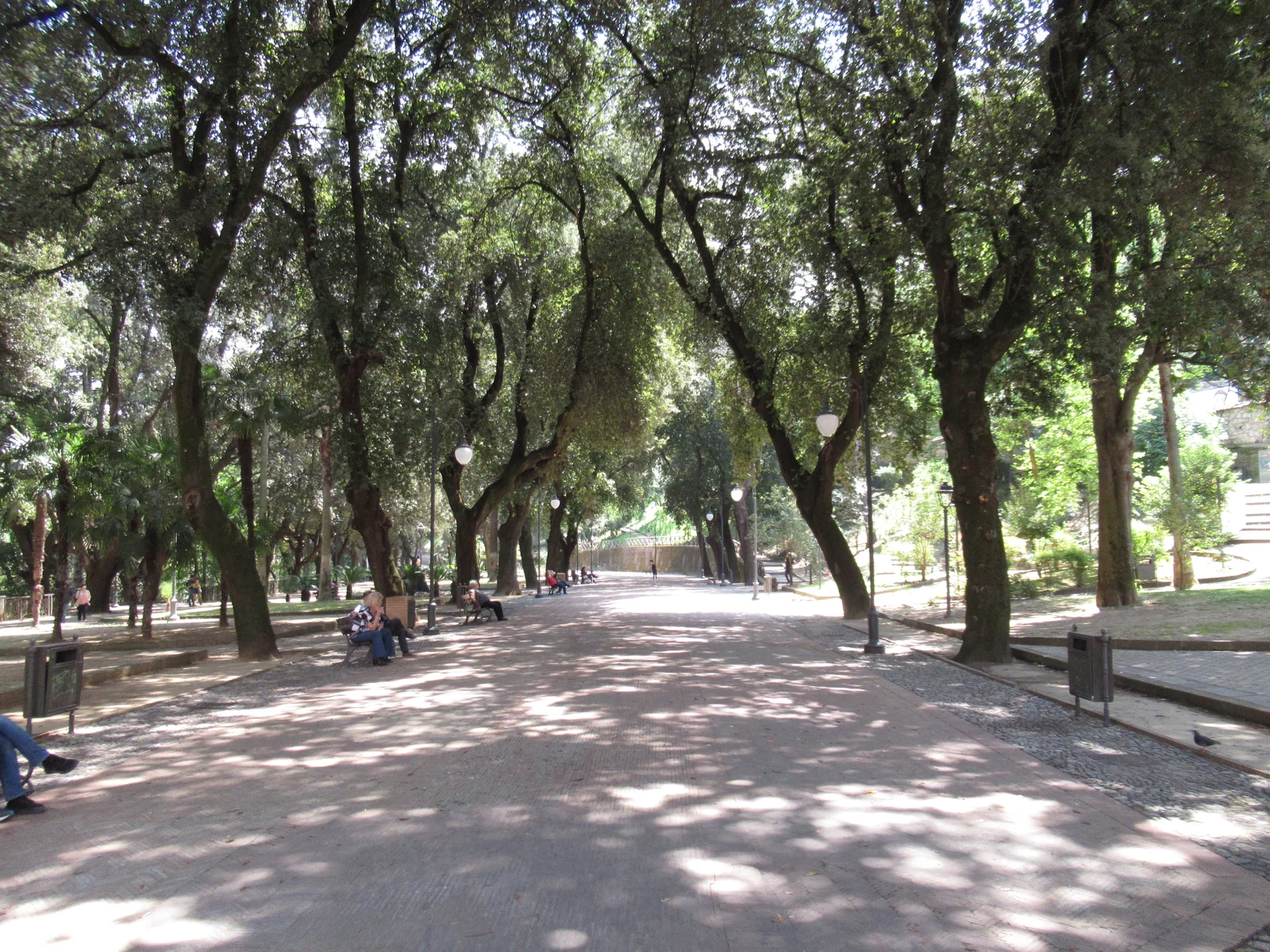
Photo: Superchilum / Wikimedia Commons — CC BY-SA 4.0 · Resized and converted to WebP.
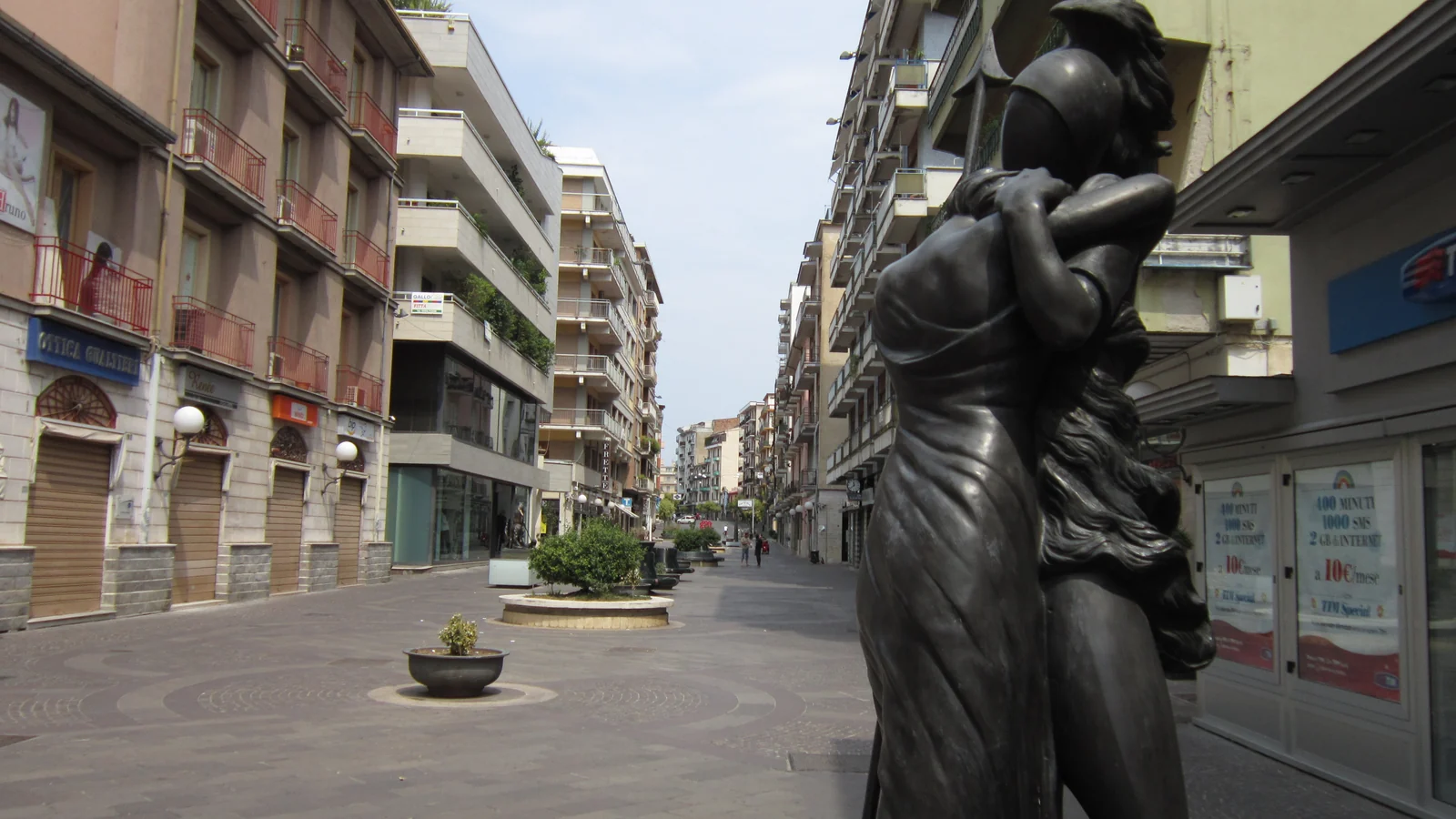
Photo: Salvatore Migliari / Wikimedia Commons — CC BY 3.0 · Resized and converted to WebP.
When to go
Cosenza can be visited all year: museums, churches and the old town have no season. The Enciclopedia Italiana described an almost continental climate, with an average of 7 degrees in winter and 25 in summer and fairly frequent snow; spring and autumn are the easiest months to walk up to the castle, while in summer and winter the Sila, a short way off, offers cool woods and snow.
In March, up to the 19th, Saint Joseph's day, the Fiera di San Giuseppe returns, one of the most awaited moments for the people of Cosenza, with visitors from the whole province and the region: in 2026 it ran from 15 to 19 March, with free admission to the exhibition area. Each year's dates are published by the municipality.
The patron saint is the Madonna del Pilerio. The feast of 8 September, set in 1798, is preceded by the settenario, days of prayer in the cathedral: in 2026 the programme ran from 31 August to 8 September, with the traditional torchlight procession of 7 September through the streets of the old town, starting from Piazza Duomo. On 12 February the city remembers the Virgin's protection during the earthquake of 1854. The programme is published every year by the archdiocese.
Sources: Treccani, Enciclopedia Italiana (1931) — Cosenza · Italia.it (Ministero del Turismo) — Parco Nazionale della Sila in Calabria · Comune di Cosenza — Fiera di San Giuseppe 2026 · Arcidiocesi di Cosenza-Bisignano — Madonna del Pilerio · Arcidiocesi di Cosenza-Bisignano — Settenario e festa della Madonna del Pilerio 2026
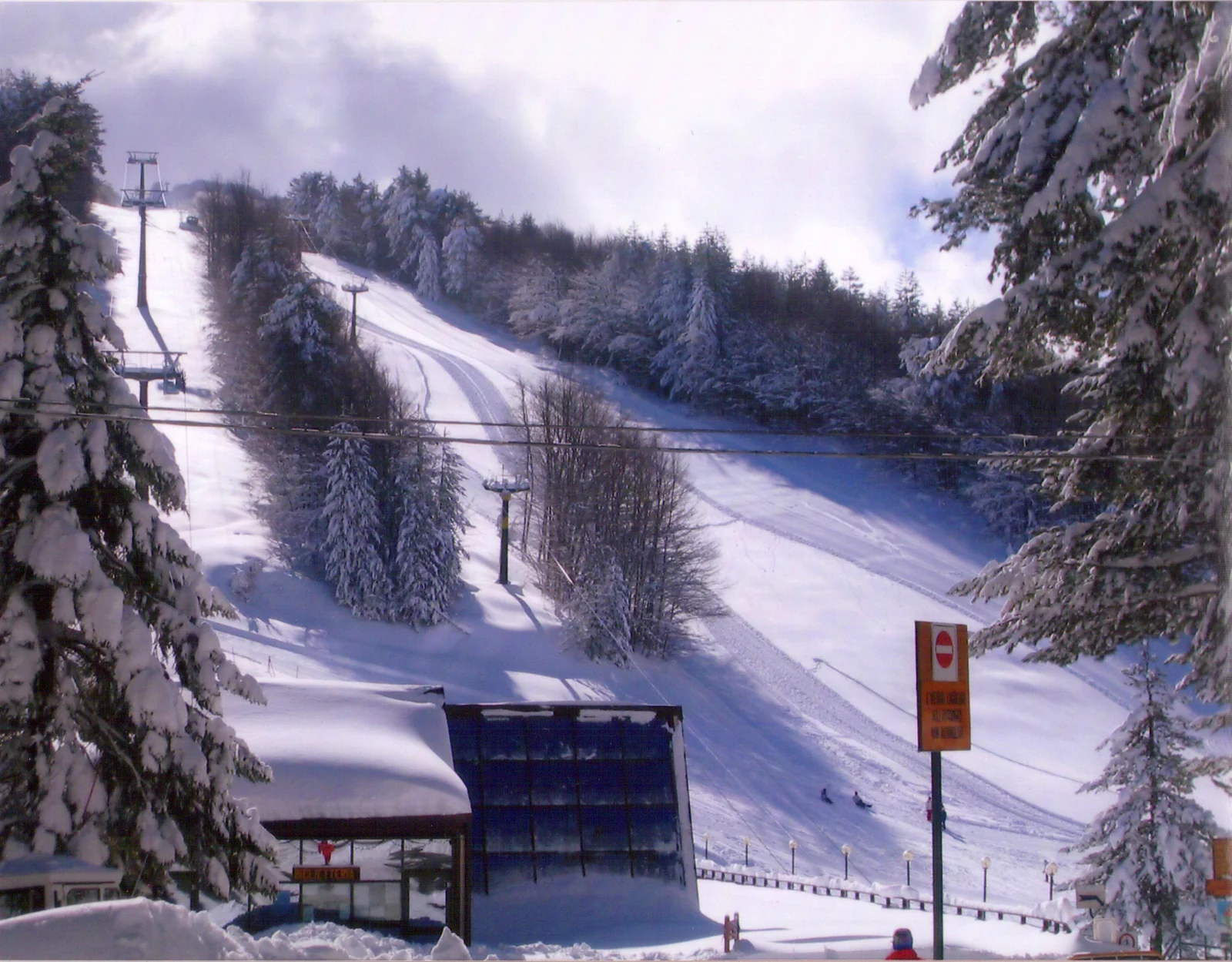
Photo: Beppeveltri / Wikimedia Commons — CC BY-SA 3.0 · Resized and converted to WebP.
Getting there and around
By train you arrive at the Cosenza station on the RFI network, with five passenger platforms and an assistance service for people with disabilities and reduced mobility, which refers to the Sala Blu in Reggio Calabria. Long-distance buses arrive at the bus station in Via Medaglie d'Oro, run by Ferrovie della Calabria: it is the terminus of their routes and of those of many other local public transport companies.
Ferrovie della Calabria also run the narrow-gauge line from Cosenza towards Piane Crati, and post news of suspensions and resumptions of service on their website. In town, the old town is explored on foot; between the new city and the old centre you pass through Piazza XV Marzo and Corso Telesio, or over the bridges on the Busento and the Crati.
The official website of the Comune di Cosenza, registered in IndicePA, the index of the digital addresses of Italy’s public administrations, is the reference for the town council’s offices, opening hours and news. Its address is listed among the sources of this section.
Sources: RFI — Stazione di Cosenza · Ferrovie della Calabria — Autostazioni · Ferrovie della Calabria — Dal 15 maggio riprende il servizio ferroviario sulla tratta Cosenza-Piane Crati · Treccani, Enciclopedia Italiana (1931) — Cosenza · Comune di Cosenza, sito istituzionale · IndicePA (AgID), Indice dei domicili digitali delle pubbliche amministrazioni: dataset Enti
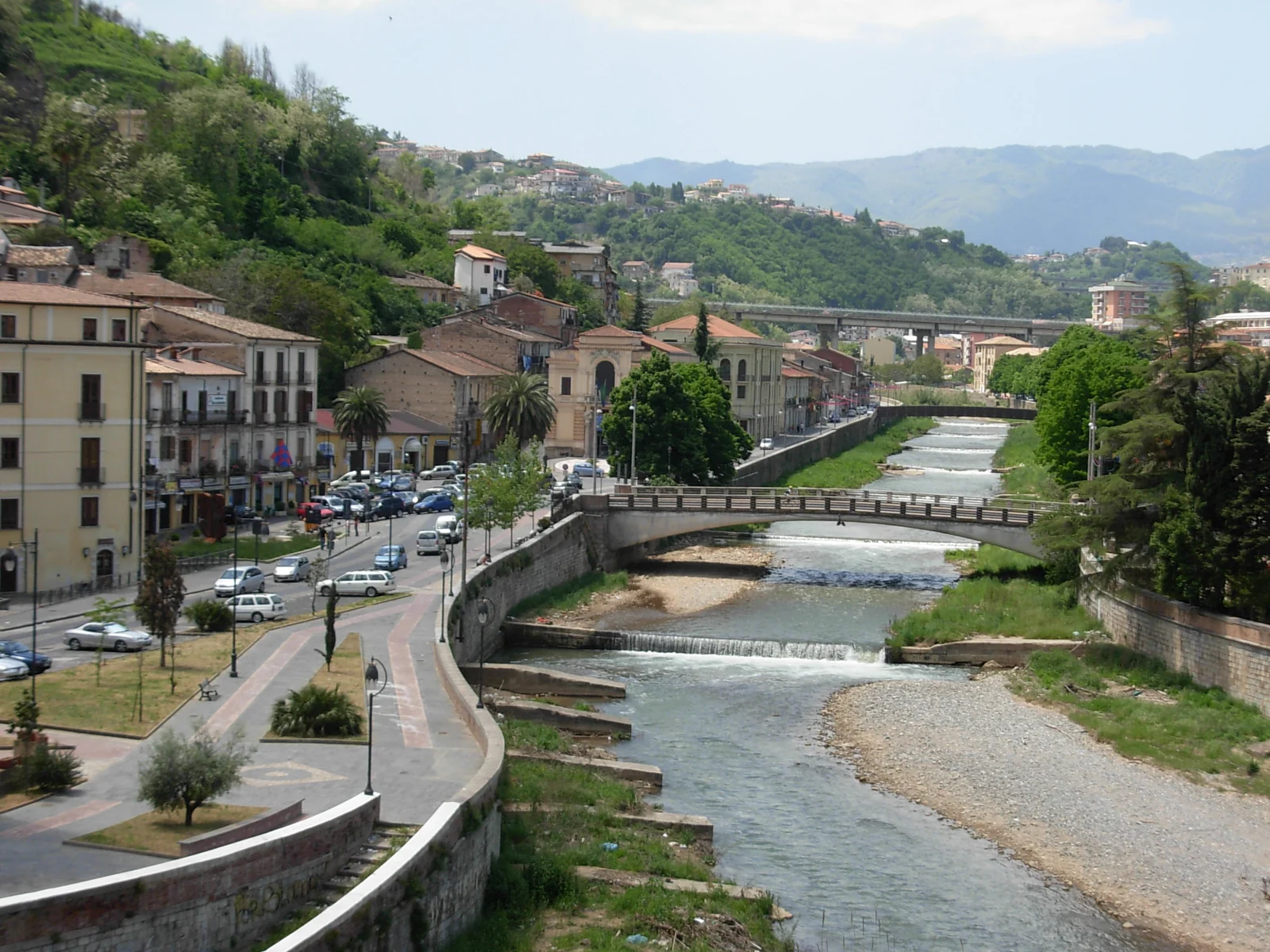
Photo: Salvatore Migliari / Wikimedia Commons — CC BY 3.0 · Resized and converted to WebP.
Where to stay
If you come for the city and its museums you can stay in the new city, between Corso Mazzini and Piazza XV Marzo, handy for the bus station and within walking distance of the old town; if you want to live the old city you can look for a room between Corso Telesio and the cathedral, allowing for narrow streets and steps. If you prefer the woods you can stay on the Sila, in the villages of the Park.
In the Ministry of Tourism’s national database of accommodation (BDSR), on 12 October 2026, Cosenza had 169 establishments with a verified national identification code (CIN): 5 hotel-type establishments, 47 non-hotel establishments and 117 other establishments.
On the days of the Fiera di San Giuseppe, in March, and of the feast of the Madonna del Pilerio, in September, the city draws visitors from the whole region: for those dates it is wise to book in advance.
Sources: Comune di Cosenza — MAB, Museo all’aperto Bilotti · Ferrovie della Calabria — Autostazioni · Treccani, Enciclopedia Italiana (1931) — Cosenza · Italia.it (Ministero del Turismo) — Parco Nazionale della Sila in Calabria · Ministero del Turismo – Banca Dati Strutture Ricettive (dashboard pubblica) · Comune di Cosenza — Fiera di San Giuseppe 2026 · Arcidiocesi di Cosenza-Bisignano — Madonna del Pilerio
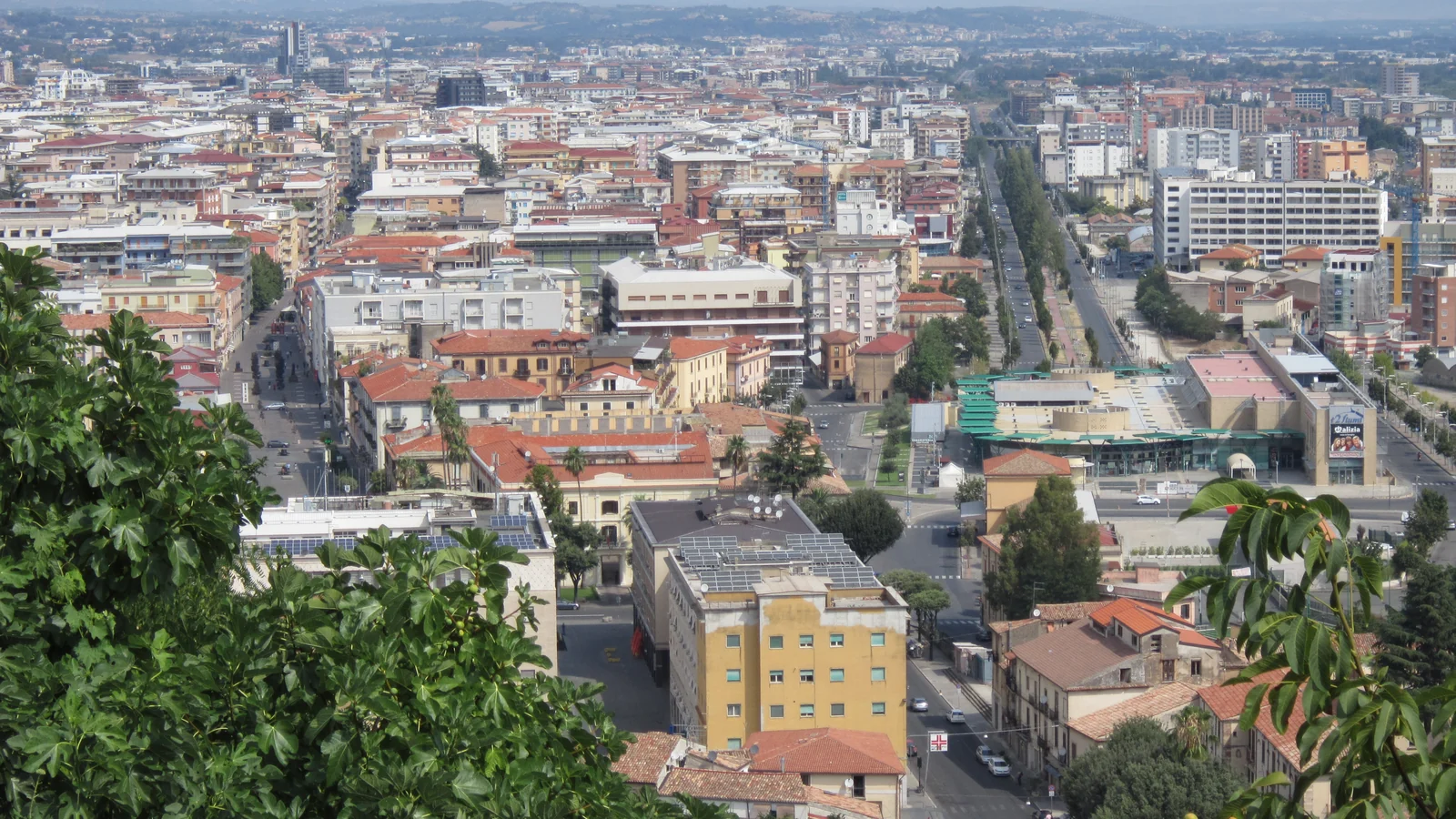
Photo: Salvatore Migliari / Wikimedia Commons — CC BY 3.0 · Resized and converted to WebP.
Nearby
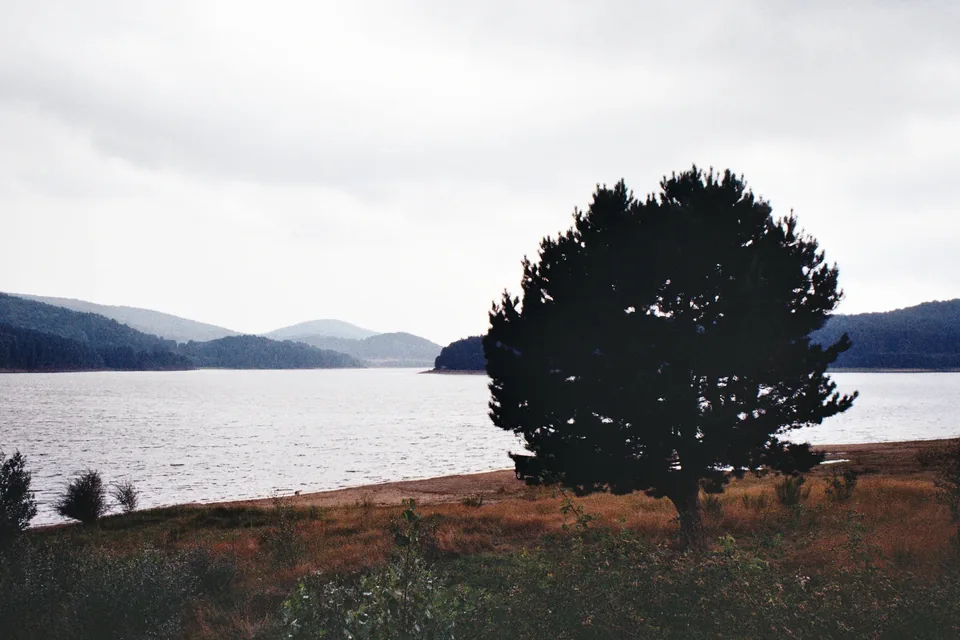
Behind the city lies the Sila: one hundred and fifty thousand hectares of plateau across the provinces of Cosenza, Crotone and Catanzaro, protected by the National Park, the oldest in Calabria and among the first five created in Italy. There are the lakes of Cecita, Ampollino and Arvo, woods for trekking over several days, mushrooms, chestnuts and berries in autumn, and snow sports in winter.
The Sila Train, steam-hauled again since 2016, runs with the 1926 Borsig 353 locomotive on a narrow-gauge railway built at the beginning of the twentieth century. According to the Ministry's portal it runs on Sundays and in summer on Saturdays too: it leaves from Moccone or Camigliatello Silano, crosses the Camigliati viaduct, 166 metres high, looks out over Lake Cecita and reaches Silvana Mansio, the highest station in Italy, at 1,406.50 metres. Tickets must be booked at least the day before.
On the plateau are Acri, the "gateway to the Sila", with the ruins of its feudal castle and the basilica of Sant'Angelo, and San Giovanni in Fiore, the most populous town of the Sila, with the Florense Abbey. Outside the municipality but close by is Rende: with Arcavacata and Castiglione Scalo it forms a kind of conurbation with Cosenza along the Crati.
Sources: Italia.it (Ministero del Turismo) — Parco Nazionale della Sila in Calabria · Italia.it (Ministero del Turismo) — Il Treno della Sila in Calabria · Treccani, Enciclopedia on line — Cosenza
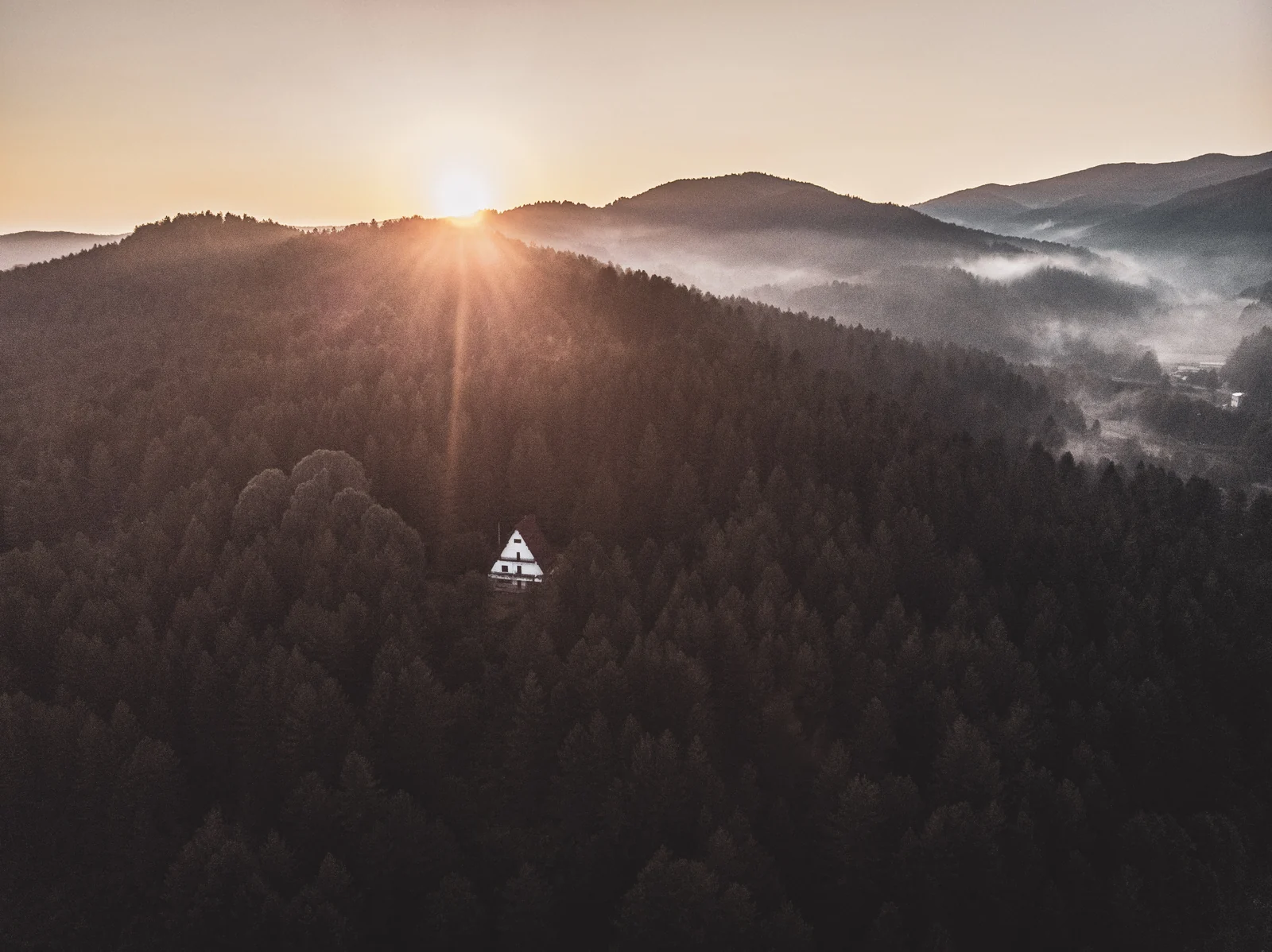
Photo: Agostino Villella / Wikimedia Commons — CC BY-SA 4.0 · Resized and converted to WebP.
Where to stay
In the municipality of Cosenza the national database of the Ministry of Tourism lists 169 accommodation businesses with a verified CIN code: 5 hotels, 47 other licensed accommodation and 117 other types such as B&Bs and private rentals.
Licensed businesses from the official list of accommodation named as the source in this section. Where the list gives it, the property's official identification code appears next to its name: the national CIN code, or the code assigned by the Region or by the body that keeps the list. Private individuals are not listed. This list is the official census of licensed businesses, not a list of Apulica partners: to stay in Cosenza you do not have to check one property after another yourself; write to Apulica and we look for the stay that suits your journey, checking availability and conditions before any confirmation.
ARIHA HOTEL
Hotel · ★★★★
CIN IT078045A1PHEPNC7U
Azienda Agricola Filice
Farm stay
Regional agritourism list 2023
87 CENTO HOME
B&B
CIN IT078045B4QKV2YRD7
5 SENSI E B&BUSINESS
Guest rooms
CIN IT078045B4DD7U97KA
CIVICO 19
Holiday home
CIN IT078045B4EV7JJOSC
ANCELLE FRANCESCANE DEL BUON PASTORE
Holiday house
CIN IT078045B733EOCT94
ITALIANA HOTELS
Hotel · ★★★★
CIN IT078045A1QGWAW8AU
Azienda Agricola La Coccinella
Farm stay
Regional agritourism list 2023
ASTRUM B&B
B&B
CIN IT078045B4PH3XSO9N
AFFACIATE BRUTIE HOME
Guest rooms
CIN IT078045B4VNAWZOML
First the places that presented themselves to Apulica, the latest first; then one place of each type in turn, by official category and stars, then by name. No position is paid for.
All 52 entries in alphabetical order
Page 1 of 6
| Name | Type | Identification code |
|---|---|---|
| 5 SENSI E B&BUSINESS | Guest rooms | IT078045B4DD7U97KA |
| 87 CENTO HOME | B&B | IT078045B4QKV2YRD7 |
| AFFACIATE BRUTIE HOME | Guest rooms | IT078045B4VNAWZOML |
| AL.MA. | Guest rooms | IT078045B44FOND6IB |
| AL.MA B&B COSENZA CENTRO | Guest rooms | IT078045B4TXAYRHOC |
| ANCELLE FRANCESCANE DEL BUON PASTORE | Holiday house | IT078045B733EOCT94 |
| ARIHA HOTEL | Hotel | IT078045A1PHEPNC7U |
| ASTRUM B&B | B&B | IT078045B4PH3XSO9N |
| Azienda Agricola Filice | Farm stay | Regional agritourism list 2023 |
| Azienda Agricola La Coccinella | Farm stay | Regional agritourism list 2023 |
Ask Apulica for a stay in Cosenza We reply shortly, within a few hours at most, with a proposal for you to consider.
Sources: Ministero del Turismo – Banca Dati Strutture Ricettive (dashboard pubblica), 2026-10-12
YOUR JOURNEY
How to shape a journey here
We can organise a guided visit of the city, from the cathedral to the Swabian Castle, the Bruttii Museum and the MAB, or a trip for the Fiera di San Giuseppe or the feast of the Madonna del Pilerio, with transfers from the station and a day on the Sila, including the Sila Train. For a trip, a guide or a transfer you can write to Apulica with the button below.
Plan your tripKeep exploring
Sila
Sila National Park: a plateau of forests, lakes and pastures between Cosenza, Catanzaro and Crotone, and a UNESCO biosphere reserve.
Read the guide →Photo: Ugo Leonetti / Wikimedia Commons — CC BY-SA 4.0 · Resized and converted to WebP.

Diamante
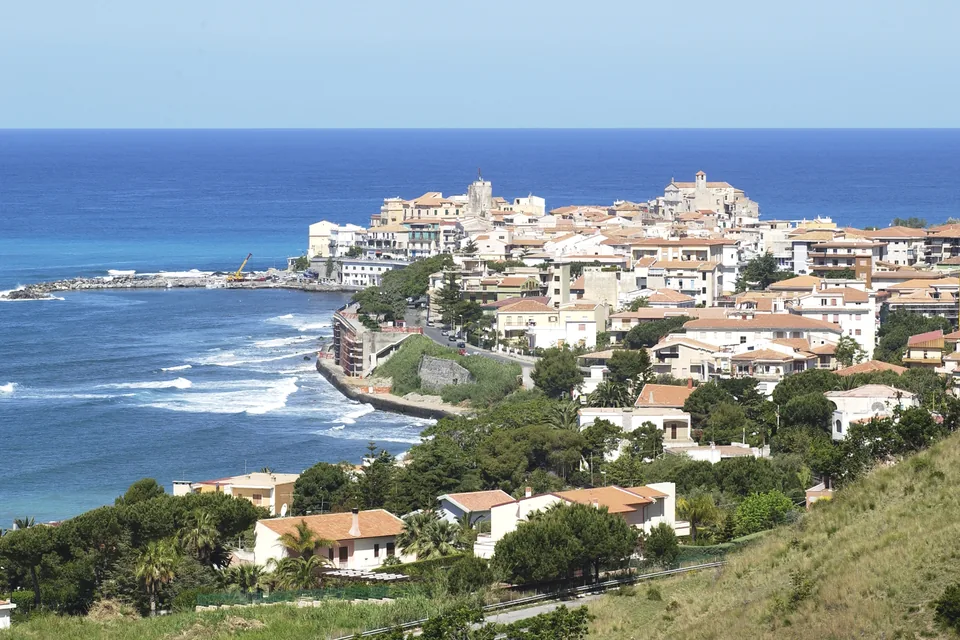
Diamante (CS), Calabria: 4,984 residents, 12.19 km². The official facts of the municipality, its town council website and its registered accommodation. The murals of the old town, the Peperoncino Festival in September, the citron, Cirella with its ruins and its island, the Blue Flag sea.
Read the guide →Photo: Eugenio Magurno / Wikimedia Commons — CC BY-SA 3.0 · Resized and converted to WebP.

“Come to Cosenza as a guest, not as a tourist: that is how these places truly let you know them.”