

Why go
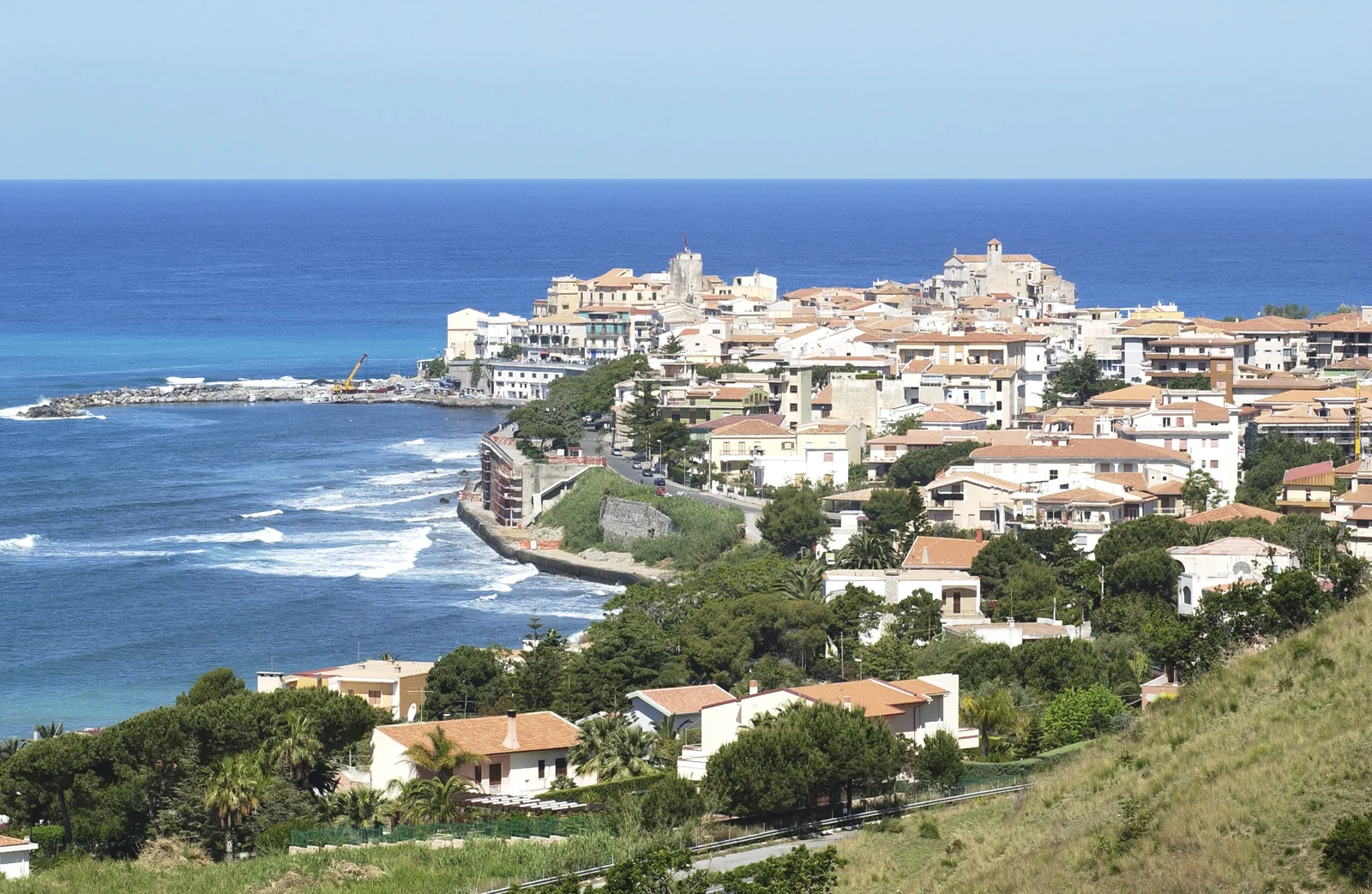
Diamante lies on the Tyrrhenian coast of the province of Cosenza, at the centre of the Riviera dei Cedri. The national catalogue of cultural heritage of Italy’s Ministry of Culture records the three names it is known by: “Pearl of the Tyrrhenian”, “Town of the Chilli Pepper” and “Town of the Murals”. The town council describes about eight kilometres of beach, and the beaches of Diamante Nord (Cirella, Scogliera Cirella, Pietrarossa, Tropical) are on the 2026 Blue Flag list of the FEE Italia Foundation.
The murals are the first reason to stop: since 1981, with the “Operazione Murales”, Italian and foreign painters have painted the walls of the old town, and new ones are added every year. The second is the Peperoncino Festival, born in 1992 and organised on the second weekend of September by the Accademia Italiana del Peperoncino, which is based in Diamante. The third is Cirella, the hamlet facing the island of Cirella, one of only two islands in Calabria: on the hill stand the ruins of the village abandoned after 1806, with an open-air theatre among them, and lower down a Roman mausoleum.
Sources: Ministero della cultura, ICCD — Catalogo generale dei beni culturali: centro storico di Diamante (scheda SCAN) · Comune di Diamante — Diamante in pillole (posizione, storia, Cirella, cultura, economia, come arrivare, manifestazioni) · Fondazione FEE Italia — Spiagge Bandiera Blu 2026 · Comune di Diamante — I Murales · Accademia Italiana del Peperoncino — Festival Story · Ministero della cultura, ICCD — Catalogo generale dei beni culturali: centro storico di Cirella (scheda SCAN) · Comune di Diamante — Luoghi: I Ruderi di Cirella · Consiglio regionale della Calabria — Legge regionale 18 marzo 2024, n. 13: Parco Marino Regionale «Riviera dei Cedri»
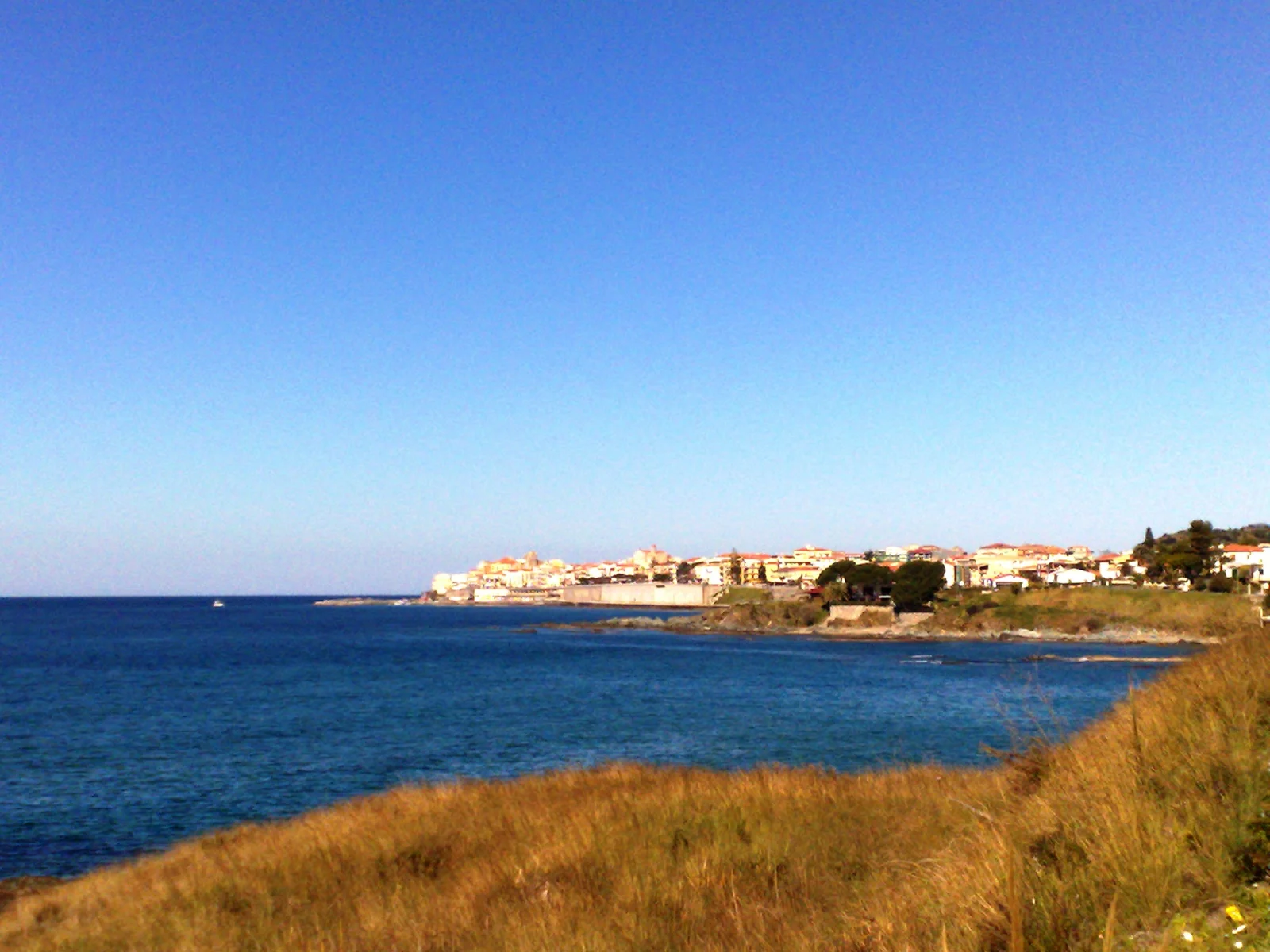
Photo: Chaoleonard / Wikimedia Commons — CC BY-SA 3.0 · Resized and converted to WebP.
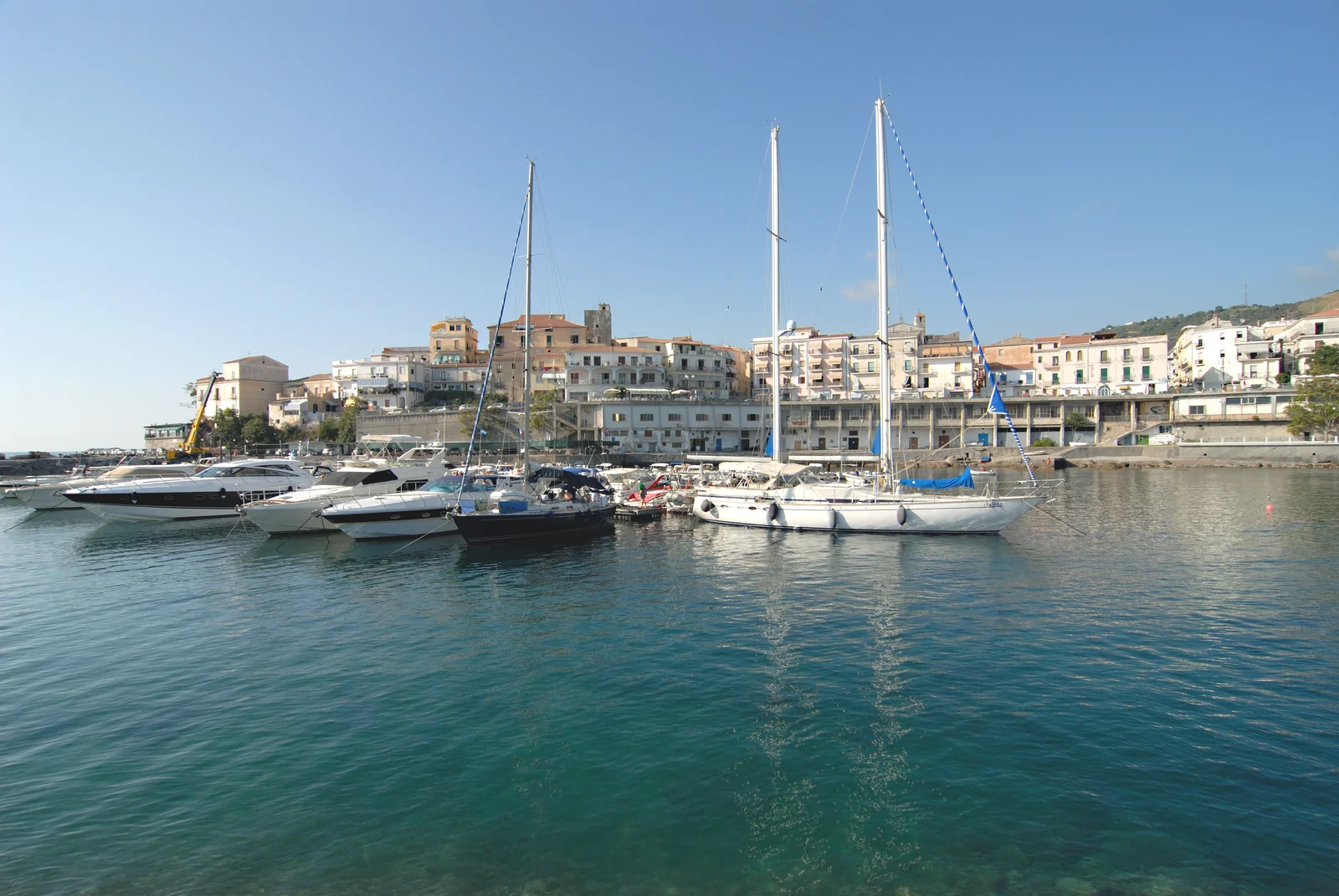
Photo: Eugenio Magurno, Diamante, Italy / Wikimedia Commons — CC BY-SA 3.0 · Resized and converted to WebP.
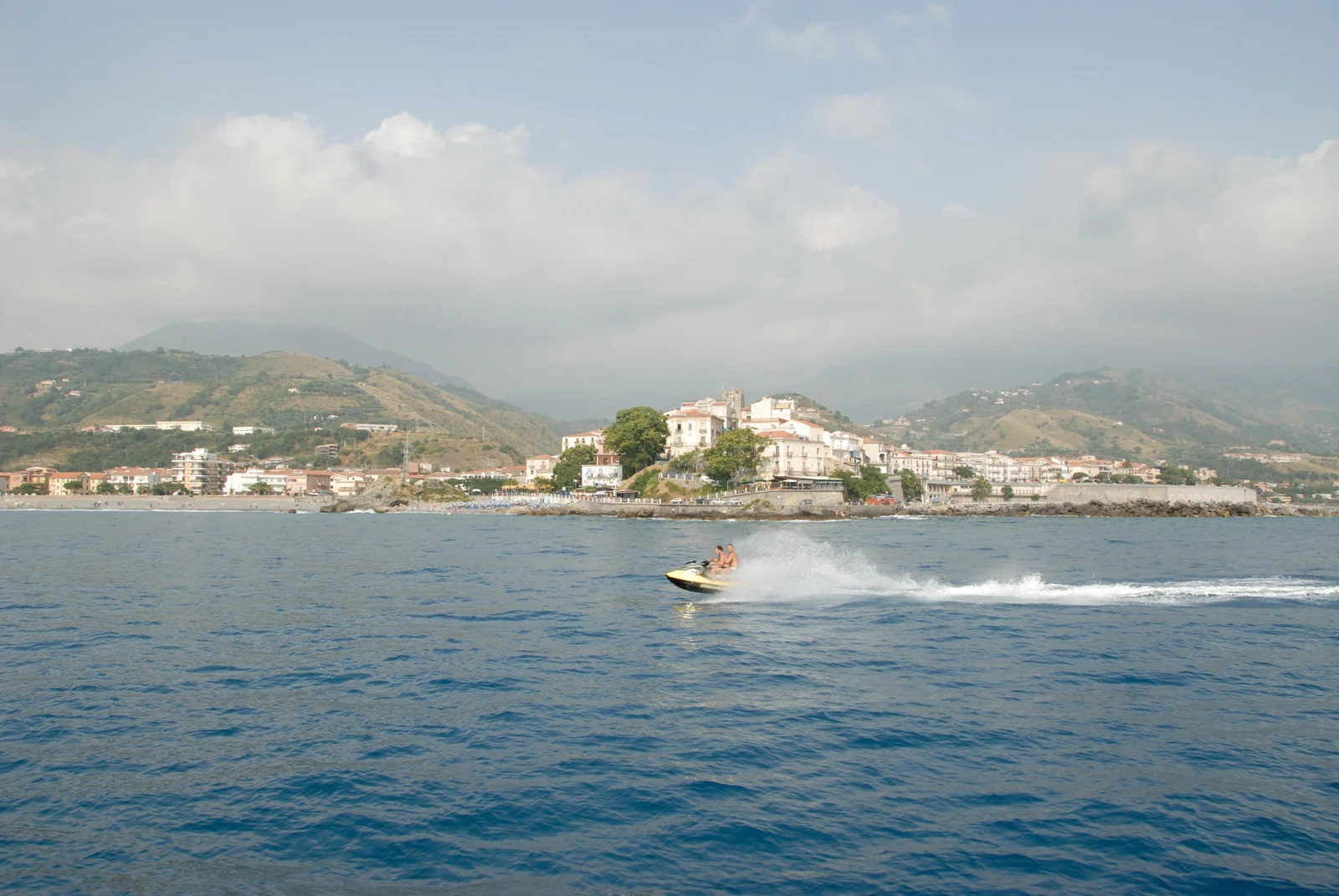
Photo: Eugenio Magurno, Diamante, Italy / Wikimedia Commons — CC BY-SA 3.0 · Resized and converted to WebP.
The municipality at a glance
Diamante is a municipality in the province of Cosenza, in Calabria. Its ISTAT code is 078048. On 1 January 2025 it had 4,984 residents. The municipal territory covers 12.19 km² and ranges from -1 to 324 metres above sea level; the town hall stands at about 21 metres.
The only hamlet is Cirella. The inhabitants are called diamantesi or adamantini; the patron saint is the Immaculate Conception, celebrated on 8 December and 12 August. Diamante belongs to the diocese of San Marco Argentano-Scalea.
Sources: ISTAT, Codici statistici delle unità amministrative territoriali: elenco dei comuni al 21 febbraio 2026 · ISTAT, Popolazione residente per età, sesso e stato civile al 1° gennaio 2025 (POSAS) · ISTAT, Principali statistiche geografiche sui comuni: superficie e altimetria al 31 dicembre 2021 · Comune di Diamante — Diamante in pillole (posizione, storia, Cirella, cultura, economia, come arrivare, manifestazioni) · Ministero della cultura, ICCD — Catalogo generale dei beni culturali: centro storico di Diamante (scheda SCAN)
History
The town grew up around a coastal defence tower that the Prince of Bisignano, Girolamo Sanseverino, had built in the sixteenth century on the rocks of the Trione, against Saracen raids. Next to the tower, in 1636 or 1638, Tiberio Carafa, Prince of Belvedere and lord of the place, built his palace and the houses of the families who had come from Cetraro to grow sugar cane, and protected the settlement with walls, of which short stretches remain. Once the raids were over, people from the countryside moved down to the sea, and merchants from Naples, Amalfi and Salerno and noble families settled there: Diamante became a centre of fishing and farming, with a fleet and with the cultivation of the citron. It belonged to the Carafa family until the abolition of feudalism in 1806 and has been a municipality since 1811.
Cirella has a much older history. The national catalogue of cultural heritage recalls the Palaeolithic finds in the caves of the rock of San Giovanni, the name Kerillois in Strabo and the Cerillae allied with Rome in the Second Punic War, told by Silius Italicus; at the beginning of the second century AD Cerelis was a Roman municipium and a station on the Via Traiana. From the imperial age survives the brick mausoleum just above the coast, one of the very few Roman buildings in Calabria to have come down to us. After the Saracen raids between the eighth and tenth centuries the inhabitants moved up the hill, where the fortified village grew with its castle, its walls and its churches, among them San Nicola Magno.
Between the sixteenth and seventeenth centuries Turkish fleets attacked Cirella several times; a watchtower was built on the islet, and in 1640 an attack ended with the village burnt and 42 inhabitants carried off. Ruinous earthquakes and depopulation followed: people moved to the coast, around the church of Santa Maria dei Fiori, and the last left the village after the French bombardment of 1806. In 1876 Cirella and its island were joined to the municipality of Diamante.
Sources: Ministero della cultura, ICCD — Catalogo generale dei beni culturali: centro storico di Diamante (scheda SCAN) · Comune di Diamante — Diamante in pillole (posizione, storia, Cirella, cultura, economia, come arrivare, manifestazioni) · Ministero della cultura, ICCD — Catalogo generale dei beni culturali: centro storico di Cirella (scheda SCAN)
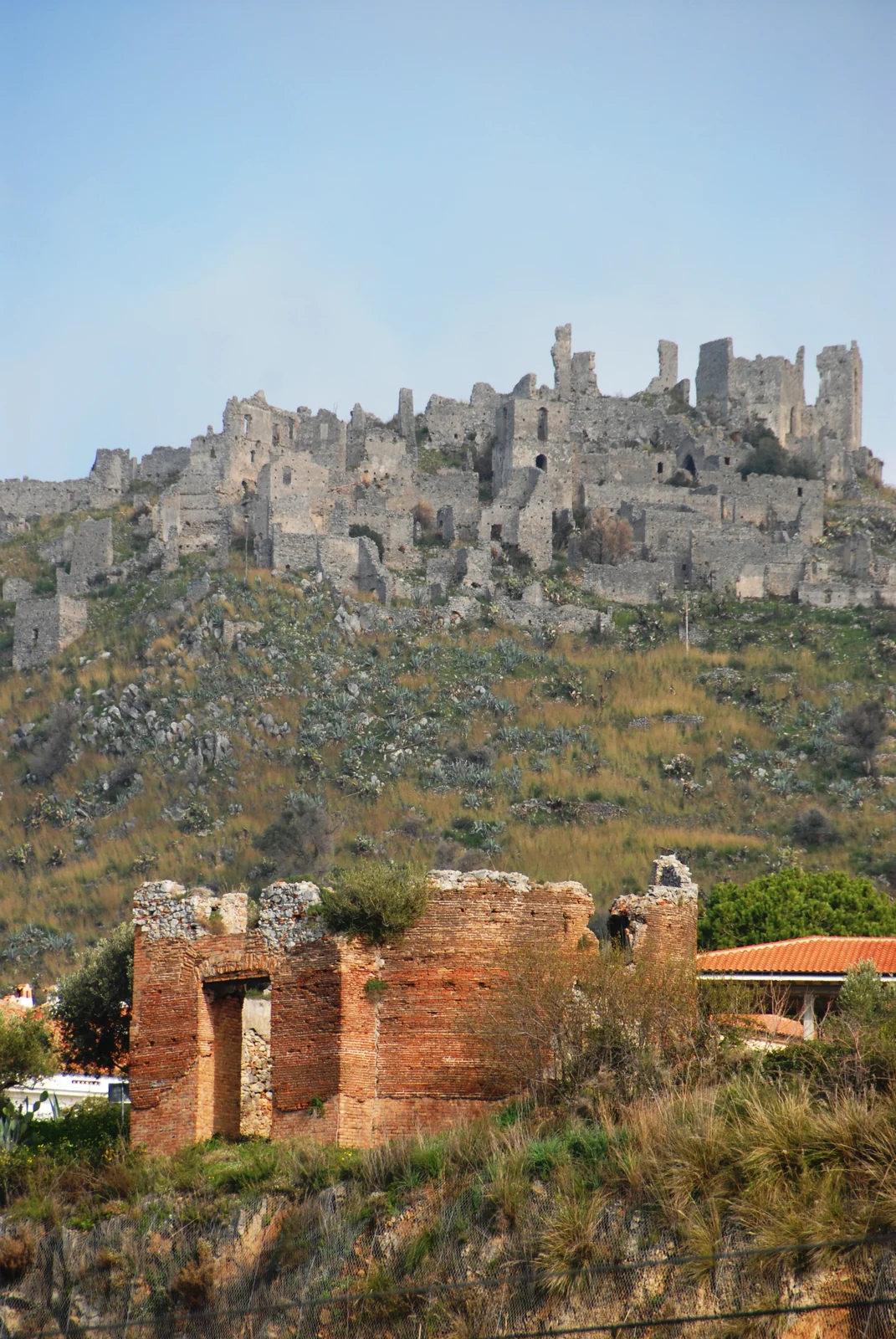
Photo: Eugenio Magurno, Diamante, Italy / Wikimedia Commons — CC BY-SA 3.0 · Resized and converted to WebP.
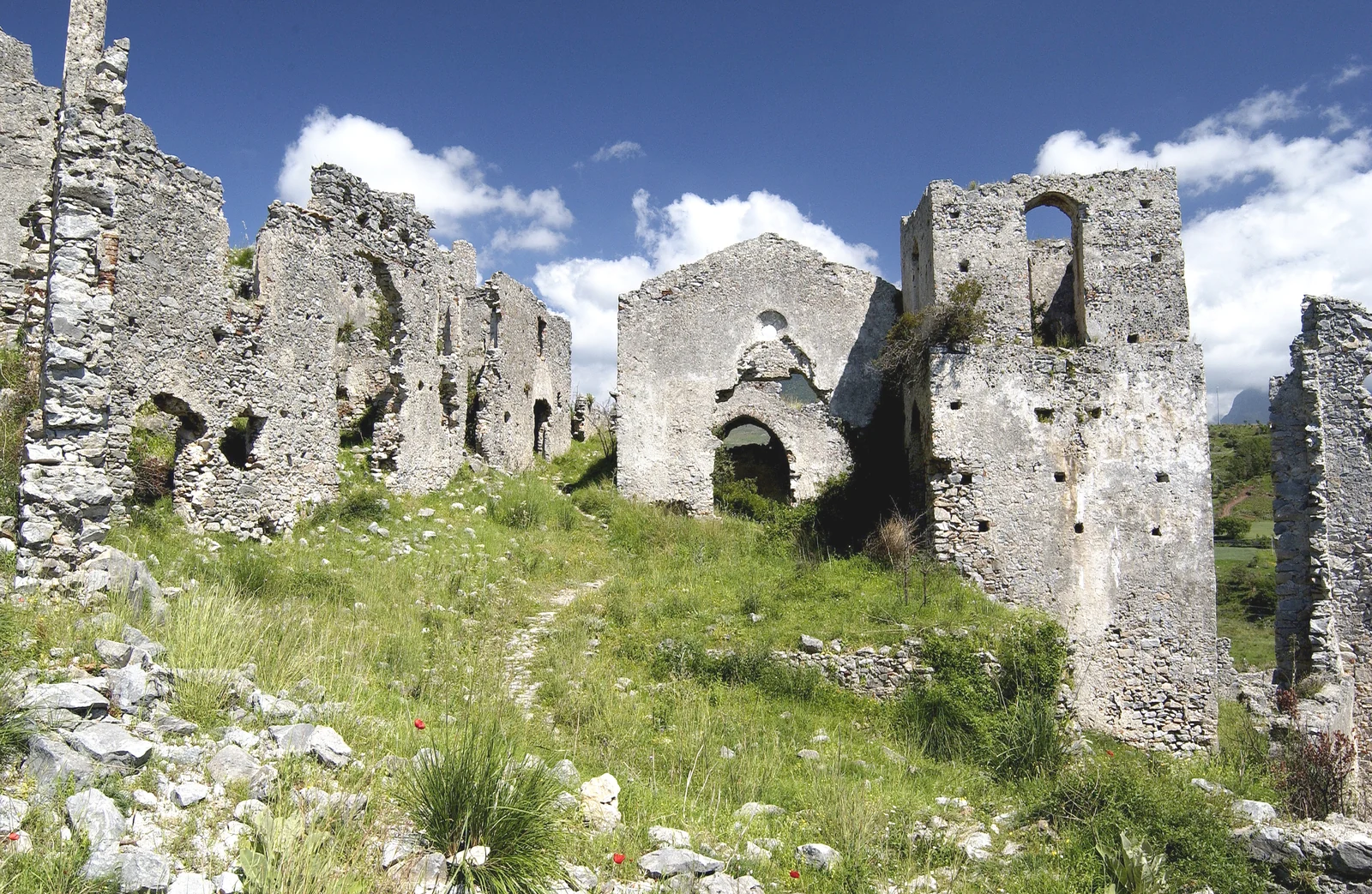
Photo: Eugenio Magurno, Diamante, Italy / Wikimedia Commons — CC BY-SA 3.0 · Resized and converted to WebP.
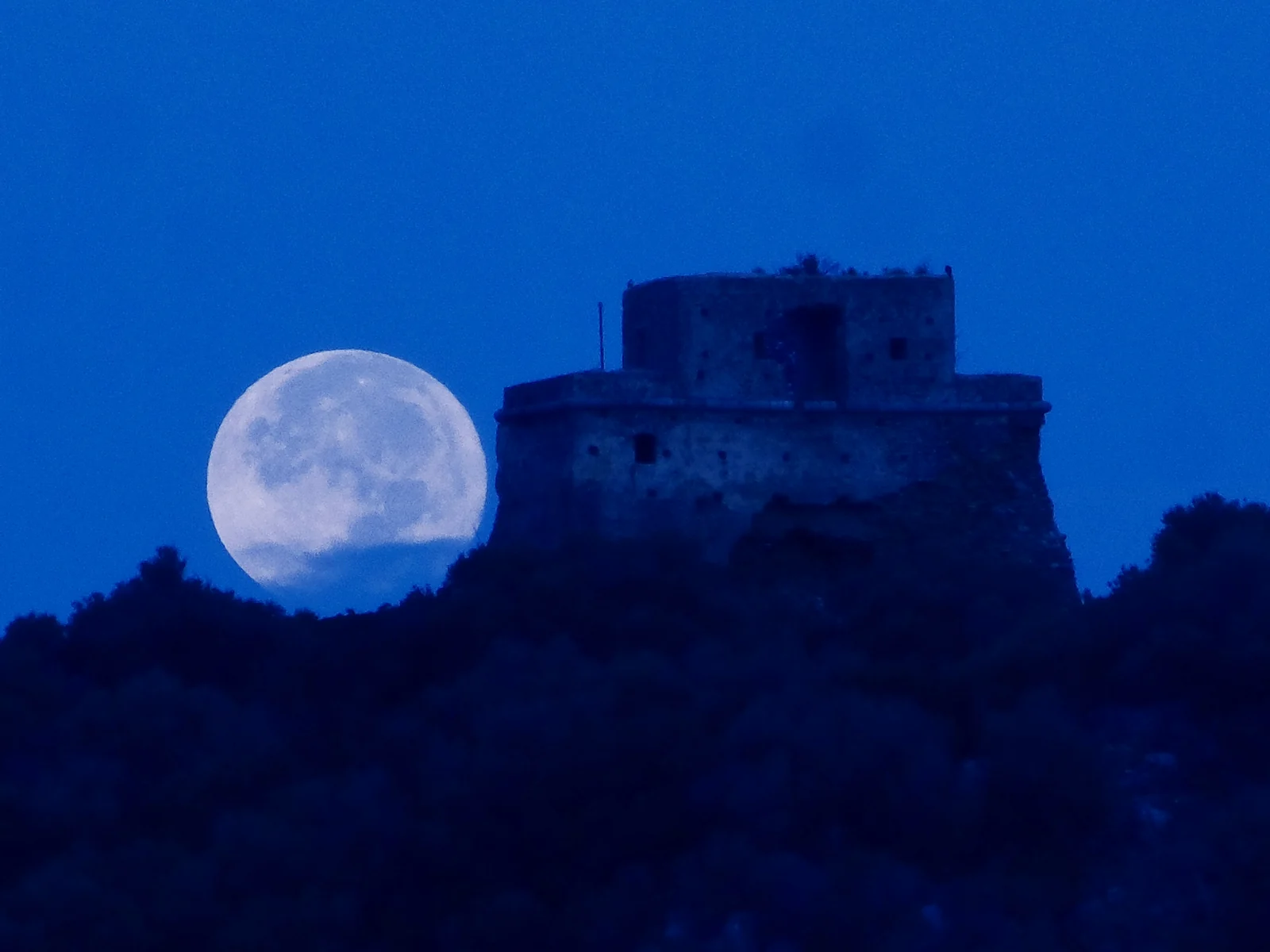
Photo: Lorenzo Caputo James / Wikimedia Commons — CC BY-SA 4.0 · Resized and converted to WebP.
What to see
The town council calls Diamante an open-air museum. It tells how in June 1981 the “Operazione Murales”, conceived by the Milanese painter Nani Razetti and proposed to the mayor of the time, Evasio Pascale, brought eighty-three painters from Italy and abroad to Diamante; between 1986 and 1997 more were added, among them the Marcon Triptych at Cirella, in the Tredoliche area, and since 2017 the OSA Street Art project has brought works of street art. In 2021, for the fortieth anniversary, the Murales40 initiative added new works, among them one by Jorit on a wall of the town hall, and restored some of the 1981 murals, such as those by Eva Krump and Ibrahim Kodra. On the outer wall of the mother church, in Via Alfieri, the mosaic mural by Michele and Angiolina Sposito tells the history of Calabria from the rock engraving of the Bull of Papasidero to the farmers and fishermen of today; in October 1999 the image of the Immaculate Virgin was added to it. Poets, writers, journalists and historians have also left their signature or a line of verse on the town’s walls.
The church of the Immacolata Concezione, the mother church, was built around 1645 on the headland, where the first core of the town had formed from 1636. It is a single large nave about thirty metres by ten and fifteen metres high, with the square apse added towards the end of the eighteenth century; in 1880 the wooden roof was replaced by a barrel vault, in 1921 the choir loft with its spiral staircase was built, and in 1954 the church was decorated as it looks today. Inside are a baptismal font and the chapel of the Purgatorio. Of the Sanseverino tower on the rocks of the Trione, ruins remain.
At Cirella you climb the 172-metre hill among the ruins of the village: the walls of the castle with a square tower, the façade, bell tower and apse of the church of San Nicola Magno, which the catalogue dates to the tenth and eleventh centuries, and the church of Santa Maria delle Grazie, rebuilt in 1588, next to the convent built in 1545. A late sixteenth-century fresco of the Madonna degli Angeli, detached from the wall at the end of the 1970s and restored under the Soprintendenza, is now displayed in the parish church; the church of Santa Maria de Flores keeps a medieval Corinthian-style capital and a thirteenth-century wooden bust of the Madonna and Child. According to the town council, access to the ruins is free.
Sources: Comune di Diamante — I Murales · Comune di Diamante — Diamante in pillole (posizione, storia, Cirella, cultura, economia, come arrivare, manifestazioni) · Ministero della cultura, ICCD — Catalogo generale dei beni culturali: chiesa dell’Immacolata Concezione, Diamante · Ministero della cultura, ICCD — Catalogo generale dei beni culturali: centro storico di Diamante (scheda SCAN) · Ministero della cultura, ICCD — Catalogo generale dei beni culturali: centro storico di Cirella (scheda SCAN) · Ministero della cultura, ICCD — Catalogo generale dei beni culturali: chiesa di San Nicola Magno, Cirella · Ministero della cultura, ICCD — Catalogo generale dei beni culturali: chiesa di Santa Maria delle Grazie, Cirella · Comune di Diamante — Luoghi: I Ruderi di Cirella
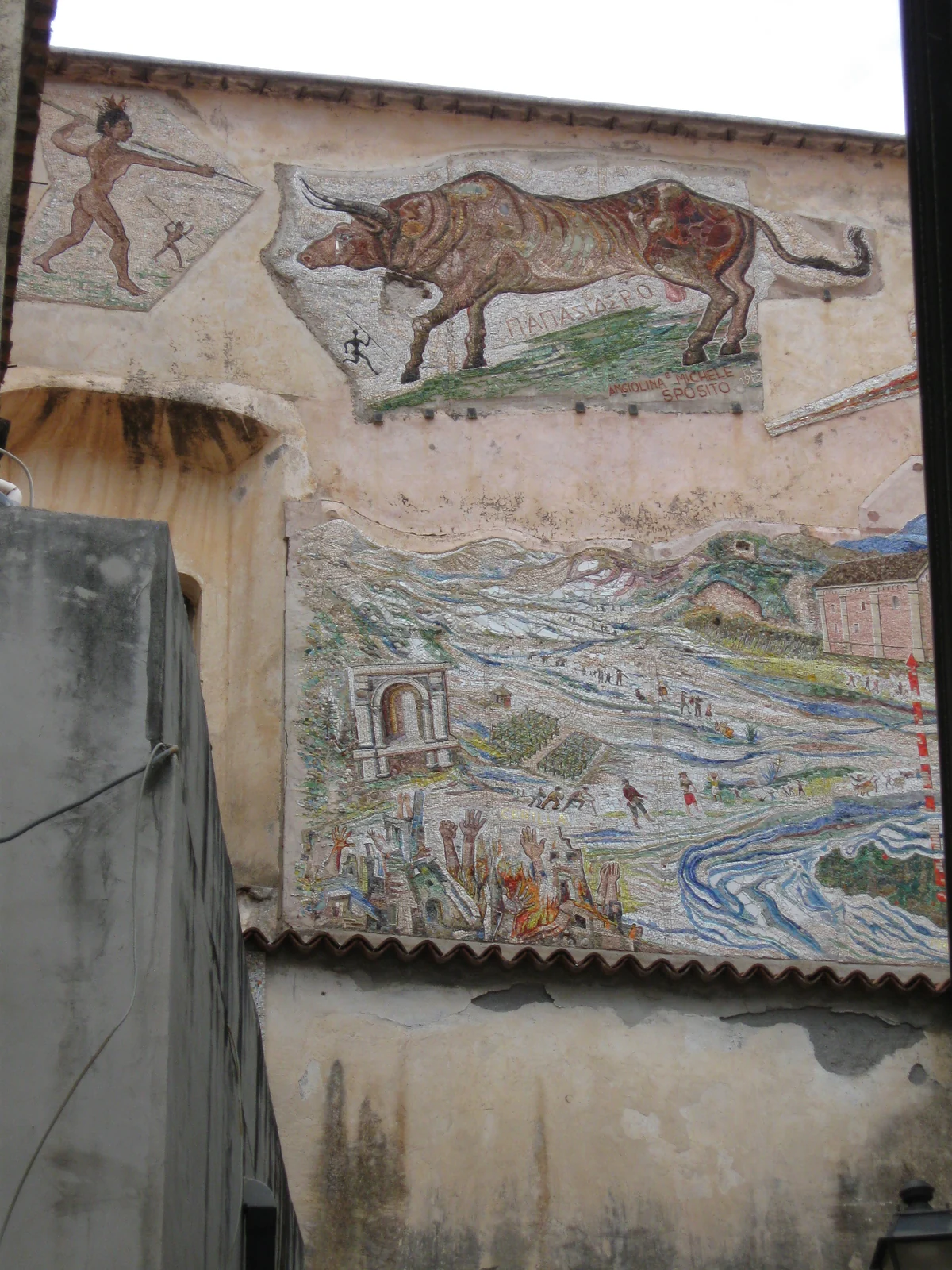
Photo: Rollopack / Wikimedia Commons — CC BY-SA 3.0 · Resized and converted to WebP.
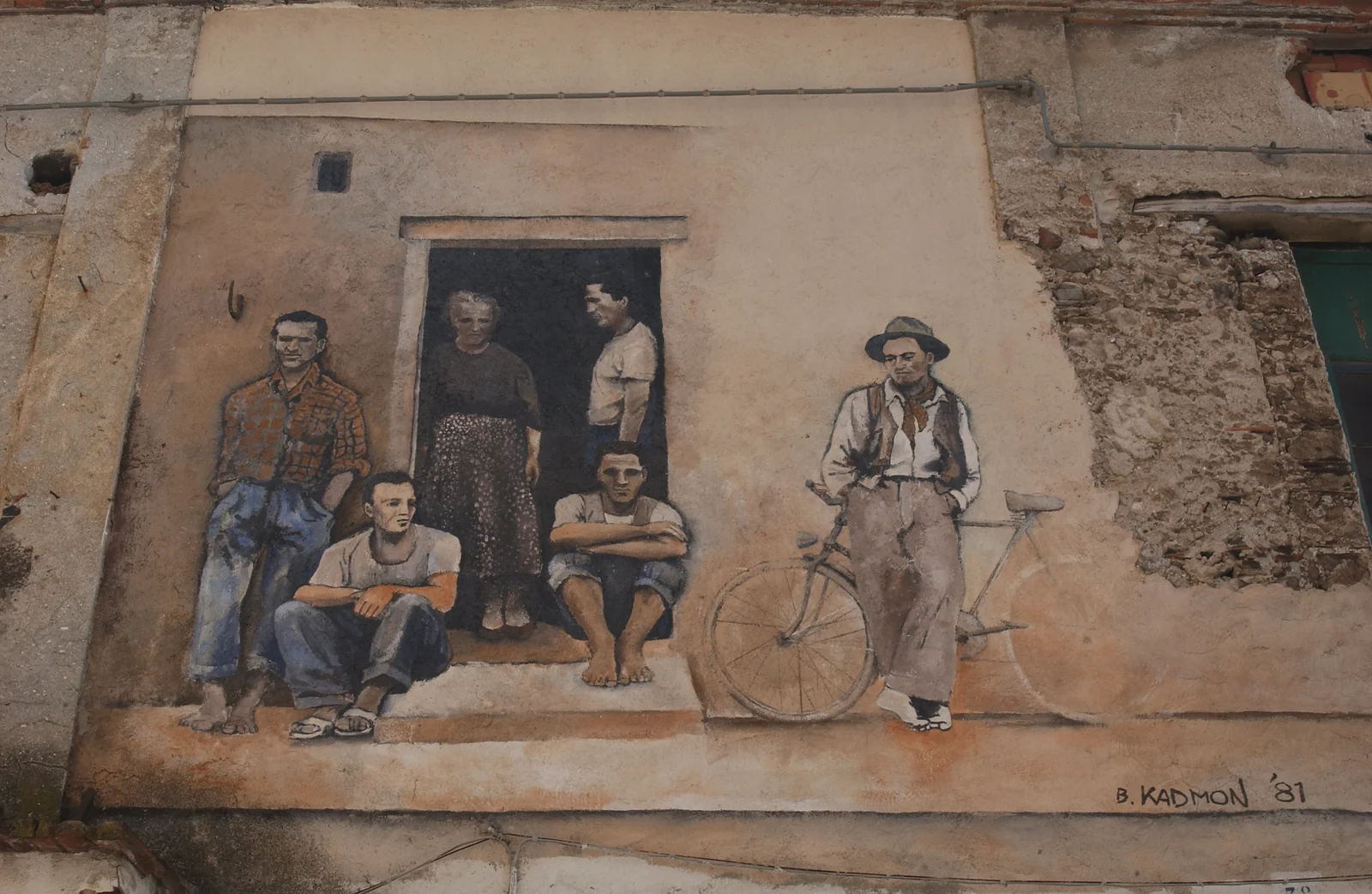
Photo: Eugenio Magurno, Diamante, Italy / Wikimedia Commons — CC BY-SA 3.0 · Resized and converted to WebP.
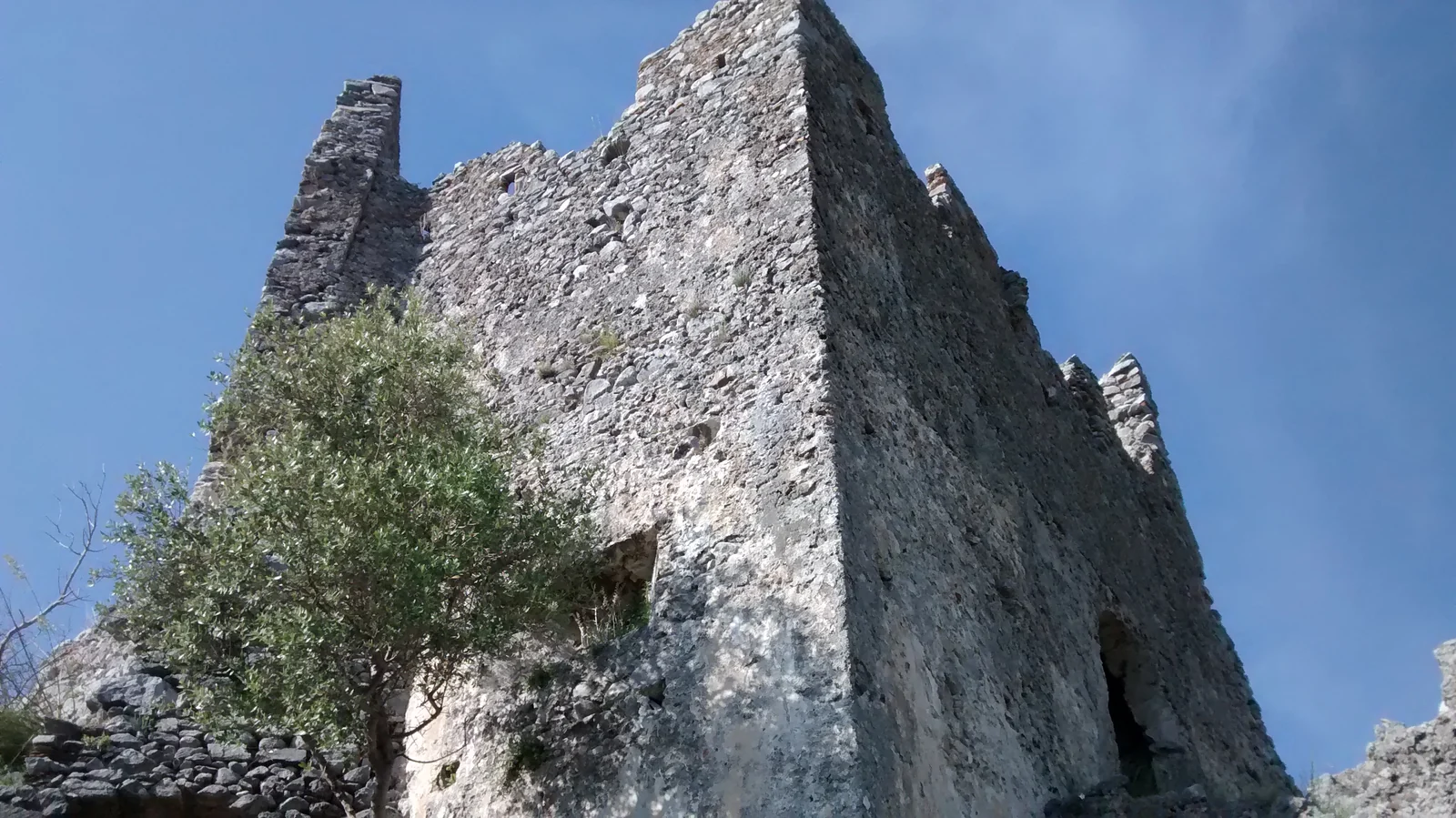
Photo: And.martire / Wikimedia Commons — CC BY-SA 4.0 · Resized and converted to WebP.
Food and wine
Diamante’s historic product is the citron. The town council describes a local variety, the “smooth citron of Diamante”, large and fragrant, mostly destined for candying, which used to be exported to Israel and the United States for the Jewish communities, who use it at the feast of Sukkot and sent their rabbis to choose it. Citron liqueur is made by hand by steeping the peel; candied citron is obtained through a long brining process. The “panicilli” are flavoured raisins wrapped in citron leaves, tied with a rush and baked.
The chilli pepper is the other symbol, and the seafood cooking uses it: the “pitticelle di rosamarina”, whitebait fritters; rosamarina with pepper, known as the poor man’s caviar; and anchovies preserved in salt and chilli in clay jars called “cugnitti”. The Accademia Italiana del Peperoncino adds the “olive ammaccate”, crushed olives.
Sources: Comune di Diamante — Diamante in pillole (posizione, storia, Cirella, cultura, economia, come arrivare, manifestazioni) · Accademia Italiana del Peperoncino — Diamante, città dei murales e del peperoncino
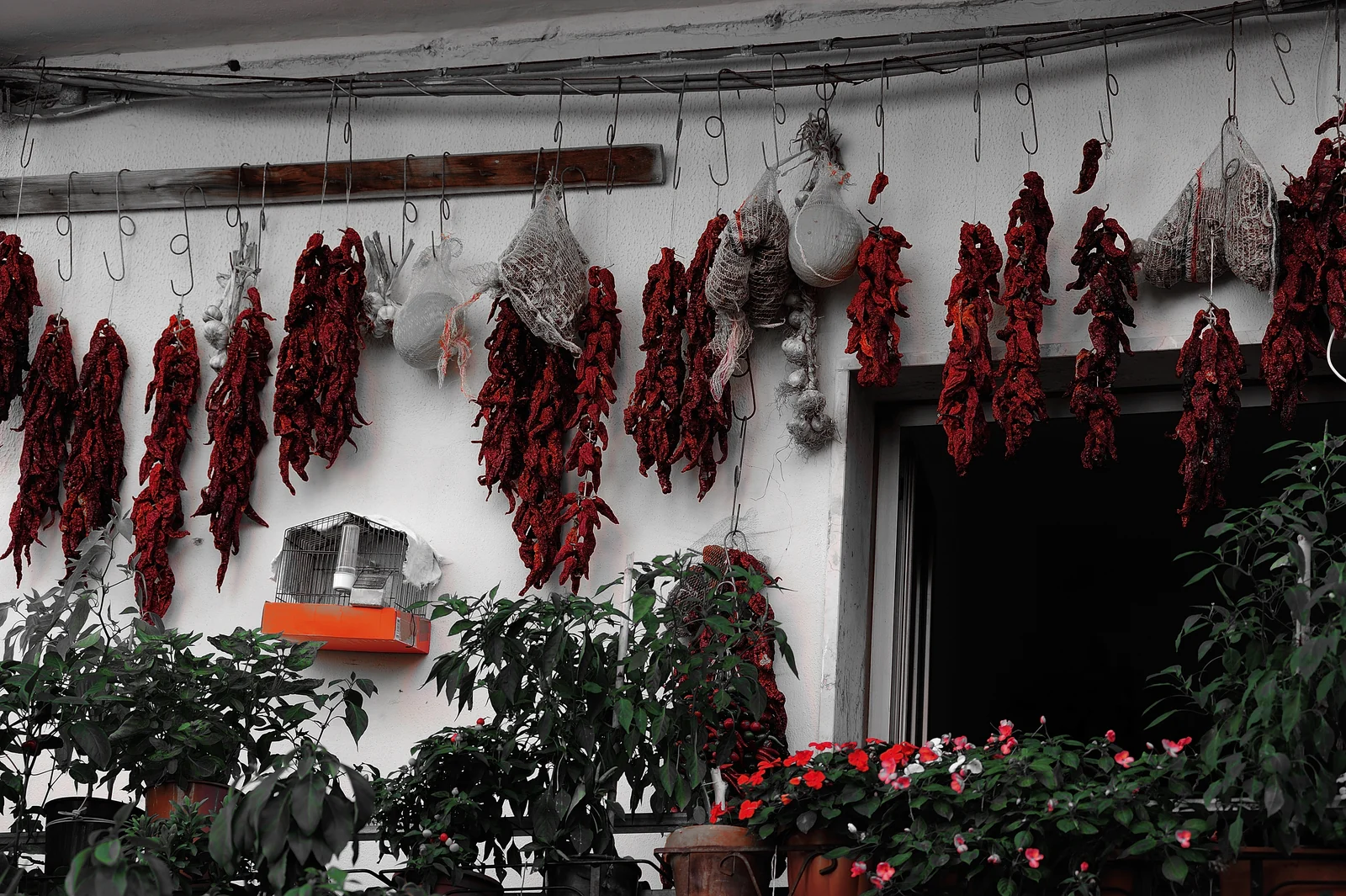
Photo: Iosa53 / Wikimedia Commons — CC BY-SA 4.0 · Resized and converted to WebP.
Things to do
The first outing is on foot through the lanes of the old town, looking for the murals; then the seafront and the beaches. The sea off Cirella is part of the Riviera dei Cedri Regional Marine Park: the regional law lists seven sites, among them the island of Cirella and the seabed around the island of Cirella and Diamante. The town council describes a seabed with meadows of posidonia; in July 2026 children went aboard the “Occhio Marino” to see it around the island.
Among the ruins of Cirella is the Teatro dei Ruderi, which according to the town council has about two thousand seats and every summer hosts theatre, concerts and shows. The municipal tourist office gives information on places, itineraries and events in Diamante and Cirella, but does not organise guided tours or bookings.
Sources: Comune di Diamante — I Murales · Consiglio regionale della Calabria — Legge regionale 18 marzo 2024, n. 13: Parco Marino Regionale «Riviera dei Cedri» · Comune di Diamante — Giornata mondiale della prevenzione dell’annegamento a Cirella (22 luglio 2026) · Comune di Diamante — Luoghi: I Ruderi di Cirella · Comune di Diamante — Ufficio Turistico del Comune di Diamante (pagina modificata il 23 ottobre 2026)
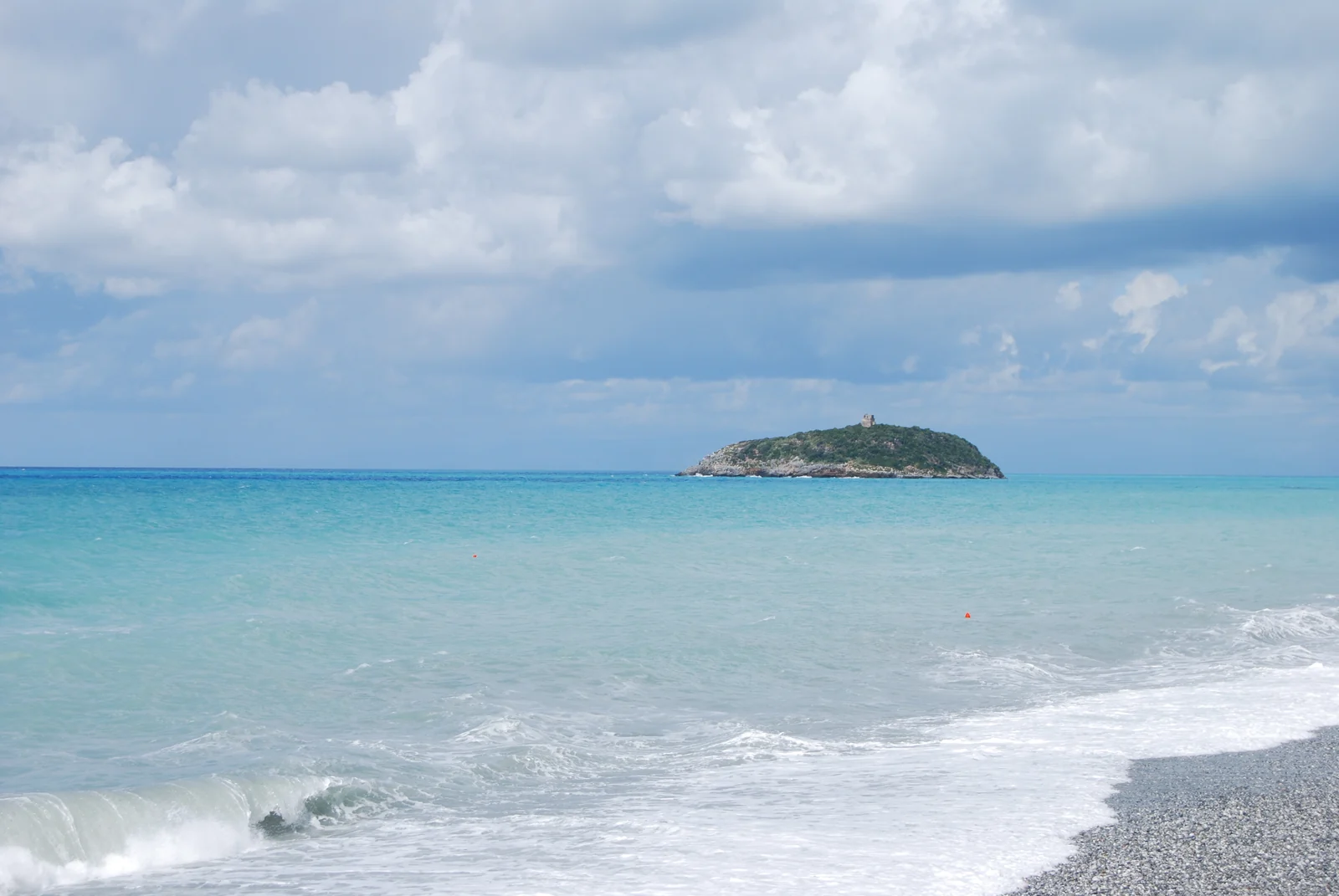
Photo: Elenagm / Wikimedia Commons — CC BY 3.0 · Resized and converted to WebP.
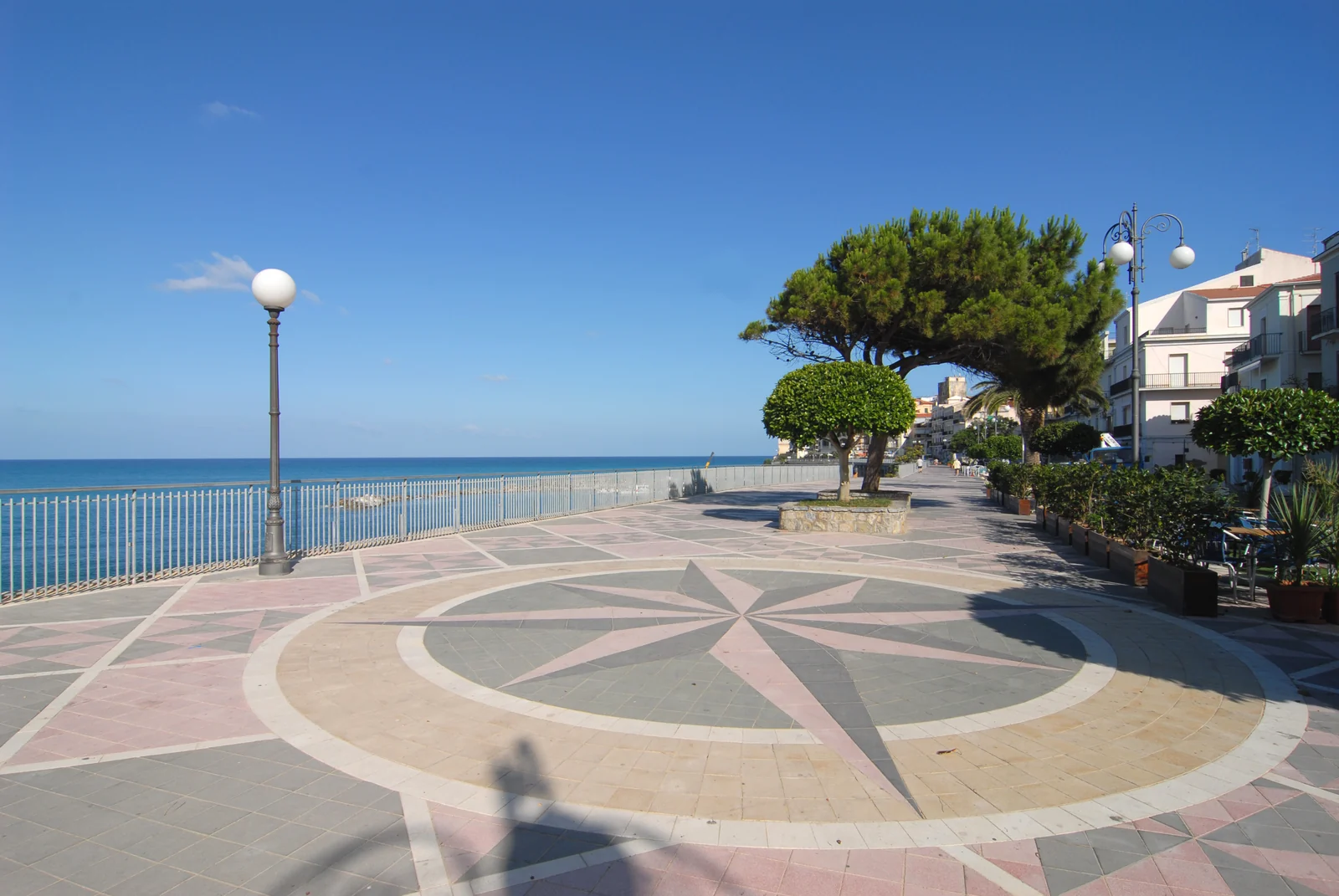
Photo: Eugenio Magurno, Diamante, Italy / Wikimedia Commons — CC BY-SA 3.0 · Resized and converted to WebP.
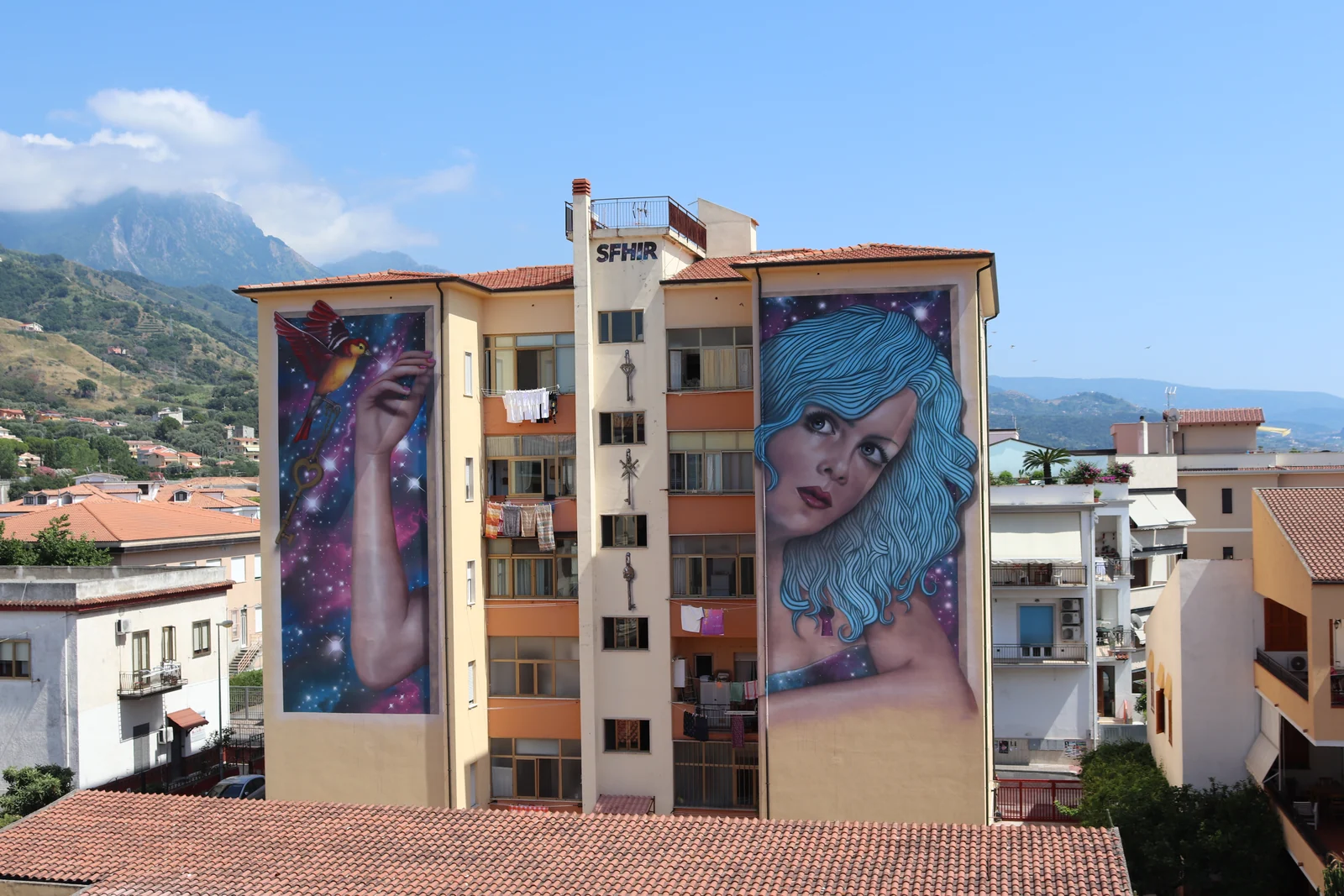
Photo: Lupetto76 / Wikimedia Commons — CC BY-SA 4.0 · Resized and converted to WebP.
When to go
The patron feast is the Coronation of the Immaculate Virgin on 12 August, in memory of the coronation of August 1928; the patron’s other feast day is 8 December. The legend told by the town council says that the wooden statue of the Madonna was travelling on a ship bound for Sicily, which stayed stuck off the town until the statue was carried into the church, and that the next morning the parish priest found it with one arm raised and three fingers open, a sign of protection from famine, war and earthquake.
The Peperoncino Festival is held every year from Wednesday to Sunday on the second weekend of September, with shows, exhibitions, medical conferences, the “Mangiare Mediterraneo” market fair and, on Saturday evening, the final of the chilli-eating championship; the Accademia says the events are free. It was born in 1992 from an idea of the journalist Enzo Monaco, for the five hundredth anniversary of the voyage of Columbus, whose caravels brought the chilli pepper to Europe; the 2026 edition, the 34th according to the Accademia, was held from 9 to 13 September.
The town council’s 2026 calendar also included the Sea Week in May, devoted to maritime culture, and at the end of August the three evenings of “Calici sotto le Stelle” at Cirella, organised by the Cerillae cultural association and now in their seventeenth edition; in December 2025 the town council brought the first “Vicoli in Festival”, with music and wine tastings, to the lanes of the old town. In 2026 the summer limited traffic zone in the centre was active from 1 July to 14 September.
Sources: Comune di Diamante — Incoronazione dell’Immacolata Concezione · Comune di Diamante — Diamante in pillole (posizione, storia, Cirella, cultura, economia, come arrivare, manifestazioni) · Accademia Italiana del Peperoncino — Festival Story · Accademia Italiana del Peperoncino — Peperoncino Festival di Diamante, sito ufficiale: 34ª edizione, 9-13 settembre 2026 · Accademia Italiana del Peperoncino — Mangiatori di peperoncino · Comune di Diamante — Le chiavi della Città al professor Enzo Monaco (22 luglio 2026) · Comune di Diamante — Eventi (calendario ed eventi archiviati) · Comune di Diamante — Settimana del Mare, 11-17 maggio 2026 · Comune di Diamante — Calici sotto le Stelle a Cirella, 20-22 agosto 2026 · Comune di Diamante — Dal 4 agosto al 1° settembre a Diamante spettacoli, mostre, sport, musica e cultura (1° agosto 2026) · Comune di Diamante — «Vicoli in Festival», 27 e 28 dicembre 2025 · Comune di Diamante, Polizia Locale — ZTL Comune di Diamante: quello che c’è da sapere (ordinanza dirigenziale n. 32/2026)
Getting there and around
By train you get off at Diamante-Buonvicino station. According to Rete Ferroviaria Italiana it has four passenger tracks, all reachable by a step-free route, level or with a ramp; there are no raised platforms and no assistance service for people with disabilities, while there are car parks with reserved spaces.
By car, the town council indicates from the north the Salerno-Reggio Calabria motorway to the Lagonegro Nord exit, then the SS 585 down to the coast and the SS 18 Tirrena to Diamante; from Lamezia Terme airport, the motorway to the Falerna exit and then about 90 kilometres of the SS 18 along the coast.
In summer the centre has a limited traffic zone: in 2026 it was active from 1 July to 14 September, in the evening (in August from 6 pm to 2 am), with five electronic gates; in August the gates of Via Marina Piccola and Via Santa Lucia checked access at all hours. Guests of accommodation inside the zone may enter if the establishment notifies the town council of the number plate by 23:59 on the day of arrival; permission to drive in does not give the right to park. The town council issues passes for the paid car parks. For the 2026 bathing season the town council looked for beach establishments and associations to run three walkways for people with disabilities and a JOB chair for getting into the water. The port of Diamante has yet to be built: in July 2026 the services conference that opens the way to the tender for the works closed with a positive outcome.
Sources: Rete Ferroviaria Italiana — Stazione di Diamante-Buonvicino · Comune di Diamante — Diamante in pillole (posizione, storia, Cirella, cultura, economia, come arrivare, manifestazioni) · Comune di Diamante, Polizia Locale — ZTL Comune di Diamante: quello che c’è da sapere (ordinanza dirigenziale n. 32/2026) · Comune di Diamante, sito istituzionale · Comune di Diamante — Passerelle per persone con disabilità e sedia JOB, stagione balneare 2026 (1° giugno 2026) · Comune di Diamante — Chiusa positivamente la conferenza dei servizi sul porto (4 luglio 2026)
Tourism
Anyone staying overnight in Diamante pays the tourist tax, per person per night, for at most ten consecutive nights in the same accommodation. The council’s regulation, approved in October 2024, applies it all year round, but for 2025 the town executive exempted January, February, November and December; the rates set for 2025 are 2 euros in hotels up to three stars, 2.50 in four-star and 3 in five-star hotels, 1.50 euros in bed and breakfasts, guest rooms, holiday homes and houses let to tourists, residences, farm stays and campsites, 1 euro in hostels and 3.50 euros per camper van in the stopping areas. In the Finance Department’s register of local tax acts there is, as of November 2026, no resolution for 2026. Exempt among others are residents, children under twelve, dependent people with disabilities with their companion, and those assisting a patient in a health facility in the town or within 25 kilometres, on giving a declaration to the accommodation, which issues a receipt.
Sources: Comune di Diamante — Regolamento per l’applicazione dell’imposta di soggiorno (Delibera di CC n. 49 del 28 ottobre 2024), dall’elenco degli atti tributari del Dipartimento delle Finanze · Comune di Diamante — Delibera di GC n. 233 del 27 novembre 2024, tariffe ed esenzione stagionale dell’imposta di soggiorno per il 2025, dall’elenco degli atti tributari del Dipartimento delle Finanze
“Come to Diamante as a guest, not as a tourist: that is how these places truly let you know them.”
Accommodation in figures
In the Ministry of Tourism’s national database of accommodation (BDSR), on 12 October 2026, Diamante had 219 establishments with a verified national identification code (CIN): 16 hotel-type establishments, 43 non-hotel establishments and 160 other establishments.
Sources: Ministero del Turismo – Banca Dati Strutture Ricettive (dashboard pubblica)
Nearby
Diamante borders Belvedere Marittimo, Buonvicino, Grisolia and Maierà; between the twelfth and thirteenth centuries Cirella became the seat of a fief that included Maierà and Grisolia. Along the coast the Riviera dei Cedri Regional Marine Park also includes the Scoglio della Regina at Acquappesa, the island of Dino at Praia a Mare, the seabed between the island of Dino and Capo Scalea, the bay of Carpino-Ajnella and the area of the Arcomagno cave, a geosite of national interest. The 2026 Blue Flag list for the province of Cosenza also includes Santa Maria del Cedro, Tortora and San Nicola Arcella.
Sources: Comune di Diamante — Diamante in pillole (posizione, storia, Cirella, cultura, economia, come arrivare, manifestazioni) · Ministero della cultura, ICCD — Catalogo generale dei beni culturali: centro storico di Cirella (scheda SCAN) · Consiglio regionale della Calabria — Legge regionale 18 marzo 2024, n. 13: Parco Marino Regionale «Riviera dei Cedri» · Fondazione FEE Italia — Spiagge Bandiera Blu 2026
The town council
The official website of the Comune di Diamante, registered in IndicePA, the index of the digital addresses of Italy’s public administrations, is the reference for the town council’s offices, opening hours and news. Its address is listed among the sources of this section.
The town hall is at Piazza P. Mancini 10, with a ramp for people who cannot walk; the switchboard answers on +39 0985 81398. The municipal tourist office “Diamante Tourism”, named after Domenico “Mimì” Gimigliano, is in Via Discesa Corvino Inferiore and answers on +39 0985 277049: its hours change with the season and the town council refers to the office’s listing on Google Maps. At the office there are a book lending service, a free internet point, a bicycle stop and paid public toilets. The local police are at Via A. De Luna 4 (+39 0985 81035).
Sources: Comune di Diamante, sito istituzionale · IndicePA (AgID), Indice dei domicili digitali delle pubbliche amministrazioni: dataset Enti · Comune di Diamante — Luoghi: Sede Municipale · Comune di Diamante — Ufficio Turistico del Comune di Diamante (pagina modificata il 23 ottobre 2026) · Comune di Diamante, Polizia Locale — ZTL Comune di Diamante: quello che c’è da sapere (ordinanza dirigenziale n. 32/2026)
Local tourist information
Local tourist offices help with opening times, events and transport on the day.
- Ufficio Turistico Comunale «Diamante Tourism» Domenico «Mimì» Gimigliano · Via Discesa Corvino Inferiore, 87023 Diamante (CS) · +39 0985 277049 · Official website
Source: Comune di Diamante — Ufficio Turistico del Comune di Diamante (pagina modificata il 23 ottobre 2026) · checked on
Where to stay
In the municipality of Diamante the national database of the Ministry of Tourism lists 219 accommodation businesses with a verified CIN code: 16 hotels, 43 other licensed accommodation and 160 other types such as B&Bs and private rentals.
Licensed businesses from the official list of accommodation named as the source in this section. Where the list gives it, the property's official identification code appears next to its name: the national CIN code, or the code assigned by the Region or by the body that keeps the list. Private individuals are not listed. This list is the official census of licensed businesses, not a list of Apulica partners: to stay in Diamante you do not have to check one property after another yourself; write to Apulica and we look for the stay that suits your journey, checking availability and conditions before any confirmation.
A' CAPANNA
Hotel · ★★★★
CIN IT078048A1UH7YDYCY
MARE BLU
Campsite · ★★★★
CIN IT078048B37UYJBFUL
Azienda Agricola Monte Salerno
Farm stay
Regional agritourism list 2023
B. & B. EMPIRE
B&B
CIN IT078048B49NG8VWJD
AFFITTACAMERE MURALES
Guest rooms
CIN IT078048B4FUN7PEGJ
CASA VACANZE ARISTEA
Holiday home
CIN IT078048B4WZKX3POS
CLUB HOTEL BAIA DI DIAMANTE
Hotel · ★★★★
CIN IT078048A1NTDFCY3W
GREEN PARADISE
Campsite · ★
CIN IT078048B1JHHTBRAD
B&B STELLA MARIS
B&B
CIN IT078048B4JXHWELFY
DIAMANTE RARO
Guest rooms
CIN IT078048B4OFO5UWQU
First the places that presented themselves to Apulica, the latest first; then one place of each type in turn, by official category and stars, then by name. No position is paid for.
All 51 entries in alphabetical order
Page 1 of 6
| Name | Type | Identification code |
|---|---|---|
| A' CAPANNA | Hotel | IT078048A1UH7YDYCY |
| AFFITTACAMERE MURALES | Guest rooms | IT078048B4FUN7PEGJ |
| Azienda Agricola Monte Salerno | Farm stay | Regional agritourism list 2023 |
| B. & B. EMPIRE | B&B | IT078048B49NG8VWJD |
| B&B STELLA MARIS | B&B | IT078048B4JXHWELFY |
| CASA VACANZE ARISTEA | Holiday home | IT078048B4WZKX3POS |
| CASA VACANZE PIETRAROSSA | Holiday home | IT078048B4OV76A5JF |
| CLUB DIAMANTE | Hotel | IT078048A1B26L3D2C |
| CLUB HOTEL BAIA DI DIAMANTE | Hotel | IT078048A1NTDFCY3W |
| DIAMANTE RARO | Guest rooms | IT078048B4OFO5UWQU |
Ask Apulica for a stay in Diamante We reply shortly, within a few hours at most, with a proposal for you to consider.
Sources: Ministero del Turismo – Banca Dati Strutture Ricettive (dashboard pubblica), 2026-10-12
YOUR JOURNEY
How to shape a journey here
To include Diamante in a trip, or to ask for a guide or a transfer, you can write to Apulica with the button below.
Plan your tripKeep exploring
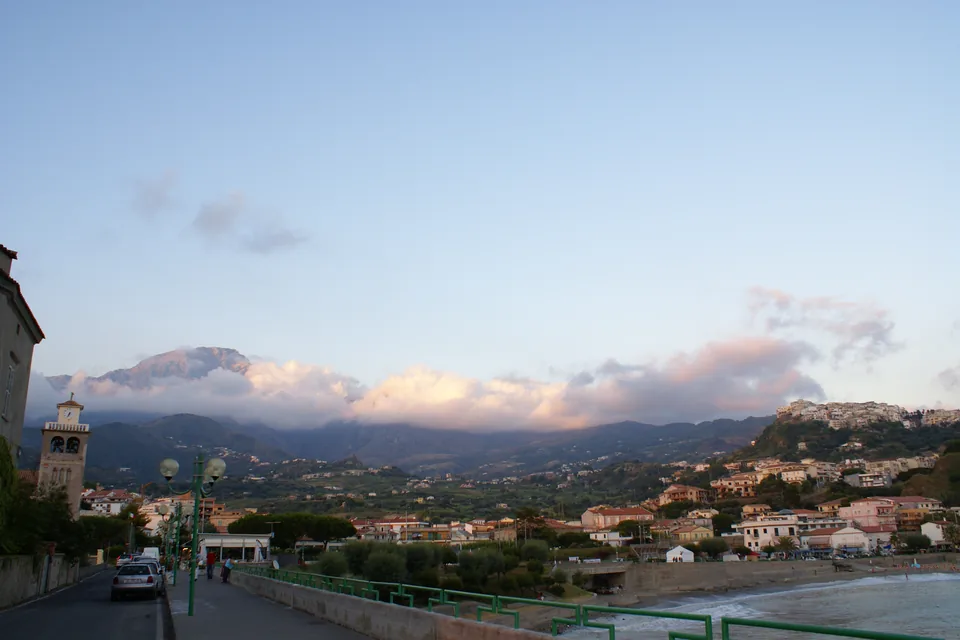
Belvedere Marittimo
Belvedere Marittimo (CS), Calabria: 9,009 residents, 37.07 km². The official facts of the municipality, its town council website and its registered accommodation.
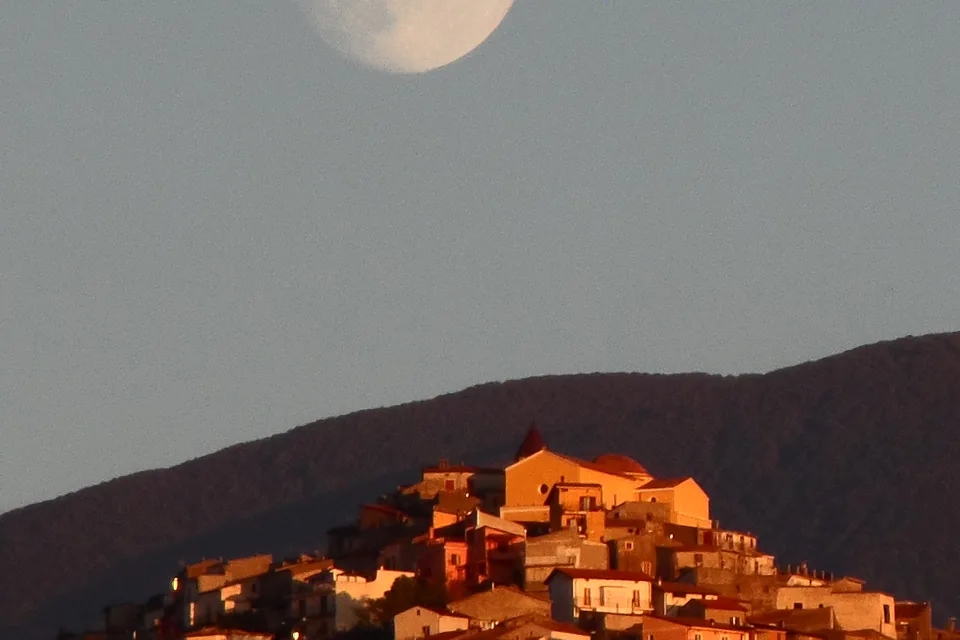
Read the guide →Photo: Aki 01 / Wikimedia Commons — CC BY-SA 3.0 · Resized and converted to WebP.

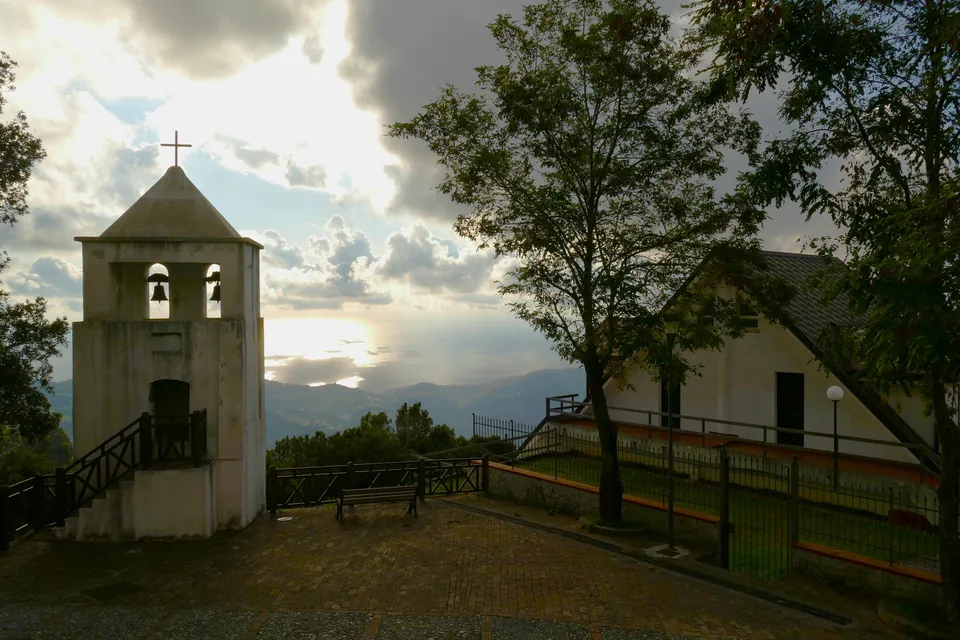
Buonvicino
Buonvicino (CS), Calabria: 1,990 residents, 30.59 km². The official facts of the municipality, its town council website and its registered accommodation.
Read the guide →Photo: Aniello Bizzoco / Wikimedia Commons — CC BY-SA 4.0 · Resized and converted to WebP.

Grisolia
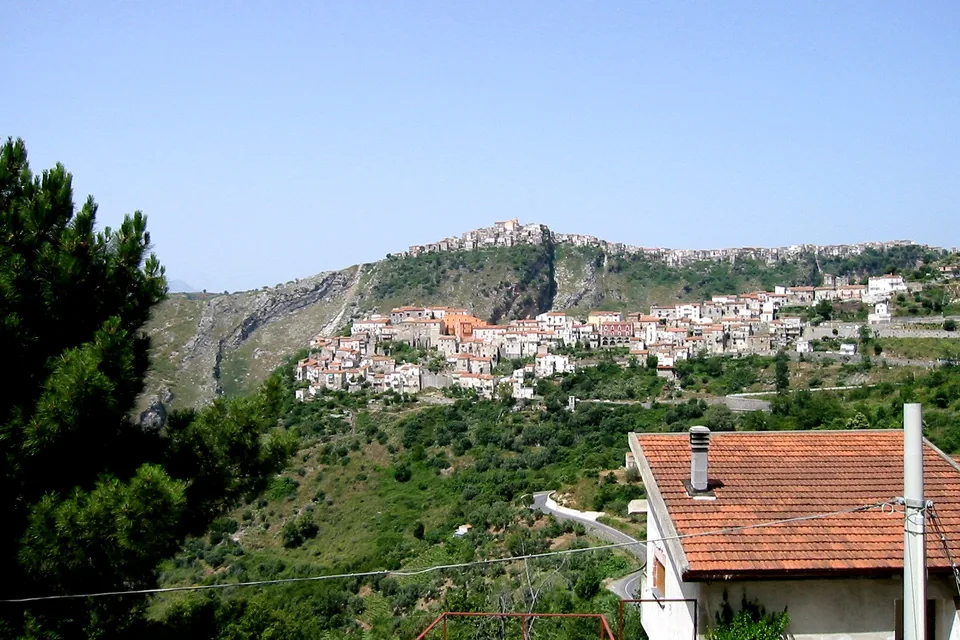
Grisolia (CS), Calabria: 2,176 residents, 51.75 km². The official facts of the municipality, its town council website and its registered accommodation.
Read the guide →Photo: Lorenzo Caputo James / Wikimedia Commons — CC BY-SA 4.0 · Resized and converted to WebP.

Maierà
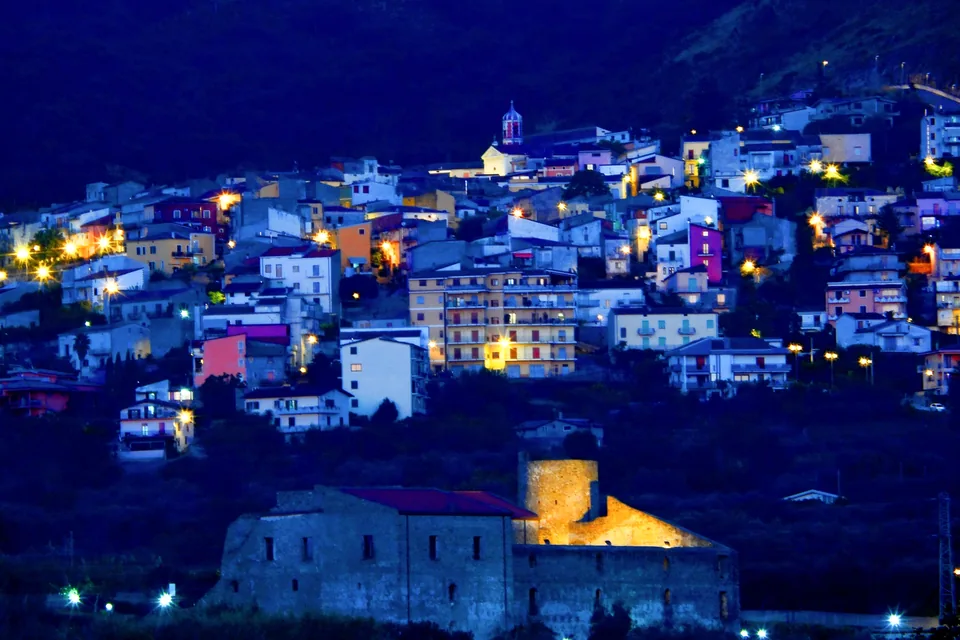
Maierà (CS), Calabria: 1,107 residents, 17.78 km². The official facts of the municipality, its town council website and its registered accommodation.
Read the guide →Photo: AlMare / Wikimedia Commons — CC BY-SA 2.5 · Resized and converted to WebP.

Santa Maria del Cedro
Santa Maria del Cedro (CS), Calabria: 5,143 residents, 18.41 km². The official facts of the municipality, its town council website and its registered accommodation.
Read the guide →Photo: Lorenzo Caputo James / Wikimedia Commons — CC BY-SA 4.0 · Resized and converted to WebP.

Cosenza
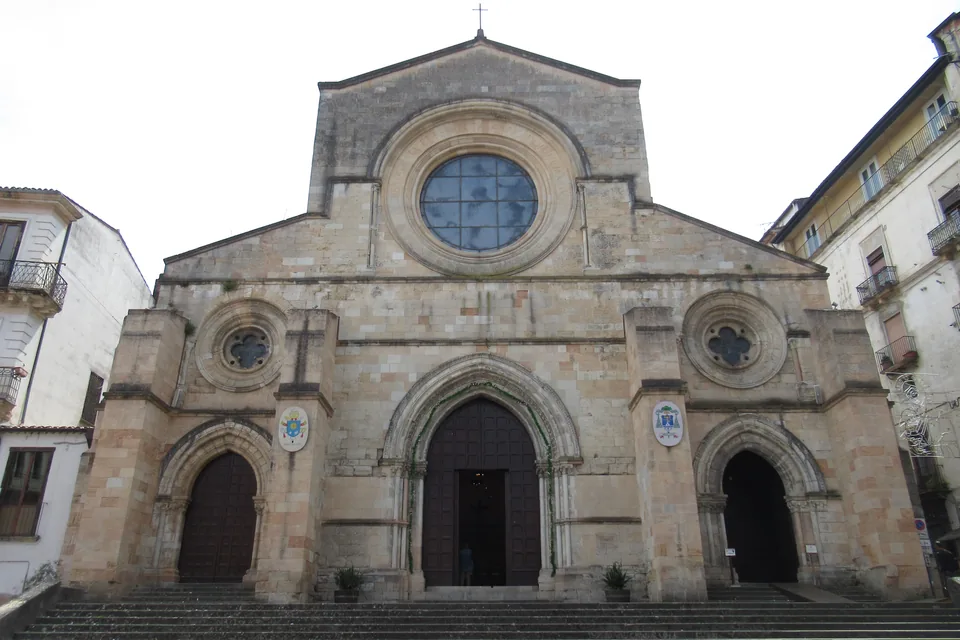
The capital of the Bruttii at the confluence of the Crati and the Busento: the old town on Colle Pancrazio with the cathedral consecrated in 1222 and the Swabian Castle, the Bruttii Museum and the Galleria Nazionale, Corso Mazzini with the MAB sculptures, Calatrava's bridge, PDO dried figs and the Sila behind.
Read the guide →Photo: Superchilum / Wikimedia Commons — CC BY-SA 4.0 · Resized and converted to WebP.
