

Why go
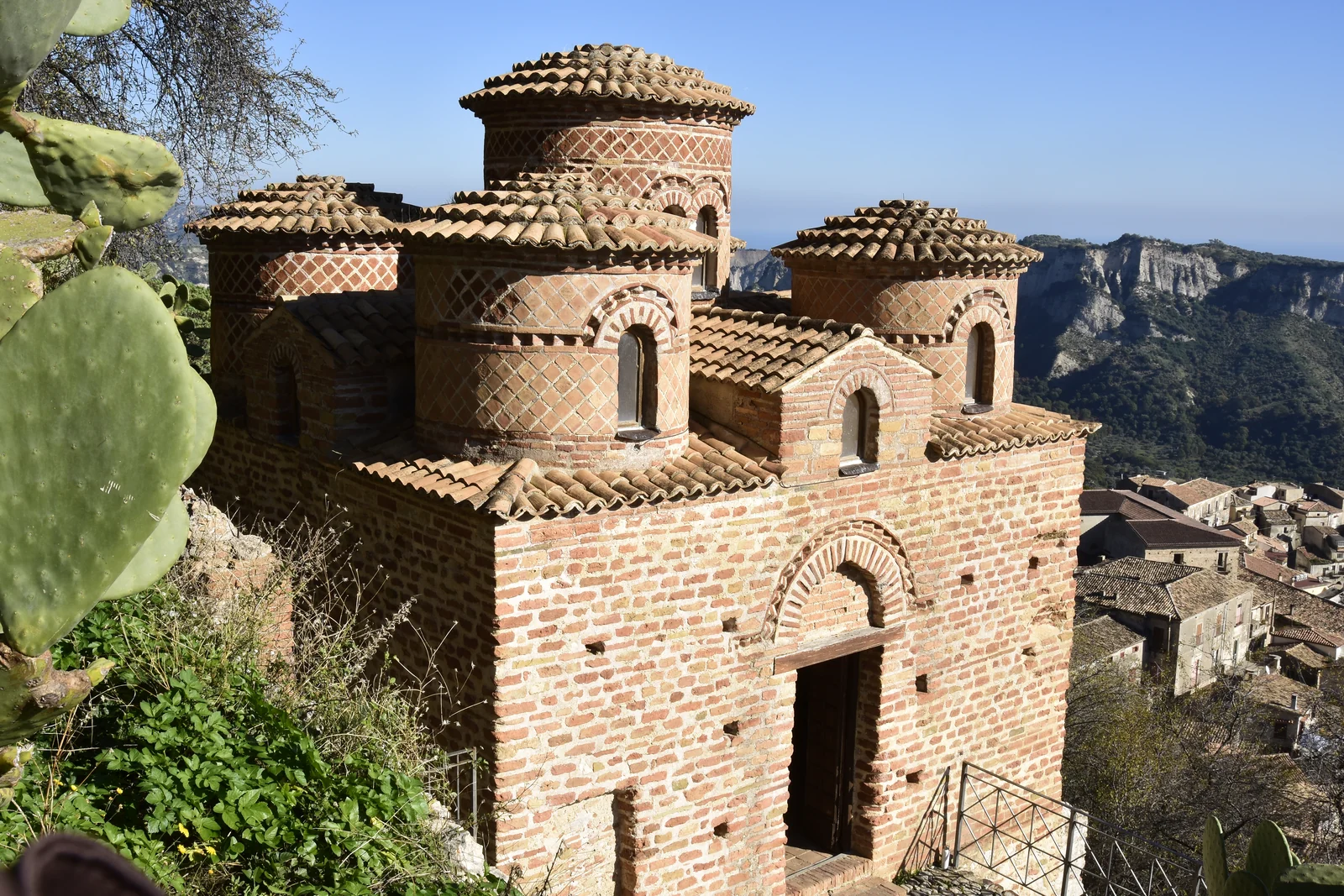
People come to Stilo above all for the Cattolica, the small Byzantine church on the slopes of Monte Consolino: the Ministry of Culture dates it to eastern monks who settled here between the late tenth and the early eleventh century, and describes it as an almost cubic volume with five small domes on cylindrical drums faced with brick. In one of its initiatives the Ministry calls it “the symbolic monument of Byzantine Calabria”.
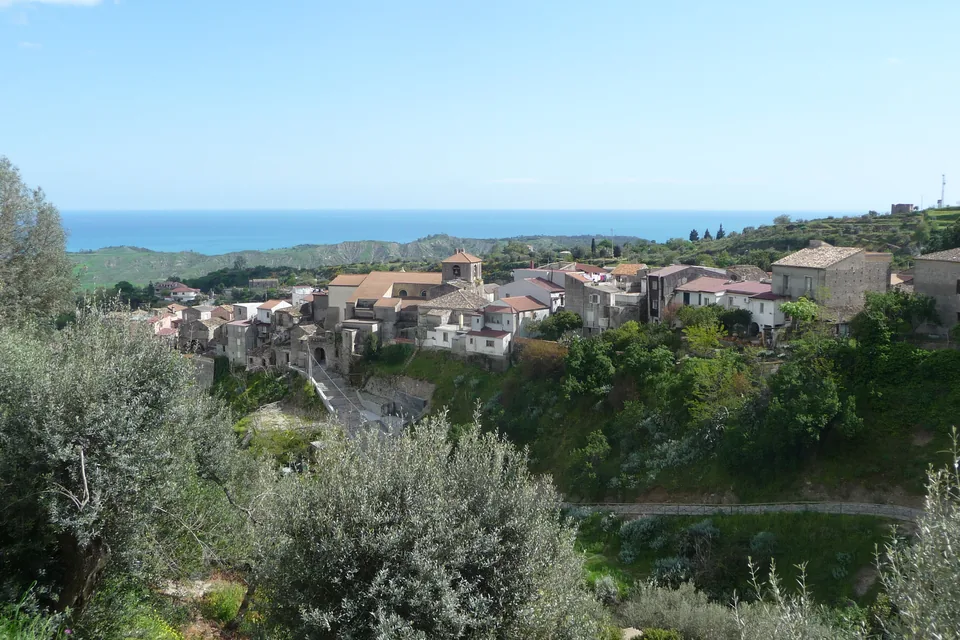
The Serre park authority describes the town as an amphitheatre clinging to the buttresses of the mountain, from which rise the noble houses, the remains of the town walls and the churches: the Mother Church with its pointed portal, San Francesco with its façade of 1743, San Giovanni Therestis, San Domenico beside the Stefanina gate. On top of the Consolino stand the ruins of the Norman castle, which overlooks the whole Stilaro valley.
Stilo is the birthplace of the philosopher Tommaso Campanella, born here in 1568, and every summer, on the first Sunday of August, the town hosts the Palio di Ribusa, a re-enactment of the time when Stilo was a county. The town council presents it as one of the most beautiful villages in Italy; its territory also includes, among the woods of the Serre regional nature park, the Ferdinandea, the old Bourbon foundry.
Sources: Ministero della cultura — La Cattolica, Stilo (ultimo aggiornamento 17 novembre 2026) · Ministero della cultura — «Stilo: dai monaci bizantini a Fra Tommaso Campanella», #domenicalmuseo (26 novembre 2024) · Ente Parco naturale regionale delle Serre — Stilo · Istituto della Enciclopedia Italiana, Dizionario Biografico degli Italiani — Campanella, Tommaso (Luigi Firpo, 1974) · Comune di Stilo — Palio di Ribusa, 1-3 agosto 2025 (aggiornato il 23 giugno 2025) · Comune di Stilo, sito istituzionale · Ente Parco naturale regionale delle Serre — Beni culturali
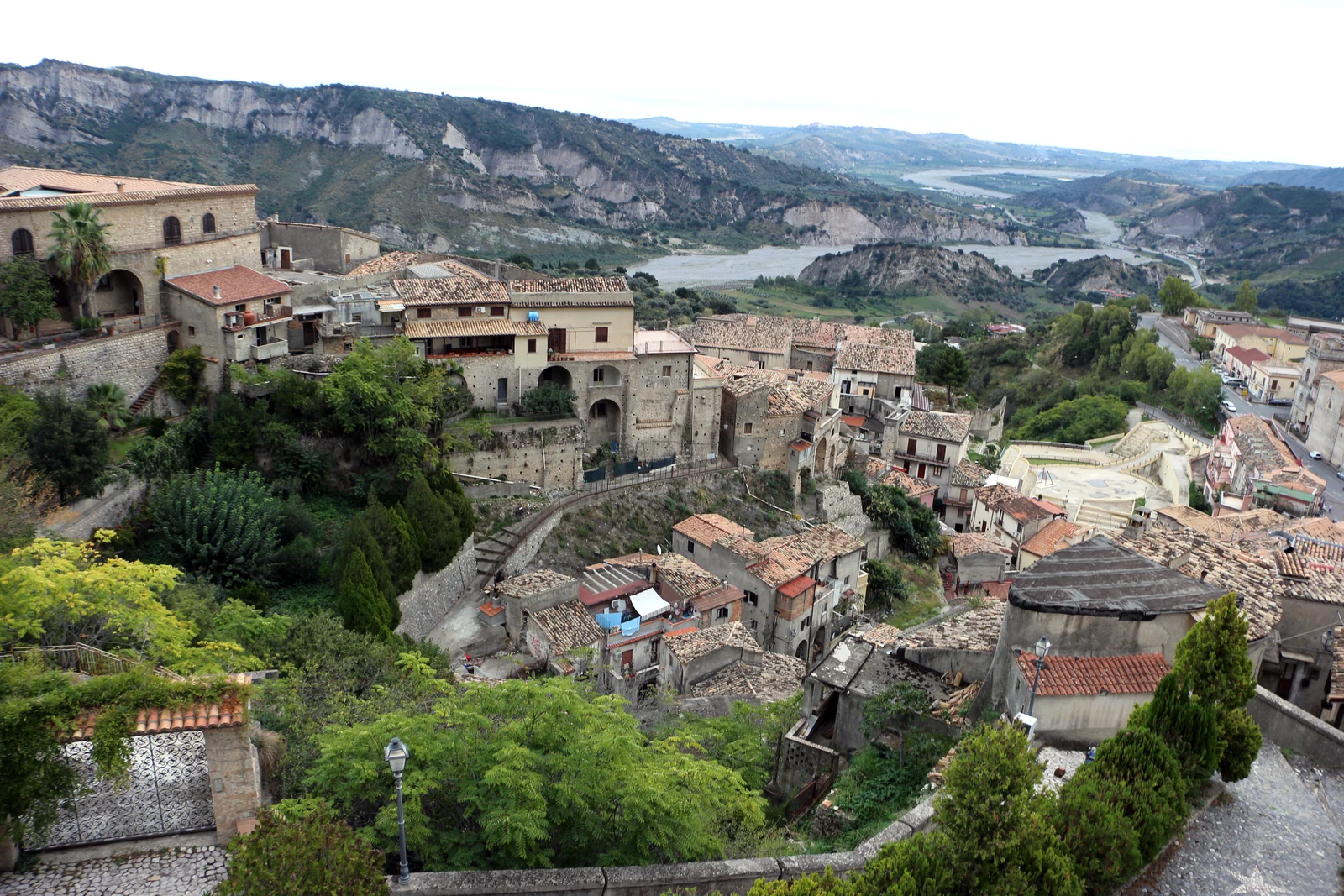
Photo: Sailko / Wikimedia Commons — CC BY 3.0 · Resized and converted to WebP.
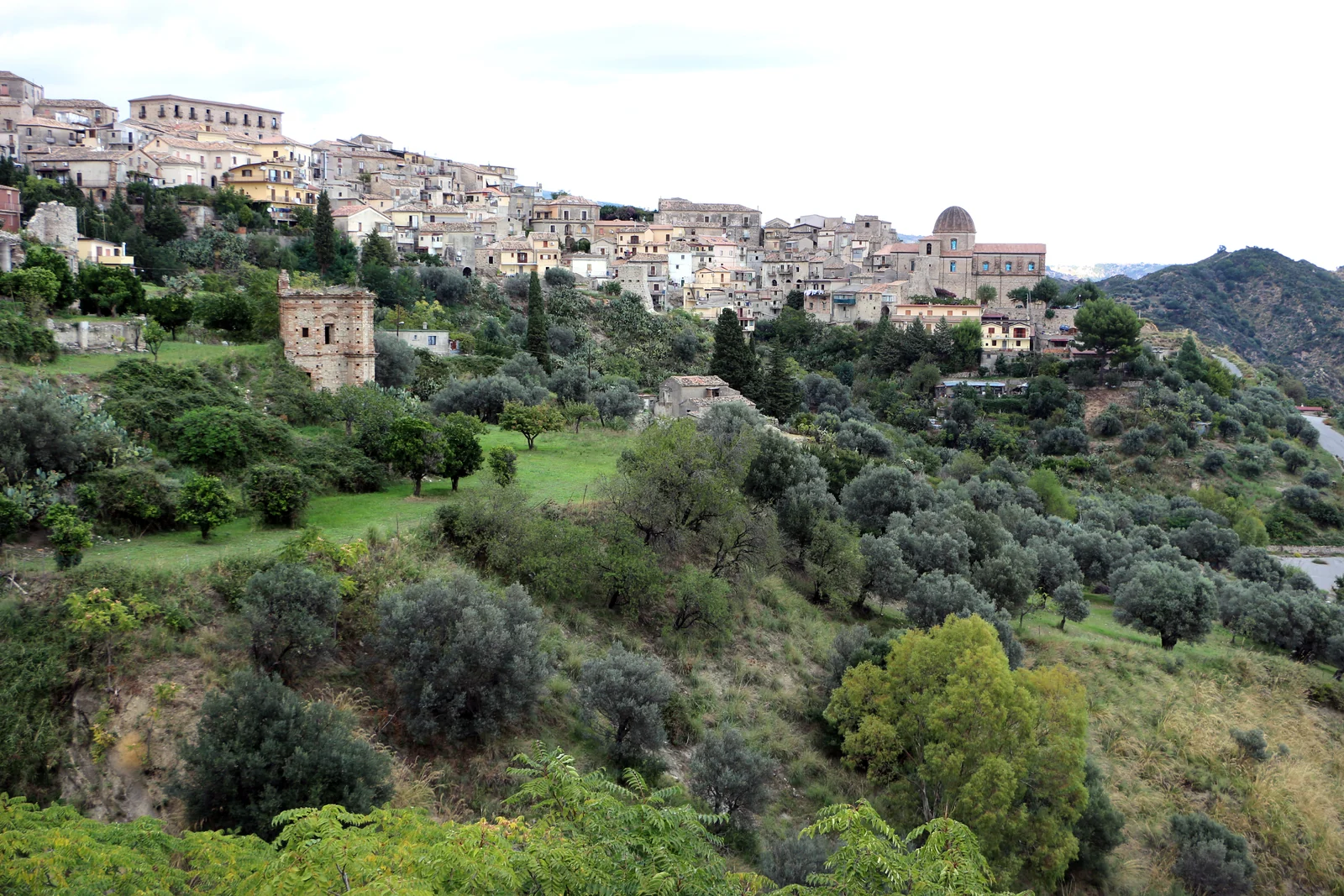
Photo: Sailko / Wikimedia Commons — CC BY 3.0 · Resized and converted to WebP.
The municipality at a glance
Stilo is a municipality in the Metropolitan City of Reggio Calabria, in Calabria. Its ISTAT code is 080092. On 1 January 2025 it had 2,306 residents. The municipal territory covers 78.11 km² and ranges from -1 to 1,424 metres above sea level; the town hall stands at about 369 metres.
The municipal territory climbs from the Stilaro valley to the woods of the Serre: in its mountain part, in the middle of the Bosco di Stilo, lies the Ferdinandea. Stilo is one of the 26 municipalities of the Serre regional nature park.
Sources: ISTAT, Codici statistici delle unità amministrative territoriali: elenco dei comuni al 21 febbraio 2026 · ISTAT, Popolazione residente per età, sesso e stato civile al 1° gennaio 2025 (POSAS) · ISTAT, Principali statistiche geografiche sui comuni: superficie e altimetria al 31 dicembre 2021 · Ente Parco naturale regionale delle Serre — Beni culturali · Ente Parco naturale regionale delle Serre — I Comuni del Parco · Ente Parco naturale regionale delle Serre — Stilo
History
According to the Serre park authority, Stilo arose after the Syracusans destroyed ancient Kaulon in 388 BC and was rebuilt several times, under the names Consilinum and later Stilida. It grew in importance under the Byzantine Empire: the Ministry of Culture notes that in the last period of Byzantine rule eastern monks settled on the slopes of Monte Consolino and founded the Cattolica there, and that Stilo, like the rest of Calabria, gained from the culture the monks brought.
The Normans fortified the Consolino. The town council writes that the castle was built by Roger the Norman on a spot from which the valley could be controlled down to the Ionian Sea, and quotes the historian Oreste Dito: between 1054 and 1065 Catanzaro, Squillace and Stilo fell to the Normans. The park authority dates the ruins to King Roger II, between the late eleventh and the early twelfth century. In 1269 the castle appears among those of the Royal Court; under Charles of Anjou political prisoners were held there, in cells cut into the cliff that could only be entered with a hoist. It was damaged in the wars between the French and the Spanish; according to the town council, the French dealt the final blow in 1806.
From the Normans Stilo received the status of Royal Demesne, which kept it free of a feudal lord. In 1540 Charles V sold it to the Concublet family and it became a county; about a century later, thanks to Philip IV, it regained its autonomy and kept it until feudalism was abolished in 1804 (park authority). The town council recalls that the county gathered the fiefs of Pazzano, Stignano, Guardavalle, Riace and Camini. The Mother Church of Santa Maria d’Ognissanti, founded in the fourteenth century, and San Giovanni Therestis were rebuilt after the earthquake of 1783; since 1662 San Giovanni has kept the relics of Saint John the Reaper, an Italo-Greek monk who died in Stilo in 1054.
On 5 September 1568 Giovan Domenico Campanella was born in Stilo, in a humble house in the borgo outside the walls; as a Dominican he took the name Tommaso (Dizionario Biografico degli Italiani). In 1598 he returned to Stilo, to the Dominican convent of Santa Maria di Gesù; in his sermons of 1599 he announced great upheavals, and that year he was among the leaders of the conspiracy against the Spanish, uncovered in August, which cost him decades of imprisonment in Naples, where in 1602 he wrote “The City of the Sun”. He died in Paris on 21 May 1639. In 1923 Stilo dedicated to him the bronze statue by Ernesto Gazzeri, unveiled by the philosopher Giovanni Gentile (town council).
In the nineteenth century, in the municipal woods, the Bourbons completed in 1841 the Ferdinandea, a large cannon foundry linked to the one at Mongiana and dedicated to Ferdinand II. After Italian unification the ironworks passed to Achille Fazzari, a Garibaldian colonel, who, when public orders dried up, made it his mountain residence and hosted there, among others, the writer Matilde Serao (park authority, town council).
Sources: Ente Parco naturale regionale delle Serre — Stilo · Ministero della cultura — La Cattolica, Stilo (ultimo aggiornamento 17 novembre 2026) · Comune di Stilo — Il Castello Normanno (aggiornato il 22 agosto 2024) · Comune di Stilo — Vivere il Comune: Luoghi · Comune di Stilo — Palio di Ribusa, 1-3 agosto 2025 (aggiornato il 23 giugno 2025) · Istituto della Enciclopedia Italiana, Dizionario Biografico degli Italiani — Campanella, Tommaso (Luigi Firpo, 1974) · Comune di Stilo — Monumento al Filosofo Campanella (aggiornato il 7 marzo 2024) · Ente Parco naturale regionale delle Serre — Beni culturali · Comune di Stilo — La Ferdinandea (aggiornato il 22 agosto 2024)
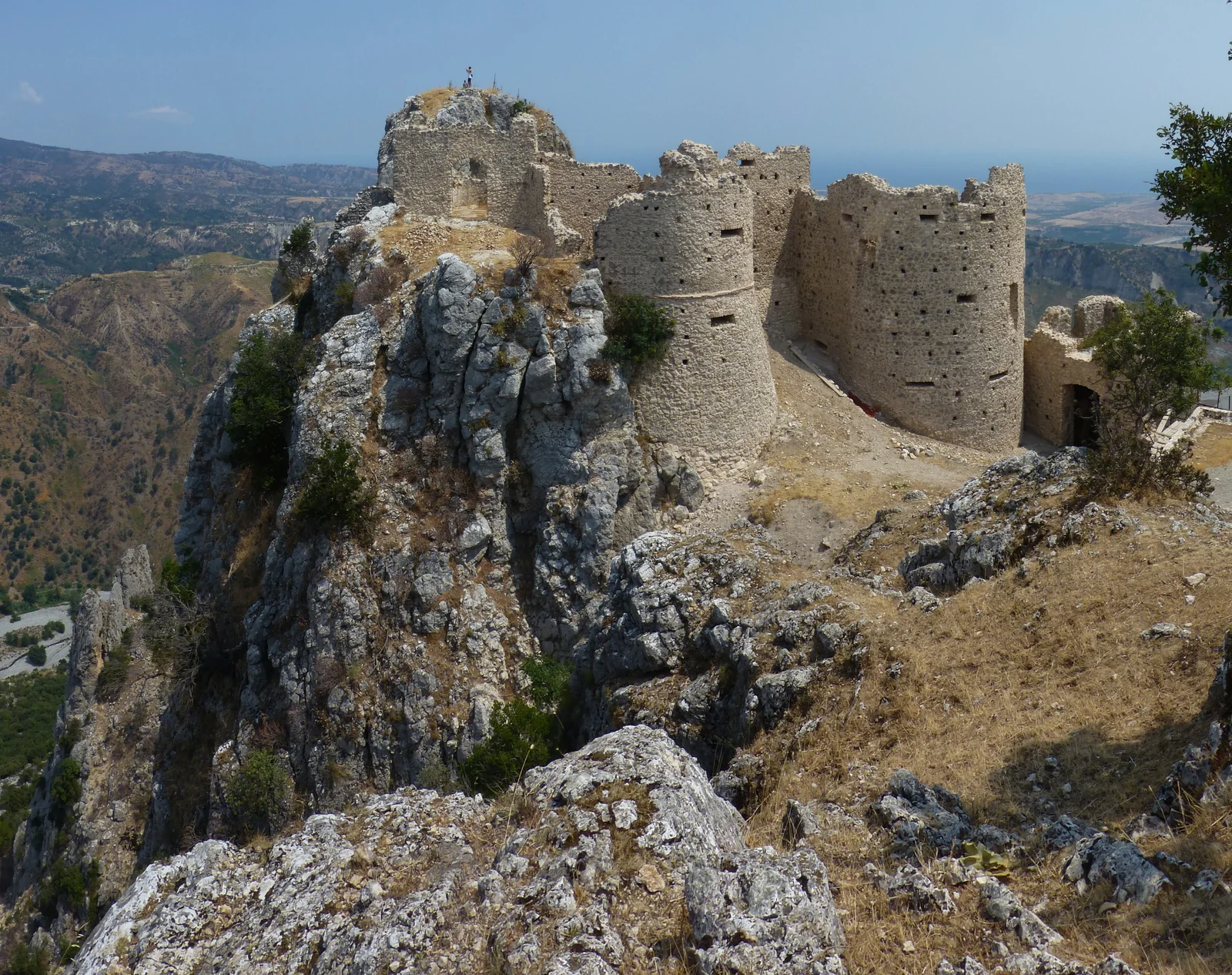
Photo: Marcuscalabresus / Wikimedia Commons — CC BY-SA 3.0 · Resized and converted to WebP.
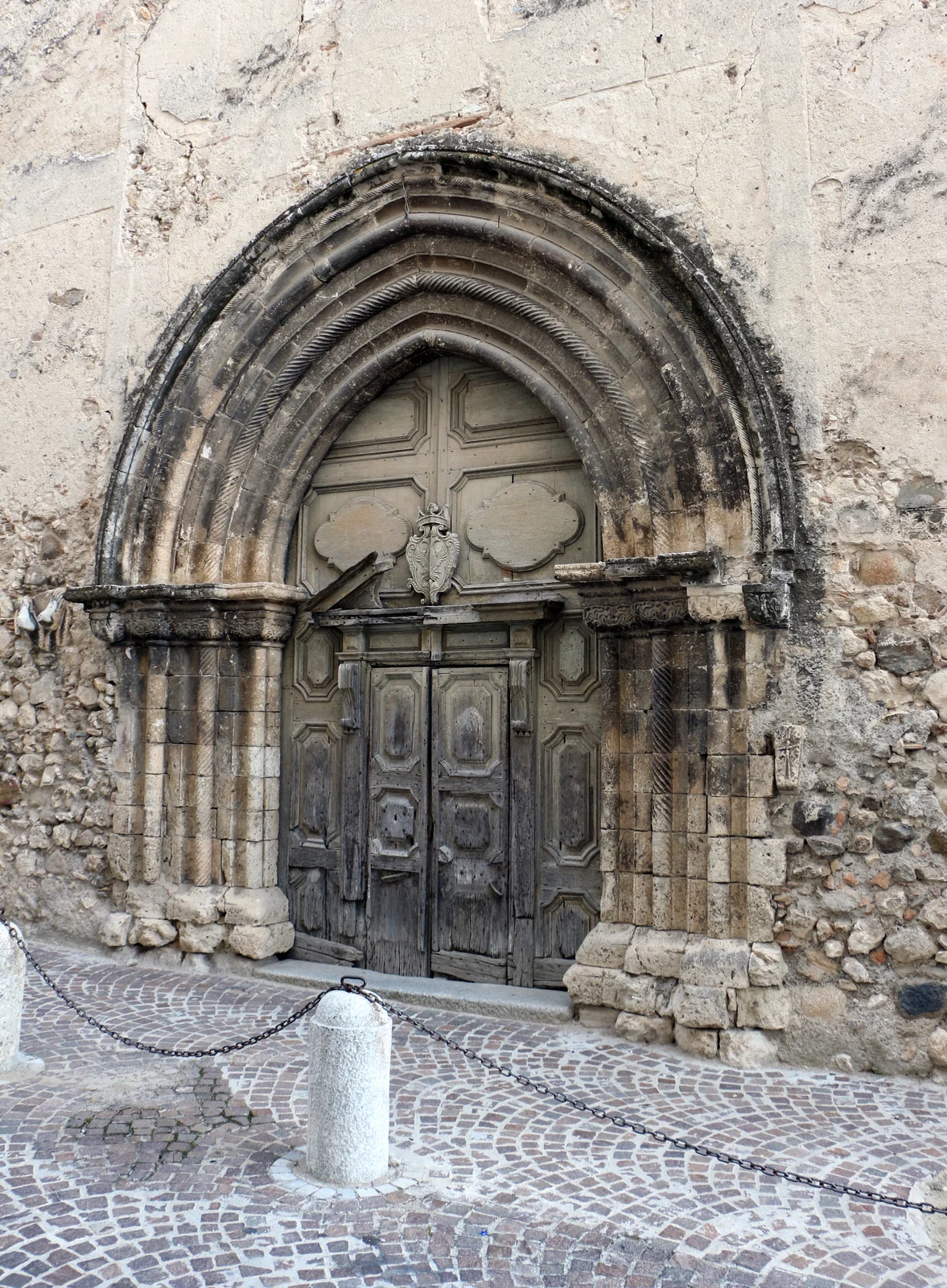
Photo: Sailko / Wikimedia Commons — CC BY 3.0 · Resized and converted to WebP.
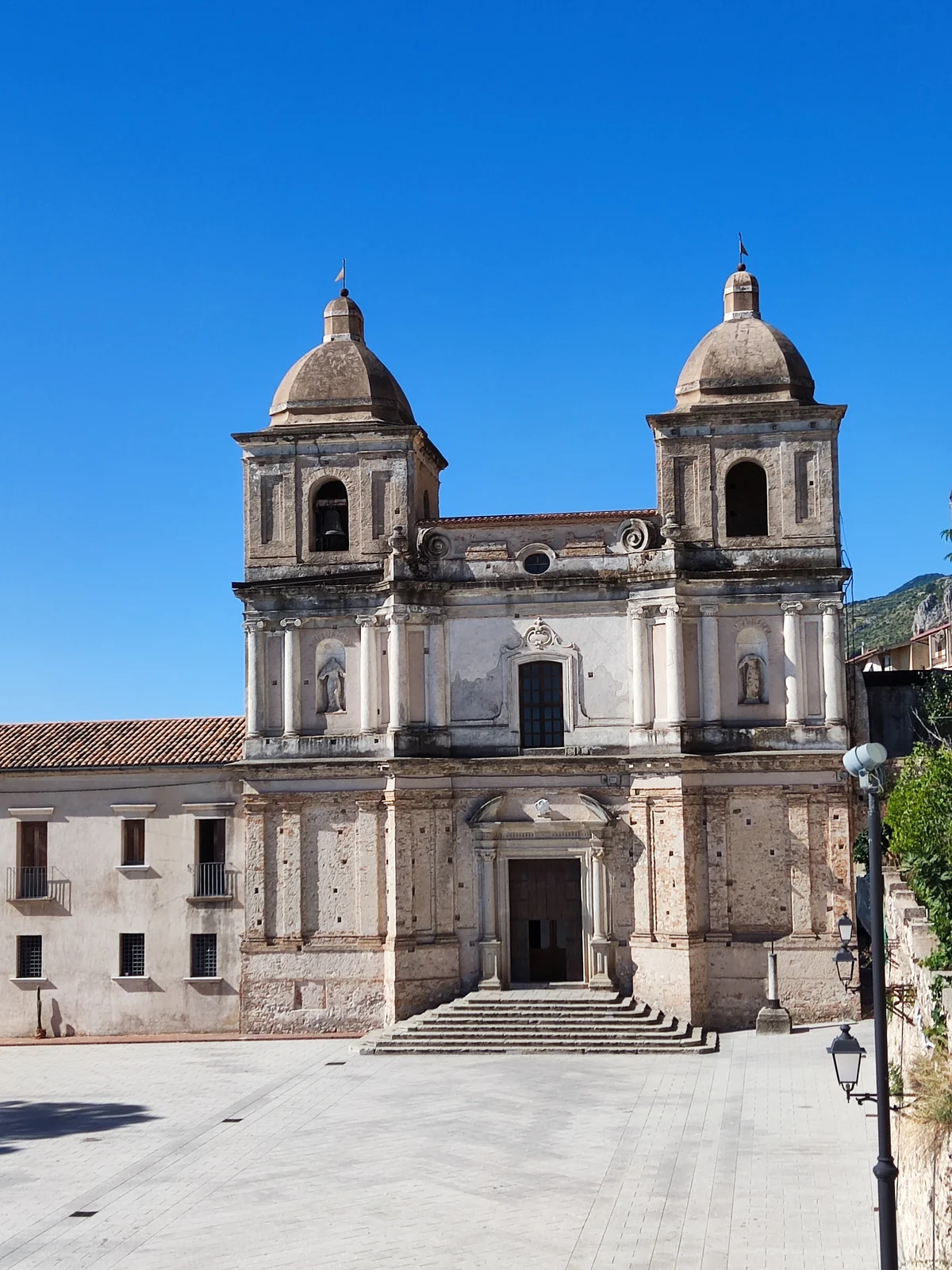
Photo: Marcuscalabresus / Wikimedia Commons — CC BY-SA 4.0 · Resized and converted to WebP.
What to see
The Cattolica stands in Via Cattolica, above the town, and is a state cultural site run by the Calabria regional museums directorate of the Ministry of Culture. Its name probably comes from the Greek “katholikon”, the main church of a monastic complex or of the hermits of an area. The town council describes it as almost square, about seven metres a side, with façades in bands of red brick and five cylindrical domes; the central one, higher than the others, has four two-light windows. Inside, four reused columns, each of a different material and workmanship, divide the space into nine squares and carry the drum of the central dome.
The first column on the right is carved with a jewelled cross and an inscription about the Epiphany; the first on the left bears two inscriptions in Arabic, one of them the profession of faith “there is no god but the one God”. The Ministry lists the possible explanations: a temporary use as a Muslim oratory, Arab craftsmen, or columns that arrived already inscribed. The frescoes were discovered in 1927 by Paolo Orsi; the restoration completed in 1981 revealed up to five overlapping layers (town council). Among the figures are the “Dormitio Virginis”, the Ascension with Christ in a mandorla carried by four angels, and the bishop saints Nicholas, Basil and John Chrysostom. The town council mentions a ramp for visitors who cannot walk; the Ministry lists guided visits among its services and publishes the ticket prices.
In the centre, in Piazza Duomo, the Mother Church of Santa Maria d’Ognissanti has a gabled façade with a pointed portal in local stone and, set into the outer wall, a fragment of Roman sculpture with two feet. The park authority writes that it has been closed to worship for more than thirty years because of structural problems and that its altarpiece, the Madonna d’Ognissanti by Battistello Caracciolo (1618-1619), is kept in San Giovanni Nuovo; in August 2024 the town council opened the cathedral as an exception for a concert in the square. Beside the Dominican church stands the Stefanina gate, the only well-preserved one of the five medieval gates, with a portal of granite blocks and a round tower on one side; of the Porta Reale only fragments of wall remain.
San Francesco d’Assisi has a granite façade with a curved and broken profile dated 1743, the work of craftsmen from Serra San Bruno, and inside the wooden altar of Santa Maria del Borgo and the marble Immaculate Conception by Michelangelo Naccherino. San Giovanni Therestis, also called San Giovanni Nuovo, has a façade with two bell towers, stucco work by the Serra San Bruno architect Domenico Barillari, the saint’s reliquary altar and a cloister with a canopied well. San Domenico, where Campanella lived, keeps its Baroque layout and dome, but the interior has suffered from long neglect (park authority). In Piazza Carnovale, in front of San Francesco, stands the monument to Campanella; in Via Tommaso Campanella the Fontana Gebbia, also called the Dolphin Fountain, with three eighteenth-century arches and two intertwined stone dolphins (town council).
At the top of Monte Consolino a path climbs to the ruins of the Norman castle: the town council describes the rectangular plan, the square tower known as the Altavilla tower, the chapel and the large cistern that collected rainwater from the roofs; on the summit, above the castle, stood a last stronghold like a small acropolis.
Sources: Ministero della cultura — La Cattolica, Stilo (ultimo aggiornamento 17 novembre 2026) · Comune di Stilo — La Cattolica (aggiornato il 22 agosto 2024) · Ente Parco naturale regionale delle Serre — Stilo · Comune di Stilo — Orchestra di fiati Città di Pazzano in piazza Duomo, 19 agosto 2024 · Comune di Stilo — Le Porte medievali (aggiornato il 7 marzo 2024) · Comune di Stilo — Monumento al Filosofo Campanella (aggiornato il 7 marzo 2024) · Comune di Stilo — Fontana Gebbia (aggiornato il 7 gennaio 2025) · Comune di Stilo — Il Castello Normanno (aggiornato il 22 agosto 2024)
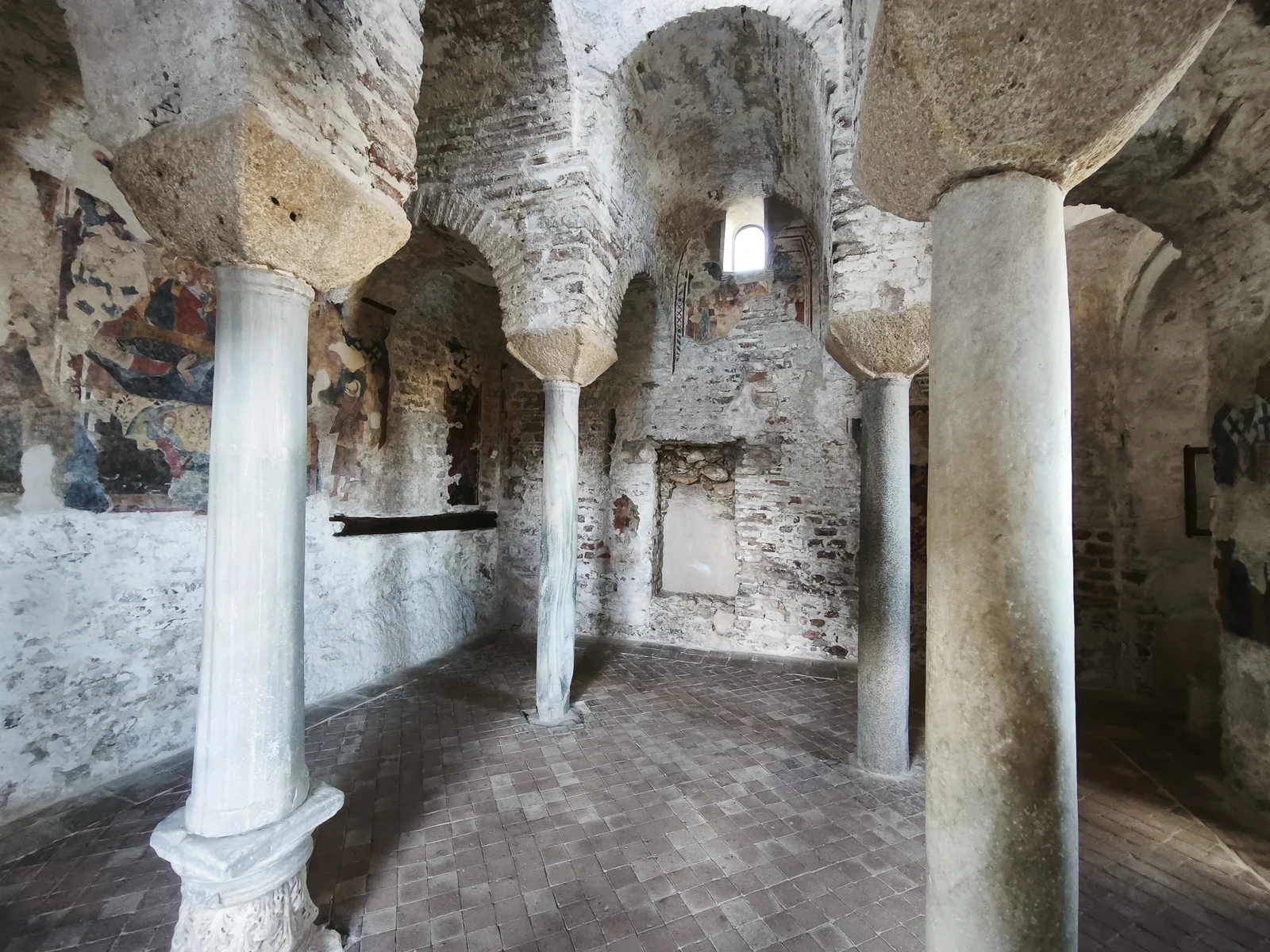
Photo: Andrea Martini di Cigala / Wikimedia Commons — CC BY-SA 4.0 · Resized and converted to WebP.
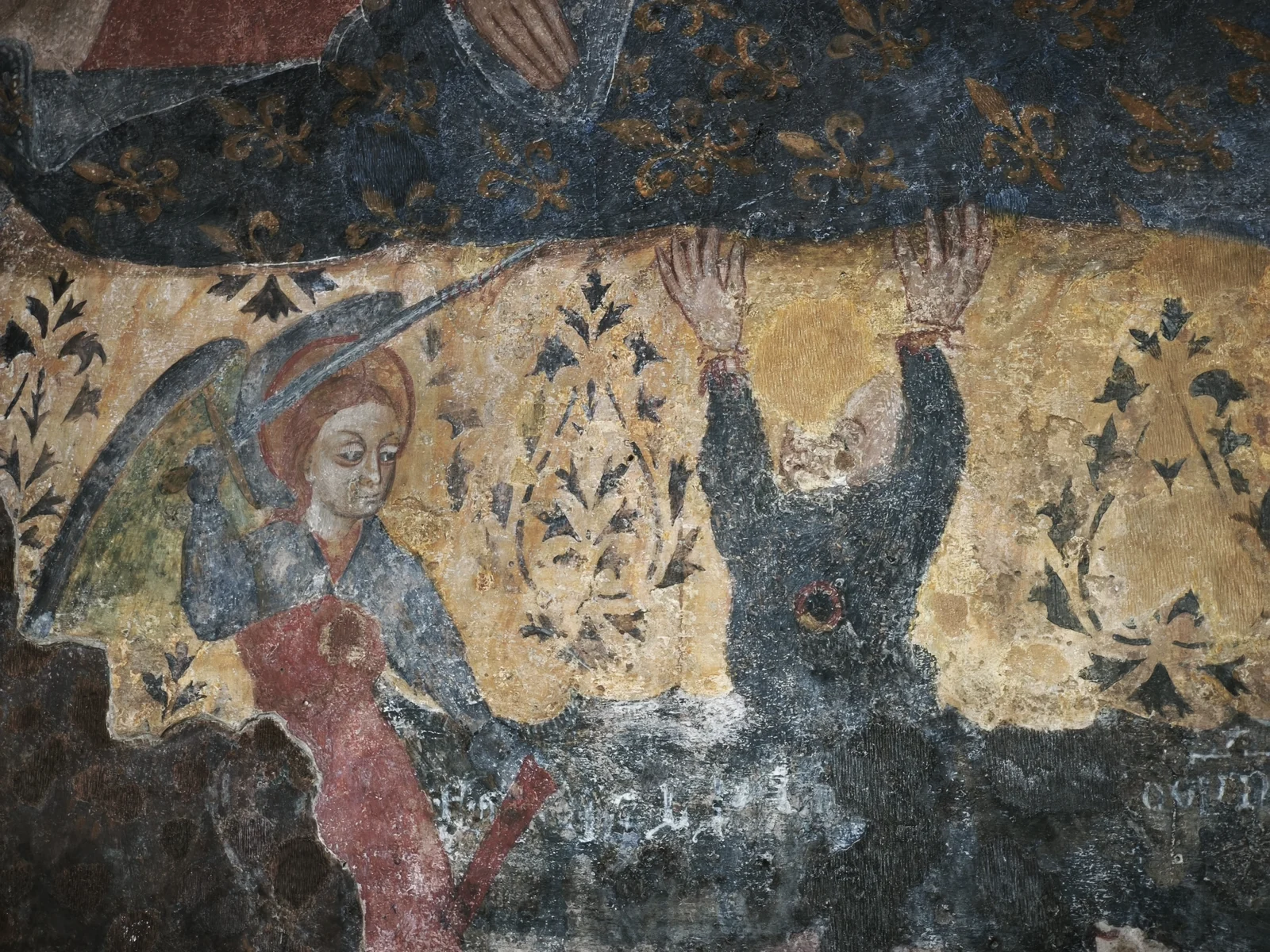
Photo: Andrea Martini di Cigala / Wikimedia Commons — CC BY-SA 4.0 · Resized and converted to WebP.
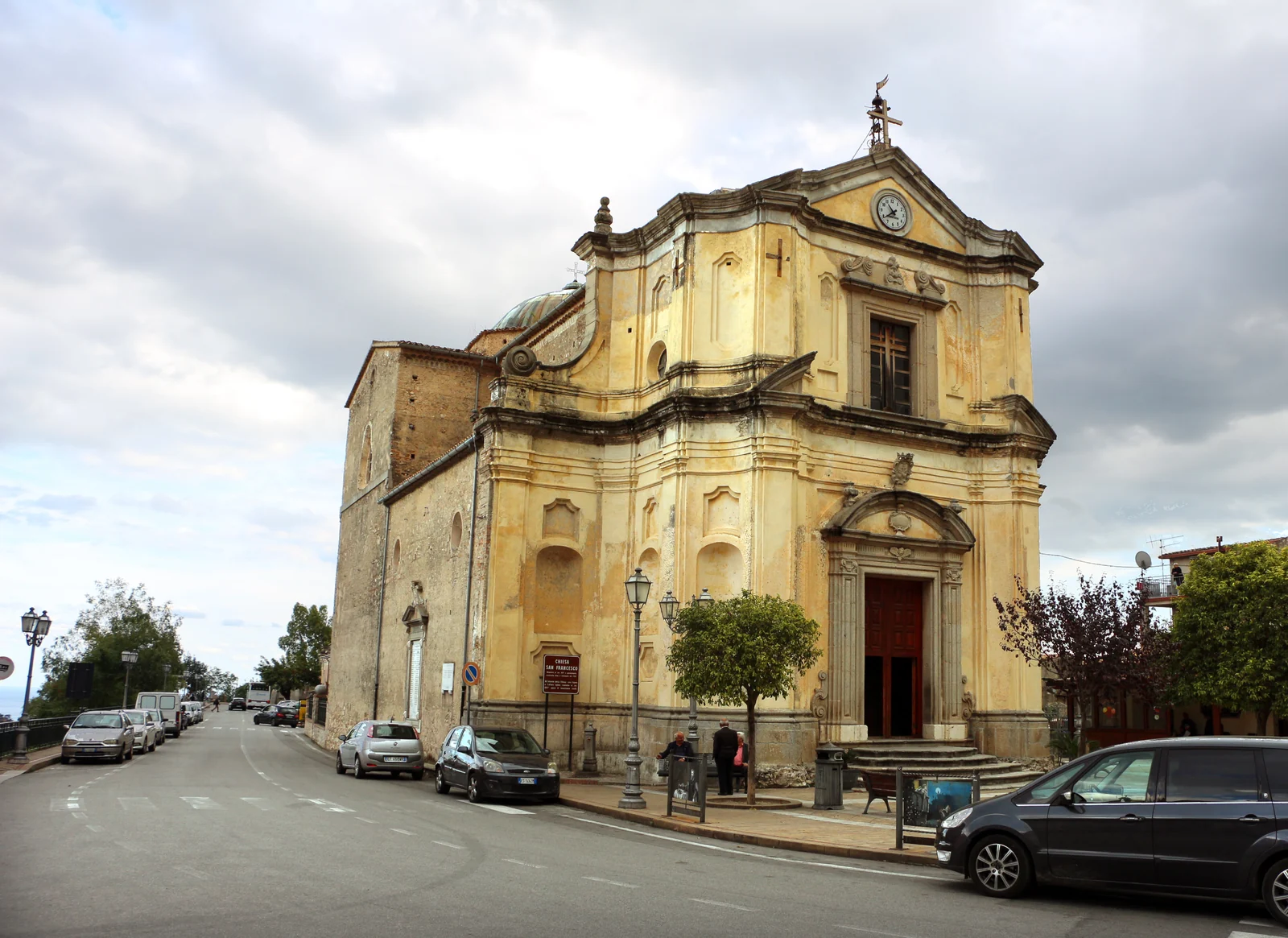
Photo: Sailko / Wikimedia Commons — CC BY 3.0 · Resized and converted to WebP.
Food and wine
Stilo is one of the ten municipalities in the production area of the “Bivongi” controlled designation of origin wine, registered in the European Union as a PDO (eAmbrosia, PDO-IT-A0605). The Ministry of Agriculture’s specification covers the whole territory of Bivongi, Camini, Caulonia, Monasterace, Pazzano, Placanica, Riace, Stignano and Stilo, in the province of Reggio Calabria, and of Guardavalle, in the province of Catanzaro.
The DOC provides for a white, a red and a rosé, and for the red also a novello and a riserva, aged for at least two years. The red and the rosé are made from Gaglioppo and Greco nero, together 30 to 50 per cent, and from Nocera, Calabrese and Castiglione, together 30 to 50 per cent; the white from Greco bianco, Guardavalle and Montonico bianco, and from Malvasia bianca and Ansonica. The vineyards must lie on hills or foothills, no higher than 800 metres. The specification describes the red as dry, harmonious, sometimes fruity, turning garnet with age.
Along the path from the Ferdinandea to the Marmarico falls, the Serre park authority points out the strawberry tree, called “cacummaru” in Calabria: its autumn flowers give the last honey of the season, slightly bitter and fragrant.
Sources: MASAF — Elenchi e disciplinari dei vini DOP e IGP: disciplinare della DOC «Bivongi» (DM 24.05.1996, ultima modifica DM 7.03.2014; archivio «Disciplinari DOP dalla lettera A alla lettera D») · Commissione europea, registro eAmbrosia — «Bivongi», DOP vino, PDO-IT-A0605, registrata · Ente Parco naturale regionale delle Serre — Sentiero Ferdinandea-Marmarico
Things to do
The climb to the castle is a hike: the Serre park authority describes it as a steep and tiring route, to be done with hiking gear and rewarded by the view over the whole Stilaro valley. The town council notes that along the Consolino the defensive rings can still be made out, with three gates and two posts named after the old siege engines, “ingenia” and “mangana”.
Some of the trails of the Serre regional nature park start in Stilo’s territory. The Ferdinandea-Marmarico route leaves from the square in front of the Ferdinandea estate, descends for about five hours between 1,060 and 627 metres, with CAI waymarks, and reaches the foot of the Marmarico falls, in the municipality of Bivongi: 114 metres, the highest waterfall in Calabria. The park rates it medium-hard because of exposed stretches and rough ground. The Pecoraro-Lu Bellu trail towards Serra San Bruno, of medium difficulty and about three hours, also starts from Stilo.
At the Ferdinandea you can see the palace with its courtyard and the small pond inside a cast-iron balustrade, the cast-iron shrine topped by a cannonball dedicated to King Ferdinand, the king’s granite bust and the “provinces” staircase painted with the coats of arms of the provinces of the time; about a kilometre into the woods lies Lake Giulia, the reservoir of the Marmarico power station (park authority). The town council mentions the estate’s garden and its chapel, which still stands.
Sources: Ente Parco naturale regionale delle Serre — Stilo · Comune di Stilo — Il Castello Normanno (aggiornato il 22 agosto 2024) · Ente Parco naturale regionale delle Serre — Sentiero Ferdinandea-Marmarico · Ente Parco naturale regionale delle Serre — Sentieri naturalistici · Ente Parco naturale regionale delle Serre — Beni culturali · Comune di Stilo — La Ferdinandea (aggiornato il 22 agosto 2024)
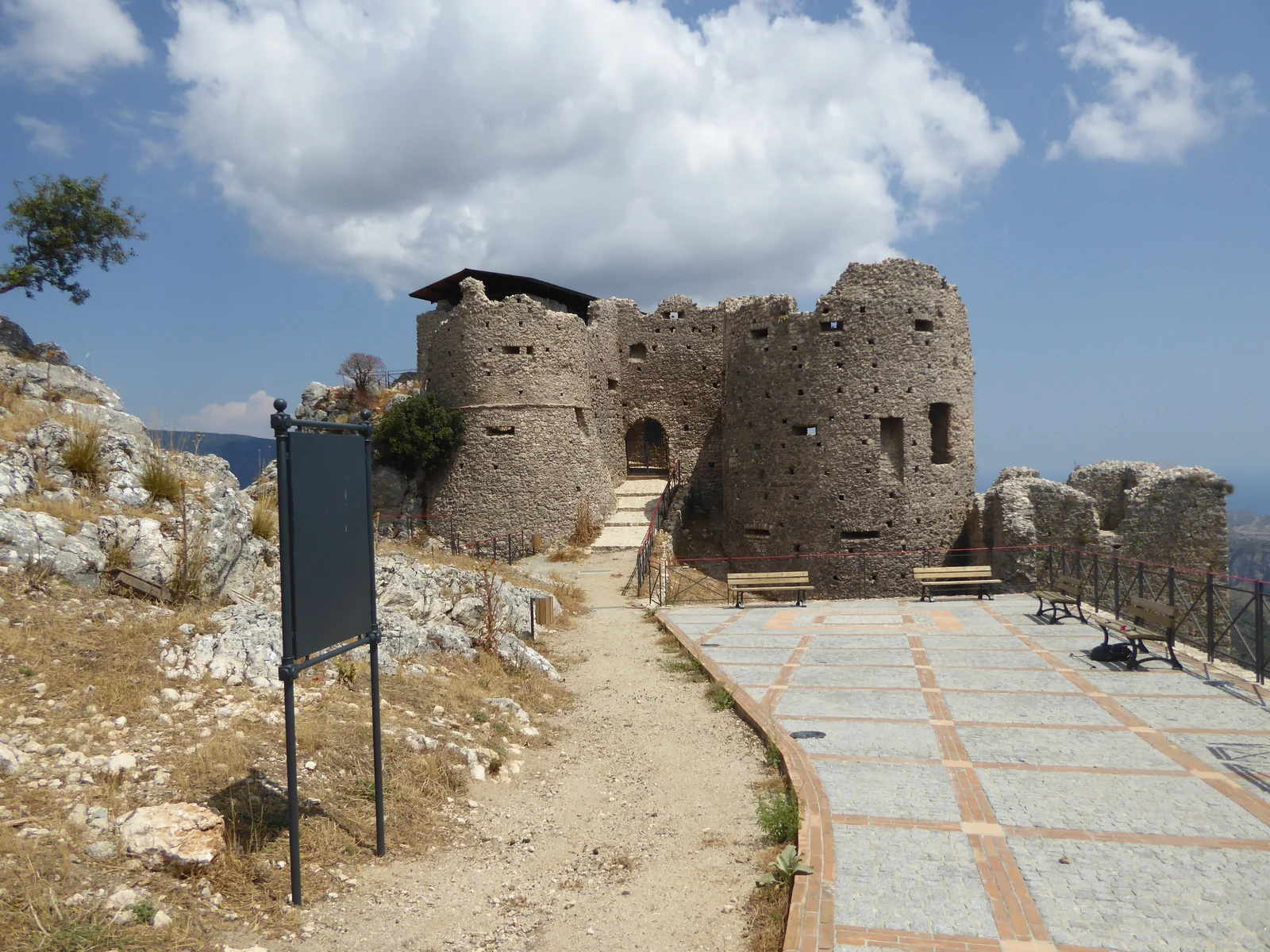
Photo: Marcuscalabresus / Wikimedia Commons — CC BY-SA 4.0 · Resized and converted to WebP.
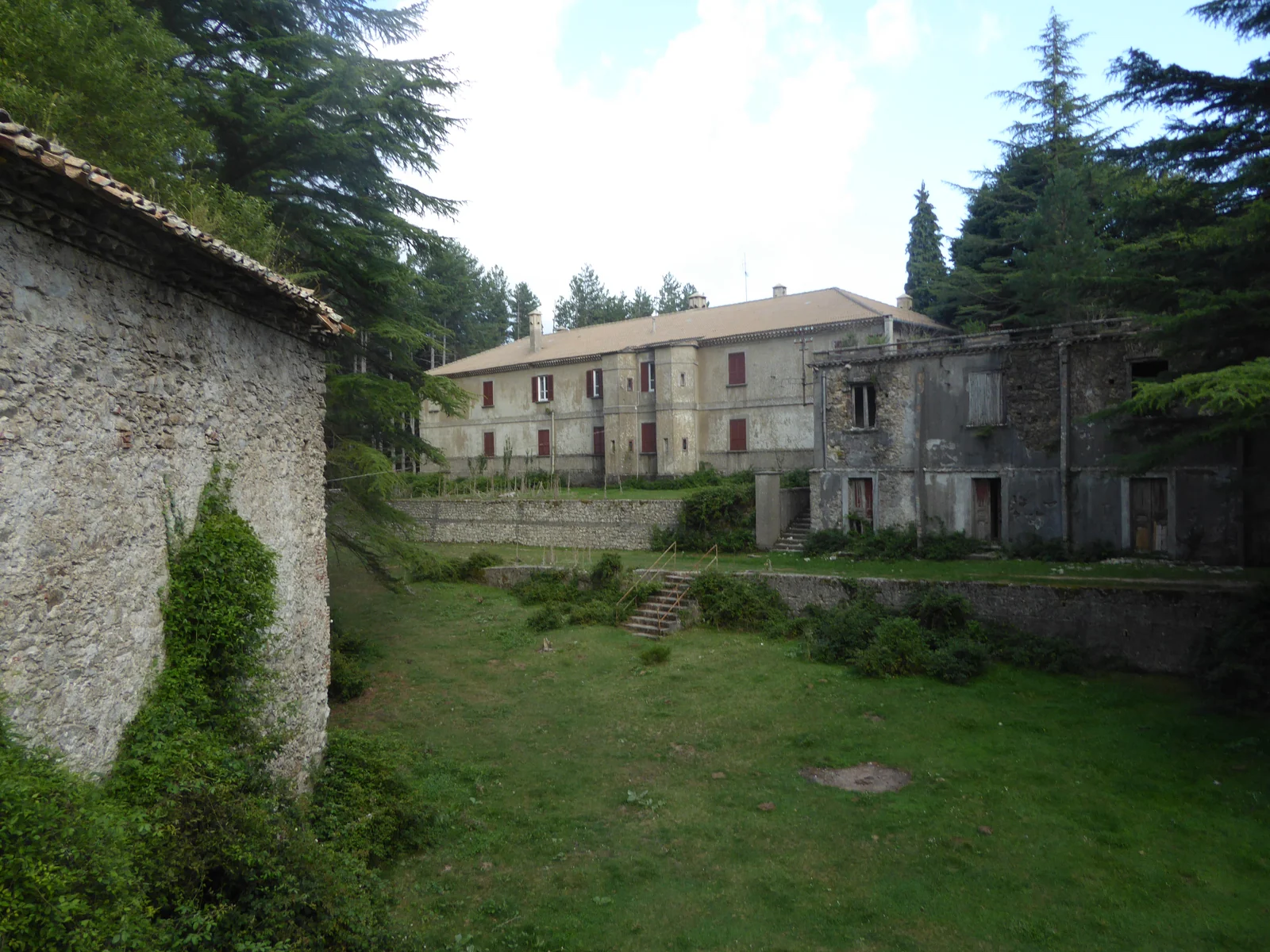
Photo: Marcuscalabresus / Wikimedia Commons — CC BY-SA 4.0 · Resized and converted to WebP.
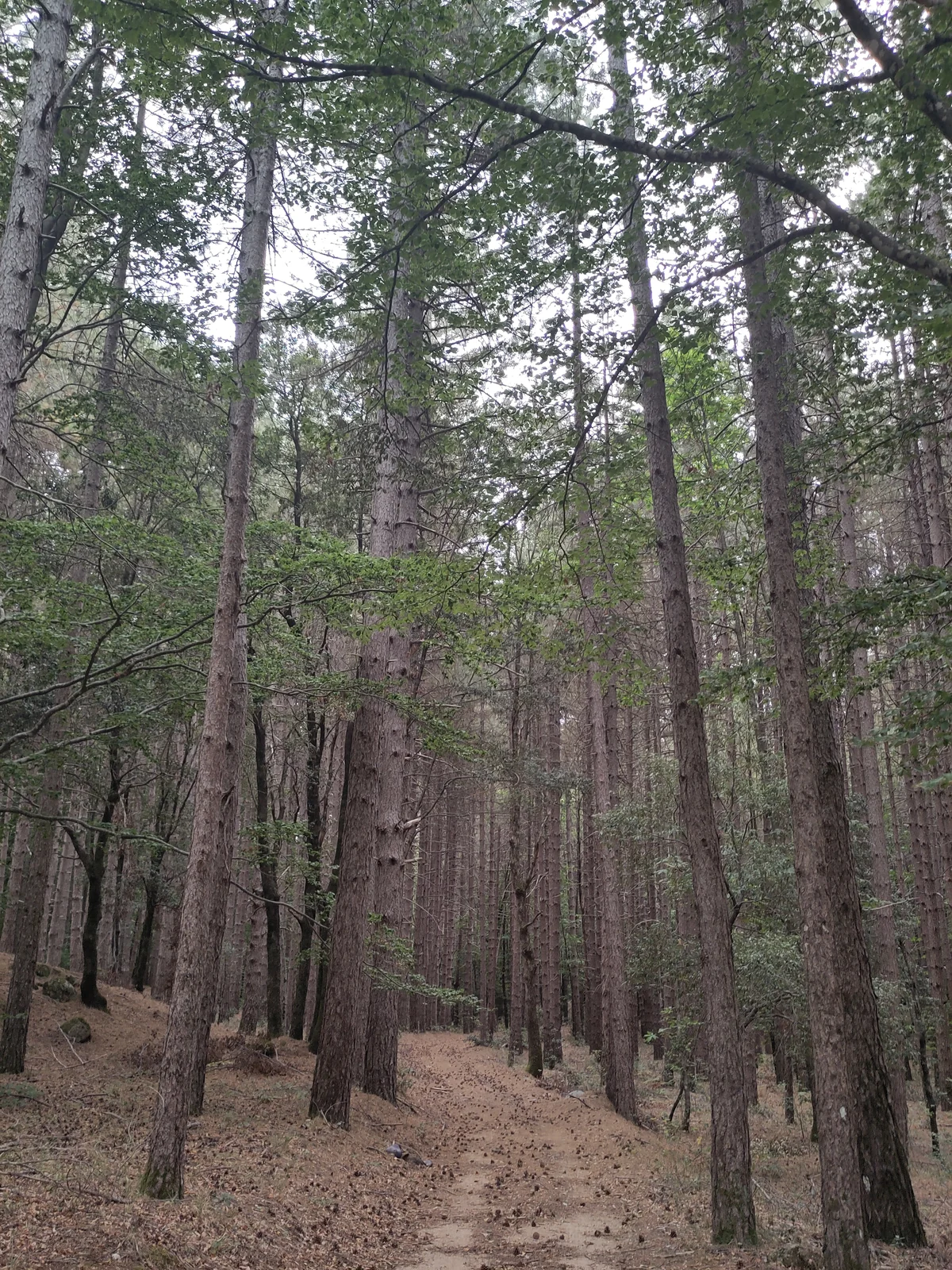
Photo: Marcuscalabresus / Wikimedia Commons — CC BY-SA 4.0 · Resized and converted to WebP.
When to go
The event of the year is the Palio di Ribusa: according to the town council it takes place every summer on the first Sunday of August and is the largest historical re-enactment in Calabria of medieval and Renaissance times, when Stilo was a county. Its name comes from the fair held in Stilo since the seventeenth century. In 2025 the town council listed it from 1 to 3 August, through the streets of the town, with tickets for the arena and for parking. The Serre park authority counts it among the occasions when the community gathers with emigrants who have come home and with visitors.
In December the people of Stilo celebrate the novena and feast of the Immaculate Conception in the church of San Giovanni Therestis, which keeps the nineteenth-century statue the town is deeply devoted to (park authority). The town council recalls that until the first half of the twentieth century the feast of the Assumption was celebrated in the Cattolica, and that some rites are still held there, such as the Orthodox Easter led by Greek monks.
The Cattolica is a state site: on the first Sunday of the month it usually takes part in #domenicalmuseo, the Ministry of Culture’s free-entry day, as on 1 December 2024. Check the Ministry’s page before setting out: in November 2026 it announced a temporary closure until 23 November to secure the site against the risk of falling rocks.
Sources: Comune di Stilo — Palio di Ribusa, 1-3 agosto 2025 (aggiornato il 23 giugno 2025) · Ente Parco naturale regionale delle Serre — Tradizioni locali · Ente Parco naturale regionale delle Serre — Stilo · Comune di Stilo — La Cattolica (aggiornato il 22 agosto 2024) · Ministero della cultura — «Stilo: dai monaci bizantini a Fra Tommaso Campanella», #domenicalmuseo (26 novembre 2024) · Ministero della cultura — La Cattolica, Stilo (ultimo aggiornamento 17 novembre 2026)
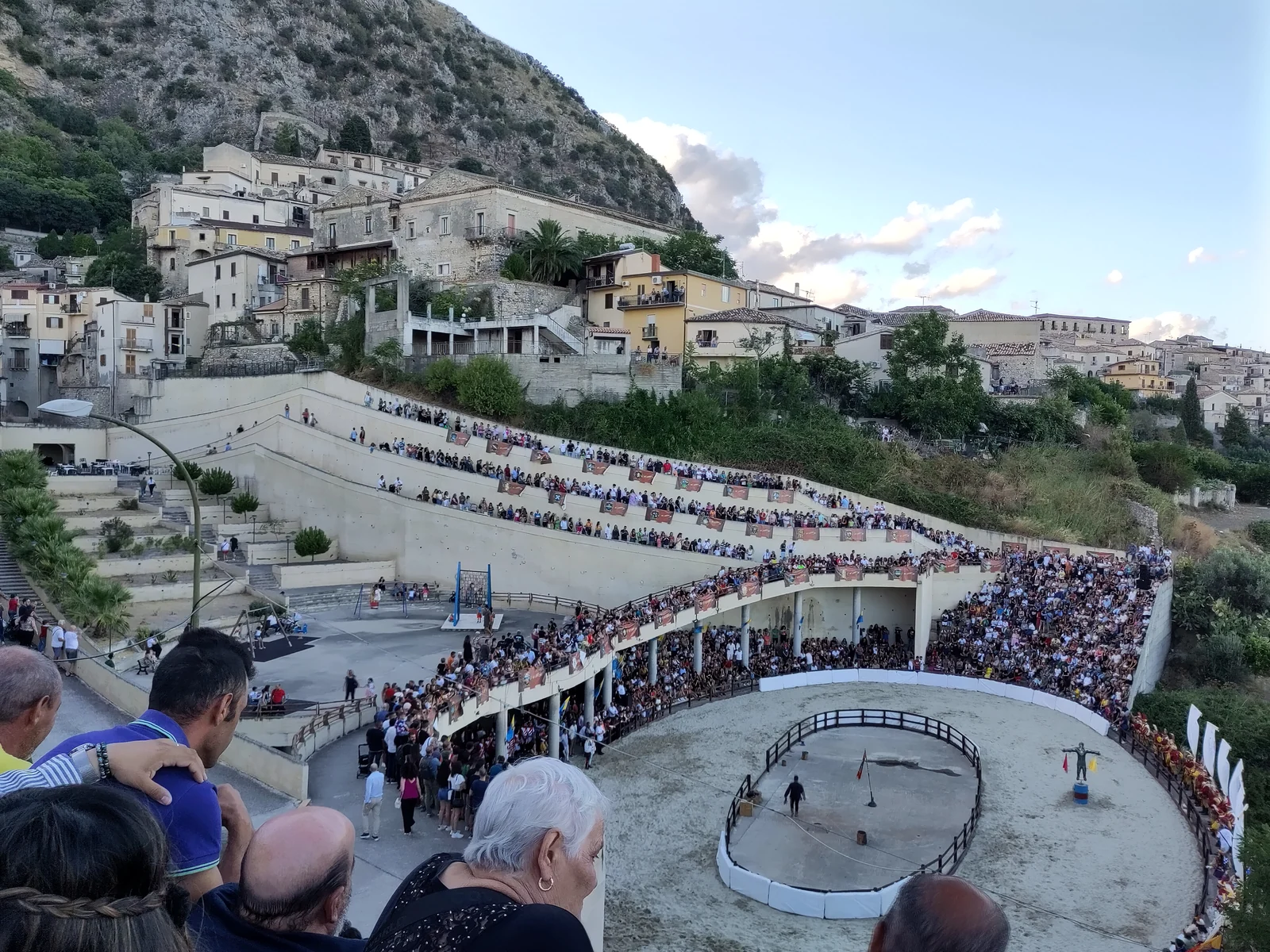
Photo: Marcuscalabresus / Wikimedia Commons — CC BY-SA 4.0 · Resized and converted to WebP.
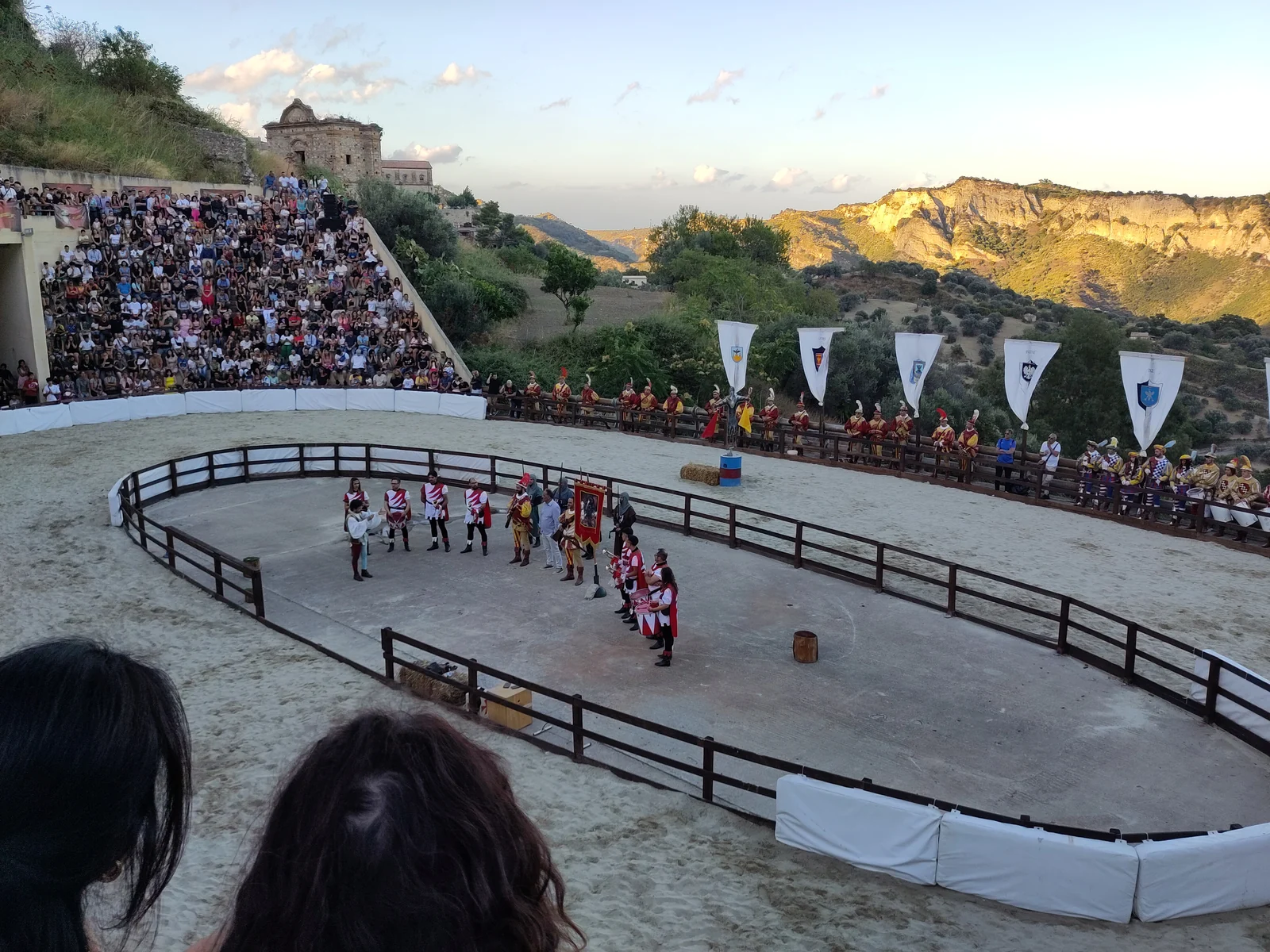
Photo: Marcuscalabresus / Wikimedia Commons — CC BY-SA 4.0 · Resized and converted to WebP.
Getting there
The railway station that bears Stilo’s name is Monasterace-Stilo, on the RFI network in Calabria: it has three passenger tracks, one reachable step-free, parking with reserved spaces, audio and visual announcements and a bus stop. RFI states that the station has no assistance service for people with disabilities or reduced mobility.
The Ferdinandea, in the mountain part of the municipality, is reached by the former state road 110 (Serre park authority). The castle is reached on foot by a steep path; the Cattolica, the Fontana Gebbia and the town hall have a ramp for visitors who cannot walk (town council).
Sources: RFI — Stazione di Monasterace-Stilo · Ente Parco naturale regionale delle Serre — Sentiero Ferdinandea-Marmarico · Ente Parco naturale regionale delle Serre — Stilo · Comune di Stilo — La Cattolica (aggiornato il 22 agosto 2024) · Comune di Stilo — Fontana Gebbia (aggiornato il 7 gennaio 2025) · Comune di Stilo — Sede Municipale (aggiornato il 22 agosto 2024)
Accommodation in figures
In the Ministry of Tourism’s national database of accommodation (BDSR), on 12 October 2026, Stilo had 9 establishments with a verified national identification code (CIN): 4 non-hotel establishments and 5 other establishments.
Sources: Ministero del Turismo – Banca Dati Strutture Ricettive (dashboard pubblica)
Around Stilo
Stilo and Bivongi are the two municipalities of the province of Reggio Calabria inside the Serre regional nature park, with about 5,074 hectares. In Bivongi, in the Stilaro valley where Saint John Therestis lived, stands the Byzantine monastery dedicated to him, founded in the eleventh century; the monks left it in the seventeenth century for the convent of San Giovanni outside the walls in Stilo, taking the saint’s relics with them. Since 2008 the municipality of Bivongi has granted its use to the Romanian Orthodox Church (park authority). The Marmarico falls are also in Bivongi.
Pazzano, Stignano, Guardavalle, Riace and Camini were the fiefs of the county of Stilo (town council). In 1581 Campanella’s family moved to the nearby hamlet of Stignano (Dizionario Biografico degli Italiani). The park’s trails lead to Serra San Bruno.
Sources: Ente Parco naturale regionale delle Serre — I Comuni del Parco · Ente Parco naturale regionale delle Serre — Beni culturali · Ente Parco naturale regionale delle Serre — Sentiero Ferdinandea-Marmarico · Comune di Stilo — Palio di Ribusa, 1-3 agosto 2025 (aggiornato il 23 giugno 2025) · Istituto della Enciclopedia Italiana, Dizionario Biografico degli Italiani — Campanella, Tommaso (Luigi Firpo, 1974) · Ente Parco naturale regionale delle Serre — Sentieri naturalistici
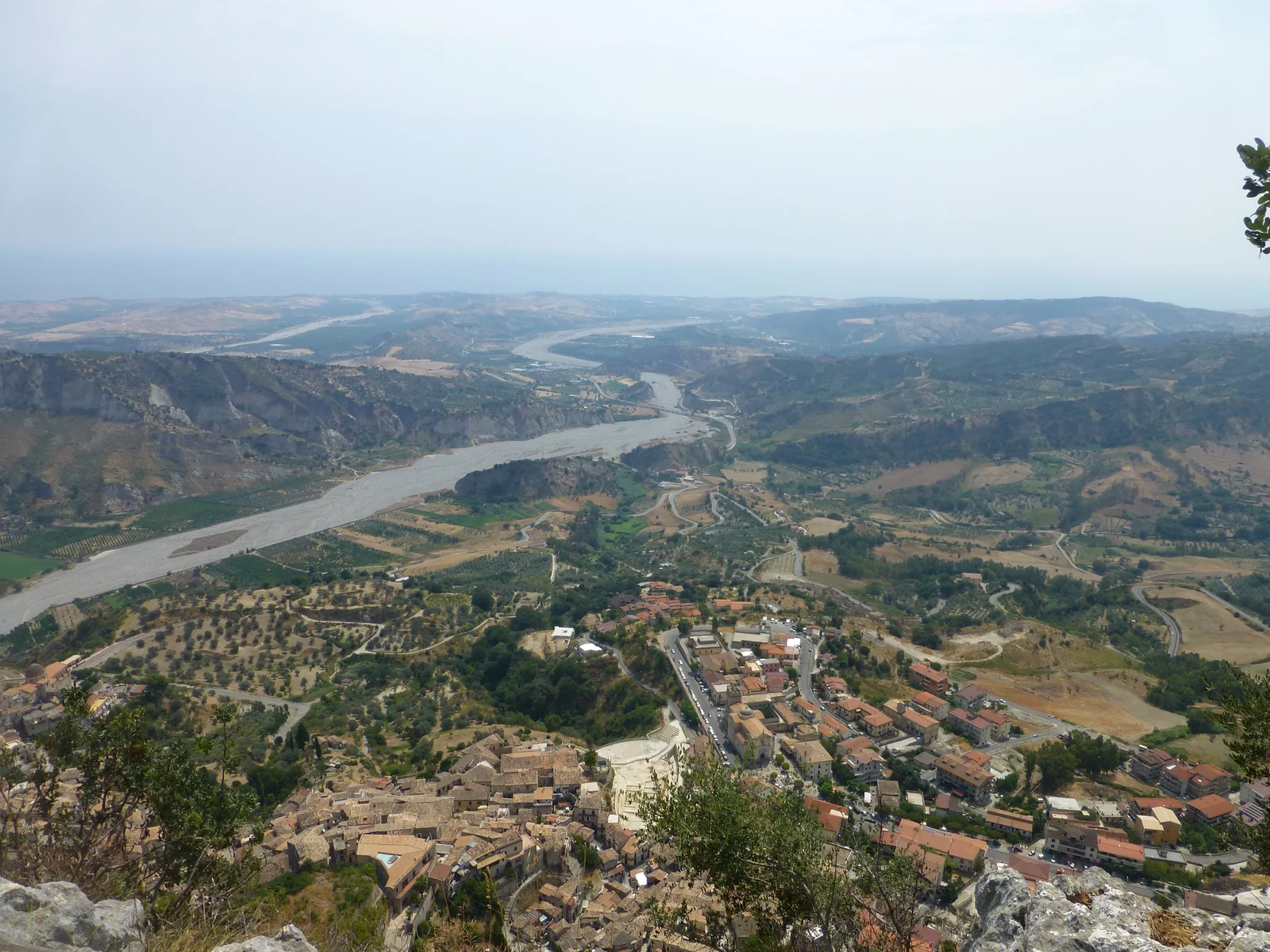
Photo: Marcuscalabresus / Wikimedia Commons — CC BY-SA 3.0 · Resized and converted to WebP.
The town council
The official website of the Comune di Stilo, registered in IndicePA, the index of the digital addresses of Italy’s public administrations, is the reference for the town council’s offices, opening hours and news. Its address is listed among the sources of this section.
The town hall is at Piazza San Giovanni Therestis 1; the town council’s telephone number is 0964 776006.
Sources: Comune di Stilo, sito istituzionale · IndicePA (AgID), Indice dei domicili digitali delle pubbliche amministrazioni: dataset Enti · Comune di Stilo — Sede Municipale (aggiornato il 22 agosto 2024)
Where to stay
In the municipality of Stilo the national database of the Ministry of Tourism lists 9 accommodation businesses with a verified CIN code: 0 hotels, 4 other licensed accommodation and 5 other types such as B&Bs and private rentals.
Licensed businesses from the official list of accommodation named as the source in this section. Where the list gives it, the property's official identification code appears next to its name: the national CIN code, or the code assigned by the Region or by the body that keeps the list. Private individuals are not listed. This list is the official census of licensed businesses, not a list of Apulica partners: to stay in Stilo you do not have to check one property after another yourself; write to Apulica and we look for the stay that suits your journey, checking availability and conditions before any confirmation.
Azienda Agricola Armonia
Farm stay
Regional agritourism list 2023
Azienda Agricola Casato Ruggero
Farm stay
Regional agritourism list 2023
First the places that presented themselves to Apulica, the latest first; then one place of each type in turn, by official category and stars, then by name. No position is paid for.
Ask Apulica for a stay in Stilo We reply shortly, within a few hours at most, with a proposal for you to consider.
Sources: Ministero del Turismo – Banca Dati Strutture Ricettive (dashboard pubblica), 2026-10-12
YOUR JOURNEY
How to shape a journey here
To include Stilo in a trip, or to ask for a guide or a transfer, you can write to Apulica with the button below.
Plan your tripKeep exploring
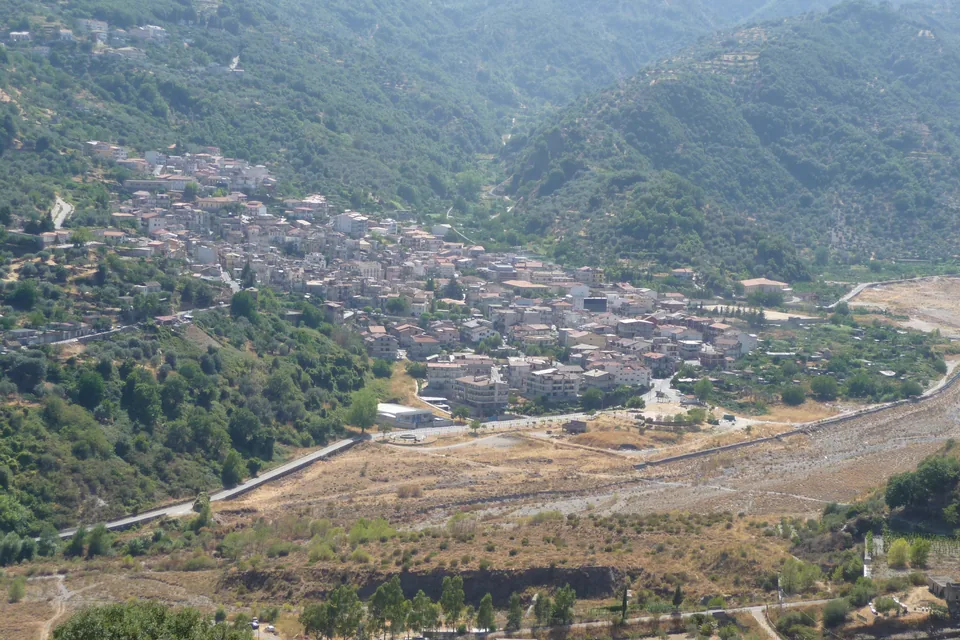
Bivongi
Bivongi (RC), Calabria: 1,171 residents, 25.34 km². The official facts of the municipality, its town council website and its registered accommodation.
Read the guide →Photo: Marcuscalabresus / Wikimedia Commons — CC BY 3.0 · Resized and converted to WebP.

Pazzano
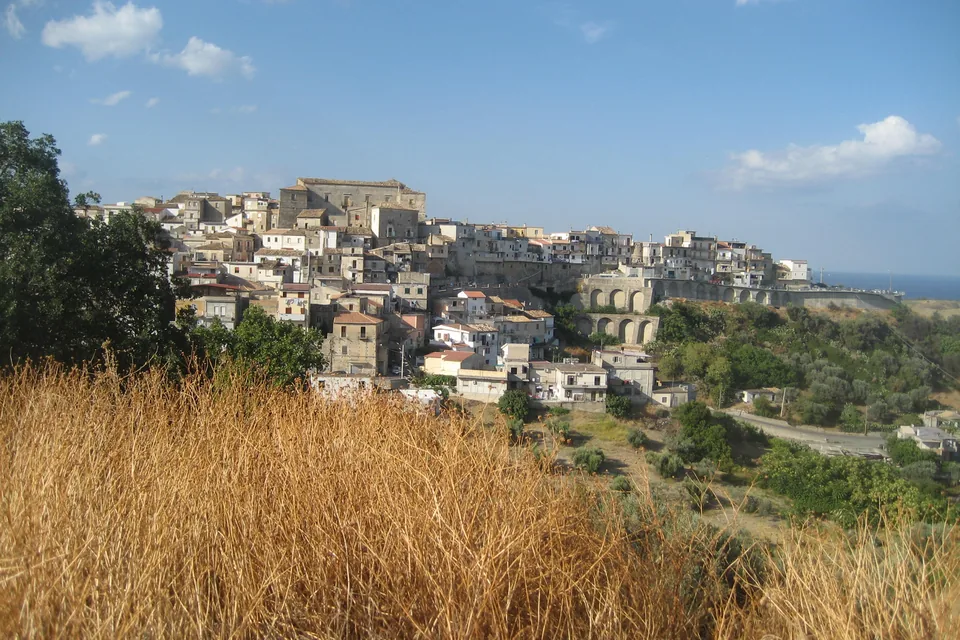
Pazzano (RC), Calabria: 487 residents, 15.57 km². The official facts of the municipality, its town council website and its registered accommodation.
Read the guide →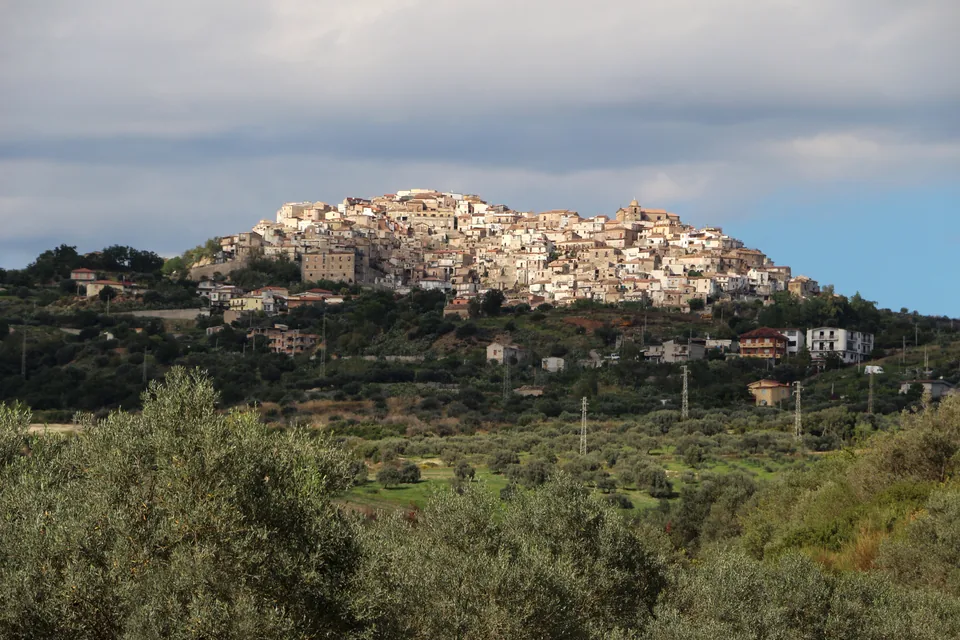
Stignano
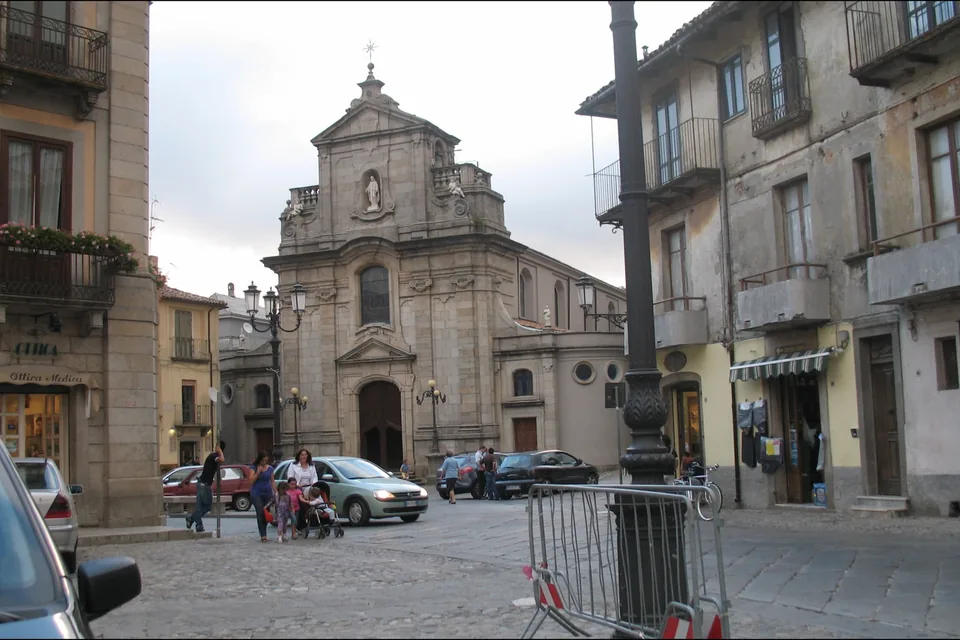
Stignano (RC), Calabria: 1,154 residents, 17.78 km². The official facts of the municipality, its town council website and its registered accommodation.
Read the guide →Photo: Sailko / Wikimedia Commons — CC BY 3.0 · Resized and converted to WebP.

Monasterace
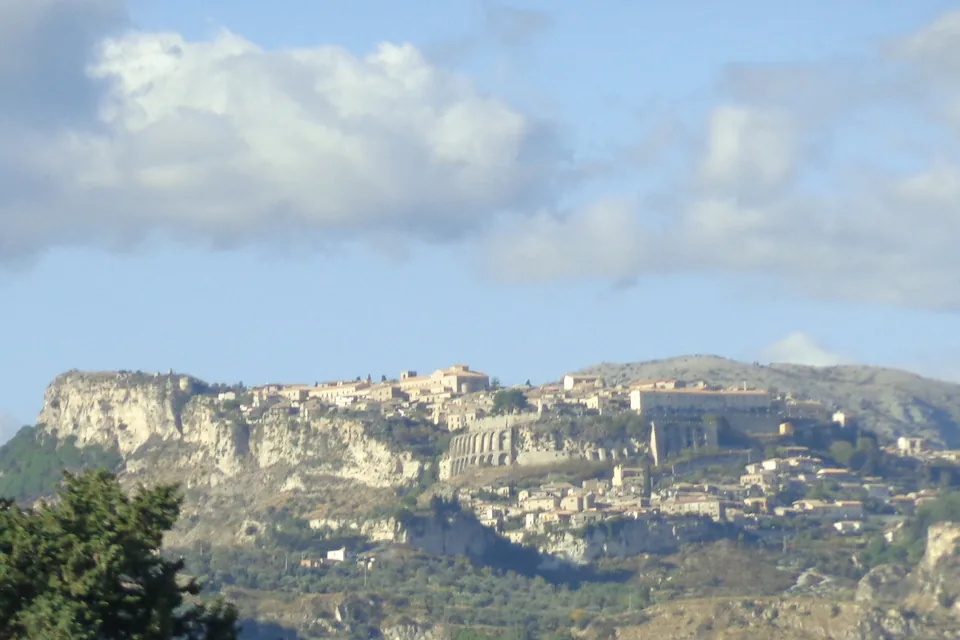
Monasterace (RC), Calabria: 3,267 residents, 15.80 km². The official facts of the municipality, its town council website and its registered accommodation.
Read the guide →Photo: Marcuscalabresus / Wikimedia Commons — CC BY-SA 3.0 · Resized and converted to WebP.

Serra San Bruno
Serra San Bruno (VV), Calabria: 6,270 residents, 40.57 km². The official facts of the municipality, its town council website and its registered accommodation.
Read the guide →Photo: Pinodario / Wikimedia Commons — Public domain · Resized and converted to WebP.

Gerace
Gerace (RC), Calabria: 2,309 residents, 28.99 km². The official facts of the municipality, its town council website and its registered accommodation. The Norman cathedral and its crypt, the castle on the crag, San Francesco and the Byzantine churches, the town gates and the Bombarde terraces, Gerace’s cooking and sweets.
Read the guide →Photo: Effems / Wikimedia Commons — CC0 · Resized and converted to WebP.

Riace
Riace (RC), Calabria: 1,787 residents, 16.31 km². The official facts of the municipality, its town council website and its registered accommodation.
Read the guide →Photo: Marcuscalabresus / Wikimedia Commons — CC BY 3.0 · Resized and converted to WebP.

“Come to Stilo as a guest, not as a tourist: that is how these places truly let you know them.”