

Why go
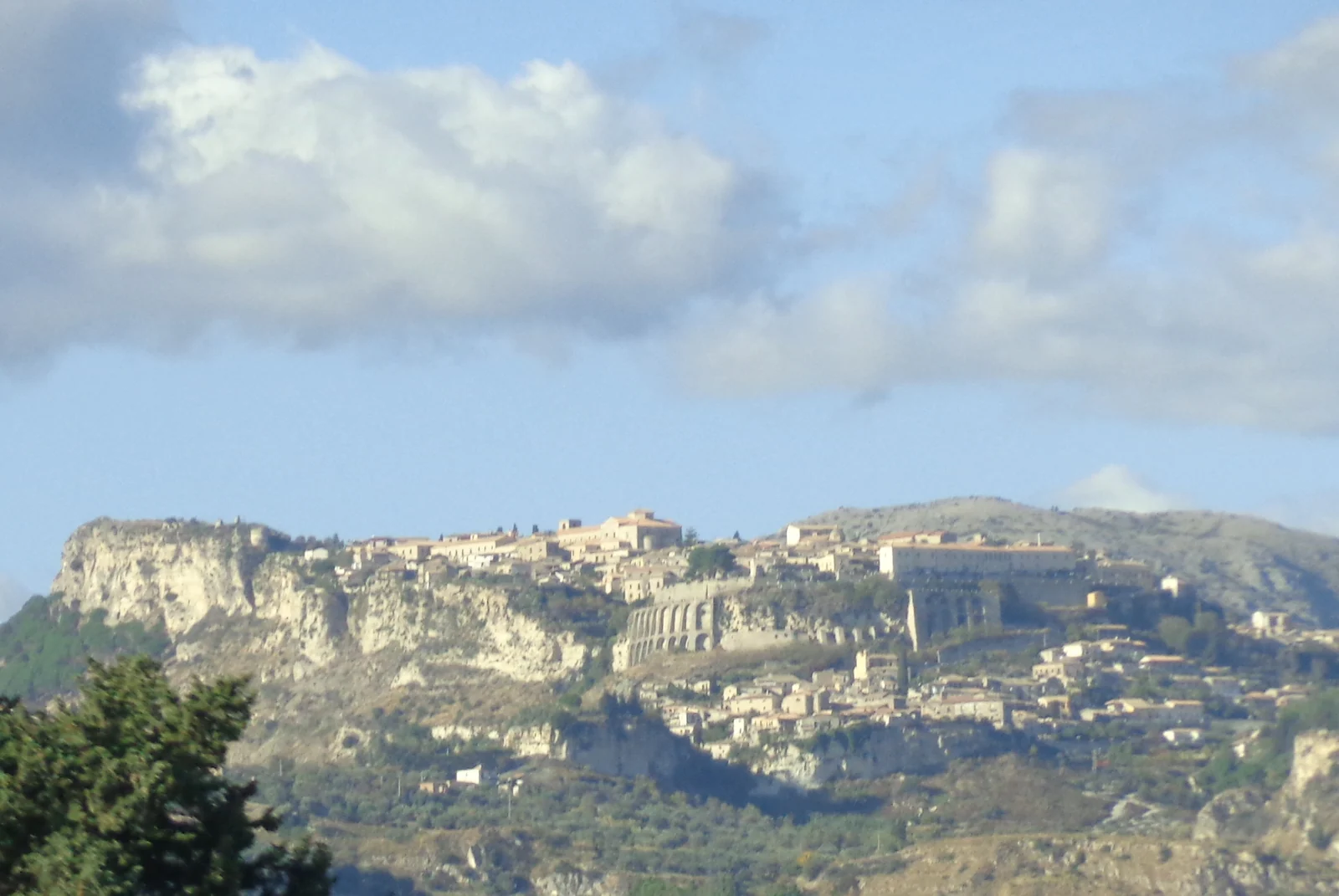
Gerace stands on a sandstone crag, at about 500 metres, not far from the Ionian coast, and according to the town council its rock overlooks 50 kilometres of coastline. The old town keeps its medieval layout: it was closed by walls and gates, and its streets were paved with stones set on edge, to slow down rainwater and horses’ hooves. Edward Lear, who passed through in 1847 as a guest of the Scaglione family, described it as “full of finely placed palaces, set on a narrow ledge of rock”.
The first reason to climb up is the cathedral, built between the end of the eleventh and the beginning of the twelfth century: the town council calls it the most representative monument of Calabria’s Byzantine-Romanesque-Norman architecture. Around it stand the castle at the tip of the crag, the church of San Francesco commissioned by Charles II of Anjou and a web of churches of Byzantine origin, such as San Giovannello, the Annunziatella and Santa Maria del Mastro: the town council notes that over time the town had about a hundred monasteries, convents and churches.
The town council reports that the village has been awarded the Touring Club Italiano’s Orange Flag and that its shops sell the typical produce of the area. Every summer, in July, the squares and streets of the old town host the Borgo Incantato, an international festival of street artists.
Sources: Comune di Gerace — Municipio, sede comunale della Città di Gerace (scheda del luogo) · Comune di Gerace — Gerace e la sua storia (scheda del luogo, con l’itinerario di visita) · Comune di Gerace — La cattedrale (Duomo di Gerace) · Comune di Gerace — Chiesa di San Francesco d’Assisi · Comune di Gerace — Il Castello · Il Borgo Incantato, festival internazionale degli artisti di strada di Gerace (sito del festival, collegato dal Comune) · Comune di Gerace — Palazzo Scaglione · Comune di Gerace — Museo Civico Comunale «Salvatore Gemelli»
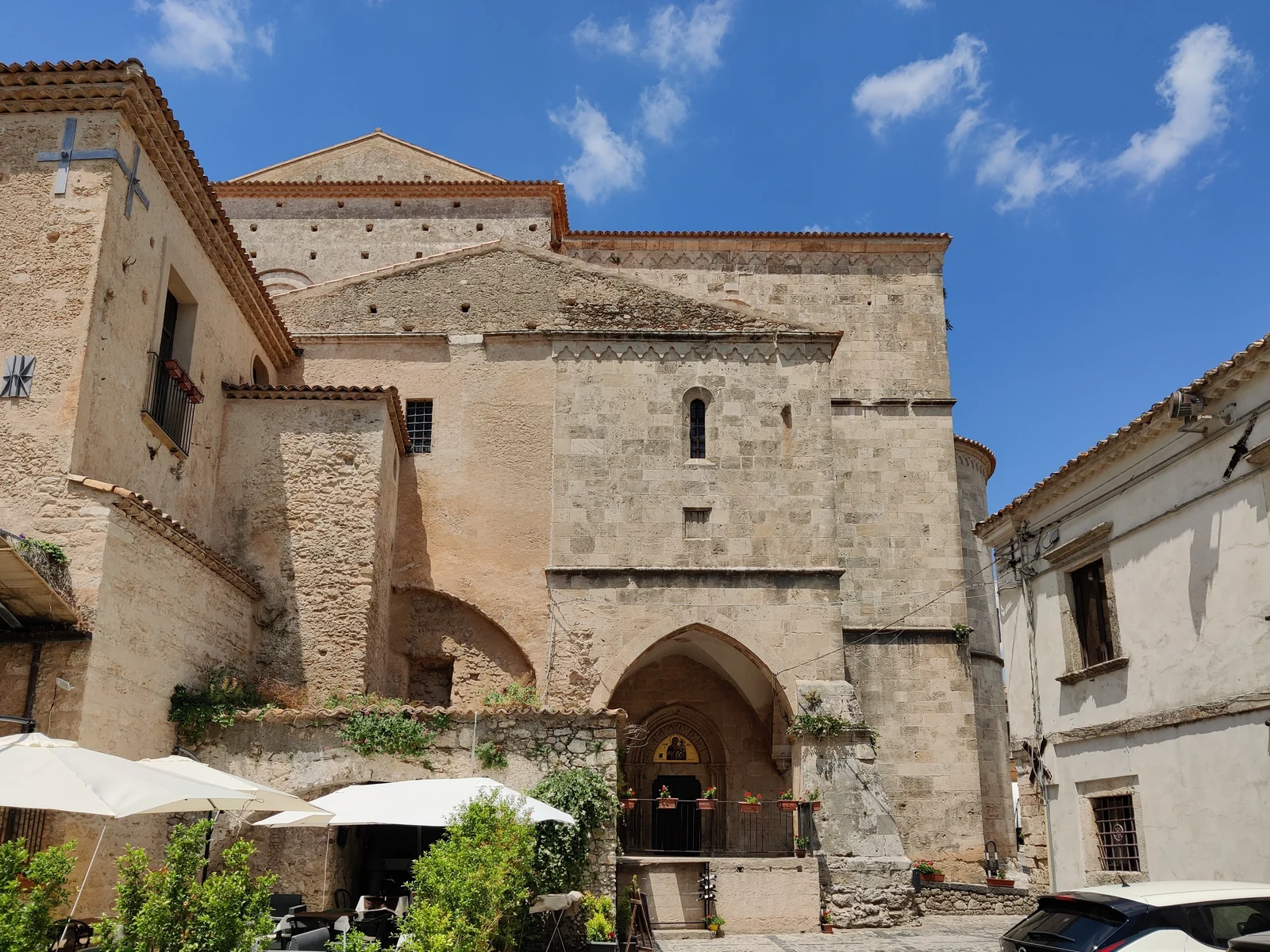
Photo: Simon Legner (User:simon04) / Wikimedia Commons — CC BY-SA 4.0 · Resized and converted to WebP.
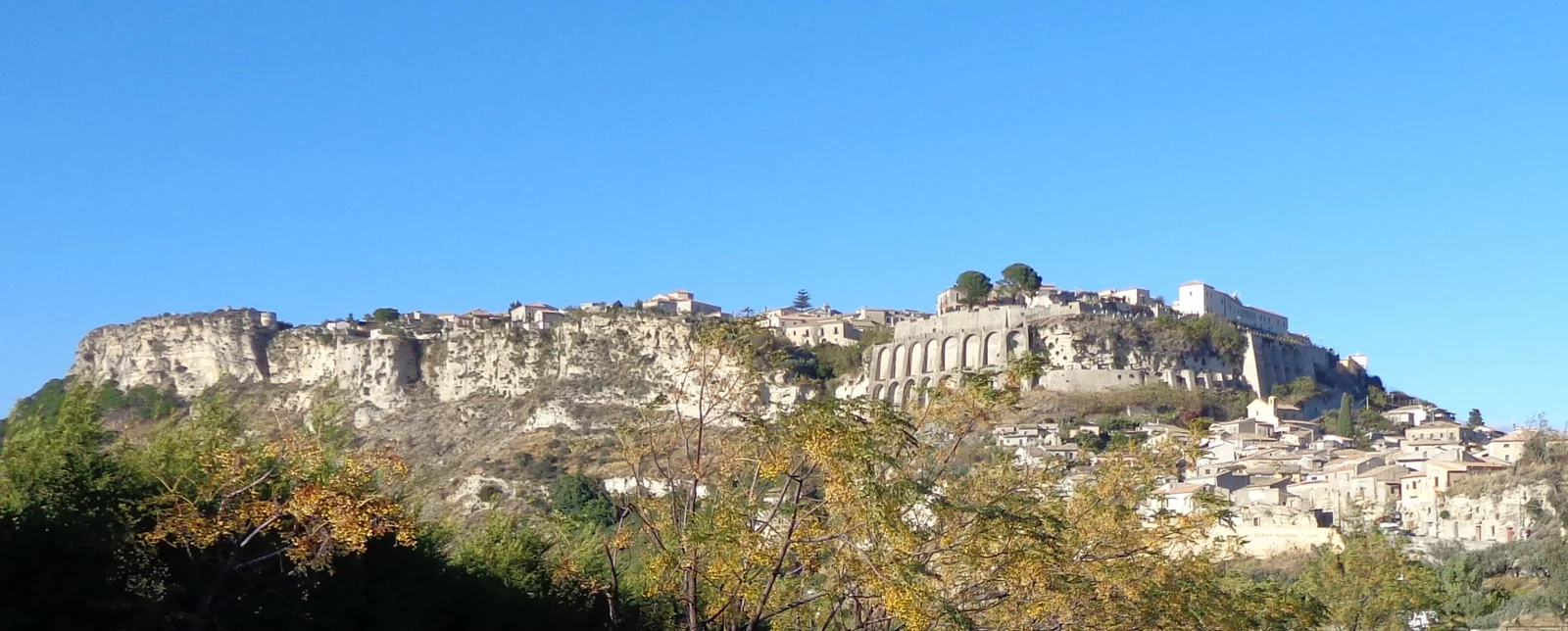
Photo: Effems / Wikimedia Commons — CC0 · Resized and converted to WebP.
The municipality at a glance
Gerace is a municipality in the Metropolitan City of Reggio Calabria, in Calabria. Its ISTAT code is 080036. On 1 January 2025 it had 2,309 residents. The municipal territory covers 28.99 km² and ranges from 35 to 961 metres above sea level; the town hall stands at about 408 metres.
According to the town council the town stands on a crag between the Novito and San Paolo torrents, and its territory is divided into five urban areas: the upper town, the Castle, the Borghetto, the Borgo Maggiore and the Piana. The coat of arms, with its golden sparrowhawk, and the title of City were granted by a decree of the President of the Republic on 25 October 2000.
Sources: ISTAT, Codici statistici delle unità amministrative territoriali: elenco dei comuni al 21 febbraio 2026 · ISTAT, Popolazione residente per età, sesso e stato civile al 1° gennaio 2025 (POSAS) · ISTAT, Principali statistiche geografiche sui comuni: superficie e altimetria al 31 dicembre 2021 · Comune di Gerace — Municipio, sede comunale della Città di Gerace (scheda del luogo) · Comune di Gerace — Gerace e la sua storia (scheda del luogo, con l’itinerario di visita)
History
The territory of Gerace was inhabited long before the town. The civic museum recalls a small Middle Neolithic settlement, from the fifth millennium BC, on the rocky ledge of Prestarona, and Copper Age stone axes from the Merici and Leto districts. In the Stefanelli district an Iron Age necropolis was found: the town council speaks of 27 chamber tombs cut into the rock, with bronze ornaments, scarabs, ivory and Greek pottery of the seventh century BC, now partly in the museums of Locri and Reggio.
The town proper was born from the abandonment of Locri Epizephyrii, from the seventh century AD onwards, when the inhabitants left the coast because of pirates and the unhealthy shore and climbed onto the crag, where the bishop’s seat also moved. The ancient name was Aghìa Kyriakì, Saint Cyriaca. The town council gives three theories about the name Gerace: the “sacred peak” of the Locrian acropolis, the sparrowhawk (hierax in Greek) said to have guided the refugees, or a corruption of Saint Cyriaca. The sparrowhawk is in any case on the coat of arms, granted together with the title of City by a decree of the President of the Republic of 25 October 2000, with the motto “Solum Deo subiecti”.
Byzantines and Normans made it a stronghold. In 951 the Arab army settled for a tribute; later the town was spared again, against a ransom. The geographer Al-Idrisi, in the service of Roger II, called it a “beautiful, great and illustrious city”. A tradition recalled by the town council has it that Robert Guiscard and Roger made their alliance in the castle’s so-called Mileto hall. Swabians, Angevins and Aragonese followed; in 1348 Queen Joanna I gave Gerace to the Grand Chamberlain Enrico Caracciolo, and in 1446 Tommaso Caracciolo became the first marquis. In 1480 the diocese moved from the Greek to the Latin rite. Then the town belonged to the Cordova family, from 1502, and from 1574 to the Grimaldi of Genoa.
Under the French, between 1806 and 1815, Gerace became the chief town of a district. In September 1847 young men of the district led an uprising: Michele Bello, Gaetano Ruffo, Domenico Salvadori, Rocco Verduci and Pietro Mazzoni were shot on 2 October 1847 in the Piana di Gerace, and are remembered as the “martyrs of Gerace”. The first houses built on the shore in 1840 grew into today’s Locri, which separated in 1905; the hill town was called Gerace Superiore until 1941. In 1954 the bishop’s seat was moved to Locri.
Sources: Comune di Gerace — Museo Civico Comunale «Salvatore Gemelli» · Comune di Gerace — Gerace e la sua storia (scheda del luogo, con l’itinerario di visita) · Comune di Gerace — Municipio, sede comunale della Città di Gerace (scheda del luogo) · Comune di Gerace — Il Castello · Comune di Gerace — La Pineta dei Cinque Martiri
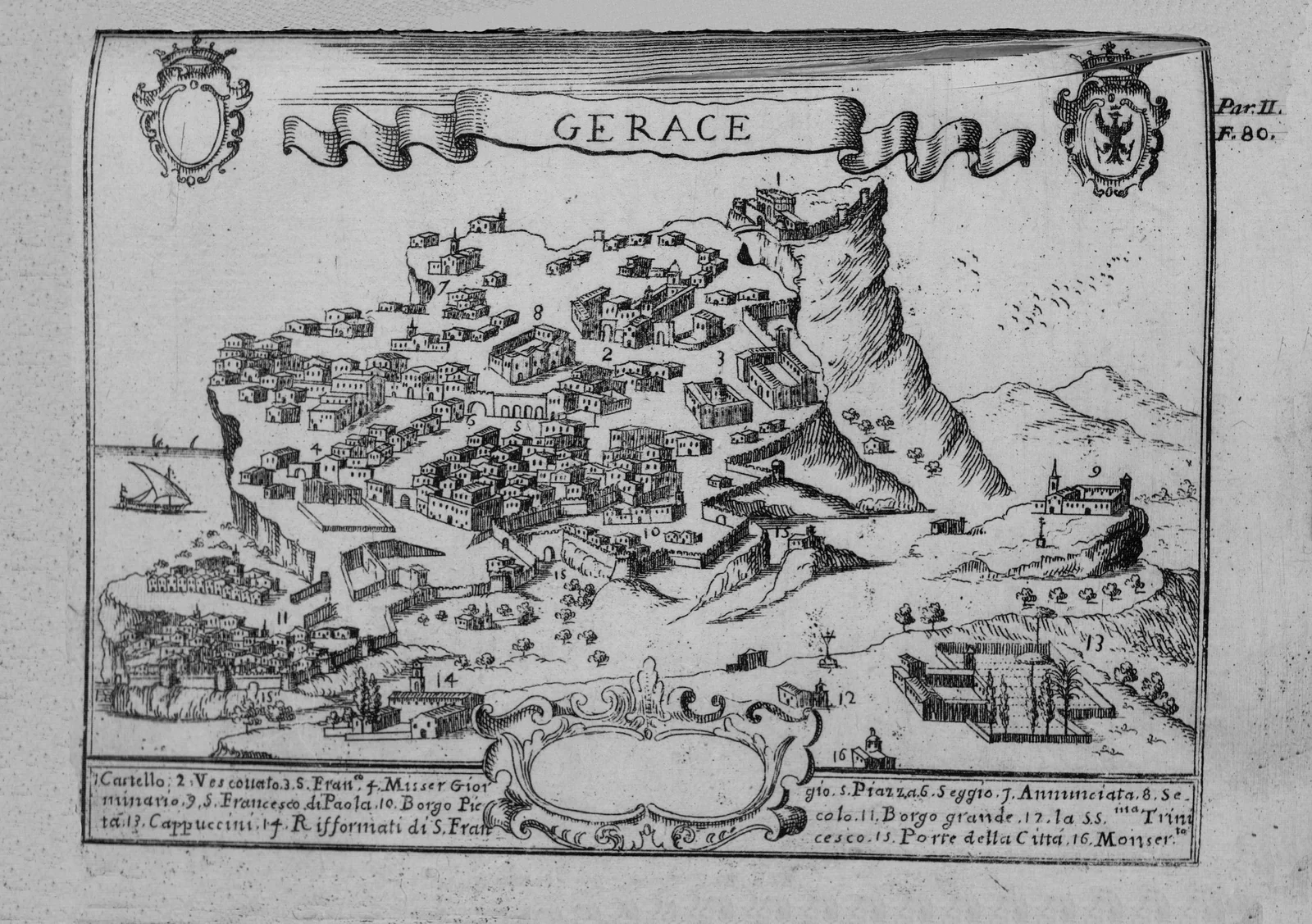
Photo: Biblioteca de la Universidad de Sevilla / Wikimedia Commons — CC BY 2.0 · Resized and converted to WebP.
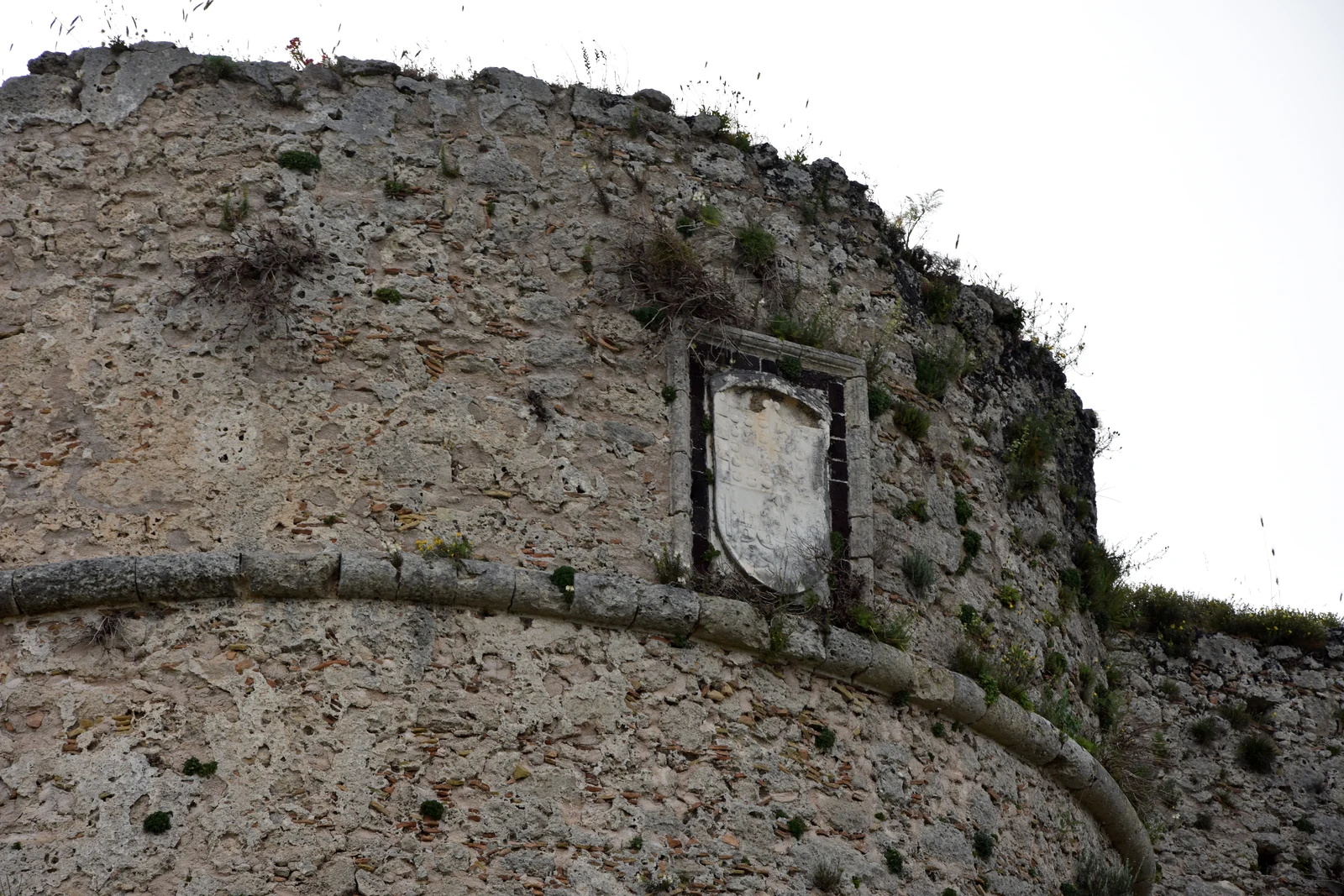
Photo: Phyrexian / Wikimedia Commons — CC BY-SA 4.0 · Resized and converted to WebP.
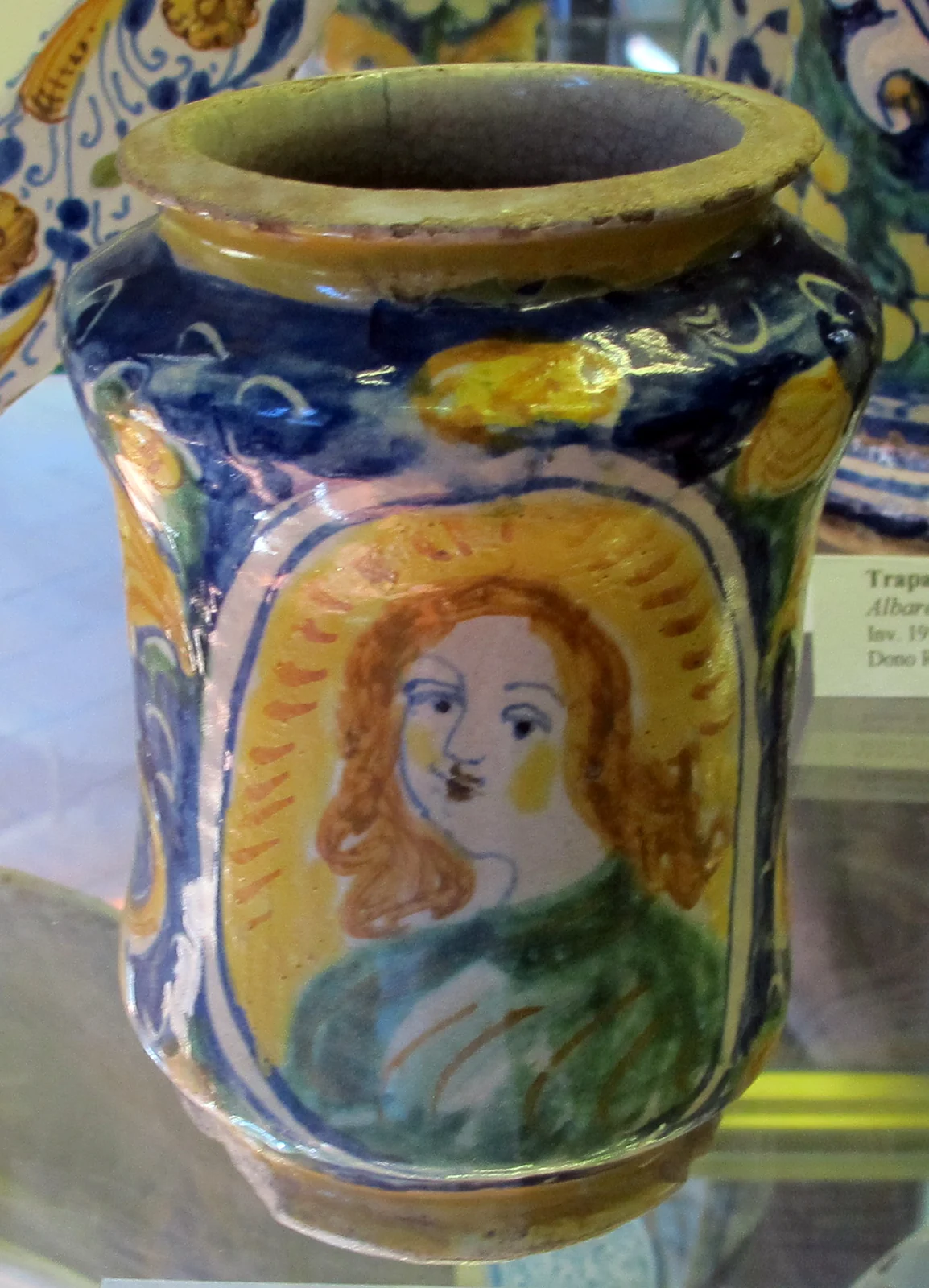
Photo: sailko / Wikimedia Commons — CC BY-SA 3.0 · Resized and converted to WebP.
What to see
The cathedral, dedicated to the Assumption, was built under the Normans over an eighth-century church of Saint Cyriaca; the town council gives its area as 1,898 square metres, a Latin cross with three naves divided by 20 granite and marble columns. In the transept are the tomb of the counts Giovanni and Battista Caracciolo, of 1575, and the monument of the Polizzi family; the high altar in coloured marbles dates from 1731. Below, the Greek-cross crypt has 26 reused columns and the chapel of the Madonna dell’Itria, closed by a seventeenth-century wrought-iron gate; it holds part of the Treasury, with a twelfth-century double-armed reliquary cross and the silver statue of the Assumption, of 1772. Next to it opens the Bishops’ Gate, with a sundial that still works.
In Piazza delle Tre Chiese, the church of San Francesco d’Assisi was commissioned by Charles II of Anjou in 1294. It has a portal with three archivolts from the 1330s, with geometric decoration in the Arab-Norman taste, a seventeenth-century altar in inlaid marbles, the triumphal arch of 1664 by Friar Bonaventura Perna and the sarcophagus of Nicola Ruffo, the work of a pupil of Tino da Camaino. After 1806 the convent became a prison; the heritage authority began restoring it in 1951. On the same square stands San Giovannello, the small Byzantine church that Paolo Orsi, according to the town council, would have kept “under a glass bell”.
The castle takes up the tip of the crag, cut off from the town by a ditch dug into the rock and once crossed by a drawbridge whose central pillar survives. What remains is a round Aragonese tower with a marble coat of arms, the battlemented front with its loopholes, a well and a small Byzantine oratory; in front lies the open space of the Baglio. Lower down, in the Borgo Maggiore, Santa Maria del Mastro was founded in 1083-1084, as a Greek inscription now in the Locri museum recorded; the eleventh-century Annunziatella has a single nave and keeps a fresco of Christ Pantocrator in its apse; Santa Caterina d’Alessandria, from the Norman period, has eight ovals of saints painted in 1753.
The “Salvatore Gemelli” civic museum is in Piazza Tribuna, near the cathedral, in a building put up around 1565 as a seminary. Since 2010 its five rooms have displayed the prehistoric finds of the territory and the grave goods of the Stefanelli necropolis, a section of the seventeenth-century Gerace ceramic floor from the church of San Francesco and lithographs of Calabrian landscapes by Edward Lear; it is also the town council’s tourist information centre and offers a route through the museum and five churches. Of the monastery of Sant’Anna, founded in 1344 above the Bombarde, the town council mentions two marble statues of 1593 and the silver bust of Saint Veneranda of 1704.
Sources: Comune di Gerace — La cattedrale (Duomo di Gerace) · Comune di Gerace — Porta dei Vescovi · Comune di Gerace — Chiesa di San Francesco d’Assisi · Comune di Gerace — Chiesa di San Giovanni Crisostomo (San Giovannello) · Comune di Gerace — Il Castello · Comune di Gerace — Chiesa di Santa Maria del Mastro · Comune di Gerace — Chiesa dell’Annunziatella · Comune di Gerace — Chiesa di Santa Caterina d’Alessandria · Comune di Gerace — Museo Civico Comunale «Salvatore Gemelli» · Comune di Gerace — Palazzo Sant’Anna (monastero di Sant’Anna)
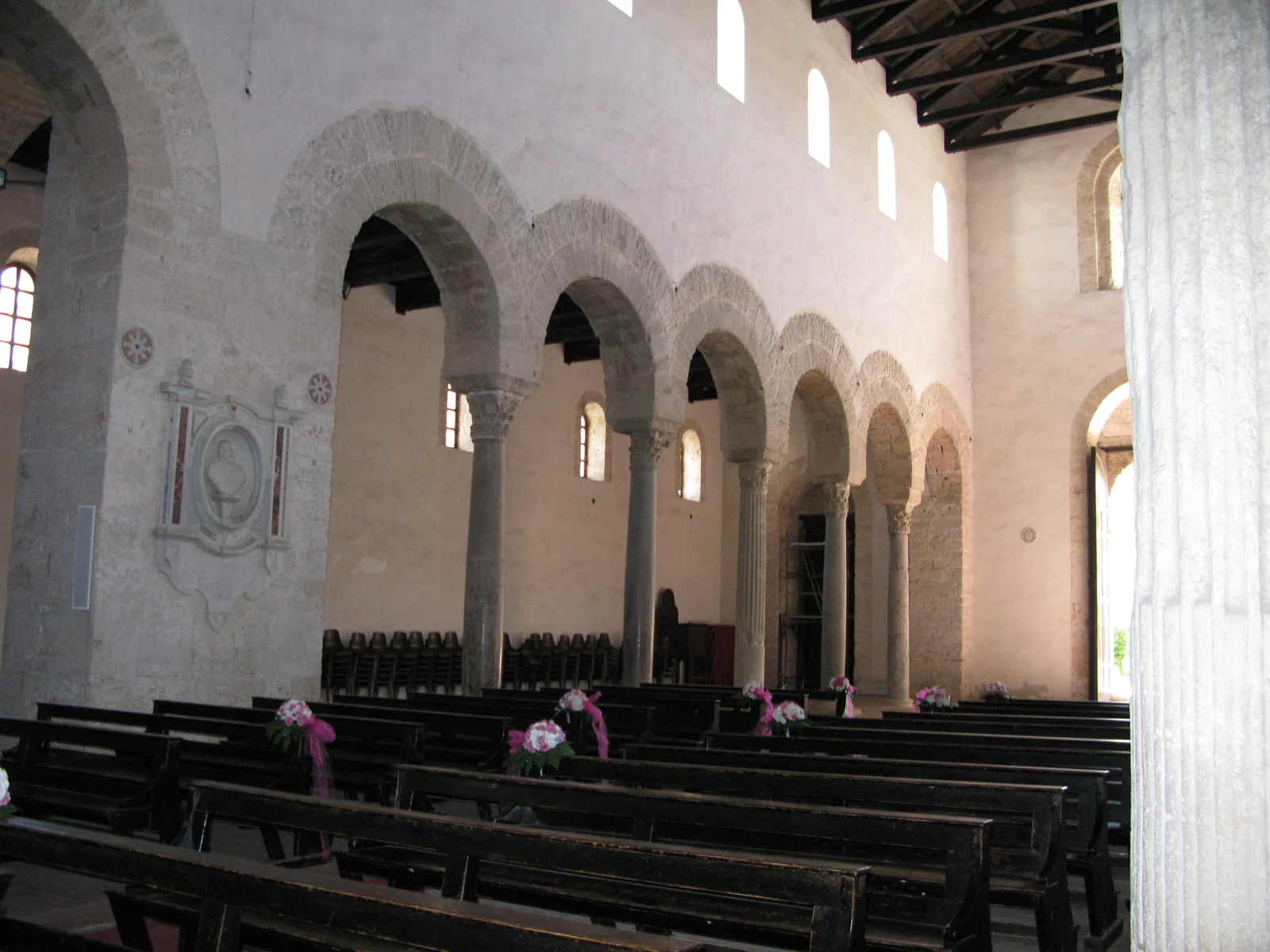
Photo: Jacopo Werther / Wikimedia Commons — CC BY-SA 4.0 · Resized and converted to WebP.
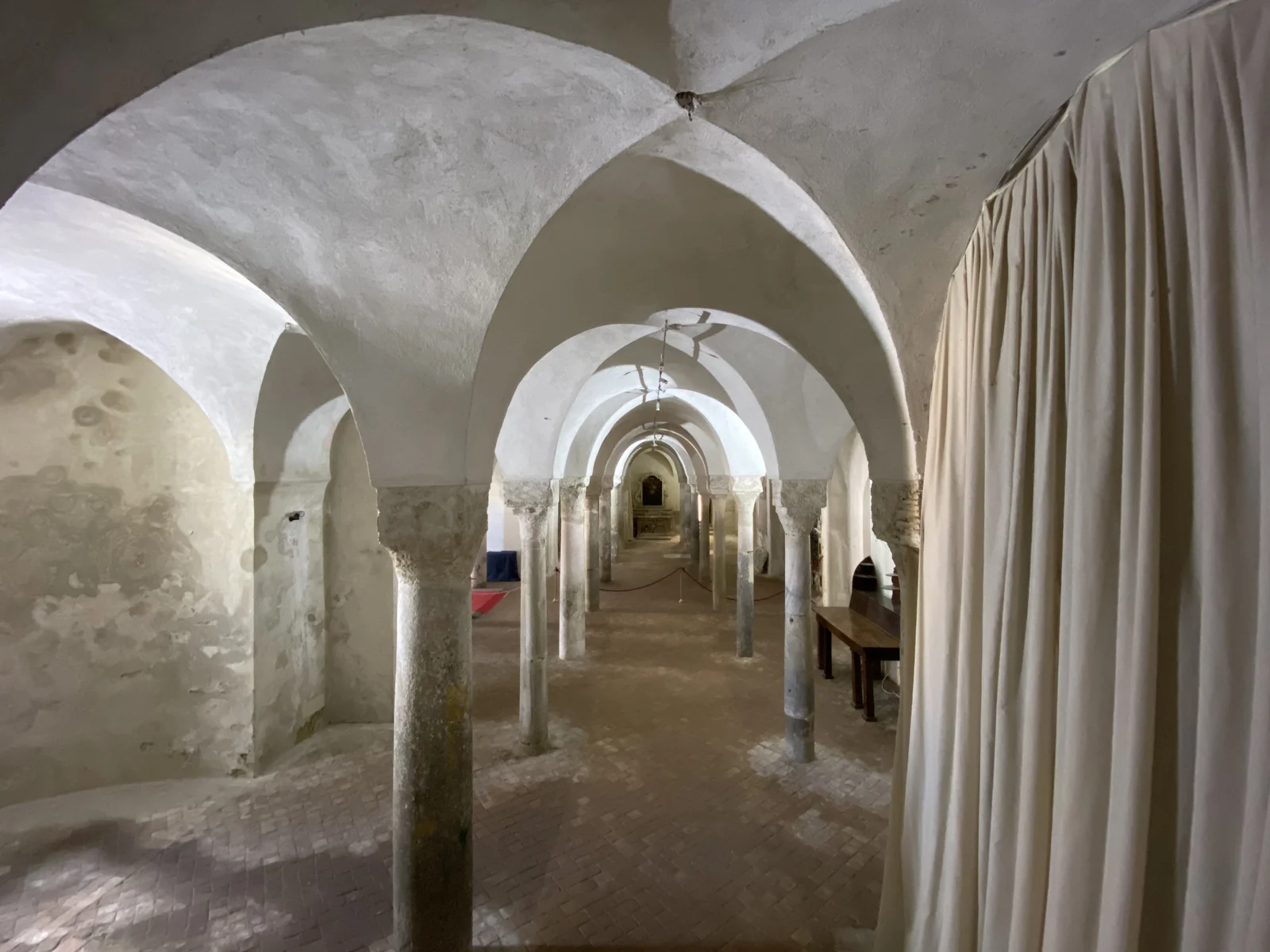
Photo: Edoardo Scialis / Wikimedia Commons — CC BY-SA 4.0 · Resized and converted to WebP.
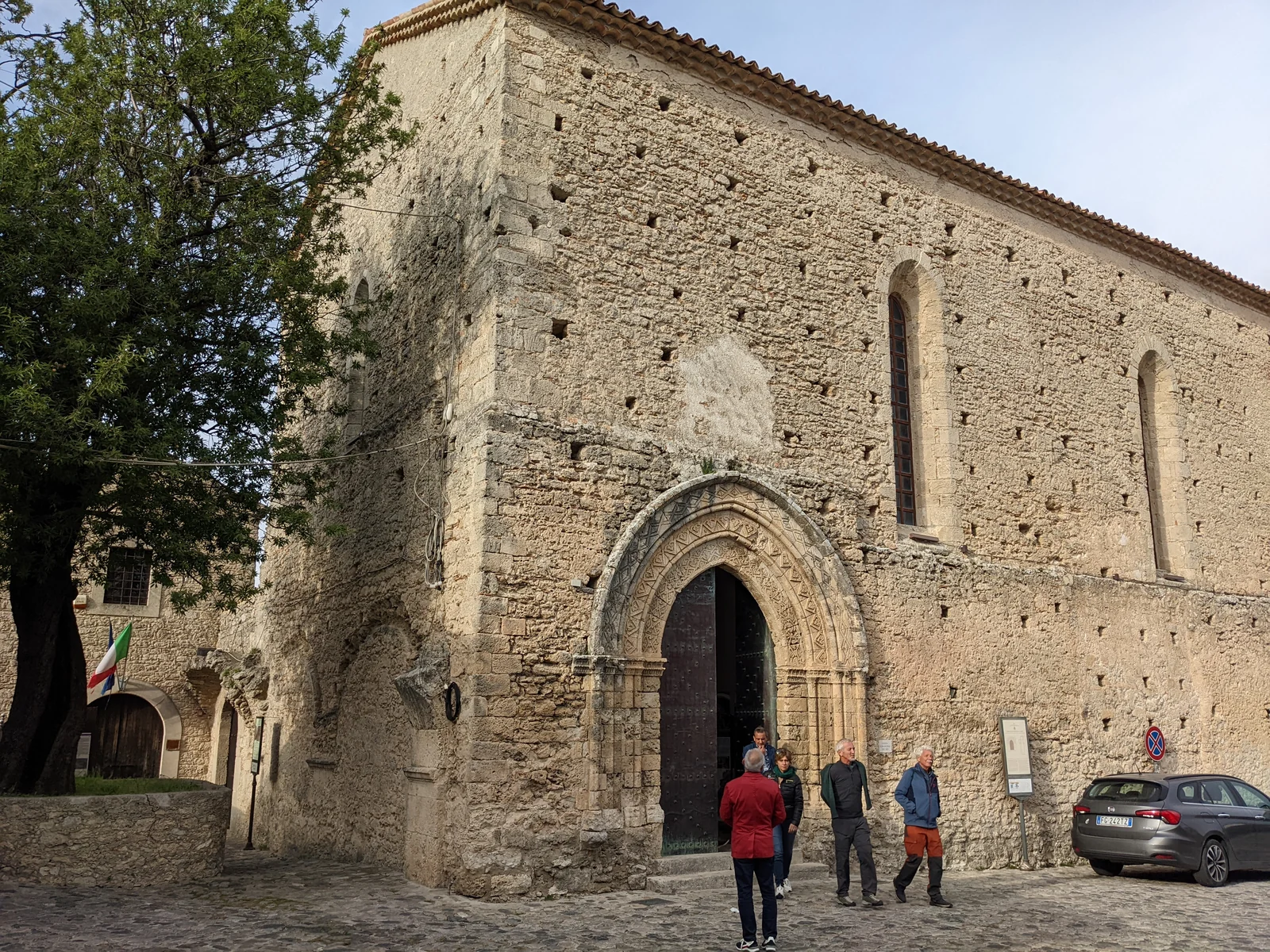
Photo: LIL.PAOLO / Wikimedia Commons — CC BY-SA 4.0 · Resized and converted to WebP.
Food and drink
The town council describes Gerace’s cooking as one of strong flavours: pork cooked in a thousand ways, home-rolled pasta with goat sauce, stuffed aubergines, courgettes and peppers, peperonata, wild asparagus omelette, wild chicory and soups; the cheeses are good. Among the sweets it lists sammartine, made of pastry with dried figs, almonds, walnuts and moscato wine, the Easter sgute, pignolata in honey, nocatule, zeppole and nougat; sweets specific to the town are cicerata, with boiled chickpeas, honey and cinnamon, and rafioli, made with many eggs and flour, which were once prepared for weddings.
The area produces olive oil and wine; in limited quantities, again according to the town council, Greco di Gerace. The town council publishes on its website a list of the village’s restaurants, trattorias and food shops.
Sources: Comune di Gerace — scheda «Il Bivio dei Sapori», paragrafo sulla cucina geracese · Comune di Gerace — Argomenti: Dove mangiare
Things to do
The town council advises visiting the town on foot, because it is split into separate quarters. The route it proposes starts in the Borgo Maggiore, where the Varvara gate and the potters’ workshops once were, passes Santa Maria del Mastro, climbs to the Borghetto and along Via Roma reaches the Bombarde viewpoint; it goes through the sixteenth-century Porta del Sole and into Piazza del Tocco, where seven streets meet and where the town’s parliament used to gather. From there Via Zaleuco leads to Piazza Tribuna and the cathedral apses, then to Piazza delle Tre Chiese, the Baglio and the castle; the way back goes down Via Gioberti, with its thirteenth-century mullioned windows, to the monastery of Sant’Anna.
The Bombarde were the level stretches along the walls where cannon stood to defend the coast: today they are terraces looking out over the landscape of the Locride. In the Borgo stands the sixteenth-century watchtower of San Siminio, built against Turkish raids and recently restored. In the pine wood of the Piana, where the five martyrs of 1847 were shot, is Francesco Jerace’s monument of 1926, with winged Liberty breaking a chain; in an alley of the old town the small barred cell where they were held can still be seen.
At the premises of the Aracne social cooperative, at Via Roma 51, wool, linen, hemp and silk are woven by hand; the workshop is open to the public and also runs weaving courses. The Mons. Pellicano municipal library keeps a historical archive and lets visitors consult copies of documents from the historical archive in Naples.
Sources: Comune di Gerace — Gerace e la sua storia (scheda del luogo, con l’itinerario di visita) · Comune di Gerace — Porte urbiche · Comune di Gerace — Le Bombarde · Comune di Gerace — Torre di avvistamento o di San Siminio · Comune di Gerace — La Pineta dei Cinque Martiri · Comune di Gerace — Tessitura artigianale Coop. Sociale «Aracne» · Comune di Gerace — Biblioteca comunale Mons. Pellicano
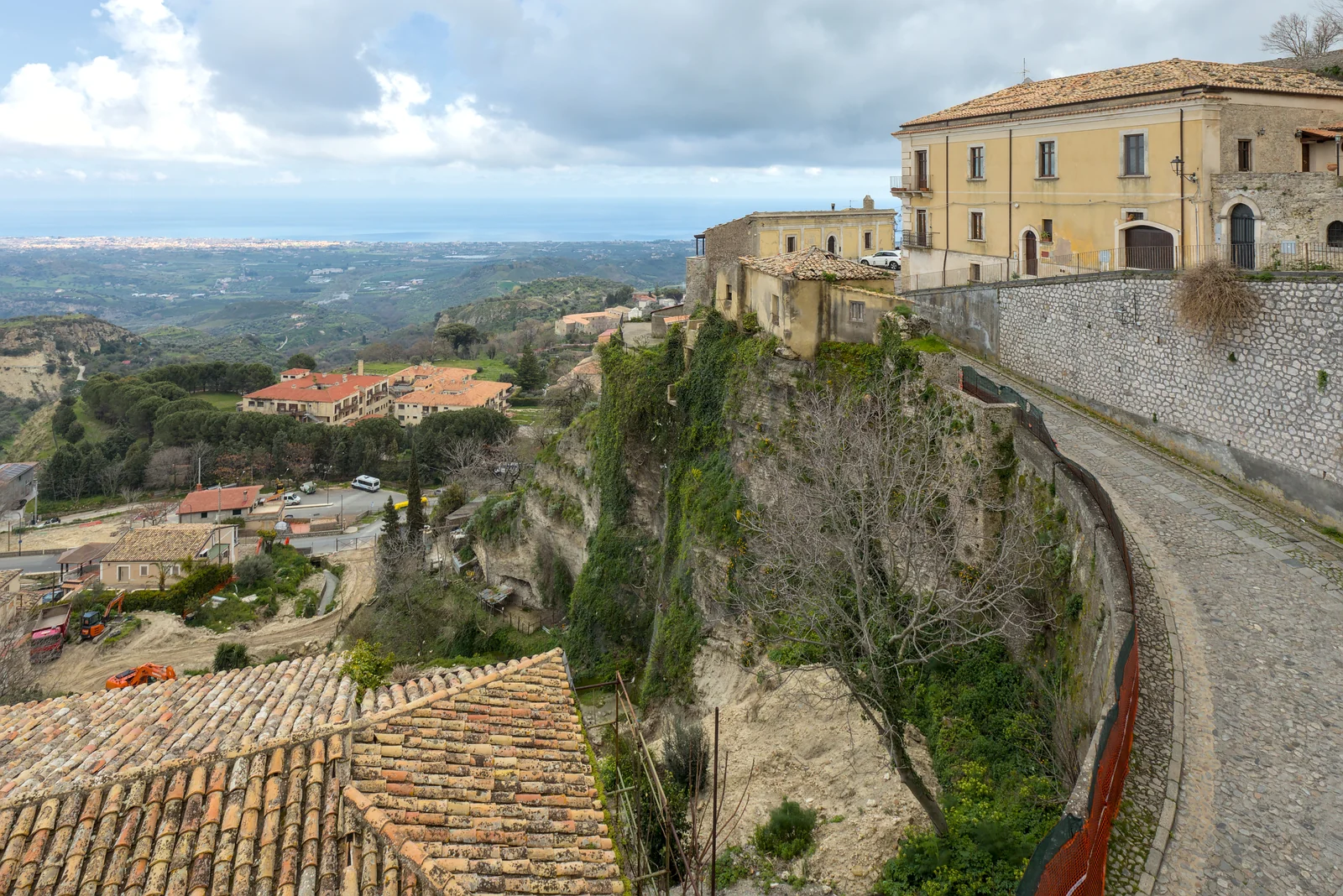
Photo: Benjamin Smith / Wikimedia Commons — CC BY-SA 4.0 · Resized and converted to WebP.
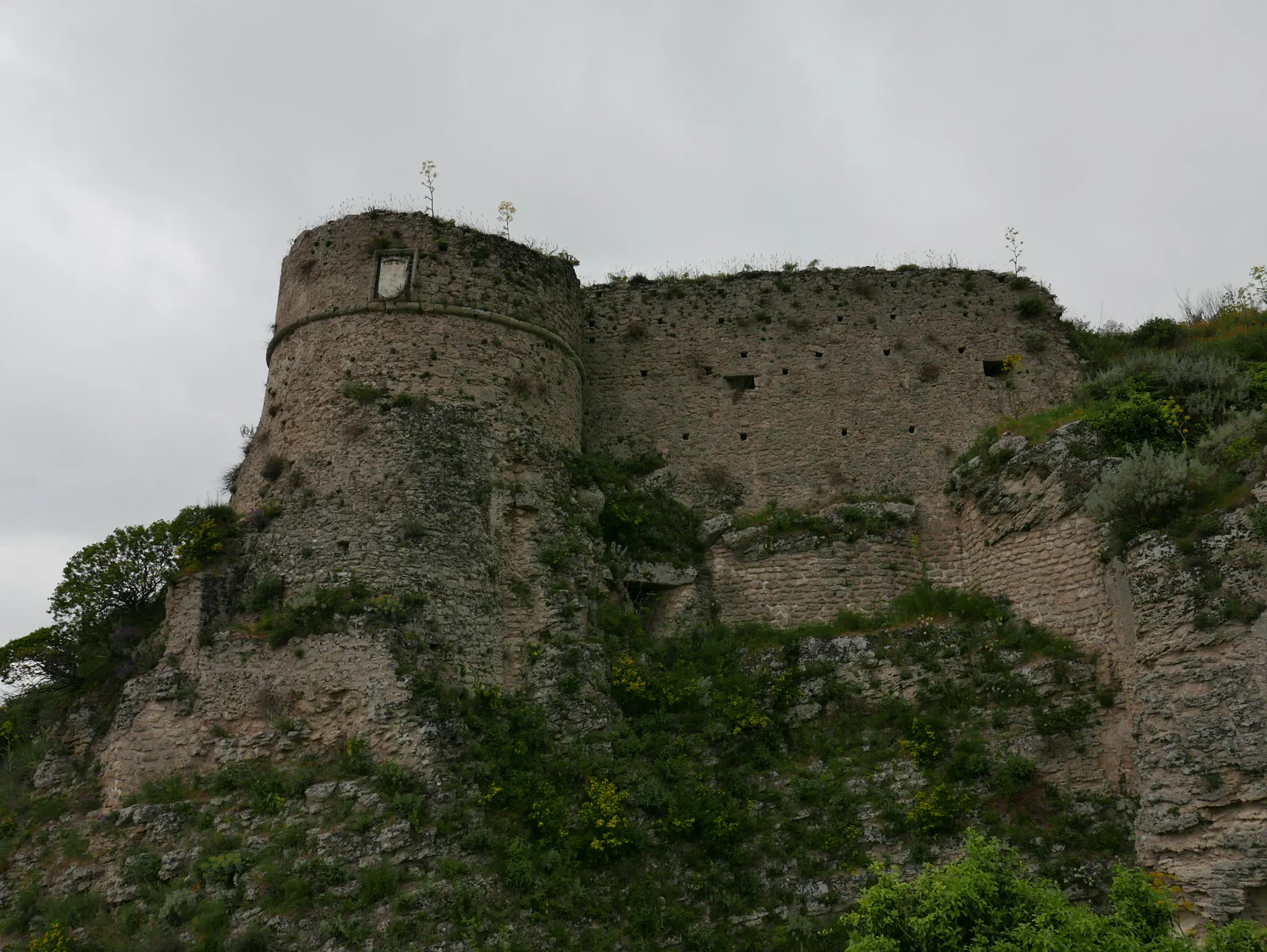
Photo: Jacopo Werther / Wikimedia Commons — CC BY-SA 4.0 · Resized and converted to WebP.
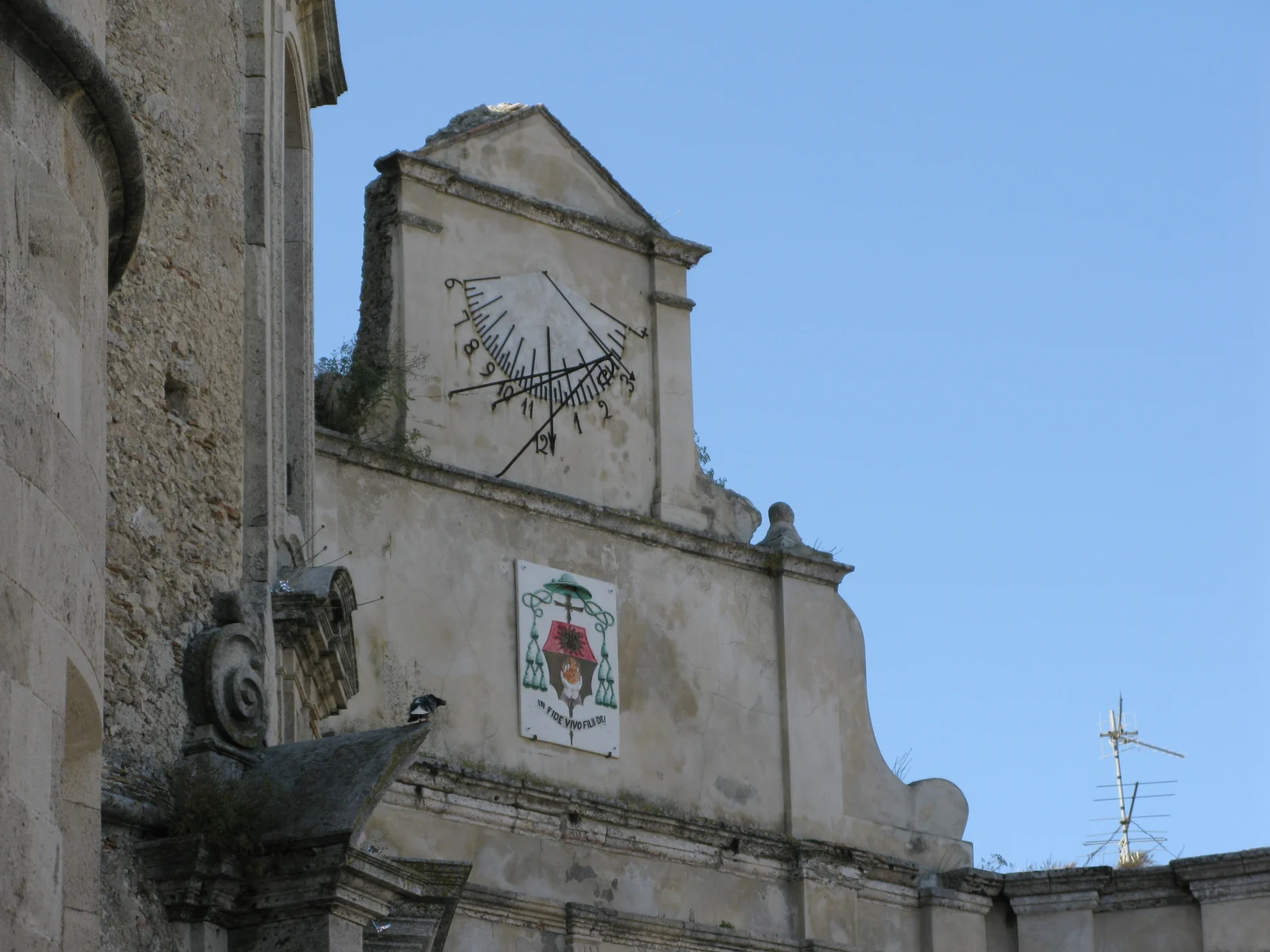
Photo: Jacopo Werther / Wikimedia Commons — CC BY-SA 4.0 · Resized and converted to WebP.
When to go
The liveliest time is summer. The Borgo Incantato, the international street-art festival founded in 1999, is held every year in July in the squares and streets of the old town, with artists from all over the world; in 2026 it reached its 26th edition. Each year’s programme is on the festival’s website.
2 October is the date on which the five martyrs of 1847 were shot; they are remembered by the monument in the pine wood of the Piana.
Sources: Il Borgo Incantato, festival internazionale degli artisti di strada di Gerace (sito del festival, collegato dal Comune) · Comune di Gerace — La Pineta dei Cinque Martiri
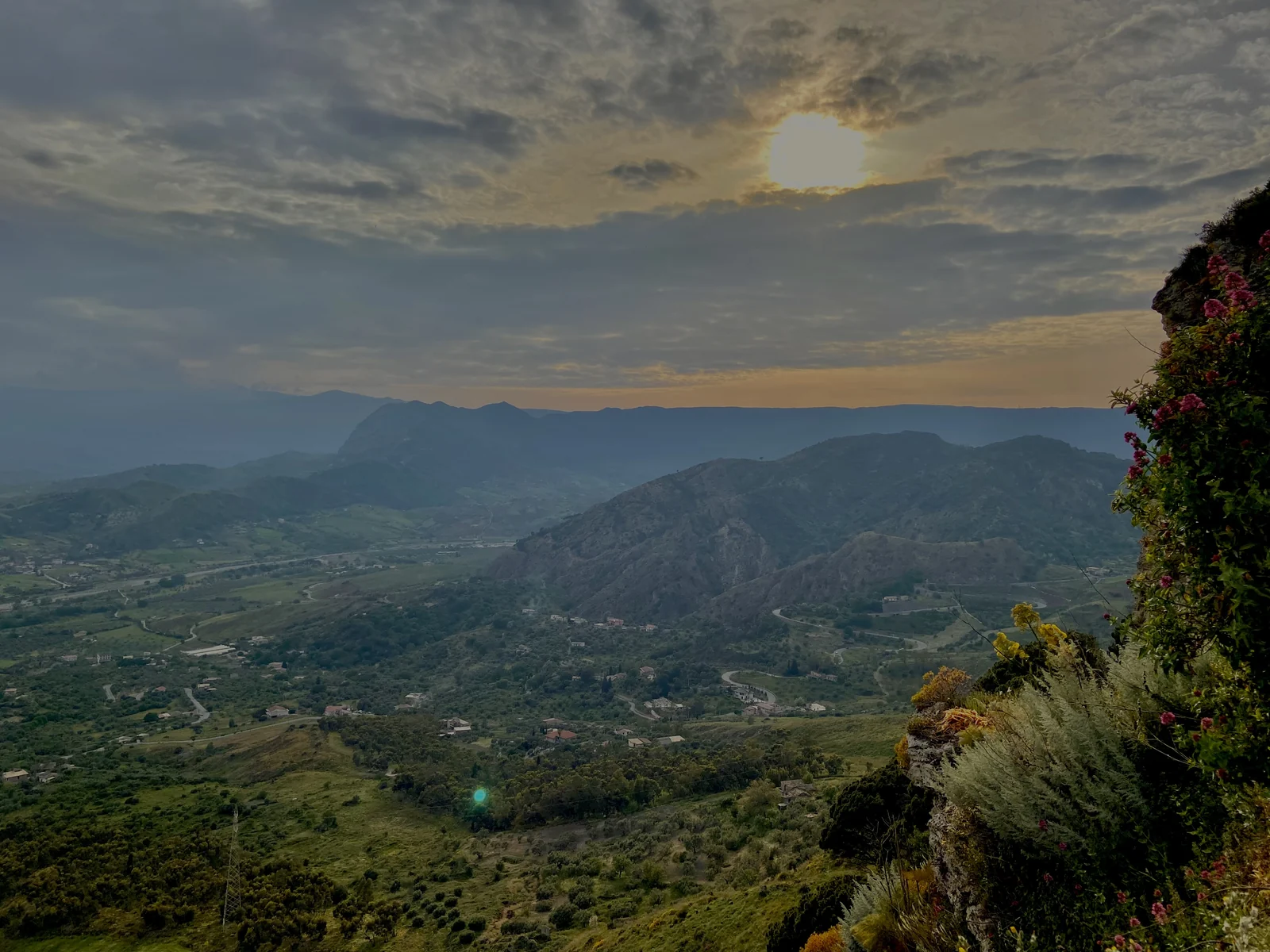
Photo: AlMo18 / Wikimedia Commons — CC BY-SA 4.0 · Resized and converted to WebP.
Getting there
Gerace is reached from the coast: from state road 106, near Locri, the former state road 111 climbs for about 8-10 kilometres. The town council also gives the route from the Tyrrhenian side: leave the motorway at Rosarno and take the Jonio-Tirreno main road to Marina di Gioiosa Jonica, then road 106 towards Locri. According to the town council, Reggio Calabria and Lamezia Terme airports are about 110 and 120 kilometres away.
The nearest station is Locri, about 10 kilometres away. According to RFI it has 3 passenger tracks, all reachable step-free; raised platforms are at tracks 2 and 3; there are audio and visual announcements, but no assistance service for people with disabilities or reduced mobility. For buses the town council points to Mediterranea Bus, a public transport company with an information line at Bovalino Marina (0964 66693).
The old town is best seen on foot, as the town council advises. The town hall is at Via Sottoprefettura 4 and, according to its page, has no architectural barriers; the town council’s pages also say which churches and monuments can be reached without barriers, such as the castle, San Francesco and Santa Maria del Mastro, and which cannot, such as the Annunziatella and Santa Caterina.
Sources: Comune di Gerace — Municipio, sede comunale della Città di Gerace (scheda del luogo) · Comune di Gerace — Gerace e la sua storia (scheda del luogo, con l’itinerario di visita) · RFI — Stazione di Locri · Mediterranea Bus, azienda di trasporto pubblico (collegata dal Comune come «Mobilità e trasporti») · Comune di Gerace — Il Castello · Comune di Gerace — Chiesa di San Francesco d’Assisi · Comune di Gerace — Chiesa di Santa Maria del Mastro · Comune di Gerace — Chiesa dell’Annunziatella · Comune di Gerace — Chiesa di Santa Caterina d’Alessandria
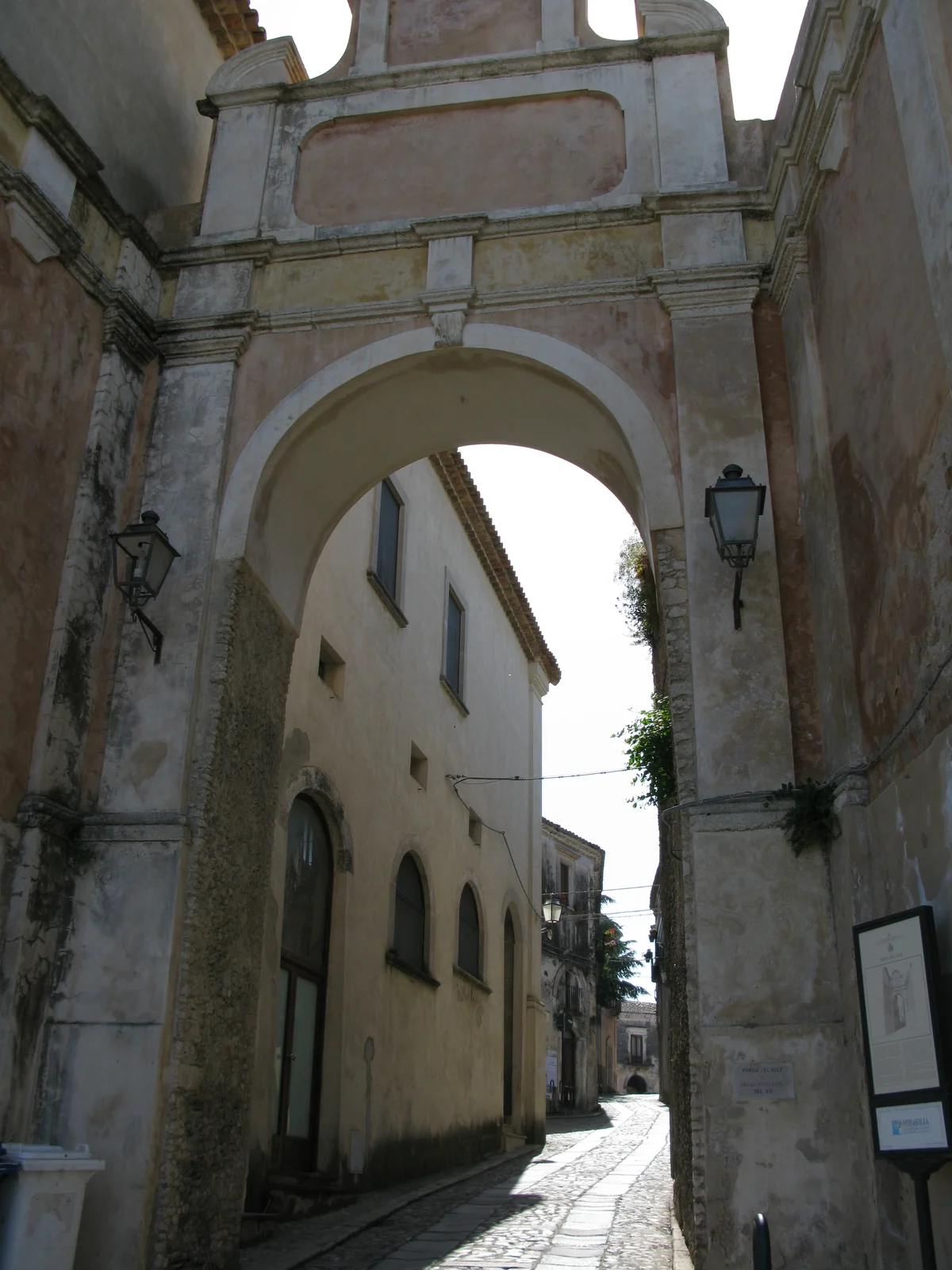
Photo: Jacopo Werther / Wikimedia Commons — CC BY-SA 4.0 · Resized and converted to WebP.
Accommodation in figures
In the Ministry of Tourism’s national database of accommodation (BDSR), on 12 October 2026, Gerace had 27 establishments with a verified national identification code (CIN): 1 hotel-type establishment, 15 non-hotel establishments and 11 other establishments.
The town council publishes on its website a list of local accommodation, with bed and breakfasts, holiday homes, farm stays and a hotel in the monastery of Sant’Anna.
Sources: Ministero del Turismo – Banca Dati Strutture Ricettive (dashboard pubblica) · Comune di Gerace — Argomenti: Dove dormire · Comune di Gerace — Palazzo Sant’Anna (monastero di Sant’Anna)
Nearby
Gerace’s story begins at Locri Epizephyrii. The national archaeological park of Locri, run by the Ministry of Culture, lies along state road 106, about 5 kilometres from present-day Locri, on the site of the Greek colony. It includes the national archaeological museum, devoted to the Greek city, and the Casino Macrì complex, with the museum of Roman Locri; four routes cross the walls, the sanctuary of the Thesmophorion, the sacred area of Marasà, the Centocamere quarter and the Greek-Roman theatre at Pirettina. The earliest age of the Locride is told in the Museo del territorio in Palazzo Teotino Nieddu del Rio, in the centre of Locri.
From the Bombarde and the castle the view takes in the Locride and the Ionian coast; the town council writes that Gerace lies in the Aspromonte National Park, at the end of the upland that joins the Serre to the Aspromonte.
Sources: Ministero della cultura, Direzione regionale Musei nazionali Calabria — Museo e Parco archeologico nazionale di Locri · Comune di Gerace — Le Bombarde · Comune di Gerace — Municipio, sede comunale della Città di Gerace (scheda del luogo)
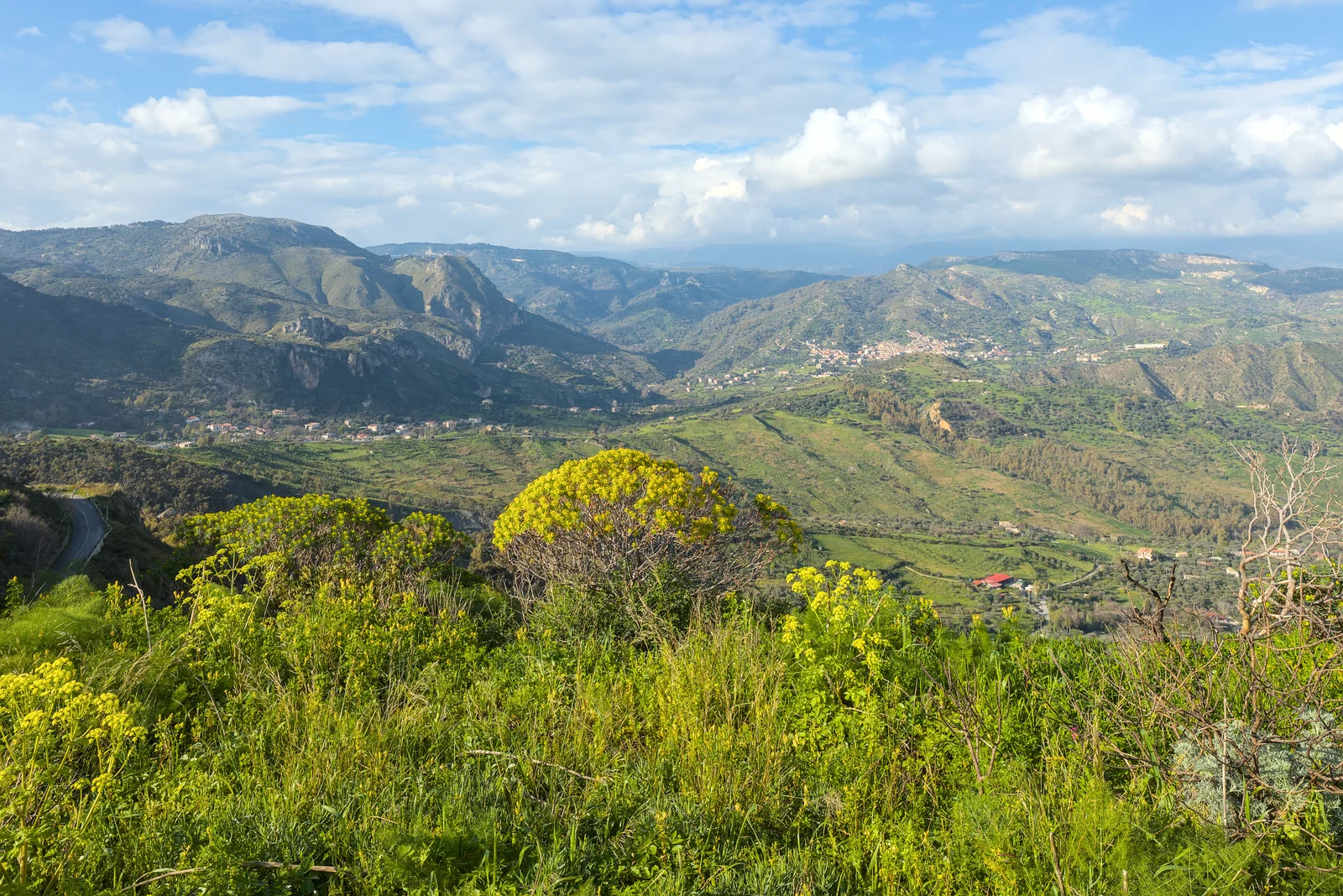
Photo: Benjamin Smith / Wikimedia Commons — CC BY-SA 4.0 · Resized and converted to WebP.
The town council
The official website of the Comune di Gerace, registered in IndicePA, the index of the digital addresses of Italy’s public administrations, is the reference for the town council’s offices, opening hours and news. Its address is listed among the sources of this section.
The town hall is at Via Sottoprefettura 4; the switchboard answers on 0964 356243. The civic museum, at Piazza Tribuna 15, is also the town council’s tourist information centre and answers on 0964 355009.
Sources: Comune di Gerace, sito istituzionale · IndicePA (AgID), Indice dei domicili digitali delle pubbliche amministrazioni: dataset Enti · Comune di Gerace — Municipio, sede comunale della Città di Gerace (scheda del luogo) · Comune di Gerace — Museo Civico Comunale «Salvatore Gemelli»
Where to stay
In the municipality of Gerace the national database of the Ministry of Tourism lists 27 accommodation businesses with a verified CIN code: 1 hotels, 15 other licensed accommodation and 11 other types such as B&Bs and private rentals.
Licensed businesses from the official list of accommodation named as the source in this section. Where the list gives it, the property's official identification code appears next to its name: the national CIN code, or the code assigned by the Region or by the body that keeps the list. Private individuals are not listed. This list is the official census of licensed businesses, not a list of Apulica partners: to stay in Gerace you do not have to check one property after another yourself; write to Apulica and we look for the stay that suits your journey, checking availability and conditions before any confirmation.
HOTEL PALAZZO SANT'ANNA
Hotel · ★★★★
CIN IT080036A1USGCL8U9
La Valle Incantata
Farm stay
Regional agritourism list 2023
CAMUMÃŒDHA
B&B
CIN IT080036B47KKLMRDP
IL QUERCETO NEL BOSCO
Guest rooms
CIN IT080036B4PXQZ8ZBD
IL BORGHETTO
Holiday home
CIN IT080036B4JJ44XG3I
Rinaldis
Farm stay
Regional agritourism list 2023
DA RITA
B&B
CIN IT080036B4C29278JT
IL QUERCETO RELAIS
B&B
CIN IT080036B4ZSVQEIQI
LA ROSA BLU
B&B
CIN IT080036B4W68YFUYZ
PALAZZO CANDIDA
B&B
CIN IT080036B46DMC8NJQ
First the places that presented themselves to Apulica, the latest first; then one place of each type in turn, by official category and stars, then by name. No position is paid for.
All 11 entries in alphabetical order
Page 1 of 2
| Name | Type | Identification code |
|---|---|---|
| CAMUMÃŒDHA | B&B | IT080036B47KKLMRDP |
| DA RITA | B&B | IT080036B4C29278JT |
| HOTEL PALAZZO SANT'ANNA | Hotel | IT080036A1USGCL8U9 |
| IL BORGHETTO | Holiday home | IT080036B4JJ44XG3I |
| IL QUERCETO NEL BOSCO | Guest rooms | IT080036B4PXQZ8ZBD |
| IL QUERCETO RELAIS | B&B | IT080036B4ZSVQEIQI |
| LA ROSA BLU | B&B | IT080036B4W68YFUYZ |
| La Valle Incantata | Farm stay | Regional agritourism list 2023 |
| PALAZZO CANDIDA | B&B | IT080036B46DMC8NJQ |
| Rinaldis | Farm stay | Regional agritourism list 2023 |
Ask Apulica for a stay in Gerace We reply shortly, within a few hours at most, with a proposal for you to consider.
Sources: Ministero del Turismo – Banca Dati Strutture Ricettive (dashboard pubblica), 2026-10-12
YOUR JOURNEY
How to shape a journey here
To include Gerace in a trip, or to ask for a guide or a transfer, you can write to Apulica with the button below.
Plan your tripKeep exploring
Locri
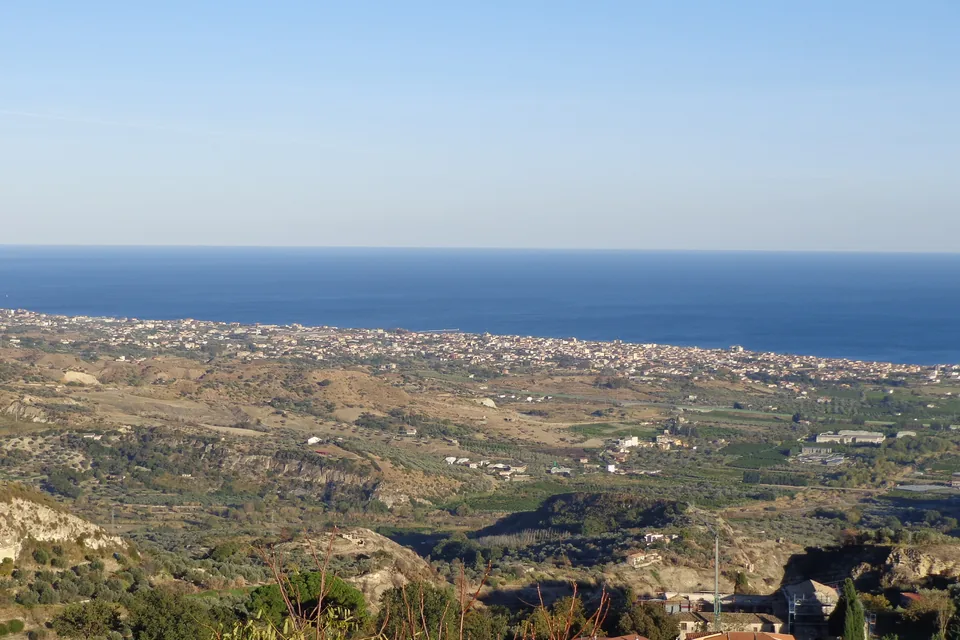
Locri (RC), Calabria: 11,870 residents, 25.77 km². The official facts of the municipality, its town council website and its registered accommodation.
Read the guide →Photo: Simon Legner / Wikimedia Commons — CC BY-SA 4.0 · Resized and converted to WebP.

Siderno
Siderno (RC), Calabria: 17,570 residents, 31.89 km². The official facts of the municipality, its town council website and its registered accommodation.
Read the guide →Photo: Effems / Wikimedia Commons — CC0 · Resized and converted to WebP.

Portigliola
Portigliola (RC), Calabria: 1,026 residents, 6.00 km². The official facts of the municipality, its town council website and its registered accommodation.
Read the guide →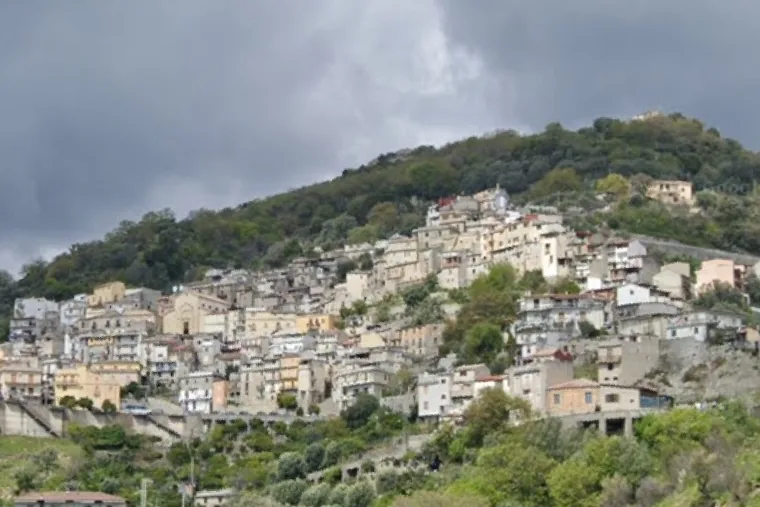
Antonimina
Antonimina (RC), Calabria: 1,165 residents, 22.91 km². The official facts of the municipality, its town council website and its registered accommodation.
Read the guide →Photo: LOOOOCAmisy / Wikimedia Commons — CC BY-SA 4.0 · Resized and converted to WebP.

Canolo
Canolo (RC), Calabria: 687 residents, 28.30 km². The official facts of the municipality, its town council website and its registered accommodation.
Read the guide →Agnana Calabra
Agnana Calabra (RC), Calabria: 456 residents, 8.49 km². The official facts of the municipality, its town council website and its registered accommodation.
Read the guide →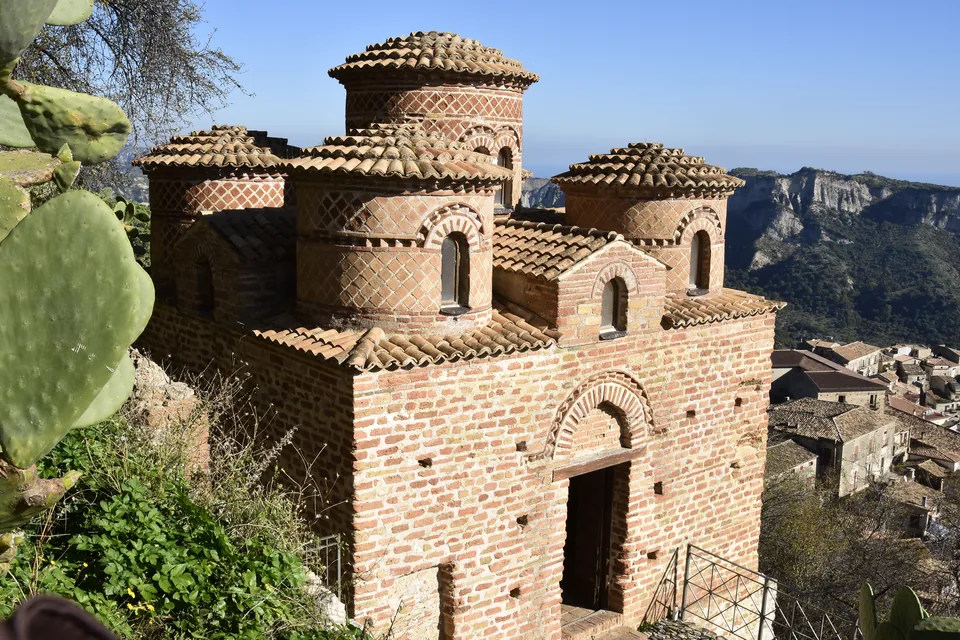
Stilo
Stilo (RC), Calabria: 2,306 residents, 78.11 km². The official facts of the municipality, its town council website and its registered accommodation. The Byzantine Cattolica on Monte Consolino, the Norman castle, the birthplace of Tommaso Campanella, the Palio di Ribusa, the “Bivongi” DOC wine and the Ferdinandea in the Serre park.
Read the guide →Photo: Bearbil2 / Wikimedia Commons — CC BY-SA 4.0 · Resized and converted to WebP.

Reggio di Calabria
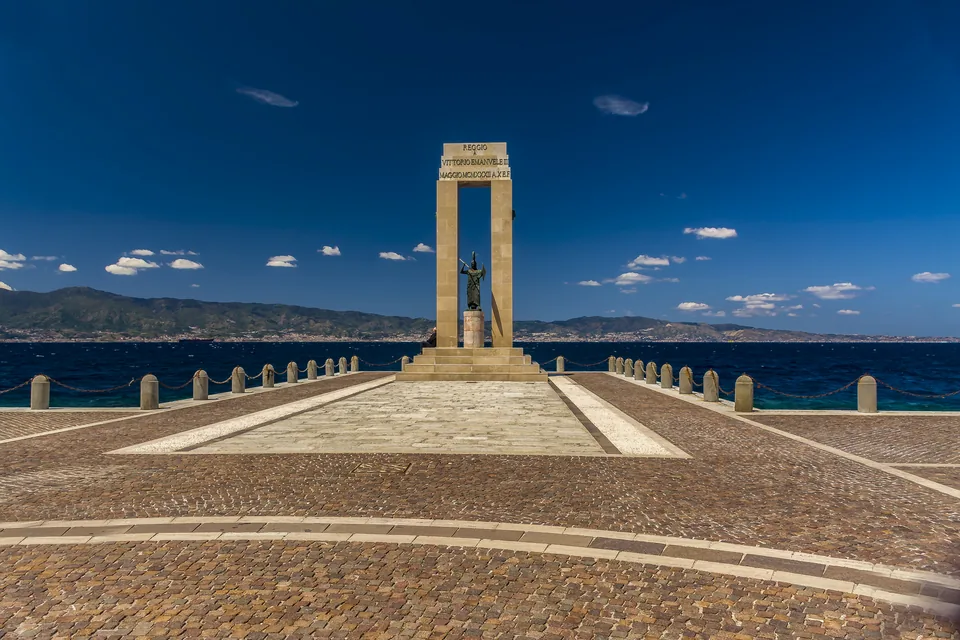
The city on the Strait of Messina: the Riace Bronzes at the Archaeological Museum, the Lungomare Falcomatà with the Greek walls and the Roman baths, the Aragonese Castle, Liberty Reggio reborn after 1908, the bergamot and the feast of the Madonna della Consolazione.
Read the guide →Photo: Tarta46 / Wikimedia Commons — CC BY-SA 4.0 · Resized and converted to WebP.

“Come to Gerace as a guest, not as a tourist: that is how these places truly let you know them.”