

Why go
Reggio stands at the tip of the peninsula, on the last slopes of the Aspromonte, on the eastern shore of the Strait of Messina: the Treccani encyclopaedia describes it as a coastal conurbation of more than 20 kilometres, from Villa San Giovanni to the seaside hamlets of Motta San Giovanni. Sicily lies opposite, so close that from the seafront you can make out the houses of Messina and, on clear days, the outline of Etna. The Ministry's tourism portal recalls that the city, for its climate and its history, was celebrated by English and French travellers of the nineteenth century.
There are at least three reasons to come. The National Archaeological Museum, home of the Riace Bronzes, two of the best-known masterpieces of Greek sculpture of the fifth century BC. The Lungomare Falcomatà, the promenade on the Strait which, according to the Ministry's portal, D'Annunzio called "the most beautiful kilometre in Italy" (the municipality points out that it is 1.7 kilometres long). And a city rebuilt after the 1908 earthquake in the full Liberty age, with palazzi, squares and a grid of streets that changed its face for ever.
Then there is everyday life: Corso Garibaldi, the pedestrian street of about two kilometres running parallel to the sea where the people of Reggio stroll among churches, squares and shops, crespelle with anchovies and artisan ice cream, summer evenings at the Arena dello Stretto. From the city it is a short trip to the Costa Viola, to the Greek-speaking villages of the Aspromonte and, by ferry, to Sicily.
Reggio di Calabria is a municipality in the Metropolitan City of Reggio Calabria, in Calabria. Its ISTAT code is 080063. It is the capital of the Metropolitan City of Reggio Calabria. On 1 January 2025 it had 168,779 residents. The municipal territory covers 238.96 km² and ranges from -3 to 1,790 metres above sea level; the town hall stands at about 21 metres.
Sources: Treccani, Enciclopedia — Reggio di Calabria · Italia.it (Ministero del Turismo) — Reggio Calabria: guida, storia e curiosità · Italia.it (Ministero del Turismo) — Reggio Calabria in tre giorni · Museo Archeologico Nazionale di Reggio Calabria (MiC) — I Bronzi di Riace · Comune di Reggio Calabria, Turismo — Lungomare Falcomatà · Comune di Reggio Calabria, Turismo — Corso Garibaldi · Comune di Reggio Calabria, Turismo — Arena dello Stretto · ISTAT, Codici statistici delle unità amministrative territoriali: elenco dei comuni al 21 febbraio 2026 · ISTAT, Popolazione residente per età, sesso e stato civile al 1° gennaio 2025 (POSAS) · ISTAT, Principali statistiche geografiche sui comuni: superficie e altimetria al 31 dicembre 2021
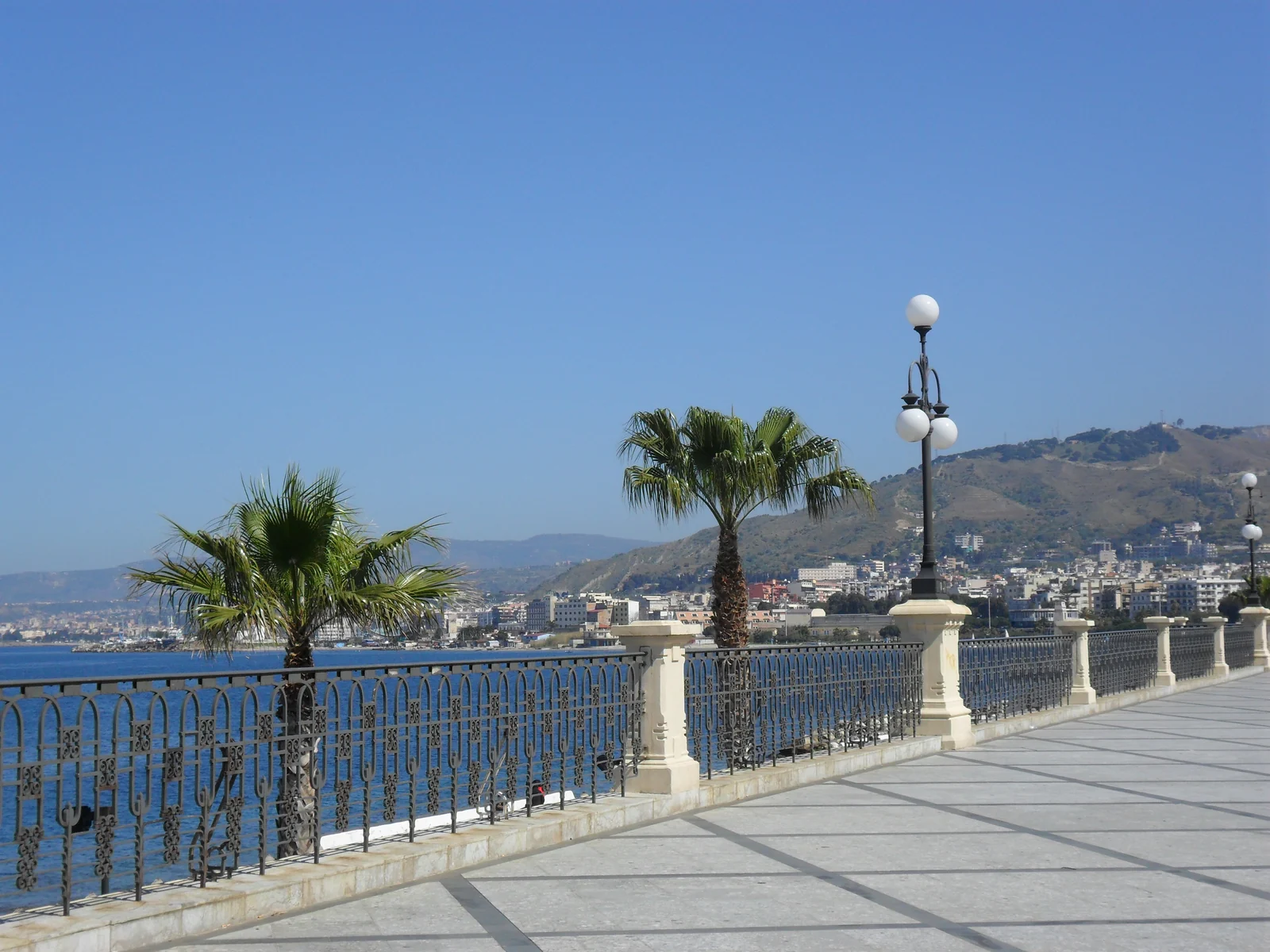
Photo: Franc rc / Wikimedia Commons — CC BY-SA 3.0 · Resized and converted to WebP.
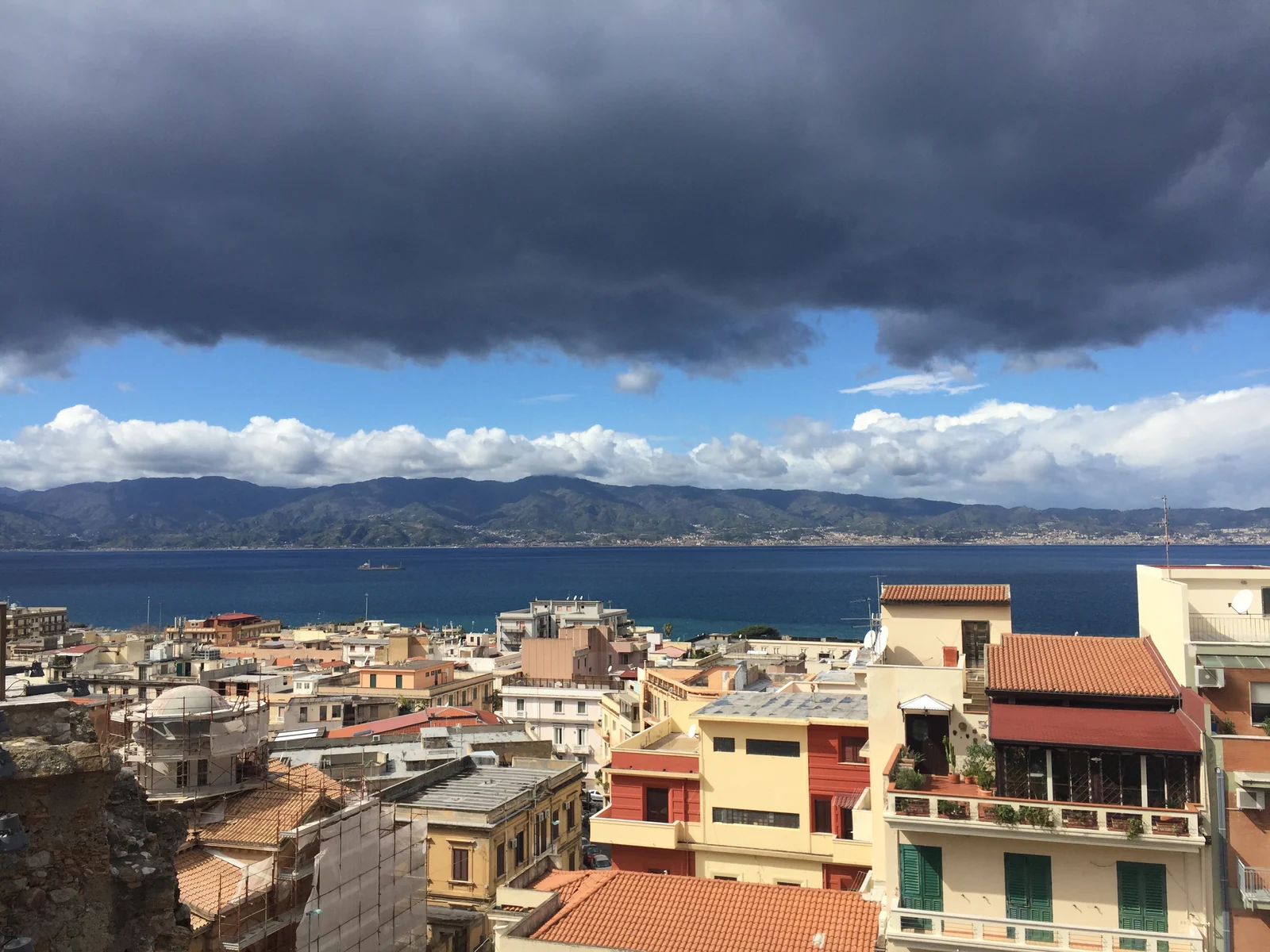
Photo: Antoniobilardi / Wikimedia Commons — CC BY-SA 4.0 · Resized and converted to WebP.
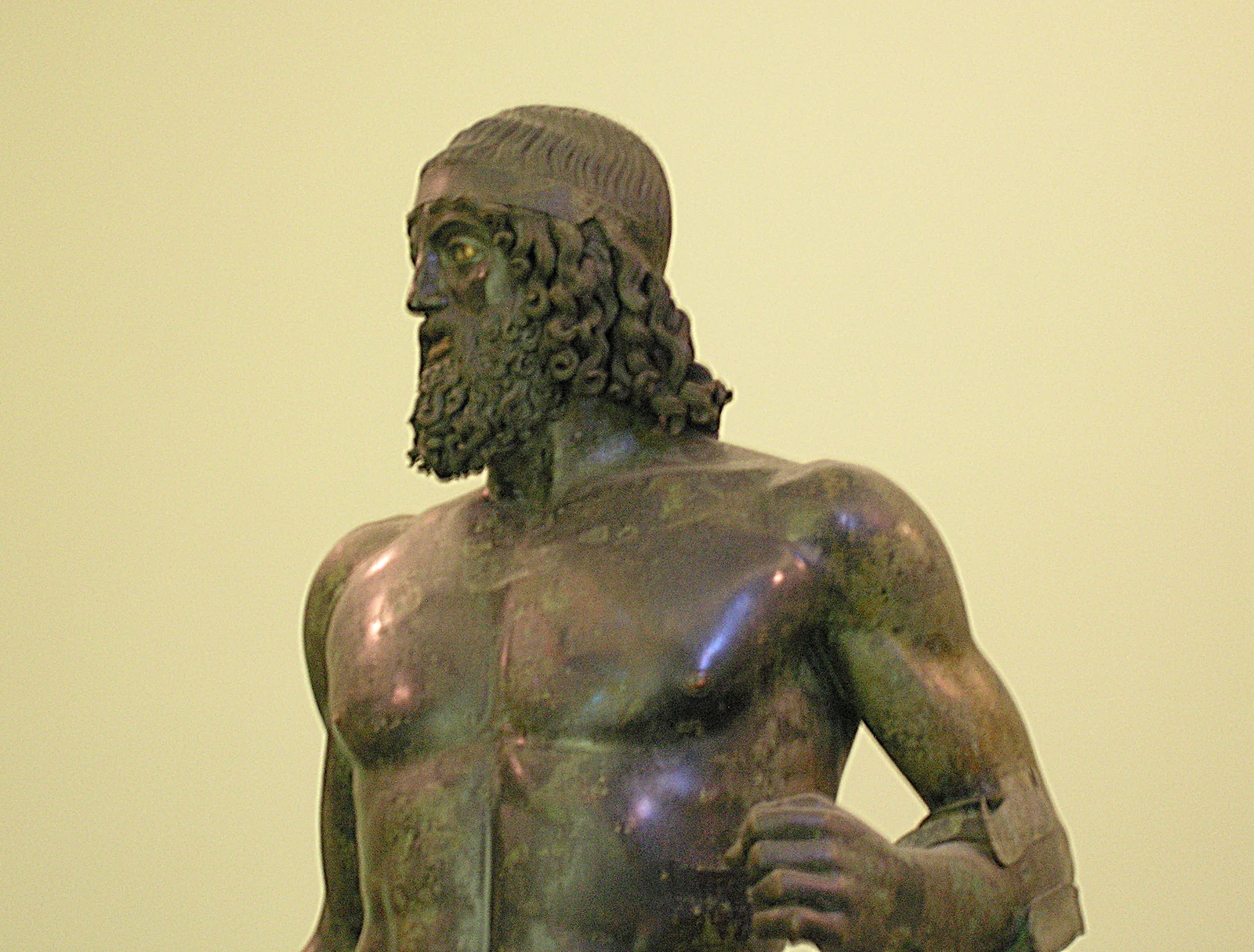
Photo: Luca Galli from Torino, Italy / Wikimedia Commons — CC BY 2.0 · Resized and converted to WebP.
History
The ancient city was founded by Chalcidian settlers from Euboea in the second half of the eighth century BC. The municipality gives Thucydides' date, 730 BC, and the legend of the Delphic oracle: the settlers were to stop where they found "a female embracing a male", and at the mouth of the Apsia river, today's Calopinace, they found a vine wrapped around a wild fig tree. The name Rhegion, according to one of the ancient explanations, comes from a verb meaning to break, and recalls Sicily split from the mainland.
In the fifth century BC the tyrant Anaxilas ruled both cities of the Strait, when Messina was still called Zancle, and Rhegion took in the Pythagoreans who had fled Croton. In 387 BC Dionysius of Syracuse took the city and destroyed almost all of it; his son Dionysius II rebuilt it with the name Phoebia, the city of Apollo. An ally of Rome against Pyrrhus, it became Regium Iulii, and for a long time kept the Greek language alongside Latin.
Under the Byzantines Reggio was a metropolitan see and, after 909, the administrative centre of their possessions in Italy: the first structures of the castle date from that period, between the ninth and the eleventh century. In 1060 Robert Guiscard conquered it. The Aragonese gave the fortress the two crenellated towers that still give it its name; centuries of raids from the sea followed, such as the Turkish sack of 1574 that devastated the cathedral, epidemics and earthquakes.
The earthquake of 1783 left the city in ruins; in the rebuilding the engineer Giovan Battista Mori designed the Real Palazzina by the sea, the first core of the Via Marina. In 1847 Reggio rose against the Bourbons, and on 21 August 1860 Garibaldi's men won the battle fought in today's Piazza Duomo and took the castle.
On 28 December 1908 a new earthquake completely destroyed Reggio and Messina: in Reggio about 12,000 people died. Giuseppe De Nava, a minister from Reggio, fought for the city to be reborn where it stood, and the town plan of 1911 squared 419 blocks into a grid parallel to the sea. The new cathedral, Ernesto Basile's Palazzo San Giorgio, inaugurated in 1922, and the Liberty palazzi of the Via Marina were built then. After the bombings of 1943, in the 1990s mayor Italo Falcomatà began the renewal of the seafront, in the season known as the "Reggio Spring": today the promenade bears his name.
The Comune traces the history of the castle. In 1458 Ferdinand of Aragon had the fortress restored: under the direction of Baccio Pontelli the two round crenellated towers were added to the south, with the wing that links them, and in 1479 the outer ravelin and the moat to the east. In 1539 Pedro de Toledo enlarged it, and more than once the castle sheltered the people of Reggio during Turkish raids. The town plan of 1869 considered demolishing it to open a large square; in 1892 the provincial commission decided on a partial demolition that kept the two towers. Damaged by the 1908 earthquake and later used as barracks, it lost nine tenths of its original structure to demolitions, including the works that joined Via Aschenez to Via Cimino.
The Archaeological Museum was also born of the 1908 earthquake. The Comune's tourism portal tells how the damage to the Civic Museum, opened in 1882, and the will of the superintendent Paolo Orsi hastened the founding of a museum of Magna Graecia to gather finds from all of Calabria; Palazzo Piacentini was the first building made solely for a museum display.
Sources: Treccani, Enciclopedia — Reggio di Calabria · Comune di Reggio Calabria, Turismo — Storia di Reggio dalla fondazione all’età ellenistica · Italia.it (Ministero del Turismo) — Reggio Calabria: guida, storia e curiosità · Italia.it (Ministero del Turismo) — Reggio Calabria in tre giorni · Comune di Reggio Calabria, Turismo — Castello Aragonese · Comune di Reggio Calabria, Turismo — La Basilica Cattedrale di Reggio Calabria · Comune di Reggio Calabria, Turismo — Lungomare Falcomatà · Comune di Reggio Calabria, Turismo — Piazza Duomo · Comune di Reggio Calabria, Turismo — Piazza De Nava · Comune di Reggio Calabria, Turismo — Palazzo San Giorgio · Comune di Reggio Calabria: il Castello Aragonese, storia, orari e biglietti · Comune di Reggio Calabria, portale del turismo: il Museo Archeologico di Reggio Calabria
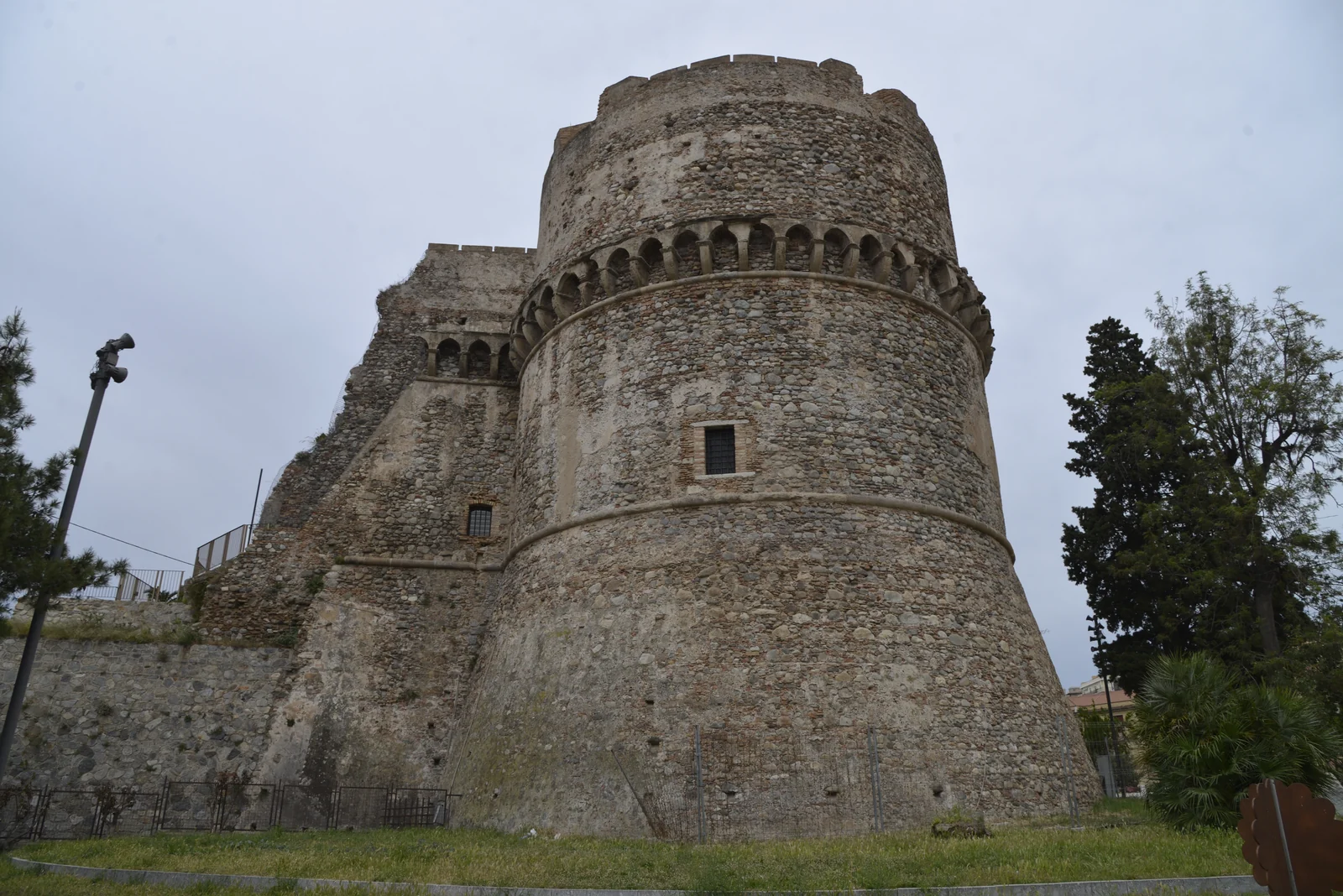
Photo: Dario Crespi / Wikimedia Commons — CC BY-SA 4.0 · Resized and converted to WebP.
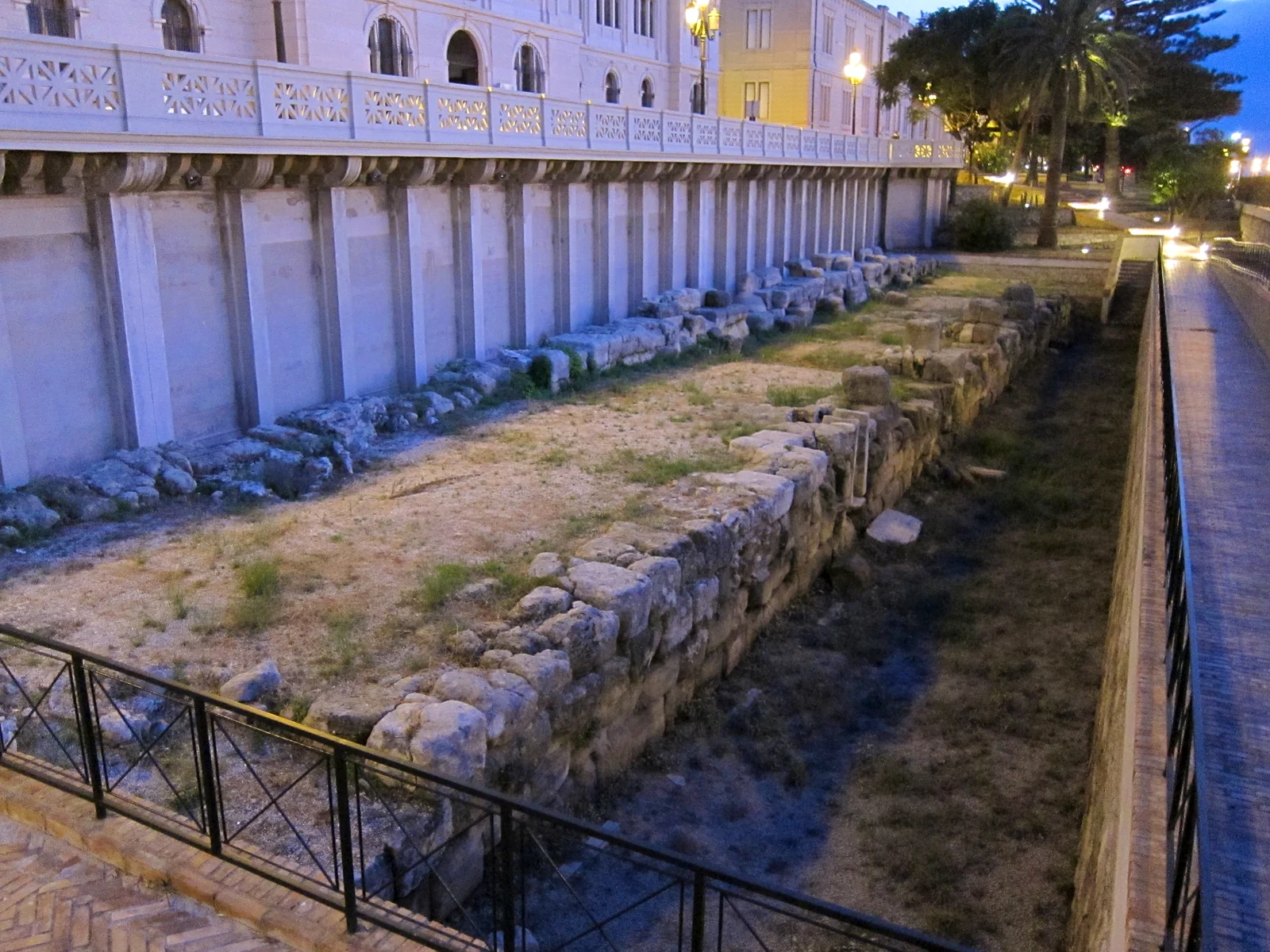
Photo: Marcus Andersson from Tropea, Italy / Wikimedia Commons — CC BY-SA 2.0 · Resized and converted to WebP.
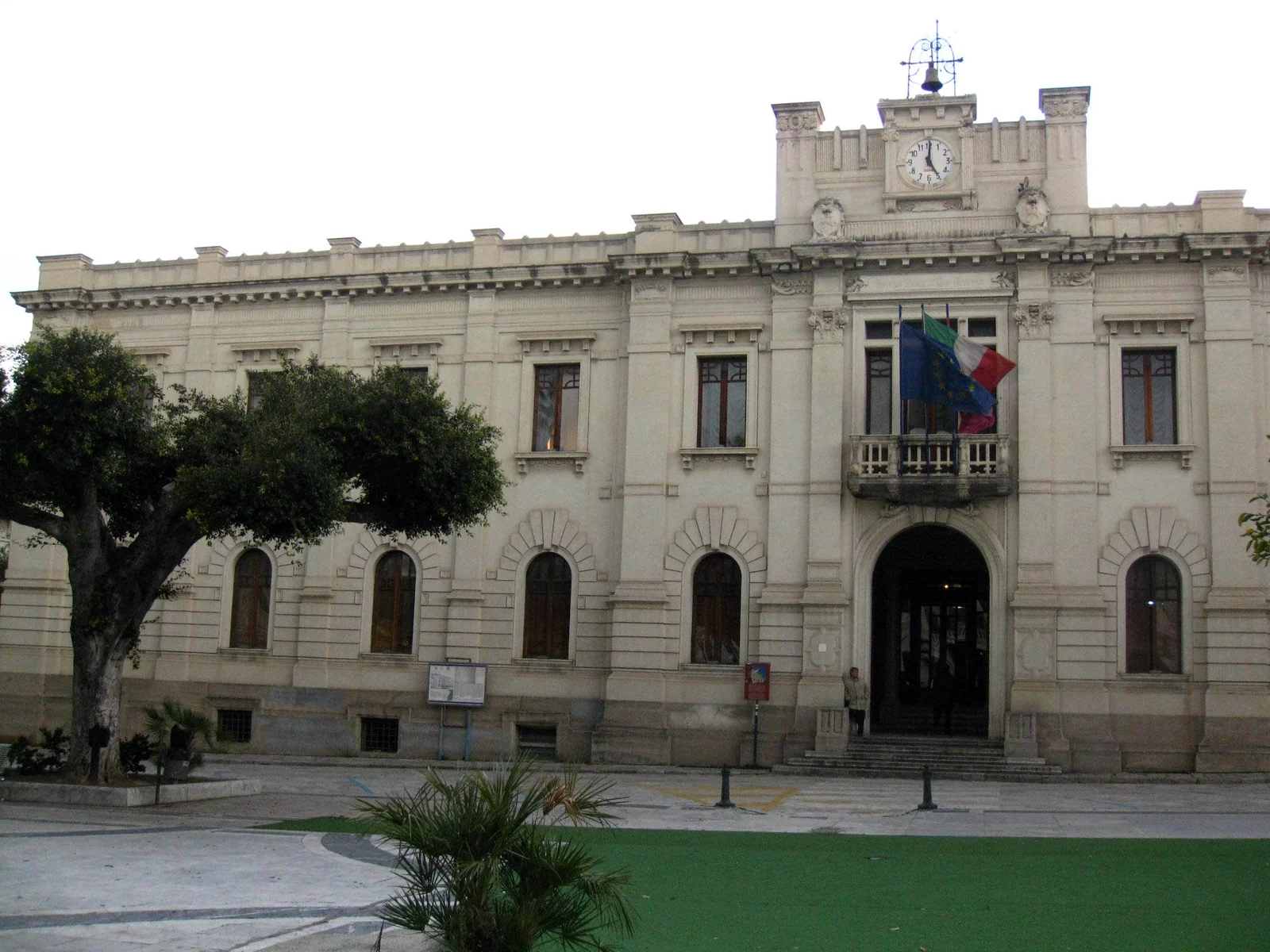
Photo: Enric / Wikimedia Commons — CC BY-SA 4.0 · Resized and converted to WebP.
What to see
The National Archaeological Museum, MArRC, stands in Piazza De Nava, in the Palazzo Piacentini: designed by Marcello Piacentini in the 1930s, it is among the first buildings in Europe conceived solely for an archaeological collection. Partly opened in 1954 and inaugurated in 1959, it reopened in 2016 after seven years of works, with its inner square named after Paolo Orsi and a terrace on the Strait. The Riace Bronzes, found in August 1972 at a depth of 8 metres off Riace Marina, are almost two metres tall, cast with the lost-wax technique, with eyes of calcite and glass paste and lips and details in copper and silver; the casting earth places their origin in Attica and the Argolid, but whom they portray is still uncertain. You enter their room after a stop in a filter space. The same room holds the heads from the Porticello wreck, the Basel Head and the Philosopher's Head; on the lowest floor, beneath the museum, there is a Hellenistic necropolis of about a hundred tombs found in 1932 while the building was going up.
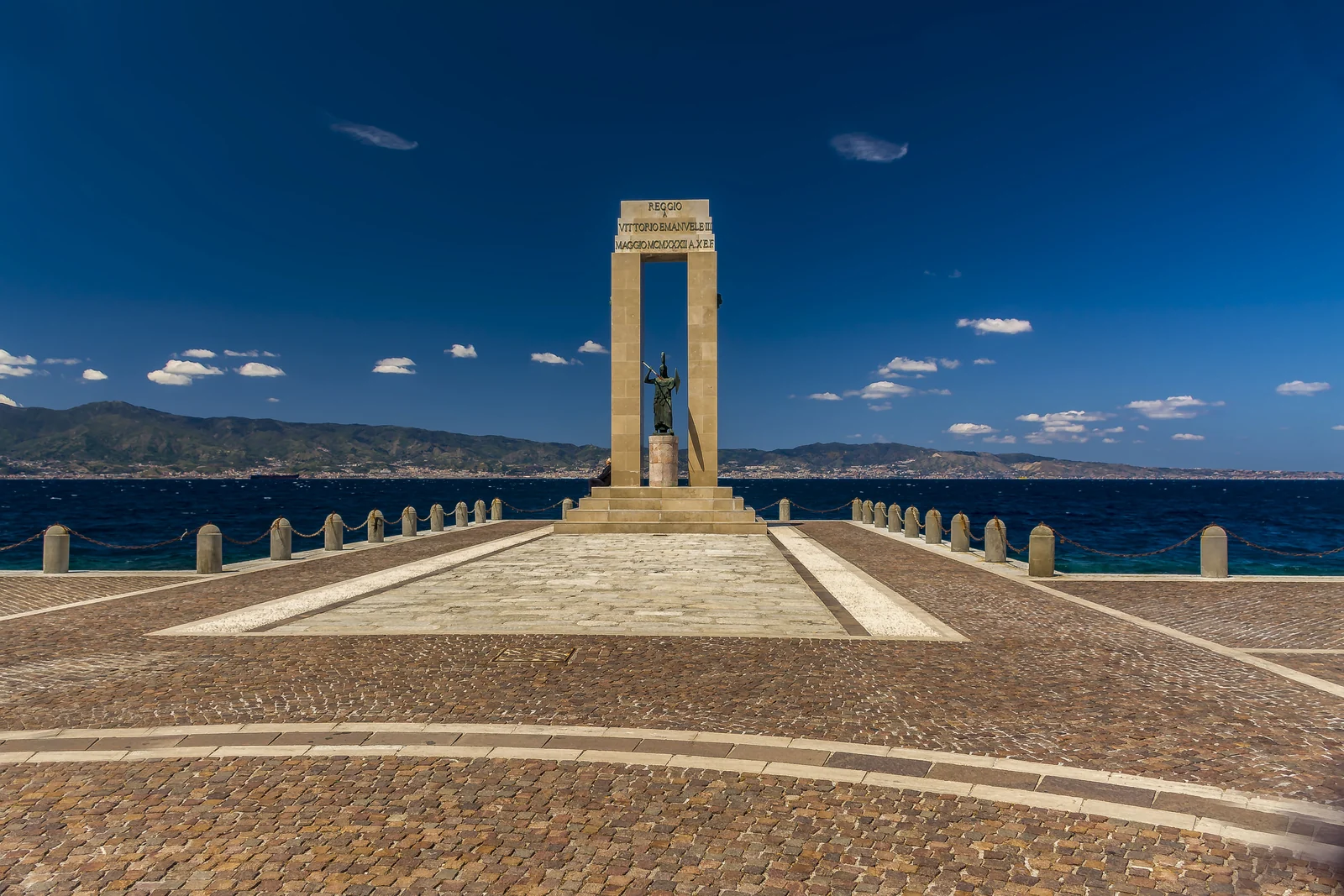
On the seafront history comes to you as you walk. Near Piazza Camagna is the longest stretch of the city's Hellenistic walls; further on are the Roman baths, found after 1908, with a geometric black-and-white mosaic of the second or third century AD. There are the monument to the poet Ibycus, the column with Apollo's tripod, Rabarama's three sculptures, on the seafront since 2007, and Edoardo Tresoldi's "Opera", 46 columns of wire mesh eight metres high. The Arena dello Stretto, built where the Porto Salvo pier once stood, has at its tip the statue of Athena Promachos by the Messina sculptor Bonfiglio (1932). On the Via Marina, Villa Genoese Zerbi recalls Venetian Gothic.
The Aragonese Castle, whose two round towers were declared a national monument in 1897, hosts exhibitions and events; next to it is the church of the Ottimati, which keeps remains of the Byzantine-Norman building. The cathedral, rebuilt after 1908 in Romanesque Revival forms to a design by Father Carmelo Angiolini, is the largest sacred building in Calabria: 94 metres long inside; at the entrance visitors are welcomed by Francesco Jerace's statues of Saint Paul and Saint Stephen of Nicaea. Inside, the legend of the column set alight by Paul's preaching is told.
Piazza Italia is the civic heart, with Rocco Larussa's monument to Italy (1868), Palazzo San Giorgio, the Prefecture and Palazzo Corrado Alvaro; in one corner of the square the Hypogeum shows eleven building phases in six metres, from the Greek age to the nineteenth century. In the north wing of the Teatro Cilea the civic art gallery shows Antonello da Messina's two panels, "Saint Jerome Penitent" and "Three Angels Visiting Abraham", and Mattia Preti's "Return of the Prodigal Son". The Palazzo della Cultura Pasquino Crupi gathers twentieth-century works, from De Chirico to Dalí, and the icons of the Piccolo Museo San Paolo. Opening times and tickets are on the venues' own sites, among the sources.
The MArRC route, 220 display cases on four floors, starts on the second floor and moves down through time. Level A tells the story of Calabria from prehistory to the Metal Ages: the cast of the Bos primigenius engraved in the Grotta del Romito at Papasidero and the painted pebbles from the Grotta della Madonna are the oldest artistic evidence in the region, and the ivory statuette from Punta di Zambrone, of Minoan origin, shows the contacts with the eastern Mediterranean. Level B is devoted to the cities and sanctuaries of Magna Graecia: from Locri come the statuettes of the Mannella sanctuary, dedicated to Persephone, the Dioscuri group from the sanctuary of Marasà and the Horseman of Casa Marafioti; from Cirò, ancient Krimisa, a gold statuette of Apollo. On the mezzanine, Level C shows daily life and funerary rites: the theatre of Locri, the necropolis of Metauros with more than 1,500 tombs, one of the most important collections of bronze mirrors in Magna Graecia and the gold-decorated glass cup from Varapodio. Level -1 holds the temporary exhibitions and the entrance to the Hellenistic necropolis.
Groups and schools must book, on 06 39967600. A self-guided visit takes an hour and a half on average; the luggage deposit is free, small dogs are admitted in arms or in a carrier and guide dogs are always admitted. The integrated Calabria Cultura Pass ticket brings together nine itineraries across the region's museums and archaeological parks and is valid for six months from the first entry. The museum's prices are in the page's structured data, with their source; the opening times are on the museum's website.
For visitors with specific needs the museum has a ramp at the entrance and lifts between levels, LOGES tactile paths with LVE technology, a tactile map on every floor, a video guide in Italian Sign Language at the ticket office, rest areas along the route, a breastfeeding point, a children's area and a decompression room, opened on request by the security staff.
The Aragonese Castle and the Pinacoteca civica share a single ticket. At the castle payment is by pagoPA only, and groups book at [email protected] or on 0965 3624124.
Teatro Cilea, named after the Palmi-born composer Francesco Cilea, stands where the old town hall stood before the 1908 earthquake: outside it recalls classical architecture, inside the large nineteenth-century-style hall is horseshoe-shaped, and it was returned to the city after a restoration lasting more than a decade.
Sources: Museo Archeologico Nazionale di Reggio Calabria (MiC) — Il Museo · Museo Archeologico Nazionale di Reggio Calabria (MiC) — I Bronzi di Riace · Museo Archeologico Nazionale di Reggio Calabria (MiC) — Livello D · Museo Archeologico Nazionale di Reggio Calabria (MiC) — Livello E · Comune di Reggio Calabria, Turismo — I Bronzi di Riace · Comune di Reggio Calabria, Turismo — Le Mura Greche · Comune di Reggio Calabria, Turismo — Terme Romane · Comune di Reggio Calabria, Turismo — Lungomare Falcomatà · Comune di Reggio Calabria, Turismo — Statue di Rabarama · Italia.it (Ministero del Turismo) — Reggio Calabria in tre giorni · Comune di Reggio Calabria, Turismo — Arena dello Stretto · Comune di Reggio Calabria, Turismo — Villa Zerbi · Comune di Reggio Calabria, Turismo — Castello Aragonese · Treccani, Enciclopedia — Reggio di Calabria · Comune di Reggio Calabria, Turismo — La Basilica Cattedrale di Reggio Calabria · Comune di Reggio Calabria, Turismo — Piazza Italia · Comune di Reggio Calabria, Turismo — Ipogeo di Piazza Italia · Comune di Reggio Calabria, Turismo — La Pinacoteca Civica di Reggio Calabria · Comune di Reggio Calabria, Turismo — Teatro Cilea · Comune di Reggio Calabria, Turismo — Palazzo della Cultura Pasquino Crupi · MArRC: collezioni, livello A · MArRC: collezioni, livello B · MArRC: collezioni, livello C · Comune di Reggio Calabria, portale del turismo: il Museo Archeologico di Reggio Calabria · MArRC: orari, tariffe e informazioni · MArRC: domande frequenti · MArRC: biglietto integrato Calabria Cultura Pass · MArRC: accessibilità · Comune di Reggio Calabria: il Castello Aragonese, storia, orari e biglietti · Comune di Reggio Calabria: Pinacoteca Civica · Comune di Reggio Calabria: Teatro Francesco Cilea
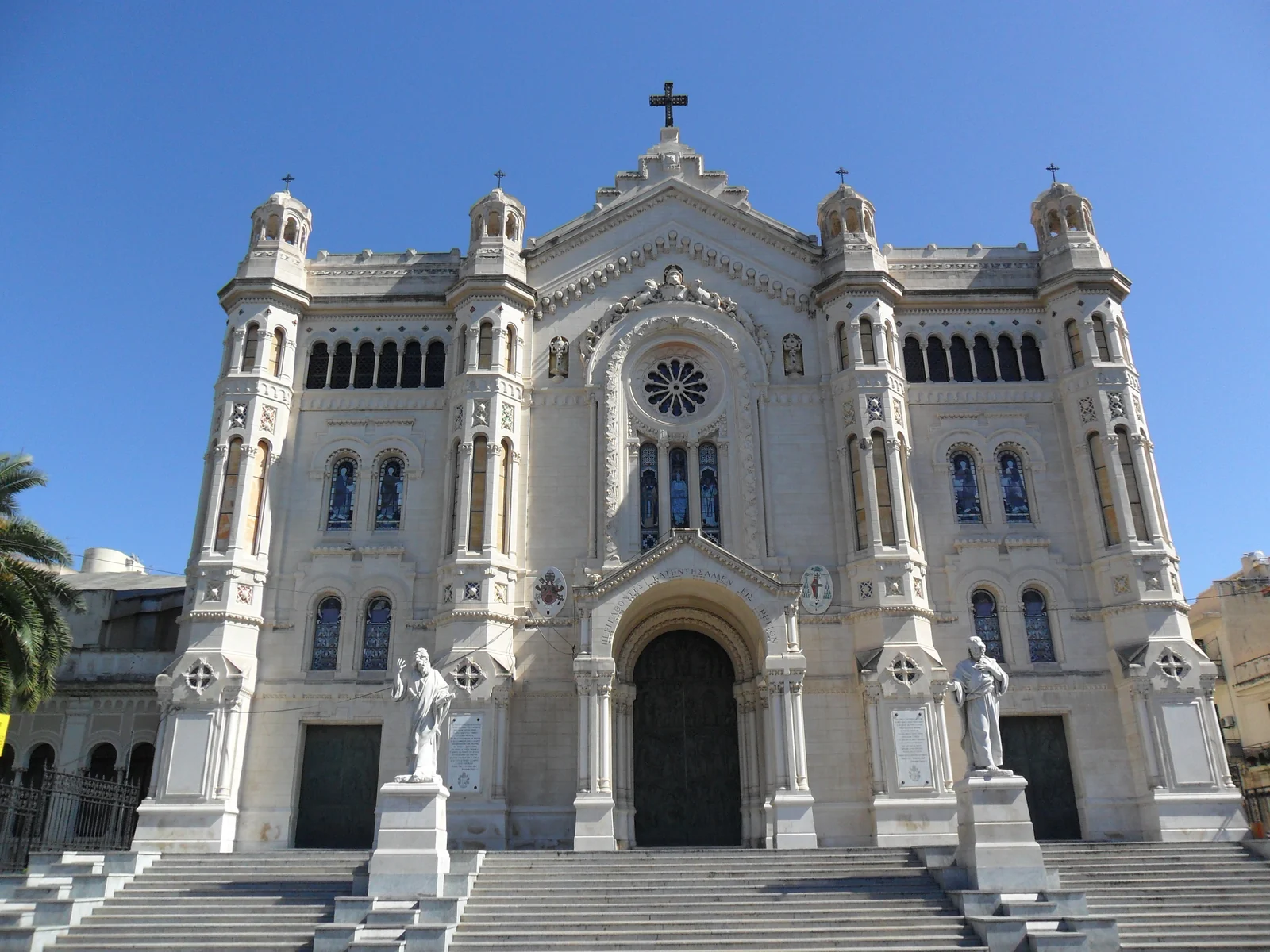
Photo: Franc rc / Wikimedia Commons — CC BY-SA 3.0 · Resized and converted to WebP.
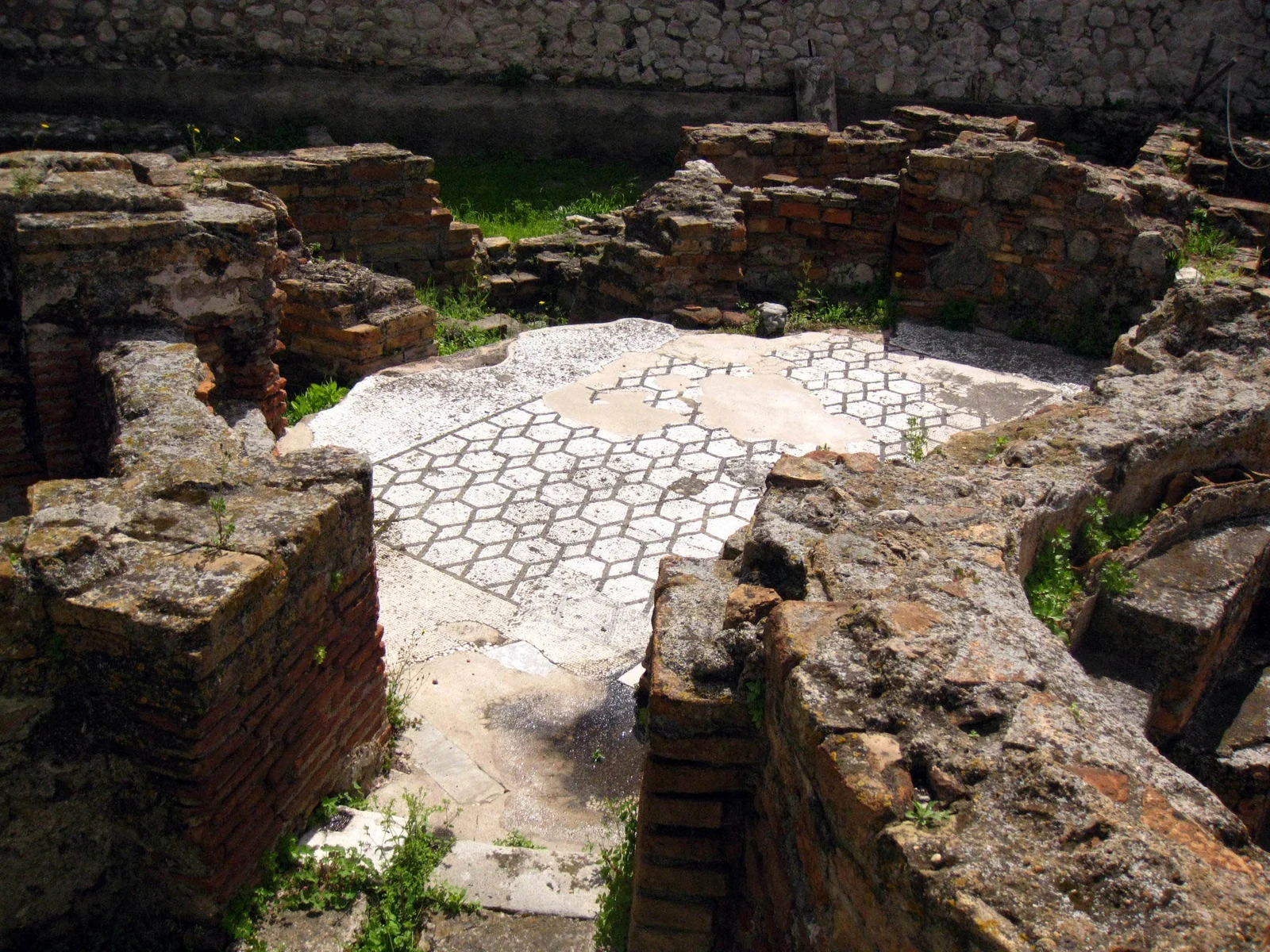
Photo: Enric / Wikimedia Commons — CC BY-SA 4.0 · Resized and converted to WebP.
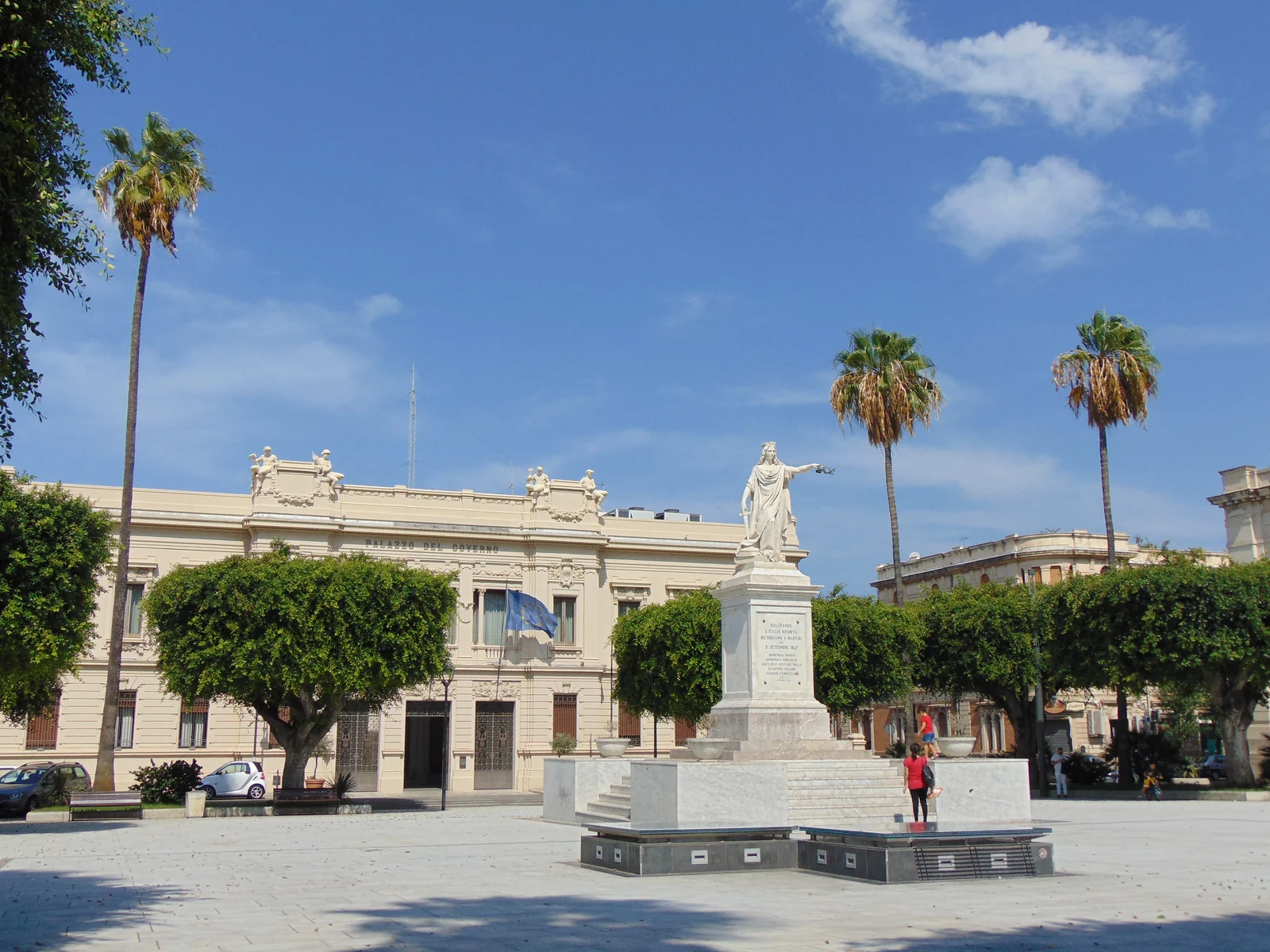
Photo: MAGspagna / Wikimedia Commons — CC BY-SA 4.0 · Resized and converted to WebP.
Flavours
The city's fruit is the bergamot. Its cultivation, the Region writes in its catalogue of Calabrian PDOs, covers a coastal strip from Scilla to Monasterace, and from the peel comes the essential oil protected as "Bergamotto di Reggio Calabria – Olio essenziale" PDO, sought after by fine perfumery because it fixes and stabilises fragrances. The essence was once gathered by hand, with natural sponges pressed against the peel; today the fruit also goes into pastries, ice cream and liqueurs. There are three historic varieties: Castagnaro, Femminello and Fantastico.
The municipality describes a cuisine between sea and mountain: oil and olives, goat, wild boar and pork, and from the sea anchovies, garfish, saury, sardines and swordfish, which comes mainly from Bagnara and Scilla, together with stocco, stockfish. Along Corso Garibaldi you can taste crespelle with anchovies and artisan ice cream, a tradition which the Ministry's portal says has few rivals. Among the sweets are mostaccioli, susumelle and stomatico; at Christmas turdilli, small fried dumplings covered in honey.
The bergamot has a body of its own: the Consorzio del Bergamotto, which the regional council describes as a public-law body bringing the growers together, governed by regional law no. 41 of 14 October 2002 for the protection of the crop and of the quality of production.
During the feast of the Madonna della Consolazione, the Comune's tourism portal writes, people eat «u paninu ca satizza», the roll with pork sausage and peppers or fried potatoes and onion, and frittole, pork slow-cooked in the «caddara», a very large pot. For shopping there is Piazza del Popolo, between the Santa Lucia and Tremulini districts, which every morning hosts the city's most important popular market; the Comune also has district markets at Pellaro, Catona, Gallico, Archi, Tito Minniti and Botteghelle.
Sources: Regione Calabria, ARSAC — DOP, IGP e PAT: i prodotti DOP e IGP della Calabria · Comune di Reggio Calabria, Turismo — I sapori di Reggio Calabria · Comune di Reggio Calabria, Turismo — Corso Garibaldi · Italia.it (Ministero del Turismo) — Reggio Calabria: guida, storia e curiosità · Consiglio regionale della Calabria: proposta di legge n. 157, modifiche alla legge regionale 41/2002 sul Consorzio del Bergamotto · Comune di Reggio Calabria, portale del turismo: la Festa della Madonna della Consolazione · Comune di Reggio Calabria, portale del turismo: piazza del Popolo · Comune di Reggio Calabria: ordinanza sindacale n. 12 del 20 gennaio 2026 (mercati rionali)
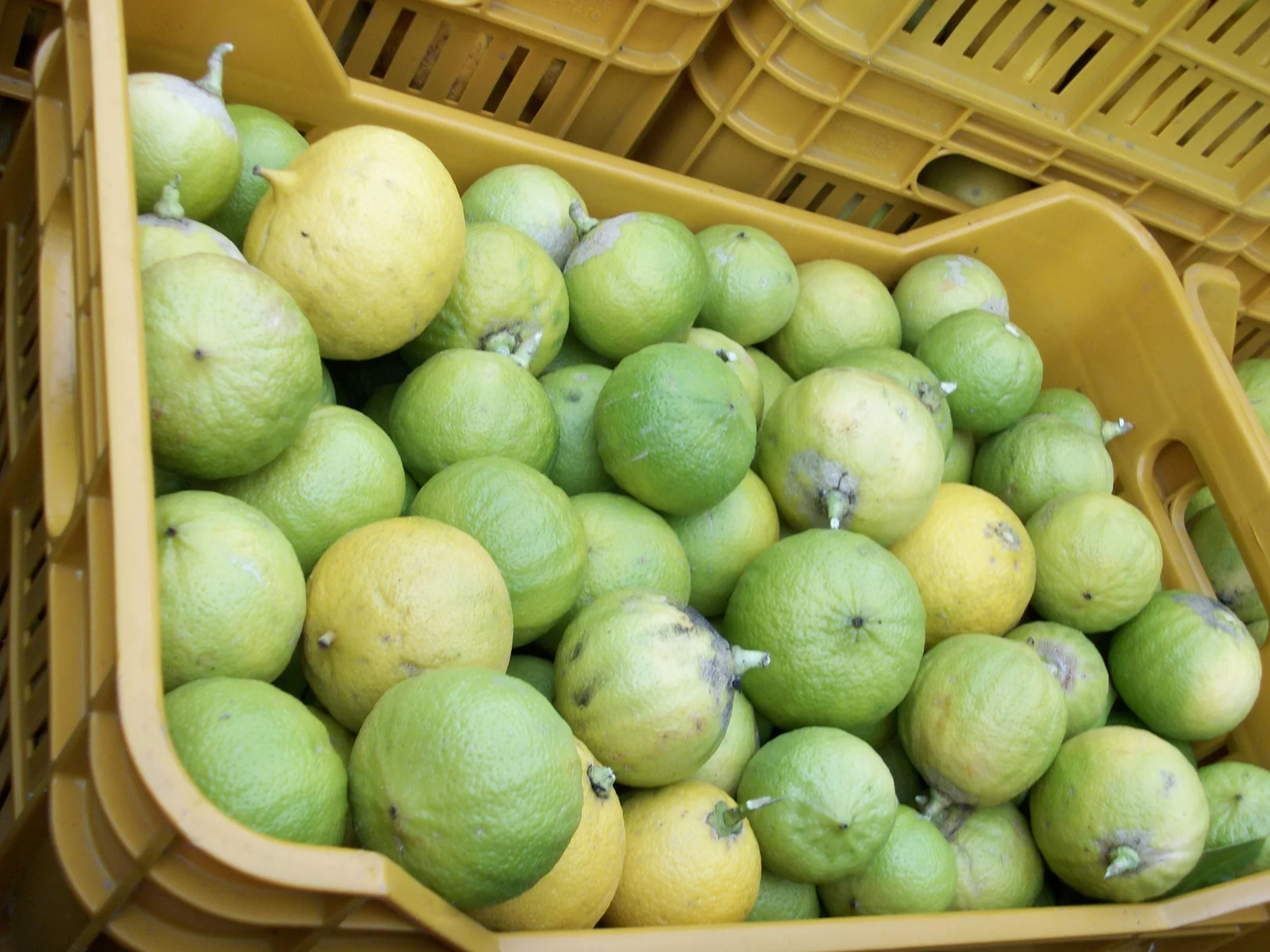
Photo: Zombieontheroad at Italian Wikipedia / Wikimedia Commons — Public domain · Resized and converted to WebP.
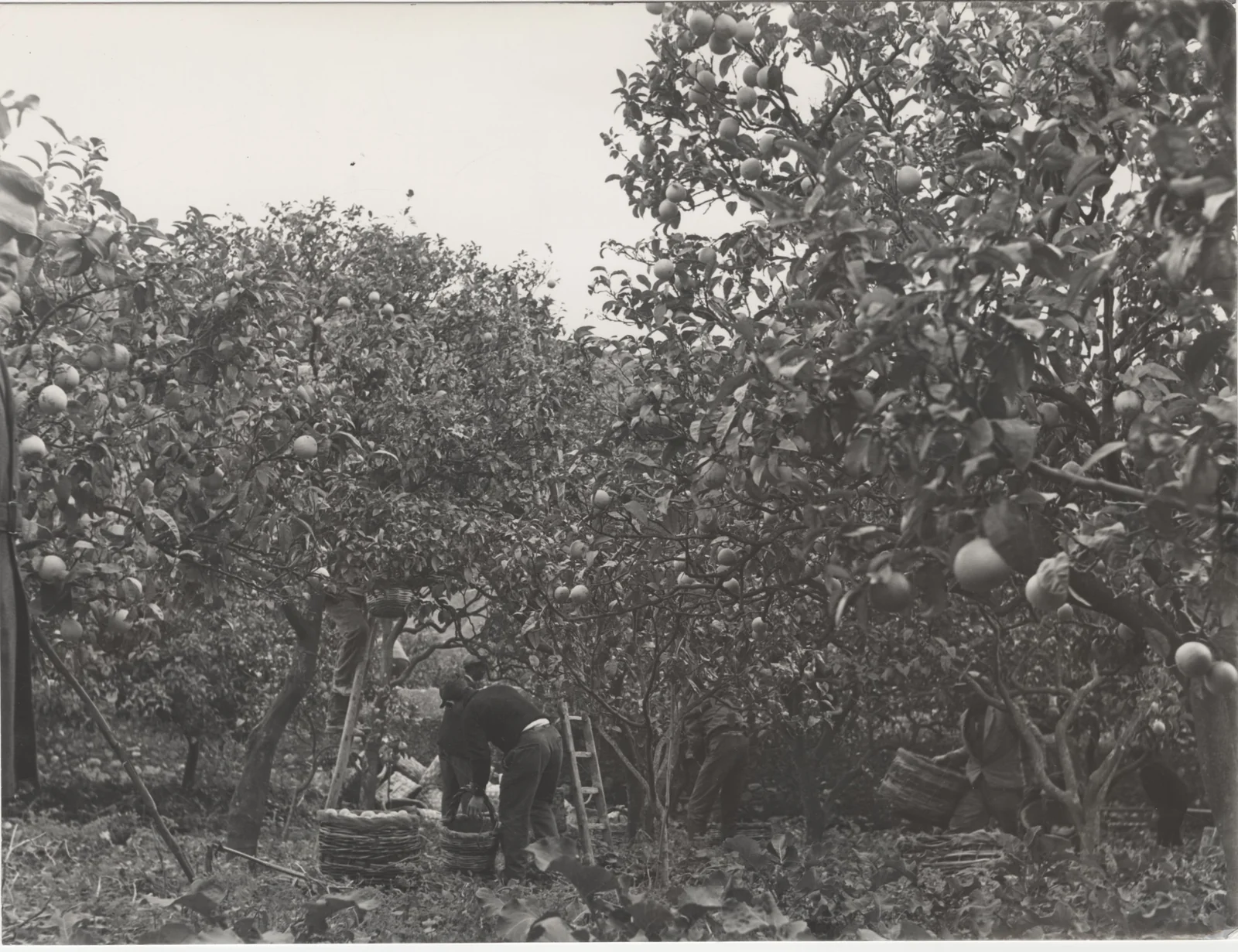
Photo: Unknown author / Wikimedia Commons — CC BY-SA 4.0 · Resized and converted to WebP.
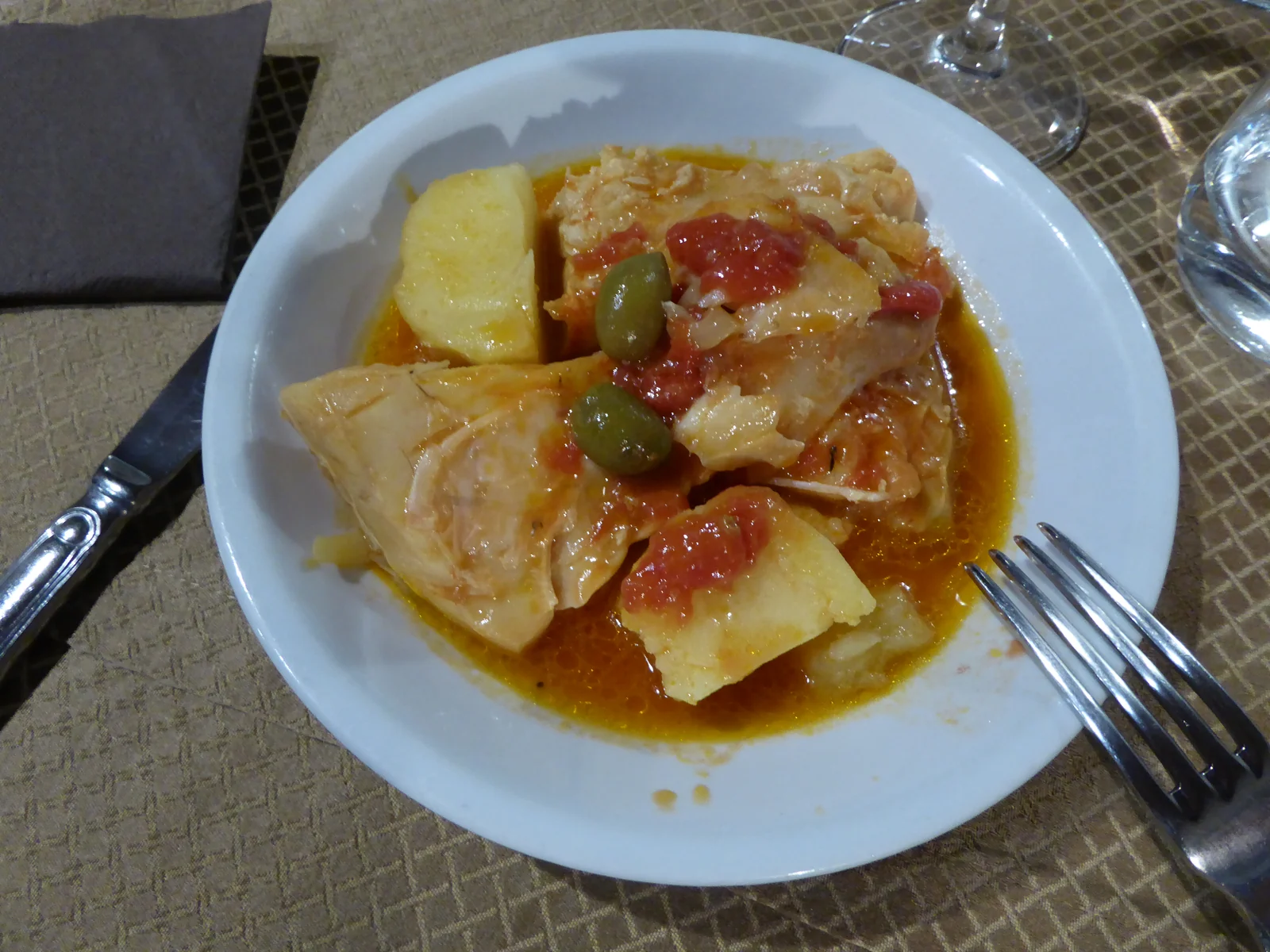
Photo: Marcuscalabresus / Wikimedia Commons — CC BY-SA 4.0 · Resized and converted to WebP.
Things to do
The first experience is the walk: from the museum along Corso Garibaldi to Piazza Italia and the cathedral, then down to the seafront as far as the Arena, at sunset. In summer a tourist train provided by the municipality tours the centre.
With a little luck, on hot and humid summer mornings, with no wind and a calm sea, you may see the Fata Morgana: a mirage which, the municipality writes, only from the Reggio shore shows Messina in every detail, as if the Strait were not there. It is a rare phenomenon, and it cannot be booked.
The Villa Comunale Umberto I, founded in 1854 to become a botanical garden, inaugurated in 1907, is a hectare of green between the cathedral and Corso Garibaldi: araucarias, fig trees, the dragon tree, the elephant's foot, Roman columns, a pond with ducks and swans and rides for children. At the far end of the seafront, the Tempietto urban park has free sports areas, sensory play for the little ones and a space for dogs.
In the evening you go to the theatre: the Cilea, where Maria Callas and Luciano Pavarotti sang, has a season of drama, opera and symphonic music; in summer the Arena dello Stretto hosts concerts, the Reggio Calabria Film Fest and the Academy of Fine Arts party. For the sea you go north, to Gallico and Catona, with sandy seabeds and clear water thanks to the currents of the Strait: from Catona, the legend goes, Saint Francis of Paola crossed the Strait on his own cloak, and Dante names the village in the eighth canto of Paradise.
The wind of the Strait makes Reggio a place for sailing and kitesurfing. The Circolo Velico Reggio, founded in the 1980s on Via Marina, runs courses for children aged 7 to 13 and for adults, and since 1984 has organised the Mediterranean Cup every year, an international regatta for the Optimist class. For kitesurfing people go to Punta Pellaro, with Sicily and Etna on one side and the Aspromonte on the other. Pellaro also has the Occhio di Pellaro archaeological park, born of excavations that began in 1975: chamber tombs of the 2nd-1st century BC, rooms of the 3rd-2nd century BC, Archaic cinerary urns and a kiln.
For mountain bikers, in mid-May the Aspromarathon takes riders from the coast to the peaks of the Aspromonte over about 30 kilometres, and Gambarie has a bike park with routes of varying difficulty. In town, the Comune's tourism portal describes the «Reggio in Bici» bike sharing, with standard and pedal-assisted bikes unlocked with the BicinCittà app and stations between Santa Caterina, the Port, the Museum, the Castle, the Cathedral and the Centrale station: from the Port to the Centrale, along the sea, it is about 2.5 kilometres.
Football is played at the municipal Oreste Granillo stadium, on Via Erminio Bercarich: the Comune gives 26,343 seats, all numbered and individual, in four stands close to the pitch. A municipal decision of 2024 records that from the 2023-2024 season, until further notice, the provincial safety commission opened to the public only the south and west stands and the part of the north stand reserved for away fans.
Sources: Comune di Reggio Calabria, Turismo — Corso Garibaldi · Comune di Reggio Calabria, Turismo — Lungomare Falcomatà · Comune di Reggio Calabria, Turismo — Fata Morgana · Comune di Reggio Calabria, Turismo — Villa Comunale Umberto I · Comune di Reggio Calabria, Turismo — Parco Urbano «Il Tempietto» · Comune di Reggio Calabria, Turismo — Teatro Cilea · Comune di Reggio Calabria, Turismo — Arena dello Stretto · Comune di Reggio Calabria, Turismo — Gallico e Catona · Comune di Reggio Calabria, portale del turismo: vela e sport nautici · Comune di Reggio Calabria, portale del turismo: parco archeologico Occhio di Pellaro · Comune di Reggio Calabria, portale del turismo: sentieri per la mountain bike · Comune di Reggio Calabria, portale del turismo: il bike sharing «Reggio in Bici» · Comune di Reggio Calabria: Stadio Comunale «Oreste Granillo» · Comune di Reggio Calabria: determinazione dirigenziale n. 4902 del 24 ottobre 2024 (punti ristoro dello stadio)
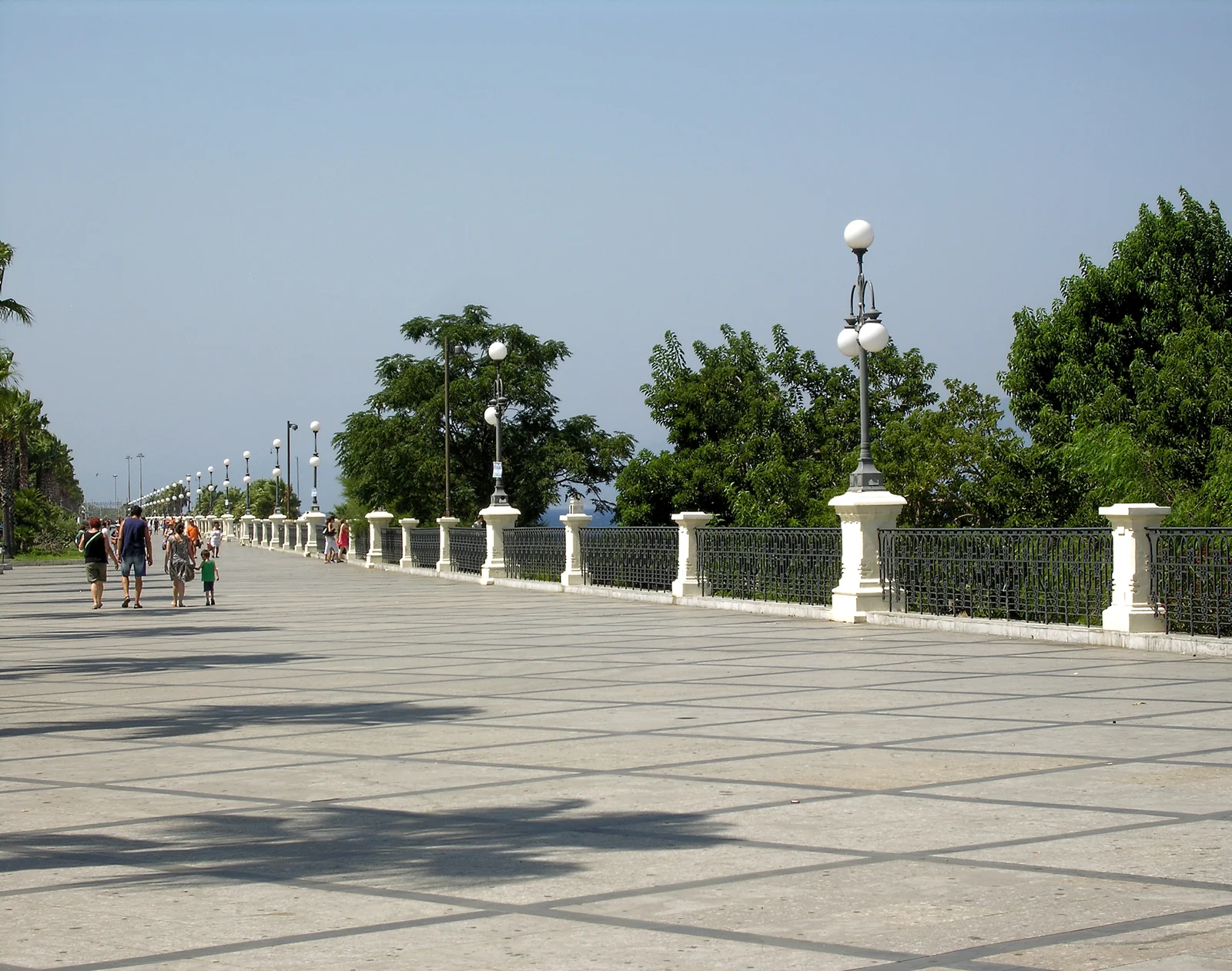
Photo: Luca Galli from Torino, Italy / Wikimedia Commons — CC BY 2.0 · Resized and converted to WebP.
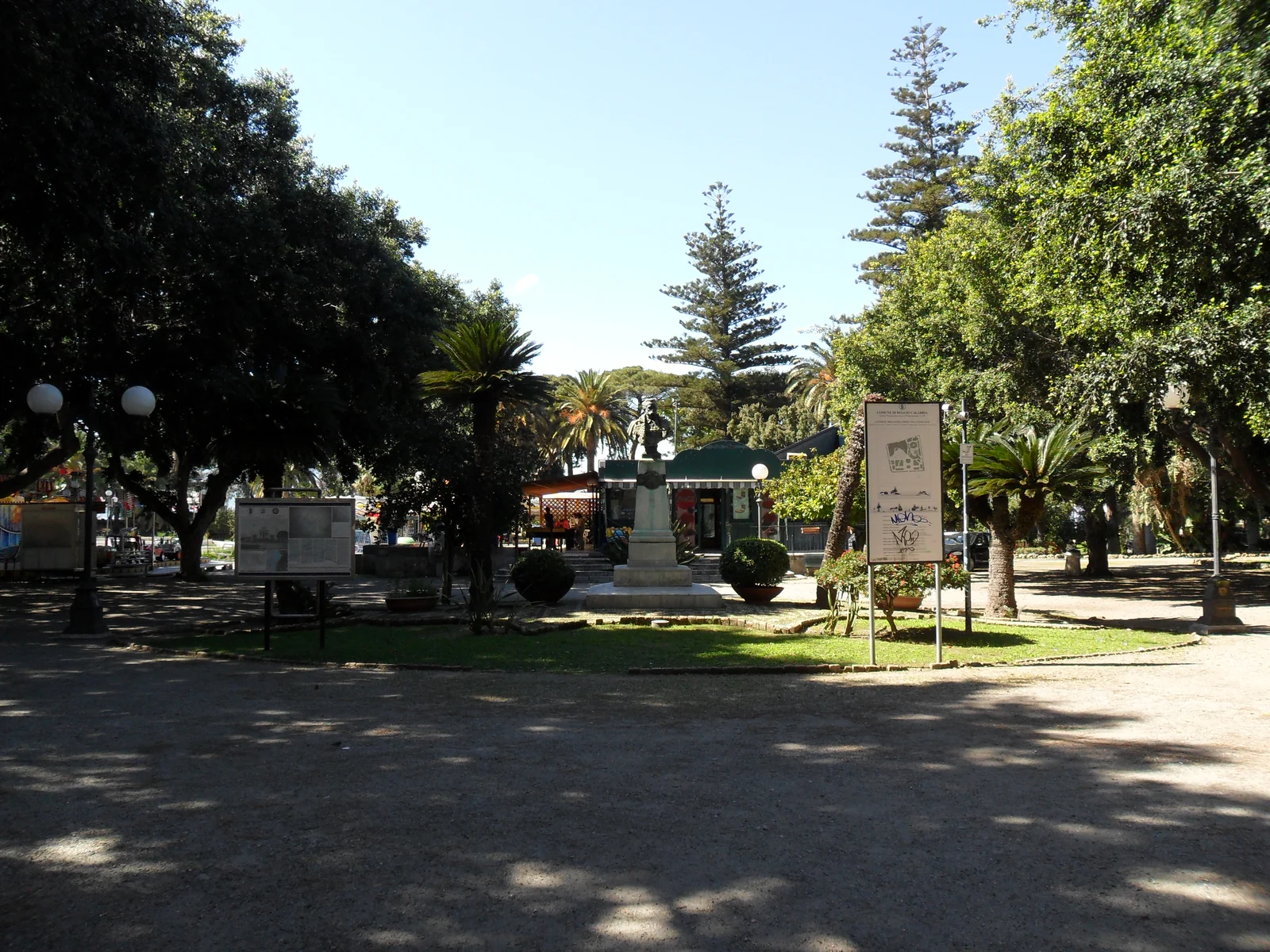
Photo: Franc rc / Wikimedia Commons — Public domain · Resized and converted to WebP.
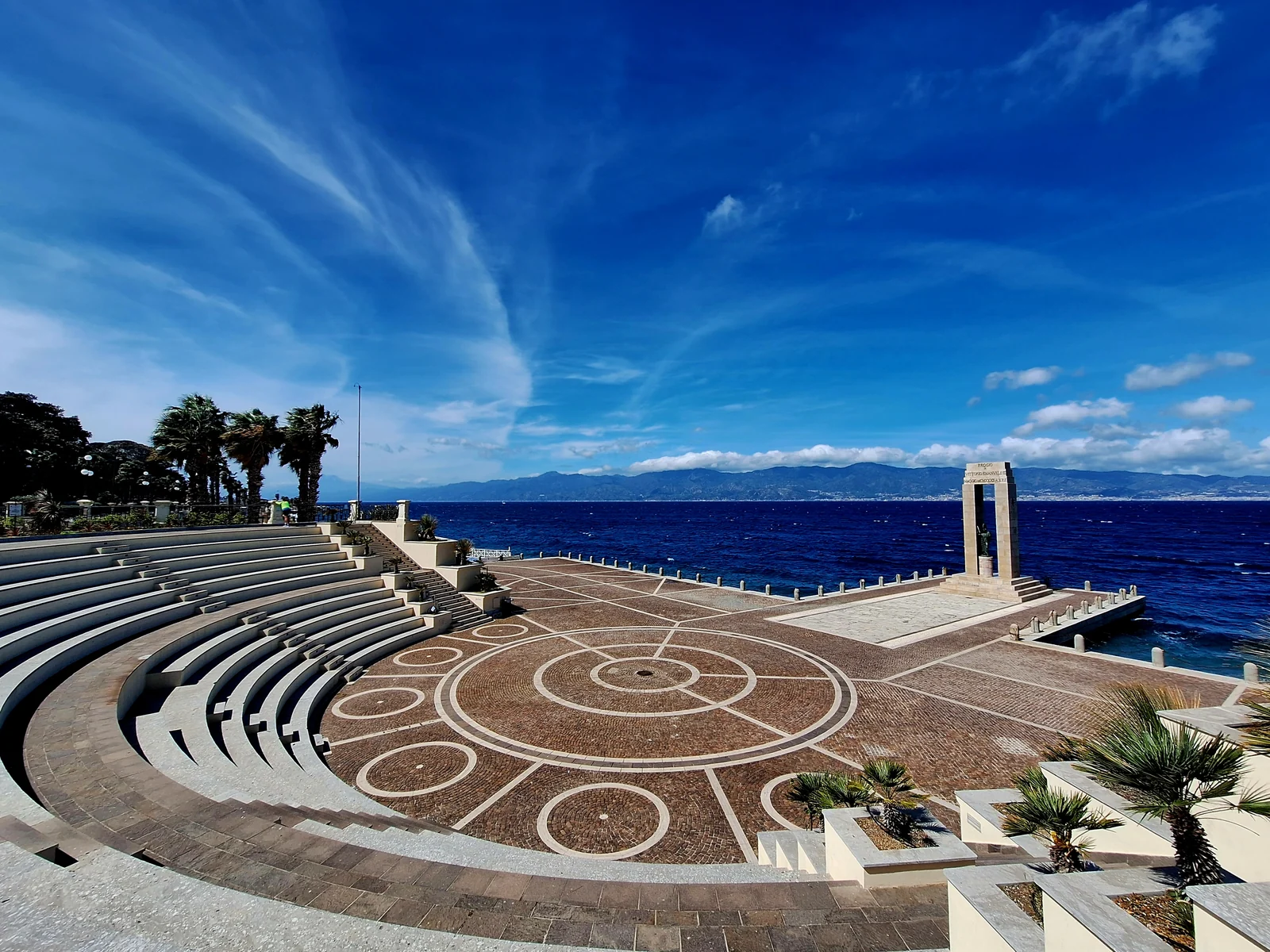
Photo: Antonina Dattola / Wikimedia Commons — CC BY-SA 4.0 · Resized and converted to WebP.
When to go
Reggio can be visited all year: the museum and the centre have no season, and the mild climate makes autumn and spring pleasant too. Summer is the season of the sea, of evenings at the Arena and of the mornings when the Fata Morgana may appear; in winter, the municipality writes, from the snowy heights of the Aspromonte you can see the Strait, and Gambarie has ski lifts.
The most heartfelt moment is the feast of the Madonna della Consolazione, the city's principal patron since 26 August 1752. The venerated picture is the one painted in 1547 by Nicolò Andrea Capriolo, with the Virgin between Saint Francis of Assisi and Saint Anthony of Padua. On the second Saturday of September it comes down in procession from the basilica of the Eremo, carried on the Vara by its bearers, and stays in the cathedral until the first Sunday on or after 21 November, when it returns to the Eremo. On the Tuesday of the feast, by a custom set down in a notarial deed of 30 April 1638, the city council offers the votive candle, and in the afternoon the procession crosses the centre. Each year's programme is published by the archdiocese and the municipality: on the days of the feast the city is full, and it is wise to book early.
The feast, the Comune's tourism portal writes, lasts four days and ends on the Tuesday evening with fireworks over the water in front of the Lungomare Falcomatà. The Vara is 5 metres high and weighs 1,200 kilograms: the bearers carry it on their shoulders for about 3.5 kilometres, from the basilica of the Eremo to the Cathedral by way of Corso Garibaldi, and on the last stretch, from the start of Piazza Duomo, they run under its weight: this is «la volata». During those days the historic centre becomes pedestrian and the Cathedral stays open at night too.
The return to the Eremo, the Archdiocese explains, falls on the first Sunday that coincides with or follows 21 November, the feast of the Presentation of the Blessed Virgin Mary: after the pontifical Mass in the morning, the afternoon procession follows Corso Garibaldi to Piazza della Consegna and climbs back to the Eremo, arriving in the evening.
Sources: Comune di Reggio Calabria, Turismo — Fata Morgana · Comune di Reggio Calabria, Turismo — Aspromonte · Italia.it (Ministero del Turismo) — Reggio Calabria: guida, storia e curiosità · Consiglio regionale della Calabria — Proposta di legge sulla devozione alla Madonna della Consolazione di Reggio Calabria (2026), relazione descrittiva · Comune di Reggio Calabria, Turismo — La Basilica Cattedrale di Reggio Calabria · Avvenire — In migliaia alla festa della Madonna della Consolazione (settembre 2023) · Comune di Reggio Calabria, portale del turismo: la Festa della Madonna della Consolazione · Arcidiocesi di Reggio Calabria – Bova: Festa della Madonna della Consolazione 2026, il programma (5 settembre 2026) · Arcidiocesi di Reggio Calabria – Bova: domenica la processione di ritorno all’Eremo (16 novembre 2026)
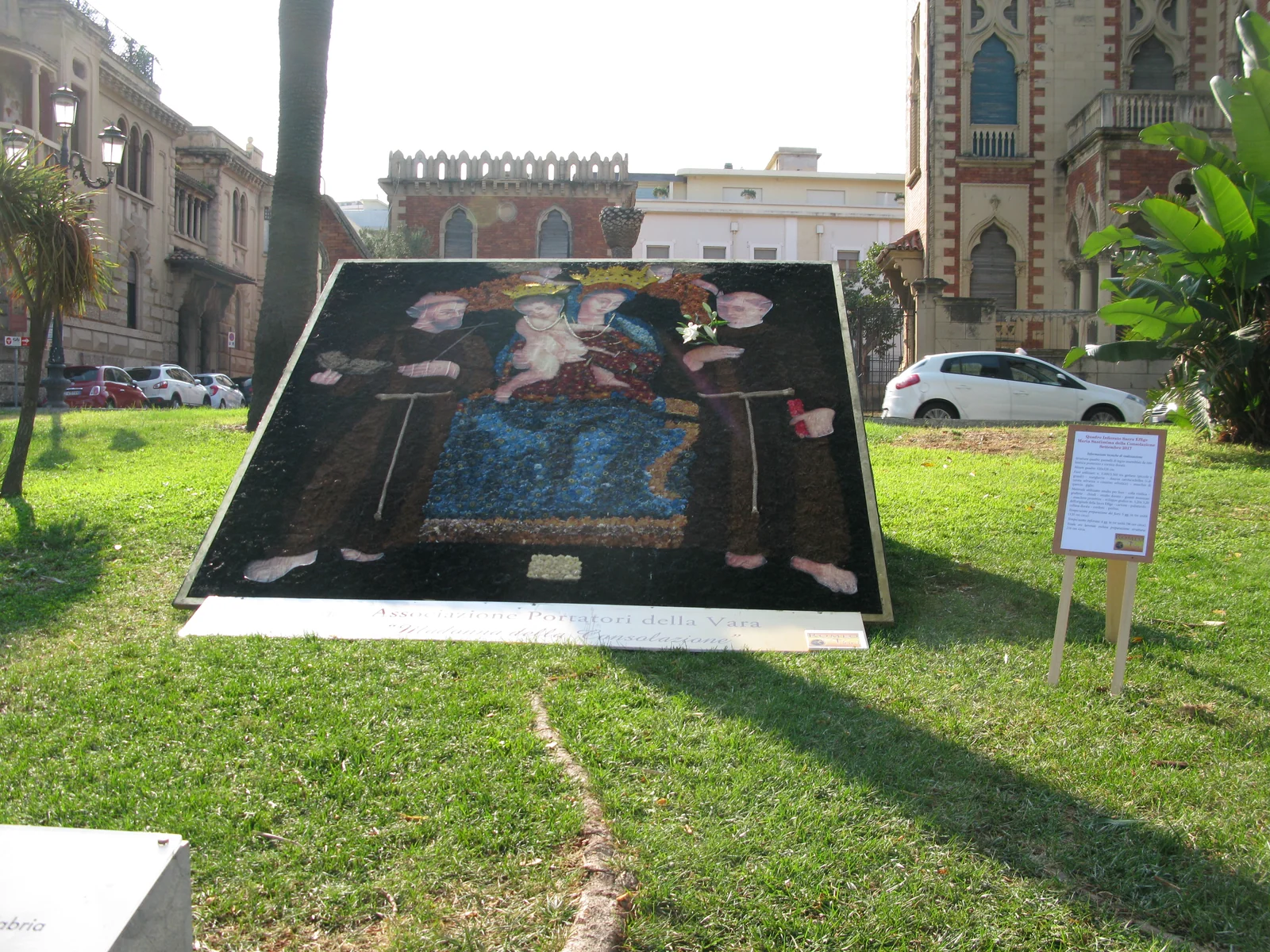
Photo: Jacopo Werther / Wikimedia Commons — CC BY-SA 4.0 · Resized and converted to WebP.
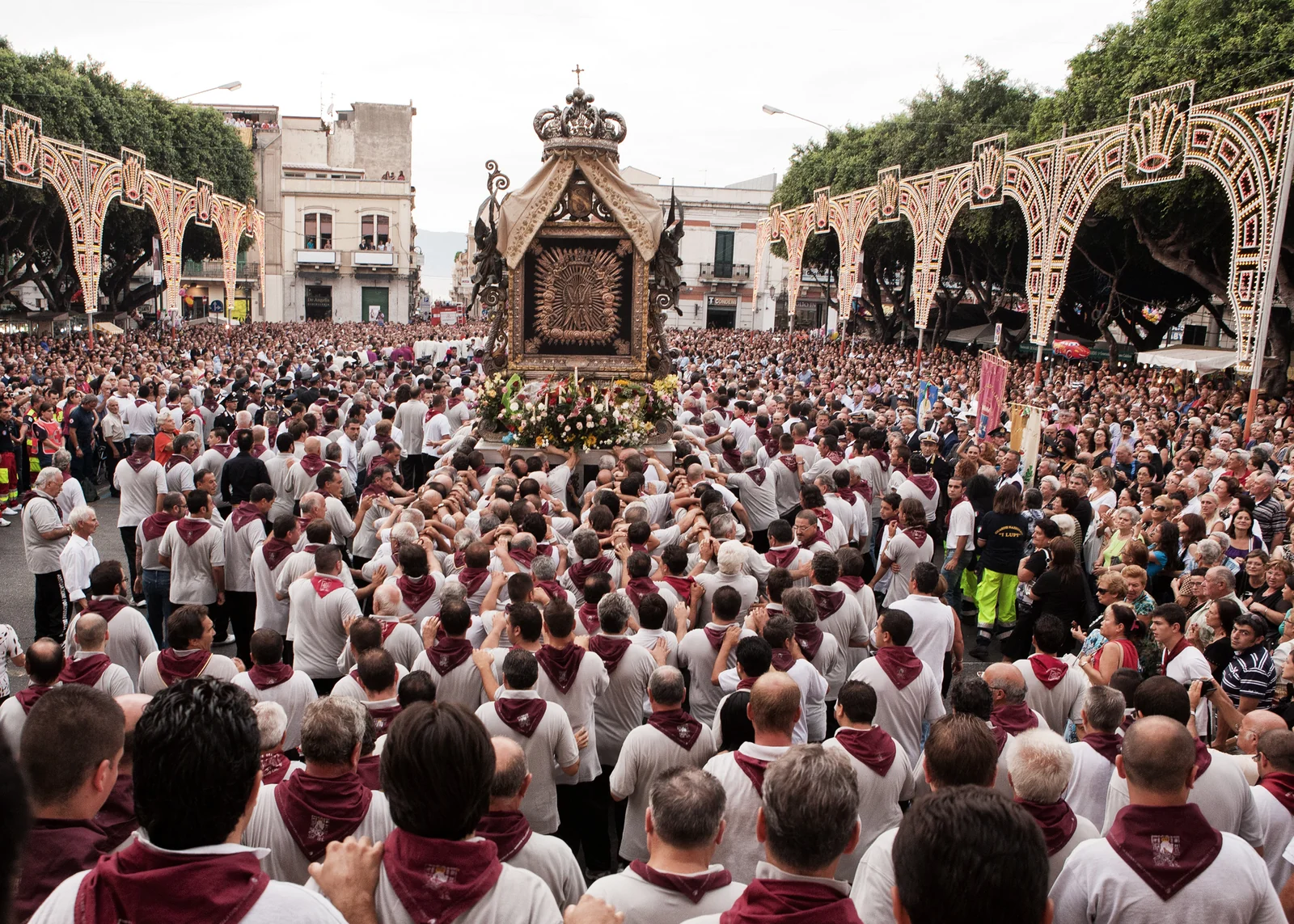
Photo: Aldo fiorenza / Wikimedia Commons — CC BY-SA 4.0 · Resized and converted to WebP.
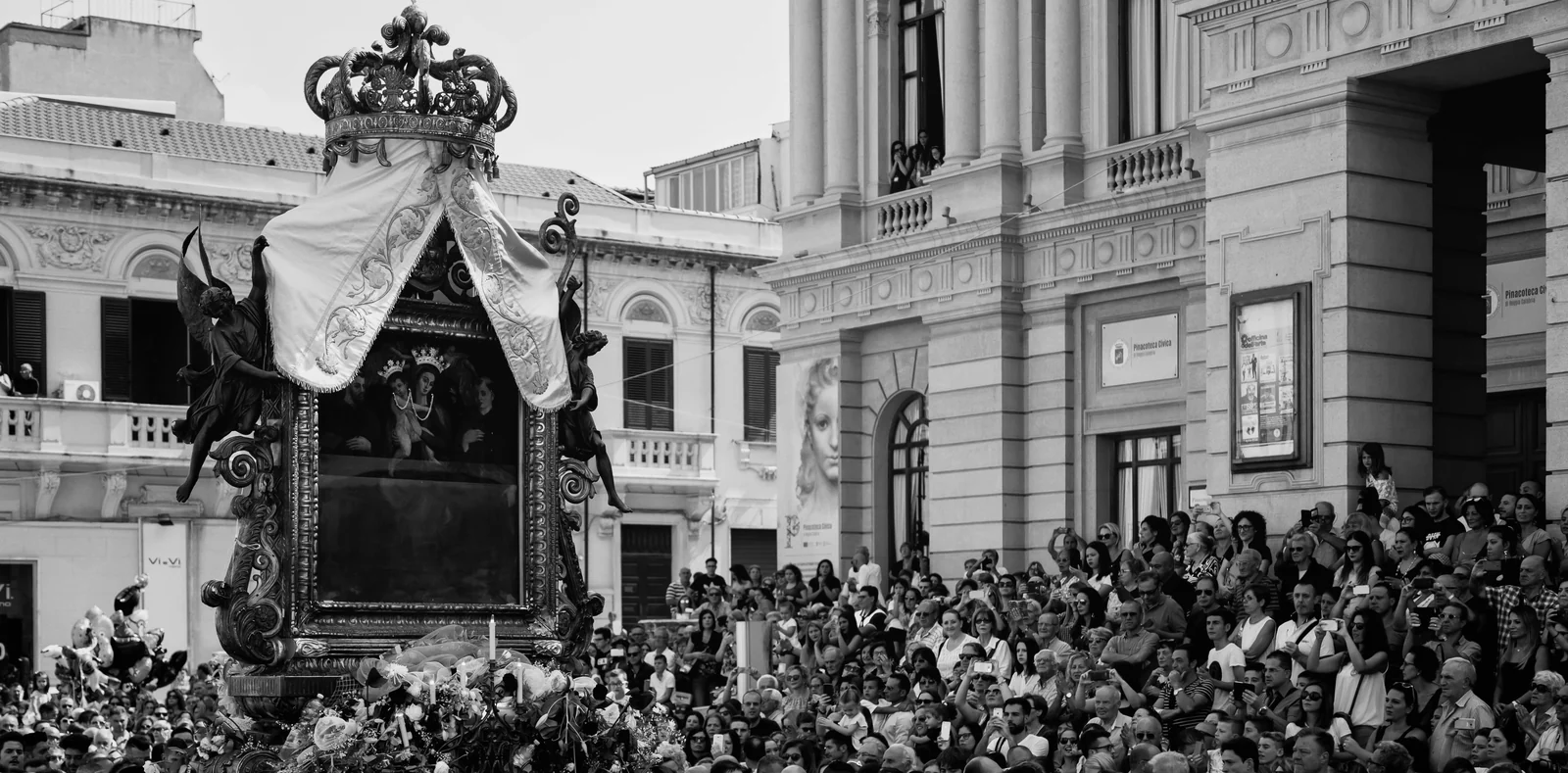
Photo: Cesare Barillà / Wikimedia Commons — CC BY-SA 4.0 · Cropped, resized and converted to WebP.
Getting there and around
The "Tito Minniti" Strait airport is about 8 kilometres from the centre, in the Ravagnese district: ATAM city buses and the Reggio di Calabria Aeroporto railway station link it to the city. For this stop RFI lists two platforms, both reachable without barriers, but no assistance service for people with disabilities. Further away, about 130 kilometres, is Lamezia Terme airport, linked by shuttle buses.
By train you arrive at the Centrale station, in Piazza Garibaldi, served by national and regional trains: it has nine passenger platforms, lifts and an RFI Sala Blu offering assistance to people with disabilities and reduced mobility, to be requested. By car you come down the A2 "Autostrada del Mediterraneo"; along the Ionian comes the SS106 Jonica, which runs 491 kilometres along the Ionian coast of Apulia, Basilicata and Calabria.
From the port of Reggio and from that of Villa San Giovanni ships and ferries leave every day for Messina; in summer the port of Reggio also has sailings to the Aeolian Islands. In the city public transport is run by ATAM, which also manages car sharing for the municipality; there is a bike-sharing service, and the centre between the museum, Corso Garibaldi and the seafront is easy to explore on foot.
For the airport there is Trenitalia's train-plus-bus link: you buy a single ticket to «Reggio Calabria Aeroporto Bus» and, outside the Centrale station, take ATAM lines 27 and 28 towards the airport. The bus share is added to the train fare and has no discounts or reductions. The link also works from the airport into town.
The Archaeological Museum lists the city bus lines that link it to the airport (27, 28, 113, 115, 118, 119 and 122) and to the Centrale station (among others 5, 6, 7, 10, 11, 14, 17 and 18). The station closest to the museum is Reggio Calabria Lido, two minutes on foot from Piazza Indipendenza; from the hydrofoils you walk up to Viale Genoese Zerbi and the Piazza Indipendenza roundabout. Near the museum there are paid public car parks, mainly along Viale Genoese Zerbi and the seafront.
The Comune's tourism portal also mentions the Granturismo City Tour, a bus for visitors with a guide, and ChiamaBus, a service to be booked and arranged in advance.
Sources: Comune di Reggio Calabria, Turismo — Come arrivare · Comune di Reggio Calabria, Turismo — Come muoversi · RFI — Stazione di Reggio di Calabria Aeroporto · RFI — Stazione di Reggio di Calabria Centrale · Trenitalia: collegamento treno+bus per l’aeroporto Tito Minniti di Reggio Calabria · MArRC: come arrivare · MArRC: domande frequenti · ANAS: Strada Statale 106 Jonica
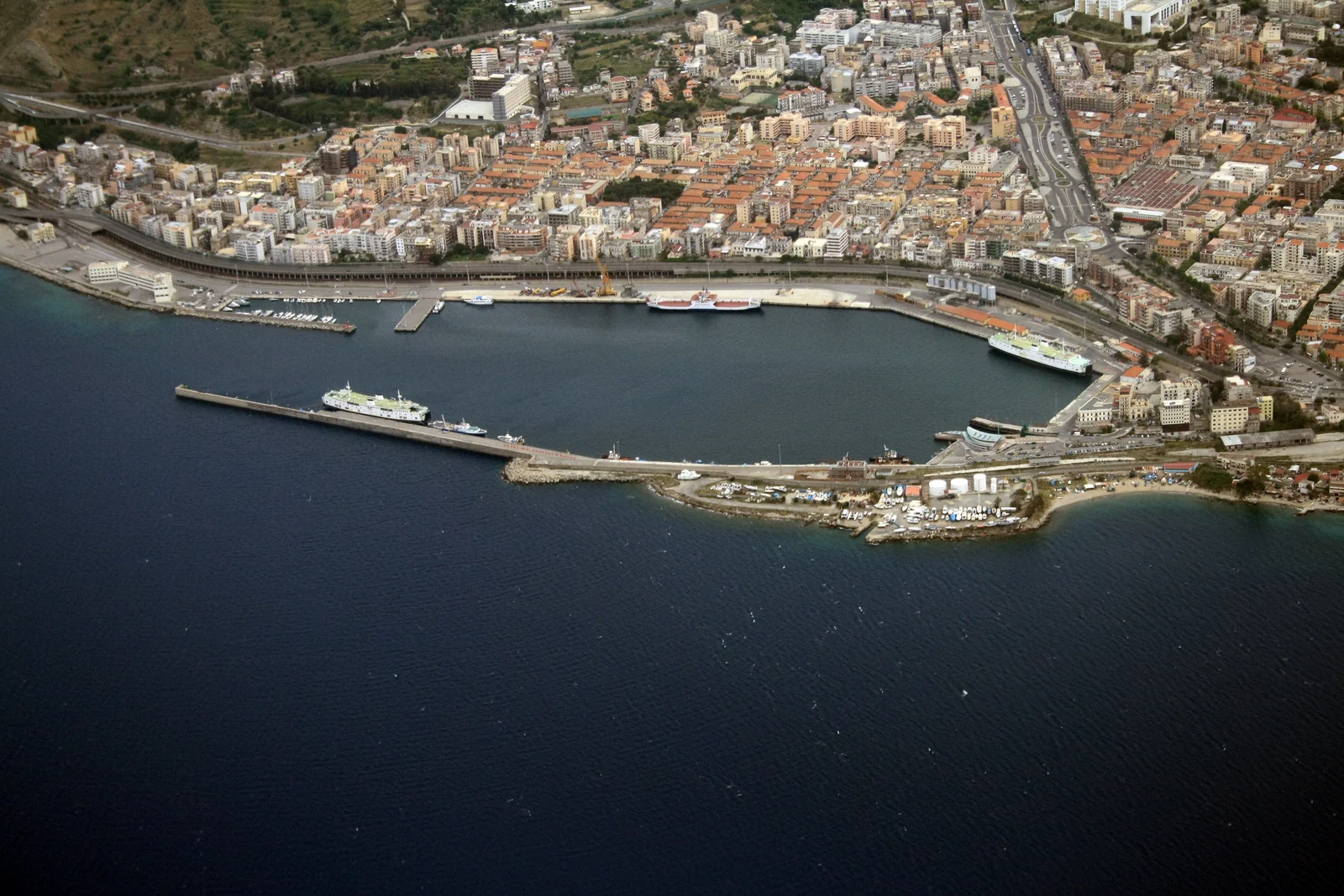
Photo: Cirimbillo / Wikimedia Commons — CC BY-SA 3.0 · Resized and converted to WebP.
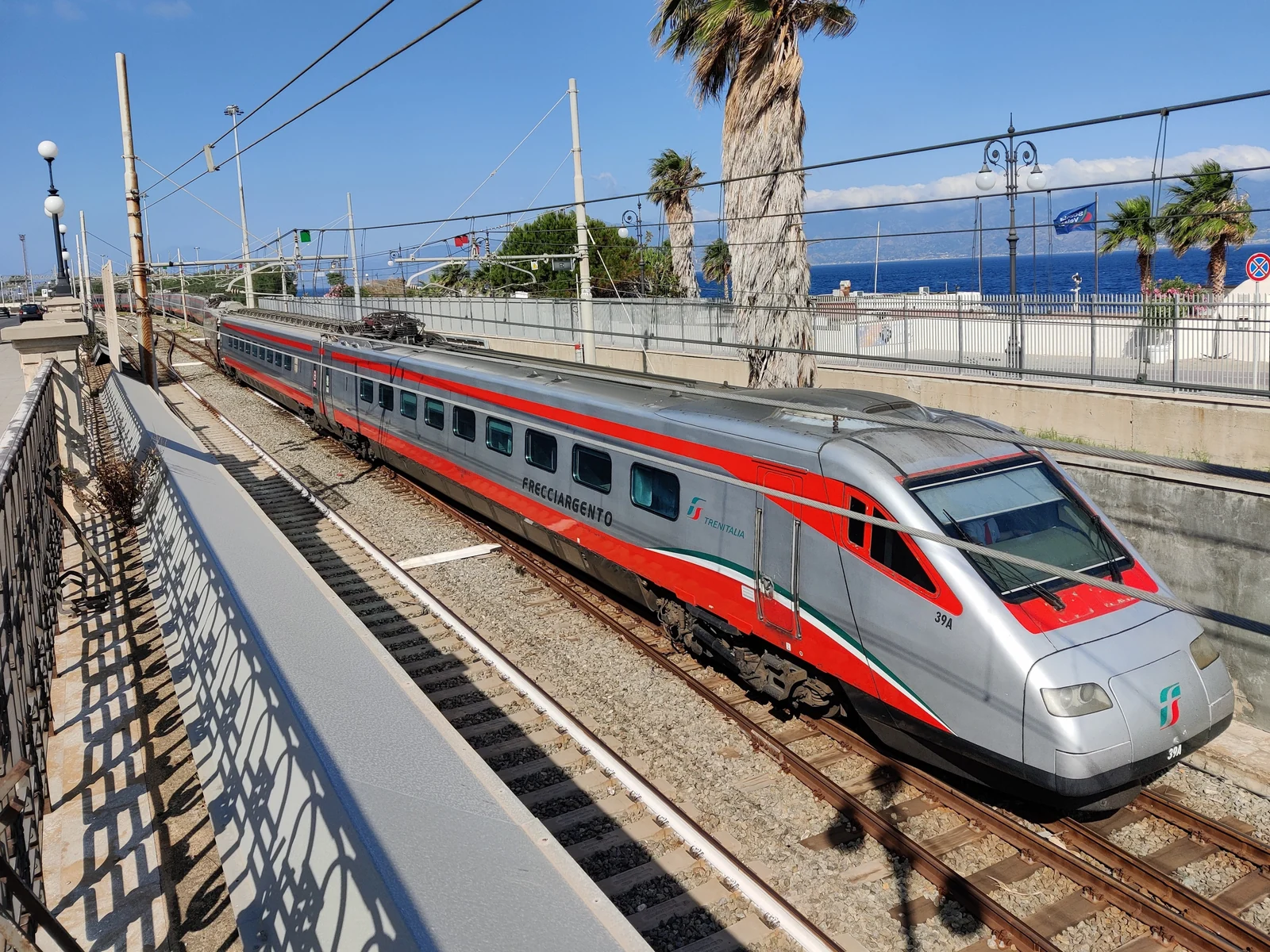
Photo: Simon Legner (User:simon04) / Wikimedia Commons — CC BY-SA 4.0 · Resized and converted to WebP.
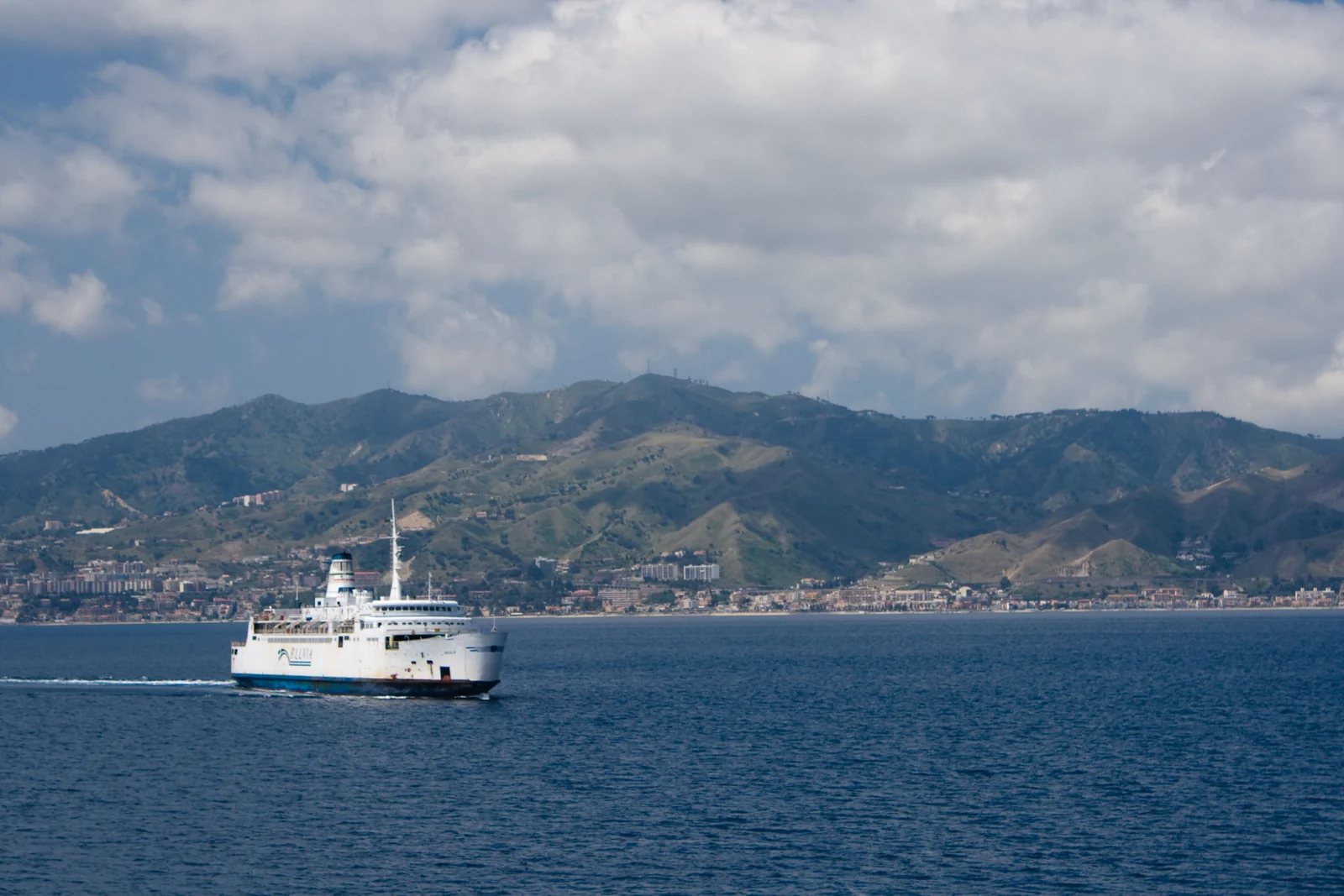
Photo: Vito Galgano / Wikimedia Commons — CC BY 2.0 · Resized and converted to WebP.
Tourism
Reggio Calabria’s tourist tax is paid by those staying overnight in the city who are not residents, per person per night, for at most five consecutive nights, by departure; the accommodation issues a receipted invoice or receipt, which the regulation asks the guest to keep for five years. The rates are those set by the town executive in January 2016 and confirmed in 2021, the latest act on the rates in the Finance Department’s register as of November 2026: in hotels 1 euro up to two stars, 2 at three stars, 2.50 at four stars and 4 at five stars, 1.50 in tourist residences and farm stays. The 2015 regulation exempts among others young people up to fourteen and, in June, July and August, under-age children from the second onwards travelling with their parents, with no documents needed; those assisting a hospital patient, with one companion per patient, coach drivers, one tour leader for every twenty members of an organised group, people with 100 per cent disability and their companion, on presenting the required declaration or certificate.
Sources: Comune di Reggio Calabria — Regolamento dell’imposta di soggiorno (Delibera di CC n. 40 del 3 settembre 2015), dall’elenco degli atti tributari del Dipartimento delle Finanze · Comune di Reggio Calabria — Delibera di GC n. 2 dell’8 gennaio 2016, tariffe dell’imposta di soggiorno, dall’elenco degli atti tributari del Dipartimento delle Finanze · Comune di Reggio Calabria — Delibera di GC n. 64 del 6 aprile 2021, conferma delle tariffe dell’imposta di soggiorno, dall’elenco degli atti tributari del Dipartimento delle Finanze
“Come to Reggio di Calabria as a guest, not as a tourist: that is how these places truly let you know them.”
Where to stay
If you come for the museum and the city it is best to sleep in the centre, between Piazza De Nava, Corso Garibaldi and the seafront: everything is within walking distance, and the Centrale station is close by. Those looking for the sea can choose the districts to the north, Gallico and Catona, with their beaches; those who prefer the mountains in summer, the villages of the Aspromonte.
In the Ministry of Tourism’s national database of accommodation (BDSR), on 12 October 2026, Reggio di Calabria had 696 establishments with a verified national identification code (CIN): 15 hotel-type establishments, 170 non-hotel establishments and 511 other establishments.
On the days of the Madonna della Consolazione, in September, and on summer weekends demand rises: for those dates it is wise to book in advance.
The Comune levies a tourist tax: accommodation providers record overnight stays on the municipal portal and pay the tax every quarter.
Sources: Comune di Reggio Calabria, Turismo — Piazza De Nava · Comune di Reggio Calabria, Turismo — Corso Garibaldi · Comune di Reggio Calabria, Turismo — Gallico e Catona · Comune di Reggio Calabria, Turismo — Aspromonte · Ministero del Turismo – Banca Dati Strutture Ricettive (dashboard pubblica) · Comune di Reggio Calabria, Turismo — La Basilica Cattedrale di Reggio Calabria · Comune di Reggio Calabria: portale dell’imposta di soggiorno
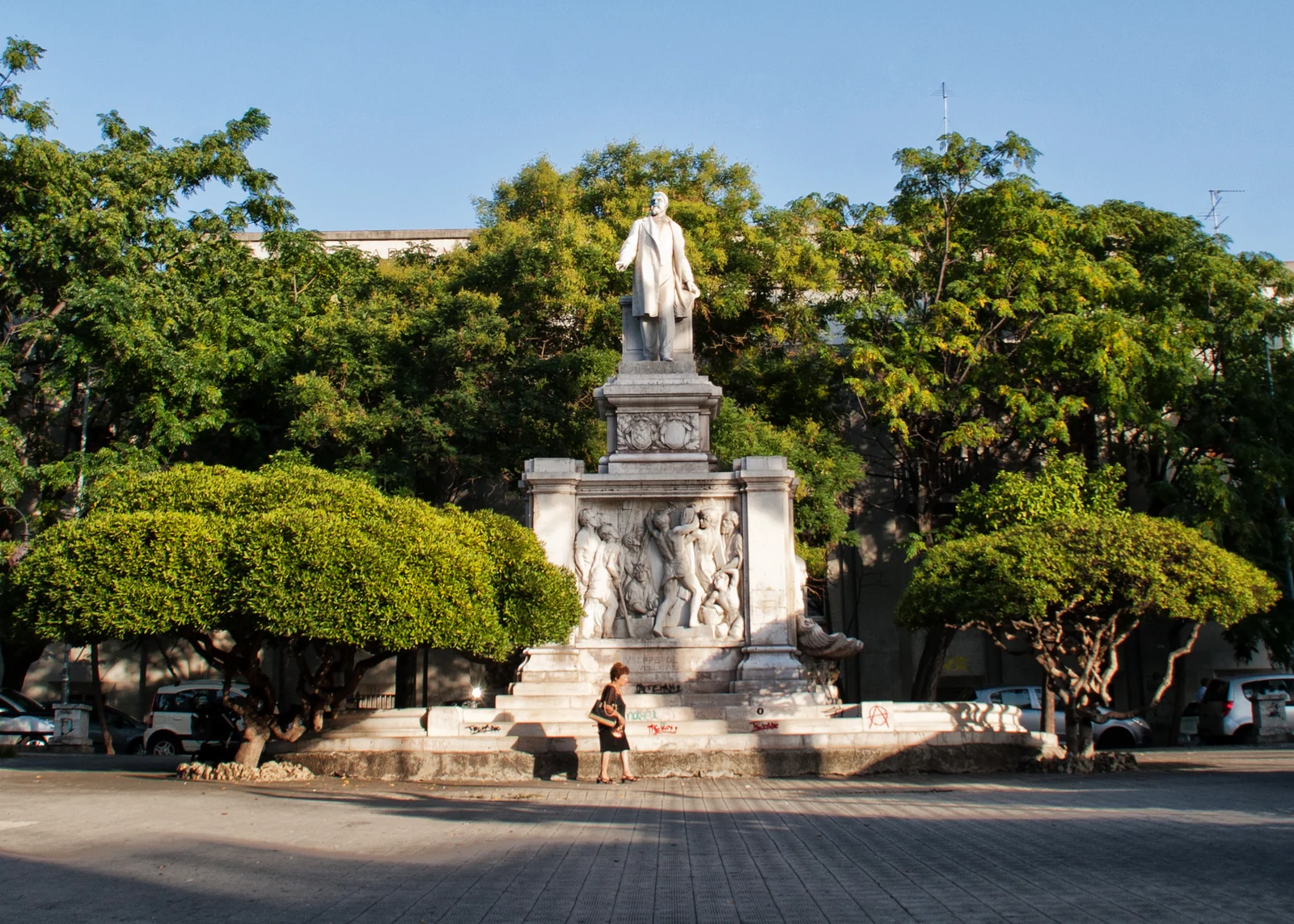
Photo: Aldo fiorenza / Wikimedia Commons — CC BY-SA 4.0 · Resized and converted to WebP.
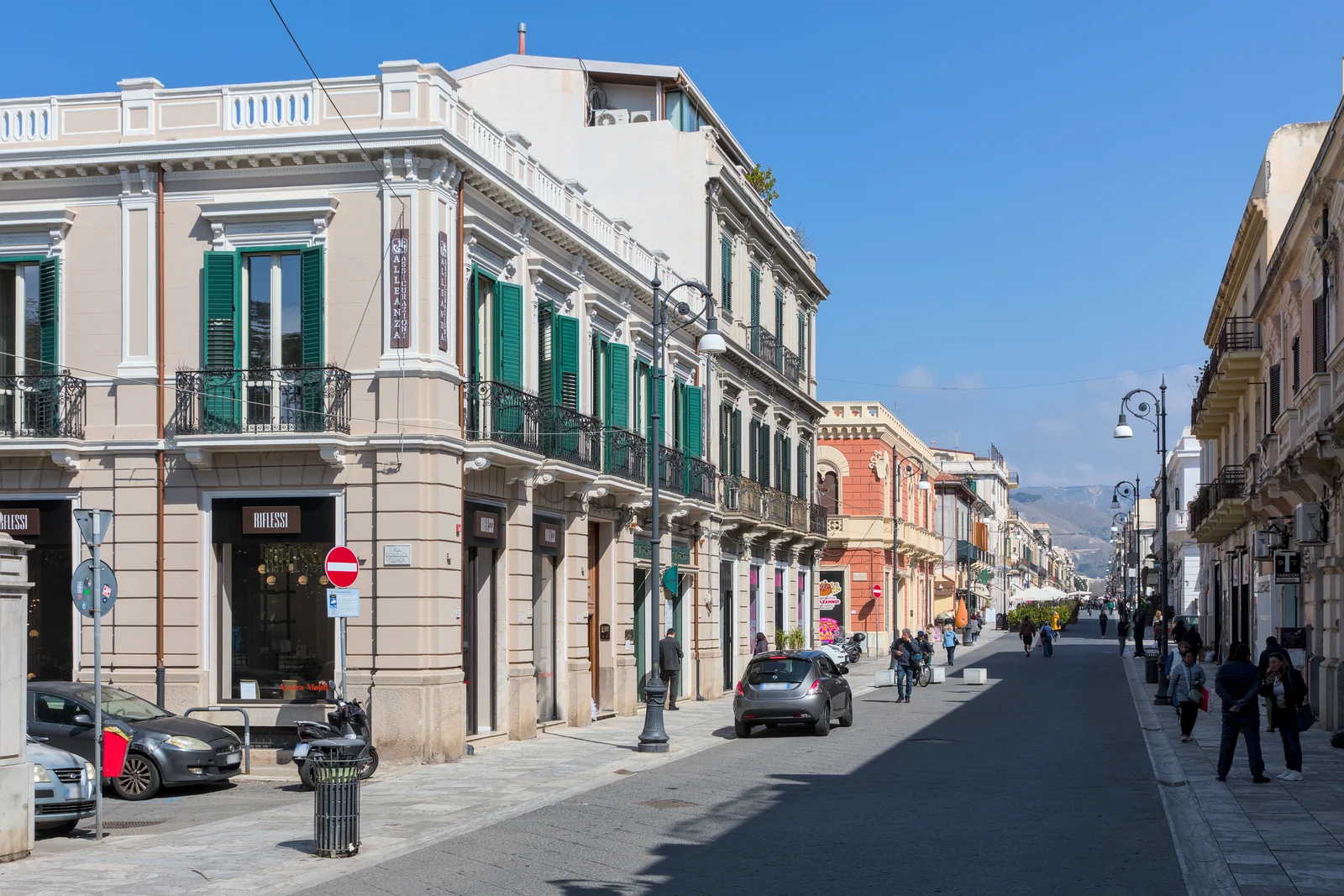
Photo: Benjamin Smith / Wikimedia Commons — CC BY-SA 4.0 · Resized and converted to WebP.
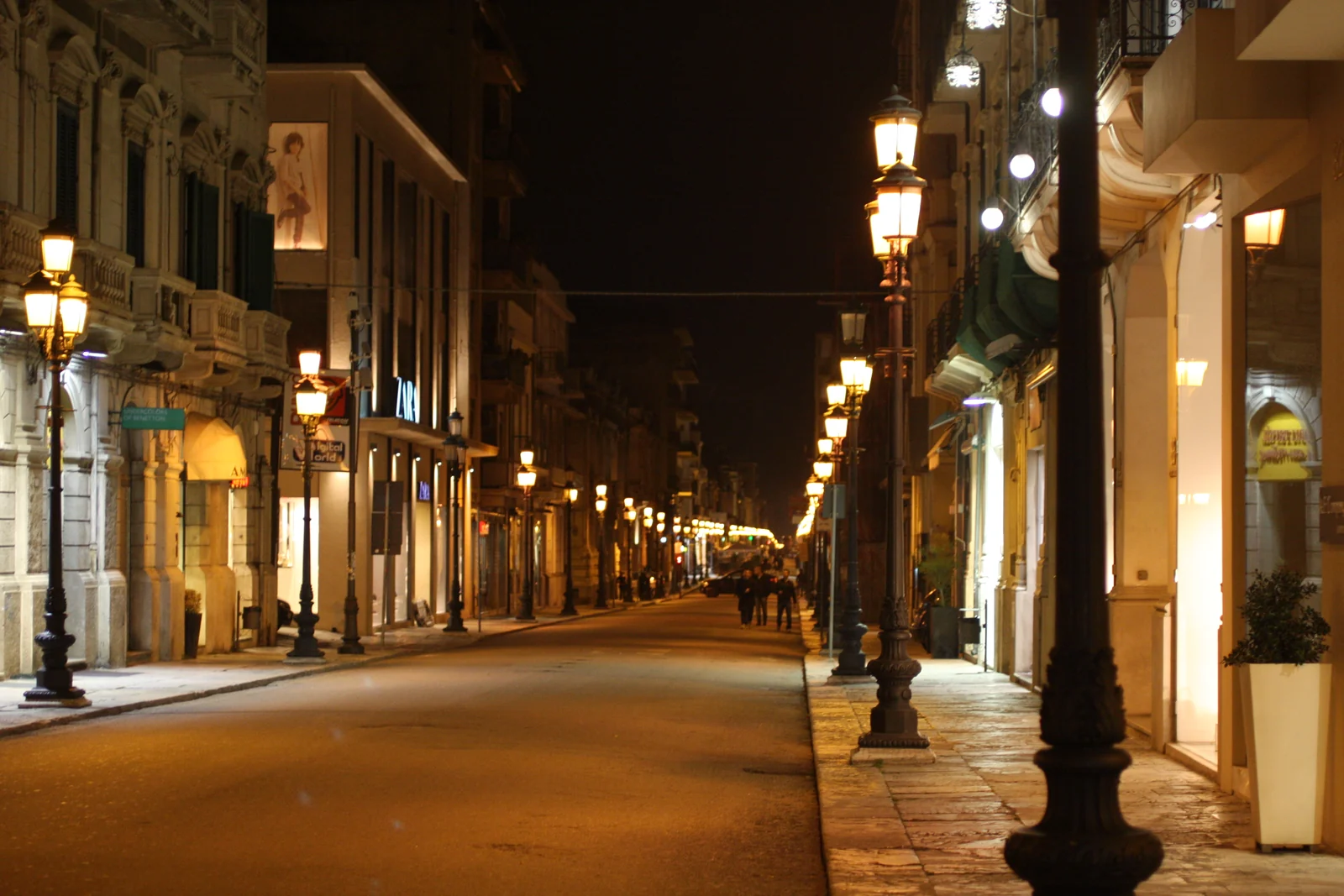
Photo: Franc rc / Wikimedia Commons — Public domain · Resized and converted to WebP.
Nearby
Among the places Apulica already covers, the nearest is Scilla (about 14 km): straight-line distances between the centres of the municipal territories.
Scilla, on the Costa Viola, is the nearest stop: the fishing quarter of Chianalea with its houses on the sea, Ruffo Castle on the rock between Chianalea and the beach of Marina Grande, Homer's myth of the monster and Charybdis and the tradition of swordfish fishing.
Behind the city rises the Aspromonte. The National Park, provided for by a 1989 law and established in 1994, holds about 1,500 species, has the Calabrian pine as its symbol tree and is home to the wolf, the golden eagle and the black squirrel; at Polsi is the sanctuary that draws thousands of pilgrims every year. Towards the Ionian lies the Greek-speaking area, where some communities have kept the Greek of Calabria: Bova, among the most beautiful villages in Italy, Gallicianò, Roghudi and the Amendolea river. Half an hour from the city, Pentedattilo is an abandoned village clinging to a rock shaped like five fingers.
And across the Strait is Messina, reachable by ferry every day.
According to the Corte dei conti report to Parliament, the Aspromonte National Park, provided for by law no. 305 of 28 August 1989, was established by decree of the President of the Republic of 14 January 1994: it covers 64,153 hectares in 37 municipalities of the province of Reggio and has its seat at Santo Stefano d'Aspromonte, in the locality of Gambarie.
Sources: ISTAT/Openpolis, confini comunali della regione Calabria (CC BY 4.0, ISTAT/Openpolis) · Comune di Reggio Calabria, Turismo — Scilla · Comune di Reggio Calabria, Turismo — Aspromonte · Comune di Reggio Calabria, Turismo — Area Grecanica · Italia.it (Ministero del Turismo) — Reggio Calabria: guida, storia e curiosità · Comune di Reggio Calabria, Turismo — Come arrivare · Corte dei conti, relazione al Parlamento sulla gestione dell’Ente Parco Nazionale dell’Aspromonte (Camera dei deputati, XVII legislatura, doc. XV n. 164)
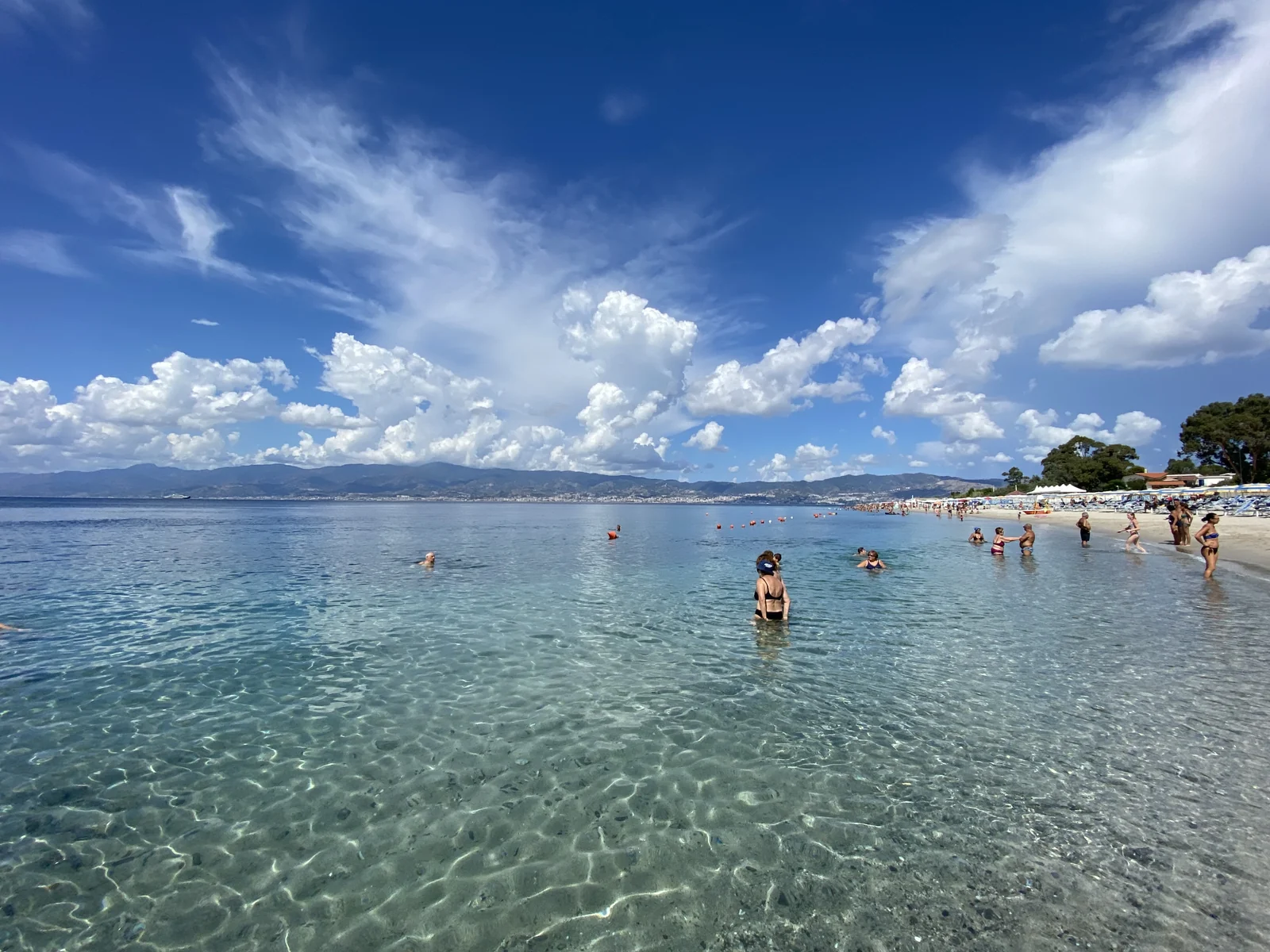
Photo: MauveLynx / Wikimedia Commons — CC BY-SA 4.0 · Resized and converted to WebP.
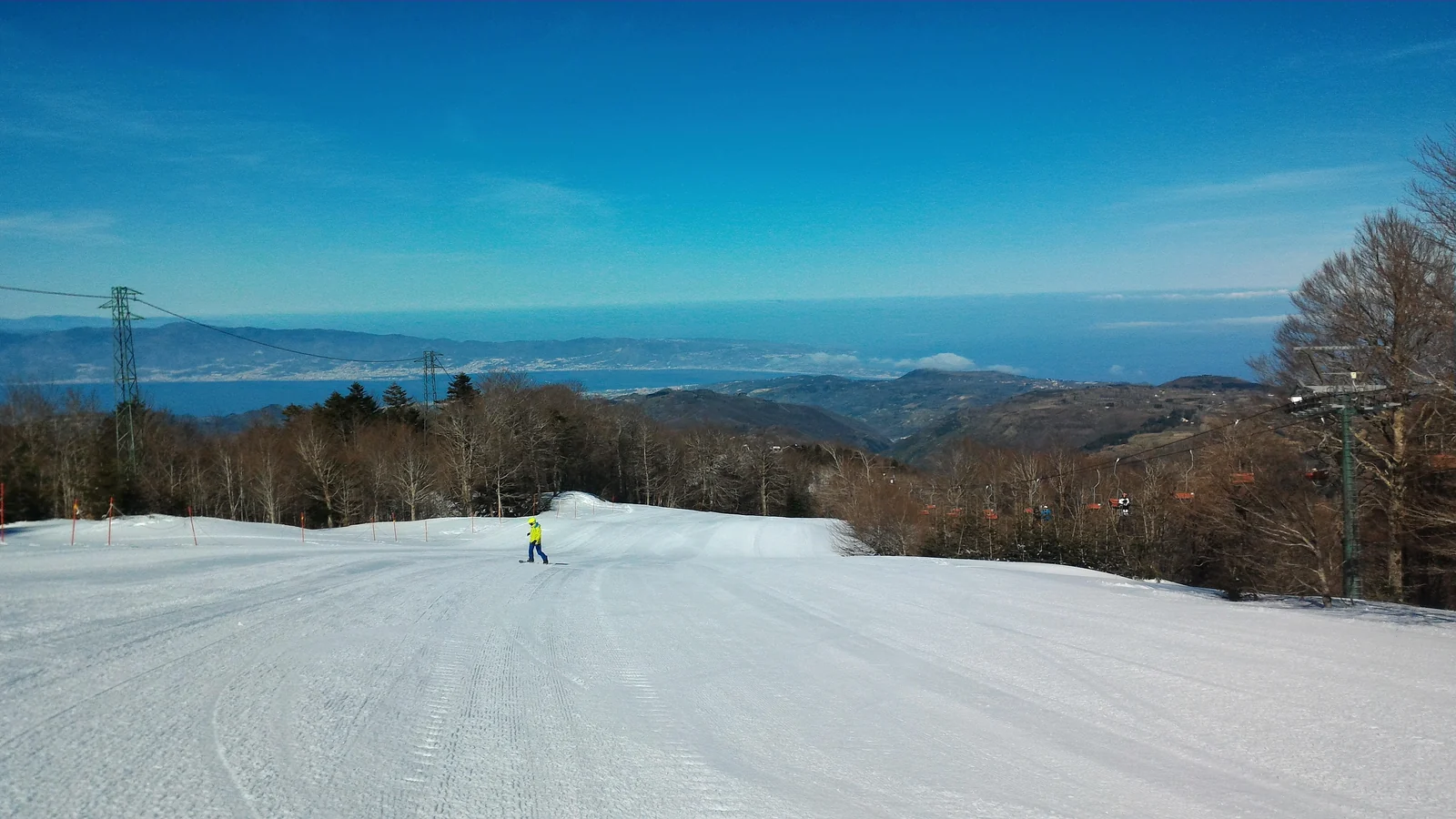
Photo: Domecost80 / Wikimedia Commons — CC BY-SA 4.0 · Resized and converted to WebP.
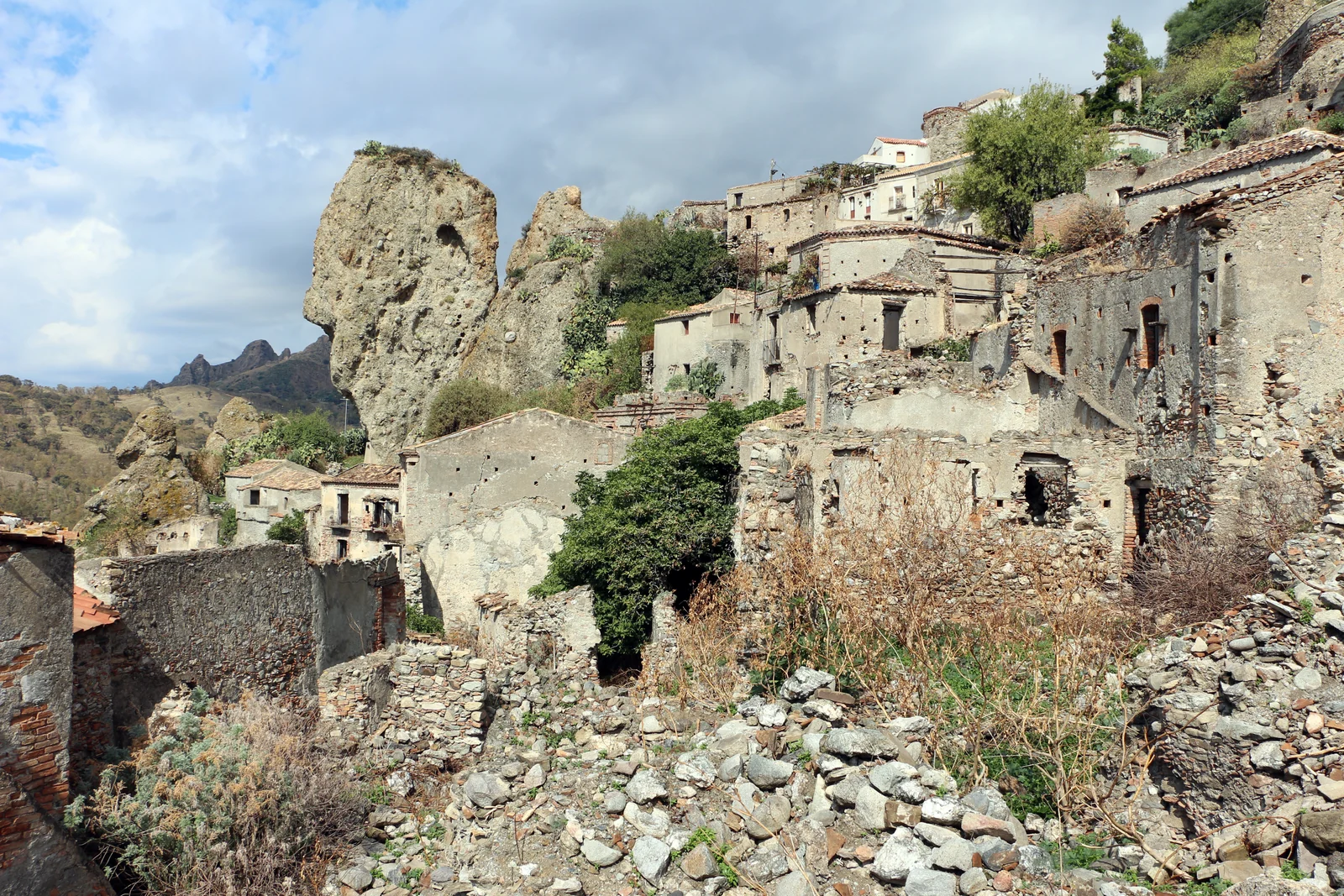
Photo: Sailko / Wikimedia Commons — CC BY 3.0 · Resized and converted to WebP.
Where to stay
In the municipality of Reggio di Calabria the national database of the Ministry of Tourism lists 696 accommodation businesses with a verified CIN code: 15 hotels, 170 other licensed accommodation and 511 other types such as B&Bs and private rentals.
Licensed businesses from the official list of accommodation named as the source in this section. Where the list gives it, the property's official identification code appears next to its name: the national CIN code, or the code assigned by the Region or by the body that keeps the list. Private individuals are not listed. This list is the official census of licensed businesses, not a list of Apulica partners: to stay in Reggio di Calabria you do not have to check one property after another yourself; write to Apulica and we look for the stay that suits your journey, checking availability and conditions before any confirmation.
APAN HOTEL
Hotel · ★★★★
CIN IT080063A1AL7NJ86B
AC GOLD B&B BOUTIQUE ROOMS & SUITE
B&B
CIN IT080063B4XSDYY97U
96 GUEST HOUSE
Guest rooms
CIN IT080063B4XYSXM89H
AD MAISON APARTMENTS
Holiday home
CIN IT080063B4KXQCZVI7
DIDIMOS TOWN HOTEL
Hotel · ★★★★
CIN IT080063A13UI6TPEJ
ALL'ANONETO B&B
B&B
CIN IT080063B45VI3UN68
ABACUS ROOM & BREAKFAST
Guest rooms
CIN IT080063B4Z5NFPTVF
BLUE HOUSE
Holiday home
CIN IT080063B4F9UQFUCI
E' HOTEL
Hotel · ★★★★
CIN IT080063A13KWZGIBA
ANGEL'S CARE
B&B
CIN IT080063B4AZWVI3HI
First the places that presented themselves to Apulica, the latest first; then one place of each type in turn, by official category and stars, then by name. No position is paid for.
All 159 entries in alphabetical order
Page 1 of 16
| Name | Type | Identification code |
|---|---|---|
| 96 GUEST HOUSE | Guest rooms | IT080063B4XYSXM89H |
| ABACUS ROOM & BREAKFAST | Guest rooms | IT080063B4Z5NFPTVF |
| AC GOLD B&B BOUTIQUE ROOMS & SUITE | B&B | IT080063B4XSDYY97U |
| AD MAISON APARTMENTS | Holiday home | IT080063B4KXQCZVI7 |
| AFF.CAMERE MALALBERGO | Guest rooms | IT080063B47XUZIAUD |
| AFFITTACAMERE CASA CAIROLI | Guest rooms | IT080063B4JDBURYI9 |
| AFFITTACAMERE LA CASA DEI SOGNI | Guest rooms | IT080063B4TXKAYRFC |
| AFFITTACAMERE MEDINBLU | Guest rooms | IT080063B46VMGOIMU |
| AFFITTACAMERE PALAZZO GALILEO | Guest rooms | IT080063B4I323CN5L |
| AFFITTACAMERE PALAZZO SIRACUSA | Guest rooms | IT080063B4XK3LRSMV |
Ask Apulica for a stay in Reggio di Calabria We reply shortly, within a few hours at most, with a proposal for you to consider.
Sources: Ministero del Turismo – Banca Dati Strutture Ricettive (dashboard pubblica), 2026-10-12
YOUR JOURNEY
How to shape a journey here
We can organise a guided visit of the city, from the Archaeological Museum and the Bronzes to the castle and the seafront, or a trip for the feast of the Madonna della Consolazione, with transfers from the Strait airport or from Lamezia Terme, to Scilla and to the Aspromonte. For a trip, a guide or a transfer you can write to Apulica with the button below.
Plan your tripKeep exploring
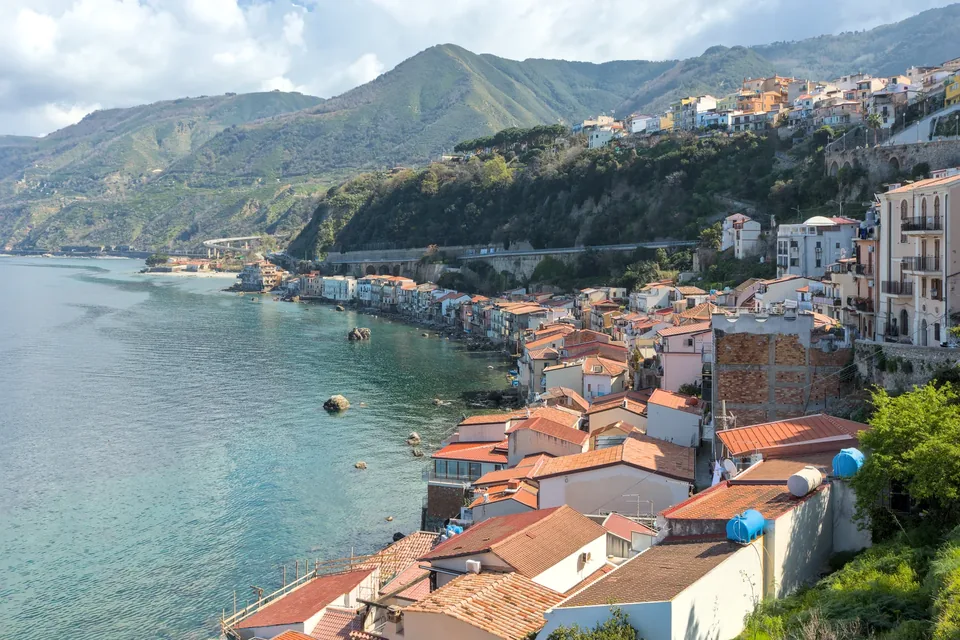
Scilla
The town of the Homeric myth, the seafaring quarter of Chianalea and the stretch of Costa Viola facing the Strait of Messina.
Read the guide →Photo: Benjamin Smith / Wikimedia Commons — CC BY-SA 4.0 · Resized and converted to WebP.

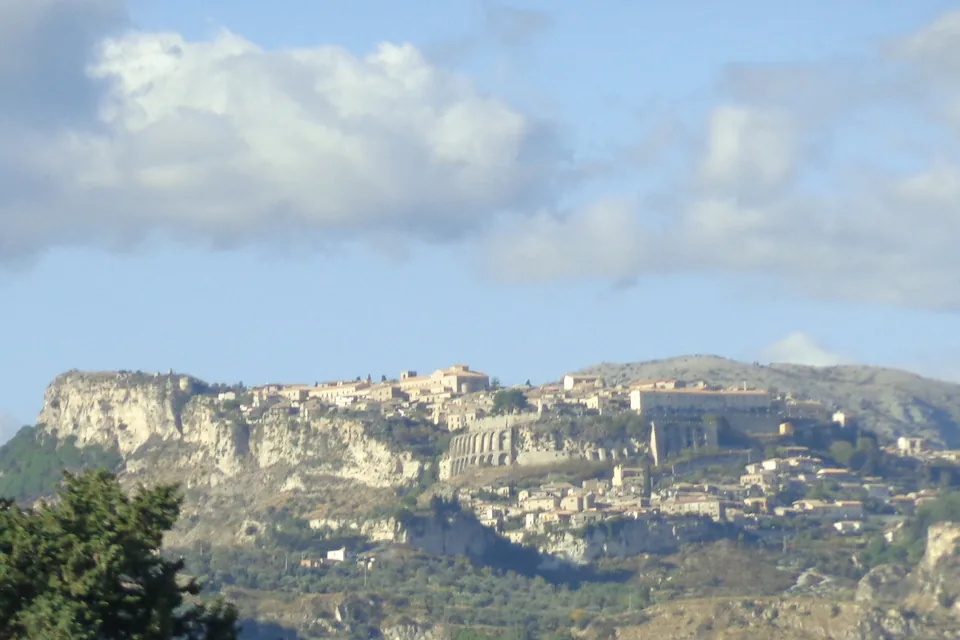
Gerace
Gerace (RC), Calabria: 2,309 residents, 28.99 km². The official facts of the municipality, its town council website and its registered accommodation. The Norman cathedral and its crypt, the castle on the crag, San Francesco and the Byzantine churches, the town gates and the Bombarde terraces, Gerace’s cooking and sweets.
Read the guide →Photo: Effems / Wikimedia Commons — CC0 · Resized and converted to WebP.
