

Why go
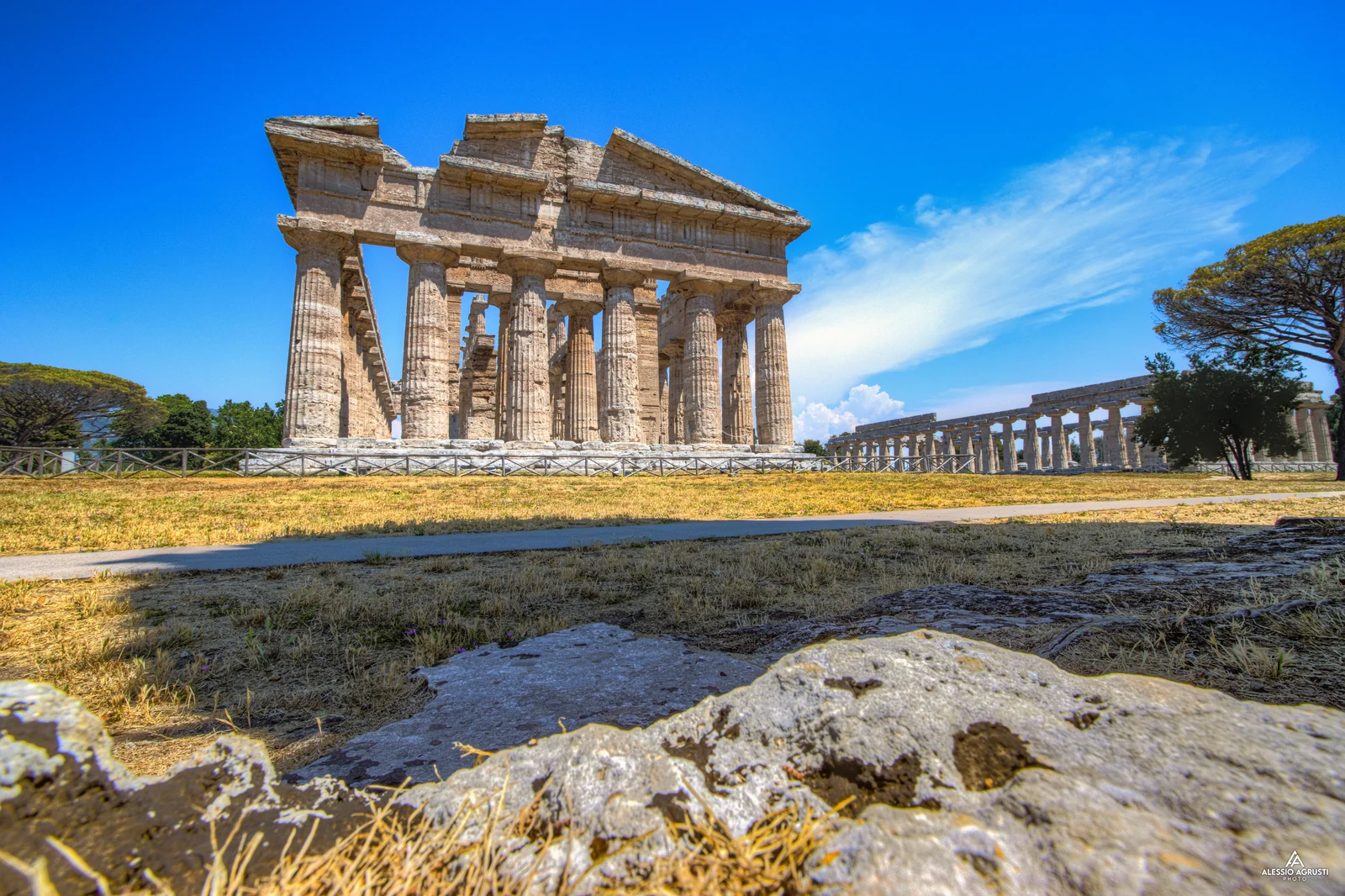
People come to Capaccio Paestum above all for the temples. In the archaeological area of Paestum, about 27 hectares, three great Doric temples still stand, which the Archaeological Parks of Paestum and Velia call “among the best preserved in the whole Mediterranean”: the Temple of Neptune, completed around 460 BC, the so-called Basilica, the city’s oldest stone temple, and the Temple of Athena. Around them lie the Greek agora, the Roman forum, the houses and almost 5 km of walls.
A short walk from the temples, the National Archaeological Museum, opened in 1952 and redisplayed since 2023, holds the Tomb of the Diver, from around 470 BC, the carved metopes of the sanctuary of Hera at the river Sele and one of the largest collections of funerary paintings of the ancient world. Since 1998 Paestum has been on UNESCO’s World Heritage List, together with Velia, the Certosa di Padula and the Cilento and Vallo di Diano park.
The municipality is not only archaeology. The town council points to more than 14 kilometres of sandy beaches, the old village of Capaccio looking out over the Gulf of Salerno, the sanctuary of the Madonna del Granato on Monte Calpazio and a plain that produces PDO buffalo mozzarella from Campania and the PGI Paestum artichoke. Capaccio Paestum is also one of the municipalities of the Cilento, Vallo di Diano and Alburni National Park.
Sources: Parchi archeologici di Paestum e Velia — Area archeologica di Paestum · Parchi archeologici di Paestum e Velia — Museo archeologico nazionale e depositi di Paestum · Parchi archeologici di Paestum e Velia — La storia di Paestum · Parchi archeologici di Paestum e Velia — La cinta muraria di Paestum · Comune di Capaccio Paestum — Brochure «Paestum Experience» (collegata dalla pagina Visit Capaccio Paestum) · Regione Campania, Assessorato Agricoltura — Prodotti tipici: Carciofo di Paestum IGP · Consorzio di tutela Mozzarella di Bufala Campana DOP — Le terre della bufala: zona di origine
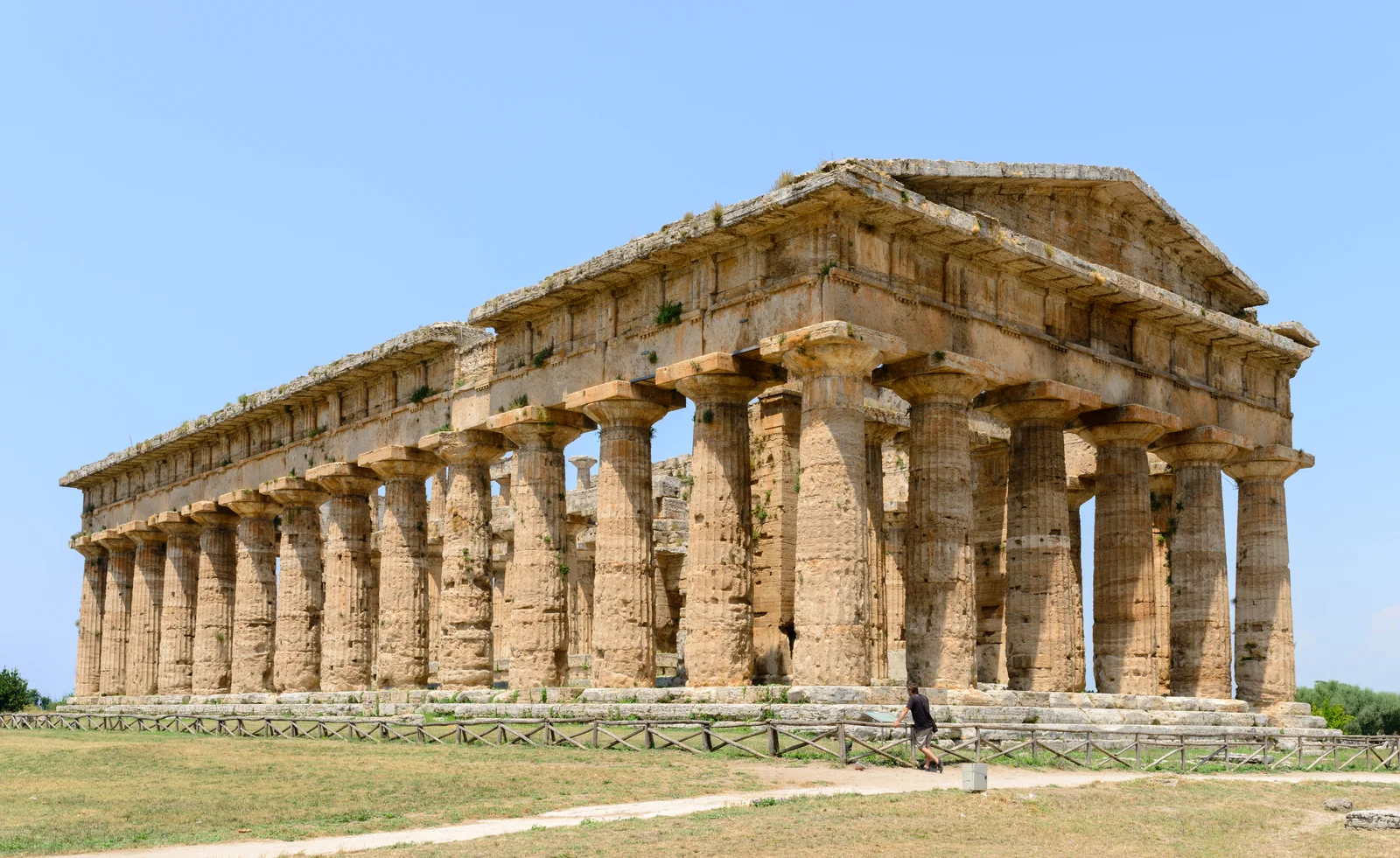
Photo: Norbert Nagel / Wikimedia Commons — CC BY-SA 3.0 · Resized and converted to WebP.
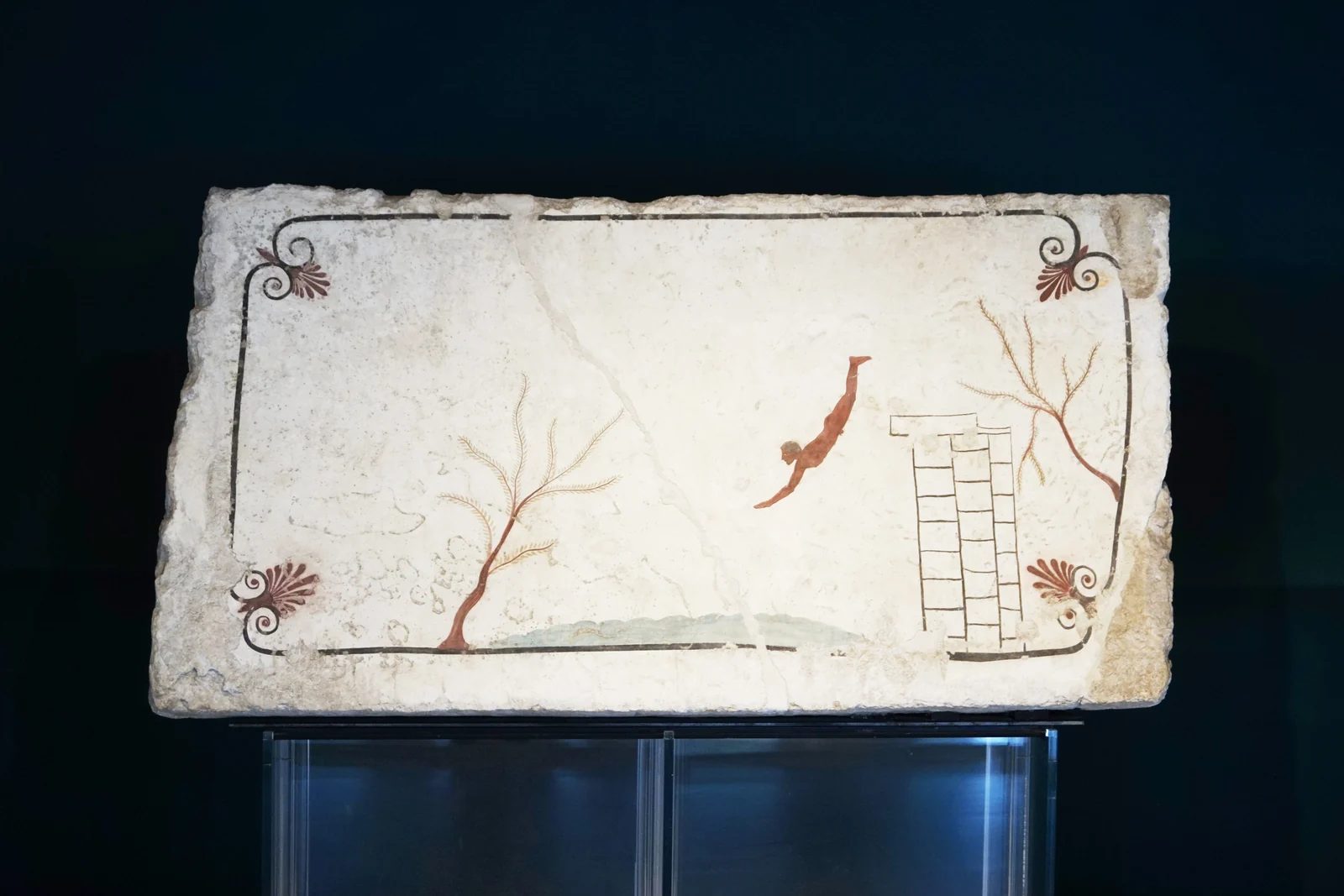
Photo: Bernard Gagnon / Wikimedia Commons — CC BY 4.0 · Resized and converted to WebP.
The municipality at a glance
Capaccio Paestum is a municipality in the province of Salerno, in Campania. Its ISTAT code is 065025. On 1 January 2025 it had 22,410 residents. The municipal territory covers 113.55 km² and ranges from -5 to 1,083 metres above sea level; the town hall stands at about 403 metres.
The municipality stretches from the sea, with the district of Paestum and the archaeological area on the Sele plain, to the old village of Capaccio on the hill, looking out over the Gulf of Salerno.
Sources: ISTAT, Codici statistici delle unità amministrative territoriali: elenco dei comuni al 21 febbraio 2026 · ISTAT, Popolazione residente per età, sesso e stato civile al 1° gennaio 2025 (POSAS) · ISTAT, Principali statistiche geografiche sui comuni: superficie e altimetria al 31 dicembre 2021 · Comune di Capaccio Paestum — Itinerari: tra montagna e coste · Comune di Capaccio Paestum — Brochure «Paestum Experience» (collegata dalla pagina Visit Capaccio Paestum)
History
The area was inhabited long before the Greeks. The Archaeological Parks date the oldest traces, flint tools found near the Basilica, to more than 35,000 years ago; the Copper Age is documented by the Gaudo necropolis, just over a kilometre north of the city, with its rock-cut “grotticella” tombs discovered in 1943, during the Allied landing.
Around 600 BC Greek settlers from Sybaris founded Poseidonia, whose name seems linked to the cult of Poseidon, shown holding a trident on the first silver coins. Then came the Temple of Athena (around 580 BC, rebuilt around 500 BC), the Temple of Hera known as the Basilica (560-520 BC) and the Temple of Neptune (460 BC); in the agora rose the Heroon, the cenotaph of the founding hero (around 510 BC), and the Ekklesiasterion, the circular assembly hall (around 480-470 BC). About 9 km away, at the mouth of the Sele, the settlers dedicated a great sanctuary to Argive Hera, founded according to myth by Jason.
At the end of the fifth century BC the city passed to the Lucanians, who kept its Greek face but brought in the Oscan language and spread the painting of tombs; the oldest part of the walls visible today, from the fourth century BC, belongs to the Lucanian phase. In 273 BC Rome founded the Latin colony of Paestum here: the forum, the curia, the comitium, the macellum, the baths and, between the first century BC and the first century AD, the amphitheatre were built. A municipium in 90 BC, the city became a colony again in AD 71, when Vespasian gave land there to the veterans of the fleet of Misenum.
From late antiquity the plain turned to marsh, malaria spread and the population moved to the hills: the temples stayed standing but became places to gather livestock. Up on the mountain, the castle of Capaccio was in 1245 the refuge of the conspirators against Frederick II of Swabia, who surrendered there in July of that year, left without water. Between the eighteenth and nineteenth centuries Paestum became an obligatory stop on the Grand Tour: Piranesi engraved its temples, Winckelmann and Goethe visited it.
Systematic excavations began in the twentieth century, under Vittorio Spinazzola. In 1934 Paola Zancani Montuoro and Umberto Zanotti Bianco announced the discovery of the sanctuary of Hera at the Sele, and for its metopes Amedeo Maiuri wanted the museum, opened in 1952. On 9 September 1943, the town council recalls, the sea in front of the Torre di Paestum filled with the Allied ships of Operation Avalanche. In 1968 the superintendent Mario Napoli discovered the Tomb of the Diver; in 1998 Paestum entered UNESCO’s list.
Sources: Parchi archeologici di Paestum e Velia — La storia di Paestum · Parchi archeologici di Paestum e Velia — Area archeologica di Paestum · Parchi archeologici di Paestum e Velia — La cinta muraria di Paestum · Parchi archeologici di Paestum e Velia — Area archeologica e Museo dell’Heraion sul Sele · Parchi archeologici di Paestum e Velia — Museo archeologico nazionale e depositi di Paestum · Comune di Capaccio Paestum — Castello Federico II · Comune di Capaccio Paestum — Luoghi (elenco dei 43 luoghi) · Comune di Capaccio Paestum — Brochure «Paestum Experience» (collegata dalla pagina Visit Capaccio Paestum)
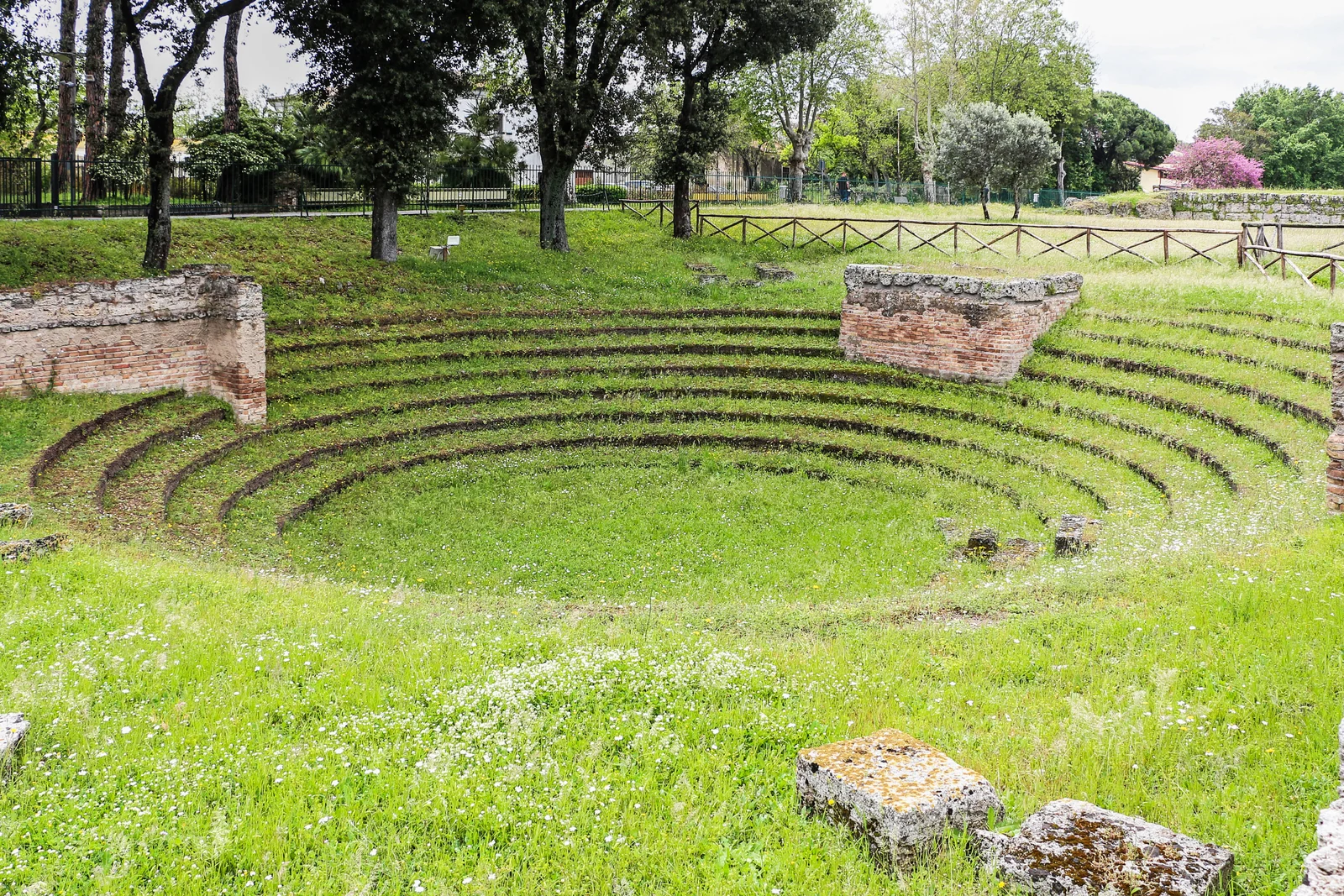
Photo: Bernard Gagnon / Wikimedia Commons — CC BY 4.0 · Resized and converted to WebP.
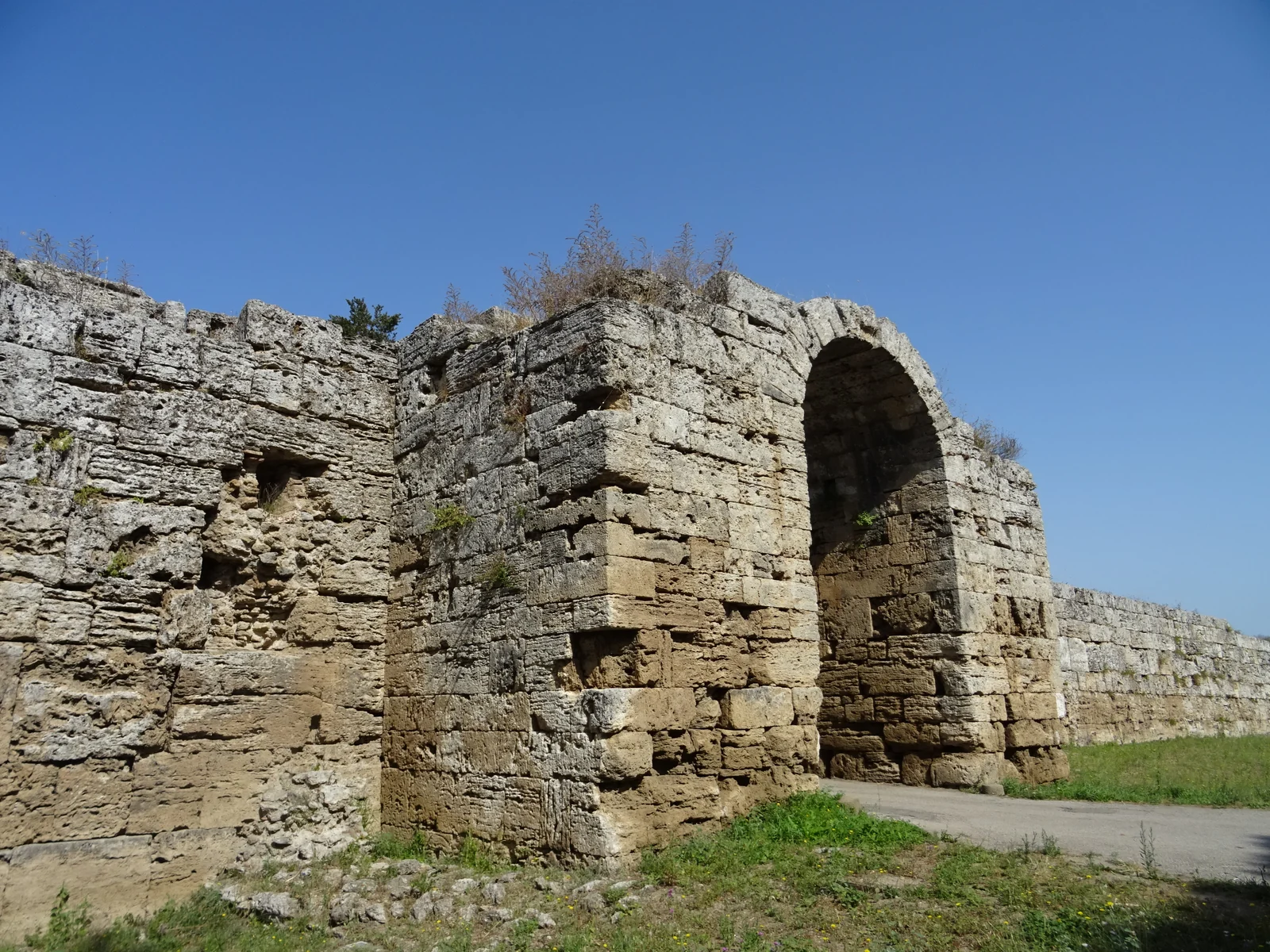
Photo: Riccardo Ortelli / Wikimedia Commons — CC BY-SA 4.0 · Resized and converted to WebP.
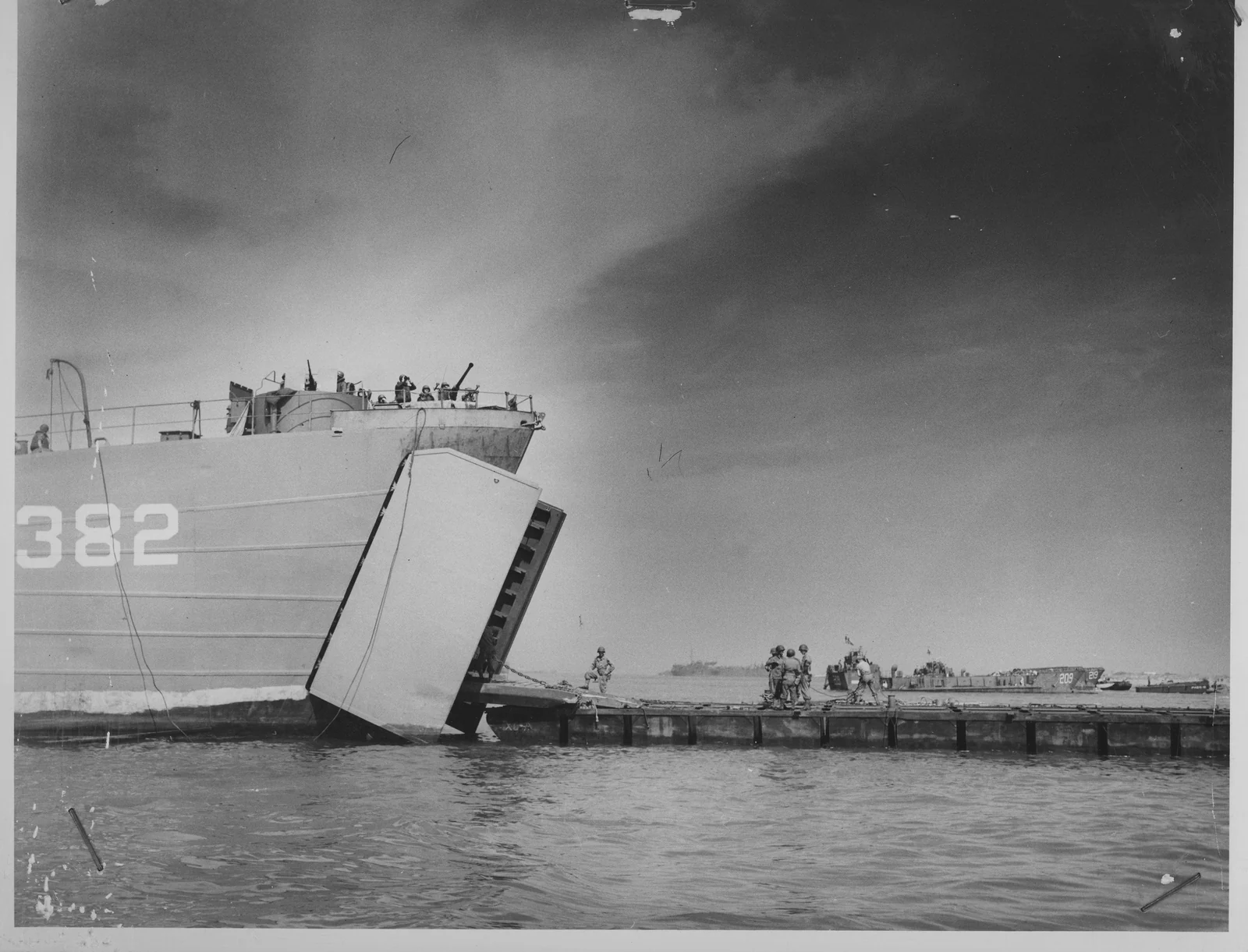
Photo: United States Coast Guard / Wikimedia Commons — Public domain · Resized and converted to WebP.
What to see
Archaeological area of Paestum. Entering by Porta Principale you reach the Southern Sanctuary (Santuario meridionale), the largest of Poseidonia, the one with the two great temples. The Temple of Neptune has a peristyle of 6 by 14 Doric columns; the name comes from an attribution by eighteenth-century scholars, and recent studies think it was dedicated to Hera or Apollo. Beside it, the Basilica, with 9 columns on the short sides and 18 on the long ones topped by very flattened capitals, was almost certainly a temple of Hera; between the two temples, since 2019, stands Mimmo Paladino’s “Sand Horse”, about 4 metres high. Further north, on a small artificial rise, stands the Temple of Athena, from around 500 BC, with 6 by 13 columns and a porch with Ionic capitals.
Between the sanctuaries you cross the Greek agora, with the circular Ekklesiasterion cut into the ground and the Heroon, which held eight bronze vessels, a black-figure amphora showing Heracles rising to Olympus and five iron spits, and the Roman forum, with the comitium, the curia, the basilica, the macellum and the Temple of Peace. The baths, the Roman houses and half of the amphitheatre also survive: the other half lies under the Bourbon road, today’s state road 18. The city walls run for almost 5 km with four gates, Porta Aurea, Porta Sirena, Porta Giustizia and Porta Marina, 28 towers and 47 posterns; built of travertine blocks, they are 5.50 to 6.50 metres thick.
National Archaeological Museum. The route follows the layers of an excavation, from the prehistory of the lower ground floor (the Gaudo culture, the “Neolithic Venus”) up to the floors of the Greek-Lucanian and Roman city. At its heart is the “Cella” hall, with the cycle of metopes from the sanctuary of Hera at the Sele (570-560 BC) on its outer walls; the Tomb of the Diver room shows the five painted slabs and the grave goods, and in the courtyard, since 1972, stands Carlo Alfano’s work, the first contemporary art installation in an Italian archaeological museum. Other highlights include the bronze statue of the silenus Marsyas found in the forum, the slabs of the Lucanian tombs and a bearded bronze head recovered from the Sele. The storerooms can be visited every day with the museum staff.
The Parks ticket is valid for 3 days and covers the archaeological areas of Paestum and Velia and the museum; the prices are below, with their source. The museum is fully accessible, and a barrier-free route crosses the archaeological area from the north, enters the Basilica and links the museum and the entrances; visitors with disabilities and their companions enter free. Outside the walls, beyond the Capodifiume stream, the Santa Venera area keeps the sanctuary of Aphrodite-Venus, used for almost a thousand years; the sanctuary of Hera at the mouth of the Sele, with the Museo Narrante in the Masseria Procuiali, can only be visited by booking, and the Parks report visits to the area as temporarily suspended for maintenance.
Inside the archaeological area there is also the Early Christian basilica of the Santissima Annunziata, which the town council dates to the early fifth century: it was restored in 1729 by Bishop Agostino Odoardi, who added the bell gable, and brought back to its original form by the 1968 restoration. Up on the hill, the old village of Capaccio offers gardens with a view over the gulf as far as Capri, the church of San Pietro Apostolo, the fifteenth-century Civic Tower (originally the bell tower of San Pietro), the late seventeenth-century Fountain of the Three Dolphins, the birthplace of Costabile Carducci, a leading figure of the 1848 uprisings, and the old Barberia Rizzo, opened by Antonio Rizzo at the end of the nineteenth century. The convent of Sant’Antonio, built by the Carmelites in the sixteenth century and rebuilt by the Franciscans after the 1682 earthquake, served in the nineteenth century as town hall, prison and magistrates’ court; in summer its ground floor houses the Grand Tour Museum.
Sources: Parchi archeologici di Paestum e Velia — Area archeologica di Paestum · Parchi archeologici di Paestum e Velia — La cinta muraria di Paestum · Parchi archeologici di Paestum e Velia — Museo archeologico nazionale e depositi di Paestum · Parchi archeologici di Paestum e Velia — Info biglietti, orari, regolamento e visite senza barriere · Parchi archeologici di Paestum e Velia — Area archeologica di Santa Venera · Parchi archeologici di Paestum e Velia — Area archeologica e Museo dell’Heraion sul Sele · Comune di Capaccio Paestum — Basilica paleocristiana · Comune di Capaccio Paestum — Brochure «Paestum Experience» (collegata dalla pagina Visit Capaccio Paestum) · Comune di Capaccio Paestum — Giardini e centro storico di Capaccio capoluogo · Comune di Capaccio Paestum — Barberia Rizzo · Comune di Capaccio Paestum — Luoghi (elenco dei 43 luoghi) · Comune di Capaccio Paestum — Convento di Sant’Antonio
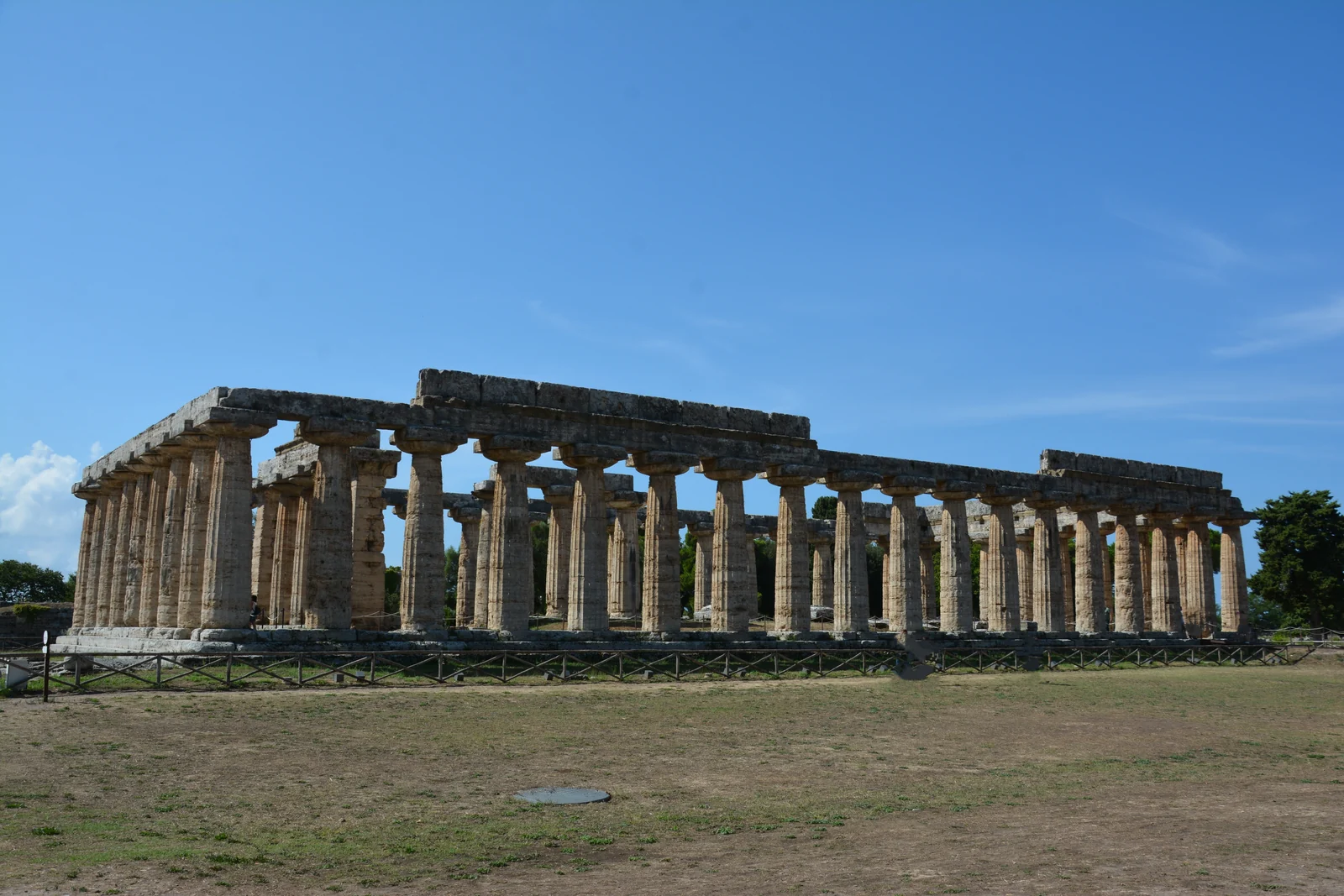
Photo: Mentnafunangann / Wikimedia Commons — CC BY-SA 4.0 · Resized and converted to WebP.
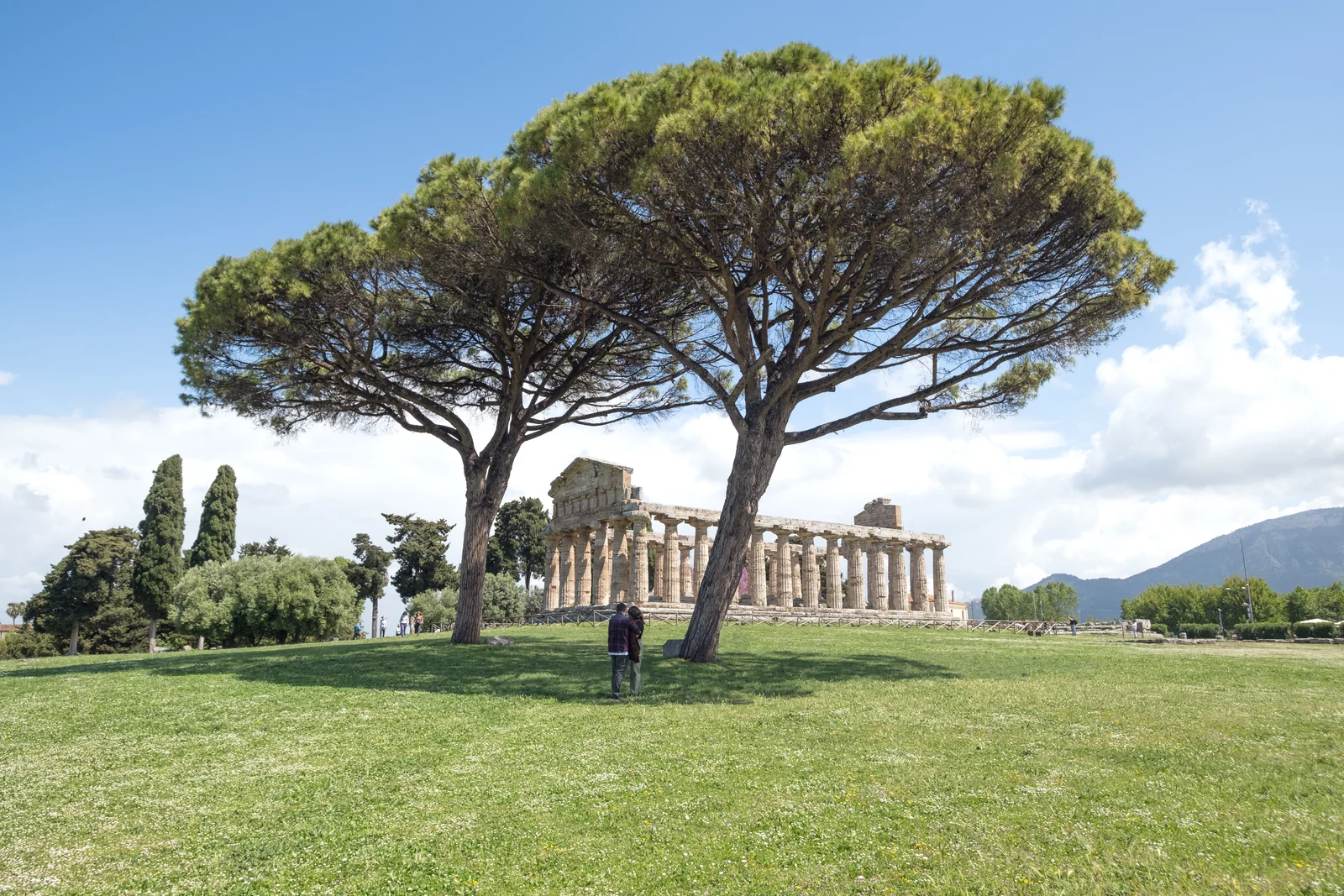
Photo: Daniele_Buccarella / Wikimedia Commons — CC BY-SA 4.0 · Resized and converted to WebP.
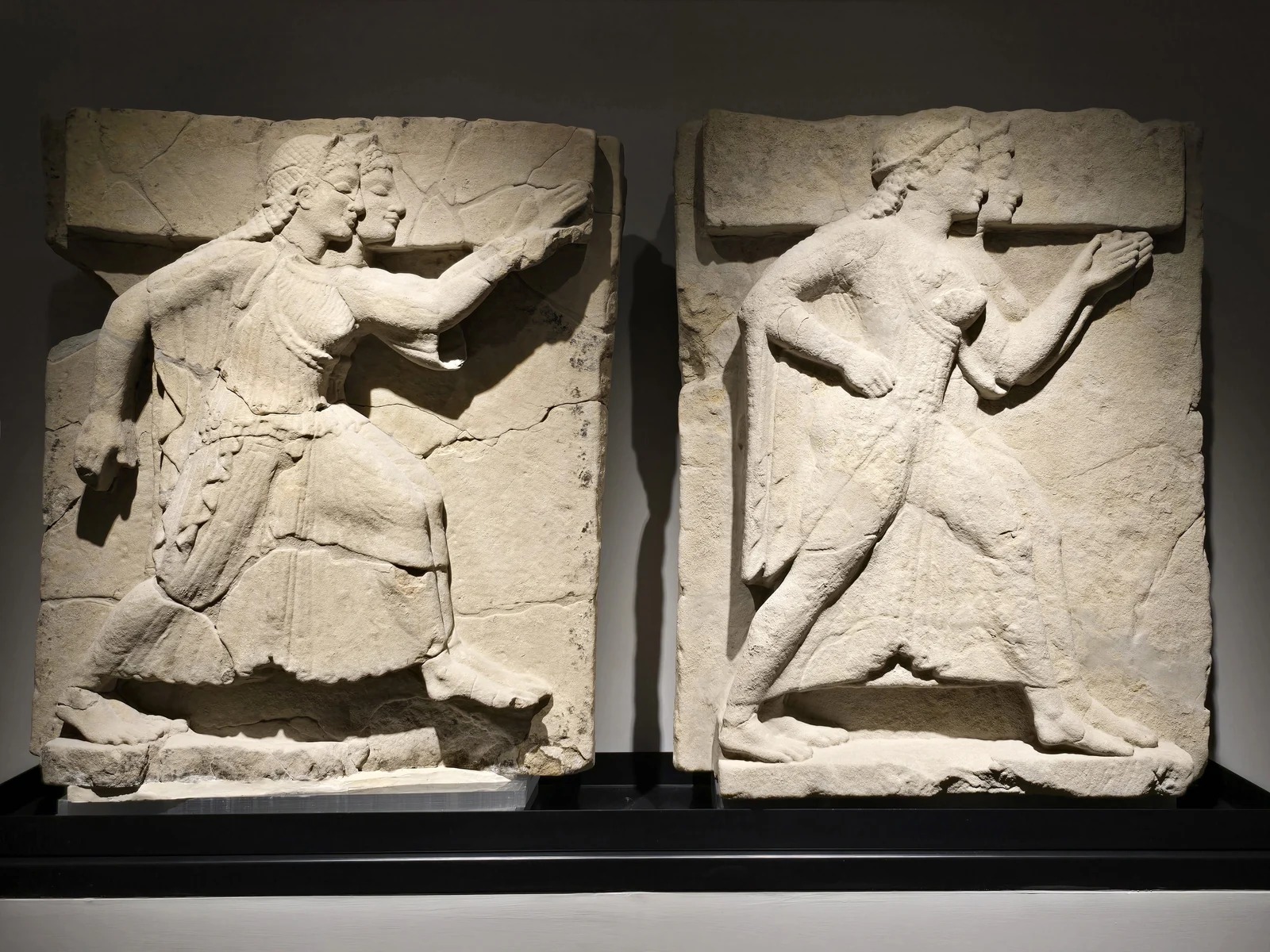
Photo: Rigorius / Wikimedia Commons — CC BY-SA 4.0 · Resized and converted to WebP.
Food and wine
The Sele plain is buffalo country. The protection consortium recalls that around the eleventh century the plains of the Volturno and the Sele turned into marshland, the best setting for raising buffalo, and that under Spanish rule the court also hunted buffalo on the Sele plain. PDO Mozzarella di Bufala Campana, the only mozzarella made solely from buffalo milk to hold a designation of origin, is made with fresh whole milk from Italian Mediterranean buffalo, natural whey starter, rennet and salt; its area of origin includes, among others, the whole province of Salerno.
The consortium also explains how to recognise it: genuine PDO mozzarella is sold only pre-packed at source, with the consortium’s mark (a stylised buffalo head on a green field under a red sun), the PDO mark and the name “Mozzarella di Bufala Campana”; labels such as “buffalo mozzarella” or “buffalo milk mozzarella” are not PDO. The consortium advises eating it on the day of purchase, or keeping it at 10 to 15 °C in its own liquid.
The PGI Paestum artichoke, also called “Tondo di Paestum”, is a Romanesco-type artichoke with round, compact, spineless heads, green with violet-pink hues. The specification sets its harvest between 1 February and 20 May and its area in 14 municipalities of the Sele plain, Capaccio among them. According to the Campania Region, growing it is recorded from 1811 around Eboli and Capaccio and spread with land reclamation around 1929-30; in the kitchen it becomes pizza with baby artichokes, artichoke cream and artichoke pie.
The town council adds to the local table the PGI Sele plain cauliflower and rocket, the PDO white fig of Cilento, the pomegranate, “symbol of the territory”, and wine, already made in Greek times, which can be tasted at wineries and in the vineyards; Capaccio Paestum presents itself as a land of the Mediterranean Diet, a UNESCO heritage.
Sources: Consorzio di tutela Mozzarella di Bufala Campana DOP — La storia · Consorzio di tutela Mozzarella di Bufala Campana DOP — La Mozzarella di Bufala Campana · Consorzio di tutela Mozzarella di Bufala Campana DOP — Le terre della bufala: zona di origine · Consorzio di tutela Mozzarella di Bufala Campana DOP — Produzione secondo tradizione · Regione Campania, Assessorato Agricoltura — Prodotti tipici: Carciofo di Paestum IGP · Regione Campania — Disciplinare di produzione dell’IGP «Carciofo di Paestum» (testo del provvedimento ministeriale del 23 marzo 2004) · Comune di Capaccio Paestum — Brochure «Paestum Experience» (collegata dalla pagina Visit Capaccio Paestum)
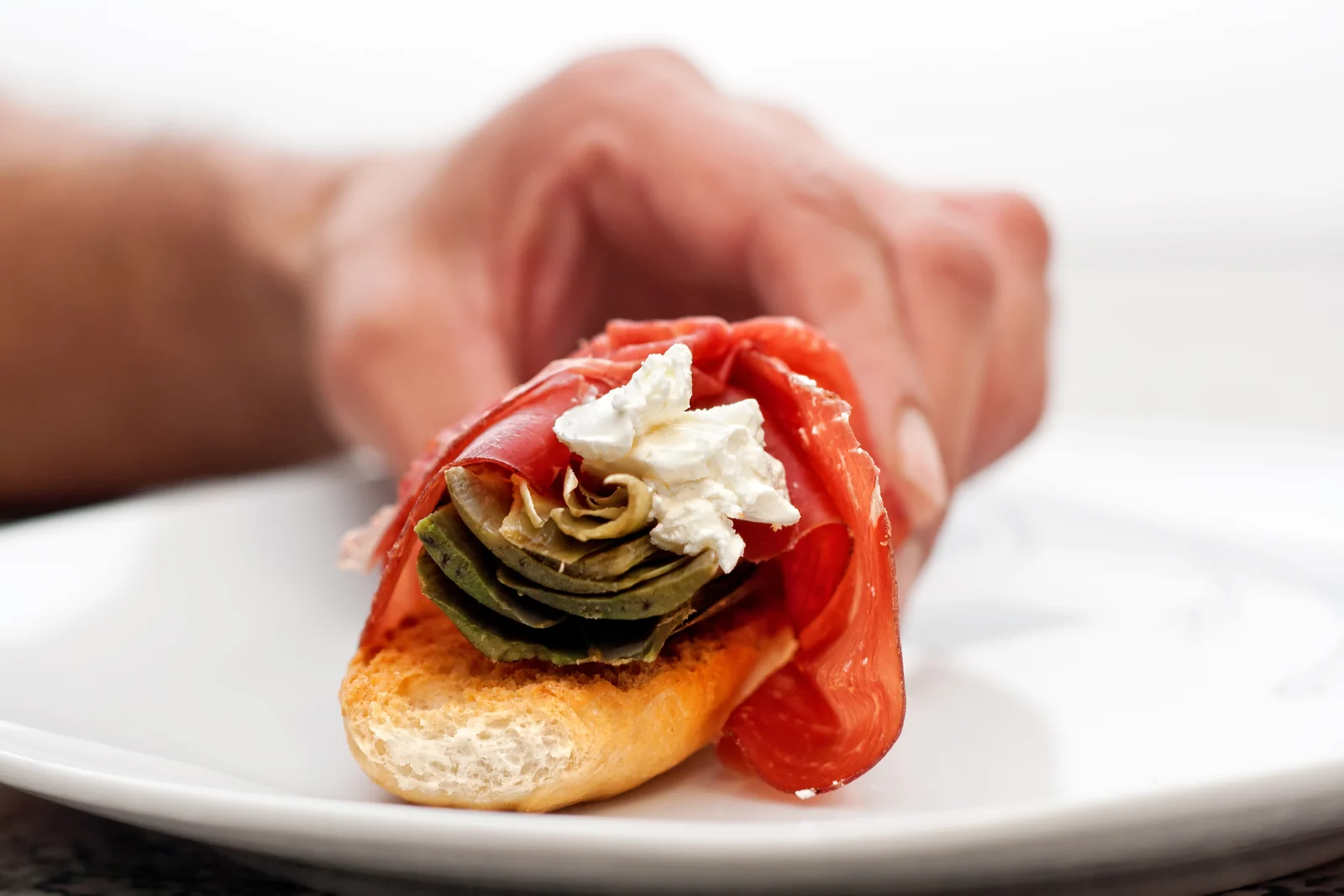
Photo: Katiuscia Noseda / Wikimedia Commons — CC BY-SA 2.0 · Resized and converted to WebP.
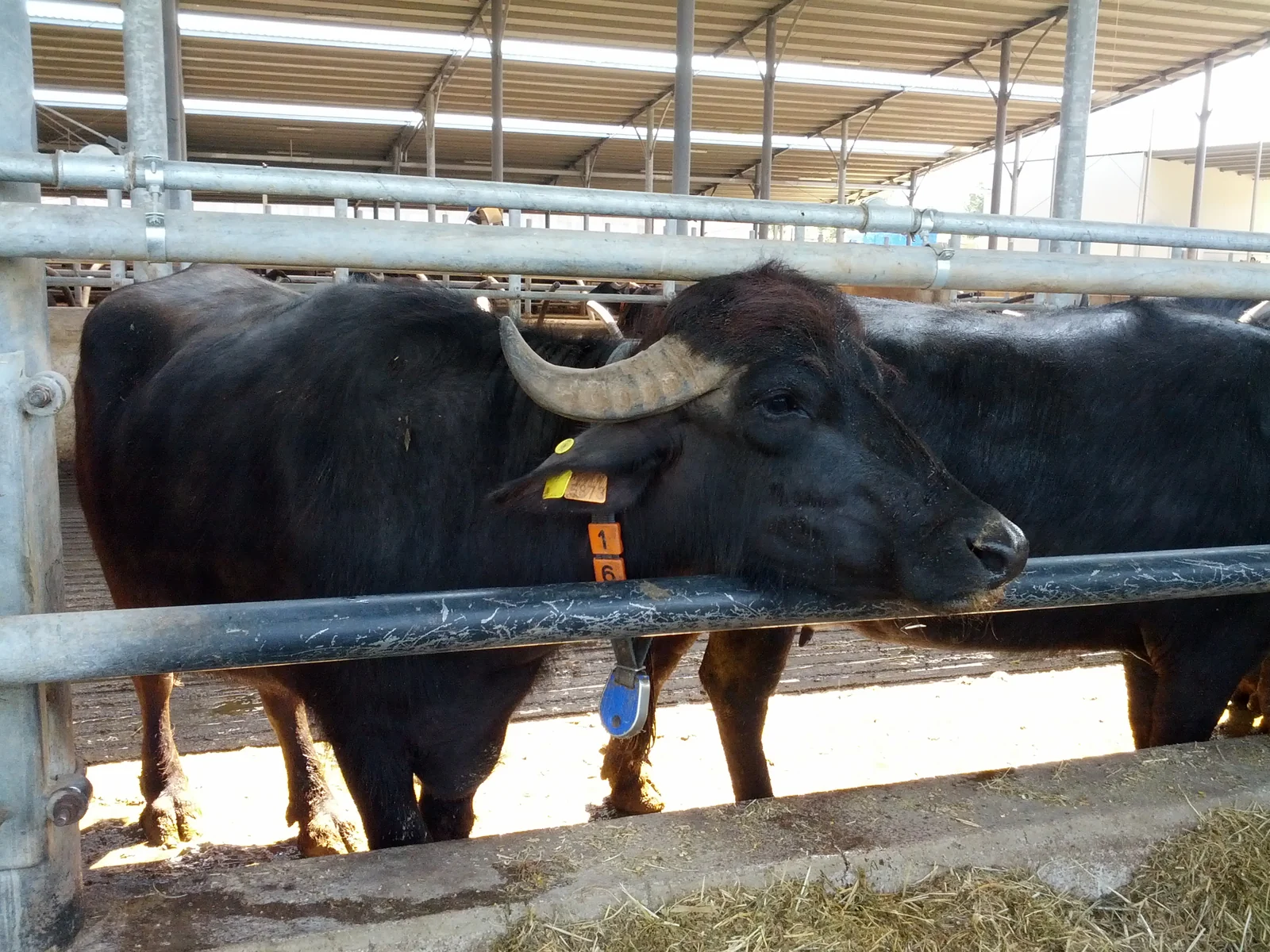
Photo: Marco d'Itri / Wikimedia Commons — CC BY-SA 2.0 · Resized and converted to WebP.
Things to do
A day at the temples easily grows longer: the Parks ticket is valid for 3 days and also covers Velia. In the museum, staff take visitors every day into the storerooms of the “Beyond the museum” section; people who find walking hard can use the Zoom Uphill free of charge, a four-wheel-drive electric off-road vehicle, in the areas of Paestum and Velia. The Parks have no in-house guided tours and refer visitors to guides licensed by the Campania Region; amateur photography is allowed, without flash in the museum and without unauthorised drones.
From sea to mountain, the town council counts more than 14 kilometres of sandy beaches, with lidos and free stretches, and a network of trails climbing from the coast to the summits: routes S1 from Laura to the Madonna del Granato, S5 from Torre di Paestum to Capaccio, the E12 Mediterranean trail, trail 410 from the Madonna del Granato to Monte Soprano and trail 456 from Capaccio to the Polveracchio ridge, among others. The trails lead to the ruins of the castle.
The old village of Capaccio is worth a few hours for its lanes, carved doorways and gardens with the view over the Gulf of Salerno, the Amalfi Coast and Capri. The town council also mentions outdoor activities and flights, and, for more than ten years, the International Hot Air Balloon Festival in September and October against the backdrop of the archaeological park.
Sources: Parchi archeologici di Paestum e Velia — Info biglietti, orari, regolamento e visite senza barriere · Parchi archeologici di Paestum e Velia — Museo archeologico nazionale e depositi di Paestum · Comune di Capaccio Paestum — Brochure «Paestum Experience» (collegata dalla pagina Visit Capaccio Paestum) · Comune di Capaccio Paestum — Giardini e centro storico di Capaccio capoluogo
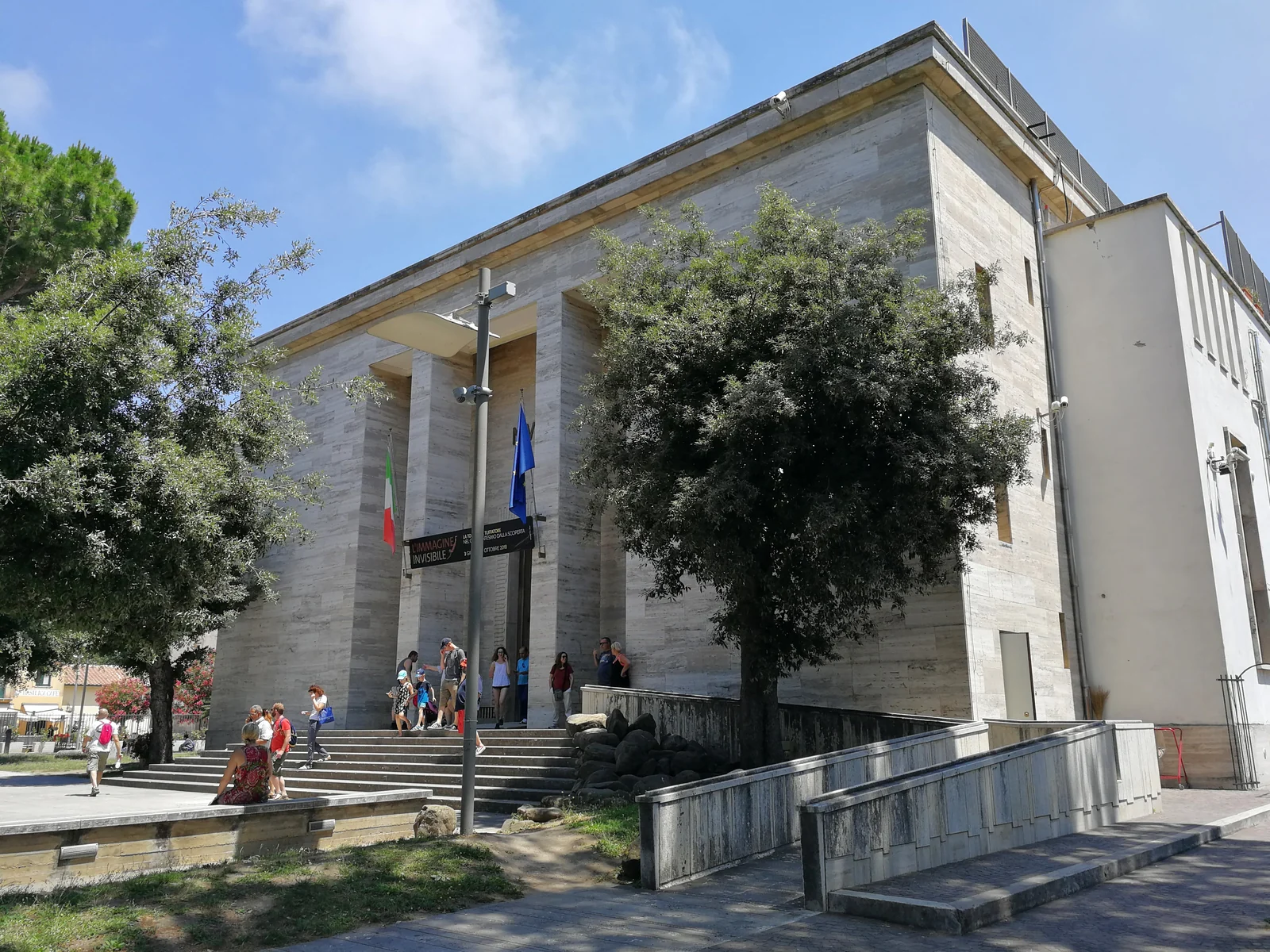
Photo: Lucamato / Wikimedia Commons — CC BY-SA 4.0 · Resized and converted to WebP.
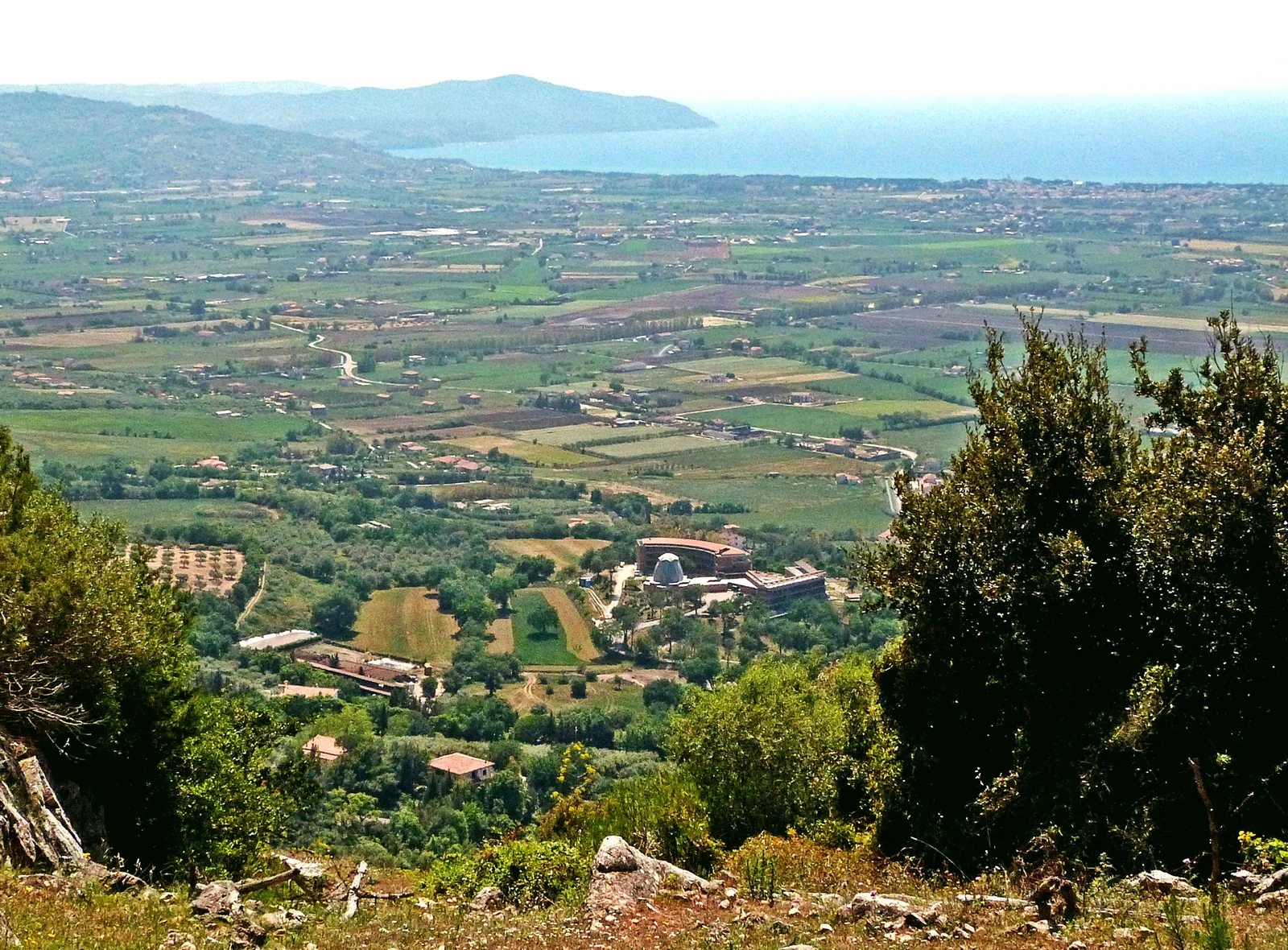
Photo: Ziegler175 / Wikimedia Commons — CC BY-SA 3.0 · Resized and converted to WebP.
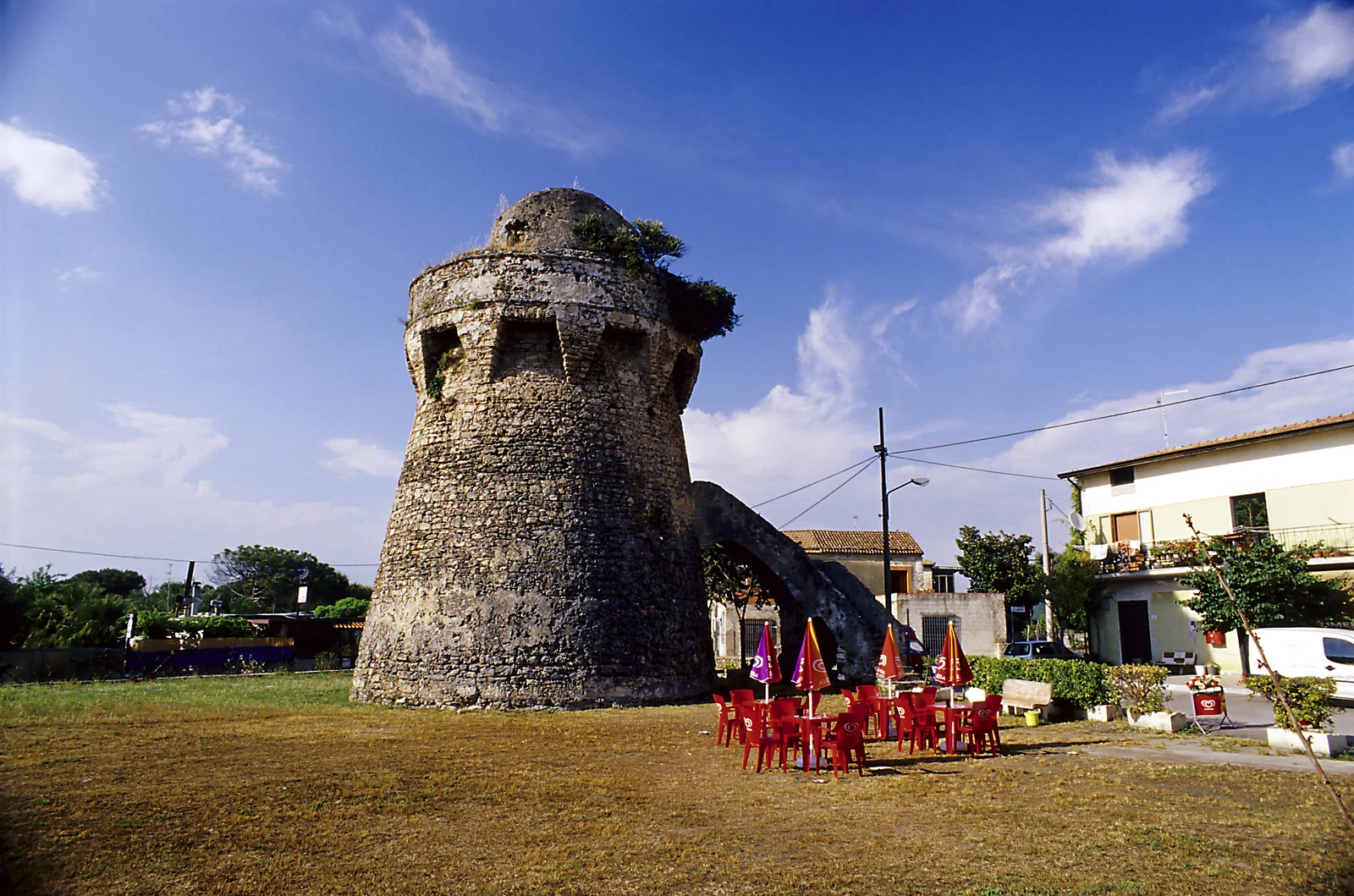
Photo: Falk2 / Wikimedia Commons — CC BY-SA 4.0 · Resized and converted to WebP.
When to go
The Archaeological Parks are open every day; in the shorter months, from late September to late March, the full visit of the Paestum area closes earlier, following a calendar published by the Parks, and afterwards only the Southern Sanctuary (Santuario meridionale), the one with the great temples, stays open. The ticket costs less from December to February than from March to November (prices in the “What to see” section).
Artichokes are harvested between February and May, the period the Region describes as cool and rainy and which gives the Paestum artichoke its tenderness. Summer means the sea and the beaches of the coast; on the night of 14 August, at the sanctuary of the Madonna del Granato on Monte Calpazio, the tradition of the “Cente” is renewed, with devotees processing from everywhere. In September and October the balloons of the International Festival rise.
In autumn Paestum hosts the Mediterranean Archaeological Tourism Exchange: the 2026 edition, the twenty-eighth, was held from 29 October to 1 November, promoted by the Campania Region and the Archaeological Parks of Paestum and Velia.
Sources: Parchi archeologici di Paestum e Velia — Info biglietti, orari, regolamento e visite senza barriere · Parchi archeologici di Paestum e Velia (Ministero della cultura) — Home page: orari, sedi e contatti · Regione Campania, Assessorato Agricoltura — Prodotti tipici: Carciofo di Paestum IGP · Regione Campania — Disciplinare di produzione dell’IGP «Carciofo di Paestum» (testo del provvedimento ministeriale del 23 marzo 2004) · Comune di Capaccio Paestum — Brochure «Paestum Experience» (collegata dalla pagina Visit Capaccio Paestum) · Borsa Mediterranea del Turismo Archeologico 2026 a Paestum
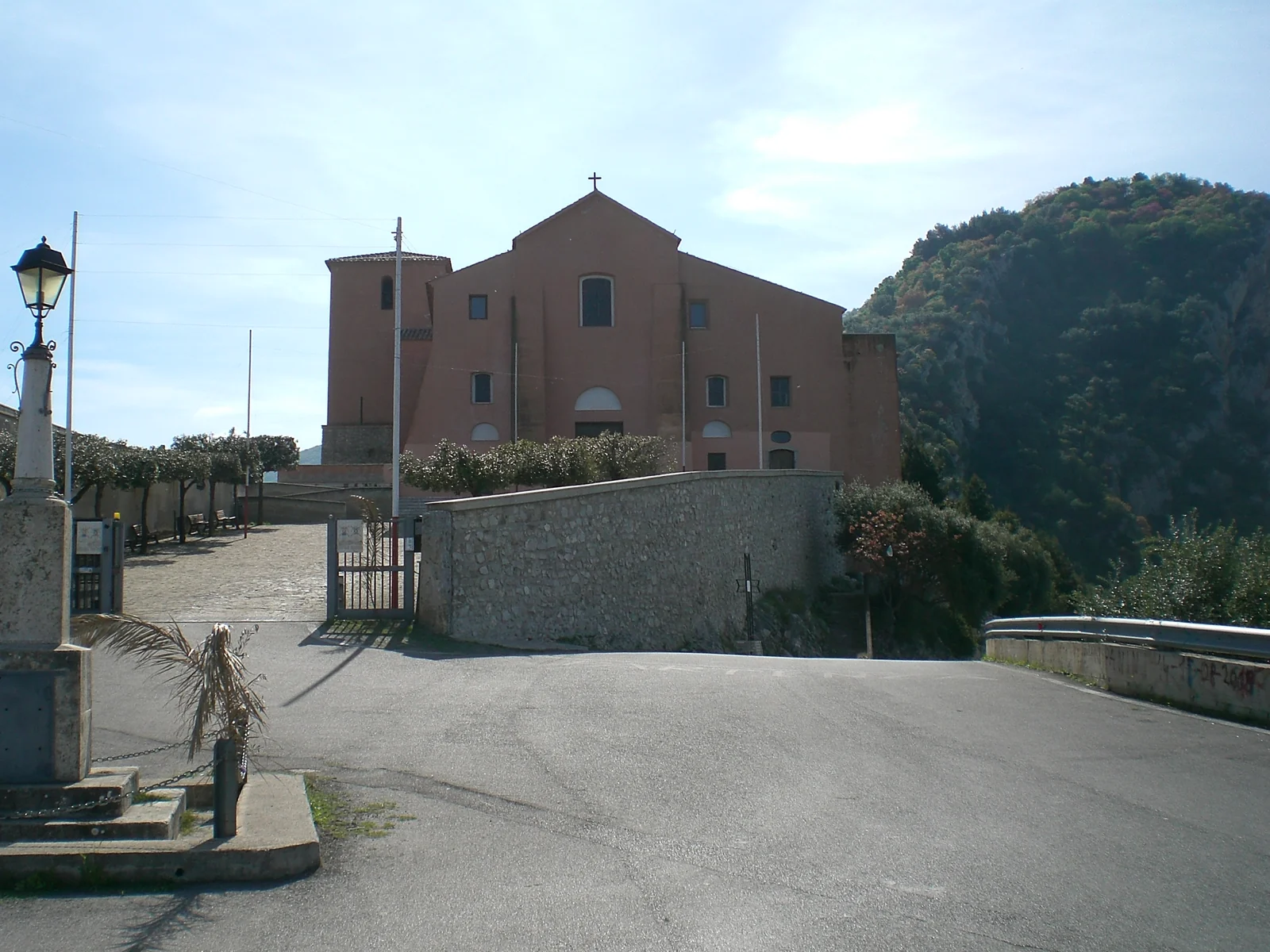
Photo: Liberotag73 / Wikimedia Commons — CC BY-SA 3.0 · Resized and converted to WebP.
Getting there
By train the municipality has two RFI stations. Paestum, the closer to the archaeological area, has 2 platforms, both reachable without barriers including by lift (working from 6 am to 10.15 pm), raised platforms and a tactile path to platform 1; it has no assistance service for passengers with disabilities, though. Capaccio-Roccadaspide has 4 platforms, only one reachable without barriers: from there the town council suggests a bus or taxi up to the old village of Capaccio.
By car, the town council’s itinerary starts from the Battipaglia motorway exit and follows state road 18 for about 20 km to Paestum; the same road, built in Bourbon times, runs through the archaeological area. The Parks’ seat is at Via Magna Grecia 919. A secondary entrance to the area, Porta Cerere, works as an exit and as an entrance for those who already have a ticket.
Locally the town council runs an urban shuttle with timetables published on its website and a season-pass service for the car parks between Paestum station and the archaeological area. The tourist information offices are at Paestum station and in the old Barberia Rizzo, at Piazza Orologio 3 in the old village of Capaccio.
Sources: RFI — Stazione di Paestum · RFI — Stazione di Capaccio-Roccadaspide · Comune di Capaccio Paestum — Castello Federico II · Comune di Capaccio Paestum — Itinerari: tra montagna e coste · Parchi archeologici di Paestum e Velia — Area archeologica di Paestum · Parchi archeologici di Paestum e Velia (Ministero della cultura) — Home page: orari, sedi e contatti · Parchi archeologici di Paestum e Velia — Info biglietti, orari, regolamento e visite senza barriere · Comune di Capaccio Paestum — Trasporto urbano: orari della navetta (pagina aggiornata il 23 gennaio 2025) · Comune di Capaccio Paestum — Brochure «Paestum Experience» (collegata dalla pagina Visit Capaccio Paestum) · Comune di Capaccio Paestum — Visit Capaccio Paestum e uffici IAT (pagina aggiornata il 6 agosto 2026)
Tourism
Anyone staying overnight in Capaccio Paestum pays the tourist tax all year round, per person and per night, in hotels, bed & breakfasts, holiday homes, campsites, holiday villages and short-term rentals. In the table of rates published by the council for 2025 the full amount is 3 euros in one- and two-star hotels, 4 euros in three-star hotels and 5 euros in four- and five-star hotels, 3 euros in bed & breakfasts, guest rooms, holiday homes and short-term rentals, and 2 euros in campsites. It is paid in full from 15 July to 31 August, at 75% in the mid season (15 April to 14 July, 1 September to 15 October and 1 December to 6 January) and at 25% for the rest of the year; in the high and mid season, from the eleventh to the twentieth consecutive night half is paid, and from the twenty-first nothing. Under the council’s regulation, exempt among others are young people up to their fourteenth birthday and people over 70, people with severe disabilities and their companion, with documentation, those accompanying a patient treated in health facilities, coach drivers and one tour leader for every 25 participants in organised groups. The tax is paid to the host, who issues a receipt.
Capaccio Paestum is in the Cilento, Vallo di Diano and Alburni National Park, and the safeguard measures annexed to the 1995 decree that created it apply throughout the park to visitors too: wild animals are not caught or disturbed, wild plants are not picked or damaged, rocks and fossils are not taken away, there is no camping outside equipped areas, and motor vehicles stay on roads open to public traffic. Picking mushrooms and other woodland produce is allowed, within the rules and local customs.
Sources: Comune di Capaccio Paestum — Tariffe imposta di soggiorno 2025 · Città di Capaccio Paestum — Imposta di soggiorno, guida per i gestori (Delibere di CC n. 90/2017 e n. 60/2022) · DPR 5 giugno 1995, Istituzione dell’Ente Parco nazionale del Cilento e Vallo di Diano, con l’allegato A, Misure di salvaguardia
“Come to Capaccio Paestum as a guest, not as a tourist: that is how these places truly let you know them.”
Accommodation in figures
In the Ministry of Tourism’s national database of accommodation (BDSR), on 12 October 2026, Capaccio Paestum had 446 establishments with a verified national identification code (CIN): 38 hotel-type establishments, 114 non-hotel establishments and 294 other establishments.
Sources: Ministero del Turismo – Banca Dati Strutture Ricettive (dashboard pubblica)
Already on Apulica
Apulica’s events calendar includes «Mediterranean Archaeological Tourism Exchange» in Capaccio Paestum; the latest recorded edition is 2026.
Sources: Borsa Mediterranea del Turismo Archeologico 2026 a Paestum
Nearby
The same institute of the Ministry of Culture also runs Velia, at Ascea Marina, with the same three-day ticket; the town council describes Velia’s Porta Rosa as the oldest example of a round arch in Italy. The territory of ancient Poseidonia stretched from the river Sele to the promontory of Agropoli, and the museum tells its story as far as the Alburni mountains. On the town council’s itinerary, after Paestum the road climbs to Giungano, a medieval village with a fifteenth-century mother church and the Bosco dell’Elci, 30 hectares of Mediterranean scrub. Capaccio Paestum lies in the Cilento, Vallo di Diano and Alburni National Park, which together with Paestum, Velia and the Certosa di Padula is a UNESCO World Heritage Site.
Sources: Parchi archeologici di Paestum e Velia (Ministero della cultura) — Home page: orari, sedi e contatti · Parchi archeologici di Paestum e Velia — Info biglietti, orari, regolamento e visite senza barriere · Parchi archeologici di Paestum e Velia — Museo archeologico nazionale e depositi di Paestum · Comune di Capaccio Paestum — Brochure «Paestum Experience» (collegata dalla pagina Visit Capaccio Paestum) · Comune di Capaccio Paestum — Itinerari: tra montagna e coste · Parchi archeologici di Paestum e Velia — La storia di Paestum
The town council
The official website of the Comune di Capaccio Paestum, registered in IndicePA, the index of the digital addresses of Italy’s public administrations, is the reference for the town council’s offices, opening hours and news. Its address is listed among the sources of this section.
The town council has two IAT tourist information offices: in the old centre of Capaccio, in the old Barberia Rizzo at Piazza Orologio 3, and at Paestum railway station.
Sources: Comune di Capaccio Paestum, sito istituzionale · IndicePA (AgID), Indice dei domicili digitali delle pubbliche amministrazioni: dataset Enti · Comune di Capaccio Paestum — Visit Capaccio Paestum e uffici IAT (pagina aggiornata il 6 agosto 2026)
Local tourist information
Local tourist offices help with opening times, events and transport on the day.
- Ufficio IAT di Capaccio capoluogo · Antica Barberia Rizzo, piazza Orologio 3, 84047 Capaccio Paestum (SA)
Source: Comune di Capaccio Paestum — Visit Capaccio Paestum e uffici IAT (pagina aggiornata il 6 agosto 2026) · checked on - Ufficio IAT della stazione di Paestum · Stazione ferroviaria di Paestum, Capaccio Paestum (SA)
Source: Comune di Capaccio Paestum — Visit Capaccio Paestum e uffici IAT (pagina aggiornata il 6 agosto 2026) · checked on
Where to stay
In the municipality of Capaccio Paestum the national database of the Ministry of Tourism lists 446 accommodation businesses with a verified CIN code: 38 hotels, 114 other licensed accommodation and 294 other types such as B&Bs and private rentals.
Licensed businesses from the official list of accommodation named as the source in this section. Where the list gives it, the property's official identification code appears next to its name: the national CIN code, or the code assigned by the Region or by the body that keeps the list. Private individuals are not listed. This list is the official census of licensed businesses, not a list of Apulica partners: to stay in Capaccio Paestum you do not have to check one property after another yourself; write to Apulica and we look for the stay that suits your journey, checking availability and conditions before any confirmation.
GRAND HOTEL PAESTUM
Hotel · ★★★★★
Regional code (CUSR) 15065025ALB0054
Leone S.r.l.
Holiday village · ★★★★
Regional code (CUSR) 15065025EXT0157
APOLLO
Campsite · ★★★
Regional code (CUSR) 15065025EXT0009
AGRIMEDITERRANEO
Farm stay
Regional code (CUSR) 15065025EXT0001
Affittacamere Ferraiuolo
Guest rooms
Regional code (CUSR) 15065025EXT0335
CASA RELIGIOSA DI OSPITALITA SANT ANTONIO
Holiday house
Regional code (CUSR) 15065025EXT0021
MEC PAESTUM
Hotel · ★★★★★
Regional code (CUSR) 15065025ALB0087
PAESTUM INN
Holiday village · ★★★★
Regional code (CUSR) 15065025EXT0099
ATHENA
Campsite · ★★★
Regional code (CUSR) 15065025EXT0012
AGRITURISMO FABRIZIO MARIA
Farm stay
Regional code (CUSR) 15065025EXT0002
First the places that presented themselves to Apulica, the latest first; then one place of each type in turn, by official category and stars, then by name. No position is paid for.
All 154 entries in alphabetical order
Page 1 of 16
| Name | Type | Identification code |
|---|---|---|
| Affittacamere Ferraiuolo | Guest rooms | Regional code (CUSR) 15065025EXT0335 |
| Affittacamere il Tuffatore | Guest rooms | Regional code (CUSR) 15065025EXTLTA9 |
| Affittacamere Tolomeo | Guest rooms | Regional code (CUSR) 15065025EXT0356 |
| AGRIMEDITERRANEO | Farm stay | Regional code (CUSR) 15065025EXT0001 |
| AGRITURISMO FABRIZIO MARIA | Farm stay | Regional code (CUSR) 15065025EXT0002 |
| Agriturismo Prime Querce | Farm stay | Regional code (CUSR) 15065025EXT0377 |
| AGRITURISMO SAN VINCENZO | Farm stay | Regional code (CUSR) 15065025EXT0003 |
| AGRITURISMO TRE STELLE | Farm stay | Regional code (CUSR) 15065025EXT0004 |
| Agriturismo Vigna Di Filippo | Farm stay | Regional code (CUSR) 15065025EXT0394 |
| ALBERGO DEI TEMPLI | Hotel | Regional code (CUSR) 15065025ALB0005 |
Ask Apulica for a stay in Capaccio Paestum We reply shortly, within a few hours at most, with a proposal for you to consider.
Sources: Ministero del Turismo – Banca Dati Strutture Ricettive (dashboard pubblica), 2026-10-12
YOUR JOURNEY
How to shape a journey here
To include Capaccio Paestum in a trip, or to ask for a guide or a transfer, you can write to Apulica with the button below.
Plan your tripKeep exploring
Agropoli
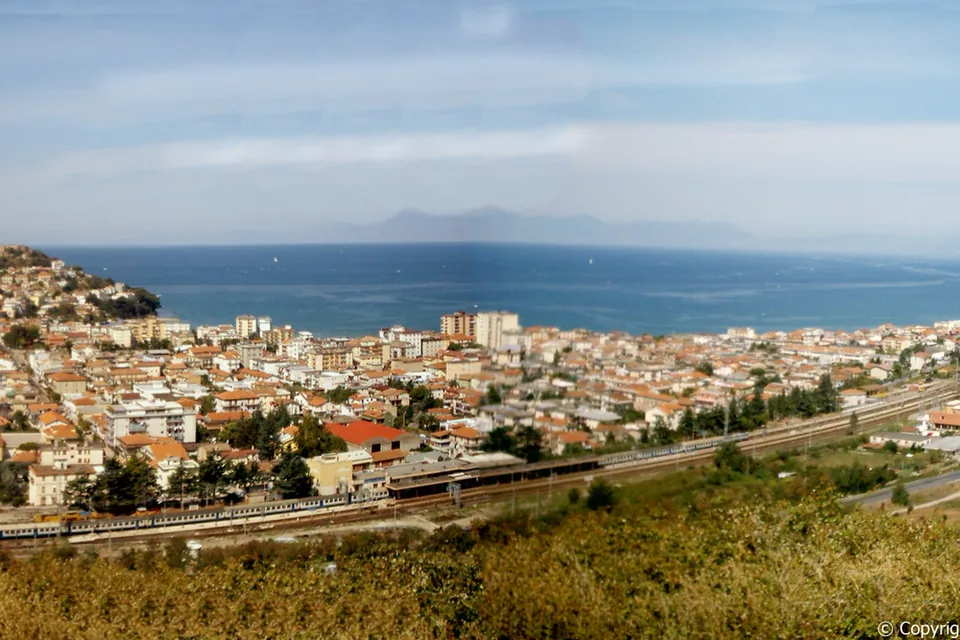
Agropoli (SA), Campania: 21,311 residents, 32.79 km². The official facts of the municipality, its town council website and its registered accommodation.
Read the guide →Photo: Carlo Iannuzzi / Wikimedia Commons — CC BY-SA 3.0 · Resized and converted to WebP.

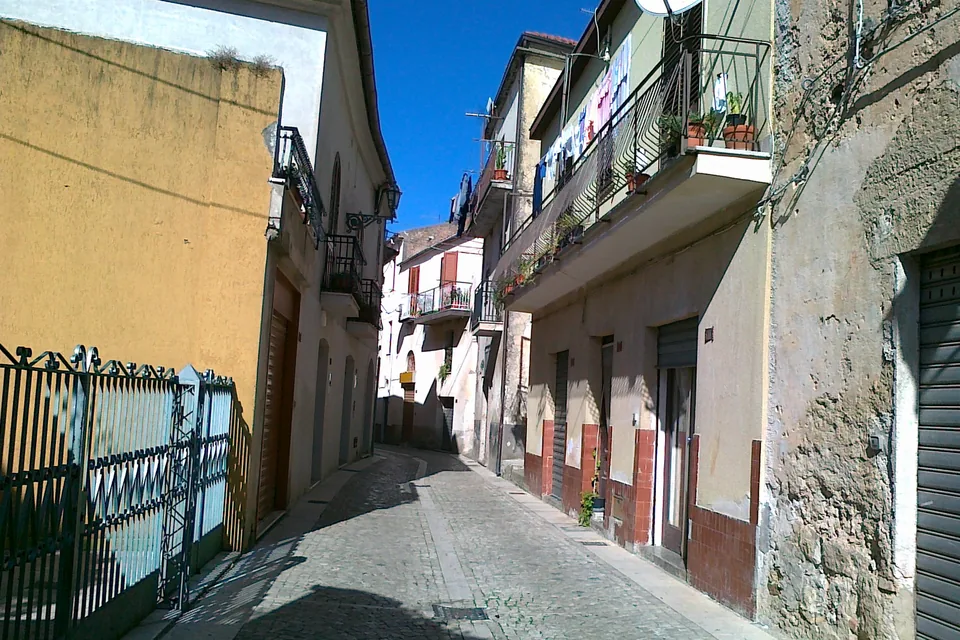
Giungano
Giungano (SA), Campania: 1,283 residents, 11.70 km². The official facts of the municipality, its town council website and its registered accommodation.
Read the guide →Photo: Geofix / Wikimedia Commons — CC BY-SA 3.0 · Resized and converted to WebP.

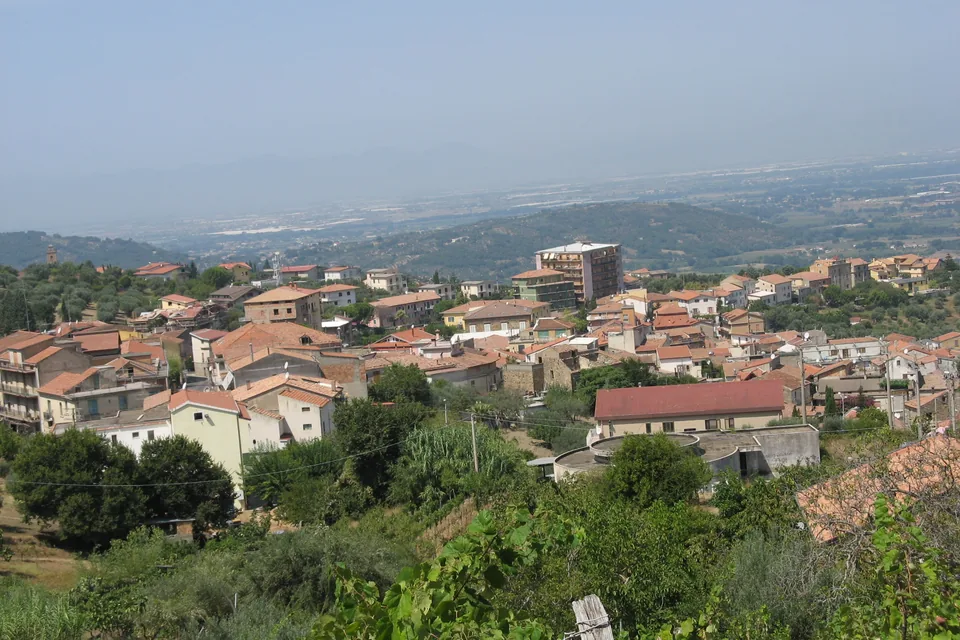
Albanella
Albanella (SA), Campania: 6,315 residents, 40.23 km². The official facts of the municipality, its town council website and its registered accommodation.
Read the guide →Photo: Lobufalo / Wikimedia Commons — Public domain · Resized and converted to WebP.

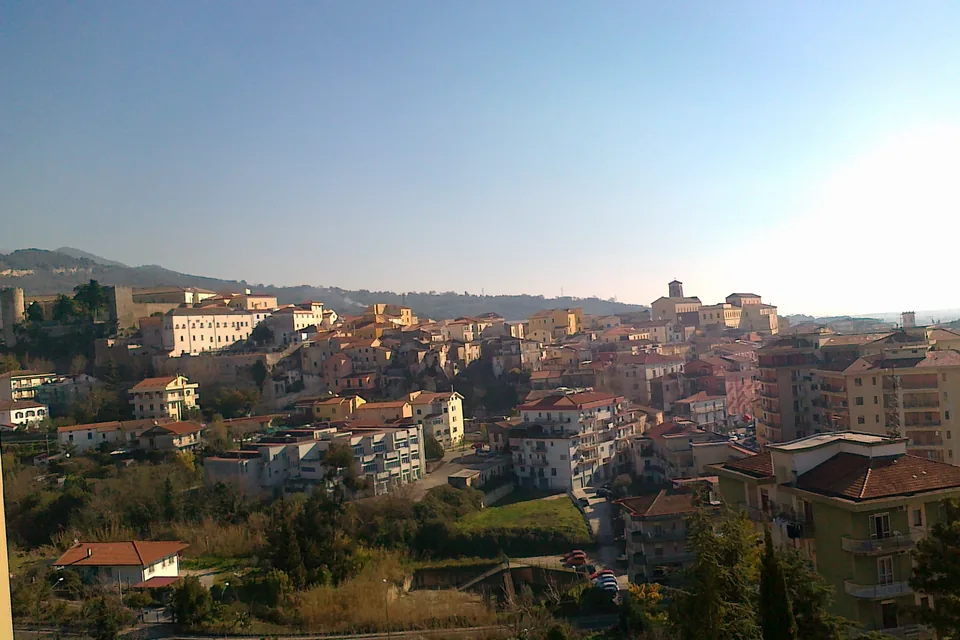
Eboli
Eboli (SA), Campania: 37,571 residents, 137.58 km². The official facts of the municipality, its town council website and its registered accommodation.
Read the guide →Photo: Geofix / Wikimedia Commons — CC BY-SA 3.0 · Resized and converted to WebP.

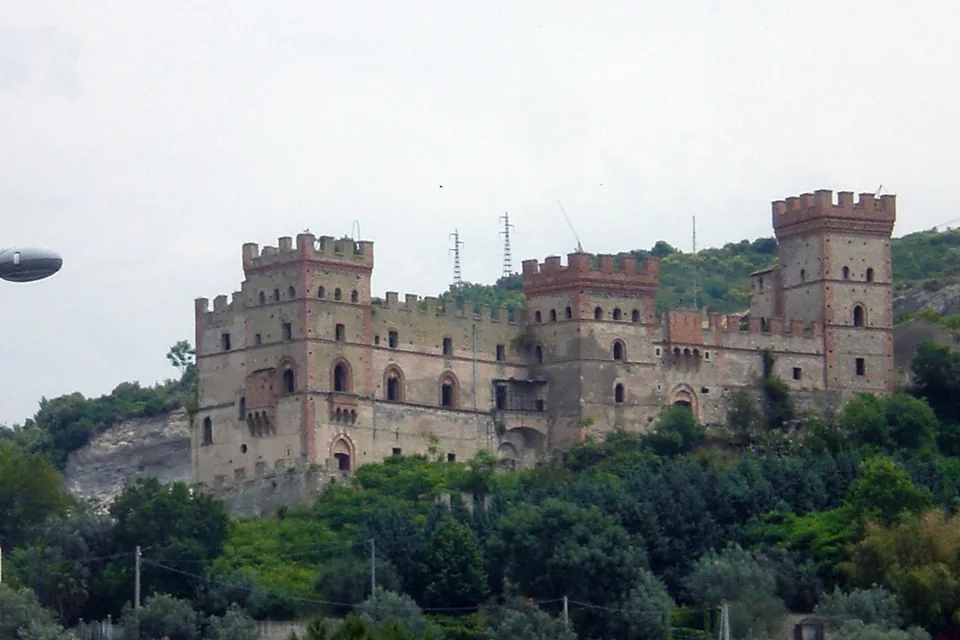
Battipaglia
Battipaglia (SA), Campania: 49,361 residents, 56.86 km². The official facts of the municipality, its town council website and its registered accommodation.
Read the guide →Photo: Freed73 / Wikimedia Commons — Public domain · Resized and converted to WebP.

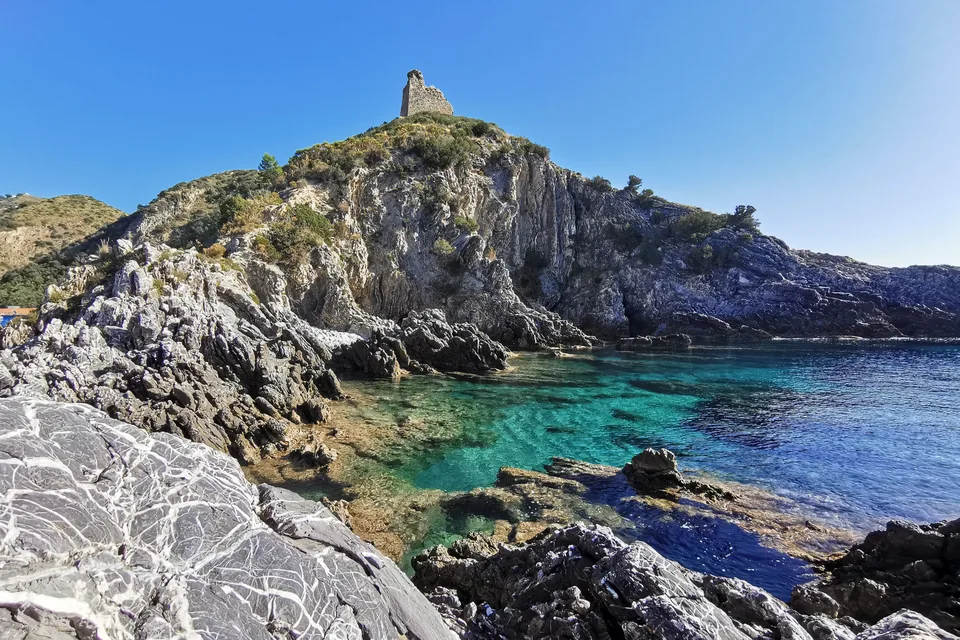
Ascea
Ascea (SA), Campania: 5,832 residents, 37.45 km². The official facts of the municipality, its town council website and its registered accommodation.
Read the guide →Photo: Lelemz / Wikimedia Commons — CC BY-SA 4.0 · Resized and converted to WebP.

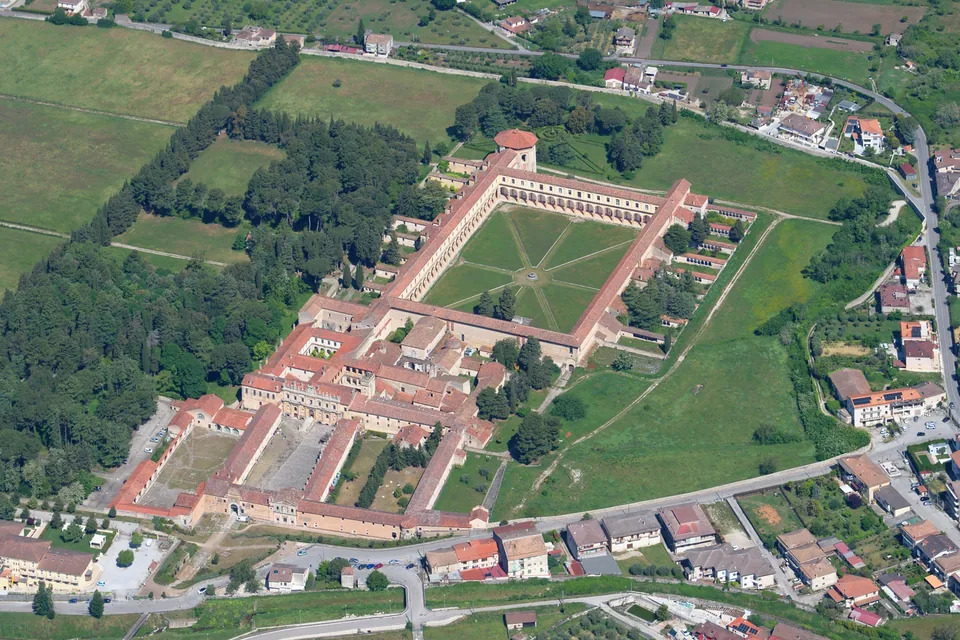
Padula
Padula (SA), Campania: 4,819 residents, 67.11 km². The official facts of the municipality, its town council website and its registered accommodation. The Certosa di San Lorenzo, a UNESCO World Heritage site since 1998, the baptistery of San Giovanni in Fonte, the Joe Petrosino house museum and the re-enactment of Charles V with the thousand-egg omelette.
Read the guide →Photo: Carsten Steger / Wikimedia Commons — CC BY-SA 4.0 · Resized and converted to WebP.

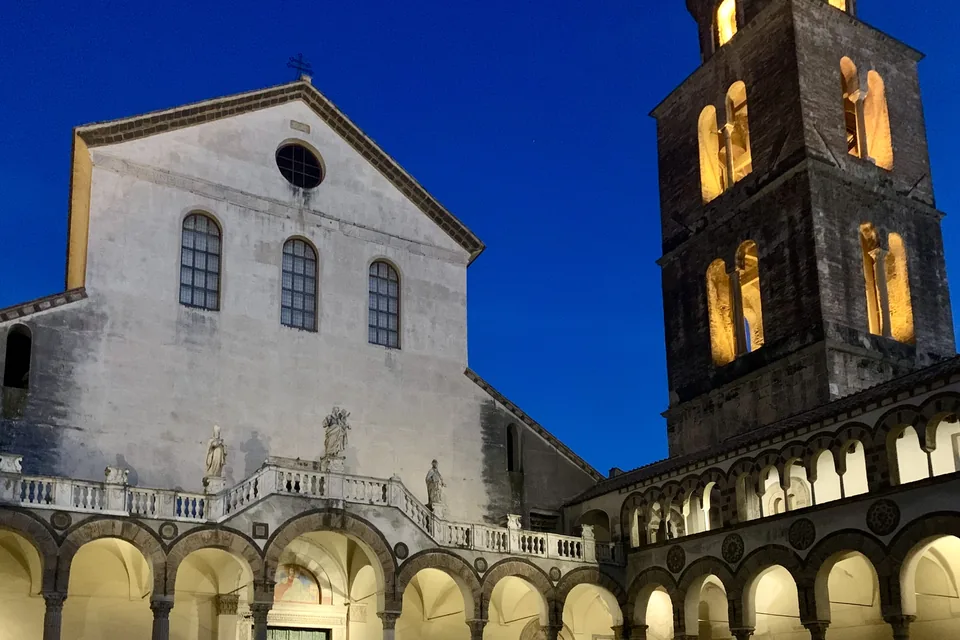
Salerno
The provincial capital on the gulf between the Amalfi Coast and Paestum: the Norman cathedral, Arechi castle, the Minerva Garden, the Teatro Verdi, the seafront, Saint Matthew and the winter Luci d’Artista.
Read the guide →Photo: Emanuele Oliveto / Wikimedia Commons — CC BY-SA 4.0 · Resized and converted to WebP.
