

Why go
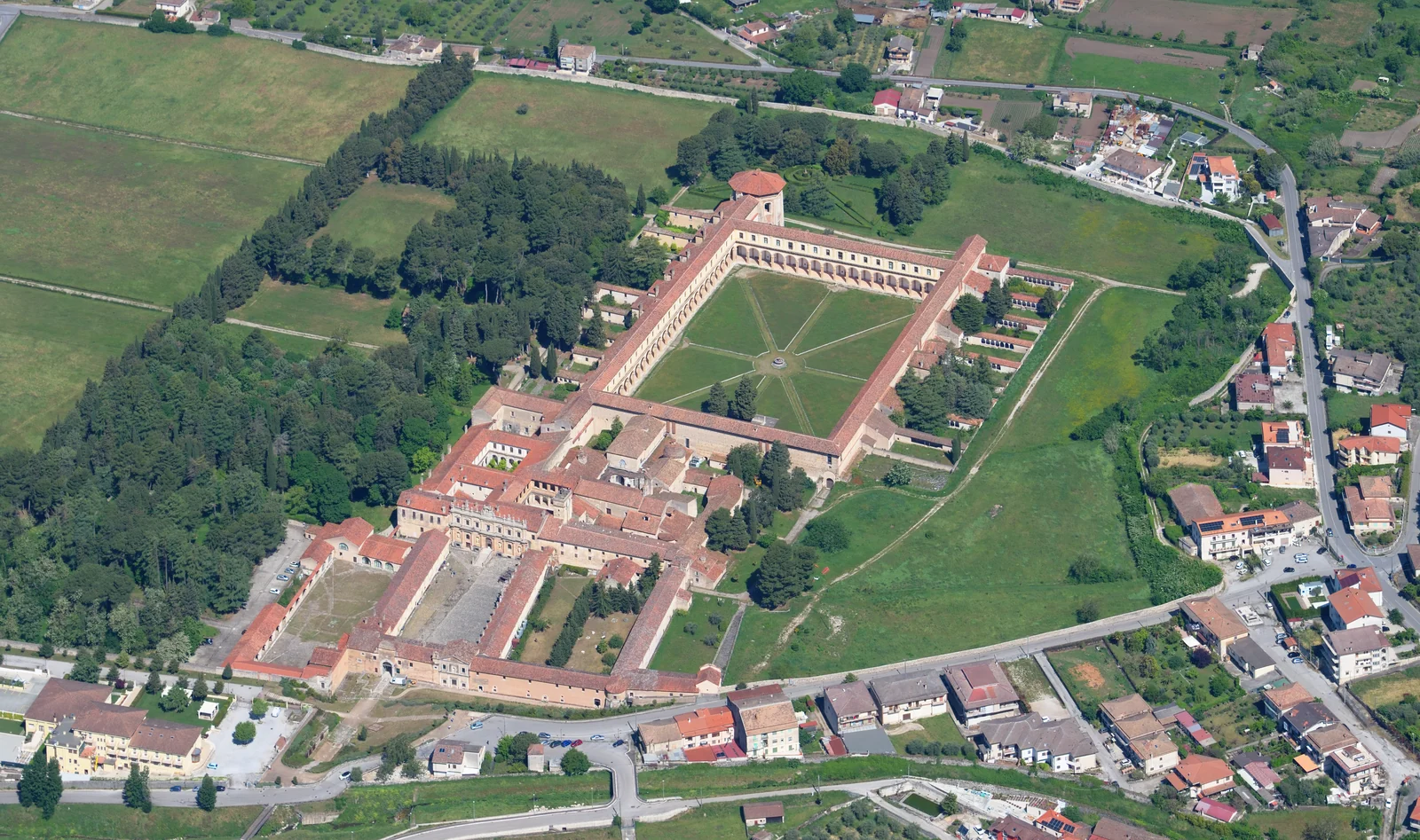
People come to Padula first of all for the Certosa di San Lorenzo. The Ministry of Culture describes it as one of the most interesting monastic complexes in Europe for the grandeur of its architecture and the wealth of its artistic treasures, and since 1998 it has been on UNESCO’s World Heritage List. The website of Padula’s museums puts its area at more than 50,000 square metres; the great cloister, at almost fifteen thousand square metres, is according to the Ministry among the largest in Europe.
Above the Certosa the town climbs over two hills at 699 metres, with an old centre that the town council describes as a place of arches, stepped lanes, balconies and doorways carved in Padula stone. In the Fonti district stands the early Christian baptistery of San Giovanni in Fonte, which the council calls one of the oldest in the Western world; in the centre, the birthplace of Joe Petrosino, the Italian-American policeman born in Padula in 1860, is now a house museum.
In August the Certosa hosts the re-enactment of Emperor Charles V’s arrival in 1535, with the thousand-egg omelette; in September, the Joe Petrosino International Prize. Since 1 June 2026 a single ticket, valid for 48 hours, opens the Certosa, the civic museums and the baptistery.
Sources: Ministero della cultura — Luoghi della cultura: Certosa di San Lorenzo, Padula (ultimo aggiornamento 30 ottobre 2026) · Padula Sistema Museo (sito dei musei di Padula, collegato dal Comune) — La Certosa di San Lorenzo · Comune di Padula — Territorio: Geografia fisica di Padula nel Vallo di Diano · Comune di Padula — Luoghi: Il borgo · Comune di Padula — Luoghi: Il battistero di San Giovanni in Fonte · Comune di Padula — Luoghi: Casa Museo Giuseppe Petrosino · Comune di Padula — Eventi: Carlo V e la Frittata dalle Mille Uova (8-10 agosto 2023) · Comune di Padula — Eventi: Premio Internazionale «Joe Petrosino» (2023)
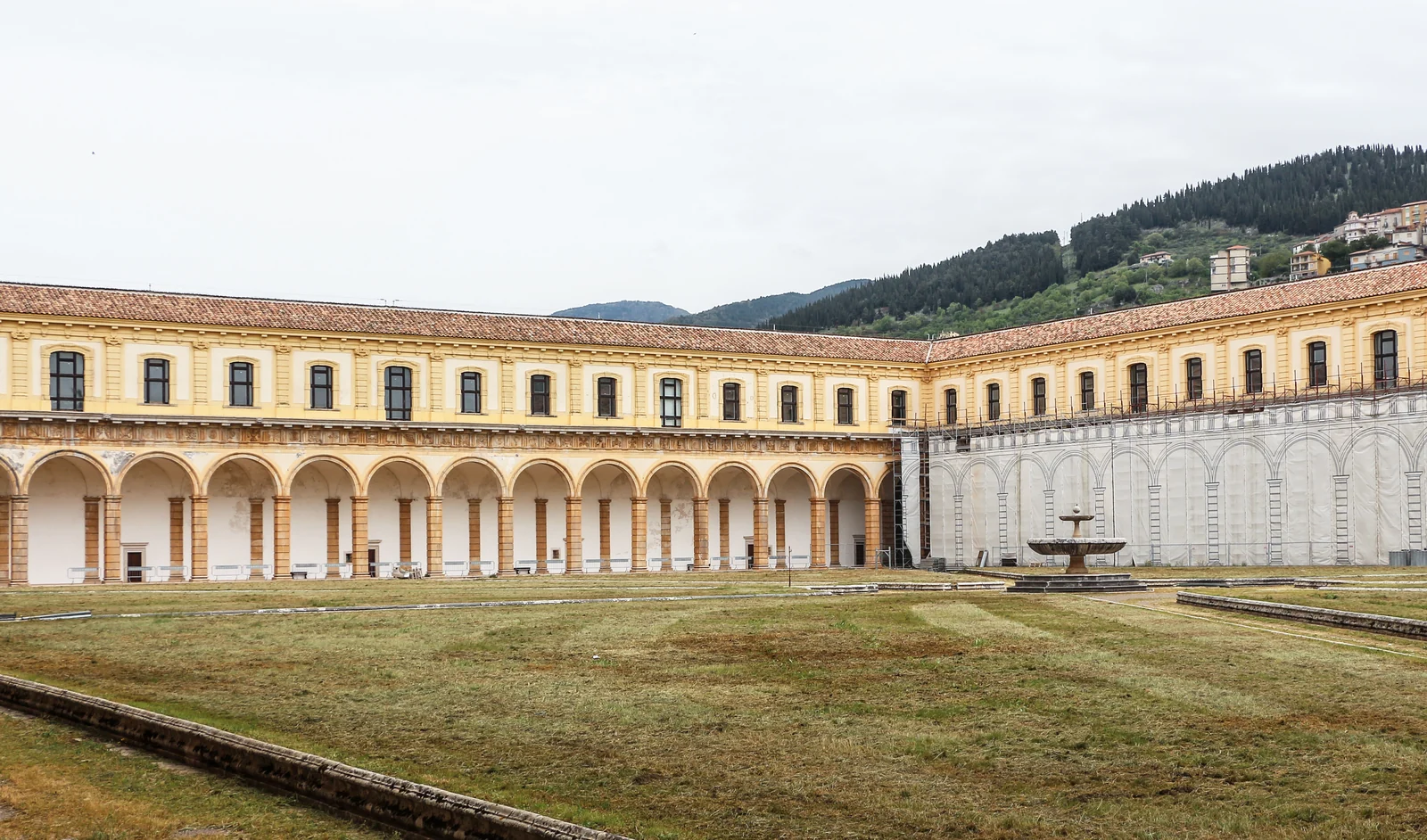
Photo: Bernard Gagnon / Wikimedia Commons — CC BY 4.0 · Resized and converted to WebP.
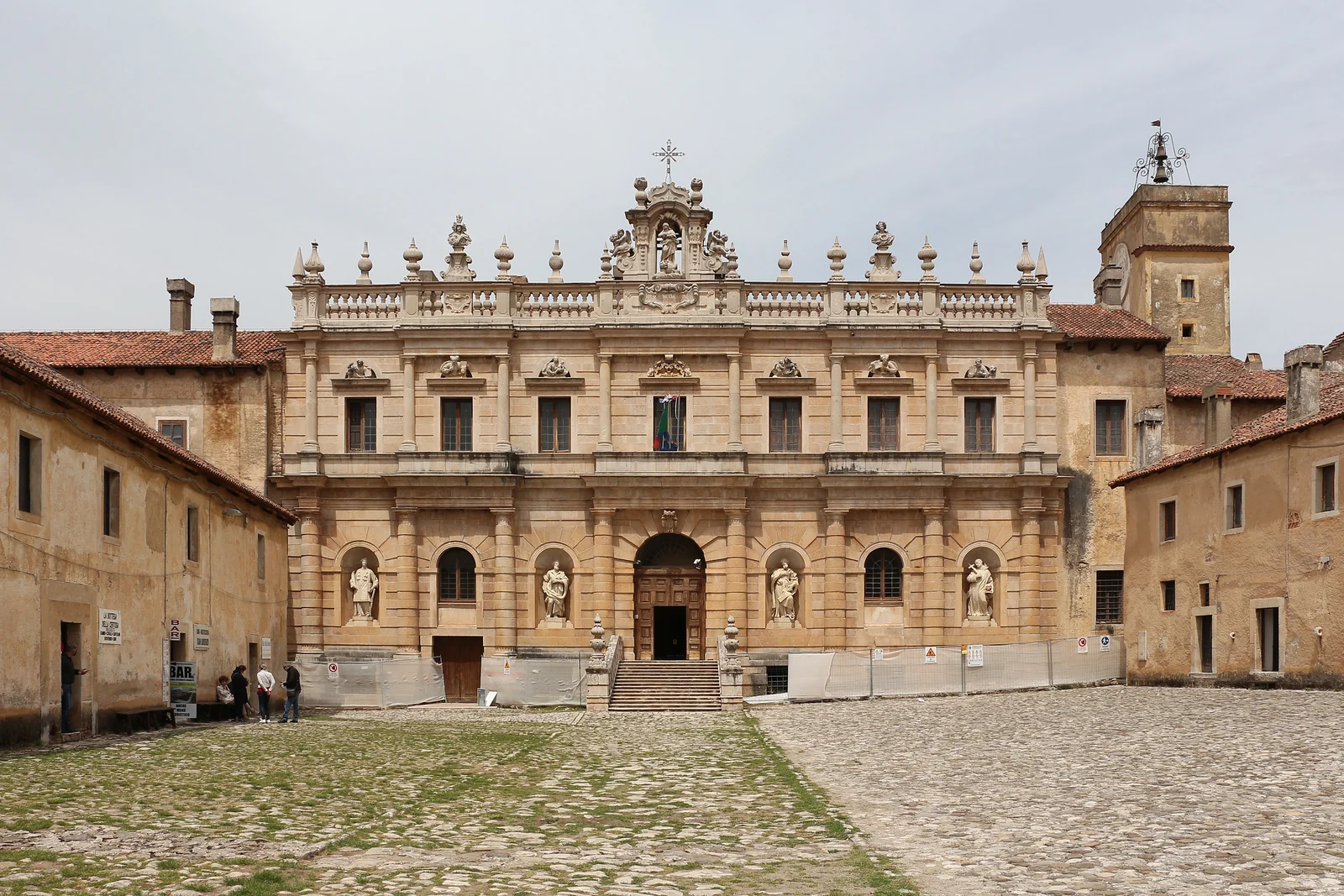
Photo: Bernard Gagnon / Wikimedia Commons — CC BY 4.0 · Resized and converted to WebP.
The municipality at a glance
Padula is a municipality in the province of Salerno, in Campania. Its ISTAT code is 065087. On 1 January 2025 it had 4,819 residents. The municipal territory covers 67.11 km² and ranges from 453 to 1,498 metres above sea level; the town hall stands at about 695 metres.
According to the council, the town stands on two hills of the Vallo di Diano, at 699 metres, and the river Tanagro runs along the boundary with Sassano. The name comes from the Latin “paludem”, marsh, after the marsh that once covered the plain below. Padula is classified in seismic zone 1, the highest (PCM ordinance 3274 of 20 March 2003).
Sources: ISTAT, Codici statistici delle unità amministrative territoriali: elenco dei comuni al 21 febbraio 2026 · ISTAT, Popolazione residente per età, sesso e stato civile al 1° gennaio 2025 (POSAS) · ISTAT, Principali statistiche geografiche sui comuni: superficie e altimetria al 31 dicembre 2021 · Comune di Padula — Territorio: Geografia fisica di Padula nel Vallo di Diano · Comune di Padula — Territorio: Origini del nome
History
The town council traces Padula’s origins to ancient Cosilinum, probably founded by the Oenotrians: a stretch of its walls survives in the Civita area, higher up than today’s centre. At Valle Pupina, bronze vessels and Greek-style pottery of the sixth century BC have been found. The territory passed to the Lucanians and then to the Romans; with the Via Popilia-Annia, which linked it to Paestum and Velia, it became a Roman municipium in 89 BC.
The finds from the cemeteries of Padula and Sala Consilina, about 1,500 tombs, are in the Provincial Archaeological Museum of Western Lucania, founded in 1957 inside the Certosa. According to the Ministry of Culture, the Padula cemetery stands out for its Attic Greek vases of excellent quality, which made it possible to date and classify the burials.
In the Fonti district rose the early Christian baptistery, built, according to the council, at the behest of Pope Marcellus I, who gave his name to the church and the settlement, Marcellianum; destroyed in the sixth century, perhaps during the Gothic War, it was rebuilt in the twelfth century and dedicated to St John the Baptist. Early in the tenth century the ancient town was abandoned after Saracen raids; the first core of today’s town dates, again according to the council, from the late ninth or the first decades of the tenth century.
From 1296 Padula was a fief of the Sanseverino family, the pivot of its history until the Risorgimento. In 1306 Tommaso Sanseverino, Count of Marsico, began the Certosa below the town, on a grange bought from the abbey of Montevergine and already dedicated to St Lawrence. The main transformations date from the mid-sixteenth century, after the Council of Trent, and work went on into the nineteenth century. According to the account first given in 1640 by the priest and writer Camillo Tutini, on 10 August 1535 Emperor Charles V, returning from his victory at Tunis, stopped at the Certosa.
In 1799 a liberty tree was raised in front of the Certosa. The Carthusians left Padula in 1807, during the French decade, and the artistic and library holdings were almost entirely dispersed. In 1857 Carlo Pisacane’s Sapri expedition ended tragically between Padula and Sanza, and the same year an earthquake damaged the town. The Certosa was declared a national monument in 1882; in the First World War it served as a camp for deserters and prisoners, and restoration began in 1982.
In the twentieth century economic hardship drove many people from Padula to the Americas. Before them, the family of Giuseppe “Joe” Petrosino had left: born in Padula on 30 August 1860, he emigrated to New York at 13. Back in Italy to investigate the links between the American and Sicilian Mafia, he passed through Padula before going on to Palermo, where he was murdered on 12 March 1909.
Sources: Comune di Padula — Territorio: Storia · Comune di Padula — Luoghi: Il borgo · Ministero della cultura — Luoghi della cultura: Museo archeologico provinciale della Lucania occidentale (aggiornato il 30 maggio 2024) · Comune di Padula — Luoghi: Il battistero di San Giovanni in Fonte · Padula Sistema Museo (sito dei musei di Padula, collegato dal Comune) — La Certosa di San Lorenzo · Ministero della cultura — Luoghi della cultura: Certosa di San Lorenzo, Padula (ultimo aggiornamento 30 ottobre 2026) · Comune di Padula — Eventi: Carlo V e la Frittata dalle Mille Uova (8-10 agosto 2023) · Padula Sistema Museo — Il museo civico multimediale · Comune di Padula — Luoghi: Casa Museo Giuseppe Petrosino
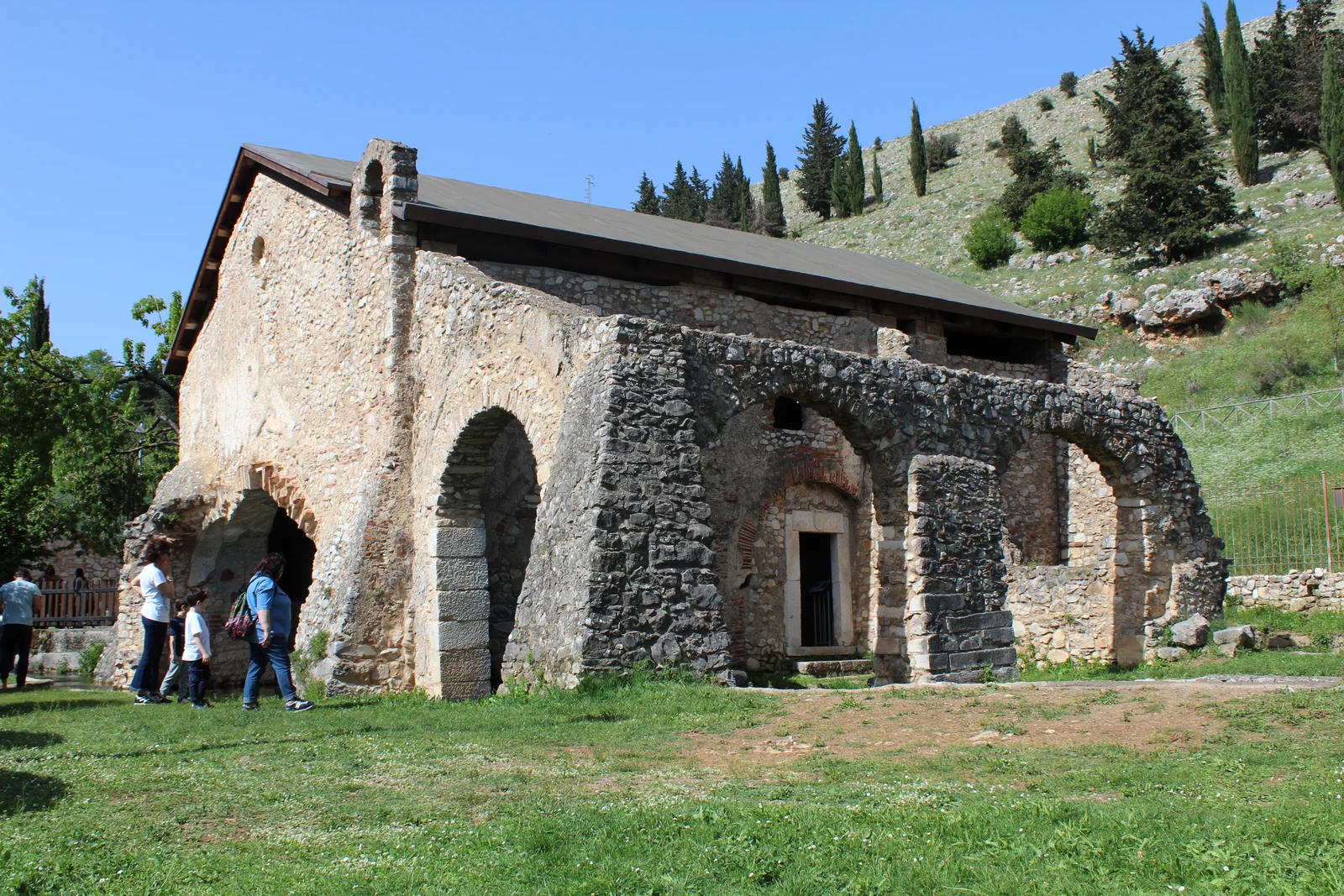
Photo: FrancyT18 / Wikimedia Commons — CC BY-SA 4.0 · Resized and converted to WebP.
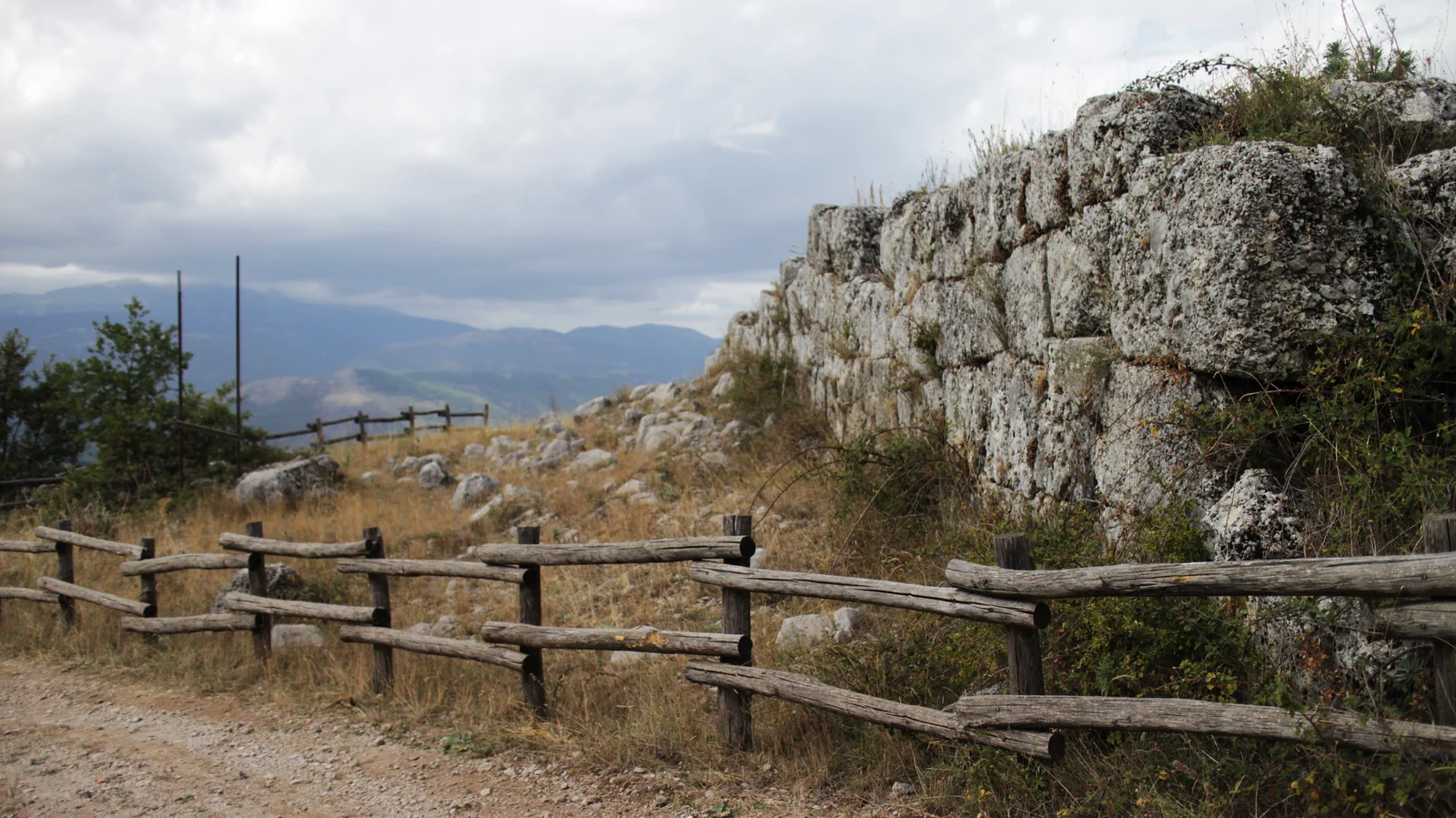
Photo: Lorenzoilbiondo / Wikimedia Commons — CC BY-SA 4.0 · Resized and converted to WebP.
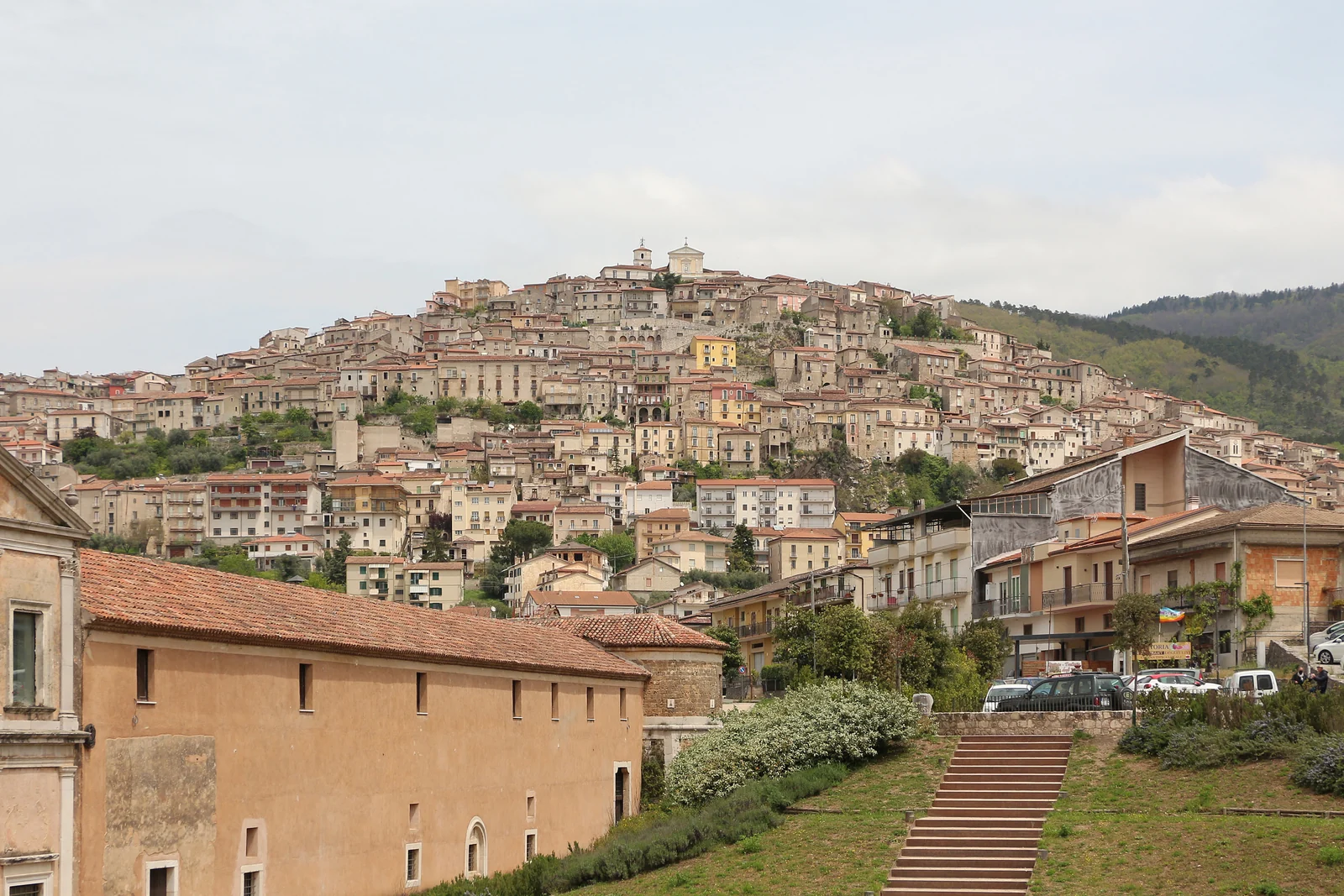
Photo: Bernard Gagnon / Wikimedia Commons — CC BY 4.0 · Resized and converted to WebP.
What to see
The Certosa follows the plan of the order founded in 1084 by St Bruno: the lower house, with storerooms, granaries, stables and laundries, belonged to the lay brothers, who did the manual work and dealt with the outside world; the upper house, kept apart, was the fathers’ enclosure, the realm of silence. The walled park, the shared garden of more than 20 hectares, is planted with vines and cereals, with hedges, fruit trees, laurels and cypresses.
You enter through the outer court, a large rectangular courtyard with the sixteenth-century façade in local stone and paired Doric columns, enriched in the Baroque age with statues and pinnacles. The guest-house cloister has a fountain in the middle and the clock tower above its loggia. The church, with a single nave and five chapels on the right, is divided by a wall into two parts, with two choirs; the door is dated 1374, the gilded stuccoes are by the lay brother Francesco Cataldi and the high altar in scagliola and mother-of-pearl is attributed to G. D. Vinaccia.
The route set out by the Ministry also takes in the sacristy, the treasury, the chapter house, the old cemetery, the founder’s chapel, the refectory, the kitchen, the prior’s quarters, a cell and the procurators’ cloister, with a stone fountain of a dolphin and sea creatures. The stone spiral staircase, held only by a ridge cut into the steps, climbs to the library, which keeps its majolica floor and about two thousand volumes of the tens of thousands it once held.
The great cloister, begun in 1583 over an earlier one, rises on two levels with a cup-shaped fountain of 1640 at its centre; the elliptical double staircase, lit by seven large windows, was the last work the fathers saw finished before the suppressions. Some of the cells display the contemporary art collection of the “Le Opere e i Giorni” exhibitions (2002-2004), devised by Achille Bonito Oliva. The Certosa also houses the Provincial Archaeological Museum of Western Lucania, with finds from the tenth century BC to the sixth century AD.
In the town, the baptistery of San Giovanni in Fonte: the 1985-1987 restoration uncovered a square building with round arches and, at its centre, the font fed by a perennial spring, with frescoes of the sixth-seventh and ninth centuries and reused Roman pieces. The Joe Petrosino house museum keeps the original rooms with the family furniture; the multimedia civic museum, in Palazzo Brando since 2014, tells the story of Padula and the Vallo di Diano from prehistory to the nineteenth century. The council also points to the surname museum, on the ground floor of an eighteenth-century house, and the teaching museum of Padula stone, devoted to the stonemasons.
Sources: Padula Sistema Museo (sito dei musei di Padula, collegato dal Comune) — La Certosa di San Lorenzo · Ministero della cultura — Luoghi della cultura: Certosa di San Lorenzo, Padula (ultimo aggiornamento 30 ottobre 2026) · Ministero della cultura — Luoghi della cultura: Museo archeologico provinciale della Lucania occidentale (aggiornato il 30 maggio 2024) · Comune di Padula — Luoghi: Il battistero di San Giovanni in Fonte · Padula Sistema Museo — La casa museo di Joe Petrosino · Padula Sistema Museo — Il museo civico multimediale · Comune di Padula — Luoghi: Il borgo
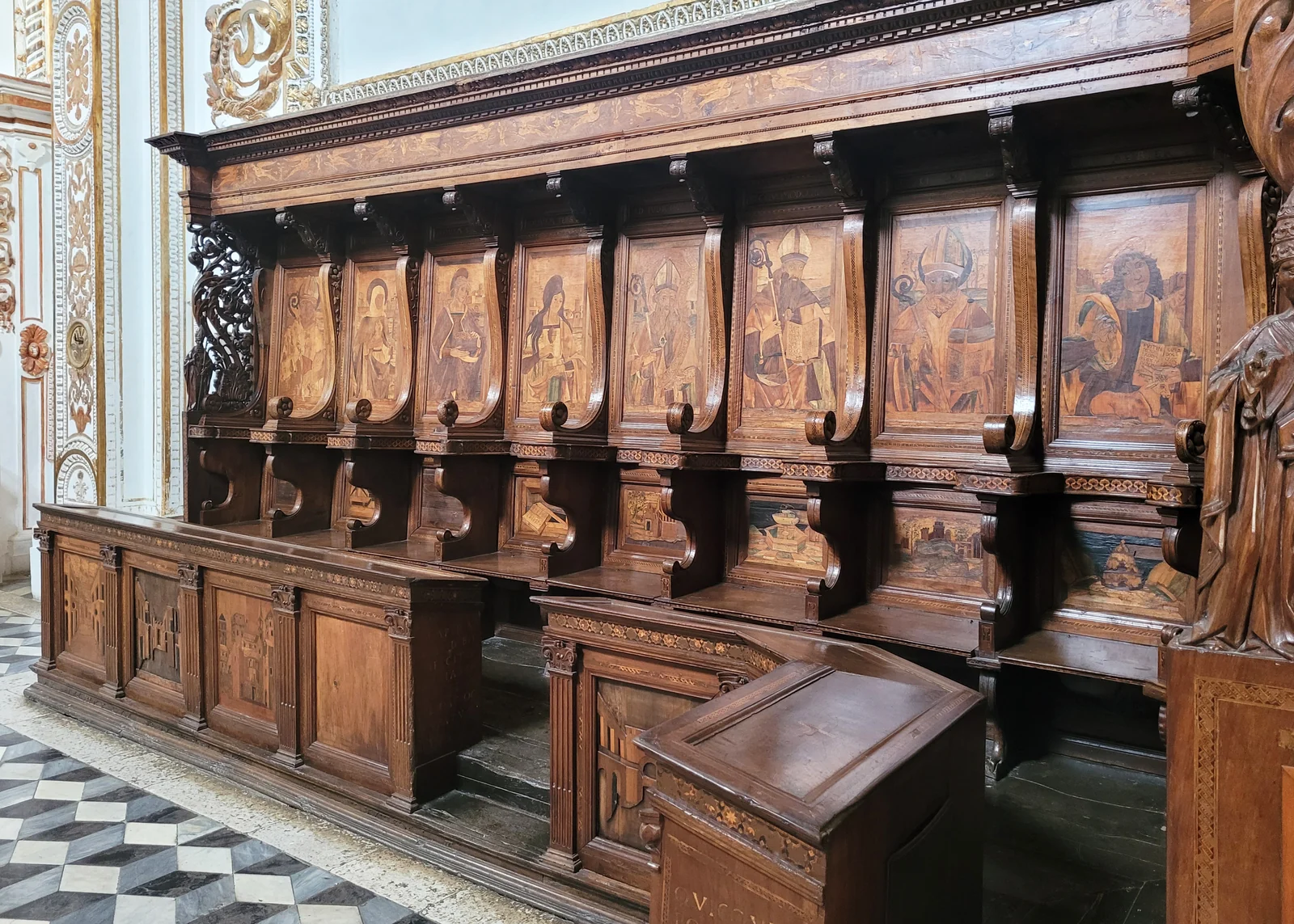
Photo: Bernard Gagnon / Wikimedia Commons — CC BY 4.0 · Resized and converted to WebP.
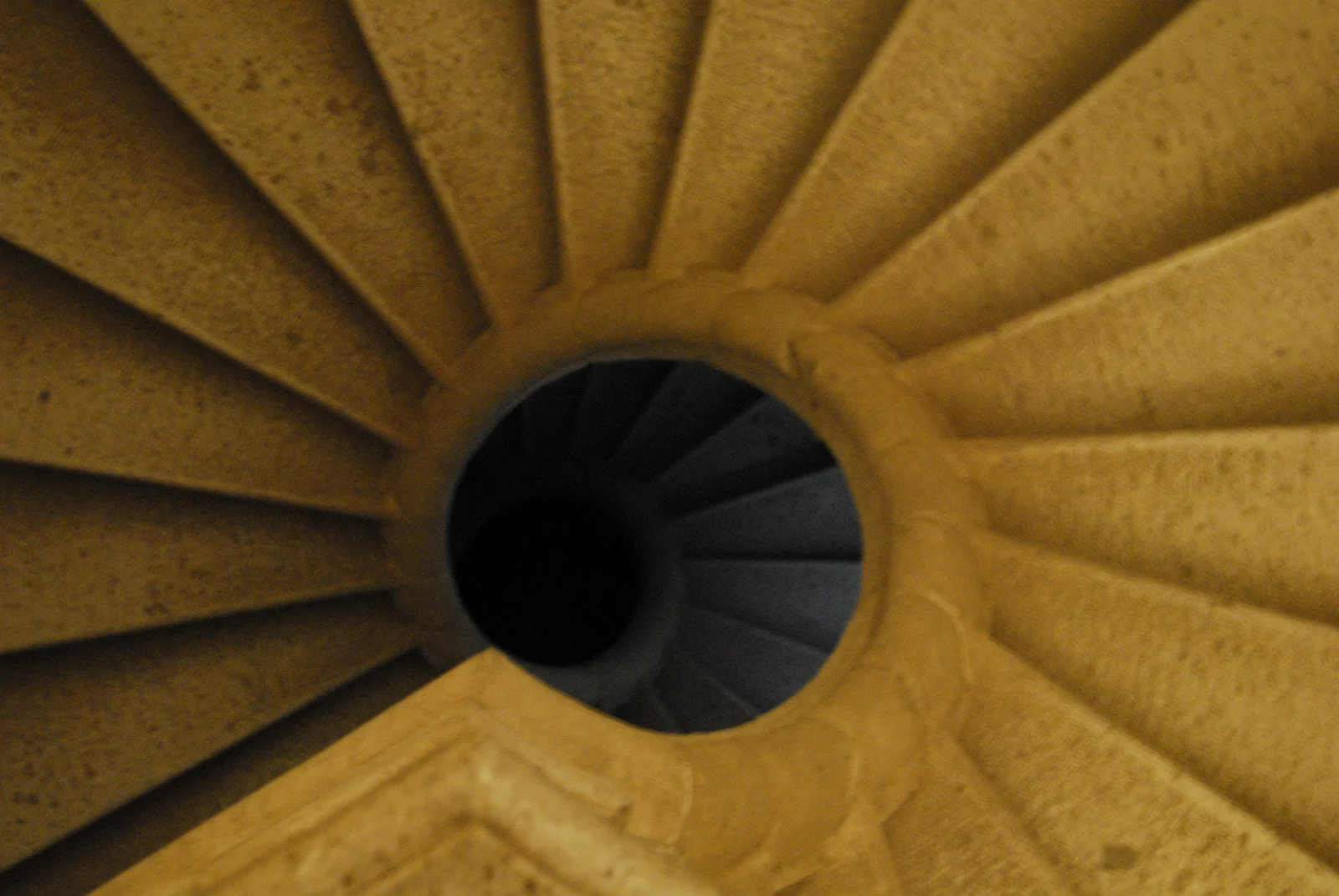
Photo: Edimarco / Wikimedia Commons — CC BY-SA 3.0 · Resized and converted to WebP.
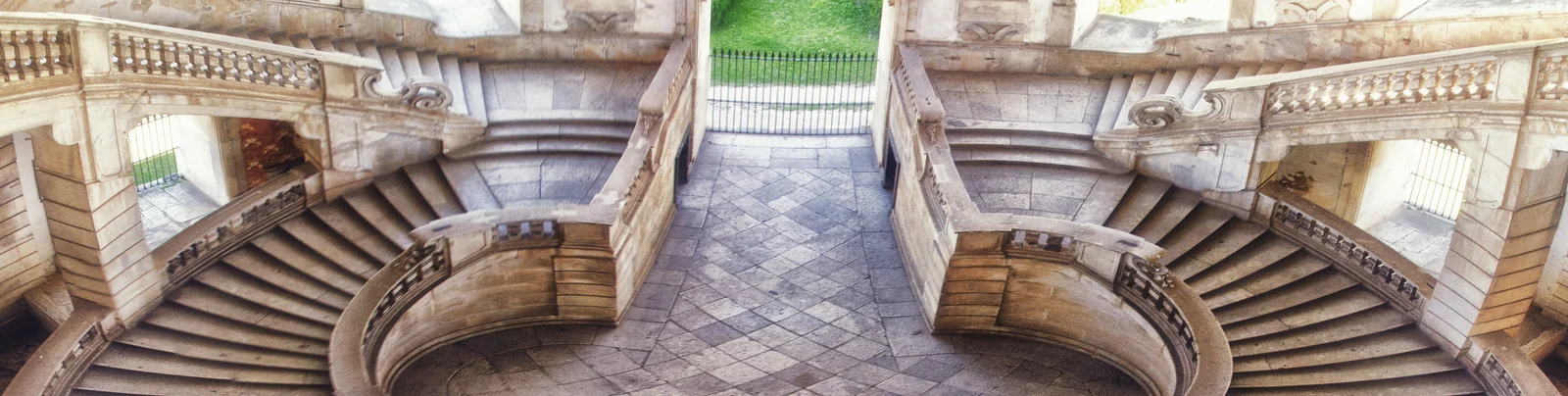
Photo: Francisp62 / Wikimedia Commons — CC BY-SA 4.0 · Resized and converted to WebP.
Food
The Certosa’s kitchen is one of the best-known rooms on the route: according to the Ministry of Culture it was probably a refectory adapted in the eighteenth century, with a frescoed barrel vault, stone work tables and a huge hood over the old boiler. The fathers’ refectory, a rectangular hall from the early eighteenth century, is on the same route.
The monks’ table is also linked to the thousand-egg omelette. The re-enactment of the welcome the Carthusians gave Charles V in 1535 is held every year in the second week of August: the council published the edition of 8 to 10 August 2023, at the Certosa.
Sources: Ministero della cultura — Luoghi della cultura: Certosa di San Lorenzo, Padula (ultimo aggiornamento 30 ottobre 2026) · Comune di Padula — Eventi: Carlo V e la Frittata dalle Mille Uova (8-10 agosto 2023)
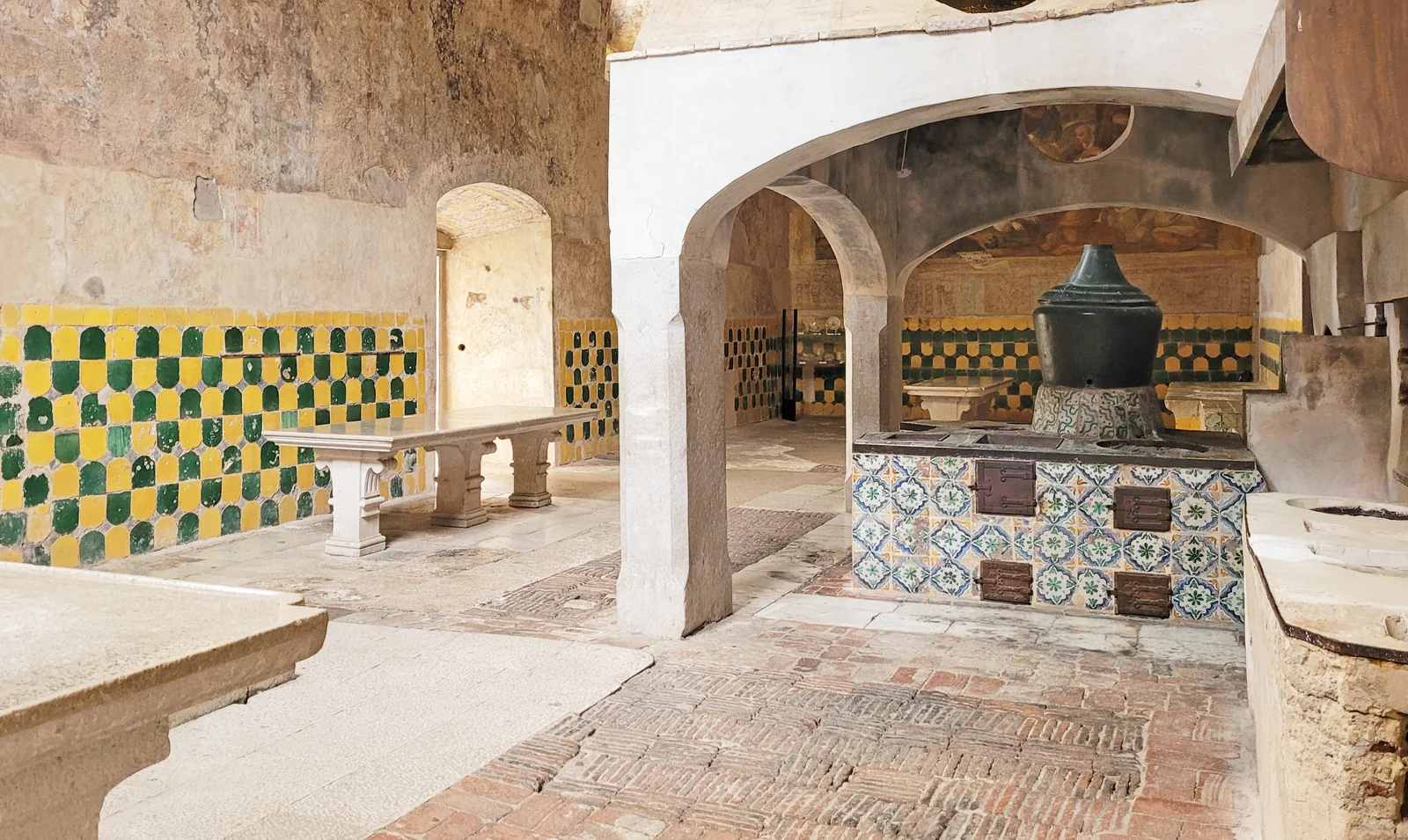
Photo: Bernard Gagnon / Wikimedia Commons — CC BY 4.0 · Resized and converted to WebP.
Experiences
The integrated “Certosa e Padula” ticket, in force since 1 June 2026, is valid for 48 hours and covers the upper house, the lower house and the park of the Certosa, the multimedia civic museum, the Joe Petrosino house museum and the baptistery of San Giovanni in Fonte; the civic museum and the baptistery open on booking. The Certosa is part of the Campania Artecard scheme.
The library, at the top of the spiral staircase, can be visited only on certain mornings set by the Ministry, and with precise rules: rubber-soled shoes so as not to wear down the steps and, in the room with the majolica floor, visitors go in their socks. Cell number 6 houses the “Museo dei ricordi”; groups must book at least a week ahead with the regional museums directorate.
At the multimedia civic museum the visit is a game: you open drawers, doors and desks to see films and documents on failed revolutions, brigands and maps, and in the last room, full of mirrors, visitors act as the jury in the trial of Carlo Pisacane and his “three hundred young and strong”. In the Joe Petrosino house museum you see the bedroom with the cradle and the dining room laid with the family tableware; upstairs, films and documents from the Rai Teche archives on the history of the fight against the Mafia.
According to the council, the Certosa, the baptistery and the Petrosino house museum are accessible to people with disabilities, with wheelchairs and ramps available.
Sources: Ministero della cultura — Luoghi della cultura: Certosa di San Lorenzo, Padula (ultimo aggiornamento 30 ottobre 2026) · Padula Sistema Museo — Biglietti e orari (aggiornata il 21 luglio 2026) · Comune di Padula — Luoghi: Museo civico multimediale · Padula Sistema Museo — Il museo civico multimediale · Padula Sistema Museo — La casa museo di Joe Petrosino · Comune di Padula — Luoghi: Certosa di Padula · Comune di Padula — Luoghi: Il battistero di San Giovanni in Fonte · Comune di Padula — Luoghi: Casa Museo Giuseppe Petrosino
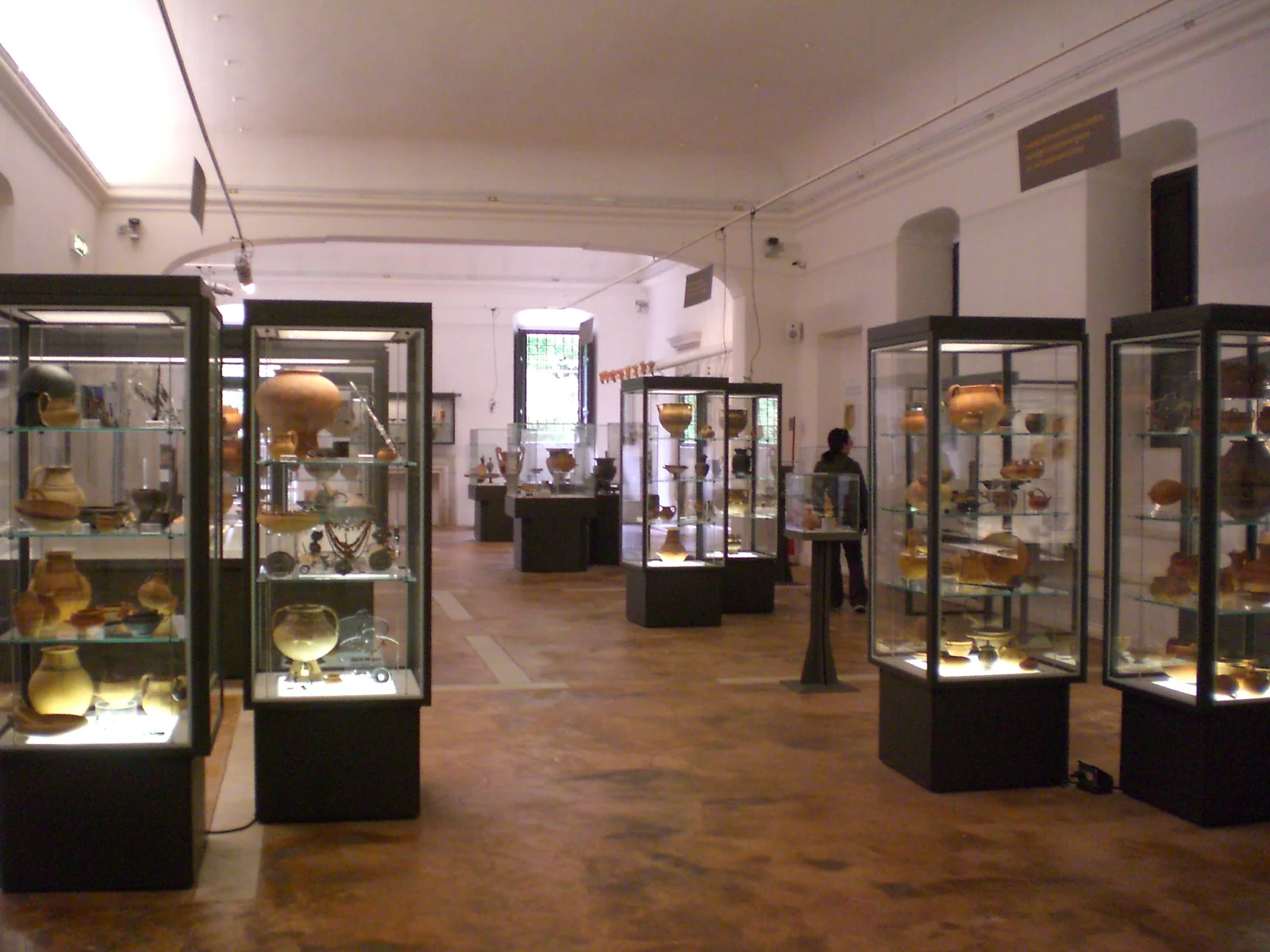
Photo: Liberotag73 / Wikimedia Commons — CC BY-SA 3.0 · Resized and converted to WebP.
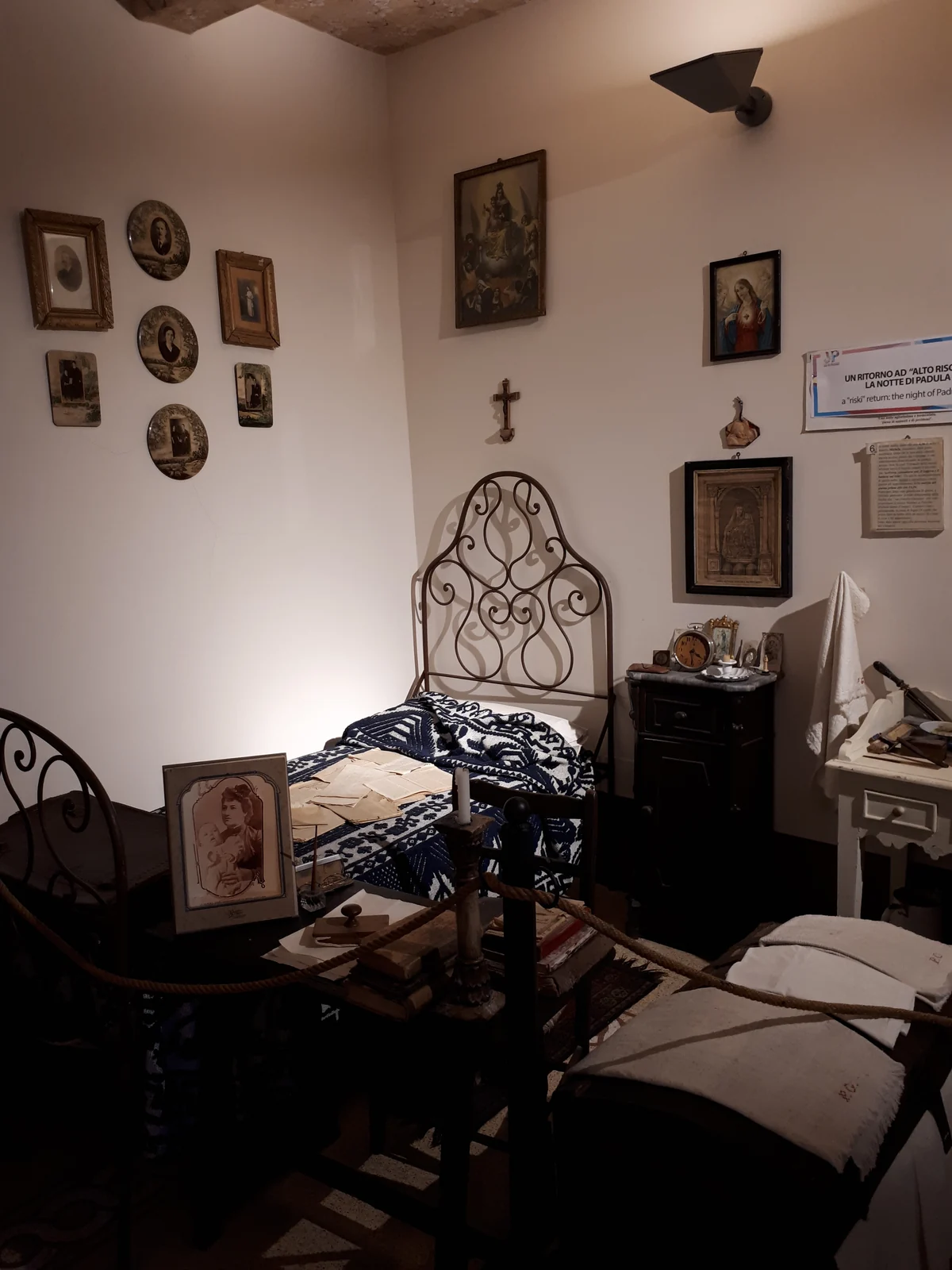
Photo: Jaspar74 / Wikimedia Commons — CC BY-SA 4.0 · Resized and converted to WebP.
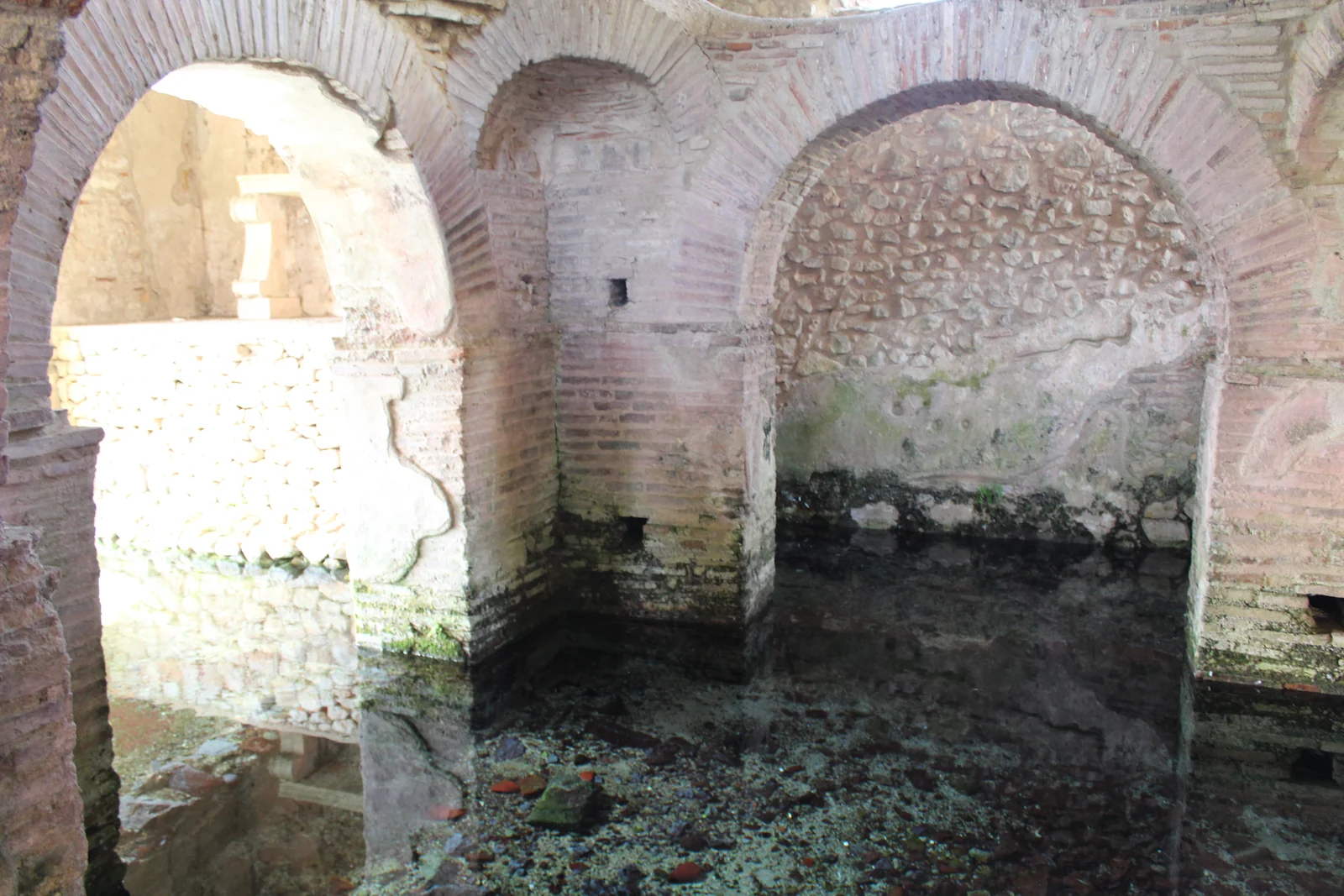
Photo: FrancyT18 / Wikimedia Commons — CC BY-SA 4.0 · Resized and converted to WebP.
When to go
August is the busiest month. The council’s calendar lists, for 2023, the Padula MOB Festival – Music beyond barriers on 4 August and, from 8 to 10 August, “Charles V and the thousand-egg omelette” at the Certosa, the re-enactment held every year in the second week of the month.
In September the Certosa hosts the Joe Petrosino International Prize, awarded every year to magistrates, police officers and members of civil society who have stood out in the fight against the Mafia; 2023 was its twentieth edition, with a visit to the house museum and the ceremony in the Certosa’s conference hall.
Padula’s patron saint is St Michael: the council notes that a hermitage and a church are linked to his cult.
Sources: Comune di Padula — Eventi: Padula MOB Festival – Musica oltre le Barriere (4 agosto 2023) · Comune di Padula — Eventi: Carlo V e la Frittata dalle Mille Uova (8-10 agosto 2023) · Comune di Padula — Eventi: Premio Internazionale «Joe Petrosino» (2023) · Comune di Padula — Territorio: Storia
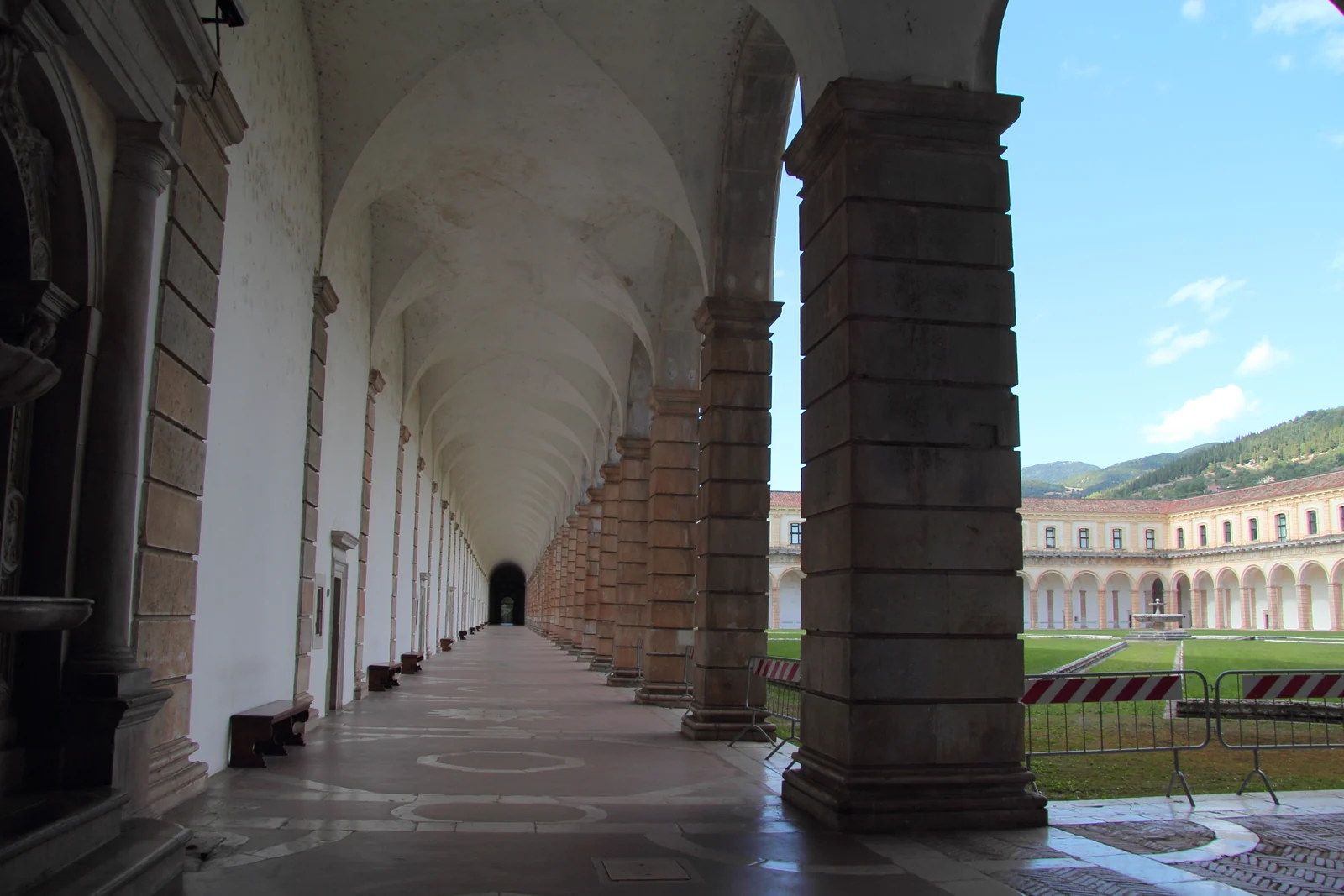
Photo: Garassino / Wikimedia Commons — CC BY-SA 4.0 · Resized and converted to WebP.
Getting there
By car you arrive from the A2 motorway, Padula-Buonabitacolo exit, as indicated by the website of Padula’s museums. The nearest railway stations given by the same site are Salerno and Sapri, linked to Padula by bus; the international airport of reference is Naples. The page dates from 2018: bus lines and timetables should be checked with the transport companies.
The Certosa lies below the town, at Viale Certosa 1; the baptistery is in the Fonti district, Via San Giovanni 1; the Joe Petrosino house museum is at Via Giuseppe Petrosino 6, in the old centre, and the multimedia civic museum at Largo Municipio 7.
Sources: Padula Sistema Museo — Come arrivare (pagina del 2018) · Comune di Padula — Luoghi: Certosa di Padula · Comune di Padula — Luoghi: Il battistero di San Giovanni in Fonte · Comune di Padula — Luoghi: Casa Museo Giuseppe Petrosino · Comune di Padula — Luoghi: Museo civico multimediale
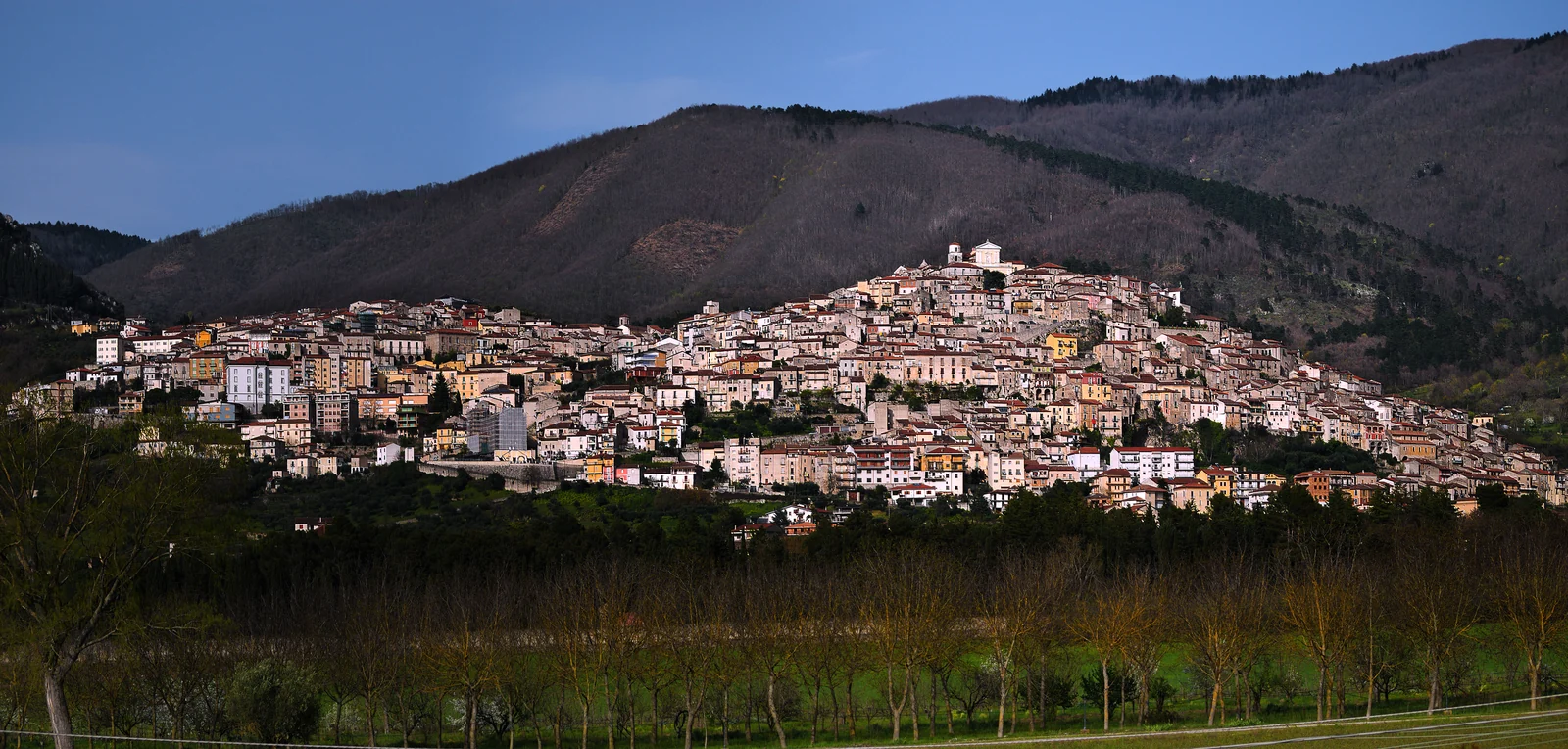
Photo: Acquario51 / Wikimedia Commons — CC BY-SA 4.0 · Resized and converted to WebP.
Accommodation in figures
In the Ministry of Tourism’s national database of accommodation (BDSR), on 12 October 2026, Padula had 25 establishments with a verified national identification code (CIN): 2 hotel-type establishments, 15 non-hotel establishments and 8 other establishments.
Sources: Ministero del Turismo – Banca Dati Strutture Ricettive (dashboard pubblica)
Nearby
Among the places Apulica already covers, the nearest are Grumento Nova (about 19 km) and Viggiano (about 20 km): straight-line distances between the centres of the municipal territories.
In the Vallo di Diano, the cemetery of Sala Consilina yielded most of the finds in the Certosa’s archaeological museum, and Carlo Pisacane’s expedition ended at Sanza in 1857; the river Tanagro marks the boundary with Sassano.
Sources: ISTAT/Openpolis, confini comunali della regione Campania (CC BY 4.0, ISTAT/Openpolis) · Ministero della cultura — Luoghi della cultura: Museo archeologico provinciale della Lucania occidentale (aggiornato il 30 maggio 2024) · Padula Sistema Museo — Il museo civico multimediale · Comune di Padula — Territorio: Geografia fisica di Padula nel Vallo di Diano
The town council
The official website of the Comune di Padula, registered in IndicePA, the index of the digital addresses of Italy’s public administrations, is the reference for the town council’s offices, opening hours and news. Its address is listed among the sources of this section.
The town hall is at Largo Municipio 1; the switchboard answers on 0975 778711 and the email address is [email protected]. Ticketing and visitor services for the Certosa and the civic museums are let out by the council under concession, within a heritage agreement with the Ministry of Culture’s regional museums directorate for Campania; the concession was awarded to Consorzio Aion by a decision of 31 December 2025.
Sources: Comune di Padula, sito istituzionale · IndicePA (AgID), Indice dei domicili digitali delle pubbliche amministrazioni: dataset Enti · Comune di Padula — Eventi: Padula MOB Festival – Musica oltre le Barriere (4 agosto 2023) · Comune di Padula — Avviso per il direttore dell’esecuzione della concessione della biglietteria della Certosa di San Lorenzo e dei musei civici (29 aprile 2026)
Where to stay
In the municipality of Padula the national database of the Ministry of Tourism lists 25 accommodation businesses with a verified CIN code: 2 hotels, 15 other licensed accommodation and 8 other types such as B&Bs and private rentals.
Licensed businesses from the official list of accommodation named as the source in this section. Where the list gives it, the property's official identification code appears next to its name: the national CIN code, or the code assigned by the Region or by the body that keeps the list. Private individuals are not listed. This list is the official census of licensed businesses, not a list of Apulica partners: to stay in Padula you do not have to check one property after another yourself; write to Apulica and we look for the stay that suits your journey, checking availability and conditions before any confirmation.
GRAND HOTEL CERTOSA
Hotel · ★★★★
Regional code (CUSR) 15065087ALB0009
agriturismo l'ulivo
Farm stay
Regional code (CUSR) 15065087EXT0021
AFFITTACAMERE DAL TRAMONTO ALL'ALBA
Guest rooms
Regional code (CUSR) 15065087EXT0025
CASA CONSTANTINOPOLI
Holiday house
Regional code (CUSR) 15065087EXT0026
VILLA COSILINUM
Hotel · ★★★
Regional code (CUSR) 15065087ALB0017
AIA ANTICA
Farm stay
Regional code (CUSR) 15065087EXT0001
AFFITTACAMERE NOEMI 'S HOUSE
Guest rooms
Regional code (CUSR) 15065087EXT0027
ANTICO CASALE
Farm stay
Regional code (CUSR) 15065087EXT0002
D'MORO
Guest rooms
Regional code (CUSR) 15065087EXT8EDF
CA' DEL CONTE AGRIHOUSE
Farm stay
Regional code (CUSR) 15065087EXT0004
First the places that presented themselves to Apulica, the latest first; then one place of each type in turn, by official category and stars, then by name. No position is paid for.
All 23 entries in alphabetical order
Page 1 of 3
| Name | Type | Identification code |
|---|---|---|
| AFFITTACAMERE DAL TRAMONTO ALL'ALBA | Guest rooms | Regional code (CUSR) 15065087EXT0025 |
| AFFITTACAMERE NOEMI 'S HOUSE | Guest rooms | Regional code (CUSR) 15065087EXT0027 |
| agriturismo l'ulivo | Farm stay | Regional code (CUSR) 15065087EXT0021 |
| AIA ANTICA | Farm stay | Regional code (CUSR) 15065087EXT0001 |
| ANTICO CASALE | Farm stay | Regional code (CUSR) 15065087EXT0002 |
| CA' DEL CONTE AGRIHOUSE | Farm stay | Regional code (CUSR) 15065087EXT0004 |
| CASA CONSTANTINOPOLI | Holiday house | Regional code (CUSR) 15065087EXT0026 |
| D'MORO | Guest rooms | Regional code (CUSR) 15065087EXT8EDF |
| DA ZIA GIO' | Farm stay | Regional code (CUSR) 15065087EXT0020 |
| DEMETRA AZIENDA AGRICOLA | Farm stay | Regional code (CUSR) 15065087EXT0023 |
Ask Apulica for a stay in Padula We reply shortly, within a few hours at most, with a proposal for you to consider.
Sources: Ministero del Turismo – Banca Dati Strutture Ricettive (dashboard pubblica), 2026-10-12
YOUR JOURNEY
How to shape a journey here
To include Padula in a trip, or to ask for a guide or a transfer, you can write to Apulica with the button below.
Plan your tripKeep exploring
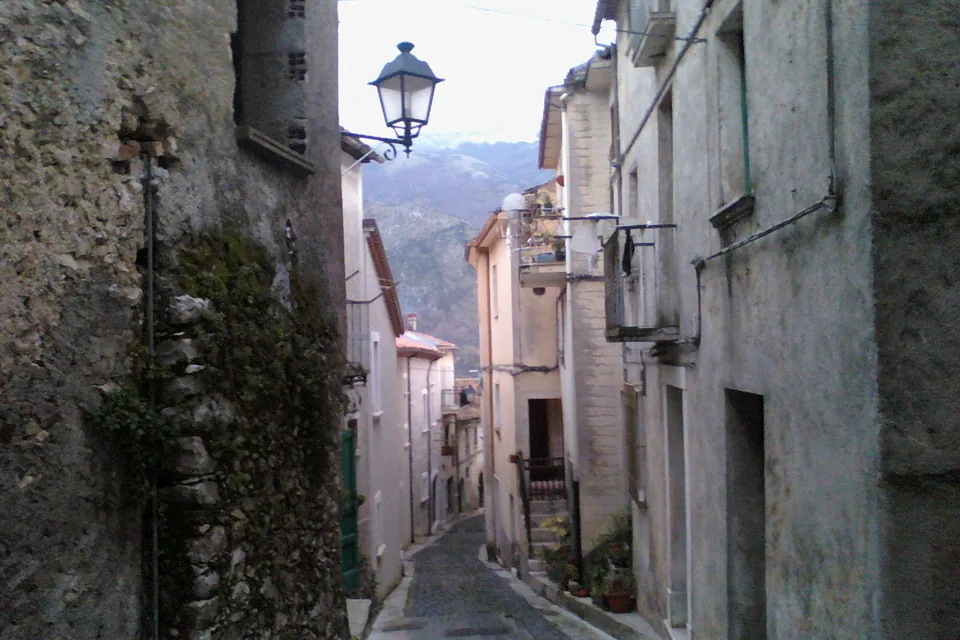
Sala Consilina
Sala Consilina (SA), Campania: 12,149 residents, 59.69 km². The official facts of the municipality, its town council website and its registered accommodation.
Read the guide →Photo: Autore su Wikimedia Commons / Wikimedia Commons — CC BY 2.5 · Resized and converted to WebP.

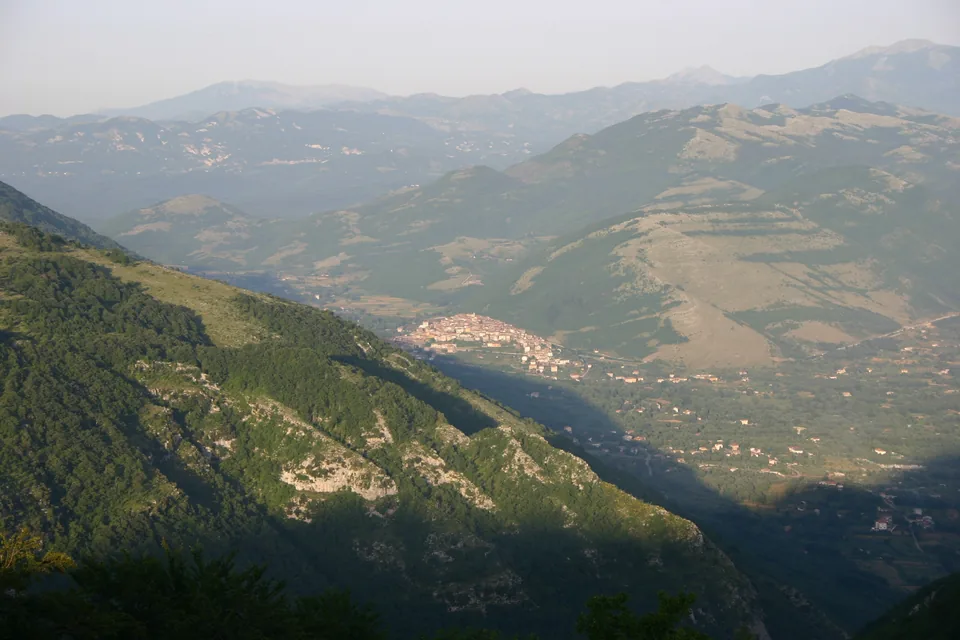
Teggiano
Teggiano (SA), Campania: 7,011 residents, 61.87 km². The official facts of the municipality, its town council website and its registered accommodation.
Read the guide →Photo: Lusb / Wikimedia Commons — Public domain · Resized and converted to WebP.

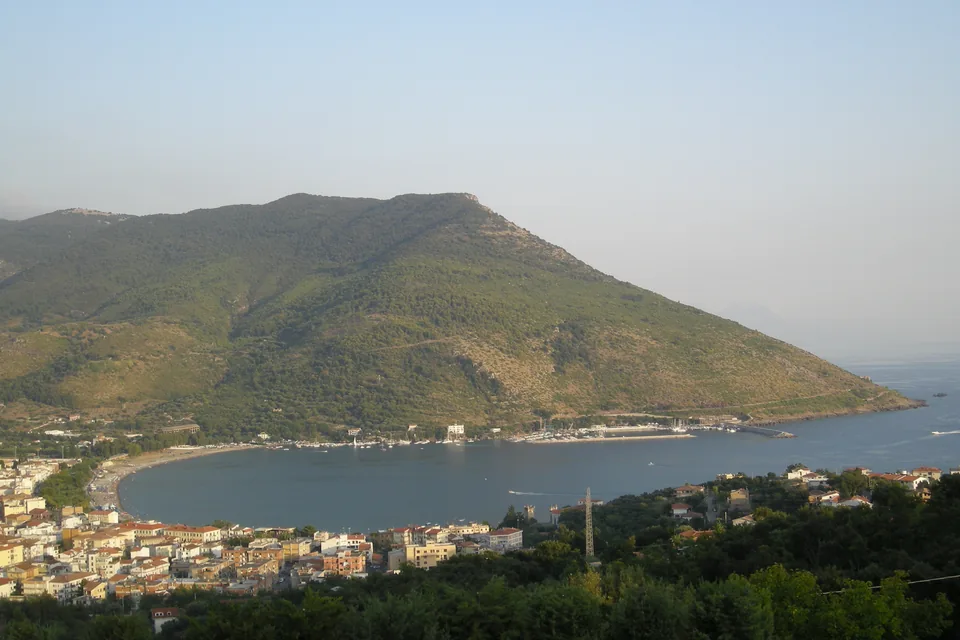
Sanza
Sanza (SA), Campania: 2,341 residents, 128.74 km². The official facts of the municipality, its town council website and its registered accommodation.
Read the guide →Photo: Asergente / Wikimedia Commons — CC BY-SA 3.0 · Resized and converted to WebP.

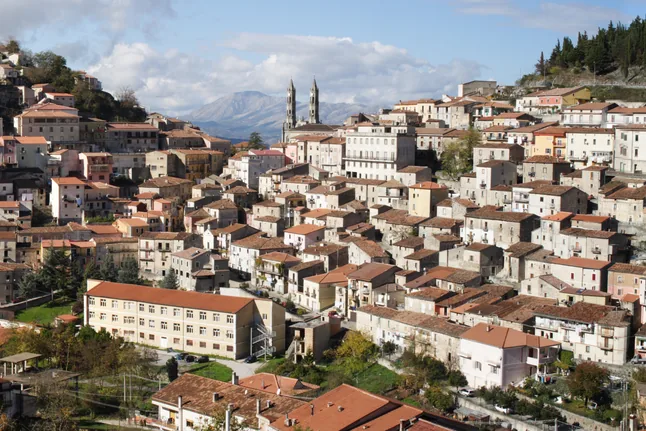
Sapri
Sapri (SA), Campania: 6,327 residents, 14.29 km². The official facts of the municipality, its town council website and its registered accommodation.
Read the guide →Photo: Riccardo Pesce / Wikimedia Commons — CC BY-SA 3.0 · Resized and converted to WebP.

Montesano sulla Marcellana
Montesano sulla Marcellana (SA), Campania: 6,230 residents, 110.22 km². The official facts of the municipality, its town council website and its registered accommodation.
Read the guide →Photo: Pietro De Fina / Wikimedia Commons — Public domain · Resized and converted to WebP.

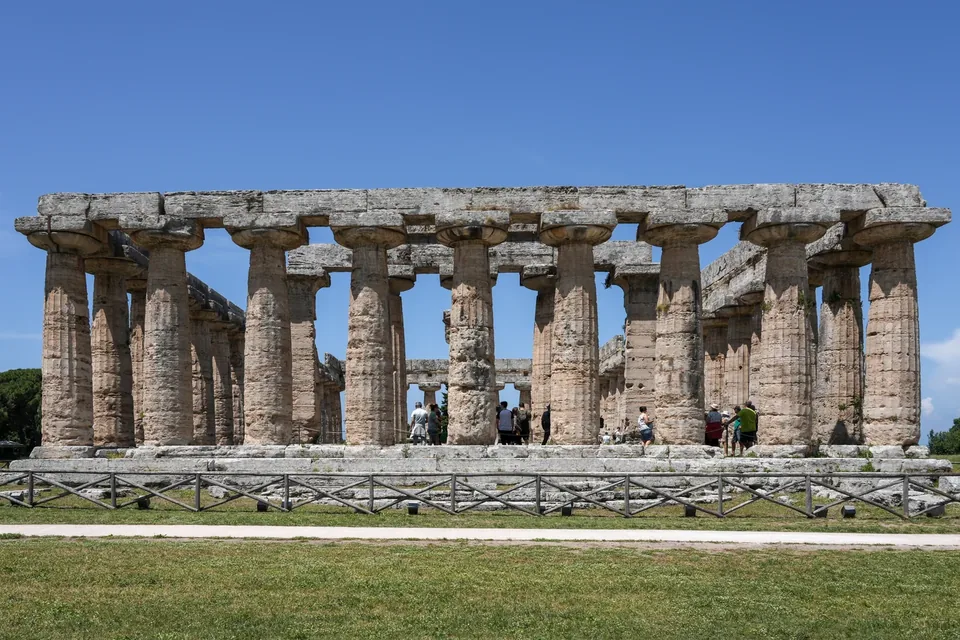
Cilento
The Cilento, Vallo di Diano and Alburni National Park: coastline, karst mountains, Paestum, Velia and the Padula Charterhouse.
Read the guide →Photo: PaestumPaestum / Wikimedia Commons — CC BY-SA 4.0 · Resized and converted to WebP.

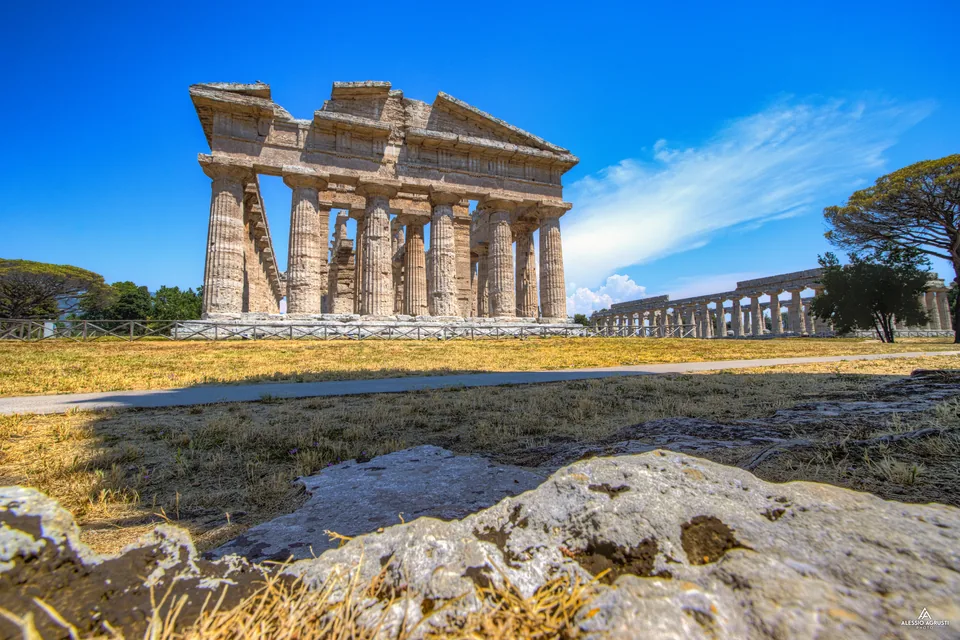
Capaccio Paestum
Capaccio Paestum (SA), Campania: 22,410 residents, 113.55 km². The official facts of the municipality, its town council website and its registered accommodation. The Doric temples of Paestum, the National Archaeological Museum with the Tomb of the Diver, the Greek and Lucanian walls, the old village of Capaccio, PDO buffalo mozzarella from Campania and the PGI Paestum artichoke.
Read the guide →Photo: AlessioAg89 / Wikimedia Commons — CC BY-SA 4.0 · Resized and converted to WebP.

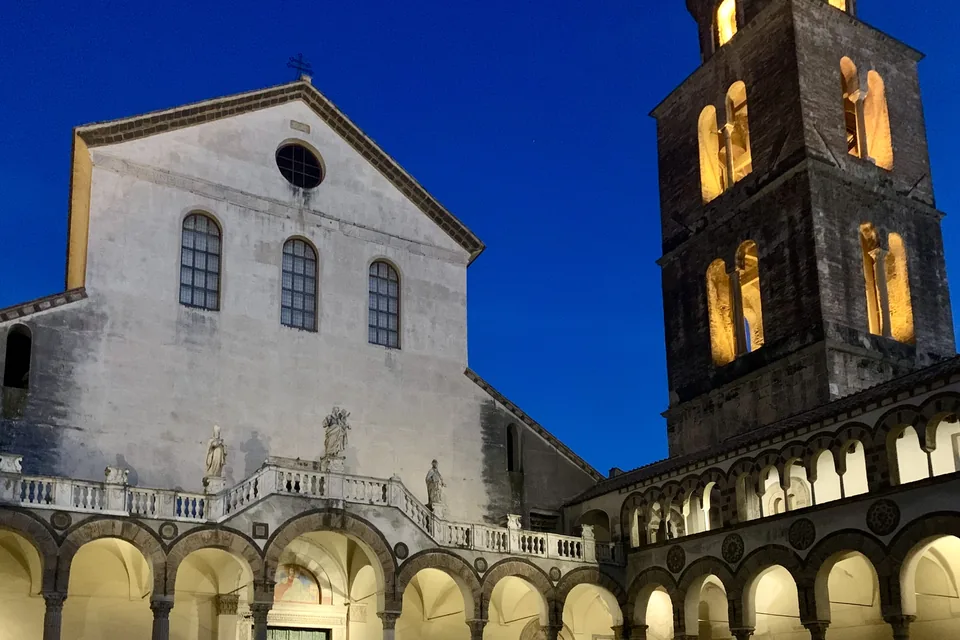
Salerno
The provincial capital on the gulf between the Amalfi Coast and Paestum: the Norman cathedral, Arechi castle, the Minerva Garden, the Teatro Verdi, the seafront, Saint Matthew and the winter Luci d’Artista.
Read the guide →Photo: Emanuele Oliveto / Wikimedia Commons — CC BY-SA 4.0 · Resized and converted to WebP.

“Come to Padula as a guest, not as a tourist: that is how these places truly let you know them.”