
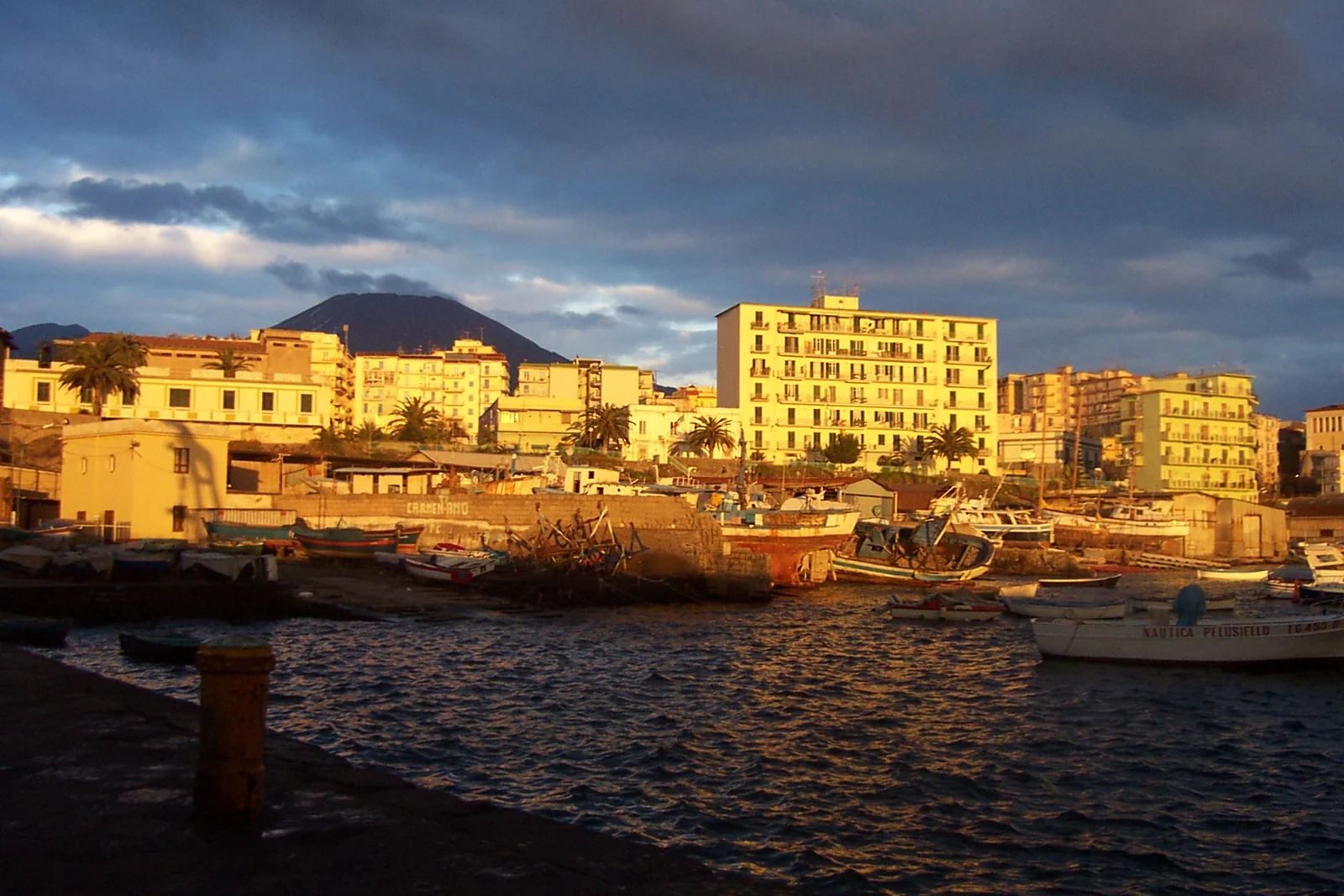

Why go
Torre del Greco lies on the shore of the Gulf of Naples, between the sea and Vesuvius. The Vesuvius National Park describes it as the most populous town in the protected area, the ancient Turris Octavia, known for its coral industry, and writes that for more than 200 years it has been recognised as the world capital of artistic coral and cameo work.
Here Giacomo Leopardi, a guest at the Villa delle Ginestre in the last years of his life, wrote “La ginestra” and “Il tramonto della luna”. Here Vesuvius has struck many times: in 1794 the lava crossed the town and ran into the sea, and the parish priest Vincenzo Romano, now a saint, led the rebuilding. And here every June, eight days after Corpus Christi, the Feast of the Four Altars fills the squares with altars and carpets of coloured sawdust.
Sources: Parco nazionale del Vesuvio — I Comuni vesuviani: Torre del Greco · Parco nazionale del Vesuvio — Agricoltura e artigianato · Fondazione Ente Ville Vesuviane — Villa delle Ginestre · Università Federico II, DiSTAR — Vesuvio, il ciclo 1631-1944: il Settecento · Vatican News — Biografie dei santi canonizzati il 14 ottobre 2018 (in francese) · Parco nazionale del Vesuvio — Cultura e tradizioni
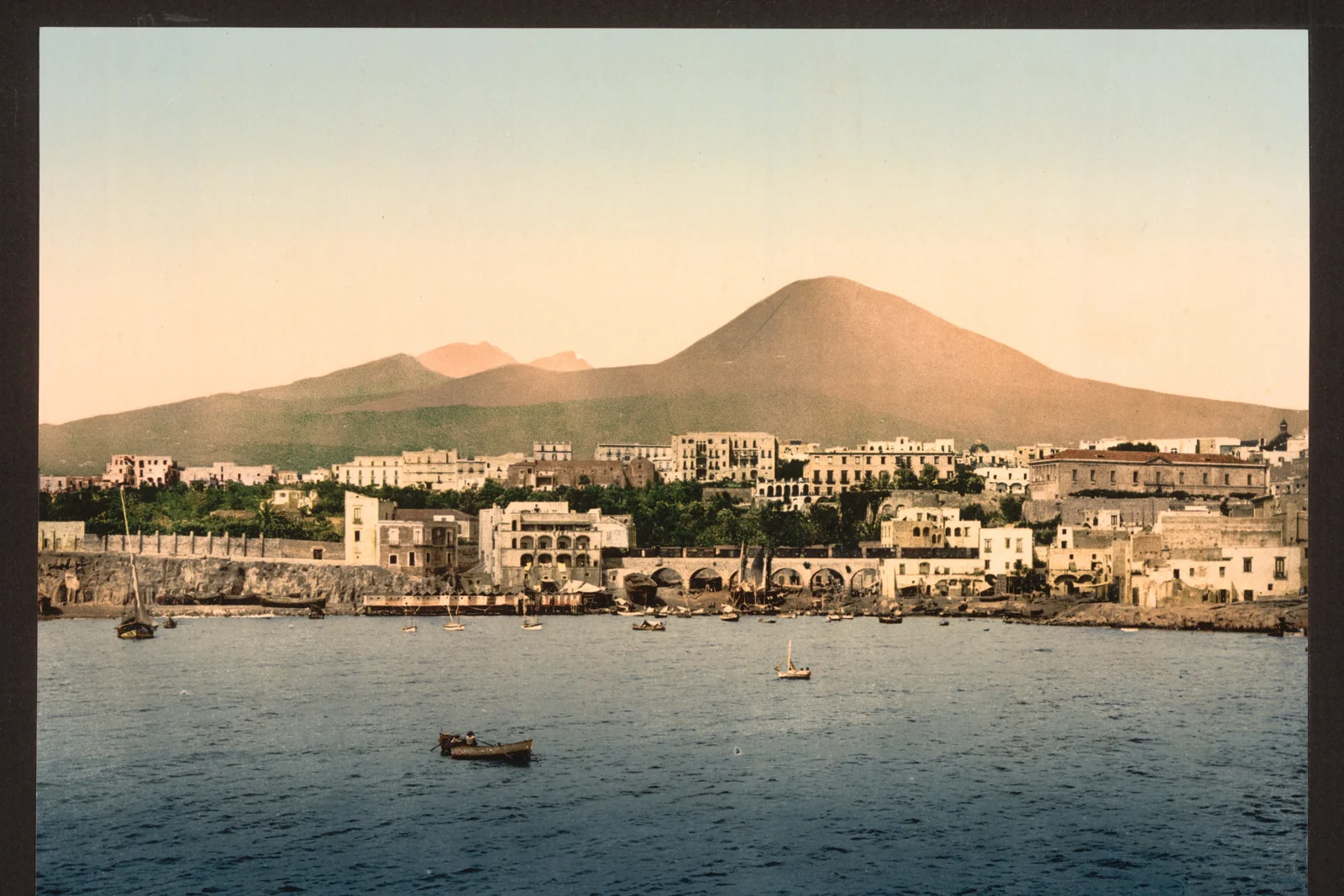
Photo: Photochrom Print Collection / Wikimedia Commons — Public domain · Cropped, resized and converted to WebP.
The municipality at a glance
Torre del Greco is a municipality in the Metropolitan City of Naples, in Campania. Its ISTAT code is 063084. On 1 January 2025 it had 79,397 residents. The municipal territory covers 30.67 km² and ranges from -1 to 1,161 metres above sea level; the town hall stands at about 24 metres.
Torre del Greco is the most populous town of the Vesuvius National Park and one of the 25 municipalities of the red zone of the national civil protection plan for Vesuvius.
Sources: ISTAT, Codici statistici delle unità amministrative territoriali: elenco dei comuni al 21 febbraio 2026 · ISTAT, Popolazione residente per età, sesso e stato civile al 1° gennaio 2025 (POSAS) · ISTAT, Principali statistiche geografiche sui comuni: superficie e altimetria al 31 dicembre 2021 · Parco nazionale del Vesuvio — I Comuni vesuviani: Torre del Greco · Dipartimento della Protezione Civile — Vesuvio
History
The area was inhabited in Roman times. In the Sora district, about 3.6 km south-east of Herculaneum, the Ministry of Culture describes a large seaside villa with a 150-metre front on the sea, part of the system of leisure villas around the gulf; excavated systematically between 1797 and 1798 on the orders of the hereditary prince Francis of Bourbon, son of King Ferdinand IV and the future King Francis I of the Two Sicilies, it yielded frescoes from a bedroom with large panels in Egyptian blue, now detached.
The Palazzo Baronale, now the town hall, began in the late Middle Ages as the fortified residence of the Carafa, the local barons; according to the town council it was restored after 1631 and, once feudalism was abolished in the nineteenth century, passed to the municipality. The Vesuvius National Park recalls the “baronial ransom” of 1699, which the town still celebrates with the Feast of the Four Altars.
On 16 December 1631, at 7 a.m., Vesuvius began an eruption with a column 13 to 19 km high. The next day, writes the Vesuvius Observatory of INGV, pyroclastic flows ran down the flanks of the volcano and reached the sea at Torre del Greco and Torre Annunziata, cutting off the escape routes of the people living on the coast. It is the eruption taken as the reference for today’s emergency plan.
Between 15 and 24 June 1794 vents opened on the western flank, between 480 and 320 metres above sea level: the lava flowed towards Torre del Greco, the population fled, and the flow reached the sea and advanced into it for more than 100 metres (University of Naples Federico II, DiSTAR). Vincenzo Romano, born in Torre del Greco in 1751 and parish priest of Santa Croce, became the driving force of the material and religious rebuilding of the town; he died in 1831, was beatified by Paul VI in 1963 and canonised in 2018.
Between 1631 and 1944 Vesuvius went through 18 cycles of activity; since the 1944 eruption it has been quiescent with a closed conduit, with low seismicity and fumarolic activity. The Civil Protection Department gives the alert level as green and lists Torre del Greco among the 25 municipalities of the red zone of the national plan. In its October 2026 bulletin the Vesuvius Observatory recorded 92 earthquakes, with a maximum magnitude of 1.9, and no ground deformation attributable to magmatic sources.
In the twentieth century Enrico De Nicola, the first President of the Italian Republic, chose as his retreat the Liberty-style villa built in 1928 in a pine wood on the slopes of Vesuvius, with the inscription “Inveni Portum” at the entrance.
Sources: Ministero della Cultura — Villa Sora · Comune di Torre del Greco — Palazzo Baronale (Municipio) · Parco nazionale del Vesuvio — Cultura e tradizioni · INGV, Osservatorio Vesuviano — L’eruzione del 1631 · Università Federico II, DiSTAR — Vesuvio, il ciclo 1631-1944: il Seicento · Università Federico II, DiSTAR — Vesuvio, il ciclo 1631-1944: il Settecento · Comune di Torre del Greco — Notte Sacra dedicata a San Vincenzo Romano (ottobre 2025) · Vatican News — Biografie dei santi canonizzati il 14 ottobre 2018 (in francese) · INGV, Osservatorio Vesuviano — Vesuvio, storia eruttiva · Dipartimento della Protezione Civile — Vesuvio · INGV, Osservatorio Vesuviano — Vesuvio, stato attuale (bollettino di ottobre 2026) · Comune di Torre del Greco — Villa De Nicola · Università di Bologna, IRIS — Coralini, «Villa Sora. Scavi in situ et alibi: riletture e nuovi dati», in Extra moenia. Abitare il territorio della regione vesuviana, Roma, Scienze e Lettere, 2021, pp. 145-192 · Treccani, Dizionario Biografico degli Italiani, vol. 49 (1997) — S. De Majo, «Francesco I di Borbone, re delle Due Sicilie»
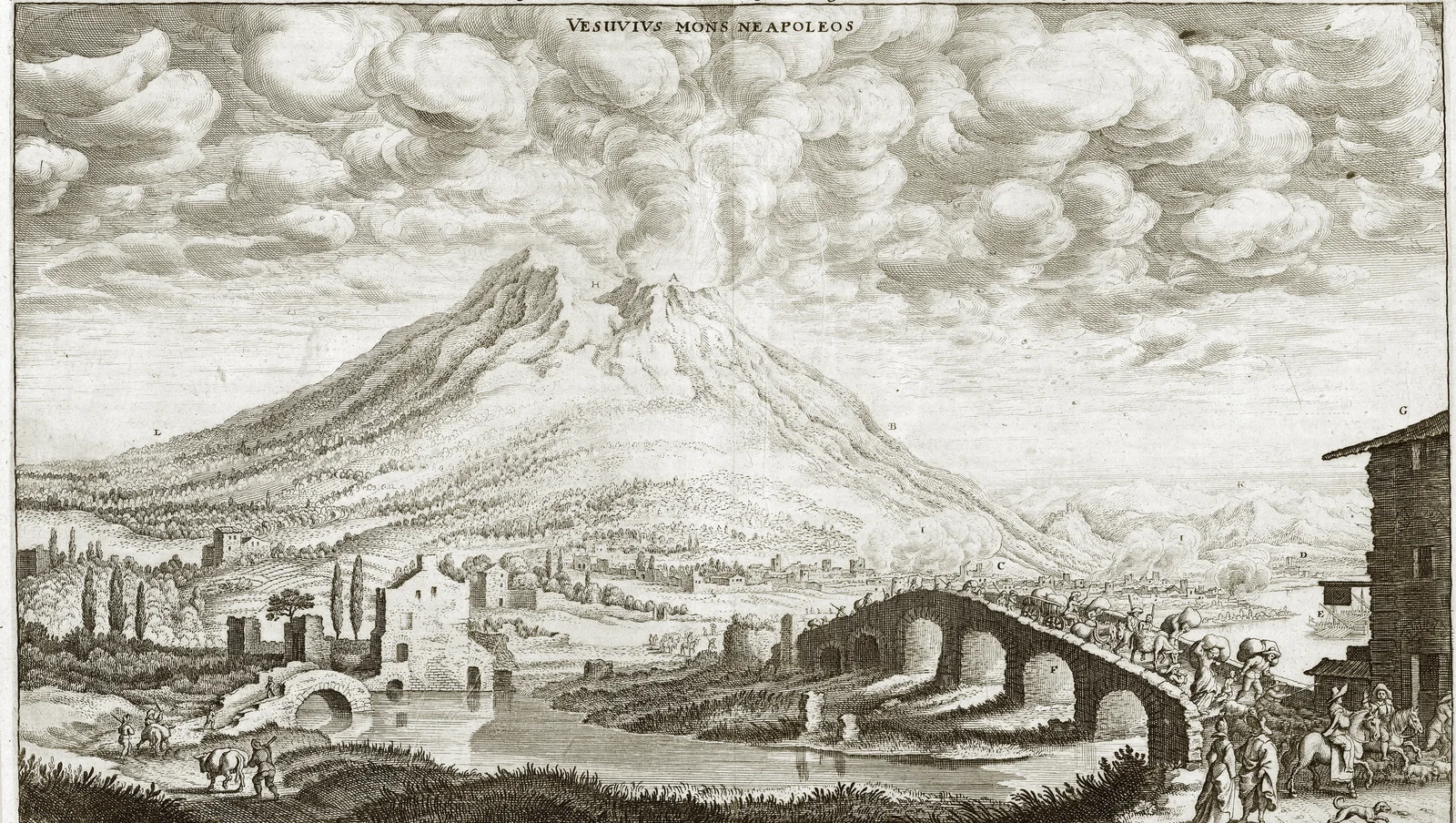
Photo: Matthäus Merian / Joachim von Sandrart the Elder / Wikimedia Commons — Public domain · Cropped, resized and converted to WebP.
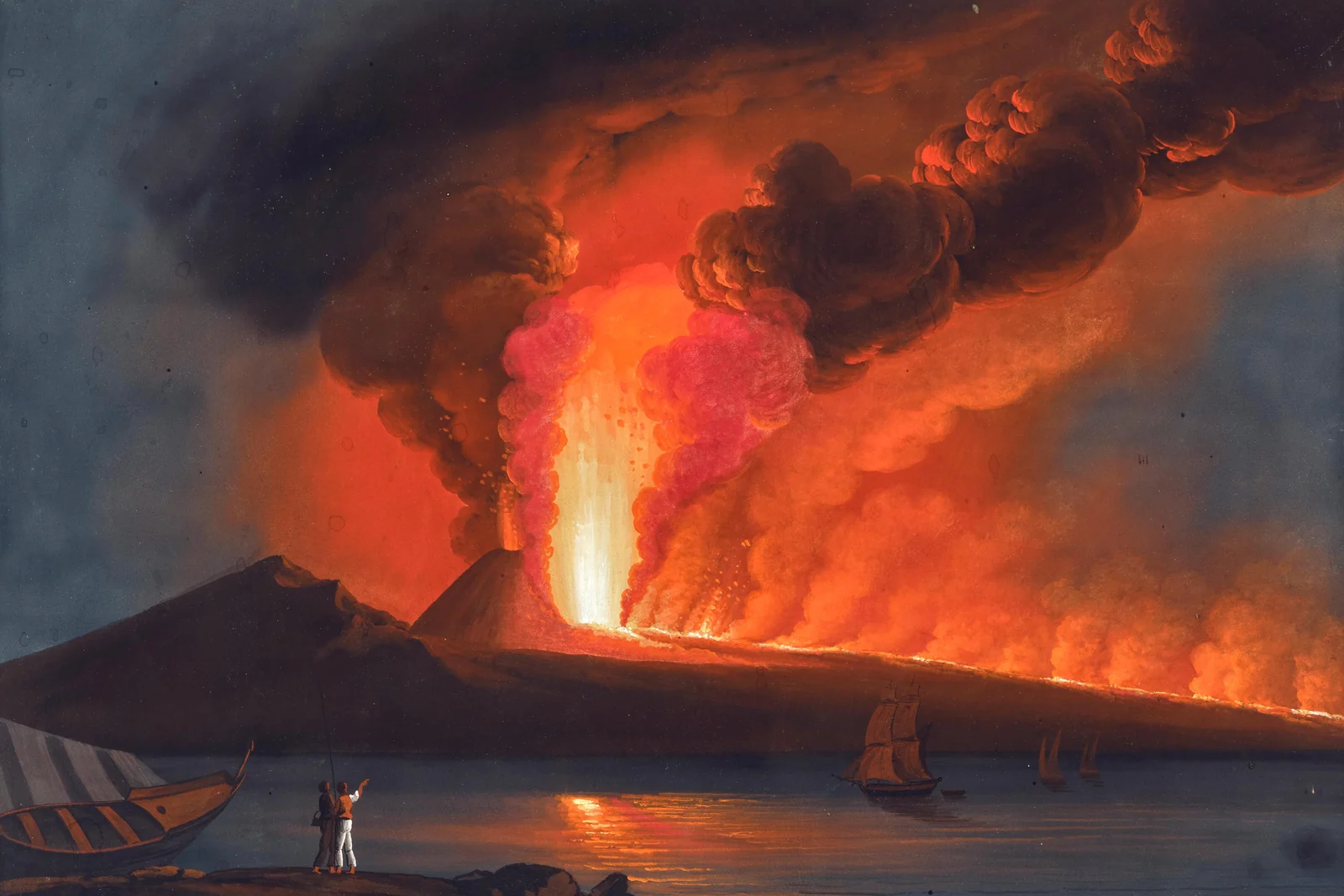
Photo: Unknown author / Wikimedia Commons — Public domain · Cropped, resized and converted to WebP.
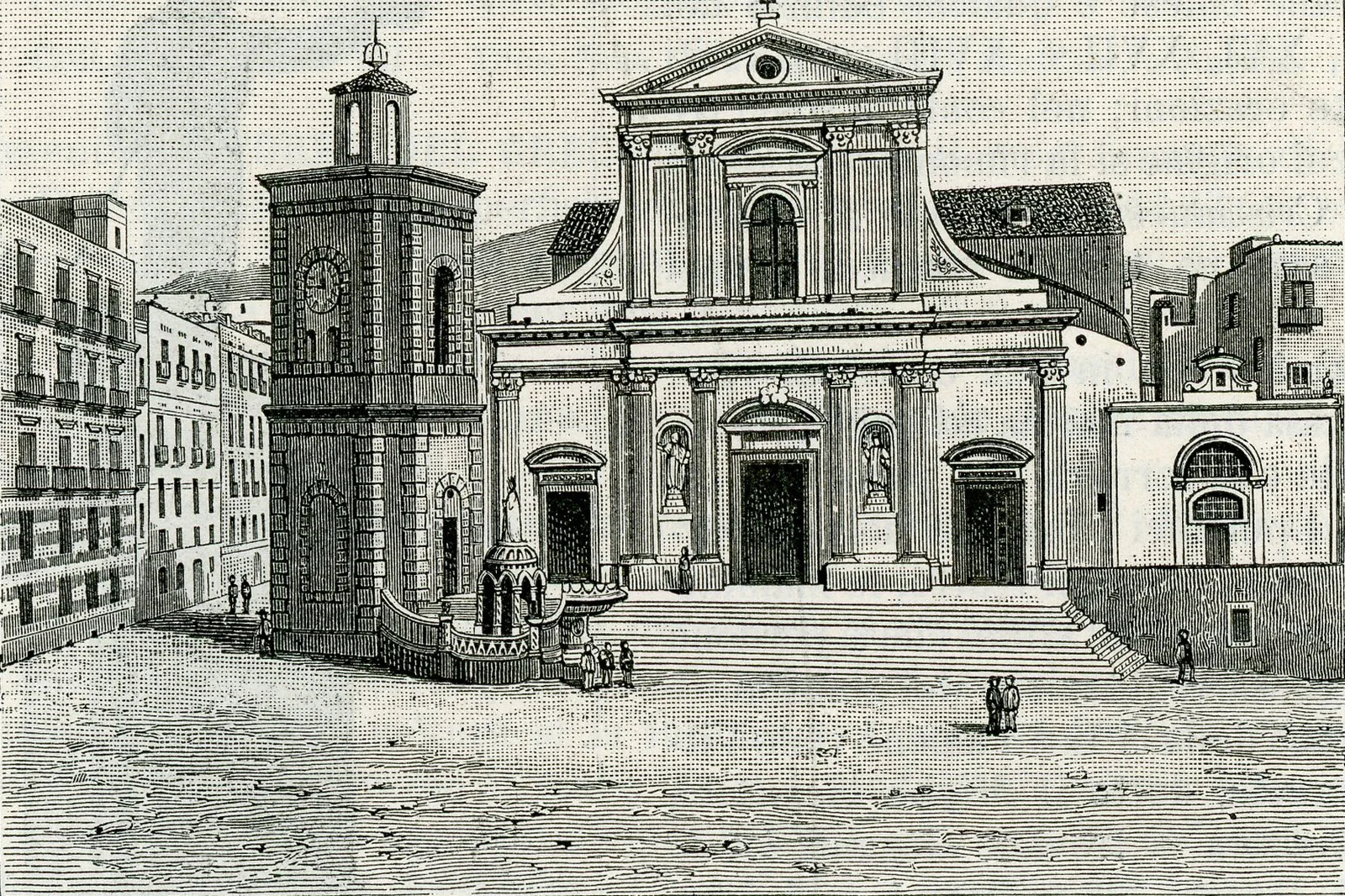
Photo: Unknown author / Wikimedia Commons — Public domain · Cropped, resized and converted to WebP.
What to see
The basilica of Santa Croce is the religious centre of the town, with the neoclassical façade that the Vesuvius National Park lists among the places to visit. For the Feast of the Four Altars the historic banner with the motto “Post fata resurgo” is raised on its bell tower. Near the sea stands Santa Maria di Portosalvo, the sailors’ church; in the centre, Santa Maria del Carmine, founded by the Carmelites in the seventeenth century, with a bell tower visible from afar.
Coral has two museums. Mac³, the “museum of art, coral, cameo and the town”, opened on 13 October 2025 in the former Santissima Trinità orphanage on Via Circumvallazione: the town council presents it as the world’s first virtual coral museum, with six sections, from coral and cameo in antiquity to coral around the world, built with about 1.5 million euros of European and regional funds. The Coral Museum of the “Francesco Degni” school, in the former Carmelite convent in Piazza Palomba, home of the art high school, was opened in 1932 by the headmaster Enrico Taverna: it shows work by students and masters in coral, mother-of-pearl, silver, tortoiseshell and lava stone, and many cameos, and can be visited only by booking, with students as guides.
The Villa delle Ginestre was built at the end of the seventeenth century by Canon Simioli. In 1826 Giuseppe Ferrigni married Enrichetta Ranieri, sister of Leopardi’s friend Antonio, and the poet stayed there in the last years of his life: the name comes from the poem he wrote there. The portico on three sides dates from the works of Antonio Carafa, heir from 1907. Since 1962 the villa has belonged to the University of Naples Federico II and is run by the Ente Ville Vesuviane Foundation, with the poet’s room and its furniture. On 18 November 2026 the Foundation’s page still carried a notice of closure for works until 30 June 2026: check before going. In 2026 the town council began widening the access road and building a parking area.
Torre del Greco is the last stretch of the Miglio d’Oro, the coastal strip now followed by state road 18 that runs from San Giovanni a Teduccio through San Giorgio a Cremano, Portici and Herculaneum, with 122 villas; since 1997 it has been a UNESCO biosphere reserve. In town the Park points to Palazzo Vallelonga, the Villa del Cardinale, Villa Porta and the epitaph in honour of Philip IV of Habsburg.
Villa Sora, the Roman villa by the sea, is in Via del Cimitero and has been managed by the Herculaneum Archaeological Park since 2023, which has signed a memorandum of understanding with the town council to promote it. Since April 2024 the excavation site can be visited free of charge on the first Sunday of every month with the Gruppo Archeologico Vesuviano ([email protected]).
In Largo Plebiscito the Palazzo Baronale houses the town hall and the council chamber. At Via Nazionale 601 Villa Macrina, named after Marchioness Macrina Palomba, has a garden with a view of Vesuvius and houses the “Enzo Aprea” municipal library, with almost 18,000 volumes, more than 2,000 of them antique. Villa De Nicola was entrusted to the town council in 2025 on a twenty-year loan, to become a museum and study centre.
Sources: Comune di Torre del Greco — Basilica di Santa Croce · Parco nazionale del Vesuvio — I Comuni vesuviani: Torre del Greco · Comune di Torre del Greco — Festa dei Quattro Altari: alzabandiera a Santa Croce (giugno 2025) · Comune di Torre del Greco — Chiesa di Santa Maria del Carmine · Comune di Torre del Greco — Inaugurato Mac³, il museo virtuale del corallo (13/10/2025) · Comune di Torre del Greco — Museo virtuale Mac³: inaugurazione lunedì 13 ottobre (2025) · IIS «Francesco Degni», Torre del Greco — Museo del Corallo · IIS «Francesco Degni», Torre del Greco — La storia · Fondazione Ente Ville Vesuviane — Villa delle Ginestre · Università degli Studi di Napoli Federico II — Villa delle Ginestre, Torre del Greco · Comune di Torre del Greco — Viabilità di accesso alla Villa delle Ginestre: allargamento strada e area di sosta (2026) · Parco nazionale del Vesuvio — Edifici storici e ville · Ministero della Cultura — Villa Sora · Parco archeologico di Ercolano — ArtBonus per Villa Sora e le Terme-Ginnasio · Comune di Torre del Greco — Festa della musica: iniziativa a Villa Sora (giugno 2025) · Comune di Torre del Greco — Palazzo Baronale (Municipio) · Comune di Torre del Greco — Villa Macrina · Comune di Torre del Greco — Villa De Nicola
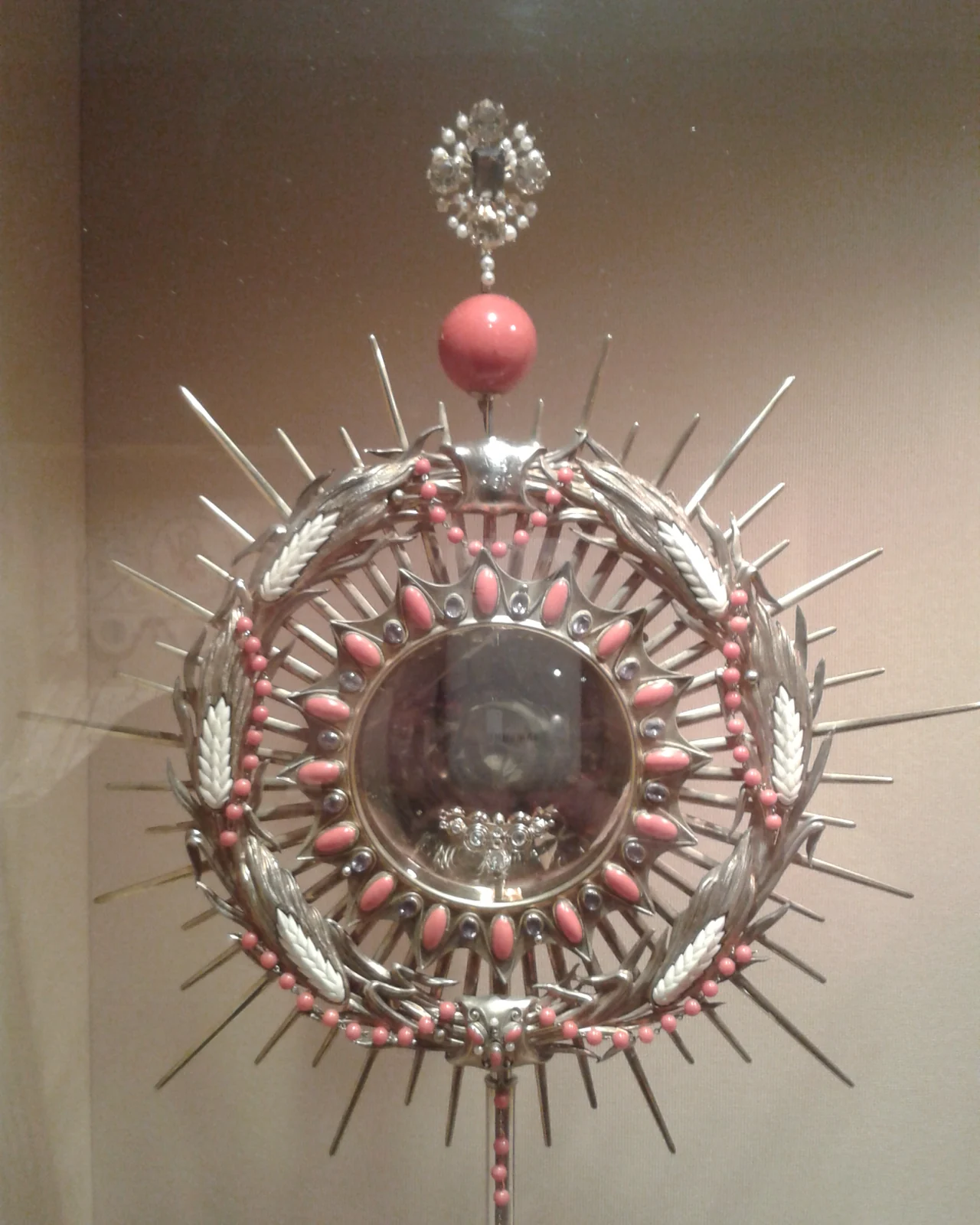
Photo: Giuseppe Maddaloni / Wikimedia Commons — CC BY-SA 4.0 · Cropped, resized and converted to WebP.
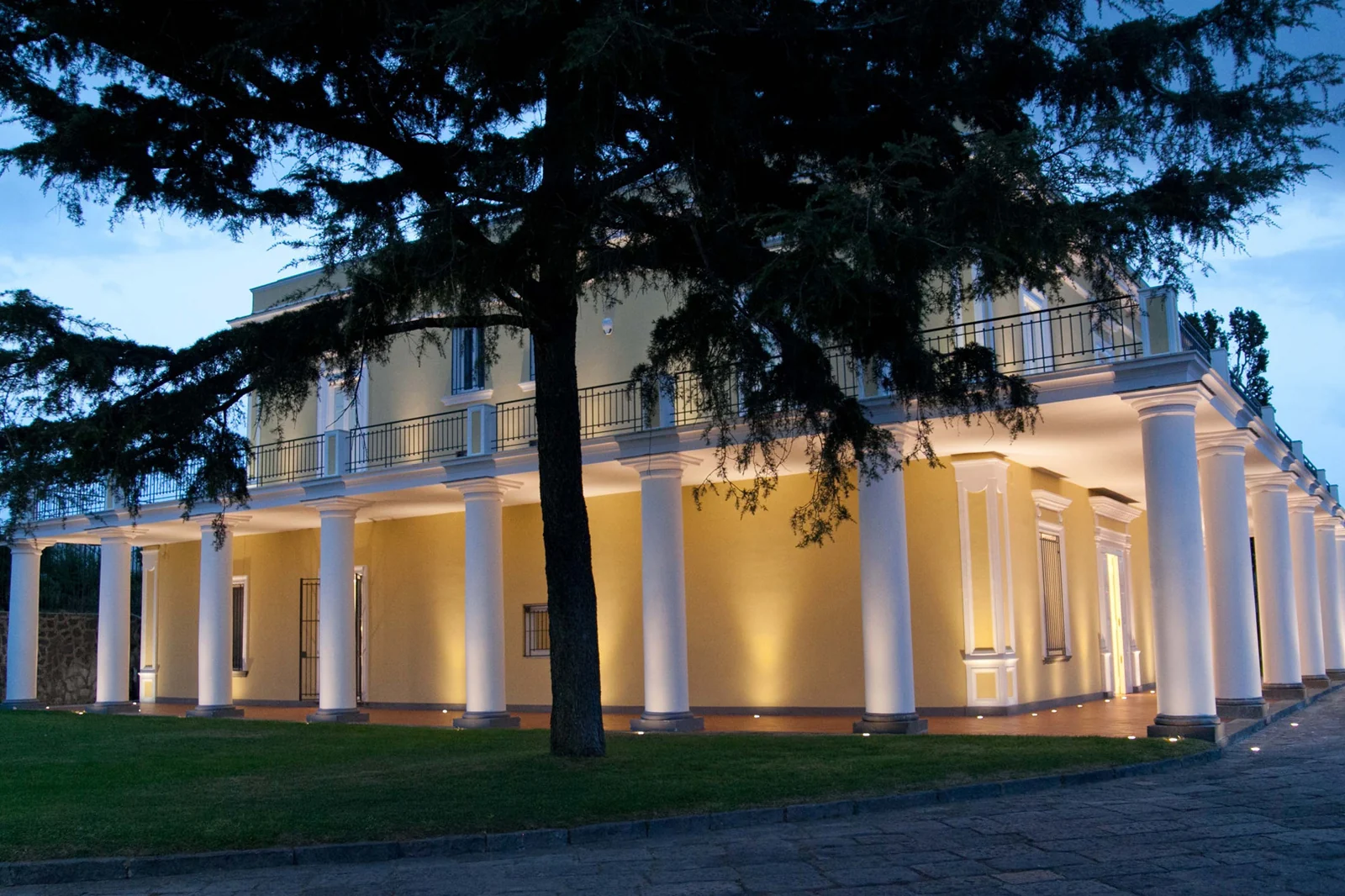
Photo: Sergioizzo / Wikimedia Commons — CC BY-SA 4.0 · Cropped, resized and converted to WebP.
Flavours
The produce is that of the slopes of Vesuvius. The National Park lists piennolo cherry tomatoes, small, tied in bunches and hung up to keep until Christmas, apricots, cherries, citrus fruit, walnuts and olives; and the grapes of Vesuvian wines, coda di volpe or caprettone, falanghina, piedirosso, sciascinoso and aglianico, which give Lacryma Christi, one of the Italian wines best known abroad.
One Sunday a month, from 9 a.m. to 1 p.m., the “Ciaravolo” public garden at Corso Vittorio Emanuele 9 hosts the Slow Food Earth Market dedicated to the Vesuvian food basket, with growers from Vesuvius and Campania. The sea is the other larder: the Sea Festival, held by the town council in September 2026 at Portosalvo with the Litorale Miglio d’Oro fisheries group, was also devoted to promoting the local catch.
Sources: Parco nazionale del Vesuvio — Agricoltura e artigianato · Comune di Torre del Greco — Mercato della Terra, Paniere Vesuviano (27 settembre 2026) · Comune di Torre del Greco — Festival del mare, si parte con due giorni a Portosalvo (settembre 2026)
Things to do
You can swim here. For the 2026 season the Campania Region rated all six of the town’s bathing stretches as “excellent”: Calastro (832 m), Cimitero (2,191 m), Torre di Bassano (1,045 m), Via Litoranea north (1,089 m), Mortelle (744 m) and the stretch by Santa Maria la Bruna station. From 15 July to 15 September 2026, under the “A mare tutti” project, three free beaches between the Litoranea and Via Calastro were fitted with beach wheelchairs, walkways and accessible toilets, with care workers and free transport for wheelchair users.
The port can be explored on foot: from the western pier a walkway leads to the large statue of Christ the Redeemer, and an arch of the old promenade leads to Via Calastro. On the eastern pier the town council held the 2025 Sea Festival, devoted to seafaring traditions, coral working and Bourbon-era navigation.
You can watch coral being worked: during the 2025 Four Altars feast students of the Degni school gave working demonstrations and the exhibition “L’arte della tradizione” at Palazzo Vallelonga told the story of the engravers’ hands. In 2026 the town council signed a protocol with the Torre del Greco Coral and Cameo Consortium and Federalberghi Costa del Vesuvio to promote Mac³, and it plans a coral workshop in the former Molini Meridionali Marzoli mills in Via Calastro, funded with 7 million euros: the complex, built in 1907 near the port and the railway, was damaged by German mines in 1943, closed in 1985, has belonged to the town council since 1989 and now houses council offices. In December 2025 Torre del Greco joined the first Mediterranean Network of Coral Towns with Trapani, Sciacca, Alghero, Tunisia and Andalusia.
For children and for a walk in the shade there are the public gardens: Ciaravolo, Salvo d’Acquisto, Villa Macrina, with a garden and play areas, and the Michele Loffredo park, open on a seasonal timetable set by the town council.
Sources: Comune di Torre del Greco — Mare, sei campionamenti con riscontri eccellenti (marzo 2026) · Comune di Torre del Greco — «A mare tutti», servizio attivo due mesi (luglio 2026) · Comune di Torre del Greco — Inaugurati i servizi igienici al molo di ponente del porto (luglio 2025) · Comune di Torre del Greco — Festa del mare: due giorni dedicati all’oro blu (ottobre 2025) · Comune di Torre del Greco — Le tradizioni in mostra per aprire la festa dei Quattro Altari (giugno 2025) · Comune di Torre del Greco — Protocollo per la promozione turistica e la valorizzazione del territorio (luglio 2026) · Comune di Torre del Greco — Un laboratorio del corallo negli ex Marzoli (25/11/2025) · Comune di Torre del Greco — Nasce la prima Rete mediterranea delle città del corallo (dicembre 2025) · Comune di Torre del Greco — Parchi e ville pubbliche della città: calendario di apertura e chiusura (2026) · Comune di Torre del Greco — Villa Macrina · Comune di Torre del Greco — Molini Meridionali Marzoli – Uffici Comunali (4 giugno 2025)
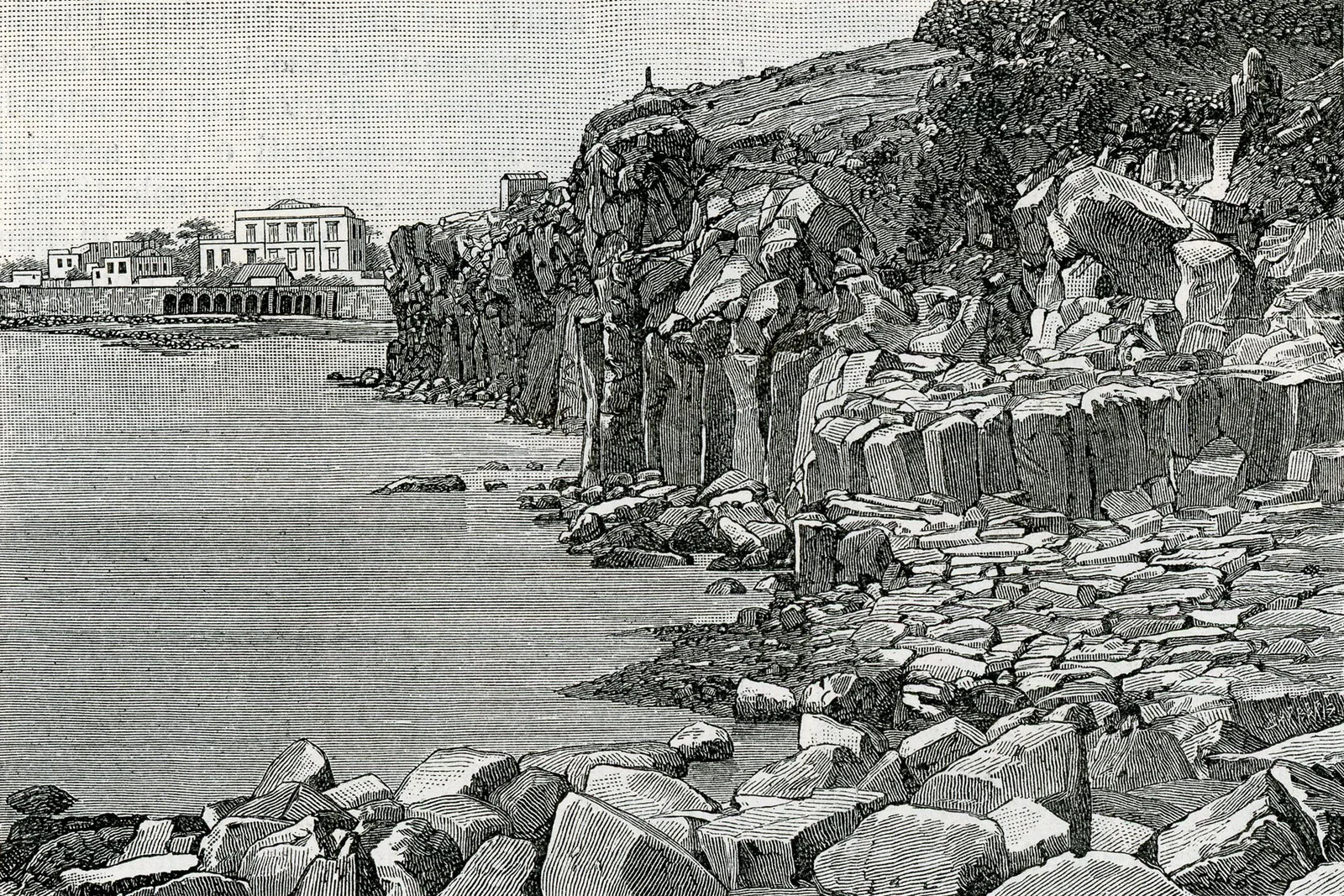
Photo: Unknown author / Wikimedia Commons — Public domain · Cropped, resized and converted to WebP.
When to go
The Feast of the Four Altars is the town’s most important celebration. It is held in June, eight days after Corpus Christi, and celebrates the baronial ransom of 1699. Painters, sculptors and architects prepare four altars on sacred themes in four squares, completed by carpets of sawdust and powdered colour; the feast lasts three days, with the sacred float, music and tammurriata dancing, and ends with the “fireworks on the sea”.
The town council revived the feast after a sixteen-year break. The banner is raised on the bell tower of Santa Croce on the day of Corpus Christi; in 2025 the feast returned to its historic date, which earned it the name “Uttava”. In 2026 it ran from 12 to 14 June, with the altars in Piazza Luigi Palomba, at Palazzo Baronale, in Largo Costantinopoli and on Corso Garibaldi, tens of thousands of visitors and the fireworks display in the port area. The programme of each edition is published on the town council’s website.
In October the Holy Night is devoted to Saint Vincenzo Romano, parish priest of Santa Croce: in 2025 it reached its fifth edition, with the liturgy of 14 October and a pilgrimage through the places of his life.
Sources: Parco nazionale del Vesuvio — Cultura e tradizioni · Comune di Torre del Greco — Festa dei Quattro Altari: alzabandiera a Santa Croce (giugno 2025) · Comune di Torre del Greco — Festa dei Quattro Altari, 12-14 giugno 2026 (evento) · Comune di Torre del Greco — Festa dei Quattro Altari: successo di presenze (giugno 2026) · Comune di Torre del Greco — Notte Sacra dedicata a San Vincenzo Romano (ottobre 2025)
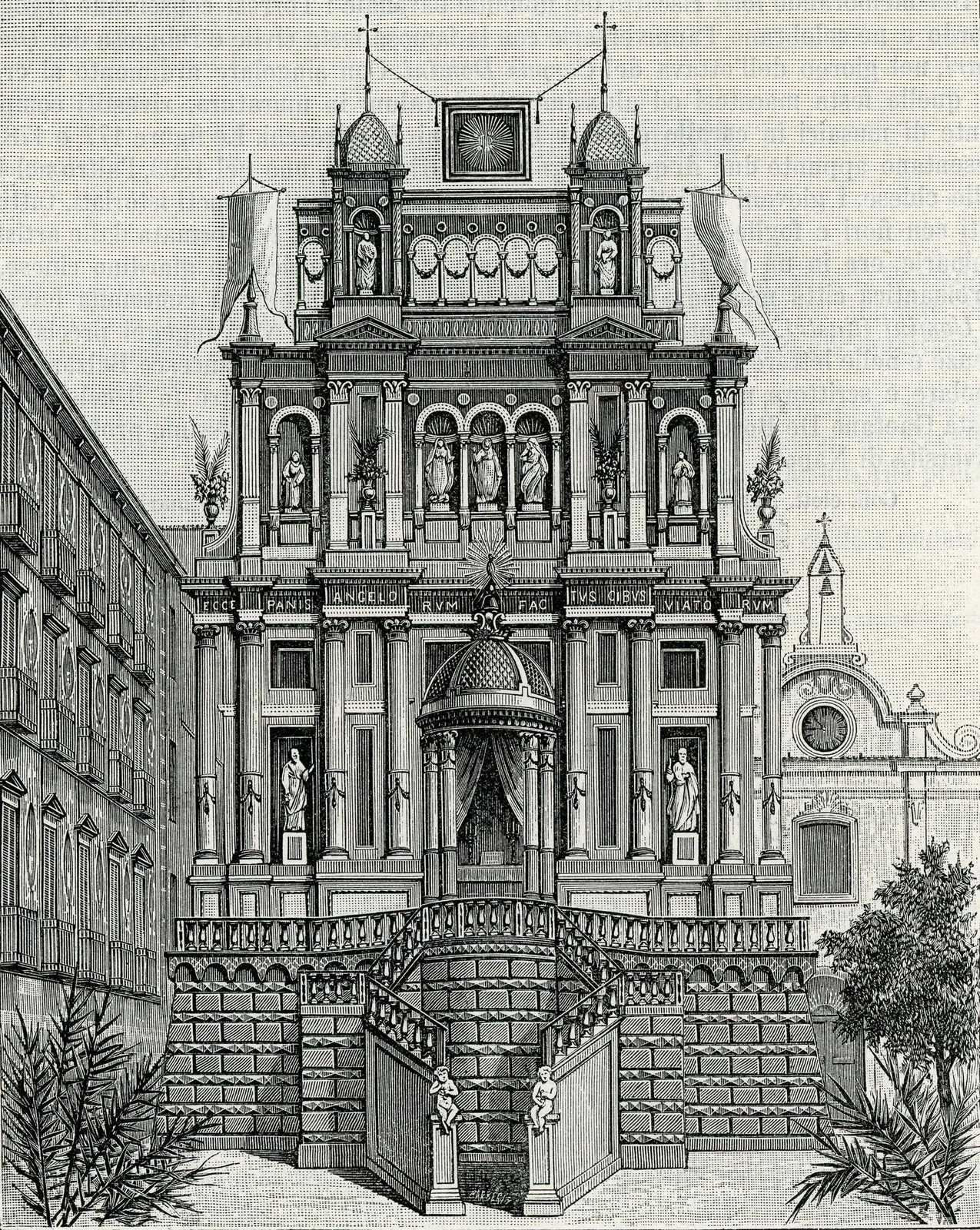
Photo: Giuseppe Barberis / Wikimedia Commons — Public domain · Resized and converted to WebP.
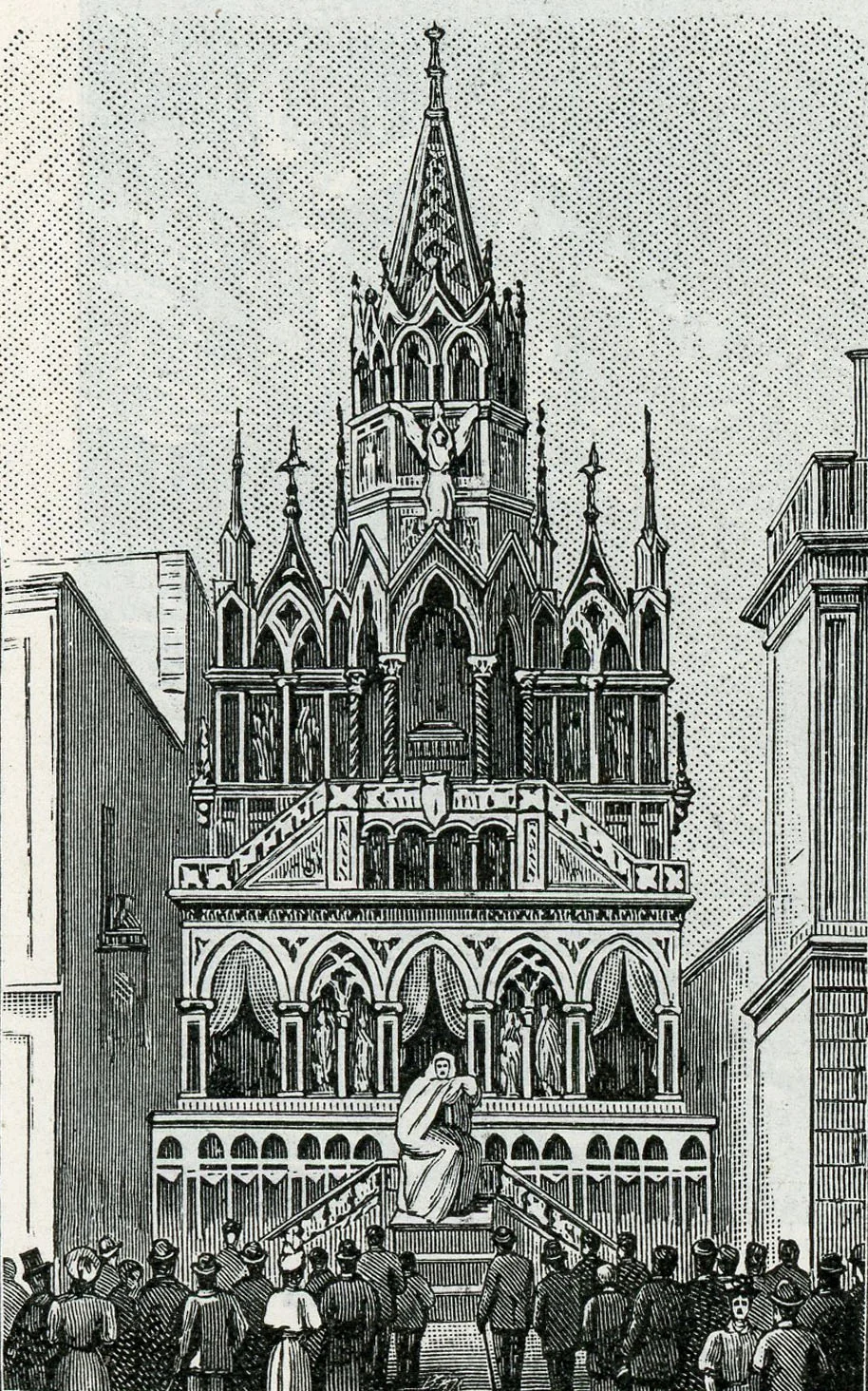
Photo: Giuseppe Barberis / Wikimedia Commons — Public domain · Resized and converted to WebP.
Getting there and around
By train, Torre del Greco is on EAV’s Circumvesuviana line Naples – Pompei Scavi – Sorrento, which runs along the coast: for assistance to wheelchair users EAV splits the line precisely at Torre del Greco, between the section from Napoli Porta Nolana and the one towards Sorrento. The town also has a station on the RFI network, with two passenger tracks and a step-free, tactile route to the platforms, but no assistance service for people with disabilities.
By car, leave the A3 Naples-Salerno motorway at the Torre del Greco exit: it is also the exit the National Park gives for driving up Vesuvius.
The town hospital is the Maresca, in Via Montedoro, run by the ASL Napoli 3 Sud health authority.
Sources: EAV — Le nostre linee · EAV — Trasporto a chiamata, linea Napoli-Sorrento · RFI — Stazione di Torre del Greco · Parco nazionale del Vesuvio — Sentiero n. 5 «Il Gran Cono»: accesso, biglietti, regolamento · Comune di Torre del Greco — Ospedale Maresca: in arrivo 46 nuovi posti letto (luglio 2026)
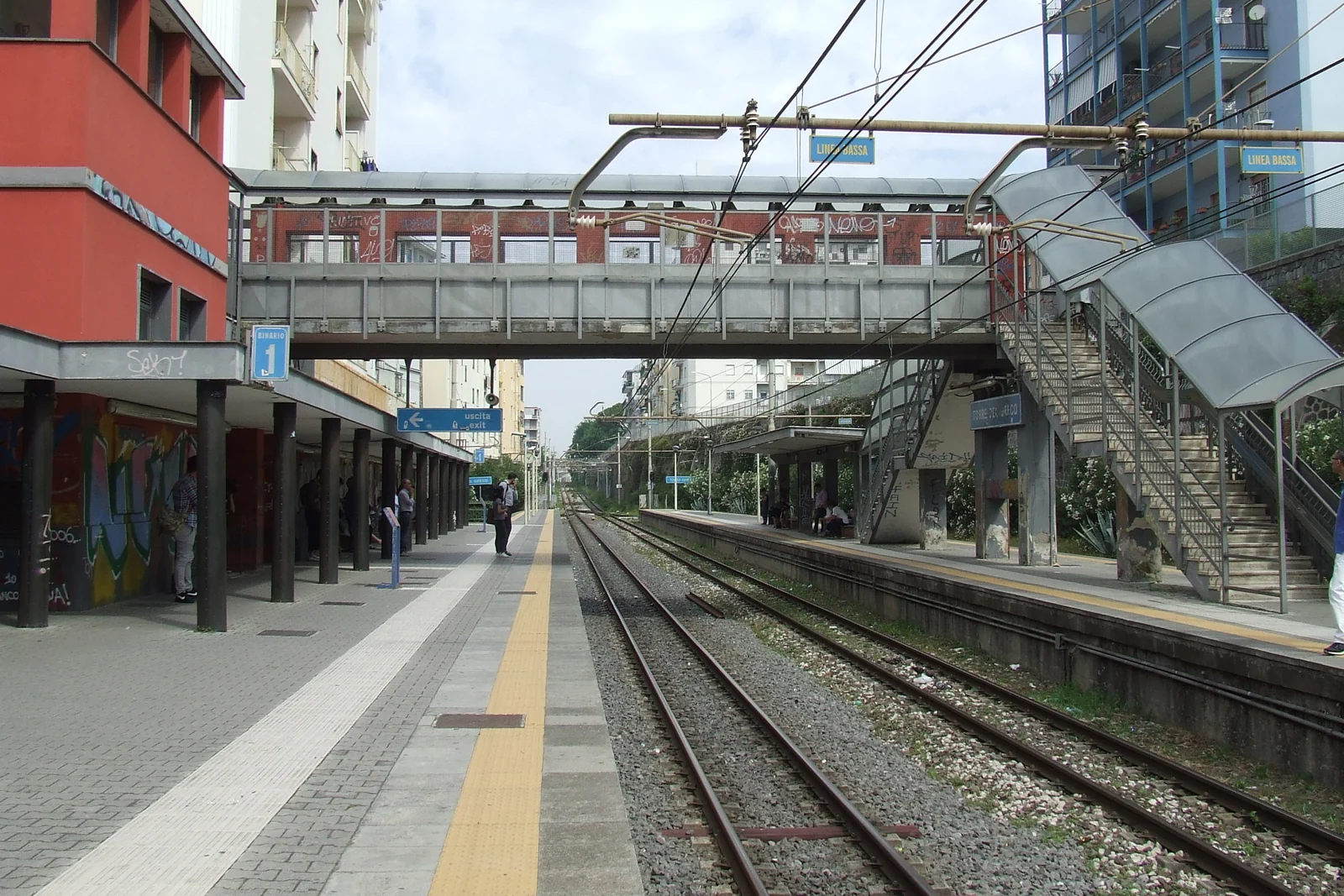
Photo: Retaggio / Wikimedia Commons — CC BY-SA 4.0 · Cropped, resized and converted to WebP.
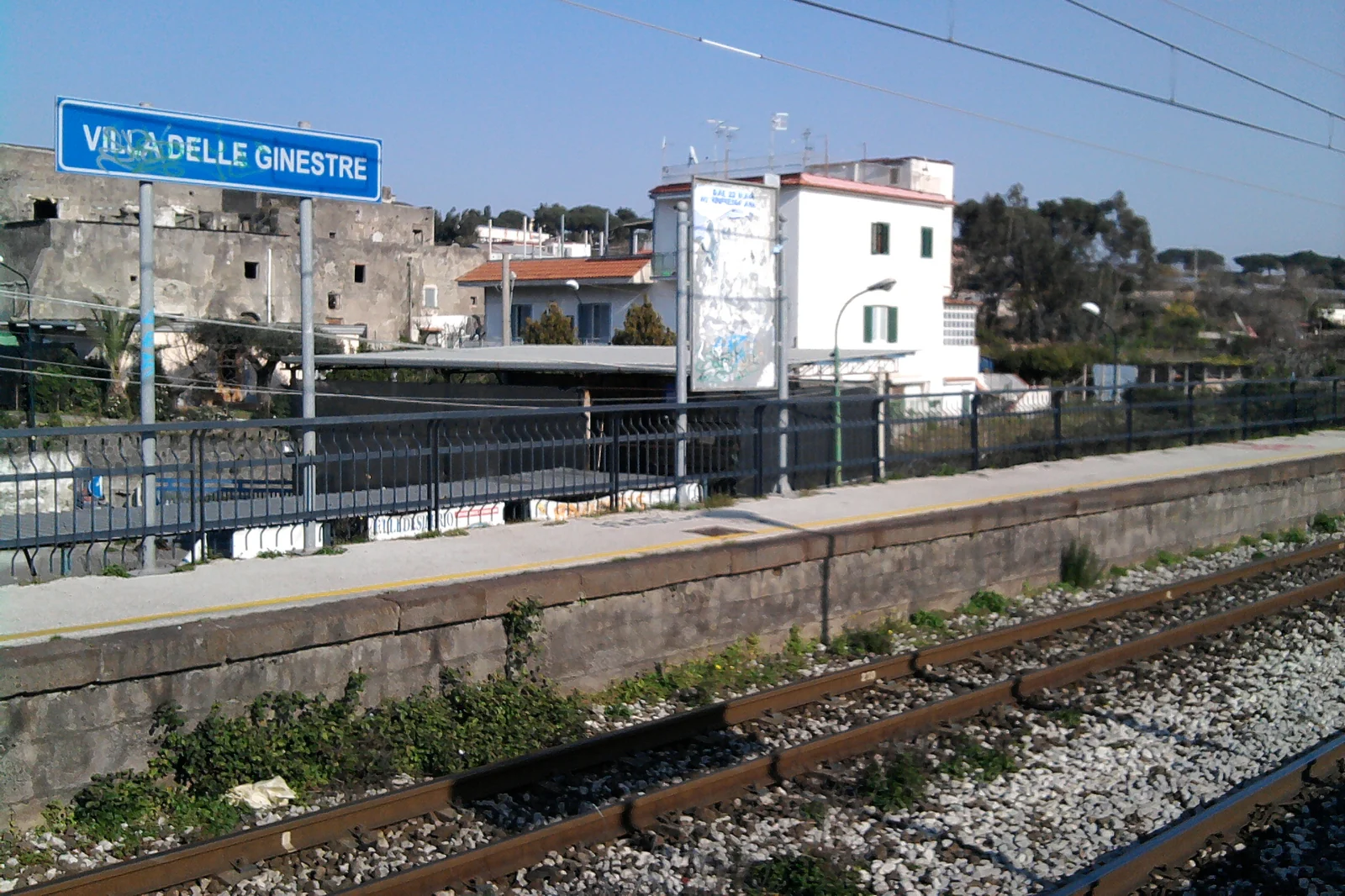
Photo: Alexdevil / Wikimedia Commons — CC BY-SA 3.0 · Cropped, resized and converted to WebP.
Tourism
The tourist tax is paid to the host at check-out, and those who run the accommodation must inform guests at least in Italian and English and issue a receipt. According to the council’s page, exempt among others are young people up to their sixteenth birthday, people with a certified disability of at least 80%, with one companion, those assisting a patient admitted to the town’s hospitals or being treated there as day patients, students enrolled at schools in Torre del Greco, coach drivers and one tour leader for every 25 participants in organised groups. The exemption is declared to the accommodation with the council’s forms, also available in English.
The town is in the Vesuvius National Park, and the safeguard measures annexed to the 1995 decree that created it apply throughout the park to visitors too: wild animals are not caught or disturbed, wild plants are not picked or damaged, materials of geological interest are not taken away, there is no camping outside equipped areas, and motor vehicles stay on roads open to public traffic. In the most protected zones motor sports are also forbidden.
Sources: Comune di Torre del Greco — Applicare l’imposta di soggiorno · DPR 5 giugno 1995, Istituzione dell’Ente Parco nazionale del Vesuvio, con l’allegato A, Misure di salvaguardia
“Come to Torre del Greco as a guest, not as a tourist: that is how these places truly let you know them.”
Accommodation in figures
In the Ministry of Tourism’s national database of accommodation (BDSR), on 12 October 2026, Torre del Greco had 196 establishments with a verified national identification code (CIN): 8 hotel-type establishments, 24 non-hotel establishments and 164 other establishments.
According to the town council, in 2025 hotels reported almost 125,000 overnight stays up to mid-November. Since 2025 the town has charged a tourist tax, due per person per night up to a maximum of 14 consecutive nights; the 2026 rates are shown below with their source.
Sources: Ministero del Turismo – Banca Dati Strutture Ricettive (dashboard pubblica) · Comune di Torre del Greco — Turismo: quasi 125mila pernottamenti fino a metà novembre; tariffe 2026 dell’imposta di soggiorno (26/11/2025) · Comune di Torre del Greco — Applicare l’imposta di soggiorno
Nearby
The crater of Vesuvius is reached on path no. 5, “Il Gran Cono”, which starts from the square at 1,000 m, in the municipality of Herculaneum. By car: from the Torre del Greco exit of the A3 follow the “Vesuvio” signs along Via Enrico De Nicola and Via Vesuvio, then the SP144 to the car park at 800 m (7.3 km, about 15 minutes). From the car park to the square you walk up 1.8 km in about half an hour, or take the Herculaneum council shuttle. Tickets are sold only online, through the channel given by the Park; the path closes on days of orange weather alert or higher.
Above the town the Park points to the view from the Camaldoli della Torre convent. Along the coast towards Naples the villas of the Miglio d’Oro continue: in March 2026 Torre del Greco, Herculaneum, Portici and San Giorgio a Cremano signed the protocol to set up the “Miglio d’Oro-Costa del Vesuvio” Destination Management Organization.
Sources: Parco nazionale del Vesuvio — Sentiero n. 5 «Il Gran Cono»: accesso, biglietti, regolamento · Parco nazionale del Vesuvio — I Comuni vesuviani: Torre del Greco · Comune di Torre del Greco — Turismo: prende forma la Dmo «Miglio d’Oro-Costa del Vesuvio» (marzo 2026)
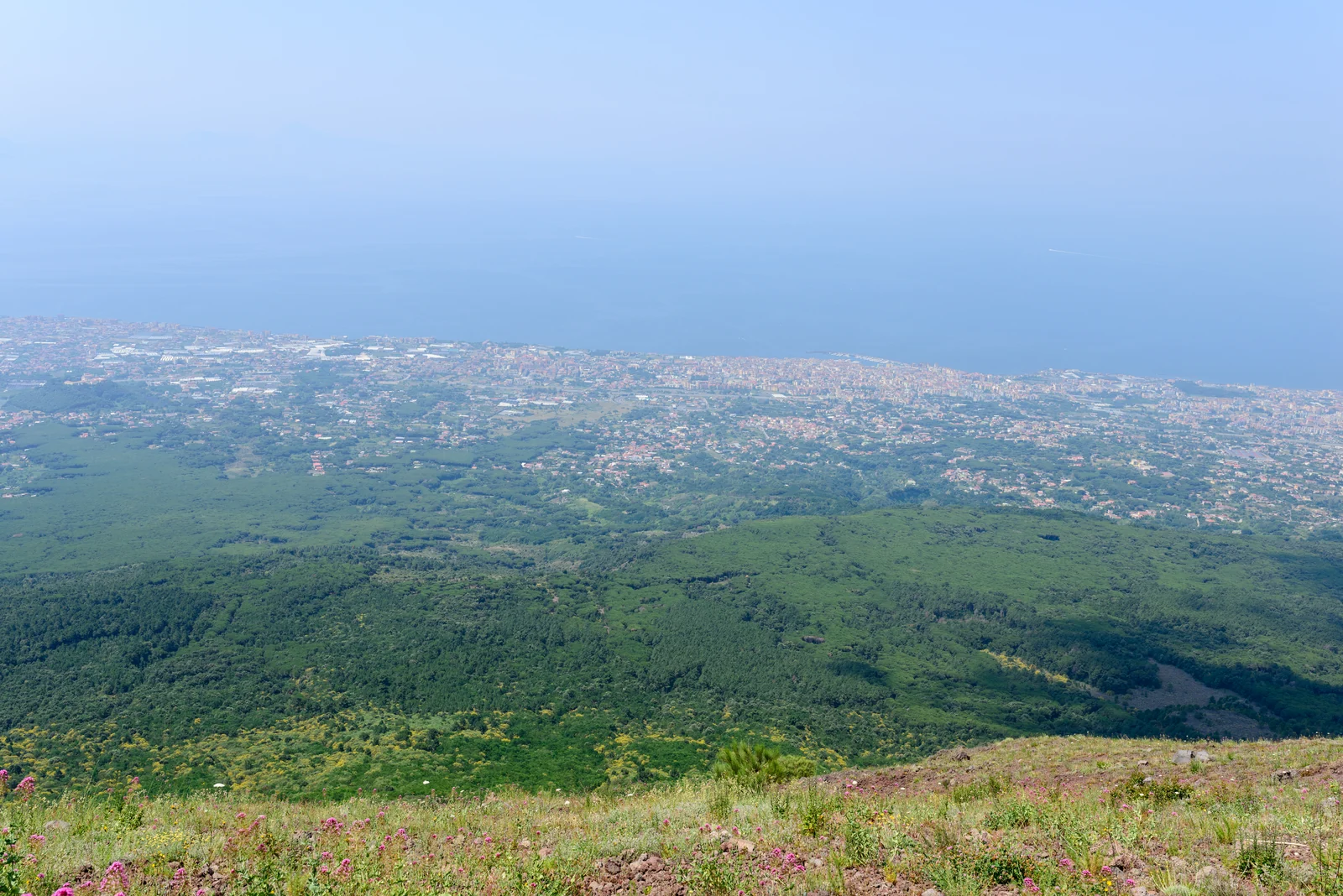
Photo: Norbert Nagel / Wikimedia Commons — CC BY-SA 3.0 · Resized and converted to WebP.
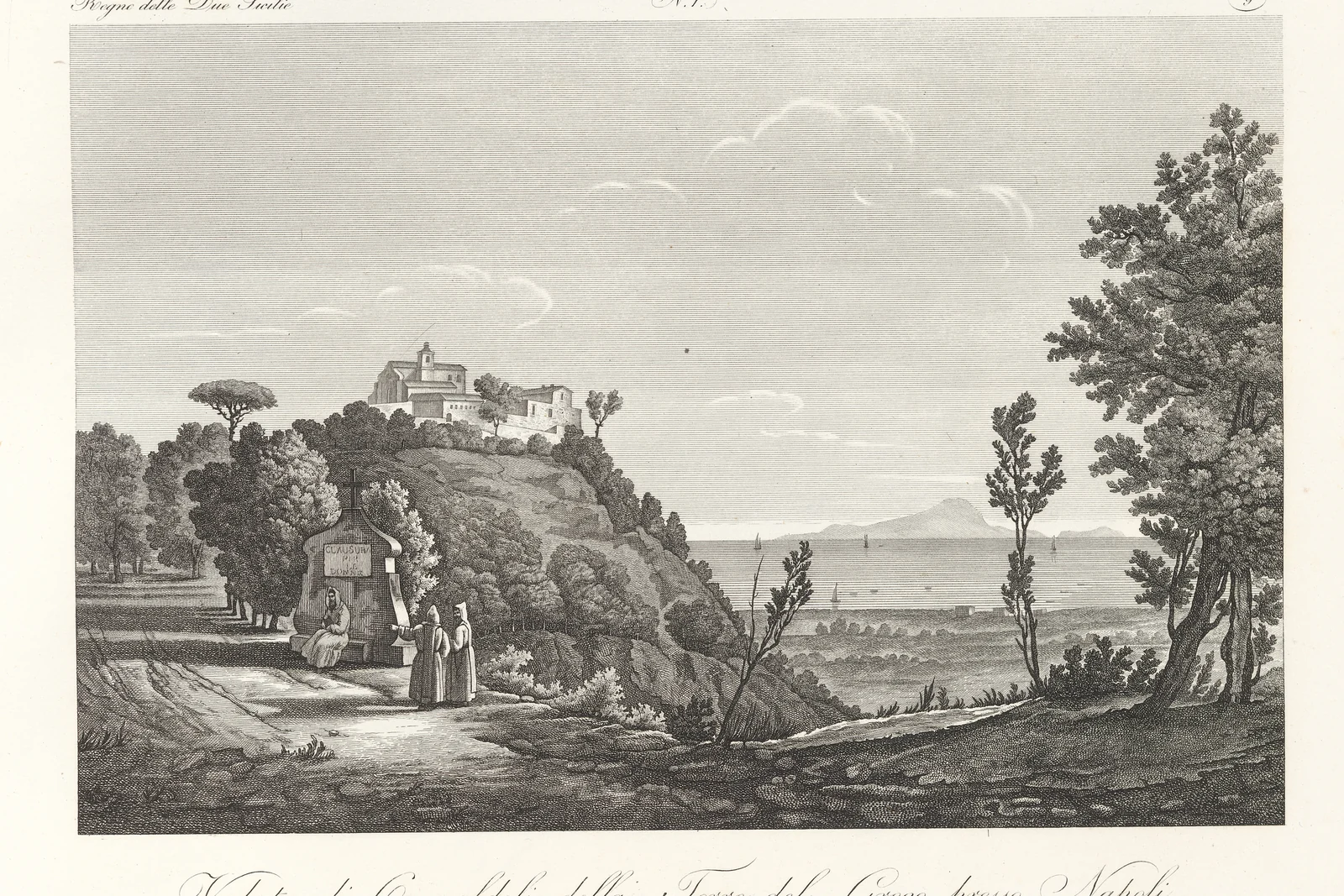
Photo: Giarrè, Pietro (Incisore) / Wikimedia Commons — CC BY-SA 4.0 · Cropped, resized and converted to WebP.
The town council
The official website of the Comune di Torre del Greco, registered in IndicePA, the index of the digital addresses of Italy’s public administrations, is the reference for the town council’s offices, opening hours and news. Its address is listed among the sources of this section.
The town hall is in the Palazzo Baronale, Largo Plebiscito; the switchboard answers on +39 081 8830111. Culture, events and tourism are handled by the Cultural Heritage, Events, Tourism and Territorial Marketing Service, at Via Calastro 8 (telephone +39 081 8830612). The Public Relations Office is at Villa Macrina.
Sources: Comune di Torre del Greco, sito istituzionale · IndicePA (AgID), Indice dei domicili digitali delle pubbliche amministrazioni: dataset Enti · Comune di Torre del Greco — Palazzo Baronale (Municipio) · Comune di Torre del Greco — Servizio Gestione del Patrimonio Culturale, Eventi, Turismo, Marketing Territoriale · Comune di Torre del Greco — Villa Macrina
Where to stay
In the municipality of Torre del Greco the national database of the Ministry of Tourism lists 196 accommodation businesses with a verified CIN code: 8 hotels, 24 other licensed accommodation and 164 other types such as B&Bs and private rentals.
Licensed businesses from the official list of accommodation named as the source in this section. Where the list gives it, the property's official identification code appears next to its name: the national CIN code, or the code assigned by the Region or by the body that keeps the list. Private individuals are not listed. This list is the official census of licensed businesses, not a list of Apulica partners: to stay in Torre del Greco you do not have to check one property after another yourself; write to Apulica and we look for the stay that suits your journey, checking availability and conditions before any confirmation.
EMMEGI S.R.L. HOTEL SAKURA
Hotel · ★★★★
Regional code (CUSR) 15063084ALB0039
DOMUS AGRICOLAE CORALLINA
Farm stay
Regional code (CUSR) 15063084EXT0019
AL CORBEZZOLO
Guest rooms
Regional code (CUSR) 15063084EXT0001
IL CORSO
Holiday house
Regional code (CUSR) 15063084EXTTJZM
HOTEL MARAD
Hotel · ★★★★
Regional code (CUSR) 15063084ALB0023
SOCIETA' AGRICOLA LE FORNACELLE
Farm stay
Regional code (CUSR) 15063084EXT0152
BSISTERS
Guest rooms
Regional code (CUSR) 15063084EXT0088
LA CASA DEL MONSIGNORE
Holiday house
Regional code (CUSR) 15063084EXTULK5
HOTEL POSEIDON
Hotel · ★★★★
Regional code (CUSR) 15063084ALB0024
TENUTA DEI SOVRANI
Farm stay
Regional code (CUSR) 15063084EXT0036
First the places that presented themselves to Apulica, the latest first; then one place of each type in turn, by official category and stars, then by name. No position is paid for.
All 49 entries in alphabetical order
Page 1 of 5
| Name | Type | Identification code |
|---|---|---|
| AL CORBEZZOLO | Guest rooms | Regional code (CUSR) 15063084EXT0001 |
| ALBERGO SANTA TERESA SRL | Hotel | Regional code (CUSR) 15063084ALB0002 |
| BSISTERS | Guest rooms | Regional code (CUSR) 15063084EXT0088 |
| BSISTERS | Guest rooms | Regional code (CUSR) 15063084EXTP85N |
| CALI' EVENTI | Guest rooms | Regional code (CUSR) 15063084EXTARCX |
| CALI' EVENTI SRL | Guest rooms | Regional code (CUSR) 15063084EXT0165 |
| CALI' EVENTI SRL | Guest rooms | Regional code (CUSR) 15063084EXT044H |
| CAPRI VIEW | Guest rooms | Regional code (CUSR) 15063084EXTRA6C |
| CARMELA CASILLO AFFITTACAMERE | Guest rooms | Regional code (CUSR) 15063084EXT0120 |
| CASA ROSSA 1888 SNC | Hotel | Regional code (CUSR) 15063084ALB0151 |
Ask Apulica for a stay in Torre del Greco We reply shortly, within a few hours at most, with a proposal for you to consider.
Sources: Ministero del Turismo – Banca Dati Strutture Ricettive (dashboard pubblica), 2026-10-12
YOUR JOURNEY
How to shape a journey here
To include Torre del Greco in a trip, or to ask for a guide or a transfer, you can write to Apulica with the button below.
Plan your tripKeep exploring
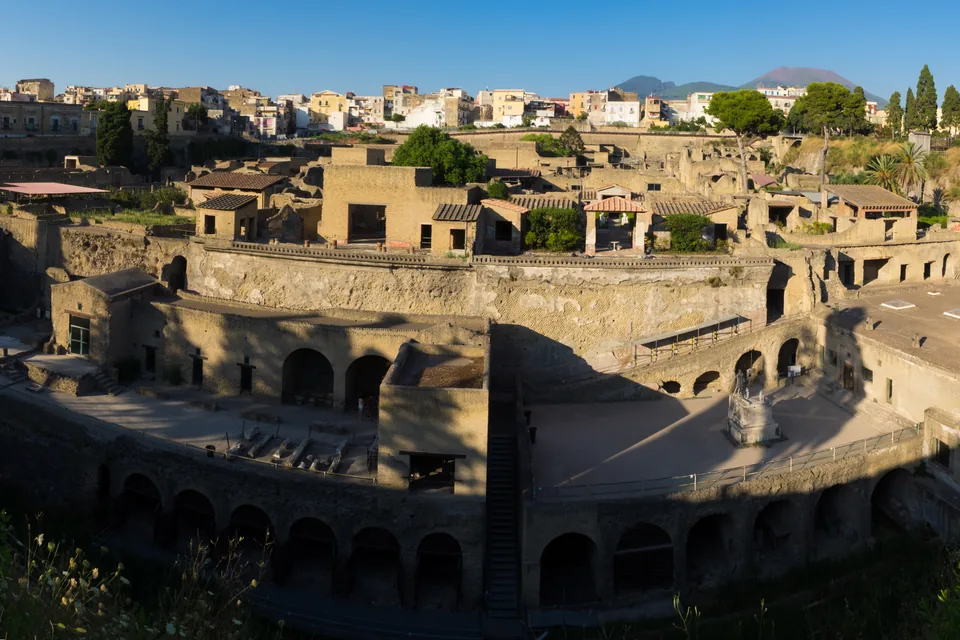
Ercolano
Ercolano (NA), Campania: 49,505 residents, 19.92 km². The official facts of the municipality, its town council website and its registered accommodation. The excavations of Herculaneum, a UNESCO World Heritage site, the Antiquarium and the boat from the ancient beach, the villas of the Miglio d’Oro, the Resina market, the piennolo cherry tomato PDO, Lacryma Christi wine and the Gran Cono trail up Vesuvius.
Read the guide →Photo: Sarahhoa / Wikimedia Commons — CC BY-SA 2.0 · Resized and converted to WebP.

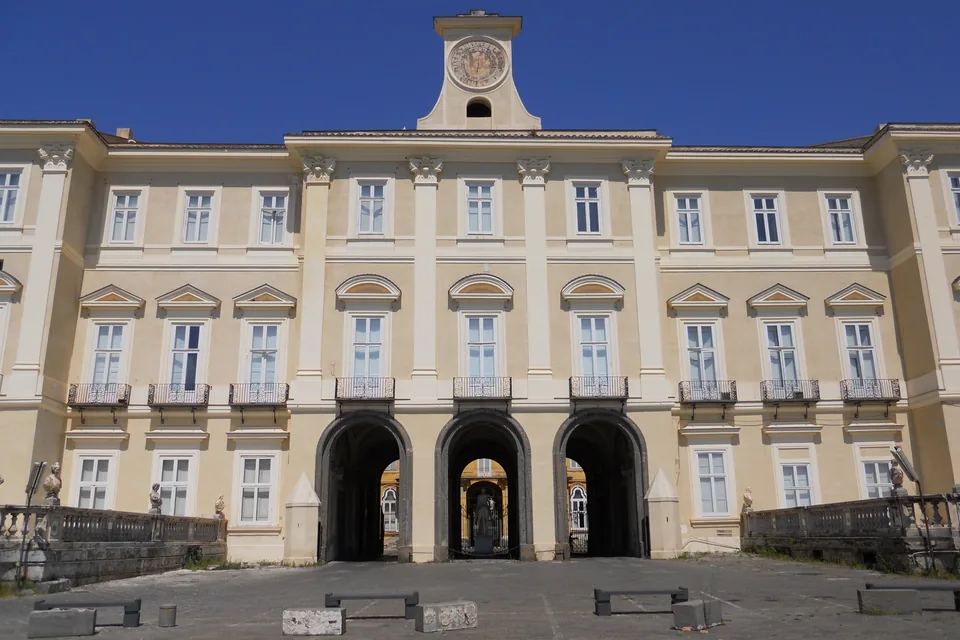
Portici
Portici (NA), Campania: 51,429 residents, 4.64 km². The official facts of the municipality, its town council website and its registered accommodation.
Read the guide →Photo: Ferdinando Scala / Wikimedia Commons — CC BY-SA 3.0 · Resized and converted to WebP.

Torre Annunziata
Torre Annunziata (NA), Campania: 39,719 residents, 7.59 km². The official facts of the municipality, its town council website and its registered accommodation.
Read the guide →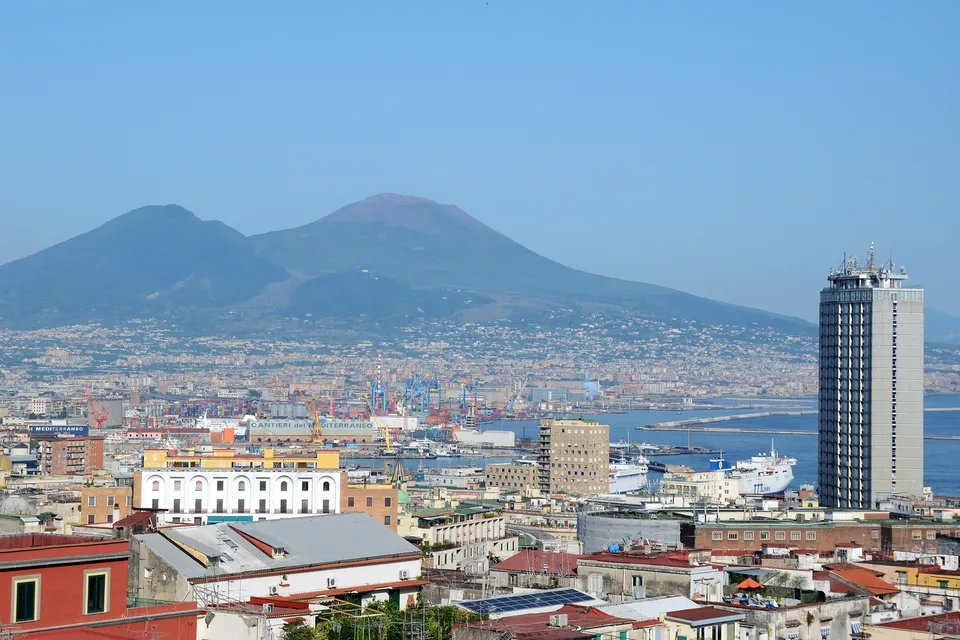
Naples
Naples (NA), capital of Campania: 909,013 residents, 119.24 km². The UNESCO-listed historic centre, the museums, the San Carlo, pizza as UNESCO heritage, San Gennaro and, nearby, Vesuvius, Pompeii and the islands.
Read the guide →Photo: Livioandronico2013 / Wikimedia Commons — CC BY-SA 4.0 · Resized and converted to WebP.
