

Why go
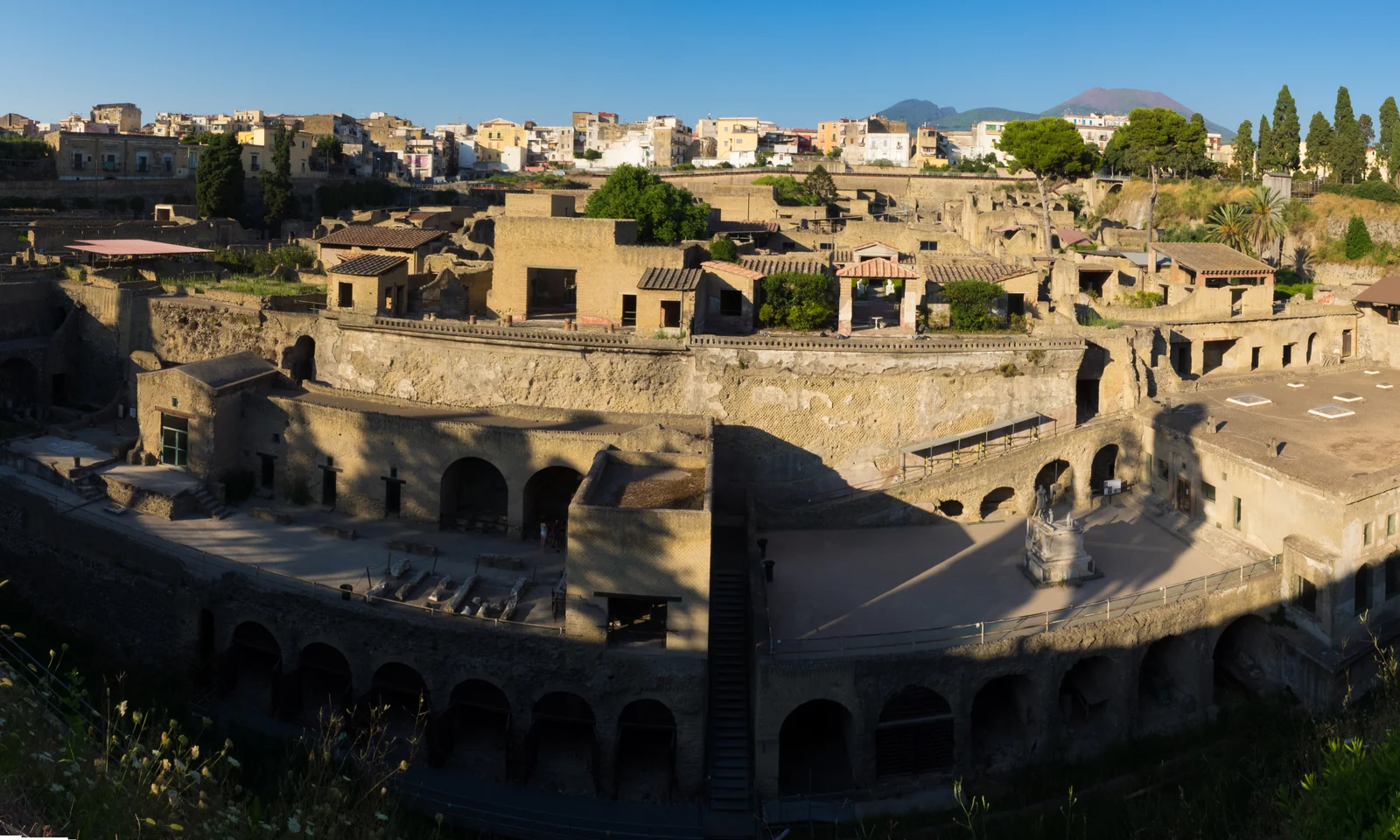
Ercolano is where you visit Herculaneum, the Roman town buried by the eruption of Vesuvius in AD 79. Since 1997 its excavations have been part of UNESCO site no. 829, “Archaeological Areas of Pompei, Herculaneum and Torre Annunziata”, inscribed on the World Heritage List because these places are, in the words of the citation, “a complete and living testimony to the society and daily life at a precise moment in the past”. The excavations are looked after by the Archaeological Park of Herculaneum, an autonomous institute since 2016.
What makes Herculaneum special, the Park writes, is the chance to look in detail at the daily life of a town at a precise moment in history. The pyroclastic surges and volcanic mud that covered it preserved materials that have vanished elsewhere: carbonised wood from furniture, doors and stairs, food, seeds and fruit, fabrics and ropes, wax tablets and the papyri of the Villa of the Papyri. On the ancient beach about 300 skeletons of people trying to flee were found, along with a boat more than 9 metres long, now displayed in a pavilion of the Park.
Beyond the excavations the town has other reasons to stop: the basilica of Santa Maria a Pugliano, the oldest church in Ercolano; the Resina market, born with the clothes of American convoys during the Second World War; the eighteenth-century villas of the Miglio d’Oro, such as Villa Campolieto and Villa Favorita; and the road up Vesuvius, where the Gran Cono trail starts from a square at 1,000 metres within the municipal territory.
Sources: Parco archeologico di Pompei (Ministero della cultura) — Ufficio Unesco: sito seriale n. 829 · Parco archeologico di Ercolano — Dalla scoperta al Parco archeologico · Parco archeologico di Ercolano — Area archeologica · Parco archeologico di Ercolano — L’eruzione · Parco archeologico di Ercolano — I reperti organici · Parco archeologico di Ercolano — I fuggiaschi · Parco archeologico di Ercolano — Antiquarium e Padiglione Barca · Parco archeologico di Ercolano — Pugliano e il Mercato di Resina · Parco archeologico di Ercolano — Il Miglio d’Oro · Ente Parco nazionale del Vesuvio — Il Gran Cono del Vesuvio
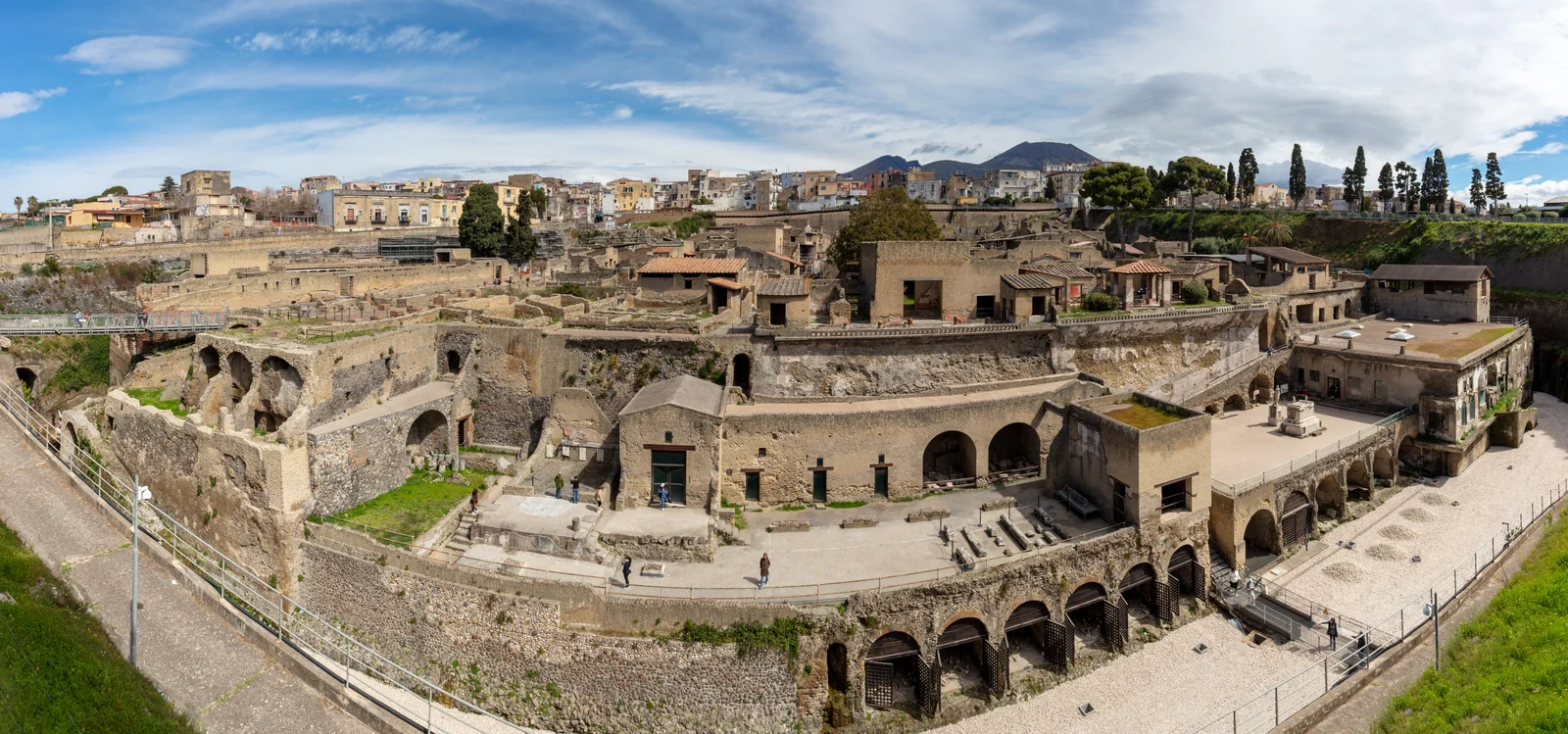
Photo: Diego Delso / Wikimedia Commons — CC BY-SA 4.0 · Resized and converted to WebP.
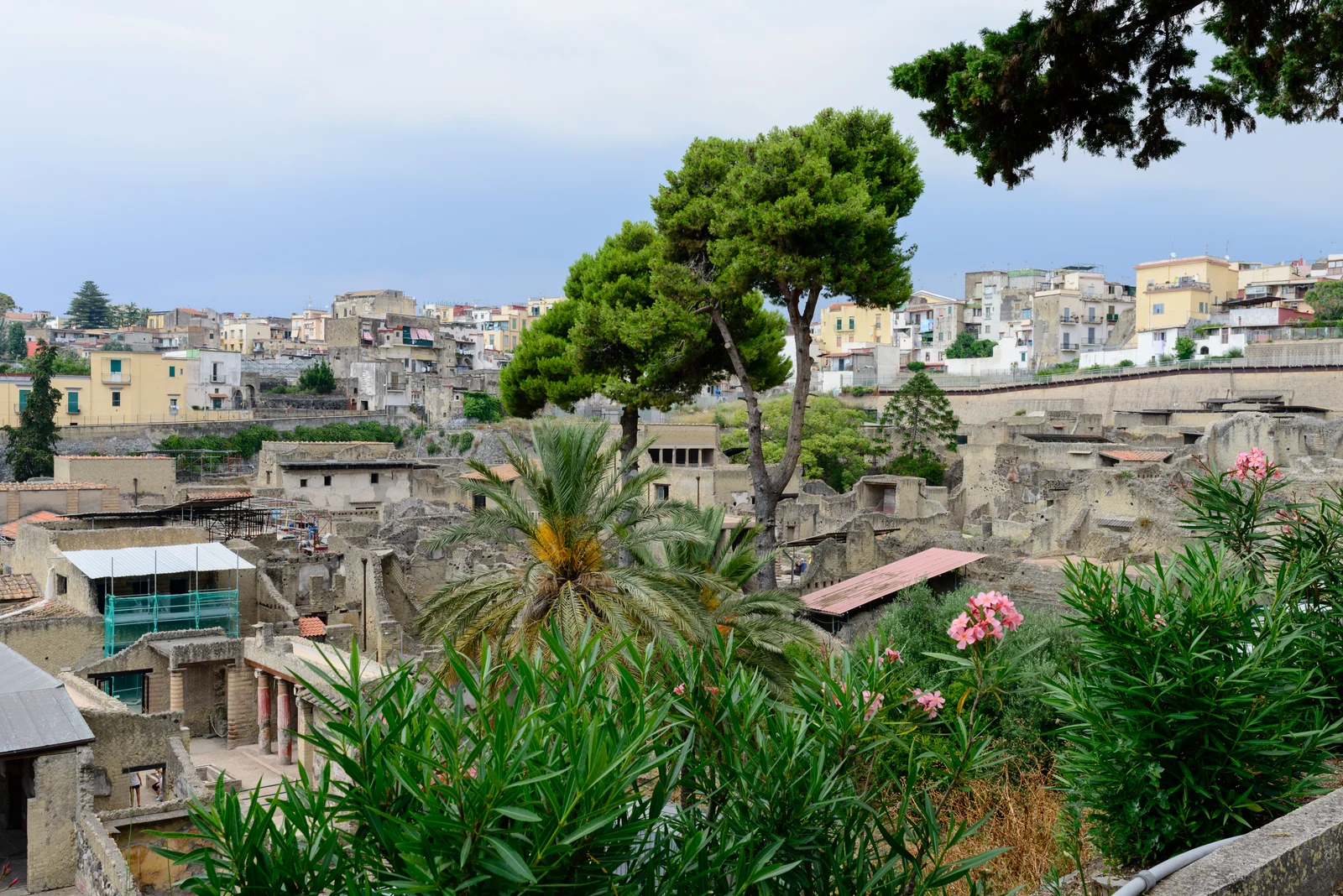
Photo: Norbert Nagel / Wikimedia Commons — CC BY-SA 3.0 · Resized and converted to WebP.
The municipality at a glance
Ercolano is a municipality in the Metropolitan City of Naples, in Campania. Its ISTAT code is 063064. On 1 January 2025 it had 49,505 residents. The municipal territory covers 19.92 km² and ranges from -2 to 1,241 metres above sea level; the town hall stands at about 46 metres.
The modern town stands on top of ancient Herculaneum: the decumanus maximus marks the line between the excavated part and the part still buried under Corso Resina. The municipal territory climbs up to Vesuvius: at the end of the Ercolano-Vesuvio provincial road, at 1,000 metres, is the square where the Gran Cono trail begins.
Sources: ISTAT, Codici statistici delle unità amministrative territoriali: elenco dei comuni al 21 febbraio 2026 · ISTAT, Popolazione residente per età, sesso e stato civile al 1° gennaio 2025 (POSAS) · ISTAT, Principali statistiche geografiche sui comuni: superficie e altimetria al 31 dicembre 2021 · Parco archeologico di Ercolano — Area archeologica · Ente Parco nazionale del Vesuvio — Il Gran Cono del Vesuvio
History
Ancient Herculaneum stood on a plateau overlooking the sea, bounded east and west by two streams, with Vesuvius behind it. Tradition said it was founded by Hercules on his way back from Iberia; the historian Strabo traces its origin to several phases of settlement by Italic peoples. After rebelling against Rome it was finally conquered in 89 BC and became a Roman municipium. It was a small town: about 20 hectares within the walls and, by estimate, about 4,000 inhabitants. Under Augustus it saw a building renewal, with the restoration of public buildings such as the theatre and the basilica of Nonius Balbus.
An earthquake in AD 62 caused serious damage; then came the eruption of AD 79. A column of volcanic material rose to a height of 14 km. Herculaneum was struck first by pyroclastic surges at about 400 degrees, travelling at more than 80 km an hour, then by mudflows that buried it under about 20 metres of material. In 1980, in nine of the twelve vaulted chambers opening onto the ancient beach, the remains of those who had tried to escape towards the sea came to light, with jewellery, coins, house keys, amulets and even a surgeon’s set. On 3 August 1982, in front of the Suburban Baths, the keel of an overturned boat emerged: according to the latest interpretations, a military launch from the fleet of Pliny the Elder, which had sailed from Misenum to bring help.
The rediscovery began in the town of Resina: a farmer, Ambrogio Nucerino, known as Enzechetta, found the theatre while digging a well. In 1738 King Charles of Bourbon started excavations through shafts and underground tunnels, which the Park regards as the starting point of modern Western archaeology. In 1828 open-air excavations resumed and went on until 1875; from 1927 to 1958 they were led by the archaeologist Amedeo Maiuri, who uncovered, restored and opened to the public much of the area that can be visited today.
From the 1970s the site went through a long crisis, with houses and stretches of street closed and propped up. Since 2001 the Herculaneum Conservation Project, an initiative of the Packard Humanities Institute carried out with the Ministry of Culture, has been under way; in 2012 the Director-General of UNESCO pointed to Herculaneum as a model whose practices could be repeated at other major archaeological sites. The Archaeological Park of Herculaneum was created in 2016; in 2023 the buffer zone of the UNESCO site was approved, which also covers part of the municipalities of Portici, Torre del Greco and Torre Annunziata.
The eighteenth century left another mark too. The building of the Royal Palace of Portici, wanted by Charles of Bourbon, drew the Neapolitan aristocracy, who had summer residences built along the royal road to Calabria, commissioning architects such as Luigi Vanvitelli and Ferdinando Fuga: this is the Miglio d’Oro, the “Golden Mile” between Ercolano and Torre del Greco, named after its villas and its citrus gardens.
Sources: Parco archeologico di Ercolano — La storia · Parco archeologico di Ercolano — L’eruzione · Parco archeologico di Ercolano — I fuggiaschi · Parco archeologico di Ercolano — Il Teatro (aggiornata il 27 marzo 2026) · Parco archeologico di Ercolano — Dalla scoperta al Parco archeologico · Parco archeologico di Ercolano — Il Parco e il territorio · Parco archeologico di Ercolano — Il Miglio d’Oro
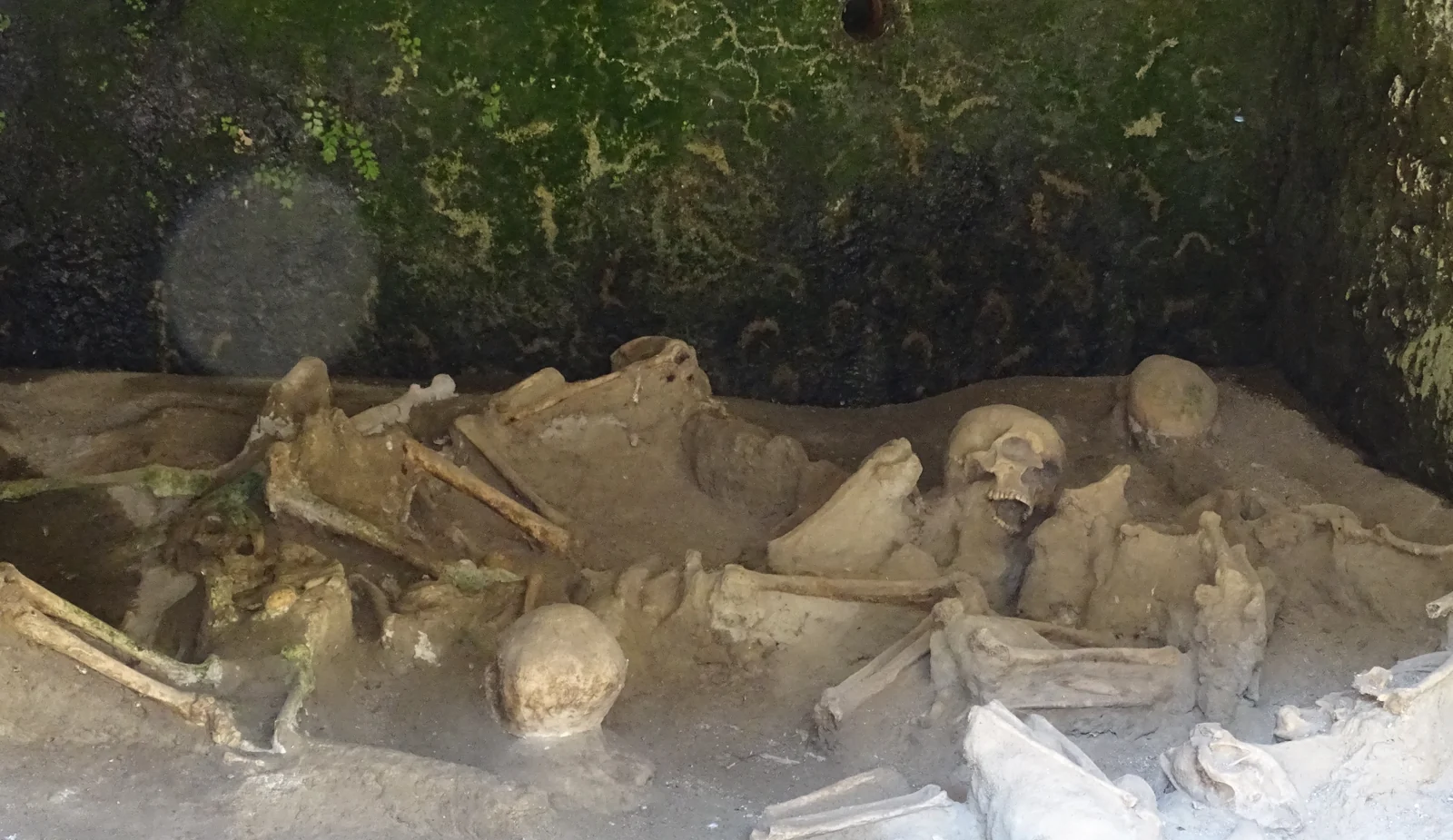
Photo: Ad Meskens / Wikimedia Commons — CC BY-SA 4.0 · Resized and converted to WebP.
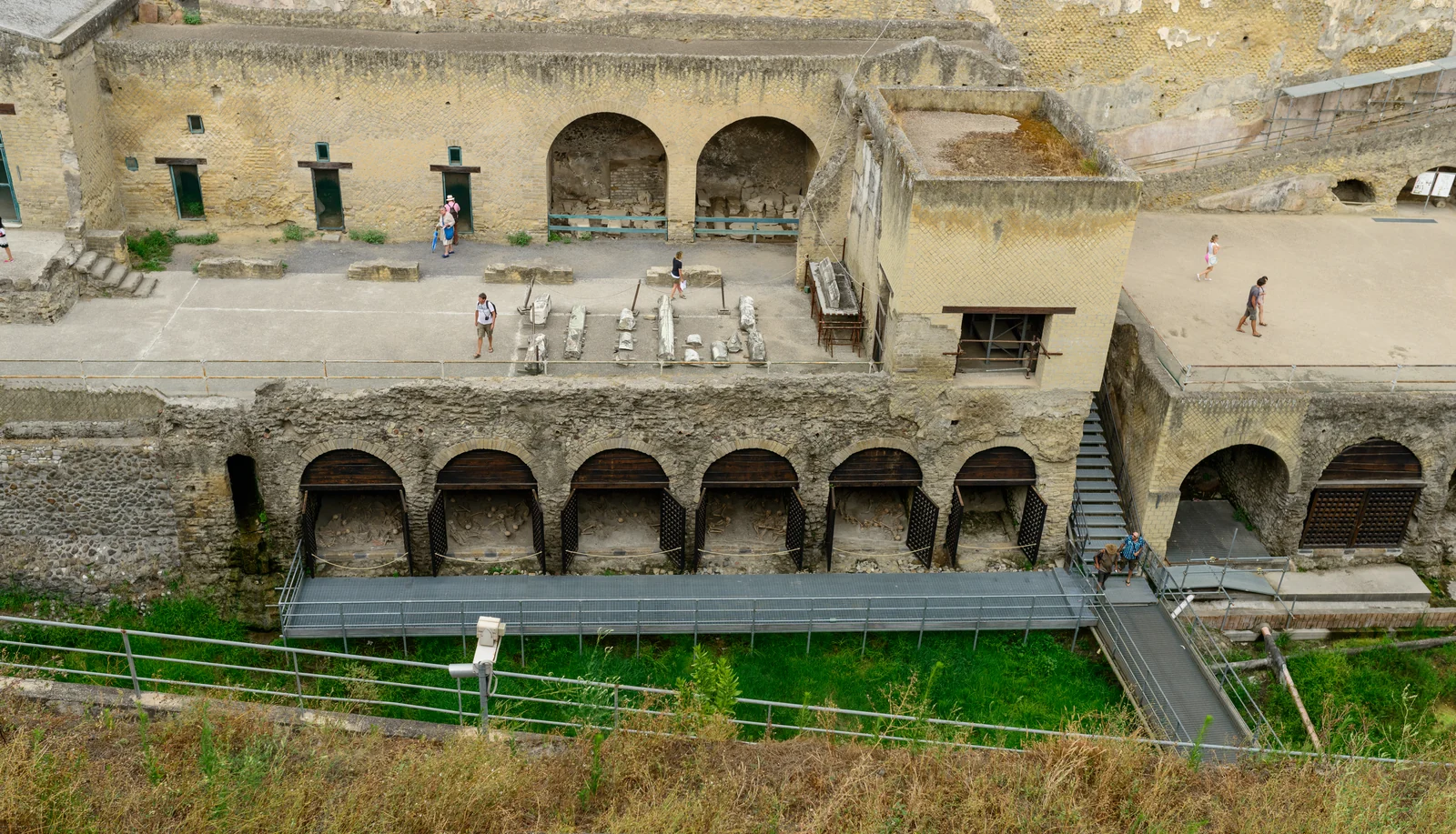
Photo: Norbert Nagel / Wikimedia Commons — CC BY-SA 3.0 · Resized and converted to WebP.
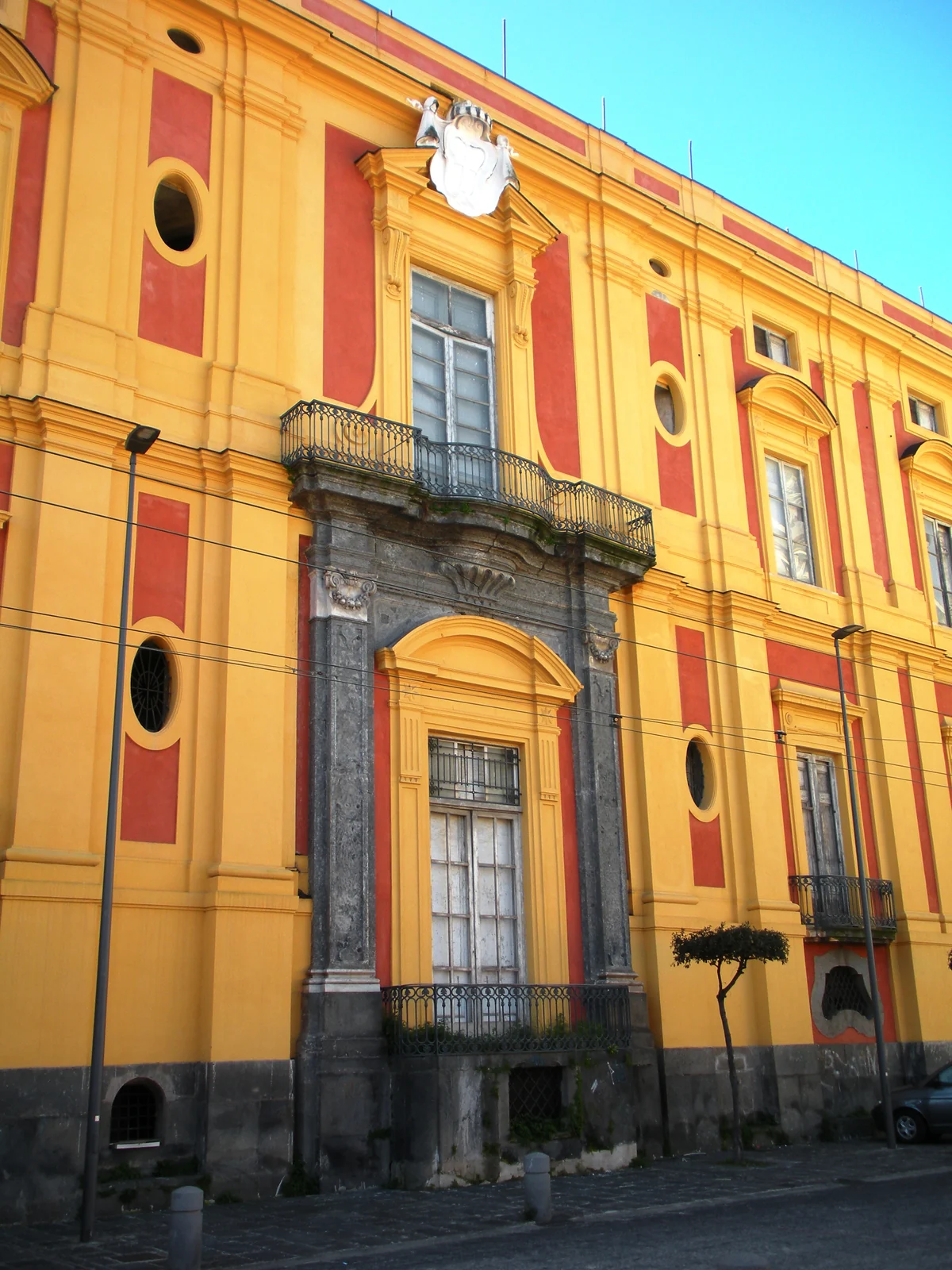
Photo: Dommaria / Wikimedia Commons — CC BY-SA 3.0 · Resized and converted to WebP.
What to see
The excavations. Of the roughly twenty hectares of the ancient town, more than four can be seen: four whole blocks of houses and shops, with the lower decumanus running through the middle, and among the public buildings the large palaestra with its cross-shaped pool, the seat of the College of the Augustales, the central baths, divided into a men’s and a women’s section, and the Suburban Baths, which the Park counts among the best-preserved bath buildings of the Roman world. On the seaward terrace are the sanctuary of Venus and the statue and funerary altar of Marcus Nonius Balbus, the town’s patron. The entrance is at Corso Resina 187; the Park has a second gate on Via dei Papiri Ercolanesi.
The houses. In November 2026, after decades of closure, two houses reopened: the House of the Mosaic Atrium, a large residence overlooking the sea, with the mosaic floor of its atrium deformed by the weight of the volcanic material and the monumental hall known as the Oecus Aegyptius, and the House of the Opus Craticium, a small building with several flats, a shop on the ground floor and its furniture still in place: it is the first house where visitors can go up to the first floor, looking down on Cardo IV, which led down to the sea. They are part of the Domus Project, which had already reopened the House of the Tuscan Colonnade and the House of the Wooden Shrine in March 2025 and the House of the Charred Furniture in July 2026. In the House of the Relief of Telephus there is a green area in the shade of pomegranate trees, included in the ticket, and a terrace over the archaeological area with a refreshment point.
The Antiquarium and the boat. The Antiquarium, set up in December 2018 and later made permanent, displays the statue of Marcus Nonius Balbus, the bronze Hydra of Lerna, the marble sculptures from the garden of the House of the Stags, frescoes from the Villa of the Papyri and a room with the objects found next to the people who tried to flee. The Boat Pavilion holds the carbonised remains of the boat from the ancient beach, with objects from fishing and sea trade.
The Theatre and the Villa of the Papyri, closed for now. The theatre, built under Augustus for about 2,500 spectators, is one of the few ancient theatres whose benefactor, Lucius Annius Mammianus Rufus, and architect, Publius Numisius, are both known; it is still buried and is visited along an underground route through the Bourbon tunnels, but it is closed for works until further notice. The Villa of the Papyri, still largely beneath the modern town, takes its name from the more than 1,800 carbonised papyrus rolls, the remains of the only intact library of the ancient world; its first plan was drawn in 1754 by the Swiss engineer Karl Weber. It is closed for works, with no reopening date.
The modern town. The basilica of Santa Maria a Pugliano, in the square of the same name, is according to the Park the oldest church in the town and in the whole Vesuvius area: founded in the eleventh century, in neoclassical forms, it keeps the statue of the Madonna of Pugliano, patron saint of Ercolano, and two Roman sarcophagi of the second and fourth centuries adapted as altars. At Corso Resina 283, Villa Campolieto was begun in 1755 by Mario Gioffredo for Prince Luzio de Sangro, Duke of Casacalenda, directed by Luigi Vanvitelli from 1763 and completed by his son Carlo in 1775: it has a staircase on the model of Caserta, an elliptical colonnade facing the sea and, in the ballroom, frescoes of the myth of Hercules. Next door, the Villa Favorita by Ferdinando Fuga, named by Ferdinand IV in honour of Queen Maria Carolina, has a park by the sea at Via Gabriele D’Annunzio 36, with the Casina dei Mosaici and the old Bourbon landing stage.
Sources: Parco archeologico di Ercolano — Area archeologica · Parco archeologico di Ercolano — Orari e biglietti (aggiornata il 7 maggio 2026) · Parco archeologico di Ercolano — Come arrivare · Parco archeologico di Ercolano — Dopo il restauro riaprono al pubblico la Casa dell’Atrio a Mosaico e la Casa a Graticcio (5 novembre 2026) · Parco archeologico di Ercolano — Aree di sosta · Parco archeologico di Ercolano — Antiquarium e Padiglione Barca · Parco archeologico di Ercolano — Il Teatro (aggiornata il 27 marzo 2026) · Parco archeologico di Ercolano — Villa dei Papiri (aggiornata il 27 marzo 2026) · Parco archeologico di Ercolano — Pugliano e il Mercato di Resina · Fondazione Ente Ville Vesuviane — Villa Campolieto · Fondazione Ente Ville Vesuviane — Parco sul mare della Villa Favorita
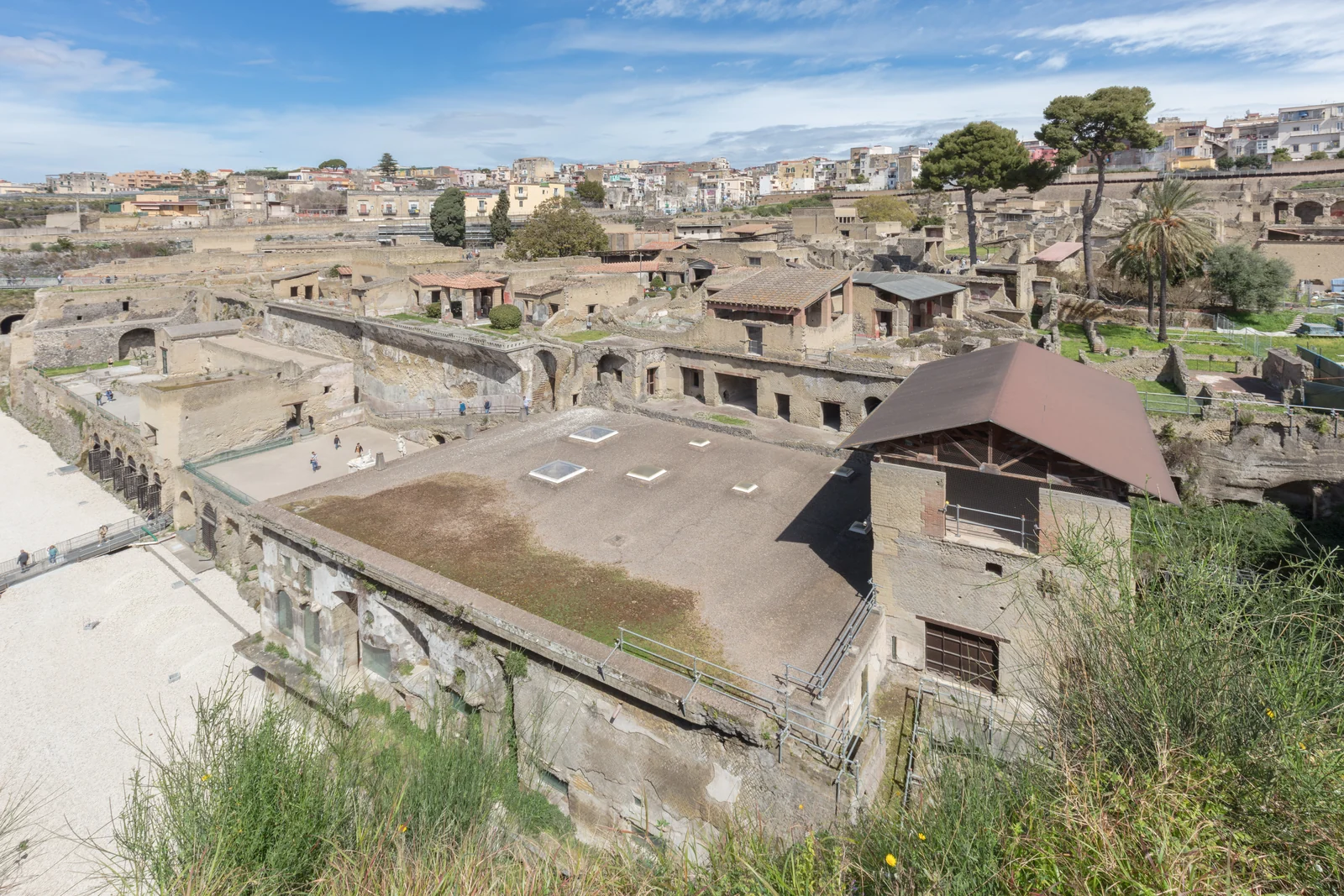
Photo: Diego Delso / Wikimedia Commons — CC BY-SA 4.0 · Resized and converted to WebP.
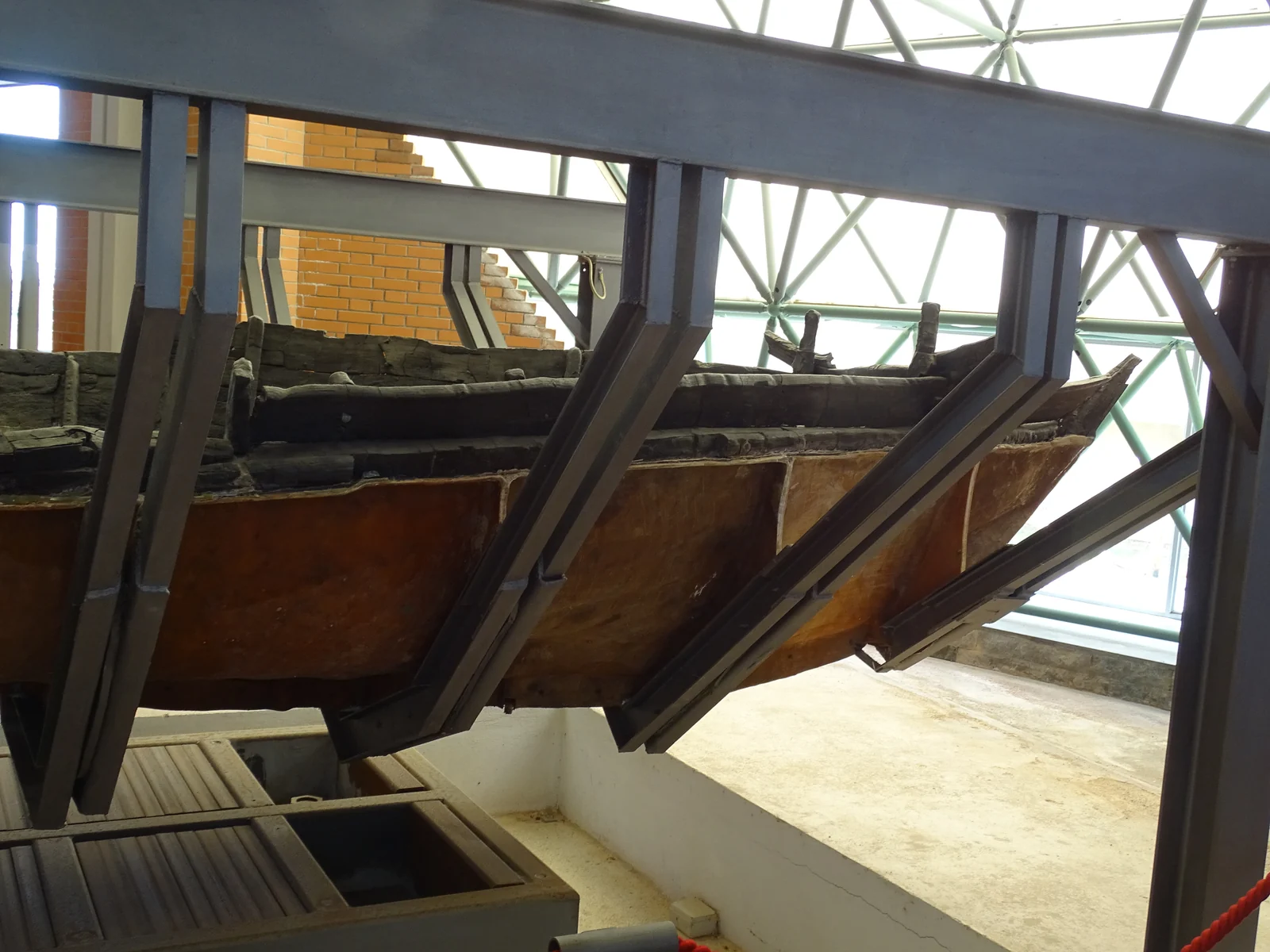
Photo: Ad Meskens / Wikimedia Commons — CC BY-SA 4.0 · Resized and converted to WebP.
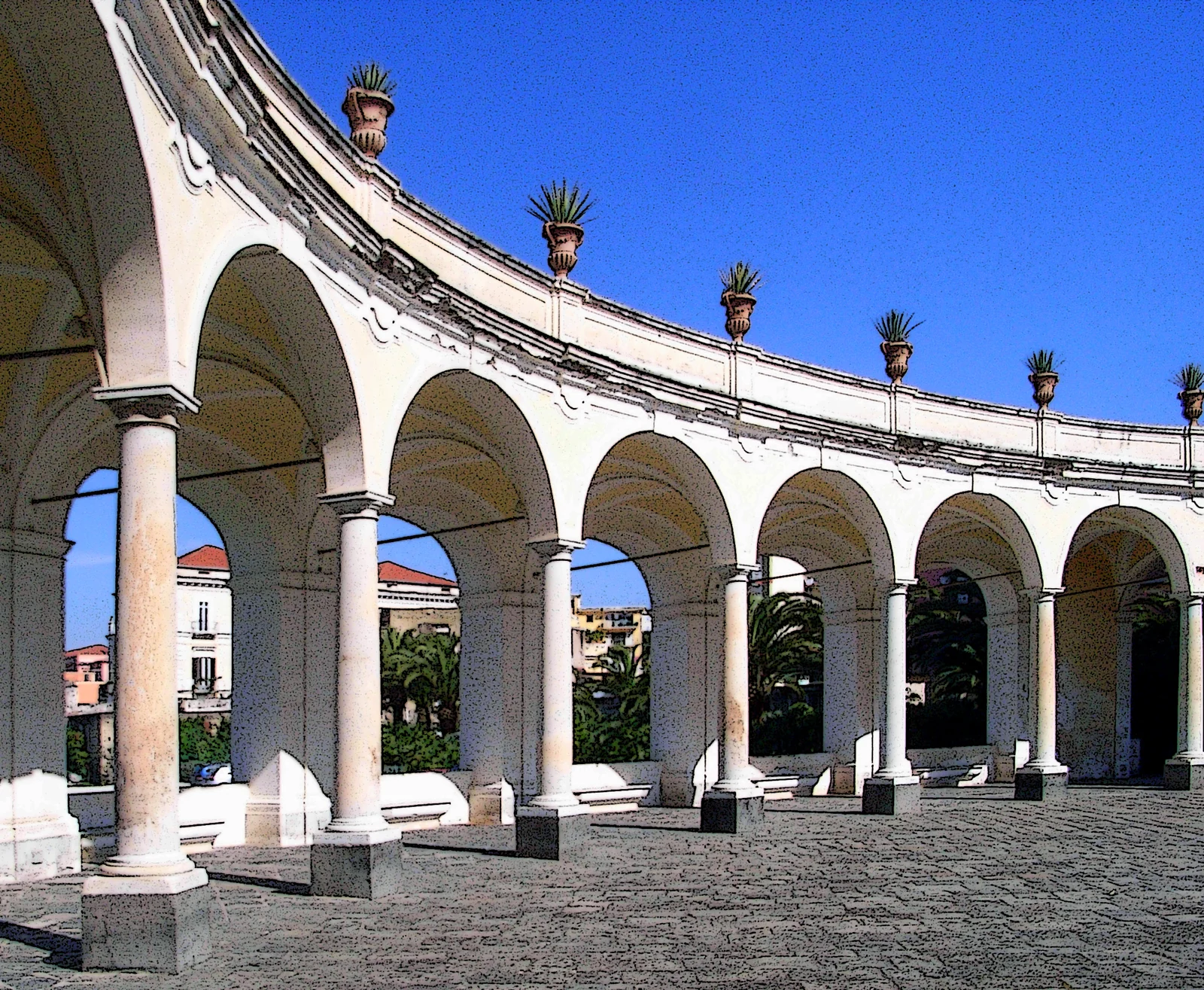
Photo: Enrico Viceconte / Wikimedia Commons — CC BY 2.0 · Resized and converted to WebP.
Flavours
Ercolano is one of the municipalities in the production area of the Pomodorino del Piennolo del Vesuvio PDO, the piennolo cherry tomato of Vesuvius. The Campania Region describes it as one of the oldest products of Campanian farming, even shown in the Neapolitan nativity scene: oval fruits with a pointed tip, a thick vermilion skin and a weight of no more than 25 grams, tied into large bunches, the “piennoli”, which are hung in airy rooms and keep until the end of winter. The specification also allows the preserve in jars known as “a pacchetelle”. The Region links its sweet and tangy flavour to the volcanic soils of Somma-Vesuvius and names it as an ingredient of Neapolitan cooking, from spaghetti with clams to pizza.
Wine has its own designation here too: Ercolano is one of the 15 municipalities of Lacryma Christi del Vesuvio DOC, which the Vesuvius National Park Authority counts among the Italian wines best known abroad. The white is made from Coda di volpe, locally called Caprettone, and Verdeca, with Falanghina and Greco; the red and the rosé from Piedirosso, called Palummina, and Sciascinoso, called Olivella, with Aglianico. The same Authority tells the legend of the name: God, recognising in the Gulf of Naples a piece of heaven stolen by Lucifer, wept, and where his tears fell the vine grew.
Sources: Regione Campania, Assessorato all’agricoltura — Pomodorino del Piennolo del Vesuvio DOP · Ente Parco nazionale del Vesuvio — Lacryma Christi del Vesuvio DOC · Ente Parco nazionale del Vesuvio — Agricoltura e artigianato
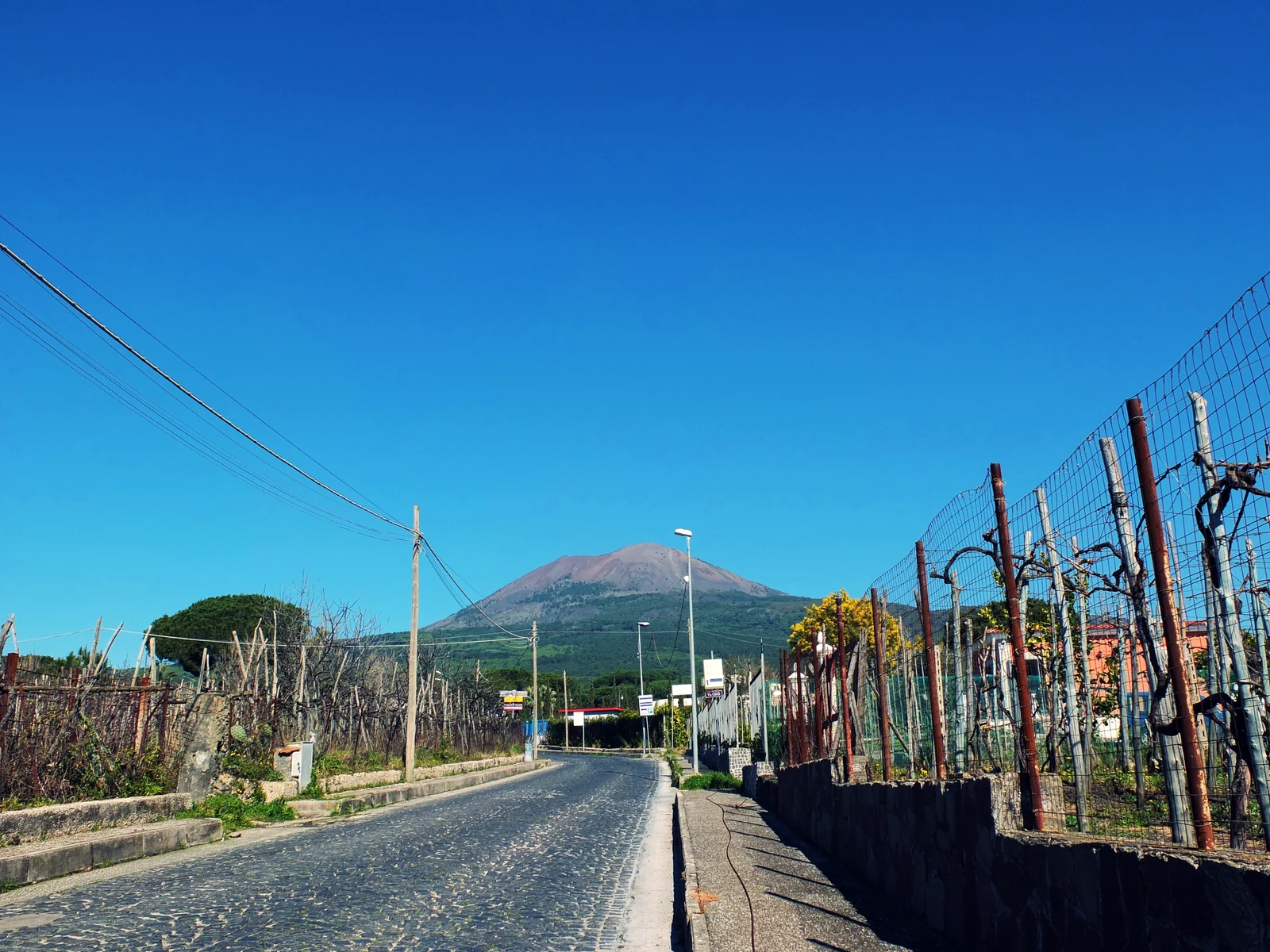
Photo: Carlo Mirante / Wikimedia Commons — CC BY 2.0 · Resized and converted to WebP.
Things to do
Climb to the crater of Vesuvius. Vesuvius is a caldera volcano, with the outer cone of Monte Somma and the younger inner cone, the Gran Cono; its last significant eruption was in 1944 and the national park that protects it was established in 1995. Nature trail no. 5, “Il Gran Cono”, starts from the square at 1,000 metres, within the municipality of Ercolano, at the end of the Ercolano-Vesuvio provincial road. Tickets are sold online only, up to thirty days ahead, in ten-minute slots. Parking is not allowed on the square and there are currently no public toilets: the parking areas along the provincial road are run by the Comune di Ercolano, and the Park Authority advises paying for parking only after buying the ticket. From the square you already see Monte Somma, with Punta Nasone at 1,132 metres.
Hunt for a one-off piece at the Resina market. The market runs along Via Pugliano: born during the Second World War with the sale of goods and clothes from passing American convoys, today, the Park writes, it is a place for lovers of vintage, frequented by young people, fashion fans and costume designers from Cinecittà.
See the town before the eruption. A few steps from the excavations, the MAV, the Virtual Archaeological Museum, recreates daily life in Pompeii and Herculaneum before AD 79 with more than seventy multimedia installations, virtual reconstructions and holograms.
With children and with reduced mobility. The Archaeological Park offers a map of the excavations with Geronimo Stilton for children and teenagers and the app “Avventura ad Ercolano”, designed for children with autism, on iPad only: the Park lends a tablet to those who ask by email five working days ahead. Children under 12 must be accompanied. Visitors with reduced mobility can follow the “Ercolano per tutti” route, marked in blue on the map, and since 2 November 2026 can borrow a wheelchair free of charge at the ticket office, while available.
Sources: Parco archeologico di Ercolano — Il Vesuvio · Ente Parco nazionale del Vesuvio — Il Gran Cono del Vesuvio · Parco archeologico di Ercolano — Pugliano e il Mercato di Resina · Parco archeologico di Ercolano — Il MAV, Museo archeologico virtuale · Parco archeologico di Ercolano — Accessibilità (aggiornata il 29 ottobre 2026) · Parco archeologico di Ercolano — Orari e biglietti (aggiornata il 7 maggio 2026)
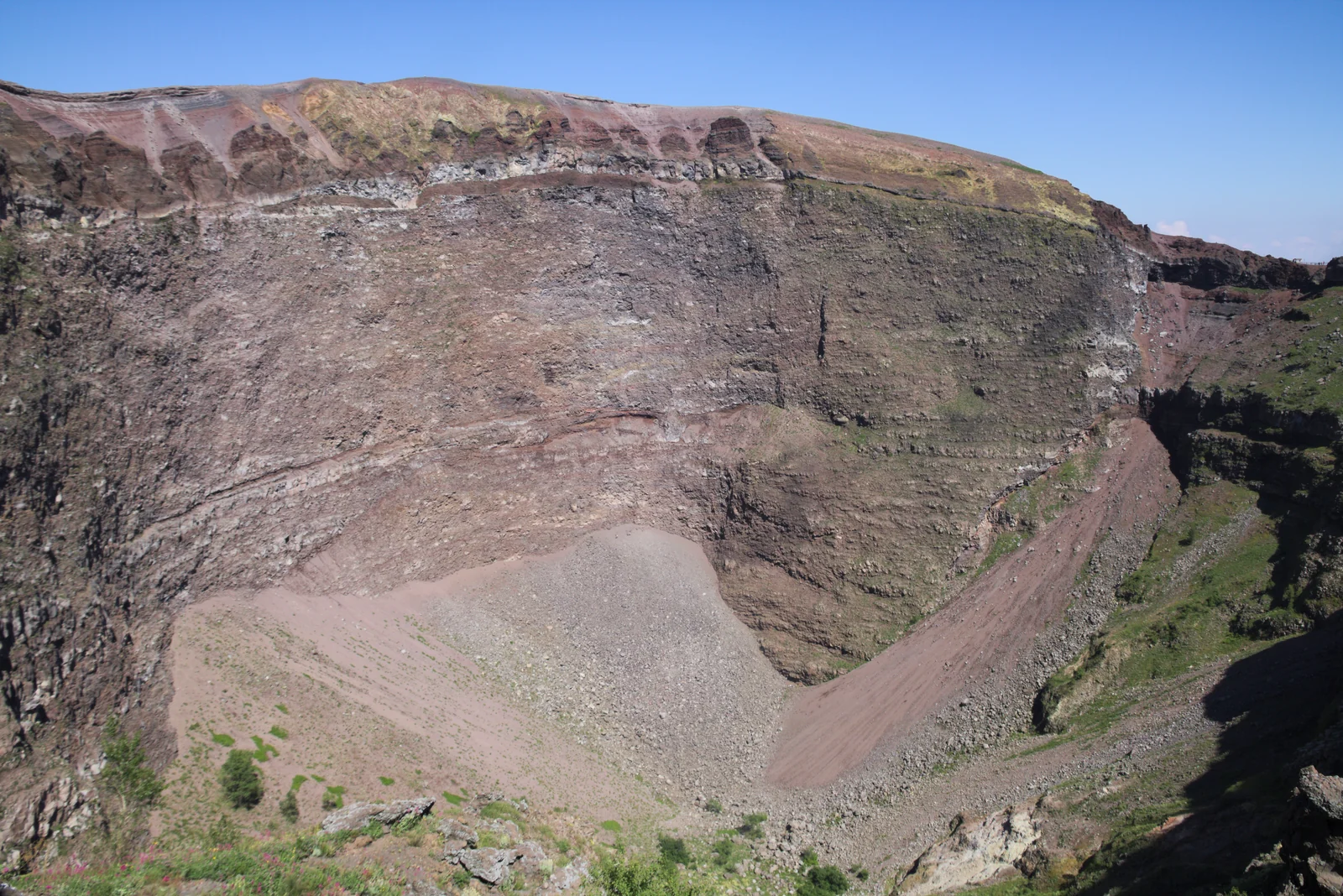
Photo: Ingo Mehling / Wikimedia Commons — CC BY-SA 4.0 · Resized and converted to WebP.
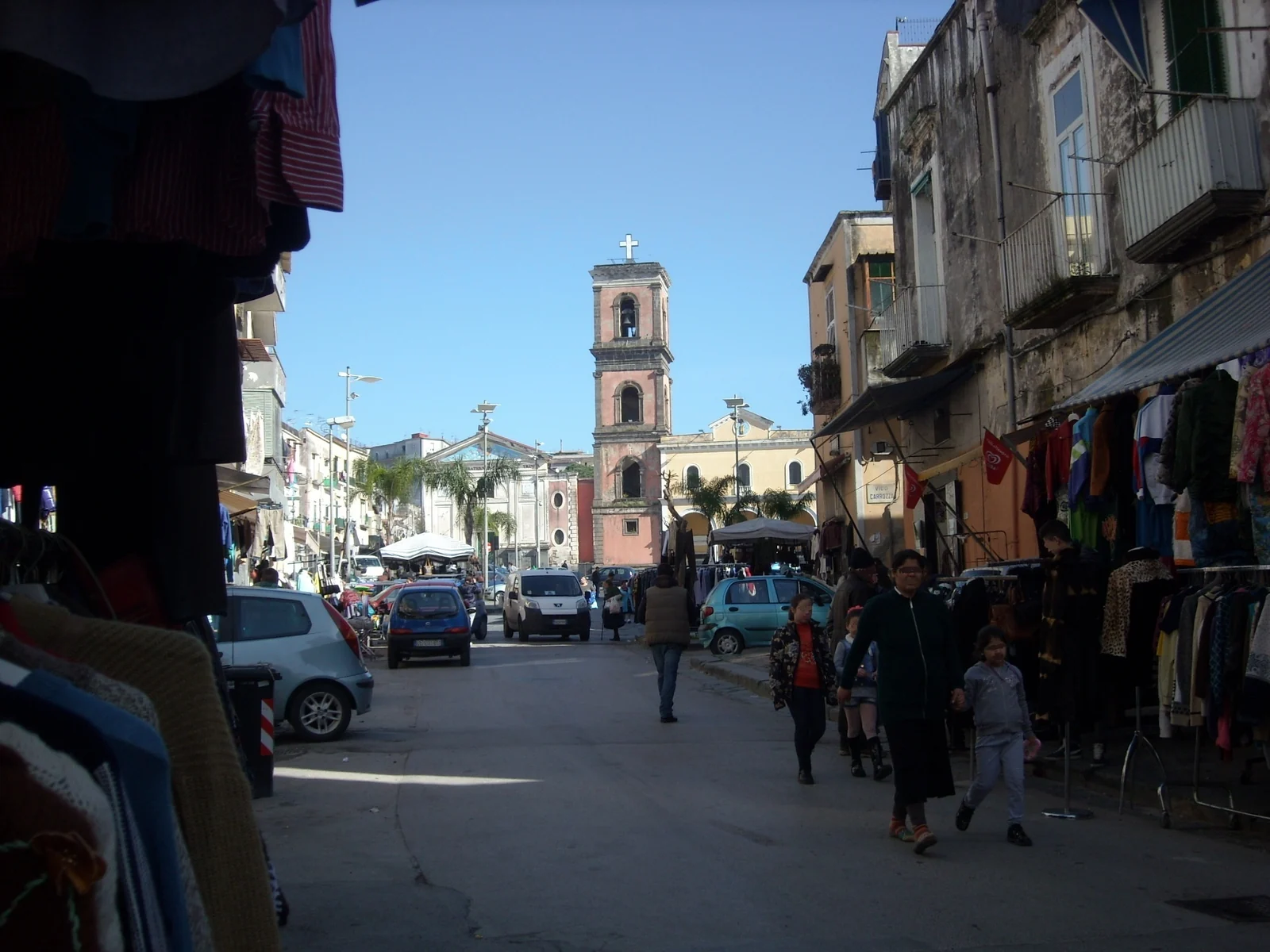
Photo: Dommaria / Wikimedia Commons — CC BY-SA 3.0 · Resized and converted to WebP.
When to go
The Archaeological Park is open every day of the year except 25 December; from 16 March to 14 October it closes later than in the winter months. On the first Sunday of every month and on 25 April, 2 June and 4 November admission to the excavations is free, without booking: the ticket is collected at the ticket office on the day. Access to the crater of Vesuvius also has hours that change with the seasons: longer in July and August, shorter from November to February.
For the flavours, piennolo tomatoes are harvested in whole bunches and, hung in airy rooms, keep for up to seven or eight months: unprocessed, they are eaten until the following spring.
Sources: Parco archeologico di Ercolano — Orari e biglietti (aggiornata il 7 maggio 2026) · Ente Parco nazionale del Vesuvio — Il Gran Cono del Vesuvio · Regione Campania, Assessorato all’agricoltura — Pomodorino del Piennolo del Vesuvio DOP
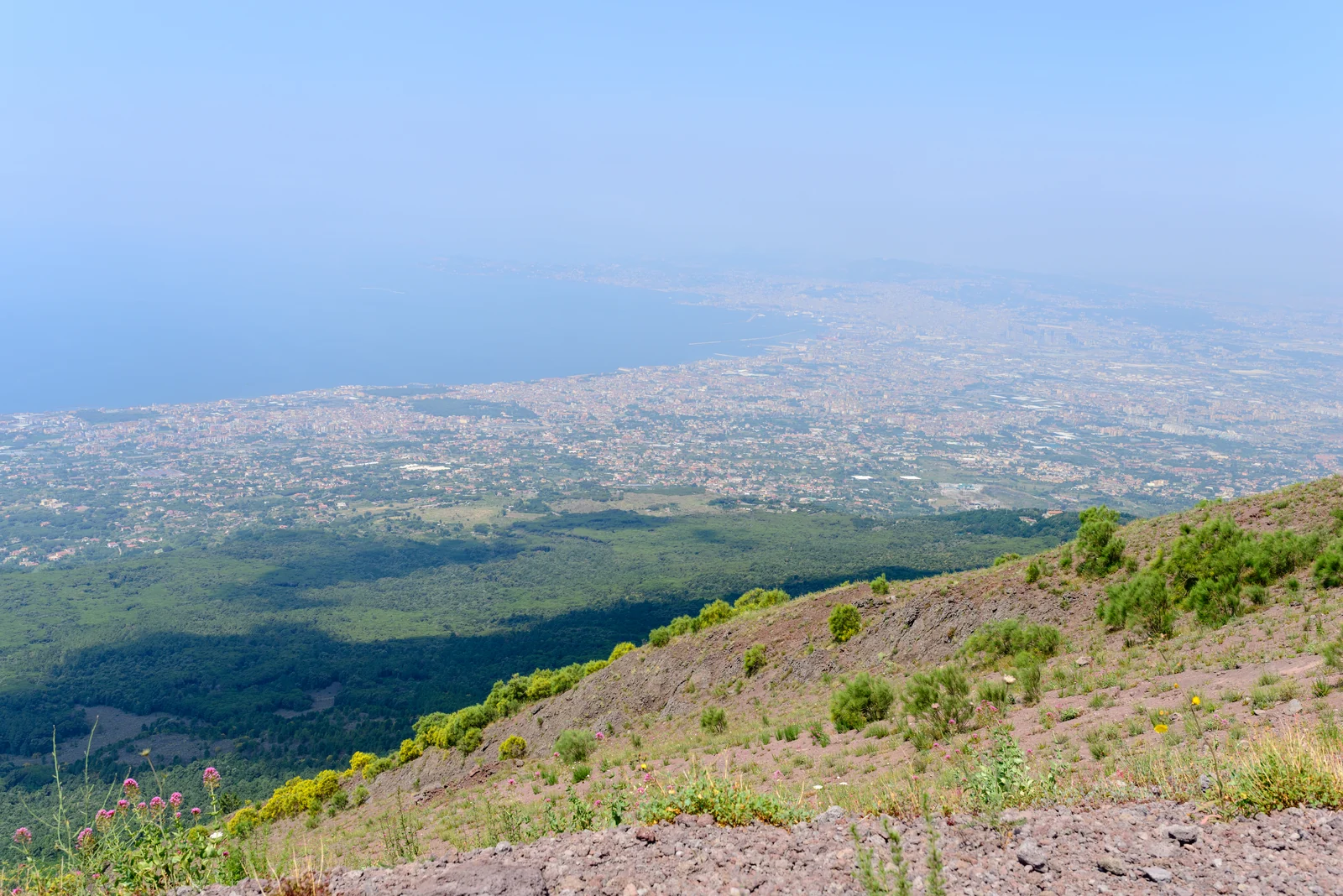
Photo: Norbert Nagel / Wikimedia Commons — CC BY-SA 3.0 · Resized and converted to WebP.
Getting there and around
By train. The station is Ercolano Scavi on the Circumvesuviana, EAV’s railway: from Napoli Centrale take the train on the Napoli-Sorrento line, and from the station to the Park entrance at Corso Resina 187 it is a six-minute walk. According to EAV’s station page the station has no lift, ramp or escalators: the nearest accessible stations are Torre del Greco and Portici Bellavista, and for wheelchair users EAV runs an on-demand transport service to the nearest accessible station.
By air and by car. From Naples-Capodichino airport the Alibus coach runs to the Central Station, from where you continue on the Circumvesuviana, Napoli-Sorrento or Napoli-Poggiomarino lines. By car take the A3 Napoli-Salerno motorway to the Ercolano Scavi exit and follow the signs for the Archaeological Park; the Comune has a car park on Via dei Papiri Ercolanesi, the street of the Park’s second gate. For Vesuvius, drive up the Ercolano-Vesuvio provincial road.
Sources: Parco archeologico di Ercolano — Come arrivare · EAV (Ente Autonomo Volturno) — Impianto: Ercolano Scavi Vesuvio · Parco archeologico di Ercolano — Orari e biglietti (aggiornata il 7 maggio 2026) · Ente Parco nazionale del Vesuvio — Il Gran Cono del Vesuvio
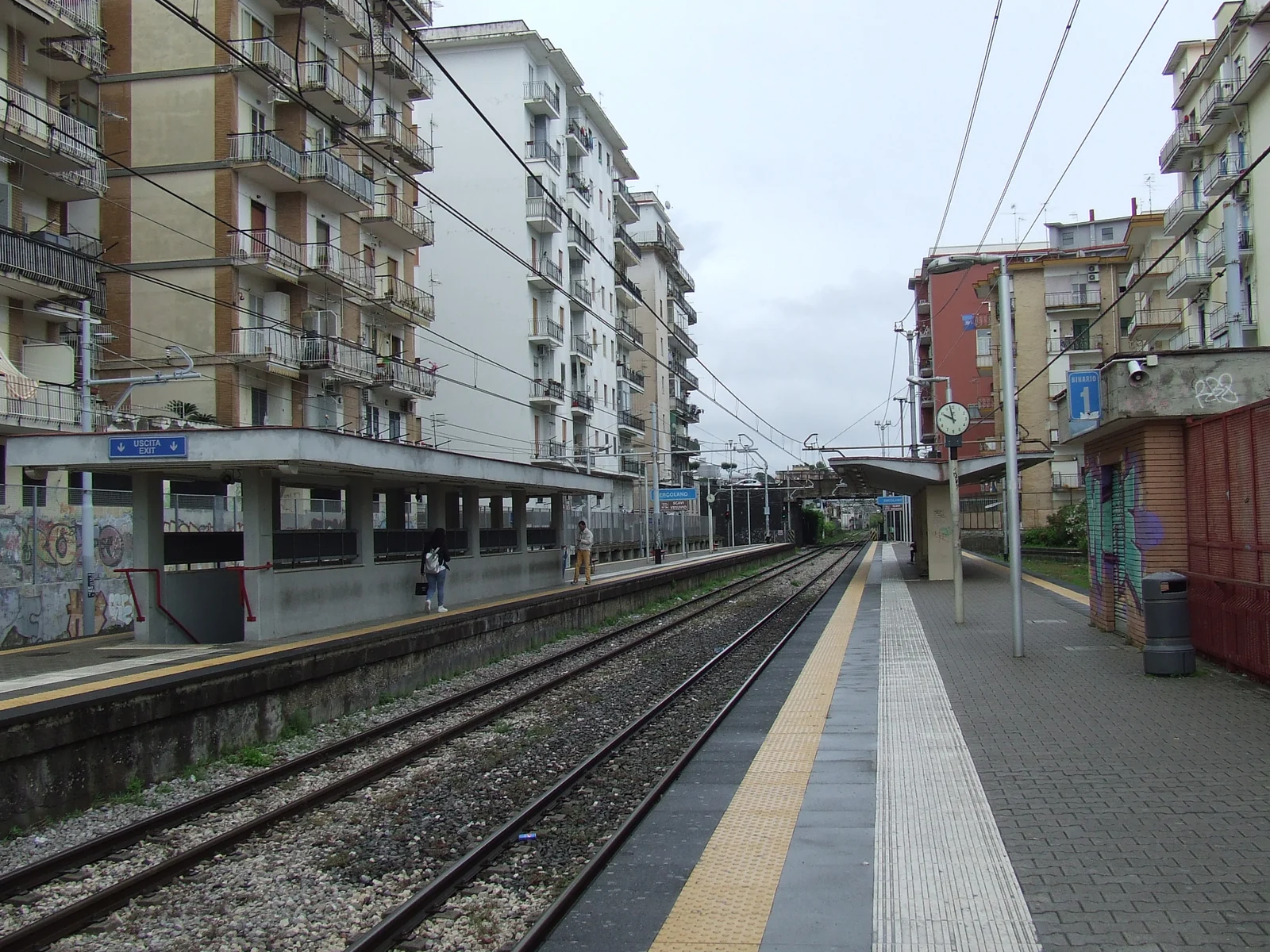
Photo: Retaggio / Wikimedia Commons — CC BY-SA 4.0 · Resized and converted to WebP.
Tourism
Anyone staying overnight in Ercolano pays the tourist tax, per person and per night, to the host at check-out, who issues a receipt. The council regulation approved on 27 May 2026 sets 2 euros a night in hotels, bed & breakfasts, holiday homes, campsites, farm stays and short-term rentals, up to a maximum of 15 nights, and 50 cents in hostels, up to 7 nights. Exempt among others are under-18s, people with a recognised disability of 65% or more, those assisting a patient admitted to the town’s hospitals or being treated there as day patients, teachers accompanying school groups, coach drivers and one tour leader for every 25 participants in organised groups; except for minors, the exemption is declared to the accommodation on the council’s form.
The part of the municipality that climbs towards the crater is in the Vesuvius National Park, and the safeguard measures annexed to the decree that created it apply throughout the park to visitors too: wild animals are not caught or disturbed, wild plants are not picked or damaged, rocks and other materials of geological interest are not taken away, there is no camping outside equipped areas, and motor vehicles stay on roads open to public traffic. In the most protected zones motor sports are also forbidden. Picking mushrooms and other woodland produce is allowed, within the rules and local customs.
Sources: Città di Ercolano — Regolamento per l’applicazione dell’imposta di soggiorno (deliberazione commissariale n. 108 del 27/05/2026) · DPR 5 giugno 1995, Istituzione dell’Ente Parco nazionale del Vesuvio, con l’allegato A, Misure di salvaguardia
“Come to Ercolano as a guest, not as a tourist: that is how these places truly let you know them.”
Accommodation in figures
In the Ministry of Tourism’s national database of accommodation (BDSR), on 12 October 2026, Ercolano had 229 establishments with a verified national identification code (CIN): 7 hotel-type establishments, 58 non-hotel establishments and 164 other establishments.
Sources: Ministero del Turismo – Banca Dati Strutture Ricettive (dashboard pubblica)
Nearby
Together with those of Pompeii and Torre Annunziata, the excavations of Herculaneum form UNESCO site no. 829. Along the Miglio d’Oro, beyond the villas of Ercolano, the Fondazione Ente Ville Vesuviane runs Villa delle Ginestre in Torre del Greco, where the poet Giacomo Leopardi spent the last years of his life; towards Naples, in Portici, stands the Royal Palace wanted by Charles of Bourbon, which gave rise to the Miglio d’Oro.
Sources: Parco archeologico di Pompei (Ministero della cultura) — Ufficio Unesco: sito seriale n. 829 · Parco archeologico di Ercolano — Il Miglio d’Oro
The town council
The official website of the Comune di Ercolano, registered in IndicePA, the index of the digital addresses of Italy’s public administrations, is the reference for the town council’s offices, opening hours and news. Its address is listed among the sources of this section.
Sources: Comune di Ercolano, sito istituzionale · IndicePA (AgID), Indice dei domicili digitali delle pubbliche amministrazioni: dataset Enti
Where to stay
In the municipality of Ercolano the national database of the Ministry of Tourism lists 229 accommodation businesses with a verified CIN code: 7 hotels, 58 other licensed accommodation and 164 other types such as B&Bs and private rentals.
Licensed businesses from the official list of accommodation named as the source in this section. Where the list gives it, the property's official identification code appears next to its name: the national CIN code, or the code assigned by the Region or by the body that keeps the list. Private individuals are not listed. This list is the official census of licensed businesses, not a list of Apulica partners: to stay in Ercolano you do not have to check one property after another yourself; write to Apulica and we look for the stay that suits your journey, checking availability and conditions before any confirmation.
HOTEL PUNTA QUATTRO VENTI
Hotel · ★★★★
Regional code (CUSR) 15063064ALB2Q9R
Agriturismo Maison Di Fiore
Farm stay
Regional code (CUSR) 15063064EXTNQGT
7CENTOVESUVIANO
Guest rooms
Regional code (CUSR) 15063064EXT0189
PARCO HOTEL MIGLIO D'ORO
Hotel · ★★★★
Regional code (CUSR) 15063064ALB0028
AZIENDA AGRICOLA LANDSCAPE DI OLIVIERO FEDERICA
Farm stay
Regional code (CUSR) 15063064EXT0112
BONHEUR LUXURY ROOMS
Guest rooms
Regional code (CUSR) 15063064EXT0192
VILLA SIGNORINI
Hotel · ★★★★
Regional code (CUSR) 15063064ALB0033
IL SAN CRISTOFORO
Farm stay
Regional code (CUSR) 15063064EXT0141
CASA MICHELE
Guest rooms
Regional code (CUSR) 15063064EXTBPCF
ALBERGO BELVEDERE
Hotel · ★★★
Regional code (CUSR) 15063064ALB0001
First the places that presented themselves to Apulica, the latest first; then one place of each type in turn, by official category and stars, then by name. No position is paid for.
All 53 entries in alphabetical order
Page 1 of 6
| Name | Type | Identification code |
|---|---|---|
| 7CENTOVESUVIANO | Guest rooms | Regional code (CUSR) 15063064EXT0189 |
| Agriturismo Maison Di Fiore | Farm stay | Regional code (CUSR) 15063064EXTNQGT |
| ALBERGO BELVEDERE | Hotel | Regional code (CUSR) 15063064ALB0001 |
| ALBERGO ERCOLANO | Hotel | Regional code (CUSR) 15063064ALB0002 |
| AZIENDA AGRICOLA LANDSCAPE DI OLIVIERO FEDERICA | Farm stay | Regional code (CUSR) 15063064EXT0112 |
| BONHEUR LUXURY ROOMS | Guest rooms | Regional code (CUSR) 15063064EXT0192 |
| CASA MICHELE | Guest rooms | Regional code (CUSR) 15063064EXTBPCF |
| DECUMANO MASSIMO | Guest rooms | Regional code (CUSR) 15063064EXT0146 |
| DIMORA VESUVIANA | Guest rooms | Regional code (CUSR) 15063064EXT0171 |
| DOGANA ROOMS | Guest rooms | Regional code (CUSR) 15063064EXT0248 |
Ask Apulica for a stay in Ercolano We reply shortly, within a few hours at most, with a proposal for you to consider.
Sources: Ministero del Turismo – Banca Dati Strutture Ricettive (dashboard pubblica), 2026-10-12
YOUR JOURNEY
How to shape a journey here
To include Ercolano in a trip, or to ask for a guide or a transfer, you can write to Apulica with the button below.
Plan your tripKeep exploring
Pompei
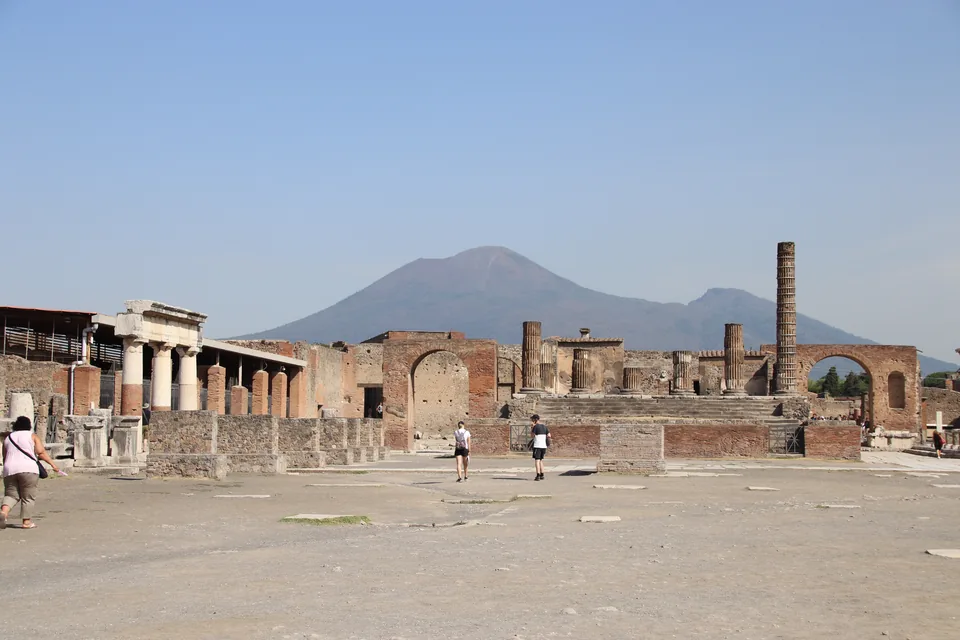
Pompei (NA), Campania: 23,647 residents, 12.43 km². The official facts of the municipality, its town council website and its registered accommodation. The ancient city buried by Vesuvius in AD 79, a UNESCO World Heritage site since 1997, with the Forum, the Amphitheatre, the Villa of the Mysteries and the Antiquarium; the Shrine of the Blessed Virgin of the Rosary founded by Saint Bartolo Longo, and the Supplication of 8 May and October.
Read the guide →Photo: Gary Todd from Xinzheng, China / Wikimedia Commons — Public domain · Resized and converted to WebP.

Torre del Greco
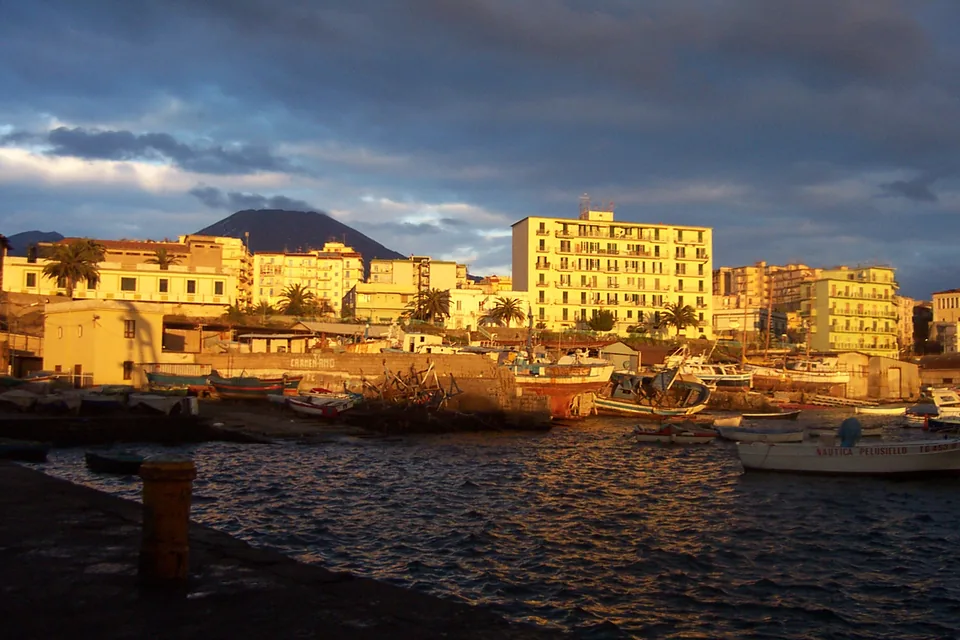
Torre del Greco (NA), Campania: 79,397 residents, 30.67 km². The official facts of the municipality, its town council website and its registered accommodation. Coral and cameos, Vesuvius and the eruptions of 1631 and 1794, Leopardi’s Villa delle Ginestre, the basilica of Santa Croce and the Feast of the Four Altars.
Read the guide →Photo: Simone Di Somma / Wikimedia Commons — CC BY-SA 3.0 · Resized and converted to WebP.

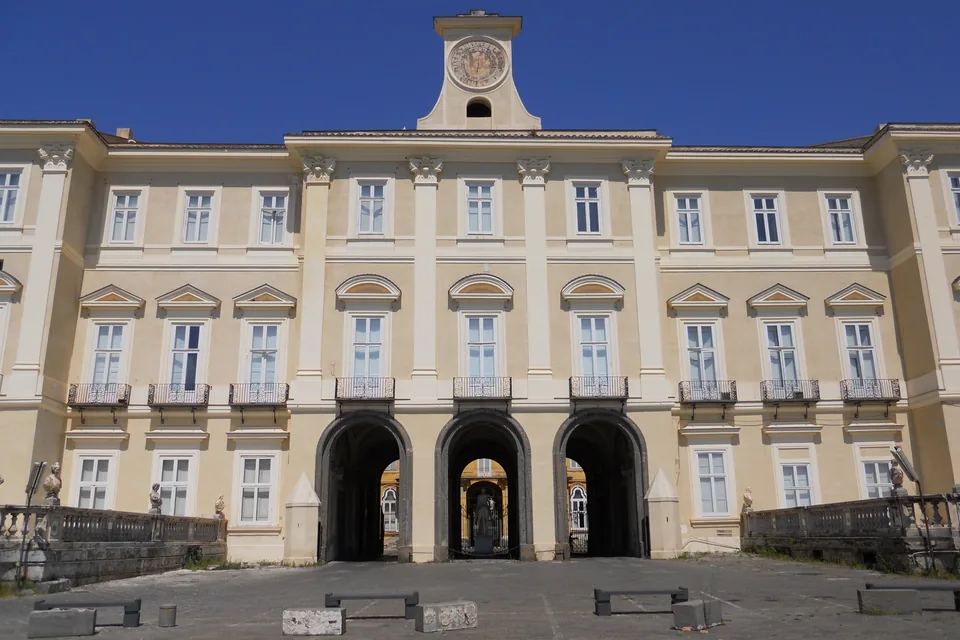
Portici
Portici (NA), Campania: 51,429 residents, 4.64 km². The official facts of the municipality, its town council website and its registered accommodation.
Read the guide →Photo: Ferdinando Scala / Wikimedia Commons — CC BY-SA 3.0 · Resized and converted to WebP.

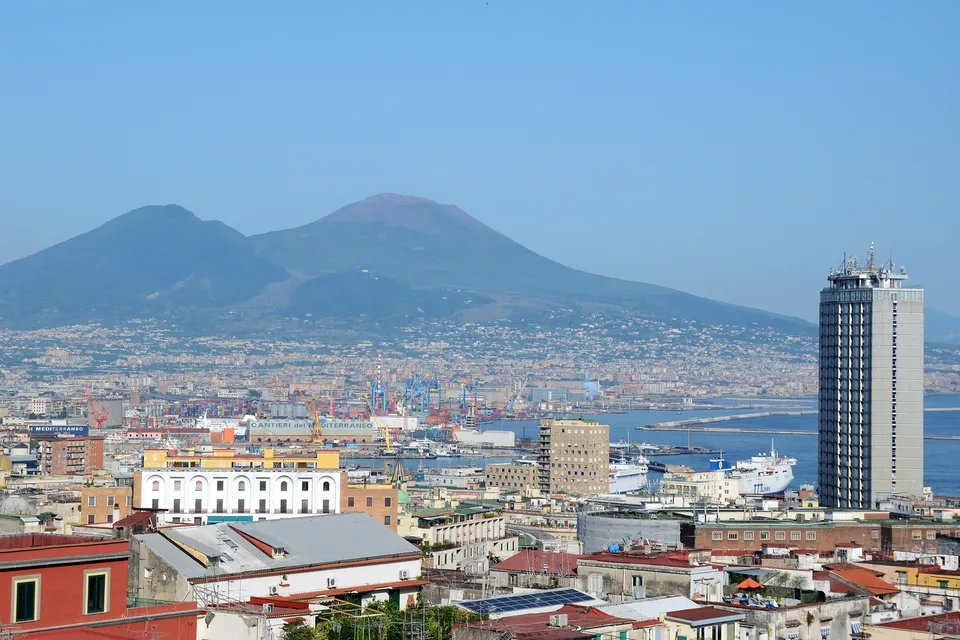
Naples
Naples (NA), capital of Campania: 909,013 residents, 119.24 km². The UNESCO-listed historic centre, the museums, the San Carlo, pizza as UNESCO heritage, San Gennaro and, nearby, Vesuvius, Pompeii and the islands.
Read the guide →Photo: Livioandronico2013 / Wikimedia Commons — CC BY-SA 4.0 · Resized and converted to WebP.

Torre Annunziata
Torre Annunziata (NA), Campania: 39,719 residents, 7.59 km². The official facts of the municipality, its town council website and its registered accommodation.
Read the guide →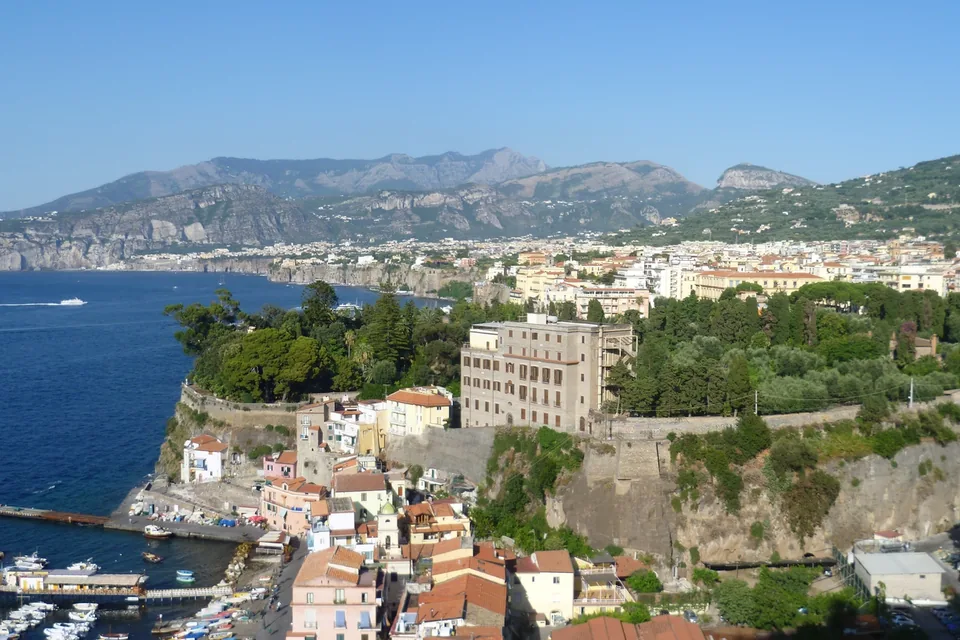
Sorrento
Sorrento (NA), Campania: 15,152 residents, 10.00 km². The official facts of the municipality, its town council website and its registered accommodation. The town on its tuff cliff, the old centre with the basilica of Sant’Antonino and the cloister of San Francesco, the Museo Correale, the Sorrento Lemon PGI, the marinas and the train from Naples.
Read the guide →Photo: Kim Traynor / Wikimedia Commons — CC BY-SA 3.0 · Resized and converted to WebP.
