

Why go
Isernia stands on a hill between two valleys, cut by the Carpino and Sordo streams, in the middle of a valley lying between the Mainarde and Matese mountains. It is a very old town: in its territory, at Isernia La Pineta, one of the richest Lower Palaeolithic sites in Europe was discovered, and here the oldest human remain in Italy was found, the milk tooth of a child who lived about 586,000 years ago. The National Palaeolithic Museum tells this story beside the excavations.
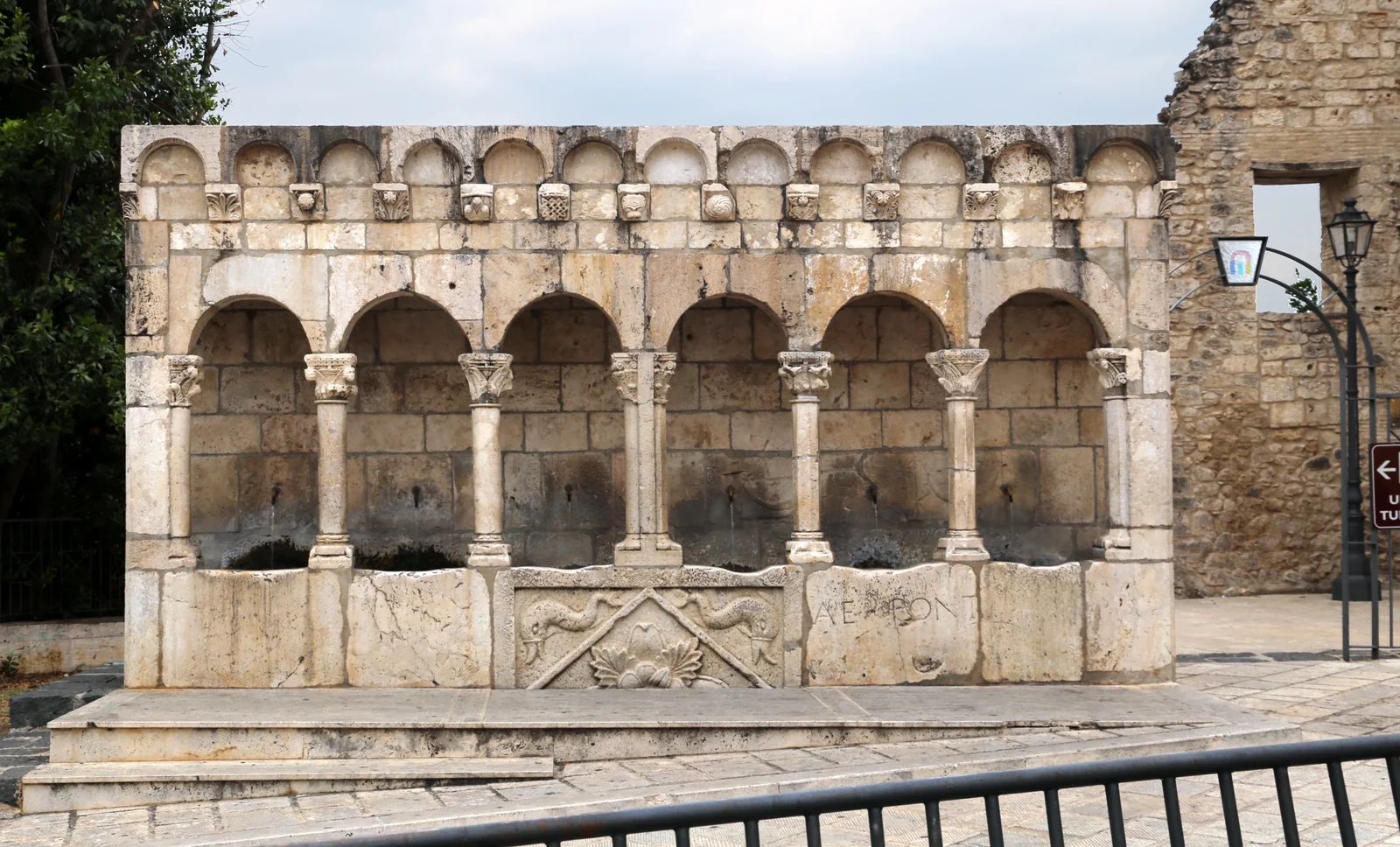
In the old centre, along Corso Marcelli, you can read the Samnite, Roman and medieval town: the Cathedral of San Pietro Apostolo stands on the podium of an Italic temple, and its bell tower straddles the street with the Arco di San Pietro; a little further on is the Fontana Fraterna, considered the symbol of the town, built with stones from different eras, some of them Roman; the old monastery of Santa Maria delle Monache houses the archaeological museum.
Isernia is also the town of the onion, for centuries the star of its late-June fair, and of bobbin lace. It has been a provincial capital since 1970.
Isernia is a municipality in the province of Isernia, in Molise. Its ISTAT code is 094023. It is the capital of the province of Isernia. On 1 January 2025 it had 20,529 residents. The municipal territory covers 69.15 km² and ranges from 289 to 902 metres above sea level; the town hall stands at about 419 metres.
Sources: Italia.it (Ministero del Turismo) — Isernia · Treccani, Enciclopedia on line — Isernia · Comune di Isernia — Cenni storici · Ministero della Cultura — Museo nazionale del Paleolitico di Isernia · Comune di Isernia — Cattedrale e Arco di San Pietro Apostolo · Comune di Isernia — Fontana Fraterna · Comune di Isernia — Complesso di Santa Maria delle Monache · Comune di Isernia — La Fiera delle Cipolle · ISTAT, Codici statistici delle unità amministrative territoriali: elenco dei comuni al 21 febbraio 2026 · ISTAT, Popolazione residente per età, sesso e stato civile al 1° gennaio 2025 (POSAS) · ISTAT, Principali statistiche geografiche sui comuni: superficie e altimetria al 31 dicembre 2021
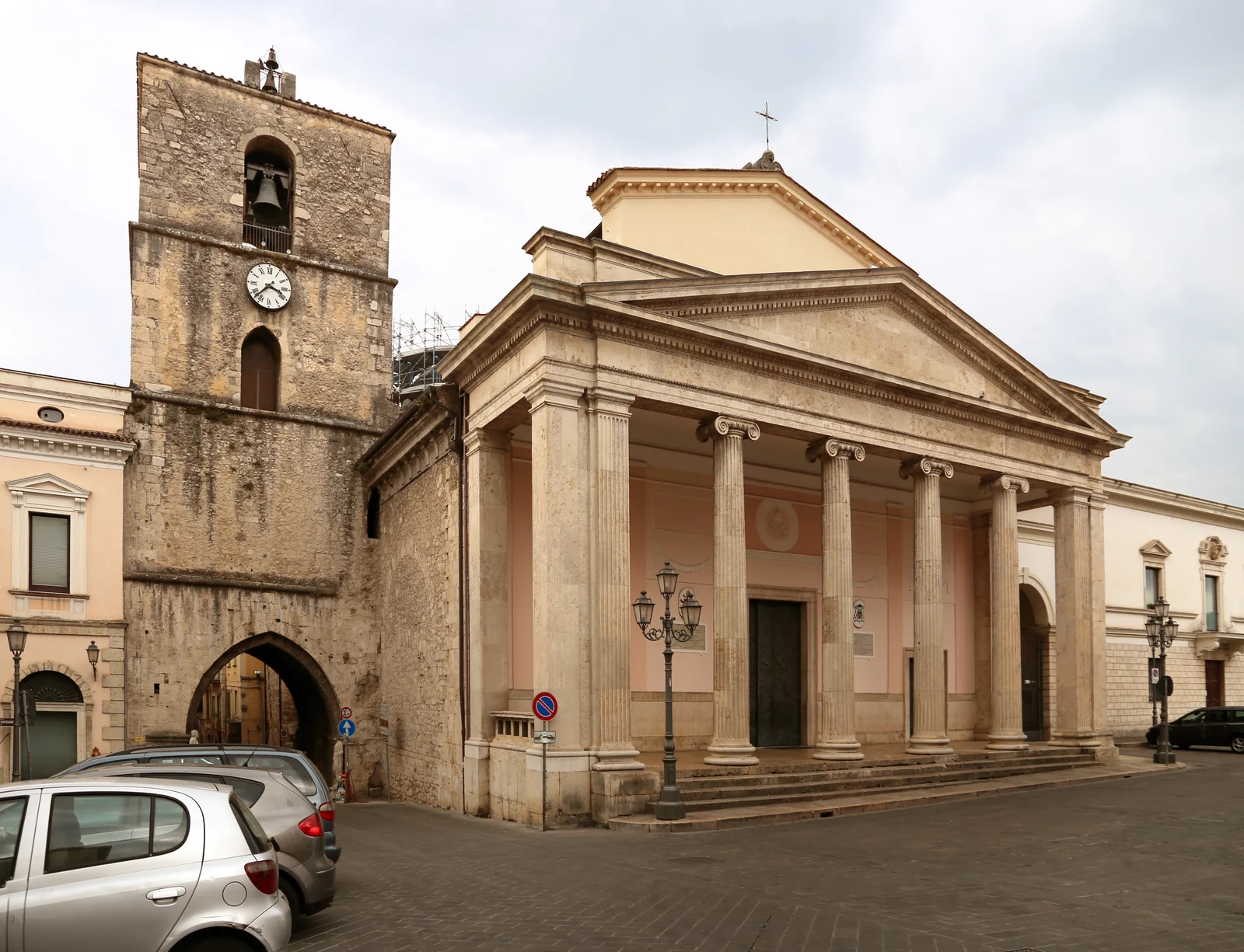
Photo: Sailko / Wikimedia Commons — CC BY 3.0 · Resized and converted to WebP.
History
People already lived here in the Palaeolithic: the Isernia La Pineta site, uncovered by chance in 1978 during work on the Naples-Vasto highway, has yielded stone tools and the bones of bison, rhinoceros, elephants and bears. The town's history, though, begins with the Samnites. The hill between the two valleys was a strategic spot, and in 263 BC Rome, after its hard-won victory over the Samnites, founded the Latin colony of Aesernia here, which stayed loyal to the Romans during the Second Punic War. In the Social War the Italic peoples seized it and made it their capital; Sulla reduced it to rubble, but the town was rebuilt, became a municipium and flourished in the age of Caesar and Augustus.
Destroyed by the barbarians in 456 and struck three times by Saracen raids in the ninth century, in the Middle Ages it was repeatedly burnt and devastated by earthquakes. Under the Normans it belonged to the county of Molise; under the Swabians it was a royal town, the only one in Molise. In the thirteenth century it was the birthplace of Pietro Angelerio, the future Pope Celestine V, and of the jurist Andrea d'Isernia. It then passed from one fief to another, until Alfonso I of Aragon proclaimed it a royal town in perpetuity; it became one again from 1743 until the end of feudalism. In 1780 it was the most populous town of the County of Molise, with 5,156 inhabitants.
In 1799 the people of Isernia opposed the French armies, and on 26 July 1805 a violent earthquake caused many deaths and severe damage. The hardest blow came in the Second World War: the Allied bombing of September 1943 flattened almost a third of the town and killed a great many people. On 3 March 1970 Isernia became the capital of the new province, created to break the isolation of the mountain villages of upper Molise.
Sources: Ministero della Cultura — Museo nazionale del Paleolitico di Isernia · Treccani, Enciclopedia on line — Isernia · Comune di Isernia — Cenni storici
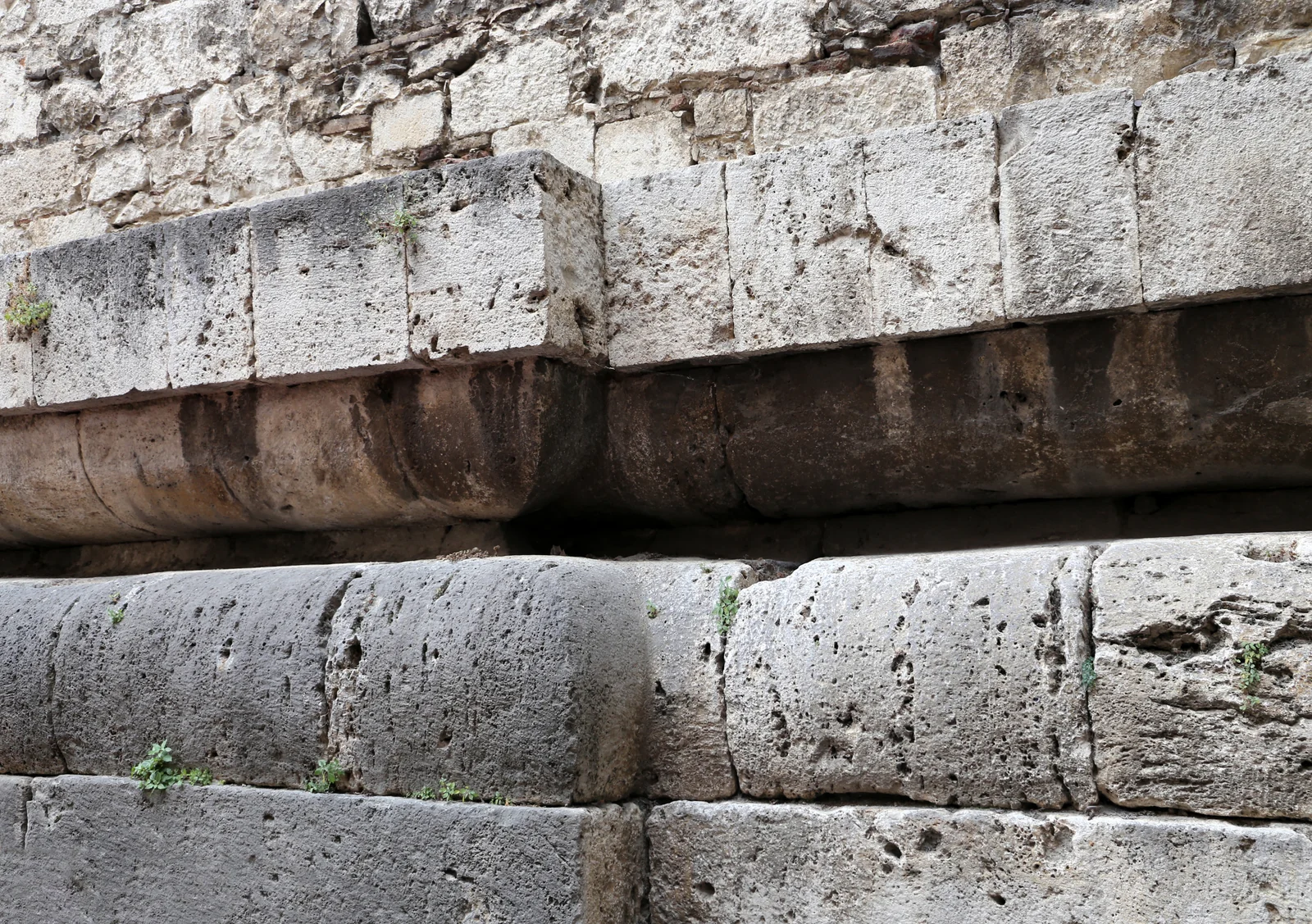
Photo: Sailko / Wikimedia Commons — CC BY 3.0 · Resized and converted to WebP.
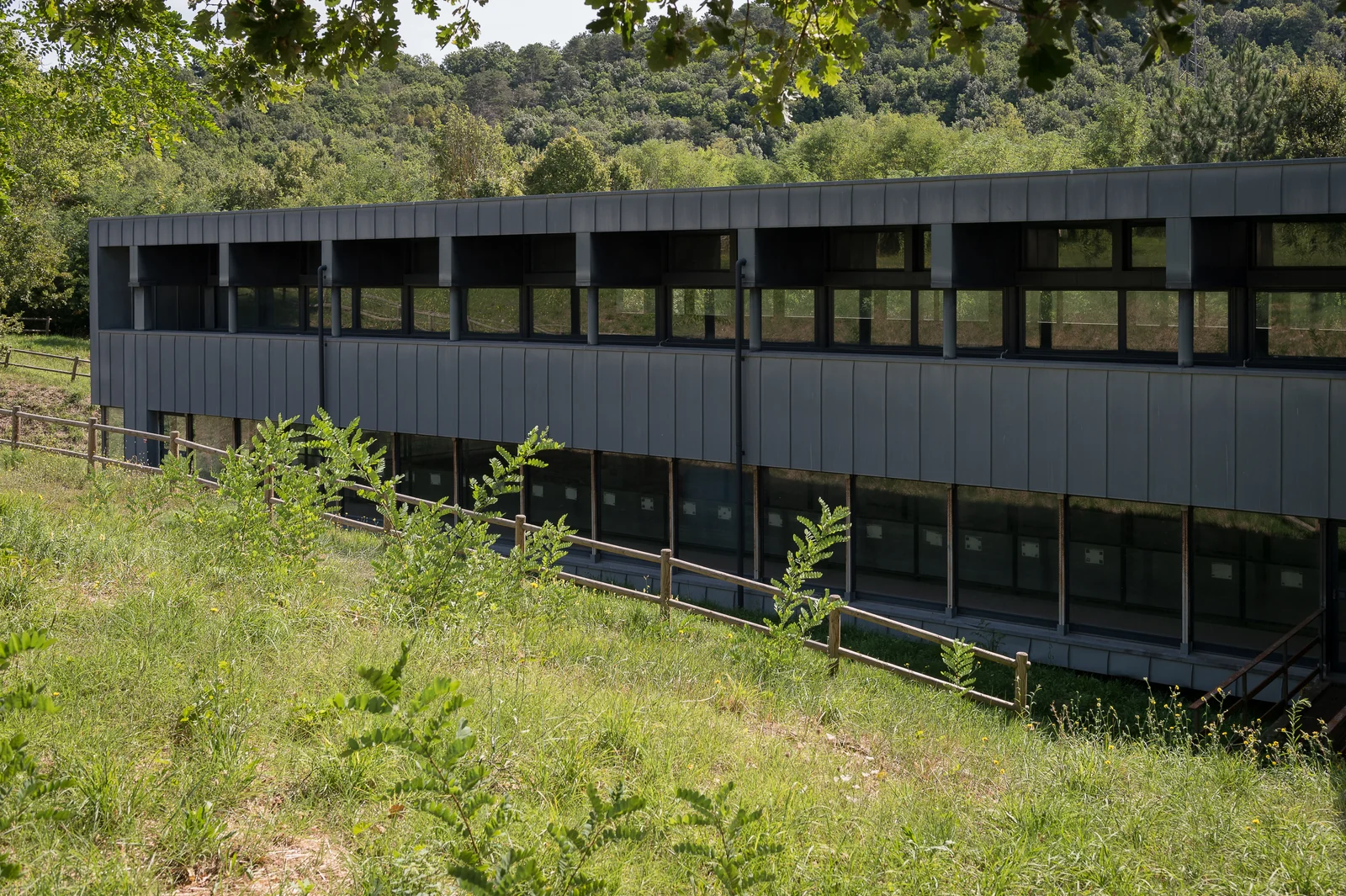
Photo: Thilo Parg / Wikimedia Commons — CC BY-SA 4.0 · Resized and converted to WebP.
What to see
The Cathedral of San Pietro Apostolo, in Piazza Andrea d'Isernia, stands on the Latin colony's third-century BC temple to Jupiter, Juno and Minerva: the travertine podium can be seen along Corso Marcelli, and inside the church a floor almost entirely of glass, from 2002, reveals the ancient structures. Rebuilt several times after earthquakes, it has the neoclassical look given by the work that followed the 1805 earthquake, with a porch of four Ionic columns; the dome was frescoed by Amedeo Trivisonno (1927-1928). A side chapel keeps the Virgo Lucis, a Byzantine-style icon of the Virgin and Child brought to Isernia by Bishop Lomellino in the sixteenth century. Attached to the church, the bell tower known as the Arco di San Pietro opens a great pointed arch over Corso Marcelli, with four Roman togate statues; it owes its look to the restoration of 1456 and carries the town clock.
The Fontana Fraterna, in Piazza Celestino V, is shaped like a loggia with six spouts and round arches on round and octagonal columns; it was built in 1835 by the Rampini family by joining two older fountains, with stone blocks from different eras. Among the slabs are Roman inscriptions, one with two dolphins and a flower and one with the letters AE PONT, which a local belief links to the tomb of Pontius Pilate. The name comes from the confraternity founded in the quarter in 1289 by Pietro Angelerio. Damaged in the bombing of 10 September 1943, it was rebuilt with the recovered pieces.
The former Benedictine monastery of Santa Maria delle Monache, built around the year 1000, with the church of the Assunta and its mighty bell tower, houses the archaeological museum, with the town's archaeological heritage, material on the Samnites and finds from the cemeteries of Termoli, Larino and other places, the exhibition of finds from Isernia La Pineta and the civic library. In the church of San Francesco, with the large chapel of Sant'Antonio from 1450, the old friary is now the town hall; Santa Chiara, founded in 1275, keeps the statue of Our Lady of Sorrows carried in the Good Friday procession.
Sources: Comune di Isernia — Cattedrale e Arco di San Pietro Apostolo · Comune di Isernia — La Virgo Lucis · Comune di Isernia — Fontana Fraterna · Comune di Isernia — Complesso di Santa Maria delle Monache · Comune di Isernia — Chiesa di San Francesco · Comune di Isernia — Chiesa di Santa Chiara · Ministero della Cultura — Museo nazionale del Paleolitico di Isernia
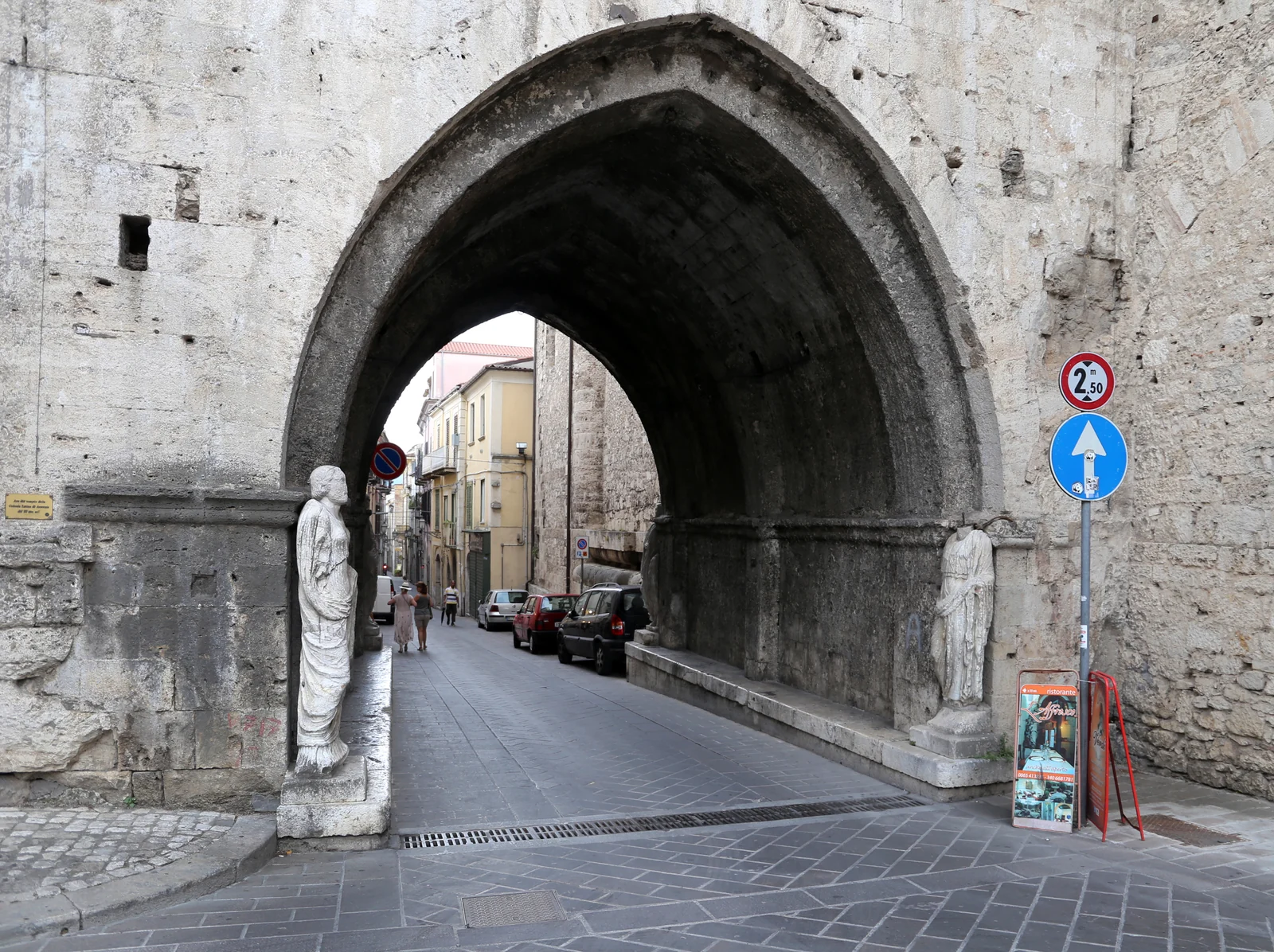
Photo: Sailko / Wikimedia Commons — CC BY 3.0 · Resized and converted to WebP.
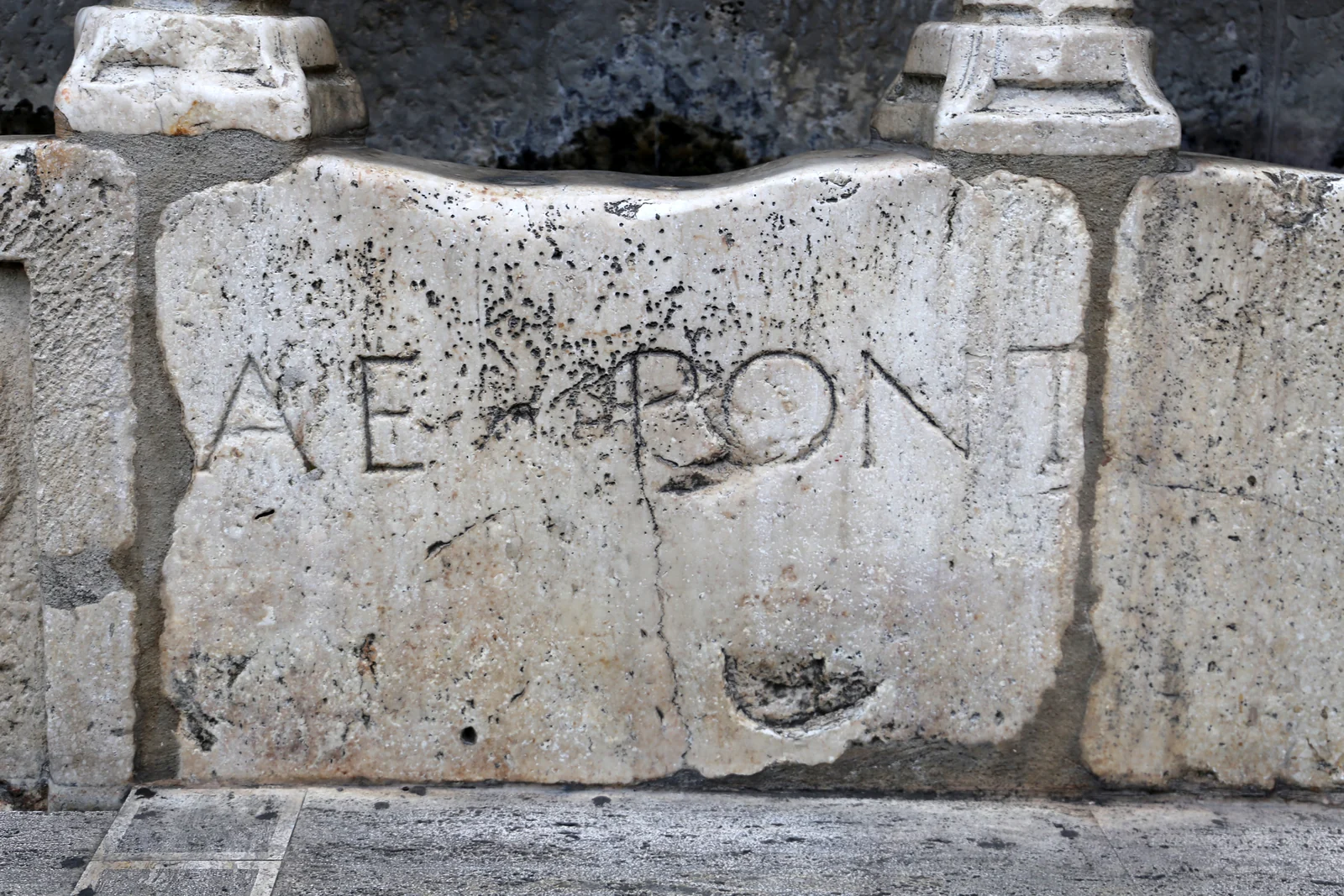
Photo: Sailko / Wikimedia Commons — CC BY 3.0 · Resized and converted to WebP.
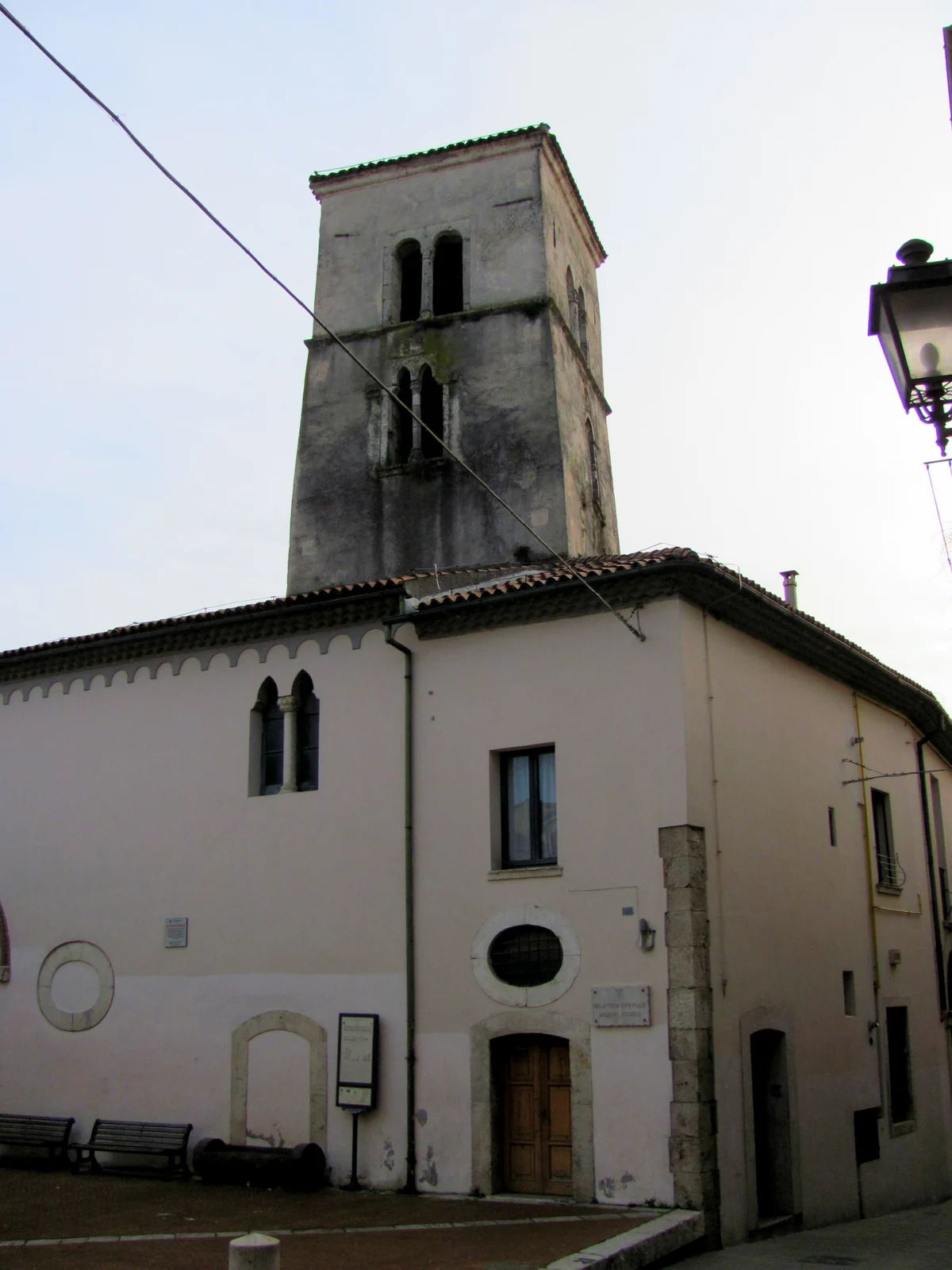
Photo: TheFab4 / Wikimedia Commons — CC BY-SA 3.0 · Resized and converted to WebP.
Flavours
In Isernia the onion reigns, flat in shape and particularly sweet, and the dish of the area is cipollata, an omelette with plenty of onions. For centuries the onion has been the star of the fair of San Pietro, on 28 and 29 June, the "onion fair": in 1926 Luigi Vittorio Bertarelli described the bulbs displayed in heaps built with great patience, the red variety called San Pietro and the large white onion. For a few years now, in the days before the fair, Piazza Andrea d'Isernia has hosted the White Onion Festival.
Of Molise's cooking the Ministry of Tourism's portal mentions the pasta, such as cavatelli and fusilli, which originated in Molise, cavatelli with ventricina, cured meats such as capofreddo and guanciale, cheeses from Agnone caciocavallo to scamorza, and the wines of the region's four DOCs: Tintilia, Biferno, Molise and Pentro.
Sources: Italia.it (Ministero del Turismo) — Molise, piccolo e gustoso scrigno di pietanze e di prodotti «identitari» · Comune di Isernia — La Fiera delle Cipolle · Comune di Isernia — Festa della Cipolla Bianca di Isernia, III edizione (2025)
Things to do
At the National Palaeolithic Museum, on the eastern edge of town, the Excavation Pavilion, of about 700 square metres, protects the archaeological area and lets you watch the archaeologists at work. In the museum, designed by the architect Brenno Albrecht and awarded the Andrea Palladio International Architecture Prize in 1988, a section of about 65 square metres of the richest surface is displayed with almost 6,000 original finds in the position where they were found. Beside it are the tooth of the child of Isernia La Pineta, with a reconstruction of the face, and life-size reconstructions of a bear, a bison, a giant deer, a rhinoceros and a straight-tusked elephant. The museum is closed on Mondays.
In the centre, a walk along Corso Marcelli links the cathedral, the Arco di San Pietro, the Fontana Fraterna and Santa Maria delle Monache. Bobbin lace, brought to Isernia in the fifteenth century by the Aragonese, was for centuries the work of the young women destined for the convent of Santa Maria delle Monache and then passed into the home; a section of the Museo civico della Memoria e della Storia is devoted to it.
Sources: Ministero della Cultura — Museo nazionale del Paleolitico di Isernia · Comune di Isernia — Cattedrale e Arco di San Pietro Apostolo · Italia.it (Ministero del Turismo) — Isernia
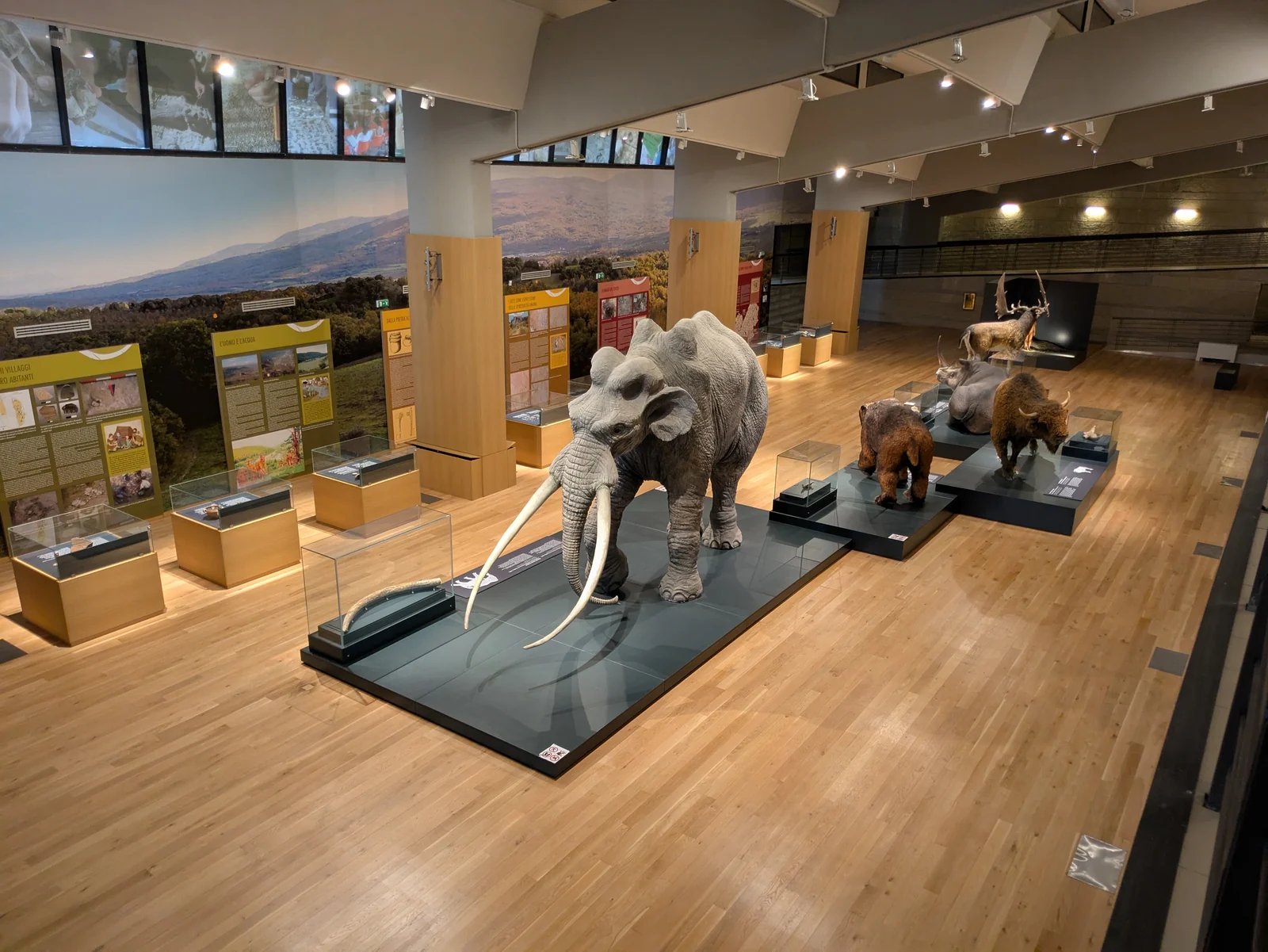
Photo: Accurimbono / Wikimedia Commons — CC BY-SA 4.0 · Resized and converted to WebP.
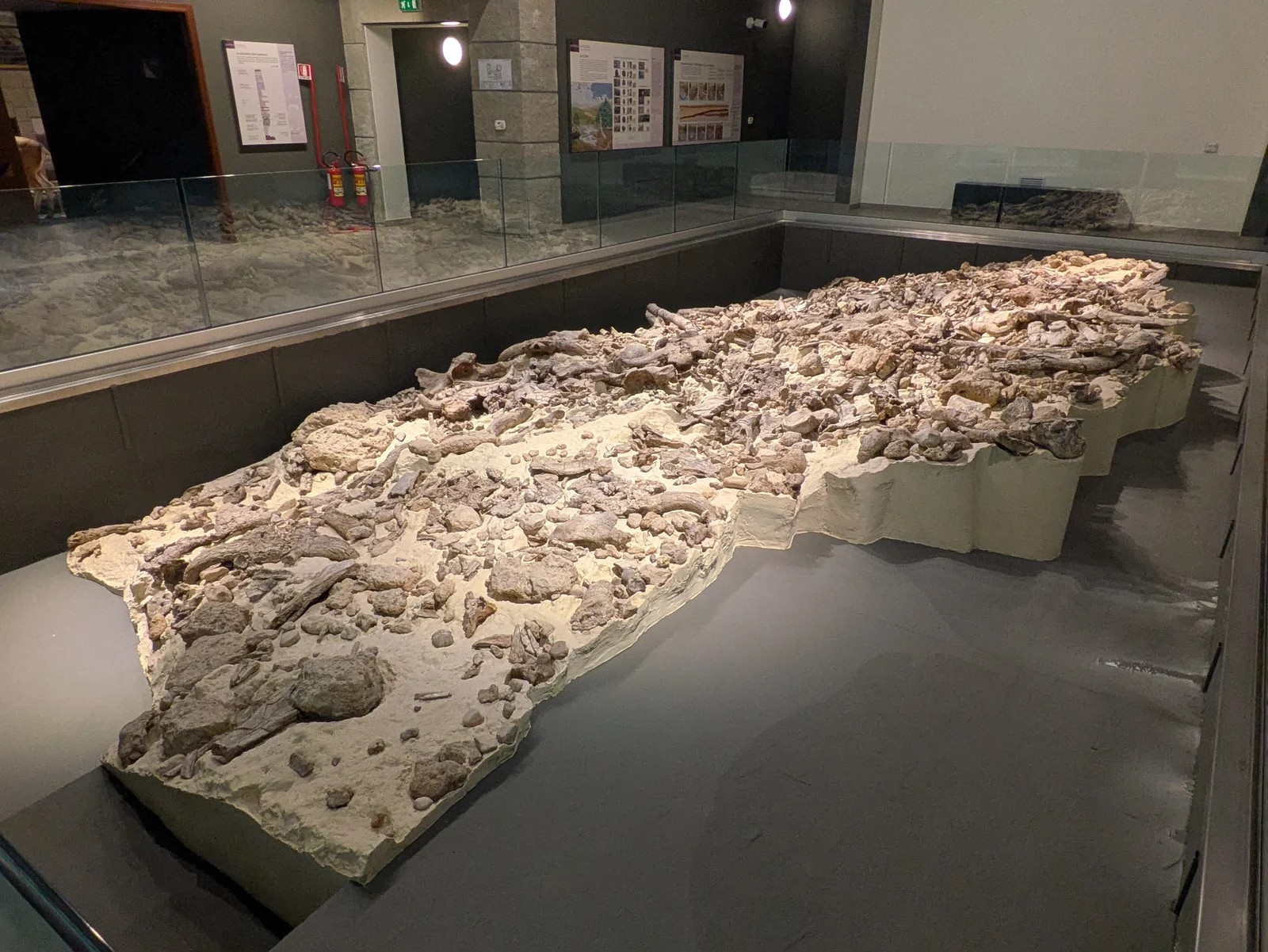
Photo: Accurimbono / Wikimedia Commons — CC BY-SA 4.0 · Resized and converted to WebP.
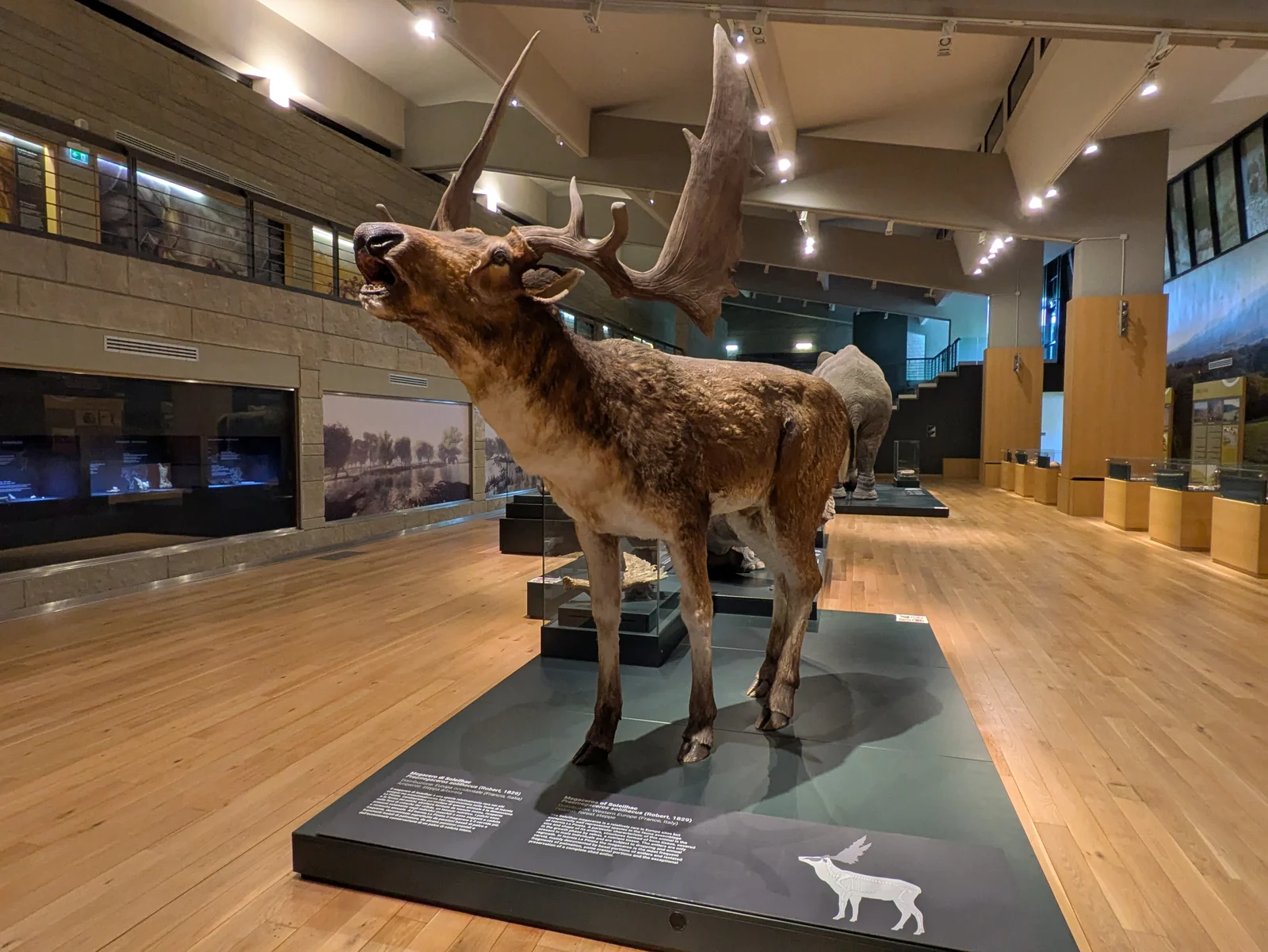
Photo: Accurimbono / Wikimedia Commons — CC BY-SA 4.0 · Resized and converted to WebP.
When to go
The most characteristic event is the onion fair on 28 and 29 June, linked to the feast of Saints Peter and Paul and recorded since at least the fifteenth century. On 19 May the town celebrates San Pietro Celestino, named patron saint by the town statute, with a small fair; a long tradition also regards Saints Nicander, Marcian and Daria as patrons, celebrated on 17 June. On 10 May the diocese celebrates the Virgo Lucis.
In March the town has hosted the European Carnival of Zoomorphic Masks (the 2025 edition was held in mid-March). Among the traditions described by the town council is the Curaesëma: in Lent, in Piazza Sanfelice, a little black-clad doll hung with the foods of the fast is strung on a wire. In 2026 the National Palaeolithic Museum took part in the European Heritage Days with an evening opening at 1 euro, on Saturday 26 September; each year's programmes and dates are on the pages of the town council and the Ministry of Culture.
Sources: Comune di Isernia — La Fiera delle Cipolle · Comune di Isernia — Il Patrono · Comune di Isernia — La Virgo Lucis · Comune di Isernia — Carnevale Europeo delle Maschere Zoomorfe, edizione 2025 · Comune di Isernia — La Pupattola della Quaresima · Ministero della Cultura — Giornate Europee del Patrimonio 2026 al Museo nazionale del Paleolitico
Getting there and around
Isernia is an important transit hub and the terminus of the railway to Sulmona. The station offers RFI assistance for people with disabilities and reduced mobility, with the Sala Blu of reference in Naples.
The old centre is walked along Corso Marcelli, where the town's tourist Infopoint is at number 297. The National Palaeolithic Museum is on the eastern edge of town.
The official website of the Comune di Isernia, registered in IndicePA, the index of the digital addresses of Italy’s public administrations, is the reference for the town council’s offices, opening hours and news. Its address is listed among the sources of this section.
Sources: Treccani, Enciclopedia on line — Isernia · RFI — Stazione di Isernia · Ministero della Cultura — Museo nazionale del Paleolitico di Isernia · Comune di Isernia — Ufficio informazioni turistiche · Comune di Isernia, sito istituzionale · IndicePA (AgID), Indice dei domicili digitali delle pubbliche amministrazioni: dataset Enti
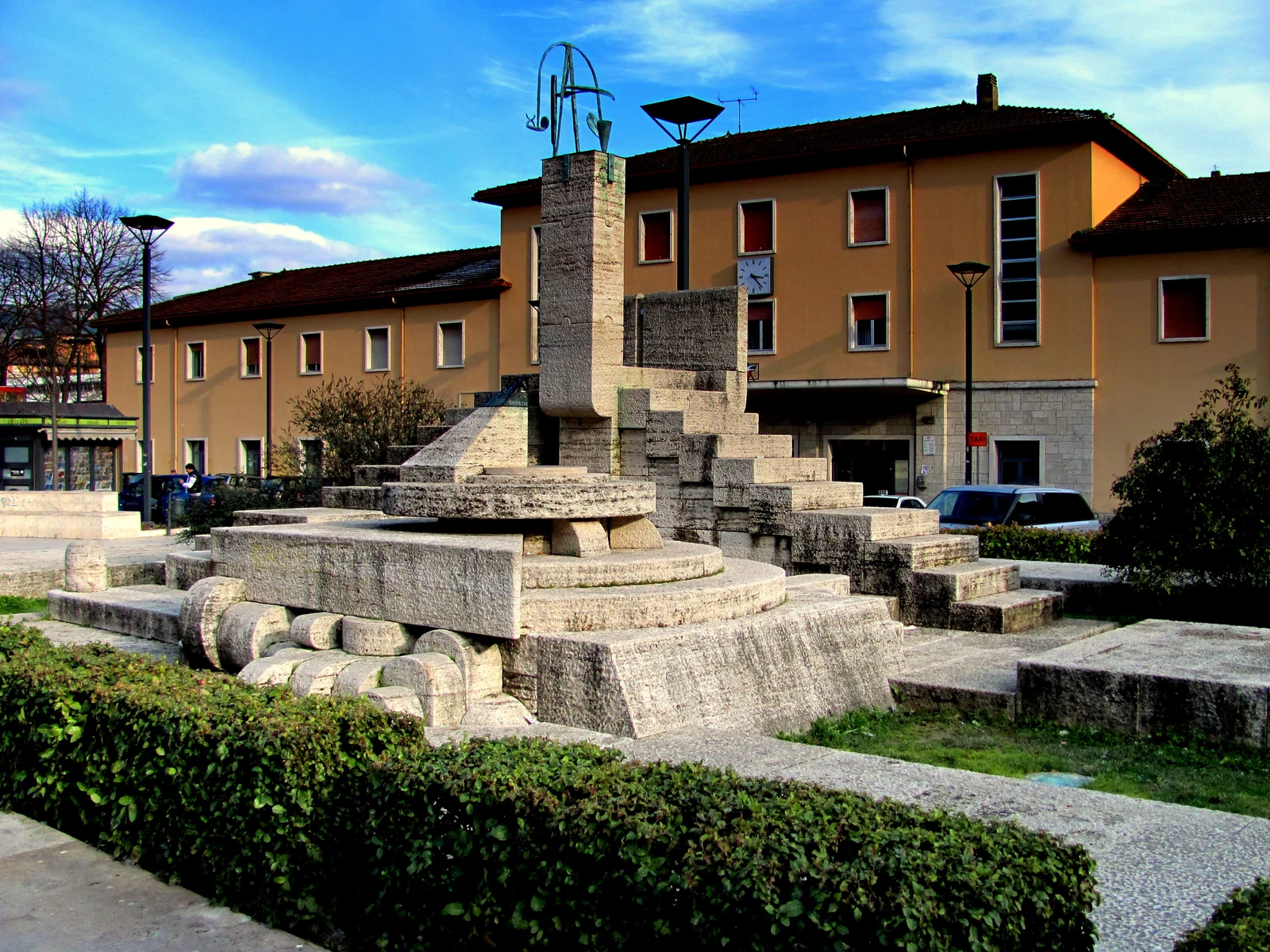
Photo: TheFab4 / Wikimedia Commons — CC BY-SA 3.0 · Resized and converted to WebP.
Where to stay
To see the town on foot it is best to stay in or near the old centre along Corso Marcelli, where the cathedral, the Fontana Fraterna and Santa Maria delle Monache are. Isernia is also a base for upper Molise and the villages of the province.
In the Ministry of Tourism’s national database of accommodation (BDSR), on 12 October 2026, Isernia had 70 establishments with a verified national identification code (CIN): 3 hotel-type establishments, 15 non-hotel establishments and 52 other establishments.
Apulica does not publish paid placements: for an organised stay, with a guide or transfers, you can write using the button at the bottom of the page.
Sources: Comune di Isernia — Cattedrale e Arco di San Pietro Apostolo · Treccani, Enciclopedia on line — Isernia · Ministero del Turismo – Banca Dati Strutture Ricettive (dashboard pubblica)
Nearby
Among the places Apulica already covers, the nearest are Frosolone (about 19 km), Pietrabbondante (about 21 km) and Agnone (about 25 km): straight-line distances between the centres of the municipal territories.
The Ministry of Tourism's portal lists nearby the Montedimezzo reserve, the medieval village of Roccamandolfi with its suspension bridge over the river Callora, Frosolone, popular with climbers, and the swimmable lake of Castel San Vincenzo. In the province Frosolone is known for its knife-making and Agnone for its bell foundry.
Sources: ISTAT/Openpolis, confini comunali della regione Molise (CC BY 4.0, ISTAT/Openpolis) · Italia.it (Ministero del Turismo) — Isernia · Treccani, Enciclopedia on line — Isernia
Where to stay
In the municipality of Isernia the national database of the Ministry of Tourism lists 70 accommodation businesses with a verified CIN code: 3 hotels, 15 other licensed accommodation and 52 other types such as B&Bs and private rentals.
Ask Apulica for a stay in Isernia We reply shortly, within a few hours at most, with a proposal for you to consider.
Sources: Ministero del Turismo – Banca Dati Strutture Ricettive (dashboard pubblica), 2026-10-12
YOUR JOURNEY
How to shape a journey here
We can organise a day in Isernia with a guide, between the Palaeolithic Museum and the old centre, or use the town as a base for upper Molise, Pietrabbondante and Agnone, with transfers. For a trip, a guide or a transfer you can write to Apulica with the button below.
Plan your tripKeep exploring
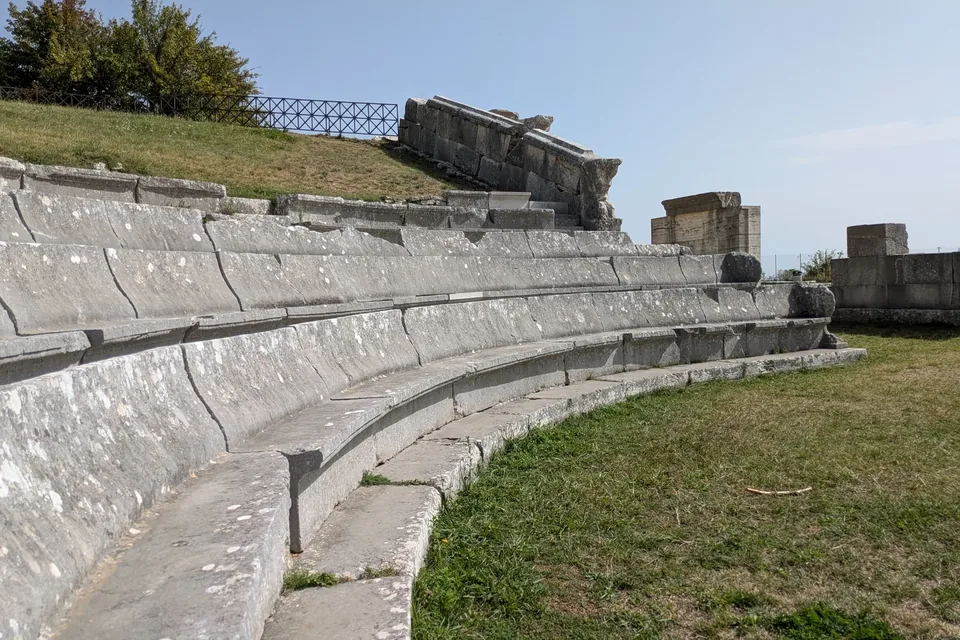
Pietrabbondante
The Italic sanctuary on the slopes of Monte Saraceno: the assembly cavea, the temples and the Samnites’ Domus publica.
Read the guide →Photo: Accurimbono / Wikimedia Commons — CC BY-SA 4.0 · Resized and converted to WebP.

Agnone
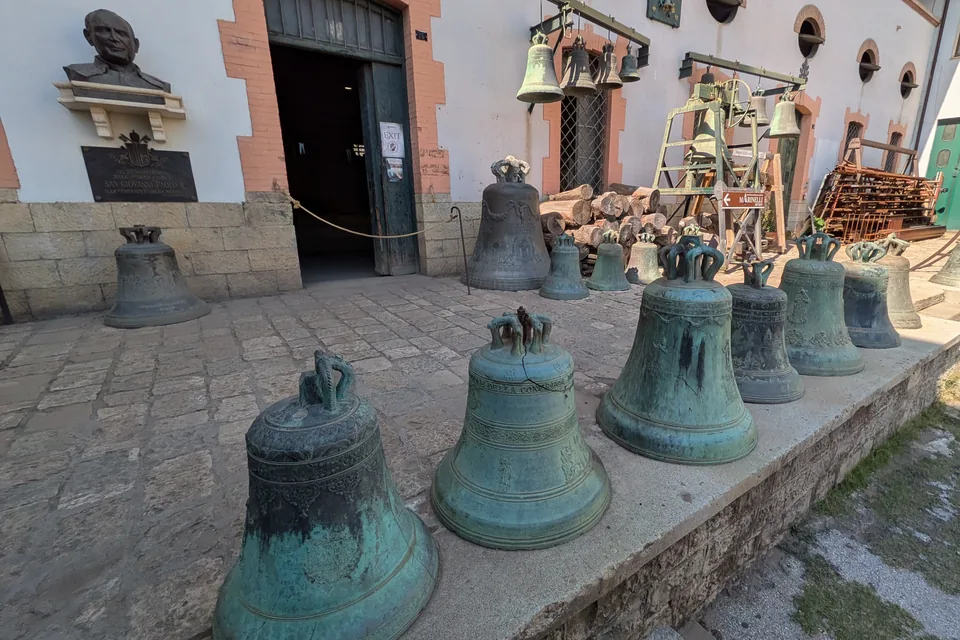
The Pontifical Marinelli Foundry and its museum, copper and wrought-iron workshops, and the December ’Ndocciata.
Read the guide →Photo: Accurimbono / Wikimedia Commons — CC BY-SA 4.0 · Cropped, resized and converted to WebP.

Frosolone
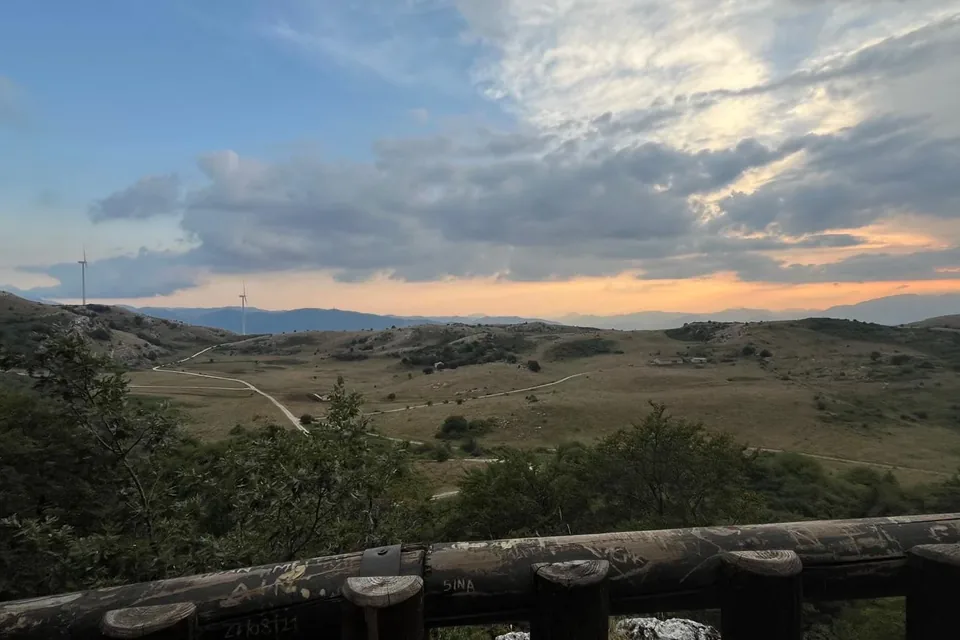
A village of the Molise Apennines among pastures and beech woods, with a tradition of scissors and knives and the arrival of transhumance from Puglia.
Read the guide →Photo: Spivi14 / Wikimedia Commons — CC BY-SA 4.0 · Resized and converted to WebP.

“Come to Isernia as a guest, not as a tourist: that is how these places truly let you know them.”