

Why go
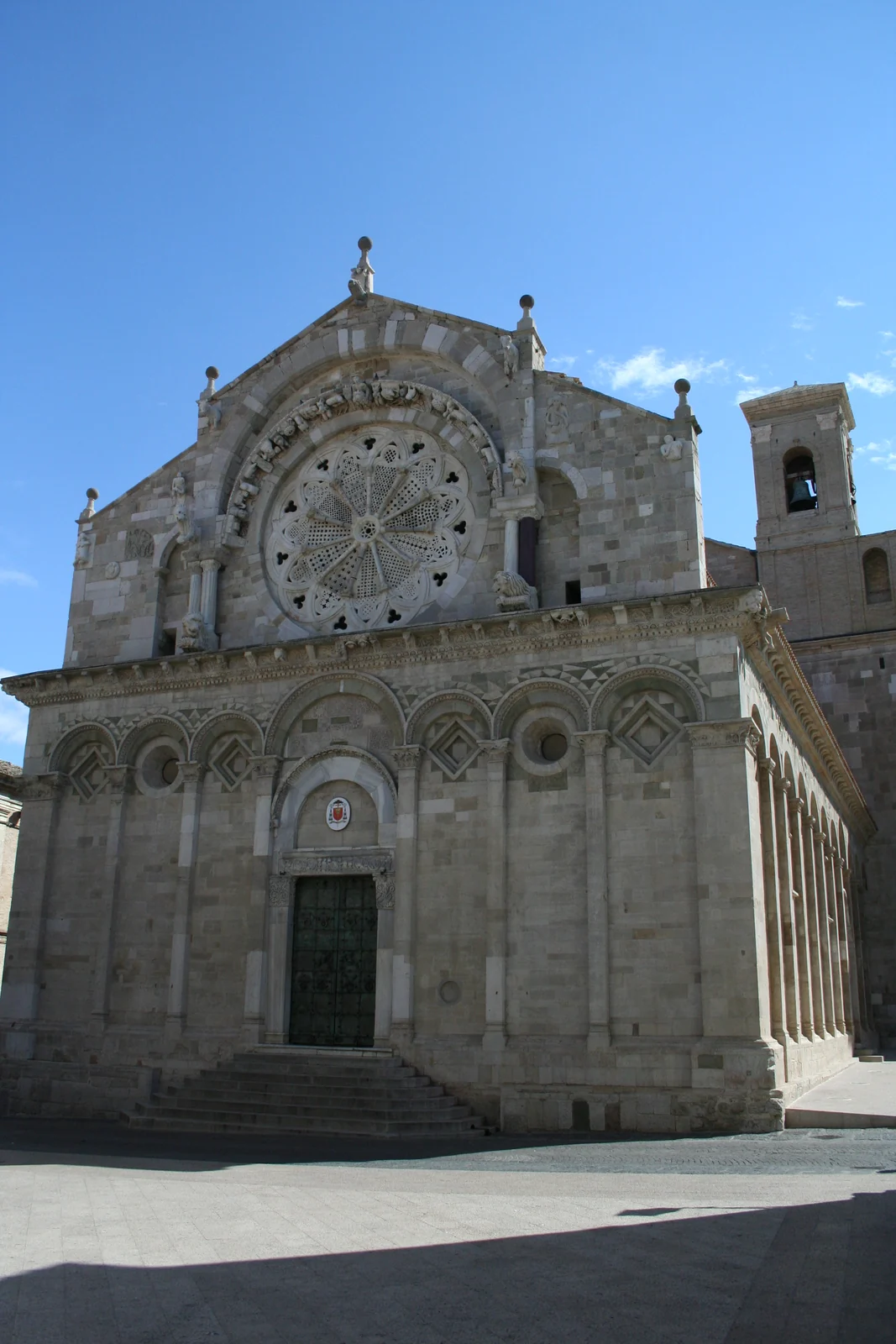
People come to Troia above all for its cathedral, dedicated to Santa Maria Assunta. The town council records that building began in 1093, in a style it calls “Troian Romanesque”. On the façade opens the rose window, divided by eleven colonnettes with Corinthian capitals and made between 1160 and 1180: the twenty-two fields between columns and arches hold as many pieces of stone lace, each different from the others.
Beneath the rose window is the bronze portal, and on the side a second door: both are the work of Oderisio da Benevento and tell the story of the town and its patron saints. The cathedral and its Treasury keep the Exultet, three liturgical parchment scrolls of the twelfth and thirteenth centuries.
The town lies along the back of a hill, between the Tavoliere plain and the valleys of the Daunian Pre-Apennines, about 22 kilometres from Foggia; the Puglia Region notes that it has been awarded the Touring Club Italiano’s Orange Flag. In July the feast of the five Patron Saints fills the streets, and its countryside lies within the DOCs of Nero di Troia, the grape variety that bears the town’s name.
Sources: Comune di Troia — Cattedrale di Santa Maria Assunta (aggiornata il 17 giugno 2024) · FAI – Fondo per l’Ambiente Italiano — Cattedrale di Troia: la Porta della Libertà è pronta alla rinascita (1° luglio 2026) · Ministero della cultura — Luoghi della cultura: Tesoro della Cattedrale di Troia · Comune di Troia — Cultura e Turismo: Arrivare a Troia, Cenni storici, Personaggi illustri (aggiornata il 4 aprile 2024) · Regione Puglia, Dipartimento Mobilità, progetto AI Smart — Troia, Comune · Diocesi di Lucera-Troia — Troia, 18-19 luglio 2024: solennità per i Santi compatroni della diocesi (6 luglio 2024) · Ministero dell’agricoltura (MASAF), Registro nazionale delle varietà di vite — Disciplinare della DOC «Tavoliere delle Puglie» o «Tavoliere»
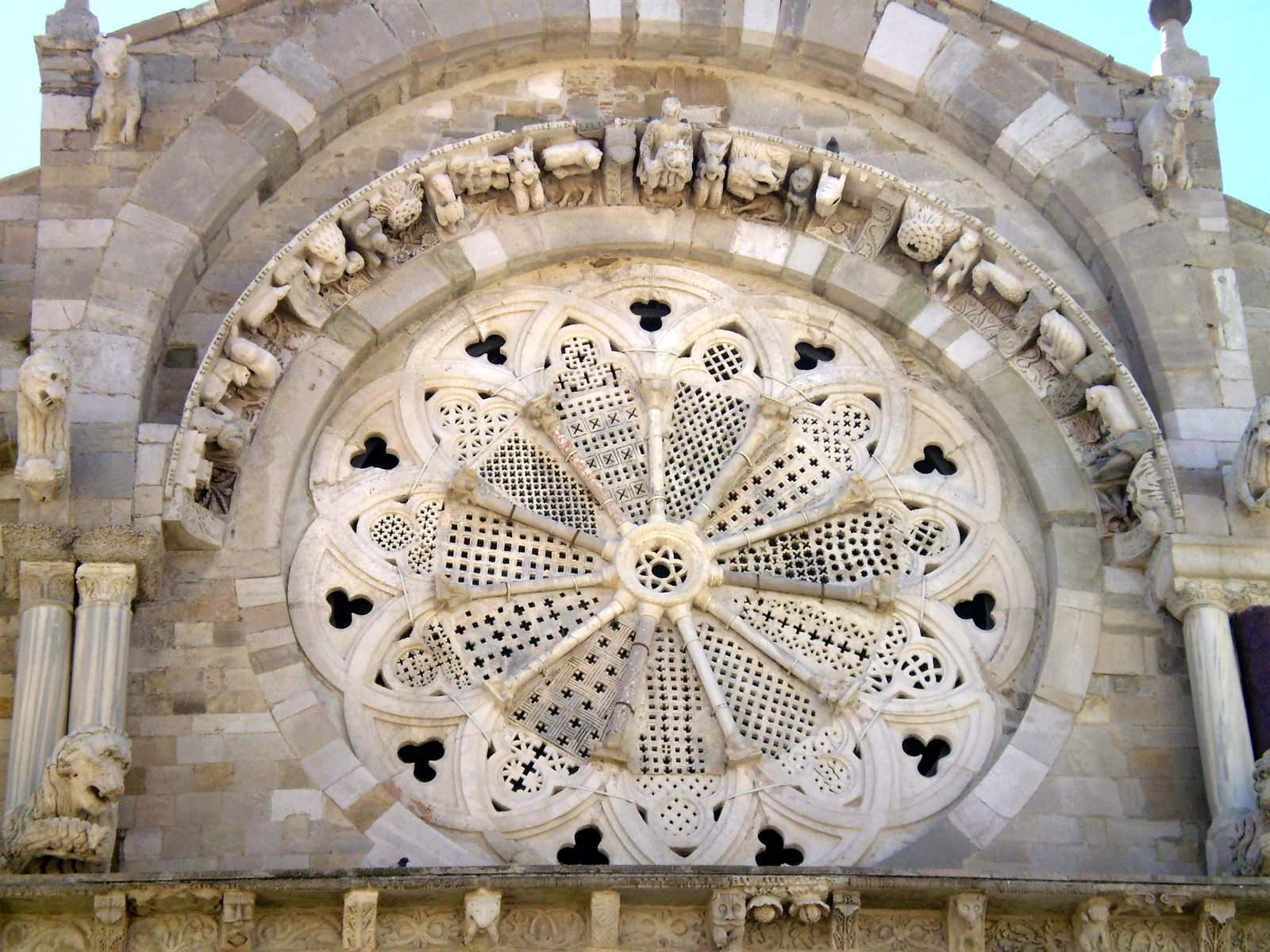
Photo: Pioggia sole / Wikimedia Commons — CC BY-SA 3.0 · Resized and converted to WebP.
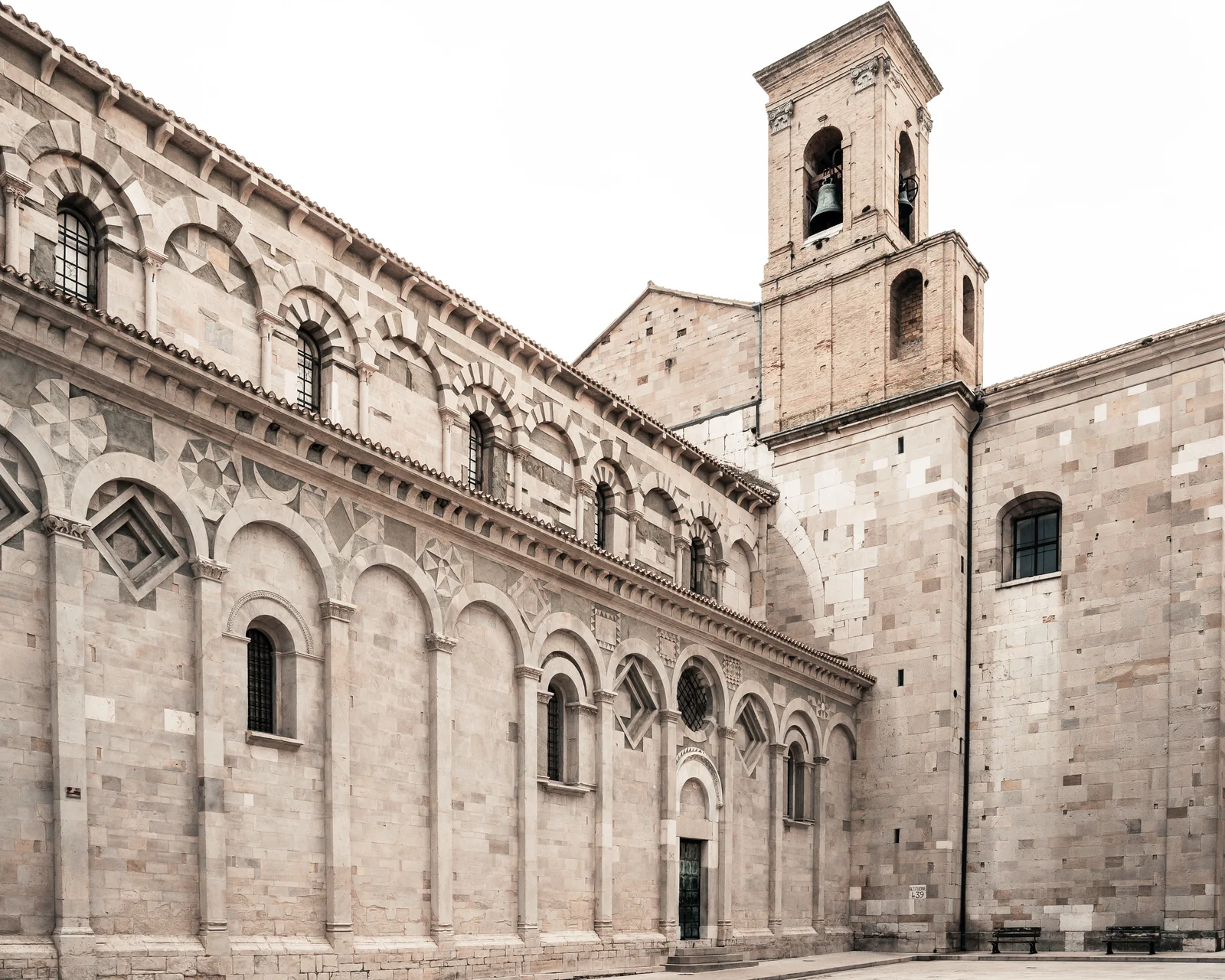
Photo: SirGiopi / Wikimedia Commons — CC BY-SA 4.0 · Resized and converted to WebP.
The municipality at a glance
Troia is a municipality in the province of Foggia, in Puglia. Its ISTAT code is 071058. On 1 January 2025 it had 6,574 residents. The municipal territory covers 168.25 km² and ranges from 114 to 521 metres above sea level; the town hall stands at about 432 metres.
According to the town council, the town stands on the back of a narrow hill, at 439 metres, between the Tavoliere plain and the valleys of the Daunian Pre-Apennines. The municipality also includes the outlying village of Giardinetto, on the Foggia-Naples railway. In 1956 the population had reached 11,650.
Sources: ISTAT, Codici statistici delle unità amministrative territoriali: elenco dei comuni al 21 febbraio 2026 · ISTAT, Popolazione residente per età, sesso e stato civile al 1° gennaio 2025 (POSAS) · ISTAT, Principali statistiche geografiche sui comuni: superficie e altimetria al 31 dicembre 2021 · Comune di Troia — Cultura e Turismo: Arrivare a Troia, Cenni storici, Personaggi illustri (aggiornata il 4 aprile 2024)
History
According to the town council its origins are very ancient. In Roman times the town was called Aecae, a name recorded by Polybius, Strabo and Livy. In 217 BC Quintus Fabius Maximus camped on the hill near Aecae to keep watch on Hannibal, who had withdrawn to Vibinum, today’s Bovino; after Cannae the town sided with the victor, and in 214 the Romans took it back. The Roman municipium lay at the centre of a road network that included the Via Appia-Traiana, and reached its greatest splendour between the late Republic and the early Empire.
In 1019 the Byzantine catepan Basil Bojoannes rebuilt the town beside the ancient settlement and gave it the name Troia. Three years later, in 1022, it held out for months against the siege of Emperor Henry II. In less than forty years it hosted four councils presided over by the pope: Urban II in 1093, Paschal II in 1115, Callixtus II in 1120 and Honorius II in 1127, who granted it a “Charta Libertatum”. The translation of the relics of Saints Eleutherius, Pontianus and Anastasius, on 19 July 1105, made it urgent to finish the cathedral to receive the pilgrims.
In that same year, 1127, the people fought King Roger II “pro libertate tuenda”, to defend their freedom: the struggle is told by the inscription on Oderisio’s bronze side door, called for this reason the “Door of Freedom”. In 1229 Frederick II stormed the town, razed it and banished its inhabitants, who returned after 1266 under Charles of Anjou. Among the thirteen Italian knights of the Challenge of Barletta in 1503 was a man from Troia, Ettore De Pazzis, known as “Miale da Troia”.
In 1536 Charles V changed the coat of arms: the sow with seven piglets gave way to a crowned golden amphora from which five serpents spring. In 1590 the Brothers Hospitallers of Saint John of God arrived, took charge of the hospital and spread the cult of the saint; in 2025 the Brothers donated to the town’s confraternity a relic of the saint from the basilica in Granada, with the handover announced for 29 November. From the seventeenth to the eighteenth century the d’Avalos were princes of Troia; after the earthquake of 1731 the cathedral gained the chapels of the Patron Saints and of the Assumption. Antonio Salandra, prime minister from 1914 to 1916, was born in Troia in 1853 and lies in the family tomb in the town. In 1986 the dioceses of Troia and Lucera were joined in the diocese of Lucera-Troia.
Sources: Comune di Troia — Cultura e Turismo: Arrivare a Troia, Cenni storici, Personaggi illustri (aggiornata il 4 aprile 2024) · FAI – Fondo per l’Ambiente Italiano — Cattedrale di Troia: la Porta della Libertà è pronta alla rinascita (1° luglio 2026) · Comune di Troia — Cattedrale di Santa Maria Assunta (aggiornata il 17 giugno 2024) · Comune di Troia — Una reliquia di San Giovanni di Dio donata alla Confraternita di Troia (21 novembre 2025)
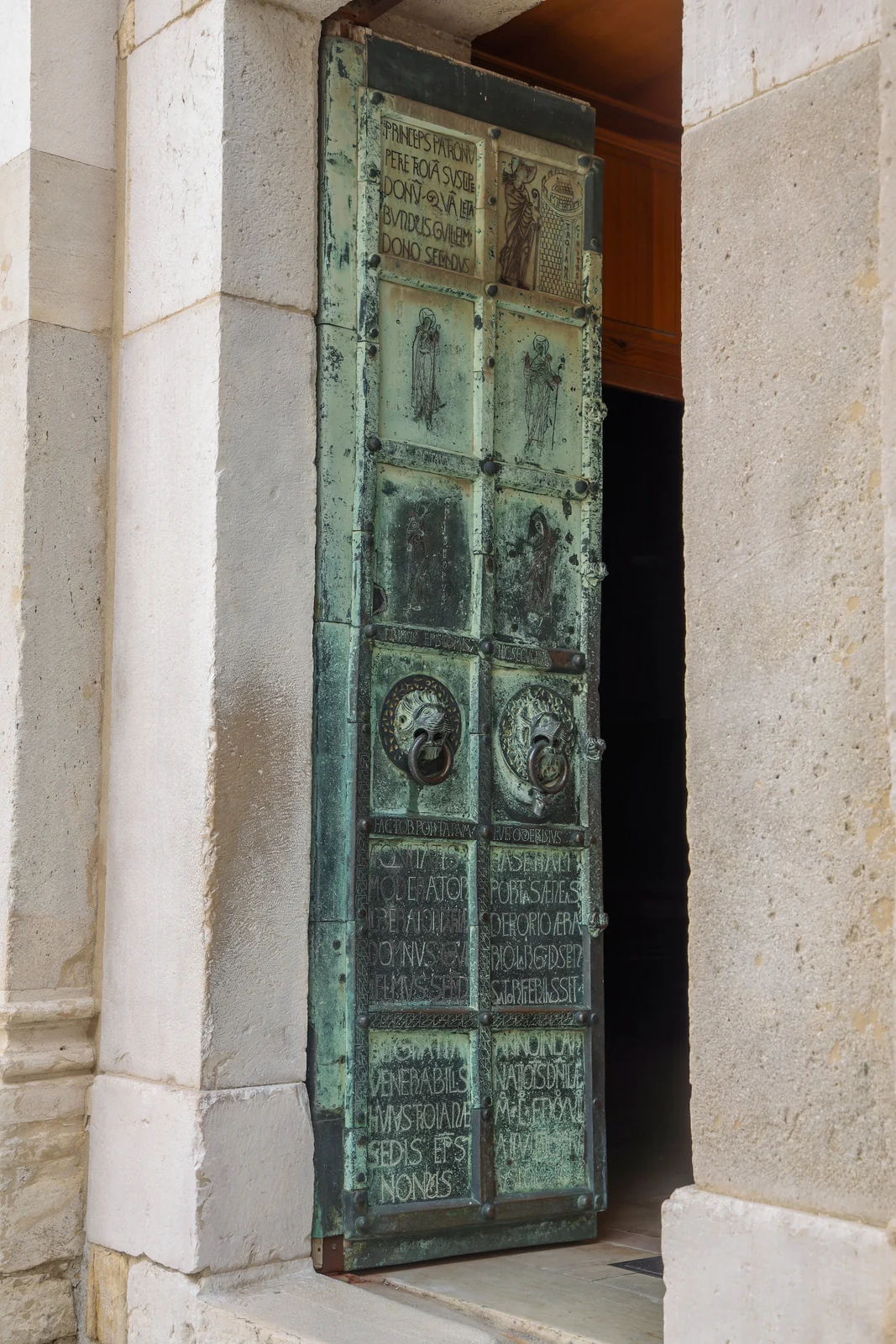
Photo: Fabrizio Garrisi / Wikimedia Commons — CC0 · Resized and converted to WebP.
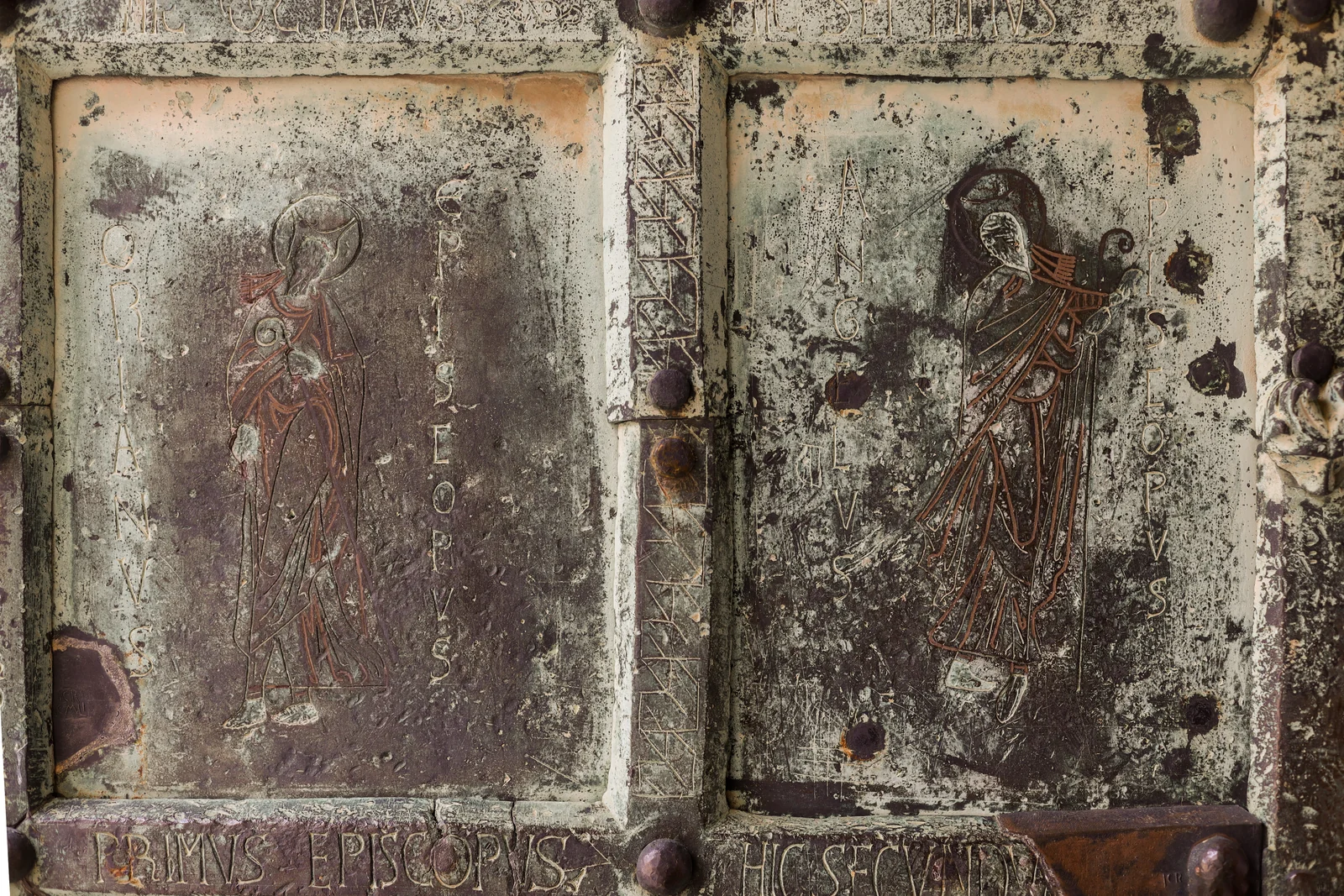
Photo: Fabrizio Garrisi / Wikimedia Commons — CC0 · Resized and converted to WebP.
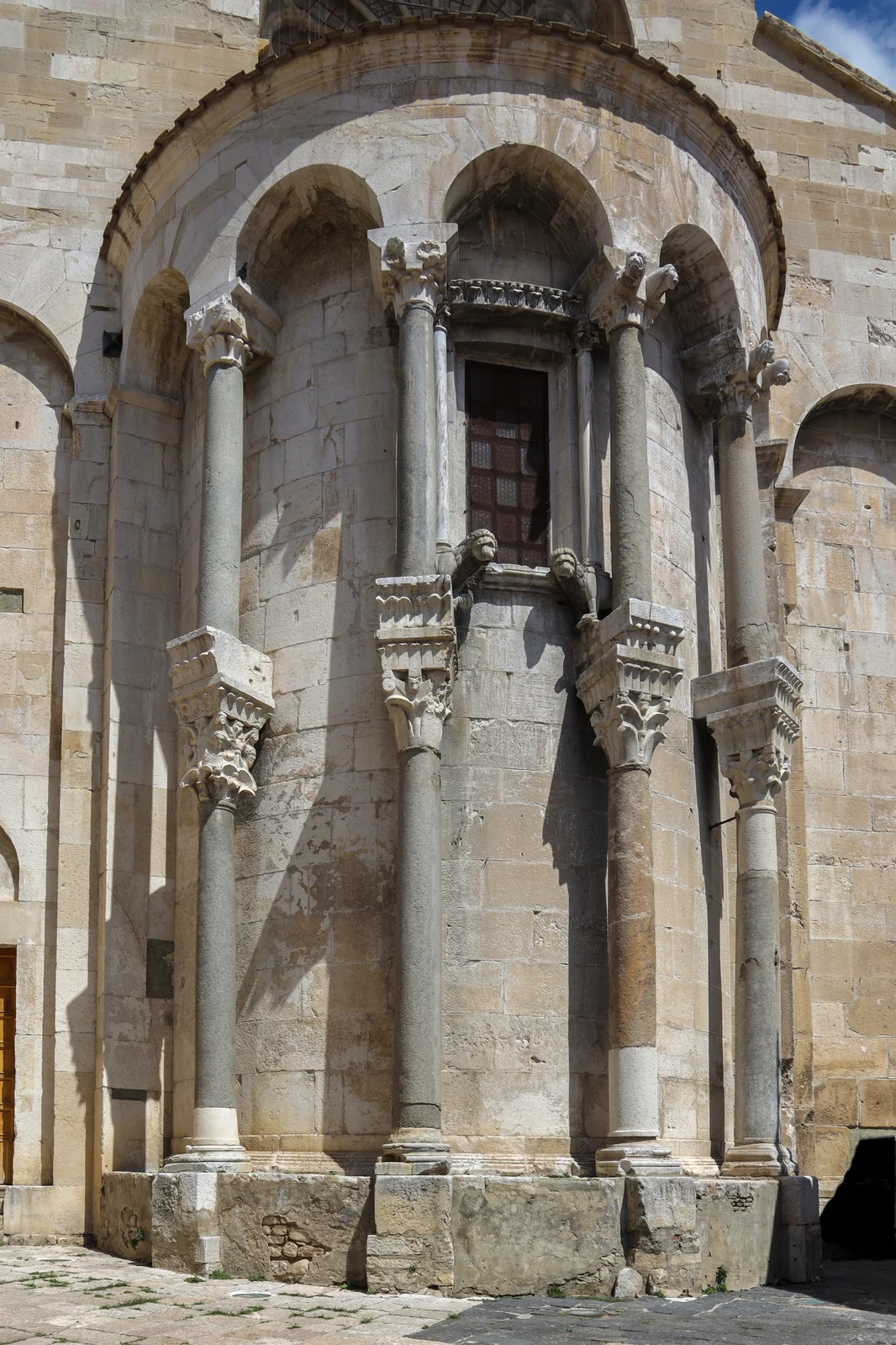
Photo: Fabrizio Garrisi / Wikimedia Commons — CC0 · Resized and converted to WebP.
What to see
The cathedral of Santa Maria Assunta stands in Piazza Papa Giovanni XXIII. Bishop Girardo of Piacenza began the work in 1093, after the council of Urban II, incorporating the church of Santa Maria (1080-1086), which the town council says can still be seen in the apse. The left arm of the transept, the Chapel of the Saints, was rebuilt in 1741 after the earthquake of 1731; the right arm, the Chapel of the Assumption, was added between 1770 and 1777. Between 1950 and 1960 a restoration removed the Baroque frescoes, altar and balustrades. There are steps at the entrance.
The two bronze doors are by Oderisio da Benevento, commissioned by Bishop Guglielmo II. The side door, of 1127, is divided by bolted frames into 24 panels in six registers: the third from the bottom has lions holding the rings, with saints above it and below the long inscription on the struggle for freedom. FAI reports that in its 2024 “Places of the Heart” census the door gathered 6,531 votes, and that on 1 July 2026 work began on its restoration, the first since 1951, expected to take about four months.
The cathedral keeps the three Exultet: parchment scrolls wound around a wooden rod, about 268, 190 and 651 centimetres long, written in Beneventan script and, according to the studies the town council cites, made in Troia or linked to its book production in the eleventh and twelfth centuries. The cathedral Treasury, in Piazza Episcopio, holds silver from the fifteenth to the seventeenth century, gilded bronzes, vestments, ivories and illuminated parchments. The Diocesan Museum, in the sixteenth-century monastery of San Benedetto in Via Ospedale, gathers fragments and sculptures from the cathedral’s old marble furnishings, bronzes, seventeenth- and eighteenth-century paintings and groups of statues recovered from the town’s churches.
The church of San Basilio, in Via San Basilio, is first mentioned in 1081: it keeps its original portal, a mullioned window, friezes that may be Roman, a Roman lintel over a side door and, inside, eight columns, a seventeenth-century font and a fresco of the Baptism of Christ. The church of San Francesco, in Piazza San Francesco, has remains from 1395 and was enlarged in the eighteenth century. The Civic Museum, set up in 1971 on the ground floor and basement of the sixteenth-century Palazzo d’Avalos in Via Regina Margherita and opened in 1981, has five sections, from pre-Roman finds to contemporary ones; the Region mentions its medieval sarcophagi. The town council has also been given the plaster models of the Troia-born sculptor Nicola Fiore and, in 1989, the works of the painter Vincenzo Curcetti.
Sources: Comune di Troia — Cattedrale di Santa Maria Assunta (aggiornata il 17 giugno 2024) · FAI – Fondo per l’Ambiente Italiano — Cattedrale di Troia: la Porta della Libertà è pronta alla rinascita (1° luglio 2026) · Ministero della cultura — Luoghi della cultura: Tesoro della Cattedrale di Troia · Ministero della cultura — Luoghi della cultura: Museo diocesano di Troia · Regione Puglia, Dipartimento Mobilità, progetto AI Smart — Chiesa di San Basilio, Troia · Diocesi di Lucera-Troia — Annuario: parrocchia San Basilio Magno, Troia · Conferenza Episcopale Italiana, Chiese italiane — Chiesa di San Francesco, Troia · Ministero della cultura — Luoghi della cultura: Museo civico, Troia · Regione Puglia, Dipartimento Mobilità, progetto AI Smart — Troia, Comune · Comune di Troia — Cultura e Turismo: Arrivare a Troia, Cenni storici, Personaggi illustri (aggiornata il 4 aprile 2024)
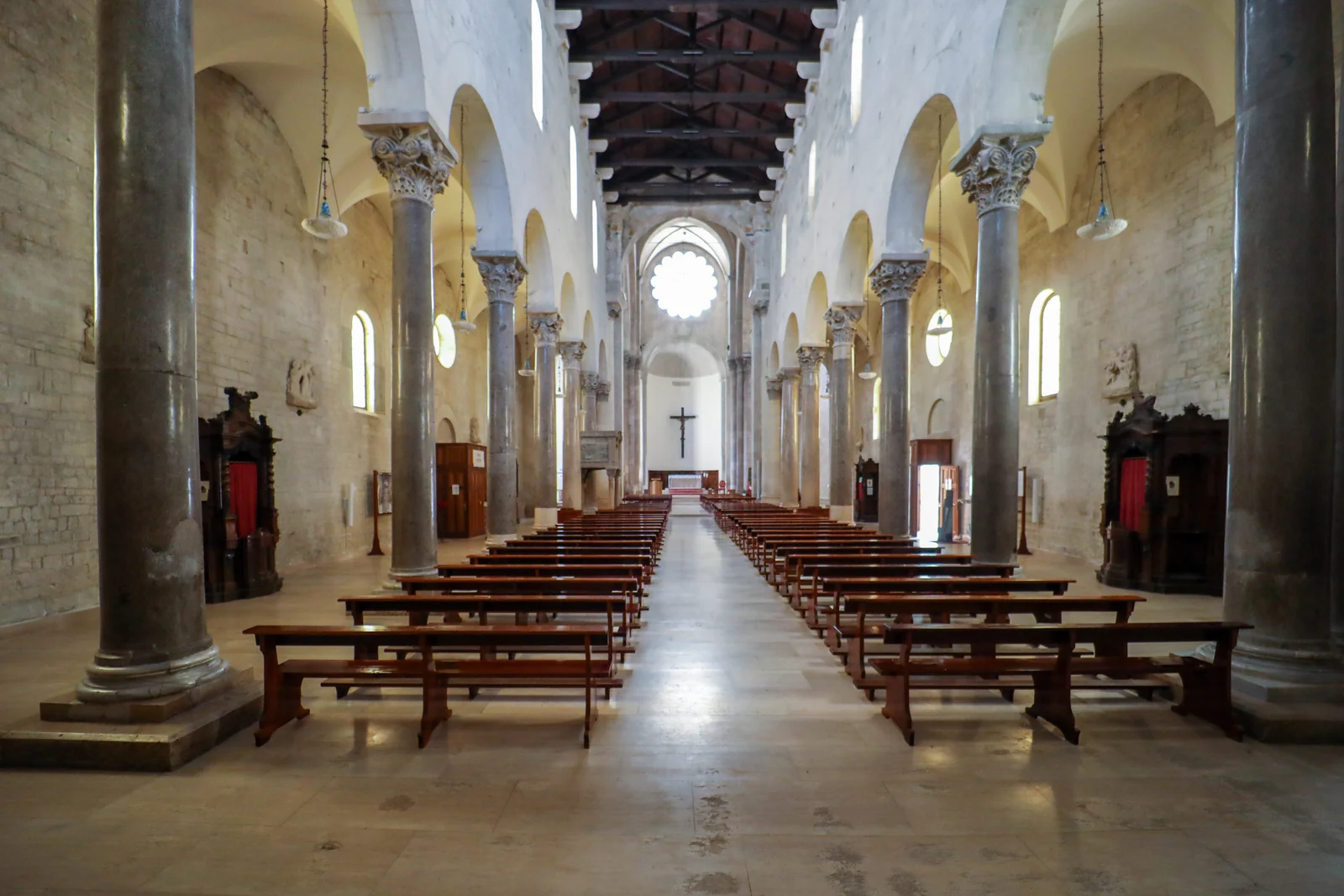
Photo: Fabrizio Garrisi / Wikimedia Commons — CC0 · Resized and converted to WebP.
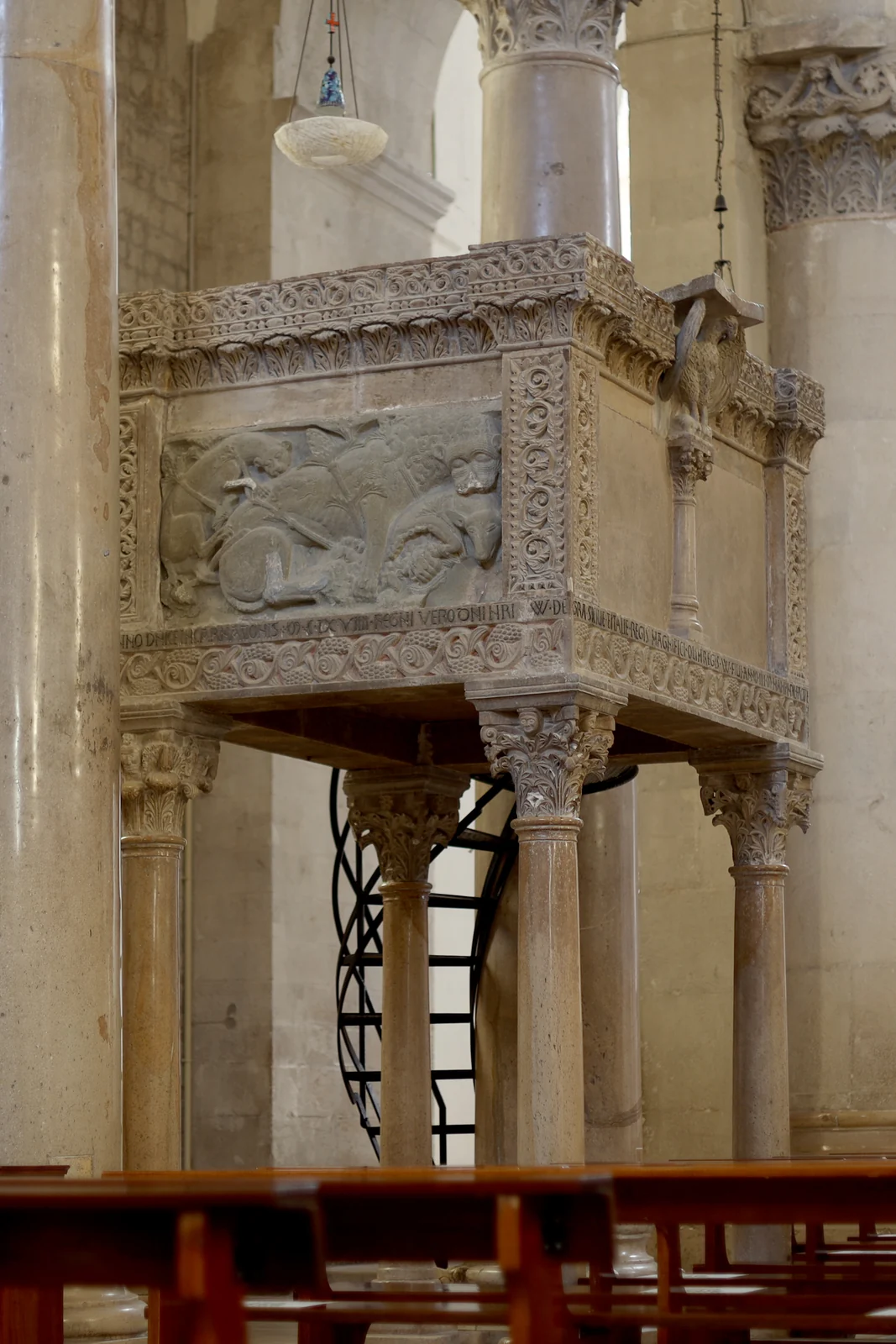
Photo: Fabrizio Garrisi / Wikimedia Commons — CC0 · Resized and converted to WebP.
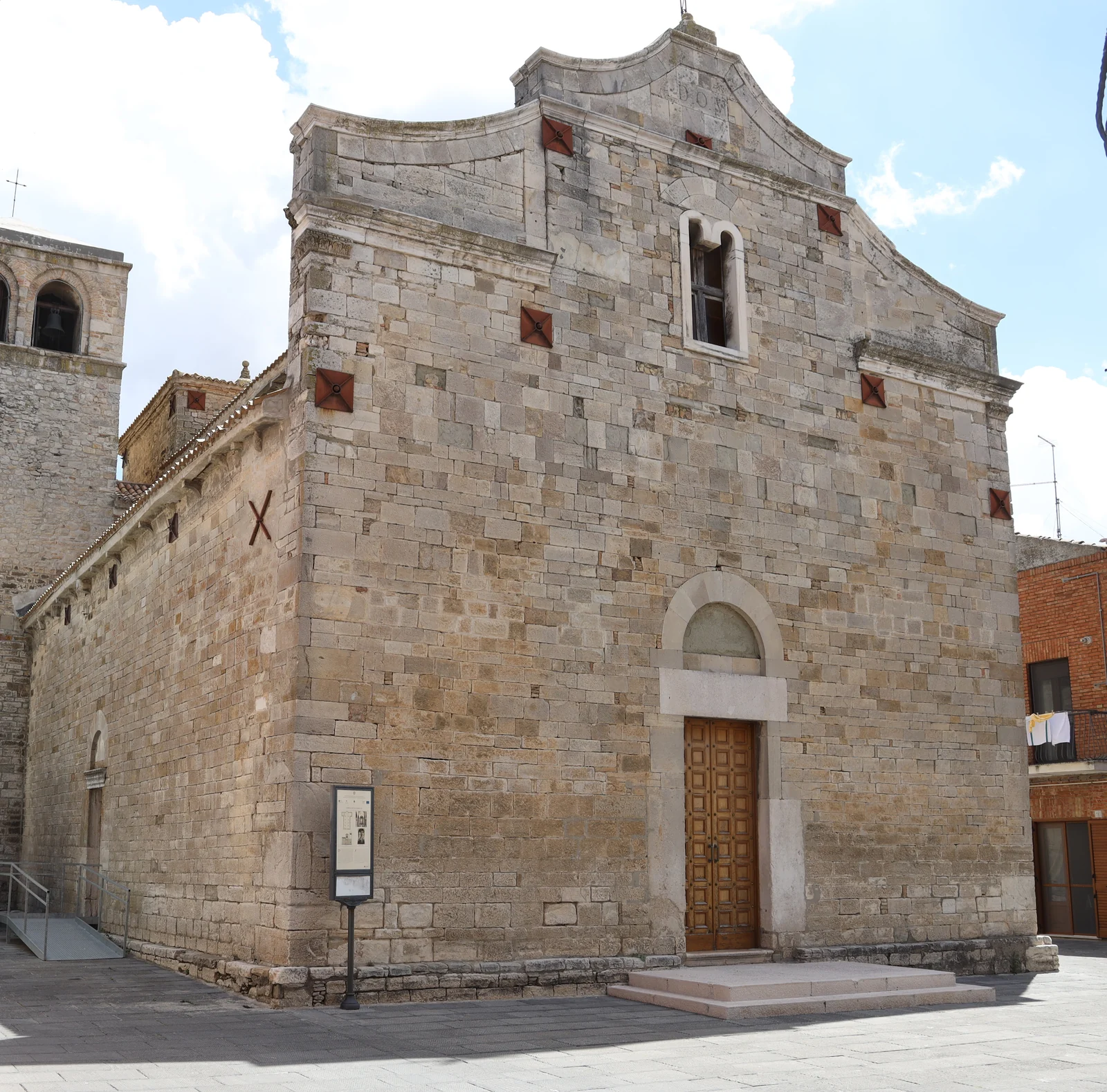
Photo: Fabrizio Garrisi / Wikimedia Commons — CC0 · Resized and converted to WebP.
Food and wine
Troia gives its name to Nero di Troia, also called Uva di Troia. The production rules of the “Tavoliere delle Puglie” or “Tavoliere” DOC, approved in 2011, include the whole territory of Troia: the Rosso, also Riserva, and the Rosato contain at least 65% Nero di Troia, and the “Nero di Troia”, also Riserva, at least 90%. The rules list several theories on the origin of the name and name as the most likely a variety born in the countryside around the town; they also recall the mentions of the “full-bodied wine of Troia” enjoyed by Frederick II.
Troia is also one of the three municipalities, with Lucera and Biccari, of the “Cacc’e mmitte di Lucera” DOC, approved in 1975: a red with 35 to 60% Uva di Troia, locally called Sumarello, together with Montepulciano, Sangiovese, Malvasia nera di Brindisi and white grapes such as Trebbiano toscano and Bombino bianco; the grapes are made into wine within the production area.
For olive oil, Troia falls within the “Sub-Appennino” geographical mention of the “Dauno” PDO, reserved for extra virgin oil from Ogliarola, Coratina and Rotondella, alone or together for at least 70%. All three designations are registered as PDOs in the European eAmbrosia register. The town council keeps a register of the businesses that make and distribute products with a municipal designation (De.Co.).
Sources: Ministero dell’agricoltura (MASAF), Registro nazionale delle varietà di vite — Disciplinare della DOC «Tavoliere delle Puglie» o «Tavoliere» · Ministero dell’agricoltura (MASAF), Registro nazionale delle varietà di vite — Disciplinare della DOC «Cacc’e mmitte di Lucera» · Ministero dell’agricoltura (MASAF) — Disciplinare dell’olio extravergine di oliva DOP «Dauno» · Commissione europea — eAmbrosia, registro delle indicazioni geografiche dell’Unione · Comune di Troia — Servizi: Cultura e tempo libero (registro delle imprese dei prodotti De.Co.)
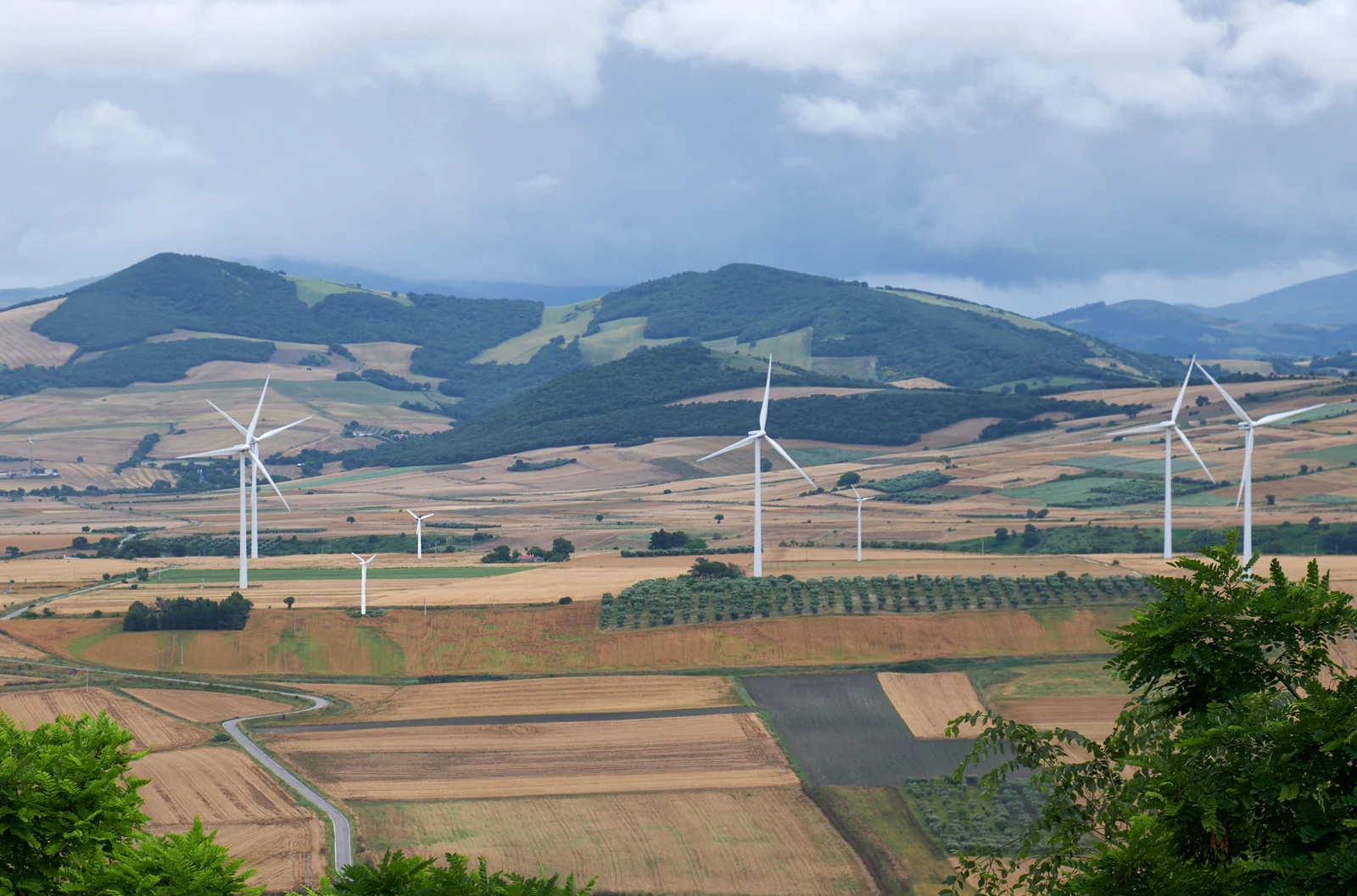
Photo: Angel de los Rios / Wikimedia Commons — CC BY-SA 2.0 · Resized and converted to WebP.
Things to do
The cathedral is open every day, morning and afternoon, according to the town council page updated in June 2024, and entry is free. In front of the façade it is worth stopping to look at the rose window and the carved archivolt around it, then walking round the side to the Door of Freedom and to the back for the apse.
In summer the old town becomes a promenade: in 2026 the town council set up an evening pedestrian zone from 1 July to 31 August along Via Regina Margherita and the squares of the centre, from 6 pm to 1 am, between Piazza Martiri d’Ungheria and Piazza Maitilasso. The “Estate Troiana” programme gathers events from 30 June to 30 September, with art, sport, local promotion and food and wine.
Since January 2026 the “Francesco Paolo Marasca” municipal library has a new home in Palazzo San Domenico, on Via Regina Margherita, redesigned as a creative play space with attention to young people.
Sources: Comune di Troia — Cattedrale di Santa Maria Assunta (aggiornata il 17 giugno 2024) · Comune di Troia — Isola pedonale estiva nel centro storico (18 giugno 2026) · Comune di Troia — Estate Troiana 2026: avviso per la raccolta di proposte (11 giugno 2026) · Comune di Troia — Nuova sede della Biblioteca comunale «Francesco Paolo Marasca» (7 gennaio 2026)
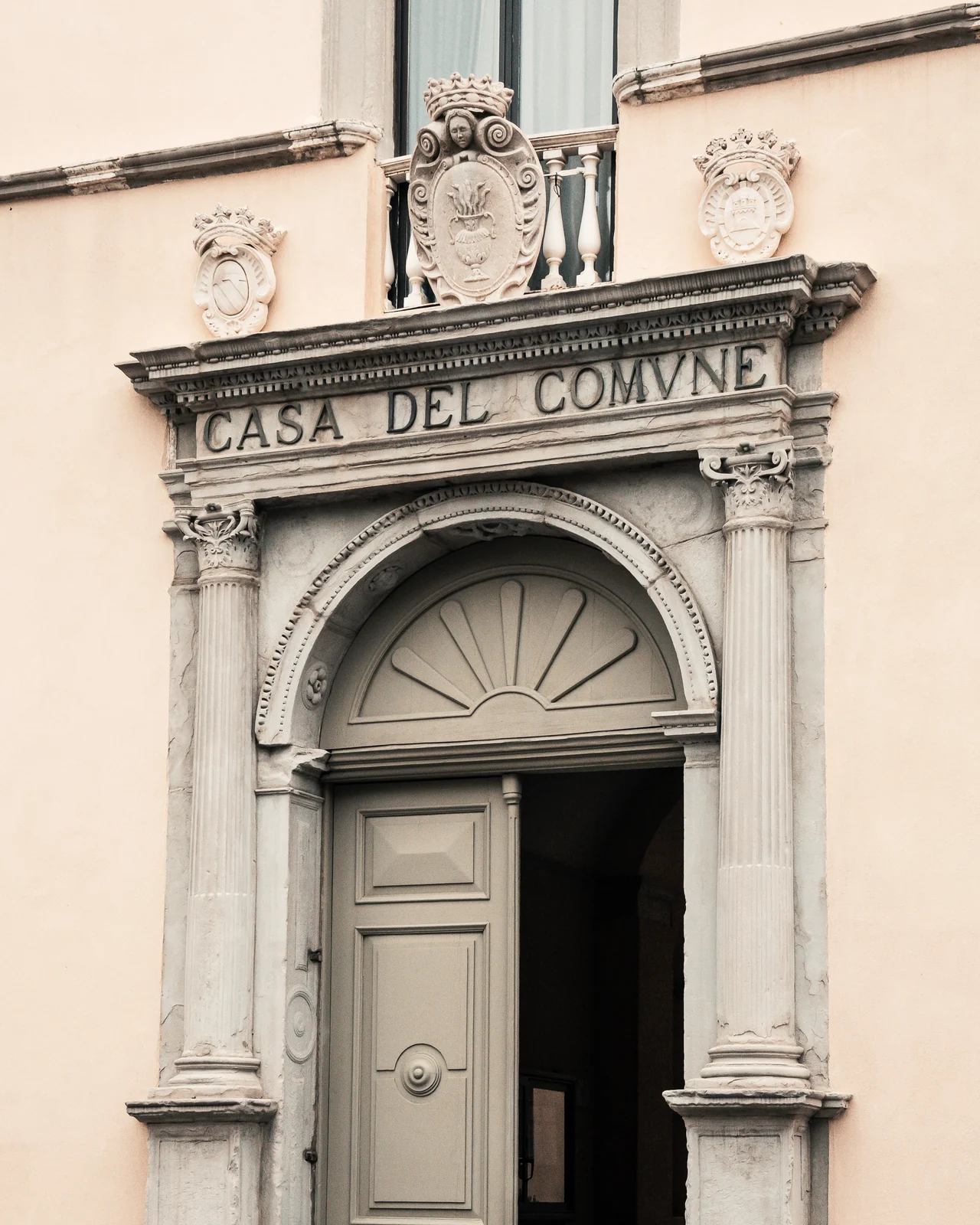
Photo: SirGiopi / Wikimedia Commons — CC BY-SA 4.0 · Resized and converted to WebP.
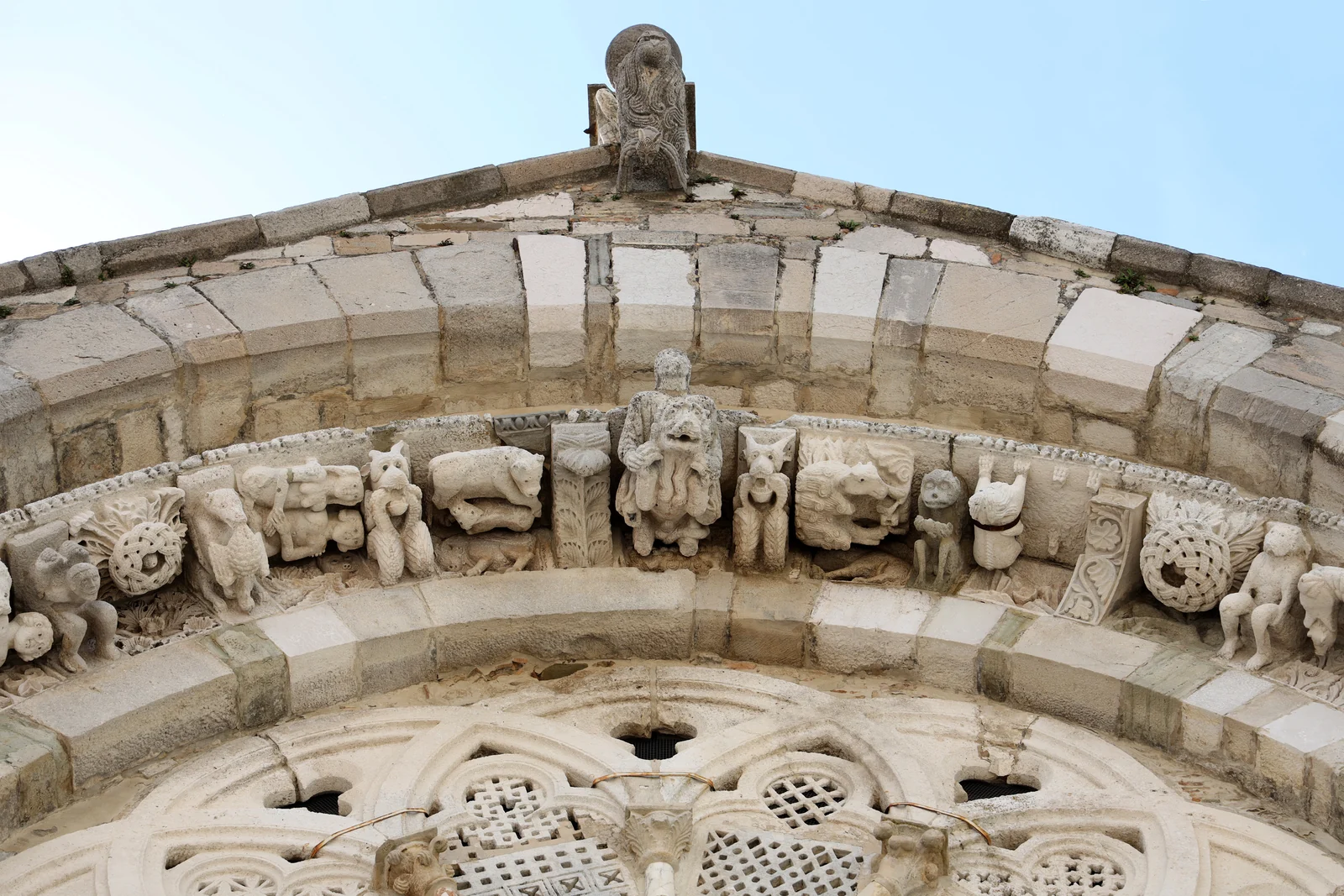
Photo: Fabrizio Garrisi / Wikimedia Commons — CC0 · Resized and converted to WebP.
When to go
The most heartfelt moment is the feast of the Patron Saints in July, which recalls the translation of the relics in 1105. There are five patrons: Eleutherius, bishop and martyr; Pontianus, pope and martyr; Anastasius, deacon; Secundinus, bishop; Urban, pope and martyr. On 18 July, after first vespers in the co-cathedral, the procession carries the relics, the silver busts of the saints and the statue of Our Lady of Mount Carmel through the town, with clergy, confraternities and authorities; the 19th is the day of the pontifical Mass, at the end of which the mayor renews the entrustment of the town. In 2025 the celebrations ran from 18 to 21 July, and the town council activated its civil protection operations centre for the large crowds.
At Easter the co-cathedral hosts the procession of the “Kiss”, followed by the pontifical Mass: in 2026 it was held at 6.30 pm on Easter Sunday; on Good Friday the bishop celebrates the Passion in the co-cathedral. Summer brings the evening pedestrian zone and the Estate Troiana programme.
Sources: Diocesi di Lucera-Troia — Troia, 18-19 luglio 2024: solennità per i Santi compatroni della diocesi (6 luglio 2024) · Diocesi di Lucera-Troia — Festa dei Santi Patroni 2026 (20 luglio 2026) · Comune di Troia — Festa patronale dei Santi Anastasio, Urbano, Secondino, Ponziano ed Eleuterio (19 luglio 2024) · Comune di Troia — Attivato il Centro Operativo Comunale per la Festa dei Santi Patroni 2025 (17 luglio 2025) · Diocesi di Lucera-Troia — Settimana Santa 2026: le celebrazioni con Mons. Vescovo (28 marzo 2026) · Comune di Troia — Isola pedonale estiva nel centro storico (18 giugno 2026) · Comune di Troia — Estate Troiana 2026: avviso per la raccolta di proposte (11 giugno 2026)
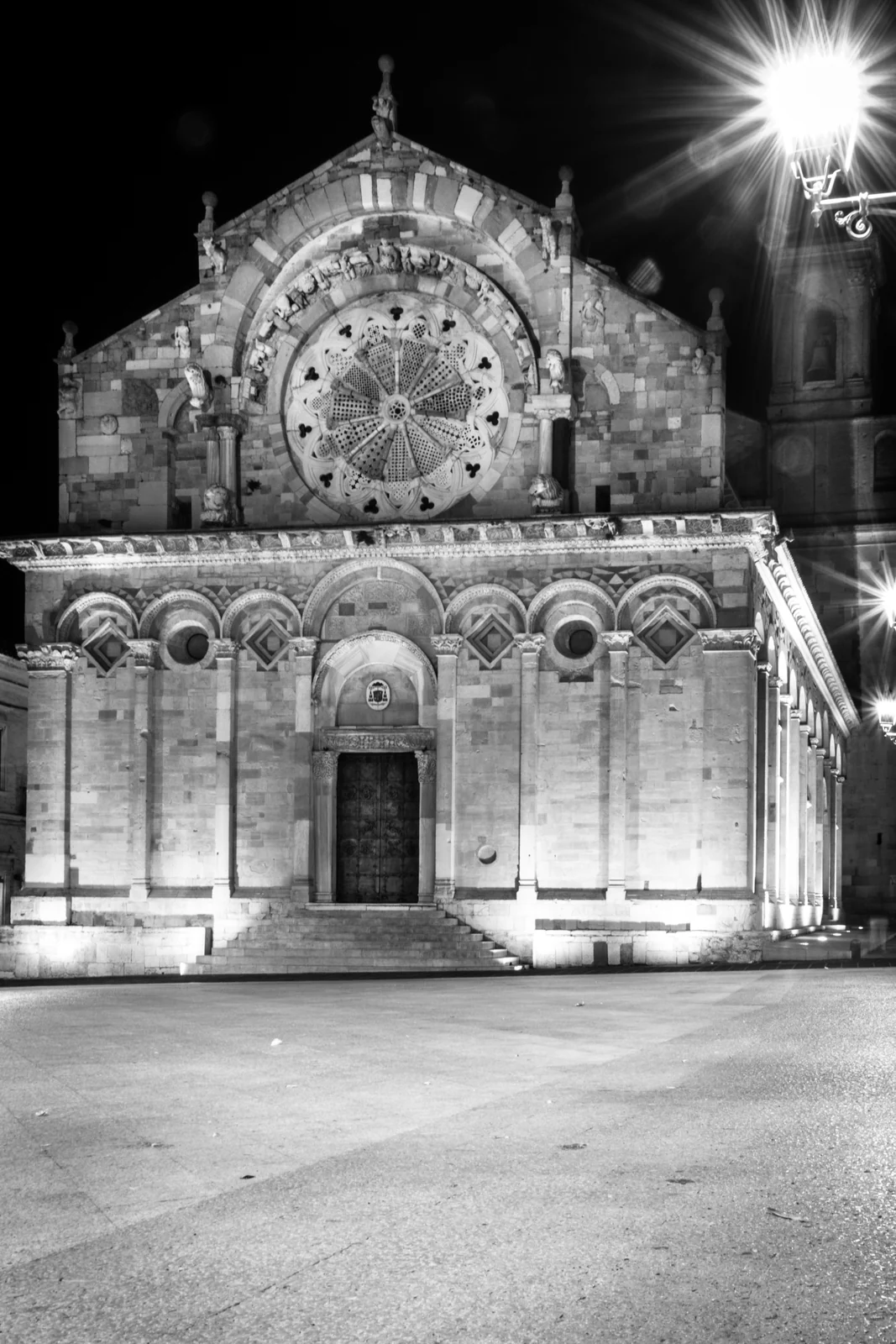
Photo: Francescocaggese / Wikimedia Commons — CC BY-SA 4.0 · Resized and converted to WebP.
Getting there
By car, according to the town council: from the Bologna-Bari motorway take the Foggia exit, the SS16 Foggia ring road, then the SS90 towards Naples and the SS546 to Troia; from the Naples-Bari motorway exit at Candela, take the expressway towards Foggia and, at the Palazzo d’Ascoli junction, the SS190 to Troia.
By train you reach Foggia station and continue by bus. The Foggia-Naples railway passes through the outlying village of Giardinetto, a few kilometres from the town. In summer, from 1 July to 31 August 2026, Via Regina Margherita and the squares of the old town were closed to traffic and parking every evening from 6 pm to 1 am: the town council explains that the streets of the centre are narrow and often without pavements. The council also issues permits for driving and parking in the limited traffic zone.
Sources: Comune di Troia — Cultura e Turismo: Arrivare a Troia, Cenni storici, Personaggi illustri (aggiornata il 4 aprile 2024) · Comune di Troia — Isola pedonale estiva nel centro storico (18 giugno 2026) · Comune di Troia, Sportello telematico — Permessi ZTL e invalidi
Tourism
For information on the spot there is the tourist info point in via Giovanni XXIII, part of the regional network: in the official register published by the regional tourism agency on 8 July 2026 it answers on 0881 970020 and at [email protected].
“Come to Troia as a guest, not as a tourist: that is how these places truly let you know them.”
Accommodation in figures
In the Ministry of Tourism’s national database of accommodation (BDSR), on 12 October 2026, Troia had 32 establishments with a verified national identification code (CIN): 21 non-hotel establishments and 11 other establishments. Puglia’s regional census of accommodation lists 17 with a verified national CIN, by type: 8 B&B, 4 guest rooms, 4 holiday home and 1 farm stay.
Sources: Ministero del Turismo – Banca Dati Strutture Ricettive (dashboard pubblica) · Regione Puglia – ARET Pugliapromozione (DMS)
Nearby
Foggia is about 22 kilometres away. Lucera and Biccari share the “Cacc’e mmitte di Lucera” DOC with Troia; Foggia, Orsara di Puglia, Bovino and Ascoli Satriano are among the municipalities of the “Tavoliere” DOC. Bovino is ancient Vibinum, where Hannibal withdrew in 217 BC. Biccari, Orsara, Bovino, Castelluccio dei Sauri, Faeto and Celle di San Vito are, with Troia, in the “Sub-Appennino” area of the “Dauno” PDO oil.
Sources: Regione Puglia, Dipartimento Mobilità, progetto AI Smart — Troia, Comune · Ministero dell’agricoltura (MASAF), Registro nazionale delle varietà di vite — Disciplinare della DOC «Cacc’e mmitte di Lucera» · Ministero dell’agricoltura (MASAF), Registro nazionale delle varietà di vite — Disciplinare della DOC «Tavoliere delle Puglie» o «Tavoliere» · Comune di Troia — Cultura e Turismo: Arrivare a Troia, Cenni storici, Personaggi illustri (aggiornata il 4 aprile 2024) · Ministero dell’agricoltura (MASAF) — Disciplinare dell’olio extravergine di oliva DOP «Dauno»
The town council
The official website of the Comune di Troia, registered in IndicePA, the index of the digital addresses of Italy’s public administrations, is the reference for the town council’s offices, opening hours and news. Its address is listed among the sources of this section.
The town hall is at Via Regina Margherita 80; the council switchboard is on +39 0881 978420.
Sources: Comune di Troia, sito istituzionale · IndicePA (AgID), Indice dei domicili digitali delle pubbliche amministrazioni: dataset Enti · Comune di Troia — Luoghi: Municipio
Where to stay
In the municipality of Troia the national database of the Ministry of Tourism lists 32 accommodation businesses with a verified CIN code: 0 hotels, 21 other licensed accommodation and 11 other types such as B&Bs and private rentals.
Licensed businesses from the official list of accommodation named as the source in this section. Where the list gives it, the property's official identification code appears next to its name: the national CIN code, or the code assigned by the Region or by the body that keeps the list. Private individuals are not listed. This list is the official census of licensed businesses, not a list of Apulica partners: to stay in Troia you do not have to check one property after another yourself; write to Apulica and we look for the stay that suits your journey, checking availability and conditions before any confirmation.
PIRRO PONZIANO
Farm stay
CIN IT071058B500022067
A DUE PASSI BED & BREAKFAST
B&B
CIN IT071058B400058468
bb208
Guest rooms
CIN IT071058B400100953
A CASA DI COSTANZO E LORETA
Holiday home
CIN IT071058B400060420
B&B AL THESORO
B&B
CIN IT071058B400062823
BORA
Guest rooms
CIN IT071058B400023025
CASA RUBINO Holiday Home
Holiday home
CIN IT071058B400058289
B&B CASATA MIALE 1878
B&B
CIN IT071058B400119486
CASA REGINA MARGHERITA
Guest rooms
CIN IT071058B400062984
CASA VACANZE "L'ABSIDE"
Holiday home
CIN IT071058B400060197
First the places that presented themselves to Apulica, the latest first; then one place of each type in turn, by official category and stars, then by name. No position is paid for.
All 17 entries in alphabetical order
Page 1 of 2
| Name | Type | CIN |
|---|---|---|
| A CASA DI COSTANZO E LORETA | Holiday home | IT071058B400060420 |
| A DUE PASSI BED & BREAKFAST | B&B | IT071058B400058468 |
| B&B AL THESORO | B&B | IT071058B400062823 |
| B&B CASATA MIALE 1878 | B&B | IT071058B400119486 |
| B&B FRA DUE TERRE | B&B | IT071058B400081878 |
| B&B IL CATEPANO | B&B | IT071058B400121969 |
| B&B LA PATRONALE | B&B | IT071058B400024361 |
| B&B PALAZZO DEL CONTESTABILE | B&B | IT071058B400080782 |
| bb208 | Guest rooms | IT071058B400100953 |
| BORA | Guest rooms | IT071058B400023025 |
Ask Apulica for a stay in Troia We reply shortly, within a few hours at most, with a proposal for you to consider.
Sources: Regione Puglia – ARET Pugliapromozione (DMS), CC BY 4.0, 2026-10-12 · Ministero del Turismo – Banca Dati Strutture Ricettive (dashboard pubblica), 2026-10-12
YOUR JOURNEY
How to shape a journey here
To include Troia in a trip, or to ask for a guide or a transfer, you can write to Apulica with the button below.
Plan your tripKeep exploring
Lucera
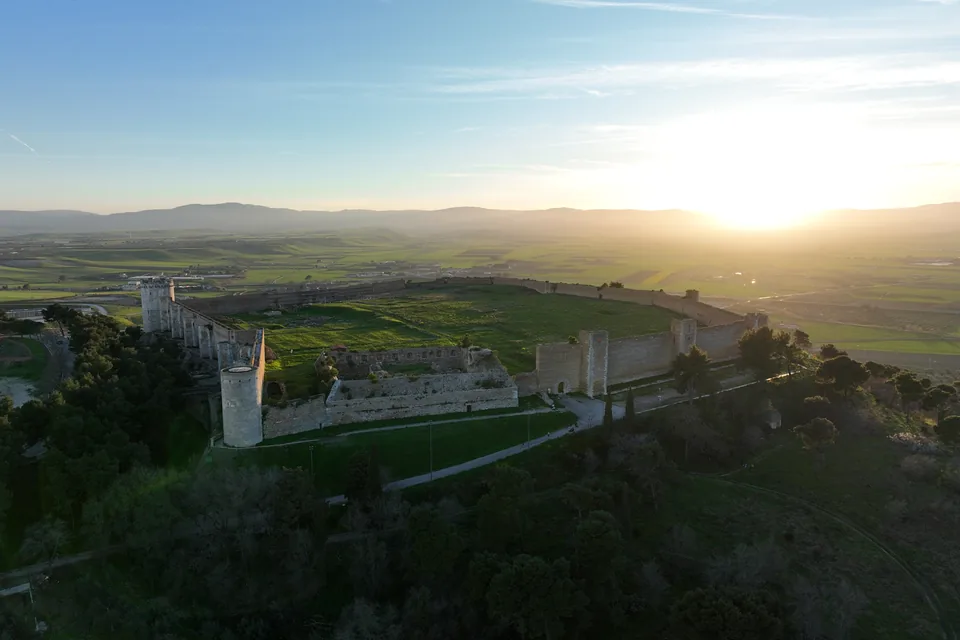
Lucera (FG), Puglia: 30,591 residents, 339.79 km². The official facts of the municipality, its town council website and its registered accommodation. The Swabian-Angevin fortress of Frederick II and Charles of Anjou, the Augustan amphitheatre, the Angevin Gothic cathedral, the sanctuary of Saint Francesco Antonio Fasani, the “Cacc’e mmitte di Lucera” DOC wine and the “Dauno” PDO olive oil.
Read the guide →Photo: Paolocibelli / Wikimedia Commons — CC BY-SA 4.0 · Resized and converted to WebP.

Foggia
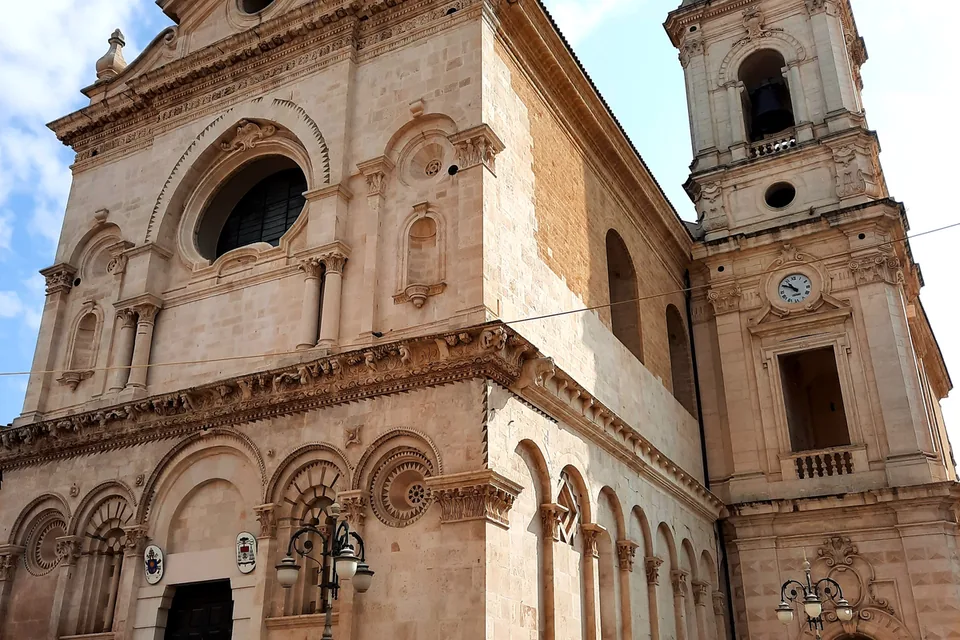
The capital of the Capitanata: the Romanesque cathedral with the Iconavetere, the arch of Frederick II’s palace and the Museo civico with the tombs of Arpi, Piazza Cavour, the Teatro Giordano of 1828, pancotto and the Bosco dell’Incoronata.
Read the guide →Photo: Nick Borisenko / Wikimedia Commons — CC BY-SA 4.0 · Resized and converted to WebP.

Bovino
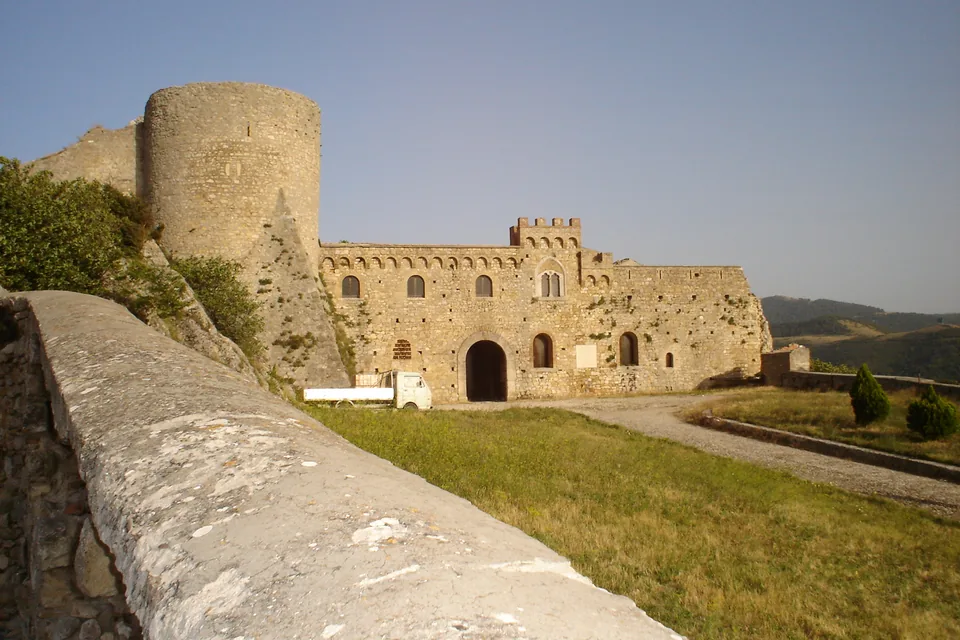
Bovino (FG), Puglia: 2,881 residents, 84.93 km². The official facts of the municipality, its town council website and its registered accommodation.
Read the guide →Photo: Ettore Timi / Wikimedia Commons — CC BY 2.5 · Resized and converted to WebP.

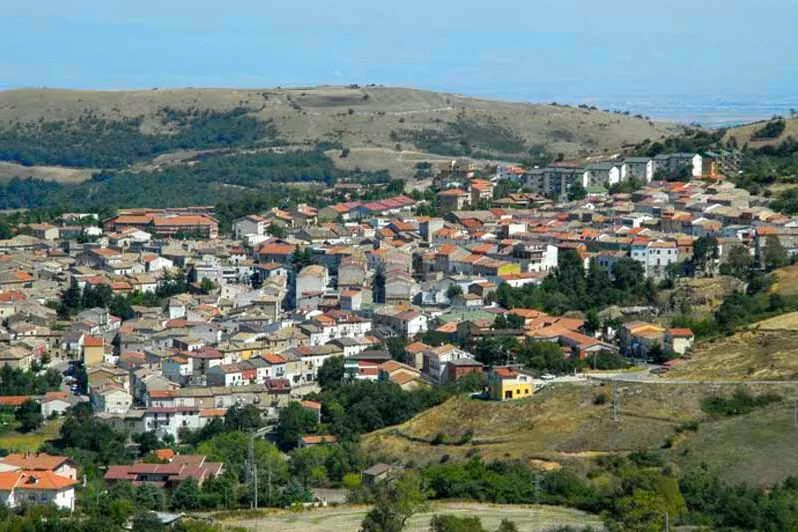
Orsara di Puglia
Orsara di Puglia (FG), Puglia: 2,477 residents, 83.01 km². The official facts of the municipality, its town council website and its registered accommodation.
Read the guide →Photo: SconosciutoUnknown author / Wikimedia Commons — CC BY 4.0 · Resized and converted to WebP.

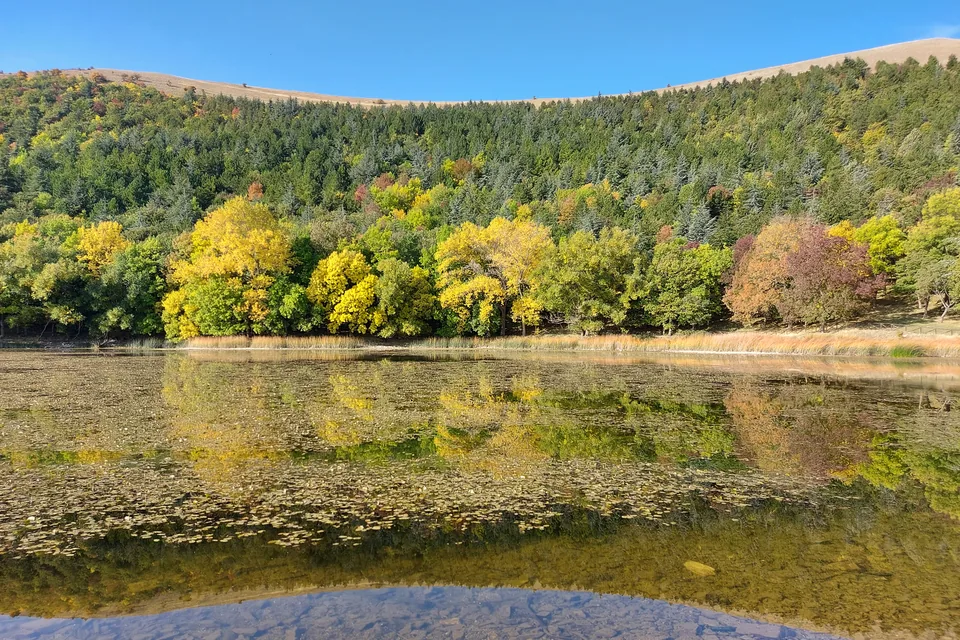
Biccari
Biccari (FG), Puglia: 2,594 residents, 106.64 km². The official facts of the municipality, its town council website and its registered accommodation.
Read the guide →Photo: Fuoco Fatuo / Wikimedia Commons — CC0 · Resized and converted to WebP.

Castelluccio dei Sauri
Castelluccio dei Sauri (FG), Puglia: 1,999 residents, 51.47 km². The official facts of the municipality, its town council website and its registered accommodation.
Read the guide →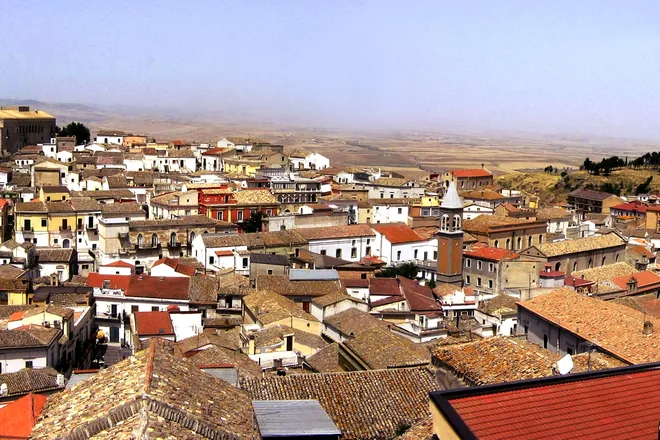
Ascoli Satriano
Ascoli Satriano (FG), Puglia: 5,671 residents, 336.67 km². The official facts of the municipality, its town council website and its registered accommodation.
Read the guide →Photo: Maredentro / Wikimedia Commons — Public domain · Resized and converted to WebP.
