

Why go
Foggia stands at the centre of the Tavoliere, halfway between the Gulf of Manfredonia, the Gargano promontory and the Daunia mountains. It was the city of Frederick II, who had his palace built here in 1223, and from 1447 to 1806 the seat of the Dogana del Tavoliere, which governed the pastures of the flocks moving down from the Abruzzi.
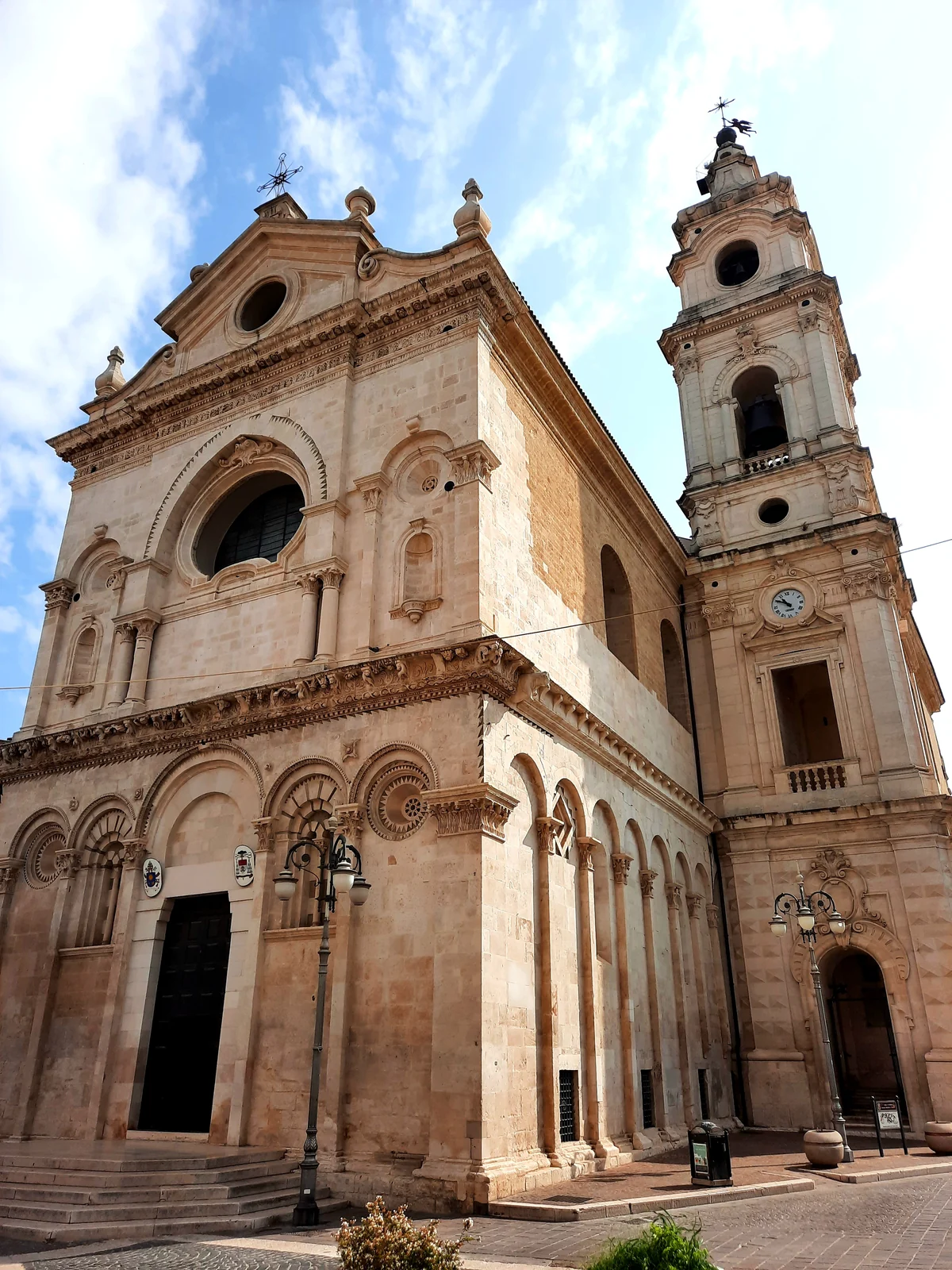
The 1731 earthquake and the 1943 bombings struck it twice, yet the historic centre is largely preserved. It can be seen on foot in a day: the cathedral with its Romanesque forms, the arch of Frederick II's palace beside the Museo civico, Piazza Cavour with the portico of the Villa comunale, and the Teatro Giordano, one of the oldest theatres in Puglia still in use.
Foggia is a municipality in the province of Foggia, in Puglia. Its ISTAT code is 071024. It is the capital of the province of Foggia. On 1 January 2025 it had 145,198 residents. The municipal territory covers 509.25 km² and ranges from 17 to 306 metres above sea level; the town hall stands at about 79 metres.
The old centre has a shape the people of Foggia call the «horse's head», between Via Manzoni, Via Fuiani, Via della Repubblica and Corso Garibaldi, crossed by Via Arpi. In the time of Frederick II the city was called «regalis sedes inclita imperialis», a royal and imperial seat. Today Foggia is also a university city: the University of Foggia has been independent since 1999 and has seven departments.
Sources: Italia.it (Ministero del Turismo) — Foggia · Treccani, Enciclopedia on line — Foggia · Treccani, Enciclopedia Italiana (1932) — Foggia · Teatro Umberto Giordano — Storia · Ministero della Cultura, Luoghi della cultura — Museo civico di Foggia · Comune di Foggia, Luoghi — Museo Civico · ISTAT, Codici statistici delle unità amministrative territoriali: elenco dei comuni al 21 febbraio 2026 · ISTAT, Popolazione residente per età, sesso e stato civile al 1° gennaio 2025 (POSAS) · ISTAT, Principali statistiche geografiche sui comuni: superficie e altimetria al 31 dicembre 2021 · ICCD, catalogo generale dei beni culturali: scheda «centro storico» di Foggia (Carta dei Beni Culturali della Regione Puglia) · Università di Foggia: la storia
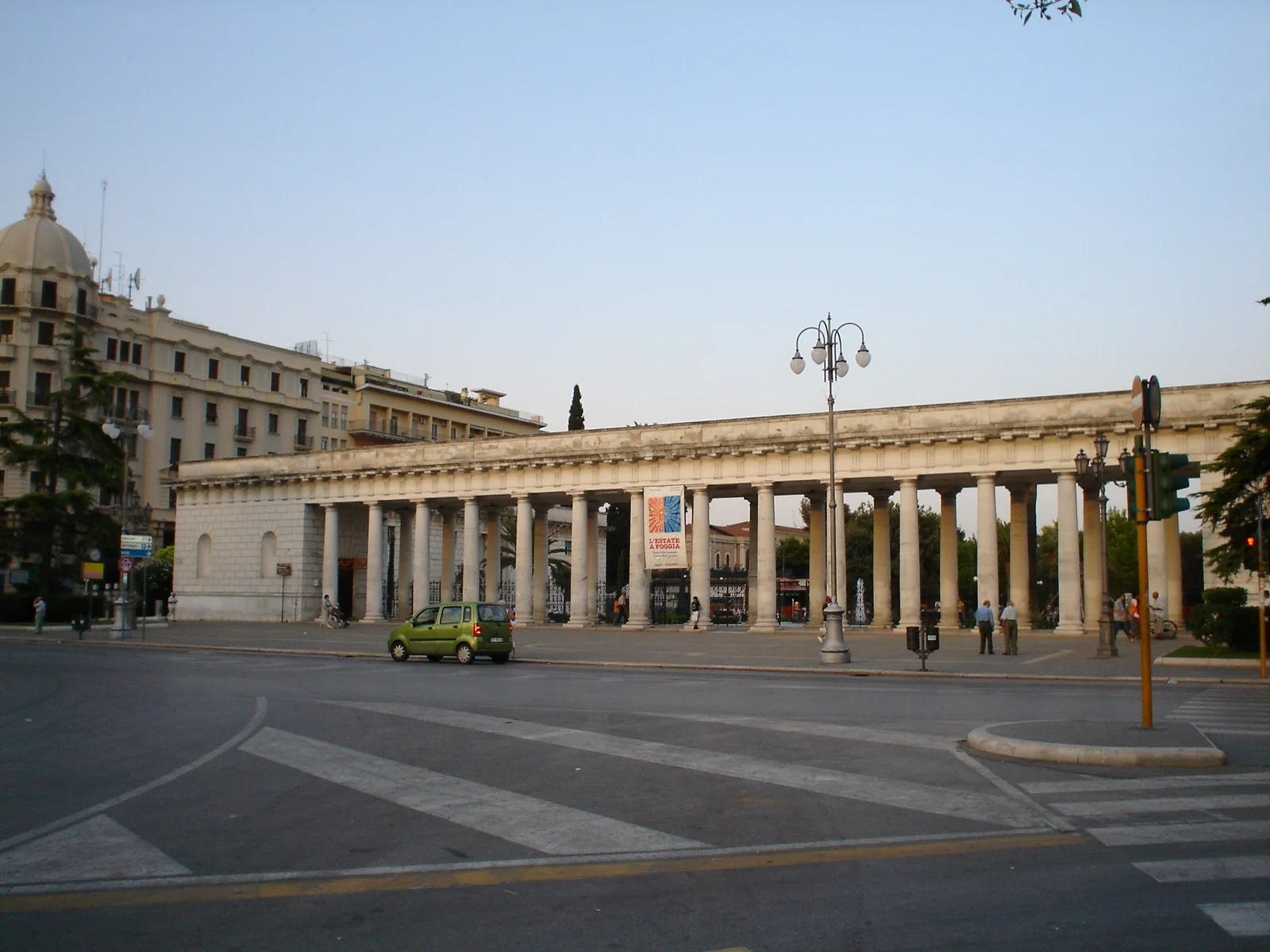
Photo: Ettore Timi / Wikimedia Commons — CC BY 2.5 · Resized and converted to WebP.
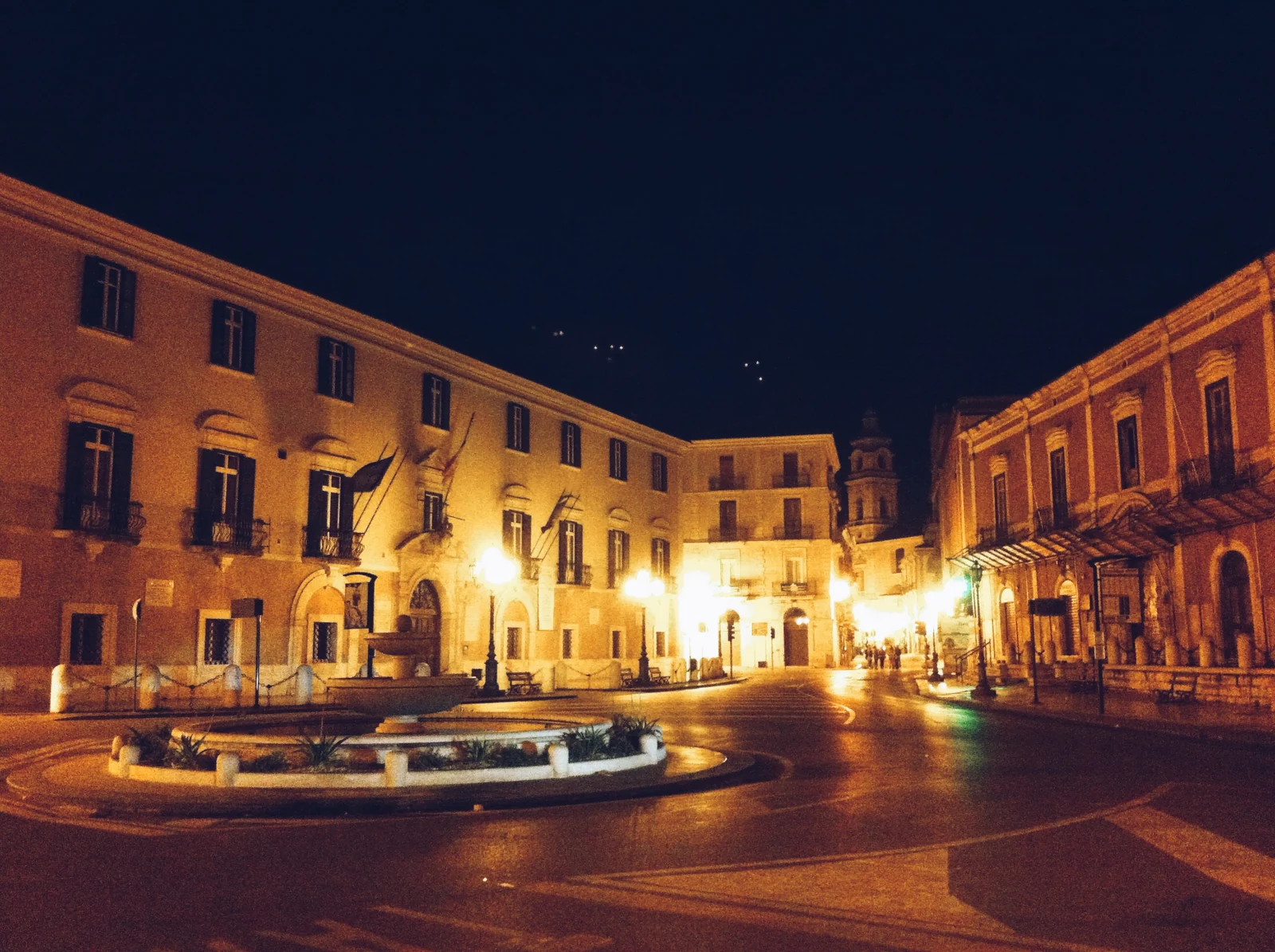
Photo: Feliciana Campaniello / Wikimedia Commons — CC BY-SA 4.0 · Resized and converted to WebP.
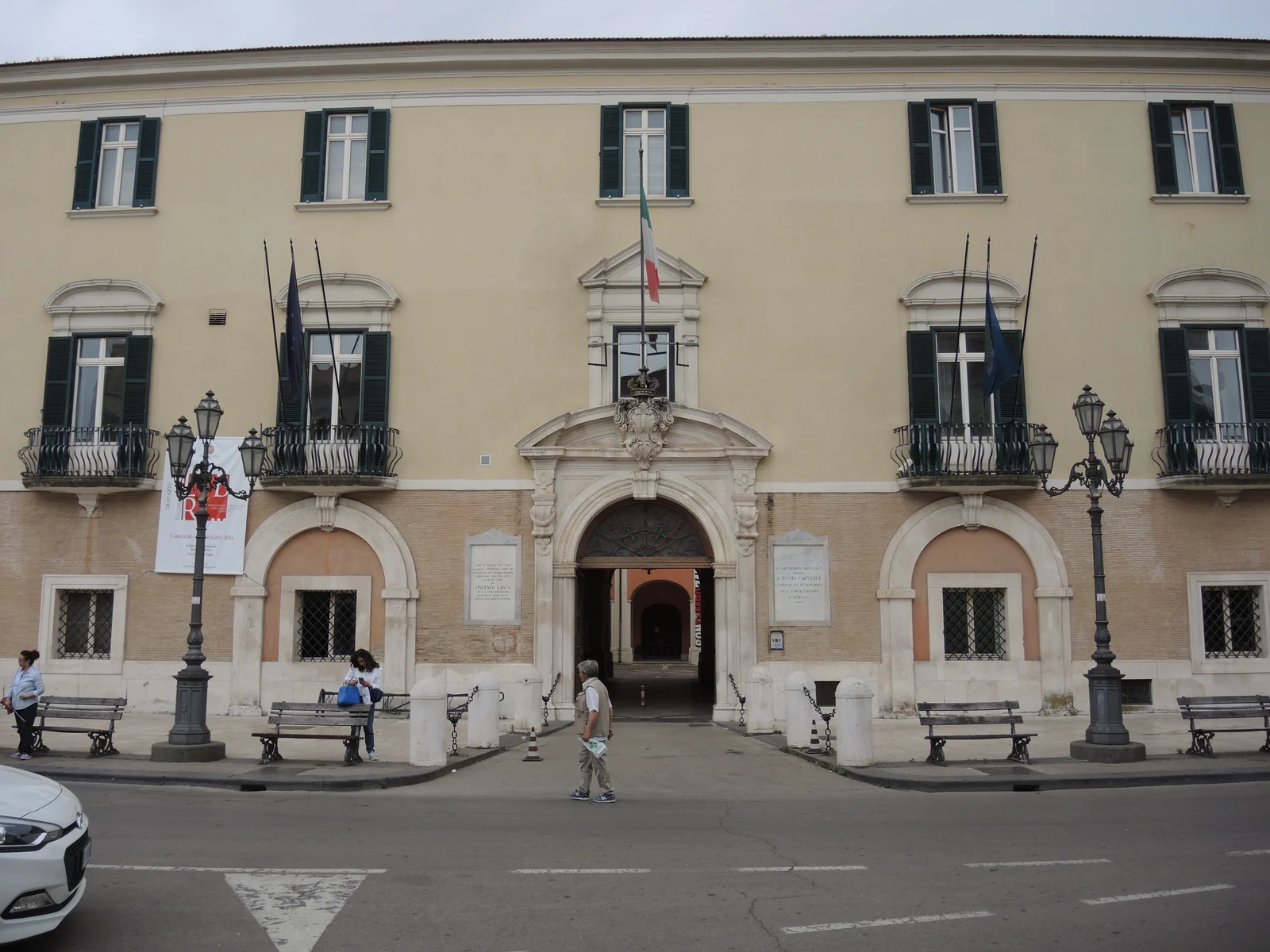
Photo: Pietro / Wikimedia Commons — CC BY-SA 4.0 · Resized and converted to WebP.
History
The first certain record of Foggia is a papal bull of 1069. In the twelfth century the town acquired a large church, the future cathedral, begun around 1170. In 1223 Frederick II built the imperial palace: only its gateway survives, the work of the master builder Bartolomeo da Foggia, with the archivolt held up by two eagles. King Manfred was crowned in Foggia.
On 1 August 1447 Alfonso of Aragon made Foggia the seat of the Dogana del Tavoliere, which governed the pastures of the flocks moving down from the Abruzzi; it lasted until 21 May 1806, when Joseph Bonaparte abolished it and the land was given to the shepherds. In 1480 the city hosted a general parliament. On a long square, the so-called piano delle fosse, grain was stored in pits dug into the ground and closed with stone blocks. In 1648, like Naples, Foggia had its popular uprisings, and in the nineteenth century it took part in the uprisings of 1820, 1848 and 1860.
After the 1731 earthquake the city was rebuilt on a grid plan, with wide, straight streets around the old walled core, whose outline can still be traced in Via Manzoni, Via Fuiani, Corso Garibaldi and Piazza Piano della Croce. On 25 June 1855 Pope Pius IX created the diocese of Foggia, which became a metropolitan archdiocese in 1979. In 1943 the bombings destroyed churches and noble palaces: some of their carved fragments are now in the lapidarium of the Museo civico.
The first record of the hamlet «Sancte Marie de Fogia» dates from 1090. In the thirteenth century the building sites of the collegiate church of Santa Maria, the future Cathedral, and of the imperial palace gave rise to the so-called School of Foggia, linked to the master builder Bartolomeo and the sculptors Gualtiero and Nicola di Bartolomeo. The walled town had five gates: only one survives, Porta Grande, built into Palazzo Arpi.
The customs house left its archive. The State Archive of Foggia, founded in 1818, is housed in the eighteenth-century Palazzo della Dogana and keeps the records of the Dogana delle pecore, the sheep customs (1536-1806): for about four centuries that office managed the state lands of the Tavoliere and had sole control of transhumance in the Kingdom of Naples, from the Aragonese period to the French decade. The flocks moved along a network of drove roads, the tratturi; at the boundary survey of 1651 a spire with a statue of Philip IV was raised at the starting point of the Foggia-L'Aquila drove road. Since 2023 transhumance, the seasonal droving of livestock, has been on UNESCO's Representative List of the Intangible Cultural Heritage, in a nomination by ten States including Italy.
The earthquake struck the city on the night of 20 March 1731, during Holy Week: in Foggia more than two thousand people died, with an estimated magnitude of 6.53 and an epicentre located between Stornara and Stornarella. After the rebuilding the city grew beyond its walls: the Piano della Croce, or delle Fosse, became the square of the grain and livestock market, and the working-class district of Borgo delle Croci grew up outside the walls.
On 15 July 1943 American bombers struck the airfields and the city: in fifteen minutes, from 14:45 to 15:00, 1,293 people were killed. The worst happened in the railway yard, where trains loaded with bombs and fuel blew up; two firefighters, Attilio Rinaldo and Francesco Paolo Colicchio, died trying to uncouple the wagons. On 25 April 2007 the President of the Republic Giorgio Napolitano presented the City of Foggia with the gold medal for military valour.
Sources: Treccani, Enciclopedia Italiana (1932) — Foggia · Treccani, Enciclopedia on line — Foggia · Ministero della Cultura, Luoghi della cultura — Museo civico di Foggia · Arcidiocesi di Foggia-Bovino — Cenni storici · Comune di Foggia, Luoghi — Museo Civico · ICCD, catalogo generale dei beni culturali: scheda «centro storico» di Foggia (Carta dei Beni Culturali della Regione Puglia) · Ministero della Cultura: Archivio di Stato di Foggia · UNESCO, patrimonio culturale immateriale: «Transhumance, the seasonal droving of livestock» (2023) · Arcidiocesi di Foggia-Bovino: 22 marzo 1731, l’Iconavetere e la città colpita dal terremoto (21 marzo 2026) · Vigili del Fuoco, Comando di Foggia: 15 luglio 1943, bombardamento alla stazione di Foggia · Vigili del Fuoco, Comando di Foggia: 25 aprile 2007, medaglia d’oro al valor militare alla Città di Foggia
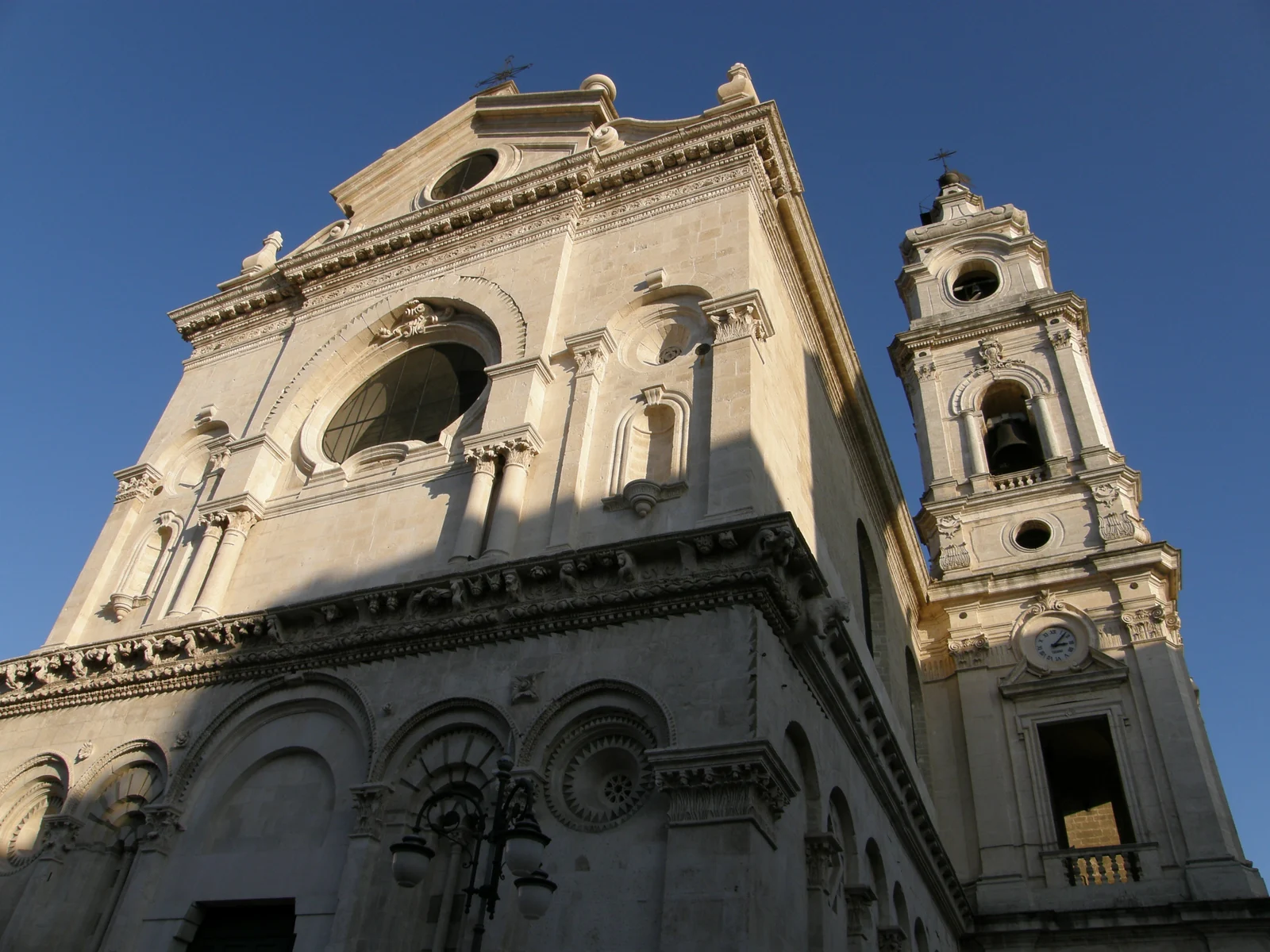
Photo: Giovanni Paciello / Wikimedia Commons — Public domain · Resized and converted to WebP.
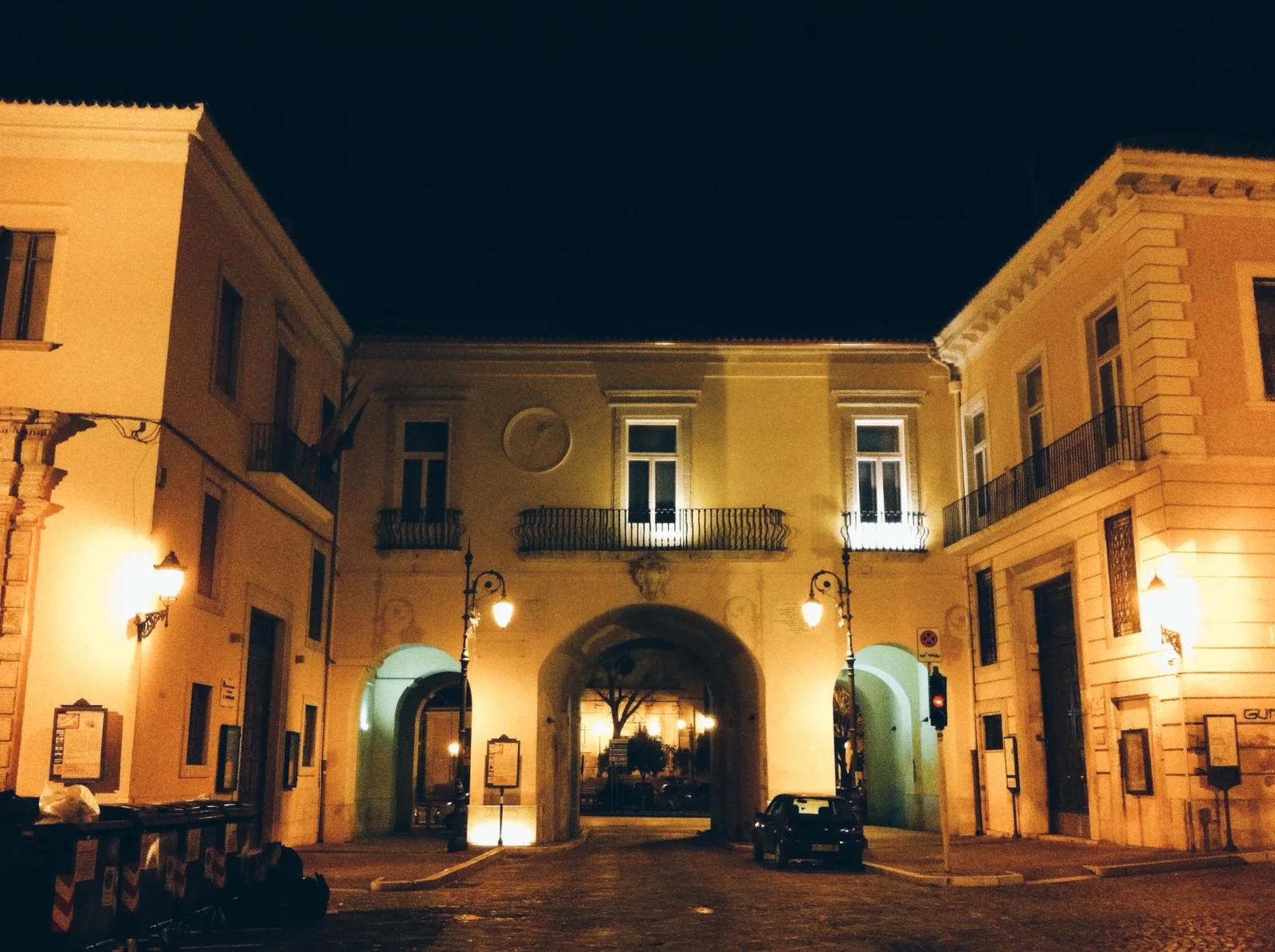
Photo: Feliciana Campaniello / Wikimedia Commons — CC BY-SA 4.0 · Resized and converted to WebP.
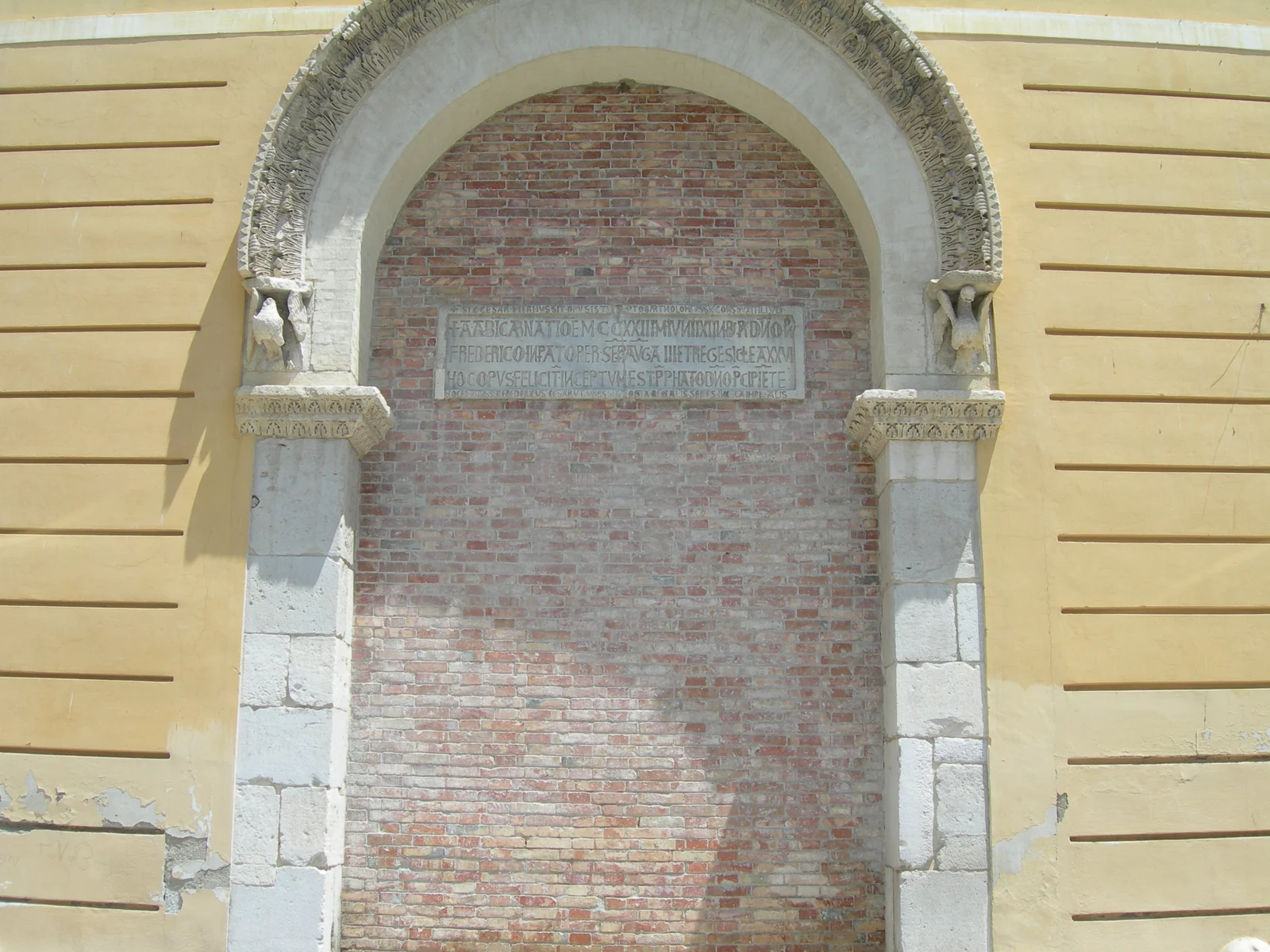
Photo: Aky il grande / Wikimedia Commons — Public domain · Resized and converted to WebP.
What to see
The cathedral, begun around 1170 and rebuilt in the eighteenth century after the earthquake, keeps Romanesque blind arcades and a cornice with grotesque figures on the lower part of the façade and sides; the crypt has thirteenth-century capitals. Inside is venerated the Iconavetere, the ancient panel of the Madonna dei Sette Veli, which since May 2025 has been under restoration at the Opificio delle Pietre Dure in Florence. Beneath the historic centre runs a series of underground rooms, the hypogea: the most important is that of San Domenico.
The Museo civico is in Palazzo Arpi, on Piazza Nigri, on the street named after the ancient city of Arpi, the largest in Daunia; the arch of Frederick II's palace is set into the side of the building. The museum, founded in 1931 and open here since 1966, has an archaeological section with finds from Arpi, Salapia and Ordona, the mosaics of the House of the Lions and Panthers mosaic and reconstructions of two Daunian tombs, the Hypogeum of the Medusa and the Tomb of the Horsemen; then the lapidarium, the picture gallery with the rooms of the Foggia painter Francesco Saverio Altamura and an ethnographic section with Gargano gold jewellery and period dress of the Capitanata.
Nineteenth-century Piazza Cavour brings together three symbols of the city: the Acquedotto Pugliese building with its two corner domes, the Fontana del Sele and the neoclassical portico of the Villa comunale, built in 1827 to a design by the engineer Luigi Oberty, destroyed by bombs and rebuilt in 1950. The garden behind the portico is about a kilometre long. For twentieth-century art there are the Pinacoteca Il 9Cento, in a former district market, and the Palazzetto dell'Arte named after Andrea Pazienza; the Auditorium Santa Chiara is a sixteenth-century church with a Baroque façade, reopened in 2001 and turned into an auditorium for cultural events and performances.
In the old centre the Enciclopedia Italiana also pointed out Palazzo De Rosa, with a tall and elegant loggia, the church of the Croci and that of San Giovanni, in front of which stands a stone column with a relief of the Madonna and Child dated 1544. Ancient Arpi, the source of many of the museum's finds, was the largest city of Daunia.
In the Cathedral, dedicated to the Madonna dei Sette Veli or Iconavetere, the high altar was renewed after the 1731 earthquake; in 1767 the Neapolitan sculptor Giuseppe Sanmartino, who carved the Veiled Christ, added two torch-bearing angels and several cherubs, still in place. His signature is behind the right-hand angel, facing the altar. According to tradition the icon was found wrapped in cloths in the waters of a pond.
Outside the old walls, the Real Tempio del Monte Calvario, known as the «cappellone delle croci», is the city's only national monument. It grew out of the memory of a Way of the Cross at the end of the seventeenth century: the Capuchin friar Antonio da Olivadi planted seven crosses to pray against a drought, and according to tradition the rain returned. The first stone was laid in 1693 and the church was consecrated in March 1742; the monumental portal, carved with the instruments of the Passion, the sun and the moon, leads to five chapels.
Piazza XX Settembre, once Piazza Dogana Nuova, took shape around the New Palace of the Sheep Customs, built between 1734 and 1762 with the work of Neapolitan architects such as Giustino Lombardi, Luigi Vanvitelli and Felice Bottiglieri; Palazzo Filiasi and the neoclassical church of San Francesco Saverio also face the square. At Via Arpi 155 the Museo del Territorio tells the story of the peoples of the Capitanata from the start of the Christian era to the present, with thematic maps and the settlements of the first to fifteenth centuries.
Sources: Treccani, Enciclopedia Italiana (1932) — Foggia · Treccani, Enciclopedia on line — Foggia · Arcidiocesi di Foggia-Bovino — Cenni storici · Italia.it (Ministero del Turismo) — Foggia · Comune di Foggia, Luoghi — Museo Civico · Ministero della Cultura, Luoghi della cultura — Museo civico di Foggia · Comune di Foggia, Luoghi — Piazza Cavour · Comune di Foggia, Luoghi — Villa Comunale - Parco Karol Wojtyla · Comune di Foggia, Luoghi — Pinacoteca Il 9Cento · Comune di Foggia, Luoghi — Palazzetto dell’Arte «Andrea Pazienza» · Comune di Foggia, Luoghi — Auditorium Santa Chiara · Arcidiocesi di Foggia-Bovino: gli angeli di Giuseppe Sanmartino nella Cattedrale di Foggia (2 ottobre 2026) · Direzione regionale per i beni culturali e paesaggistici della Puglia: «Foggia e la sua provincia in Piazza» (opuscolo) · Arcidiocesi di Foggia-Bovino: il «cappellone delle croci» di Foggia (13 settembre 2026) · ISPRA, repertorio dei musei: Museo del territorio di Foggia
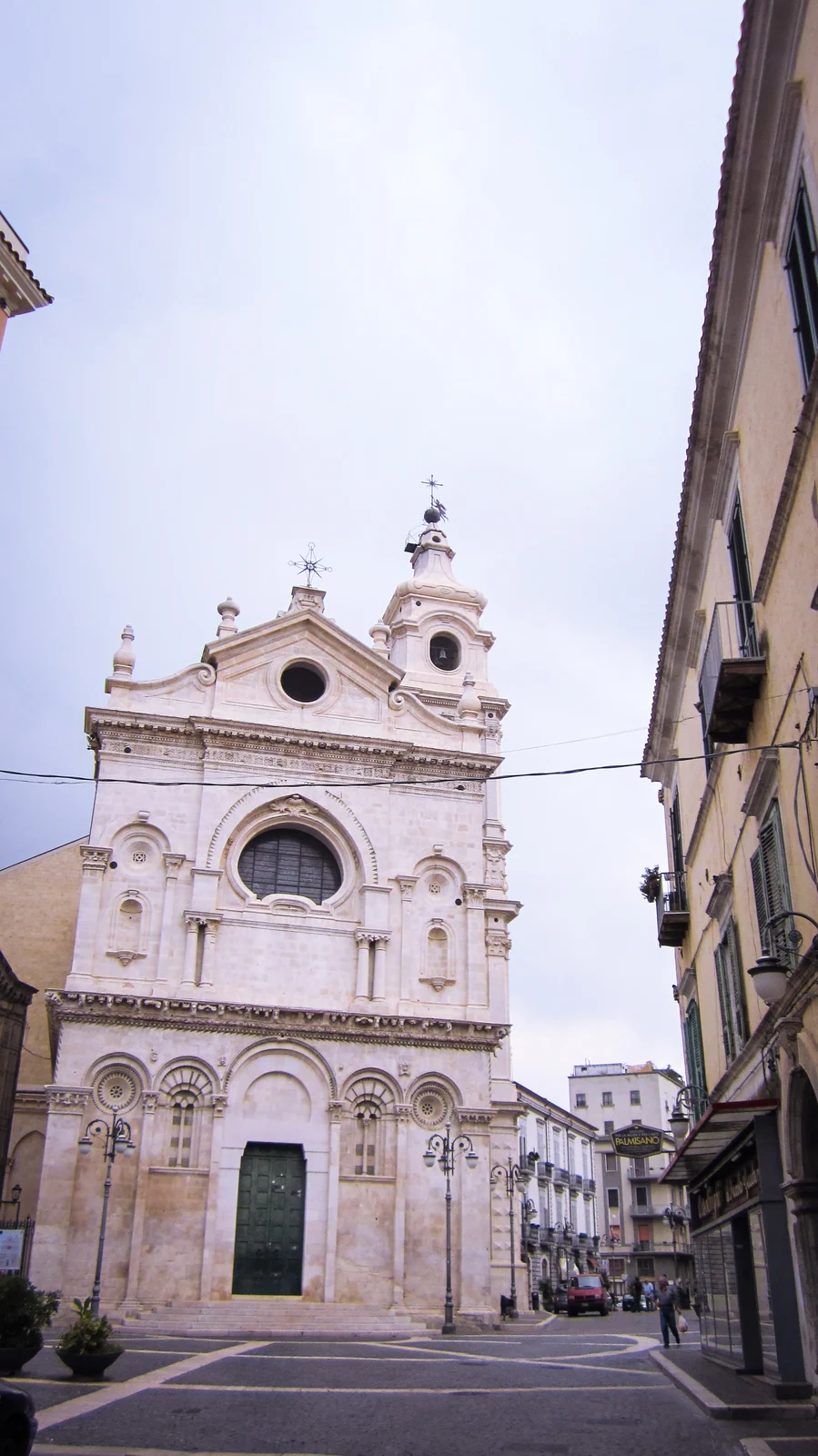
Photo: rdellisanti / Wikimedia Commons — CC BY-SA 3.0 · Resized and converted to WebP.
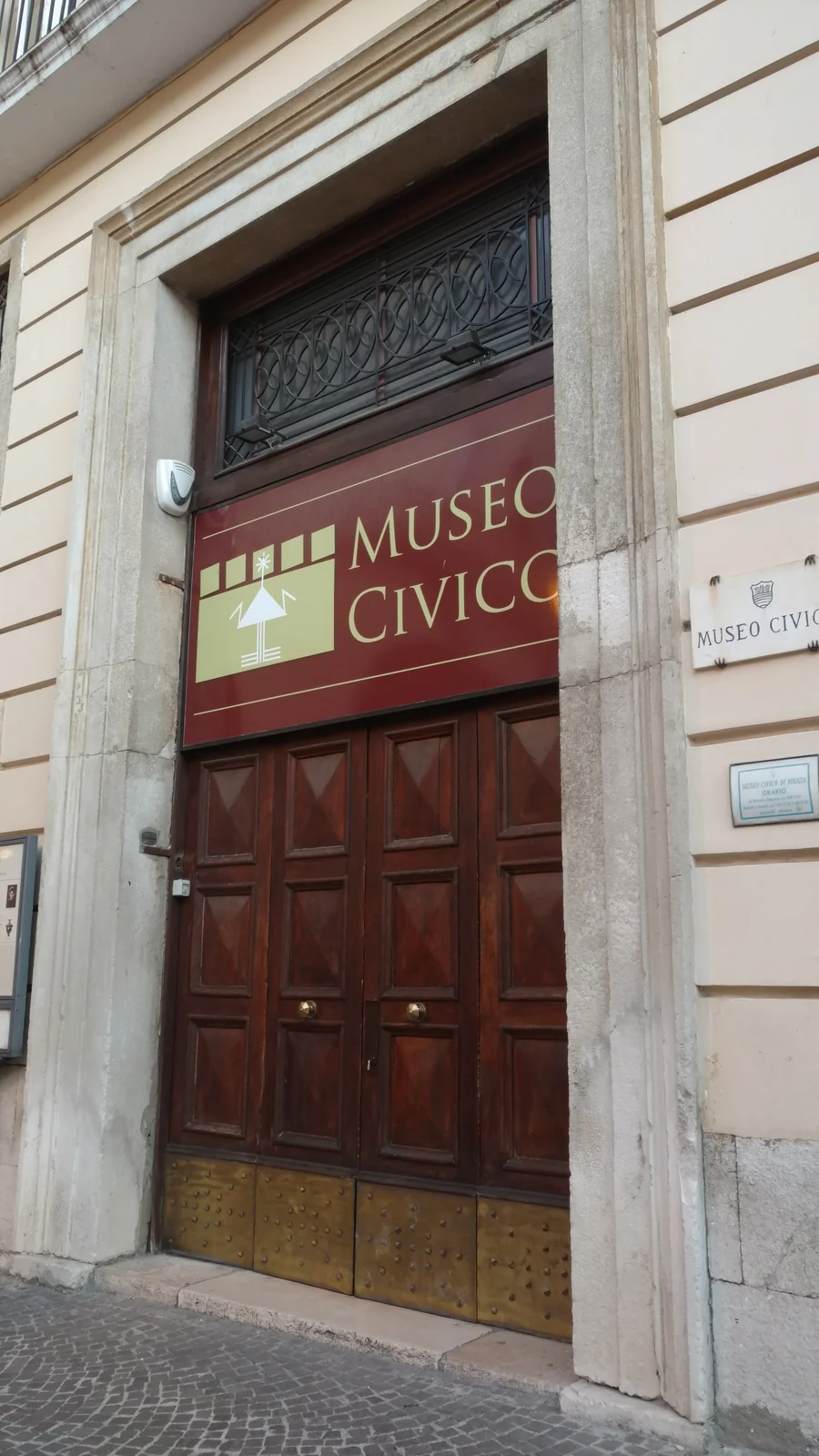
Photo: Alex Bevilacqua / Wikimedia Commons — CC BY-SA 4.0 · Resized and converted to WebP.
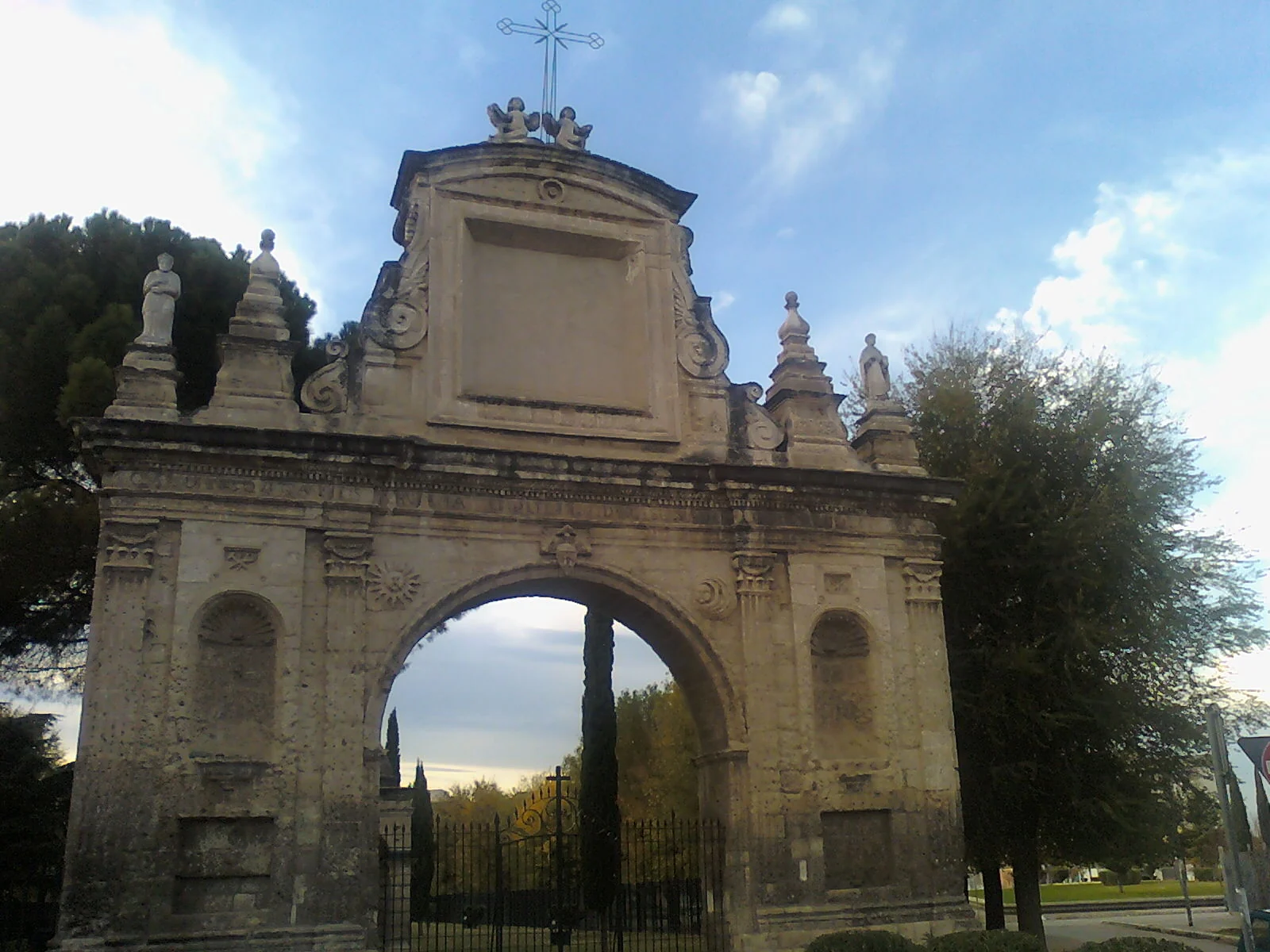
Photo: Fraccio / Wikimedia Commons — Public domain · Resized and converted to WebP.
Flavours
Foggia's cooking comes from the countryside of the Tavoliere, the great grain market. The dish that tells its story is pancotto: bread cooked, often with vegetables or pulses, and dressed with olive oil, a frugal dish found all over Puglia in many variations. A periodical printed in Lucera wrote in 1944 that in the Capitanata pancotto, bread and oil, was the most common food; the town's Pro Loco devoted a food festival to it in Piazza Giordano on 24 and 25 October 2025.
As early as 1932 the Enciclopedia Italiana mentioned the cheeses and mozzarella of Foggia's livestock farming; today part of the province of Foggia lies within the area of origin of mozzarella di bufala campana DOP. To sit down to a meal, Slow Food's 2026 Osterie d'Italia guide gave its Chiocciola to two places in the city, Piccola Osteria Km Zero and Terra Arsa.
The flocks of transhumance give pecorino foggiano, a traditional product of Puglia: it is made from sheep's milk, mostly from local breeds such as the Gentile di Puglia, in a fresh, soft version aged about a month and in a matured one aged up to a year, hard and strongly flavoured. From the Tavoliere comes the white lupin, another traditional product, sown in autumn and harvested in summer.
For shopping the city has daily and weekly markets; among them the Comune names the Rosati market, with stalls of fruit, vegetables and groceries.
The Rosati market is in the street of the same name, which the Comune still describes as the «market area» in April 2026. The Comune's other daily markets are the «Biccari», in Viale Giuseppe La Torre, with food stalls only from Monday to Saturday, and the «Candelaro», in Piazza Padre Eugenio Caldarazzo, with food and non-food stalls. In the old centre, in Piazza Mercato, the market area is covered by an Art Nouveau iron structure. On Fridays there is the weekly market, known as «il Venerdì», in the Via Miranda area, on Piazzale Anna De Lauro Matera near the Città del Cinema. For farmers' produce there is Coldiretti's Campagna Amica covered market at Via Monsignor Lenotti 61, in the Macchia Gialla district, open all year on Mondays, Fridays and Saturdays.
Sources: Treccani, Enciclopedia Italiana (1932) — Foggia · PAT Puglia (Regione Puglia) — Il pancotto nei secoli: documenti storici e testimonianze · Comune di Foggia — I provvedimenti di circolazione per la sagra del Pancotto della Pro Loco (22 ottobre 2025) · Consorzio di tutela Mozzarella di Bufala Campana DOP — Territorio · Slow Food — Tutte le Chiocciole di Osterie d’Italia 2026, regione per regione · PAT Puglia: pecorino foggiano · PAT Puglia: lupino bianco del Tavoliere · Comune di Foggia e AMIU Puglia: comunicato dell’11 gennaio 2023 sul mercato Rosati e sui mercati cittadini · Comune di Foggia: manutenzione strade, lunedì riprendono i lavori (11 aprile 2026), via Rosati «zona mercato» · Comune di Foggia: mercati «Biccari» e «Candelaro», assegnazione dei posteggi (15 aprile 2025) · Comune di Foggia, Servizio Integrato Attività Economiche: avviso pubblico per i posteggi del mercato «Biccari» (2025) · Comune di Foggia: nuova illuminazione al Quartiere Ferrovia e in piazza Mercato (4 agosto 2023) · Comune di Foggia, SUAP: mercato settimanale di via Miranda, detto del «Venerdì» (3 giugno 2022) · Comune di Foggia: venerdì 25 aprile regolare svolgimento del mercato settimanale (22 aprile 2025) · Comune di Foggia: la Fiera di Santa Caterina dal 25 al 28 novembre (22 novembre 2023) · Fondazione Campagna Amica: Mercato Coperto di Campagna Amica di Foggia
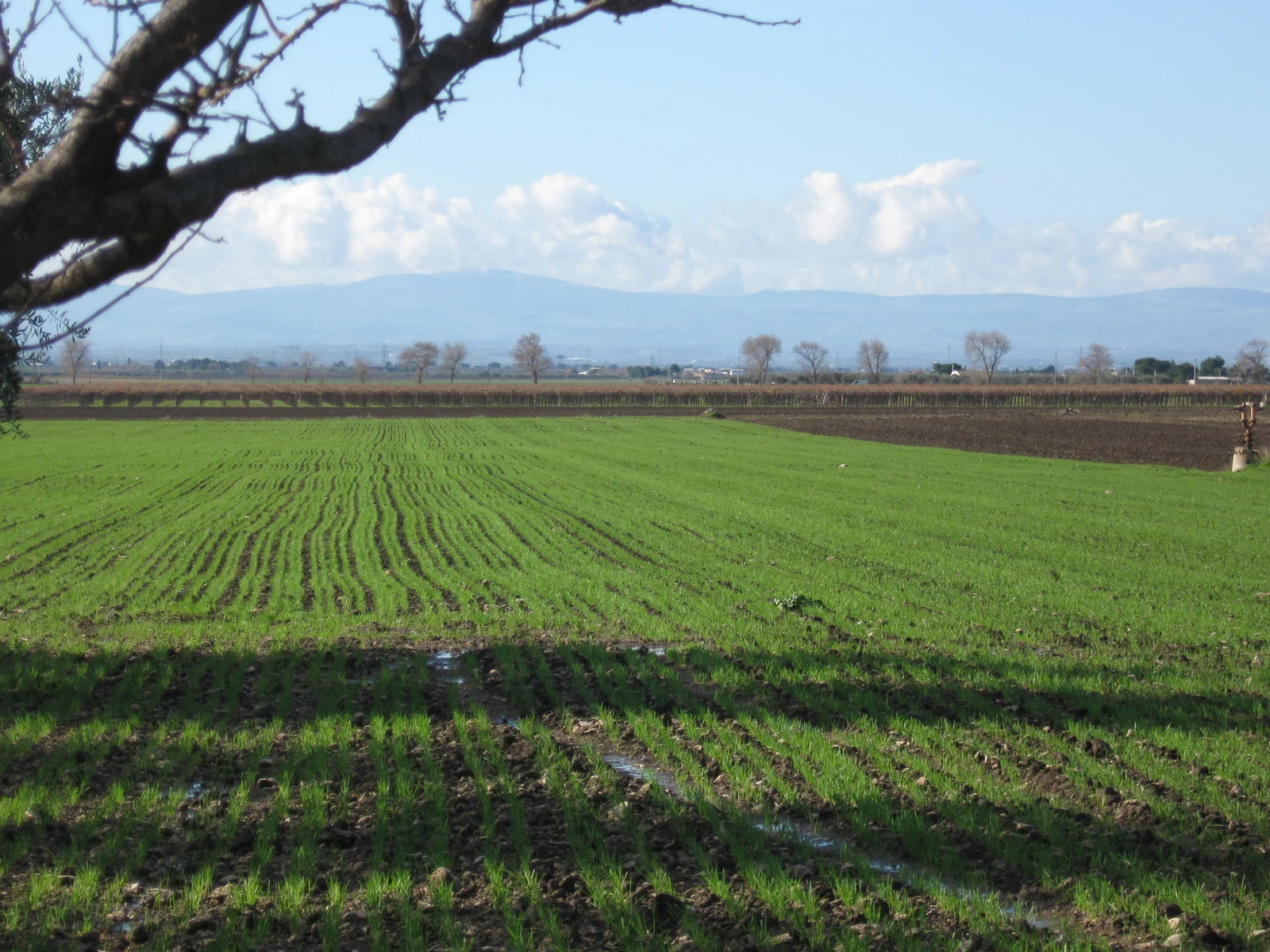
Photo: Johnste / Wikimedia Commons — CC BY-SA 3.0 · Resized and converted to WebP.
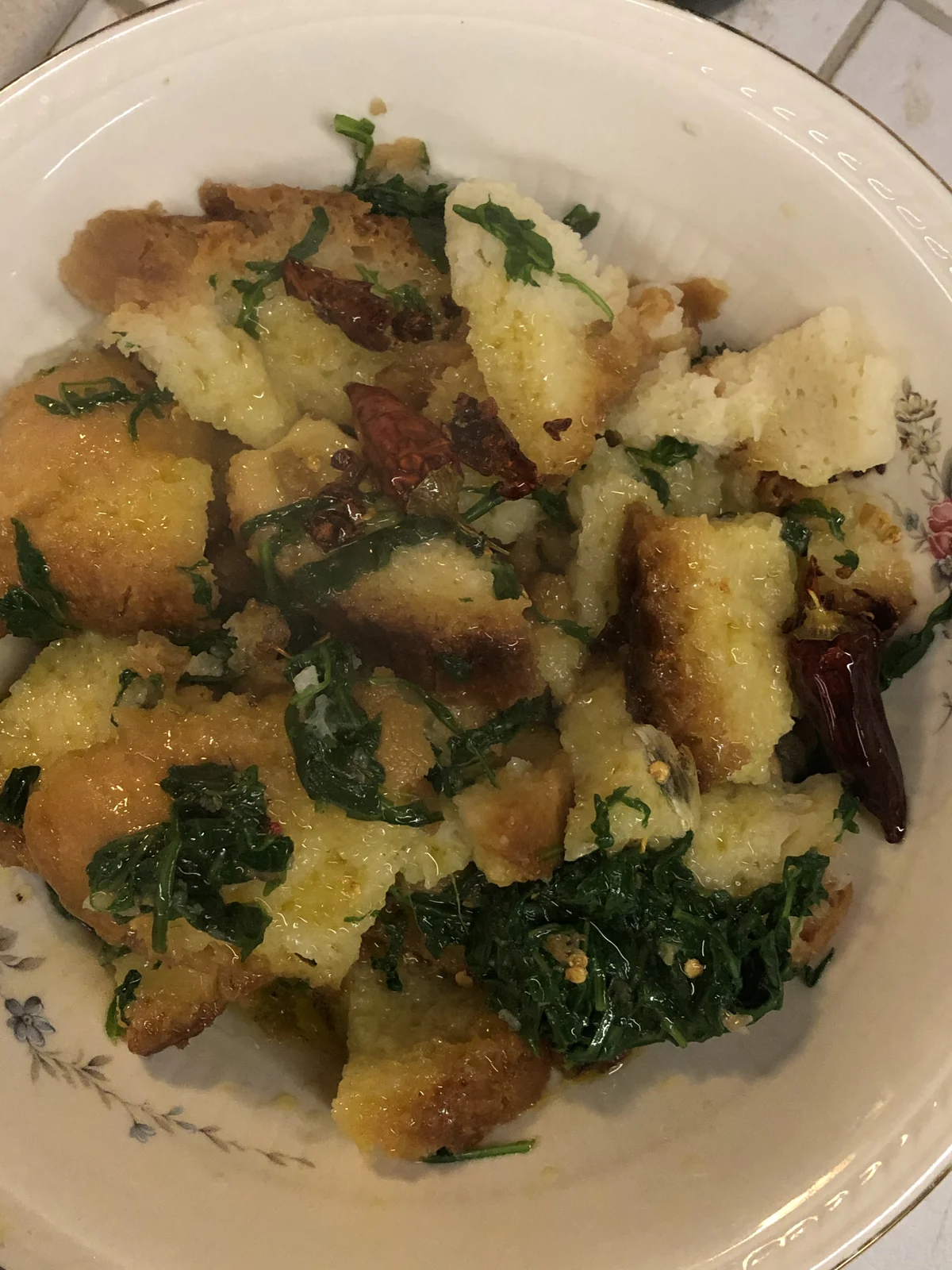
Photo: Giulia Pesacane / Wikimedia Commons — CC BY-SA 4.0 · Resized and converted to WebP.
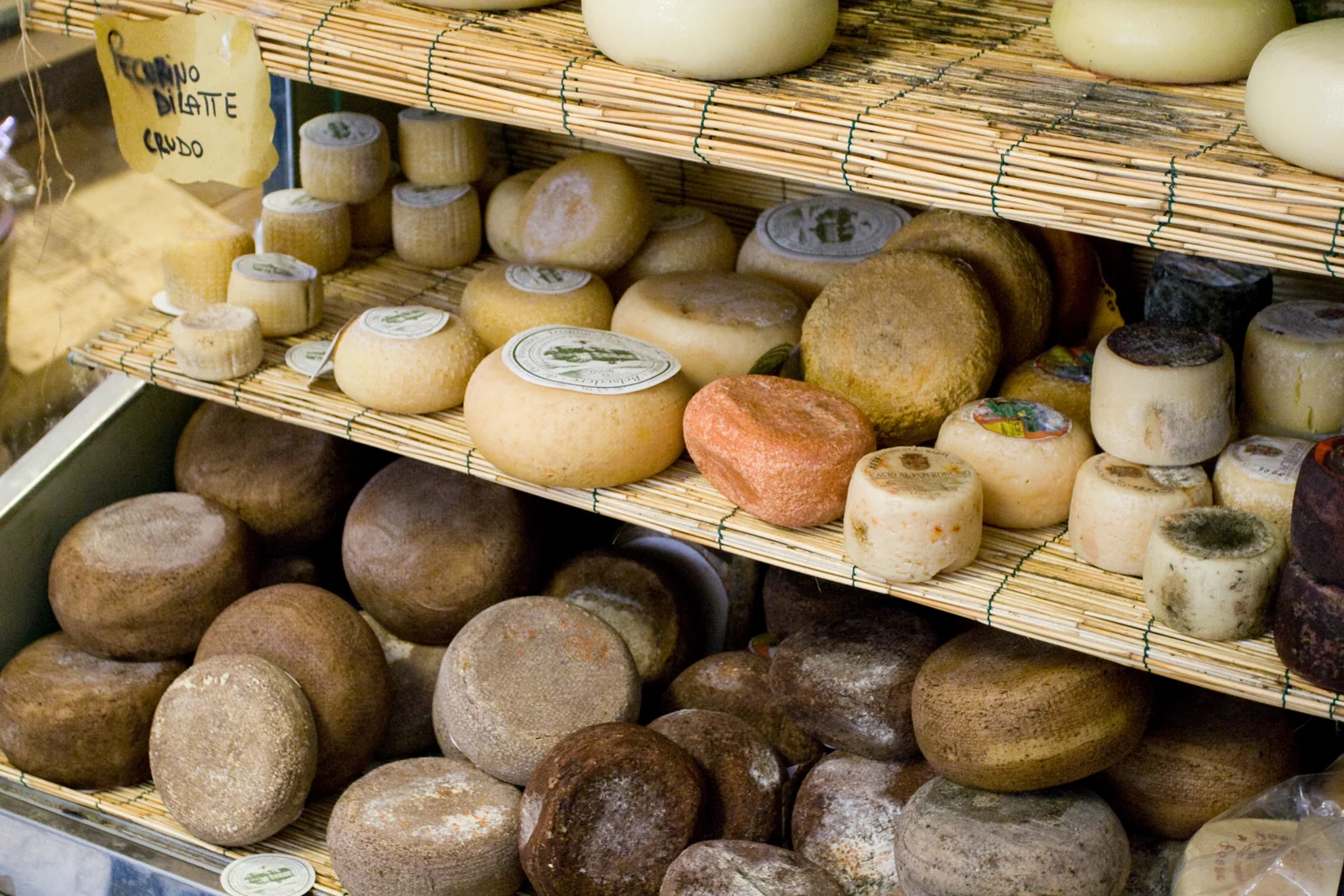
Photo: Marco Varisco / Wikimedia Commons — CC BY-SA 2.0 · Resized and converted to WebP.
Things to do
A walk ties together the city's eras: from the station Viale XXIV Maggio leads to Piazza Cavour and the Villa comunale, open daily from 7 am to 9.30 pm with free entry, then Corso Vittorio Emanuele reaches the old centre, between the cathedral, the Museo civico and the arch of Frederick II. For green space there are also the Campi Diomedei, a 23-hectare urban park in the centre.
In the evening you go to the theatre. The Teatro Umberto Giordano, designed by Luigi Oberty, opened on 10 May 1828 as the Real Teatro Ferdinando and has borne the name of the Foggia-born composer since 1928; damaged in 1943 and closed in 2006, it reopened on 10 December 2014 with the Orchestra Giovanile Luigi Cherubini conducted by Riccardo Muti. The 2026-2027 season includes drama and jazz; the calendar is on the theatre's website.
Outside the city, about 12 kilometres away, the Bosco dell'Incoronata regional nature park is a protected area that includes the Cervaro valley and the sanctuary of the Incoronata, with many species of birds, fallow deer and wild boar.
The theatre bears the name of the city's most famous composer. Umberto Giordano, born in Foggia in 1867, studied at the Naples conservatory under Paolo Serrao and made his name with «Mala vita», staged in Rome in 1892; his best known opera is «Andrea Chénier» of 1896, to a libretto by Luigi Illica, and «Fedora» is still performed as well. Of his thirteen operas, «La cena delle beffe» was staged at La Scala in 1924. He died in Milan on 12 November 1948.
Football fans go to the Pino Zaccheria stadium, in Via Gioberti, opened on 22 November 1925: on 26 May 1926 it hosted the finish of a stage of the Giro d'Italia, won by Binda. Since 1946 it has carried the name of Pino Zaccheria, a Foggia athlete and basketball player killed in the war; on 27 September 1964 it hosted its first Serie A match, Foggia-Mantova 1-0. In 1987 the club gave the bench to a young Czechoslovak coach, Zdeněk Zeman; with him, in the 1990s, Foggia returned to Serie A, the years the club calls «Zemanlandia». The club's stadium page today gives 14,530 seats. The Curva Sud is named after Piero La Salandra (1965-2002), who from 1988 was president of the supporters' group Regime Rossonero.
Sources: Treccani, Enciclopedia Italiana (1932) — Foggia · Comune di Foggia, Luoghi — Villa Comunale - Parco Karol Wojtyla · Comune di Foggia, Luoghi — Campi Diomedei · Teatro Umberto Giordano — Storia · Comune di Foggia, Luoghi — Teatro Umberto Giordano · Teatro Umberto Giordano, stagione 2026-2027 — «Mio, sempre, mio Andrea» · Italia.it (Ministero del Turismo) — Foggia · Comune di Foggia: Palazzo di Città e «Uomini illustri» · Comune di Foggia: Stadio Zaccheria · Calcio Foggia 1920: lo stadio Pino Zaccheria · Calcio Foggia 1920: la storia
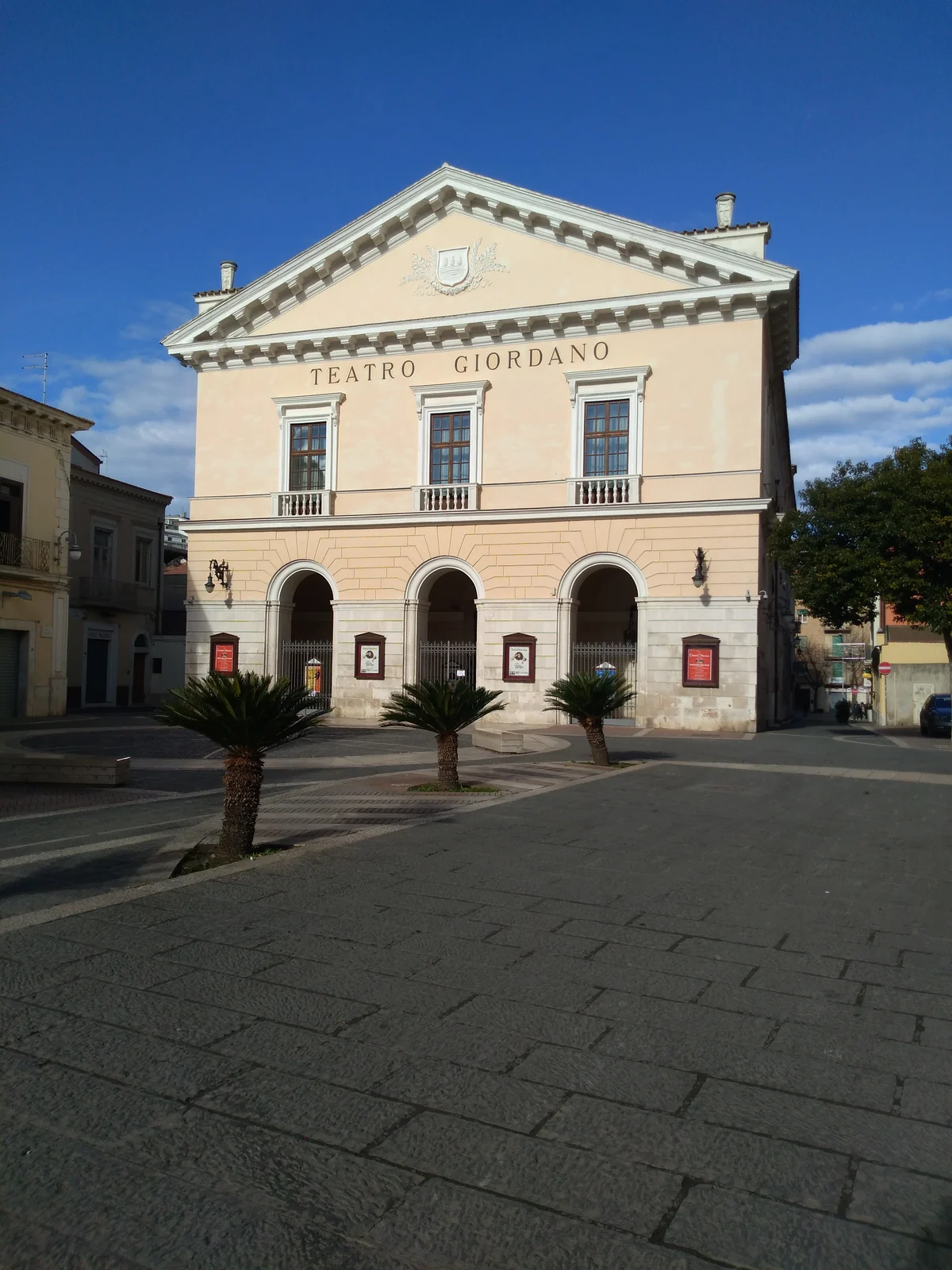
Photo: Fabio Benvenuto / Wikimedia Commons — CC BY-SA 4.0 · Resized and converted to WebP.
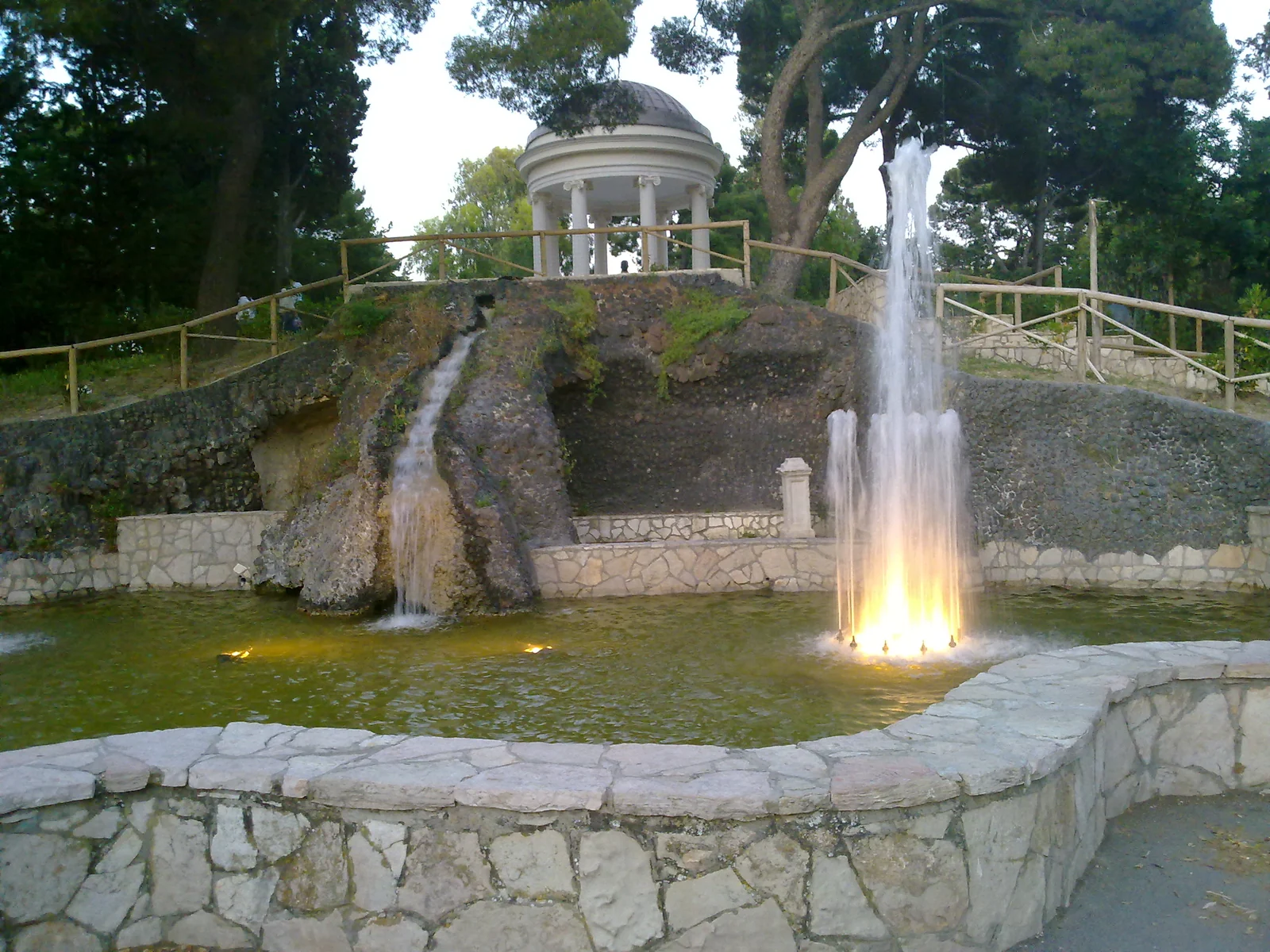
Photo: Raimondo Perrina / Wikimedia Commons — CC BY-SA 3.0 · Resized and converted to WebP.
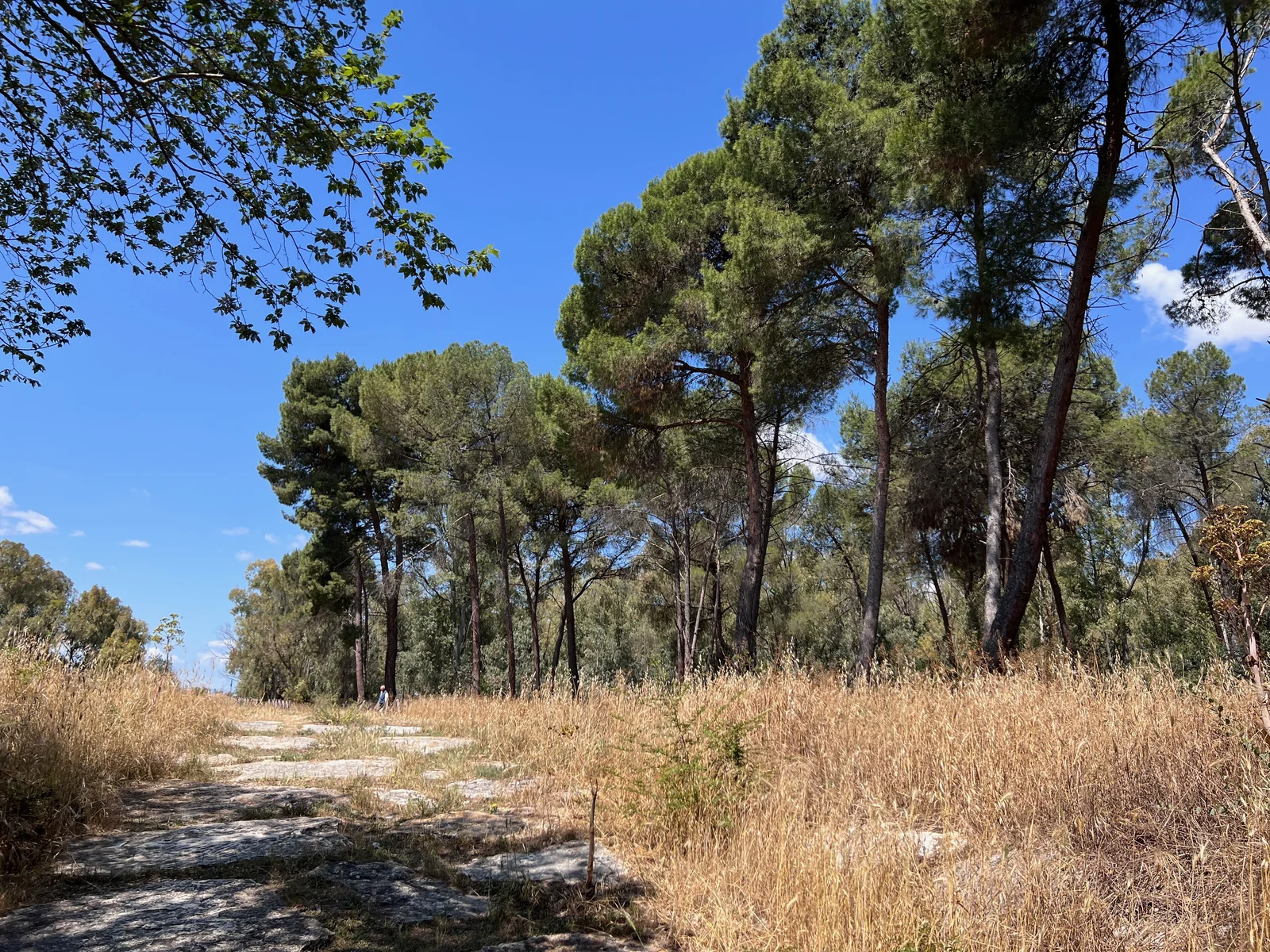
Photo: Ferdinando Traversa / Wikimedia Commons — CC BY-SA 4.0 · Resized and converted to WebP.
When to go
The Museo civico is open Tuesday to Saturday from 9 am to 1 pm, on Tuesdays and Thursdays also from 4 to 7 pm; on the first and third Sunday of the month it opens from 9 am to 1 pm, the first with free entry. It is closed on Mondays.
The city's religious year has two dates. 22 March is the solemnity of the apparitions of the Madonna dell'Iconavetere: in 2022 the archbishop devoted his message to the city to it. At the end of April people walk from the city to the sanctuary of the Incoronata: in 2026 the roads along the route were closed to traffic from the night of the 24th to that of 26 April. According to tradition, in April 1001 a count of Ariano Irpino, hunting in the wood, saw the Madonna by a great oak, and among its branches appeared a dark statue of the Madonna and Child.
For Christmas the Comune lights decorations in more than twenty streets and squares, from Corso Vittorio Emanuele II to Piazza Cattedrale, and lights up the portico of the Villa comunale as tradition demands. At the theatre, on 1 and 2 April 2027 the Giordano hosts «Mio, sempre, mio Andrea», letters, poems and songs by Andrea Pazienza.
2027 should be the year the Iconavetere returns. At a meeting in the Cathedral in May 2026 the Archbishop announced that the restoration at the Opificio delle Pietre Dure would be finished in the first months of 2027, in time for the March feast; in October 2026 the Archdiocese was still raising funds for the transport from Florence and for its conservation in the Cathedral. By tradition the Sacred Panel is carried in processions by the Capuchins, in memory of the Capuchin church where in 1731 the people of Foggia said they saw the face of the Virgin.
On 14 September, the feast of the Exaltation of the Holy Cross, a solemn mass is celebrated at the cappellone delle croci.
At the end of November, around the 25th, the feast of Saint Catherine of Alexandria, comes the Fiera di Santa Caterina: after the May fair it is the oldest fair in the city, a tradition documented over about two centuries, which began in Via Arpi, the merchants' street of nineteenth-century Foggia. The dates change from year to year: in 2023 the fair ran from 25 to 28 November, in 2024 from 23 to 26, with 154 traders at both editions, on Piazzale Anna De Lauro Matera.
Sources: Comune di Foggia, Luoghi — Museo Civico · Arcidiocesi di Foggia-Bovino — Messaggio alla città per la solennità delle apparizioni della B. V. Maria dell’Iconavetere (22 marzo 2022) · Comune di Foggia — Pellegrinaggio all’Incoronata: sospensione temporanea del traffico (24 aprile 2026) · Parks.it (Federparchi) — Parco naturale regionale Bosco Incoronata, punti di interesse · Comune di Foggia — Luminarie natalizie (13 novembre 2026) · Teatro Umberto Giordano, stagione 2026-2027 — «Mio, sempre, mio Andrea» · Arcidiocesi di Foggia-Bovino: il restauro dell’Iconavetere, convegno in Cattedrale (15 maggio 2026) · Arcidiocesi di Foggia-Bovino: restauro dell’Iconavetere, raccolta per il ritorno (5 ottobre 2026) · Arcidiocesi di Foggia-Bovino: perché il Sacro Tavolo è portato in processione dai cappuccini (19 marzo 2026) · Arcidiocesi di Foggia-Bovino: 22 marzo 1731, l’Iconavetere e la città colpita dal terremoto (21 marzo 2026) · Arcidiocesi di Foggia-Bovino: il «cappellone delle croci» di Foggia (13 settembre 2026) · Comune di Foggia: la Fiera di Santa Caterina dal 25 al 28 novembre (22 novembre 2023) · Comune di Foggia: la Fiera di Santa Caterina da sabato 23 a martedì 26 novembre (22 novembre 2024)
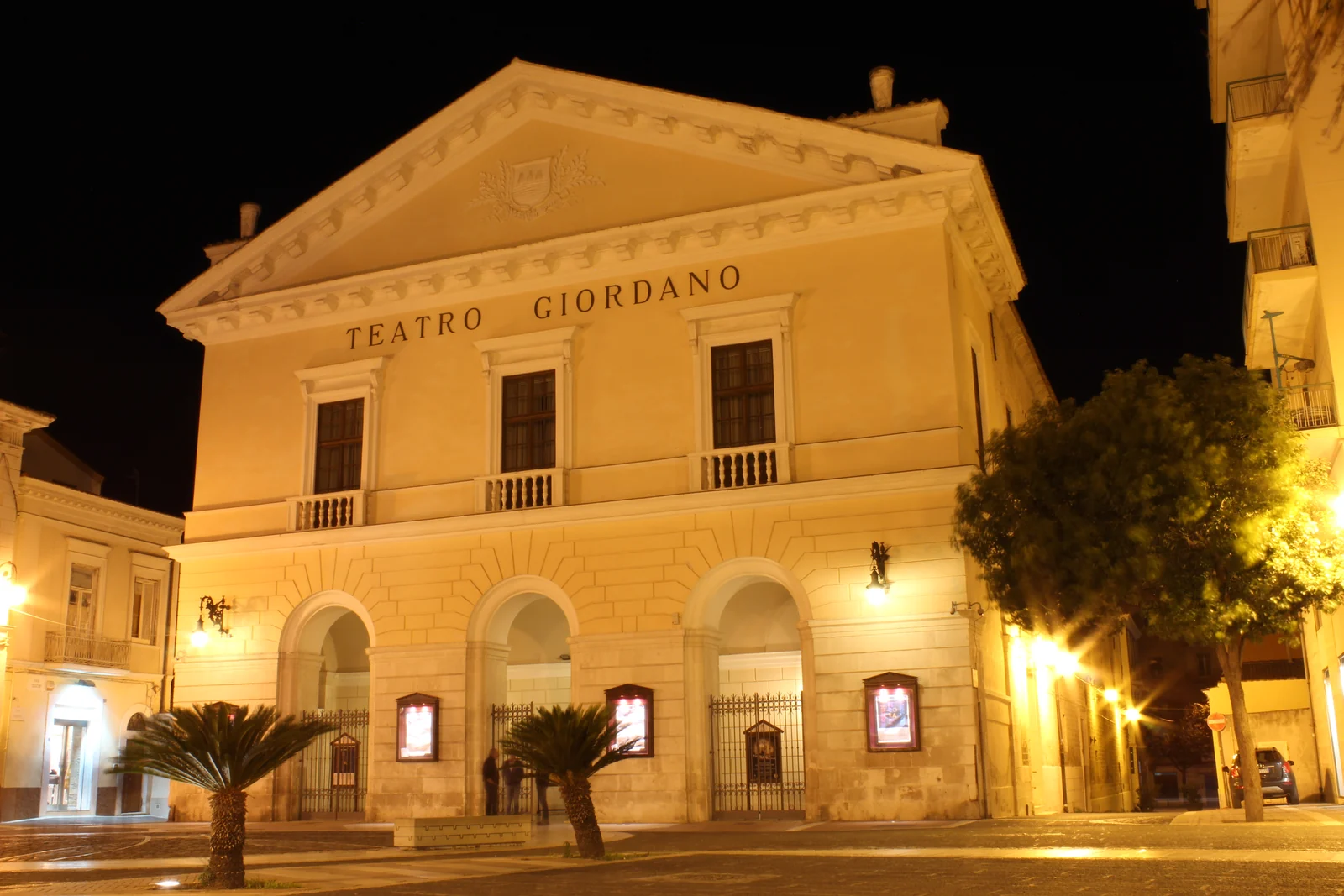
Photo: Gipi2706 / Wikimedia Commons — CC BY-SA 4.0 · Resized and converted to WebP.
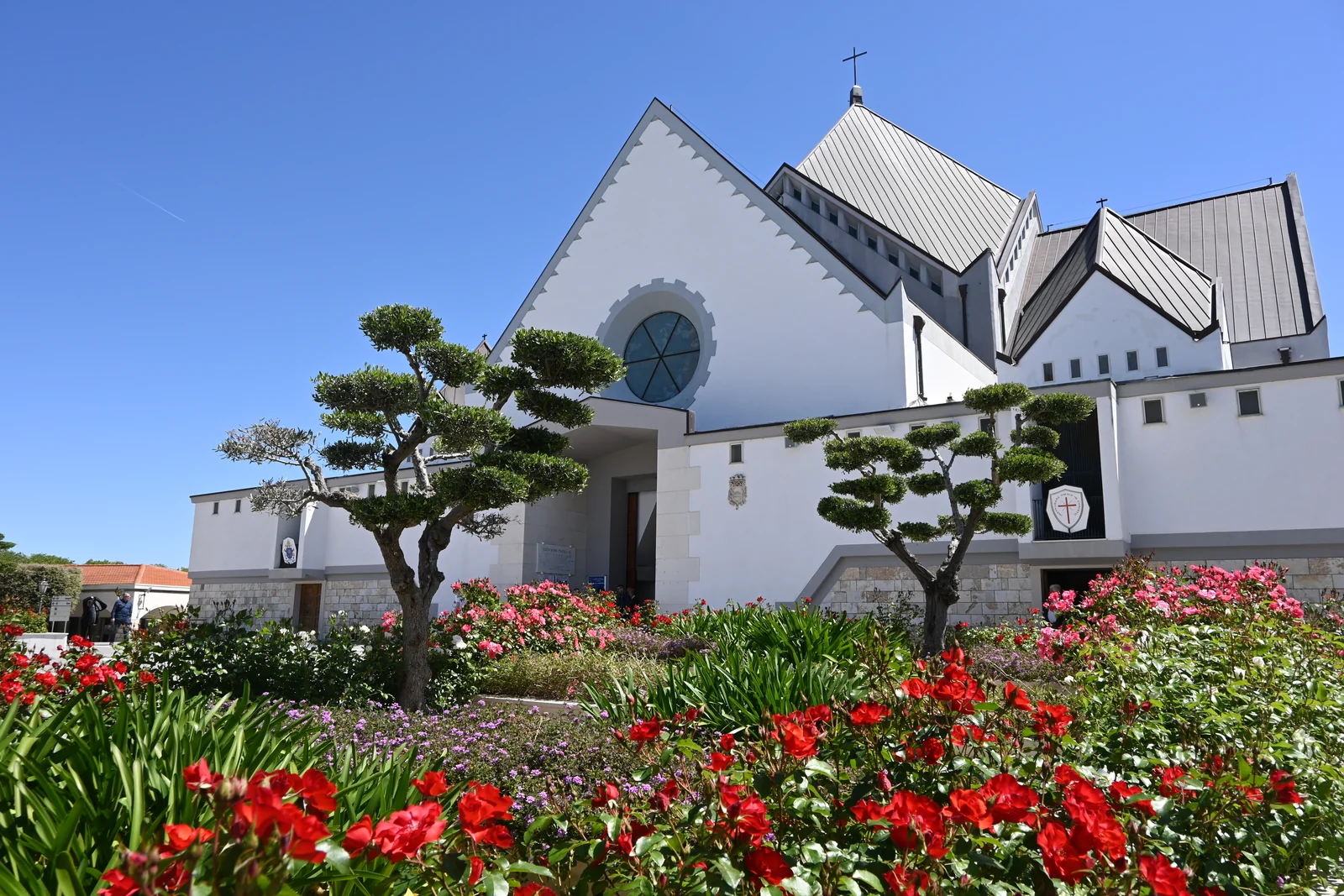
Photo: Fabio Benvenuto / Wikimedia Commons — CC BY-SA 4.0 · Resized and converted to WebP.
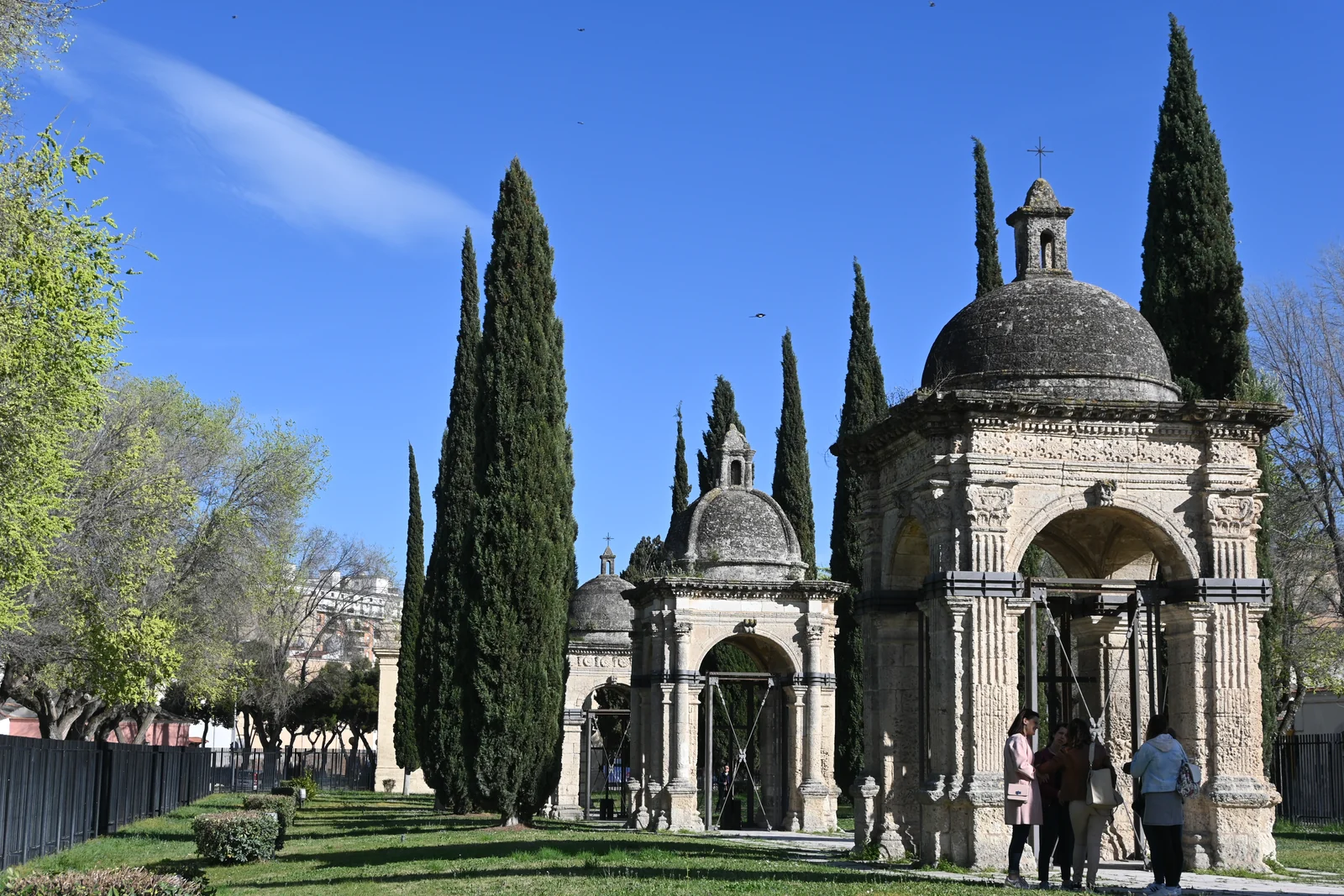
Photo: Fabio Benvenuto / Wikimedia Commons — CC BY-SA 4.0 · Resized and converted to WebP.
Getting there and around
Foggia is a road and rail hub and the distribution centre for the area's farm produce. The station has 13 tracks for passenger trains, with lifts working from 4.30 am to midnight; assistance for people with disabilities is booked through RFI's Sala Blu in Bari. From the station, Viale XXIV Maggio leads on foot to Piazza Cavour and the centre.
Foggia airport has daily Aeroitalia flights in winter to Milan Linate, Bergamo and Turin (timetable from 25 October 2026 to 27 March 2027). In town it is served by city buses 17, 18 and 19 on weekdays and F6 on public holidays.
The official website of the Comune di Foggia, registered in IndicePA, the index of the digital addresses of Italy’s public administrations, is the reference for the town council’s offices, opening hours and news. Its address is listed among the sources of this section.
Urban and suburban buses in and around the city are run by ATAF, which serves an area of 507 km² with more than 750 stops. Tickets and passes are sold at the information and ticket office of the Nodo intermodale, in Piazzale On. V. Russo, at the terminals at the station and at the Ospedali Riuniti and at about 200 retailers; on board the ticket costs more. Every bus has a fold-out ramp at the middle door and a reserved space for passengers with disabilities. For the other airports of Puglia the airport's page lists the Pugliairbus service, linking Foggia with the airports of Bari, Brindisi and Taranto and with Matera; tickets are sold online or, if seats are free, on board.
Sources: Treccani, Enciclopedia on line — Foggia · Treccani, Enciclopedia Italiana (1932) — Foggia · RFI — Stazione di Foggia · Aeroporti di Puglia, aeroporto di Foggia — Voli stagionali · Aeroporti di Puglia, aeroporto di Foggia — Da e per gli aeroporti: bus · Comune di Foggia, sito istituzionale · IndicePA (AgID), Indice dei domicili digitali delle pubbliche amministrazioni: dataset Enti · ATAF S.p.A. Foggia: trasporto urbano, rivendite, parcheggi e sosta su strada · ATAF S.p.A. Foggia: biglietti, nuove tariffe (opuscolo)
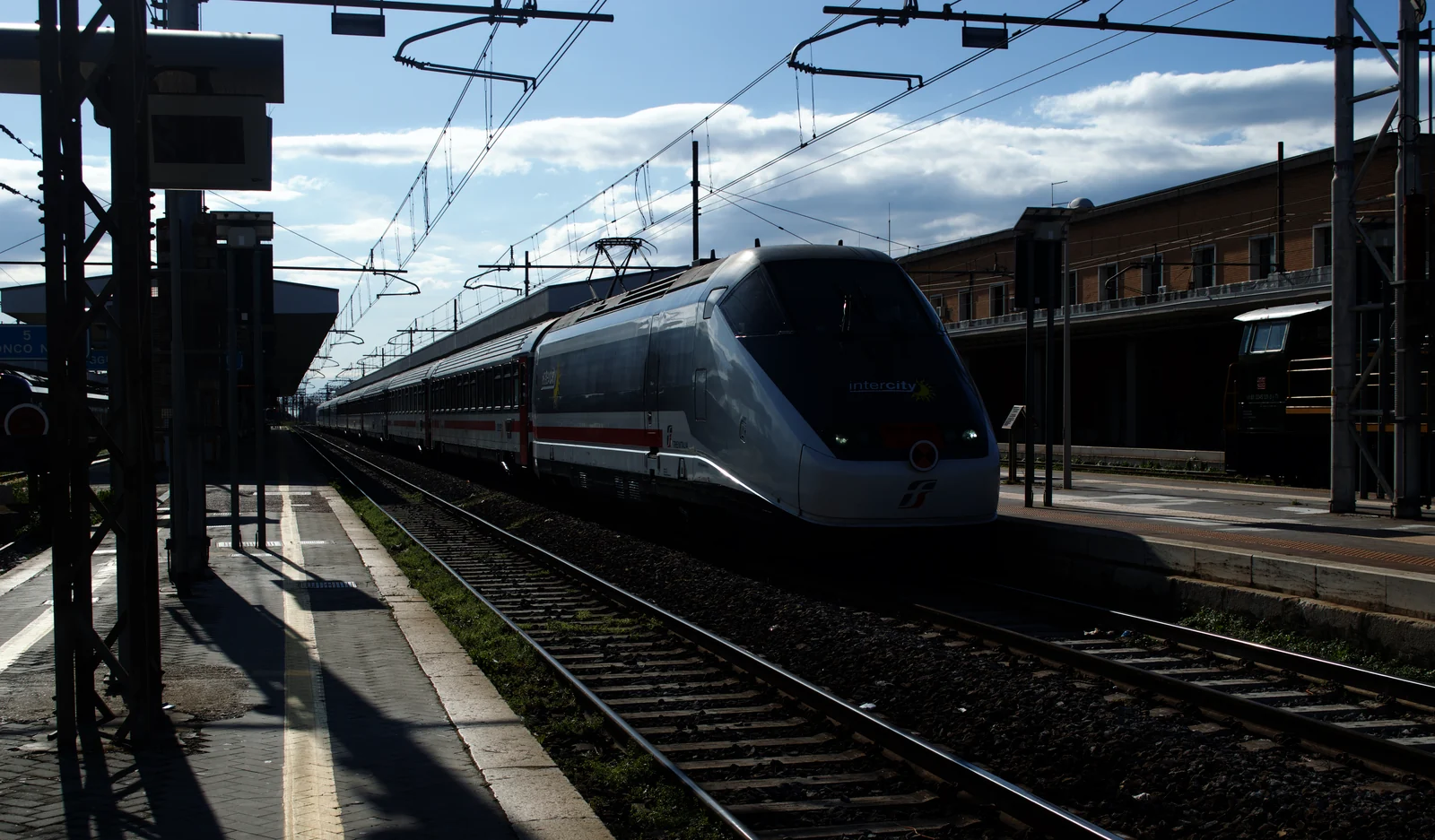
Photo: Phil Richards from London, UK / Wikimedia Commons — CC BY-SA 2.0 · Resized and converted to WebP.
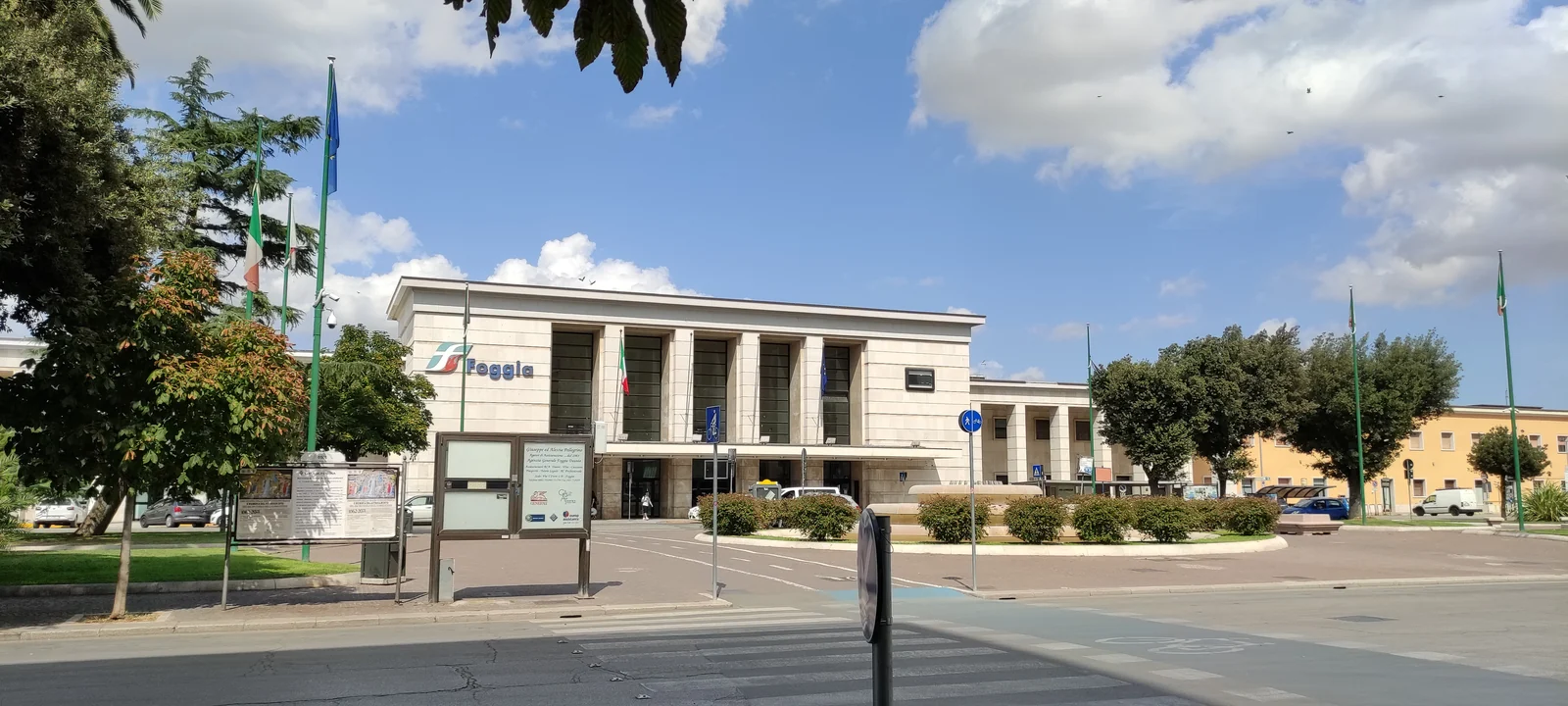
Photo: Orledio / Wikimedia Commons — CC BY-SA 4.0 · Resized and converted to WebP.
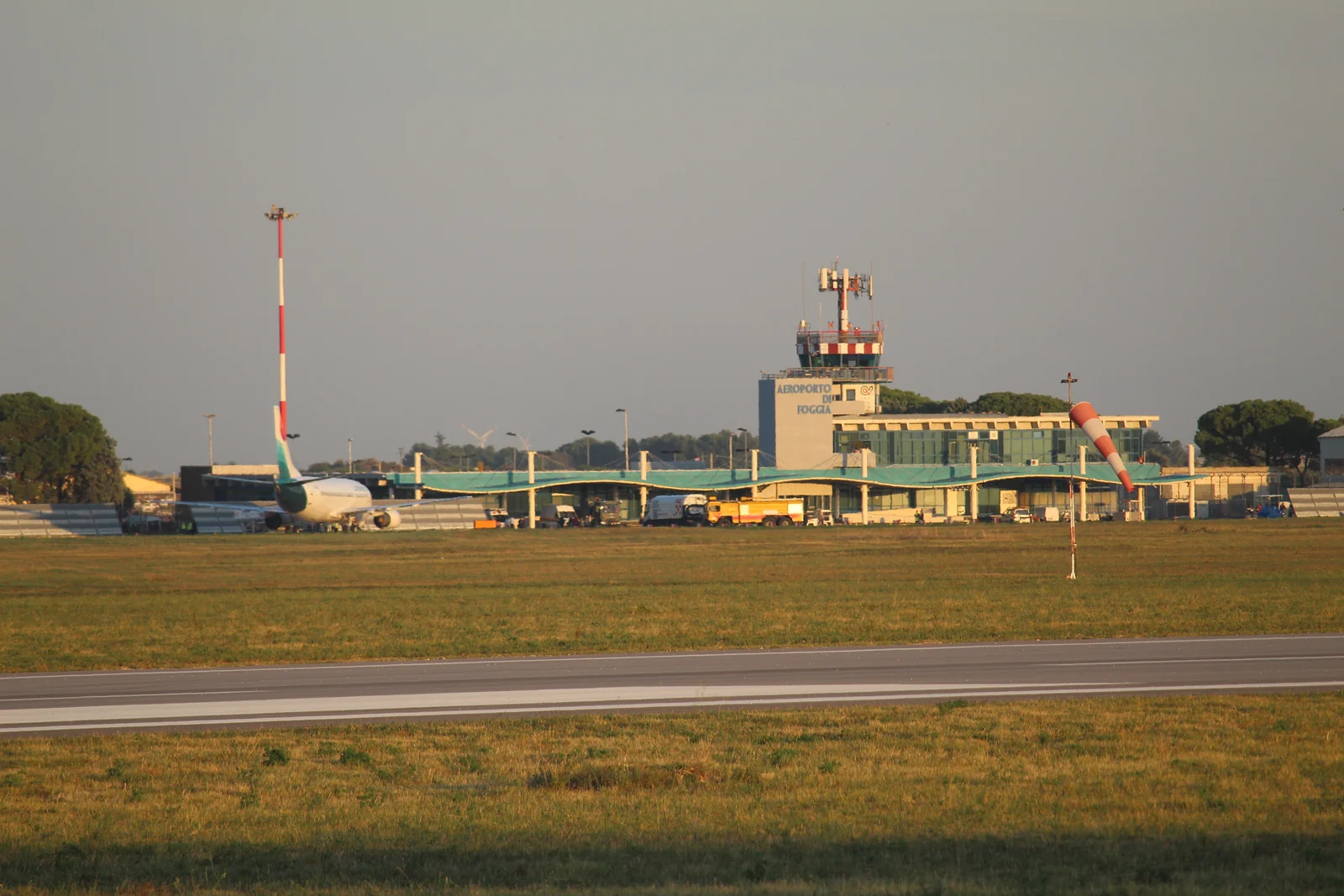
Photo: Gipi2706 / Wikimedia Commons — CC BY 4.0 · Resized and converted to WebP.
Tourism
For information on the spot there is the tourist info point at via Scillitani 2, part of the regional network: it is listed in the official register of info points published by the regional tourism agency on 8 July 2026.
The Bosco dell’Incoronata, within the municipality of Foggia, has been a regional nature park since 2006, and the regional law that created it also concerns those who go there for a walk: in the park you do not pick or damage wild plants, you do not alter the living conditions of animals, you do not take away minerals or material of geological interest, and motor vehicles drive only on the state, provincial, municipal and local roads open to public traffic.
Sources: Agenzia Regionale del Turismo Pugliapromozione — Elenco degli info-point turistici della rete regionale, elenco ufficiale dell’8 luglio 2026 (prot. n. 12142/2026) · Regione Puglia — Legge regionale 15 maggio 2006, n. 10, «Istituzione del Parco naturale regionale “Bosco Incoronata”»
“Come to Foggia as a guest, not as a tourist: that is how these places truly let you know them.”
Where to stay
For a visit on foot it is best to stay between the station and the old centre, along the line of Viale XXIV Maggio, Piazza Cavour and Corso Vittorio Emanuele: the cathedral, the Museo civico and the Teatro Giordano are a few minutes from one another. Halfway between the Gargano and the Daunia mountains, Foggia is also a base for both.
In the Ministry of Tourism’s national database of accommodation (BDSR), on 12 October 2026, Foggia had 209 establishments with a verified national identification code (CIN): 16 hotel-type establishments, 115 non-hotel establishments and 78 other establishments. Puglia’s regional census of accommodation lists 107 with a verified national CIN, by type: 44 B&B, 30 guest rooms, 15 hotel, 10 holiday home, 5 farm stay, 2 residence and 1 holiday house.
A day is enough for the centre and the Museo civico; with an extra evening there is time for the theatre.
Drivers staying in the old centre should note the limited traffic zone (ZTL) of Via Arpi: since 16 October 2021 access has been checked by cameras at the gates of Via Arpi with Via Fuiani, Vico Sassi with Via Manzoni and Corso Vittorio Emanuele II with Corso Garibaldi, from 21:30 to 7:00 on weekdays and all day on public holidays. Outside the ZTL, street parking is paid on weekdays from 8:30 to 13:30 and from 16:00 to 20:00; ATAF also runs the Ginnetto car park in Via Diomede, with 87 spaces.
Sources: Treccani, Enciclopedia Italiana (1932) — Foggia · Italia.it (Ministero del Turismo) — Foggia · Ministero del Turismo – Banca Dati Strutture Ricettive (dashboard pubblica) · Regione Puglia – ARET Pugliapromozione (DMS) · Polizia Locale di Foggia: controllo automatico degli accessi alla ZTL, fine del pre-esercizio (15 ottobre 2021) · Polizia Locale di Foggia: riattivazione del controllo automatico degli accessi alla ZTL (29 settembre 2021) · ATAF S.p.A. Foggia: trasporto urbano, rivendite, parcheggi e sosta su strada
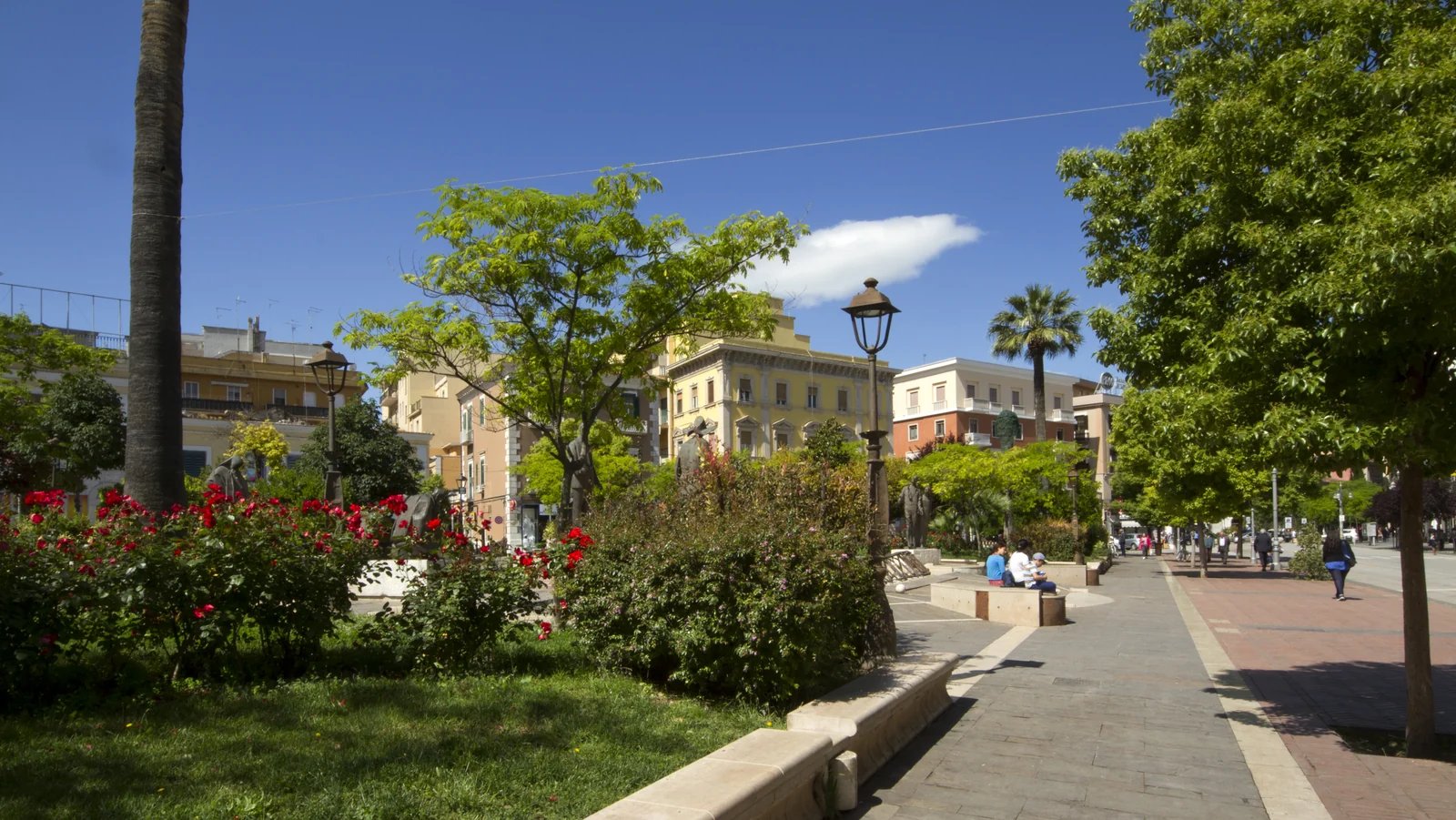
Photo: trolvag / Wikimedia Commons — CC BY-SA 3.0 · Resized and converted to WebP.
Nearby
About 12 kilometres away lie the Bosco dell'Incoronata and the sanctuary of the Madonna. Further on, on the Gargano, within the national park of its karst landscape, San Giovanni Rotondo keeps the remains of Padre Pio, and Monte Sant'Angelo has been the national sanctuary of the Lombards since the seventh century, dedicated to the Archangel Michael, now part of the UNESCO site "The Longobards in Italy".
Among the places Apulica already covers, the nearest is San Giovanni Rotondo (about 26 km): straight-line distances between the centres of the municipal territories.
At the foot of the Daunian Mountains, Lucera keeps in Piazza Duomo the Cathedral of the Assumption, commissioned in 1300 by Charles II of Anjou and an important example of Gothic architecture in Puglia, and from Piazza Matteotti it shows the remains of the Angevin fortress. Ascoli Satriano, with its medieval village on a hilltop, is rich in Daunian and Roman remains.
Sources: Italia.it (Ministero del Turismo) — Foggia · Associazione Italia Langobardorum, Longobardi in Italia — Monte Sant’Angelo · ISTAT/Openpolis, confini comunali della regione Puglia (CC BY 4.0, ISTAT/Openpolis) · Direzione regionale per i beni culturali e paesaggistici della Puglia: «Foggia e la sua provincia in Piazza» (opuscolo)
Photo: Zanniero / Wikimedia Commons — CC BY-SA 4.0 · Resized and converted to WebP.
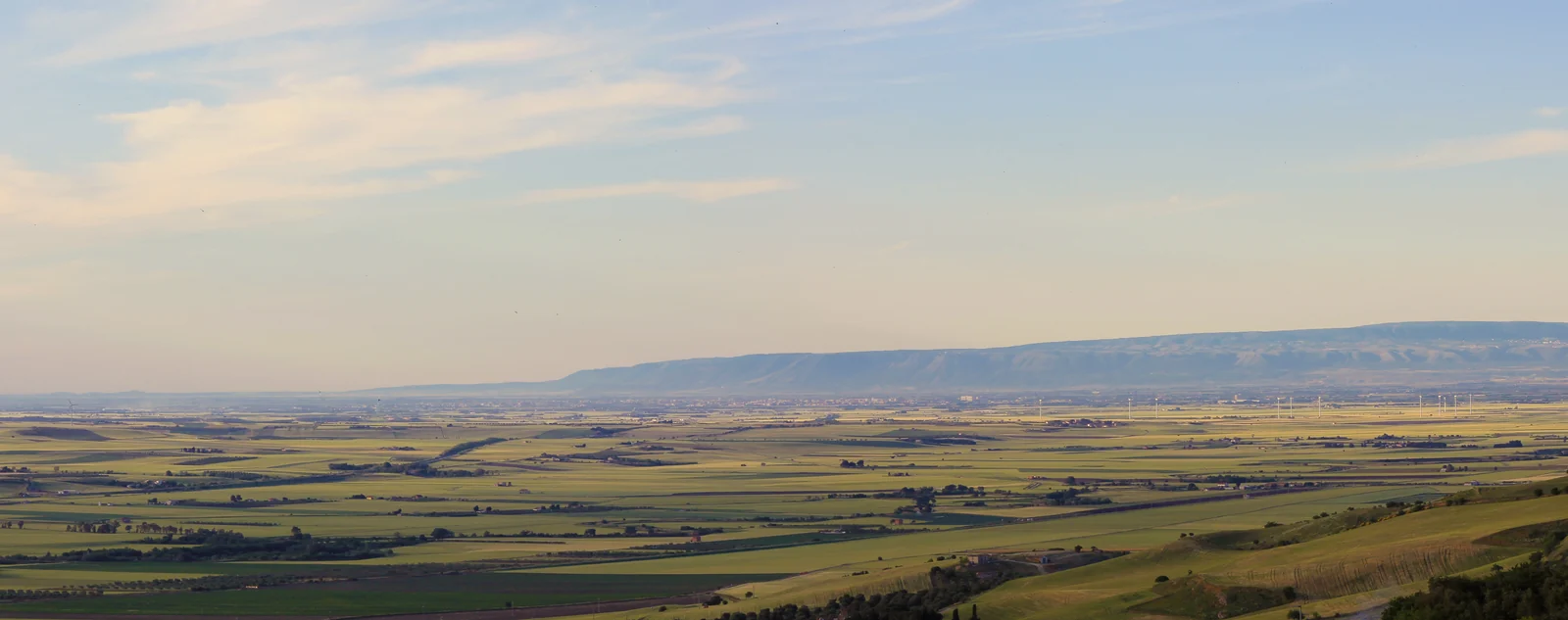
Photo: Maredentro / Wikimedia Commons — Public domain · Cropped, resized and converted to WebP.
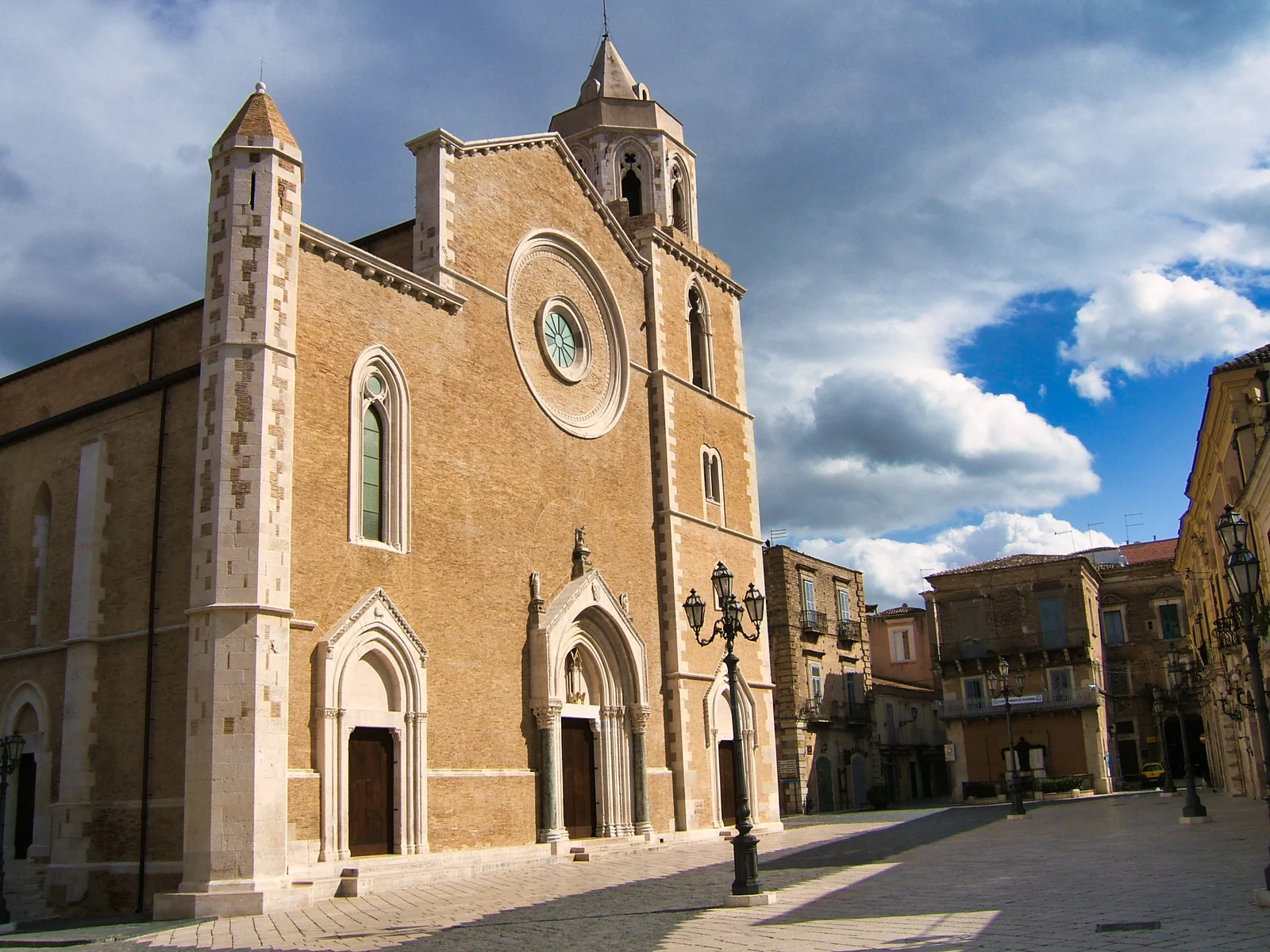
Photo: Bariom 0.2 / Wikimedia Commons — CC BY-SA 4.0 · Resized and converted to WebP.
Where to stay
In the municipality of Foggia the national database of the Ministry of Tourism lists 209 accommodation businesses with a verified CIN code: 16 hotels, 115 other licensed accommodation and 78 other types such as B&Bs and private rentals.
Licensed businesses from the official list of accommodation named as the source in this section. Where the list gives it, the property's official identification code appears next to its name: the national CIN code, or the code assigned by the Region or by the body that keeps the list. Private individuals are not listed. This list is the official census of licensed businesses, not a list of Apulica partners: to stay in Foggia you do not have to check one property after another yourself; write to Apulica and we look for the stay that suits your journey, checking availability and conditions before any confirmation.
CICOLELLA
Hotel · ★★★★
CIN IT071024A100020511
ECO-DIMORE
Residence
CIN IT071024B400065383
LE ANFORE DI ARPI
Farm stay
CIN IT071024B500023637
A 2 PASSI DA
B&B
CIN IT071024B400032398
AFFITTACAMERE IL TIGLIO VERDE
Guest rooms
CIN IT071024B400025669
A CASA DI FULMINE
Holiday home
CIN IT071024B400089846
ISTIT. CULT. LINGUE MARCELLINE- RES.MONS.L.BIRAGHI
Holiday house
CIN IT071024B700021038
DEMSI PALACE HOTEL & RESTAURANT
Hotel · ★★★★
CIN IT071024A100066504
UNODUETRE RESIDENCE
Residence
CIN IT071024B400023265
MASSERIA PIETRAFITTA-AGRITURIS
Farm stay
CIN IT071024B500049998
First the places that presented themselves to Apulica, the latest first; then one place of each type in turn, by official category and stars, then by name. No position is paid for.
All 107 entries in alphabetical order
Page 1 of 11
| Name | Type | CIN |
|---|---|---|
| A 2 PASSI DA | B&B | IT071024B400032398 |
| A CASA DI FULMINE | Holiday home | IT071024B400089846 |
| ABATJOUR B&B | B&B | IT071024B400025170 |
| AFFITTACAMERE IL TIGLIO VERDE | Guest rooms | IT071024B400025669 |
| Al Teatro | Guest rooms | IT071024B400062066 |
| ALBERGO DEL CACCIATORE | Hotel | IT071024A100050987 |
| APPARTAMENT FINI | Holiday home | IT071024B400121176 |
| ATLETI | Hotel | IT071024A100020513 |
| ATTICO IN VIALE G. DI VITTORIO | Holiday home | IT071024B400087369 |
| ATTICOVOLTA | B&B | IT071024B400024091 |
Ask Apulica for a stay in Foggia We reply shortly, within a few hours at most, with a proposal for you to consider.
Sources: Regione Puglia – ARET Pugliapromozione (DMS), CC BY 4.0, 2026-10-12 · Ministero del Turismo – Banca Dati Strutture Ricettive (dashboard pubblica), 2026-10-12
YOUR JOURNEY
How to shape a journey here
We can organise a guided visit of Foggia, to combine with a day on the Gargano between San Giovanni Rotondo and Monte Sant’Angelo, with transfers from the station or the airport. For a trip, a guide or a transfer you can write to Apulica with the button below.
Plan your tripKeep exploring
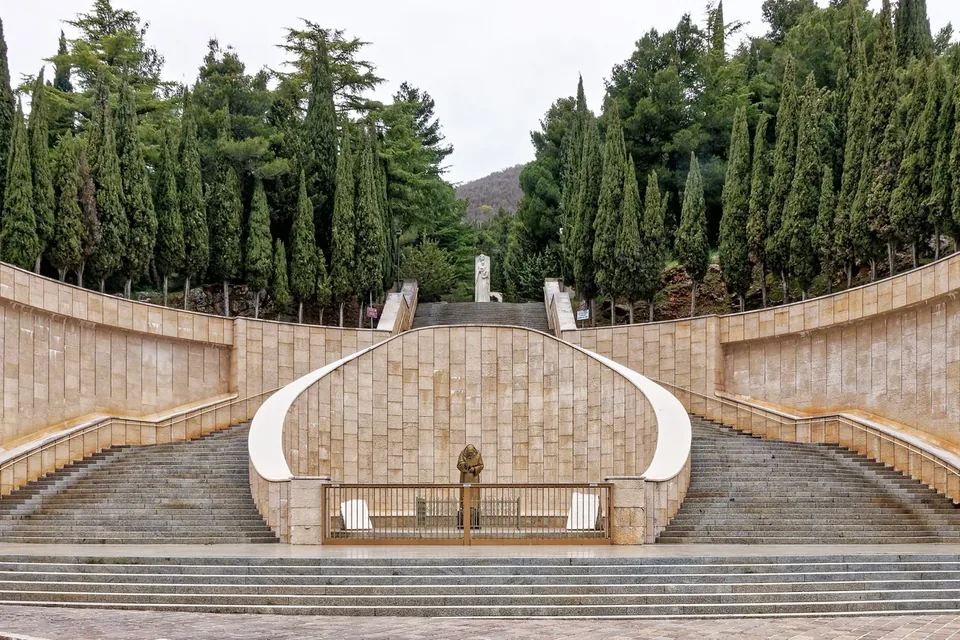
San Giovanni Rotondo
San Giovanni Rotondo: pilgrimage and town. Padre Pio’s pilgrimage centre in the heart of the Gargano, below Monte Calvo, and a town walled in the 1300s.
Read the guide →Photo: Holger Uwe Schmitt / Wikimedia Commons — CC BY-SA 4.0 · Resized and converted to WebP.

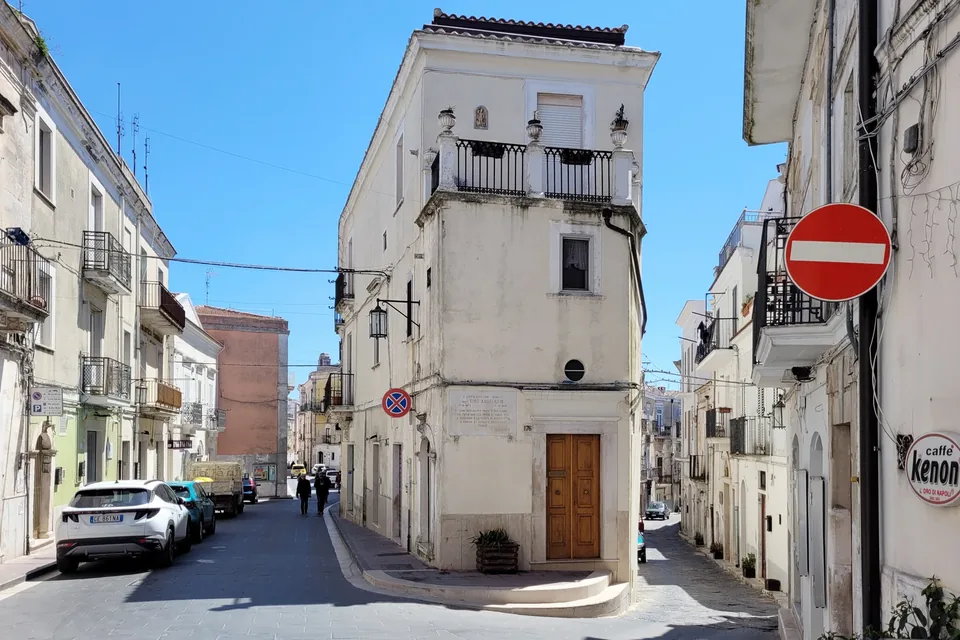
Monte Sant’Angelo
Monte Sant’Angelo: the cave and Junno quarter. The Archangel Michael’s cave sanctuary on the Via Francigena, a cult spread by the Lombards and a round loaf.
Read the guide →Photo: Bernard Gagnon / Wikimedia Commons — CC0 · Resized and converted to WebP.

Gargano
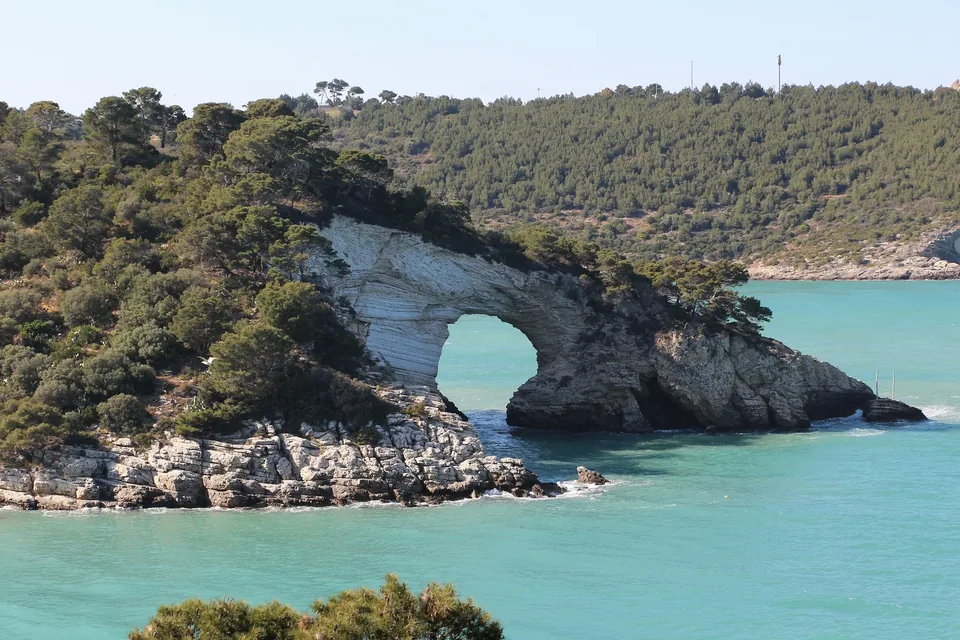
Gargano: villages, woodland and coast. Beech woods, lagoons and white villages in the national park, the Archangel’s mountain and Ogliarola olives.
Read the guide →Photo: Bernard Gagnon / Wikimedia Commons — CC0 · Resized and converted to WebP.

Lucera
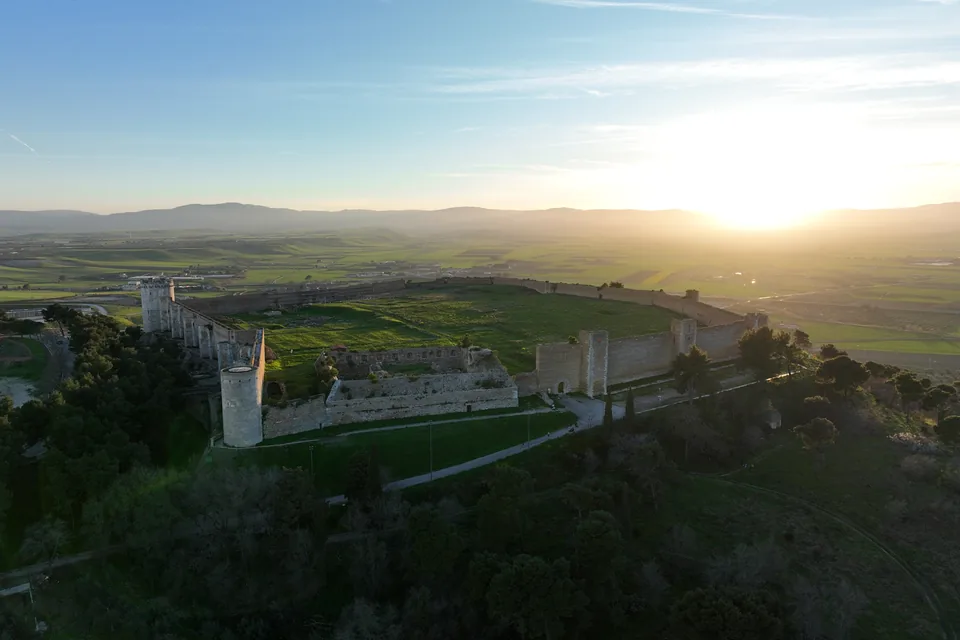
Lucera (FG), Puglia: 30,591 residents, 339.79 km². The official facts of the municipality, its town council website and its registered accommodation. The Swabian-Angevin fortress of Frederick II and Charles of Anjou, the Augustan amphitheatre, the Angevin Gothic cathedral, the sanctuary of Saint Francesco Antonio Fasani, the “Cacc’e mmitte di Lucera” DOC wine and the “Dauno” PDO olive oil.
Read the guide →Photo: Paolocibelli / Wikimedia Commons — CC BY-SA 4.0 · Resized and converted to WebP.

Troia
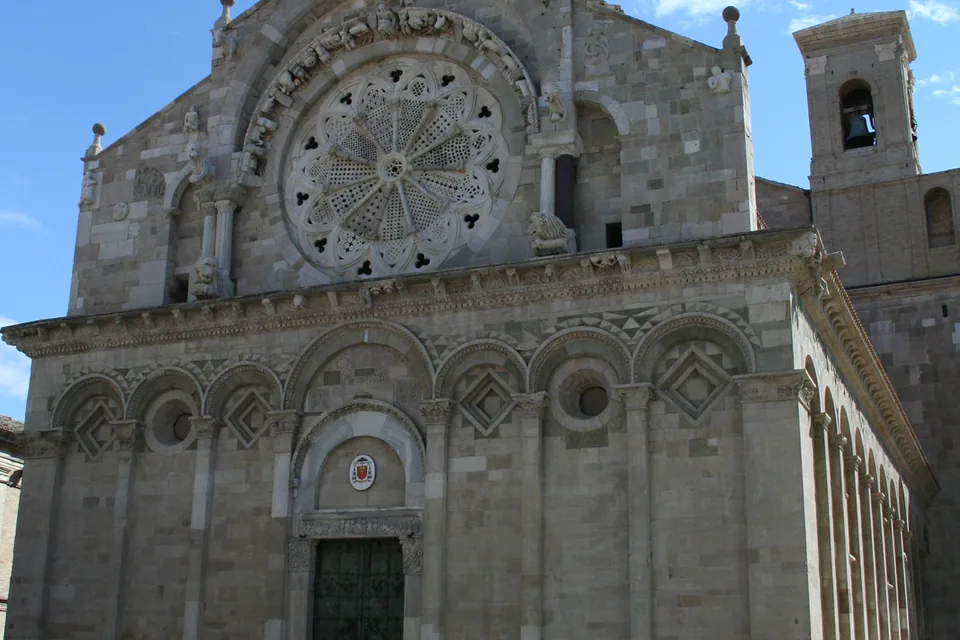
Troia (FG), Puglia: 6,574 residents, 168.25 km². The official facts of the municipality, its town council website and its registered accommodation. The Romanesque cathedral with its eleven-column rose window and the bronze doors by Oderisio da Benevento, the Exultet scrolls, the July feast of the Patron Saints and the wines of the “Tavoliere” and “Cacc’e mmitte di Lucera” DOCs.
Read the guide →Photo: Barambani / Wikimedia Commons — CC BY-SA 3.0 · Resized and converted to WebP.
