

Why go
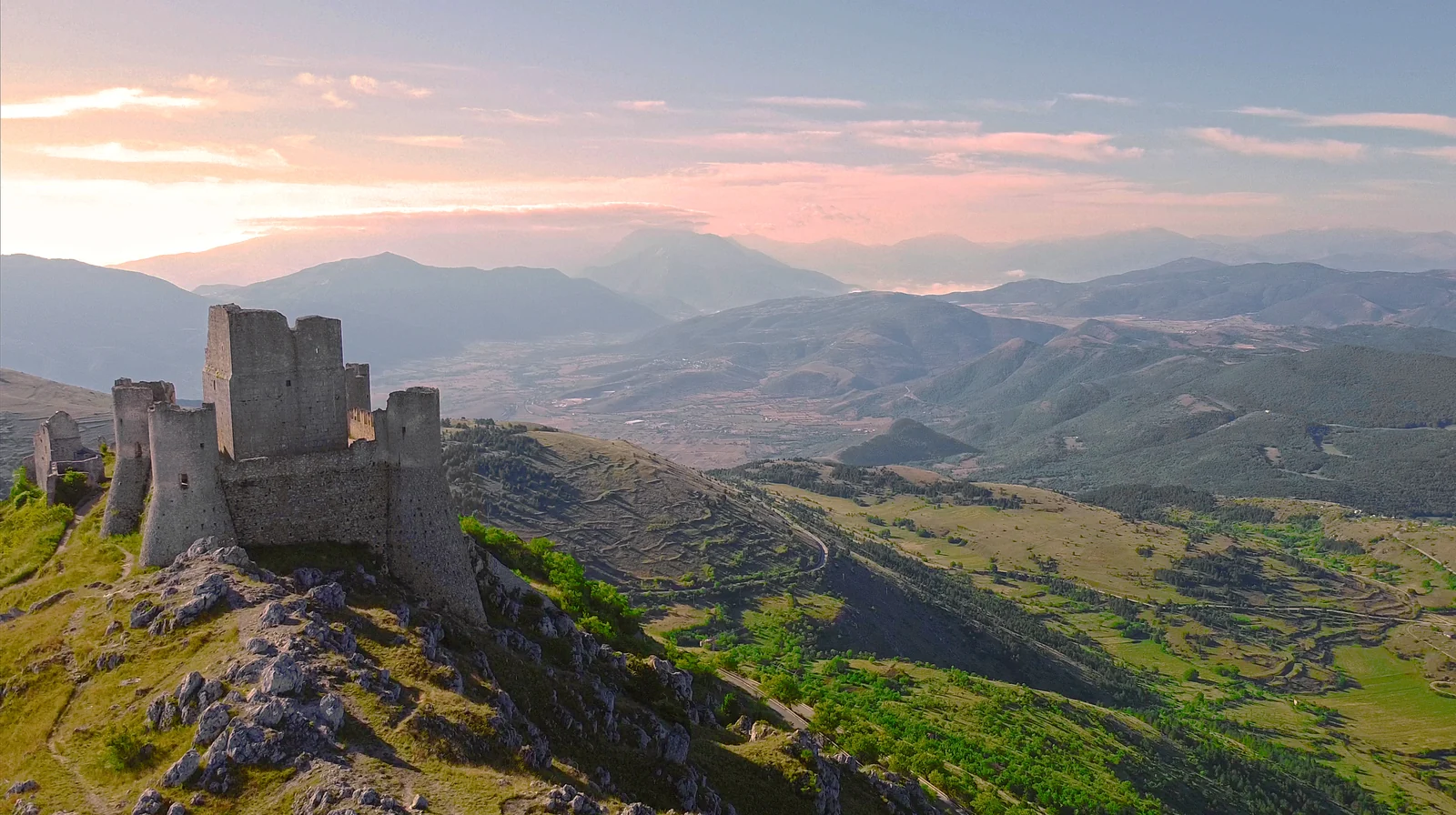
People climb to Calascio for Rocca Calascio. The town council calls it the highest castle in the Apennines; the Gran Sasso and Monti della Laga National Park, which places it at 1,464 metres, describes it as one of the highest and most spectacular fortifications of the central Apennines: a square plan, four cylindrical towers at the corners and a square keep in the middle, all in stone, above the Tirino valley and the Piana di Navelli. From the Rocca, the town council says, the view reaches the Sirente and the Velino, the Gran Sasso and Campo Imperatore, and the Piana di Navelli.
A few steps from the Rocca, on a small ledge above a sheer drop, stands the octagonal church of Santa Maria della Pietà. Further down, at about 1,200 metres, lies the village of Calascio: the Park describes it with its tower houses, the town council as a web of lanes, stone houses and towers, and squares with patrician houses and churches, a sign of the wealth that came from the wool trade.
All around is the Park: Calascio belongs to the Terre della Baronia district, with Barisciano, Carapelle Calvisio, Castelvecchio Calvisio, Castel del Monte and Santo Stefano di Sessanio, a land of grasslands that includes part of the Campo Imperatore plateau. And the Rocca is known in the cinema too: the town council recalls “Ladyhawke”, with Rutger Hauer and Michelle Pfeiffer.
Sources: Comune di Calascio — Storia del Comune · Parco nazionale del Gran Sasso e Monti della Laga — Borghi e paesi: Calascio · Parco nazionale del Gran Sasso e Monti della Laga — Beni culturali: Rocca Calascio · Parco nazionale del Gran Sasso e Monti della Laga — Musei e centri visita: Museo delle Fortificazioni · Parco nazionale del Gran Sasso e Monti della Laga — Distretto Terre della Baronia
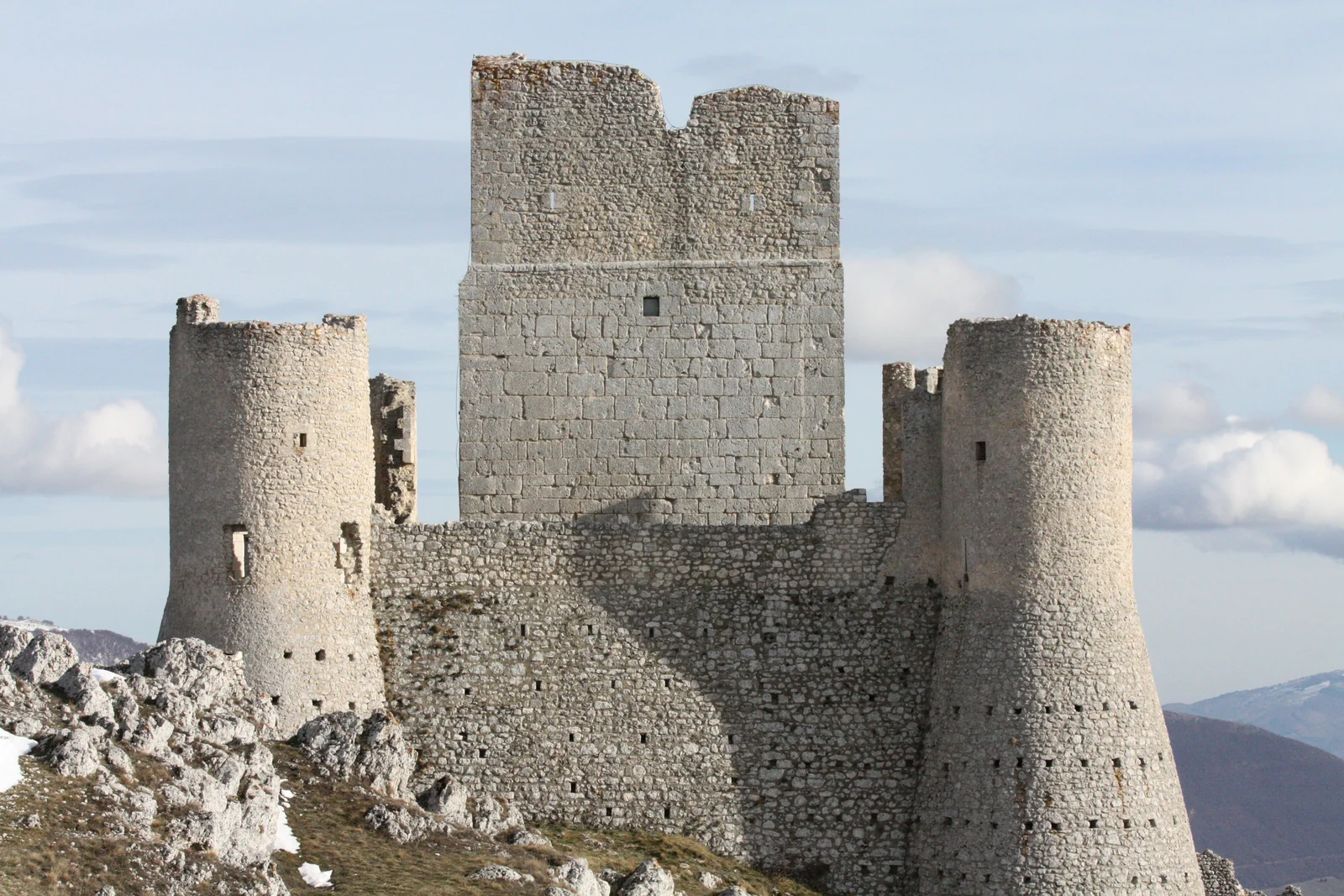
Photo: Renano / Wikimedia Commons — CC BY-SA 3.0 · Resized and converted to WebP.
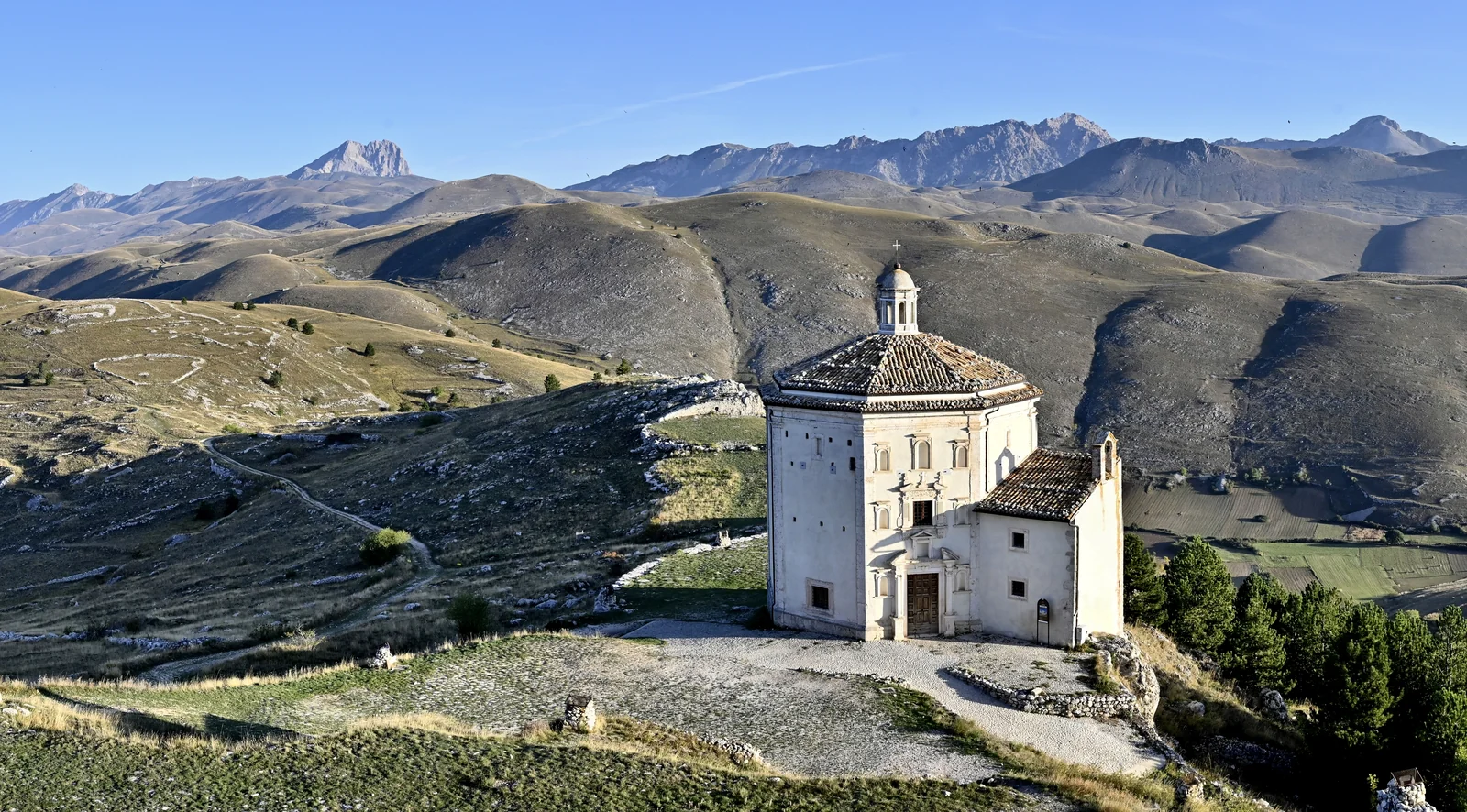
Photo: Elio Pallard / Wikimedia Commons — CC BY-SA 4.0 · Resized and converted to WebP.
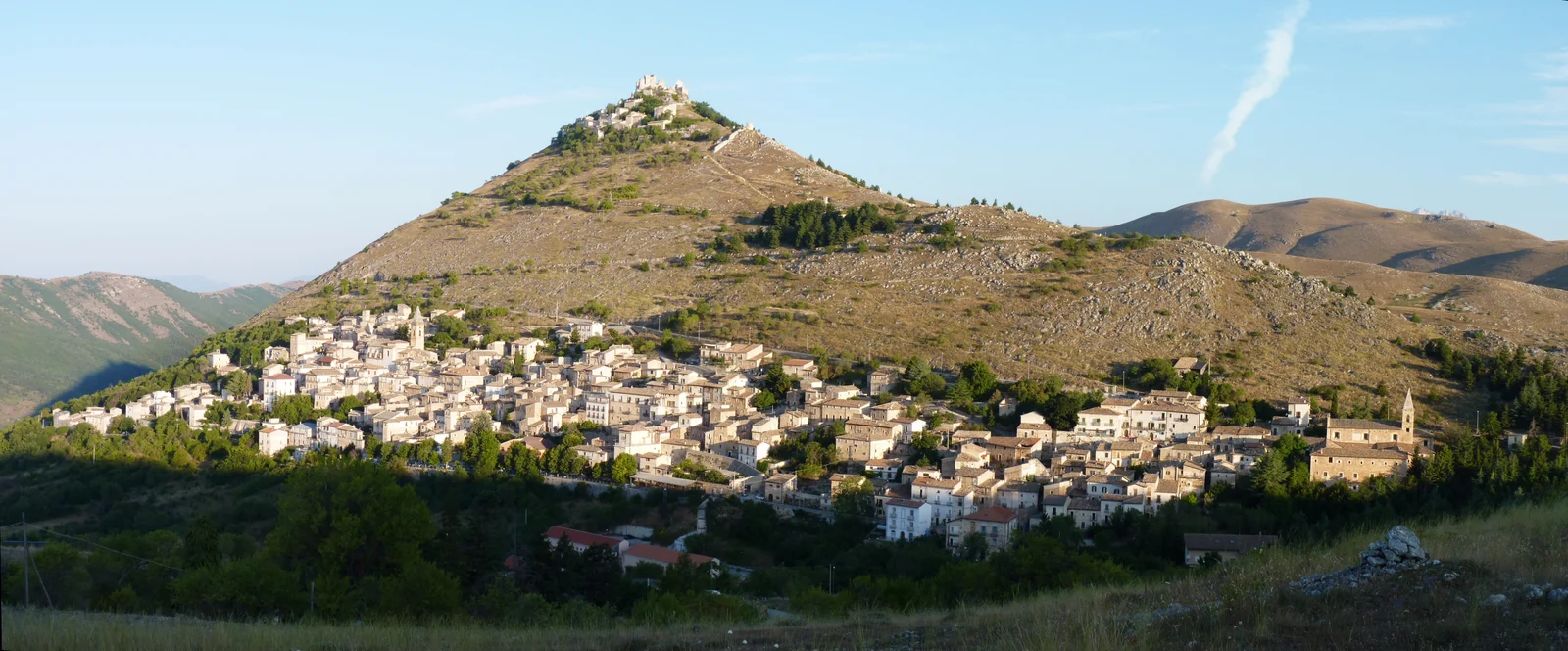
Photo: Tragopogon / Wikimedia Commons — CC BY-SA 4.0 · Resized and converted to WebP.
The municipality at a glance
Calascio is a municipality in the province of L'Aquila, in Abruzzo. Its ISTAT code is 066014. On 1 January 2025 it had 122 residents. The municipal territory covers 39.44 km² and ranges from 588 to 2,537 metres above sea level; the town hall stands at about 1,229 metres.
Calascio lies within the Gran Sasso and Monti della Laga National Park, in the Terre della Baronia district. Above the village, at 1,464 metres according to the Park, stands Rocca Calascio, the old fortified village that has had no inhabitants since 1957. The town council is carrying out “Rocca Calascio Luce d’Abruzzo”, the pilot project chosen by the Abruzzo Region for line A of the PNRR “Attractiveness of villages” programme, announced by the Ministry of Culture in March 2022 and worth 20 million euros.
Sources: ISTAT, Codici statistici delle unità amministrative territoriali: elenco dei comuni al 21 febbraio 2026 · ISTAT, Popolazione residente per età, sesso e stato civile al 1° gennaio 2025 (POSAS) · ISTAT, Principali statistiche geografiche sui comuni: superficie e altimetria al 31 dicembre 2021 · Parco nazionale del Gran Sasso e Monti della Laga — Distretto Terre della Baronia · Parco nazionale del Gran Sasso e Monti della Laga — Beni culturali: Rocca Calascio · Comune di Calascio — Storia del Comune · Comune di Calascio — Il progetto «Rocca Calascio Luce d’Abruzzo» (PNRR Borghi, Linea A) · Ministero della cultura, Cultura Borghi — Calascio, «Rocca Calascio Luce d’Abruzzo» · Ministero della cultura — Piano nazionale borghi: 21 progetti pilota (18 marzo 2022)
History
The first mention of Rocca Calascio, write the town council and the Park, is in a document of 1380, as an isolated watchtower; the tower itself is dated to around the year 1000. The Park adds that some scholars consider the central keep older than the rest of the complex, and that the tower became today’s fortress during the fifteenth century. For a long time it belonged to the Barony of Carapelle; in the second half of the fifteenth century it passed to the Piccolomini, who gave it its present form. To Antonio Piccolomini, around 1480, the town council attributes the four towers around the original keep, the walls of the village and the rebuilding of much of the settlement after the earthquakes.
The Rocca was a lookout: with torches at night and mirrors by day, both sources say, it communicated through a chain of visual links with the castles of the Adriatic coast. The Park also recalls its watch over the L’Aquila drove road. Under the Aragonese the “Dogana della mena delle pecore in Puglia”, the customs house for the flocks driven to Puglia, was set up and transhumant sheep farming became the kingdom’s main source of income: in 1470 the villages of the Barony owned more than 90,000 sheep and supplied the prized “lana carapellese” wool to cities such as L’Aquila and Florence.
In 1579 Costanza Piccolomini, the last of the family, sold the Barony, the Marquisate of Capestrano and the lands of Ofena and Castel del Monte to Francesco Maria de’ Medici, Grand Duke of Tuscany, for 106,000 ducats; in 1743 the territory passed to the Bourbons. The earthquake of 1703 destroyed the castle and the village of Rocca Calascio: only the houses in the lower part were rebuilt, and many inhabitants moved down to Calascio. The Rocca’s inhabitants, about 800 in the seventeenth century, were none by 1957; Calascio, which had about 1,900 inhabitants in 1860, saw heavy emigration in the early decades of the twentieth century.
The Rocca’s history is still being studied. Since 2026 the town council and the University of L’Aquila have been carrying out archaeological investigations in the fortified village: the date of the fortification, attributed to the Norman, Swabian or a later period, is still an open question. The first excavations have uncovered stretches of paved streets and the outer wall face of the small church about 70 metres from the fortress, similar to that of the keep.
Sources: Comune di Calascio — Storia del Comune · Parco nazionale del Gran Sasso e Monti della Laga — Borghi e paesi: Calascio · Parco nazionale del Gran Sasso e Monti della Laga — Beni culturali: Rocca Calascio · Comune di Calascio — Indagini archeologiche a Rocca Calascio (1° aprile 2026)
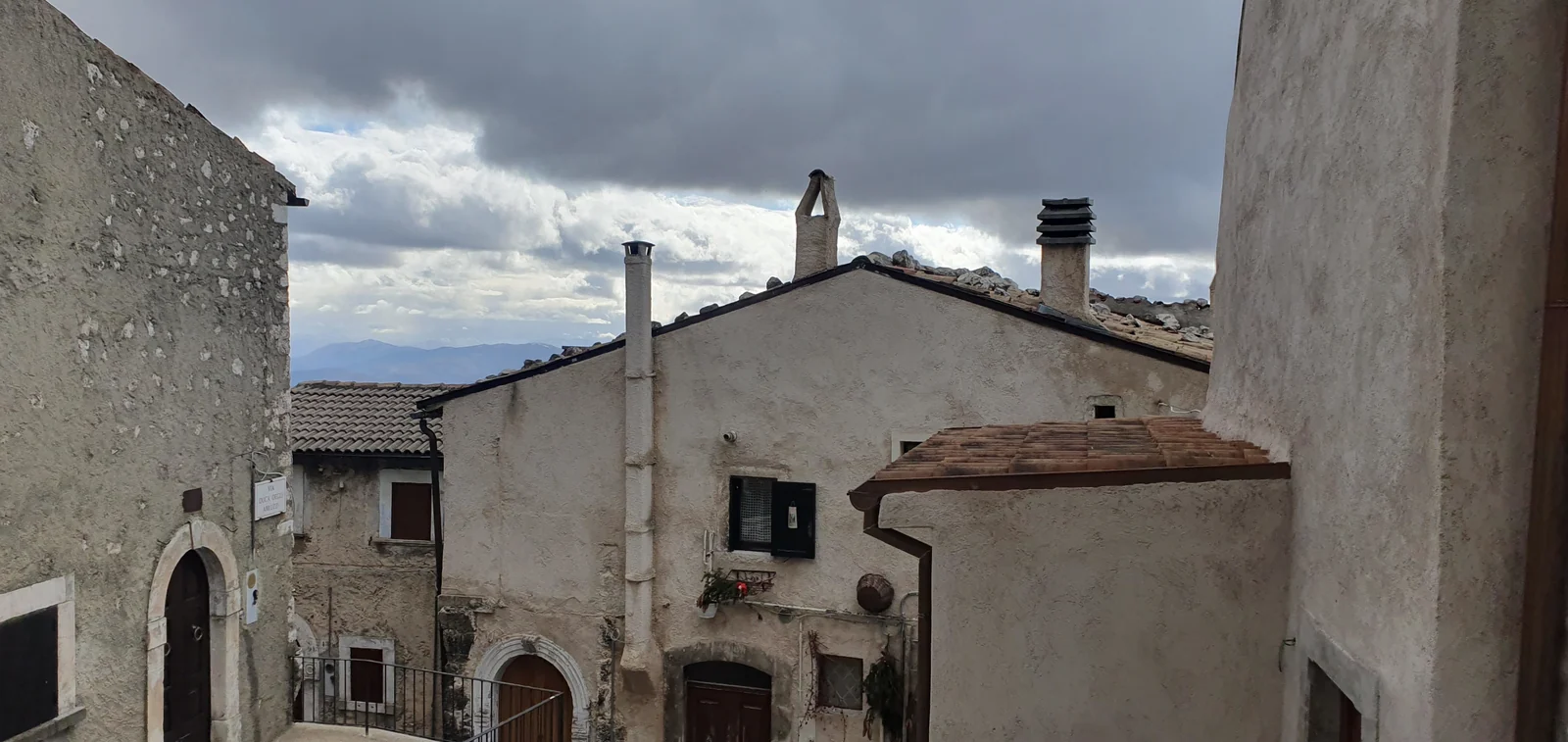
Photo: Tizzanese / Wikimedia Commons — CC BY-SA 4.0 · Resized and converted to WebP.
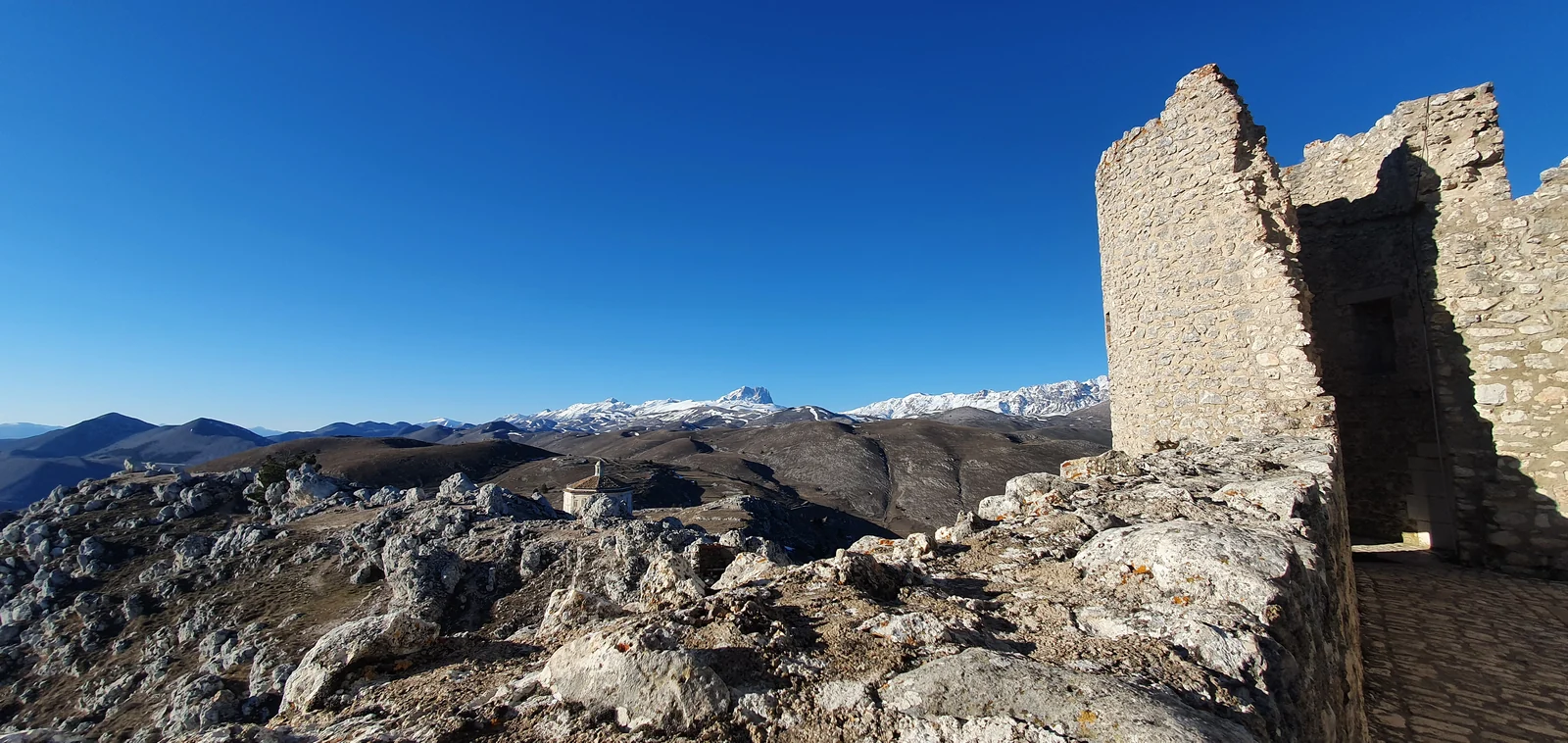
Photo: Tizzanese / Wikimedia Commons — CC BY-SA 4.0 · Resized and converted to WebP.
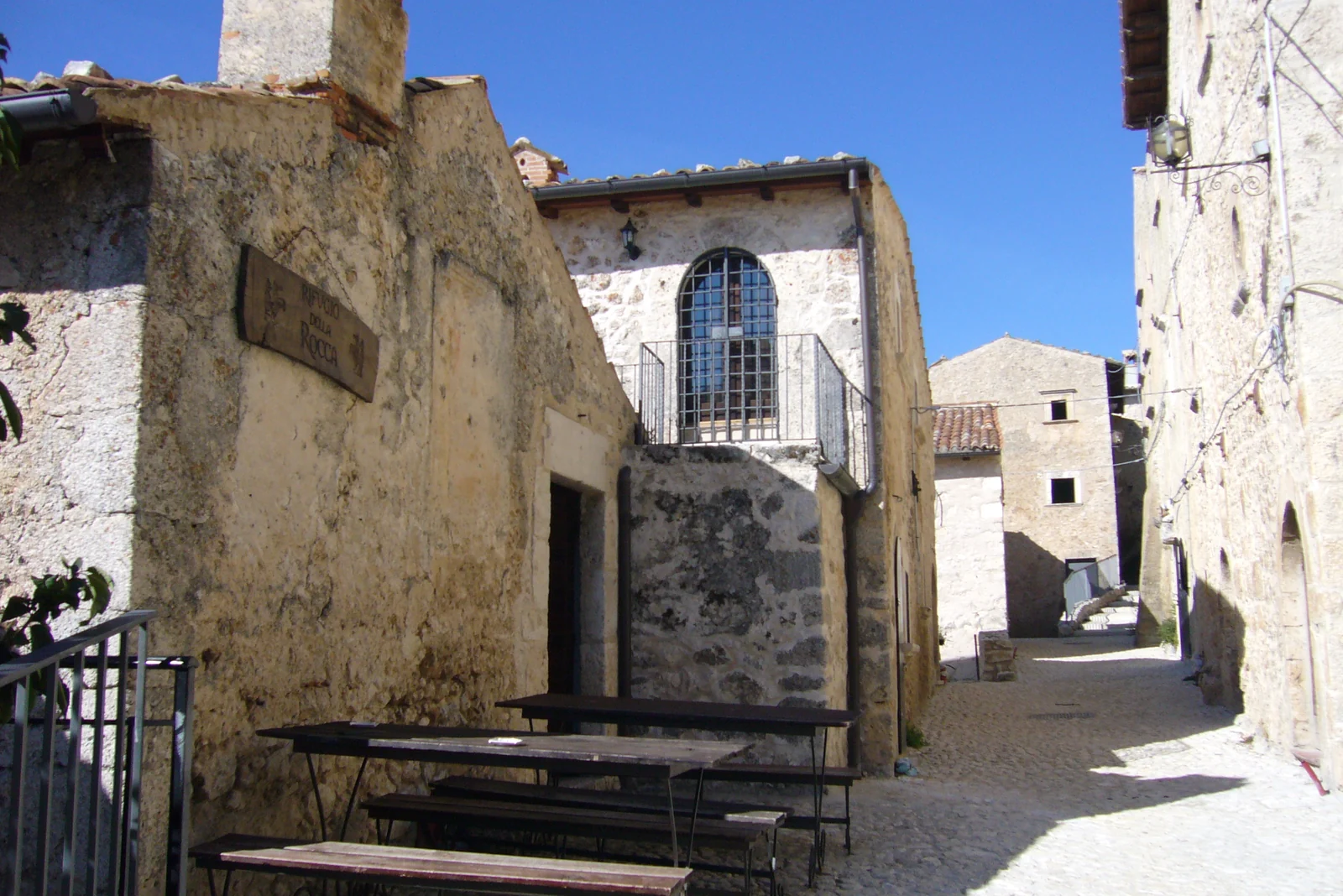
Photo: maury3001 / Wikimedia Commons — CC BY 3.0 · Resized and converted to WebP.
What to see
Rocca Calascio. The Park describes the fortress as one of the most interesting defensive structures for the consistency of its plan and the care of its construction: the corner towers are steeply battered and have loopholes made of an arrow slit with a round gun port below it, for close defence; the entrance opens in the base of the central tower, raised above the inner courtyard, as in isolated watchtowers. Below the fortress, beyond a ditch, are the houses that formed the old village of Rocca Calascio.
Santa Maria della Pietà. The octagonal church stands near the Rocca on a small ledge above a sheer drop; the Park calls it well preserved. The town council and the Park report the tradition that shepherds built it to thank the Virgin after a battle in defence of the Rocca; their pages do not agree on the date, so we do not give one here.
The village of Calascio. The town council points to the church of San Nicola di Bari, with a sixteenth-century wooden portal carved with scenes from the Old Testament and the life of the saint; Santa Maria delle Grazie, rich in works of art, including canvases by Bedeschini and by the Cavalier d’Arpino; and Sant’Antonio Abate, of 1645, where “The Temptations of Saint Anthony in the Desert” by Patini can be seen. Santa Maria delle Grazie, a council-owned church closed after the 2016 earthquake, reopened in August 2026 after safety work funded by the PNRR Borghi programme. The parish church of San Nicola was declared temporarily unfit for use by an ordinance of 2023, amended in 2024. The Park also mentions the churches of San Carlo and of San Leonardo, used as a hospice during the plagues and decorated inside with a cycle of frescoes.
The Park’s Museo delle Fortificazioni is in Calascio; the Park’s page lists it as closed. Among the works listed by the Ministry of Culture, the “Rocca Calascio Luce d’Abruzzo” project includes the restoration and making safe of the Rocca, a cultural hub with a multimedia museum and a new home for the library, the town hall and an information point.
Sources: Parco nazionale del Gran Sasso e Monti della Laga — Beni culturali: Rocca Calascio · Parco nazionale del Gran Sasso e Monti della Laga — Musei e centri visita: Museo delle Fortificazioni · Parco nazionale del Gran Sasso e Monti della Laga — Borghi e paesi: Calascio · Comune di Calascio — Storia del Comune · Comune di Calascio — Santa Maria delle Grazie riapre le sue porte (24 agosto 2026) · Comune di Calascio — Inagibilità temporanea della chiesa parrocchiale di San Nicola di Bari, ordinanza n. 8 (9 maggio 2024) · Ministero della cultura, Cultura Borghi — Calascio, «Rocca Calascio Luce d’Abruzzo»
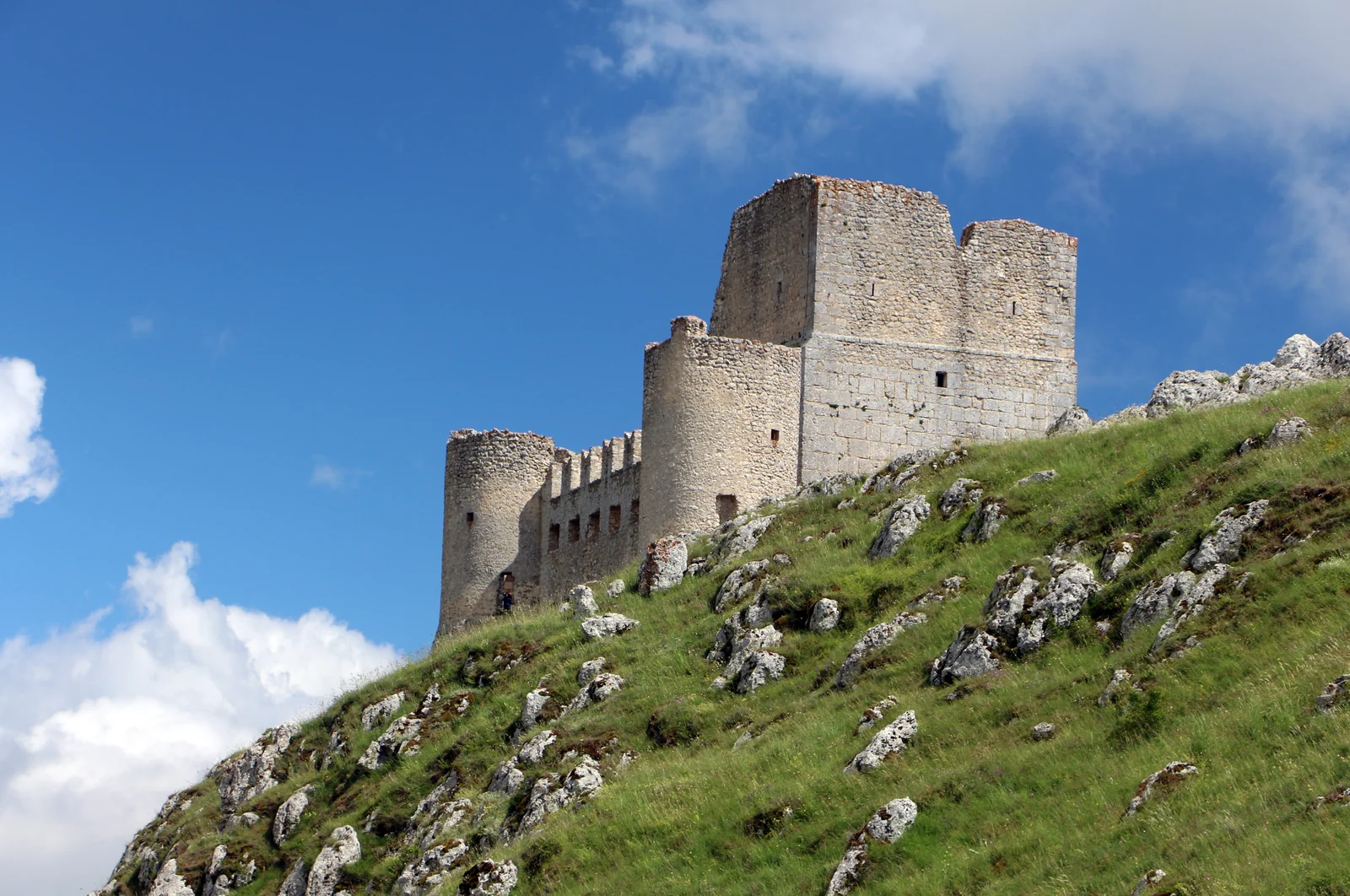
Photo: Luisarcus / Wikimedia Commons — CC BY-SA 4.0 · Resized and converted to WebP.
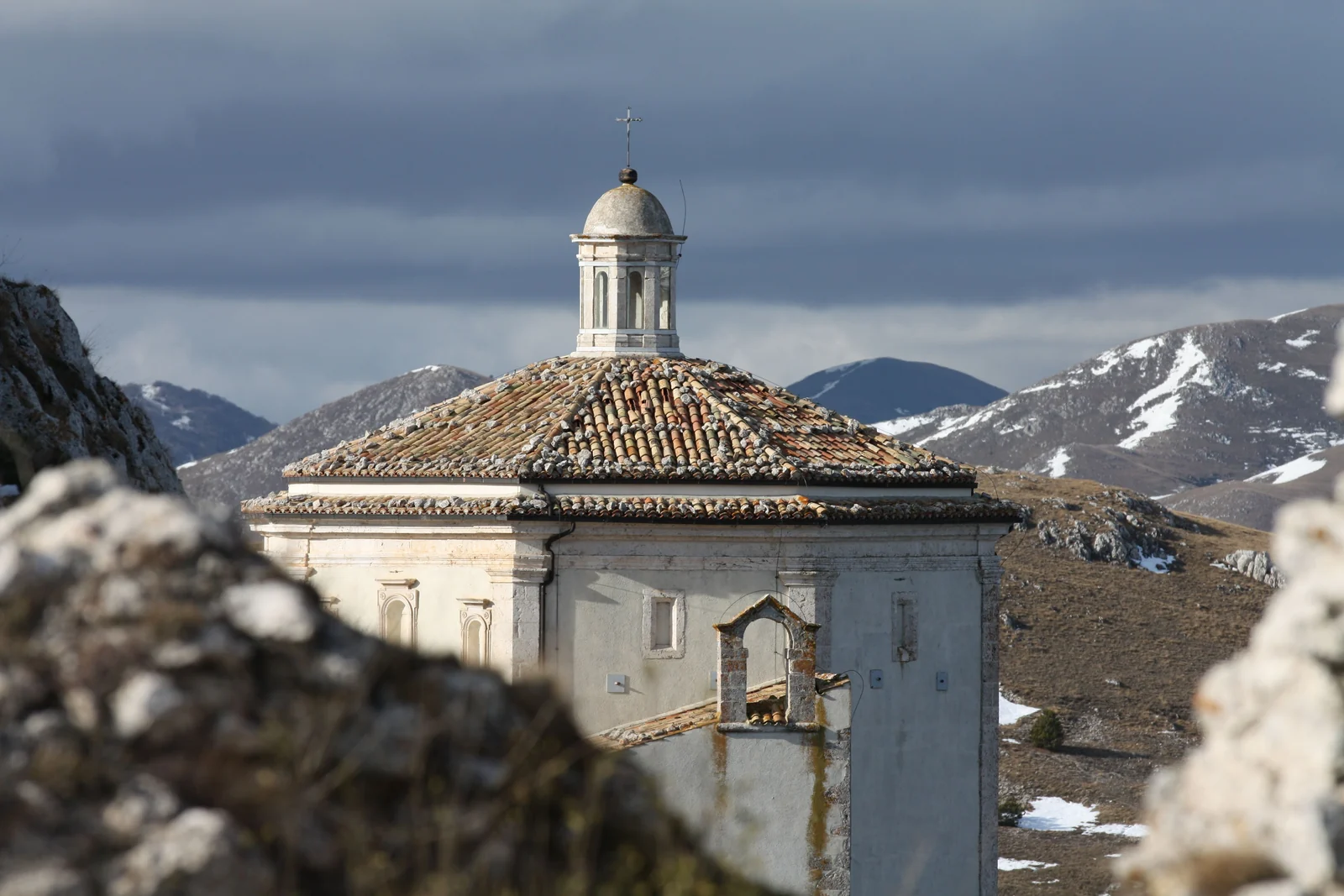
Photo: Renano / Wikimedia Commons — CC BY-SA 3.0 · Resized and converted to WebP.
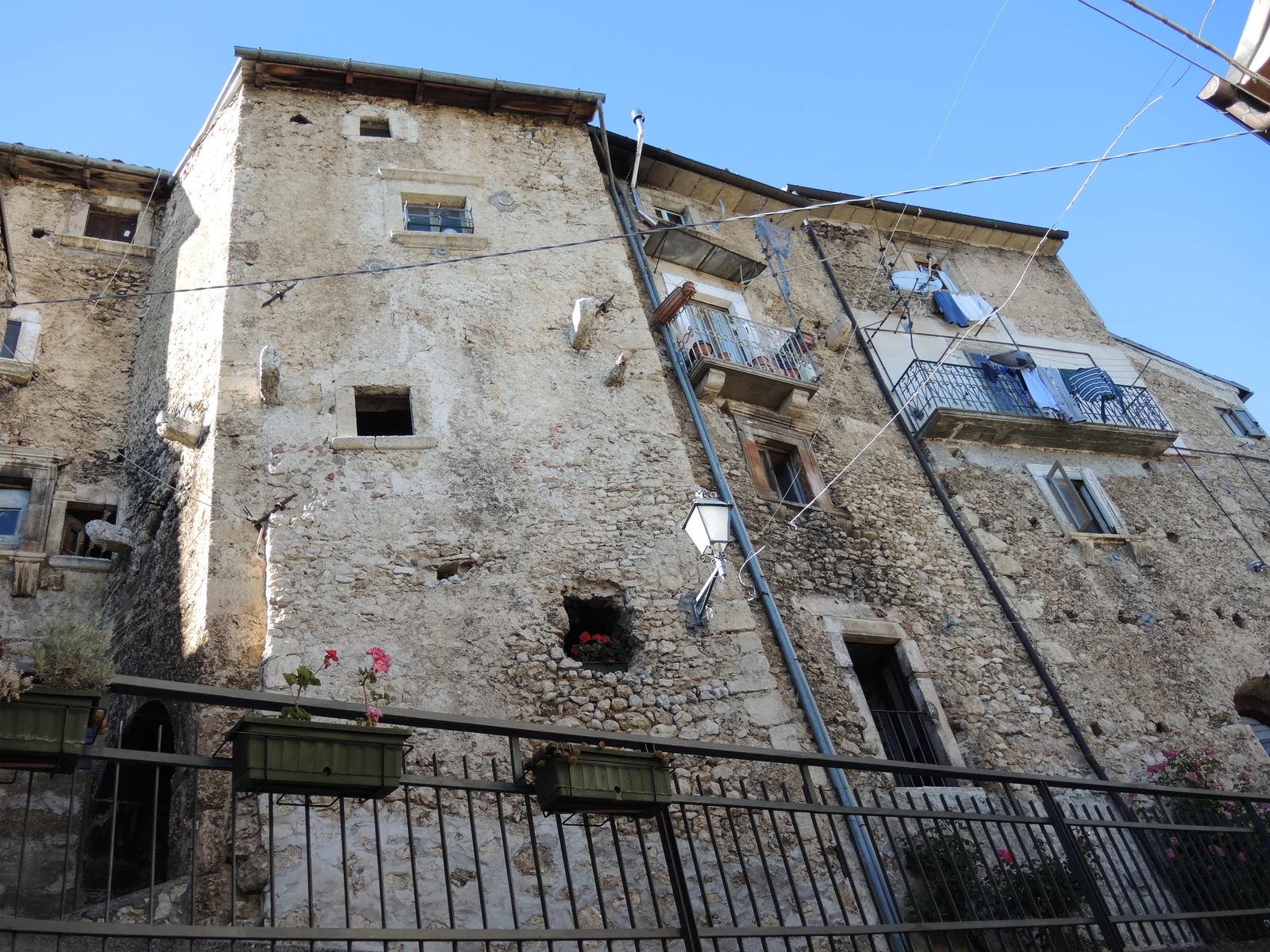
Photo: Pietro / Wikimedia Commons — CC BY-SA 4.0 · Resized and converted to WebP.
Flavours
Calascio’s food comes from sheep farming: in its page on the village the Park lists the products of the flocks as the local gastronomy, and recalls that this part of mountain Abruzzo still remembers the hard life of the sheep pens and the pecorino cheese kept with care for the journey of the transhumance. The district’s signature cheese is Canestrato di Castel del Monte, “the pecorino of the Transhumance”, a Slow Food Presidium supported by the Park; the pastures of Campo Imperatore, the Park writes, favour its production.
From the neighbouring village comes the Santo Stefano di Sessanio lentil, also a Slow Food Presidium, famous, the Park says, for its soup. In its food itinerary through the Terre della Baronia the Park also mentions the saffron of the nearby Piana di Navelli, which seasons hand-made gnocchi and ravioli, almond sweets such as the Pasticcio degli dei, the cicerchia grass pea and the Turchesa potato.
Sheep farming is also at the heart of the “Rocca Calascio Luce d’Abruzzo” project: the town council has included in it an advanced school for extensive sheep farming, with Slow Food Italia, and a centre for local food and wine devoted to cheese-making.
Sources: Parco nazionale del Gran Sasso e Monti della Laga — Borghi e paesi: Calascio · Parco nazionale del Gran Sasso e Monti della Laga — La Transumanza · Parco nazionale del Gran Sasso e Monti della Laga — Distretto Terre della Baronia · Parco nazionale del Gran Sasso e Monti della Laga — Il sostegno ai presidi Slow Food · Parco nazionale del Gran Sasso e Monti della Laga — Itinerario del gusto nelle Terre della Baronia · Comune di Calascio — Iniziative a Calascio, calendario 2026 (26 gennaio 2026) · Comune di Calascio — Il progetto «Rocca Calascio Luce d’Abruzzo» (PNRR Borghi, Linea A)
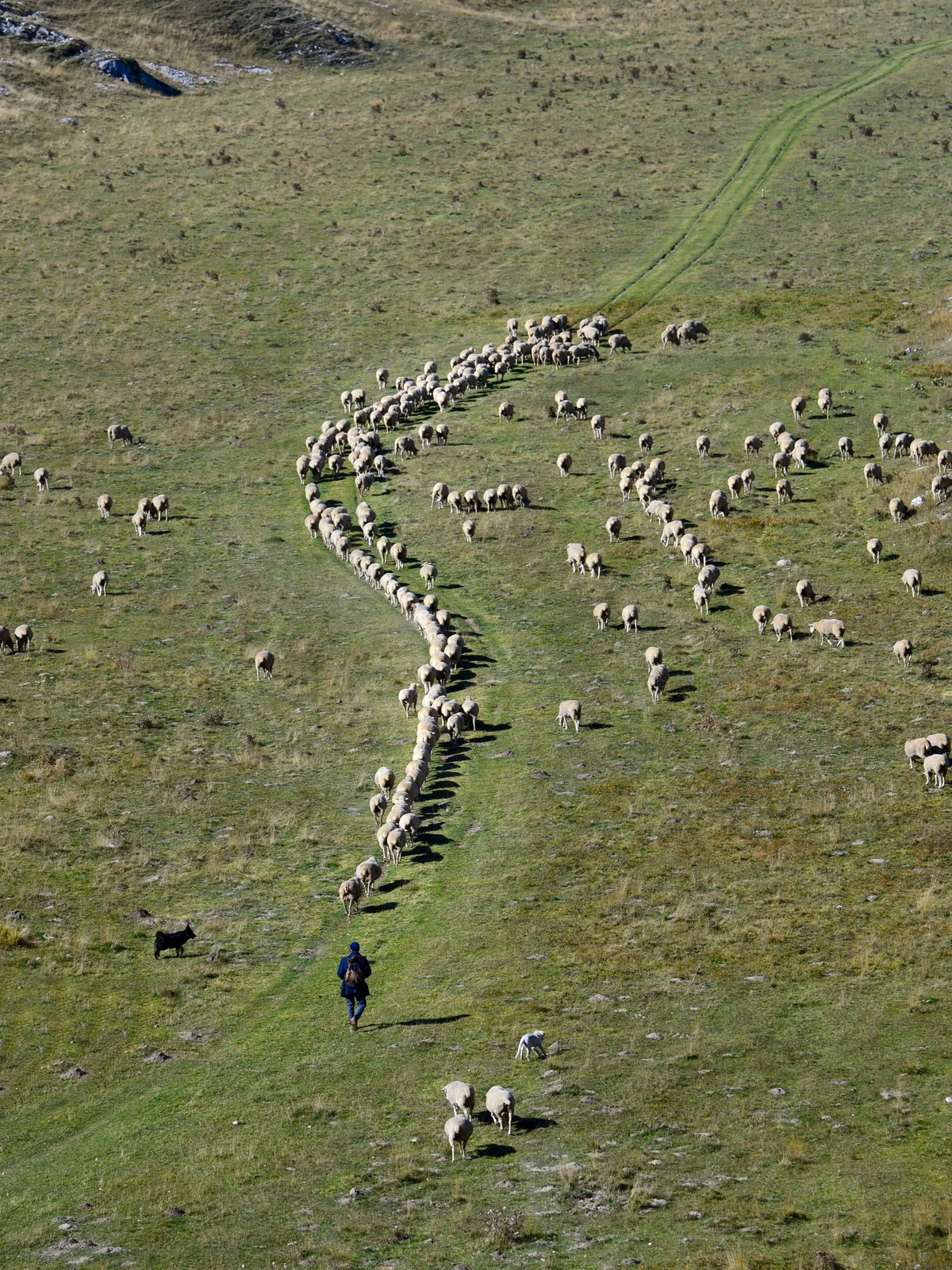
Photo: Elio Pallard / Wikimedia Commons — CC BY-SA 4.0 · Resized and converted to WebP.
Things to do
Walking in the Park. The Terre della Baronia district, the Park writes, is made of endless grasslands and rural landscapes: steppes with feather grasses, thyme and flax, the yellow pheasant’s eye that in Italy grows only here, Orsini’s viper with its largest population in the world and, along the ridge of the Sentiero del Centenario, the Apennine chamois. The Sentiero del Centenario (route 235) calls for care: in 2024 the L’Aquila section of the Italian Alpine Club (CAI), in a notice published by the town council, warned that because some of its equipped stretches have deteriorated it is now a mountaineering route, for people with proven mountaineering skills only; some stretches have no phone signal.
Climbing in the village. Calascio Street Boulder, created by the Vivi Calascio community cooperative and promoted by the town council, brings climbing to artificial walls and to the village’s walls, towers and bell towers: the 2024 edition, the Ministry of Culture reports, drew more than 250 climbers, many under 14, with guided walks and e-bike tours; the 2025 edition was held on 12 July.
Following the music and the village schools. The Park mentions the open rehearsals and concerts of the Officina Musicale, directed by maestro Orazio Tuccella, at weekends all year round. With the “Rocca Calascio Luce d’Abruzzo” project the town council has launched advanced schools in sustainable tourism, sheep farming, weaving and music, an international school with the University of L’Aquila, the Calascio Film Fest and the Calascio Innovation Playground; the programmes change from year to year.
Sources: Parco nazionale del Gran Sasso e Monti della Laga — Distretto Terre della Baronia · Comune di Calascio — Sentiero del Centenario, comunicazione del CAI dell’Aquila (18 marzo 2024) · Ministero della cultura, Cultura Borghi — Grande successo per Calascio Street Boulder (2 ottobre 2024) · Ministero della cultura, Cultura Borghi — Ulassai e Calascio: un’alleanza nel segno dell’outdoor (12 luglio 2025) · Parco nazionale del Gran Sasso e Monti della Laga — Borghi e paesi: Calascio · Comune di Calascio — Iniziative a Calascio, calendario 2026 (26 gennaio 2026)
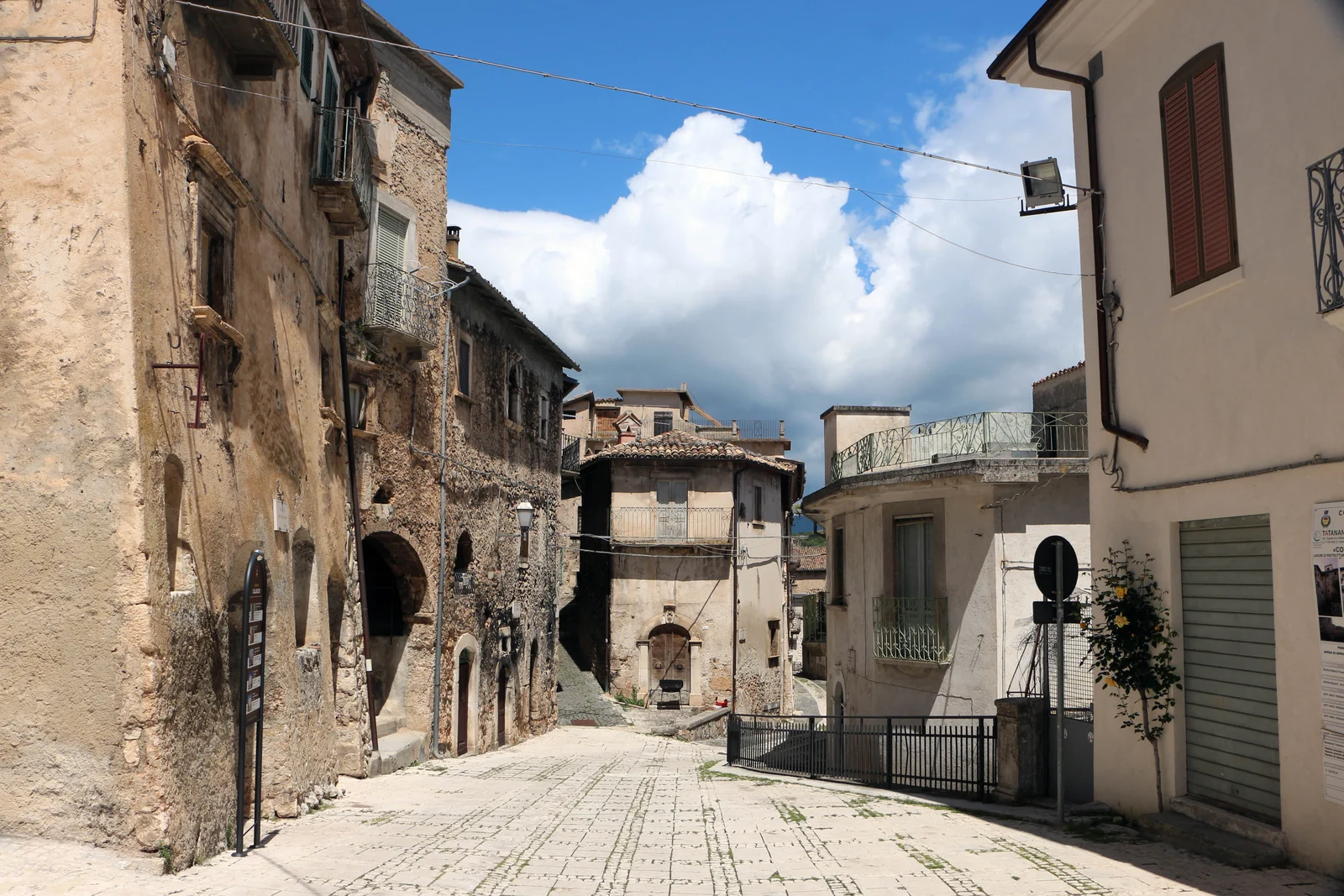
Photo: Luisarcus / Wikimedia Commons — CC BY-SA 4.0 · Resized and converted to WebP.
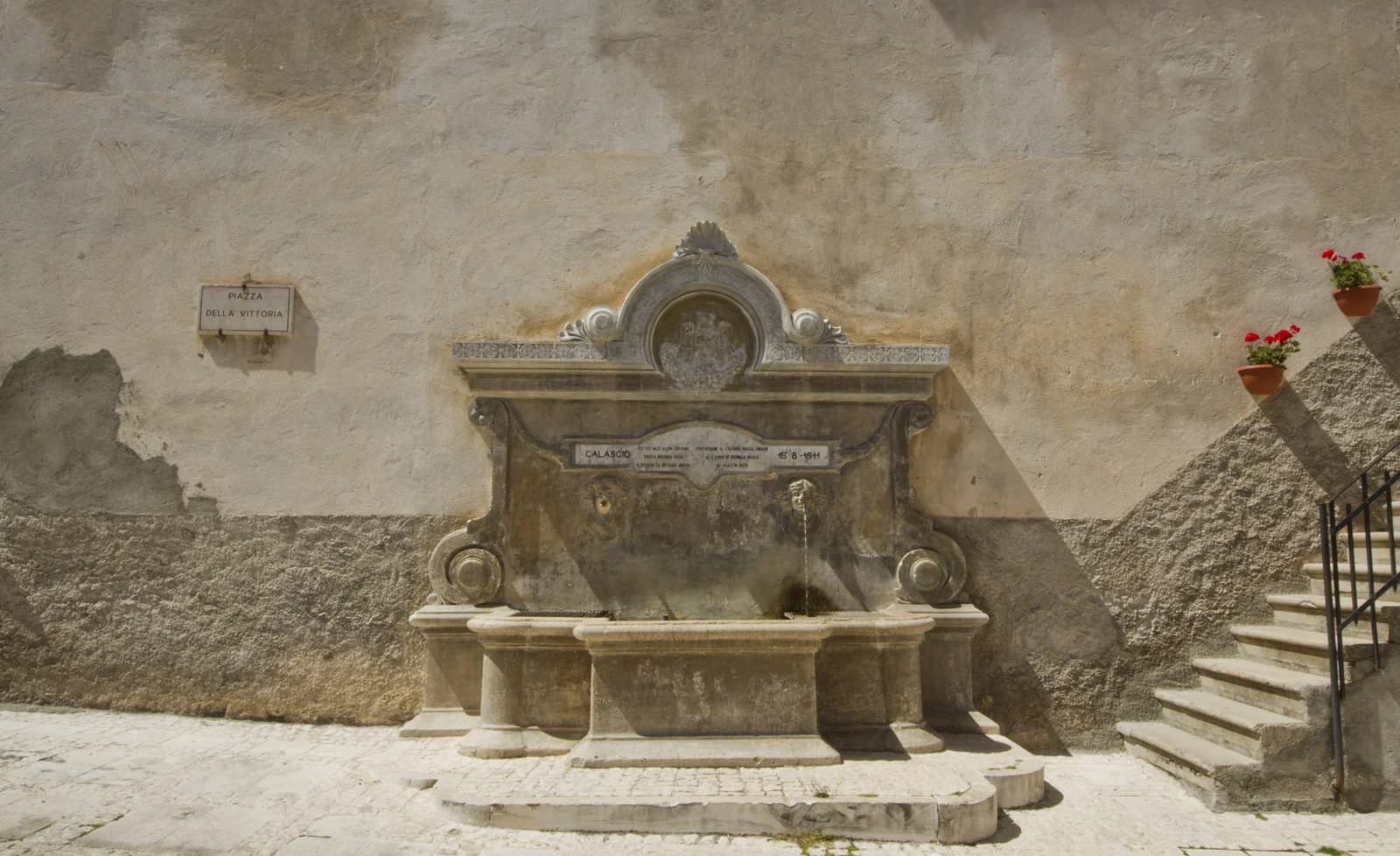
Photo: trolvag / Wikimedia Commons — CC BY-SA 3.0 · Resized and converted to WebP.
When to go
The district’s climate, the Park writes, is continental: little rain, cold winters, very hot summers and wide swings of temperature. The Rocca is above 1,400 metres and the village around 1,200.
Summer is the liveliest season. The Park lists as feast days 9 May, San Nicola, and the pecorino festival on the first or second Sunday of August. At the end of August 2026 the town council marked the reopening of Santa Maria delle Grazie with two concerts, the second as part of the second Calascio Film Fest. On 12 August 2026, because of the water shortage and the sharp rise in visitors, the town council cut the water supply from 5 pm to 7 am the next day, until further notice: in August the village is at its busiest.
The 2026 calendar of the “Rocca Calascio Luce d’Abruzzo” project spread schools, workshops and conferences from January to July, with a summer school between late June and early July: the village has its events outside the summer too.
Sources: Parco nazionale del Gran Sasso e Monti della Laga — Distretto Terre della Baronia · Parco nazionale del Gran Sasso e Monti della Laga — Beni culturali: Rocca Calascio · Parco nazionale del Gran Sasso e Monti della Laga — Borghi e paesi: Calascio · Comune di Calascio — Santa Maria delle Grazie riapre le sue porte (24 agosto 2026) · Comune di Calascio — Avviso di razionamento della fornitura di acqua potabile (12 agosto 2026) · Comune di Calascio — Iniziative a Calascio, calendario 2026 (26 gennaio 2026)
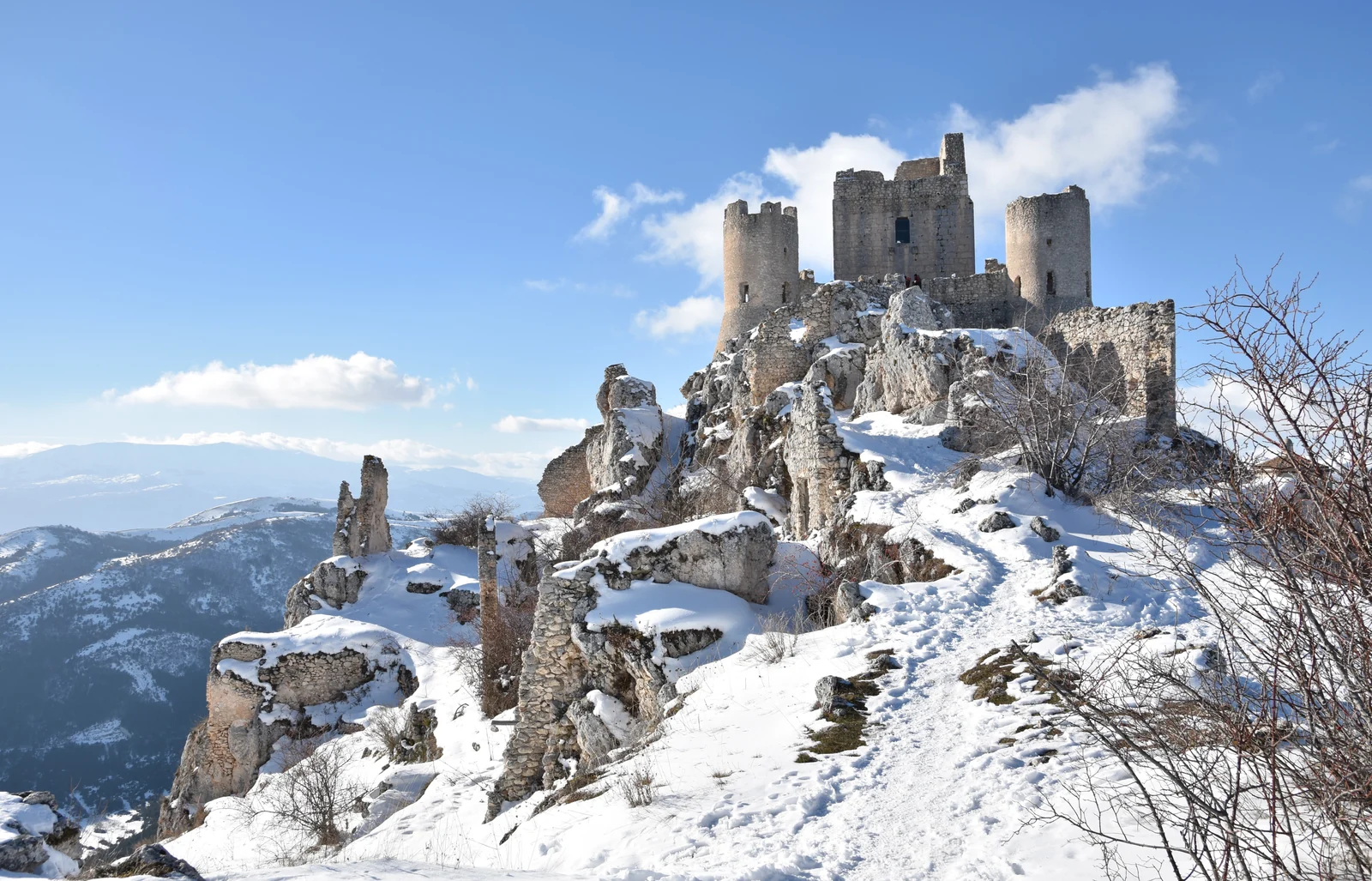
Photo: Andrej / Wikimedia Commons — CC BY-SA 2.0 · Resized and converted to WebP.
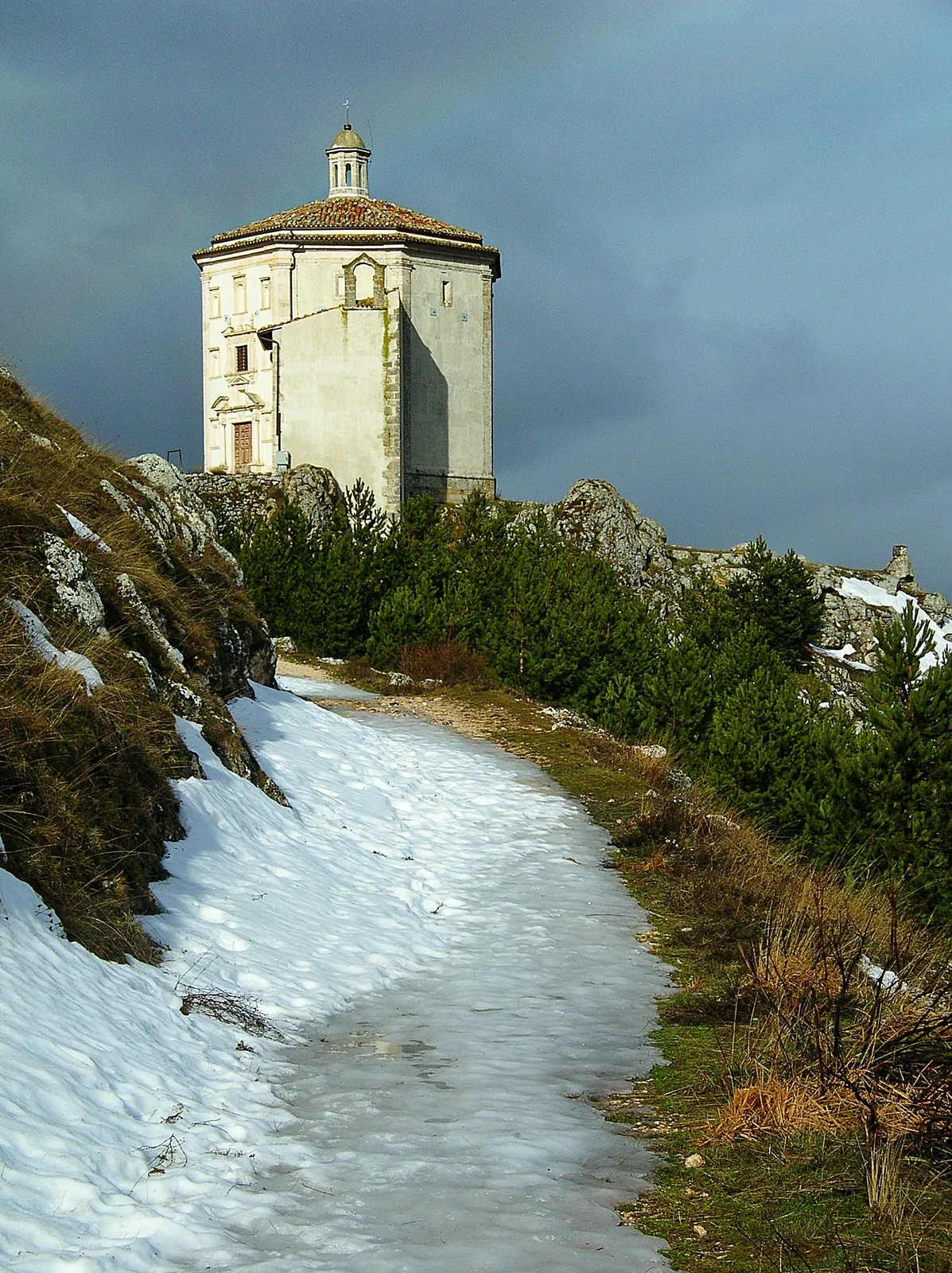
Photo: Justinawind / Wikimedia Commons — CC BY-SA 4.0 · Resized and converted to WebP.
Getting there and around
The town council gives two ways to arrive: by car or with the buses of TUA, the Abruzzo regional transport company. TUA’s line between L’Aquila and Castel del Monte runs through Barisciano, Calascio and Santo Stefano di Sessanio, with runs spread over the day; a TUA notice of September 2026 also lists the early-morning run Castel del Monte-Calascio-Poggio Picenze-L’Aquila. Timetables change: check them on the TUA website before setting off.
By car from Rome, the Park points to the A24 Rome-L’Aquila motorway and the Assergi exit for the L’Aquila side; by train, the Rome-Pescara line, continuing by regional bus. The Park notes that every municipality in the Park is served by regional buses from the provincial capitals, and lists Rome Fiumicino, Rome Ciampino and Abruzzo airport in Pescara as the airports.
The village is at about 1,200 metres; the Rocca is higher, at 1,464 metres according to the Park. Among its works the “Rocca Calascio Luce d’Abruzzo” project lists “Una via per la Rocca”, a route to the fortress, and a car park; the Ministry’s page does not give their status.
Sources: Comune di Calascio — Come raggiungerci · TUA, Società unica abruzzese di trasporto — Linea L’Aquila-Castel del Monte, chiusura SP7 (3 maggio 2024) · TUA, Società unica abruzzese di trasporto — Polo scolastico L’Aquila, nuovi orari di alcune corse (28 settembre 2026) · Parco nazionale del Gran Sasso e Monti della Laga — Come raggiungere il Parco · Parco nazionale del Gran Sasso e Monti della Laga — Musei e centri visita: Museo delle Fortificazioni · Ministero della cultura, Cultura Borghi — Calascio, «Rocca Calascio Luce d’Abruzzo» · Comune di Calascio — Storia del Comune
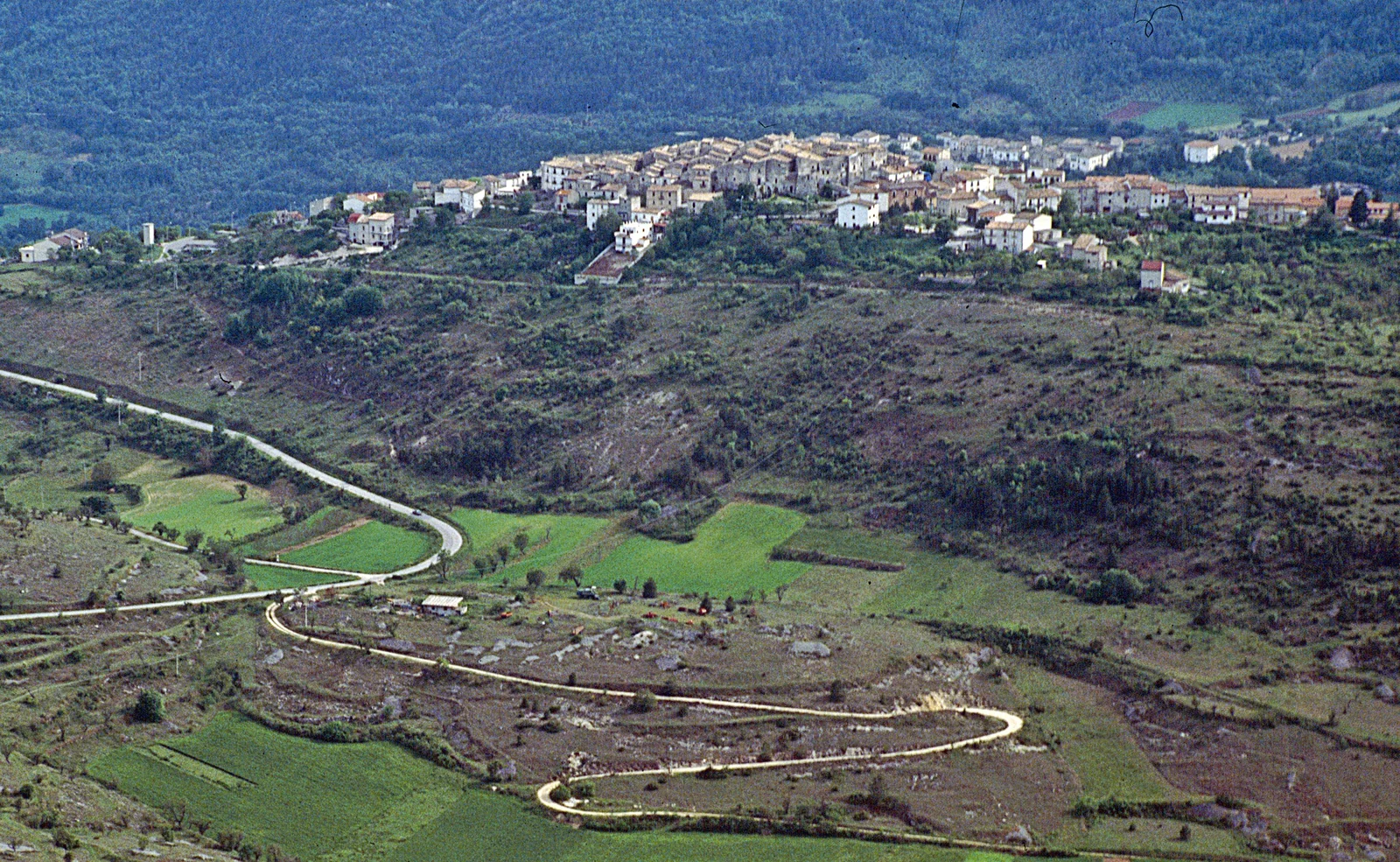
Photo: Ziegler175 / Wikimedia Commons — CC BY-SA 4.0 · Resized and converted to WebP.
Tourism
To go up to the Rocca, in summer 2025 the council arranged on certain days, with the Vivi Calascio community cooperative, a shuttle service from the village, from 10 am to 7 pm, because parking near the Rocca is scarce. The road is narrow, the shuttles are medium-sized and the council warned that on some days the wait can be long; so it suggested considering the walk up, about an hour on foot after crossing the village, along the road or on the marked mountain paths. In the square, near the shuttle stop, electric bikes can be hired.
Calascio lies within the Gran Sasso and Monti della Laga National Park, and the Park’s 1998 camping regulation also applies to those travelling by camper van or with a tent: camper vans and caravans do not stop overnight along the roads or anywhere else in the Park not set aside for it, and they use the equipped stopping areas. Tents may be pitched only at the sites listed by the Park, with an authorisation stating days and number of people, and in the strict nature reserve zones no camping or bivouac is allowed. In the camping areas you do not cut or damage plants, dig the ground around the tents, bring dogs or other pets, or light fires outside the equipped spots; waste goes in the council’s bins.
Sources: Comune di Calascio — Calendario navette per Rocca Calascio, estate 2025 (pubblicato il 6 giugno 2025) · Ente Parco Nazionale del Gran Sasso e Monti della Laga — Regolamento per le attività di campeggio nel Parco (con l’elenco delle località, giugno 1998)
“Come to Calascio as a guest, not as a tourist: that is how these places truly let you know them.”
Accommodation in figures
In the Ministry of Tourism’s national database of accommodation (BDSR), on 12 October 2026, Calascio had 33 establishments with a verified national identification code (CIN): 12 non-hotel establishments and 21 other establishments.
Sources: Ministero del Turismo – Banca Dati Strutture Ricettive (dashboard pubblica)
Nearby
Among the places Apulica already covers, the nearest are Santo Stefano di Sessanio (about 4 km) and L'Aquila (about 22 km): straight-line distances between the centres of the municipal territories.
Calascio shares the Park’s Terre della Baronia district with Barisciano, Carapelle Calvisio, Castelvecchio Calvisio, Castel del Monte and Santo Stefano di Sessanio. The Park names Santo Stefano di Sessanio, a Medici village, as the heart of the district, with the Museo della Baronia; Castel del Monte as the home of transhumance; and in Barisciano, in the old convent of San Colombo, the Apennine Floristic Research Centre with the Flower Museum and the botanical garden. Above the district opens the Campo Imperatore plateau.
Sources: ISTAT/Openpolis, confini comunali della regione Abruzzo (CC BY 4.0, ISTAT/Openpolis) · Parco nazionale del Gran Sasso e Monti della Laga — Distretto Terre della Baronia
The town council
The official website of the Comune di Calascio, registered in IndicePA, the index of the digital addresses of Italy’s public administrations, is the reference for the town council’s offices, opening hours and news. Its address is listed among the sources of this section.
The town hall is at Via Padre Mario 1; the switchboard answers on 0862 930132.
Sources: Comune di Calascio, sito istituzionale · IndicePA (AgID), Indice dei domicili digitali delle pubbliche amministrazioni: dataset Enti
Where to stay
In the municipality of Calascio the national database of the Ministry of Tourism lists 33 accommodation businesses with a verified CIN code: 0 hotels, 12 other licensed accommodation and 21 other types such as B&Bs and private rentals.
Ask Apulica for a stay in Calascio We reply shortly, within a few hours at most, with a proposal for you to consider.
Sources: Ministero del Turismo – Banca Dati Strutture Ricettive (dashboard pubblica), 2026-10-12
YOUR JOURNEY
How to shape a journey here
To include Calascio in a trip, or to ask for a guide or a transfer, you can write to Apulica with the button below.
Plan your tripKeep exploring
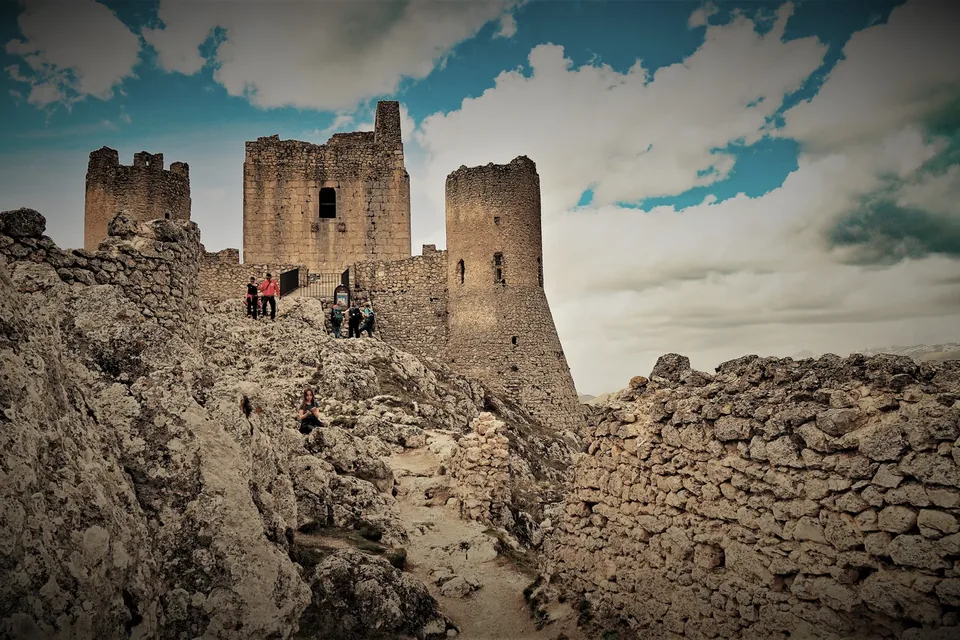
Santo Stefano di Sessanio and Rocca Calascio
A stone village on the L’Aquila side of the Gran Sasso, with a Slow Food Presidium lentil and the transhumance fortress nearby.
Read the guide →Photo: Vincedelbenàco / Wikimedia Commons — CC BY-SA 4.0 · Resized and converted to WebP.

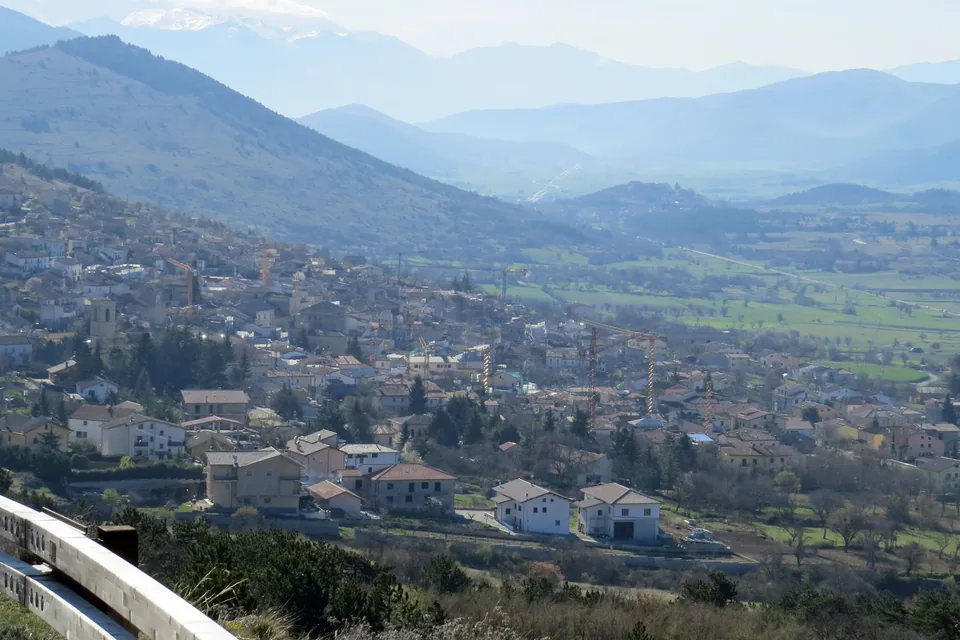
Barisciano
Barisciano (AQ), Abruzzo: 1,657 residents, 78.49 km². The official facts of the municipality, its town council website and its registered accommodation.
Read the guide →Photo: Flodur63 / Wikimedia Commons — CC BY-SA 4.0 · Resized and converted to WebP.

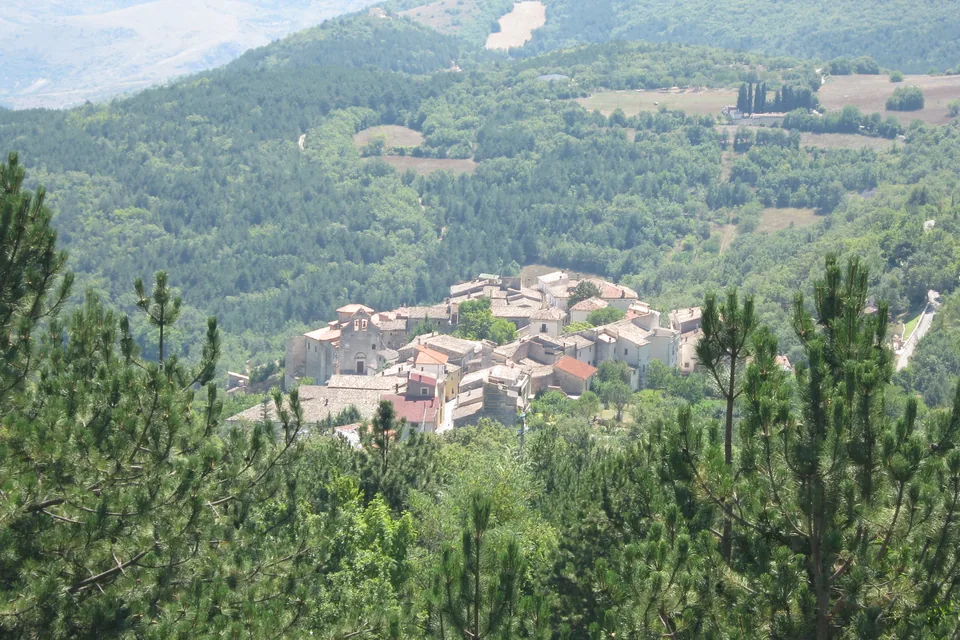
Carapelle Calvisio
Carapelle Calvisio (AQ), Abruzzo: 70 residents, 14.79 km². The official facts of the municipality, its town council website and its registered accommodation.
Read the guide →Photo: Luiclemens / Wikimedia Commons — CC BY-SA 3.0 · Resized and converted to WebP.

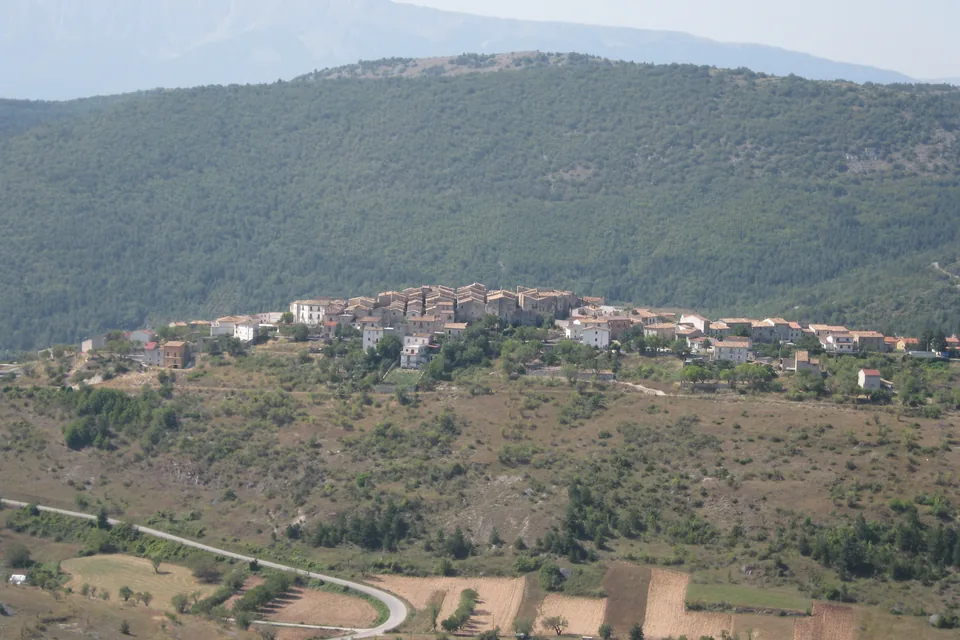
Castelvecchio Calvisio
Castelvecchio Calvisio (AQ), Abruzzo: 124 residents, 15.32 km². The official facts of the municipality, its town council website and its registered accommodation.
Read the guide →Photo: Luiclemens / Wikimedia Commons — CC BY-SA 3.0 · Resized and converted to WebP.

Navelli
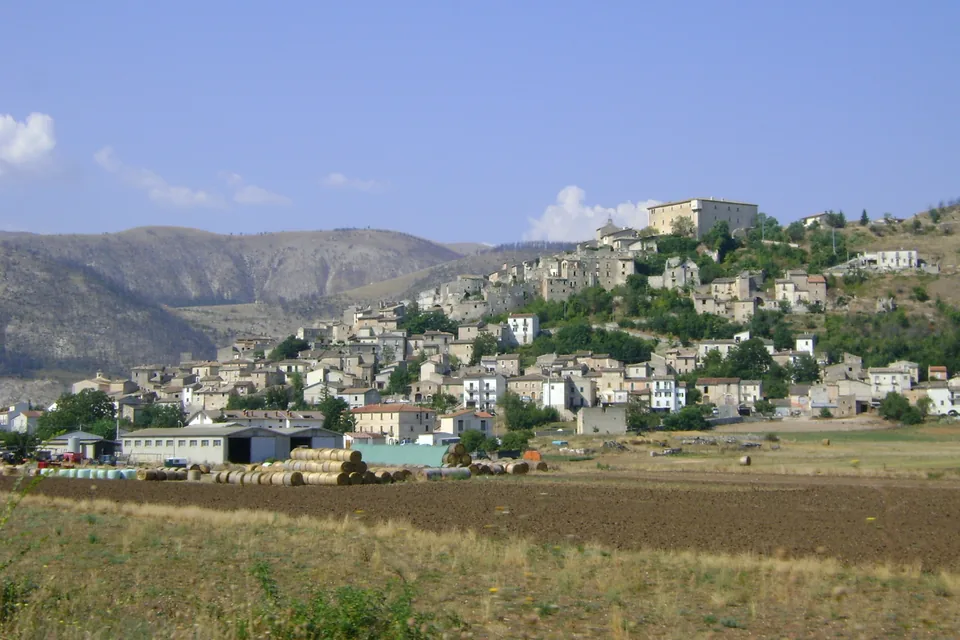
Navelli (AQ), Abruzzo: 567 residents, 42.00 km². The official facts of the municipality, its town council website and its registered accommodation. The hilltop village above the plain, L’Aquila saffron PDO, the church of Santa Maria in Cerulis with its fourteenth-century frescoes and the village of Civitaretenga with its Via Giudea.
Read the guide →Photo: Zitumassin / Wikimedia Commons — Public domain · Resized and converted to WebP.

Ofena
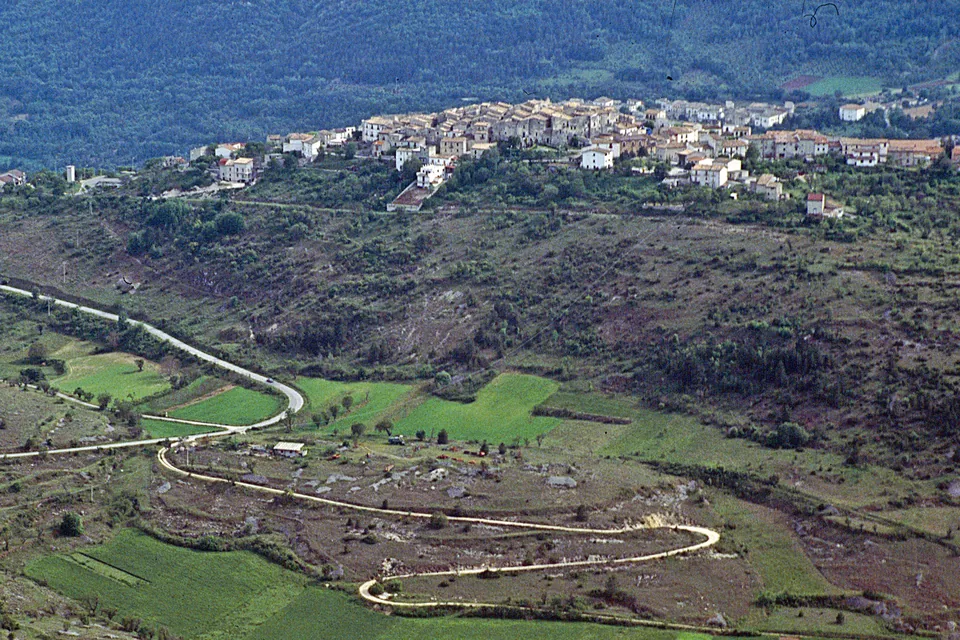
Ofena (AQ), Abruzzo: 440 residents, 36.90 km². The official facts of the municipality, its town council website and its registered accommodation.
Read the guide →Photo: Ziegler175 / Wikimedia Commons — CC BY-SA 4.0 · Resized and converted to WebP.

L’Aquila
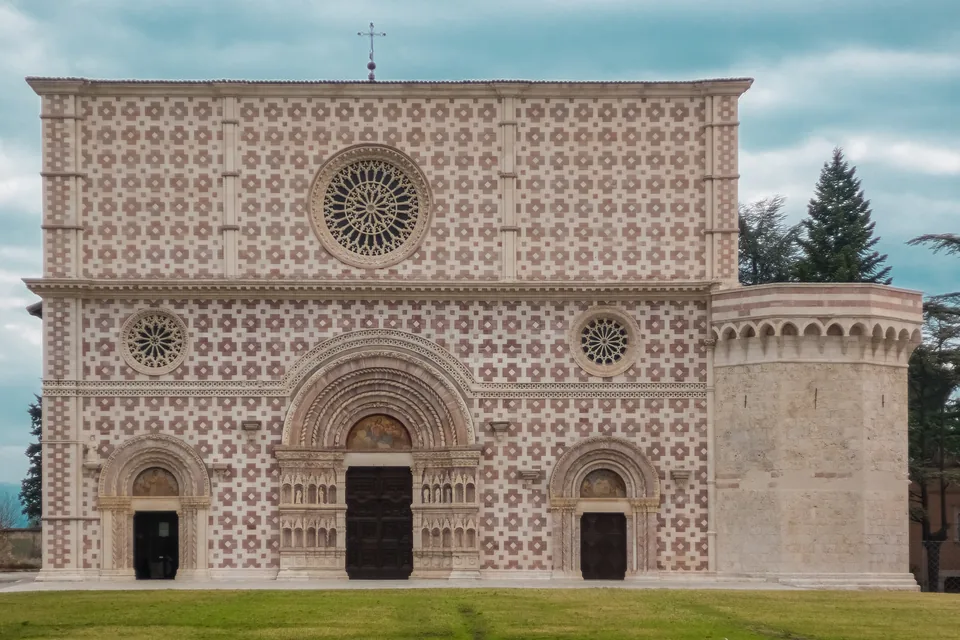
A capital between the Gran Sasso and the Monti della Laga, with the UNESCO-listed Celestinian Forgiveness and reconstruction still under way.
Read the guide →Photo: Verdenex84 / Wikimedia Commons — CC BY-SA 4.0 · Resized and converted to WebP.
