
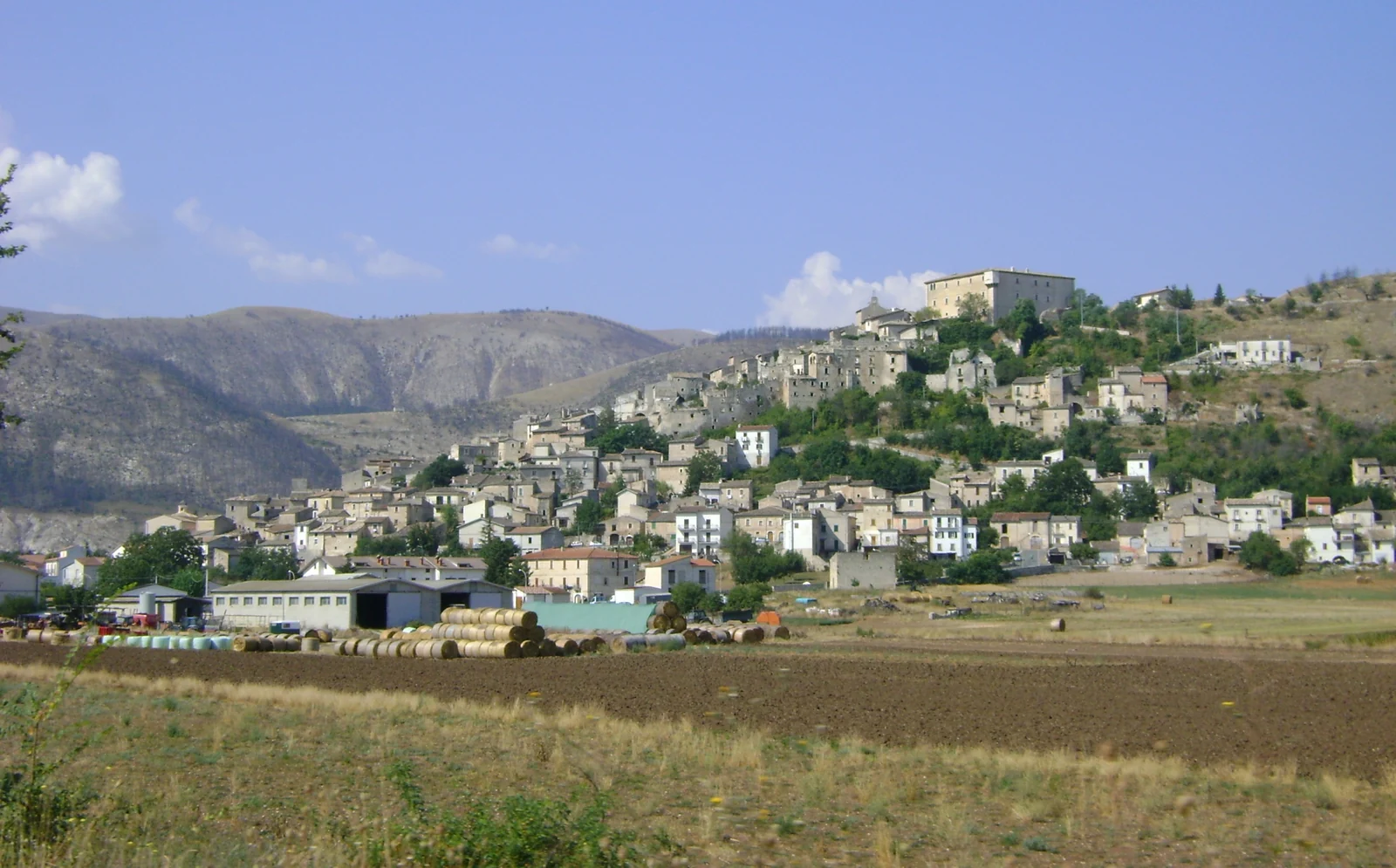

Why go
People come to Navelli for its saffron. The Abruzzo Region describes it as the heart of saffron country, and the specification of the “Zafferano dell’Aquila” PDO lists Navelli among the thirteen municipalities where the spice may be produced. The application to register the designation was filed by the Cooperativa Altopiano di Navelli, based in the village of Civitaretenga. The plant flowers in October, and the town council devotes its autumn days to saffron.
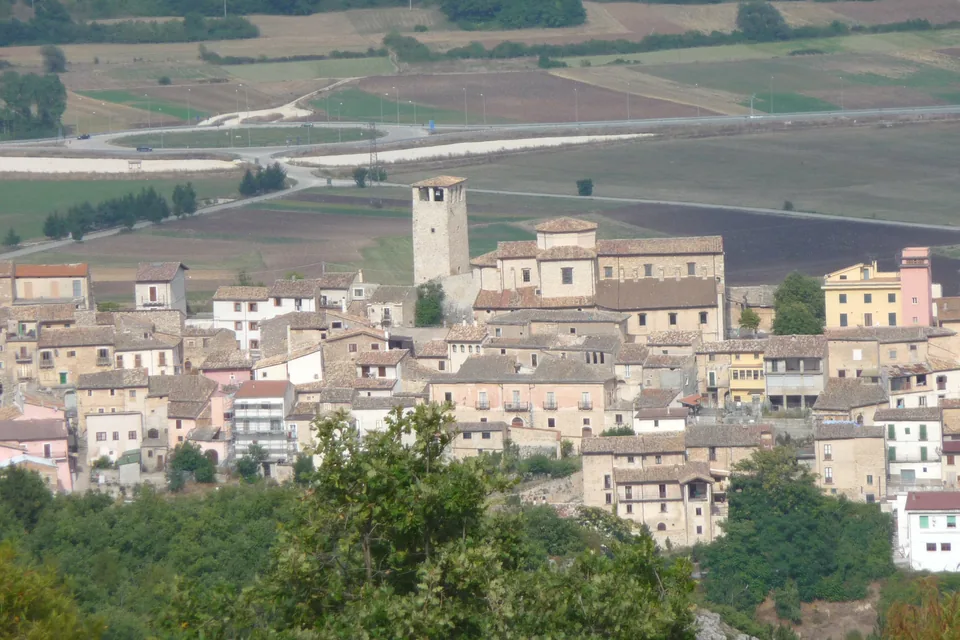
Then there is the village itself, gathered on the hill above the plain. According to the town council’s chronology, by 1498 the castle of Navelli was enclosed by walls with five gates; the Porta Santa Maria was built in 1475 and the baronial palace was completed in 1632. Below, along state road 17, stands the church of Santa Maria in Cerulis, already mentioned in 787 and frescoed in the fourteenth century.
A few kilometres away lies Civitaretenga, the other half of the municipality: tower houses, the medieval watchtower, the arcaded Via Giudea leading into the old Jewish quarter, the frescoes of Sant’Egidio and the cloister of the convent of Sant’Antonio.
Sources: Regione Abruzzo, politica di coesione — Atlante dei sapori, dei territori e dei progetti: «L’Aquila, Navelli e la montagna che custodisce» (ottobre 2026) · Ministero dell’agricoltura, della sovranità alimentare e delle foreste — Disciplinare di produzione della DOP «Zafferano dell’Aquila», con la domanda di registrazione · Comune di Navelli — Calendario eventi autunno inverno a Navelli e Civitaretenga, 10 ottobre 2026 - 6 gennaio 2027 · Comune di Navelli — Storia del Comune: cronologia degli eventi (pagina aggiornata il 2 ottobre 2025) · Ministero della cultura, ICCD — Scheda del dipinto «Teoria di Apostoli», abside della chiesa di S. Maria in Cerulis, Navelli · Comune di Navelli — Civitaretenga (pagina aggiornata il 2 ottobre 2025)
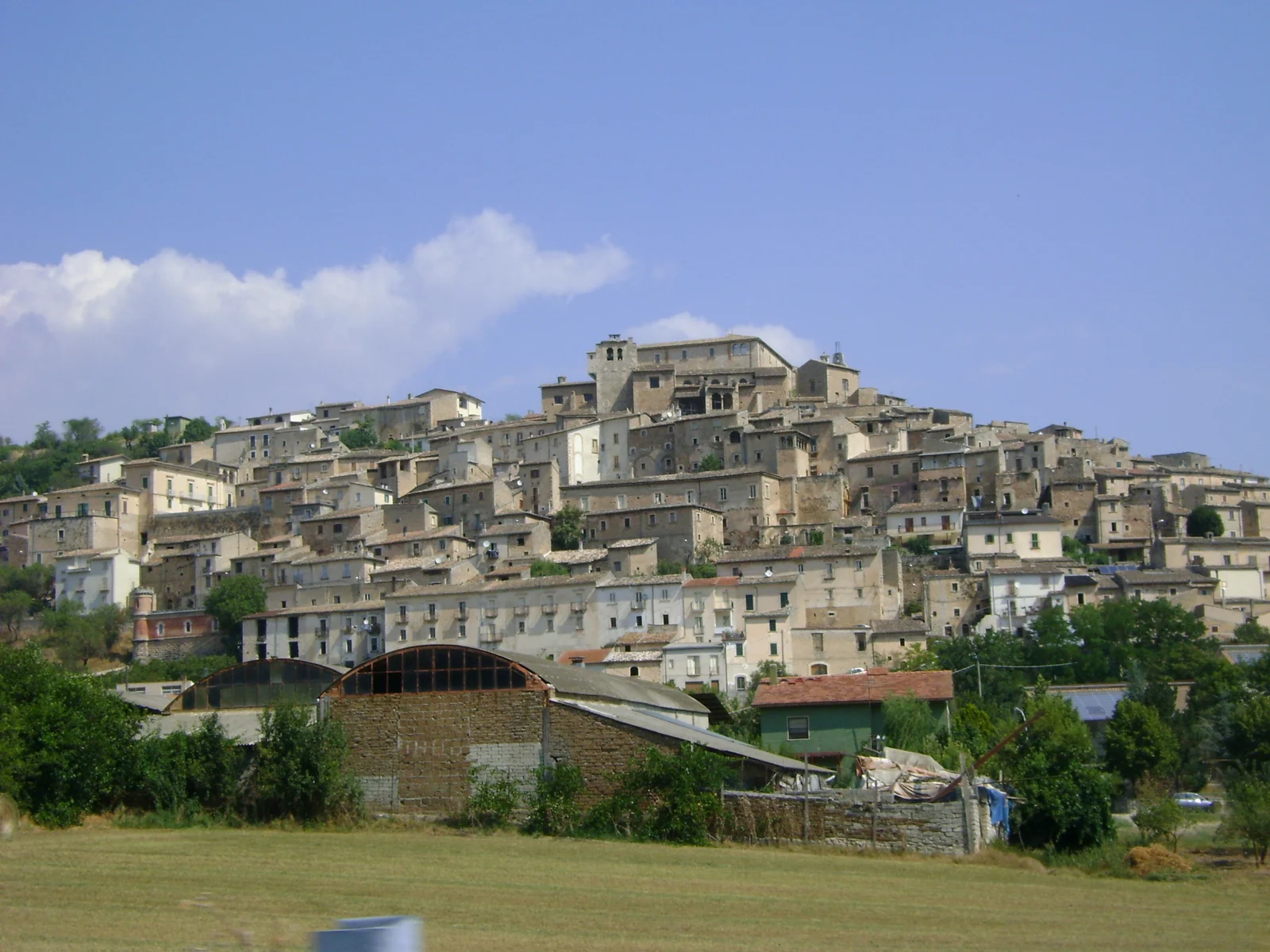
Photo: Zitumassin / Wikimedia Commons — Public domain · Resized and converted to WebP.
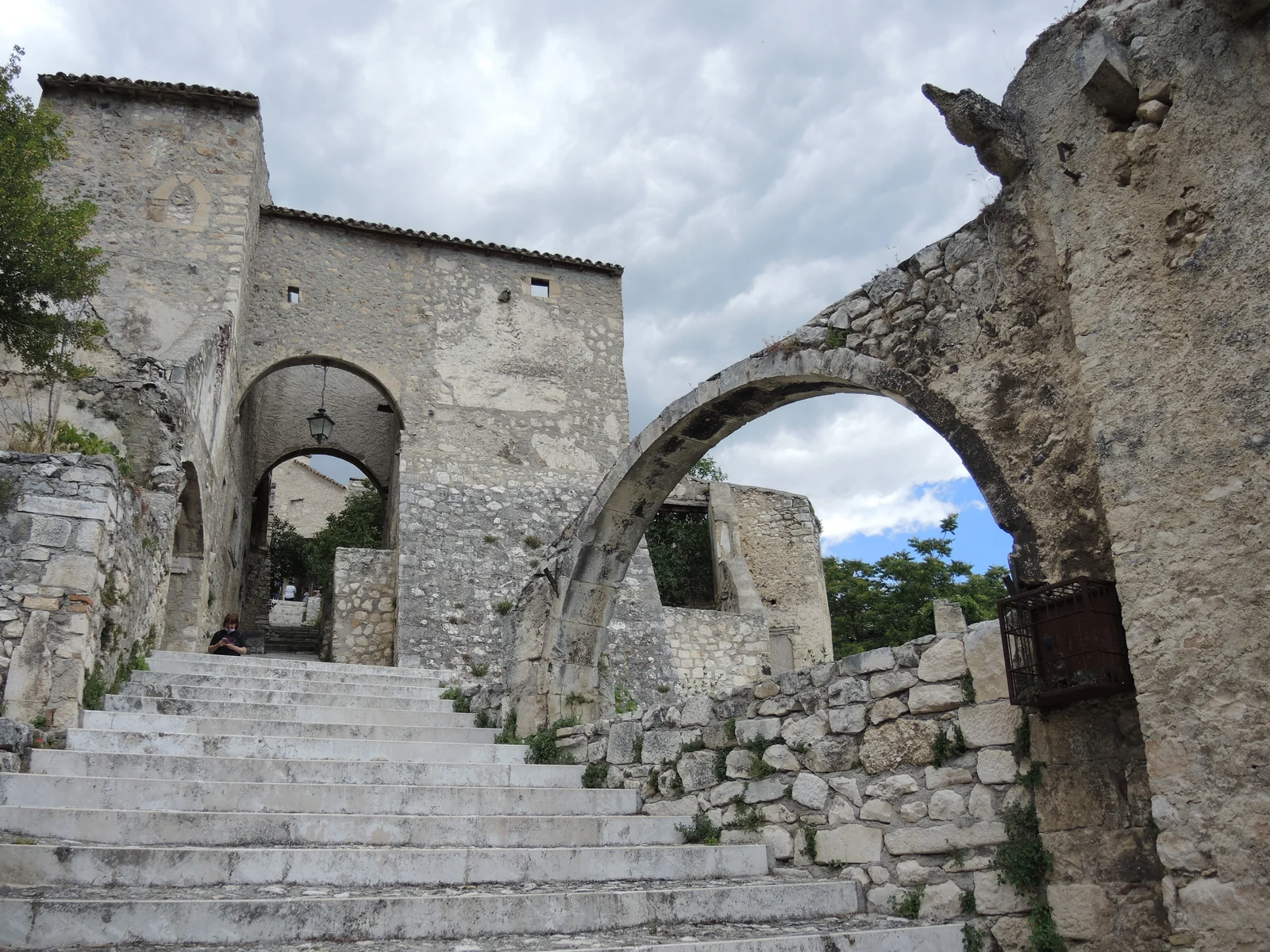
Photo: Pietro / Wikimedia Commons — CC BY-SA 4.0 · Resized and converted to WebP.
The municipality at a glance
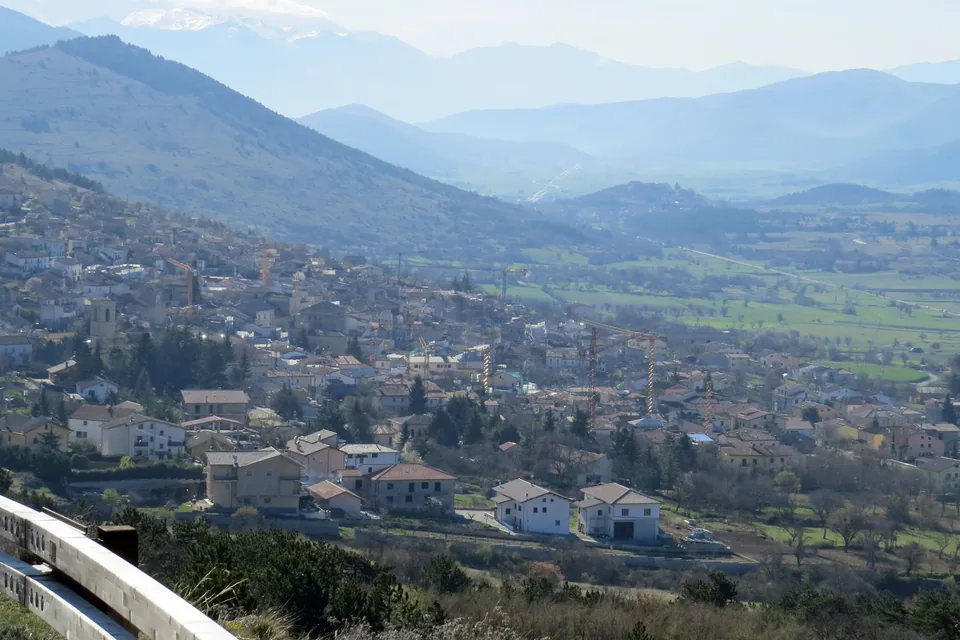
Navelli is a municipality in the province of L'Aquila, in Abruzzo. Its ISTAT code is 066058. On 1 January 2025 it had 567 residents. The municipal territory covers 42.00 km² and ranges from 445 to 1,248 metres above sea level; the town hall stands at about 690 metres.
The municipality has two centres, Navelli and the village of Civitaretenga. It is one of the thirteen municipalities in the production area of L’Aquila saffron PDO.
Sources: ISTAT, Codici statistici delle unità amministrative territoriali: elenco dei comuni al 21 febbraio 2026 · ISTAT, Popolazione residente per età, sesso e stato civile al 1° gennaio 2025 (POSAS) · ISTAT, Principali statistiche geografiche sui comuni: superficie e altimetria al 31 dicembre 2021 · Comune di Navelli — Civitaretenga (pagina aggiornata il 2 ottobre 2025) · Comune di Navelli — Estate a Navelli e Civitaretenga 2026, 31 luglio - 27 agosto · Ministero dell’agricoltura, della sovranità alimentare e delle foreste — Disciplinare di produzione della DOP «Zafferano dell’Aquila», con la domanda di registrazione
History
The earliest traces are Italic. According to the town council, a third-century BC inscription in the Vestinian dialect, found here and kept in the National Archaeological Museum of Naples, records a temple to Hercules Jovius on the site where Santa Maria in Cerulis now stands; another inscription, in the archaeological museum of Chieti, confirms the name of the village of Incerule, which spread over the area of today’s cemetery.
In 787 the Chronicon Vulturnense names the churches of Cerule and Lapide Vico, and in 816 the people of Incerule and Turri made donations to the monastery of San Vincenzo al Volturno. A bull of 1092 of the monastery of San Benedetto in Perillis lists the monks’ property in the castle of Navelli; in the Catalogus Baronum, in 1184, “Novellum” is a castle owing two knights. A diploma of Charles II dated 28 September 1294 states that the castle of Turri took part in founding L’Aquila and names Navelli as “Navellum”.
The fourteenth and fifteenth centuries brought disputed pastures and wars. In 1343 the communities of Navelli and Collepietro fought over boundaries and grazing, with deaths, and made peace on 30 March in the church of San Salvatore at Collepietro. In 1423 the castle, besieged by the troops of Fortebraccio da Montone, surrendered but was not taken by storm; the earthquake of 4 and 5 December 1456 destroyed many towns in the area. In 1424 Pope Martin V confirmed the transfer of Navelli from the diocese of Valva to that of L’Aquila.
After the war between France and Spain, in 1529 the Spanish broke up the L’Aquila countryside and granted the castle of Navelli to Camillo Caracciolo. The plague of 1656 killed about eight hundred people, buried in the cemetery chapel of the Suffragio, which then became a church. The land register of 1746 counts 170 households, with 34 farmers and 172 labourers; in 1751 the saffron and silk “industries” were leased out, and in 1752 the Villa Francesconi was built on the plain, in the San Rocco district.
In 1815 Ferdinand I of Bourbon made Gianfrancesco Piccioli marquis of Navelli; in 1826 a market was set up every Tuesday. At the end of the nineteenth century the council brought in water: in 1893 it approved the fountain in Piazza San Pelino, at the foot of the village, designed by the engineer Giuseppe Inverardi, and the square was completed in 1902. In 1915 the village was struck by the Avezzano earthquake.
Sources: Comune di Navelli — Storia del Comune: cronologia degli eventi (pagina aggiornata il 2 ottobre 2025)
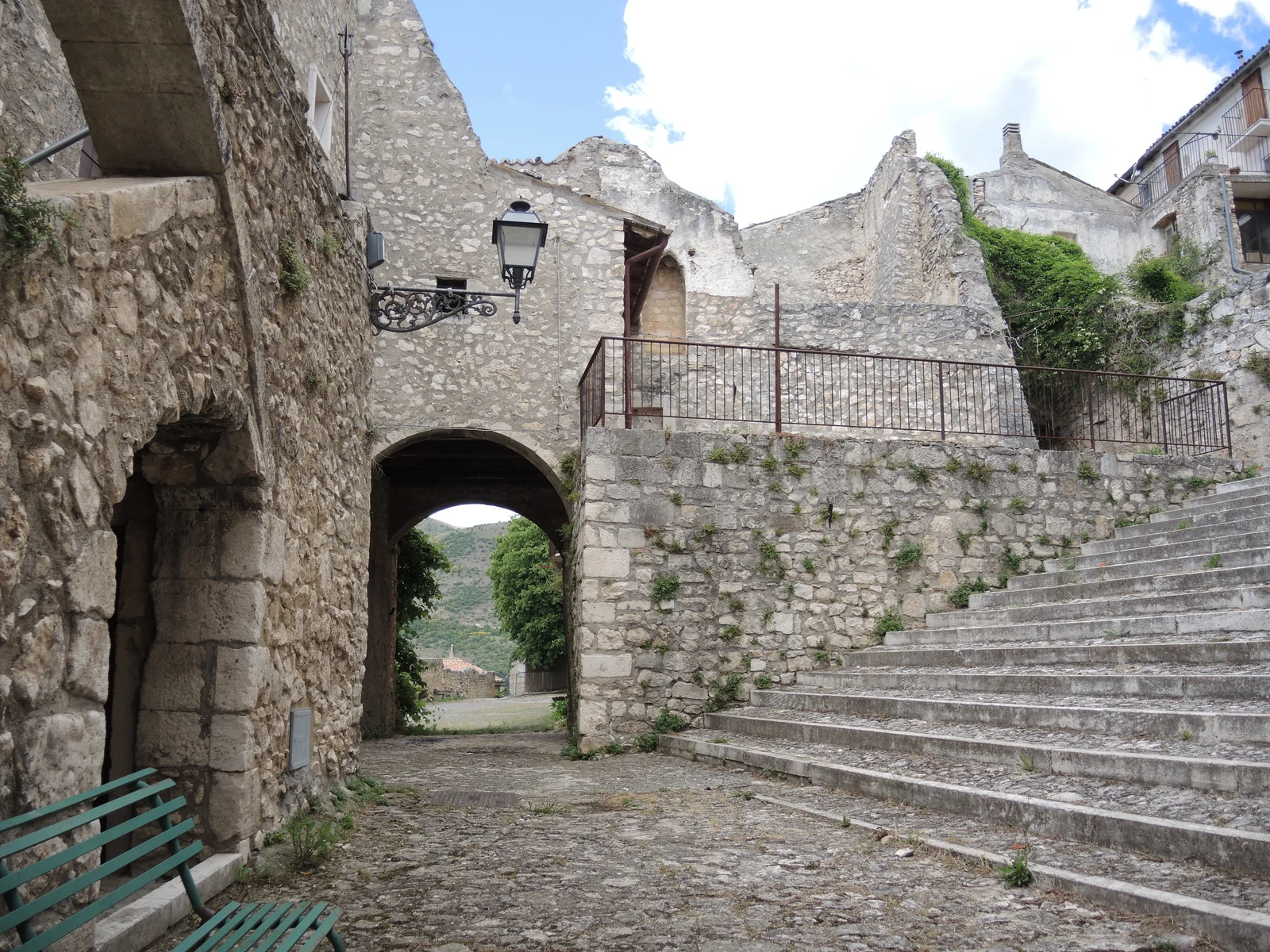
Photo: Pietro / Wikimedia Commons — CC BY-SA 4.0 · Resized and converted to WebP.
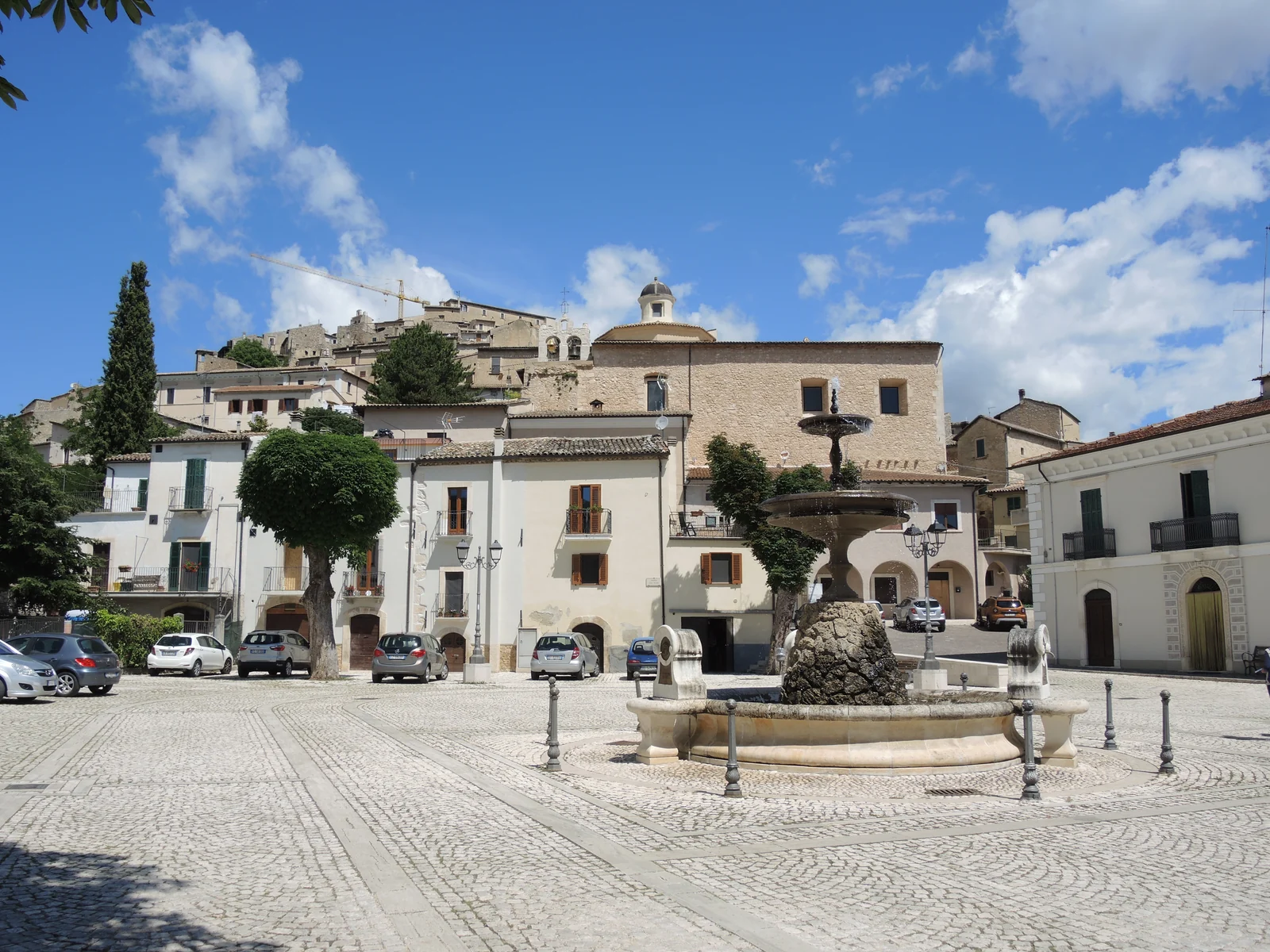
Photo: Pietro / Wikimedia Commons — CC BY-SA 4.0 · Resized and converted to WebP.
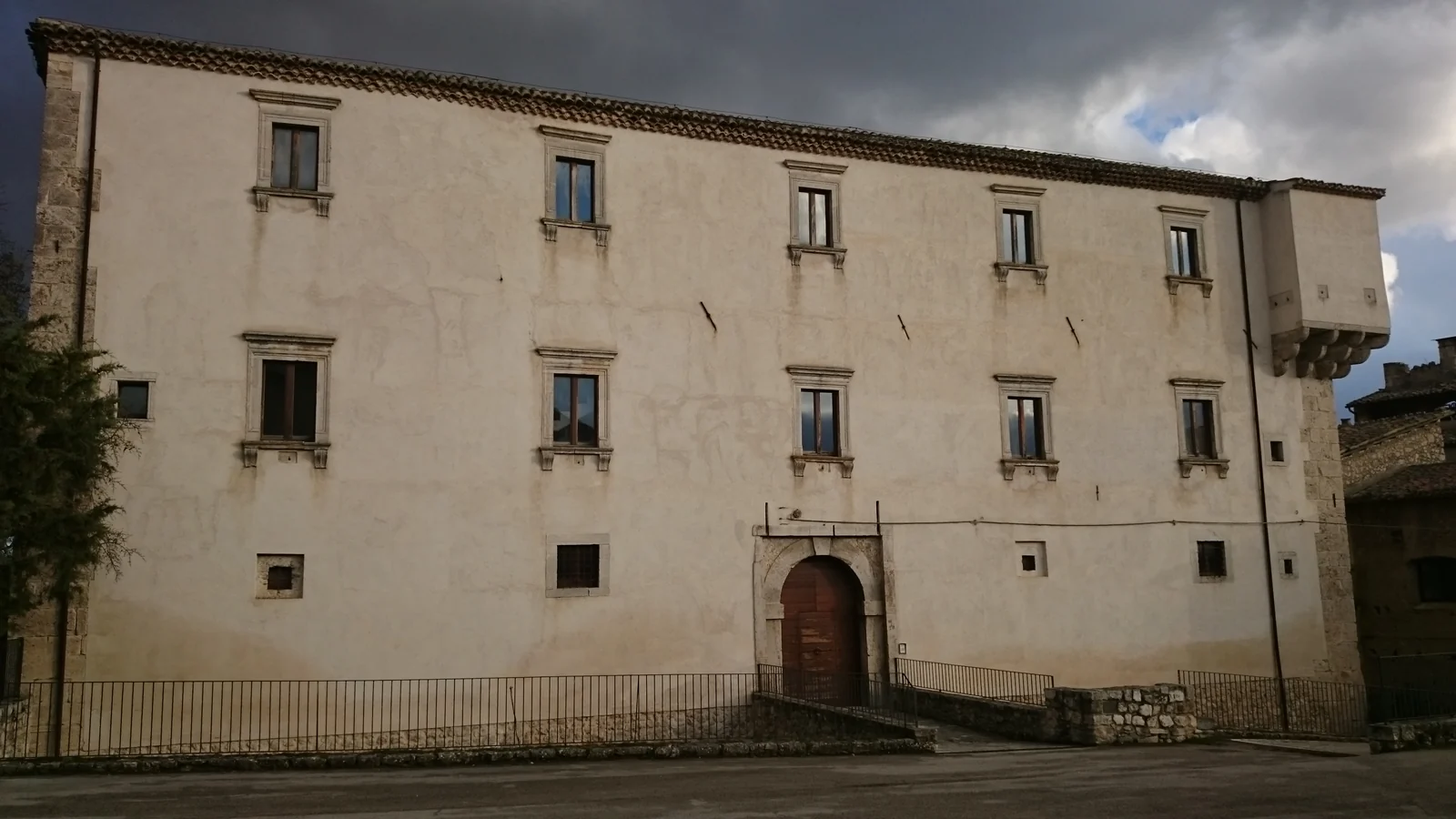
Photo: Pietro / Wikimedia Commons — CC BY-SA 4.0 · Resized and converted to WebP.
What to see
Santa Maria in Cerulis stands on the plain, along state road 17, and belongs to the municipality. The records of the Ministry of Culture trace its phases: originally three naves closed by three apses; in 1578 the presbytery, frescoed in the previous century, was closed off by a wall with three new altars, and the church became a single hall, still divided by its piers. The high altar, finished in 1607 according to the date on its crowning, holds a polychrome stucco Madonna and Child. The frescoed apse, dated by scholars to around 1320, shows a Madonna and Child, Old Testament figures and a row of Apostles. A single-light window bears a carved bishop with a mitre, a lily and the date 1209.
In Navelli, the church of San Sebastiano has a sixteenth- to seventeenth-century altar with four Corinthian columns, garlands, putti, two-tailed sirens and the sailing ship that is the emblem of Navelli; the Gonfalone chapel holds a seventeenth-century statue of the Madonna of the Assumption. In the church of the Madonna del Rosario, on 15 November 2026, the town council had the organ played again. At the foot of the village, the fountain in Piazza San Pelino was approved by the council in 1893.
In Civitaretenga, the council says, the bastions of the castle walls survive, with the medieval watchtower rising above the houses. Via Giudea, a passage covered by arches that locals call “ju buch” (the hole), leads into the old Jewish quarter, inhabited from 1200 to 1500, and to Piazza Giudea, around the synagogue. In the village is the small church of Sant’Egidio with medieval frescoes; just outside, the convent of Sant’Antonio with a twelfth-century cloister and a church of around 1480; at the foot of the village, the sixteenth-century Santa Maria delle Grazie, where two old drove roads cross. Access to the village is free.
Sources: Ministero della cultura, ICCD — Scheda della porta della zona absidale, chiesa di S. Maria in Cerulis, Navelli · Ministero della cultura, ICCD — Scheda dell’altare maggiore, chiesa di S. Maria in Cerulis, Navelli · Ministero della cultura, ICCD — Scheda del dipinto «Teoria di Apostoli», abside della chiesa di S. Maria in Cerulis, Navelli · Ministero della cultura, ICCD — Scheda della monofora datata, chiesa di S. Maria in Cerulis, Navelli · Ministero della cultura, ICCD — Scheda dell’altare di San Sebastiano, chiesa di San Sebastiano, Navelli · Ministero della cultura, ICCD — Scheda della statua della Madonna Assunta, chiesa di San Sebastiano, Navelli · Comune di Navelli — La voce dell’organo della Madonna del Rosario, 15 novembre 2026 · Comune di Navelli — Storia del Comune: cronologia degli eventi (pagina aggiornata il 2 ottobre 2025) · Comune di Navelli — Civitaretenga (pagina aggiornata il 2 ottobre 2025)
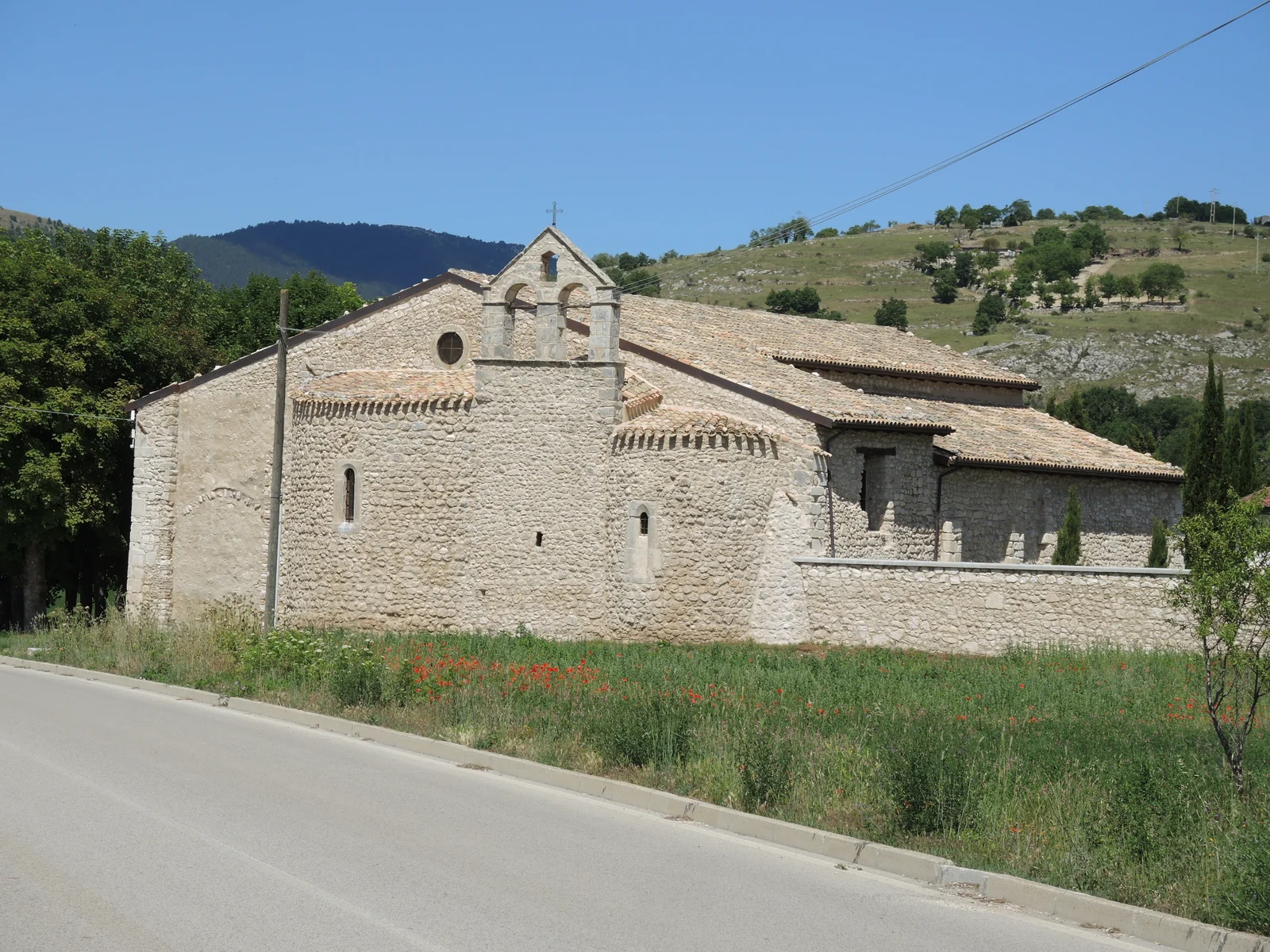
Photo: Pietro / Wikimedia Commons — CC BY-SA 4.0 · Resized and converted to WebP.
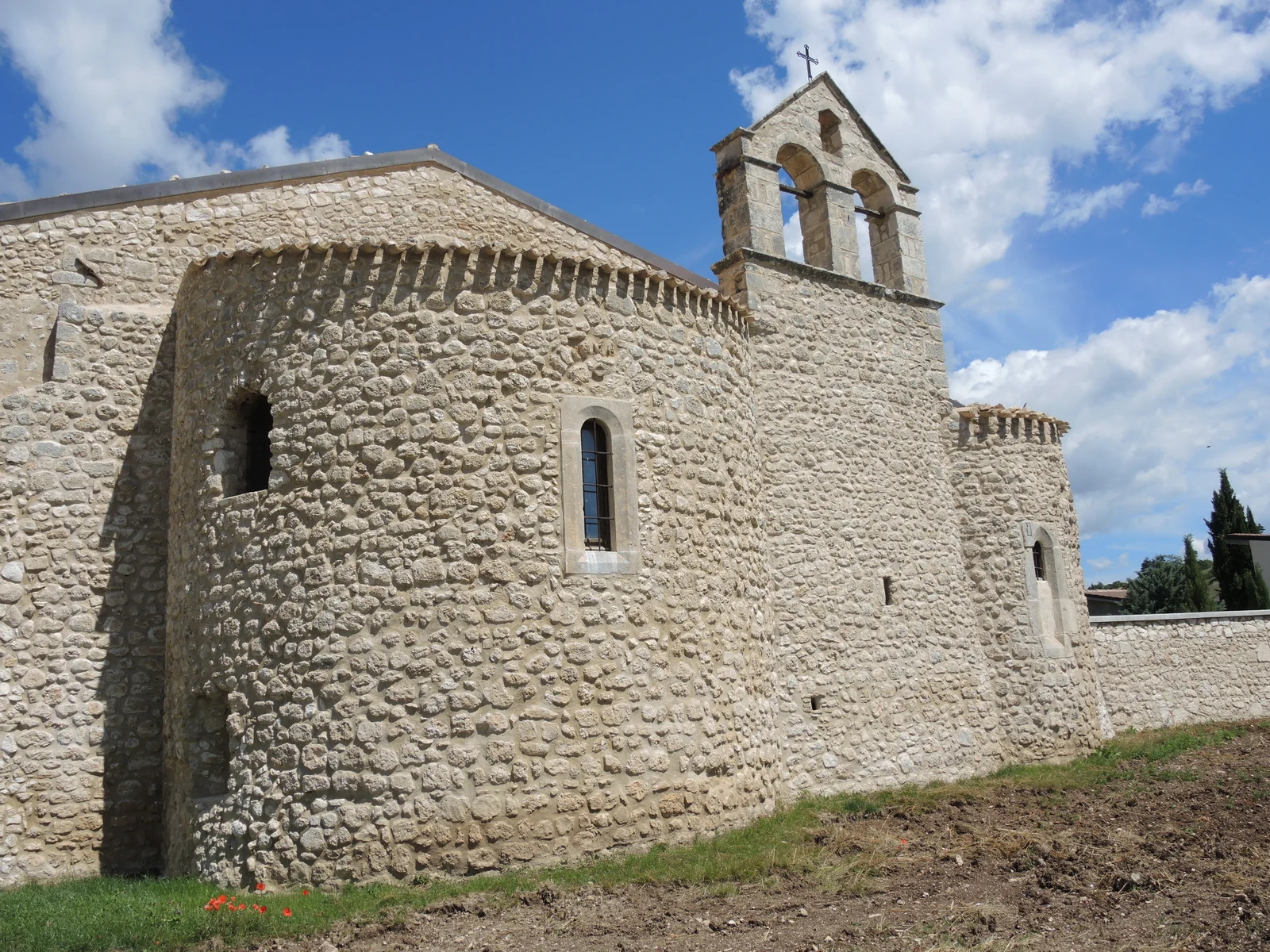
Photo: Pietro / Wikimedia Commons — CC BY-SA 4.0 · Resized and converted to WebP.
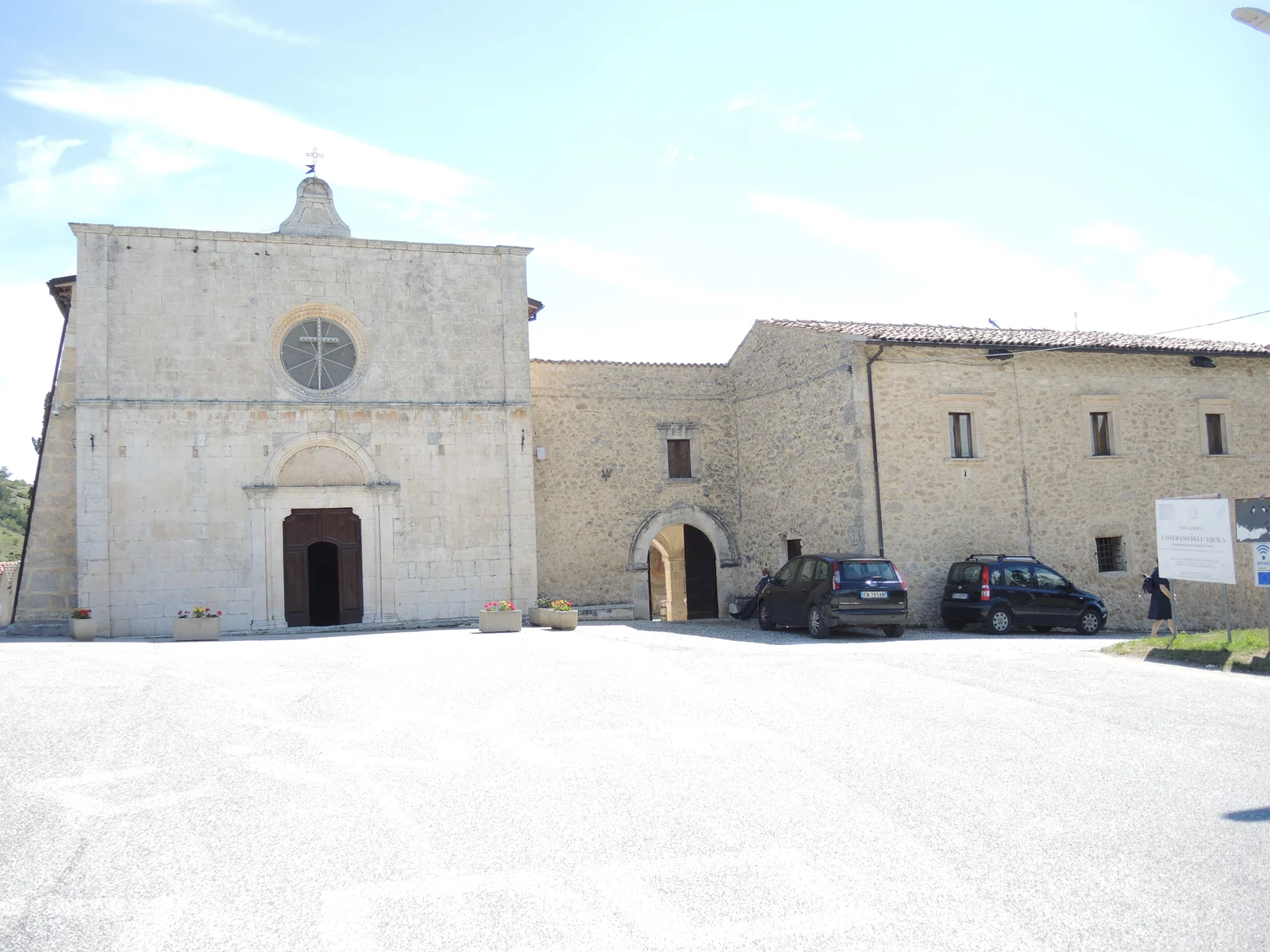
Photo: Pietro / Wikimedia Commons — CC BY-SA 4.0 · Resized and converted to WebP.
Flavours
L’Aquila saffron PDO comes from the stigmas of the Crocus sativus flower. The specification published by the Ministry of Agriculture sets its area, thirteen municipalities in the province of L’Aquila including Navelli, on land between 350 and 1,000 metres, and its method: corms lifted in the first half of August are replanted in the second half of the month, on a five-year rotation, with no chemical weeding. Flowering begins in October and lasts about twenty days; the flowers are picked by hand in the early morning, before they open, and the stigmas, separated from the petals, are toasted over embers of oak or almond wood for about fifteen to twenty minutes. Any other toasting method is forbidden.
PDO saffron is purple-red and sold as threads or powder, in paper sachets or glass jars: plastic packaging is excluded. According to the specification, cultivation in the province is documented from the thirteenth and fourteenth centuries, and the spice, called “vermilion gold”, drew merchants from northern Europe to L’Aquila; the plant is sterile and propagates only by cloning, which is why the specification calls it a living fossil. The application to register the PDO bears the name of the Cooperativa Altopiano di Navelli, in Civitaretenga.
The national list of traditional food products includes, for Abruzzo, the “Mandorle di Navelli” (Navelli almonds), “L’mmall” in dialect. In the itinerary the Region devotes to L’Aquila and Navelli, saffron is joined by Solina wheat, Apennine honey and gentian, and the chosen recipe is sagne made with Solina flour and L’Aquila saffron.
Sources: Ministero dell’agricoltura, della sovranità alimentare e delle foreste — Disciplinare di produzione della DOP «Zafferano dell’Aquila», con la domanda di registrazione · Gazzetta Ufficiale, S.O. n. 9 alla Serie generale n. 60 del 12 marzo 2019 — Decreto del 7 febbraio 2019, aggiornamento dell’elenco nazionale dei prodotti agroalimentari tradizionali · Regione Abruzzo, politica di coesione — Atlante dei sapori, dei territori e dei progetti: «L’Aquila, Navelli e la montagna che custodisce» (ottobre 2026)
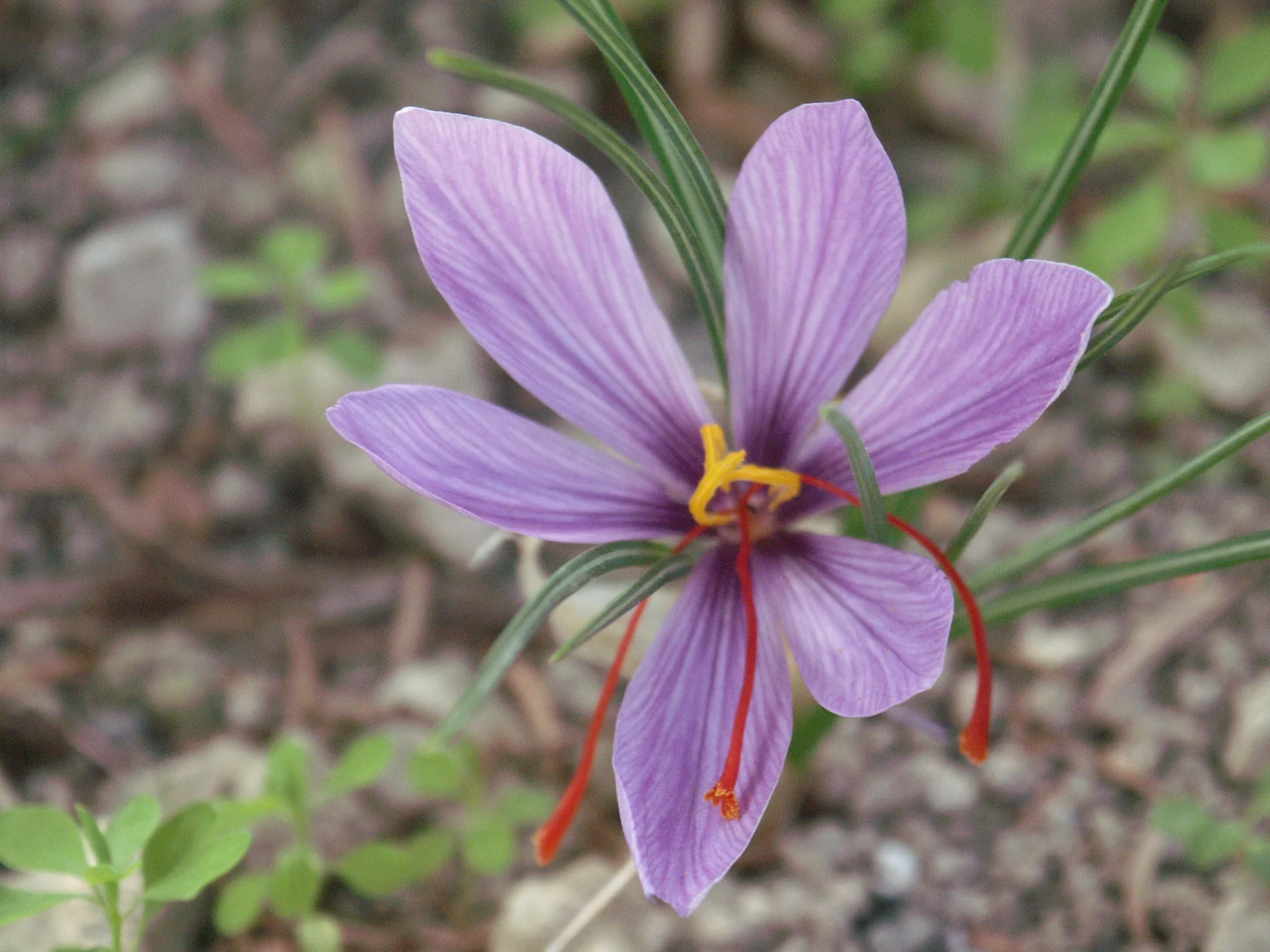
Photo: Giancarlo.pak / Wikimedia Commons — CC BY-SA 4.0 · Resized and converted to WebP.
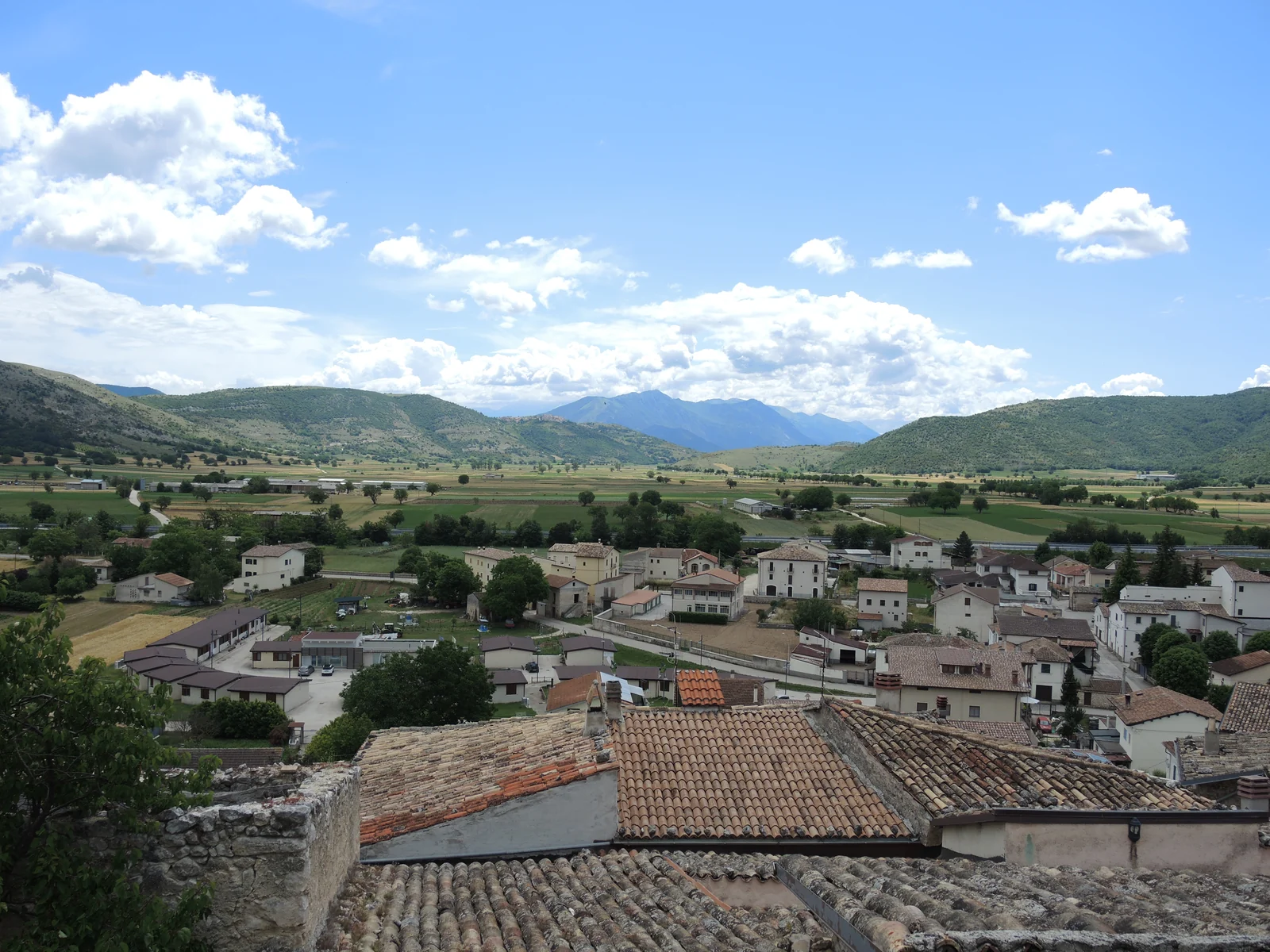
Photo: Pietro / Wikimedia Commons — CC BY-SA 4.0 · Resized and converted to WebP.
Things to do
The simplest thing is to walk: the town council says visiting Navelli and the village of Civitaretenga is free. The Region has allocated 250,000 euros of cohesion funding to Navelli for the Cammini d’Abruzzo walking routes, upgrading infrastructure and services, as a slow way into the saffron landscape.
In autumn saffron can be seen up close. In the council’s free 2026 programme, the convent of Sant’Antonio in Civitaretenga hosted “Zaff5”, a journey through saffron with the five senses, on 31 October, and a day from harvest to processing on 1 November; on 8 November there was the end-of-harvest concert. On 21 November the church of the Madonna delle Grazie, in Civitaretenga, hosted a study day on transhumance.
Sources: Comune di Navelli — Civitaretenga (pagina aggiornata il 2 ottobre 2025) · Comune di Navelli — Storia del Comune: cronologia degli eventi (pagina aggiornata il 2 ottobre 2025) · Regione Abruzzo, politica di coesione — Atlante dei sapori, dei territori e dei progetti: «L’Aquila, Navelli e la montagna che custodisce» (ottobre 2026) · Comune di Navelli — Calendario eventi autunno inverno a Navelli e Civitaretenga, 10 ottobre 2026 - 6 gennaio 2027 · Comune di Navelli — «Zaff5», un viaggio sensoriale nel mondo dello zafferano, 31 ottobre 2026 · Comune di Navelli — Alla scoperta dell’oro rosso d’Abruzzo, 1° novembre 2026 · Comune di Navelli — Transumanza, dal Medioevo ai nostri giorni: giornata di studio, 21 novembre 2026
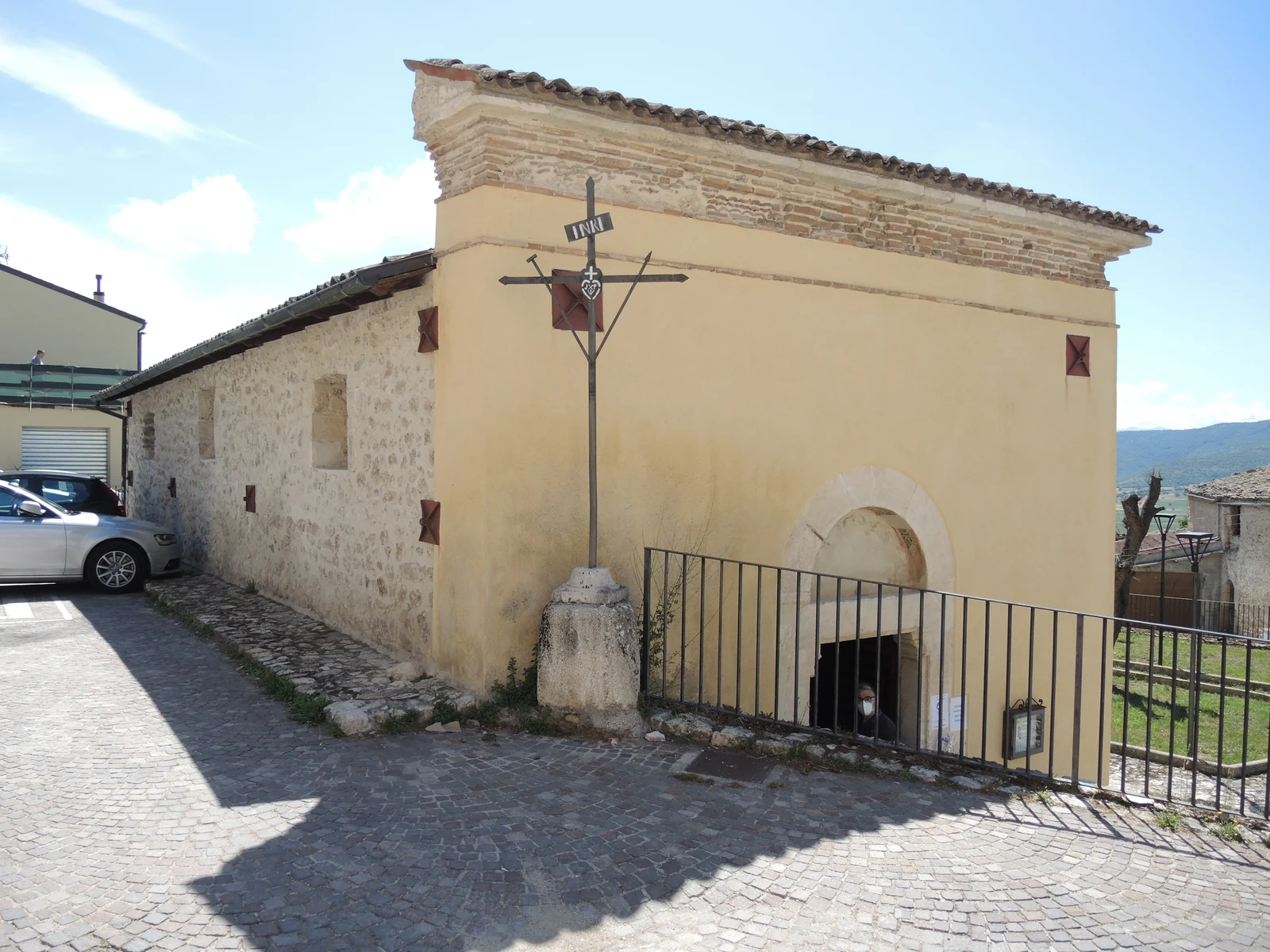
Photo: Pietro / Wikimedia Commons — CC BY-SA 4.0 · Resized and converted to WebP.
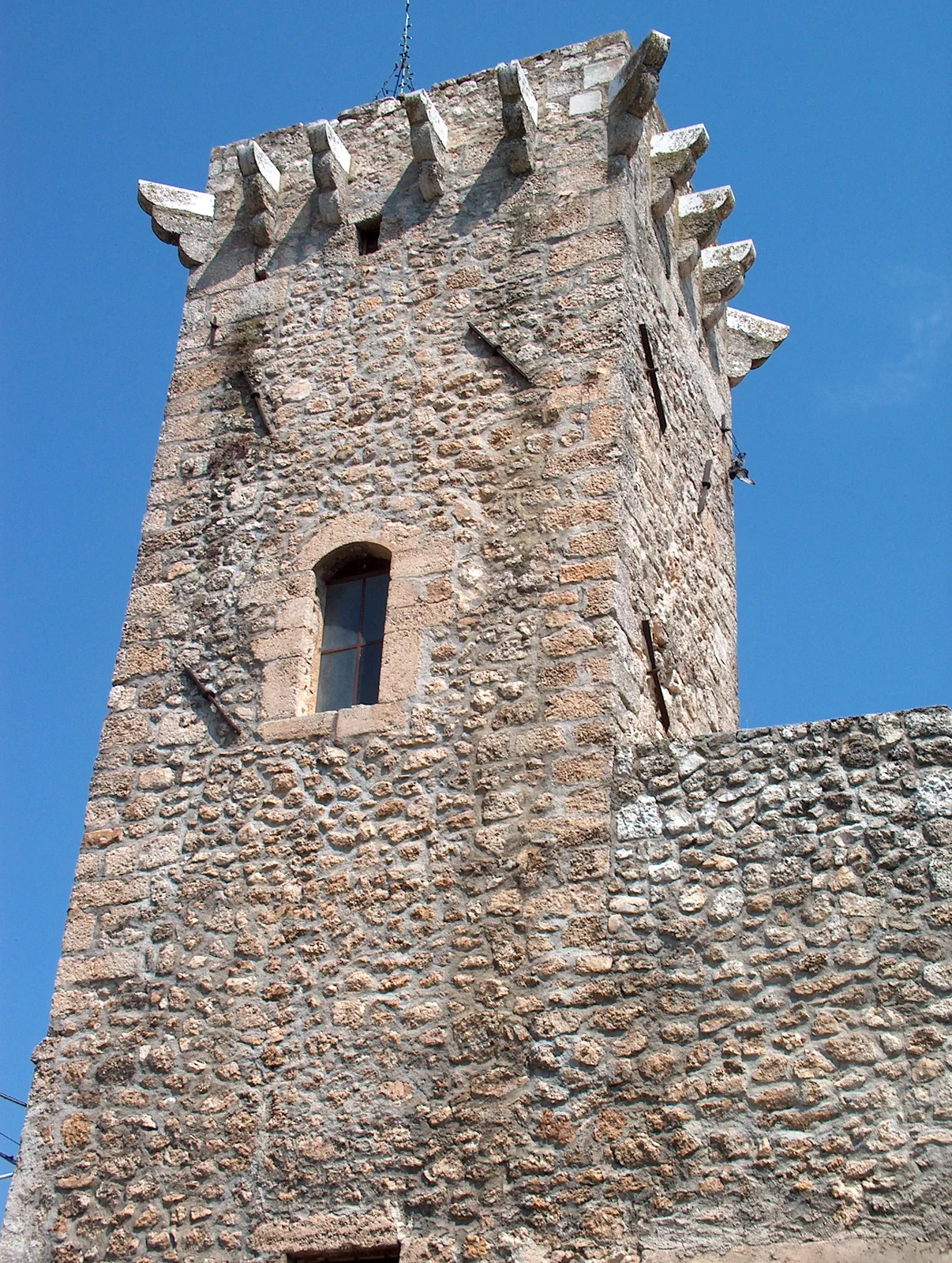
Photo: Madmax75 / Wikimedia Commons — CC BY-SA 3.0 · Resized and converted to WebP.
When to go
Saffron time is October: according to the specification, flowering begins some sixty to seventy days after the late-August planting and lasts about twenty days. The town council runs an autumn and winter calendar, which in 2026 goes from 10 October to 6 January 2027, and a summer one, from 31 July to 27 August 2026, in Navelli and Civitaretenga.
Sources: Ministero dell’agricoltura, della sovranità alimentare e delle foreste — Disciplinare di produzione della DOP «Zafferano dell’Aquila», con la domanda di registrazione · Comune di Navelli — Calendario eventi autunno inverno a Navelli e Civitaretenga, 10 ottobre 2026 - 6 gennaio 2027 · Comune di Navelli — Estate a Navelli e Civitaretenga 2026, 31 luglio - 27 agosto
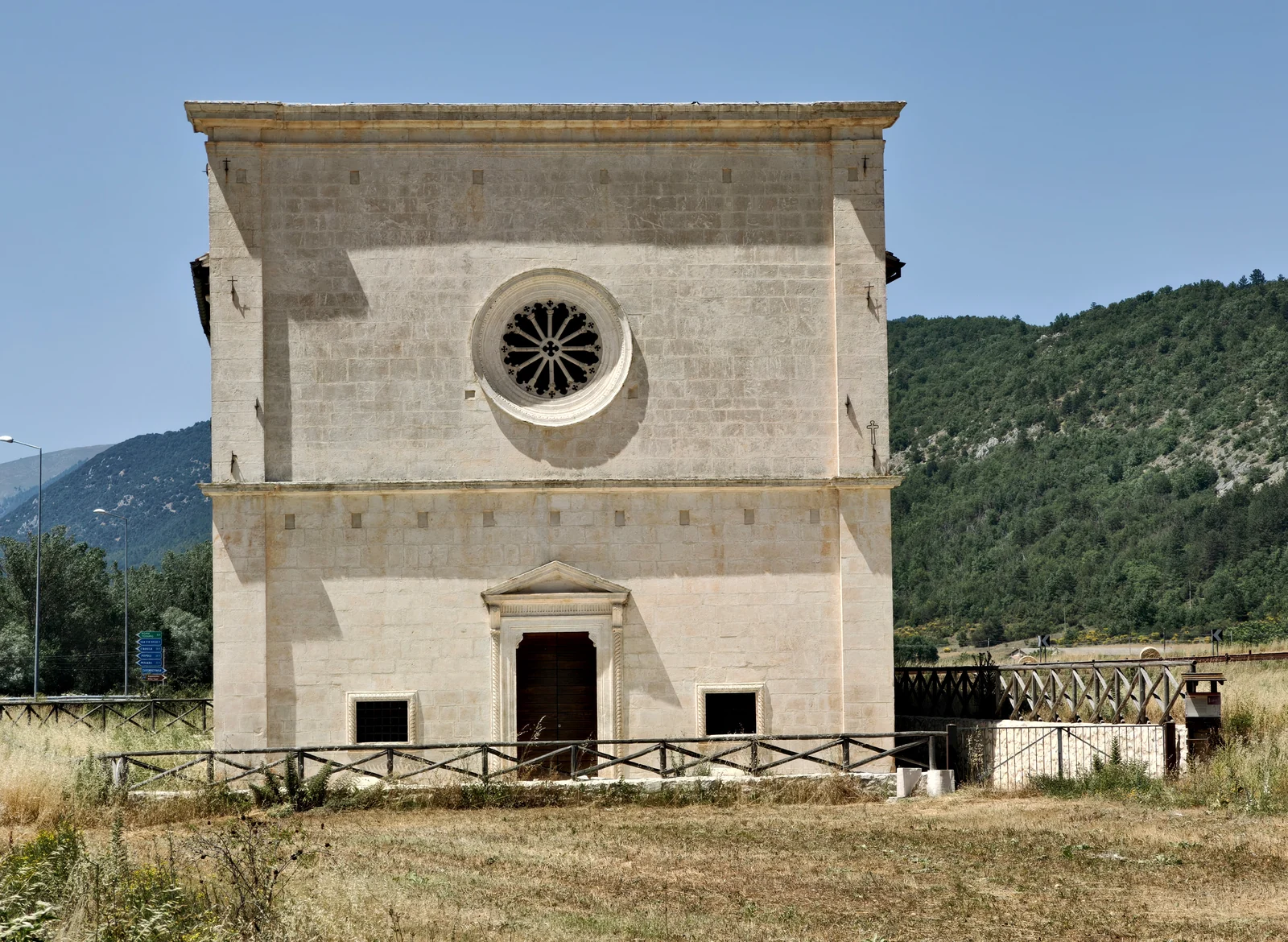
Photo: Kewerner / Wikimedia Commons — CC BY-SA 4.0 · Resized and converted to WebP.
Getting there and around
Navelli is on the TUA bus line between Pescara and L’Aquila, at the Navelli-Carabinieri stop. In the 2025-2026 winter and school timetable the line runs via Chieti Scalo, Bussi sul Tirino and the Ofena junction; from Navelli to L’Aquila-Collemaggio the ride takes 35 to 45 minutes, from Pescara about an hour and a quarter. There are runs from Monday to Saturday and others on Sundays and holidays: check the times on the TUA website.
By car the way in is state road 17, the same road along which the church of Santa Maria in Cerulis stands.
Sources: TUA S.p.A. — Orario dei collegamenti Pescara - L’Aquila, servizio scolastico e invernale 2025-2026 · Ministero della cultura, ICCD — Scheda dell’altare maggiore, chiesa di S. Maria in Cerulis, Navelli
Accommodation in figures
In the Ministry of Tourism’s national database of accommodation (BDSR), on 12 October 2026, Navelli had 10 establishments with a verified national identification code (CIN): 4 non-hotel establishments and 6 other establishments.
Sources: Ministero del Turismo – Banca Dati Strutture Ricettive (dashboard pubblica)
Nearby
Among the places Apulica already covers, the nearest are Santo Stefano di Sessanio (about 17 km) and Sulmona (about 25 km): straight-line distances between the centres of the municipal territories.
Bussi sul Tirino and L’Aquila are on the same bus line as Navelli. The L’Aquila saffron PDO area also includes Caporciano, Barisciano, Fontecchio, Fagnano Alto and Villa Sant’Angelo.
Sources: ISTAT/Openpolis, confini comunali della regione Abruzzo (CC BY 4.0, ISTAT/Openpolis) · TUA S.p.A. — Orario dei collegamenti Pescara - L’Aquila, servizio scolastico e invernale 2025-2026 · Ministero dell’agricoltura, della sovranità alimentare e delle foreste — Disciplinare di produzione della DOP «Zafferano dell’Aquila», con la domanda di registrazione
The town council
The official website of the Comune di Navelli, registered in IndicePA, the index of the digital addresses of Italy’s public administrations, is the reference for the town council’s offices, opening hours and news. Its address is listed among the sources of this section.
The town council’s switchboard answers on 0862 959119; its certified email address is [email protected].
Sources: Comune di Navelli, sito istituzionale · IndicePA (AgID), Indice dei domicili digitali delle pubbliche amministrazioni: dataset Enti
Where to stay
In the municipality of Navelli the national database of the Ministry of Tourism lists 10 accommodation businesses with a verified CIN code: 0 hotels, 4 other licensed accommodation and 6 other types such as B&Bs and private rentals.
Ask Apulica for a stay in Navelli We reply shortly, within a few hours at most, with a proposal for you to consider.
Sources: Ministero del Turismo – Banca Dati Strutture Ricettive (dashboard pubblica), 2026-10-12
YOUR JOURNEY
How to shape a journey here
To include Navelli in a trip, or to ask for a guide or a transfer, you can write to Apulica with the button below.
Plan your tripKeep exploring
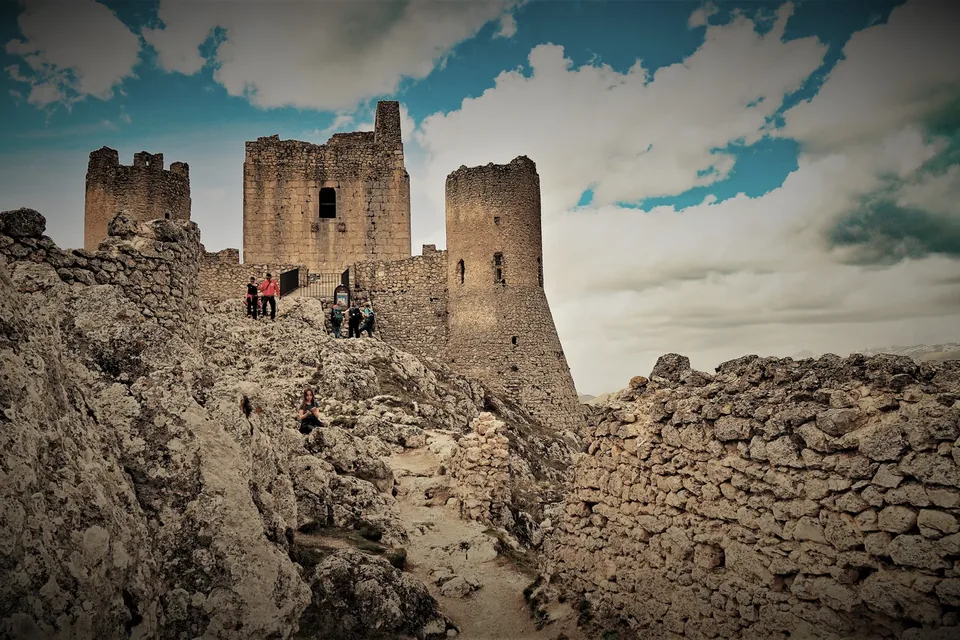
Santo Stefano di Sessanio and Rocca Calascio
A stone village on the L’Aquila side of the Gran Sasso, with a Slow Food Presidium lentil and the transhumance fortress nearby.
Read the guide →Photo: Vincedelbenàco / Wikimedia Commons — CC BY-SA 4.0 · Resized and converted to WebP.

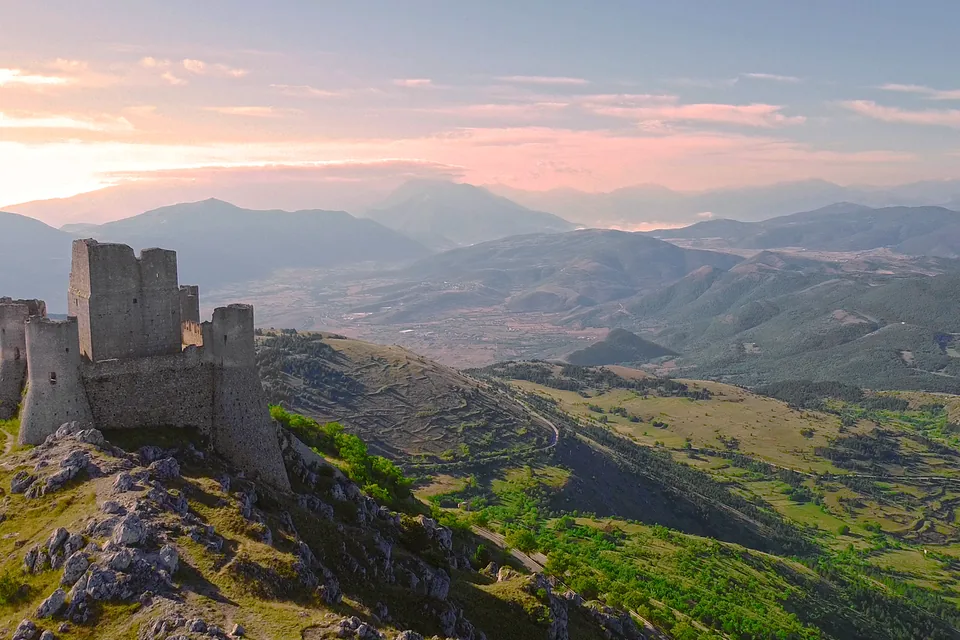
Calascio
Calascio (AQ), Abruzzo: 122 residents, 39.44 km². The official facts of the municipality, its town council website and its registered accommodation. Rocca Calascio, the highest castle in the Apennines, the octagonal church of Santa Maria della Pietà, the Gran Sasso and Monti della Laga National Park, Campo Imperatore and the culture of sheep farming.
Read the guide →Photo: Ipnotik / Wikimedia Commons — CC BY-SA 4.0 · Resized and converted to WebP.

Caporciano
Caporciano (AQ), Abruzzo: 204 residents, 18.62 km². The official facts of the municipality, its town council website and its registered accommodation.
Read the guide →Photo: pietro scerrato / Wikimedia Commons — CC BY 3.0 · Resized and converted to WebP.

Capestrano
Capestrano (AQ), Abruzzo: 810 residents, 43.66 km². The official facts of the municipality, its town council website and its registered accommodation.
Read the guide →Photo: paulox_net / Wikimedia Commons — CC BY-SA 3.0 · Resized and converted to WebP.

Barisciano
Barisciano (AQ), Abruzzo: 1,657 residents, 78.49 km². The official facts of the municipality, its town council website and its registered accommodation.
Read the guide →Photo: Flodur63 / Wikimedia Commons — CC BY-SA 4.0 · Resized and converted to WebP.

L’Aquila
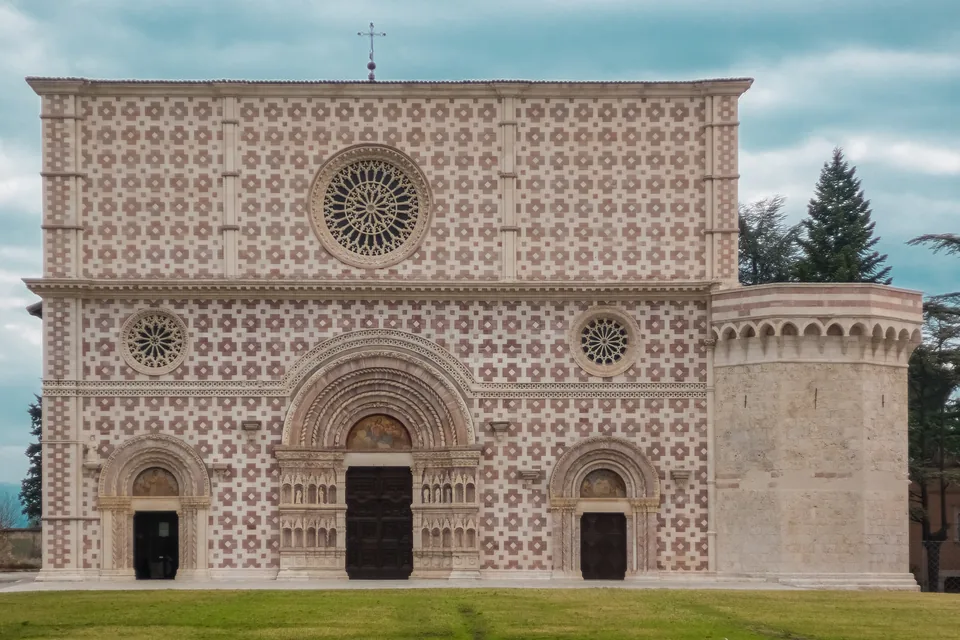
A capital between the Gran Sasso and the Monti della Laga, with the UNESCO-listed Celestinian Forgiveness and reconstruction still under way.
Read the guide →Photo: Verdenex84 / Wikimedia Commons — CC BY-SA 4.0 · Resized and converted to WebP.

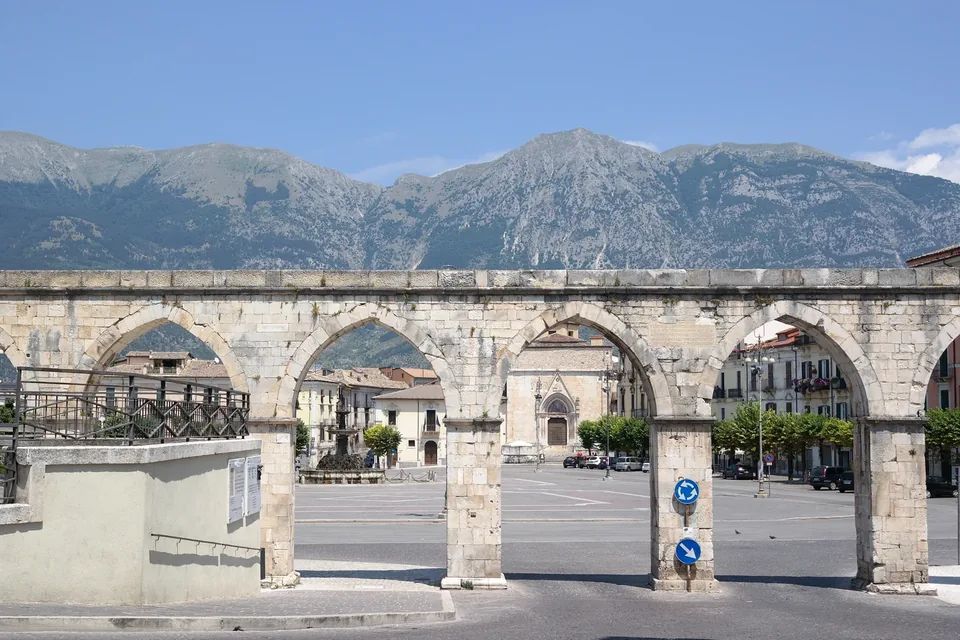
Sulmona and the Majella
A historic centre in the Peligna basin, surrounded by the Majella park and the starting point of the Way of Celestine.
Read the guide →Photo: Luca Aless / Wikimedia Commons — CC BY-SA 4.0 · Resized and converted to WebP.

“Come to Navelli as a guest, not as a tourist: that is how these places truly let you know them.”