

Why go
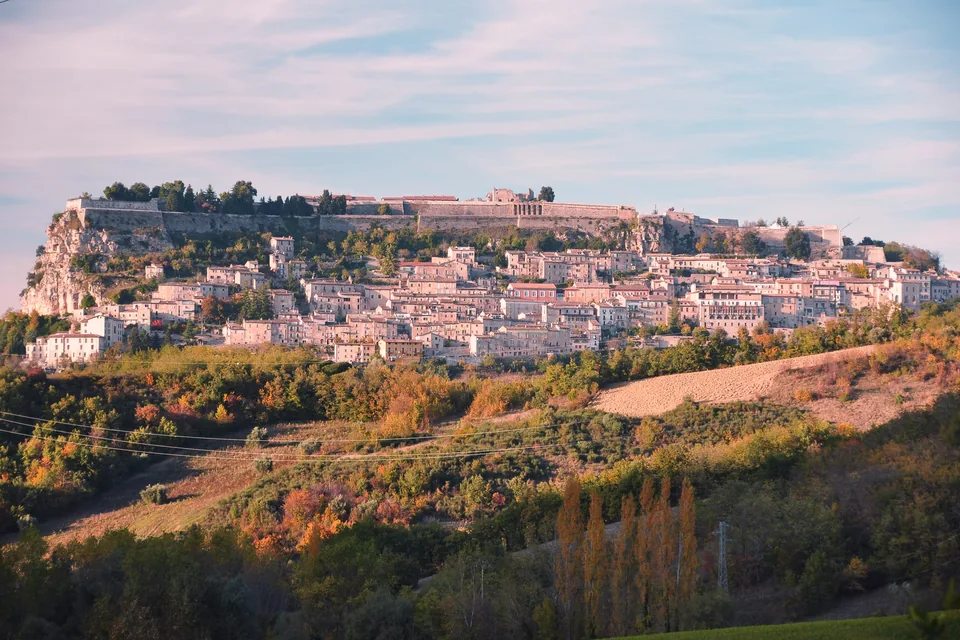
Teramo stands on a plateau where two streams meet, the river Tordino and the Vezzola, halfway between the Adriatic Sea and the massif of the Gran Sasso d'Italia. Its ancient name was Interamnia; according to the Ministry of Tourism's portal, the very name of Abruzzo derives from Aprutium, as the Teramo area was known before the Romans.
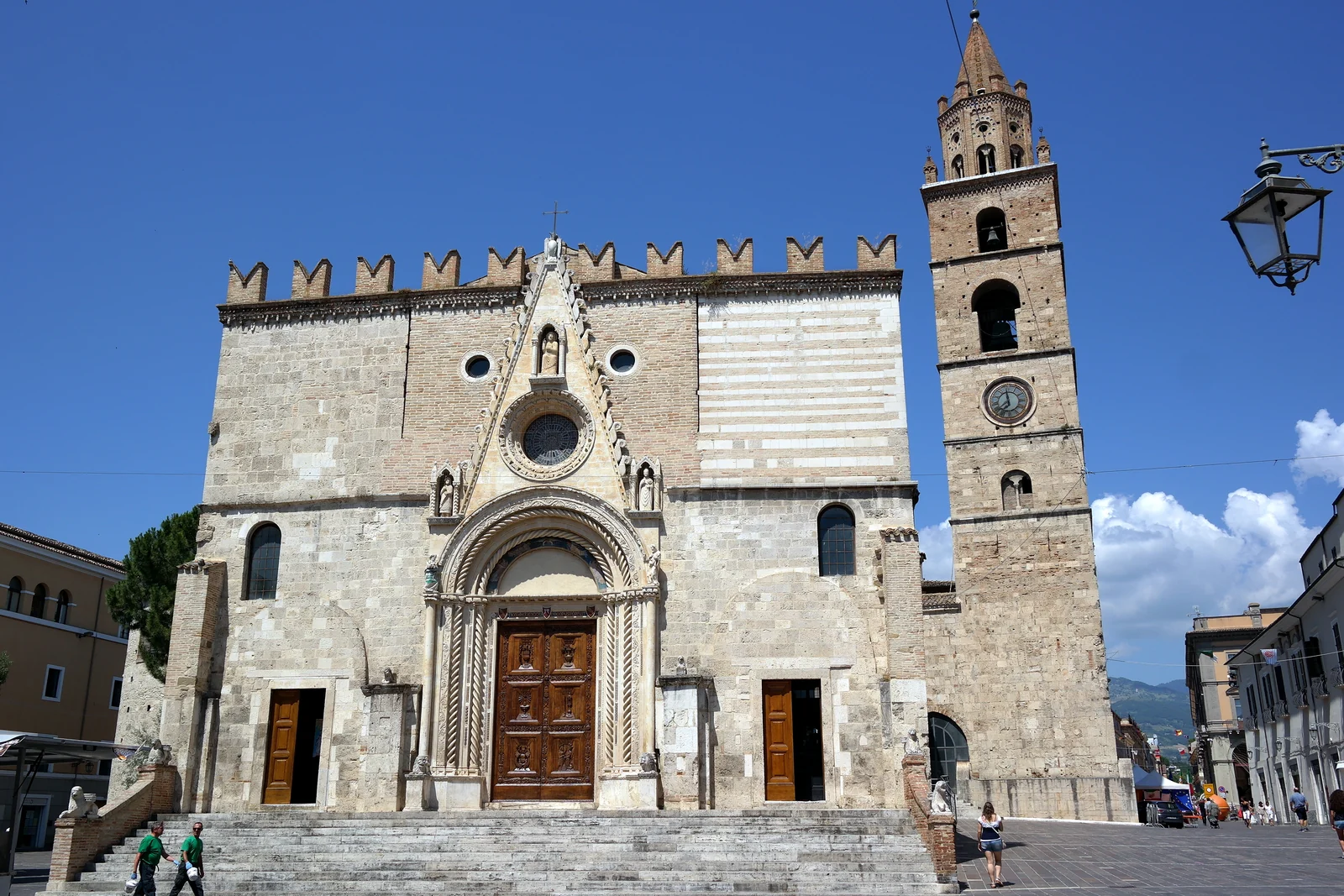
The old centre, divided into four historic quarters, is easily walked in a day. At its heart is Piazza Martiri della Libertà, overlooked by the Cathedral of Santa Maria Assunta, with its Cosmatesque portal and bell tower, the bishop's palace and Palazzo Costantini-Pompetti; a few steps away, among the houses, the arches of the Roman theatre and the remains of the amphitheatre tell of the town of Interamnia. In the evening the square and the adjoining Piazza Orsini are the place for the "struscio", the townspeople's stroll.
The cathedral holds Nicola da Guardiagrele's silver altar frontal and Jacobello del Fiore's fifteenth-century polyptych, whose predella shows Teramo between its two rivers. Around the centre are Roman houses with their mosaics, the civic picture gallery, the Castello Della Monica, an artist's neo-Gothic home, and the parks along the rivers.
Teramo is a municipality in the province of Teramo, in Abruzzo. Its ISTAT code is 067041. It is the capital of the province of Teramo. On 1 January 2025 it had 51,600 residents. The municipal territory covers 152.84 km² and ranges from 100 to 1,242 metres above sea level; the town hall stands at about 274 metres.
Sources: Treccani, Enciclopedia on line — Teramo · Italia.it (Ministero del Turismo) — Teramo, la natura si fonde con la storia · Ministero della Cultura — Basilica Cattedrale di Teramo · Comune di Teramo — Piazza Martiri della Libertà · Diocesi di Teramo-Atri — Fine restauro e ricollocamento del Polittico di Jacobello del Fiore (CS 12/2023) · Polo Museale Città di Teramo — Domus del Leone · Polo Museale Città di Teramo — Pinacoteca Civica · Polo Museale Città di Teramo — Castello Della Monica · ISTAT, Codici statistici delle unità amministrative territoriali: elenco dei comuni al 21 febbraio 2026 · ISTAT, Popolazione residente per età, sesso e stato civile al 1° gennaio 2025 (POSAS) · ISTAT, Principali statistiche geografiche sui comuni: superficie e altimetria al 31 dicembre 2021
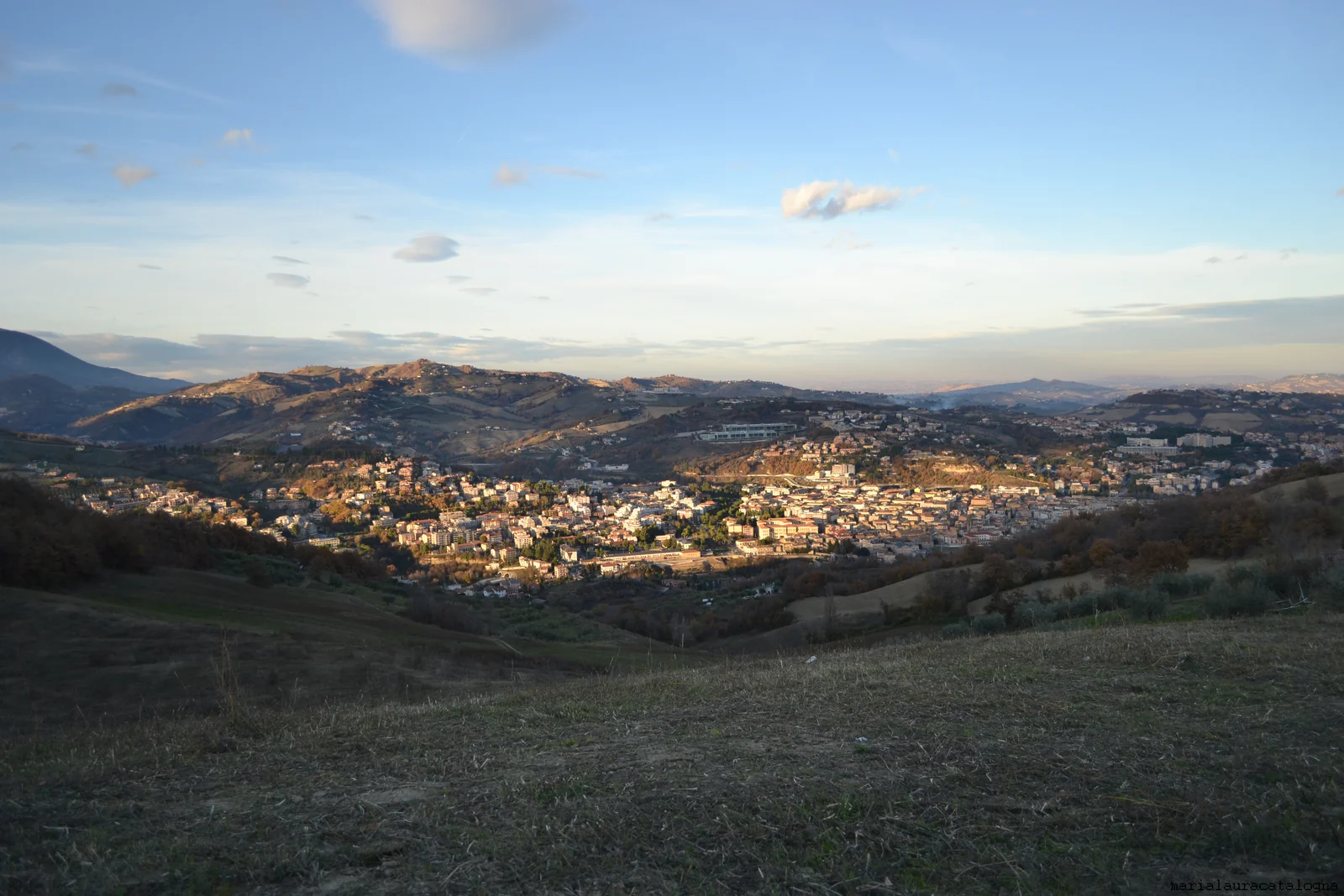
Photo: *DaphnePhoto* / Wikimedia Commons — CC BY-SA 4.0 · Resized and converted to WebP.
History
The area has been inhabited since the Iron Age: three kilometres from the centre, at Madonna della Cona, a burial ground was in use from the ninth century BC to the third century AD. Interamnia was the town of the Praetutii, the Italic people of this territory; in the third century BC it passed to Rome, and its importance grew with the consular roads that linked it to Rome and the Tyrrhenian Sea. The Roman town has left its theatre, probably built early in the reign of Augustus, the amphitheatre, the baths and private houses with their mosaics.
After the fall of the Empire it was sacked by the Goths and Visigoths and rebuilt by the Lombards; then the Normans took it. A bishop's see since the earliest times, it found its political point of reference in the Church. In 1156 a fire set by the Count of Loretello destroyed almost all of it, including the old cathedral of Santa Maria Aprutiense; the town was rebuilt by Bishop Guido II, the new cathedral was put up after that year, and in 1207 Bishop Sasso allowed it to give itself its own statutes.
In the fourteenth and fifteenth centuries it went through crisis and strife: Braccio da Montone restored order for a few years (1421-1424), then Francesco Sforza held it under his rule (1438-1443), until Alfonso the Magnanimous brought it under the crown. In 1684 it became the capital of the province of Abruzzo Ulteriore I and seat of the royal court. Occupied by the Austrians (1707-1734) and the French (1798), in 1814 it rebelled against Joachim Murat and then followed the fortunes of the Kingdom of Naples until Unification.
Until the early nineteenth century the town stayed enclosed on the plateau between the two rivers; bridges over the Tordino and the Vezzola let it grow, and in the twentieth century it spread across the plain and the surrounding hills. In 1926 the rediscovery began of the Roman theatre, which later buildings had swallowed up; in 1891 the historian and archaeologist Francesco Savini had found the Domus del Leone beneath his own palazzo.
Sources: Polo Museale Città di Teramo — Area archeologica di Madonna della Cona · Treccani, Enciclopedia on line — Teramo · Polo Museale Città di Teramo — Sito archeologico del Teatro romano · Italia.it (Ministero del Turismo) — Teramo, la natura si fonde con la storia · Polo Museale Città di Teramo — Sito archeologico di Largo Sant'Anna · Polo Museale Città di Teramo — Domus del Leone
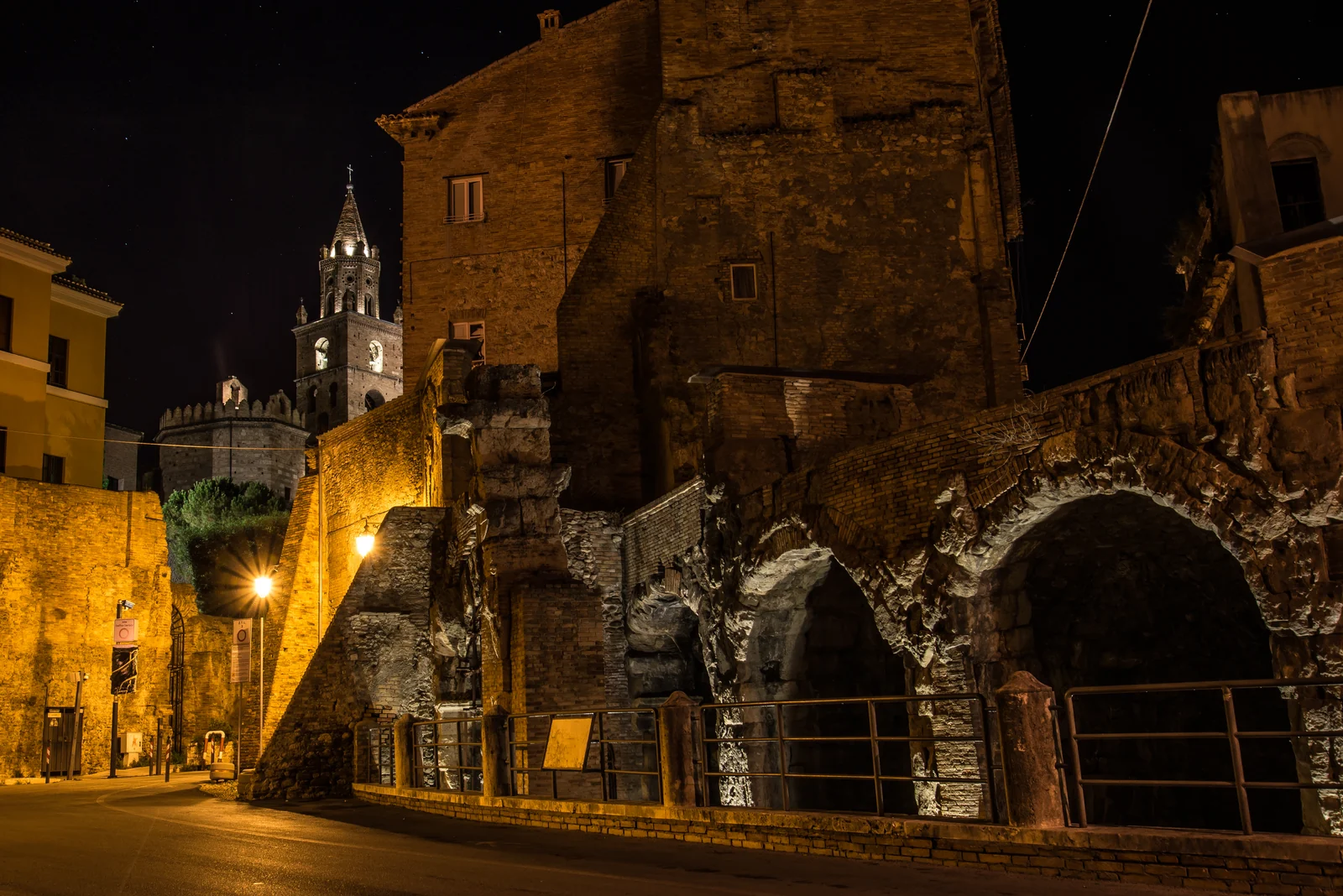
Photo: S4mb0r4 / Wikimedia Commons — CC BY-SA 4.0 · Resized and converted to WebP.
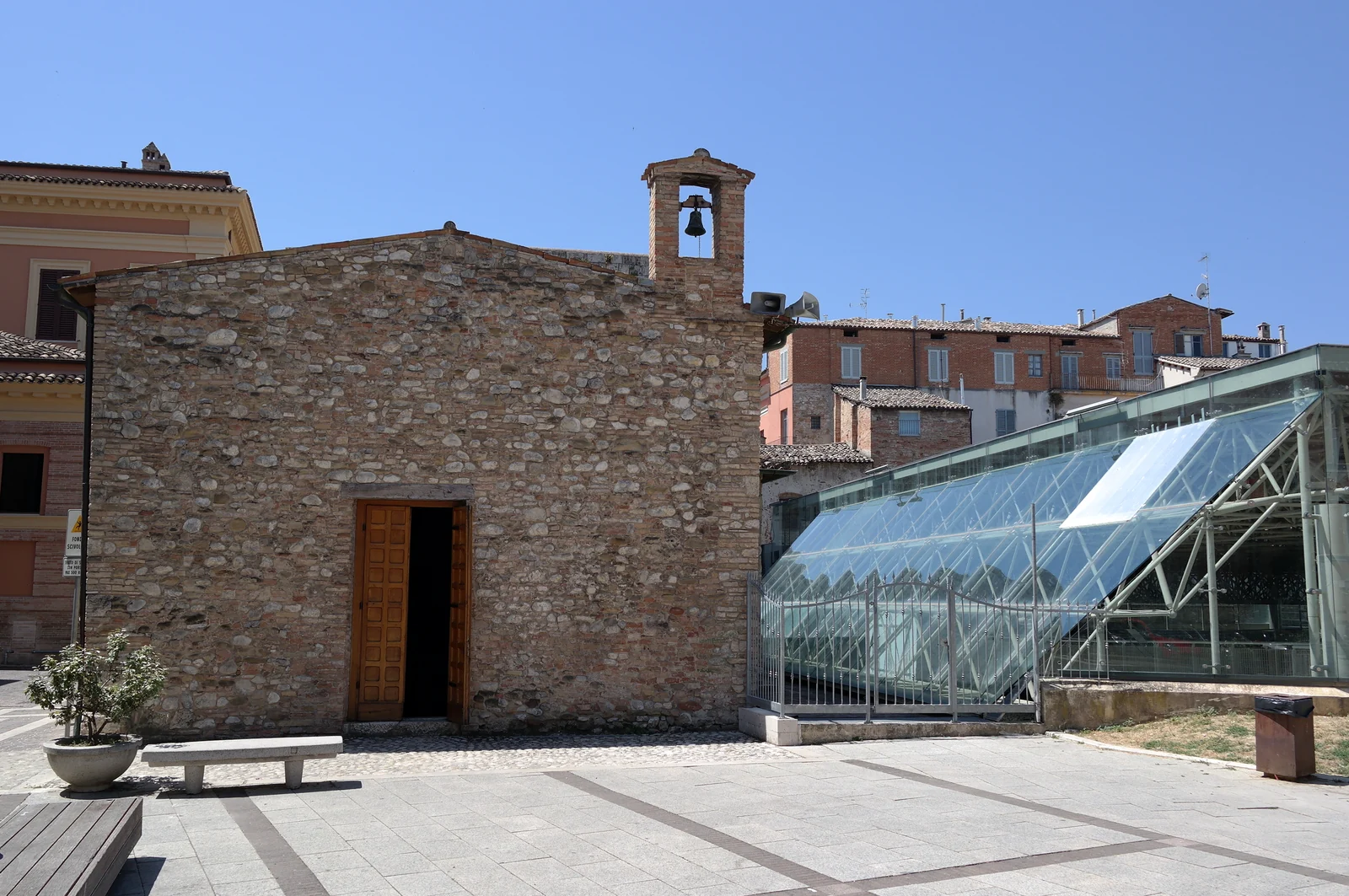
Photo: Luca Aless / Wikimedia Commons — CC BY-SA 4.0 · Resized and converted to WebP.
What to see
The Cathedral of Santa Maria Assunta, a national monument since 1902, is the result of joining two churches: the newer one serves as the apse of the older. The square stone-and-brick front is Romanesque below and Gothic above, with a rich Cosmatesque portal crowned by a tall spire; inside, the columns come from ancient pagan temples, and the chapel of San Berardo, dedicated to the patron saint, is eighteenth-century. On the high altar is Nicola da Guardiagrele's silver altar frontal, which tells the life of Christ in thirty-five panels. On 18 June 2023, after restoration, Jacobello del Fiore's fifteenth-century polyptych of the Coronation of the Virgin returned to the cathedral.
Less than two hundred metres from the square is the Roman theatre: the cavea, about 77 metres across, held around three thousand spectators, and the building stood about twelve metres high; it is now closed for restoration work. A little to the west are the remains of the amphitheatre. In the basement of Palazzo Savini, the Domus del Leone, from the first century BC, keeps in its tablinum a very finely tessellated mosaic of a lion attacking a snake. At the Largo Sant'Anna site you can see the remains of a Roman house and of the old cathedral destroyed in 1156; next to it, the church of Sant'Anna dei Pompetti keeps a twelfth-century fresco from it of two angels and the blessing hand of God. Nearby is the Torre Bruciata, a Roman bastion in squared stone that still bears the marks of that fire.
The town hall has a portico of pointed arches on travertine-and-brick pillars; in its atrium are Roman inscriptions set into the wall by Theodor Mommsen. The civic picture gallery, in a neoclassical building of 1923 between the Villa comunale and the centre, reopened in 2018: it shows fifteenth-century panels by Giacomo da Campli and the Master of the Crivellesque Polyptychs, Baroque canvases by Neapolitan and Roman painters and nineteenth- and twentieth-century works by local artists such as Pasquale Celommi, Raffaello Pagliaccetti and Venanzo Crocetti. Admission is free. The "Francesco Savini" civic archaeological museum has been closed since 2016 because of earthquake damage.
Sources: Ministero della Cultura — Basilica Cattedrale di Teramo · Italia.it (Ministero del Turismo) — Teramo, la natura si fonde con la storia · Diocesi di Teramo-Atri — Fine restauro e ricollocamento del Polittico di Jacobello del Fiore (CS 12/2023) · Polo Museale Città di Teramo — Sito archeologico del Teatro romano · Comune di Teramo — Sito archeologico Teatro romano · Polo Museale Città di Teramo — Domus del Leone · Polo Museale Città di Teramo — Sito archeologico di Largo Sant'Anna · Comune di Teramo — Municipio di Teramo · Comune di Teramo — Pinacoteca · Polo Museale Città di Teramo — Pinacoteca Civica · Polo Museale Città di Teramo — Il Polo Museale · Polo Museale Città di Teramo — Museo civico archeologico «F. Savini»
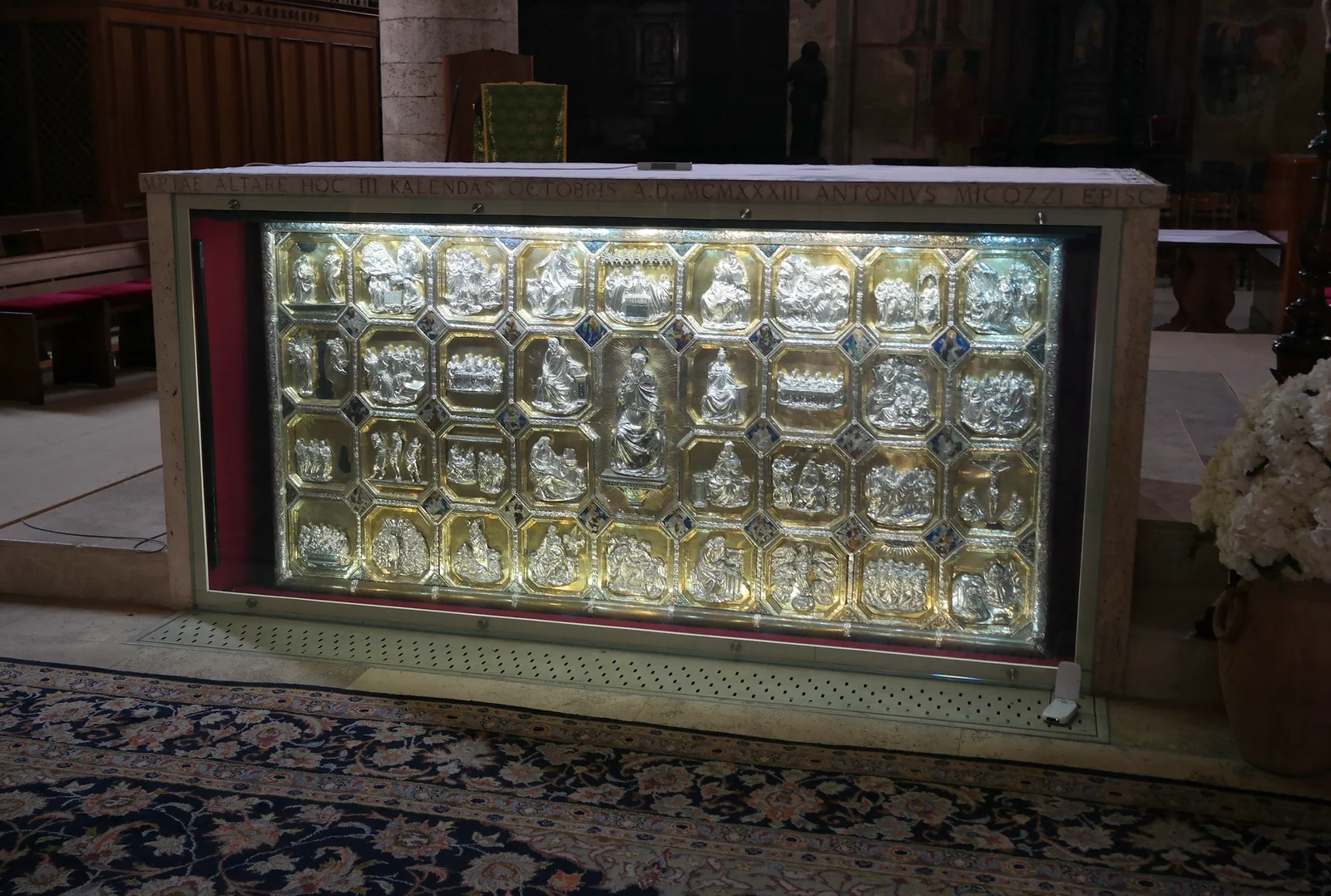
Photo: Luca Aless / Wikimedia Commons — CC BY-SA 4.0 · Resized and converted to WebP.
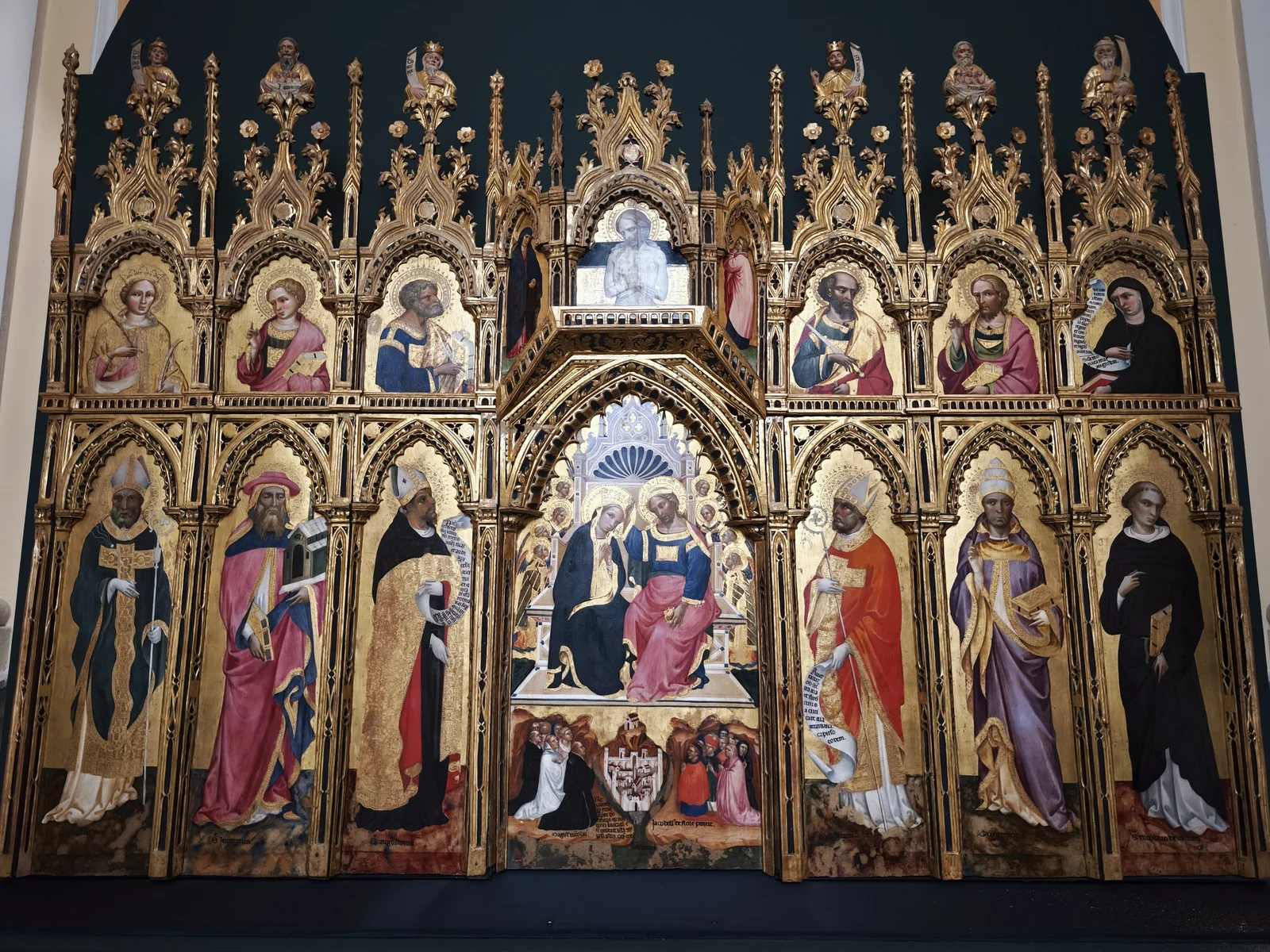
Photo: Viaggiamocela / Wikimedia Commons — CC BY-SA 4.0 · Resized and converted to WebP.
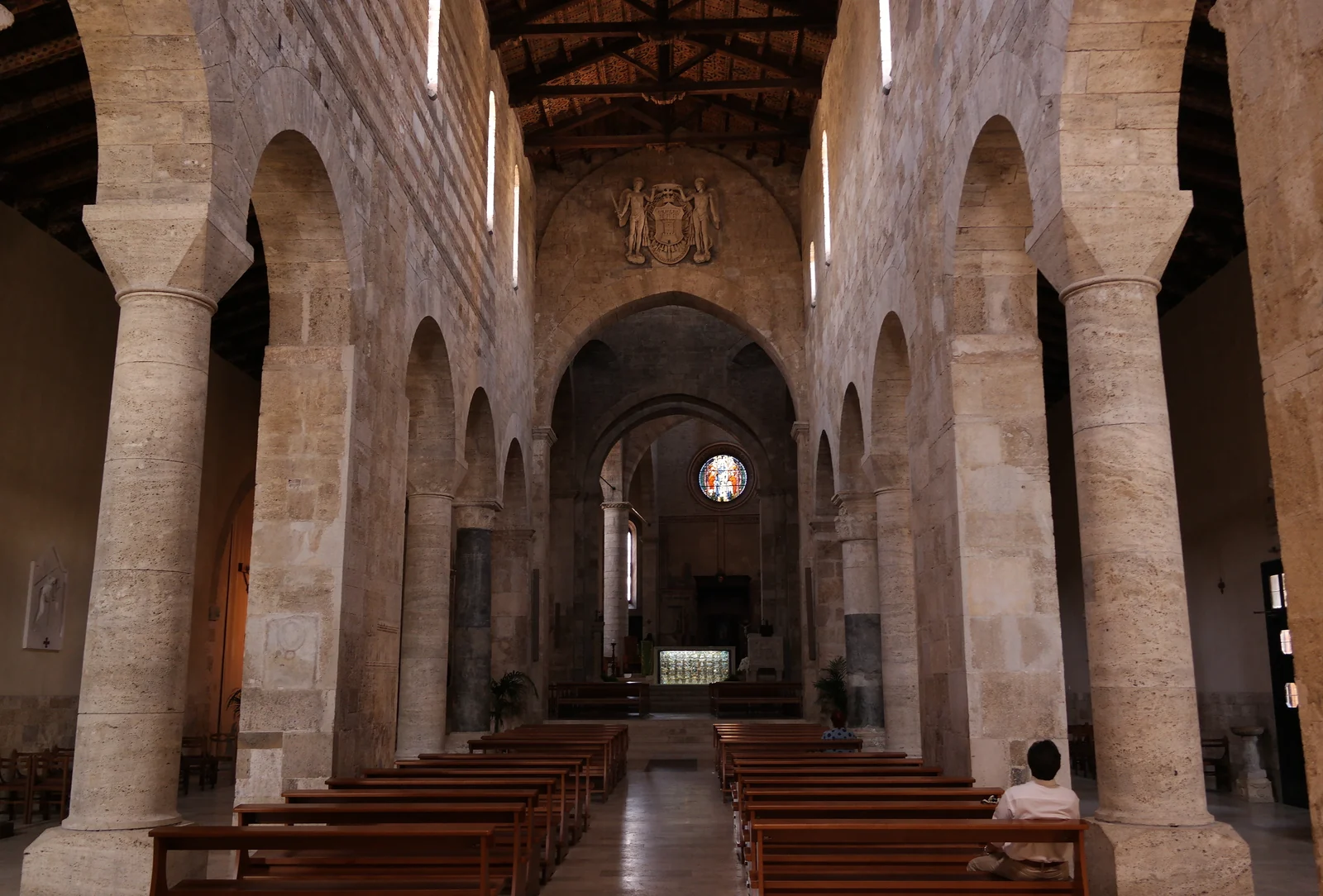
Photo: Luca Aless / Wikimedia Commons — CC BY-SA 4.0 · Resized and converted to WebP.
Flavours
Teramo's cooking comes from old farming traditions and knows how to turn simple produce into fine dishes. The Ministry of Tourism's portal lists among the dishes to try scrippelle 'mbusse, crêpes served in broth, maccheroni alla chitarra with pallottine, tiny meatballs, cannelloni filled with ragù and parmesan and, in the coldest months, cardone in brodo, cardoon soup. It also mentions mazzarelle and virtù.
Timballo alla teramana, a must on special occasions, is made with layers of scrippelle, wafer-thin discs of water, flour and egg, filled with tiny meatballs, egg, cheese and artichokes. To finish there are Sassi d'Abruzzo, sweets of almonds, sugar and cocoa, and pepatelli, dry biscuits of honey, almonds and orange peel with a dusting of pepper. The wine is Montepulciano d'Abruzzo, with Cerasuolo, its rosé version, and Trebbiano d'Abruzzo.
Sources: Italia.it (Ministero del Turismo) — Teramo, la natura si fonde con la storia · Italia.it (Ministero del Turismo) — I prodotti e i piatti tipici dell'Abruzzo
Things to do
On the small hill of San Venanzio, near Piazza Garibaldi, stands the Castello Della Monica, the home that the Teramo artist Gennaro Della Monica, architect, sculptor and painter, designed and built between 1889 and 1917 on the ruins of the old church of San Venanzio. It is a neo-Gothic hamlet, with two smaller buildings and terraced gardens, and inside it is rich in the artist's wall paintings; from the castle the whole town is in view. It belongs to the town council, has been open to the public since 9 July 2022, and can be visited free of charge without booking.
Along the banks of the two rivers runs the Tordino and Vezzola river park, where you can walk, play sport or cycle the path that leads to the burial ground and temple of Ponte Messato. Parco Ivan Graziani is dedicated to the singer-songwriter from Teramo. Back towards the centre, in Piazza Orsini, is the Fountain of the Two Lions, made by the sculptor Pasquale Morganti at the end of the nineteenth century to celebrate the extension of the water supply; on the square's grand stairway stand the four lions of the Canons' ciborium, dismantled in the 1960s.
The town's museum network puts on exhibitions in its venues, among them L'Arca, the laboratory for contemporary arts in Largo San Matteo, and the castle. For the Largo Sant'Anna site and the Madonna della Cona burial ground, which opens on request, opening times are on the museum network's website.
Sources: Polo Museale Città di Teramo — Castello Della Monica · Italia.it (Ministero del Turismo) — Teramo, la natura si fonde con la storia · Comune di Teramo — Piazza Martiri della Libertà · Polo Museale Città di Teramo — Il Polo Museale · Polo Museale Città di Teramo — Sito archeologico di Largo Sant'Anna · Polo Museale Città di Teramo — Area archeologica di Madonna della Cona · Polo Museale Città di Teramo — Orari invernali dal 1° novembre 2026
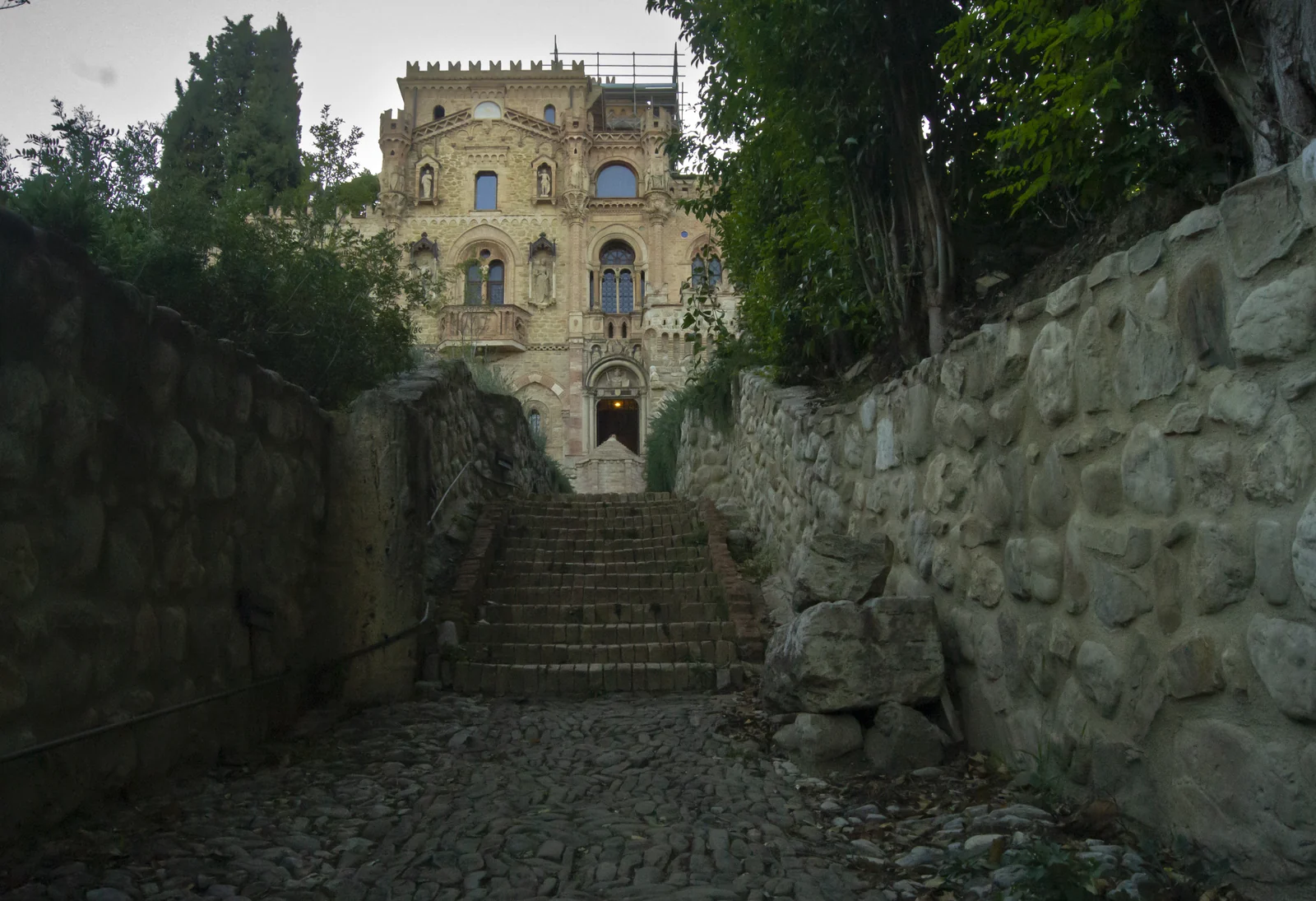
Photo: Flavia Bizzarri / Wikimedia Commons — CC BY-SA 4.0 · Resized and converted to WebP.
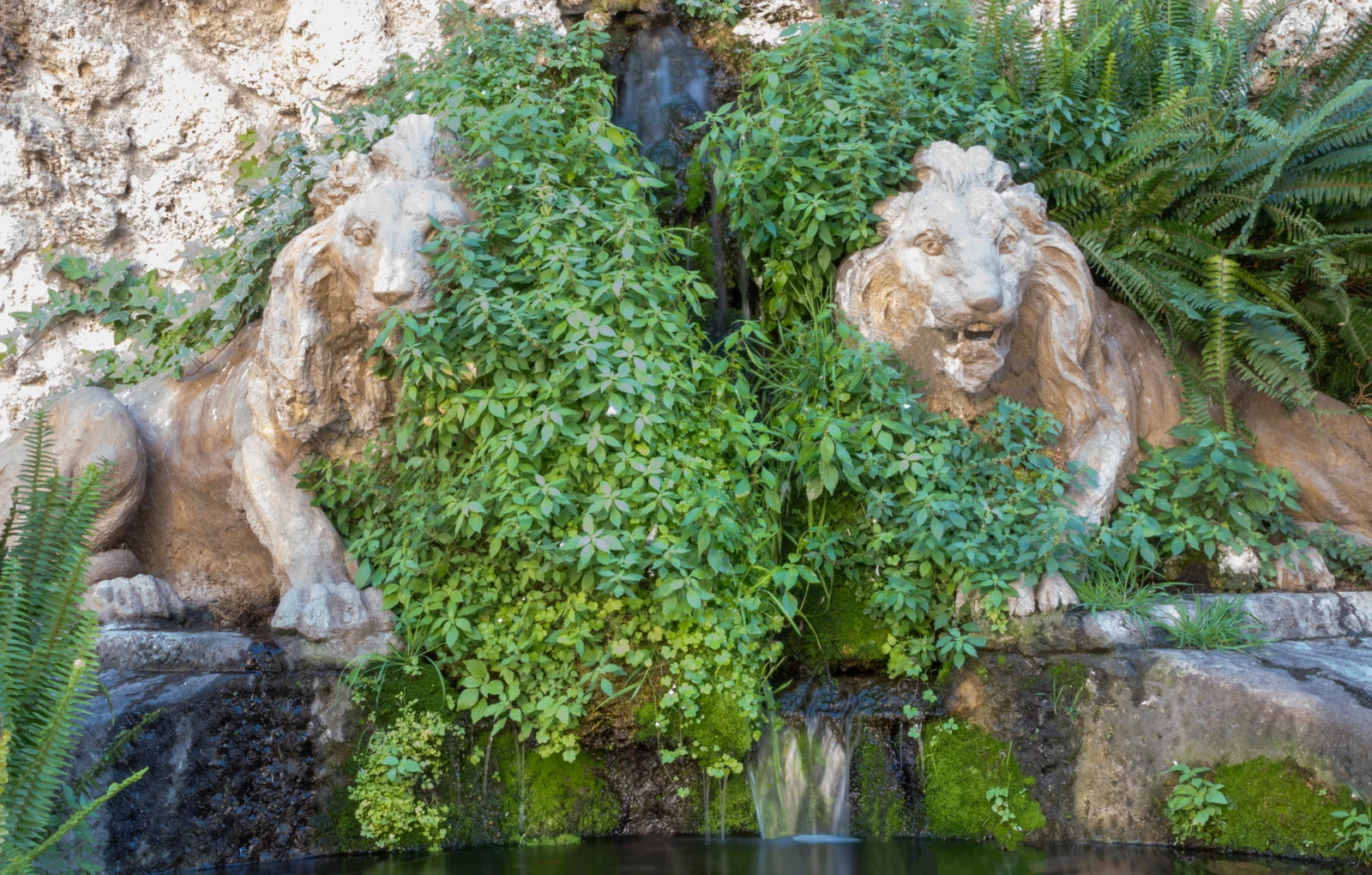
Photo: Francesco Racinelli / Wikimedia Commons — CC BY-SA 4.0 · Resized and converted to WebP.
When to go
On 19 December the Church of Teramo-Atri celebrates its patron saint, San Berardo, on the day tradition holds to be the day of his death; the cathedral has a chapel dedicated to the saint. Piazza Martiri della Libertà and Piazza Orsini host many cultural, musical and sporting events during the year.
In autumn 2026, from 16 October to 6 December, the Castello Della Monica hosts the exhibition "Luca Crippa. Visioni tra immaginario surrealista e arte fantastica nel Novecento", with the artist's engravings, drawings, collages and lithographs, free of charge. Each season's exhibitions and events are on the museum network's website.
Museum opening hours change with the seasons: winter hours apply from 1 November 2026, and the Roman theatre is closed for works. It is worth checking before you set off.
Sources: Diocesi di Teramo-Atri — Omelia nella solennità di San Berardo, 19 dicembre 2025 · Italia.it (Ministero del Turismo) — Teramo, la natura si fonde con la storia · Comune di Teramo — Piazza Martiri della Libertà · Polo Museale Città di Teramo — Luca Crippa. Visioni tra immaginario surrealista e arte fantastica nel Novecento · Polo Museale Città di Teramo — Orari invernali dal 1° novembre 2026 · Polo Museale Città di Teramo — Sito archeologico del Teatro romano
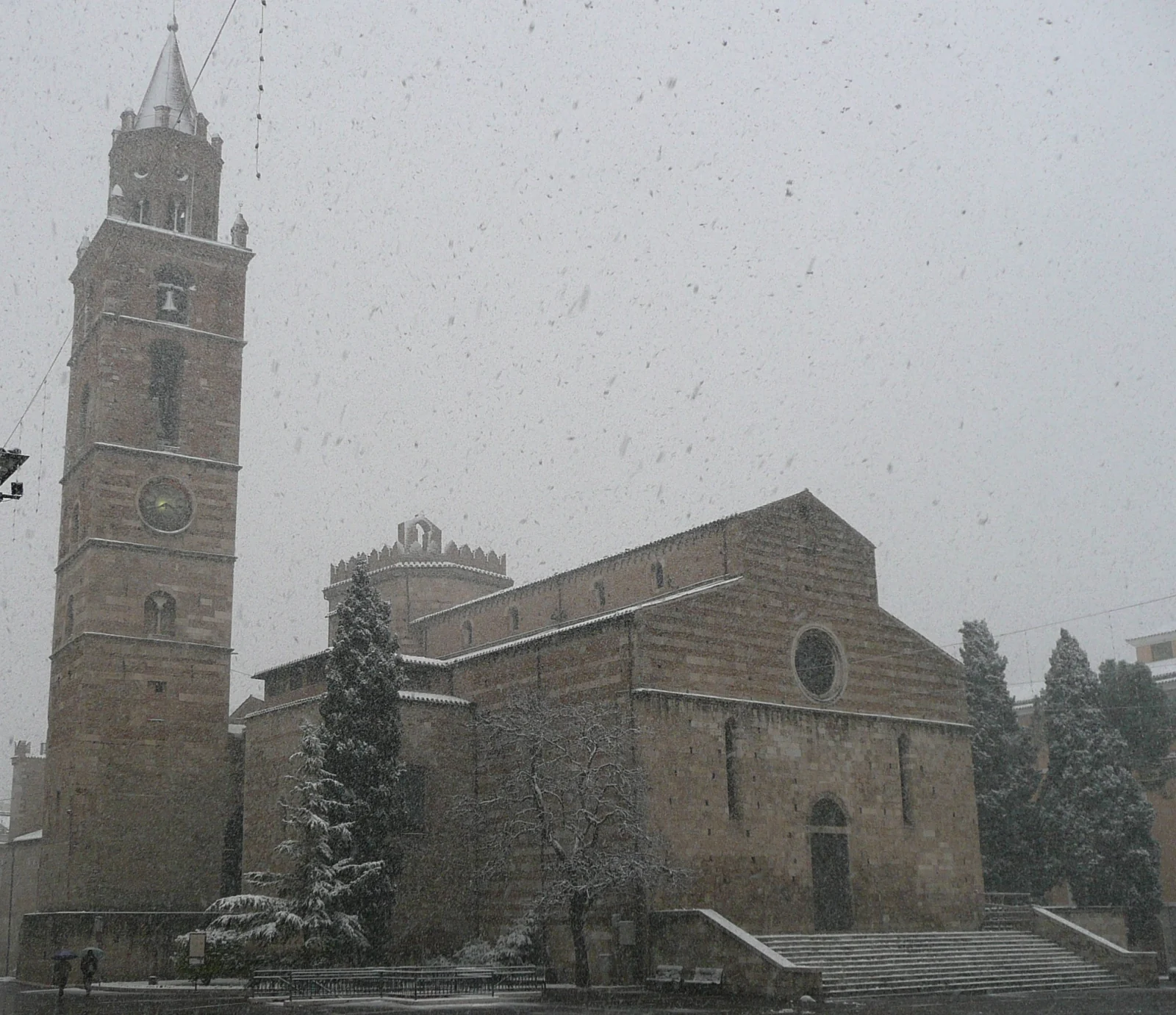
Photo: Franco aq / Wikimedia Commons — Public domain · Resized and converted to WebP.
Getting there and around
Teramo is linked to the other towns of Abruzzo, above all those of the Adriatic strip, and to Rome by the A24 Rome-L'Aquila-Teramo motorway, which runs under the Gran Sasso through its tunnel. By train you arrive on the Giulianova-Teramo line, which meets the Pescara-San Benedetto del Tronto line at Giulianova; some regional trains continue to Pescara and Francavilla al Mare. In 2025 RFI renewed about 25 kilometres of track and refurbished Teramo station, with 55-centimetre platforms for easier boarding and tactile paths for the visually impaired.
The station offers RFI assistance for people with disabilities and reduced mobility, with the Sala Blu of reference in Ancona. In town the urban bus lines stop in Piazza Martiri della Libertà and Piazza Garibaldi; the old centre, between the two rivers, is easy to walk.
The official website of the Comune di Teramo, registered in IndicePA, the index of the digital addresses of Italy’s public administrations, is the reference for the town council’s offices, opening hours and news. Its address is listed among the sources of this section.
Sources: Treccani, Enciclopedia on line — Teramo · RFI — Abruzzo: interventi di potenziamento sulla linea Giulianova-Teramo (2025) · RFI — Avviso: linee San Benedetto T.-Pescara e Teramo-Giulianova-Francavilla, dal 14 settembre 2026 · RFI — Stazione di Teramo · Comune di Teramo — Piazza Martiri della Libertà · Italia.it (Ministero del Turismo) — Teramo, la natura si fonde con la storia · Comune di Teramo, sito istituzionale · IndicePA (AgID), Indice dei domicili digitali delle pubbliche amministrazioni: dataset Enti
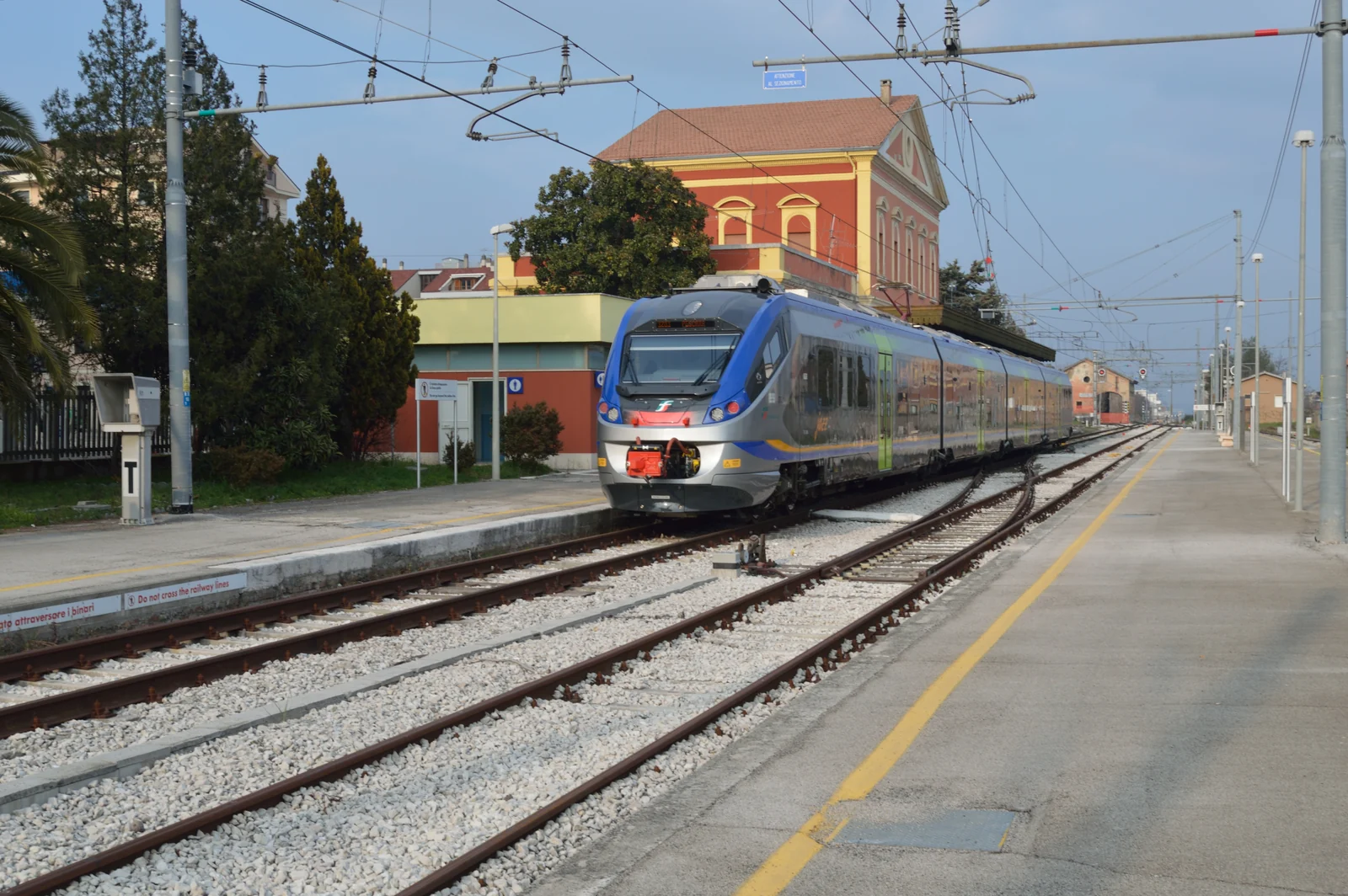
Photo: Phil Richards / Wikimedia Commons — CC BY-SA 2.0 · Resized and converted to WebP.
Where to stay
To see the town on foot it is best to stay in or near the old centre, between Piazza Martiri della Libertà, Piazza Garibaldi and the Villa comunale, where the cathedral, the Roman sites and the museums are. Halfway between the sea and the Gran Sasso, Teramo is also a base for the mountains and the coast.
In the Ministry of Tourism’s national database of accommodation (BDSR), on 12 October 2026, Teramo had 76 establishments with a verified national identification code (CIN): 4 hotel-type establishments, 17 non-hotel establishments and 55 other establishments.
Apulica does not publish paid placements: for an organised stay, with a guide or transfers, you can write using the button at the bottom of the page.
Sources: Italia.it (Ministero del Turismo) — Teramo, la natura si fonde con la storia · Comune di Teramo — Pinacoteca · Treccani, Enciclopedia on line — Teramo · Ministero del Turismo – Banca Dati Strutture Ricettive (dashboard pubblica)
Nearby
About three kilometres west of the centre, near the Ponte Messato, the Madonna della Cona archaeological area, excavated between 2000 and 2012, preserves an Iron Age burial ground, a large Roman temple on a high podium and the mausoleums lined up along the ancient road to Rome; it can be visited on request through the museum network.
Inland the province rises to the Monti della Laga and the Gran Sasso, reached by the A24 motorway. Towards the sea, along the coast between Martinsicuro and Silvi Marina, the beach resorts follow one another: Alba Adriatica, Tortoreto Lido, Giulianova, Roseto degli Abruzzi, Pineto and Silvi Marina, which can also be reached by train from Giulianova.
Sources: Polo Museale Città di Teramo — Area archeologica di Madonna della Cona · Treccani, Enciclopedia on line — Teramo · RFI — Avviso: linee San Benedetto T.-Pescara e Teramo-Giulianova-Francavilla, dal 14 settembre 2026
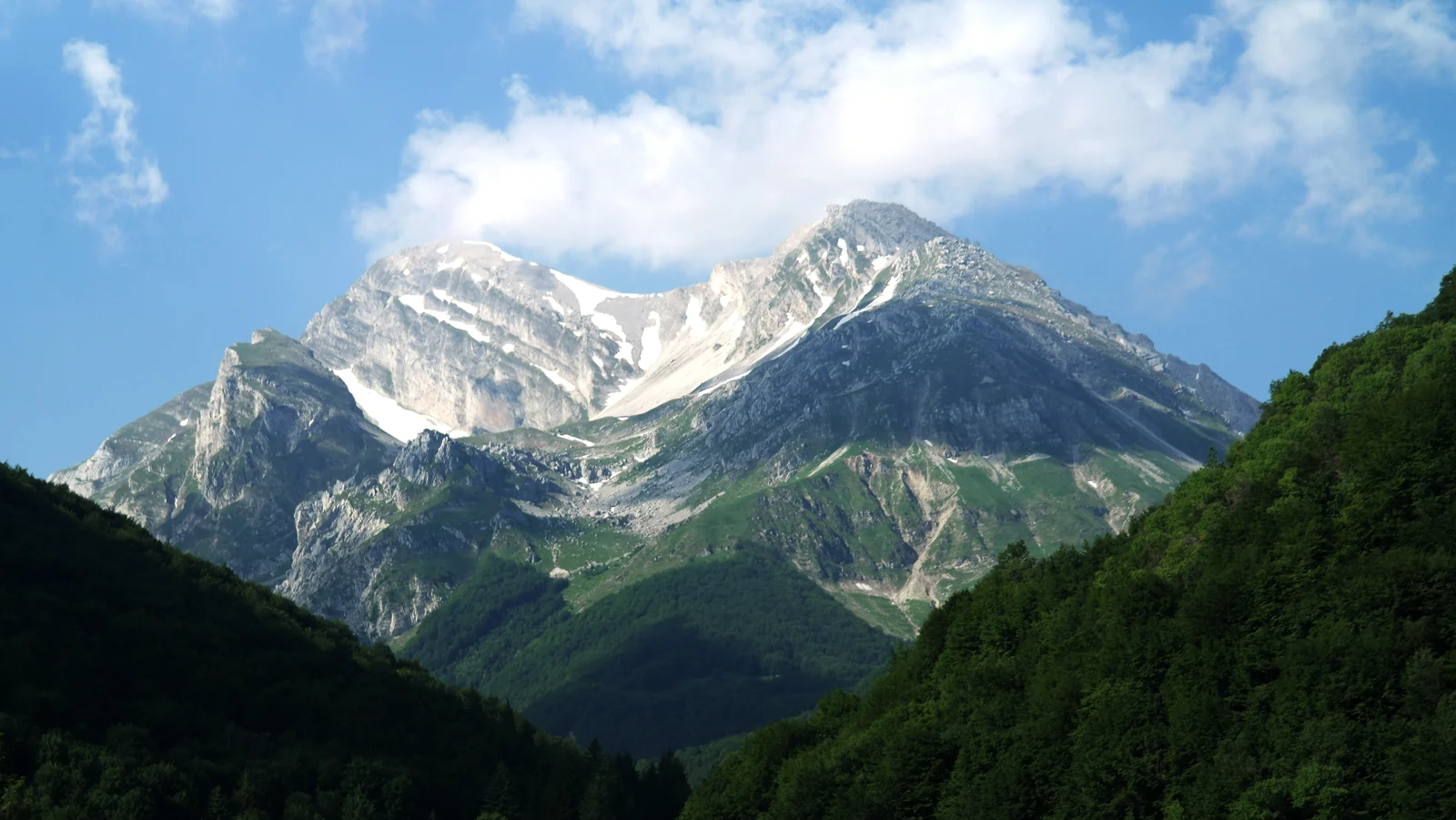
Photo: trolvag / Wikimedia Commons — CC BY-SA 3.0 · Resized and converted to WebP.
Where to stay
In the municipality of Teramo the national database of the Ministry of Tourism lists 76 accommodation businesses with a verified CIN code: 4 hotels, 17 other licensed accommodation and 55 other types such as B&Bs and private rentals.
Ask Apulica for a stay in Teramo We reply shortly, within a few hours at most, with a proposal for you to consider.
Sources: Ministero del Turismo – Banca Dati Strutture Ricettive (dashboard pubblica), 2026-10-12
YOUR JOURNEY
How to shape a journey here
We can organise a day in Teramo with a guide, among the cathedral, the Roman sites and the Castello Della Monica, or use the town as a base for the Gran Sasso and the coast, with transfers. For a trip, a guide or a transfer you can write to Apulica with the button below.
Plan your tripKeep exploring
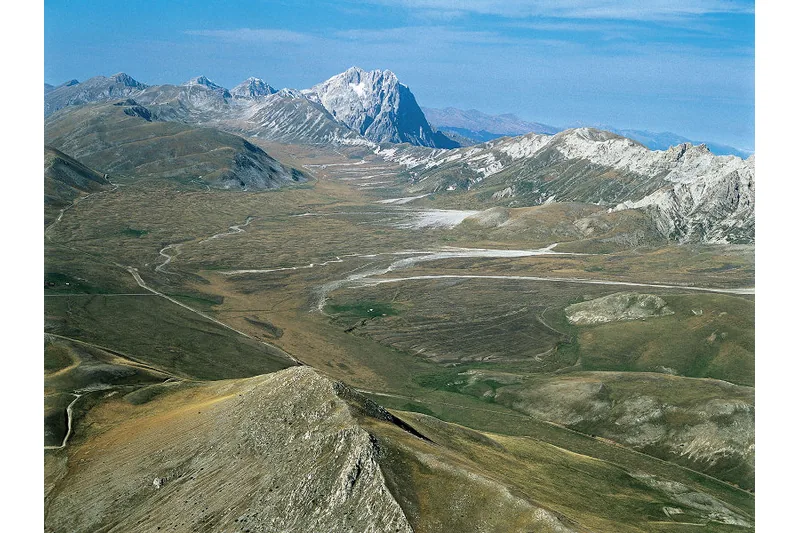
Gran Sasso and Monti della Laga National Park
The park of Corno Grande and Campo Imperatore: three mountain groups, 44 municipalities, stone villages, Laga forests and the food of transhumance.
Read the guide →Photo: Ente Parco Nazionale del Gran Sasso e Monti della Laga · Resized and converted to WebP.
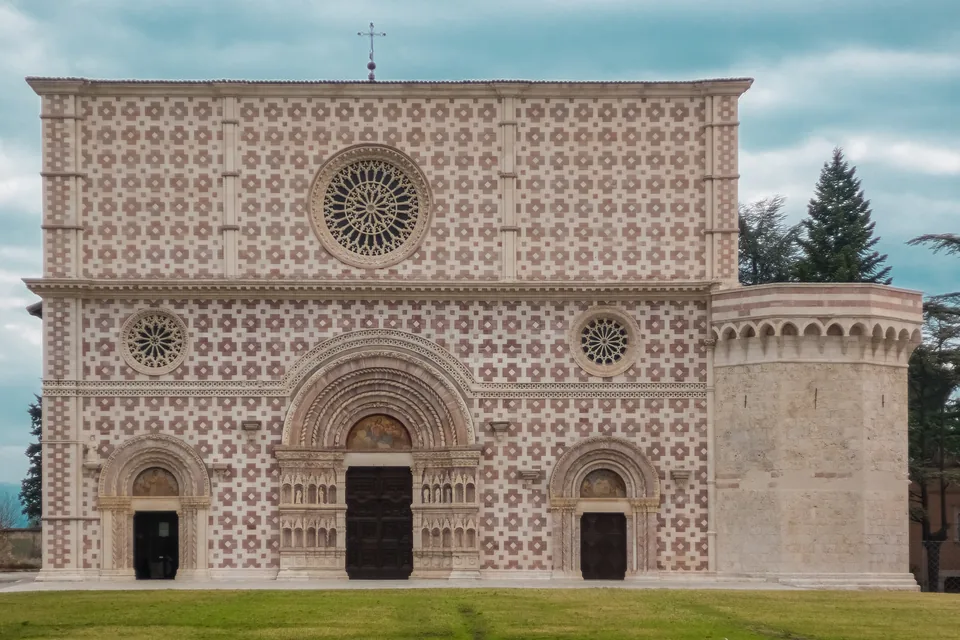
L’Aquila
A capital between the Gran Sasso and the Monti della Laga, with the UNESCO-listed Celestinian Forgiveness and reconstruction still under way.
Read the guide →Photo: Verdenex84 / Wikimedia Commons — CC BY-SA 4.0 · Resized and converted to WebP.

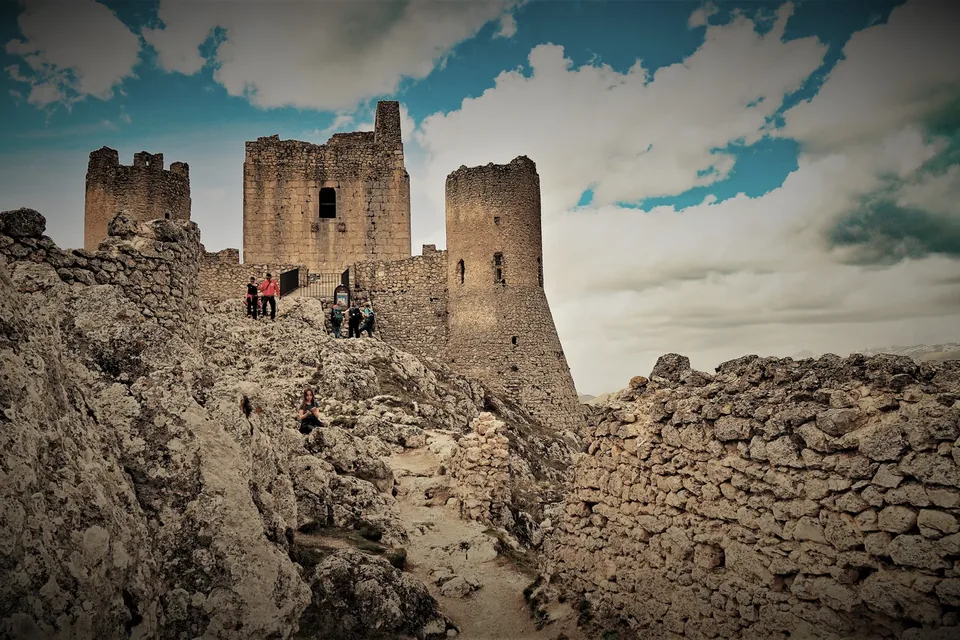
Santo Stefano di Sessanio and Rocca Calascio
A stone village on the L’Aquila side of the Gran Sasso, with a Slow Food Presidium lentil and the transhumance fortress nearby.
Read the guide →Photo: Vincedelbenàco / Wikimedia Commons — CC BY-SA 4.0 · Resized and converted to WebP.

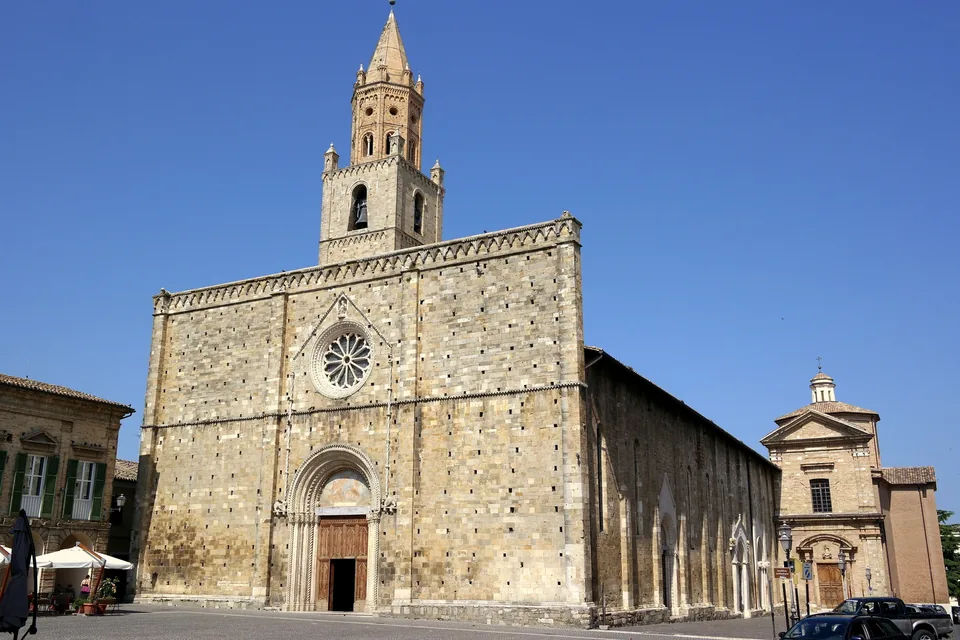
Atri
Atri (TE), Abruzzo: 9,846 residents, 92.18 km². The official facts of the municipality, its town council website and its registered accommodation. The cathedral of Santa Maria Assunta with Andrea De Litio’s frescoes and its Holy Door, the ducal palace of the Acquaviva, the Teatro Comunale, the Roman cisterns, the badlands of the WWF Oasis, liquorice and the night of the Faugni.
Read the guide →Photo: Luca Aless / Wikimedia Commons — CC BY-SA 4.0 · Resized and converted to WebP.

Civitella del Tronto
Civitella del Tronto (TE), Abruzzo: 4,539 residents, 77.74 km². The official facts of the municipality, its town council website and its registered accommodation. The fortress on its travertine crag, the last Bourbon stronghold to surrender in 1861, the Weapons Museum, the Ruetta, the churches of the old town, the Salinello gorges and the Montagna dei Fiori in the Gran Sasso and Monti della Laga National Park.
Read the guide →Photo: SHAWSHANK61 / Wikimedia Commons — CC0 · Resized and converted to WebP.

“Come to Teramo as a guest, not as a tourist: that is how these places truly let you know them.”