

Why go
Procida is a volcanic island in the Gulf of Naples, and it was the Italian Capital of Culture for 2022. The Ministry of Culture announced it on 18 January 2021, after hearing ten finalist towns; the bid was called “Procida, La cultura non isola” (culture does not isolate). In the words of the jury, chaired by Stefano Baia Curioni, “the heritage and landscape of the place are extraordinary”.
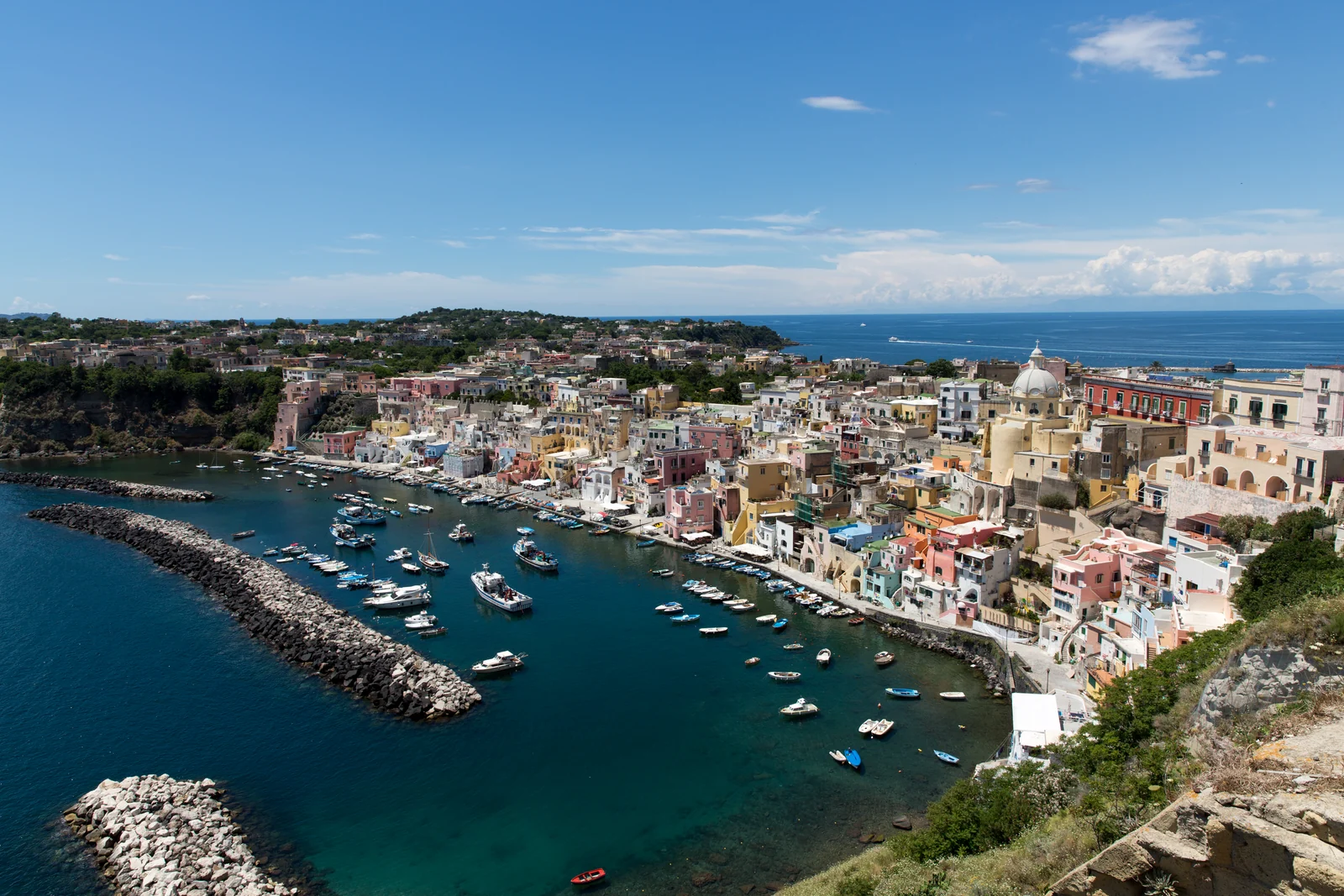
The island’s defining image is Marina Corricella, the fishermen’s village below Terra Murata: houses of different colours built one on top of another, outside stairs and balconies over the little harbour, which can only be reached on foot and is still used by the fishermen. Above it, on the island’s highest point, the fortified quarter of Terra Murata looks over the whole Gulf of Naples, with the Abbey of San Michele Arcangelo and Palazzo d’Avalos, a royal residence and then a prison until 1988. On the other side of the island a bridge leads to Vivara, a state nature reserve.
Sources: Ministero della cultura — Procida Capitale italiana della cultura per il 2022 · Ministero della cultura — È Procida la Capitale della Cultura per il 2022 (comunicato del 18 gennaio 2021) · Ministero del Turismo, italia.it — Marina Corricella · Ministero del Turismo, italia.it — Procida, borgo sul golfo di Napoli · OpenCampania, I musei della Campania in rete (Direzione regionale Musei Campania, MiC) — Terra Murata, Procida · Riserva Naturale Statale Isola di Vivara — Prenota la tua visita: orari, modalità e tariffe 2026
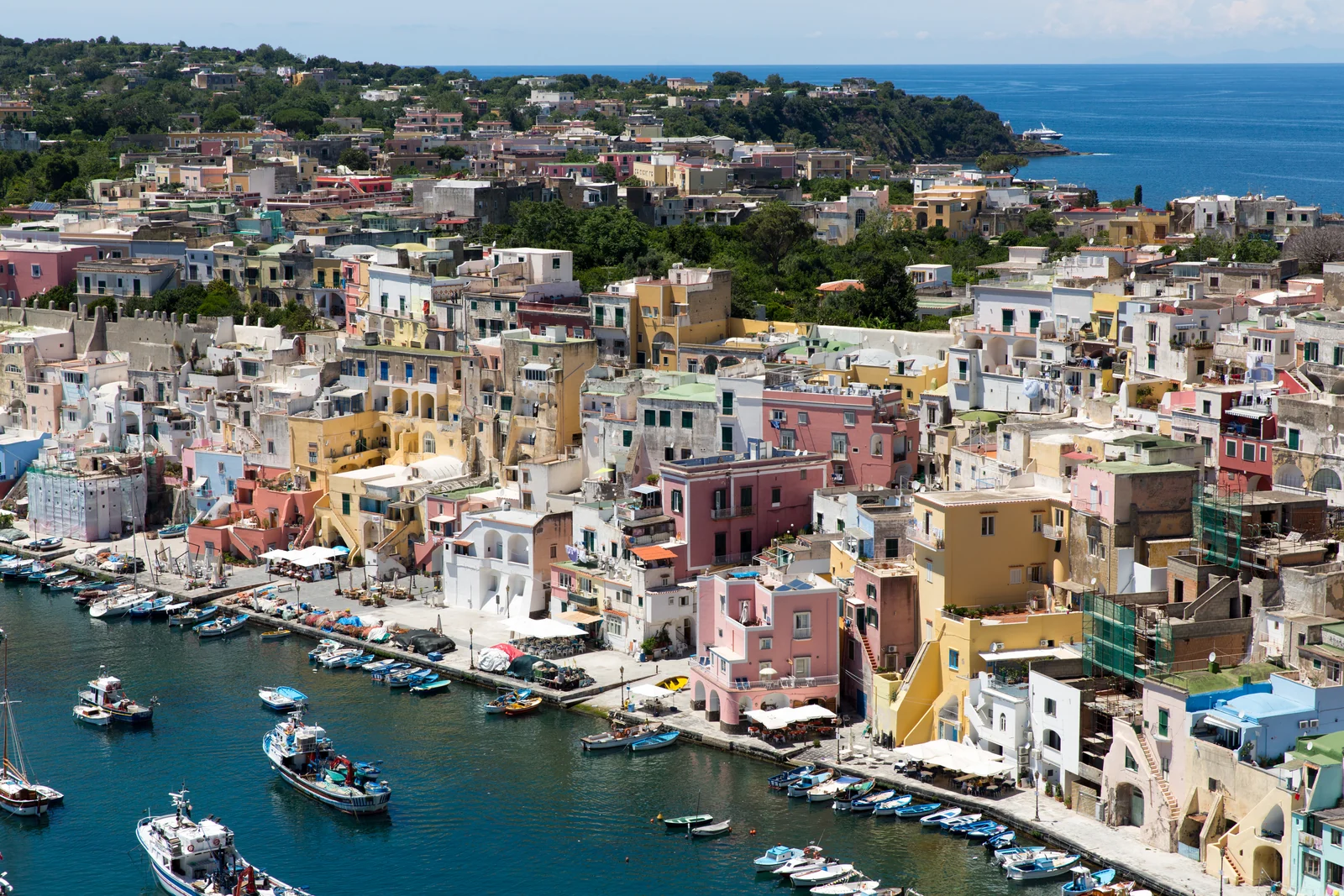
Photo: Ekrem Canli / Wikimedia Commons — CC BY-SA 4.0 · Resized and converted to WebP.
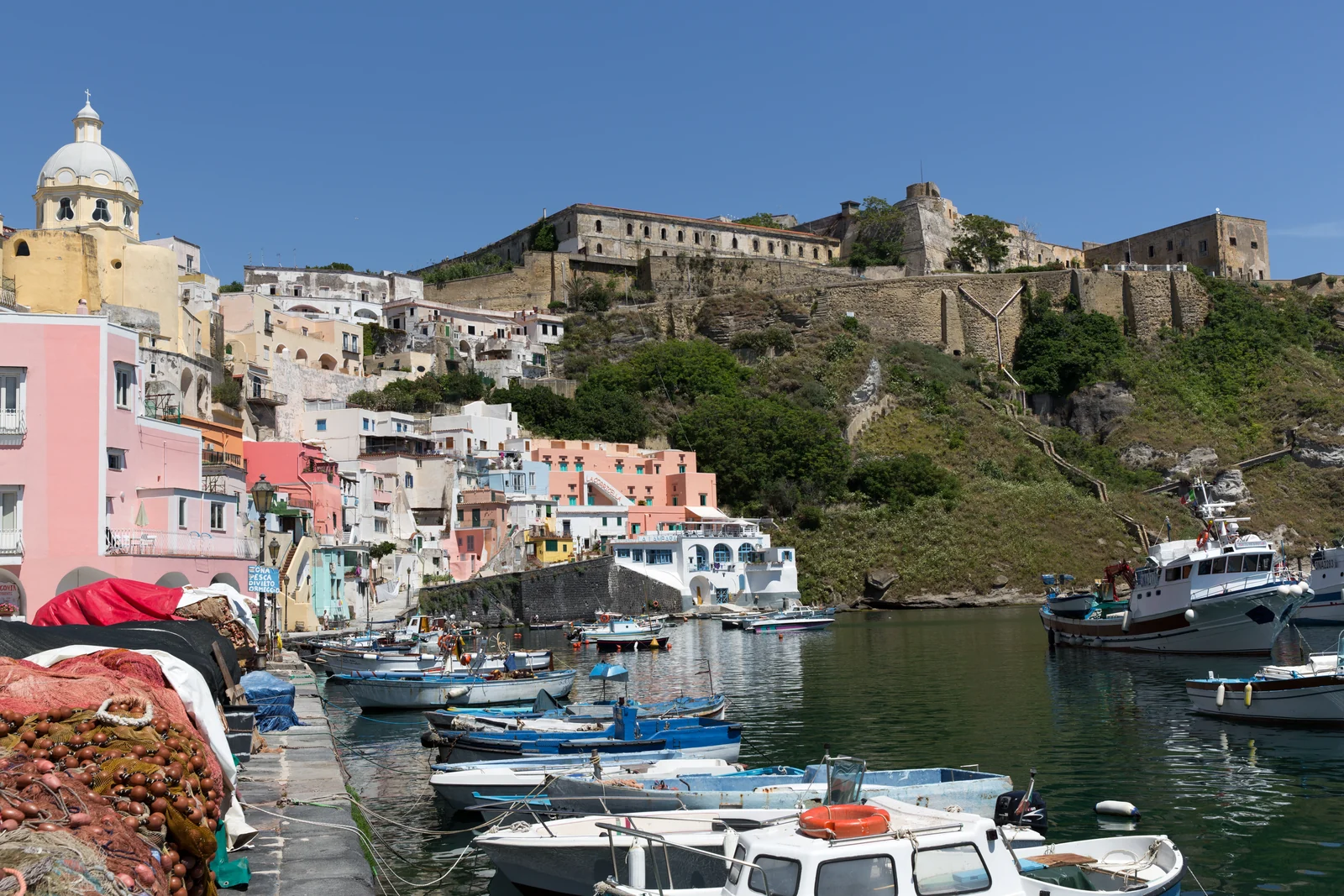
Photo: Ekrem Canli / Wikimedia Commons — CC BY-SA 4.0 · Resized and converted to WebP.
The municipality at a glance
Procida is a municipality in the Metropolitan City of Naples, in Campania. Its ISTAT code is 063061. On 1 January 2025 it had 10,004 residents. The municipal territory covers 4.26 km² and ranges from 0 to 109 metres above sea level; the town hall stands at about 23 metres.
Sources: ISTAT, Codici statistici delle unità amministrative territoriali: elenco dei comuni al 21 febbraio 2026 · ISTAT, Popolazione residente per età, sesso e stato civile al 1° gennaio 2025 (POSAS) · ISTAT, Principali statistiche geografiche sui comuni: superficie e altimetria al 31 dicembre 2021
History
Procida’s history begins on Vivara. Between the seventeenth and the fifteenth century BC the islet, then joined to Procida, was inhabited and had one of the oldest landing places on the sea routes linking Mycenaean Greece with the West: the sea was about 14 metres lower than today, and the harbour lay where the bay of Genito now opens. Excavations on land and underwater research began in 1975 and are still going on, led by the Suor Orsola Benincasa University together with the heritage superintendency and the Reserve.
In the Middle Ages the Roman settlement, scattered over the island, gave way to a fortified village on the headland of the “Terra”, later called Terra Casata and finally Terra Murata. It had two gates, the Porta della Terra and the Porta di Mezz’Omo, and it was where the islanders took refuge from pirate raids. In 1529 the island became a fief of the d’Avalos family, loyal to Charles V; in 1563 Cardinal Innico d’Avalos d’Aragona, lord of the island and commendatory abbot, gave the village walls and watchtowers, and it has been called Terra Murata, the walled land, ever since.
The d’Avalos castle later became a royal palace and then, from 1830 to 1988, a prison citadel. The complex includes the palace, the courtyard, the guards’ barracks, the single-cell building, the veterans’ building, the infirmary, the director’s house and the Spianata farm estate: for the regional museums directorate of Campania it is an important record of the island’s political, military and urban history.
Below the walled quarter grew Marina Corricella, which took its present shape from the seventeenth century. Piazza dei Martiri, beside the sanctuary of Santa Maria delle Grazie, is named after the sixteen islanders hanged for supporting the Neapolitan Republic. Alphonse de Lamartine, who stayed on the island from 1811, set his novel “Graziella” here; at the end of the 1950s Elsa Morante dedicated “Arturo’s Island” to it, and in 1994 the film “Il Postino”, Massimo Troisi’s last, used Corricella as its fishing village.
Sources: Riserva Naturale Statale Isola di Vivara — Vivara archeologica · OpenCampania, I musei della Campania in rete (Direzione regionale Musei Campania, MiC) — Terra Murata, Procida · Abbazia di San Michele Arcangelo, Procida — L’Abbazia · Ministero del Turismo, italia.it — Terra Murata · Ministero del Turismo, italia.it — Marina Corricella · Ministero del Turismo, italia.it — Procida, borgo sul golfo di Napoli
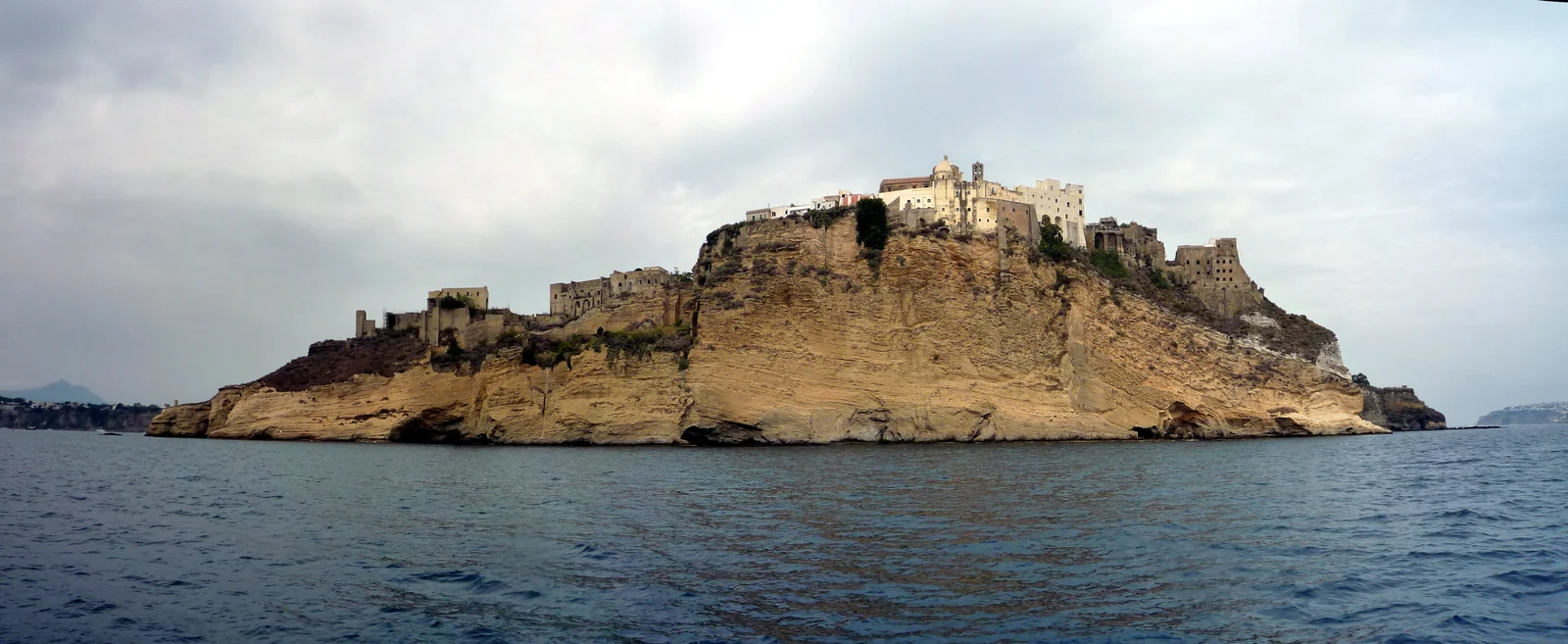
Photo: Michael Karavanov / Wikimedia Commons — CC BY-SA 3.0 · Resized and converted to WebP.
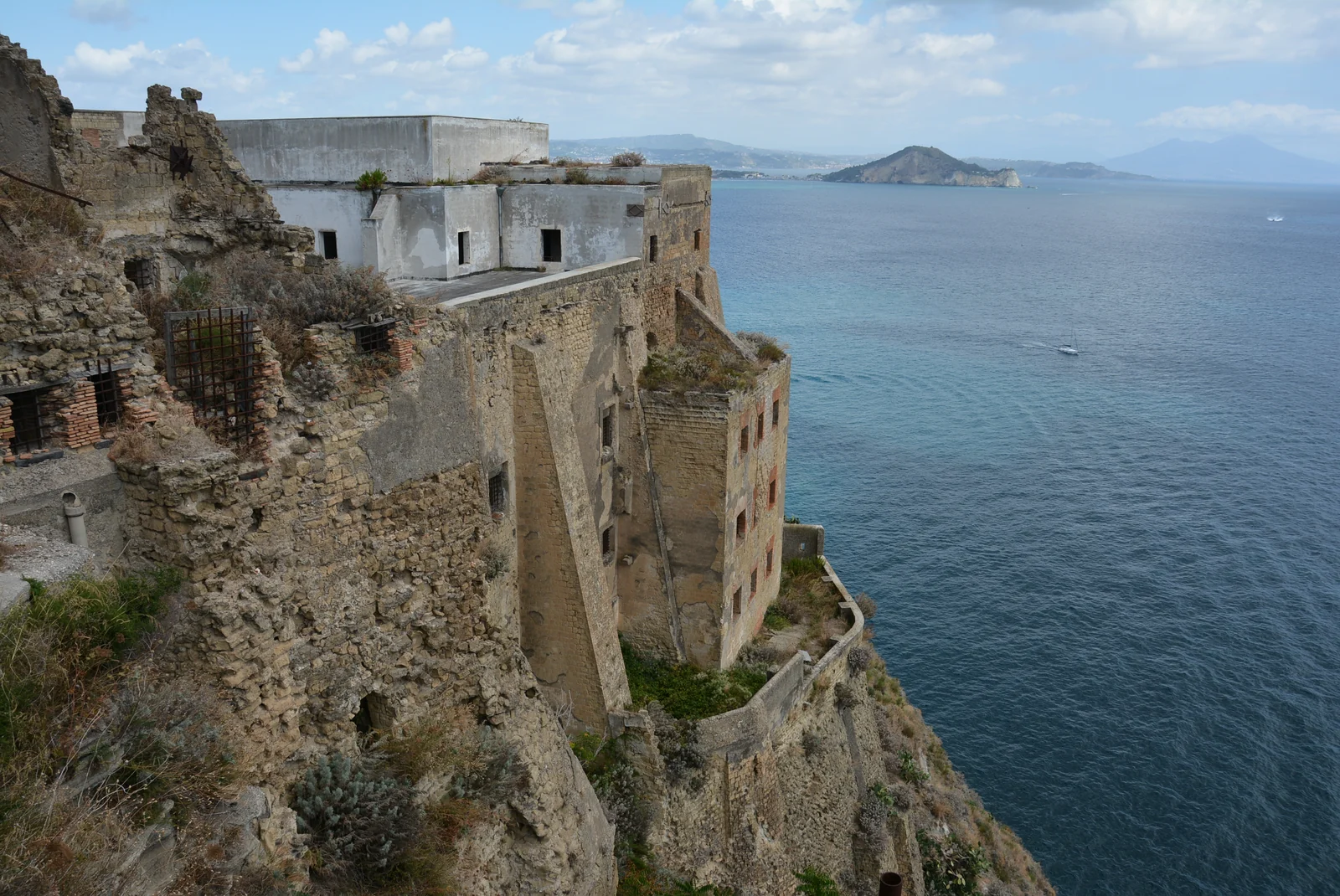
Photo: Mentnafunangann / Wikimedia Commons — CC BY-SA 4.0 · Resized and converted to WebP.
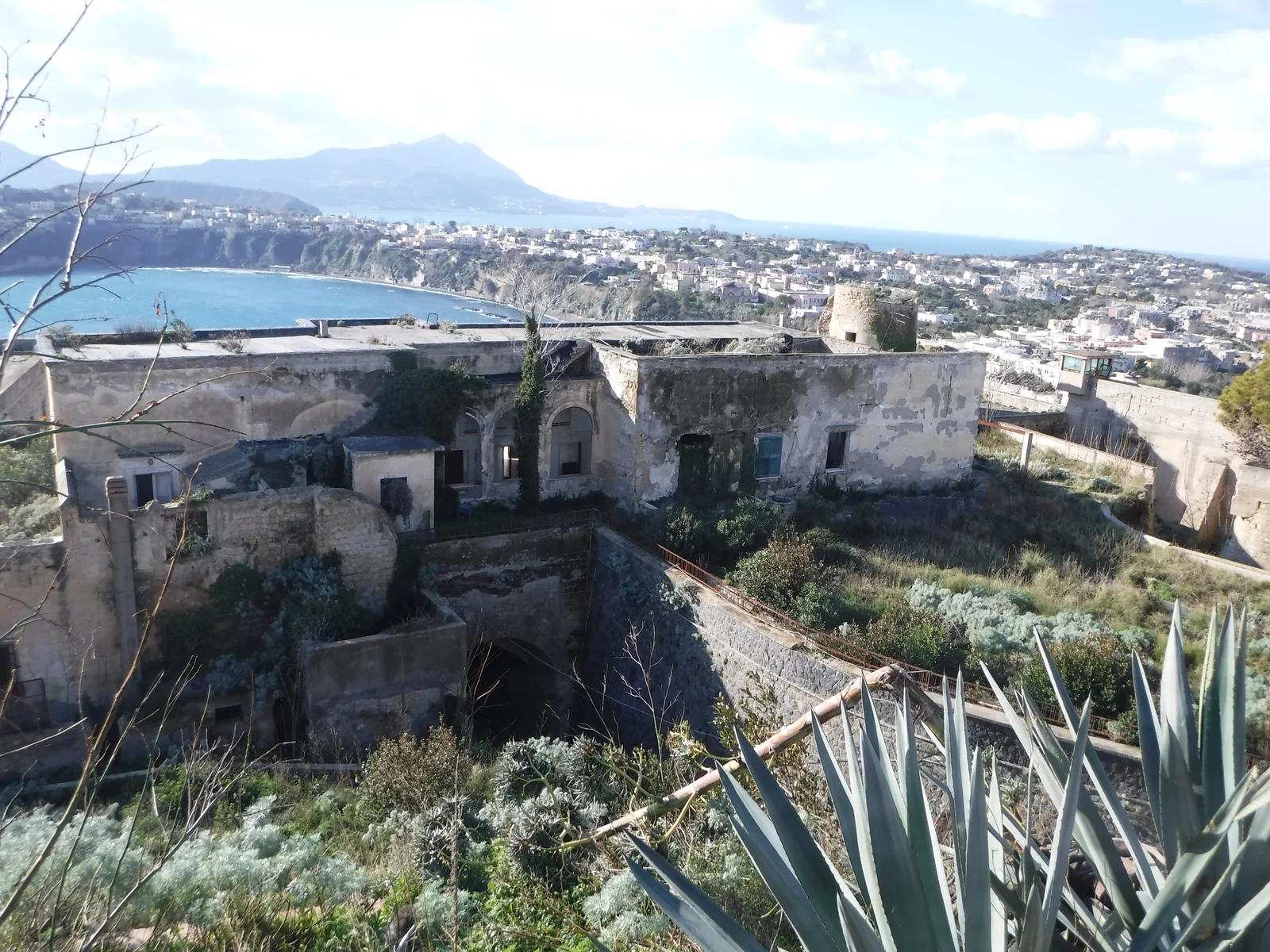
Photo: Rc1959 / Wikimedia Commons — CC BY-SA 4.0 · Resized and converted to WebP.
What to see
The Abbey of San Michele Arcangelo stands on Terra Murata, about 91 metres sheer above the sea. Born as a Benedictine monastery, the church was founded in 1026 and dedicated to Sant’Angelo; the dedication to Saint Michael, the island’s patron, came later. Its present layout is mostly the work of Cardinal Innico d’Avalos (1561). Entering through the Porta del Carmine, with its piperno doorway of 1600, you see the seventeenth-century coffered ceiling in gilded wood, with Luigi Garzi’s “Saint Michael defeating the rebel angels” (1699) at its centre; in the choir hang four canvases of 1690 by Nicola Russo, among them Saint Michael protecting the island from a raid, which shows Procida as it was. The saint’s chapel holds the silver and gold statue of 1727 by the brothers Nicola and Gaetano Avellino, after a design by Antonio Domenico Vaccaro.
Below the church the abbey’s rooms are a museum and a library on three levels: a crib of eighteenth-century Neapolitan figures, the library of about 8,000 volumes with sixteenth-century choir books and an atlas of 1570, the painted ex-votos of Procida’s sailors and the ossuary where bodies were mummified. The abbey states that the underground rooms cannot be visited at present; guided tours, by free donation, are run by the Millennium association from Holy Week to All Saints, and there are no visits during mass.
Terra Murata also holds Palazzo d’Avalos, whose booking arrangements and access rules are on the town council’s website, the deconsecrated church of Santa Margherita Nuova, built in the sixteenth century by Dominican monks on the Punta dei Monaci and now used for exhibitions, and the Museo Casa di Graziella, inspired by Lamartine’s novel, on the second floor of the Palazzo della cultura, the former orphans’ conservatory.
From the Belvedere dei Cannoni you look down on Marina Corricella. On the way down, the sanctuary of Santa Maria delle Grazie and Piazza dei Martiri also appear in “Il Postino”. The island is divided into nine districts, the grancìe: Terra Murata, the oldest, Corricella, Sent’cò with the Marina Grande harbour, Semmarezio, San Leonardo, Madonna della Libera, Sant’Antuono, Sant’Antonio and Chiaiolella, with the marina.
Sources: Abbazia di San Michele Arcangelo, Procida — L’Abbazia · Abbazia di San Michele Arcangelo, Procida — La Chiesa · Abbazia di San Michele Arcangelo, Procida — I Sotterranei · Abbazia di San Michele Arcangelo, Procida — Visite guidate · OpenCampania, I musei della Campania in rete (Direzione regionale Musei Campania, MiC) — Terra Murata, Procida · Ministero del Turismo, italia.it — Terra Murata · Ministero del Turismo, italia.it — Marina Corricella · Ministero del Turismo, italia.it — Procida, borgo sul golfo di Napoli
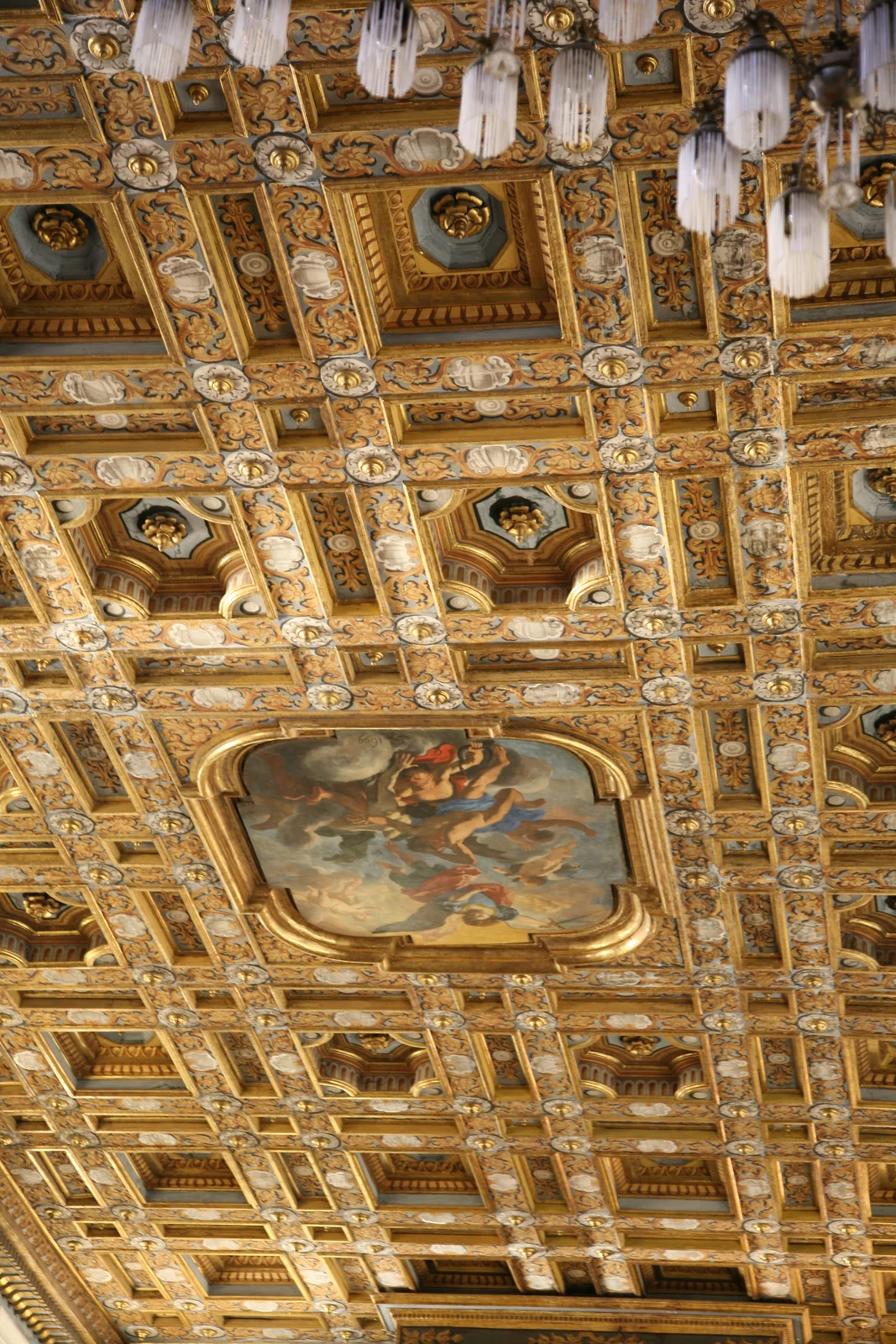
Photo: g.sighele / Wikimedia Commons — CC BY 2.0 · Resized and converted to WebP.
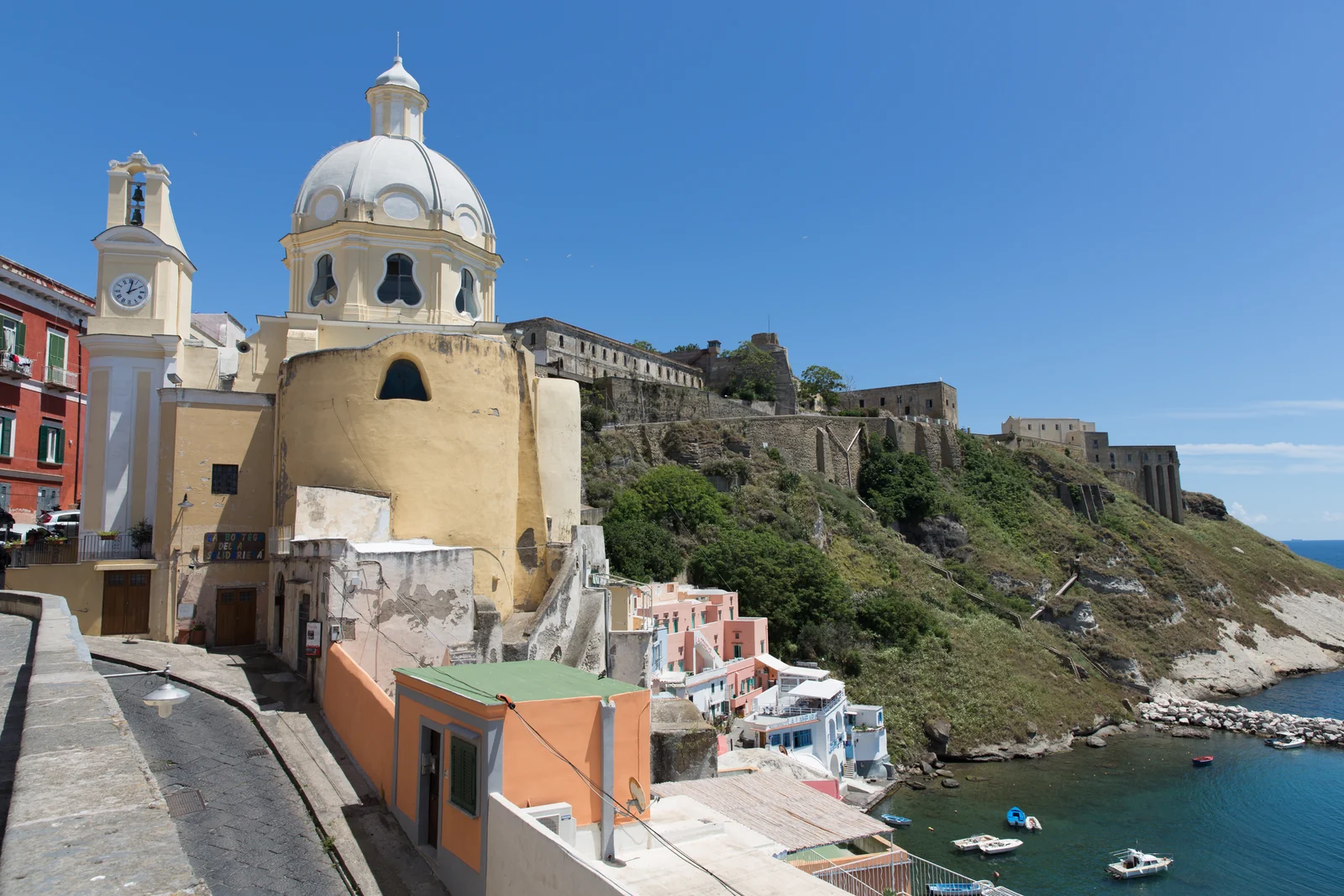
Photo: Ekrem Canli / Wikimedia Commons — CC BY-SA 4.0 · Resized and converted to WebP.
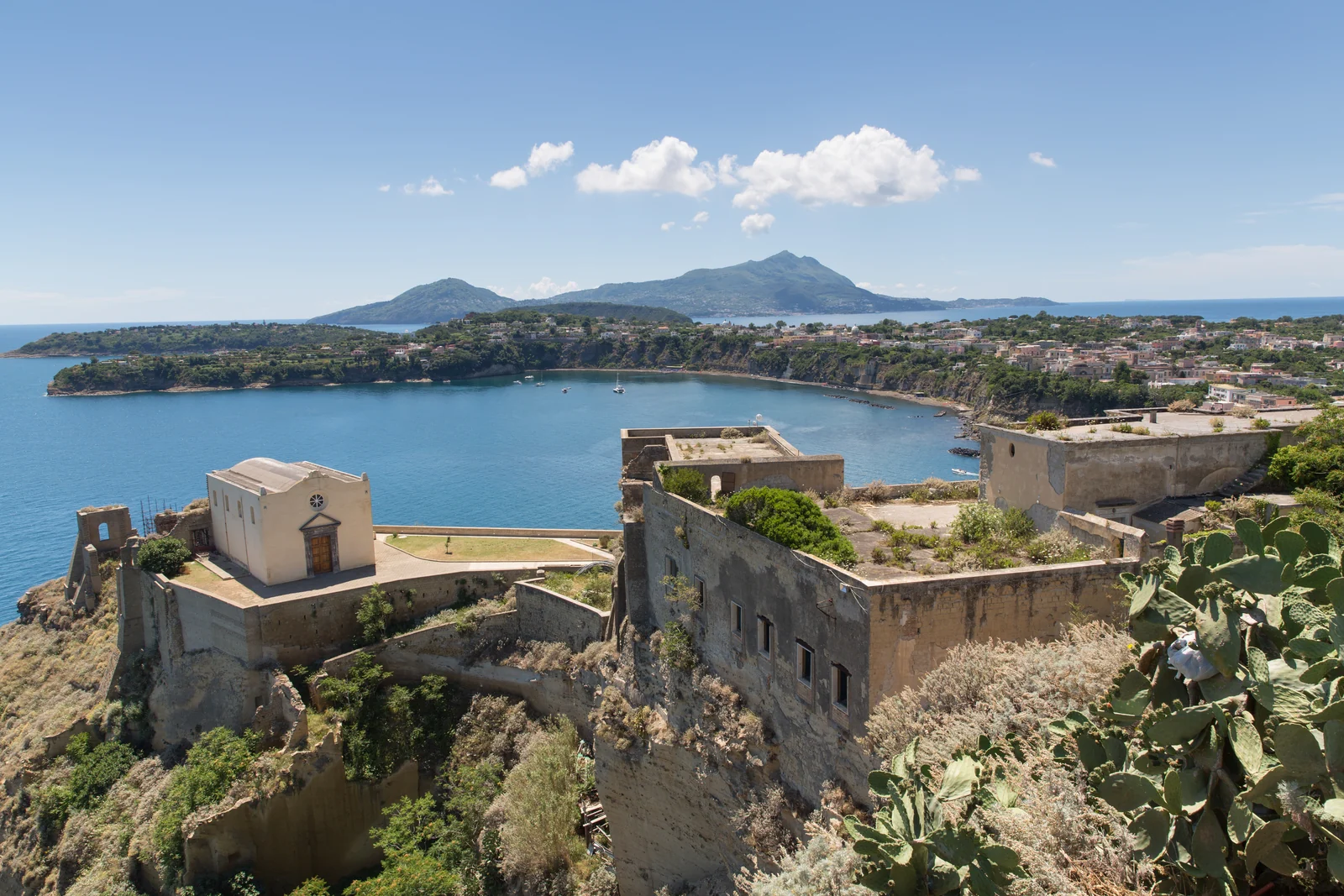
Photo: Ekrem Canli / Wikimedia Commons — CC BY-SA 4.0 · Resized and converted to WebP.
Flavours
The island’s own produce is the Procida lemon, listed among the traditional products of the Campania Region. The fruits are medium to large, with a coarse pale-yellow skin and a very thick albedo, the white layer under the peel: that is why they are also called “limoni pane”, bread lemons. Their scent is intense and the juice pleasantly sour; they are used in drinks and to flavour local recipes, and some people eat them in slices, as a dessert, with or without a spoonful of sugar.
According to the Region, growing them at home goes back centuries and comes from the islanders’ seafaring calling: on board ship, lemons were essential.
Sources: Regione Campania, Assessorato Agricoltura — Prodotti tradizionali: limone di Procida
Things to do
Vivara can only be visited with the guides of the state nature reserve, booking on the Reserve’s website: no tickets are sold at the entrance. The meeting point is at the start of the bridge, in Via Santa Margherita, at least 15 minutes beforehand; groups have at most 25 people, with a guide and an assistant, and the visit lasts about two and a half hours. There are no toilets, bars or refreshment points on the islet, and dogs and other pets are not allowed. In 2026 the Reserve reopened on 28 August, with two tours a day and then, from 25 September, a single tour on Fridays, Saturdays and Sundays, and closed the season on Sunday 25 October, promising to be back in spring.
Vivara’s landscape was made by ancient volcanic eruptions, and in the bay of Genito, an old crater, the seabed keeps structures and stairs cut into the tuff, now underwater. The waters around Procida and Vivara are part of the “Regno di Nettuno” (Kingdom of Neptune) marine protected area, set up by the Ministry of the Environment by decree of 27 December 2007 together with the municipalities of the island of Ischia.
Among the beaches, Pozzo Vecchio, on the western side, is also called the “Postino beach” because Mario and Beatrice meet there in the film; the Chiaia beach, the most central, is reached down 186 steps, and the Chiaiolella beach is the longest and busiest on the island.
Sources: Riserva Naturale Statale Isola di Vivara — Prenota la tua visita: orari, modalità e tariffe 2026 · Riserva Naturale Statale Isola di Vivara — Chiusura stagione, visite guidate (27 ottobre 2026) · Riserva Naturale Statale Isola di Vivara — Territorio e paesaggio dell’Isola di Vivara · Ministero dell’Ambiente — Decreto 27 dicembre 2007, Istituzione dell’area marina protetta «Regno di Nettuno» · Ministero del Turismo, italia.it — Procida, borgo sul golfo di Napoli
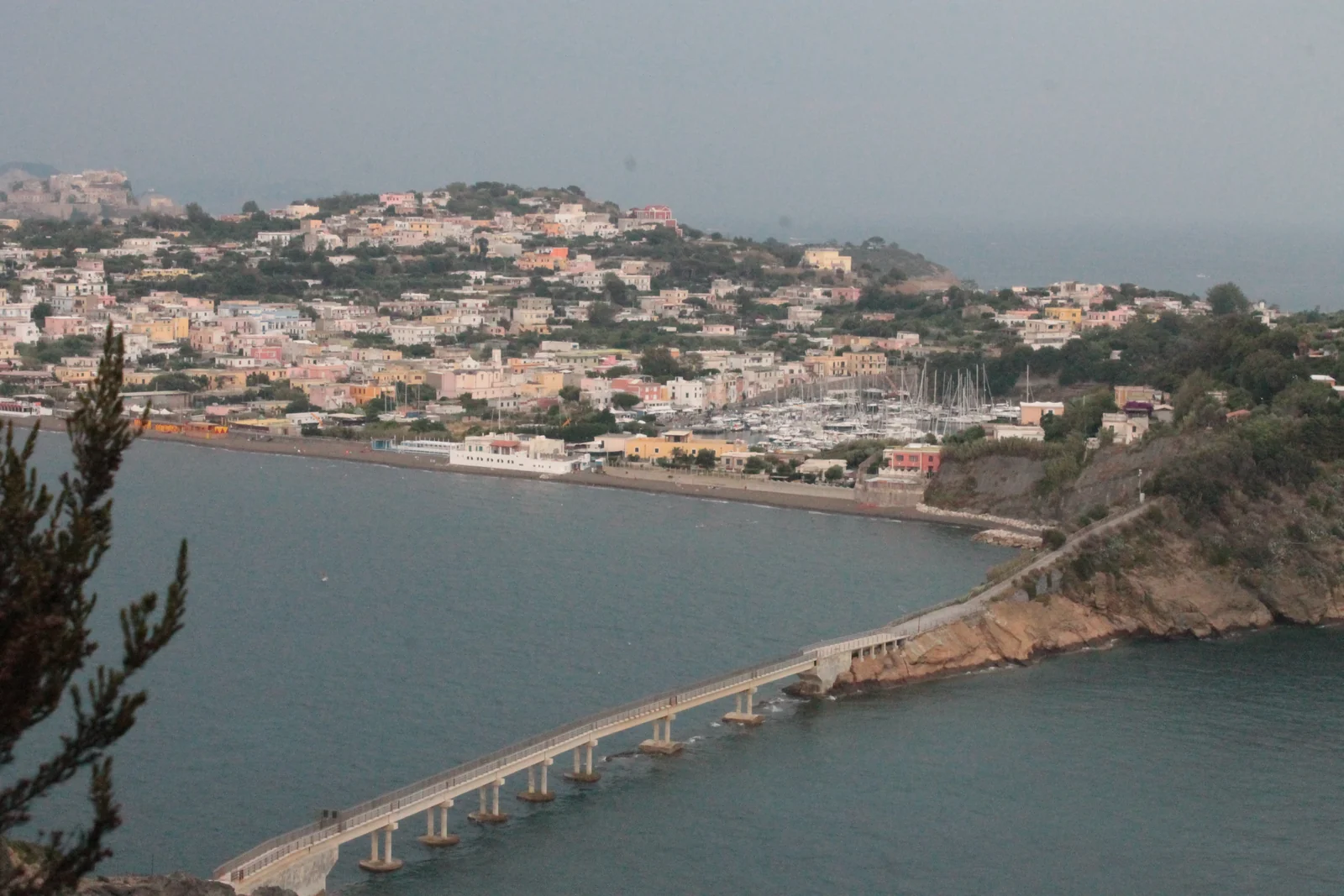
Photo: Saverio.G / Wikimedia Commons — CC BY-SA 4.0 · Resized and converted to WebP.
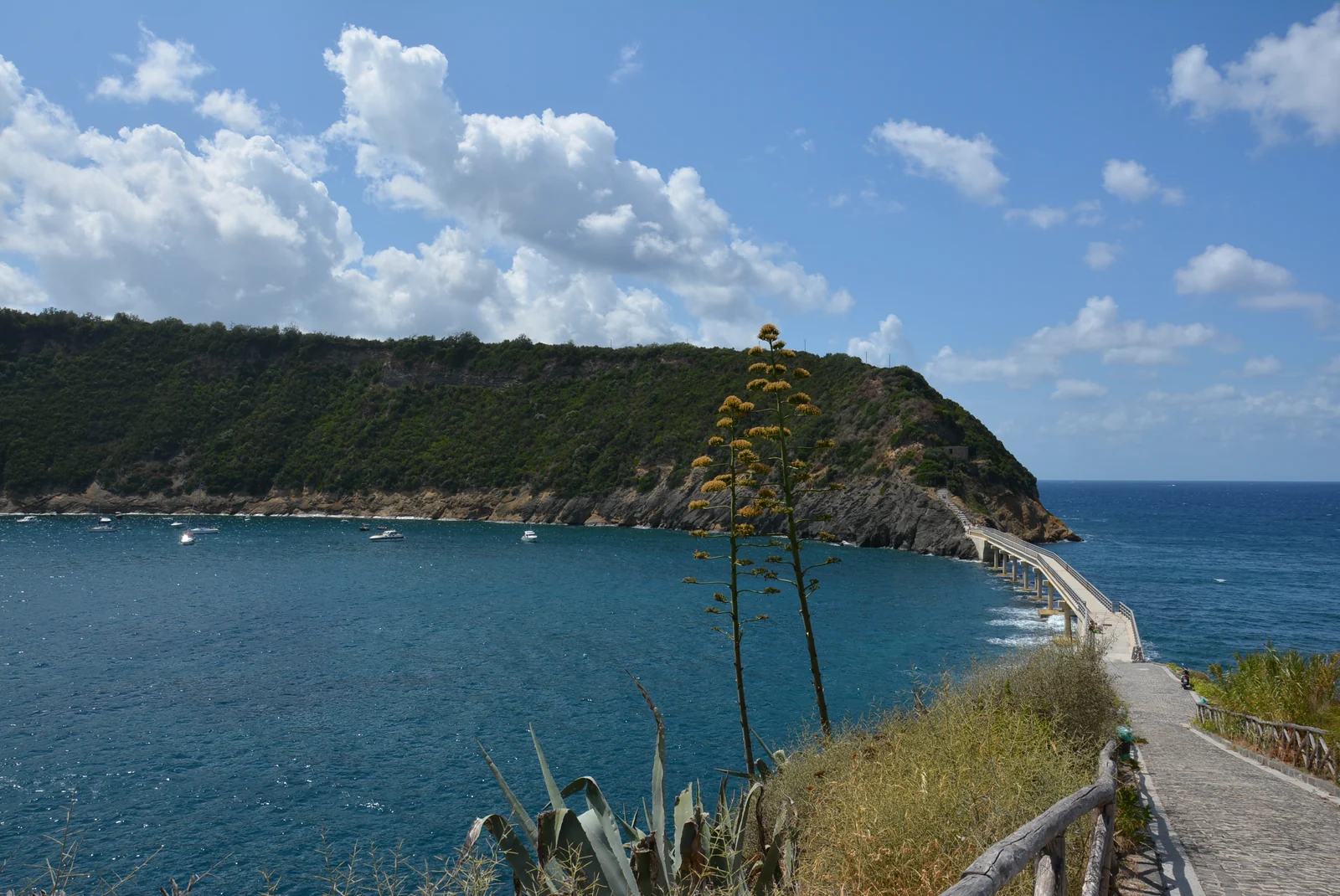
Photo: Mentnafunangann / Wikimedia Commons — CC BY-SA 4.0 · Resized and converted to WebP.
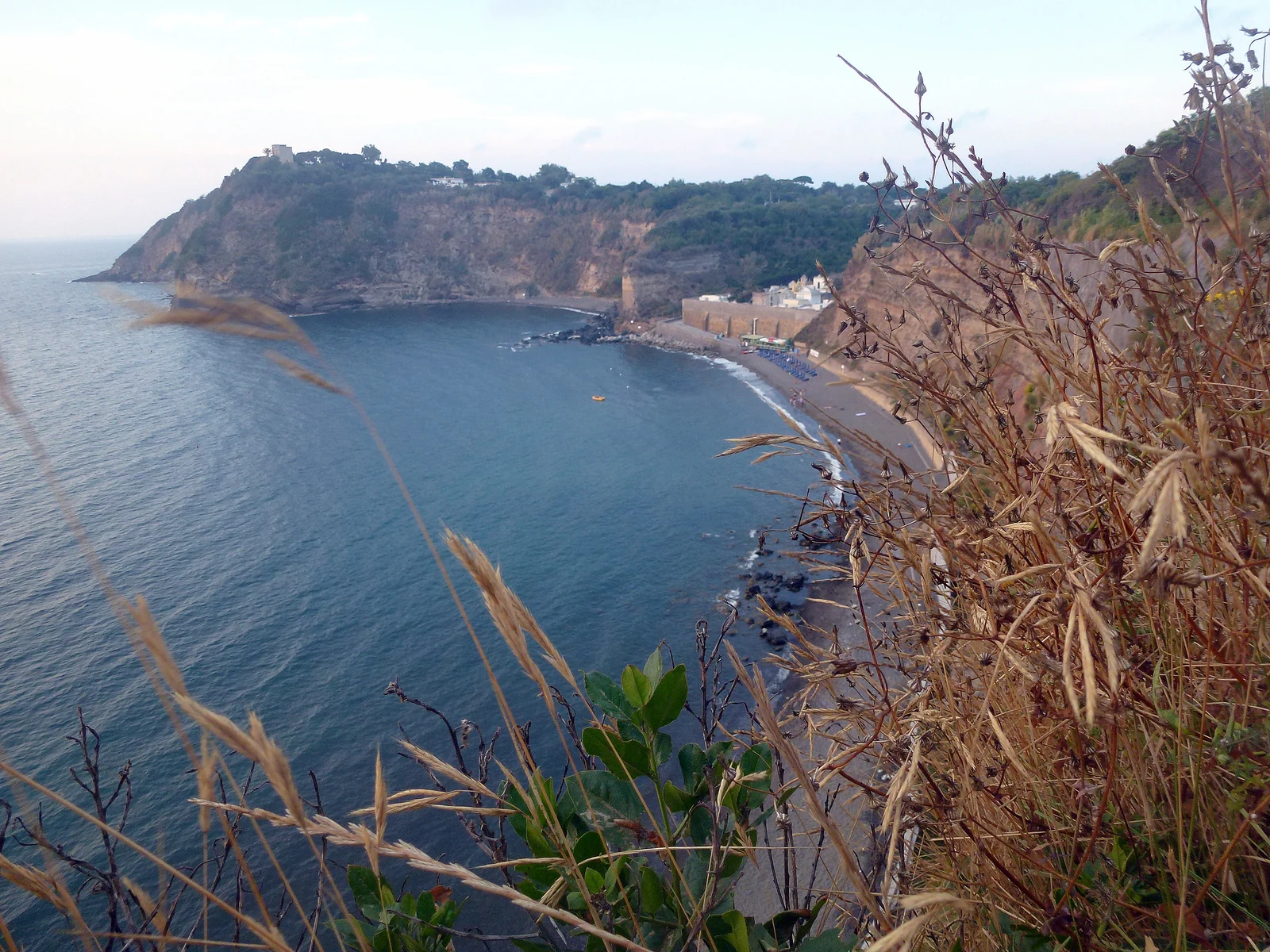
Photo: Porfirio / Wikimedia Commons — CC BY 2.0 · Resized and converted to WebP.
When to go
The most deeply felt day of the year is Good Friday. At dawn the Confraternity of the Turchini, founded by the Jesuits in 1588, carries the Dead Christ and Our Lady of Sorrows from the church of San Tommaso d’Aquino up to the abbey on Terra Murata, led by the trumpet and drum that have crossed the island during the night. Then, at 7.30 in the 2019 edition documented by the Ministry of Culture, the Procession of the Misteri sets off from the Piazzale delle Armi: about 45 tableaux built every year by the island’s young people, never the same, with scenes from the Old and New Testaments from Adam and Eve to the Last Judgement, carried by hand, now by women and girls too. The first certain records of the procession date from 1688; the wooden Dead Christ is by Carmine Lantriceni (1728). It winds through the island’s streets until late morning and the Misteri stop at the Marina Grande harbour; in that edition there were about 800 participants and about 3,000 onlookers.
Saint Michael, the patron, has two processions: on 8 May, the day of the apparition of 1535, the silver and gold statue is carried round the whole island by the confraternity of the “Gialli”, and the descendants of islanders who emigrated to Mers El Kebir in the nineteenth century, now living mostly in La Ciotat near Marseille, come back for it; on 29 September the statue is taken to the Belvedere dei Cannoni, from where the island is blessed.
On Vivara the guided-tour season runs from late summer into autumn, on the calendar published by the Reserve; abbey tours with the Millennium association run from Holy Week to All Saints.
Sources: Ministero della cultura, ICCD — Inventario del patrimonio immateriale: Processione del Venerdì Santo di Procida (scheda MODI, 2022) · Ministero della cultura, ICCD — Inventario del patrimonio immateriale: Processione mattutina del Cristo Morto e dell’Addolorata di Procida (scheda MODI, 2022) · Abbazia di San Michele Arcangelo, Procida — Le Processioni di San Michele · Riserva Naturale Statale Isola di Vivara — Prenota la tua visita: orari, modalità e tariffe 2026 · Abbazia di San Michele Arcangelo, Procida — Visite guidate
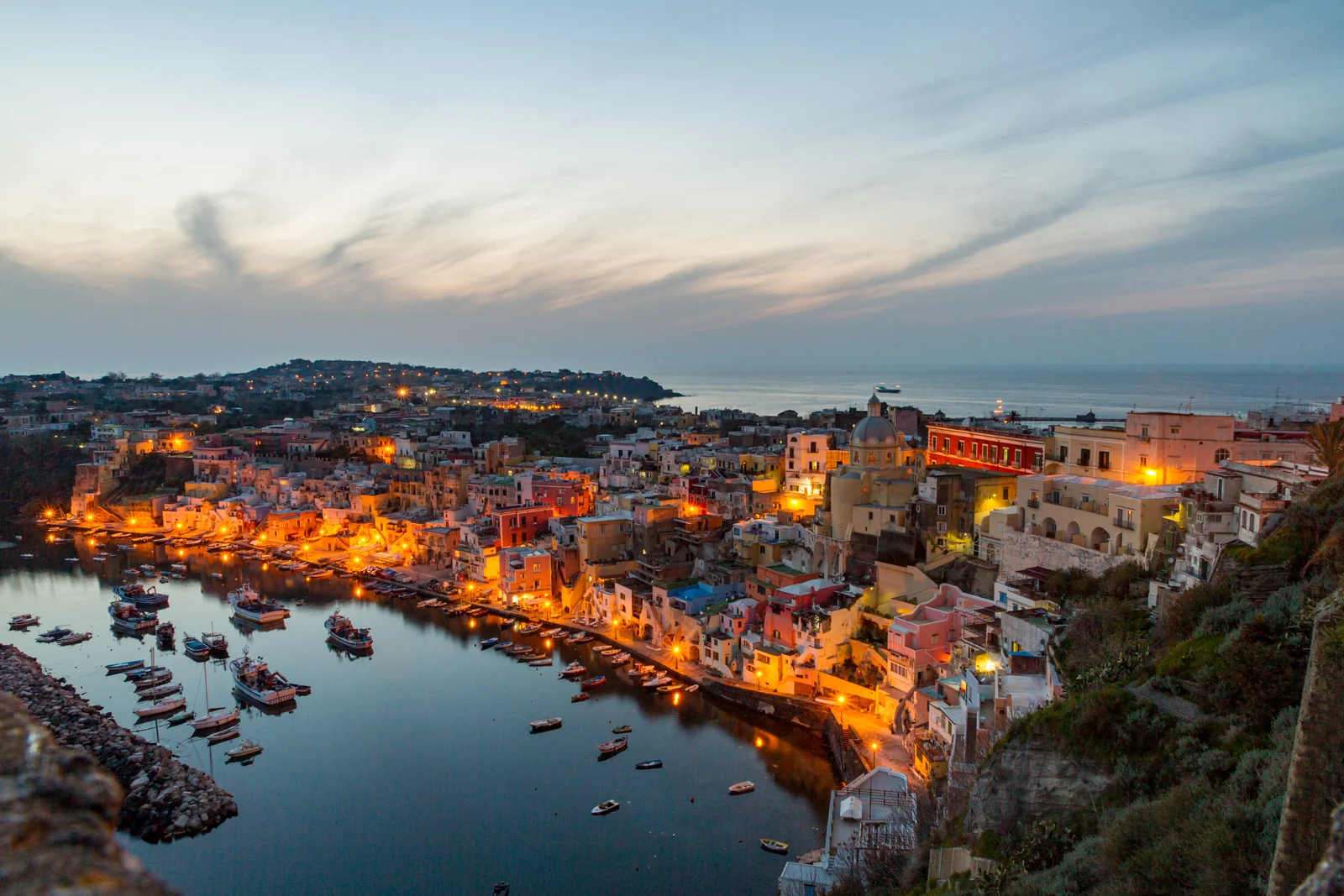
Photo: Matthias Süßen / Wikimedia Commons — CC BY-SA 4.0 · Resized and converted to WebP.
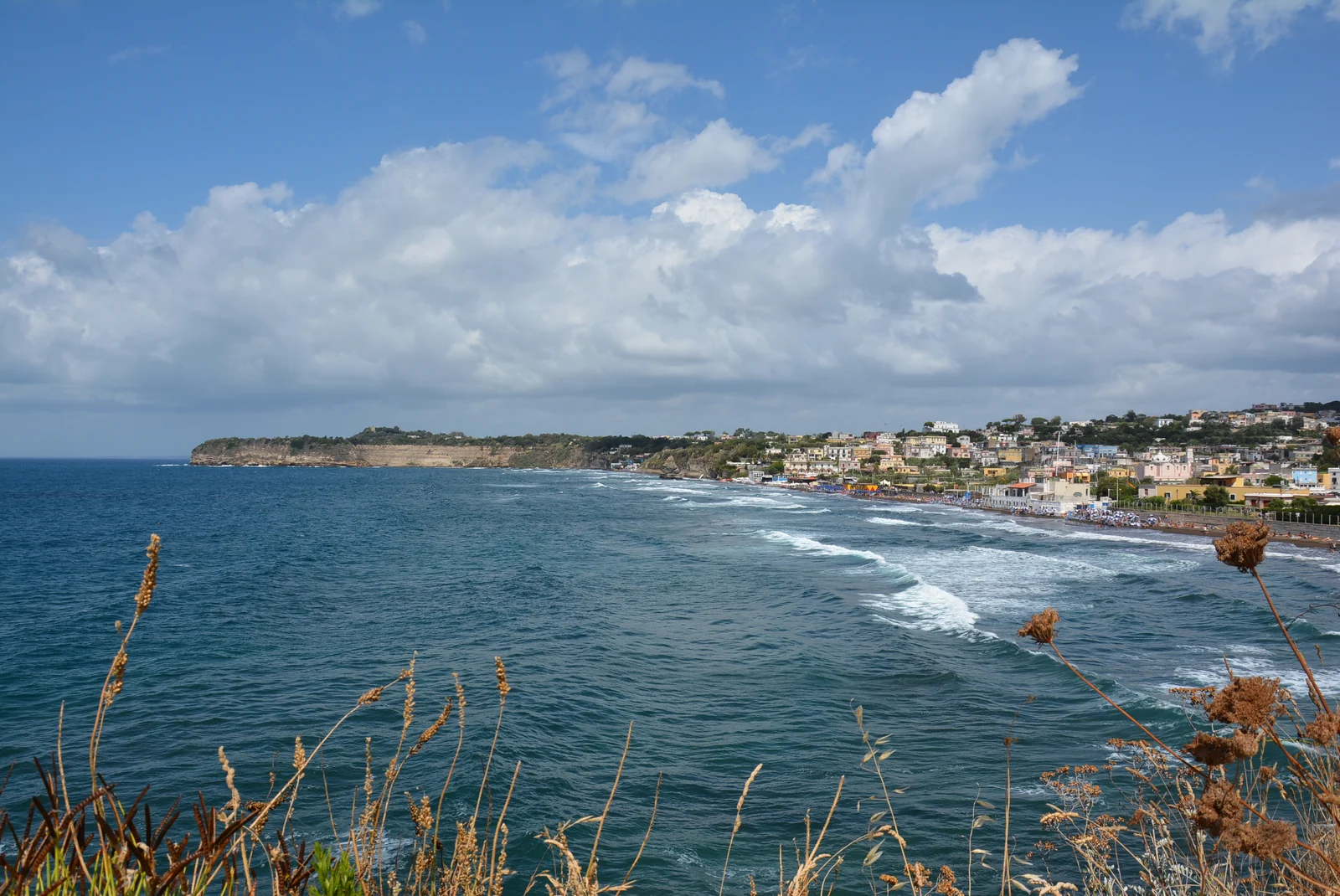
Photo: Mentnafunangann / Wikimedia Commons — CC BY-SA 4.0 · Resized and converted to WebP.
Getting there and around
Procida is reached by sea, at the Marina Grande harbour. Caremar links the island with Naples, from Molo Beverello and from Porta di Massa, with Pozzuoli and with Ischia, both Ischia Porto and Casamicciola. On Caremar’s departures board of 23 November 2026 the hydrofoil from Molo Beverello took 40 minutes, the ferry to Porta di Massa an hour, the one from Pozzuoli 30 minutes and the one to Ischia 25; on the same day several fast crossings were shown as cancelled, so it is worth checking the status of the crossing before leaving.
From the harbour Via Principe Umberto climbs to Piazza dei Martiri and the Belvedere dei Cannoni; Corricella can only be reached on foot. The island is easy to explore on foot, and there are also buses and taxis.
Sources: Caremar — Traghetti e aliscafi nel Golfo di Napoli: linee e partenze · Ministero del Turismo, italia.it — Procida, borgo sul golfo di Napoli · Ministero del Turismo, italia.it — Marina Corricella
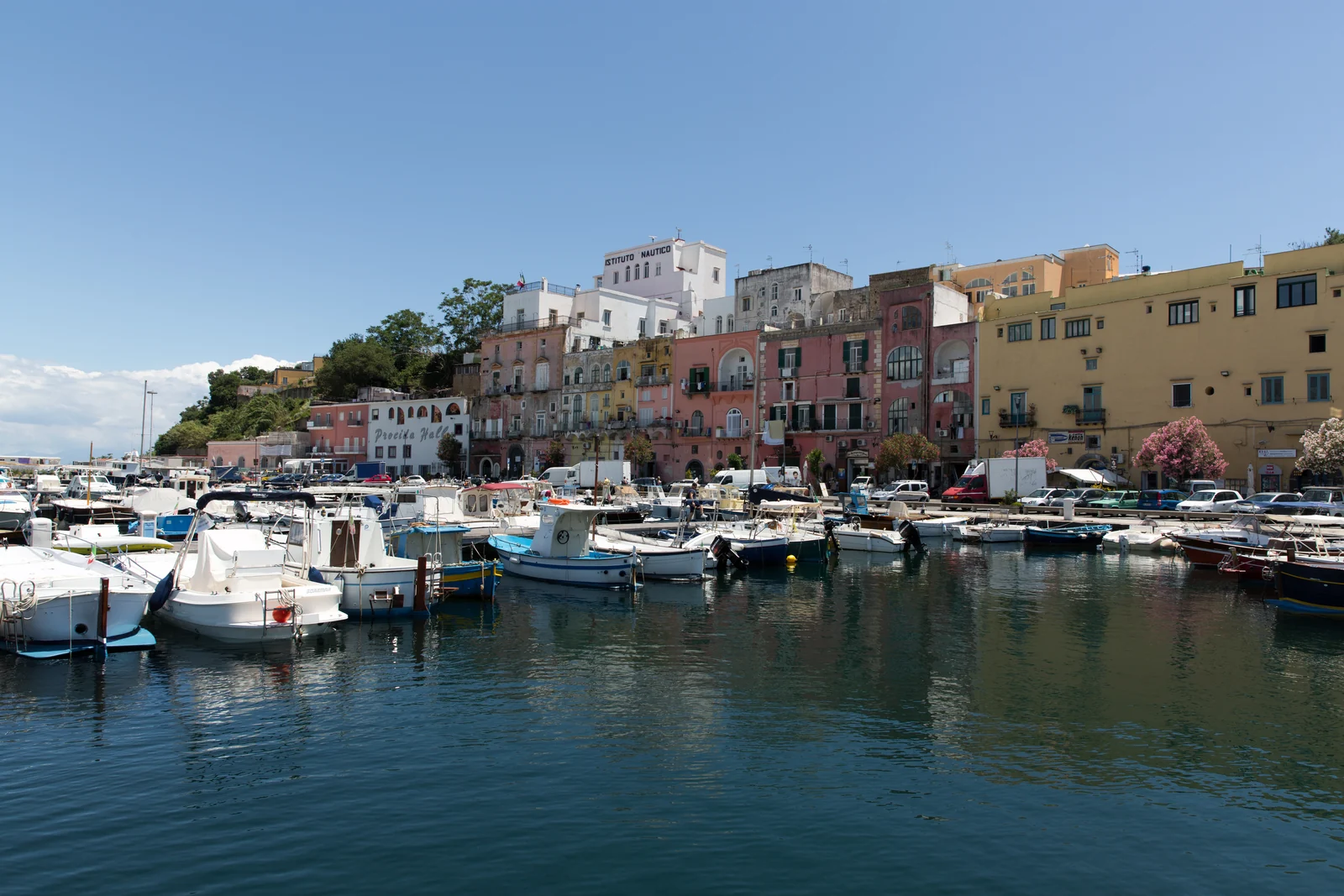
Photo: Ekrem Canli / Wikimedia Commons — CC BY-SA 4.0 · Resized and converted to WebP.
Tourism
The island is best reached without a car. For the 2025 season the decree of the President of the Campania Region of 21 March banned, from 1 April to 30 October, the landing and circulation on Procida of vehicles belonging to non-residents, with no distinction between those coming from the region, from elsewhere in Italy or from abroad. An exemption is requested from the Municipal Police with the form indicated by the council at least 48 hours before boarding, and the request is not an authorisation until a positive reply arrives; vehicles carrying people with disabilities who hold the disabled badge need no prior authorisation.
Since 2026 the island has a new regulation for its limited traffic zone, approved by the town council, and access is checked by electronic gates with cameras that read number plates: the San Leonardo gate is on the stretch of via Vittorio Emanuele between via Principe Umberto and via Roma. The red sign «ZTL ATTIVA» marks the period when entry is forbidden, the green «ZTL NON ATTIVA» the period when it is allowed. Permanent or temporary permits are requested from the Municipal Police, also online, and an entry already made can be regularised within 48 hours with the dedicated form.
The sea around Procida and Vivara is in the «Regno di Nettuno» marine protected area, and the regulation approved by the Ministry of the Environment in 2009 also applies to those who come by boat or to swim: in the A zones there is no swimming and no navigation, throughout the area jet skis and water skiing are not allowed, the caves may be entered only in rowing boats and, near the shore, motor boats keep below 5 knots within 300 metres and below 10 knots between 300 and 600 metres. No anchor is dropped on posidonia meadows or coralligenous seabeds, and around Vivara those who do not live on the island dive only with the centres authorised by the managing body, in limited groups and on set days.
Sources: Comune di Procida — Sbarco a Procida: modalità 2025 (Decreto del Presidente della Regione Campania n. 23 del 21 marzo 2025) · Comune di Procida — ZTL Procida (Regolamento, Delibera di CC n. 8/2026; ordinanza n. 175/2026) · Ministero dell’Ambiente — Decreto 30 luglio 2009, Regolamento di esecuzione e organizzazione dell’area marina protetta «Regno di Nettuno» (GU n. 198 del 27 agosto 2009)
“Come to Procida as a guest, not as a tourist: that is how these places truly let you know them.”
Accommodation in figures
In the Ministry of Tourism’s national database of accommodation (BDSR), on 12 October 2026, Procida had 473 establishments with a verified national identification code (CIN): 17 hotel-type establishments, 104 non-hotel establishments and 352 other establishments.
Sources: Ministero del Turismo – Banca Dati Strutture Ricettive (dashboard pubblica)
Nearby
Vivara, joined to Procida by a bridge, is a state nature reserve whose offices are in the former orphans’ conservatory on Terra Murata. Caremar ferries cross in half an hour to Pozzuoli, on the mainland, and in under half an hour to Ischia; the islands of Ischia, Vivara and Procida together make up the “Regno di Nettuno” marine protected area, for whose management the municipalities of Barano, Casamicciola Terme, Forio, Ischia, Lacco Ameno, Serrara Fontana and Procida formed a consortium.
Sources: Riserva Naturale Statale Isola di Vivara — Prenota la tua visita: orari, modalità e tariffe 2026 · Caremar — Traghetti e aliscafi nel Golfo di Napoli: linee e partenze · Ministero dell’Ambiente — Decreto 27 dicembre 2007, Istituzione dell’area marina protetta «Regno di Nettuno»
The town council
The official website of the Comune di Procida, registered in IndicePA, the index of the digital addresses of Italy’s public administrations, is the reference for the town council’s offices, opening hours and news. Its address is listed among the sources of this section.
Sources: Comune di Procida, sito istituzionale · IndicePA (AgID), Indice dei domicili digitali delle pubbliche amministrazioni: dataset Enti
Where to stay
In the municipality of Procida the national database of the Ministry of Tourism lists 473 accommodation businesses with a verified CIN code: 17 hotels, 104 other licensed accommodation and 352 other types such as B&Bs and private rentals.
Licensed businesses from the official list of accommodation named as the source in this section. Where the list gives it, the property's official identification code appears next to its name: the national CIN code, or the code assigned by the Region or by the body that keeps the list. Private individuals are not listed. This list is the official census of licensed businesses, not a list of Apulica partners: to stay in Procida you do not have to check one property after another yourself; write to Apulica and we look for the stay that suits your journey, checking availability and conditions before any confirmation.
LA SUITE
Hotel · ★★★★★
Regional code (CUSR) 15063061ALB0054
PROCIDA CAMP E RESORT - LA CARAVELLA
Holiday village · ★★★★
Regional code (CUSR) 15063061EXT0043
SERRA
Campsite · ★★
Regional code (CUSR) 15063061EXT0048
LE CASETTE
Farm stay
Regional code (CUSR) 15063061EXTR9C6
ANICULOISESEI MADALINA ELVIRA
Guest rooms
Regional code (CUSR) 15063061EXT0090
HOSTELLETELLA S.R.L.
Hostel
Regional code (CUSR) 15063061EXT0197
HOTEL LA TONNARA
Hotel · ★★★★
Regional code (CUSR) 15063061ALB0055
AZZURROMARE RESIDENCE
Holiday village · ★★★
Regional code (CUSR) 15063061EXT0073
PROCIDA CAMP & RESORT - CIRACCIO
Campsite · ★
Regional code (CUSR) 15063061EXT0023
ANIMA SUITE
Guest rooms
Regional code (CUSR) 15063061EXT0150
First the places that presented themselves to Apulica, the latest first; then one place of each type in turn, by official category and stars, then by name. No position is paid for.
All 100 entries in alphabetical order
Page 1 of 10
| Name | Type | Identification code |
|---|---|---|
| A SCIULIA | Hotel | Regional code (CUSR) 15063061ALB0001 |
| ANICULOISESEI MADALINA ELVIRA | Guest rooms | Regional code (CUSR) 15063061EXT0090 |
| ANIMA SUITE | Guest rooms | Regional code (CUSR) 15063061EXT0150 |
| ANTANA GUEST HOUSE | Guest rooms | Regional code (CUSR) 15063061EXTDABR |
| ARIA DIMORA STORICA | Hotel | Regional code (CUSR) 15063061ALBK9RC |
| AZZURROMARE RESIDENCE | Holiday village | Regional code (CUSR) 15063061EXT0073 |
| B.C. Casa vacanza Procida | Guest rooms | Regional code (CUSR) 15063061EXT0481 |
| BOUGANVILLE DI NONNA ERNESTA | Guest rooms | Regional code (CUSR) 15063061EXT0021 |
| CALA CALA ROOMS | Guest rooms | Regional code (CUSR) 15063061EXT0453 |
| CASA ANGELINA | Guest rooms | Regional code (CUSR) 15063061EXTQDNQ |
Ask Apulica for a stay in Procida We reply shortly, within a few hours at most, with a proposal for you to consider.
Sources: Ministero del Turismo – Banca Dati Strutture Ricettive (dashboard pubblica), 2026-10-12
YOUR JOURNEY
How to shape a journey here
To include Procida in a trip, or to ask for a guide or a transfer, you can write to Apulica with the button below.
Plan your tripKeep exploring
Ischia
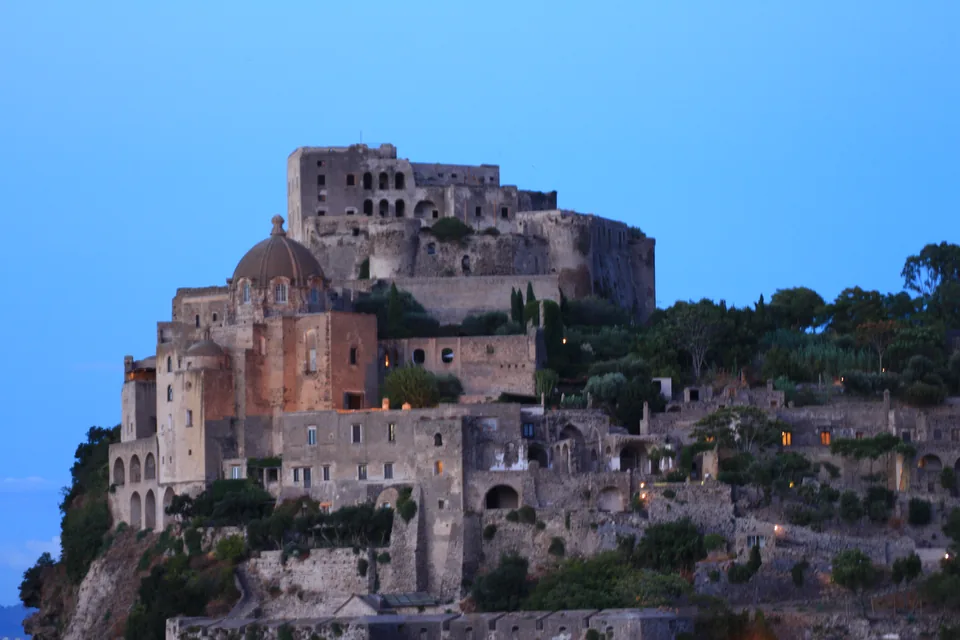
Ischia (NA), Campania: 19,492 residents, 8.14 km². The official facts of the municipality, its town council website and its registered accommodation. The Aragonese Castle and the old village of Ischia Ponte, the Guevara Tower and the bay of Cartaromana, the Bourbon harbour, the cathedral of the Assunta, DOC “Ischia” wine and the Sea Festival at the rocks of Sant’Anna.
Read the guide →Photo: Pask928 / Wikimedia Commons — CC BY-SA 4.0 · Resized and converted to WebP.

Pozzuoli
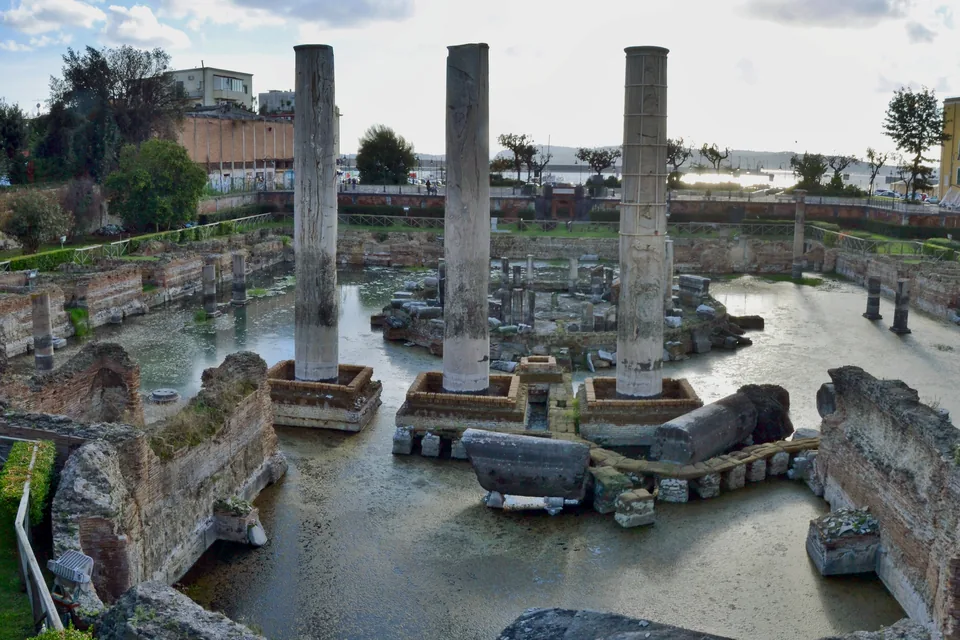
Pozzuoli (NA), Campania: 75,375 residents, 43.84 km². The official facts of the municipality, its town council website and its registered accommodation. The Flavian Amphitheatre, the Macellum, the Rione Terra, the Phlegraean Fields and bradyseism, the port for Ischia and Procida.
Read the guide →Photo: Rolf Cosar / Wikimedia Commons — CC BY-SA 4.0 · Cropped, resized and converted to WebP.

Monte di Procida
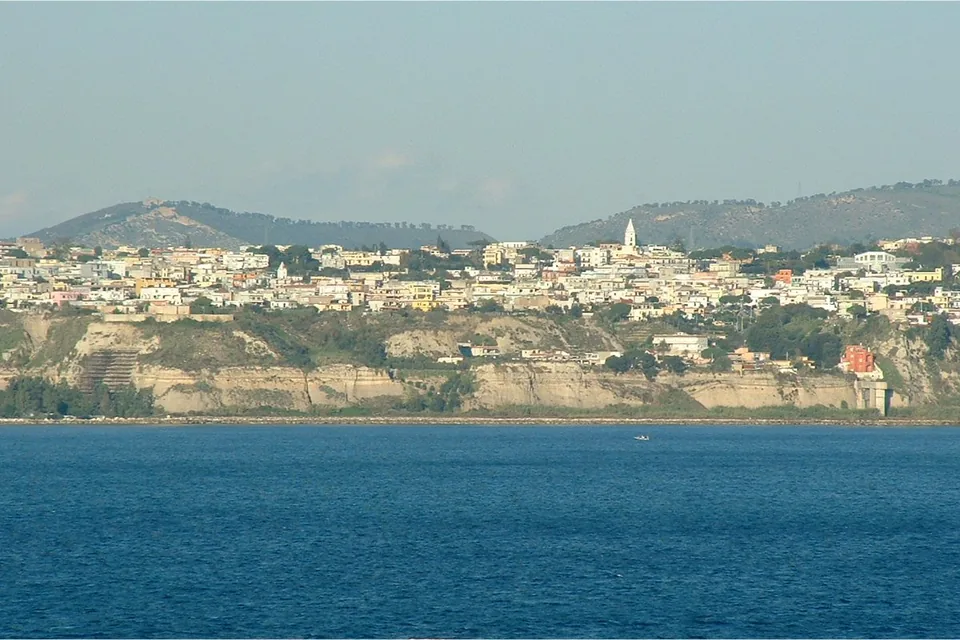
Monte di Procida (NA), Campania: 11,847 residents, 3.70 km². The official facts of the municipality, its town council website and its registered accommodation.
Read the guide →Photo: Retaggio / Wikimedia Commons — CC BY-SA 3.0 · Resized and converted to WebP.

Bacoli
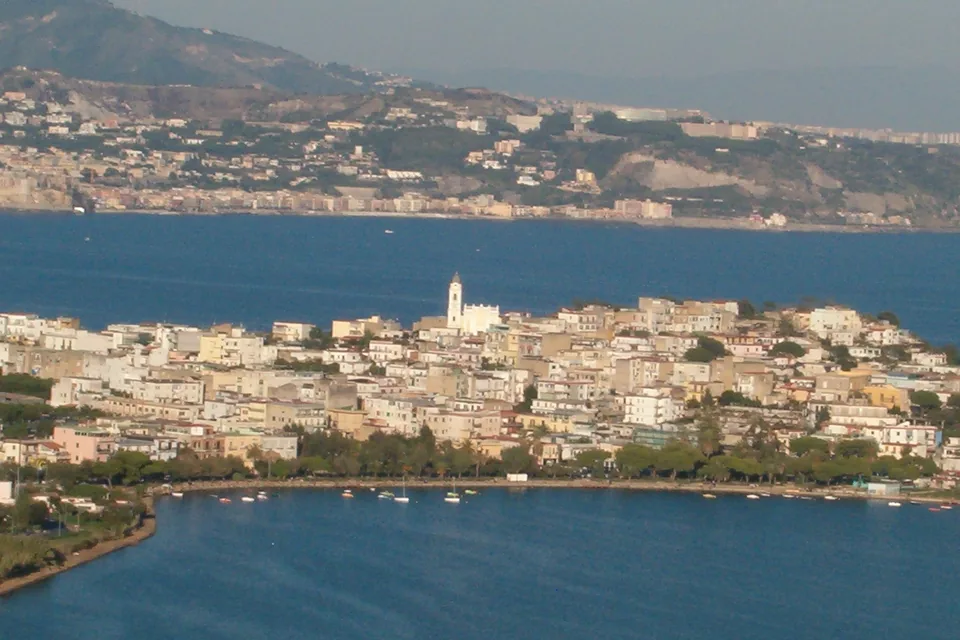
Bacoli (NA), Campania: 24,988 residents, 13.52 km². The official facts of the municipality, its town council website and its registered accommodation.
Read the guide →Photo: Denghiù / Wikimedia Commons — Public domain · Resized and converted to WebP.

Naples
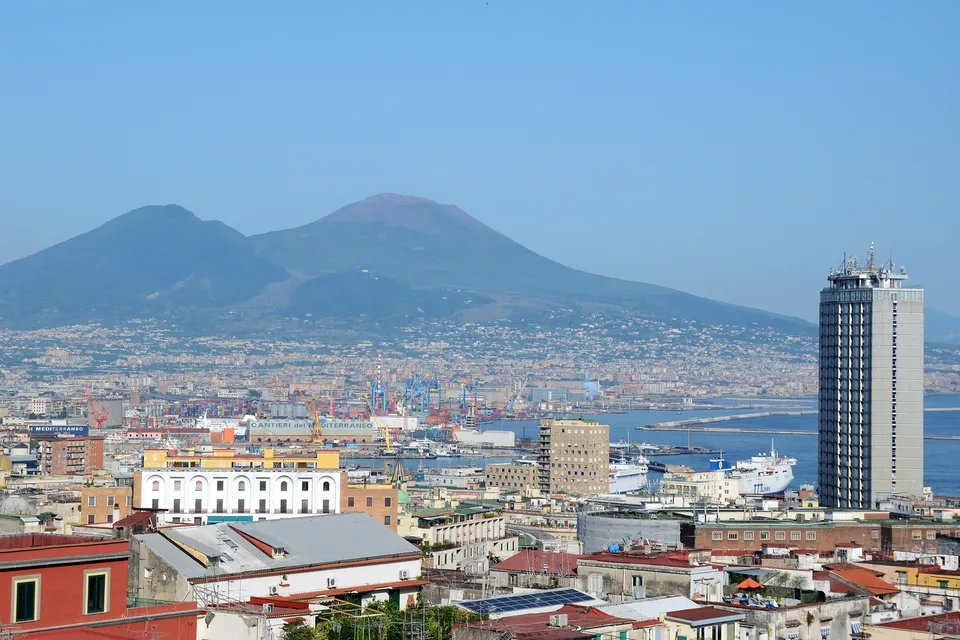
Naples (NA), capital of Campania: 909,013 residents, 119.24 km². The UNESCO-listed historic centre, the museums, the San Carlo, pizza as UNESCO heritage, San Gennaro and, nearby, Vesuvius, Pompeii and the islands.
Read the guide →Photo: Livioandronico2013 / Wikimedia Commons — CC BY-SA 4.0 · Resized and converted to WebP.

Capri
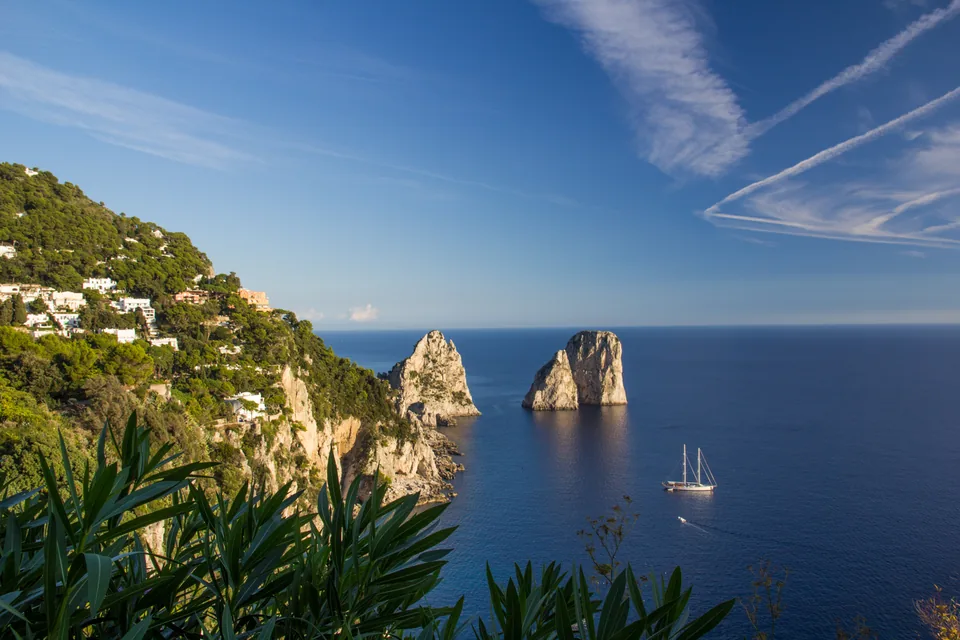
Capri (NA), Campania: 6,722 residents, 4.06 km². The official facts of the municipality, its town council website and its registered accommodation. The Faraglioni, the Piazzetta, the Gardens of Augustus and Via Krupp, the Certosa di San Giacomo with the Archaeological Museum, Tiberius’s Villa Jovis, Villa Lysis, and the island’s PGI lemon and DOC wine.
Read the guide →Photo: Marlis Börger / Wikimedia Commons — CC BY-SA 2.0 · Resized and converted to WebP.
