

Why go
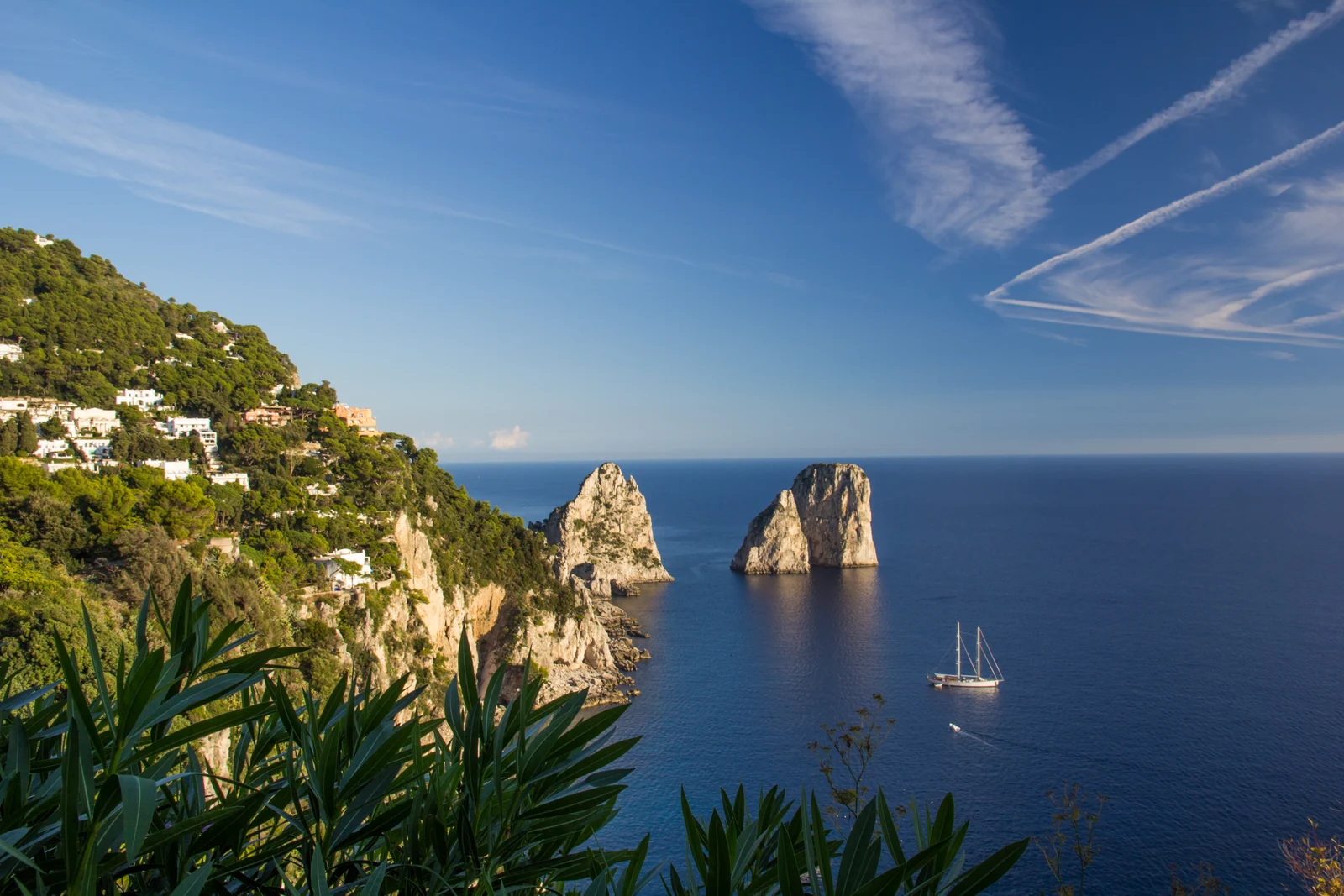
People come to Capri above all for the Faraglioni. The town council describes them as three rock stacks famous all over the world: the Faraglione di Terra, joined to the island, the Faraglione di Mezzo and the Faraglione di Fuori, the only habitat of the blue lizard; behind them rises a fourth rock, the Monacone. The best-known view of them is from the Gardens of Augustus, a few steps from the Piazzetta, which take in at a single glance the bay of Marina Piccola, Via Krupp and the Faraglioni.
The second reason is the island of the emperors. Villa Jovis, the grandest of the residences Tiberius had built on Capri, looks over the Gulf of Naples from Monte Tiberio, 334 metres above the sea; in the Certosa di San Giacomo, the island’s most important Angevin building, the National Archaeological Museum has told the story of the Capri of Augustus and Tiberius since 2024. Then there is twentieth-century Capri: the villas of those who chose the island, such as Jacques d’Adelswärd Fersen’s Villa Lysis and Villa Malaparte on Punta Massullo, and the paintings of Karl Wilhelm Diefenbach. And there is the countryside: the island lies within the area of the “Limone di Sorrento” PGI lemon and has a wine with a controlled designation of origin, “Capri”.
Sources: Comune di Capri — Luoghi: Faraglioni · Comune di Capri — Capri Cultura e Turismo: Giardini di Augusto · Musei e Parchi archeologici di Capri (MiC) — Villa Jovis · Ministero della cultura — Certosa di San Giacomo e Museo archeologico nazionale di Capri (aggiornato il 14 agosto 2026) · Musei e Parchi archeologici di Capri (MiC) — Certosa di San Giacomo · Comune di Capri — Capri Cultura e Turismo: Villa Lysis · Comune di Capri — Luoghi: Villa Malaparte · Ministero dell’agricoltura (MASAF) — Disciplinare di produzione dell’IGP «Limone di Sorrento» · Regione Campania, Assessorato all’agricoltura — Disciplinare di produzione dei vini DOC «Capri» (DPR 7.9.1977, modificato con DM 30.11.2011 e DM 7.3.2014)
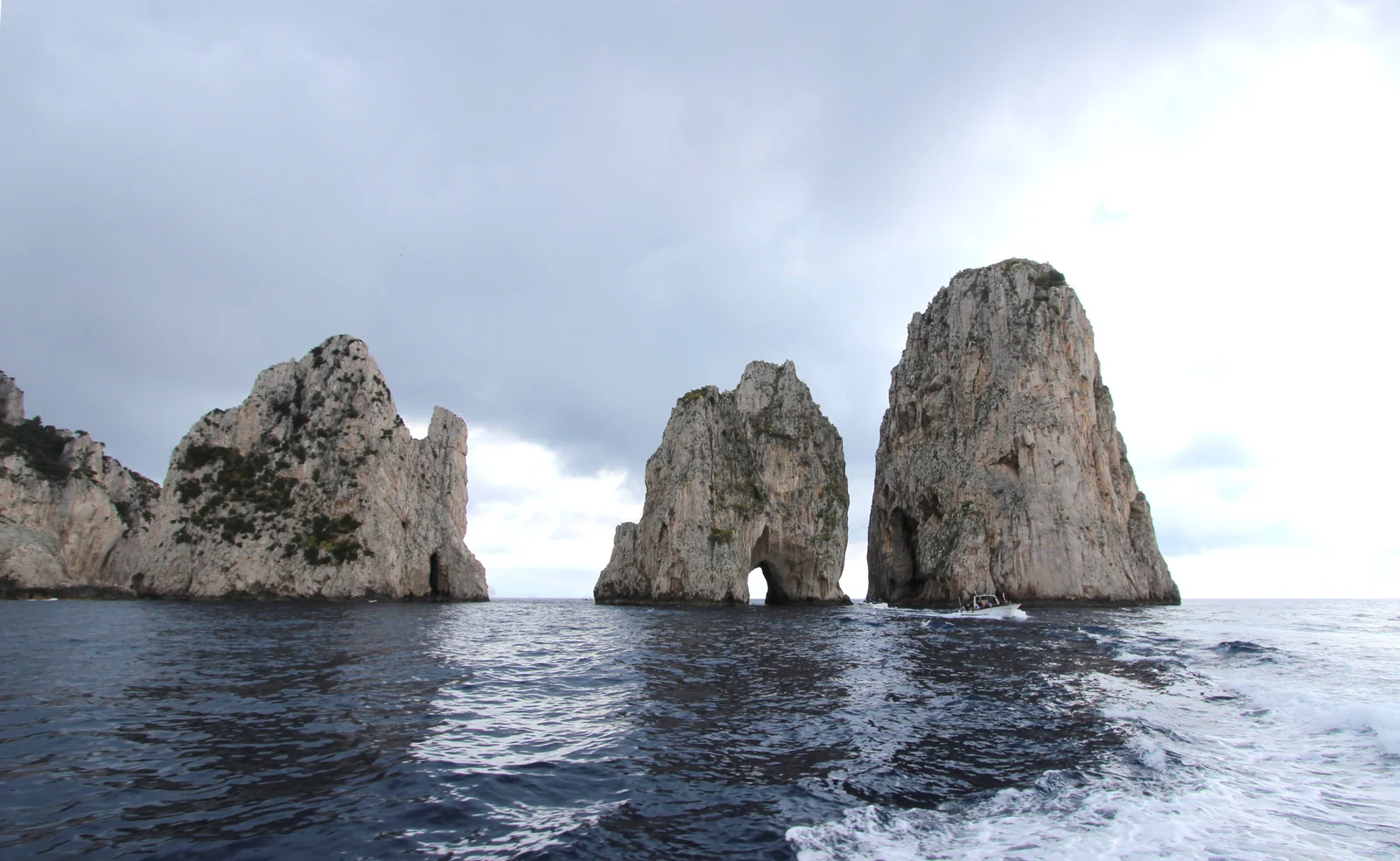
Photo: Colling-architektur / Wikimedia Commons — CC BY-SA 3.0 · Resized and converted to WebP.
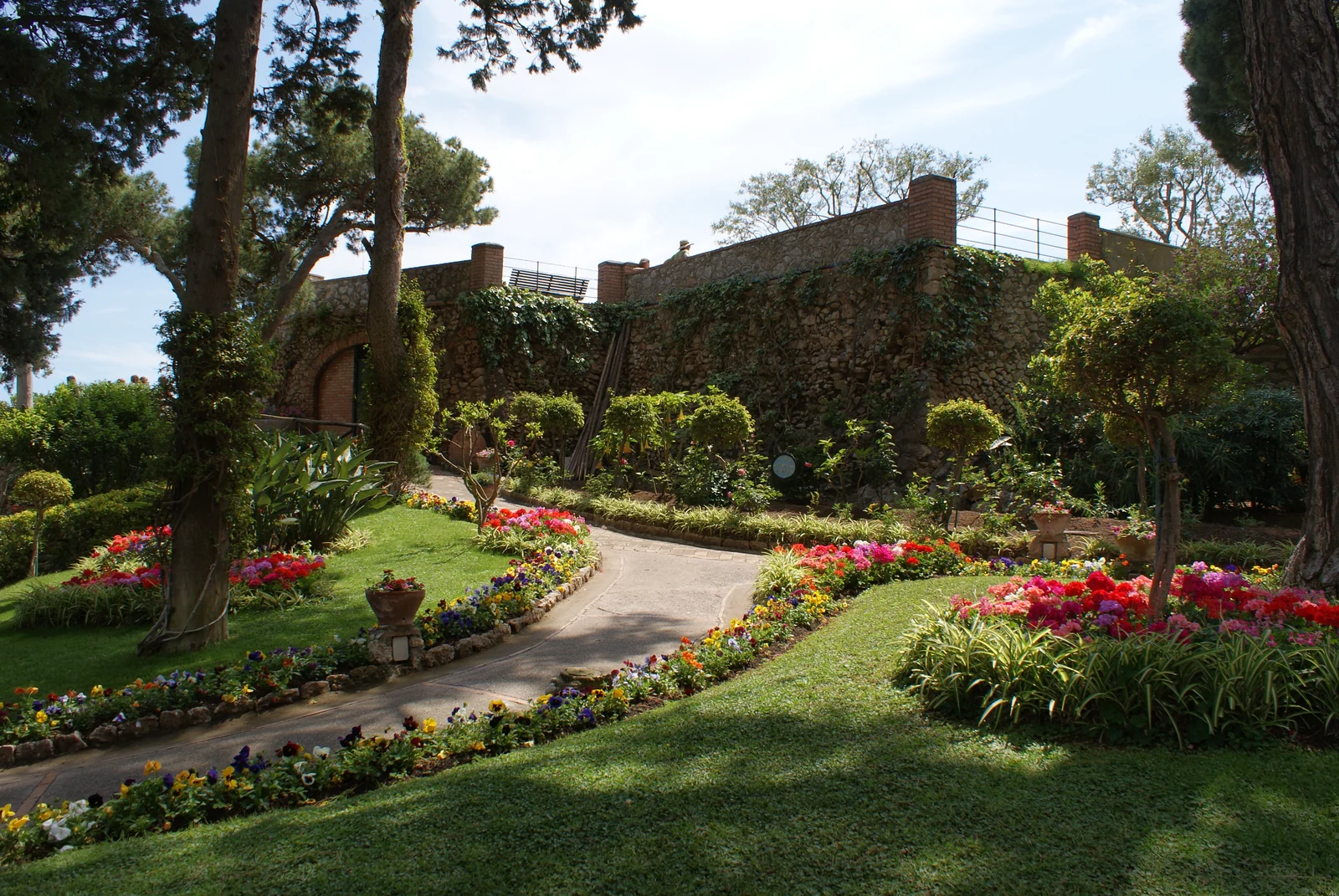
Photo: Norberto Chavez-Tapia / Wikimedia Commons — CC BY-SA 2.0 · Resized and converted to WebP.
The municipality at a glance
Capri is a municipality in the Metropolitan City of Naples, in Campania. Its ISTAT code is 063014. On 1 January 2025 it had 6,722 residents. The municipal territory covers 4.06 km² and ranges from -8 to 469 metres above sea level; the town hall stands at about 152 metres.
The centre is the Piazzetta, Piazza Umberto I, where the town hall stands; the port is at Marina Grande, linked to the Piazzetta by the funicular. The island is divided between two municipalities, Capri and Anacapri.
Sources: ISTAT, Codici statistici delle unità amministrative territoriali: elenco dei comuni al 21 febbraio 2026 · ISTAT, Popolazione residente per età, sesso e stato civile al 1° gennaio 2025 (POSAS) · ISTAT, Principali statistiche geografiche sui comuni: superficie e altimetria al 31 dicembre 2021 · Comune di Capri — Luoghi: Municipio, Piazza Umberto I · Comune di Capri — Luoghi: Porto turistico di Marina Grande · Ministero delle infrastrutture e dei trasporti — Decreto dell’11 marzo 2024 sul divieto di afflusso e circolazione dei veicoli dei non residenti nell’isola di Capri (pubblicato dalla Prefettura di Napoli)
History
Capri reached the height of its splendour in the age of the emperors Augustus and Tiberius: that is how the National Archaeological Museum in the Certosa presents it. Tacitus, the Ministry of Culture recalls, credited Tiberius with twelve residences on the island. The largest and most sumptuous is Villa Jovis, on the eastern headland: the 1935 excavations uncovered a vast building around a large quadrangle of cisterns, with the avenue of myrtles, an atrium with four columns of cipollino marble, the baths with an apsed calidarium, the servants’ quarter and, set apart on the peak, the emperor’s private lodging with floors of polychrome marble. Other Roman villas stood above the Blue Grotto, which was the nymphaeum of the villa of Gradola, and on the Damecuta plain.
The Certosa di San Giacomo was built between 1371 and 1374 by Giacomo Arcucci, Grand Chamberlain to Queen Joanna I of Anjou. In the sixteenth century it was burnt and sacked by Turkish pirates; in the seventeenth century it was restored and enlarged. After the Carthusians were expelled, in 1808, it became a hospice for war invalids and then a prison; in the First World War it housed the 19th infantry regiment. From 1936 the Lateran Canons opened a school for the island’s young people there and a library of more than three thousand volumes; after the Second World War American troops used it as a rest home for airmen. The religious left it in 1961.
The town council recalls that the church of San Costanzo, at Marina Grande, where the island’s patron saint is venerated, was the cathedral of the diocese of Capri from 987 to 1560; its portal dates from the fourteenth century, beneath the Angevin coat of arms. From 1826, the year the Blue Grotto was discovered by the wider public, the island inspired painters, poets and writers: in 2026 the bicentenary was marked in the Certosa with a study day on “the invention of the myth of Capri”.
At the beginning of the twentieth century the German industrialist Friedrich Alfred Krupp bought the land between the Castiglione hill and the Certosa and offered the town council the money for a road from Marina Piccola to the Certosa: the council engineer Emilio Mayer drew up the design in 1900 and the road, cut into the rock, was built in two years. Krupp gave road and park to the town; the park later took the name Gardens of Augustus. In 1904 Jacques d’Adelswärd Fersen built Villa Lysis; Karl Wilhelm Diefenbach came to the island in December 1899 and lived there until his death, in 1913; Curzio Malaparte built his house on Punta Massullo between 1938 and 1940.
Sources: Musei e Parchi archeologici di Capri (MiC) — Certosa di San Giacomo · Ministero della cultura — Certosa di San Giacomo e Museo archeologico nazionale di Capri (aggiornato il 14 agosto 2026) · Ministero della cultura — Palazzo di Tiberio e Villa Jovis (aggiornato il 6 luglio 2026) · Musei e Parchi archeologici di Capri (MiC) — Villa Jovis · Musei e Parchi archeologici di Capri (MiC) — Grotta Azzurra · Musei e Parchi archeologici di Capri (MiC) — Villa Damecuta · Comune di Capri — Luoghi: Chiesa di San Costanzo · Musei e Parchi archeologici di Capri (MiC) — «L’invenzione del mito di Capri. A duecento anni dalla scoperta della Grotta Azzurra (1826-2026)» · Comune di Capri — Capri Cultura e Turismo: Giardini di Augusto · Comune di Capri — Capri Cultura e Turismo: Villa Lysis · Comune di Capri — Luoghi: Villa Malaparte
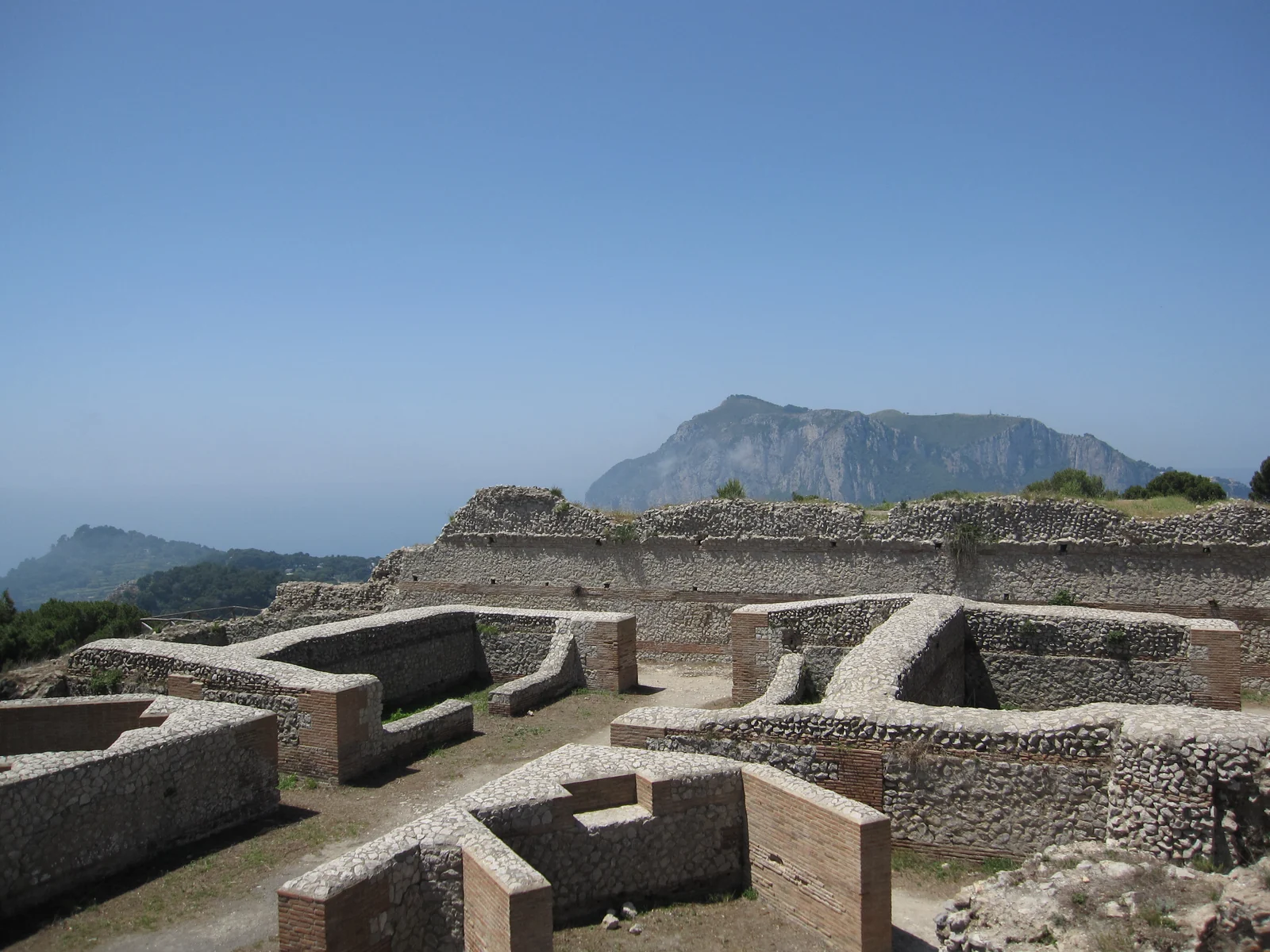
Photo: Psychs / Wikimedia Commons — CC BY-SA 2.0 · Resized and converted to WebP.
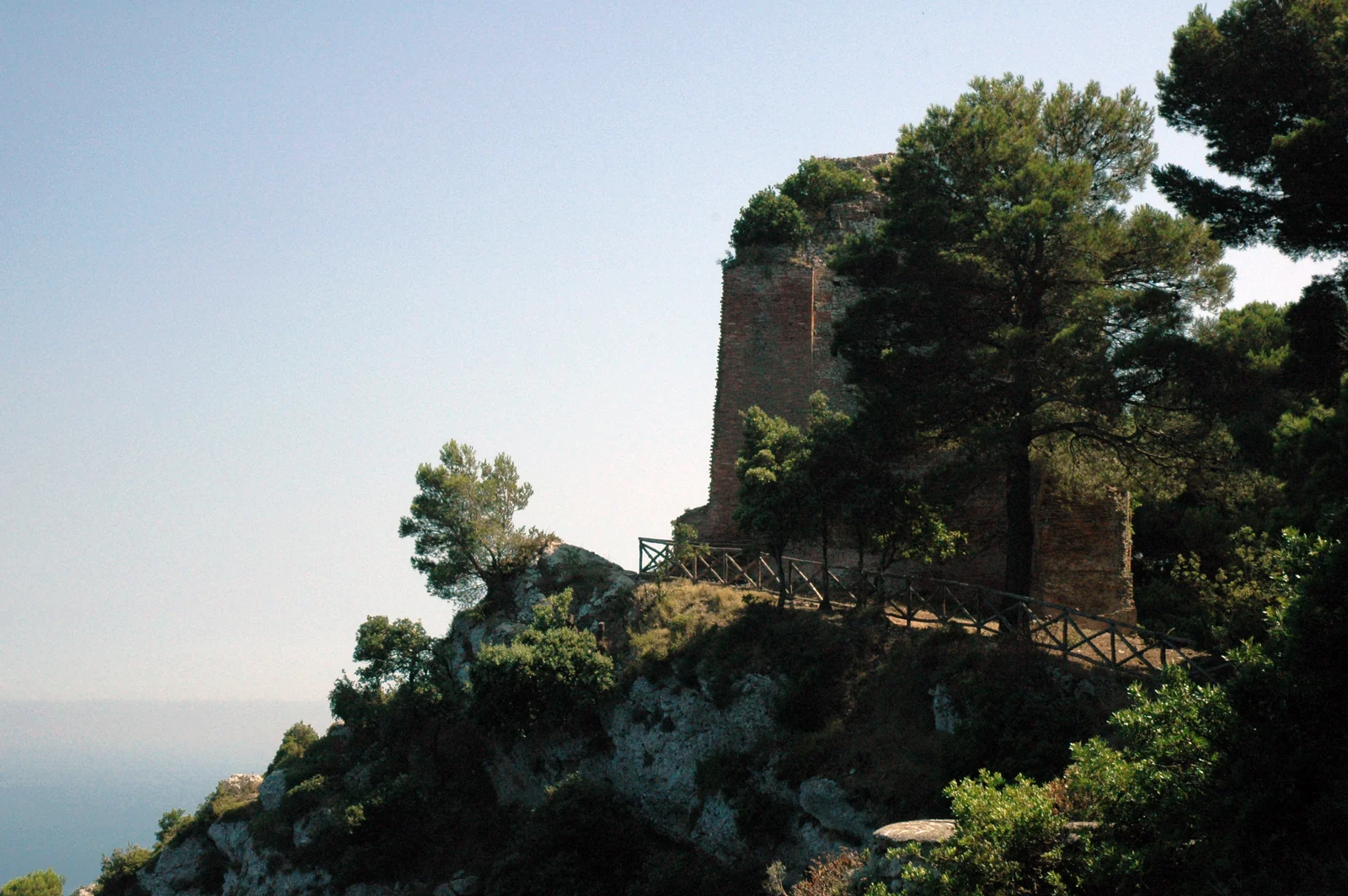
Photo: DimiTalen / Wikimedia Commons — CC0 · Resized and converted to WebP.
What to see
The Piazzetta, that is Piazza Umberto I, is the heart of the town: the town hall stands on it, at number 9, and the funicular from Marina Grande arrives there. From here, in about six minutes on foot along Via Vittorio Emanuele, Via Federico Serena and Viale Matteotti, you reach the Gardens of Augustus, the municipal park that holds the main species of flowers and plants of the island; the cantilevered terraces built in the 1930s look from the Tuoro hill to the Faraglioni, as far as Marina Piccola with the Scoglio delle Sirene and Punta Mulo. Below the Gardens runs Via Krupp, the hairpin road cut into the rock. According to the town council the Gardens are accessible to people with reduced mobility thanks to two stairlifts; since 20 February 2026 admission can only be paid digitally.
Next to the Gardens is the Certosa di San Giacomo, with the “upper house” of the church, the cloisters and the prior’s apartment and the “lower house” of the storerooms and kitchens. It houses two museums of the Ministry of Culture. The Diefenbach Museum, opened on 12 September 1974, holds thirty-two paintings, five sculptures and a model of the island by the German painter Karl Wilhelm Diefenbach, who painted Marina Piccola, the Arco Naturale, Pizzolungo, Monte Solaro and Tragara. The National Archaeological Museum, opened on 26 July 2024 in the Prior’s Quarters, presents 120 objects and works from the age of Augustus and Tiberius, including marble sculptures, frescoes and tableware, and ends with the sculptures of the Blue Grotto; in 2026 it was enlarged with two rooms, where the Roman sarcophagus of Crispina, from the second century, is on display, and with an immersive room on Roman Capri.
Villa Jovis, on Viale Amedeo Maiuri, is the archaeological site of Tiberius’s residence on Monte Tiberio. In 2026 the villa’s lighthouse was restored and the complex was given new lighting, visible from land and sea, which also lights the ambulatio overlooking the sea. Villa Lysis, at Via Lo Capo 65, is the 1904 villa perched on a spur above Marina Grande: halls, stucco and marble ranging from Louis XVI style, neoclassicism and art nouveau to the Vienna Secession, and the staircase rising to the peristyle with the inscription “Amori et Dolori Sacrum”. Today it hosts the works of the artist Jago. The Gardens of Augustus and Villa Lysis are municipal sites and are free for residents of Capri and Anacapri.
Sources: Comune di Capri — Luoghi: Municipio, Piazza Umberto I · Comune di Capri — Capri Cultura e Turismo: Giardini di Augusto · Comune di Capri — Luoghi: Giardini di Augusto · Ministero della cultura — Certosa di San Giacomo e Museo archeologico nazionale di Capri (aggiornato il 14 agosto 2026) · Musei e Parchi archeologici di Capri (MiC) — Certosa di San Giacomo · Musei e Parchi archeologici di Capri (MiC) — Il museo di Capri si amplia: due nuove sale (27 maggio 2026) · Ministero della cultura — Palazzo di Tiberio e Villa Jovis (aggiornato il 6 luglio 2026) · Musei e Parchi archeologici di Capri (MiC) — Restauro del Faro e nuova illuminazione di Villa Jovis (16 giugno 2026) · Comune di Capri — Capri Cultura e Turismo: Villa Lysis · Comune di Capri — Capri Cultura e Turismo: siti comunali, biglietti e tariffe
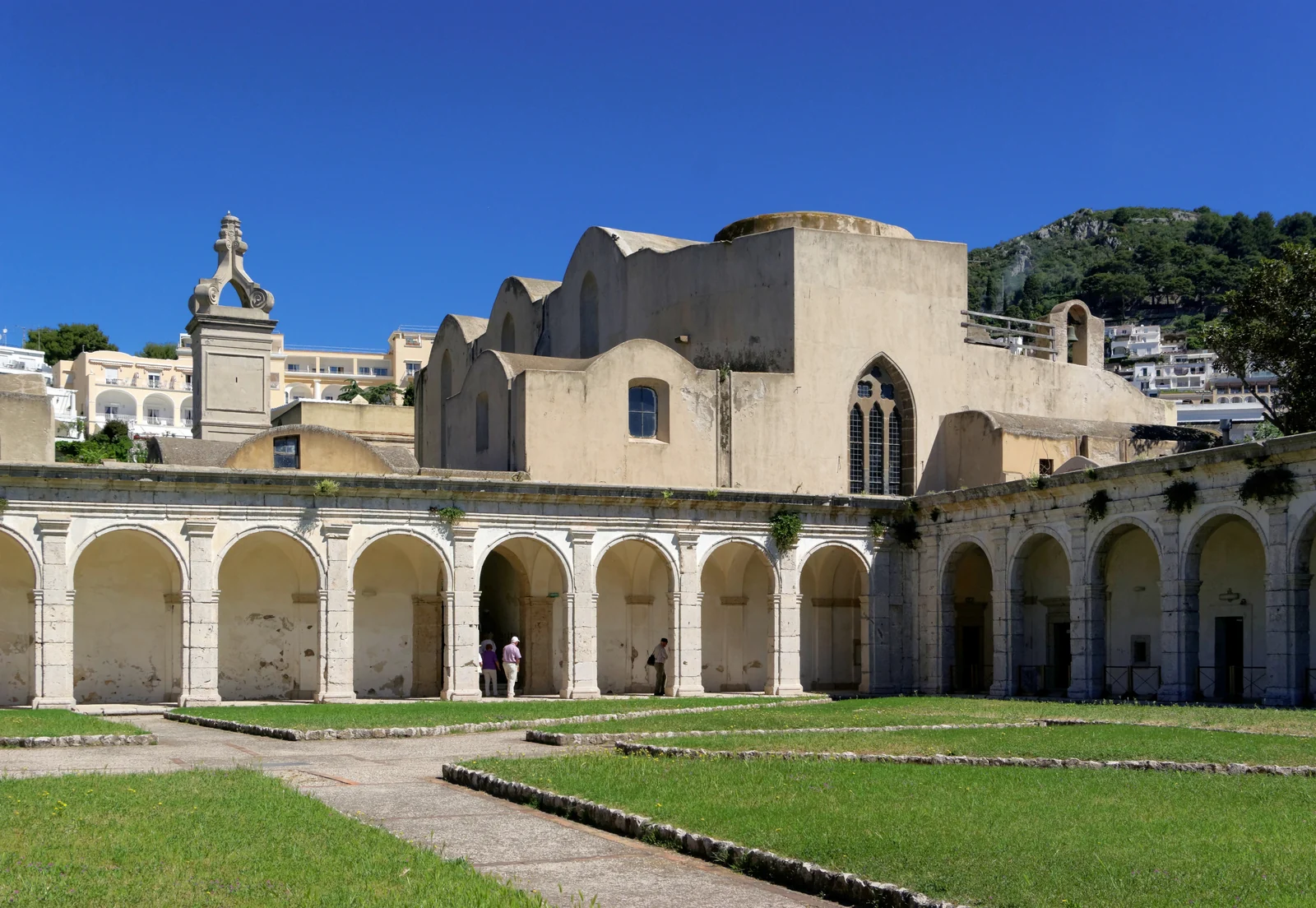
Photo: Berthold Werner / Wikimedia Commons — CC BY-SA 3.0 · Resized and converted to WebP.
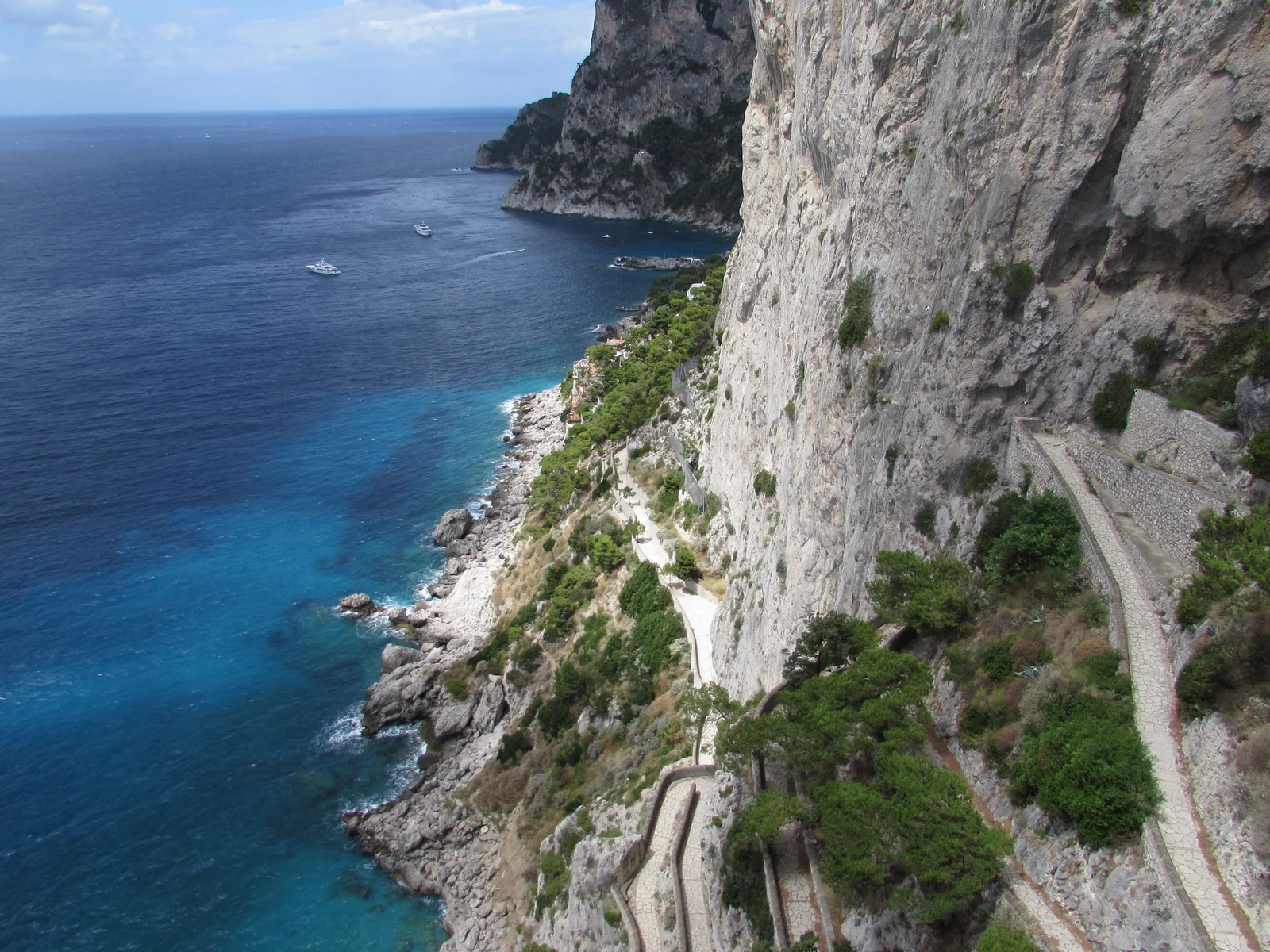
Photo: Cezar Suceveanu / Wikimedia Commons — CC BY-SA 4.0 · Resized and converted to WebP.
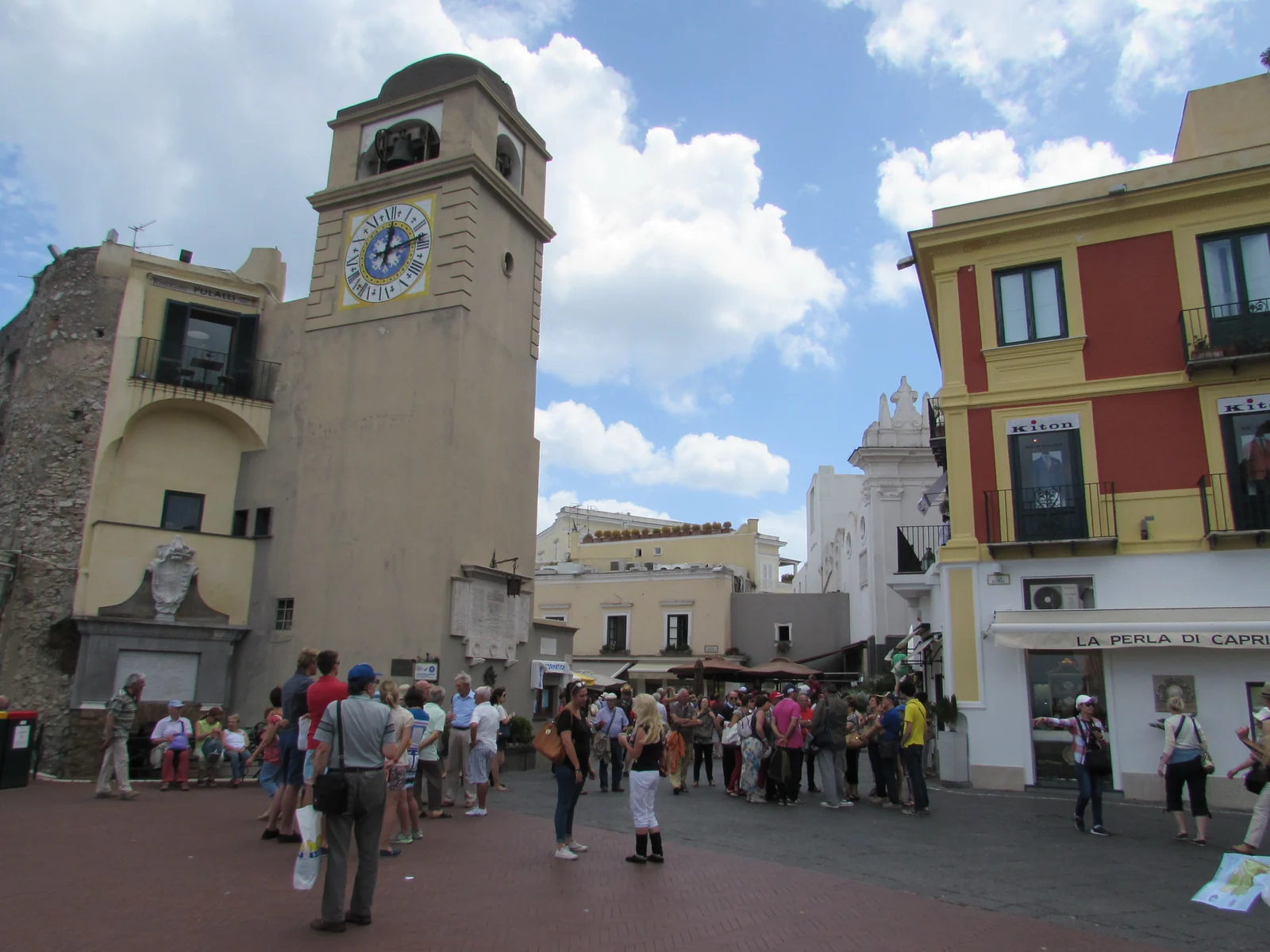
Photo: Cezar Suceveanu / Wikimedia Commons — CC BY-SA 4.0 · Resized and converted to WebP.
Flavours
The island of Capri lies within the area of the “Limone di Sorrento” Protected Geographical Indication: the specification covers the whole territory of Capri and Anacapri up to 500 metres above sea level, together with six municipalities of the Sorrento peninsula. The lemon is the “Ovale di Sorrento”, an ecotype of the femminello: an elliptical fruit of at least 85 grams, with a citrine-yellow peel rich in essential oil and a strong scent, and plenty of very acidic juice. The trees grow under frameworks of poles, preferably chestnut, at least three metres high, with seasonal covers; the fruit is picked by hand between 1 January and 31 October, without ever touching the ground.
The island also has a wine with a controlled designation of origin, “Capri”, recognised in 1977: the grapes must come from the whole territory of the island and the wine is made within the production area. The white comes from Falanghina and Greco, at least 80 per cent, with at least half Falanghina; the red from at least 80 per cent Piedirosso. The specification describes the white as pale straw-yellow, dry and fresh, and the red as ruby, dry and savoury.
Sources: Ministero dell’agricoltura (MASAF) — Disciplinare di produzione dell’IGP «Limone di Sorrento» · Regione Campania, Assessorato all’agricoltura — Disciplinare di produzione dei vini DOC «Capri» (DPR 7.9.1977, modificato con DM 30.11.2011 e DM 7.3.2014)
Things to do
Capri is a place to explore on foot. From Marina Grande the funicular climbs to the Piazzetta in four minutes; by funicular and then on foot along Via Vittorio Emanuele and Via Federico Serena, or along Via Camerelle and Via Ignazio Cerio, it takes 15-20 minutes from the port to the Certosa. Villa Lysis can only be reached on foot, in about 45 minutes all uphill, by Via Longano and Via Sopramonte or by Via Le Botteghe, Via Fuorlovado and Via Croce, then along Via Tiberio as far as Via Lo Capo; the town council warns that the route is not suitable for people with reduced mobility. For Villa Jovis you carry on along Via Tiberio: from the Piazzetta it takes about an hour, on a pedestrian route with uphill stretches.
The coast is best seen from the sea. The town council notes that the Faraglioni can be approached by boat, on the trips around the island that mostly leave from Marina Grande, and that Villa Malaparte, on Punta Massullo, is a private house: it is seen from outside. The Blue Grotto, the nymphaeum of the Roman villa of Gradola, is visited by boat; overland it takes about 45 minutes from Marina Grande, by bus to Anacapri and then on the direct line to the Grotto. In summer the Gardens of Augustus and Villa Lysis host concerts, exhibitions, plays and poetry readings; events open to the public do not require an admission ticket.
Sources: Comune di Capri — Luoghi: Porto turistico di Marina Grande · Musei e Parchi archeologici di Capri (MiC) — Come raggiungerci · Comune di Capri — Capri Cultura e Turismo: Villa Lysis · Comune di Capri — Luoghi: Faraglioni · Comune di Capri — Luoghi: Villa Malaparte · Musei e Parchi archeologici di Capri (MiC) — Grotta Azzurra · Comune di Capri — Capri Cultura e Turismo: Giardini di Augusto · Comune di Capri — Capri Cultura e Turismo: siti comunali, biglietti e tariffe
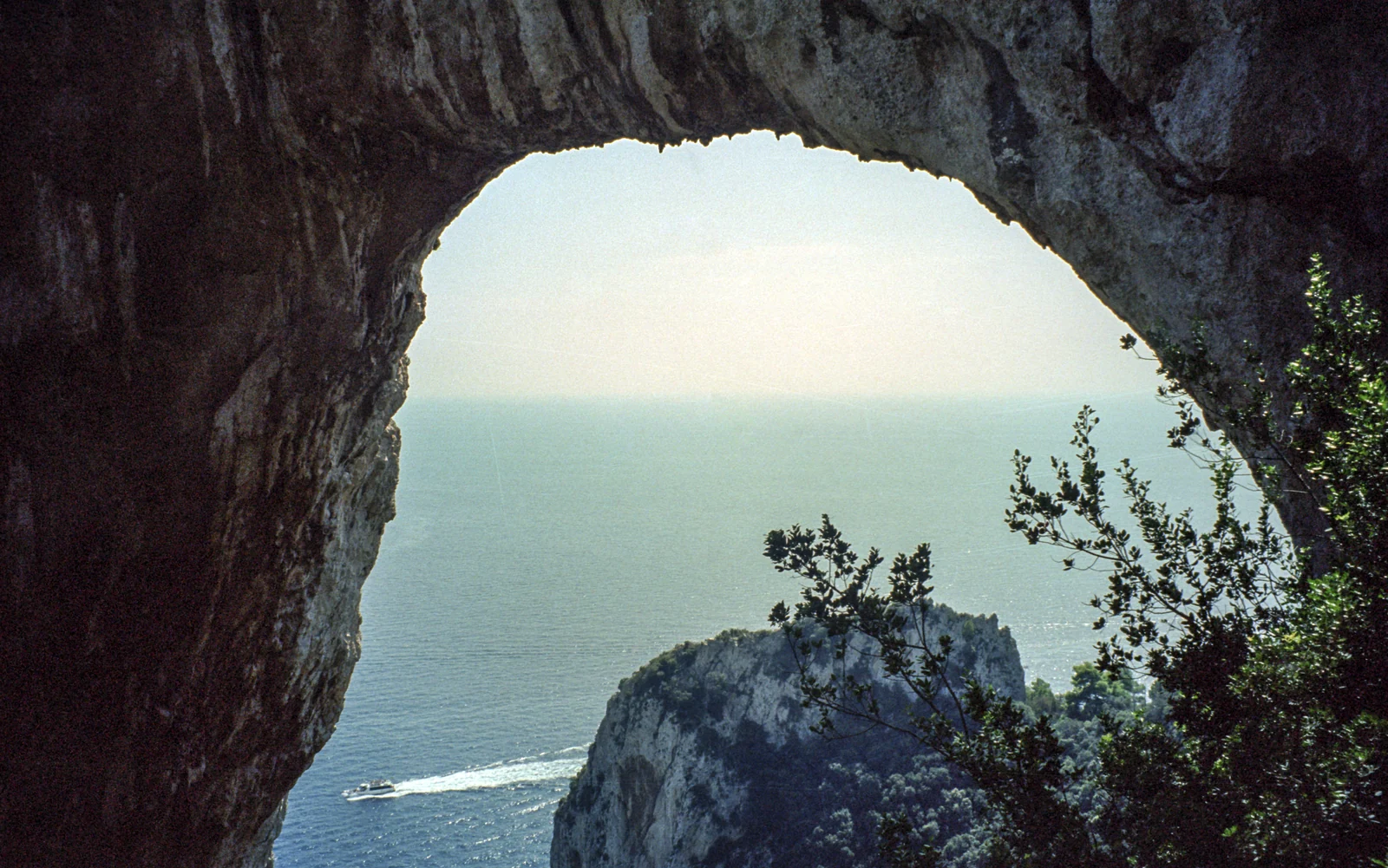
Photo: Jerzy Strzelecki / Wikimedia Commons — CC BY-SA 3.0 · Resized and converted to WebP.
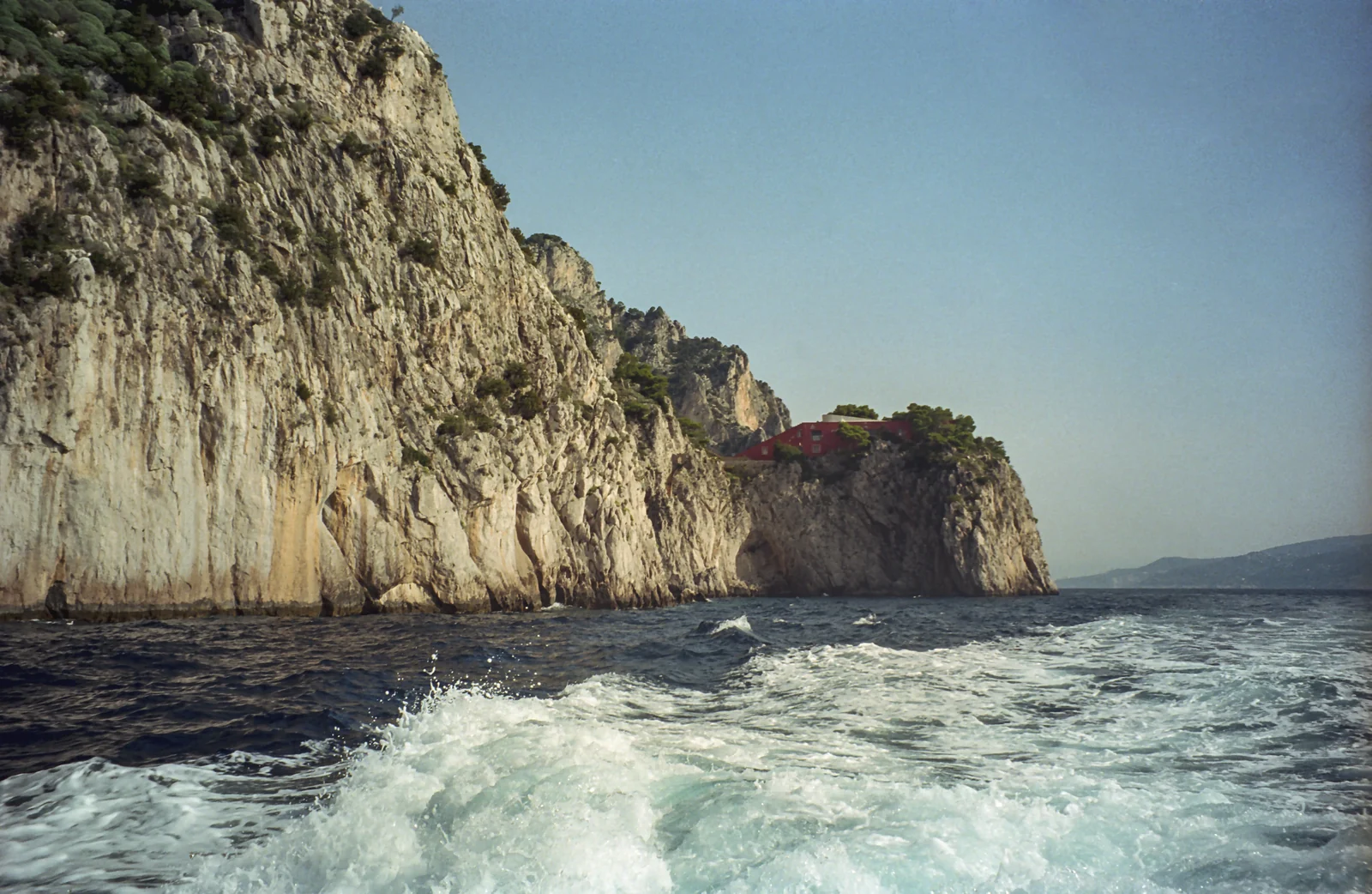
Photo: Jerzy Strzelecki / Wikimedia Commons — CC BY-SA 3.0 · Resized and converted to WebP.
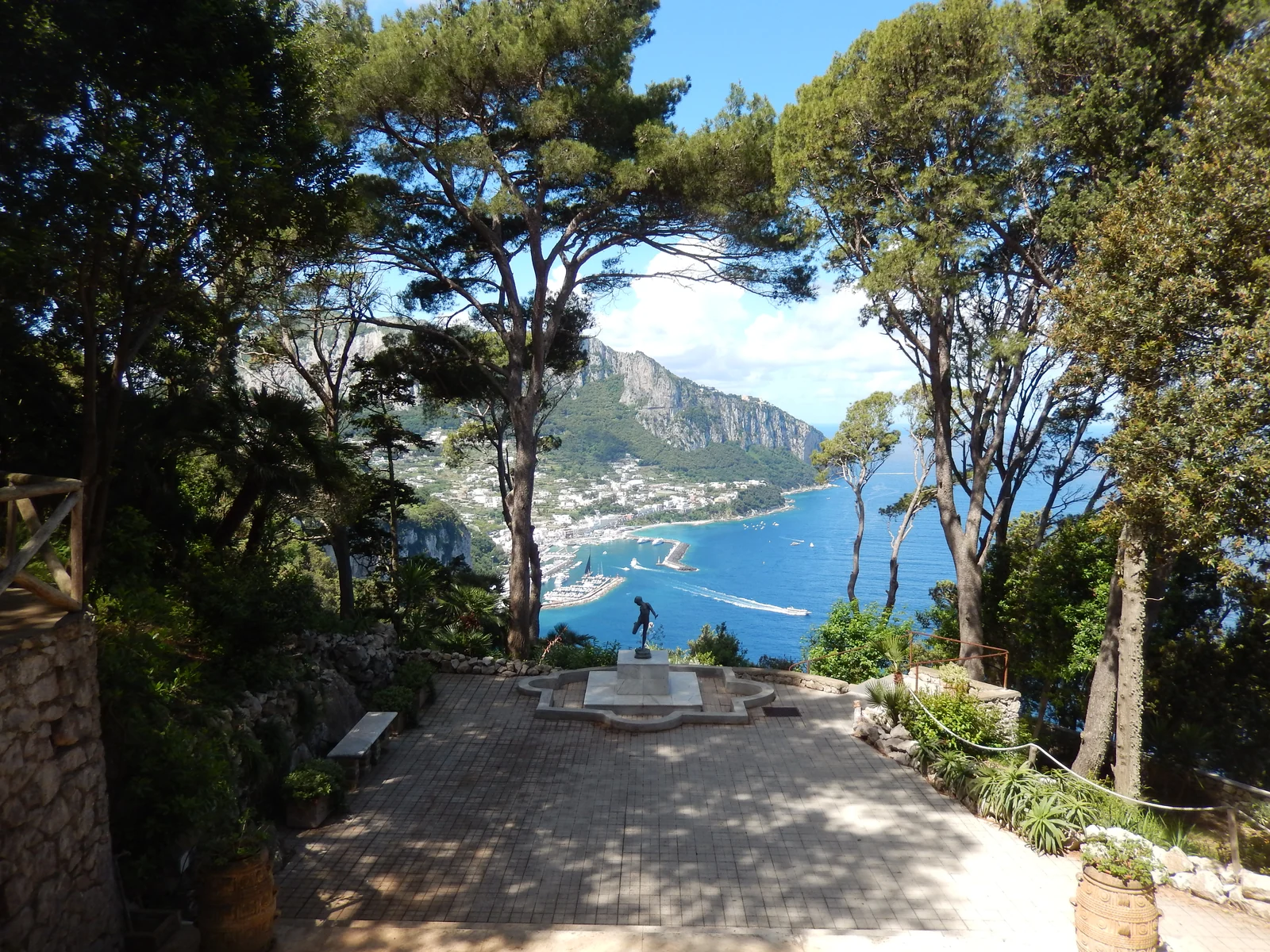
Photo: Gerd Fahrenhorst / Wikimedia Commons — CC BY 4.0 · Resized and converted to WebP.
When to go
The busiest months for tourism are those in which the State restricts cars on the island: in 2024 the decree of the Ministry of Infrastructure and Transport banned non-residents’ vehicles from arriving and circulating from 30 March to 3 November and from 18 December to 7 January. The town’s two state sites keep longer hours from March to October (Villa Jovis until 15 October) and shorter ones in winter; exact times are on the official pages cited at the end of the section.
Every season has something: summer brings concerts and performances in the Gardens of Augustus and at Villa Lysis; the PGI lemon is picked from January to October. In December the town council sets up the Christmas markets in Piazza Diaz, next to the upper station of the funicular: in 2026 from 4 to 16 December, with one part, “Il Natale della Solidarietà”, whose takings go to charity.
Sources: Ministero delle infrastrutture e dei trasporti — Decreto dell’11 marzo 2024 sul divieto di afflusso e circolazione dei veicoli dei non residenti nell’isola di Capri (pubblicato dalla Prefettura di Napoli) · Ministero della cultura — Certosa di San Giacomo e Museo archeologico nazionale di Capri (aggiornato il 14 agosto 2026) · Ministero della cultura — Palazzo di Tiberio e Villa Jovis (aggiornato il 6 luglio 2026) · Comune di Capri — Capri Cultura e Turismo: Giardini di Augusto · Comune di Capri — Capri Cultura e Turismo: Villa Lysis · Ministero dell’agricoltura (MASAF) — Disciplinare di produzione dell’IGP «Limone di Sorrento» · Comune di Capri — Mercatini di Natale 2026 (avviso del 16 novembre 2026)
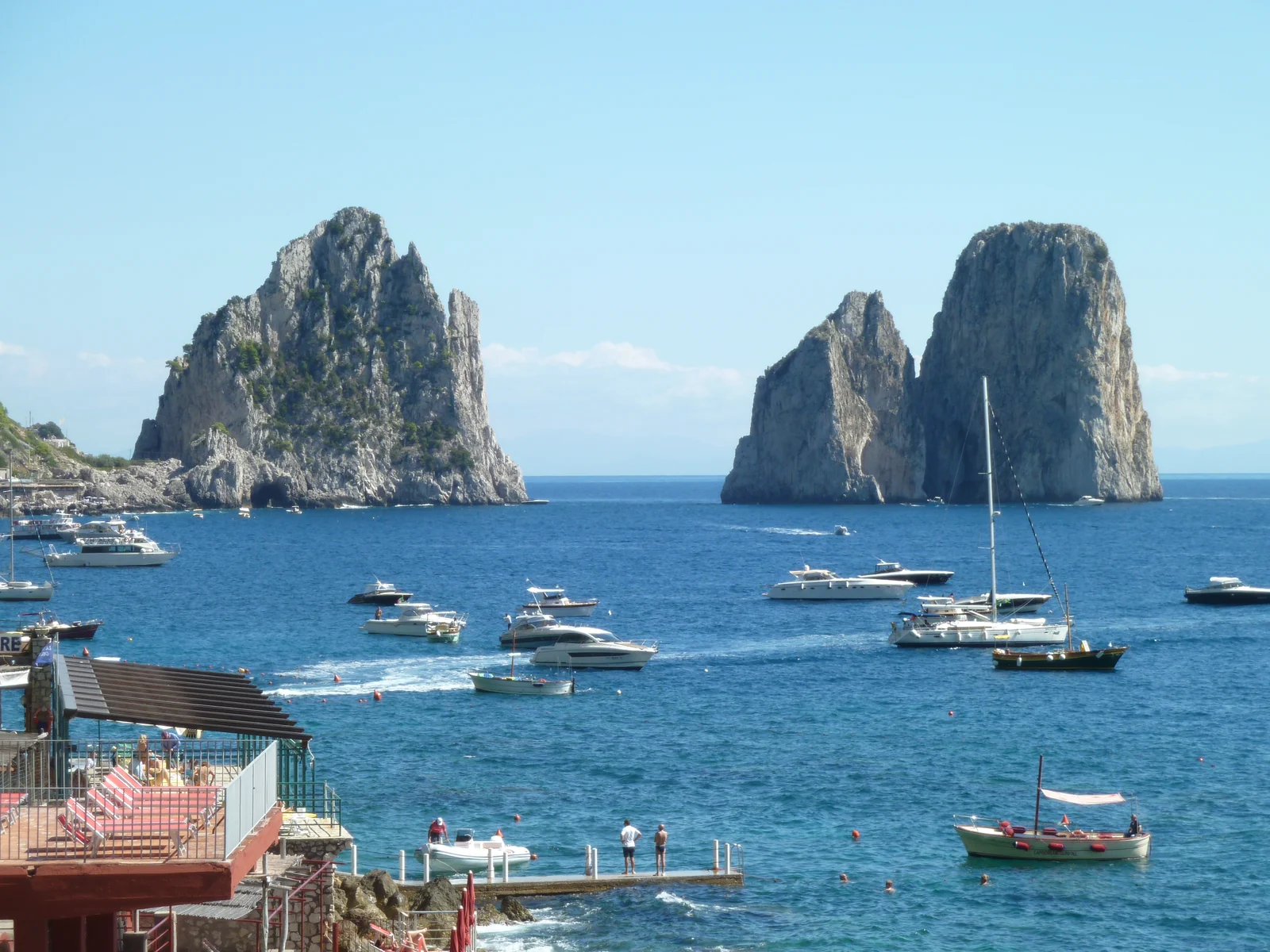
Photo: Abxbay / Wikimedia Commons — CC BY-SA 4.0 · Resized and converted to WebP.
Getting there
Capri can only be reached by sea, and every connection lands at the port of Marina Grande. From Naples, hydrofoils leave from Molo Beverello, in Piazza Municipio, and ferries from Calata Porta di Massa; from the port of Sorrento (Marina Piccola) hydrofoils leave for Capri every day; there are also connections from Salerno (Molo Manfredi, in summer), Amalfi and Positano.
Marina Grande is a natural inlet sheltered from the winds: the western basin serves commercial traffic, the eastern one the marina. From the port the funicular takes you up to the Piazzetta in four minutes; nearby are buses and taxis, and a bus goes straight to Anacapri. According to the town council the port is accessible, with new gangways for boarding the hydrofoils.
Cars are subject to a seasonal ban: in 2024 the decree of the Ministry of Infrastructure banned, in the busiest months, the landing and circulation of cars, motorcycles and mopeds belonging to non-residents of Capri and Anacapri, of hire cars and of foreign-registered vehicles, with exemptions among others for vehicles carrying people with disabilities that display the badge. The fine ranged from 430 to 1,731 euros.
Sources: Musei e Parchi archeologici di Capri (MiC) — Come raggiungerci · Comune di Capri — Luoghi: Porto turistico di Marina Grande · Ministero delle infrastrutture e dei trasporti — Decreto dell’11 marzo 2024 sul divieto di afflusso e circolazione dei veicoli dei non residenti nell’isola di Capri (pubblicato dalla Prefettura di Napoli)
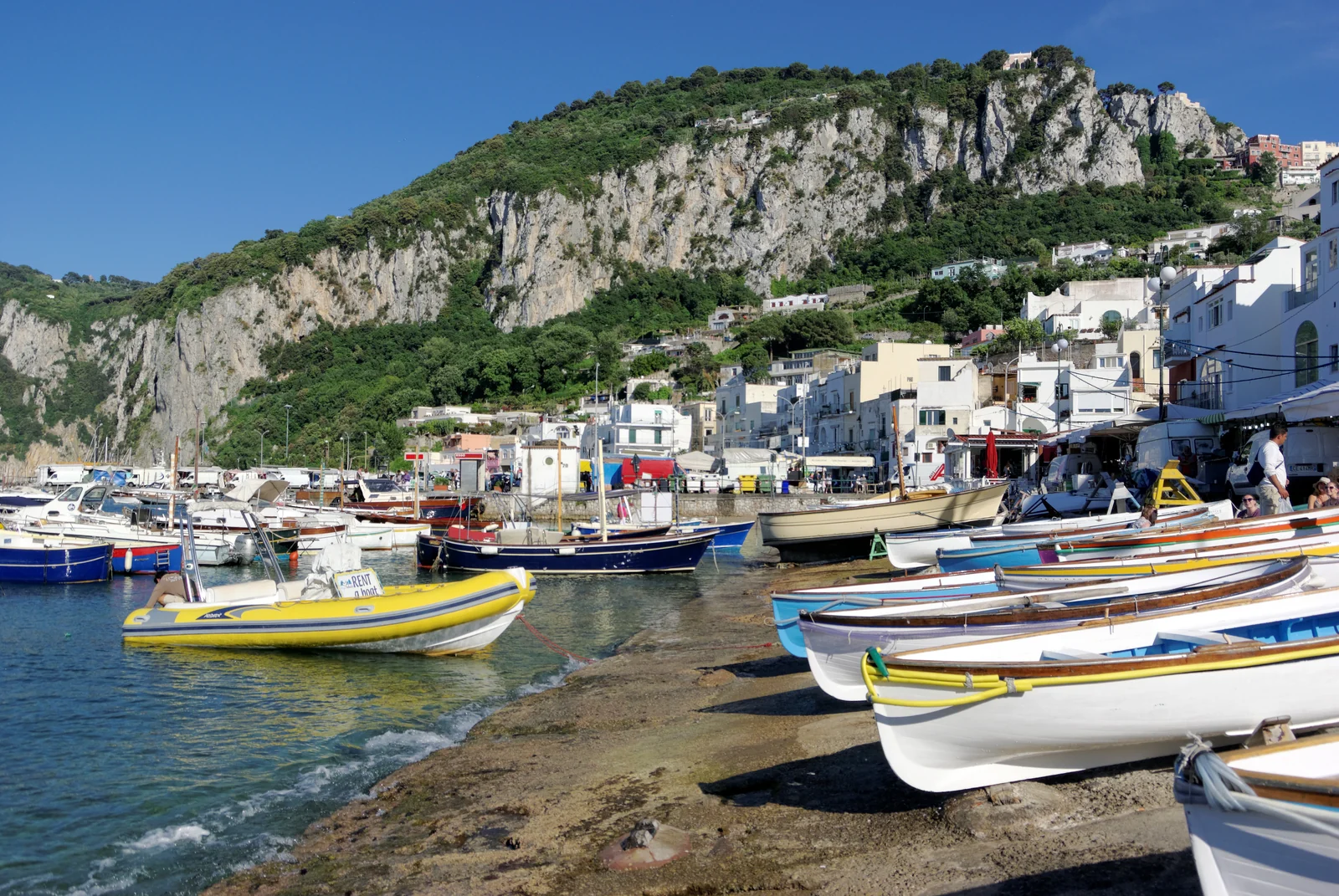
Photo: Berthold Werner / Wikimedia Commons — CC BY-SA 3.0 · Resized and converted to WebP.
Accommodation in figures
In the Ministry of Tourism’s national database of accommodation (BDSR), on 12 October 2026, Capri had 678 establishments with a verified national identification code (CIN): 46 hotel-type establishments, 160 non-hotel establishments and 472 other establishments.
Sources: Ministero del Turismo – Banca Dati Strutture Ricettive (dashboard pubblica)
Around Capri
The island’s other municipality is Anacapri. There the Ministry of Culture runs the Casa Rossa, built between 1876 and 1899 by the American colonel John Clay MacKowen next to an Aragonese tower and open to the public since 1990 as an exhibition space, and the remains of Villa Damecuta, a Roman villa along a panoramic walk, with a late-medieval watchtower; both can be reached by bus from Marina Grande. Facing the island, about 3.5 miles away, is Punta Campanella, the tip of the Sorrento peninsula, which shares the PGI lemon area with Capri.
Sources: Musei e Parchi archeologici di Capri (MiC) — Casa Rossa · Musei e Parchi archeologici di Capri (MiC) — Villa Damecuta · Musei e Parchi archeologici di Capri (MiC) — Come raggiungerci · Ministero dell’agricoltura (MASAF) — Disciplinare di produzione dell’IGP «Limone di Sorrento»
The town council
The official website of the Comune di Capri, registered in IndicePA, the index of the digital addresses of Italy’s public administrations, is the reference for the town council’s offices, opening hours and news. Its address is listed among the sources of this section.
The town hall is at Piazza Umberto I, 9, and has a lift and accessible toilets; the single switchboard answers on 081 8386201. The council’s website is now at www.comune.capri.na.it; the Capri Cultura e Turismo portal sells tickets for the Gardens of Augustus and Villa Lysis.
Sources: Comune di Capri, sito istituzionale · IndicePA (AgID), Indice dei domicili digitali delle pubbliche amministrazioni: dataset Enti · Comune di Capri — Luoghi: Municipio, Piazza Umberto I · Comune di Capri — sito istituzionale (home page) · Comune di Capri — Capri Cultura e Turismo: siti comunali, biglietti e tariffe
Where to stay
In the municipality of Capri the national database of the Ministry of Tourism lists 678 accommodation businesses with a verified CIN code: 46 hotels, 160 other licensed accommodation and 472 other types such as B&Bs and private rentals.
Licensed businesses from the official list of accommodation named as the source in this section. Where the list gives it, the property's official identification code appears next to its name: the national CIN code, or the code assigned by the Region or by the body that keeps the list. Private individuals are not listed. This list is the official census of licensed businesses, not a list of Apulica partners: to stay in Capri you do not have to check one property after another yourself; write to Apulica and we look for the stay that suits your journey, checking availability and conditions before any confirmation.
ALBERGO EXCELSIOR PARCO- SOC.GAMA SRL
Hotel · ★★★★★
Regional code (CUSR) 15063014ALB0012
Agriturismo Scala Fenicia
Farm stay
Regional code (CUSR) 15063014EXT0004
AFFITTACAMERE MARLIN
Guest rooms
Regional code (CUSR) 15063014EXT0003
CASA DI RIPOSO SAN GIUSEPPE - FONDAZIONE SAN COSTANZO
Holiday house
Regional code (CUSR) 15063014EXT0094
ALBERGO JK PLACE CAPRI soc.DECK SRL
Hotel · ★★★★★
Regional code (CUSR) 15063014ALB0016
AL CAPRì SUITE
Guest rooms
Regional code (CUSR) 15063014EXT0432
ALBERGO PUNTA TRAGARA- SOC. ARTESOLE SRL
Hotel · ★★★★★
Regional code (CUSR) 15063014ALB0031
CAPRI DOLCE VITA
Guest rooms
Regional code (CUSR) 15063014EXT0711
ALBERGO QUISISANA GRAND HOTEL SIA SPA
Hotel · ★★★★★
Regional code (CUSR) 15063014ALB0033
CAPRI GARDEN HOUSE
Guest rooms
Regional code (CUSR) 15063014EXT0621
First the places that presented themselves to Apulica, the latest first; then one place of each type in turn, by official category and stars, then by name. No position is paid for.
All 107 entries in alphabetical order
Page 1 of 11
| Name | Type | Identification code |
|---|---|---|
| AFFITTACAMERE MARLIN | Guest rooms | Regional code (CUSR) 15063014EXT0003 |
| Agriturismo Scala Fenicia | Farm stay | Regional code (CUSR) 15063014EXT0004 |
| AL CAPRì SUITE | Guest rooms | Regional code (CUSR) 15063014EXT0432 |
| ALBERGO BELVEDERE & TRE RE- | Hotel | Regional code (CUSR) 15063014ALB0008 |
| ALBERGO DA GIORGIO - PENSIONE RISTORANTE DA GIORGIO DEI F.LLI DESIDERIO S.R.L. | Hotel | Regional code (CUSR) 15063014ALB0009 |
| ALBERGO DELLA PICCOLA MARINA - CIR SRL | Hotel | Regional code (CUSR) 15063014ALB0010 |
| ALBERGO ESPERIA | Hotel | Regional code (CUSR) 15063014ALB0011 |
| ALBERGO EXCELSIOR PARCO- SOC.GAMA SRL | Hotel | Regional code (CUSR) 15063014ALB0012 |
| ALBERGO FLORA | Hotel | Regional code (CUSR) 15063014ALB0013 |
| ALBERGO GATTO BIANCO | Hotel | Regional code (CUSR) 15063014ALB0014 |
Ask Apulica for a stay in Capri We reply shortly, within a few hours at most, with a proposal for you to consider.
Sources: Ministero del Turismo – Banca Dati Strutture Ricettive (dashboard pubblica), 2026-10-12
YOUR JOURNEY
How to shape a journey here
To include Capri in a trip, or to ask for a guide or a transfer, you can write to Apulica with the button below.
Plan your tripKeep exploring
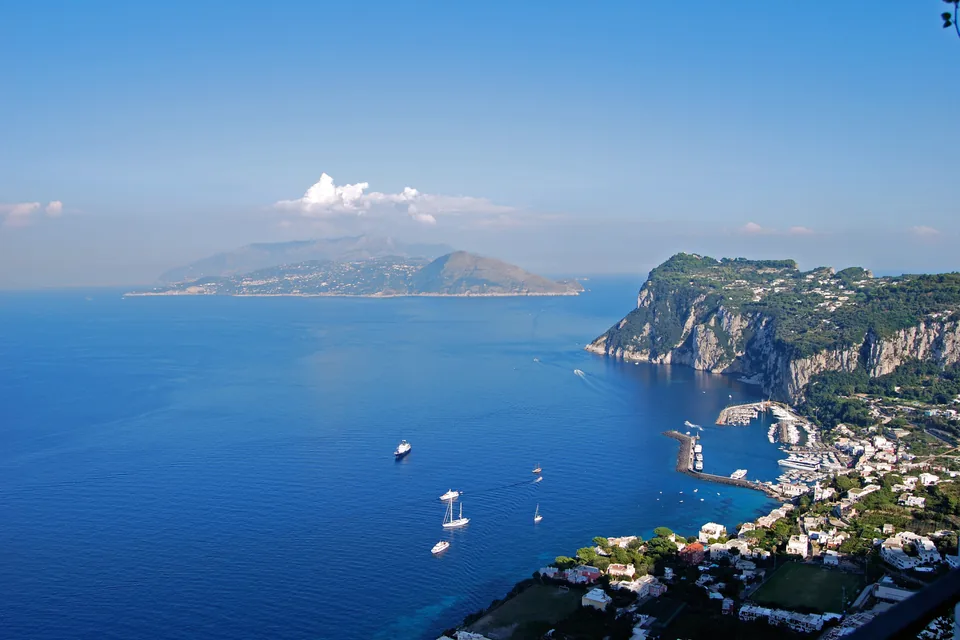
Anacapri
Anacapri (NA), Campania: 6,757 residents, 6.36 km². The official facts of the municipality, its town council website and its registered accommodation.
Read the guide →Photo: Elenagm / Wikimedia Commons — CC BY 3.0 · Resized and converted to WebP.

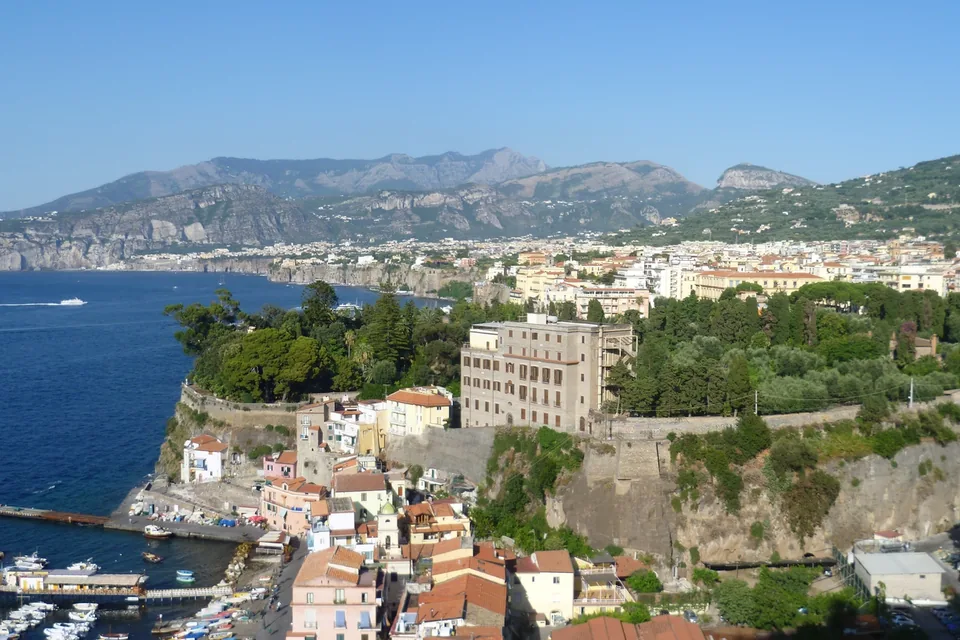
Sorrento
Sorrento (NA), Campania: 15,152 residents, 10.00 km². The official facts of the municipality, its town council website and its registered accommodation. The town on its tuff cliff, the old centre with the basilica of Sant’Antonino and the cloister of San Francesco, the Museo Correale, the Sorrento Lemon PGI, the marinas and the train from Naples.
Read the guide →Photo: Kim Traynor / Wikimedia Commons — CC BY-SA 3.0 · Resized and converted to WebP.

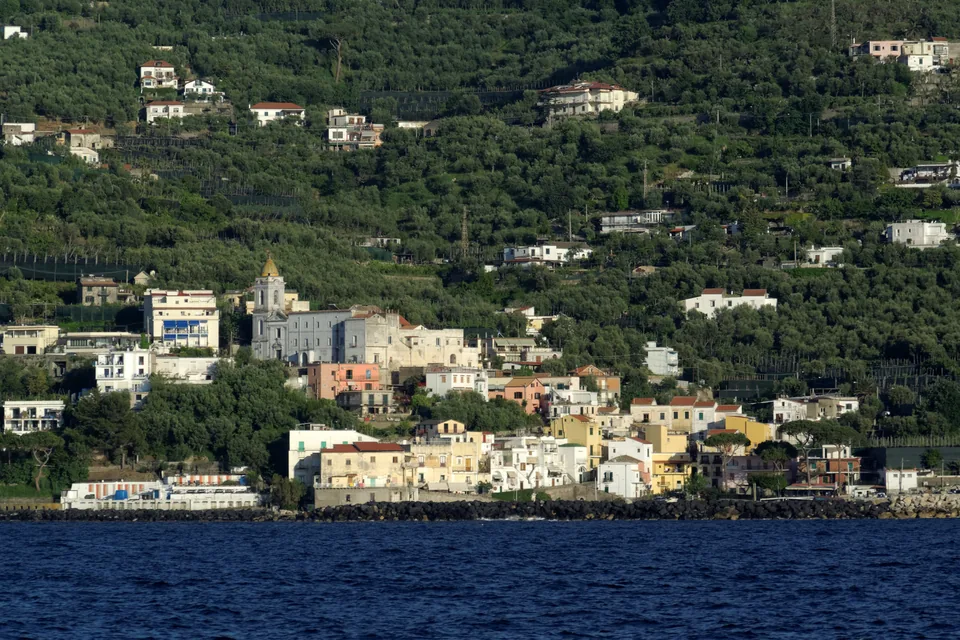
Massa Lubrense
Massa Lubrense (NA), Campania: 14,186 residents, 20.05 km². The official facts of the municipality, its town council website and its registered accommodation.
Read the guide →Photo: Berthold Werner / Wikimedia Commons — CC BY-SA 3.0 · Resized and converted to WebP.

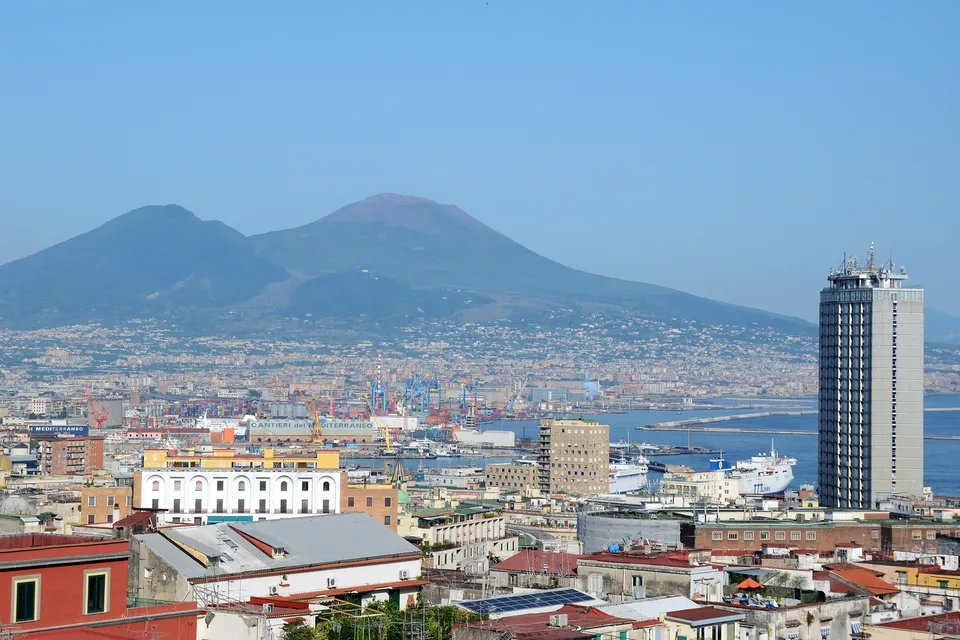
Naples
Naples (NA), capital of Campania: 909,013 residents, 119.24 km². The UNESCO-listed historic centre, the museums, the San Carlo, pizza as UNESCO heritage, San Gennaro and, nearby, Vesuvius, Pompeii and the islands.
Read the guide →Photo: Livioandronico2013 / Wikimedia Commons — CC BY-SA 4.0 · Resized and converted to WebP.

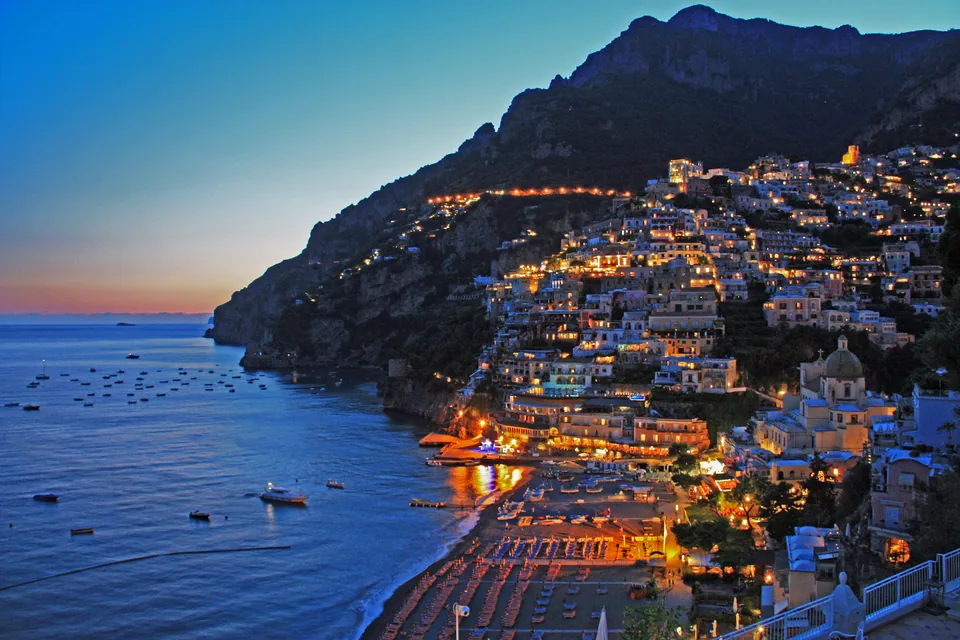
Positano
Positano (SA), Campania: 3,677 residents, 8.70 km². The official facts of the municipality, its town council website and its registered accommodation. The church of Santa Maria Assunta with its majolica dome, the Roman villa of the MAR, Spiaggia Grande and Fornillo, Montepertuso, Nocelle and the Path of the Gods, the PGI lemon and Moda Positano.
Read the guide →Photo: JeCCo / Wikimedia Commons — CC BY 4.0 · Resized and converted to WebP.

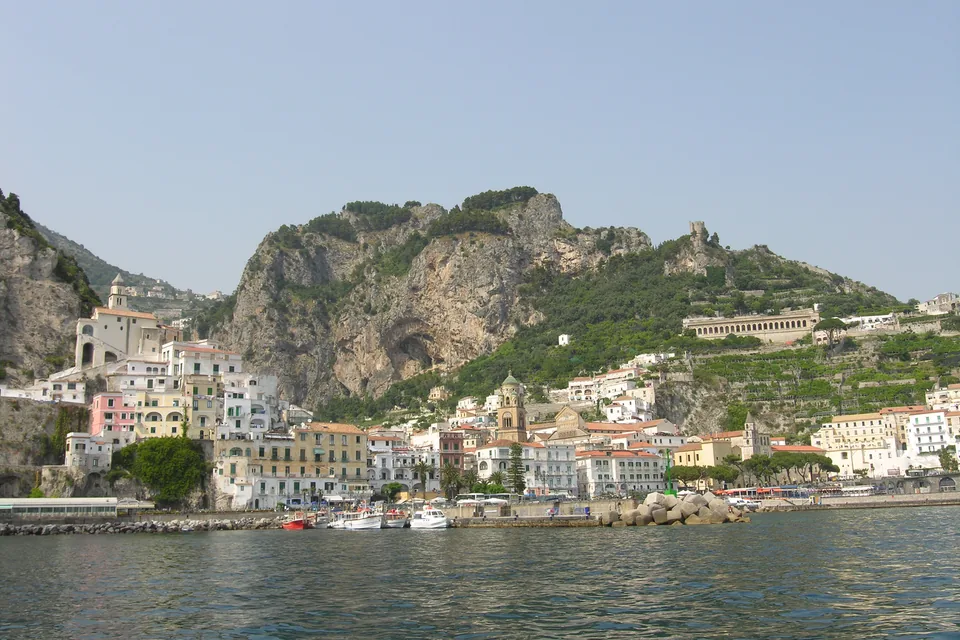
Amalfi
Amalfi (SA), Campania: 4,610 residents, 5.71 km². The official facts of the municipality, its town council website and its registered accommodation. The cathedral of Sant’Andrea and the Cloister of Paradise, the Arsenal of the maritime republic, the handmade paper of the Valle dei Mulini, the lemons of the terraces recognised by the FAO, the feast of the patron saint and the Regatta of the Ancient Maritime Republics.
Read the guide →Photo: Sudodana2048 / Wikimedia Commons — CC BY-SA 3.0 · Resized and converted to WebP.

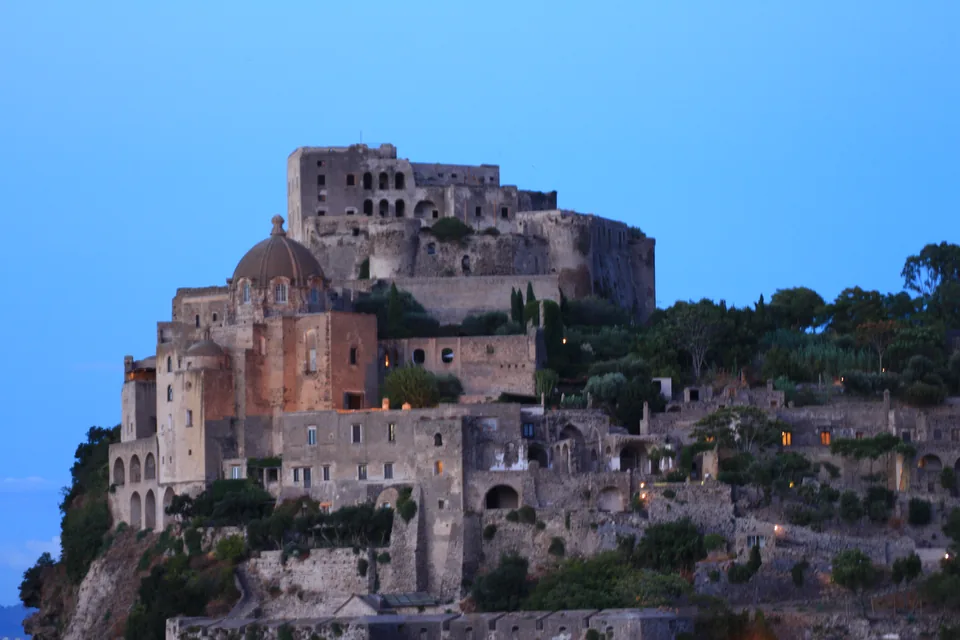
Ischia
Ischia (NA), Campania: 19,492 residents, 8.14 km². The official facts of the municipality, its town council website and its registered accommodation. The Aragonese Castle and the old village of Ischia Ponte, the Guevara Tower and the bay of Cartaromana, the Bourbon harbour, the cathedral of the Assunta, DOC “Ischia” wine and the Sea Festival at the rocks of Sant’Anna.
Read the guide →Photo: Pask928 / Wikimedia Commons — CC BY-SA 4.0 · Resized and converted to WebP.

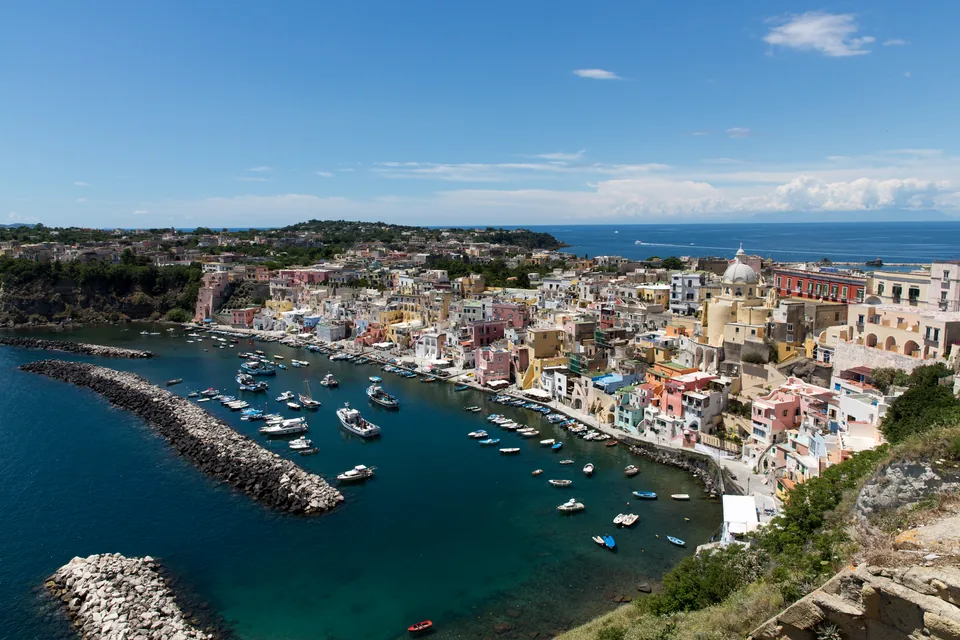
Procida
Procida (NA), Campania: 10,004 residents, 4.26 km². The official facts of the municipality, its town council website and its registered accommodation. Marina Corricella, the walled quarter of Terra Murata with the Abbey of San Michele and Palazzo d’Avalos, the Vivara nature reserve, the Misteri of Good Friday, the Procida lemon and the ferries from Naples and Pozzuoli.
Read the guide →Photo: Ekrem Canli / Wikimedia Commons — CC BY-SA 4.0 · Resized and converted to WebP.

“Come to Capri as a guest, not as a tourist: that is how these places truly let you know them.”