
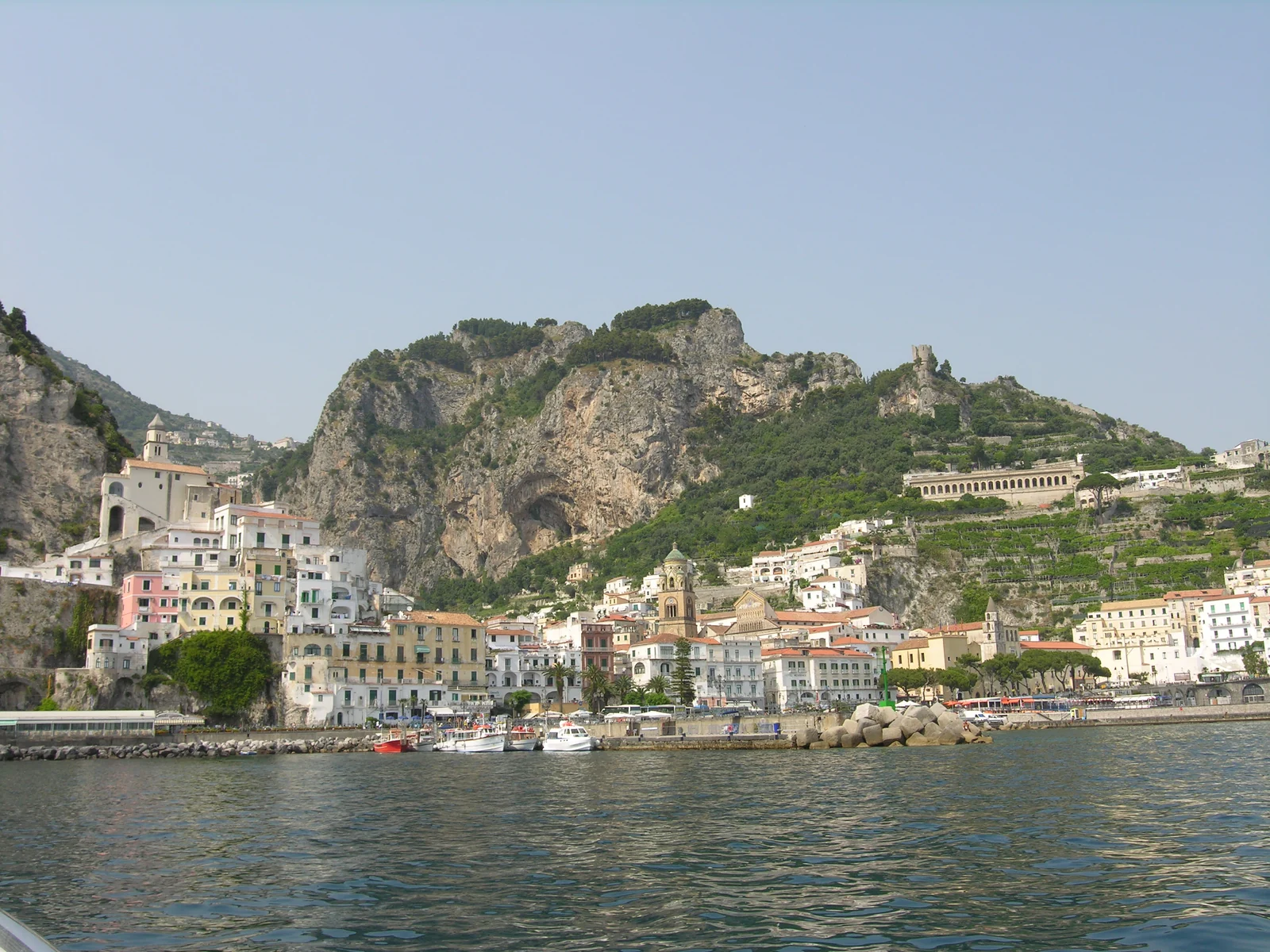

Why go
People come to Amalfi above all for its cathedral. At the top of the long staircase in Piazza Duomo, the façade with mosaics designed by Domenico Morelli and the bell tower with interlaced arches of yellow and green majolica open a complex that includes the Cloister of Paradise, the Basilica of the Crucifix with the museum of sacred art and the crypt, where the relics of the apostle Andrew, the town’s patron saint, have been kept since 1208.
The second reason is its history as a maritime republic, which the town tells in its own places. The Arsenal, the galley yard recorded since 1042, houses the Museum of the Compass and of the Maritime Duchy with the Tabula de Amalpha, the tarì coins and the model of the thirteenth-century town; the flags of the four maritime republics fly on the town hall tower, and in 2025 the Regatta of the Ancient Maritime Republics was rowed in the sea off the beach.
Then there is the landscape. Amalfi is part of the Amalfi Coast, inscribed on the UNESCO World Heritage List in 1997, and in 2025 the FAO recognised Amalfi’s lemon groves and terraces as a Globally Important Agricultural Heritage System (GIAHS). Behind the town rises the Valle dei Mulini with its old paper mills: at the Paper Museum visitors can make a sheet of “bambagina” paper by hand.
Sources: Comune di Amalfi, Visit Amalfi — Complesso della Cattedrale di Sant’Andrea · Comune di Amalfi, Visit Amalfi — Piazza Duomo · Arcidiocesi di Amalfi – Cava de’ Tirreni — Diocesi · Comune di Amalfi, Visit Amalfi — Arsenale della Repubblica · Comune di Amalfi, Visit Amalfi — Bandiere delle Repubbliche Marinare · Comune di Amalfi — Il 2 giugno la 71esima edizione della Regata delle Repubbliche Marinare (28 maggio 2026) · Comune di Amalfi — Amalfi conquista la piazza d’onore nel Palio delle Repubbliche Marinare (18 maggio 2025) · Ministero della cultura, Ufficio UNESCO — Costiera Amalfitana · Comune di Amalfi — I limoni e i terrazzamenti di Amalfi diventano Patrimonio dell’Umanità per l’Agricoltura (31 ottobre 2025) · Comune di Amalfi, Visit Amalfi — Valle dei Mulini · Comune di Amalfi — L’Antica Repubblica Marinara vista attraverso gli occhi dei bambini (22 aprile 2026)
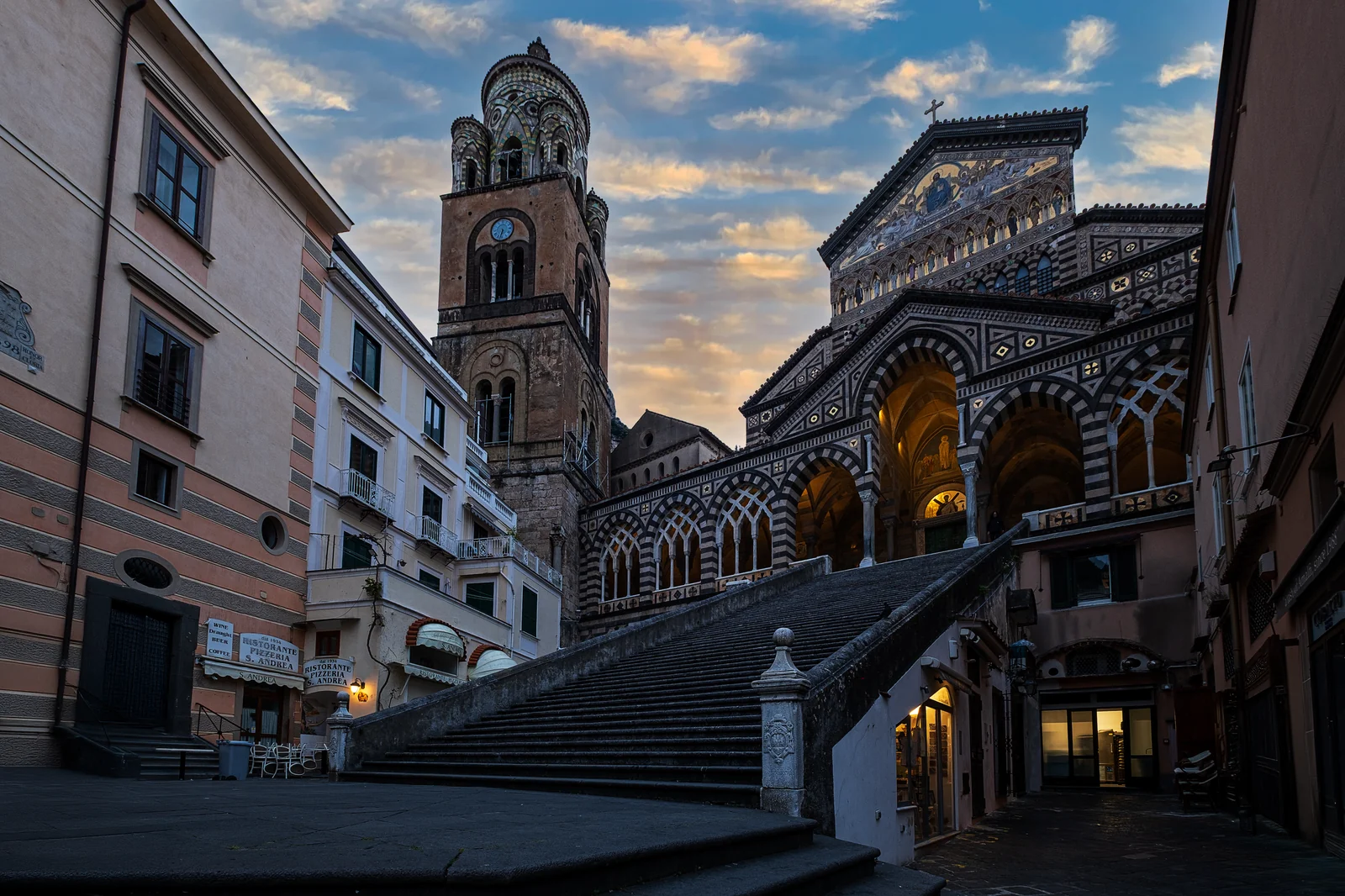
Photo: Pinat1947 / Wikimedia Commons — CC BY-SA 4.0 · Resized and converted to WebP.
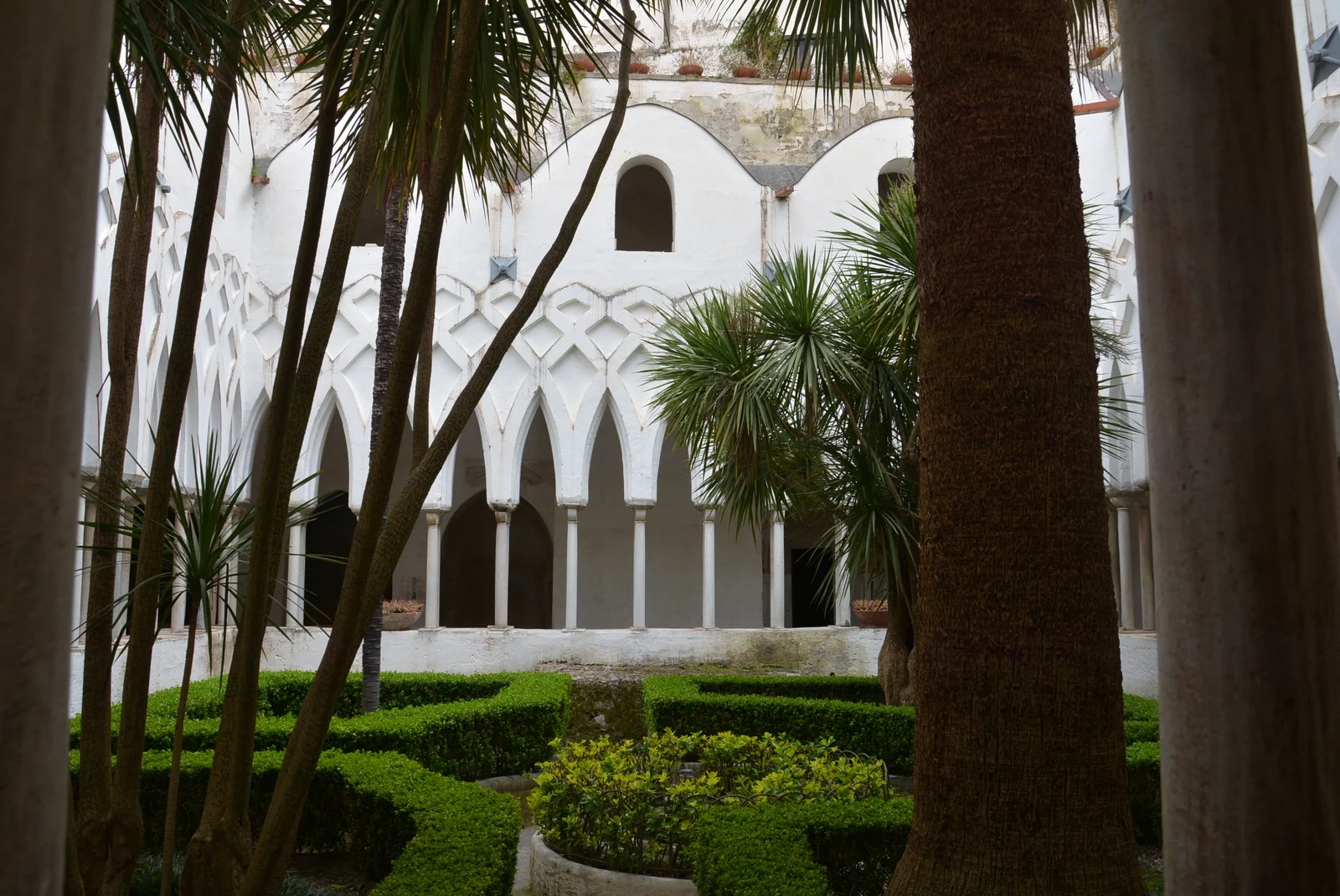
Photo: Mentnafunangann / Wikimedia Commons — CC BY-SA 4.0 · Resized and converted to WebP.
The municipality at a glance
Amalfi is a municipality in the province of Salerno, in Campania. Its ISTAT code is 065006. On 1 January 2025 it had 4,610 residents. The municipal territory covers 5.71 km² and ranges from -2 to 1,024 metres above sea level; the town hall stands at about 19 metres.
Besides the town centre, the municipal territory includes the hamlets of Pogerola, Pastena, Lone, Vettica Minore and Tovere, linked to the centre by the Via Maestra dei Villaggi and by a minibus service. The town lies within the Amalfi Coast UNESCO site, inscribed in 1997.
Sources: ISTAT, Codici statistici delle unità amministrative territoriali: elenco dei comuni al 21 febbraio 2026 · ISTAT, Popolazione residente per età, sesso e stato civile al 1° gennaio 2025 (POSAS) · ISTAT, Principali statistiche geografiche sui comuni: superficie e altimetria al 31 dicembre 2021 · Comune di Amalfi, Visit Amalfi — Via Maestra dei Villaggi · Comune di Amalfi, Visit Amalfi — Pogerola · Comune di Amalfi — Sistema Amalfi, prosegue con nuovi orari il servizio di bus interno (8 novembre 2024) · Ministero della cultura, Ufficio UNESCO — Costiera Amalfitana
History
According to the Archdiocese of Amalfi – Cava de’ Tirreni, Amalfi was already a bishop’s see in the time of Saint Gregory the Great and in 987 it was raised to a metropolitan see, with the dioceses of Scala, Minori, Lettere and Capri. The town council dates the birth of the autonomous republic to 839: on 1 September, the start of the fiscal and legal year in the lands of the Eastern Empire, its leaders took office, and the date is still re-enacted by the Byzantine New Year. In 849 the fleets of Amalfi, Naples, Sorrento and Gaeta together defeated the Saracen ships in the battle of Ostia.
Between the tenth and the twelfth century Amalfi was an economic and military power that dominated trade between East and West. Galleys were built and repaired in the Arsenal, recorded since 1042; the mint struck the tarì, accepted in the main ports; the Tabula de Amalpha, the town’s maritime code, was used throughout the Mediterranean until the sixteenth century. Documents from the late twelfth century record the Amalfitans’ use of the magnetic needle in navigation; the figure of Flavio Gioia, long credited with inventing the compass, comes instead from a misreading of a sixteenth-century manuscript. The Archdiocese also recalls the churches, hospices and hospitals founded by Amalfitans in the Near East, and the Order of the Hospitallers, which later became the Sovereign Military Order of Malta.
In 1060 the Amalfitan merchant Pantaleone de Comite Maurone gave the cathedral its bronze doors, cast in Constantinople. On 8 May 1208 Cardinal Pietro Capuano handed over to the Church of Amalfi the relics of the apostle Andrew brought from Constantinople, after building the transept and the crypt at his own expense; the urn, hidden and found again in 1603, came back to light on the night of 28 to 29 January 1846 and has been displayed to the faithful ever since. In 1266, under the Angevins, the yearly election of the representatives of the communities of the Amalfi Coast began; in 1583 the Duchy ceased to be a fief, and the nobles’ seat on Piazza Duomo became the residence of the Spanish viceregal governor.
Between the twelfth and the thirteenth century the Amalfitans learned papermaking from the Arab world, and paper mills were set up along the Canneto stream, in the Valle dei Mulini: by the end of the eighteenth century sixteen were at work. The flood of November 1954 destroyed most of them: of the sixteen mills still running, three remained. In the nineteenth century travellers on the Grand Tour made Amalfi a favourite destination; Henry Wadsworth Longfellow, with his poem “Amalfi” of 1875, made it famous in the United States. The historian Sismondi named Amalfi, Pisa, Genoa and Venice as the Maritime Republics, and since 1947 their coats of arms have formed the naval ensign of the Italian Navy.
Sources: Arcidiocesi di Amalfi – Cava de’ Tirreni — Diocesi · Comune di Amalfi — Tutto pronto per il Capodanno Bizantino, XXVI edizione (27 agosto 2026) · Comune di Amalfi, Visit Amalfi — Porta della Marina · Comune di Amalfi, Visit Amalfi — Arsenale della Repubblica · Comune di Amalfi, Visit Amalfi — Monumento a Flavio Gioia · Comune di Amalfi, Visit Amalfi — Complesso della Cattedrale di Sant’Andrea · Comune di Amalfi, Visit Amalfi — Fasi della traslazione delle reliquie di S. Andrea · Comune di Amalfi, Visit Amalfi — Piazza Duomo · Comune di Amalfi, Visit Amalfi — Valle dei Mulini · Museo della Carta di Amalfi — Il ruolo di Amalfi nella produzione della carta a mano · Comune di Amalfi, Visit Amalfi — Passeggiata Longfellow · Comune di Amalfi, Visit Amalfi — Bandiere delle Repubbliche Marinare
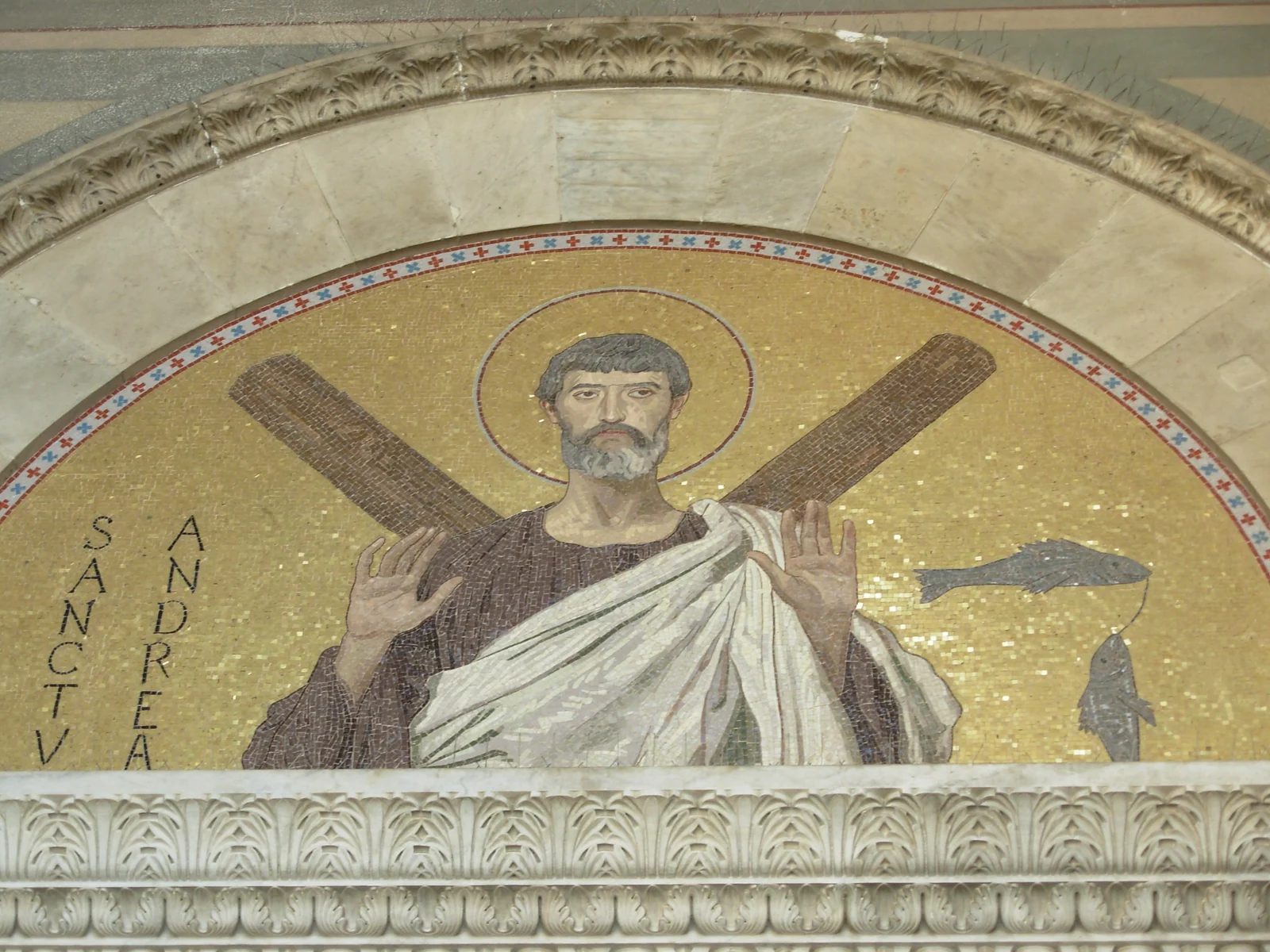
Photo: Misasar / Wikimedia Commons — CC BY-SA 4.0 · Resized and converted to WebP.
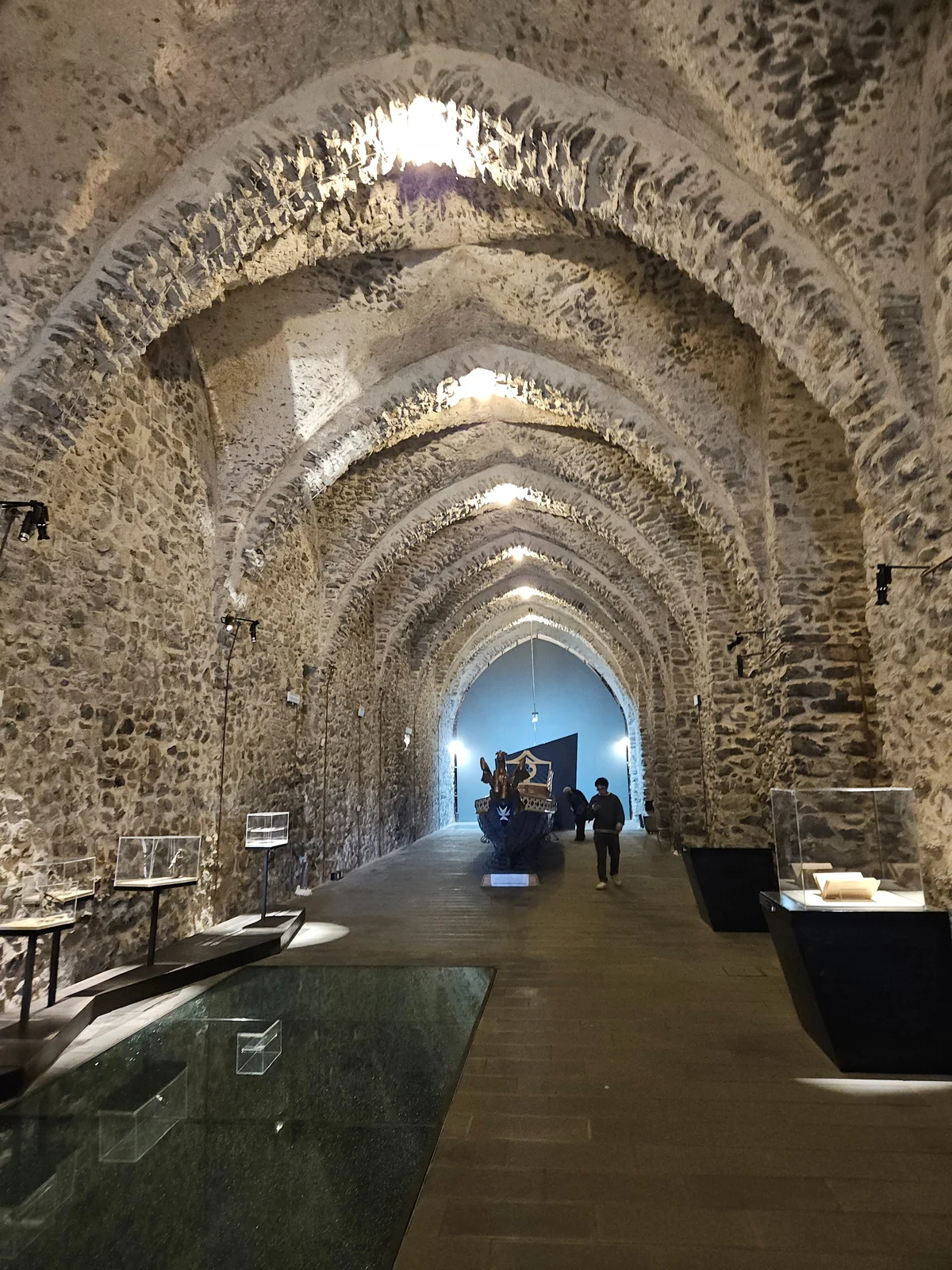
Photo: Alaexis2 / Wikimedia Commons — CC BY-SA 4.0 · Resized and converted to WebP.
What to see
The cathedral of Sant’Andrea, founded in 987 by Duke Mansone I and enlarged in the early thirteenth century by Cardinal Pietro Capuano, has a basilica plan with transept and apse. The Romanesque-style façade by the architects Enrico Alvino and Guglielmo Raimondi was completed in 1891 to replace the Baroque one that collapsed in 1861, with mosaics after cartoons by Domenico Morelli: in the pediment Christ enthroned among the symbols of the Evangelists, below the twelve apostles. In the early afternoon the sun strikes them head-on. The bell tower was built between 1180 and 1276. Inside: the coffered ceiling, a thirteenth-century wooden crucifix, a mother-of-pearl cross from Jerusalem, the font made from a porphyry basin, two Egyptian granite columns from Paestum, the bronze doors of 1060; in the crypt the relics of Saint Andrew, from which the “manna” oozes, a phenomenon first recorded on 29 November 1304.
From the same complex visitors enter the Cloister of Paradise, commissioned in 1268 by Archbishop Filippo Augustariccio as a cemetery for the nobility: a four-sided portico of interlaced pointed arches on paired colonnettes, with six chapels, Roman sarcophagi and remains of the old cathedral façade. Next to it, the Basilica of the Crucifix, from the ninth century, was returned to its Romanesque forms by restorations between 1931 and 1991 and houses the museum of sacred art.
In Piazza Duomo, the old Platea Nova created at the end of the thirteenth century by covering the Canneto, stands the fountain of Sant’Andrea of 1760, restored in 2018, with the apostle, a mermaid, a dove and the satyr known as “Pulicano”. Towards the sea the Porta della Marina, recorded since 1179, carries Renato Rossi’s 1937 ceramic panel on trade with the East. On the façade of Palazzo San Benedetto, a monastery of 1579 that is now the town hall, Diodoro Cossa’s 1968 panel tells the history of the town and was restored in 2026; the council hall named after Morelli holds the sketches for the cathedral mosaics. On the seafront, Alfonso Balzico’s monument to Flavio Gioia won a gold medal at the Paris Universal Exhibition of 1900.
The Arsenal of the Republic keeps two aisles and ten piers of the original building, about 40 metres long, with pointed arches and cross vaults. The town council describes it as the only rock-cut shipyard still in existence. Inside, the Museum of the Compass and of the Maritime Duchy displays finds recovered from the sea, the Tabula de Amalpha, the tarì, nautical instruments, the model of the thirteenth-century town and, since 2022, the wooden galleon of the Regatta. A guided tour of about 30 minutes in several languages is included in the ticket; the tourist info point is also in the Arsenal.
The Paper Museum, where the road to the Valle delle Ferriere begins, occupies a thirteenth-century paper mill: driven by the water of the Canneto, visitors see the wooden hammers, the Hollander beater installed on 18 November 1745, the eighteenth-century presses and the cylinder machine at work, and on the guided tour they can make their own sheet. High above the town, the Monumental Cemetery of 1852, on the site of the monastery of San Lorenzo del Piano founded in 980, has a colonnade that dominates Amalfi’s skyline and keeps a fourteenth-century fresco; it is reached by the public lifts from Piazza Municipio or by about 400 steps.
Sources: Comune di Amalfi, Visit Amalfi — Complesso della Cattedrale di Sant’Andrea · Comune di Amalfi, Visit Amalfi — Piazza Duomo · Comune di Amalfi, Visit Amalfi — Fontana di S. Andrea · Comune di Amalfi, Visit Amalfi — Porta della Marina · Comune di Amalfi, Visit Amalfi — Palazzo San Benedetto · Comune di Amalfi, Visit Amalfi — Pannello di ceramica (Diodoro Cossa) · Comune di Amalfi — Il pannello ceramico di Diodoro Cossa recupera l’originaria bellezza (24 aprile 2026) · Comune di Amalfi, Visit Amalfi — Monumento a Flavio Gioia · Comune di Amalfi, Visit Amalfi — Arsenale della Repubblica · Comune di Amalfi — Un secondo Fast Information Point in Piazza Duomo (16 aprile 2026) · Comune di Amalfi, Visit Amalfi — Museo della Carta · Museo della Carta di Amalfi — Il Museo · Museo della Carta di Amalfi — Informazioni biglietti · Comune di Amalfi, Visit Amalfi — Cimitero Monumentale
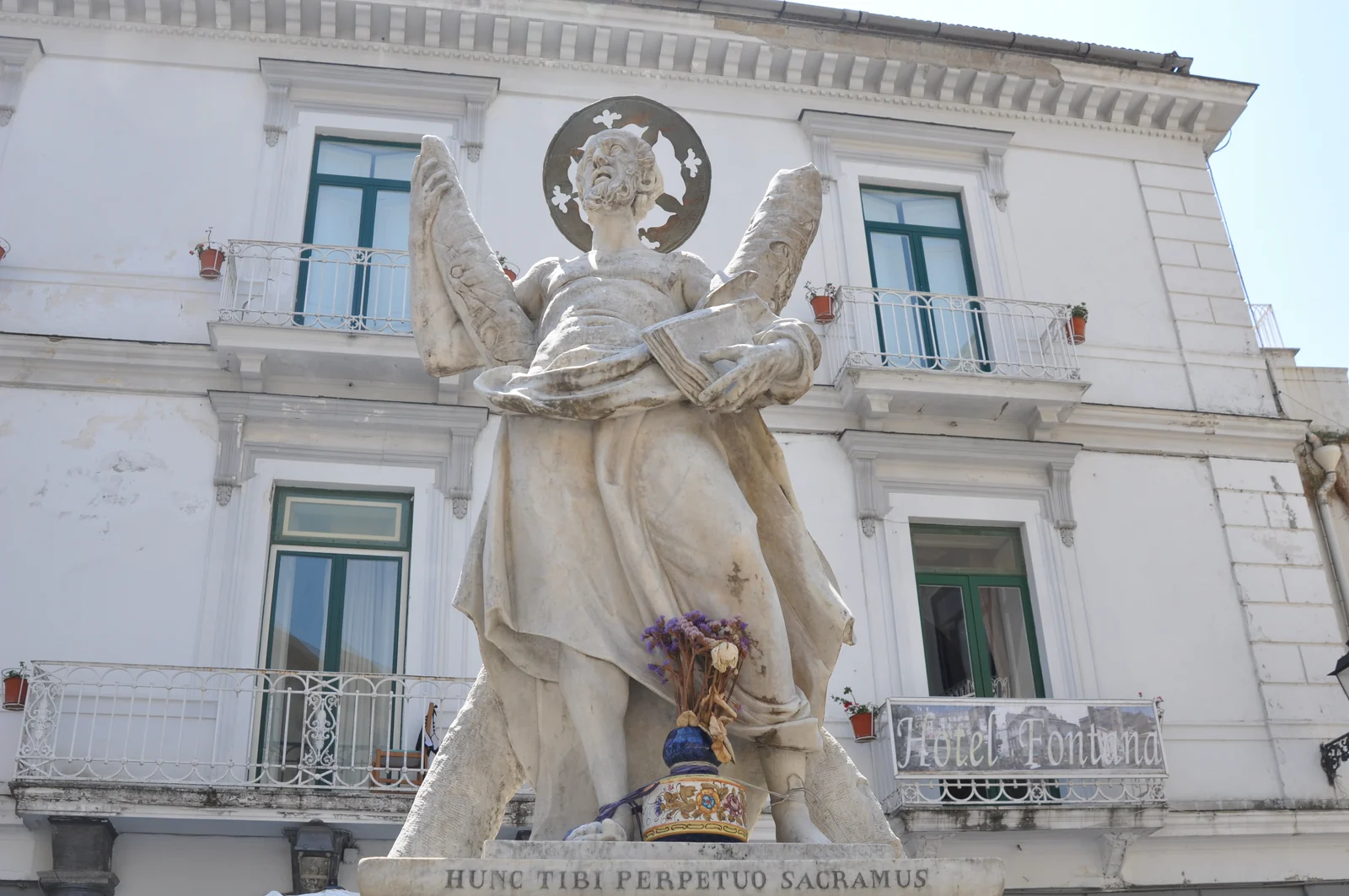
Photo: ArsenG / Wikimedia Commons — CC BY-SA 4.0 · Resized and converted to WebP.
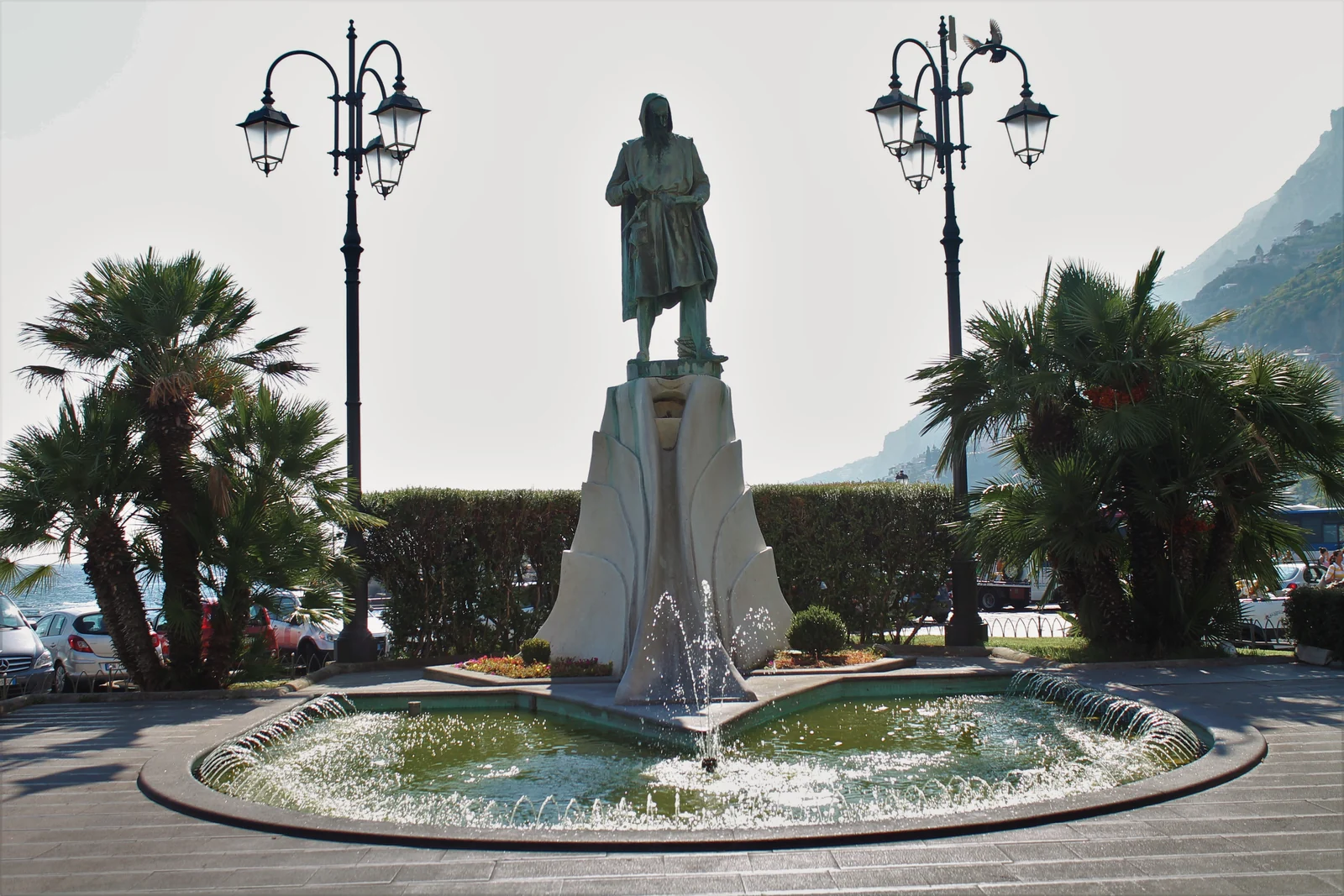
Photo: Domiziana De Renzi / Wikimedia Commons — CC BY-SA 4.0 · Resized and converted to WebP.
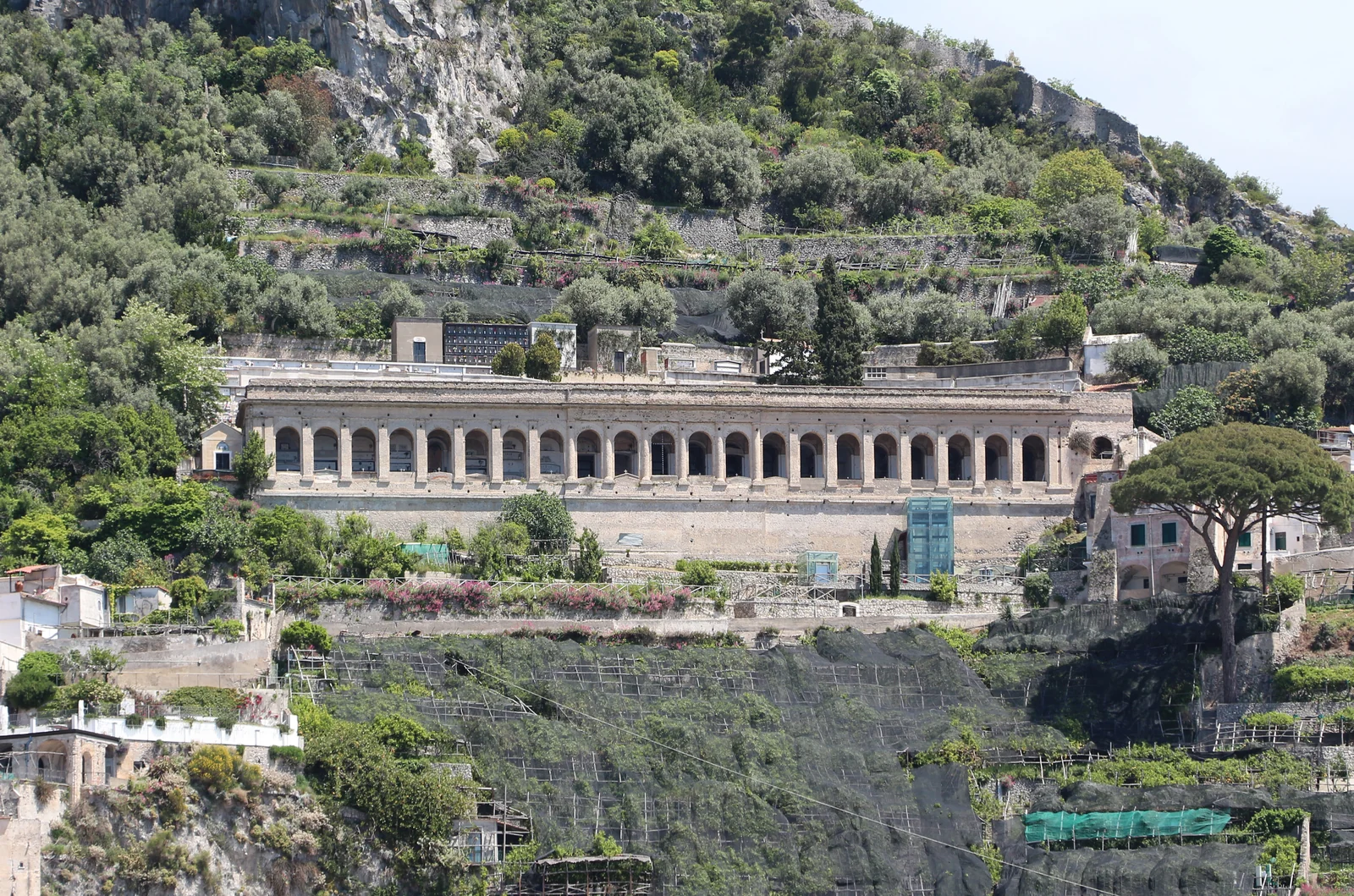
Photo: Bernard Gagnon / Wikimedia Commons — CC BY 4.0 · Resized and converted to WebP.
Flavours
Amalfi’s fruit is the lemon. The Campania Region describes the “Limone Costa d’Amalfi” PGI, of the “Sfusato amalfitano” ecotype: a tapered fruit of at least 100 grams, with a medium-thick pale yellow peel rich in essential oils and juicy flesh with few seeds. It is grown in the twelve municipalities of the Amalfi Coast, Amalfi included, on terraces once covered with straw “pagliarelle” and today with shade nets; it is picked several times a year, and the finest fruit ripens between March and the end of July. According to the same page, as early as the eleventh century the Amalfi republic required ships always to carry supplies of lemons, against scurvy.
In the kitchen the lemon goes with fish, seafood starters, pasta and meat; it is also served on its own as a salad, and it is the basis of limoncello and of sweets such as “delizie” and limoncello babà. The dry-stone terraces planted with lemons, olives and vines have been on the National Register of Historic Rural Landscapes since 2018 and a FAO GIAHS system since 31 October 2025: the town council describes it as the first and only Italian site with this recognition.
The town council devoted the twenty-sixth Byzantine New Year, in 2026, to Amalfi’s table, with a round table on the memory of Amalfi cooking and the title of Magister of Amalfi Civilisation given to the chef Enrico Cosentino, linked to the story of the invention of scialatielli pasta.
Sources: Regione Campania, Assessorato Agricoltura — Limone Costa d’Amalfi IGP · Comune di Amalfi — I limoni e i terrazzamenti di Amalfi celebrati come Patrimonio Agricolo di Importanza Mondiale (27 ottobre 2025) · Comune di Amalfi — I limoni e i terrazzamenti di Amalfi diventano Patrimonio dell’Umanità per l’Agricoltura (31 ottobre 2025) · Comune di Amalfi — Tutto pronto per il Capodanno Bizantino, XXVI edizione (27 agosto 2026)
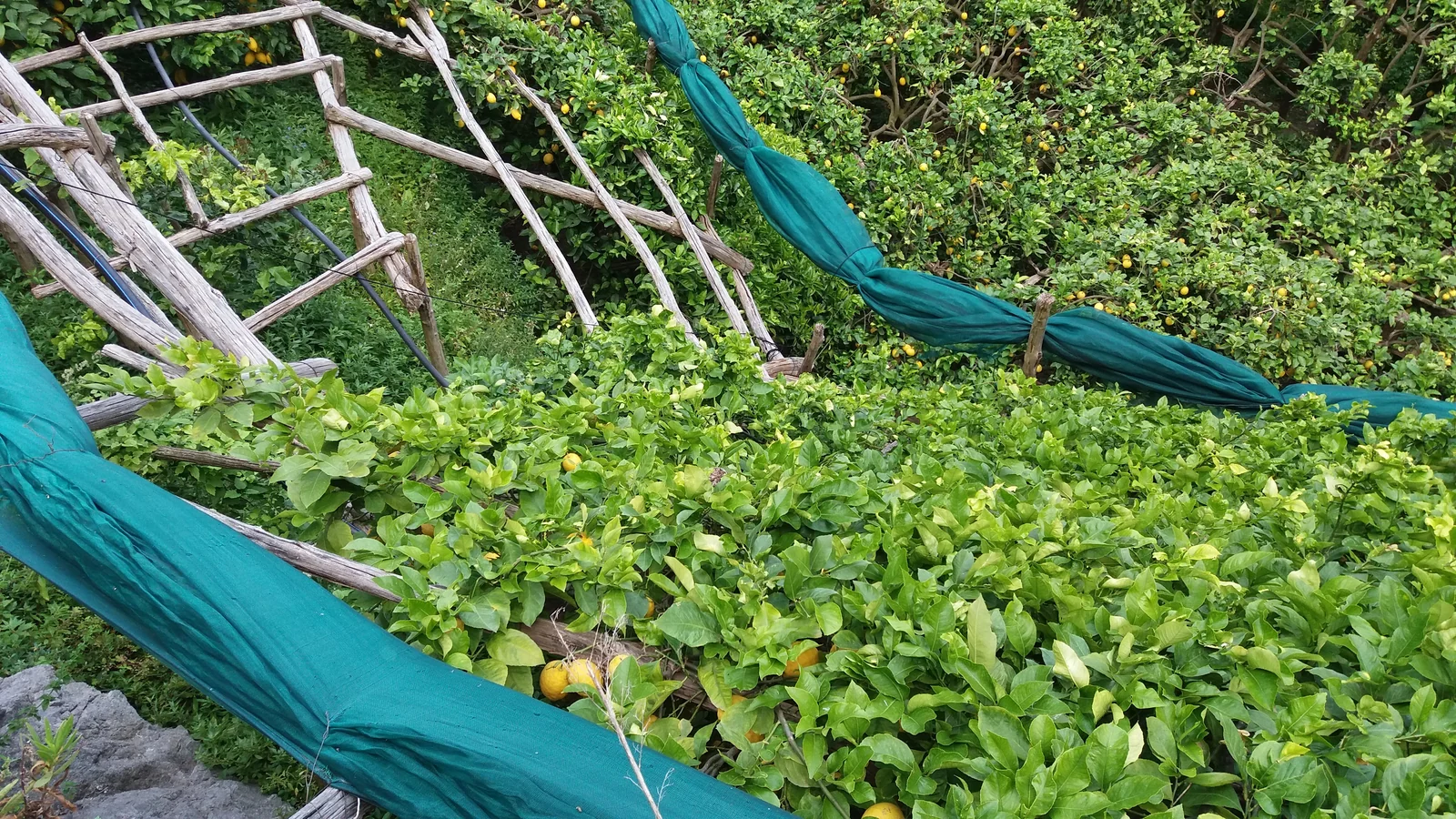
Photo: Rudolfo Kithera / Wikimedia Commons — CC0 · Resized and converted to WebP.
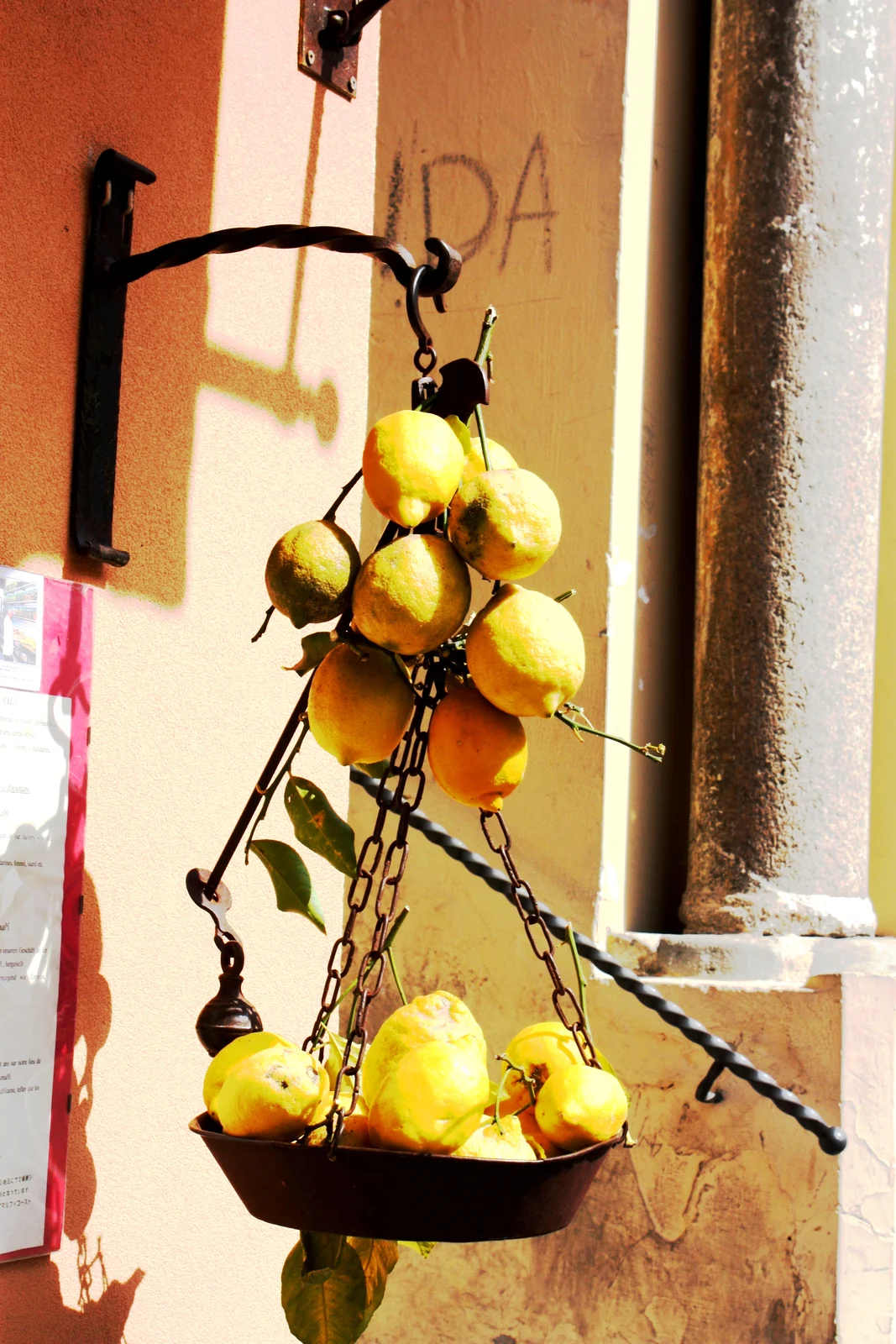
Photo: Daria / Wikimedia Commons — CC BY 3.0 · Resized and converted to WebP.
Things to do
The town is best discovered on foot. From the centre the Valle dei Mulini climbs along the Canneto stream among lemon gardens and old paper mills; higher up, the Valle delle Ferriere nature reserve, created in 1972 in the municipality of Scala, takes its name from the remains of medieval ironworks and keeps a microclimate where the fire salamander and the spectacled salamander live, along with rare ferns such as Woodwardia radicans; the naturalist Ernst Haeckel studied it in July 1859. The Via Maestra dei Villaggi, for centuries the road between Amalfi and the hamlets towards Agerola, climbs among lemon groves and churches through Pastena, Lone, Vettica Minore and Tovere; the Passeggiata Longfellow, among cypresses and pines, overlooks the harbour.
In 2026 the town council, with the Cava de’ Tirreni section of the Italian Alpine Club (CAI), put up direction arrows, waymarks and ceramic signs, and noticeboards with route maps on Via Casamare, on the Passeggiata Longfellow and in Pogerola; the paths to Madonna dei Fuondi, Monte Molignano, Tavernate and La Selva have been restored. Pogerola, on the hill of Monte Falconcello, was a castle of which part of the walls and two towers remain.
By the sea, the widest beach is Marina Grande, equipped and two minutes from the cathedral; in summer the council runs a free service there for people with disabilities, with stations, walkways and floating chairs, booked through its social services department. The Duoglio beach is reached by about 400 steps; Santa Croce, at Vettica Minore, and the Spiaggia della Vite, towards Conca dei Marini, can only be reached by sea.
At the Paper Museum, on the guided tour, adults and children can make a sheet of paper by hand; the council project “Amalfi Carta Viva”, which brings together the council, the museum, paper mills and craftsmen, received a special mention from the Network of Paper Cities in 2026. At the Arsenal the guided tour is included in the ticket, and the council has announced for 2027 a virtual-reality reconstruction of the medieval shipyard, with solutions also for people with motor and sensory disabilities.
Sources: Comune di Amalfi, Visit Amalfi — Valle dei Mulini · Comune di Amalfi, Visit Amalfi — Valle delle Ferriere · Comune di Amalfi, Visit Amalfi — Via Maestra dei Villaggi · Comune di Amalfi, Visit Amalfi — Passeggiata Longfellow · Comune di Amalfi — Nuova segnaletica CAI ad Amalfi e frazioni (3 aprile 2026) · Comune di Amalfi, Visit Amalfi — Pogerola · Comune di Amalfi, Visit Amalfi — Marina Grande · Comune di Amalfi, Visit Amalfi — Spiagge · Museo della Carta di Amalfi — Il Museo · Comune di Amalfi — Rete delle Città di Carta: menzione speciale per il progetto «Amalfi Carta Viva» (25 settembre 2026) · Comune di Amalfi — Un secondo Fast Information Point in Piazza Duomo (16 aprile 2026) · Comune di Amalfi — Nell’Antico Arsenale rivivranno marinai, Duchi e galee in realtà virtuale (15 aprile 2026)
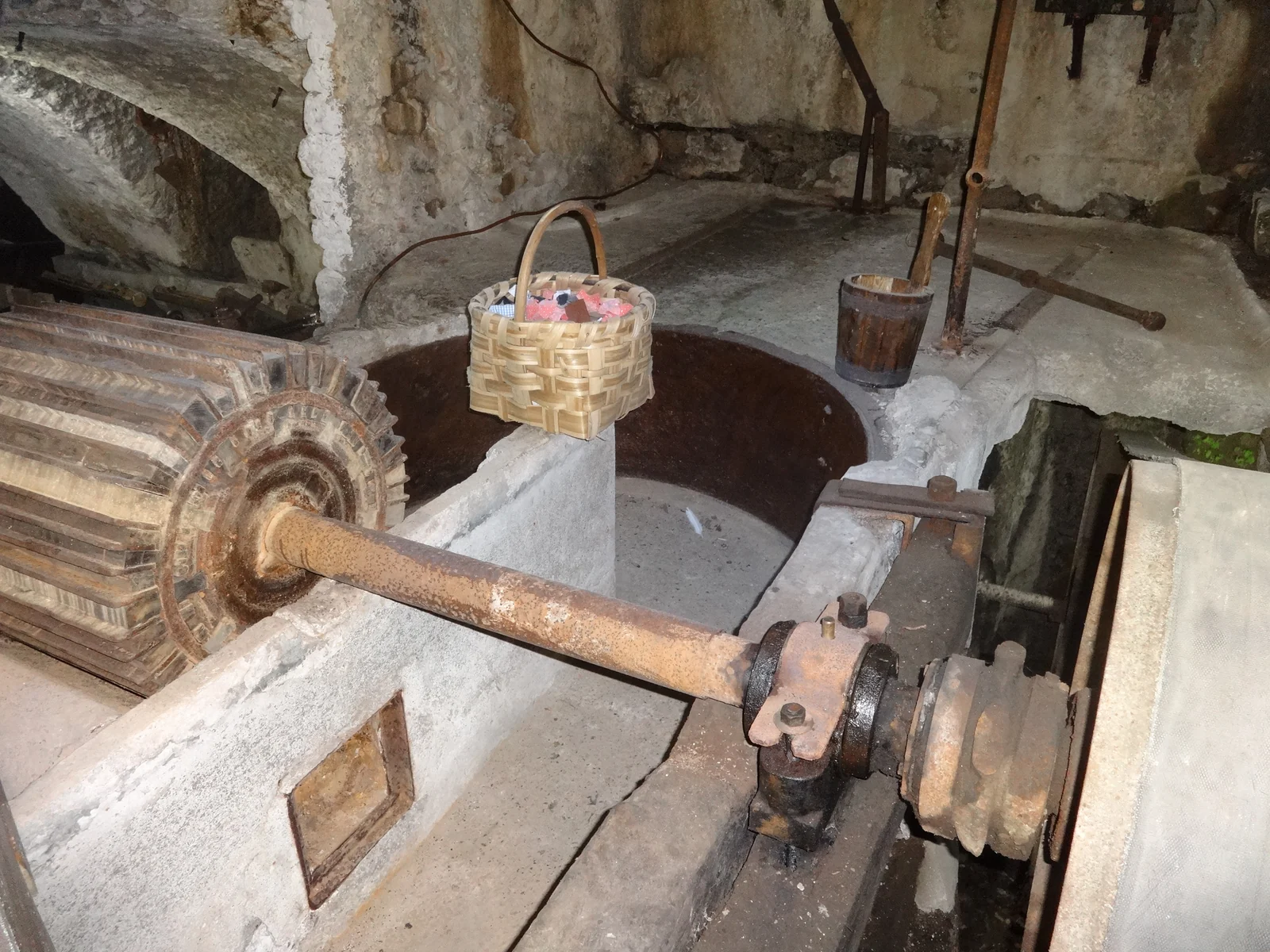
Photo: Derbrauni / Wikimedia Commons — CC BY-SA 4.0 · Resized and converted to WebP.
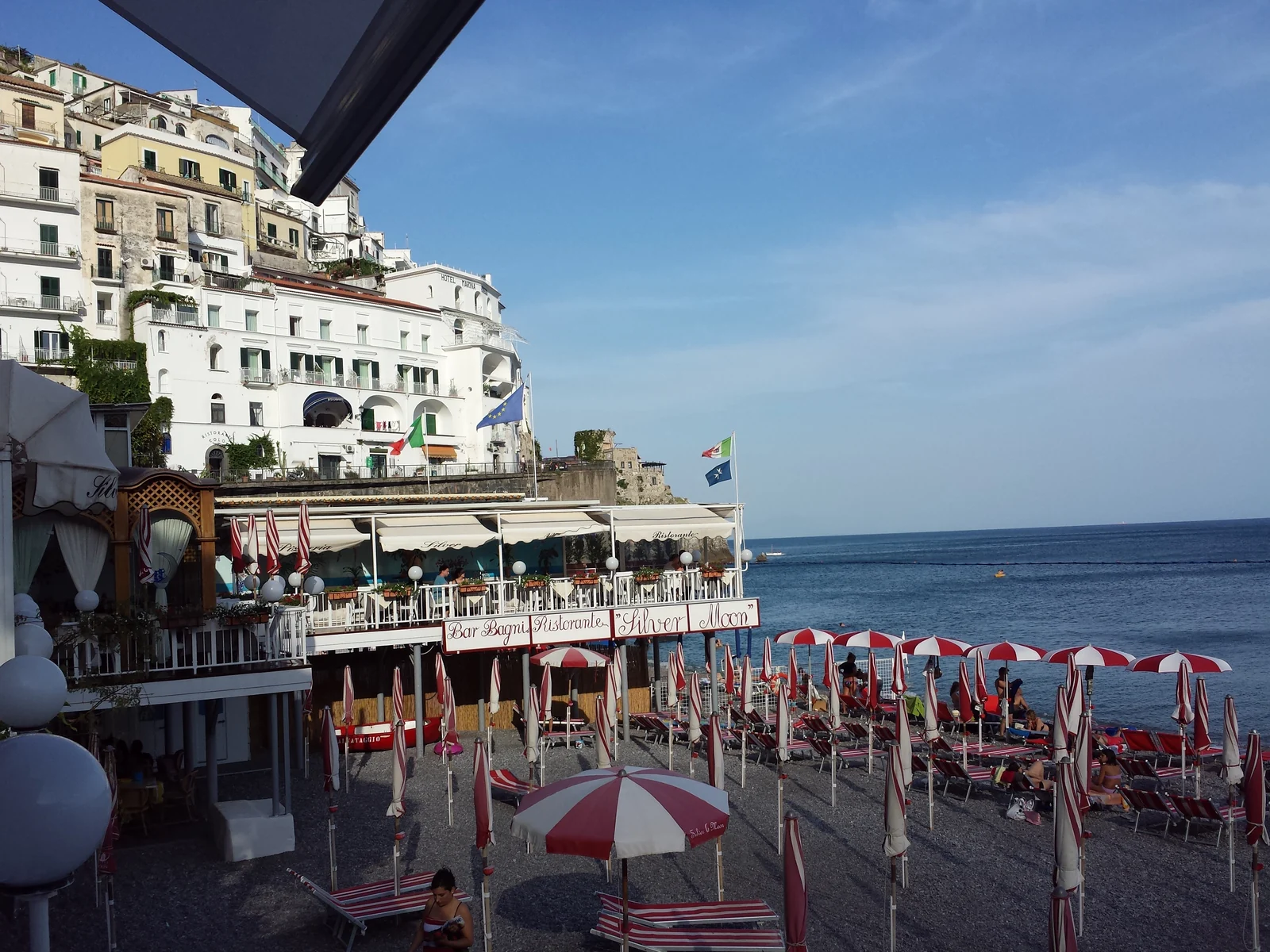
Photo: Marco Monelli / Wikimedia Commons — CC BY-SA 3.0 · Resized and converted to WebP.
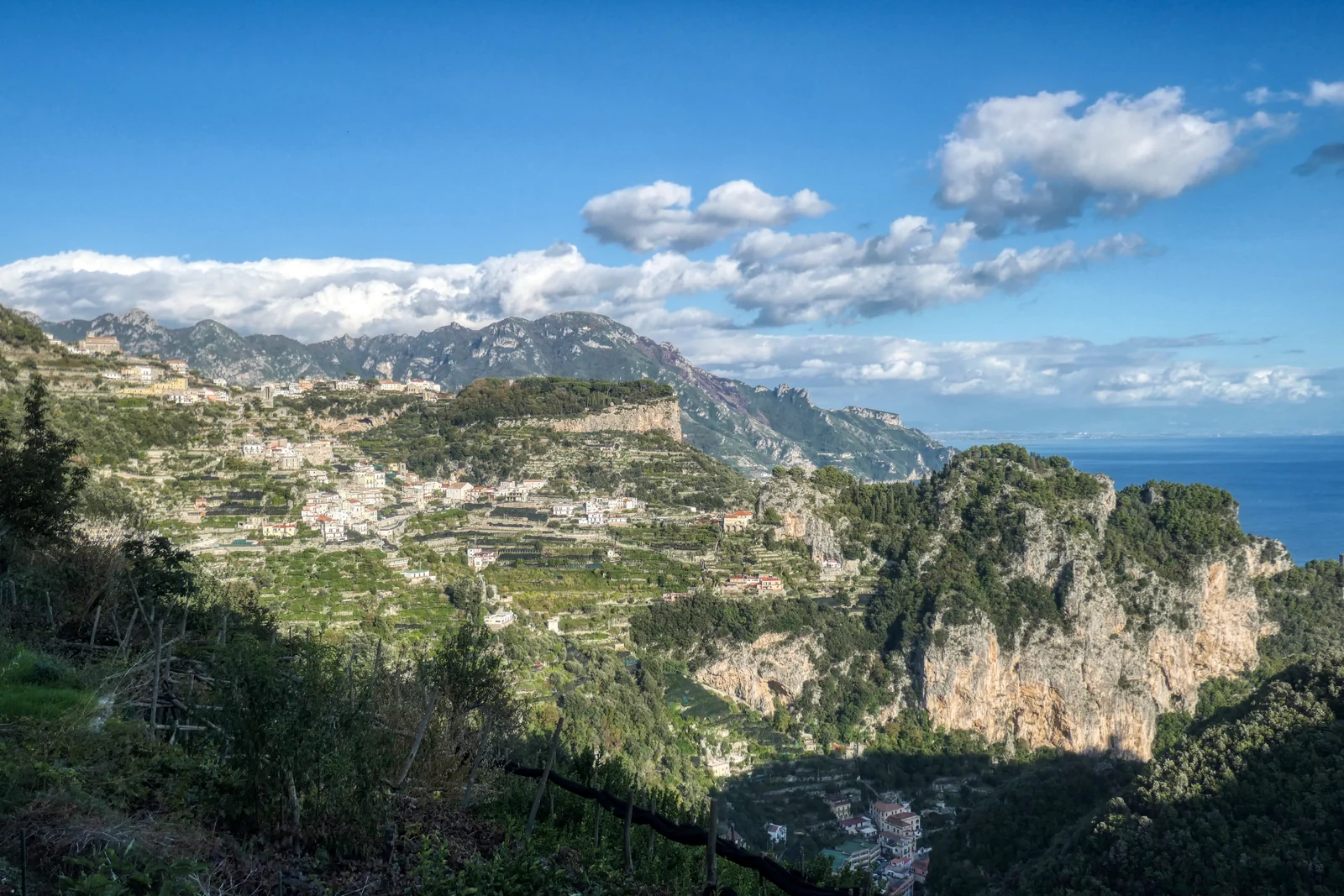
Photo: Bruno Rijsman / Wikimedia Commons — CC BY-SA 2.0 · Resized and converted to WebP.
When to go
Amalfi celebrates Saint Andrew twice, on 27 June and on 30 November, his liturgical feast. The most awaited moment is when the statue leaves the cathedral and is carried in procession through the town; on its return the bearers, dressed in red, run up the cathedral staircase with the statue on their shoulders. In 2026 the council closed the procession route to traffic on the evening of 27 June and, on 30 November, from 12 noon to 1.30 pm.
1 September is the day of the Byzantine New Year, organised by the council with the municipality of Atrani and the Centre for Amalfi Culture and History: the first edition was in 1999, and since 2012 it has culminated in the investiture of the Magister of Amalfi Civilisation in the church of San Salvatore de’ Birecto in Atrani, with a historical procession of more than a hundred people in costume; the events are free. The Regatta of the Ancient Maritime Republics, which since 1956 has pitted Amalfi, Genoa, Pisa and Venice against each other, changes venue: in 2025, the seventieth edition, the course lay between Capo di Vettica and Amalfi’s main beach, with a historical procession of more than three hundred people in costume; in 2026 it was rowed in Pisa.
In Holy Week, on the evening of Good Friday, the town turns off its lights for the procession of the Dead Christ of the Royal Archconfraternity of the Addolorata, with the lanterns of the Battenti; on those days alternate number plates apply on state road 163. The finest lemons are picked between March and the end of July. The Arsenal and its info point stay open in the winter months too.
Sources: Comune di Amalfi, Visit Amalfi — Sant’Andrea ad Amalfi: la festa che fa battere il cuore della città (21 ottobre 2026) · Comune di Amalfi, Visit Amalfi — La corsa di Sant’Andrea (8 novembre 2026) · Comune di Amalfi — Isola pedonale nel centro storico per la stagione turistica 2026 (30 marzo 2026) · Comune di Amalfi — Tutto pronto per il Capodanno Bizantino, XXVI edizione (27 agosto 2026) · Comune di Amalfi — Amalfi conquista la piazza d’onore nel Palio delle Repubbliche Marinare (18 maggio 2025) · Comune di Amalfi — Il 2 giugno la 71esima edizione della Regata delle Repubbliche Marinare (28 maggio 2026) · Comune di Amalfi — Pasqua ad Amalfi: la passione di Cristo tra antichi riti, musica e arte (28 marzo 2026) · Regione Campania, Assessorato Agricoltura — Limone Costa d’Amalfi IGP · Comune di Amalfi — Un secondo Fast Information Point in Piazza Duomo (16 aprile 2026)
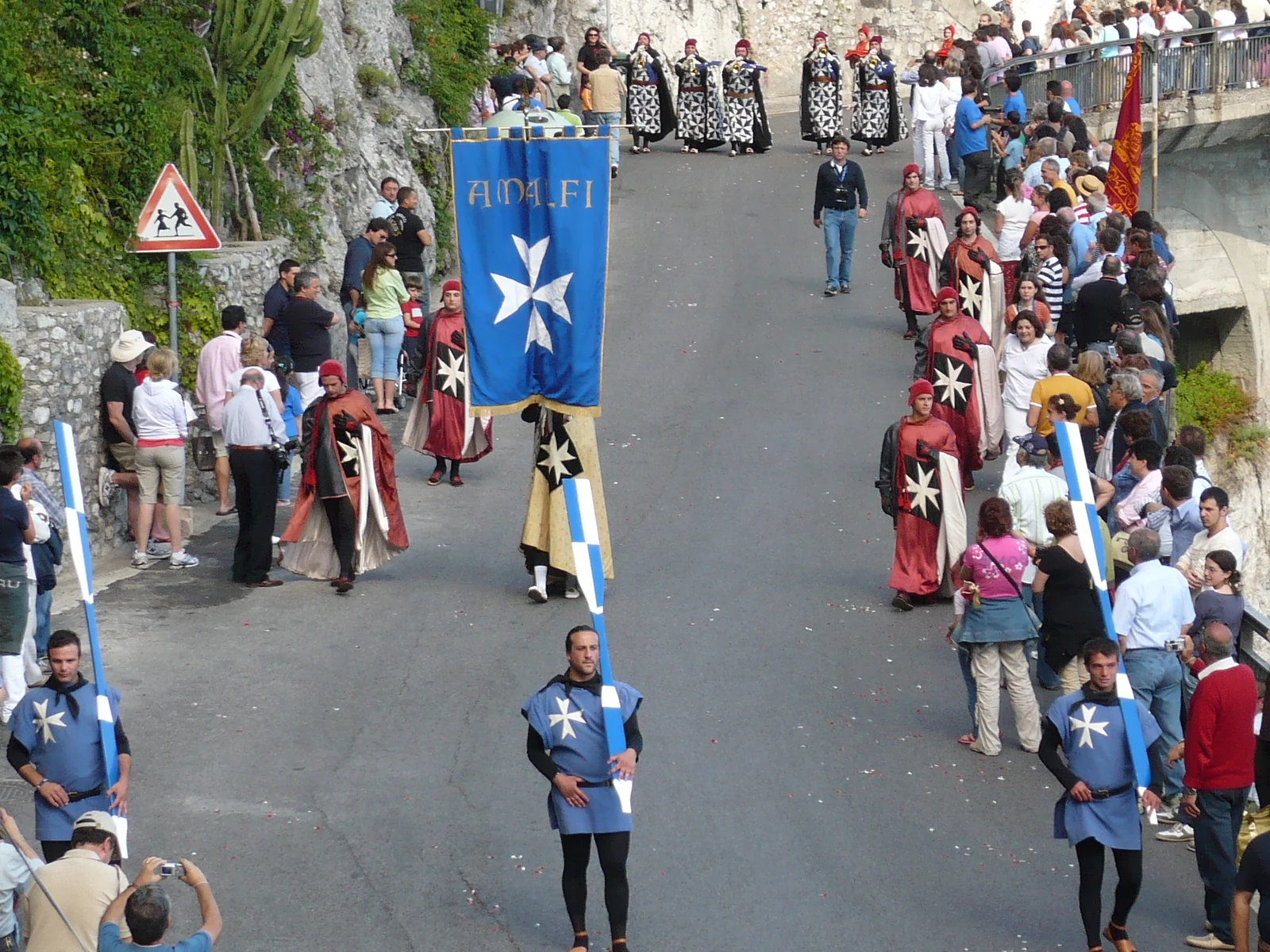
Photo: Mess / Wikimedia Commons — CC BY-SA 3.0 · Resized and converted to WebP.
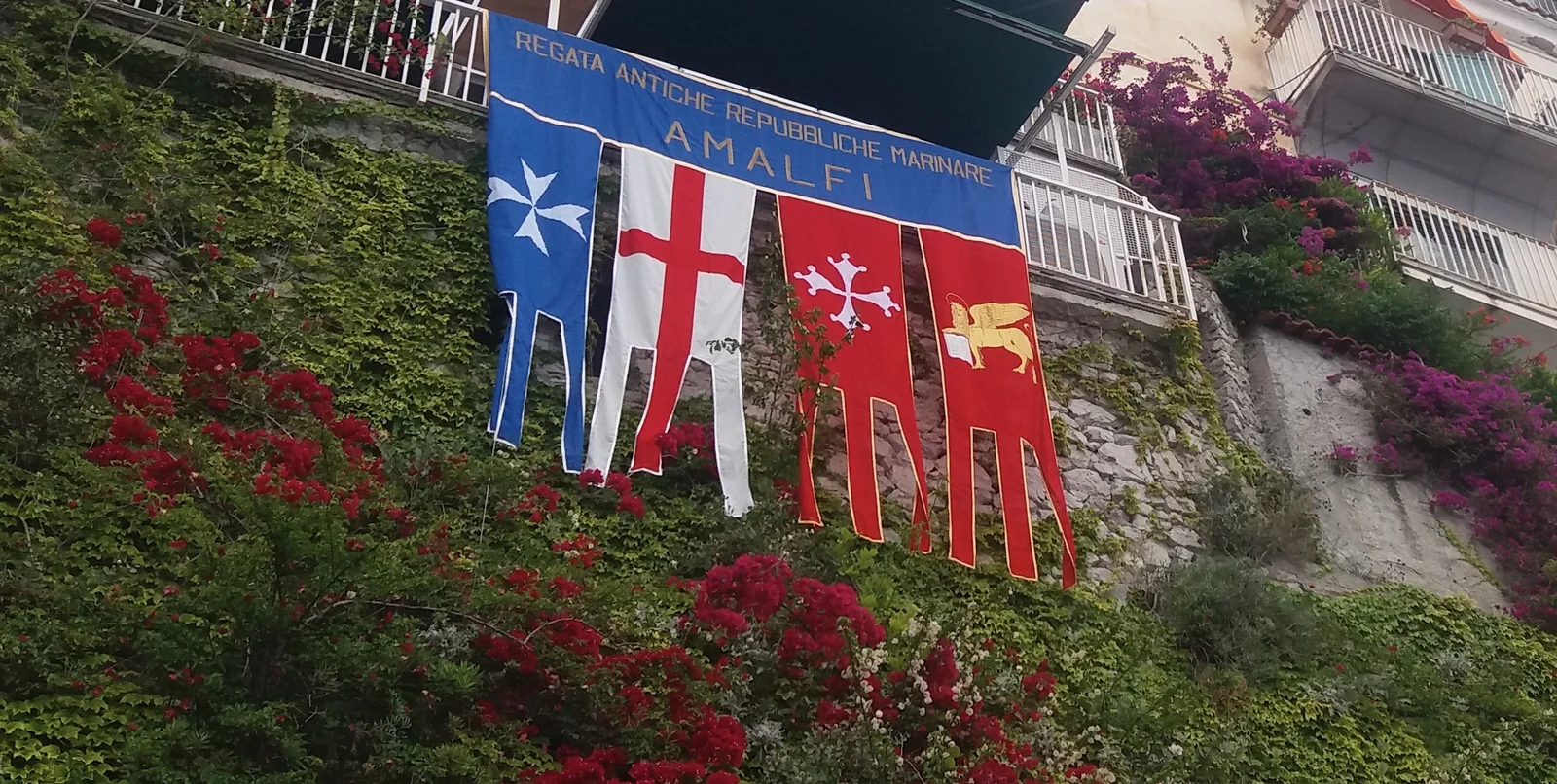
Photo: Rudolfo Kithera / Wikimedia Commons — CC0 · Resized and converted to WebP.
Getting there and around
The town council advises arriving without a car. By sea, Travelmar and Alicost ferries link Amalfi with the other towns of the coast and with Salerno: in Travelmar’s November 2026 timetable, the crossing from Salerno, Piazza Concordia, near the railway station, to Amalfi takes 35 minutes, and from Amalfi to Positano 25. By land, intercity buses run throughout the day and tickets can also be bought with the Unico Campania app. From Naples Capodichino airport there are direct buses from 1 April to 31 October; from Salerno Costa d’Amalfi airport the town is reached by ferry from Salerno or by bus from Salerno railway station.
By car the town is reached on the Amalfitana state road 163, from the Vietri sul Mare exit of the A3 or, from Castellammare di Stabia, through Agerola. In high season restrictions apply such as one-way systems, alternate number plates and maximum vehicle sizes. The old town is a limited traffic zone, with the gate at the entrance to Piazza Duomo; from 1 April to 31 October 2026 Via Mansone I, Piazza Duomo, Via Lorenzo d’Amalfi, Via Pietro Capuano and Largo Spirito Santo are a pedestrian area, except for short time slots. The public car parks are Luna Rossa, at Via Pantaleone Comite 35, a multi-storey for 170 cars and the only one for stays of several days, Berma on the harbour, Darsena and Flavio Gioia; free spaces can be checked in real time with the InfoParking Amalfi app. Coaches must book and pay for passenger drop-off and pick-up with the council’s BusPass service.
Within the town the shuttle of Sistema Amalfi, the council’s company, runs every day from the harbour to the Valle dei Mulini and is the only public vehicle that crosses the old town; since 2024 there has also been an electric minibus with a wheelchair ramp. A service links Amalfi with the hamlets of Pastena, Vettica, Pogerola and Tovere, evenings included, from Piazza Flavio Gioia.
Sources: Comune di Amalfi, Visit Amalfi — Come arrivare ad Amalfi · Travelmar — Orari del servizio annuale dal 2 al 15 novembre 2026 · Comune di Amalfi, Visit Amalfi — Come muoversi ad Amalfi · Comune di Amalfi — Transito lungo il centro storico, nuovi contrassegni dal 1° gennaio 2026 (12 novembre 2025) · Comune di Amalfi — Isola pedonale nel centro storico per la stagione turistica 2026 (30 marzo 2026) · Comune di Amalfi, sito istituzionale · Sistema Amalfi (società in house del Comune) — Trasporto interno e frazioni · Comune di Amalfi — Il nuovo minibus elettrico per il trasporto pubblico interno (8 agosto 2024) · Comune di Amalfi — Sistema Amalfi, prosegue con nuovi orari il servizio di bus interno (8 novembre 2024)
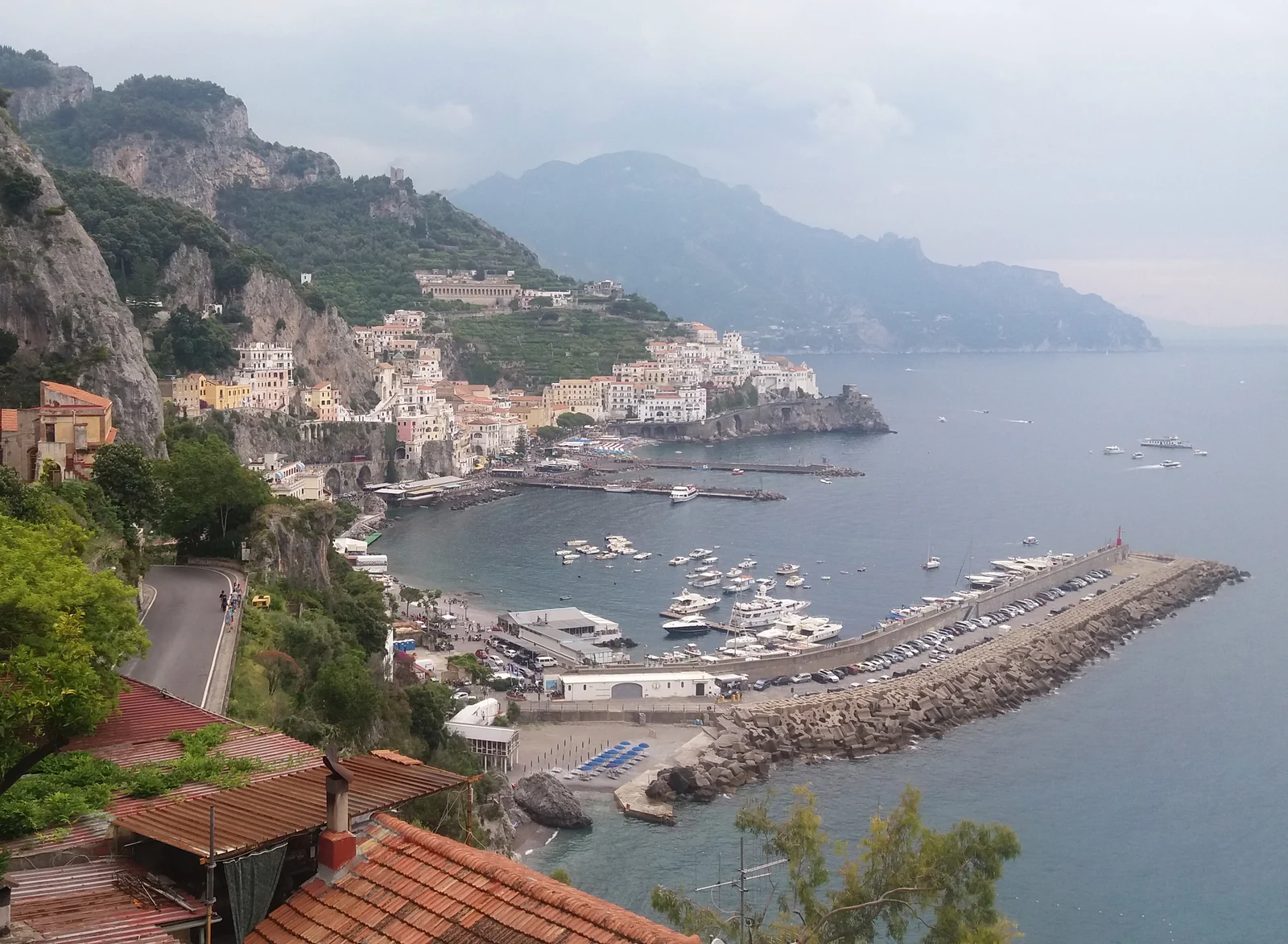
Photo: Rudolfo Kithera / Wikimedia Commons — CC0 · Resized and converted to WebP.
Tourism
Anyone staying overnight in Amalfi in a hotel, a bed & breakfast or other accommodation who is not a resident of the town pays the tourist tax, introduced by the regulation the town council approved in 2014 and in force since 1 January 2015. The regulation exempts children within their tenth year of age, people with disabilities who provide documentation, students, coach drivers and, in groups organised by agencies, one tour leader for every 25 participants. The amount per night is set by the council’s executive: under its resolution of 24 February 2022 it is 5 euros in five-star hotels, 4 euros in four-star hotels and 3 euros in three-star hotels and all other accommodation, and it applies from 1 April to 2 November each year. It is collected by whoever runs the accommodation, who pays it over to the council.
For people with disabilities, in summer 2026 the council’s «Mare per tutti» project equipped a stretch of the Marina Grande beach from 6 June to 30 September, from 8 am to 5 pm, with nine places with umbrella and sunbed, walkways to the sea, showers, toilets and beach and floating chairs for getting into the water; the service was free, tourists included, and each place took the person with at most two companions. Bookings were made at least 24 hours ahead, at the beach reception or with the form indicated on the council’s website. The staff welcome guests and help them settle in, but do not provide personal assistance on the beach or in the water. In the council’s report of November 2026 there were 726 attendances by people with disabilities, three times the previous year, and the council is preparing the 2027 season.
Sources: Comune di Amalfi — Regolamento per l’applicazione dell’Imposta di Soggiorno (Delibera di CC n. 29 del 29 settembre 2014) · Comune di Amalfi — Delibera di Giunta n. 24 del 24 febbraio 2022, Determinazione delle tariffe dell’imposta di soggiorno · Comune di Amalfi — L’estate è più accessibile e inclusiva con il progetto «Mare per tutti» (4 giugno 2026) · Comune di Amalfi — Si conclude con oltre 2.000 presenze la seconda edizione di «Mare per Tutti» (5 novembre 2026)
“Come to Amalfi as a guest, not as a tourist: that is how these places truly let you know them.”
Accommodation in figures
In the Ministry of Tourism’s national database of accommodation (BDSR), on 12 October 2026, Amalfi had 636 establishments with a verified national identification code (CIN): 27 hotel-type establishments, 251 non-hotel establishments and 358 other establishments.
Sources: Ministero del Turismo – Banca Dati Strutture Ricettive (dashboard pubblica)
Nearby
Amalfi lies on the Amalfi Coast, the 11,231-hectare UNESCO site that takes in 15 municipalities, farmland and three nature reserves; the Amalfi pastoral zone of the Archdiocese runs from Positano to Cetara and, inland, to Agerola and Tramonti. Atrani, which with Amalfi was one of the only civitates of the Republic until at least the mid-eleventh century, hosts the Byzantine New Year investiture at the church of San Salvatore de’ Birecto; the Valle delle Ferriere reserve lies in the municipality of Scala. By sea Positano, Minori, Maiori, Cetara and Salerno can be reached; Travelmar runs shuttle buses from Amalfi to Agerola, at Bomerano, the start of the Path of the Gods.
Sources: Ministero della cultura, Ufficio UNESCO — Costiera Amalfitana · Arcidiocesi di Amalfi – Cava de’ Tirreni — Diocesi · Comune di Amalfi — Tutto pronto per il Capodanno Bizantino, XXVI edizione (27 agosto 2026) · Comune di Amalfi, Visit Amalfi — Valle delle Ferriere · Travelmar — Orari del servizio annuale dal 2 al 15 novembre 2026 · Travelmar — Traghetti veloci in Costiera Amalfitana (pagina iniziale)
The town council
The official website of the Comune di Amalfi, registered in IndicePA, the index of the digital addresses of Italy’s public administrations, is the reference for the town council’s offices, opening hours and news. Its address is listed among the sources of this section.
The town hall is Palazzo San Benedetto, a former Benedictine monastery: the offices are reached from Corso delle Repubbliche Marinare and Largo Francesco Amodio, the town library from the Supportico S. Andrea. The switchboard answers on +39 089 87 36 201. The council’s tourist info point is in the Arsenal of the Republic, open all year round; in the summer months there is also an information point in Piazza della Bussola and one in Piazza Duomo.
Sources: Comune di Amalfi, sito istituzionale · IndicePA (AgID), Indice dei domicili digitali delle pubbliche amministrazioni: dataset Enti · Comune di Amalfi, Visit Amalfi — Palazzo San Benedetto · Comune di Amalfi — Un secondo Fast Information Point in Piazza Duomo (16 aprile 2026)
Where to stay
In the municipality of Amalfi the national database of the Ministry of Tourism lists 636 accommodation businesses with a verified CIN code: 27 hotels, 251 other licensed accommodation and 358 other types such as B&Bs and private rentals.
Licensed businesses from the official list of accommodation named as the source in this section. Where the list gives it, the property's official identification code appears next to its name: the national CIN code, or the code assigned by the Region or by the body that keeps the list. Private individuals are not listed. This list is the official census of licensed businesses, not a list of Apulica partners: to stay in Amalfi you do not have to check one property after another yourself; write to Apulica and we look for the stay that suits your journey, checking availability and conditions before any confirmation.
GRAND HOTEL CONVENTO DI AMALFI NH
Hotel · ★★★★★
Regional code (CUSR) 15065006ALB0212
FORE PORTA
Farm stay
Regional code (CUSR) 15065006EXT0206
ABBRACCIO AMALFI BOUTIQUE RETRET
Guest rooms
Regional code (CUSR) 15065006EXT0704
SACRUM SEMINARIUM - DOMUS MARIAE
Holiday house
Regional code (CUSR) 15065006EXT0725
HOTEL BORGO S.ANDREA
Hotel · ★★★★★
Regional code (CUSR) 15065006ALB0334
FUOCO D'AMALFI
Farm stay
Regional code (CUSR) 15065006EXT0207
AFFITACAMERE MENDEL
Guest rooms
Regional code (CUSR) 15065006EXTSCHH
HOTEL MIRAMALFI
Hotel · ★★★★★
Regional code (CUSR) 15065006ALB0305
AFFITTACAMERE ARMONIA
Guest rooms
Regional code (CUSR) 15065006EXTDAVQ
HOTEL S.CATERINA
Hotel · ★★★★★
Regional code (CUSR) 15065006ALB0333
First the places that presented themselves to Apulica, the latest first; then one place of each type in turn, by official category and stars, then by name. No position is paid for.
All 138 entries in alphabetical order
Page 1 of 14
| Name | Type | Identification code |
|---|---|---|
| ABBRACCIO AMALFI BOUTIQUE RETRET | Guest rooms | Regional code (CUSR) 15065006EXT0704 |
| AFFITACAMERE MENDEL | Guest rooms | Regional code (CUSR) 15065006EXTSCHH |
| AFFITTACAMERE ARMONIA | Guest rooms | Regional code (CUSR) 15065006EXTDAVQ |
| AL PESCE D'ORO | Guest rooms | Regional code (CUSR) 15065006EXT0005 |
| AMALFI | Hotel | Regional code (CUSR) 15065006ALB0009 |
| AMALFI AMMORE | Guest rooms | Regional code (CUSR) 15065006EXT0486 |
| AMALFI CASA MIA | Guest rooms | Regional code (CUSR) 15065006EXT0448 |
| AMALFI CENTRO | Guest rooms | Regional code (CUSR) 15065006EXT0446 |
| AMALFI COBALTO APARTMENTS | Guest rooms | Regional code (CUSR) 15065006EXT0480 |
| AMALFI GALLERY ROOM & SUITE | Guest rooms | Regional code (CUSR) 15065006EXTLEEC |
Ask Apulica for a stay in Amalfi We reply shortly, within a few hours at most, with a proposal for you to consider.
Sources: Ministero del Turismo – Banca Dati Strutture Ricettive (dashboard pubblica), 2026-10-12
YOUR JOURNEY
How to shape a journey here
To include Amalfi in a trip, or to ask for a guide or a transfer, you can write to Apulica with the button below.
Plan your tripKeep exploring
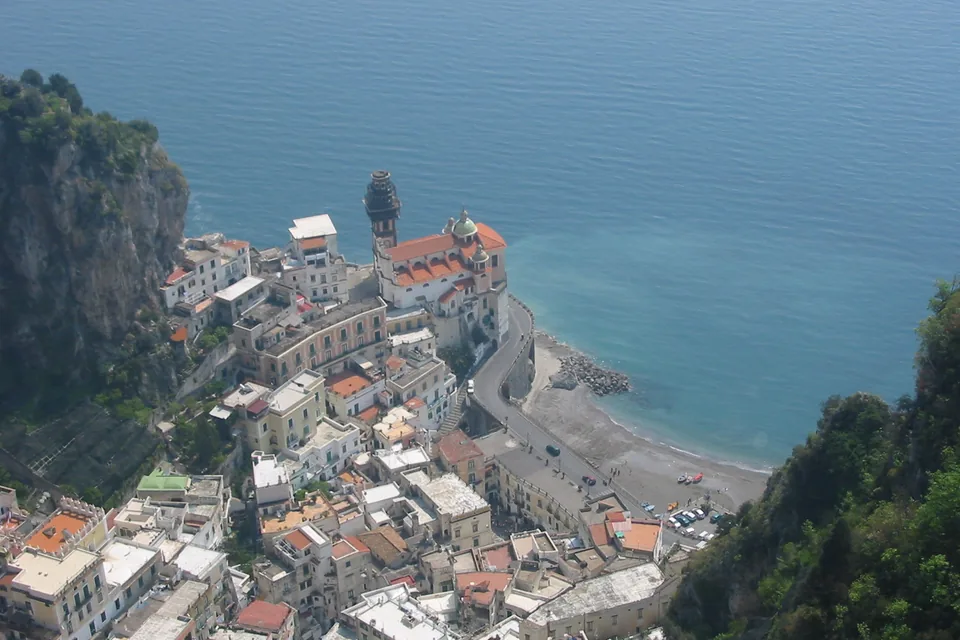
Atrani
Atrani (SA), Campania: 765 residents, 0.12 km². The official facts of the municipality, its town council website and its registered accommodation.
Read the guide →Photo: Donar Reiskoffer / Wikimedia Commons — CC BY 3.0 · Resized and converted to WebP.

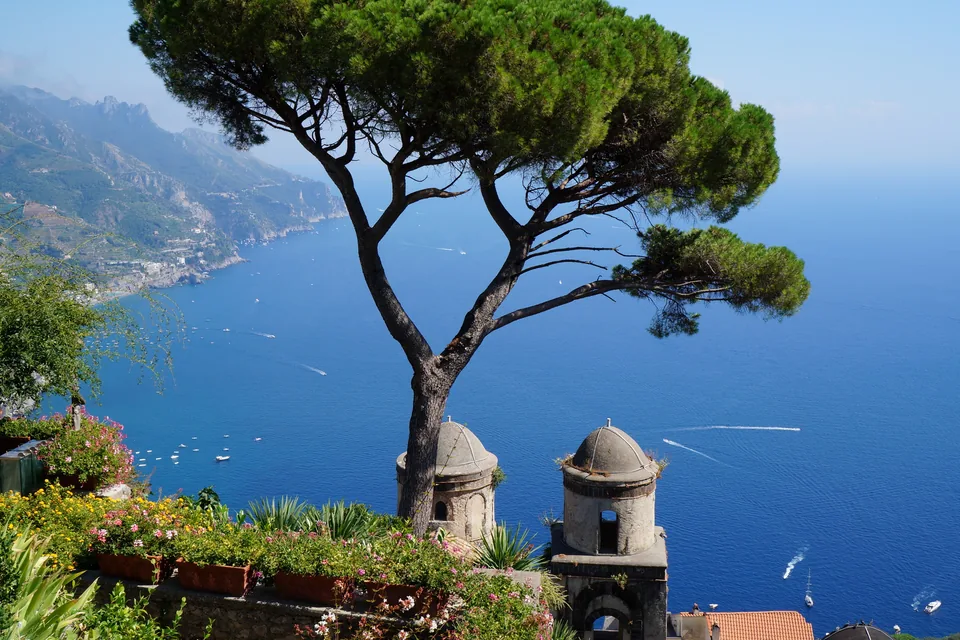
Ravello
Ravello (SA), Campania: 2,338 residents, 7.93 km². The official facts of the municipality, its town council website and its registered accommodation. Villa Rufolo and the garden that inspired Wagner, Villa Cimbrone and the Belvedere of Infinity, the Duomo with its bronze doors and pulpits, the Ravello Festival, Oscar Niemeyer’s Auditorium, the PGI lemon and the wine of the Ravello sub-zone.
Read the guide →Photo: Leandro Neumann Ciuffo / Wikimedia Commons — CC BY 2.0 · Resized and converted to WebP.

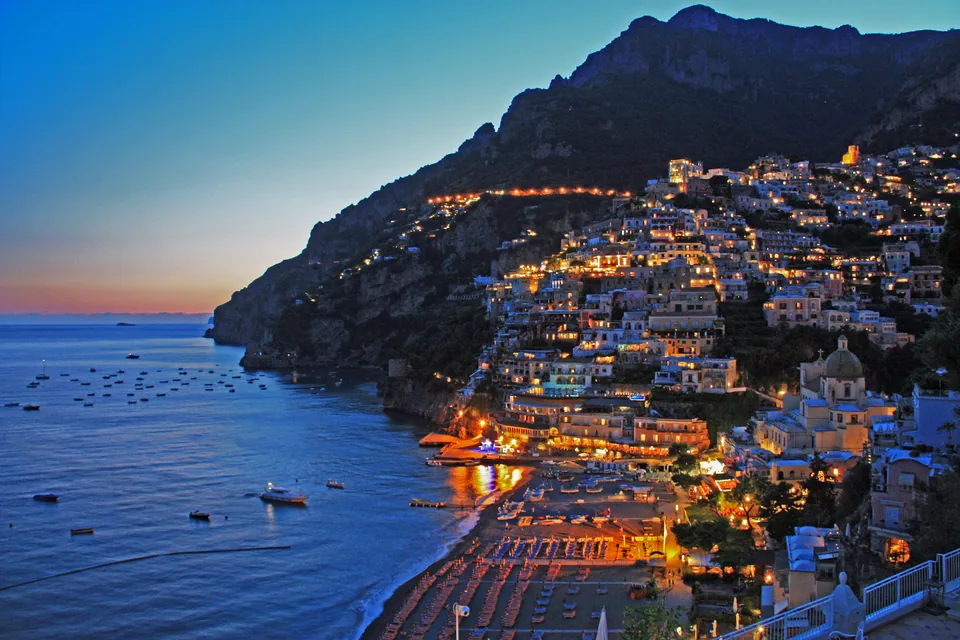
Positano
Positano (SA), Campania: 3,677 residents, 8.70 km². The official facts of the municipality, its town council website and its registered accommodation. The church of Santa Maria Assunta with its majolica dome, the Roman villa of the MAR, Spiaggia Grande and Fornillo, Montepertuso, Nocelle and the Path of the Gods, the PGI lemon and Moda Positano.
Read the guide →Photo: JeCCo / Wikimedia Commons — CC BY 4.0 · Resized and converted to WebP.

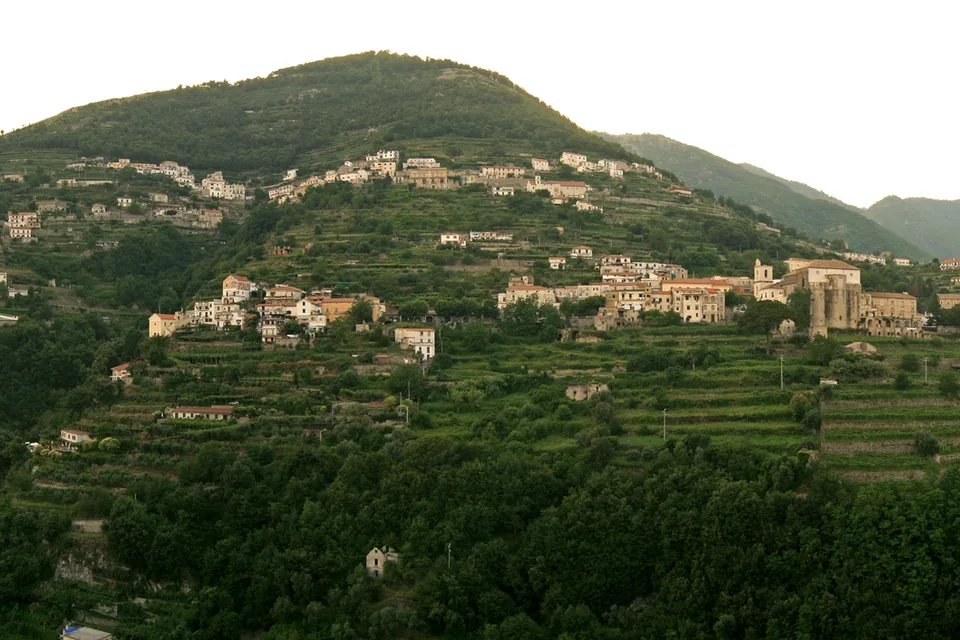
Scala
Scala (SA), Campania: 1,506 residents, 13.86 km². The official facts of the municipality, its town council website and its registered accommodation.
Read the guide →Photo: Jensens / Wikimedia Commons — Public domain · Resized and converted to WebP.

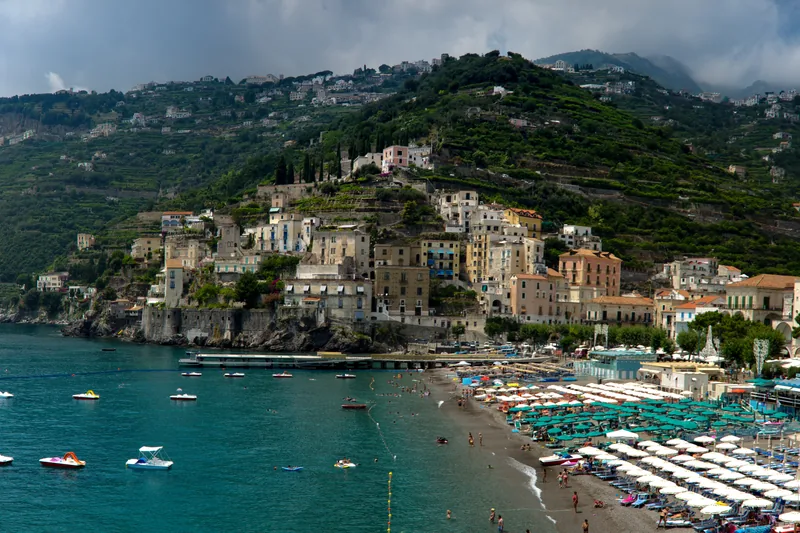
Minori
Minori (SA), Campania: 2,557 residents, 2.67 km². The official facts of the municipality, its town council website and its registered accommodation.
Read the guide →Photo: ApicellaOslo / Wikimedia Commons — CC BY-SA 3.0 · Resized and converted to WebP.

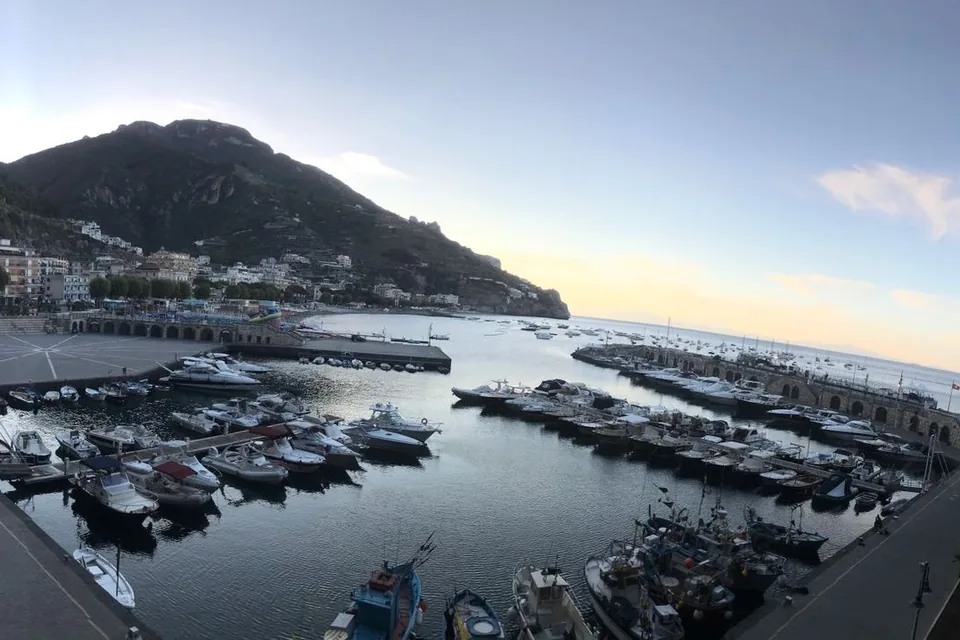
Maiori
Maiori (SA), Campania: 5,225 residents, 16.71 km². The official facts of the municipality, its town council website and its registered accommodation.
Read the guide →Photo: Pietro Di Fontana / Wikimedia Commons — CC BY-SA 4.0 · Resized and converted to WebP.

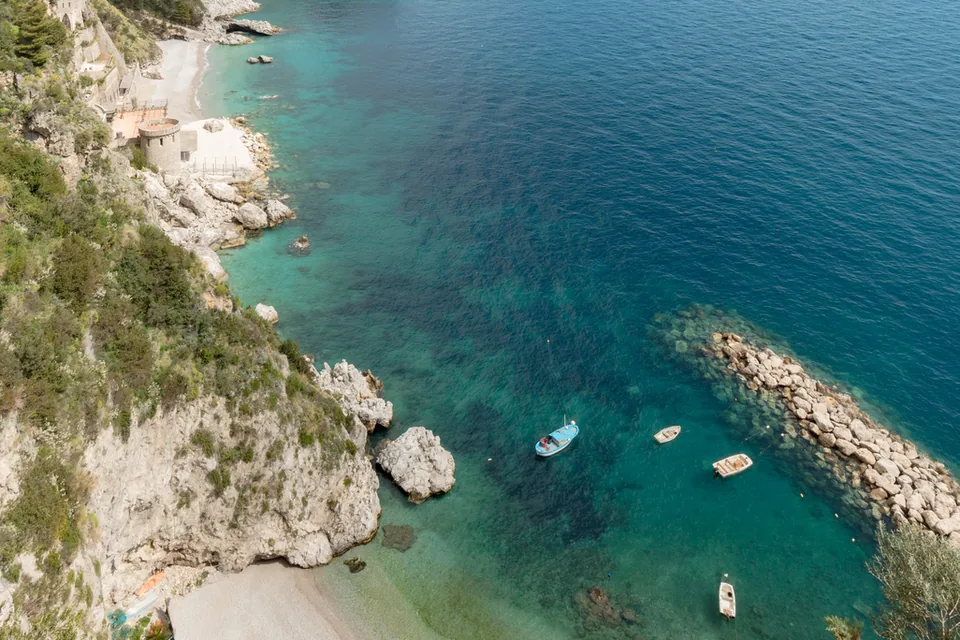
Conca dei Marini
Conca dei Marini (SA), Campania: 644 residents, 1.17 km². The official facts of the municipality, its town council website and its registered accommodation.
Read the guide →Photo: Diego Delso / Wikimedia Commons — CC BY-SA 4.0 · Resized and converted to WebP.

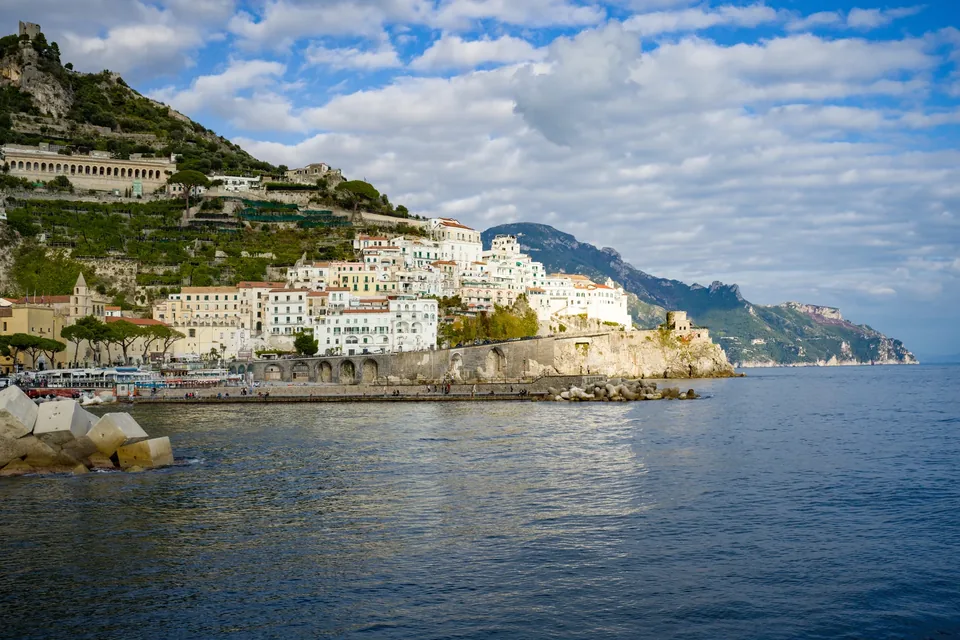
Amalfi Coast
The UNESCO cultural landscape between Positano and Vietri sul Mare: citrus terraces, footpaths, inland valleys and the history of a maritime republic.
Read the guide →Photo: Wolfgang Moroder / Wikimedia Commons — CC BY-SA 3.0 · Resized and converted to WebP.

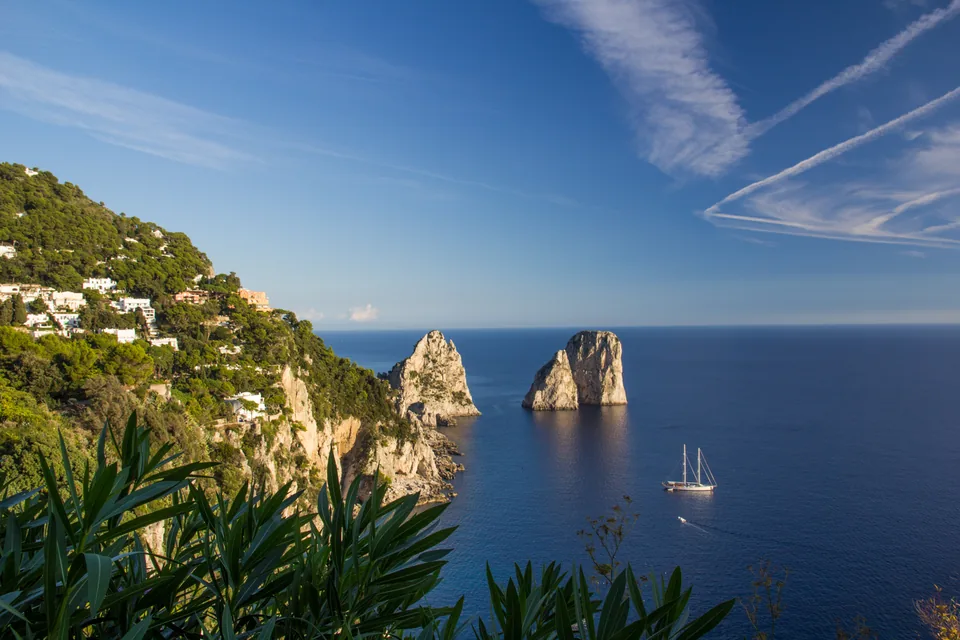
Capri
Capri (NA), Campania: 6,722 residents, 4.06 km². The official facts of the municipality, its town council website and its registered accommodation. The Faraglioni, the Piazzetta, the Gardens of Augustus and Via Krupp, the Certosa di San Giacomo with the Archaeological Museum, Tiberius’s Villa Jovis, Villa Lysis, and the island’s PGI lemon and DOC wine.
Read the guide →Photo: Marlis Börger / Wikimedia Commons — CC BY-SA 2.0 · Resized and converted to WebP.

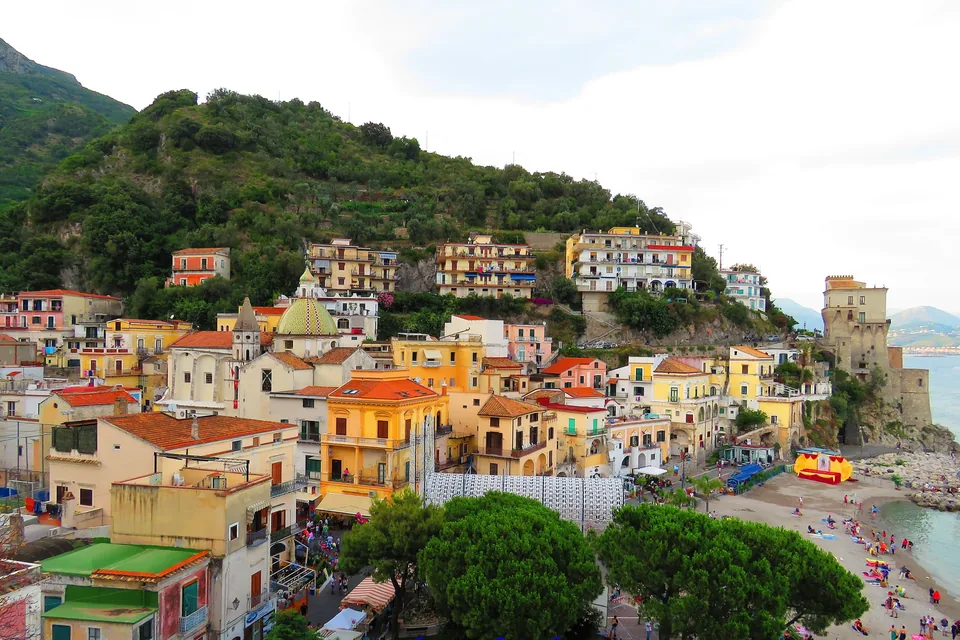
Cetara
Cetara (SA), Campania: 1,928 residents, 5.00 km². The official facts of the municipality, its town council website and its registered accommodation. The Viceregal tower on the Marina, the majolica dome of San Pietro, the Colatura di alici di Cetara PDO, tuna and anchovy fishing, the beaches and the footpaths of the Amalfi Coast.
Read the guide →Photo: Gianfranco Vitolo / Wikimedia Commons — CC BY 2.0 · Resized and converted to WebP.

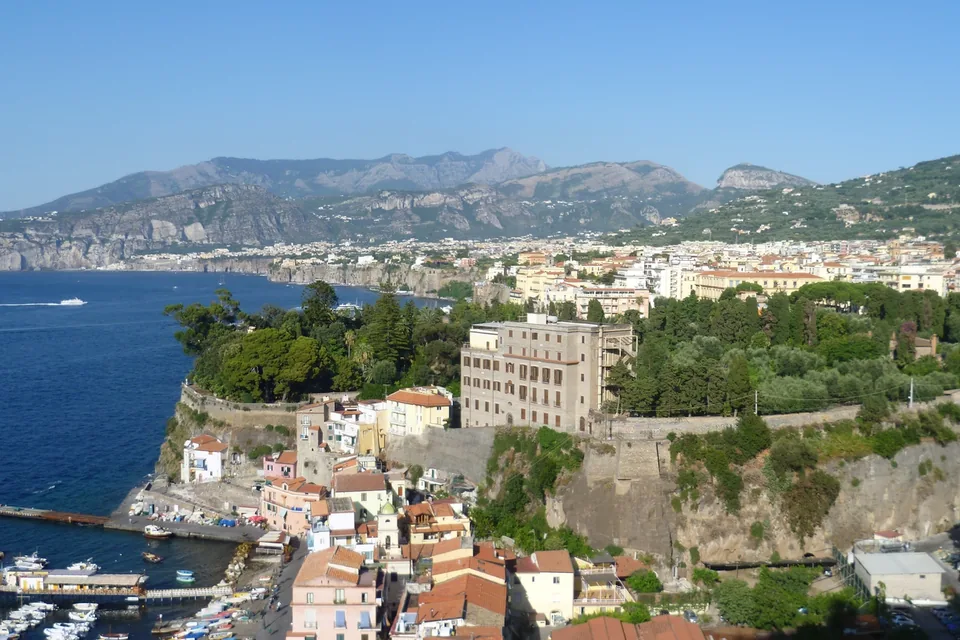
Sorrento
Sorrento (NA), Campania: 15,152 residents, 10.00 km². The official facts of the municipality, its town council website and its registered accommodation. The town on its tuff cliff, the old centre with the basilica of Sant’Antonino and the cloister of San Francesco, the Museo Correale, the Sorrento Lemon PGI, the marinas and the train from Naples.
Read the guide →Photo: Kim Traynor / Wikimedia Commons — CC BY-SA 3.0 · Resized and converted to WebP.

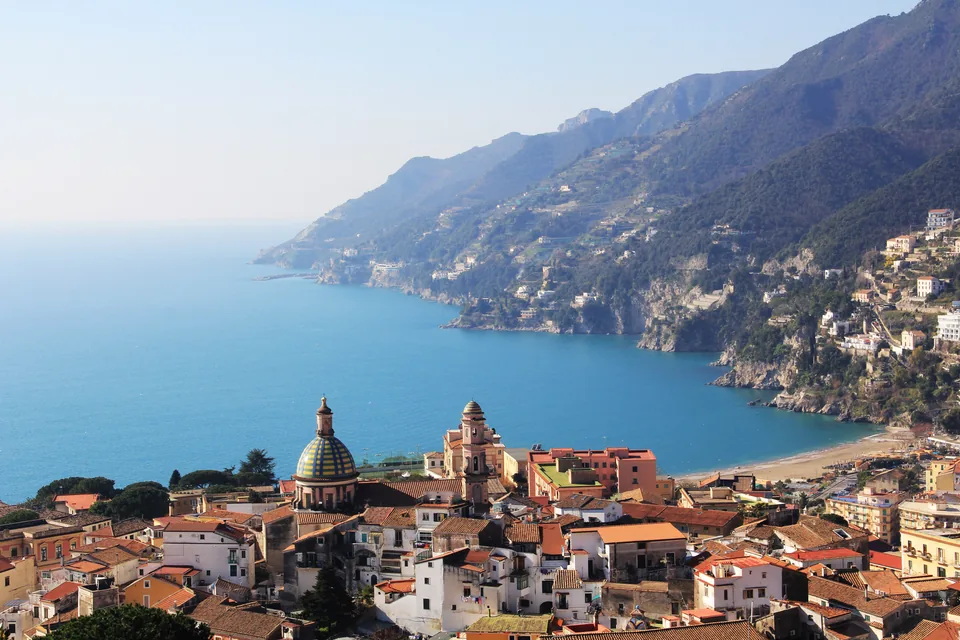
Vietri sul Mare
Vietri sul Mare (SA), Campania: 6,962 residents, 9.53 km². The official facts of the municipality, its town council website and its registered accommodation. Vietri ceramics, from the old faenzere workshops to today’s shops, the cathedral with its majolica dome, the Ceramics Museum at Villa Guariglia, Paolo Soleri’s Solimene factory, the Limone Costa d’Amalfi PGI lemon and the beaches of the Marina.
Read the guide →Photo: Anila amataj / Wikimedia Commons — CC BY-SA 4.0 · Resized and converted to WebP.
