

Why go
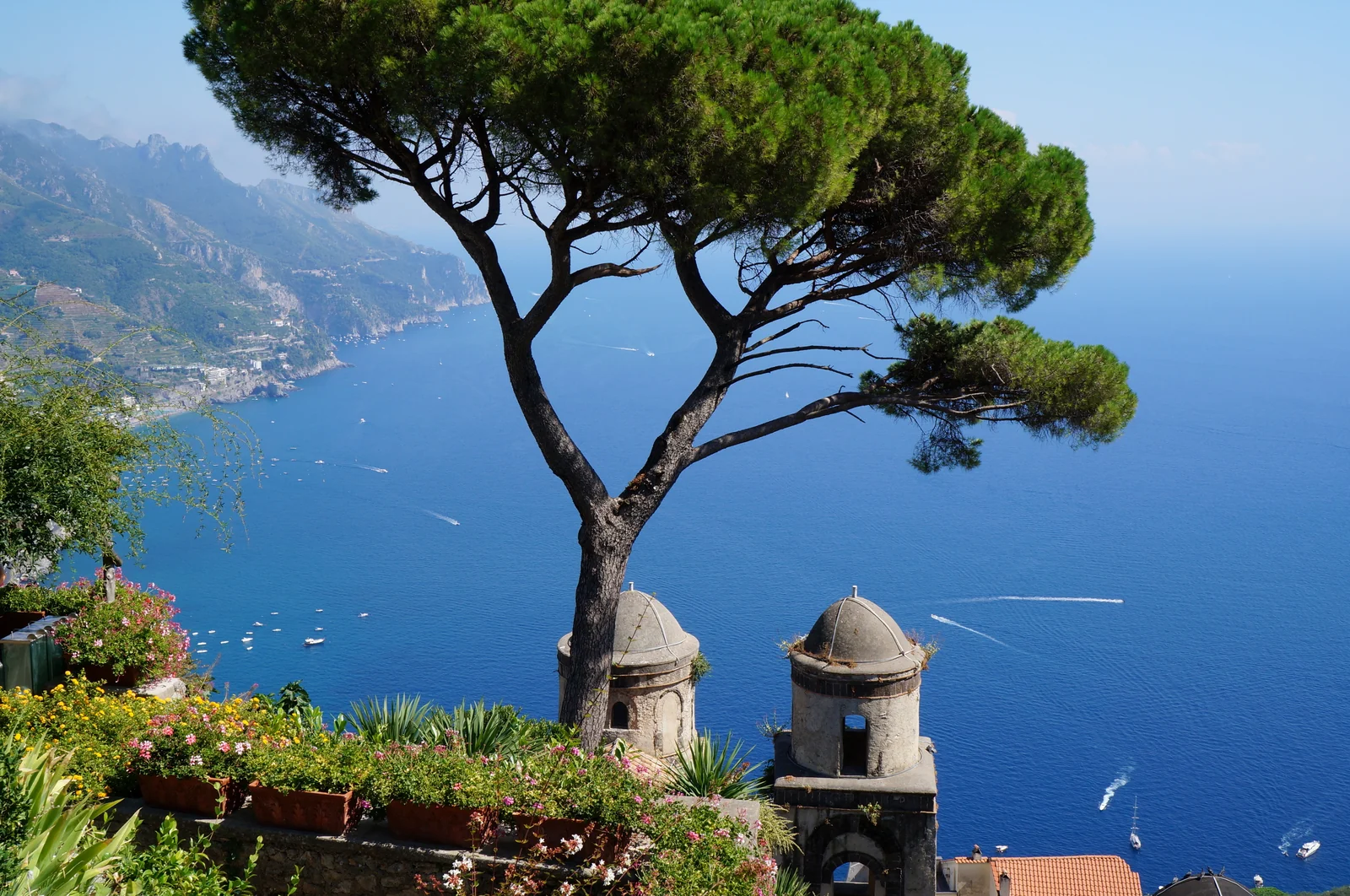
People come to Ravello for two villas hanging above the sea. Villa Rufolo, built in the thirteenth century by the town’s richest family, was brought back to life by the Scottish botanist Francis Nevile Reid, who bought it in 1851; on 26 May 1880 Richard Wagner found there the “magic garden of Klingsor” of his “Parsifal”. Villa Cimbrone, transformed from 1904, ends its avenue at the Belvedere of Infinity, whose view the town council describes as reaching from the Cilento to the headlands beyond Amalfi.
The second reason is music. Since 1953 the Ravello Festival has brought orchestras and conductors from all over the world onto a stage built over the void, beyond the parapet of the Belvedere of Villa Rufolo, about 340 metres above the sea; in winter the concerts move into the Auditorium designed by Oscar Niemeyer and opened in 2010. Ravello calls itself the “City of Music”.
Then there is the medieval centre: the Duomo with its bronze doors of 1179 and two mosaic pulpits, the churches of San Giovanni del Toro and Santa Maria a Gradillo, and around them the terraces that the town council describes as a system in balance between woodland, water channels, villages and the sea. Ravello is one of the towns of the Amalfi Coast, inscribed on the UNESCO World Heritage List, which the Italian National Commission names together with Amalfi.
Sources: Fondazione Ravello — Villa Rufolo: orari, biglietti e storia · Comune di Ravello — Luoghi: Villa Cimbrone · Comune di Ravello — Luoghi: Le ville · Fondazione Ravello — Il Ravello Festival · Fondazione Ravello — Il Belvedere di Villa Rufolo · Comune di Ravello — Luoghi: Auditorium Oscar Niemeyer · Comune di Ravello — Luoghi: Duomo · Comune di Ravello — Il Patrimonio Culturale Materiale · Commissione Nazionale Italiana per l’UNESCO — Costiera Amalfitana
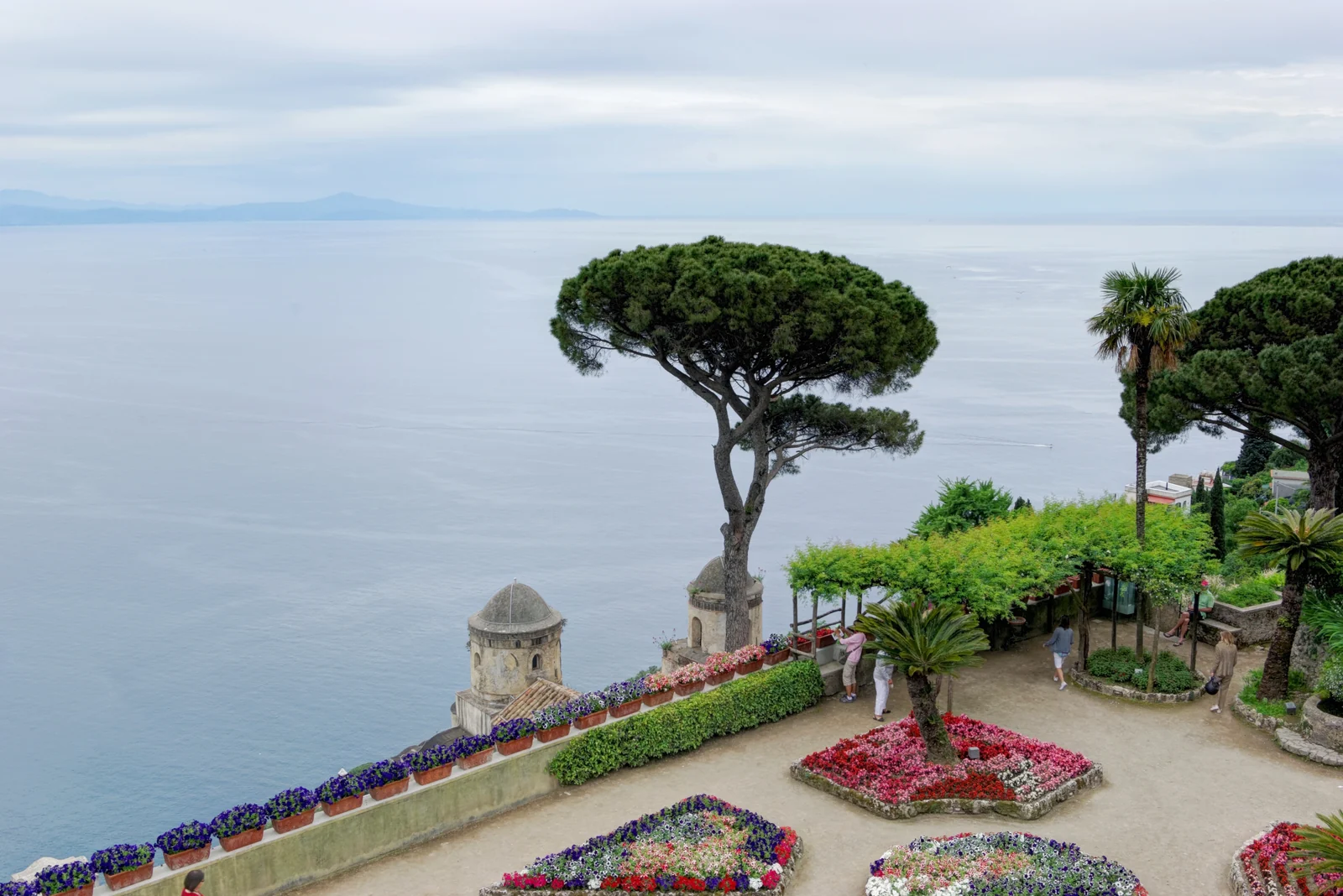
Photo: Berthold Werner / Wikimedia Commons — CC BY-SA 3.0 · Resized and converted to WebP.
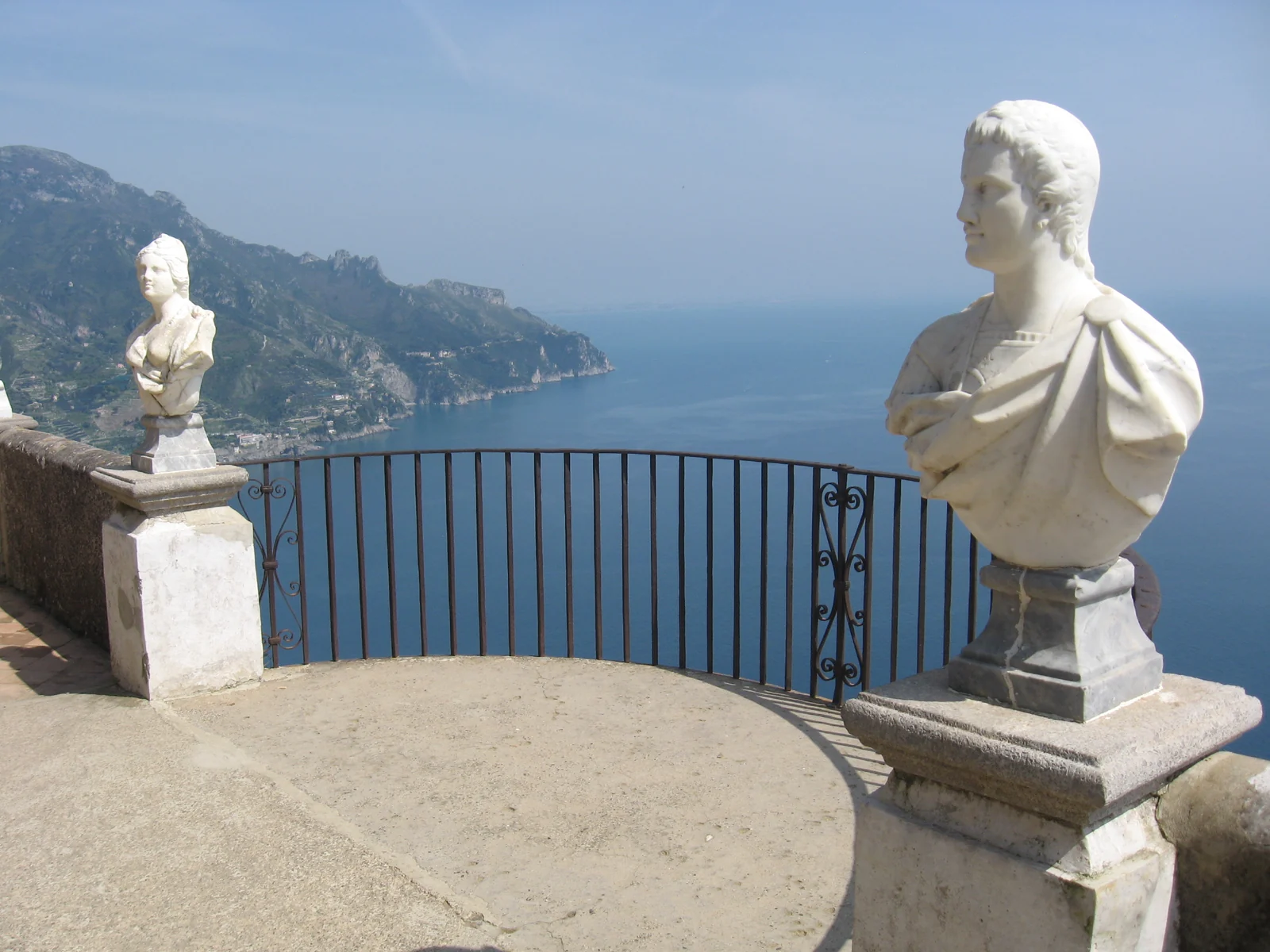
Photo: Istvánka / Wikimedia Commons — CC BY-SA 3.0 · Resized and converted to WebP.
The municipality at a glance
Ravello is a municipality in the province of Salerno, in Campania. Its ISTAT code is 065104. On 1 January 2025 it had 2,338 residents. The municipal territory covers 7.93 km² and ranges from 6 to 1,264 metres above sea level; the town hall stands at about 374 metres.
The town stands on the plateau between the valleys of the Dragone and Reginna streams; the village of Torello also belongs to the municipality. The council’s highest trail reaches Monte Cerreto, among the peaks of the Lattari Mountains.
Sources: ISTAT, Codici statistici delle unità amministrative territoriali: elenco dei comuni al 21 febbraio 2026 · ISTAT, Popolazione residente per età, sesso e stato civile al 1° gennaio 2025 (POSAS) · ISTAT, Principali statistiche geografiche sui comuni: superficie e altimetria al 31 dicembre 2021 · Comune di Ravello — La Storia di Ravello · Comune di Ravello — L’«Incendio del borgo» illumina la frazione di Torello (21 settembre 2025) · Comune di Ravello — Ravello Digital Grand Tour, Hiking and Walking Experience (aggiornato il 6 maggio 2024)
History
Ravello stands on the plateau that separates the valley of the Dragone stream from that of the Reginna. Tradition says that, like the other towns of the Coast, it was founded by Roman nobles shipwrecked on the coast of Dalmatia; the few archaeological traces suggest villas of classical times. Documented history begins with the Duchy of Amalfi, born on 1 September 839.
Under the Normans Ravello had its own stratigotus and became an independent bishopric, from 1086, answering directly to the Holy See. In 1135 the Pisans were stopped at the castle of Fratta, on Monte Brusara; in 1137 they laid the territory waste. In the Swabian period the town’s great families, the Rogadeo, Frezza, Bove and Rufolo, supported Frederick II and received posts at his court. Walls were ordered by Charles I of Anjou in 1286 and strengthened by order of Charles II in 1289.
The War of the Vespers, which broke out in 1282, hit the Duchy’s sea trade; many families moved their business to Puglia and then to Naples. The fief passed from the Sanseverino to the Piccolomini, and in 1583 the people of the Coast, Ravello nobles among them, bought it back for 216 gold ducats, making it royal demesne. The French decade suppressed some of the oldest monasteries; with the Bourbons and the coast road from Vietri to Amalfi came the European travellers.
The Scottish botanist Nevile Reid bought Villa Rufolo in 1851 and entrusted its restoration to Michele Ruggiero, the architect who excavated Pompeii from 1864. In 1880 Richard Wagner arrived. At the end of the Second World War Victor Emmanuel III took refuge at Villa Episcopio: there, on 12 April 1944, he signed the handover of the lieutenancy to his son Umberto, and there the provisional government based in Salerno was sworn in.
The twentieth century brought writers and artists to Ravello: the town council recalls D. H. Lawrence, who stayed here in 1926 and 1927 while writing “Lady Chatterley’s Lover”, Virginia Woolf as a guest of Villa Cimbrone, M. C. Escher, André Gide, E. M. Forster, Pier Paolo Pasolini, who set an episode of his “Decameron” here, and Gore Vidal, who from 1972 lived in the villa La Rondinaia and was made an honorary citizen in 1980.
Sources: Comune di Ravello — La Storia di Ravello · Comune di Ravello — Luoghi: Duomo · Comune di Ravello — Luoghi: Le antiche mura · Comune di Ravello — Luoghi: Villa Episcopio · Fondazione Ravello — Villa Rufolo: orari, biglietti e storia · Comune di Ravello — Ravello Digital Grand Tour, Hiking and Walking Experience (aggiornato il 6 maggio 2024) · Fondazione Ravello — Il Giardino di Klingsor · Comune di Ravello — Nella sua Ravello l’omaggio a Gore Vidal (3 ottobre 2025)
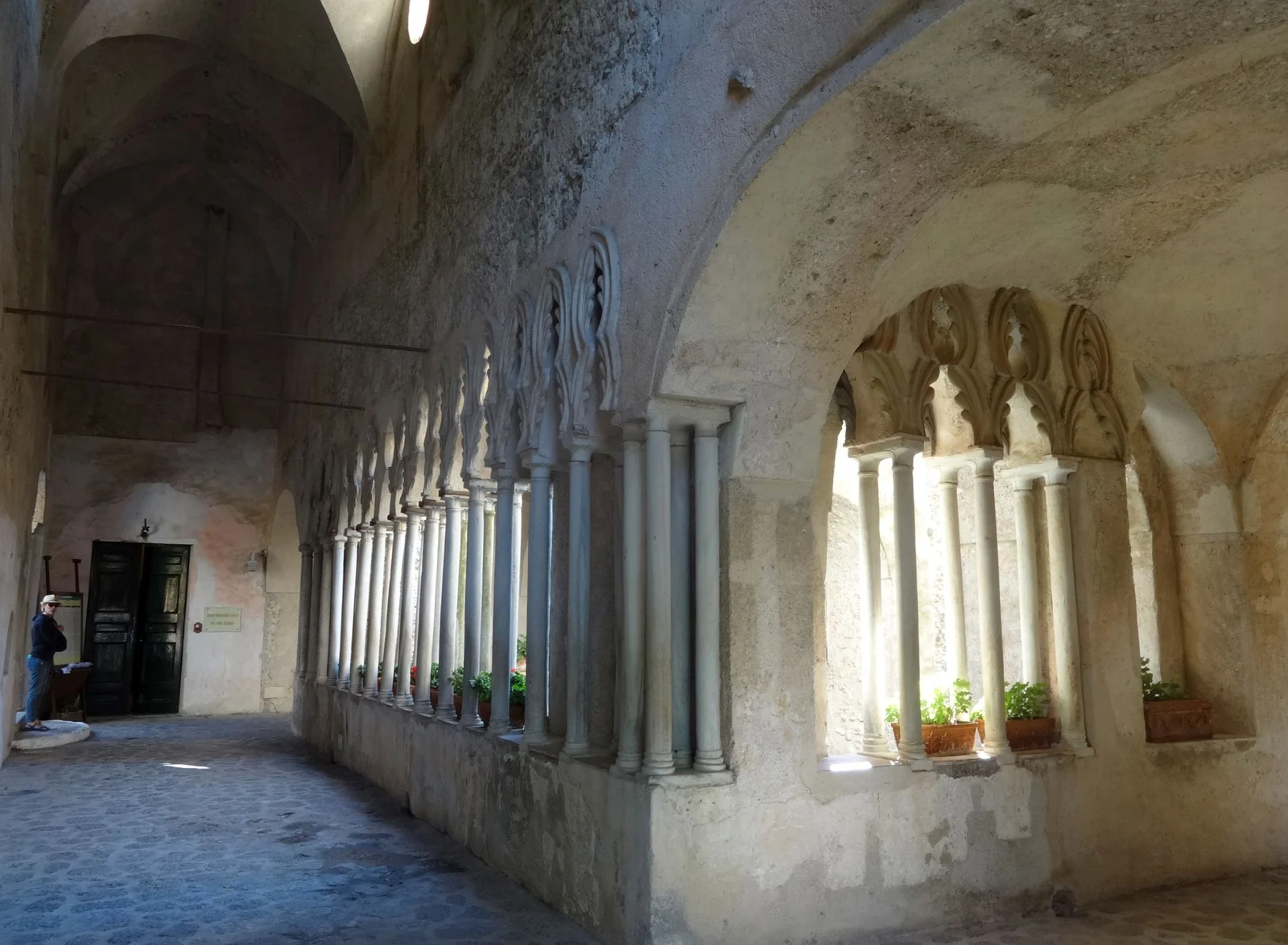
Photo: Derbrauni / Wikimedia Commons — CC BY-SA 4.0 · Resized and converted to WebP.
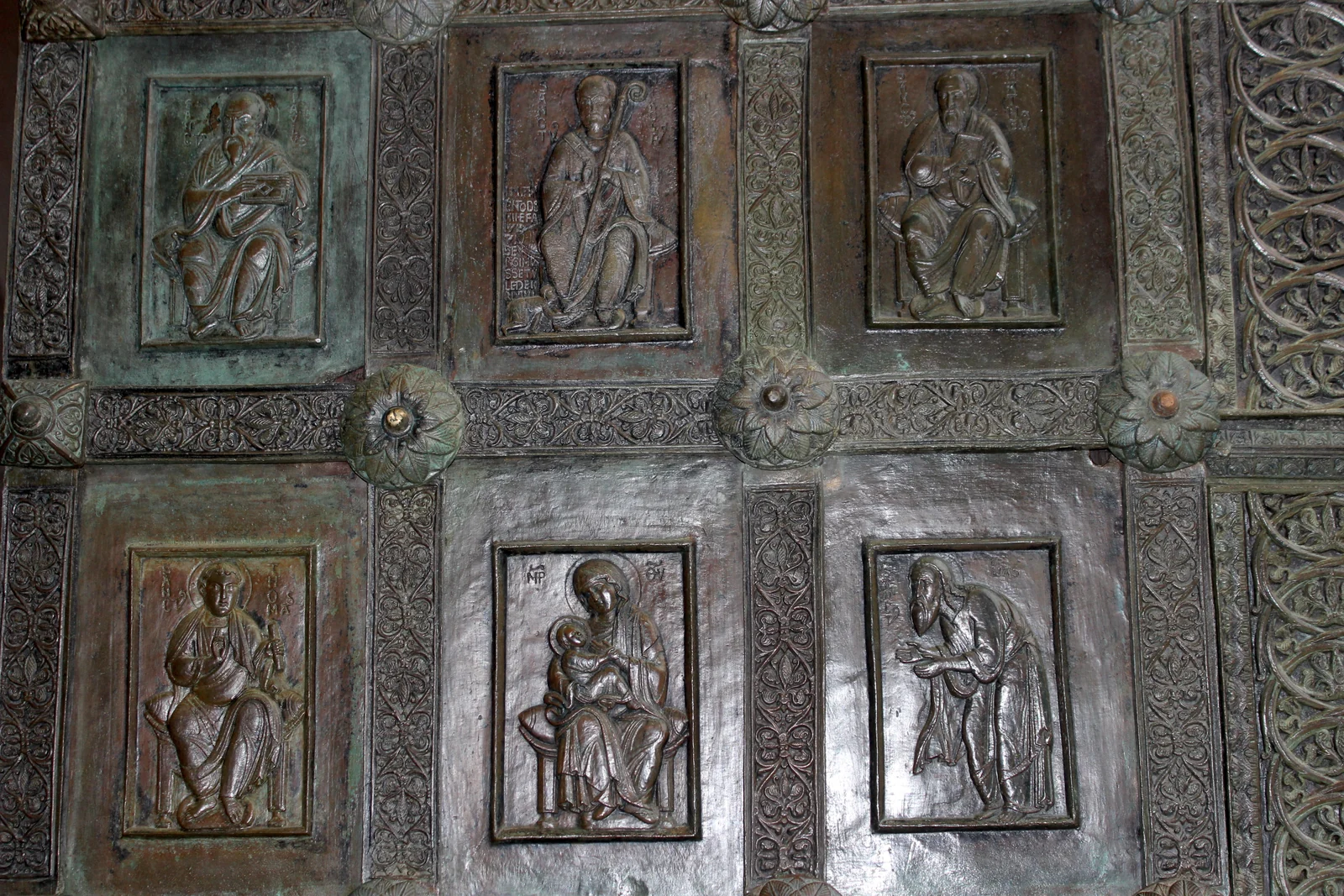
Photo: Miguel Hermoso Cuesta / Wikimedia Commons — CC BY-SA 4.0 · Resized and converted to WebP.
What to see
Villa Rufolo, on Piazza Duomo, has been run by the Fondazione Ravello since 2007. You enter through a square tower with a pointed arch and an umbrella dome; an avenue leads to the thirteenth-century core, the Moorish courtyard, with galleries of pointed arches on columns and a façade of interlaced arches. The taller tower is decorated with clay colonnettes and tufa circles like the Duomo. There remain the baths with their domed vault, the dining hall divided by five arches, and the channels that carried water to the cistern. The terraced gardens, with Mediterranean and exotic plants, are Reid’s work; from the Belvedere you look over the Gulf of Salerno. The villa is also the seat of the European University Centre for Cultural Heritage.
Villa Cimbrone, on Via Santa Chiara, is now a place to stay, but the town council lists as open to visitors the cloister, with mullioned windows on twisted colonnettes, the Tea-room, the so-called crypt and above all the park: the avenue ends at the Belvedere of Infinity, decorated with copies of Roman busts and reached through a pavilion with a statue of Ceres; among the statues of the gardens is Adamo Tadolini’s “Eve in the grotto”.
The Duomo, dedicated to the Assumption, was a cathedral from 1086. The bronze door of 1179, the work of Barisano of Trani and a gift of Sergio Muscettola, has fifty-four panels, forty-two of them with figures. In the nave stand the pulpit of Costantino Rogadeo, no later than 1150, with the story of Jonah in mosaic, and the pulpit of Nicola Rufolo, of 1272, by Nicola di Bartolomeo of Foggia, resting on six marble lions. The chapel of 1643 keeps the phial with the blood of Saint Pantaleon. The crypt houses the Museo del Duomo, with parts of Matteo Rufolo’s ciborium of 1279 and the marble bust known as Sigilgaita Rufolo; the nearby church of the Corpo di Cristo is now a picture gallery. The town council lists access to the Duomo as free.
The other churches: San Giovanni del Toro, built between 975 and 1018 and consecrated in 1276, with a twelfth-century pulpit adorned with twenty-one majolica bowls and a crypt frescoed in the fourteenth century; Santa Maria a Gradillo, with a pebble mosaic floor that draws the Tree of Life; San Francesco, with the cloister and the friary library open to the public; Santa Chiara, of 1297, where the nuns still keep enclosure.
The Oscar Niemeyer Auditorium, at Via della Repubblica 12, comes from a design the Brazilian architect offered the town in 2000: a white curve that echoes the line of the coast, 400 seats set into the slope, the orchestra and the foyer cantilevered over the void, a porthole onto the sea behind the stage. The town council lists it as open during events; visits are by booking only.
Sources: Fondazione Ravello — Villa Rufolo: orari, biglietti e storia · Comune di Ravello — Luoghi: Villa Rufolo · Fondazione Ravello — Il Belvedere di Villa Rufolo · Fondazione Ravello — Missione e storia · Comune di Ravello — Luoghi: Villa Cimbrone · Comune di Ravello — Luoghi: Le ville · Comune di Ravello — Luoghi: Duomo · Comune di Ravello — Luoghi: Il complesso del Duomo · Comune di Ravello — Luoghi: Museo del Duomo · Comune di Ravello — Luoghi: La Chiesa del Corpo di Cristo · Comune di Ravello — Luoghi: Chiesa di S. Giovanni del Toro · Comune di Ravello — Luoghi: Chiesa di S. Maria a Gradillo · Comune di Ravello — Luoghi: Chiesa e Convento di S. Francesco · Comune di Ravello — Luoghi: Chiesa e Monastero di S. Chiara · Comune di Ravello — Luoghi: Auditorium Oscar Niemeyer
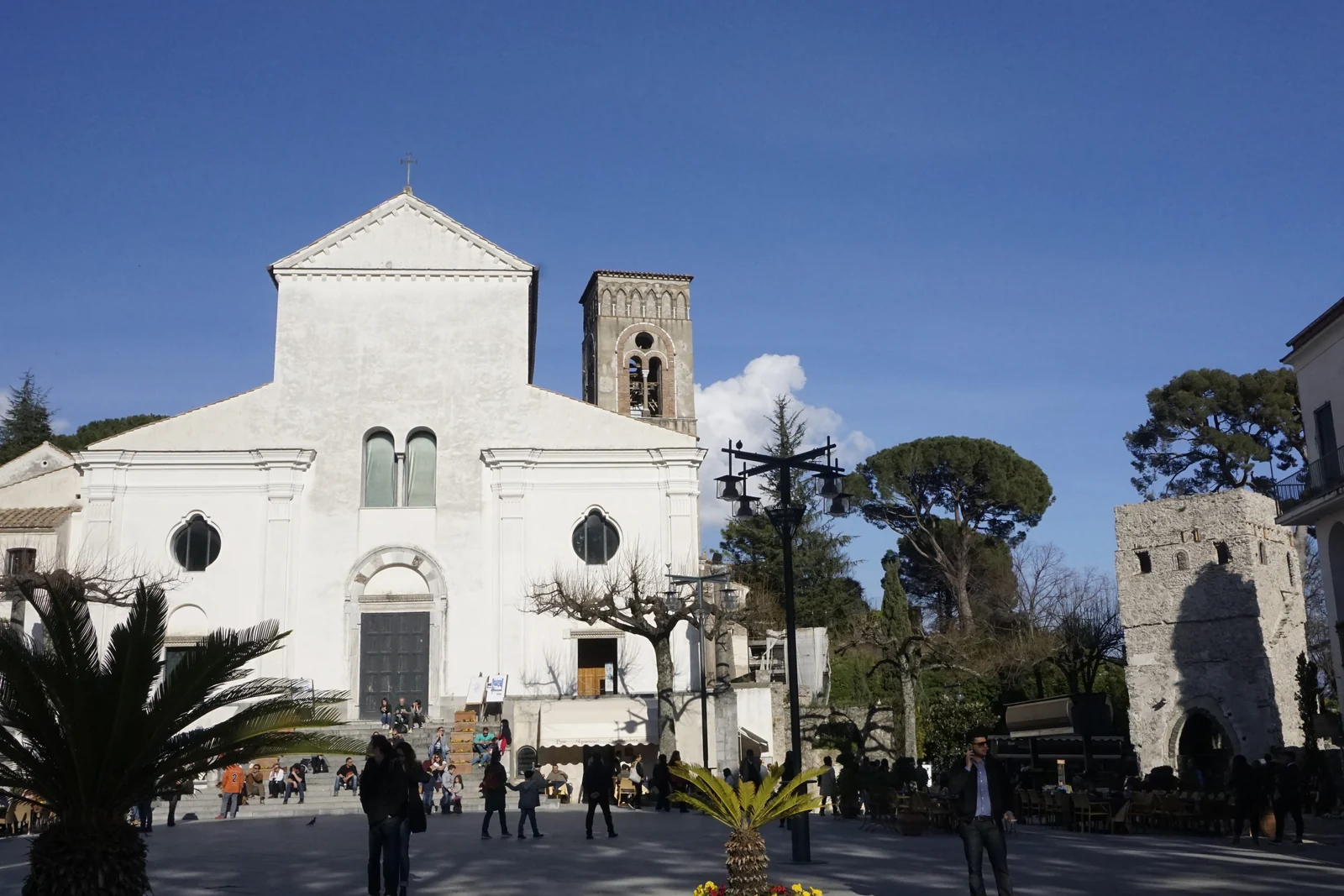
Photo: Nessy / Wikimedia Commons — CC BY-SA 4.0 · Resized and converted to WebP.
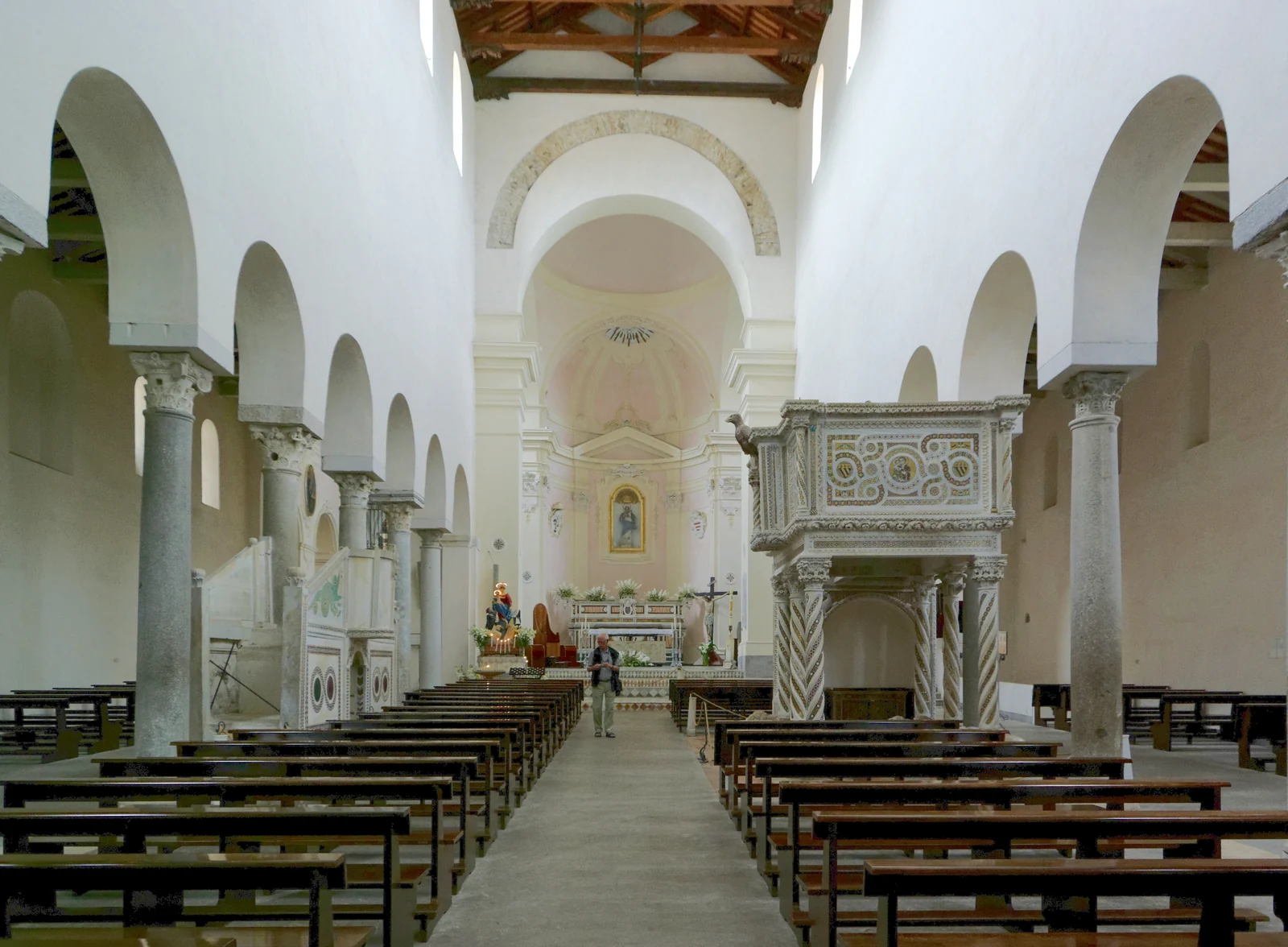
Photo: Berthold Werner / Wikimedia Commons — CC BY-SA 3.0 · Resized and converted to WebP.
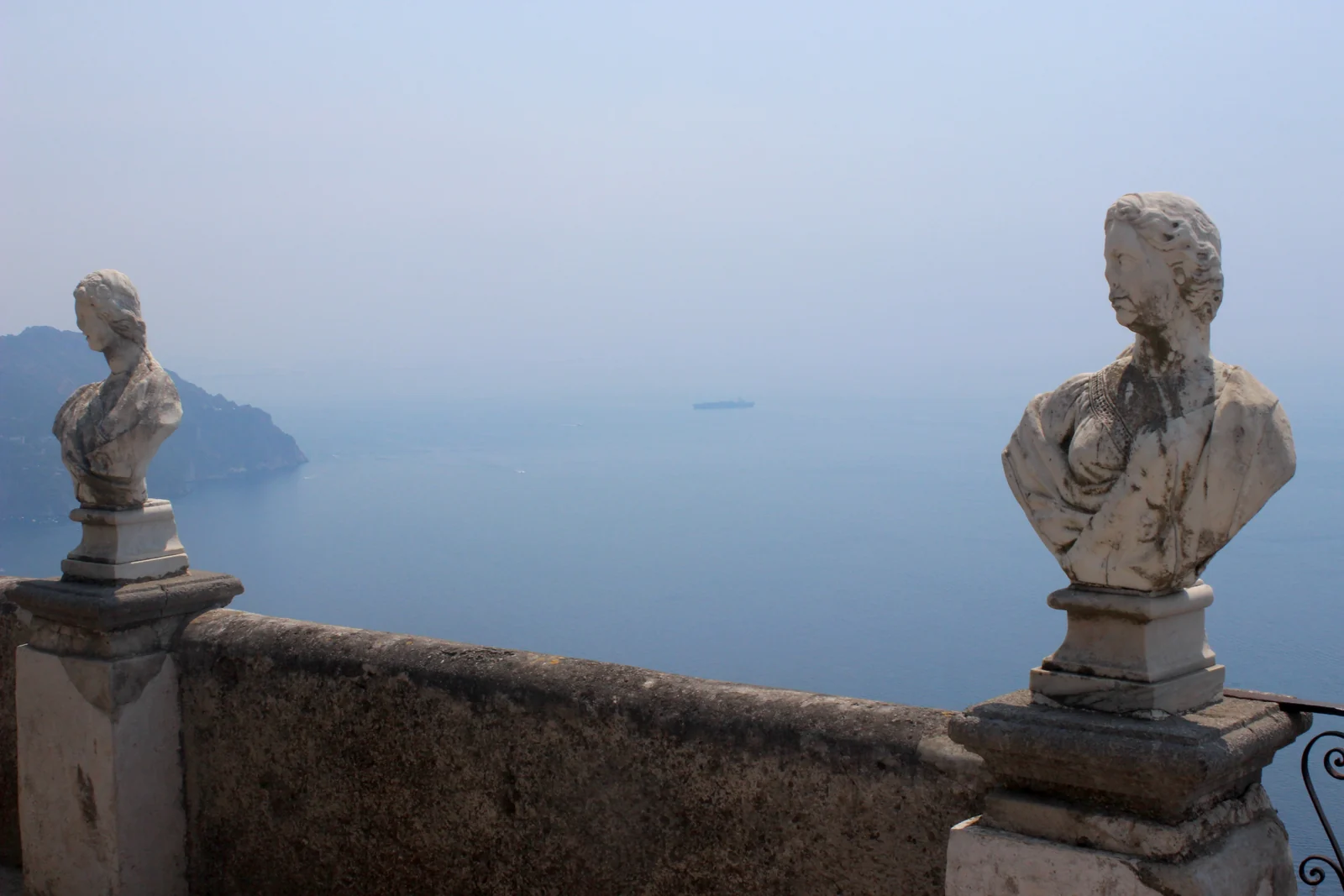
Photo: Miguel Hermoso Cuesta / Wikimedia Commons — CC BY-SA 4.0 · Resized and converted to WebP.
Flavours
The lemon of the Coast is the PGI “Limone Costa d’Amalfi”, recognised in 2001: the specification covers part of Ravello’s territory and admits only the “Sfusato” variety in its Amalfi ecotype. It is grown on terraces held by dry-stone walls, the “macere”, under pergolas of wooden poles, preferably chestnut; it is picked by hand, from 1 February to 31 October, and each fruit weighs at least 100 grams.
The Campania Region describes its pale yellow peel, rich in essential oils, and its juicy, almost seedless flesh; the lemon is eaten even as a salad, goes with fish and first courses and is the base of limoncello and of sweets such as the “Delizie” and the limoncello babà. According to the Region, as early as the eleventh century the Amalfi Republic wanted stocks of lemons on board its ships, against scurvy.
Ravello gives its name to one of the three sub-zones of the “Costa d’Amalfi” DOC, with Furore and Tramonti: the sub-zone covers Ravello, Scala, Minori and Atrani. Ravello white comes from at least 40% Falanghina and Biancolella; the red and rosé from at least 40% Piedirosso, called “Per ’e palummo” here, with Sciascinoso, called “Olivella”, and Aglianico. The vineyards must be on hillsides, no higher than 650 metres.
Sources: Regione Campania — Disciplinare di produzione dell’IGP «Limone Costa d’Amalfi» (testo del provvedimento ministeriale del 18 luglio 2001) · Regione Campania, Assessorato all’Agricoltura — Limone Costa d’Amalfi IGP · Ministero dell’agricoltura (MASAF), Catalogo nazionale delle varietà di vite — Disciplinare della DOC «Costa d’Amalfi»
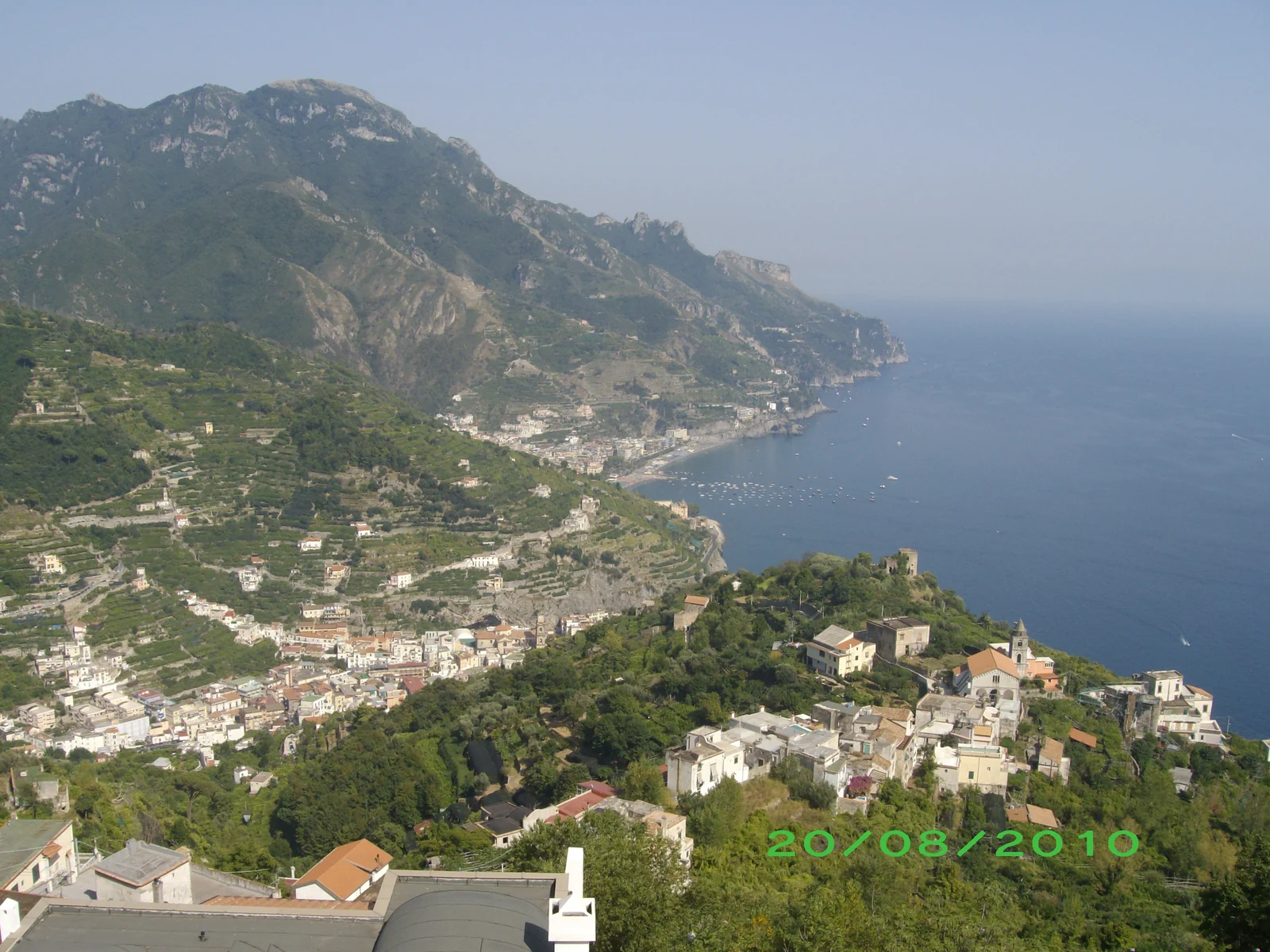
Photo: Mies me at Italian Wikipedia / Wikimedia Commons — Public domain · Resized and converted to WebP.
Experiences
The Ravello Festival, run by the Fondazione Ravello, takes place every summer from July to September, with more than twenty events of symphonic concerts, opera, recitals and other performances. The first concert was on 18 June 1953, with the San Carlo orchestra conducted by Hermann Scherchen. The Belvedere stage, 22 metres wide and 14 deep, rests on a 15-metre tubular structure outside the parapet; the gardens become the stalls for about 600 listeners, and the concerts begin at sunset.
The town council has marked ten trails of the “Ravello Digital Grand Tour”, each dedicated to an illustrious guest and recognisable by ceramic tiles along the way. The easiest are Wagner’s trail, 1.5 kilometres in half an hour, Gore Vidal’s towards the village of Torello and Virginia Woolf’s “way of the lemons”; Forster’s is an 8-kilometre loop in the Fontana Carosa valley, Lawrence’s goes down into the Sambuco valley. The hardest, 15 kilometres with about 950 metres of climb, goes up Monte Cerreto, among the peaks of the Lattari Mountains.
In the gardens of Villa Rufolo, the Fondazione recalls, scenes were filmed for “Sissi” of 1955, an episode of Pasolini’s “Decameron” and “A Good Woman” of 2004; in 2014 the tomb that Reid had built for his dog was discovered there.
Sources: Fondazione Ravello — Il Ravello Festival · Fondazione Ravello — Il Belvedere di Villa Rufolo · Comune di Ravello — Ravello Digital Grand Tour, Hiking and Walking Experience (aggiornato il 6 maggio 2024) · Fondazione Ravello — Il Giardino di Klingsor
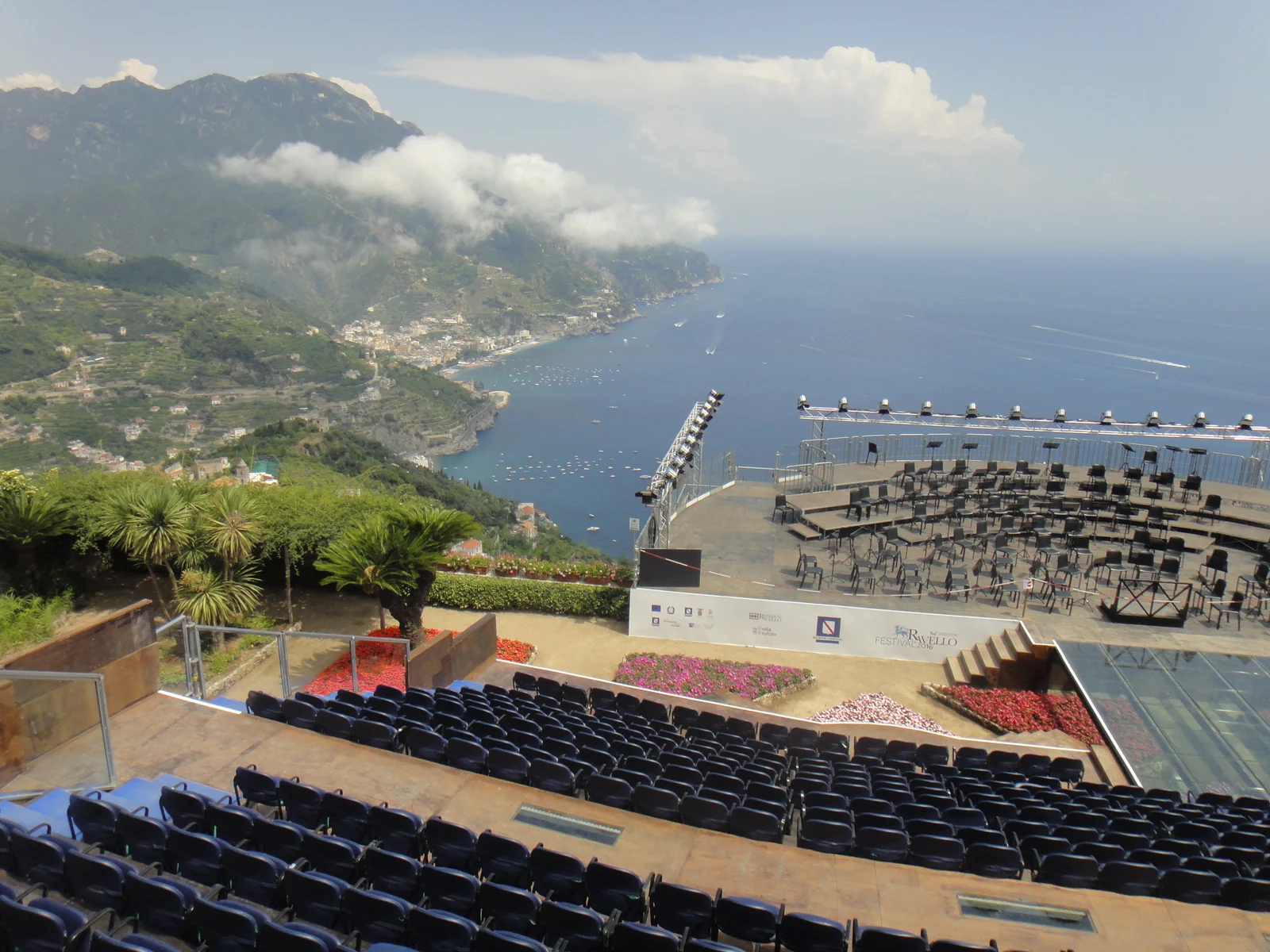
Photo: Hmaglione10 / Wikimedia Commons — CC BY-SA 4.0 · Resized and converted to WebP.
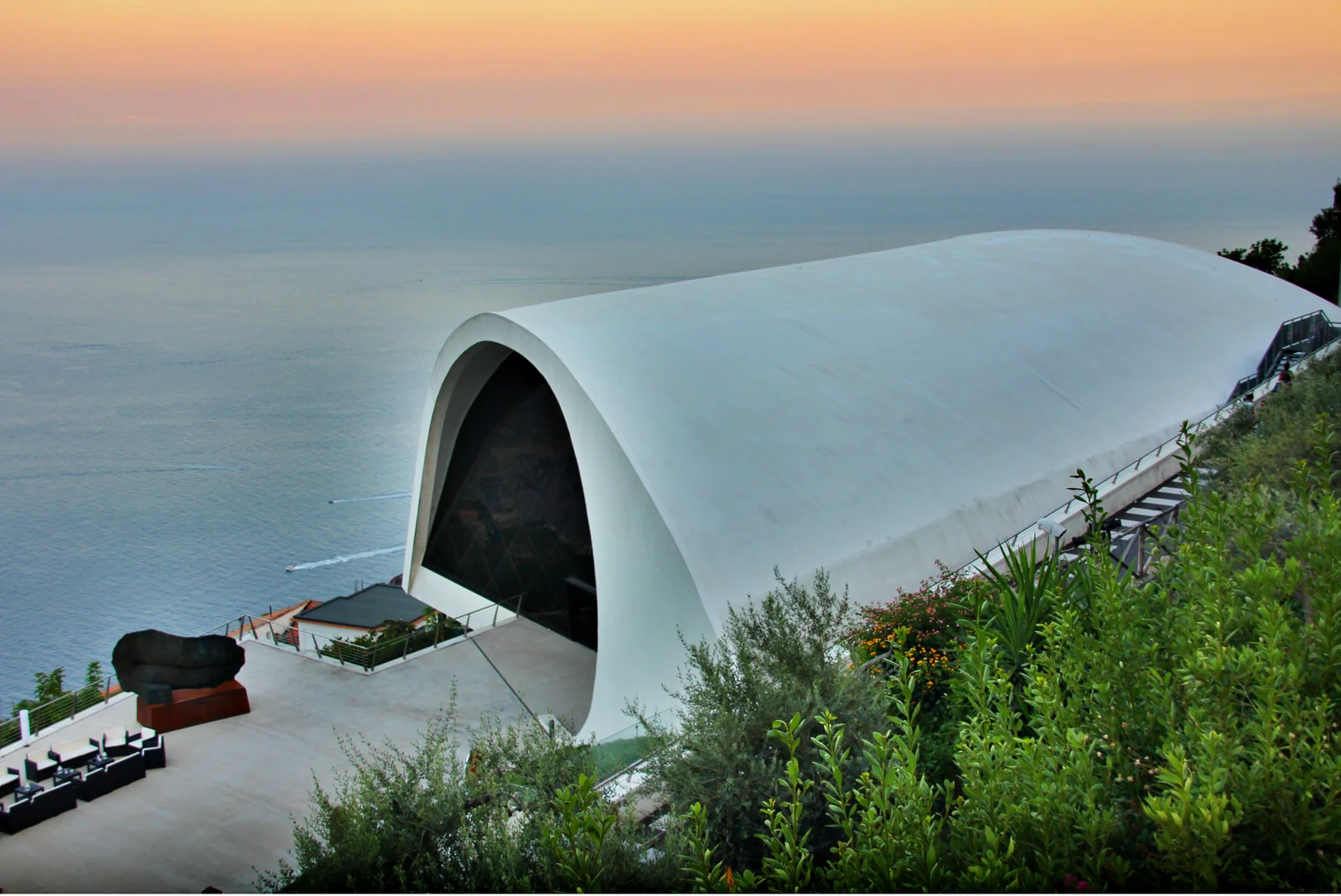
Photo: Greymouser / Wikimedia Commons — CC BY-SA 4.0 · Resized and converted to WebP.
When to go
Summer is the season of the Ravello Festival, from July to September. 27 July is the day of Saint Pantaleon, the town’s patron: the town council recalls that the martyr’s blood, kept in a phial in the Duomo’s chapel, liquefies on the anniversary of his martyrdom. Saint Pantaleon is also deeply venerated by the Orthodox Church, and groups of Orthodox faithful praying before the relic are not a rare sight.
In September, for the feast of Our Lady of Sorrows, the village of Torello stages the traditional “Incendio del borgo”: illuminations that outline the houses and fireworks, in the tradition of the “incendi” first performed in Naples in the seventeenth century. In 2025 it was held on 21 September.
Outside the season of open-air concerts, the Oscar Niemeyer Auditorium hosts concerts and shows in winter. For lemons, the specification allows picking from February to October, and the Region puts the finest crop between March and the end of July.
Sources: Fondazione Ravello — Il Ravello Festival · Comune di Ravello — Luoghi: Duomo · Comune di Ravello — L’«Incendio del borgo» illumina la frazione di Torello (21 settembre 2025) · Comune di Ravello — Luoghi: Auditorium Oscar Niemeyer · Regione Campania — Disciplinare di produzione dell’IGP «Limone Costa d’Amalfi» (testo del provvedimento ministeriale del 18 luglio 2001) · Regione Campania, Assessorato all’Agricoltura — Limone Costa d’Amalfi IGP
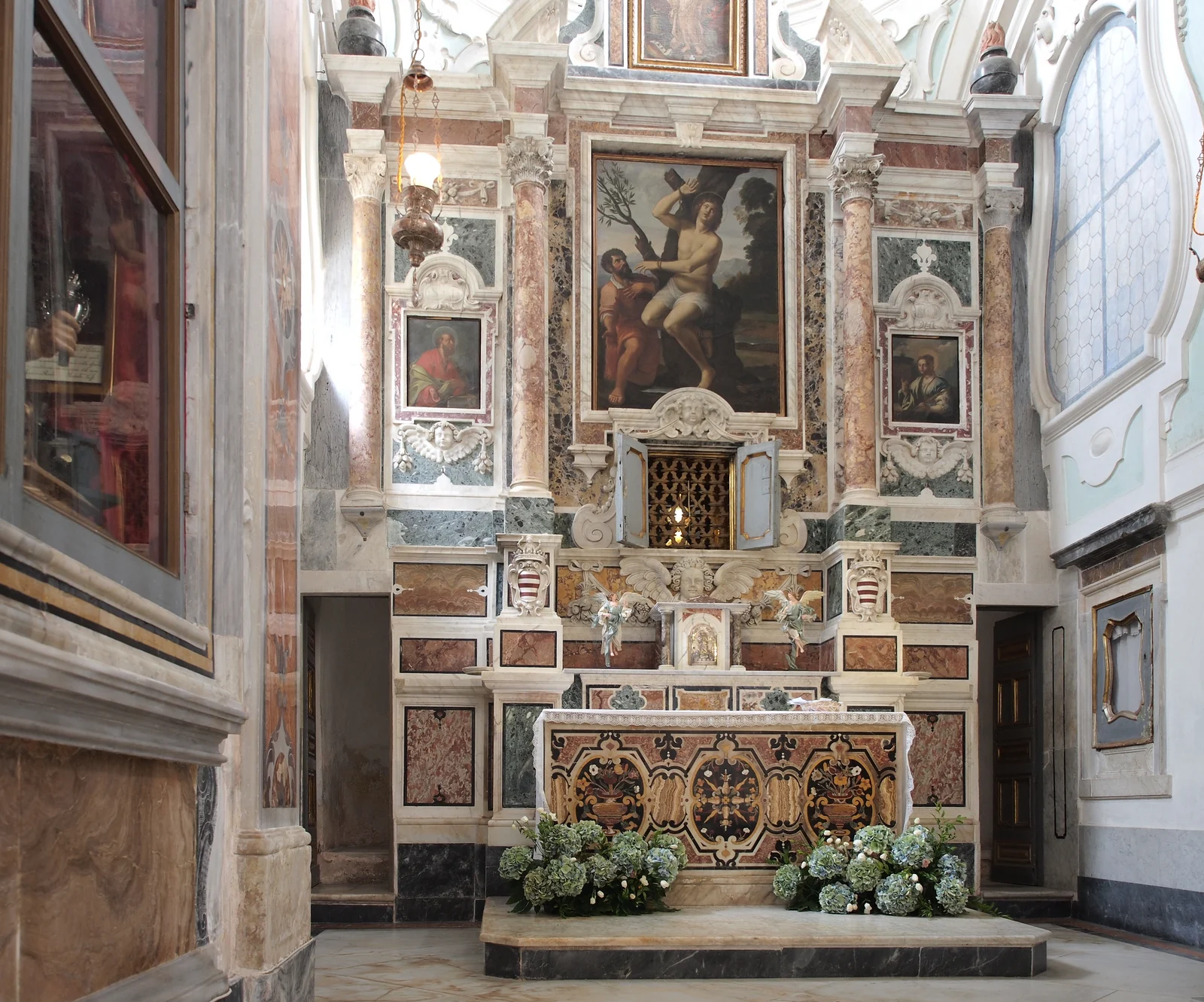
Photo: Arnoldius / Wikimedia Commons — CC BY-SA 3.0 · Resized and converted to WebP.
Getting there
The Fondazione Ravello gives Salerno as the railway station to use and Naples Capodichino as the airport, from where you go up by taxi or on SITA scheduled buses. From the port of Salerno, and from Naples, Sorrento and Castellammare di Stabia, boats reach Amalfi, 7 kilometres away: from there you go up to Ravello by bus or taxi.
By car you come along the coast road from Vietri sul Mare, through Cetara, Maiori and Minori, or from inland over the Valico di Chiunzi pass. The Fondazione points to the car park on the west side of Piazza Duomo as the handiest for the old town, and to the two-level car park of the Oscar Niemeyer Auditorium for longer stays.
The town council runs an internal public transport service and publishes its timetables; the buses between Amalfi, Ravello and Scala use the provincial road. The old town, between Piazza Duomo, Villa Rufolo and Villa Cimbrone, is explored on foot.
Sources: Fondazione Ravello — Come arrivare a Ravello · Comune di Ravello — Luoghi: Auditorium Oscar Niemeyer · Comune di Ravello — Trasporti e viabilità: orari del trasporto pubblico locale (allegati del 2025) · Comune di Ravello — Dal 7 luglio riparte il trasporto pubblico Amalfi-Ravello-Scala (2023)
Tourism
Anyone staying overnight in Ravello in a hotel, a bed & breakfast, a holiday home or a short-term rental pays the tourist tax, introduced by the town council in 2018. According to the council’s notice, it applies from 1 April to 31 October each year, per person and per night, for up to seven consecutive nights, and it is paid to whoever runs the accommodation at check-out. The rates, updated by the resolution of 20 March 2019, are 5 euros in five-star and four-star hotels, 4 euros in three-star hotels and 3 euros in two-star hotels, in non-hotel accommodation and in short-term rentals. Exempt, among others, are young people within their sixteenth year of age, people with disabilities who show their documentation to their host, teachers accompanying school groups, coach drivers and, in groups organised by agencies, one tour leader for every twenty participants.
Ravello’s sea is the beach of Castiglione, and the council’s regulation on free beaches, approved in 2013, sets its rules: the free beach is for public use at no charge and no commercial activity is allowed on it; on the equipped free beach access remains free, and cleaning, supervision, lifeguard service and toilets are also free during the bathing season. Umbrellas, deckchairs and sunbeds can only be hired by the day, with no season tickets or bookings, at least half of the area and of the sea front stay clear of the operator’s equipment, and a sign at the entrance says which services are free and which are paid.
Sources: Comune di Ravello — Imposta di soggiorno: tariffe ed esenzioni (Delibere n. 6 del 28 marzo 2018 e n. 31 del 20 marzo 2019) · Comune di Ravello — Imposta di Soggiorno · Comune di Ravello — Regolamentazione delle spiagge libere e libere attrezzate (Delibera di CC n. 15 del 24 maggio 2013)
“Come to Ravello as a guest, not as a tourist: that is how these places truly let you know them.”
Accommodation in figures
In the Ministry of Tourism’s national database of accommodation (BDSR), on 12 October 2026, Ravello had 273 establishments with a verified national identification code (CIN): 19 hotel-type establishments, 116 non-hotel establishments and 138 other establishments.
Sources: Ministero del Turismo – Banca Dati Strutture Ricettive (dashboard pubblica)
Nearby
With Scala, Minori and Atrani, Ravello shares the Ravello sub-zone of the “Costa d’Amalfi” DOC, and with the other towns of the Coast the UNESCO site and the lemon PGI. At Minori the Italian Commission for UNESCO recalls the Roman villa of the first century AD; at Amalfi the Fondazione Ravello points to the port with lines to Naples, Sorrento, Salerno and Capri. Towards the mountains lies the Tramonti valley, which the town council links to Ravello’s old defences; the town council’s trails climb into the Lattari Mountains.
Sources: Ministero dell’agricoltura (MASAF), Catalogo nazionale delle varietà di vite — Disciplinare della DOC «Costa d’Amalfi» · Commissione Nazionale Italiana per l’UNESCO — Costiera Amalfitana · Regione Campania — Disciplinare di produzione dell’IGP «Limone Costa d’Amalfi» (testo del provvedimento ministeriale del 18 luglio 2001) · Fondazione Ravello — Come arrivare a Ravello · Comune di Ravello — Ravello Digital Grand Tour, Hiking and Walking Experience (aggiornato il 6 maggio 2024) · Comune di Ravello — Luoghi: Le Difese
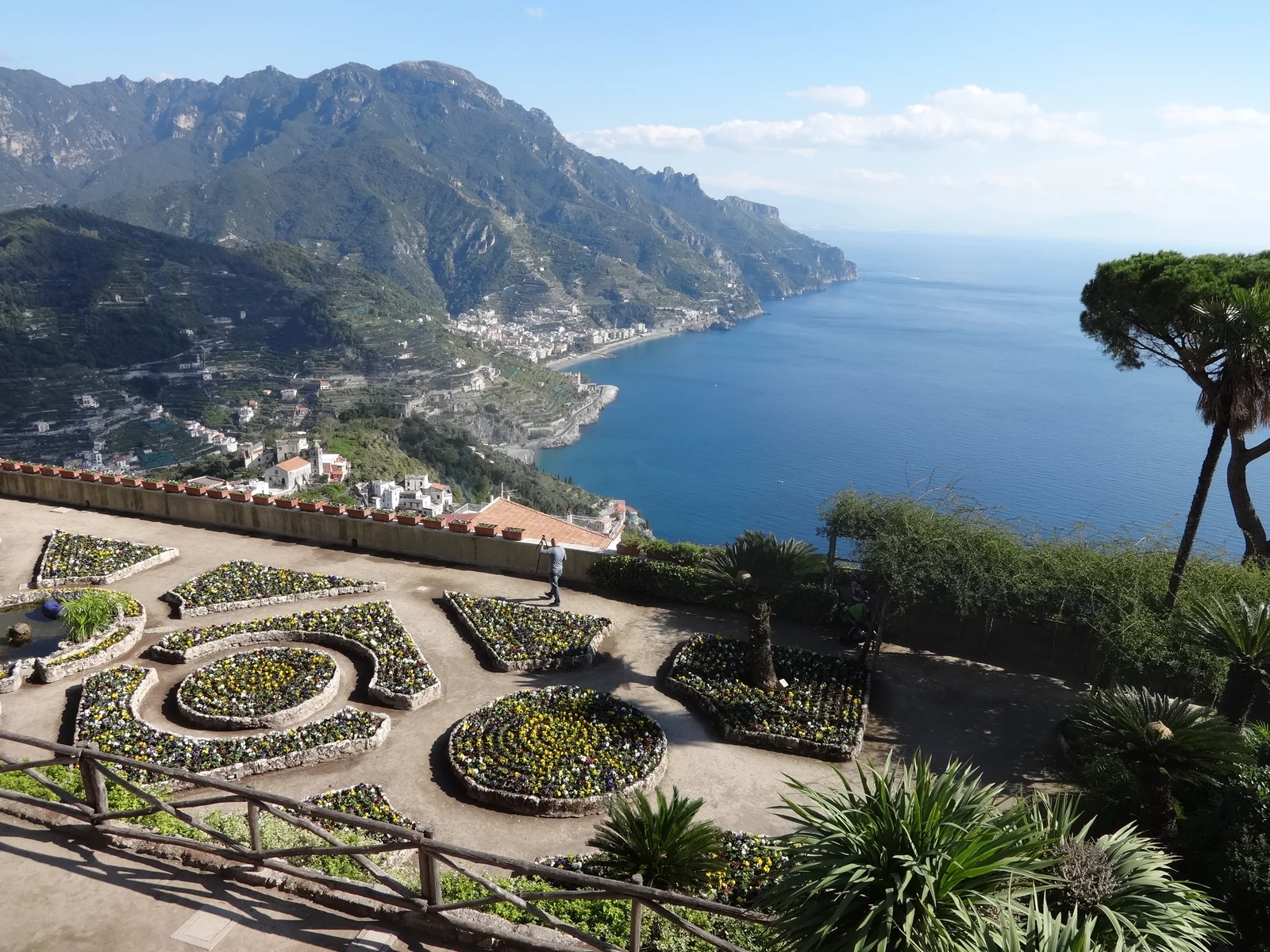
Photo: Derbrauni / Wikimedia Commons — CC BY-SA 4.0 · Resized and converted to WebP.
The town council
The official website of the Comune di Ravello, registered in IndicePA, the index of the digital addresses of Italy’s public administrations, is the reference for the town council’s offices, opening hours and news. Its address is listed among the sources of this section.
The town hall is at Via San Giovanni del Toro 1; the switchboard answers on 089 857122. The general practice surgery is in the council premises on Piazza Gradillo. In 2024 the council obtained funding to refurbish the bar and bookshop of the Oscar Niemeyer Auditorium, which will also give information to visitors.
Sources: Comune di Ravello, sito istituzionale · IndicePA (AgID), Indice dei domicili digitali delle pubbliche amministrazioni: dataset Enti · Comune di Ravello — La Storia di Ravello · Comune di Ravello — Finanziamento per Info Point all’Auditorium Oscar Niemeyer (8 marzo 2024)
Where to stay
In the municipality of Ravello the national database of the Ministry of Tourism lists 273 accommodation businesses with a verified CIN code: 19 hotels, 116 other licensed accommodation and 138 other types such as B&Bs and private rentals.
Licensed businesses from the official list of accommodation named as the source in this section. Where the list gives it, the property's official identification code appears next to its name: the national CIN code, or the code assigned by the Region or by the body that keeps the list. Private individuals are not listed. This list is the official census of licensed businesses, not a list of Apulica partners: to stay in Ravello you do not have to check one property after another yourself; write to Apulica and we look for the stay that suits your journey, checking availability and conditions before any confirmation.
BELMOND HOTEL CARUSO
Hotel · ★★★★★
Regional code (CUSR) 15065104ALB0014
A Casa dei Nonni
Guest rooms
Regional code (CUSR) 15065104EXT0288
CASA DIOCESANA CURIA AMALFI CAVA DE TIRRENI
Holiday house
Regional code (CUSR) 15065104EXT0261
HOTEL PALAZZO CONFALONE
Hotel · ★★★★★
Regional code (CUSR) 15065104ALB0114
A GRADILLO HOLIDAY ROOMS DI CIOFFI DANIELE
Guest rooms
Regional code (CUSR) 15065104EXT0294
PALAZZO AVINO
Hotel · ★★★★★
Regional code (CUSR) 15065104ALB0112
Affittacamere Domus Rubra 1
Guest rooms
Regional code (CUSR) 15065104EXTUFRA
VILLA CIMBRONE
Hotel · ★★★★★
Regional code (CUSR) 15065104ALB0143
Affittacamere "Domus Rubra 2"
Guest rooms
Regional code (CUSR) 15065104EXTXHY7
HOTEL BONADIES
Hotel · ★★★★
Regional code (CUSR) 15065104ALB0064
First the places that presented themselves to Apulica, the latest first; then one place of each type in turn, by official category and stars, then by name. No position is paid for.
All 78 entries in alphabetical order
Page 1 of 8
| Name | Type | Identification code |
|---|---|---|
| A Casa dei Nonni | Guest rooms | Regional code (CUSR) 15065104EXT0288 |
| A GRADILLO HOLIDAY ROOMS DI CIOFFI DANIELE | Guest rooms | Regional code (CUSR) 15065104EXT0294 |
| Affittacamere Domus Rubra 1 | Guest rooms | Regional code (CUSR) 15065104EXTUFRA |
| Affittacamere "Domus Rubra 2" | Guest rooms | Regional code (CUSR) 15065104EXTXHY7 |
| AL BORGO TORELLO | Guest rooms | Regional code (CUSR) 15065104EXT0006 |
| Angeli a Ravello | Guest rooms | Regional code (CUSR) 15065104EXT0218 |
| AUDITORIUM ROOMS | Guest rooms | Regional code (CUSR) 15065104EXT0010 |
| BELMOND HOTEL CARUSO | Hotel | Regional code (CUSR) 15065104ALB0014 |
| BLU RAVELLO | Guest rooms | Regional code (CUSR) 15065104EXTU3LY |
| CAMERE RISTORANTE VITTORIA | Guest rooms | Regional code (CUSR) 15065104EXT0016 |
Ask Apulica for a stay in Ravello We reply shortly, within a few hours at most, with a proposal for you to consider.
Sources: Ministero del Turismo – Banca Dati Strutture Ricettive (dashboard pubblica), 2026-10-12
YOUR JOURNEY
How to shape a journey here
To include Ravello in a trip, or to ask for a guide or a transfer, you can write to Apulica with the button below.
Plan your tripKeep exploring
Amalfi
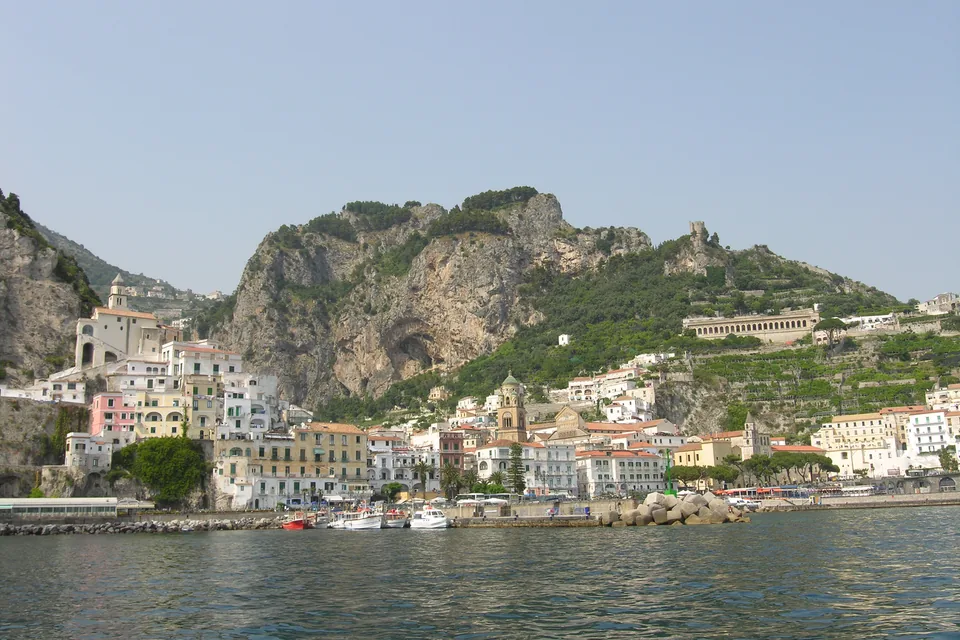
Amalfi (SA), Campania: 4,610 residents, 5.71 km². The official facts of the municipality, its town council website and its registered accommodation. The cathedral of Sant’Andrea and the Cloister of Paradise, the Arsenal of the maritime republic, the handmade paper of the Valle dei Mulini, the lemons of the terraces recognised by the FAO, the feast of the patron saint and the Regatta of the Ancient Maritime Republics.
Read the guide →Photo: Sudodana2048 / Wikimedia Commons — CC BY-SA 3.0 · Resized and converted to WebP.

Scala
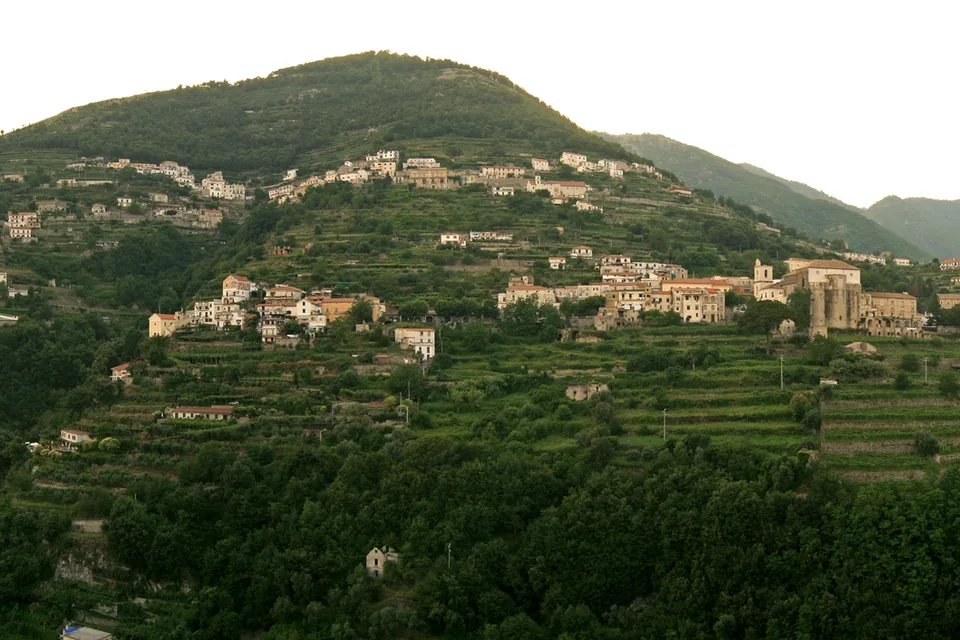
Scala (SA), Campania: 1,506 residents, 13.86 km². The official facts of the municipality, its town council website and its registered accommodation.
Read the guide →Photo: Jensens / Wikimedia Commons — Public domain · Resized and converted to WebP.

Atrani
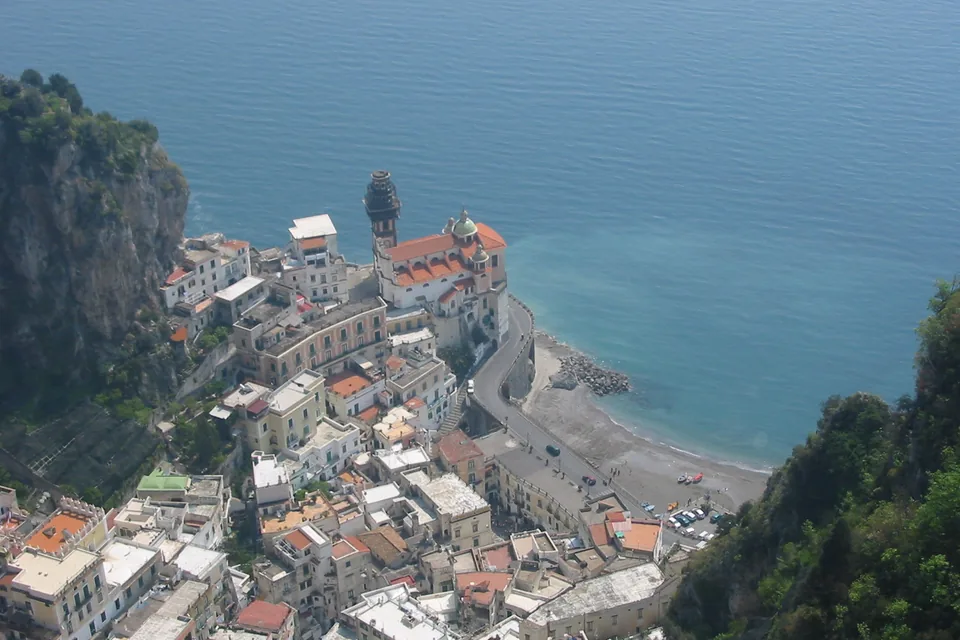
Atrani (SA), Campania: 765 residents, 0.12 km². The official facts of the municipality, its town council website and its registered accommodation.
Read the guide →Photo: Donar Reiskoffer / Wikimedia Commons — CC BY 3.0 · Resized and converted to WebP.

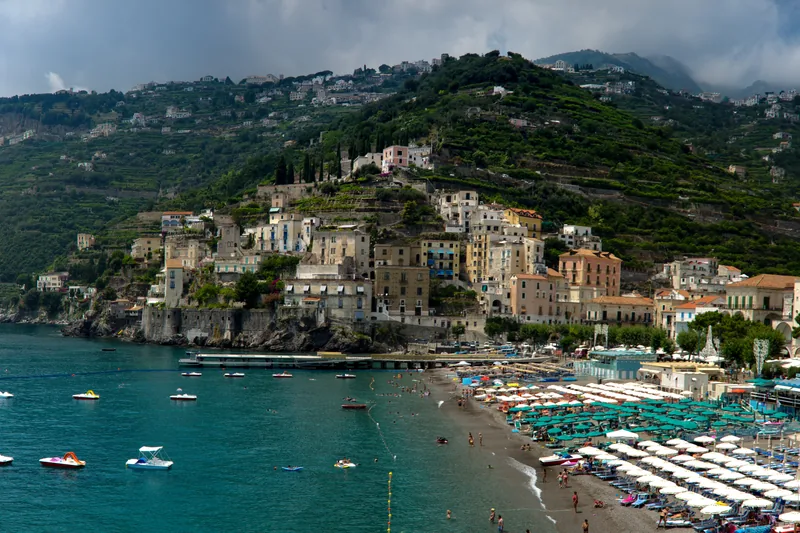
Minori
Minori (SA), Campania: 2,557 residents, 2.67 km². The official facts of the municipality, its town council website and its registered accommodation.
Read the guide →Photo: ApicellaOslo / Wikimedia Commons — CC BY-SA 3.0 · Resized and converted to WebP.

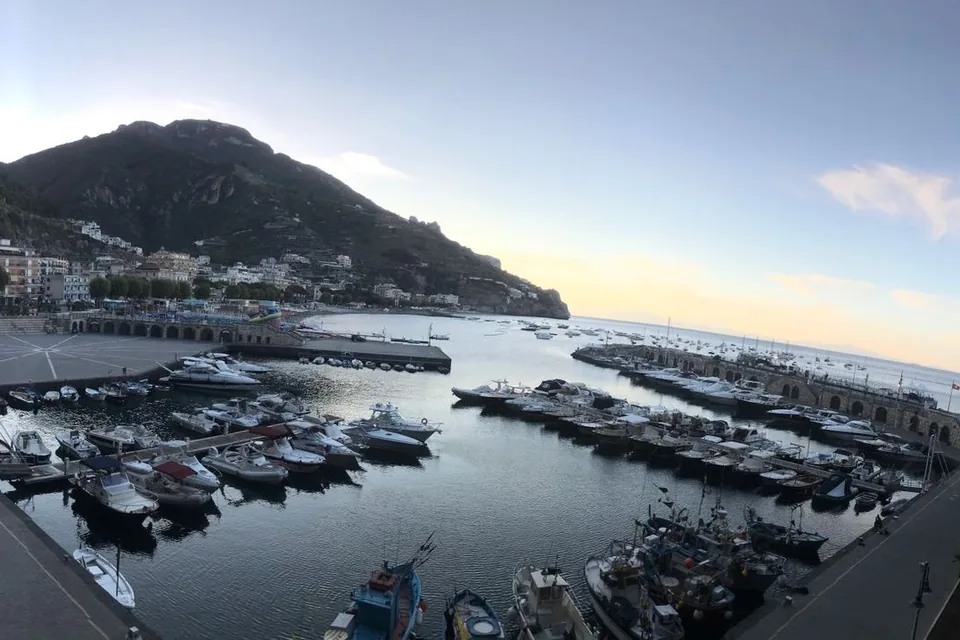
Maiori
Maiori (SA), Campania: 5,225 residents, 16.71 km². The official facts of the municipality, its town council website and its registered accommodation.
Read the guide →Photo: Pietro Di Fontana / Wikimedia Commons — CC BY-SA 4.0 · Resized and converted to WebP.

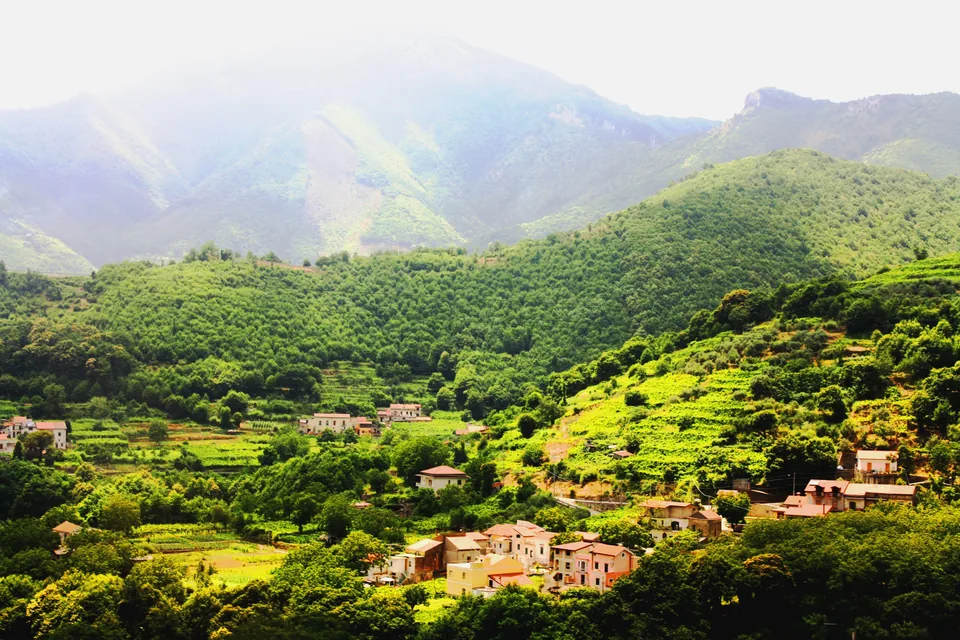
Tramonti
Tramonti (SA), Campania: 4,186 residents, 24.83 km². The official facts of the municipality, its town council website and its registered accommodation.
Read the guide →Photo: Daria / Wikimedia Commons — CC BY 3.0 · Resized and converted to WebP.

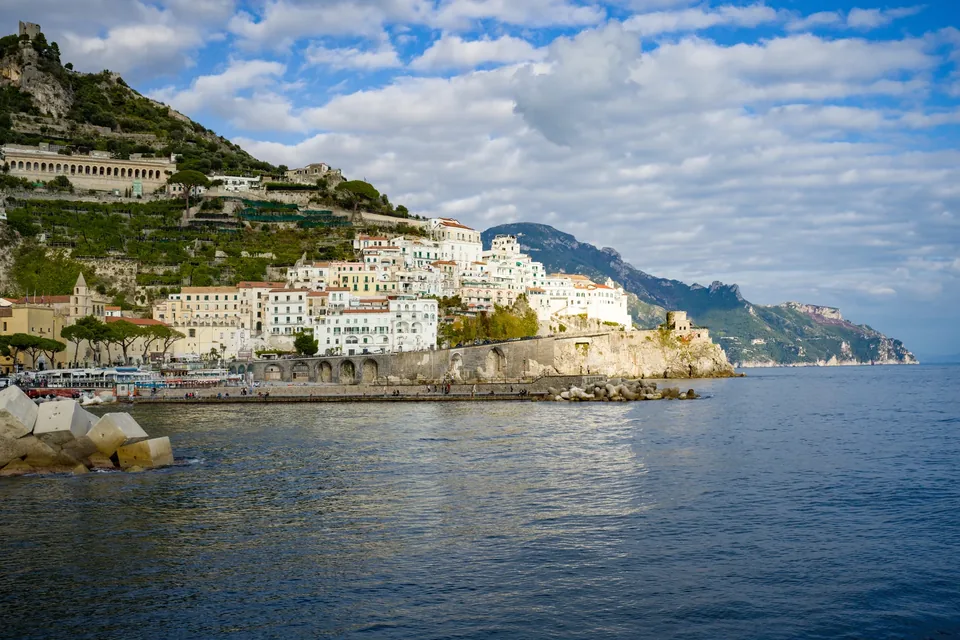
Amalfi Coast
The UNESCO cultural landscape between Positano and Vietri sul Mare: citrus terraces, footpaths, inland valleys and the history of a maritime republic.
Read the guide →Photo: Wolfgang Moroder / Wikimedia Commons — CC BY-SA 3.0 · Resized and converted to WebP.

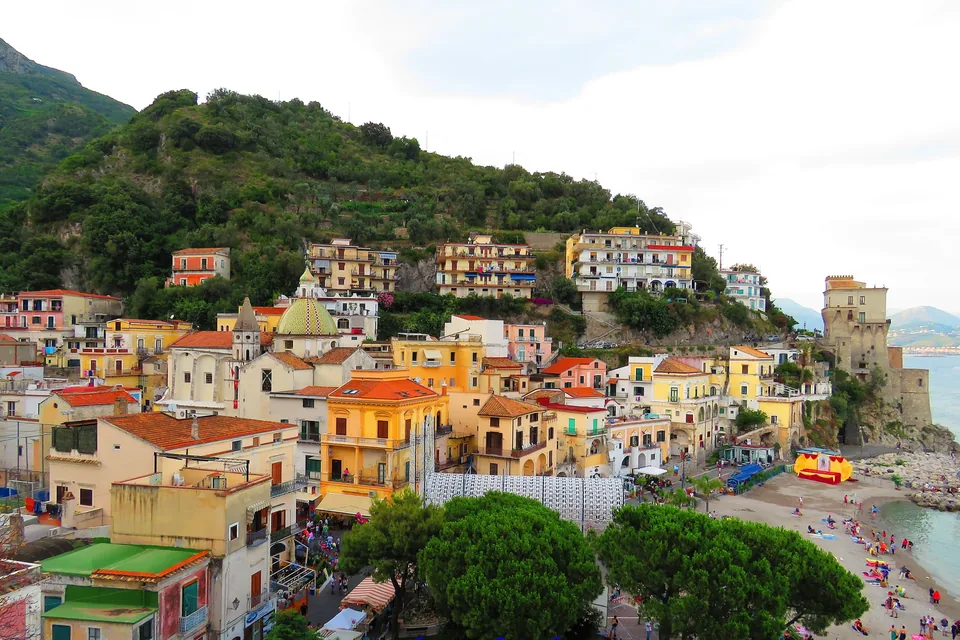
Cetara
Cetara (SA), Campania: 1,928 residents, 5.00 km². The official facts of the municipality, its town council website and its registered accommodation. The Viceregal tower on the Marina, the majolica dome of San Pietro, the Colatura di alici di Cetara PDO, tuna and anchovy fishing, the beaches and the footpaths of the Amalfi Coast.
Read the guide →Photo: Gianfranco Vitolo / Wikimedia Commons — CC BY 2.0 · Resized and converted to WebP.

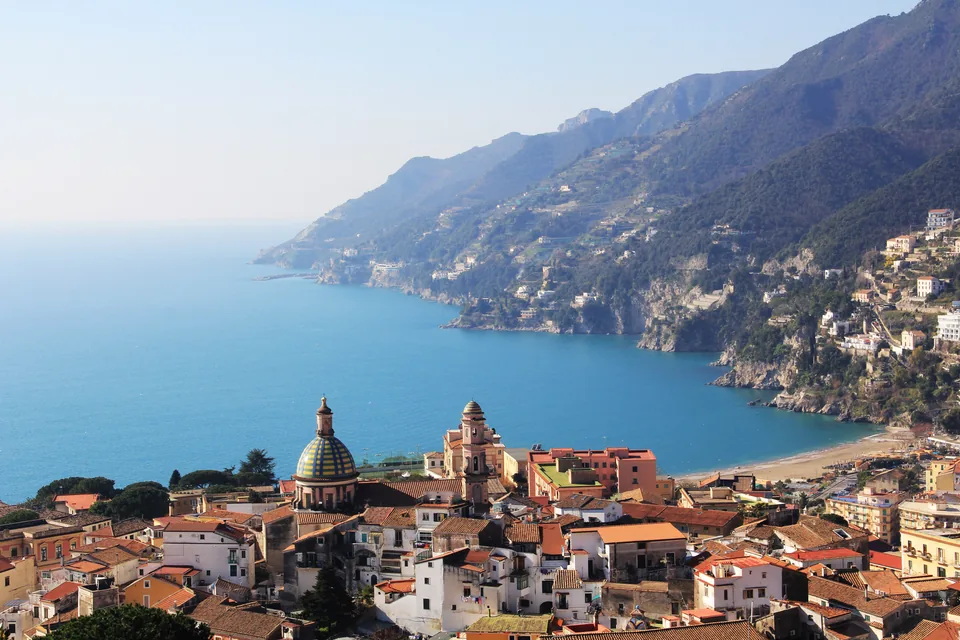
Vietri sul Mare
Vietri sul Mare (SA), Campania: 6,962 residents, 9.53 km². The official facts of the municipality, its town council website and its registered accommodation. Vietri ceramics, from the old faenzere workshops to today’s shops, the cathedral with its majolica dome, the Ceramics Museum at Villa Guariglia, Paolo Soleri’s Solimene factory, the Limone Costa d’Amalfi PGI lemon and the beaches of the Marina.
Read the guide →Photo: Anila amataj / Wikimedia Commons — CC BY-SA 4.0 · Resized and converted to WebP.
