

Why go
People come to Vietri sul Mare for its ceramics. Describing the Amalfi Coast World Heritage site, the Italian National Commission for UNESCO names the majolica domes of Vietri as the emblem of a ceramic craft famous all over the world; the European University Centre for Cultural Heritage in Ravello notes that there is no church on the Amalfi Coast without a floor of Vietri riggiole, the tiles made in the town’s faenzere workshops.
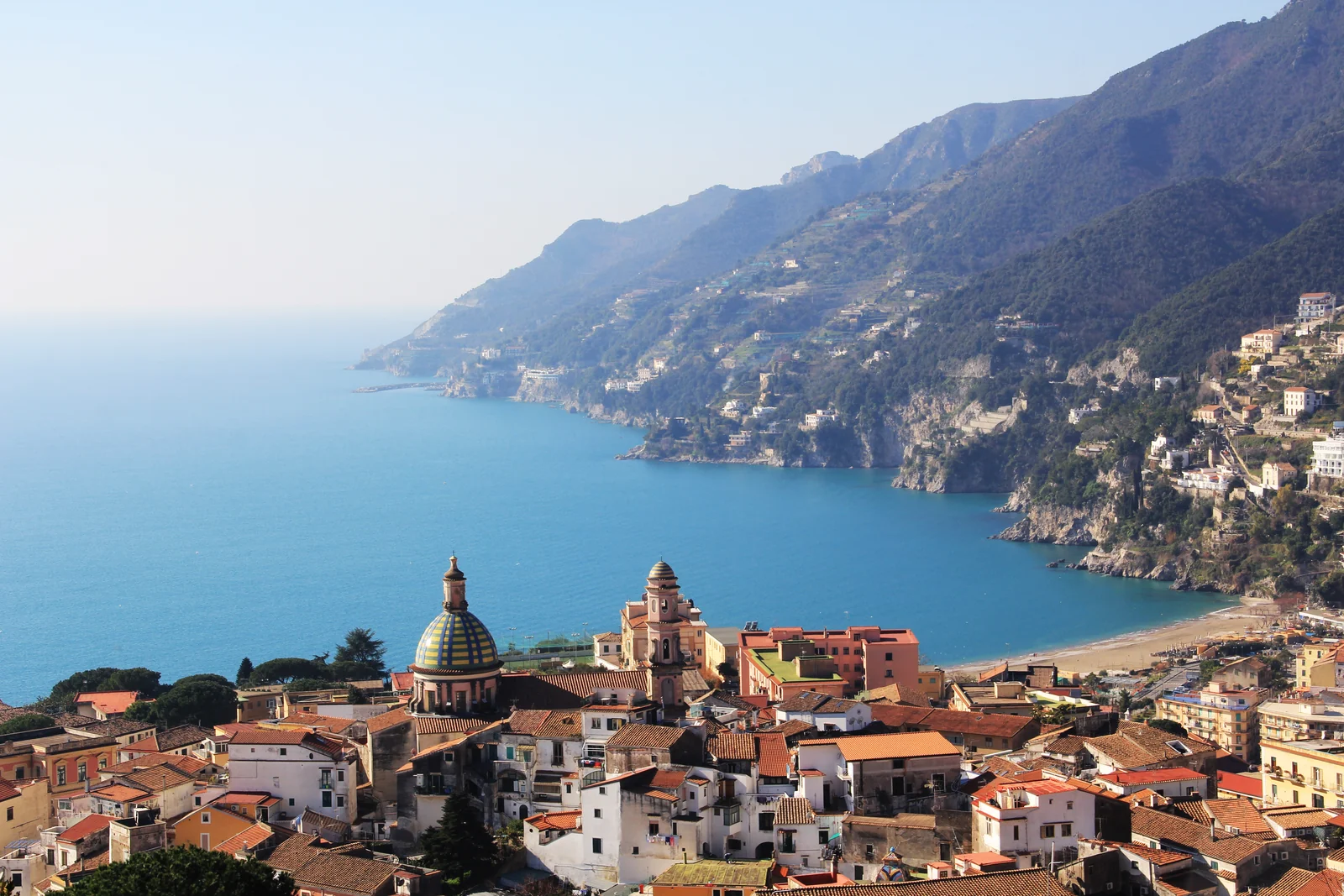
Italy’s Ministry of Tourism calls Vietri the “first pearl of the Amalfi Coast”, not for its ceramics but for its position: it is the easternmost place on the coast, the first one reached coming from Salerno. Colour shows from afar, in the blue and yellow majolica covering the dome of the cathedral of San Giovanni Battista, at the highest point of the old town, and returns on the façade of the confraternity church next door, in the Villa Comunale gardens and in the workshops of the lanes, where pieces are still painted by hand.
Below the town lies the Marina, with a beach of fine sand and shallow water; on Via Madonna degli Angeli stands the Solimene ceramics factory, which Italy’s Ministry of Culture describes as the only work by the architect Paolo Soleri built in Italy. On the hill of Raito, in the small tower of Villa Guariglia, the Provincial Ceramics Museum tells the story of local production.
Sources: Commissione Nazionale Italiana per l’UNESCO — Costiera Amalfitana · Centro Universitario Europeo per i Beni Culturali (Ravello), sito del Piano di gestione UNESCO della Costiera Amalfitana — Le faenzere · Ministero del Turismo, italia.it — Vietri sul Mare, sfavillante borgo delle ceramiche sulla Costiera Amalfitana · Ministero della cultura, Atlante architettura contemporanea — Fabbrica di ceramiche Solimene (18 settembre 2018) · Centro Universitario Europeo per i Beni Culturali (Ravello), sito del Piano di gestione UNESCO della Costiera Amalfitana — Villa Guariglia
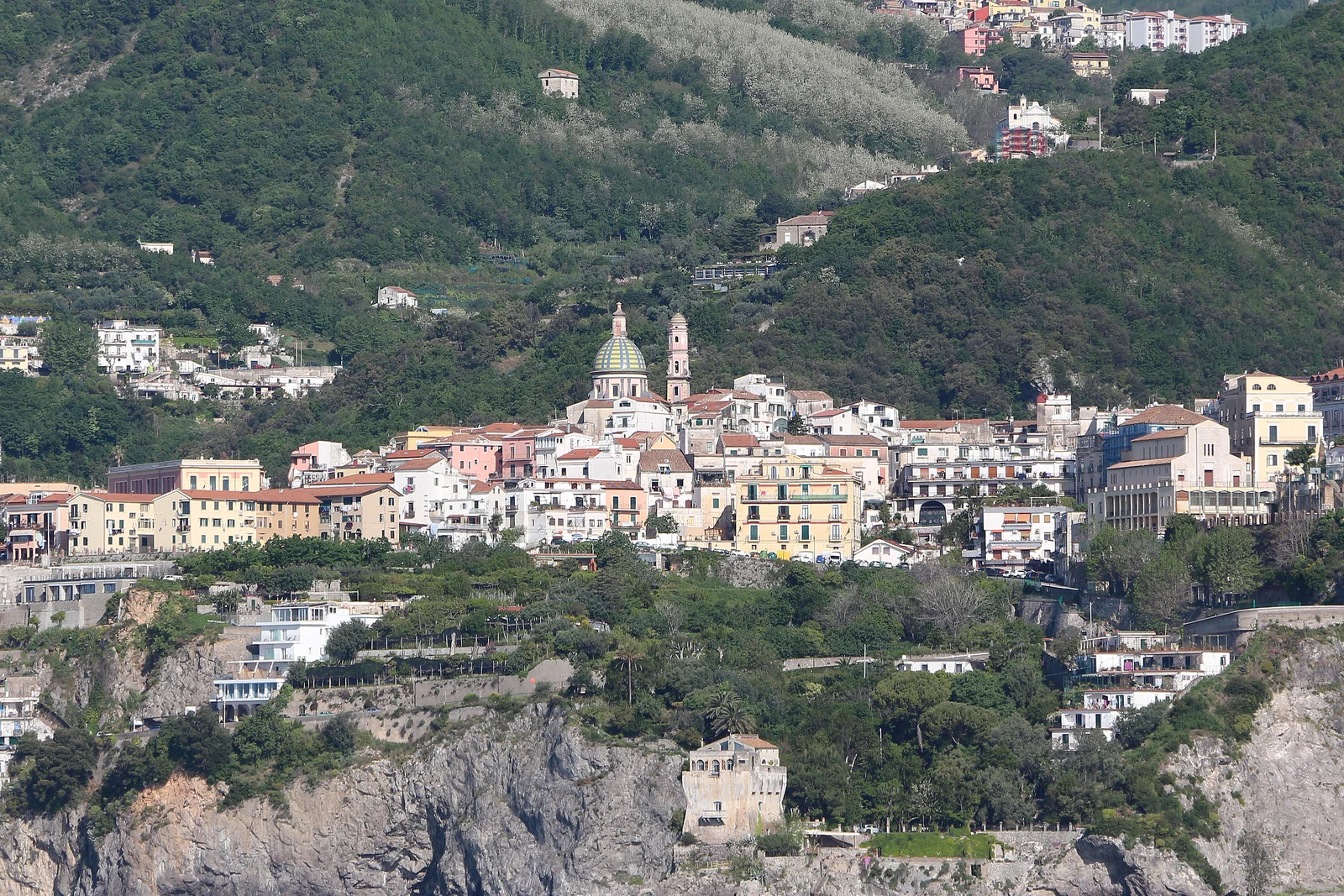
Photo: Bernard Gagnon / Wikimedia Commons — CC BY 4.0 · Resized and converted to WebP.
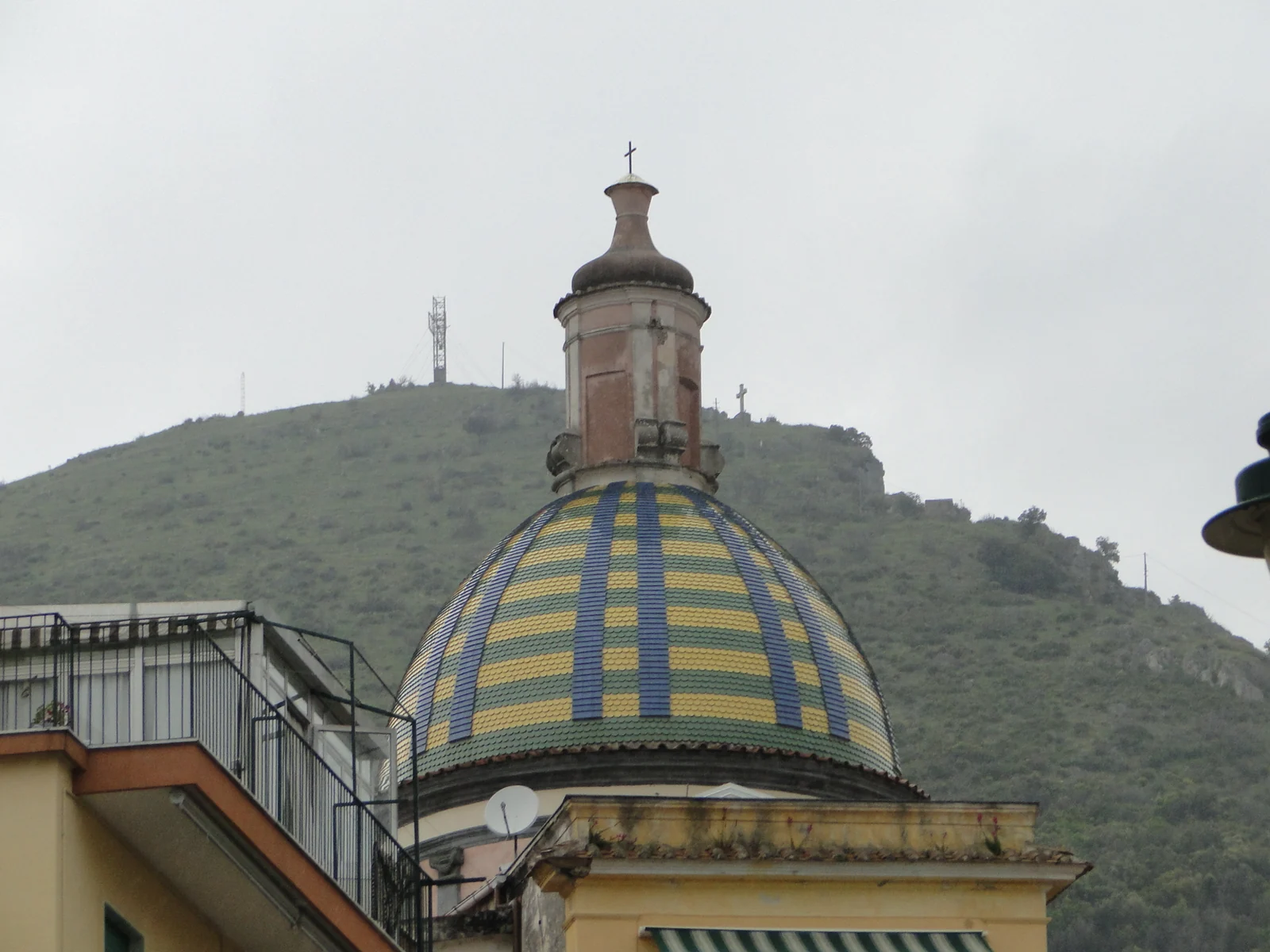
Photo: K.Weise / Wikimedia Commons — CC BY-SA 4.0 · Resized and converted to WebP.
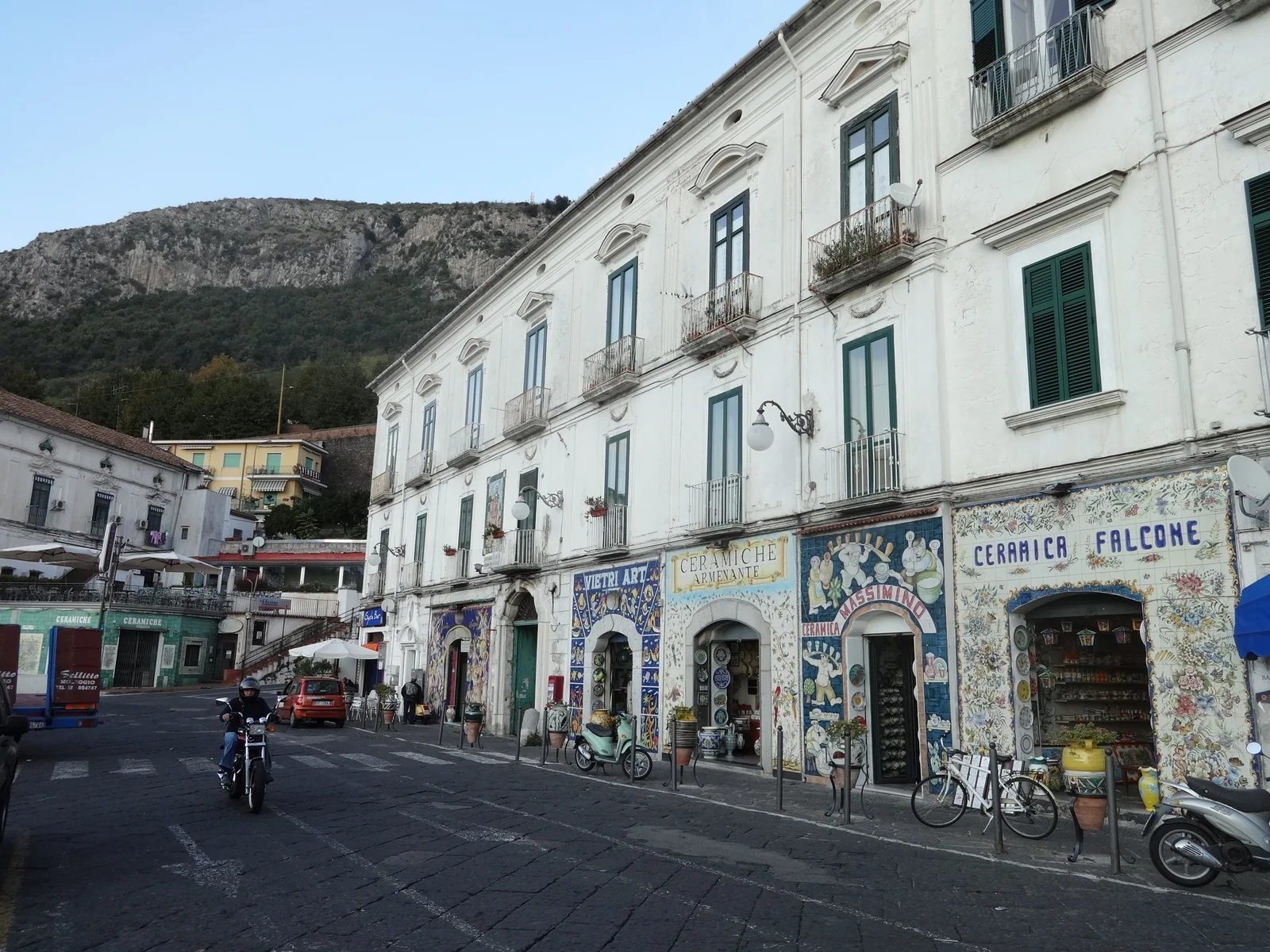
Photo: Derbrauni / Wikimedia Commons — CC BY-SA 4.0 · Resized and converted to WebP.
The municipality at a glance
Vietri sul Mare is a municipality in the province of Salerno, in Campania. Its ISTAT code is 065157. On 1 January 2025 it had 6,962 residents. The municipal territory covers 9.53 km² and ranges from -1 to 895 metres above sea level; the town hall stands at about 89 metres.
It is the easternmost municipality of the Amalfi Coast, the first place reached coming from Salerno, and part of the Amalfi Coast UNESCO World Heritage site, inscribed in 1997. Its territory also includes Raito, on the hill, Albori and the Marina.
Sources: ISTAT, Codici statistici delle unità amministrative territoriali: elenco dei comuni al 21 febbraio 2026 · ISTAT, Popolazione residente per età, sesso e stato civile al 1° gennaio 2025 (POSAS) · ISTAT, Principali statistiche geografiche sui comuni: superficie e altimetria al 31 dicembre 2021 · Ministero del Turismo, italia.it — Vietri sul Mare, sfavillante borgo delle ceramiche sulla Costiera Amalfitana · Centro Universitario Europeo per i Beni Culturali (Ravello), sito del Piano di gestione UNESCO della Costiera Amalfitana — I 15 comuni: Vietri sul Mare · Ministero della cultura, Ufficio UNESCO — Costiera Amalfitana · Ministero della cultura, ICCD — Catalogo generale dei beni culturali: salsiera di scuola vietrese, Museo Provinciale della Ceramica di Villa Guariglia (scheda OA 1500891852) · Centro Universitario Europeo per i Beni Culturali (Ravello), sito del Piano di gestione UNESCO della Costiera Amalfitana — Torre Albori · Regione Campania — Disciplinare di produzione dell’IGP «Limone Costa d’Amalfi»
History
For centuries Vietri was held to be the ancient Marcina. Describing this stretch of coast, Strabo writes that its only town is a colony of the Tyrrhenians called Marcina, and the distance he gives from Nuceria Alfaterna led historians to place it beneath the modern town. The European University Centre for Cultural Heritage lists the finds: chamber tombs with cinerary urns and a stretch of aqueduct with lead pipes beneath the church of Sant’Antonio, a bath building of the first century BC to the first century AD on Via Pellegrino and, at Fuenti, the submerged remains of a small Roman landing place, visible from the sea through the clear water.
The church of San Giovanni was built at the end of the tenth century by a man from Atrani named Jennace and dedicated to Mary and Saint John the Baptist. From the viceregal period three towers survive along the coast of Vietri: the Crestarella, Torre Bianchi and the tower of Albori.
Pottery making is securely documented from the sixteenth century, but everyday objects were already being made in Vietri at the end of the fifteenth. In the sixteenth century the workshops mostly produced “lancelle”, round-bellied jars for carrying water from the springs to the houses. In the seventeenth century the faenzere grew with the arrival of craftsmen from Abruzzo and Irpinia, and the ware began to travel by sea to Calabria and Sicily. From the eighteenth century majolica tiles for votive shrines spread, the oldest dating from 1627; in 1700 the kiln of a faenzera was set up over the Roman baths on Via Pellegrino. In the nineteenth century the palette widened to manganese, copper green, yellow and orange, and Vietri alone counted fifteen faenzere.
After the First World War began what the University Centre calls the “German period”: Dutch and then German artists arrived, gathering around the Manifattura Artistica Ceramica Salernitana, and Vietri ware was exported across Europe and to America. Riccardo Dölker introduced pink and light red and the motifs of the little donkey and of women carrying a lancella on their heads; Irina Kowaliska also worked here, and among the local decorators Giovannino Carrano. In the 1940s the Solimene family started its production in one of the old faenzere, and between 1952 and 1954 Paolo Soleri designed its new factory.
The flood of 1954 damaged the fifteen paintings on the cathedral vault and pushed the shoreline forward: Torre Bianchi, once on the sea, now stands away from it. In 1963 screen printing entered the decoration of riggiole. Until 1970 Villa Guariglia, at Raito, was privately owned, and today it houses the Provincial Ceramics Museum; in 1997 the Amalfi Coast was inscribed on the UNESCO World Heritage List.
Sources: Centro Universitario Europeo per i Beni Culturali (Ravello), sito del Piano di gestione UNESCO della Costiera Amalfitana — Terme · Centro Universitario Europeo per i Beni Culturali (Ravello), sito del Piano di gestione UNESCO della Costiera Amalfitana — Chiesa di Sant’Antonio · Centro Universitario Europeo per i Beni Culturali (Ravello), sito del Piano di gestione UNESCO della Costiera Amalfitana — Porto · Centro Universitario Europeo per i Beni Culturali (Ravello), sito del Piano di gestione UNESCO della Costiera Amalfitana — Chiesa di San Giovanni · Centro Universitario Europeo per i Beni Culturali (Ravello), sito del Piano di gestione UNESCO della Costiera Amalfitana — Torre Crestarella · Centro Universitario Europeo per i Beni Culturali (Ravello), sito del Piano di gestione UNESCO della Costiera Amalfitana — Torre Bianchi · Centro Universitario Europeo per i Beni Culturali (Ravello), sito del Piano di gestione UNESCO della Costiera Amalfitana — Torre Albori · Centro Universitario Europeo per i Beni Culturali (Ravello), sito del Piano di gestione UNESCO della Costiera Amalfitana — Le faenzere · Ministero della cultura, Atlante architettura contemporanea — Fabbrica di ceramiche Solimene (18 settembre 2018) · Centro Universitario Europeo per i Beni Culturali (Ravello), sito del Piano di gestione UNESCO della Costiera Amalfitana — Villa Guariglia · Ministero della cultura, Ufficio UNESCO — Costiera Amalfitana
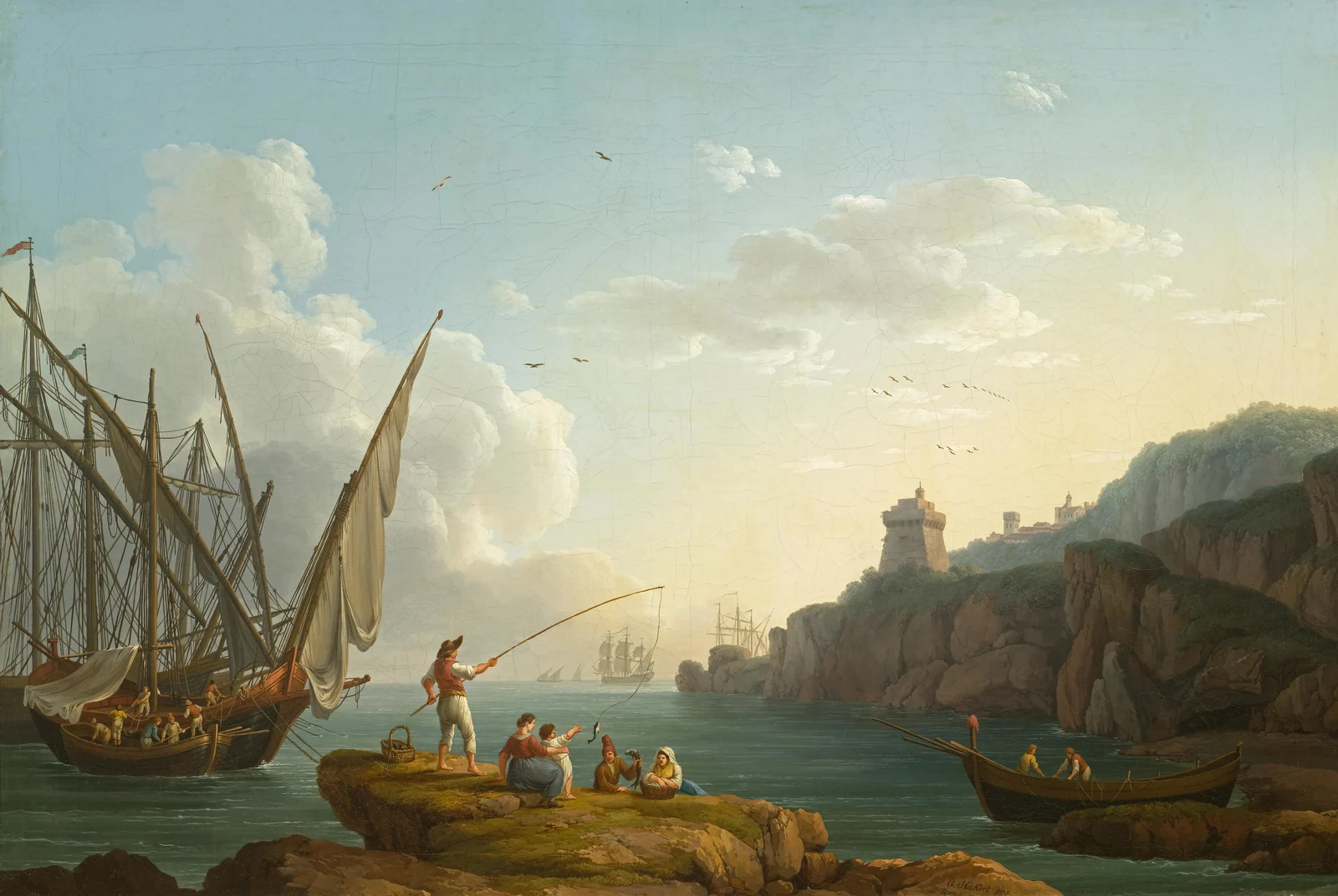
Photo: Jacob Philipp Hackert / Wikimedia Commons — Public domain · Resized and converted to WebP.
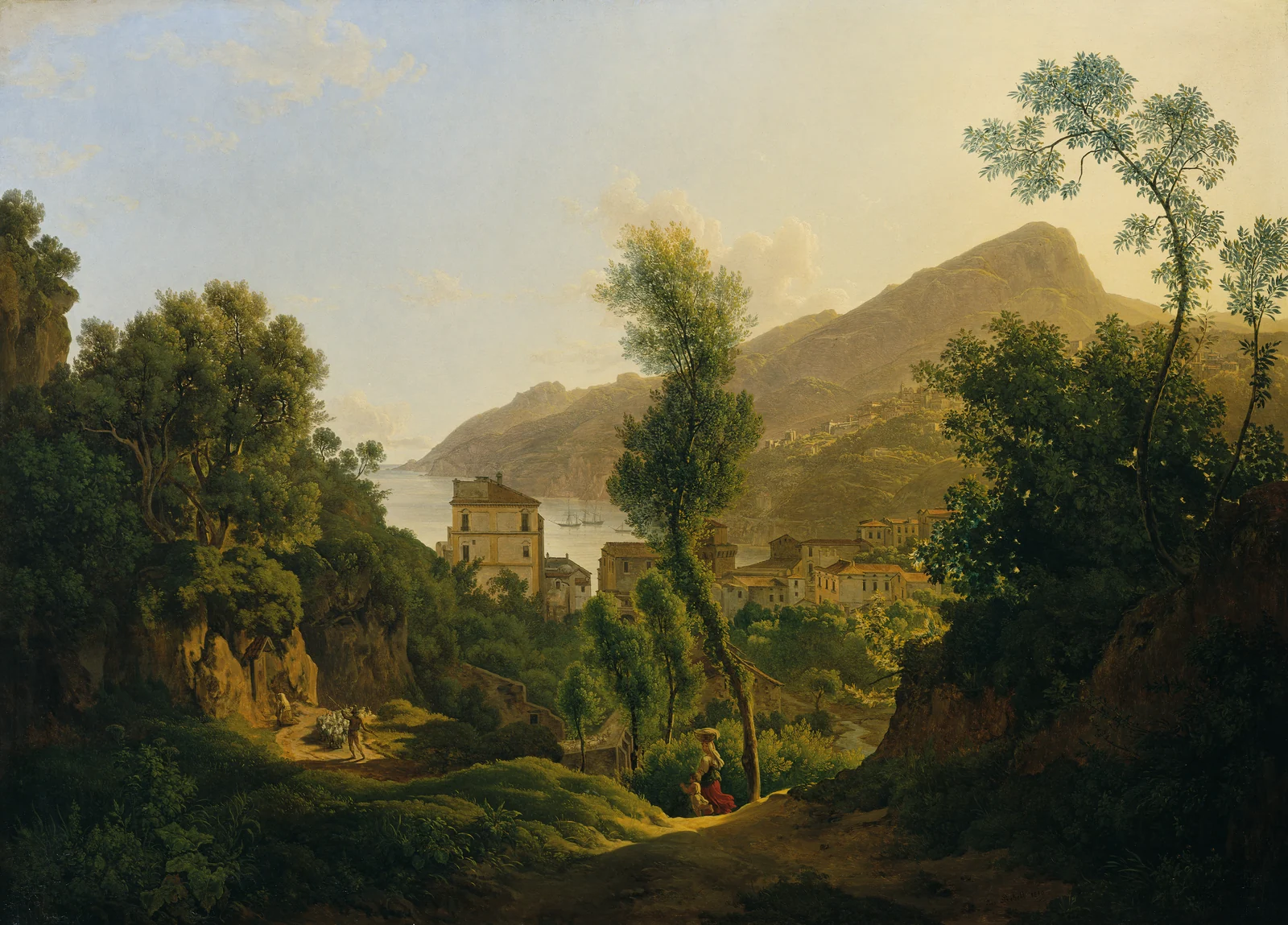
Photo: Josef Rebell / Wikimedia Commons — Public domain · Resized and converted to WebP.
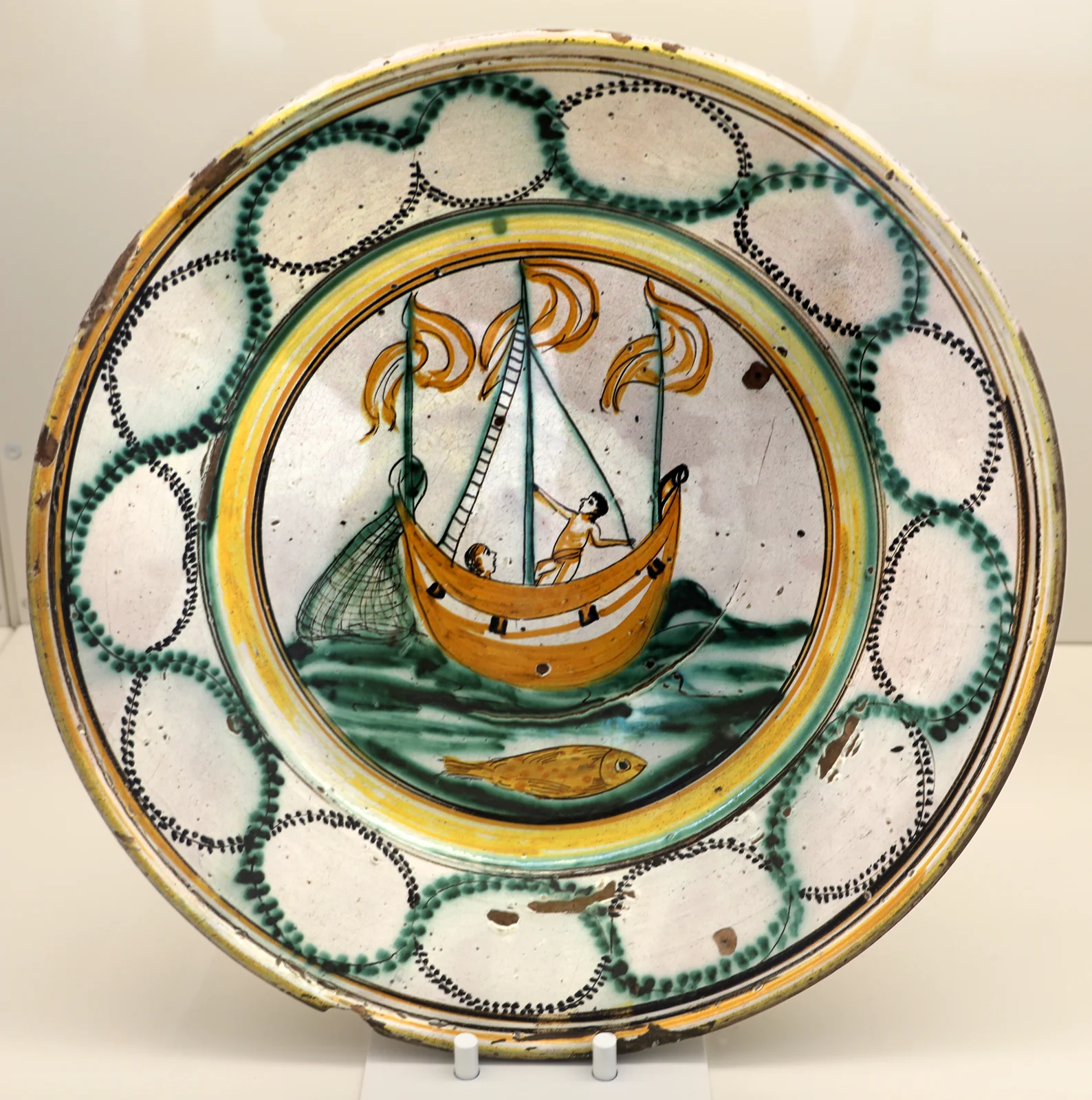
Photo: Francesco Bini / Wikimedia Commons — CC BY-SA 4.0 · Resized and converted to WebP.
What to see
The cathedral of San Giovanni Battista stands at the highest point of the old town, along a panoramic terrace. It has a single nave and a transept covered by a bowl-shaped dome, clad in majolica outside, resting on a drum and on four pillars frescoed with the Evangelists. Its most important restoration came in 1657, when the high altar in polychrome marble was donated; in 1732 the nave received its flat ceiling of gilded coffers. Inside is a sixteenth-century polyptych of the Mysteries of Mary with the Virgin at the centre, attributed to Andrea Sabatino. According to the European University Centre for Cultural Heritage the church is open during services.
Right next door, the seventeenth-century church of the Confraternity of the Annunziata and the Rosary has its three façade panels, its ceilings and its floor in majolica. Polychrome majolica also covers the walls, paths, fountains and handrails of the Villa Comunale gardens, overlooking the Gulf of Salerno, which many compare to Park Güell in Barcelona. Other churches keep floors of Vietri majolica: Sant’Antonio, from 1607, with a floor laid during the 1720 rebuilding and made in the De Simone-Tajani workshop; Santa Maria degli Angeli, founded in 1493 beside a convalescent house of 1201, with a floor of 1967; the Madonna dell’Arco, from 1743, with a floor of 1875, now closed. Santa Maria delle Grazie, from 1540, has three naves and a sailors’ chapel with paintings by Luca Giordano.
Three exhibition spaces are devoted to ceramics: the Provincial Ceramics Museum at Villa Guariglia, the Museo Cargaleiro and the Palazzo della Ceramica Solimene. The provincial museum is at Raito, in the villa’s small tower; until 1970 the villa belonged to an Italian ambassador who served as a minister in the Badoglio government, and its park follows the local technique of terracing. The Ministry of Culture’s general catalogue of cultural heritage records its pieces, such as a Vietri-school sauce boat dating from about 1925 to 1945.
The Solimene ceramics factory, at Via Madonna degli Angeli 7, was built between 1952 and 1954 to a design by Paolo Soleri, with structures by Alberto Brini. The plot is squeezed between the rock and the road, so Soleri tilted the truncated cones of the façade outwards, alternating them with large glazed panels; more than 16,000 red and green ceramic pots are set into the outer wall. Inside, a continuous ramp links four levels among tree-like pillars 16 metres high; the ground floor is given over to sales.
Along the coast stand the viceregal towers: the Crestarella, also called “Fiatamone”, with four gun ports, which can be seen from outside; Torre Bianchi, with five gun ports, also seen from outside; and the tower of Albori, privately owned and not open to visitors.
The town council names the cathedral, at Via San Giovanni 18, as Vietri’s main church and its majolica dome as one of the town’s symbols. The Provincial Ceramics Museum, which according to the council holds Vietri ceramics from the Middle Ages to the present day, is on provincial road 75, at number 7, and answers on 089 211835. Since 4 December 2025 there has also been the Museum of Contemporary Ceramics (MCC) in the historic Palazzo Punzi, at Corso Umberto I 24: the building, which once housed the municipal nursery school, has been renovated as a cultural centre and admission is free.
Sources: Ministero del Turismo, italia.it — Vietri sul Mare, sfavillante borgo delle ceramiche sulla Costiera Amalfitana · Centro Universitario Europeo per i Beni Culturali (Ravello), sito del Piano di gestione UNESCO della Costiera Amalfitana — Chiesa di San Giovanni · Centro Universitario Europeo per i Beni Culturali (Ravello), sito del Piano di gestione UNESCO della Costiera Amalfitana — Chiesa di Sant’Antonio · Centro Universitario Europeo per i Beni Culturali (Ravello), sito del Piano di gestione UNESCO della Costiera Amalfitana — Le faenzere · Centro Universitario Europeo per i Beni Culturali (Ravello), sito del Piano di gestione UNESCO della Costiera Amalfitana — Chiesa di Santa Maria degli Angeli · Centro Universitario Europeo per i Beni Culturali (Ravello), sito del Piano di gestione UNESCO della Costiera Amalfitana — Chiesa della Madonna dell’Arco · Centro Universitario Europeo per i Beni Culturali (Ravello), sito del Piano di gestione UNESCO della Costiera Amalfitana — Chiesa di Santa Maria delle Grazie · Centro Universitario Europeo per i Beni Culturali (Ravello), sito del Piano di gestione UNESCO della Costiera Amalfitana — Villa Guariglia · Ministero della cultura, ICCD — Catalogo generale dei beni culturali: salsiera di scuola vietrese, Museo Provinciale della Ceramica di Villa Guariglia (scheda OA 1500891852) · Ministero della cultura, Atlante architettura contemporanea — Fabbrica di ceramiche Solimene (18 settembre 2018) · Centro Universitario Europeo per i Beni Culturali (Ravello), sito del Piano di gestione UNESCO della Costiera Amalfitana — Torre Crestarella · Centro Universitario Europeo per i Beni Culturali (Ravello), sito del Piano di gestione UNESCO della Costiera Amalfitana — Torre Bianchi · Centro Universitario Europeo per i Beni Culturali (Ravello), sito del Piano di gestione UNESCO della Costiera Amalfitana — Torre Albori · Comune di Vietri sul Mare — Luoghi: Chiesa Parrocchiale di San Giovanni Battista · Comune di Vietri sul Mare — Luoghi: Museo della Ceramica (aggiornato il 22 luglio 2024) · Comune di Vietri sul Mare — Luoghi: Museo della Ceramica Contemporanea Punzi
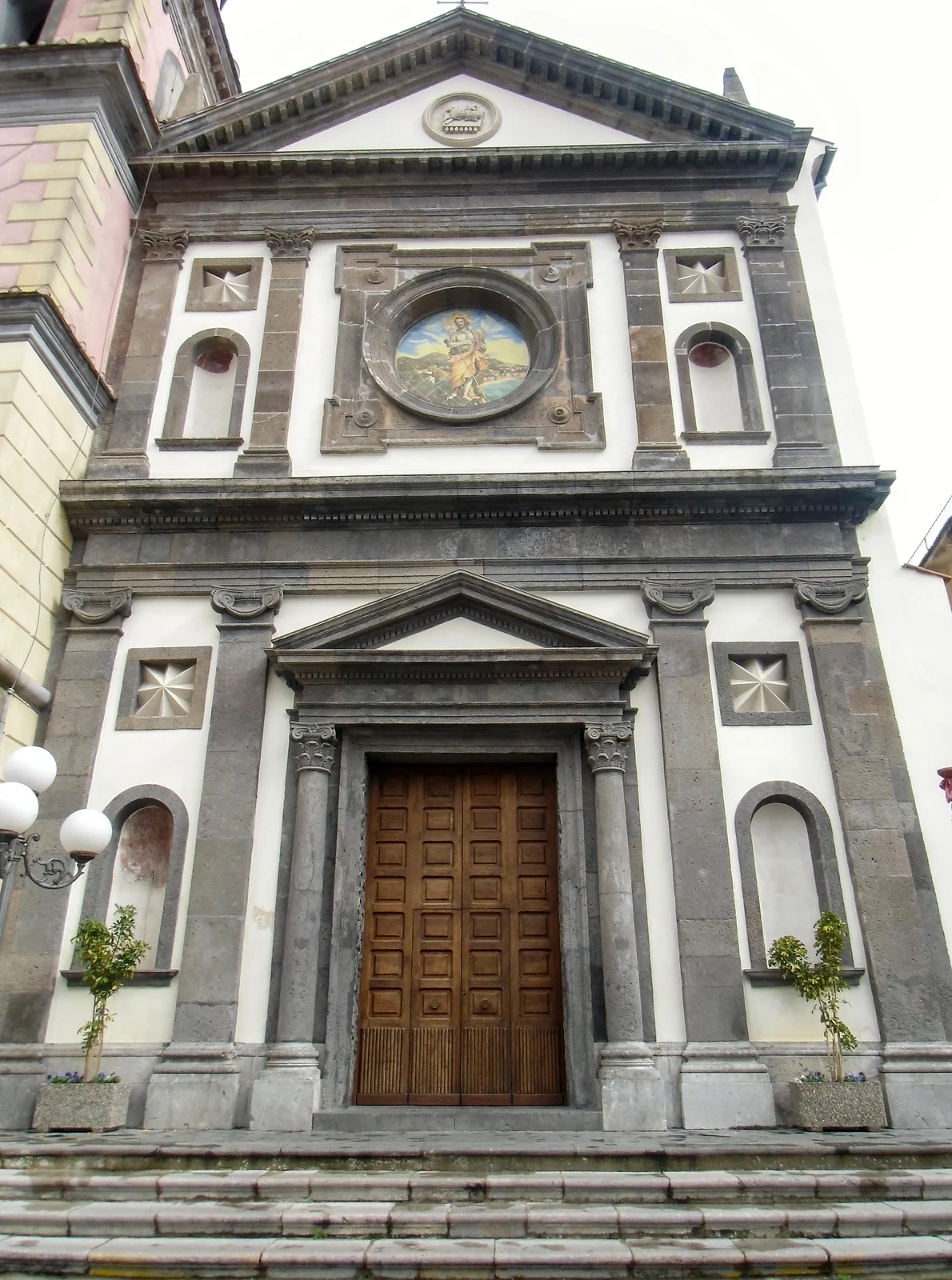
Photo: DnaX / Wikimedia Commons — CC BY-SA 4.0 · Resized and converted to WebP.
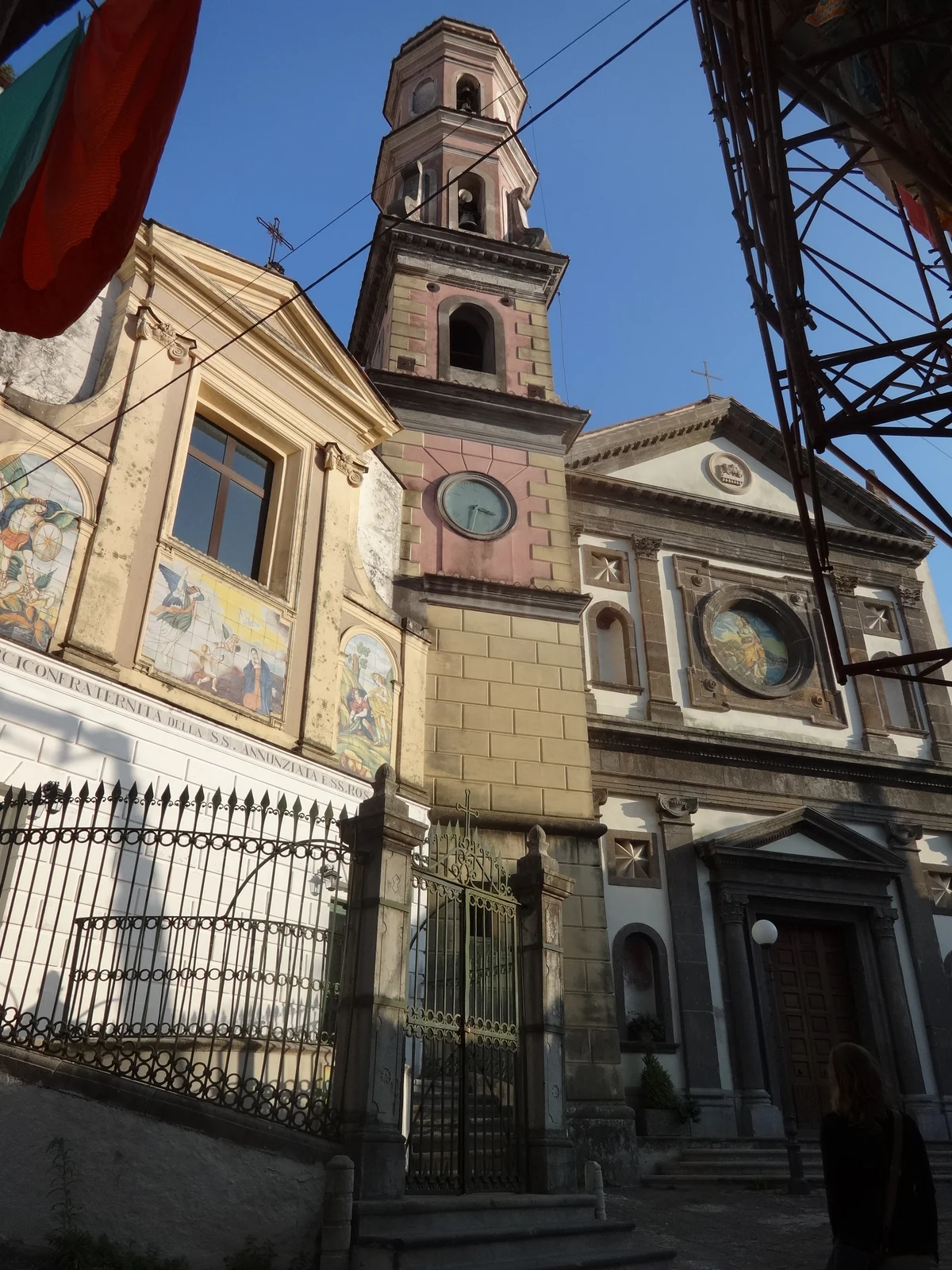
Photo: Derbrauni / Wikimedia Commons — CC BY-SA 4.0 · Resized and converted to WebP.
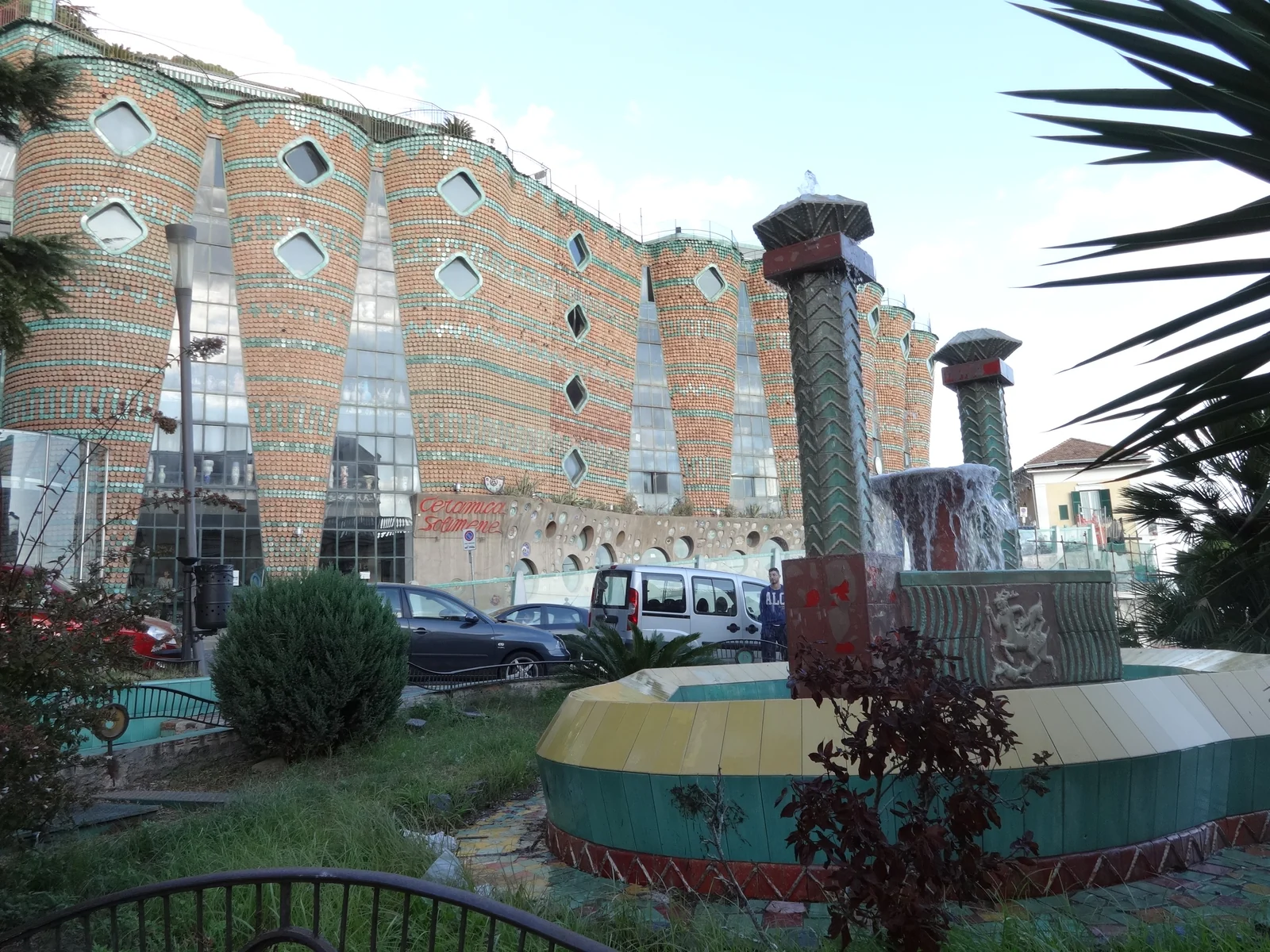
Photo: Derbrauni / Wikimedia Commons — CC BY-SA 4.0 · Resized and converted to WebP.
Flavours
Part of the territory of Vietri sul Mare lies in the production area of the “Limone Costa d’Amalfi”, a protected geographical indication entered in the European eAmbrosia register. The specification draws the boundary as far as the municipal road leading from Vietri to the Marina and to the Crestarella tower. The variety is the Sfusato amalfitano: according to the Campania Region, a tapering fruit of at least 100 grams, with pale yellow peel rich in essential oils and juicy flesh with few seeds. It is grown on terraces, under “pagliarelle” straw covers, now replaced by shade nets; it is picked several times a year, and the best crop comes between March and the end of July.
The Sfusato is used for limoncello, and the Region lists the coast’s other uses: the lemon eaten fresh in salads, on fish and in seafood starters, and in desserts, from “delizie” to babà soaked in limoncello.
The whole municipal territory also lies within the “Costa d’Amalfi” DOC, a protected designation of origin for wine registered in eAmbrosia. According to the Ministry of Agriculture’s specification, the white is made from at least 40 per cent Falanghina and Biancolella, the red and the rosé from at least 40 per cent Piedirosso, known here as “Per ’e palummo”.
The town council lists the local dishes: penne “alla cuppitiello”, with a sauce of seasonal vegetables, fish seasoned with Amalfi lemon juice and “palle di ciuccio”, sweet-and-sour potato croquettes, served with locally produced wines.
Sources: Regione Campania — Disciplinare di produzione dell’IGP «Limone Costa d’Amalfi» · Commissione europea, registro eAmbrosia — «Limone Costa d’Amalfi», IGP, PGI-IT-0116 · Regione Campania, Assessorato all’Agricoltura — Limone Costa d’Amalfi I.G.P. · Ministero dell’agricoltura (MASAF), Catalogo nazionale delle varietà di vite — Disciplinare della DOC «Costa d’Amalfi» (DM 10 agosto 1995 e modifiche fino al DM 7 marzo 2014) · Commissione europea, registro eAmbrosia — «Costa d’Amalfi», DOP (vino), PDO-IT-A0278 · Comune di Vietri sul Mare — Luoghi: Albori, I Borghi più belli d’Italia (aggiornato il 7 maggio 2026)
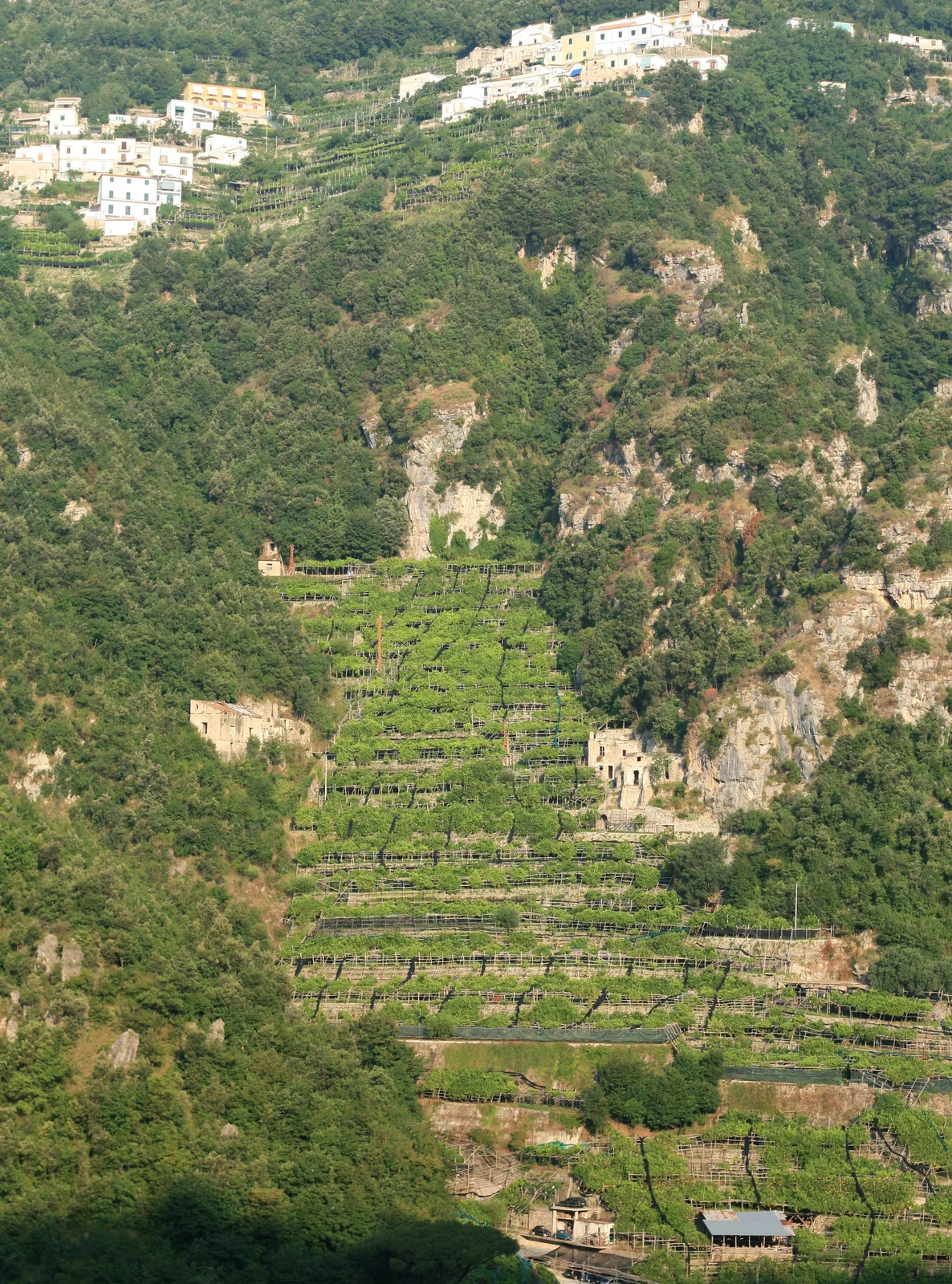
Photo: Jensens / Wikimedia Commons — Public domain · Resized and converted to WebP.
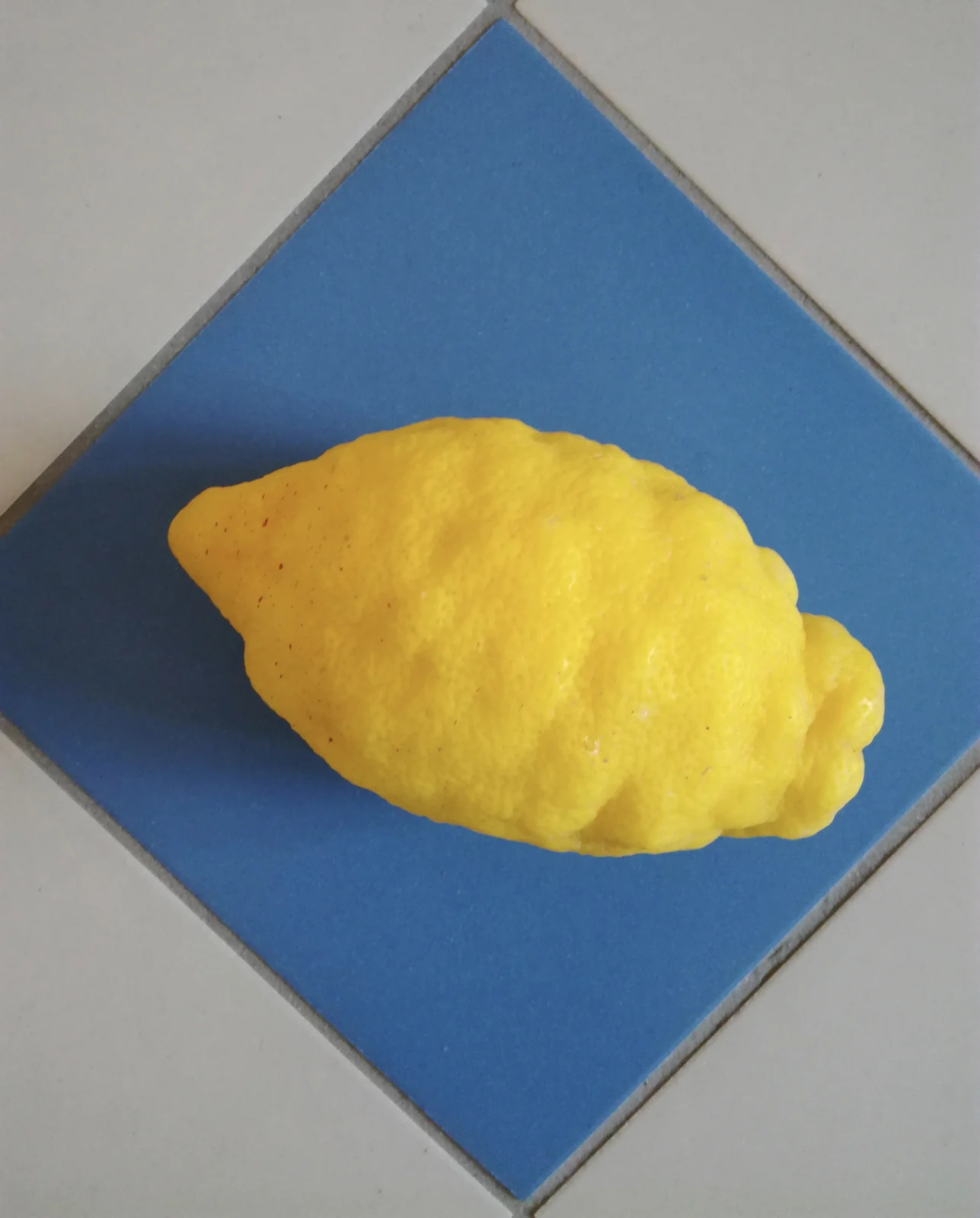
Photo: Barbara-Ingeborg / Wikimedia Commons — CC BY-SA 4.0 · Resized and converted to WebP.
Things to do
The first thing to do is to step into the workshops. Italy’s Ministry of Tourism describes master potters glad to show the firing of the clay and the hand painting of pieces that are always one of a kind: vases, tableware, pictures of landscapes. Among the colours, “Vietri yellow”; among the subjects, the little donkey, mostly in emery green, a reminder of the animal that carried people and goods along the coast’s mule tracks.
Then the sea. The beach of Marina di Vietri has fine golden sand and shallow, gently shelving water, suited to families with children and to older visitors, with free stretches and beach clubs. Nearby are the Crestarella beach, below its tower, the Schiarata and the Cancelluzzo beach, of pebbles and sand, which can only be reached from the sea, for instance by a pedalo hired at the Marina.
At Albori, in its cove, there are two small beaches reached down some 200 steps; above them the fishing village has pale lime-washed houses and the scent of lemons. Raito is a village of stairways in a panoramic position: there you can visit Villa Guariglia, its terraced park and the ceramics museum.
To buy genuine ceramics, the town council has set up the Portale Ceramica Vietri, listing the production and sales businesses in the municipality: its stated aim is to counter goods passed off as made in Vietri. The Crestarella beach, at Via Cristoforo Colombo 27, is according to the council a few steps from the old town and can be reached on foot or by boat. From Albori, walks and hikes lead up Monte Falerio, with views of the coast; below the village, the Marina d’Albori, between Vietri and Cetara, has a small beach overlooked by an old watchtower.
Sources: Ministero del Turismo, italia.it — Vietri sul Mare, sfavillante borgo delle ceramiche sulla Costiera Amalfitana · Centro Universitario Europeo per i Beni Culturali (Ravello), sito del Piano di gestione UNESCO della Costiera Amalfitana — Villa Guariglia · Comune di Vietri sul Mare — Portale Ceramica Vietri: le attività di produzione e vendita sul territorio · Comune di Vietri sul Mare — Luoghi: Spiaggia della Crestarella (aggiornato il 10 giugno 2024) · Comune di Vietri sul Mare — Luoghi: Albori, I Borghi più belli d’Italia (aggiornato il 7 maggio 2026)
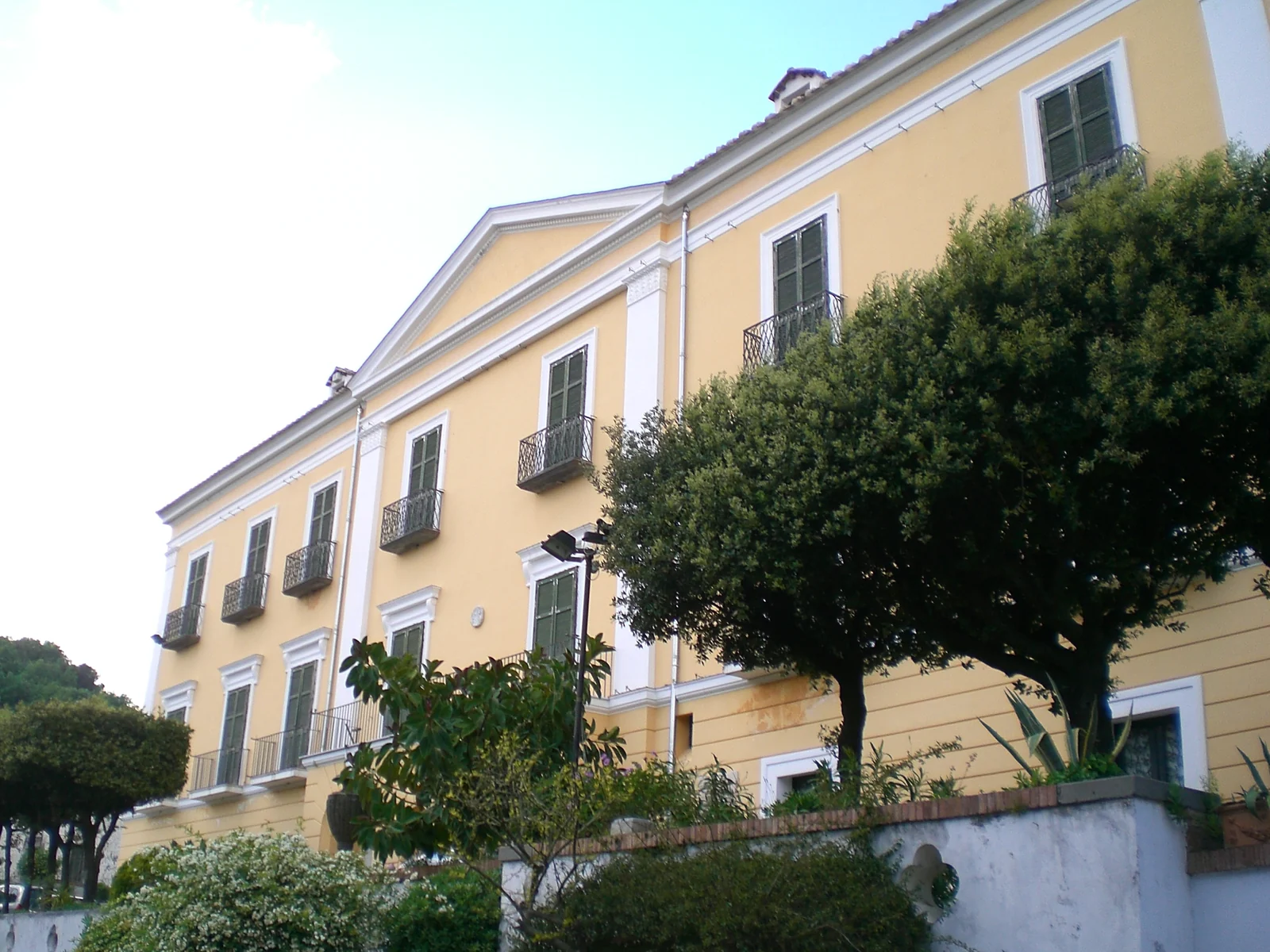
Photo: Liberotag73 / Wikimedia Commons — CC BY-SA 3.0 · Resized and converted to WebP.
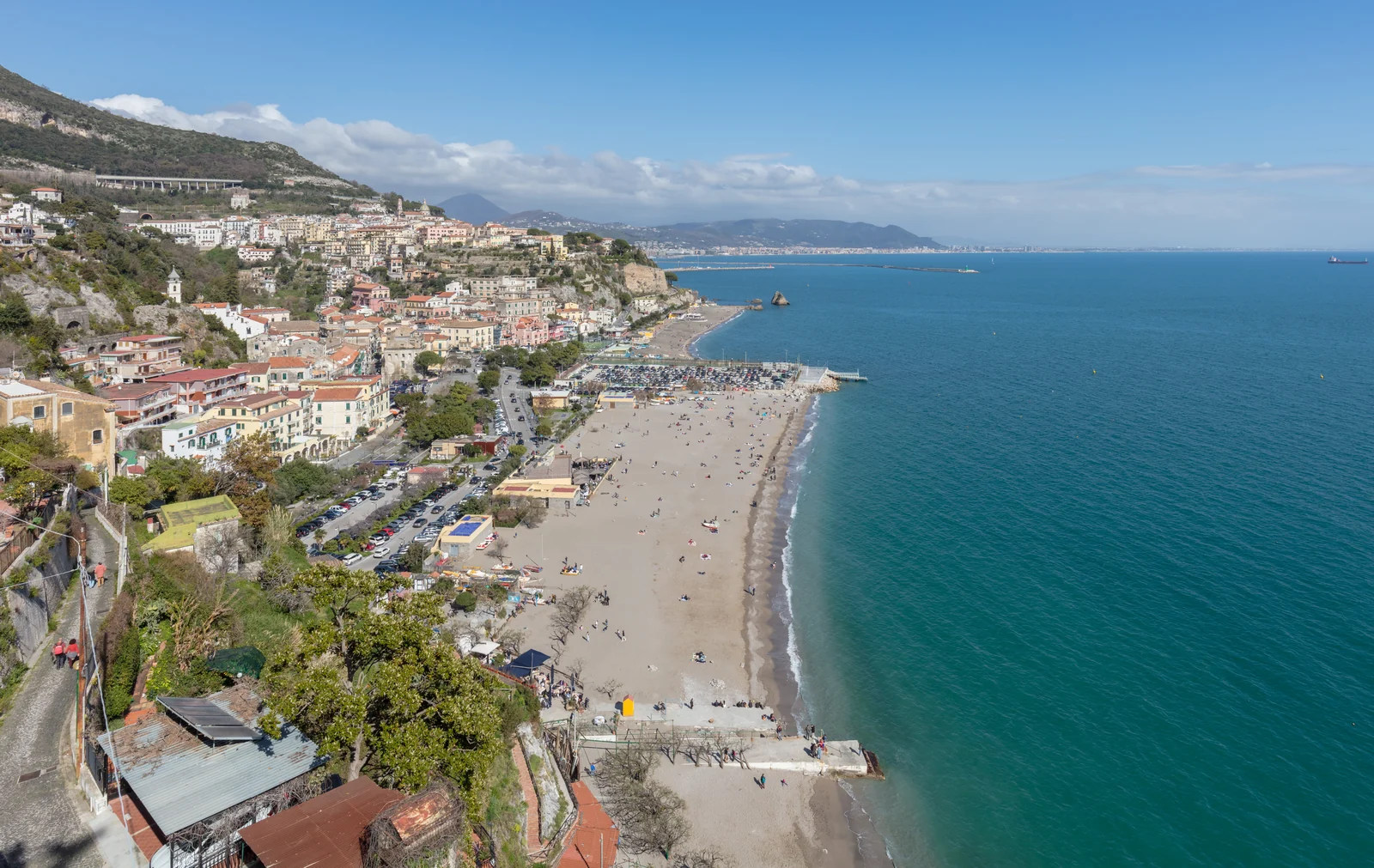
Photo: Diego Delso / Wikimedia Commons — CC BY-SA 4.0 · Resized and converted to WebP.
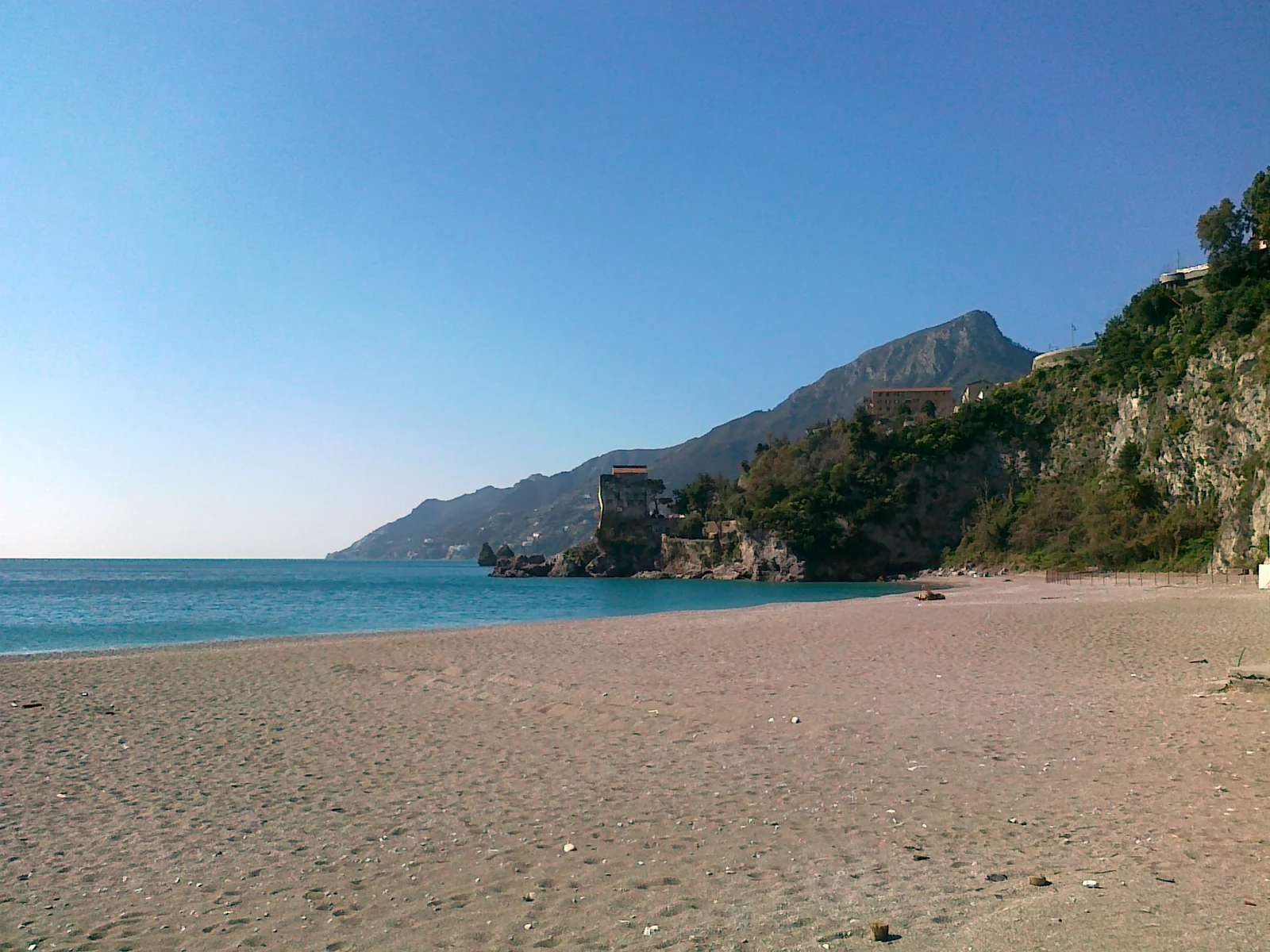
Photo: Geofix / Wikimedia Commons — CC BY-SA 3.0 · Resized and converted to WebP.
When to go
The sea at the Marina, with its shallow water, is the reason for summer. For lemons the best season runs from March to the end of July, when, according to the Region, the finest crop is picked.
Out of season the sea links thin out: Vietri appears among the routes in Travelmar’s 2026 fare list, but not in the timetable for 2 to 15 November 2026, which links Salerno with Amalfi by way of Cetara, Maiori and Minori. The cathedral, according to the European University Centre for Cultural Heritage, is open during services.
On 17 January the potters of Vietri celebrate their patron saint, Saint Anthony the Abbot, known here as Sant’Antuono. According to the town council, which organises the feast as a municipality of ancient ceramic tradition, the custom comes from the owners of the faenzere, who on that day gave their workers a great meal; a tile bearing the saint’s image was once placed beside the kiln of every workshop, to protect the firing. In 2025 the feast included a mass in the church of San Giovanni, an exhibition of icons of the saint made by 28 potters and the blessing of the fire in the station square. On 18 and 19 May 2024 Vietri took part in the tenth edition of Buongiorno Ceramica, the nationwide festival of Italian ceramics, with 57 municipalities involved.
Sources: Ministero del Turismo, italia.it — Vietri sul Mare, sfavillante borgo delle ceramiche sulla Costiera Amalfitana · Regione Campania, Assessorato all’Agricoltura — Limone Costa d’Amalfi I.G.P. · Travelmar S.r.l. — Tratte e tariffe 2026 · Travelmar S.r.l. — Orari del servizio dal 2 al 15 novembre 2026 · Centro Universitario Europeo per i Beni Culturali (Ravello), sito del Piano di gestione UNESCO della Costiera Amalfitana — Chiesa di San Giovanni · Comune di Vietri sul Mare — Eventi: Festa dei ceramisti, Sant’Antuono (17 gennaio 2025) · Comune di Vietri sul Mare — Eventi: Buongiorno Ceramica, decima edizione (18 e 19 maggio 2024)
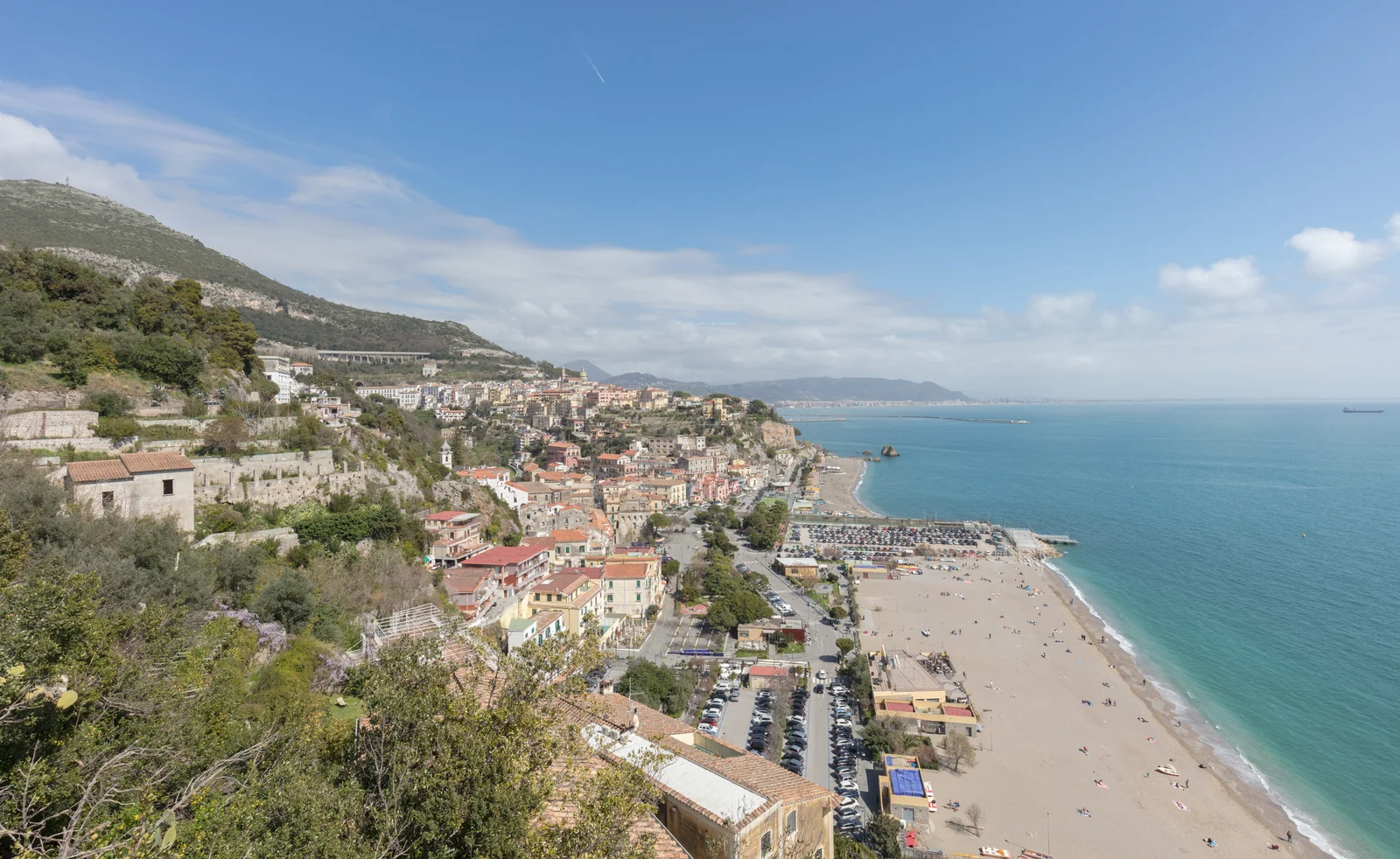
Photo: Diego Delso / Wikimedia Commons — CC BY-SA 4.0 · Resized and converted to WebP.
Getting there and around
By train: the station is called Vietri sul Mare-Amalfi. According to RFI it has two passenger tracks, one of them reachable by a step-free route, level or by ramp; there are no lifts, tactile paths or raised platforms, and the station has no assistance service for people with disabilities or reduced mobility. It has audio and visual announcements and a bus stop; it opens and closes with the first and last train.
By sea: Travelmar’s 2026 fare list includes routes between Vietri and Salerno, Cetara, Maiori, Minori, Amalfi and Positano. The November 2026 timetable has no calls at Vietri: check the timetable in force before setting out.
Sources: RFI, Rete Ferroviaria Italiana — Stazione di Vietri sul Mare-Amalfi · Travelmar S.r.l. — Tratte e tariffe 2026 · Travelmar S.r.l. — Orari del servizio dal 2 al 15 novembre 2026
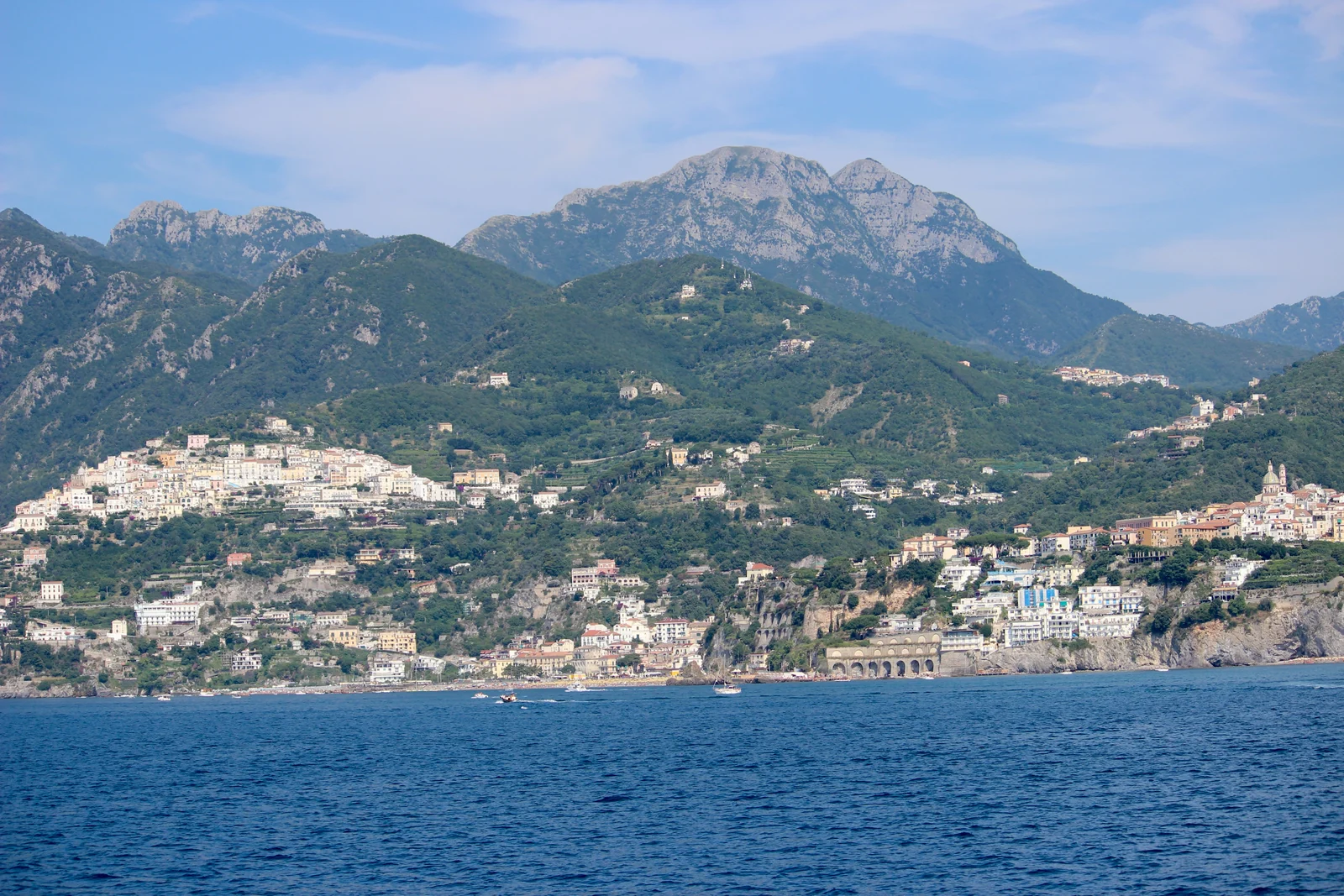
Photo: Miguel Hermoso Cuesta / Wikimedia Commons — CC BY-SA 4.0 · Resized and converted to WebP.
Tourism
Anyone staying overnight in Vietri sul Mare in a hotel, a bed & breakfast, a campsite, a holiday home or a short-term rental who is not a resident of the town pays the tourist tax. Under the council’s regulation it is due all year round, from 1 January to 31 December, per person and per night, and its amount, graded by type of accommodation, is set by the council’s executive, which publishes it on the council’s website. Guests pay it to their host before the end of their stay and receive a receipt. Exempt, among others, are young people within their fourteenth year of age, people with disabilities who are not self-sufficient, with a medical certificate, and their companion if they sleep in the same room, teachers accompanying school groups, coach drivers and, in organised groups, one tour leader for every 25 participants; except for young people, the exemption is requested from the accommodation with a declaration on the council’s form.
Sources: Comune di Vietri sul Mare — Regolamento dell’imposta di soggiorno
“Come to Vietri sul Mare as a guest, not as a tourist: that is how these places truly let you know them.”
Accommodation in figures
In the Ministry of Tourism’s national database of accommodation (BDSR), on 12 October 2026, Vietri sul Mare had 427 establishments with a verified national identification code (CIN): 7 hotel-type establishments, 53 non-hotel establishments and 367 other establishments.
The council has a tourist tax office. In October 2026 it reminded the accommodation businesses and the tourist and short-term lets in the municipality that they must report guest movements every month, day by day, through the regional platform “Sinfonia Turismo SMART”.
Sources: Ministero del Turismo – Banca Dati Strutture Ricettive (dashboard pubblica) · Comune di Vietri sul Mare, Ufficio Imposta di Soggiorno — Comunicazione obbligatoria dei flussi turistici (22 ottobre 2026)
Nearby
Among the places Apulica already covers, the nearest is Avellino (about 27 km): straight-line distances between the centres of the municipal territories.
In Travelmar’s 2026 fare list Vietri is linked by boat with Cetara, Maiori, Minori, Amalfi, Positano and Salerno. The European University Centre for Cultural Heritage notes that Vietri has always looked more to nearby Salerno than to Amalfi.
Sources: ISTAT/Openpolis, confini comunali della regione Campania (CC BY 4.0, ISTAT/Openpolis) · Travelmar S.r.l. — Tratte e tariffe 2026 · Centro Universitario Europeo per i Beni Culturali (Ravello), sito del Piano di gestione UNESCO della Costiera Amalfitana — I 15 comuni: Vietri sul Mare
The town council
The official website of the Comune di Vietri sul Mare, registered in IndicePA, the index of the digital addresses of Italy’s public administrations, is the reference for the town council’s offices, opening hours and news. Its address is listed among the sources of this section.
The town hall is at Corso Umberto I 83; the telephone number is 089 763810 and the certified e-mail address is [email protected]. In 2026 the council started a twinning with Sarreguemines, in France, under the European CERV programme, built around the ceramics and crafts of the two towns.
Sources: Comune di Vietri sul Mare, sito istituzionale · IndicePA (AgID), Indice dei domicili digitali delle pubbliche amministrazioni: dataset Enti · Comune di Vietri sul Mare — Luoghi: Municipio di Vietri sul Mare (aggiornato il 26 giugno 2024) · Comune di Vietri sul Mare — CERV Town Twinning Sarreguemines-Vietri (aggiornato il 29 gennaio 2026)
Where to stay
In the municipality of Vietri sul Mare the national database of the Ministry of Tourism lists 427 accommodation businesses with a verified CIN code: 7 hotels, 53 other licensed accommodation and 367 other types such as B&Bs and private rentals.
Licensed businesses from the official list of accommodation named as the source in this section. Where the list gives it, the property's official identification code appears next to its name: the national CIN code, or the code assigned by the Region or by the body that keeps the list. Private individuals are not listed. This list is the official census of licensed businesses, not a list of Apulica partners: to stay in Vietri sul Mare you do not have to check one property after another yourself; write to Apulica and we look for the stay that suits your journey, checking availability and conditions before any confirmation.
HOTEL PARADISO
Hotel · ★★★★★
Regional code (CUSR) 15065157ALB0129
AGRITURISMO COLLE MAIANO
Farm stay
Regional code (CUSR) 15065157EXT0308
ACQUABOUTIQUE
Guest rooms
Regional code (CUSR) 15065157EXT0001
VILLA CAROSINO
Holiday house
Regional code (CUSR) 15065157EXT0352
HOTEL RAITO
Hotel · ★★★★★
Regional code (CUSR) 15065157ALB0130
ANTICA TENUTA IL TRIGNANO
Farm stay
Regional code (CUSR) 15065157EXT0482
AFFITTACAMERE DECORI SUITES
Guest rooms
Regional code (CUSR) 15065157EXT0268
HOTEL BRISTOL
Hotel · ★★★★
Regional code (CUSR) 15065157ALB0128
COLLE MAIANO
Farm stay
Regional code (CUSR) 15065157EXT0117
AFFITTACAMERE PALAZZO PINTO
Guest rooms
Regional code (CUSR) 15065157EXT0210
First the places that presented themselves to Apulica, the latest first; then one place of each type in turn, by official category and stars, then by name. No position is paid for.
All 42 entries in alphabetical order
Page 1 of 5
| Name | Type | Identification code |
|---|---|---|
| ACQUABOUTIQUE | Guest rooms | Regional code (CUSR) 15065157EXT0001 |
| AFFITTACAMERE DECORI SUITES | Guest rooms | Regional code (CUSR) 15065157EXT0268 |
| AFFITTACAMERE PALAZZO PINTO | Guest rooms | Regional code (CUSR) 15065157EXT0210 |
| AGRITURISMO COLLE MAIANO | Farm stay | Regional code (CUSR) 15065157EXT0308 |
| ANTICA TENUTA IL TRIGNANO | Farm stay | Regional code (CUSR) 15065157EXT0482 |
| BELLAVISTA COSTA D'AMALFI | Guest rooms | Regional code (CUSR) 15065157EXT0471 |
| BLUE BOUTIQUE | Guest rooms | Regional code (CUSR) 15065157EXTB01U |
| CASA FLORA | Guest rooms | Regional code (CUSR) 15065157EXT0460 |
| CASA IDA AFFITTACAMERE | Guest rooms | Regional code (CUSR) 15065157EXT0312 |
| CASA ZIA ROSARIA | Guest rooms | Regional code (CUSR) 15065157EXT8VRS |
Ask Apulica for a stay in Vietri sul Mare We reply shortly, within a few hours at most, with a proposal for you to consider.
Sources: Ministero del Turismo – Banca Dati Strutture Ricettive (dashboard pubblica), 2026-10-12
YOUR JOURNEY
How to shape a journey here
To include Vietri sul Mare in a trip, or to ask for a guide or a transfer, you can write to Apulica with the button below.
Plan your tripKeep exploring
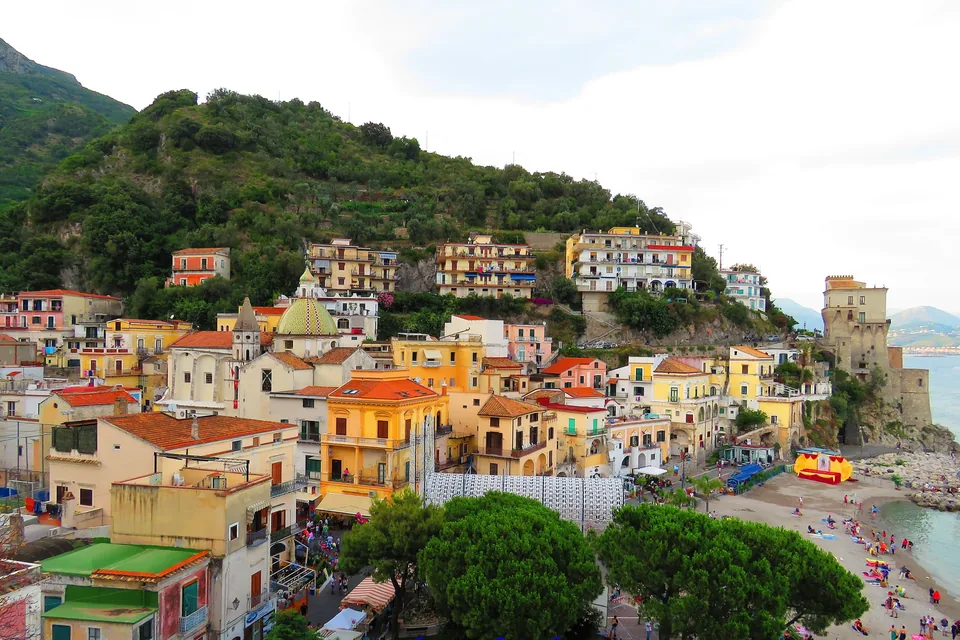
Cetara
Cetara (SA), Campania: 1,928 residents, 5.00 km². The official facts of the municipality, its town council website and its registered accommodation. The Viceregal tower on the Marina, the majolica dome of San Pietro, the Colatura di alici di Cetara PDO, tuna and anchovy fishing, the beaches and the footpaths of the Amalfi Coast.
Read the guide →Photo: Gianfranco Vitolo / Wikimedia Commons — CC BY 2.0 · Resized and converted to WebP.

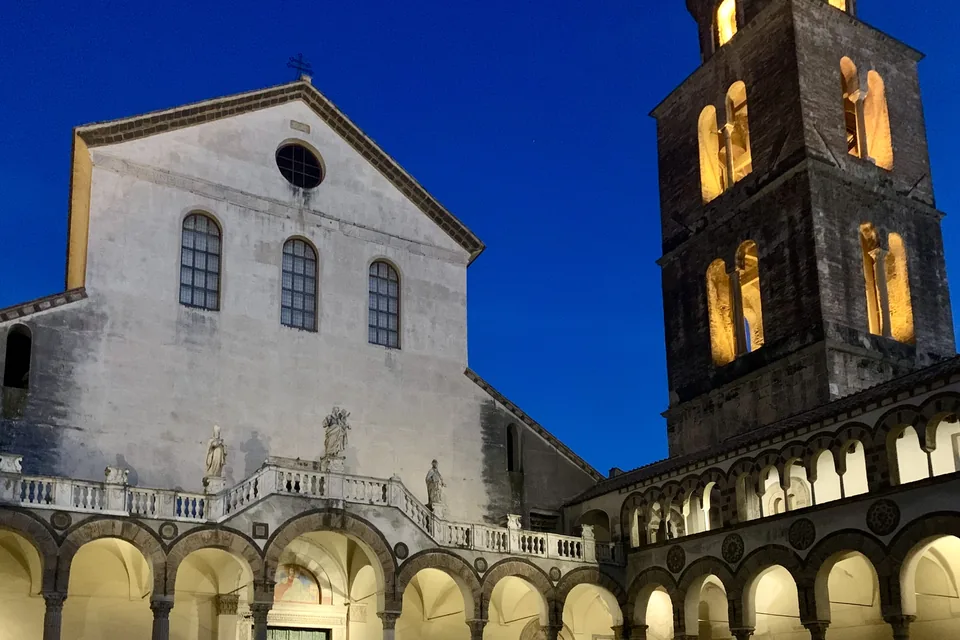
Salerno
The provincial capital on the gulf between the Amalfi Coast and Paestum: the Norman cathedral, Arechi castle, the Minerva Garden, the Teatro Verdi, the seafront, Saint Matthew and the winter Luci d’Artista.
Read the guide →Photo: Emanuele Oliveto / Wikimedia Commons — CC BY-SA 4.0 · Resized and converted to WebP.

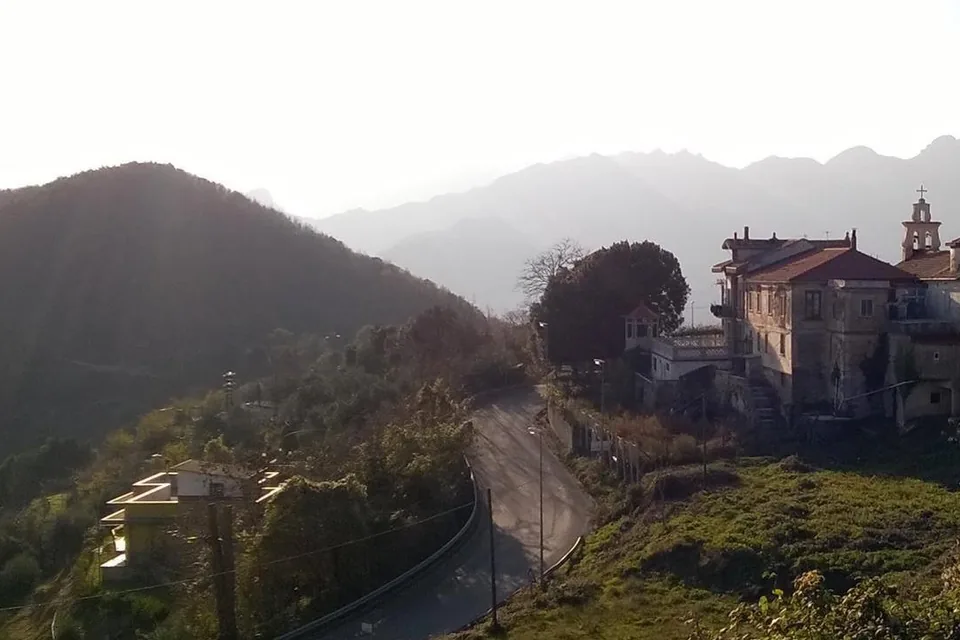
Cava de' Tirreni
Cava de' Tirreni (SA), Campania: 49,793 residents, 36.53 km². The official facts of the municipality, its town council website and its registered accommodation.
Read the guide →Photo: Matteo Fasano Tuttosucava / Wikimedia Commons — CC BY-SA 4.0 · Resized and converted to WebP.

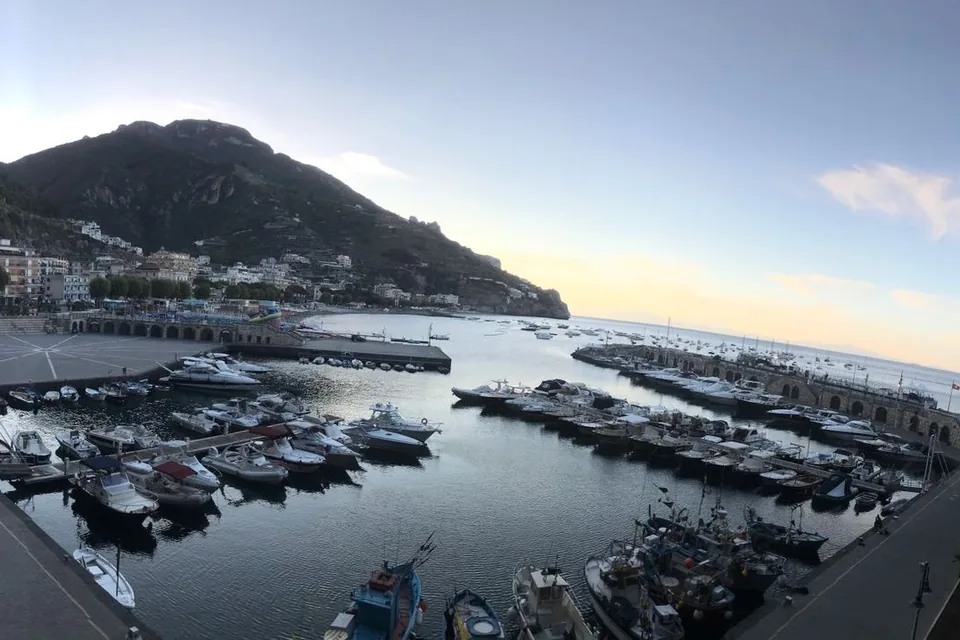
Maiori
Maiori (SA), Campania: 5,225 residents, 16.71 km². The official facts of the municipality, its town council website and its registered accommodation.
Read the guide →Photo: Pietro Di Fontana / Wikimedia Commons — CC BY-SA 4.0 · Resized and converted to WebP.

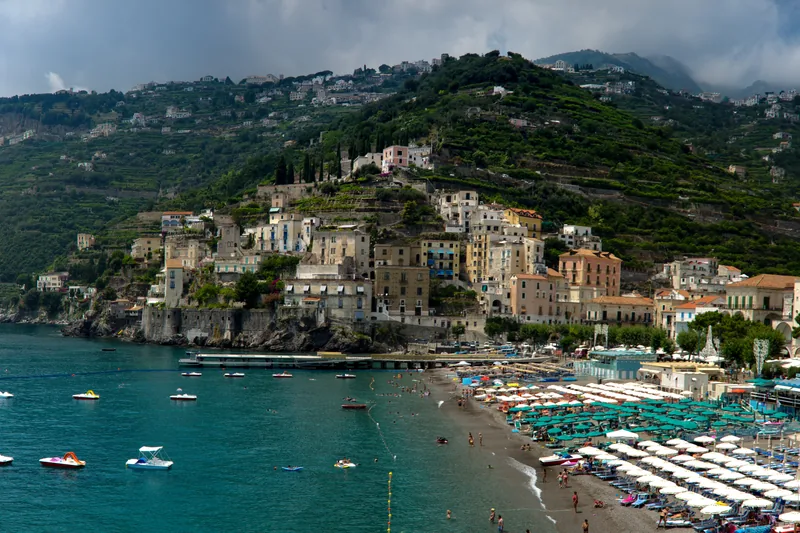
Minori
Minori (SA), Campania: 2,557 residents, 2.67 km². The official facts of the municipality, its town council website and its registered accommodation.
Read the guide →Photo: ApicellaOslo / Wikimedia Commons — CC BY-SA 3.0 · Resized and converted to WebP.

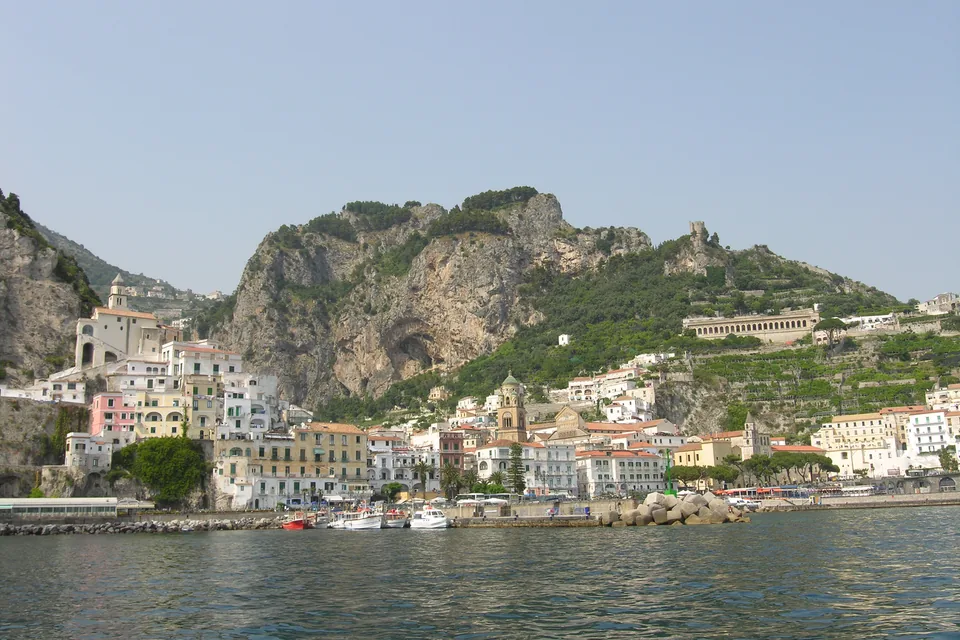
Amalfi
Amalfi (SA), Campania: 4,610 residents, 5.71 km². The official facts of the municipality, its town council website and its registered accommodation. The cathedral of Sant’Andrea and the Cloister of Paradise, the Arsenal of the maritime republic, the handmade paper of the Valle dei Mulini, the lemons of the terraces recognised by the FAO, the feast of the patron saint and the Regatta of the Ancient Maritime Republics.
Read the guide →Photo: Sudodana2048 / Wikimedia Commons — CC BY-SA 3.0 · Resized and converted to WebP.

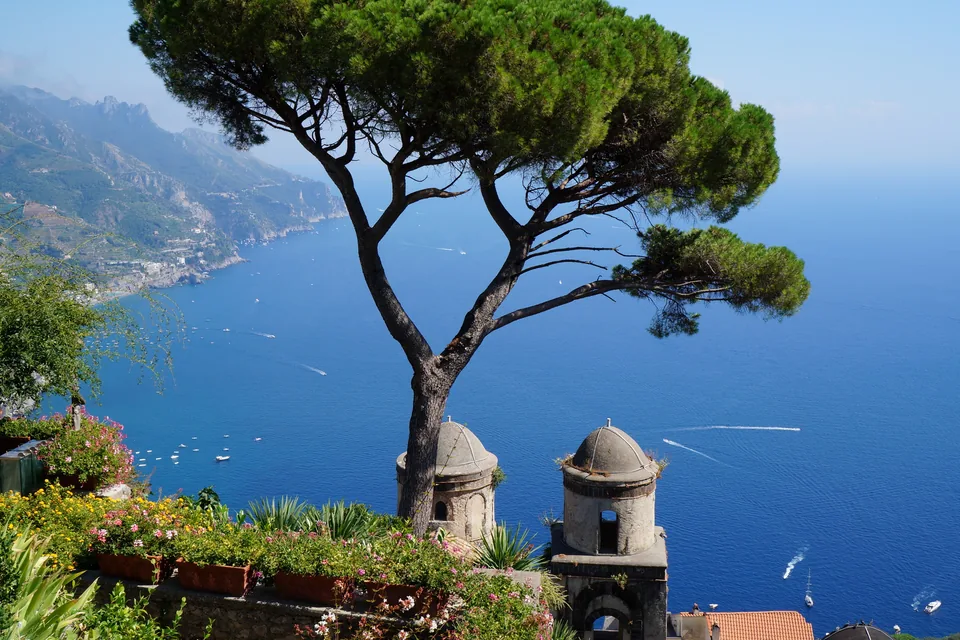
Ravello
Ravello (SA), Campania: 2,338 residents, 7.93 km². The official facts of the municipality, its town council website and its registered accommodation. Villa Rufolo and the garden that inspired Wagner, Villa Cimbrone and the Belvedere of Infinity, the Duomo with its bronze doors and pulpits, the Ravello Festival, Oscar Niemeyer’s Auditorium, the PGI lemon and the wine of the Ravello sub-zone.
Read the guide →Photo: Leandro Neumann Ciuffo / Wikimedia Commons — CC BY 2.0 · Resized and converted to WebP.

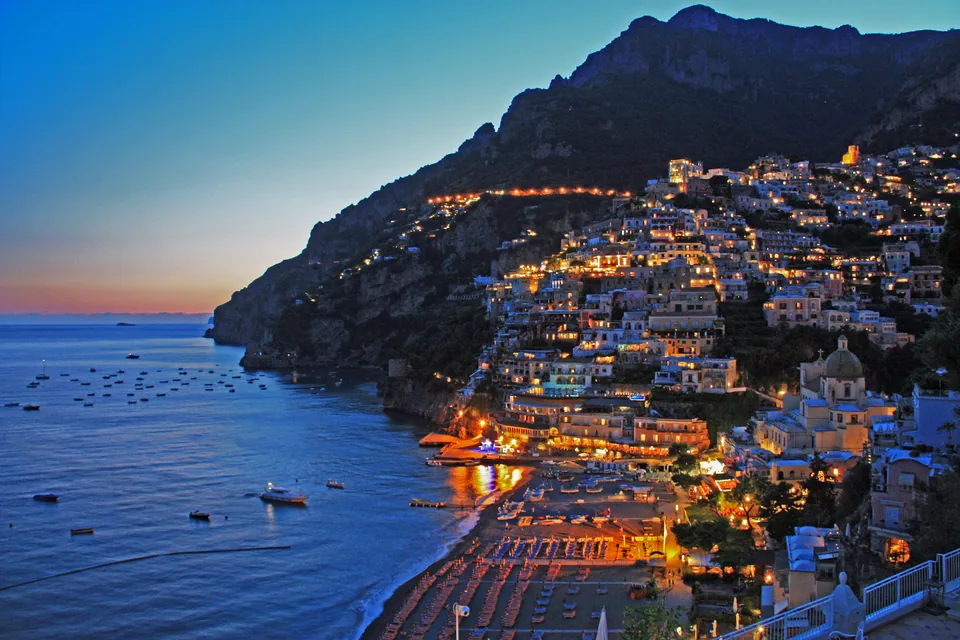
Positano
Positano (SA), Campania: 3,677 residents, 8.70 km². The official facts of the municipality, its town council website and its registered accommodation. The church of Santa Maria Assunta with its majolica dome, the Roman villa of the MAR, Spiaggia Grande and Fornillo, Montepertuso, Nocelle and the Path of the Gods, the PGI lemon and Moda Positano.
Read the guide →Photo: JeCCo / Wikimedia Commons — CC BY 4.0 · Resized and converted to WebP.
