

Why go
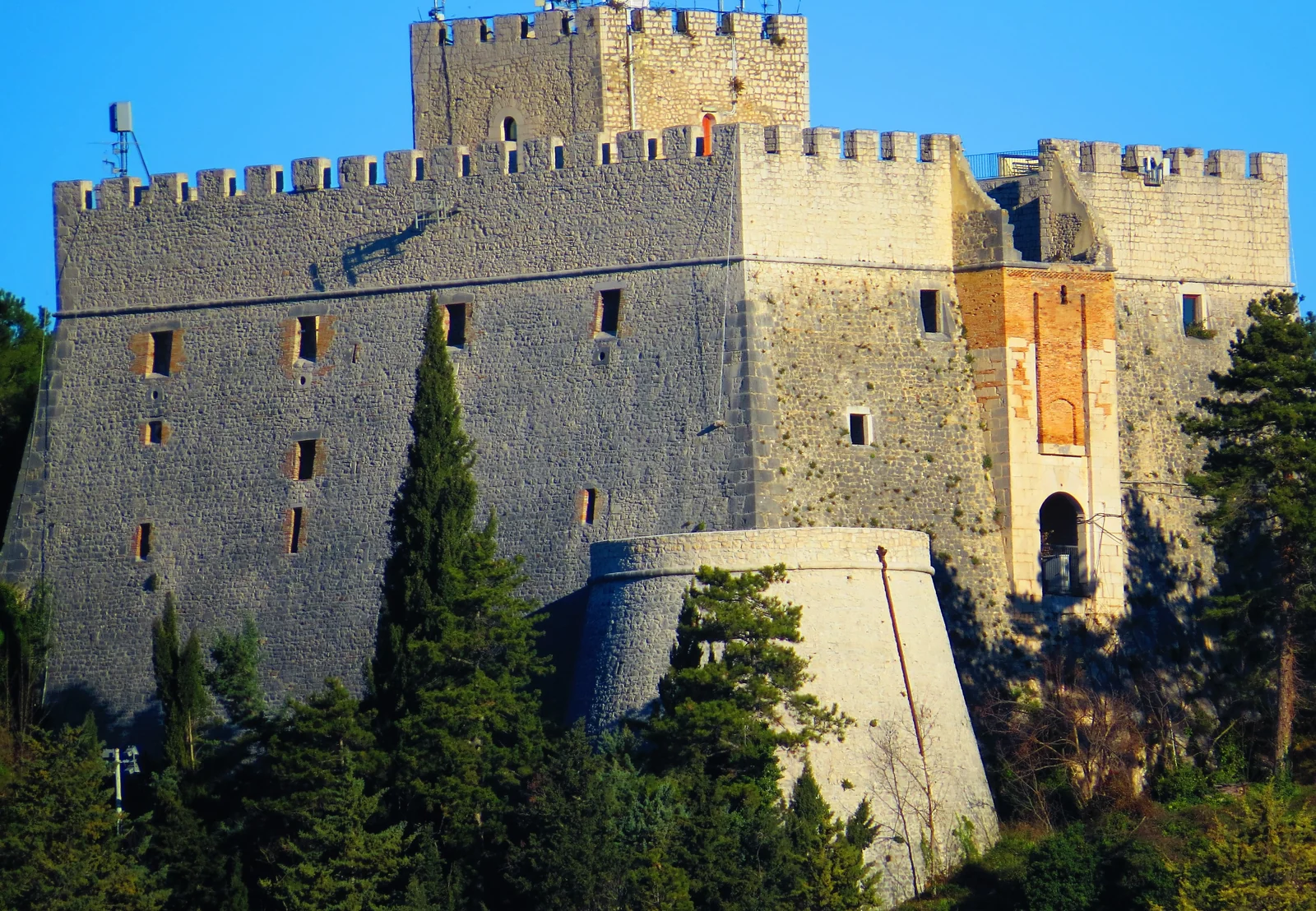
Campobasso is the capital of Molise, and it makes most sense as you climb. On the hill above the city stands Castello Monforte, at almost 800 metres, looking down on the houses of the old town as they step down towards the lower town, where the squares and avenues of the nineteenth-century city open out. The Ministry's tourism portal sums up a visit as two different places: one below the castle, made of narrow rustic lanes, ramps and stairways, and one further down, with nineteenth-century blocks, public buildings, shops and airy tree-lined squares.
The lower town has a name of its own. It was Joachim Murat, the soldier who became King of Naples, who began building a new Campobasso below the castle: the districts known today as the Città Murattiana. Three and a half centuries earlier, after a disastrous earthquake in the middle of the fifteenth century, Count Nicola Monforte, a condottiere, had begun the reconstruction, and the castle still bears his name.
Yet what makes Campobasso known far beyond Molise are the Misteri: thirteen processional machines designed in the mid-eighteenth century by the Campobasso sculptor Paolo Saverio Di Zinno and built by the city's blacksmiths. Children and adults dressed as saints, angels, Madonnas and devils seem to float in mid-air on them while bearers carry them on their shoulders through the streets on Corpus Domini Sunday. For the rest of the year the machines can be seen "bare", without their figures, in the museum that keeps them in Via Trento.
Just below the castle, the Museo Sannitico gives another reason to stop: amber, pottery, bronzes, ivories and marbles from prehistory to the Lombard early Middle Ages, with the Samnites and Romanisation at its heart. Walking through its rooms, the Ministry's portal notes, you want to go and see the places these objects came from, starting with Bojano and Sepino.
Campobasso is a municipality in the province of Campobasso, in Molise. Its ISTAT code is 070006. It is the capital of the province of Campobasso. On 1 January 2025 it had 47,547 residents. The municipal territory covers 56.11 km² and ranges from 426 to 914 metres above sea level; the town hall stands at about 708 metres.
Sources: Italia.it (Ministero del Turismo) — Campobasso · Italia.it (Ministero del Turismo) — Castello Monforte · Associazione Misteri e Tradizioni — il sito ufficiale della Sfilata dei Misteri a Campobasso · Associazione Misteri e Tradizioni — I Misteri · Ministero della Cultura — Museo dei Misteri · ISTAT, Codici statistici delle unità amministrative territoriali: elenco dei comuni al 21 febbraio 2026 · ISTAT, Popolazione residente per età, sesso e stato civile al 1° gennaio 2025 (POSAS) · ISTAT, Principali statistiche geografiche sui comuni: superficie e altimetria al 31 dicembre 2021
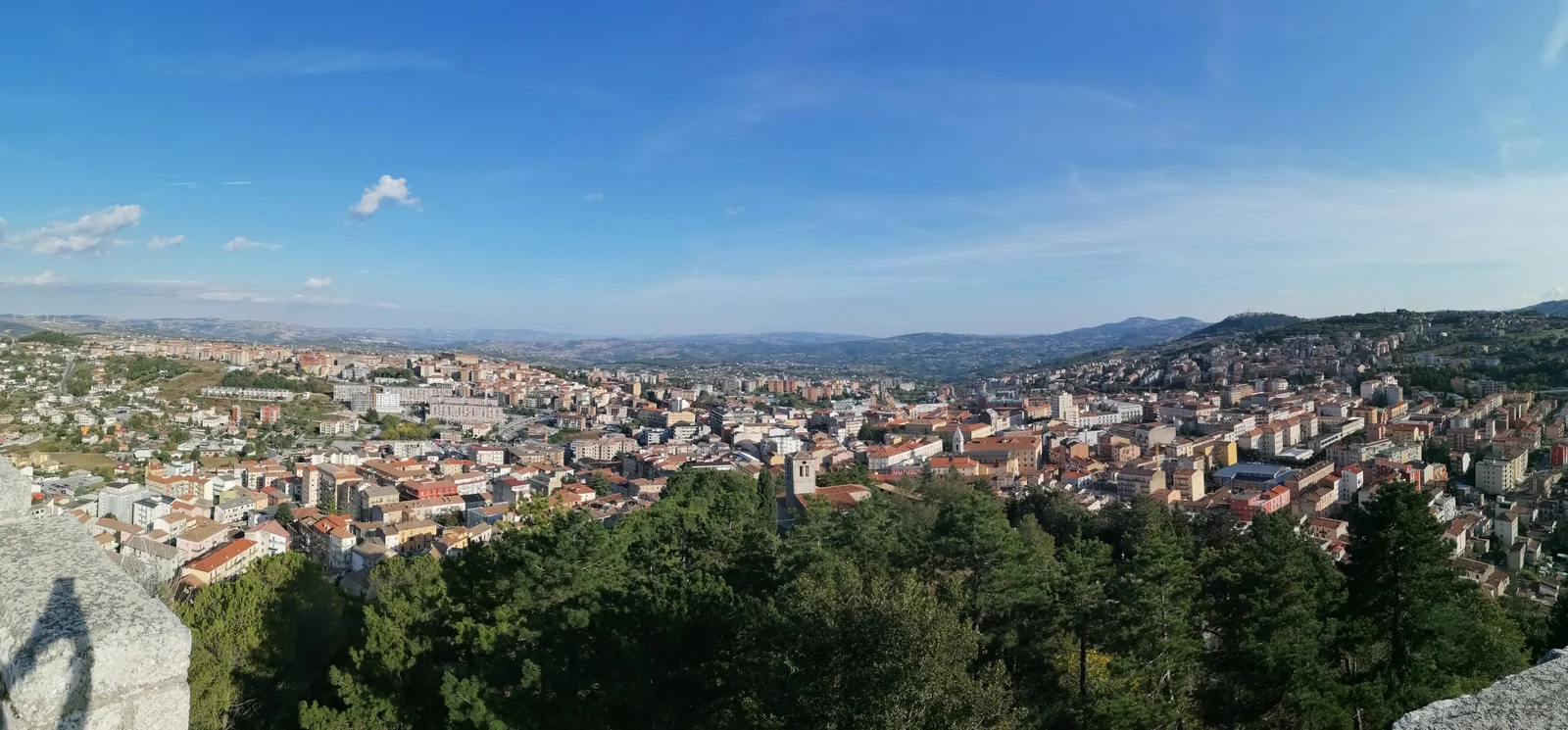
Photo: Horcrux / Wikimedia Commons — CC BY-SA 4.0 · Resized and converted to WebP.
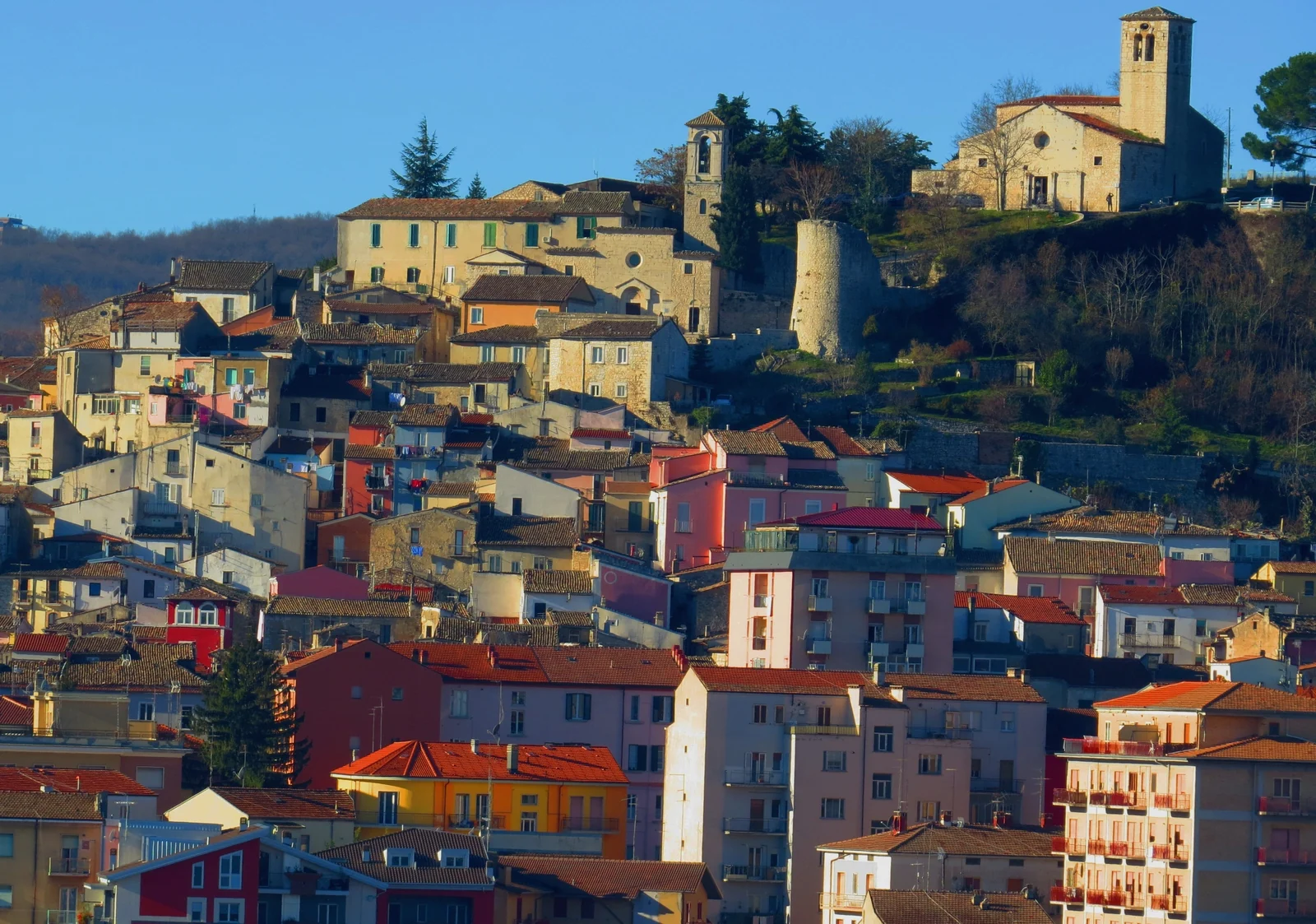
Photo: Gianfranco Vitolo from Sarno (Sa), Italia / Wikimedia Commons — CC BY-SA 2.0 · Resized and converted to WebP.
History
The castle's origins are not entirely certain: some trace it back to the Norman period, others link it to Count Nicola II Monforte, known as Cola, of the Monforte-Gambatesa family, who had it restored after the earthquake of 1456. Count Cola played a leading part in the struggles between the Angevins and the Aragonese and minted coins bearing the title "Nicolaus Comes Campibassi". The castle crowned a defensive system with a double ring of walls, towers and patrol walkways, running along today's Via Marconi, Via Orefici and Viale del Castello; the six gates that once led into the town now appear on the municipal coat of arms.
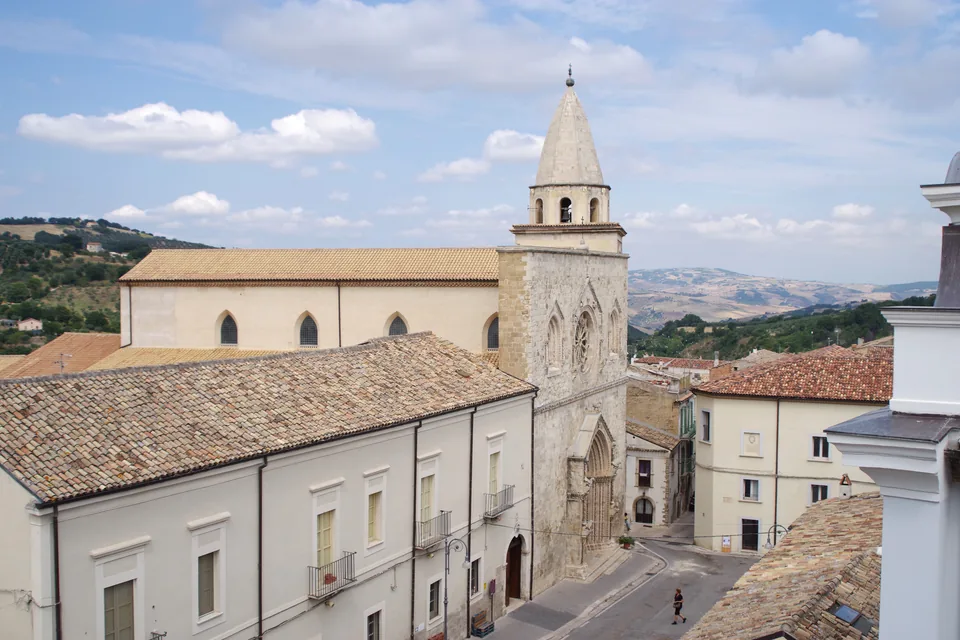
From the medieval town, the Romanesque churches on the upper part of the hill remain. San Giorgio, dedicated to the patron saint of Campobasso, dates from the eleventh century according to the Archdiocese; San Bartolomeo was most probably built around the middle of the thirteenth century, against the walls where a gate likely opened, next to the Torre Terzano, one of the towers of the circuit preserved almost intact; San Leonardo, in Romanesque-Gothic style, can be dated between the thirteenth century and the first half of the fourteenth. In the fourteenth century much of the population moved from the hill to the lower part of town, near San Leonardo, which was a collegiate church from 1400 to 1829.
Earthquakes have marked the city more than once. The one of 1456 destroyed the bell tower of San Leonardo, which was never rebuilt. That of 26 July 1805 brought down the bell tower of San Bartolomeo, later restored, and destroyed six of the eighteen Misteri then in existence, buried when the buildings where they were kept collapsed. After that earthquake the church of the Santissima Trinità, which had existed in other forms since the sixteenth century, took on the role of cathedral, held until then by Santa Maria Maggiore, high up near the castle. It was rebuilt to a design by the Campobasso architect Bernardino Musenga at Murat's wish and consecrated in its present form in 1829; closed to worship in 1860 and reopened in 1900, it has been the bishop's seat since 1927, when the bishop moved from Boiano to Campobasso.
The city's green spaces have a long history too. Villa De Capoa began as the garden of the Franciscan convent of Santa Maria delle Grazie, founded in 1510 by Andrea de Capua, and was used as a botanical garden; in the nineteenth century it became the private park of the De Capoa family, and in 1875 Countess Marianna De Capoa gave it to the orphanage she had founded. The municipality bought the area in 1929 to turn it into a public park.
The archaeological collections are also more than a century old. The museum was founded in 1881 in the Prefecture building, together with the Provincial Library, and the archaeologist Antonio Sogliano published its inventory in 1889; after many moves, since 1995 it has been in the eighteenth-century Palazzo Mazzarotta, in the old town.
The Misteri come from an even older tradition. The first records of sacred performances in Campobasso date from the mid-sixteenth century, with the "Trionfi" staged by the craft guilds for the visit of the feudal lord; later three lay confraternities carried "living mysteries" in the Corpus Domini procession, tableaux on stretchers whose subject changed every year. Around the middle of the eighteenth century the confraternities wanted those subjects made permanent, and Paolo Saverio Di Zinno (1718-1781) designed the iron structures that the city's blacksmiths built. Twelve survived the 1805 earthquake; in 1959 the Tucci cousins made a thirteenth, the Sacred Heart of Jesus, from a drawing attributed to Di Zinno. In 1874 the Campobasso painter and photographer Antonio Trombetta photographed them for the first time, under the arcades of the town hall.
Sources: Italia.it (Ministero del Turismo) — Castello Monforte · Ministero della Cultura — Castello Monforte · Arcidiocesi di Campobasso-Bojano — Romanic@mente in Cammino (opuscolo, 2025) · Associazione Misteri e Tradizioni — I Misteri · Ministero della Cultura, Catalogo generale dei beni culturali — Chiesa della Santissima Trinità, portale e facciata (scheda 14/00006579) · Ministero della Cultura, Catalogo generale dei beni culturali — Villa De Capoa, cancellata (scheda 14/00081891) · Ministero della Cultura — Museo archeologico nazionale di Campobasso (Museo Sannitico) · Italia.it (Ministero del Turismo) — Campobasso
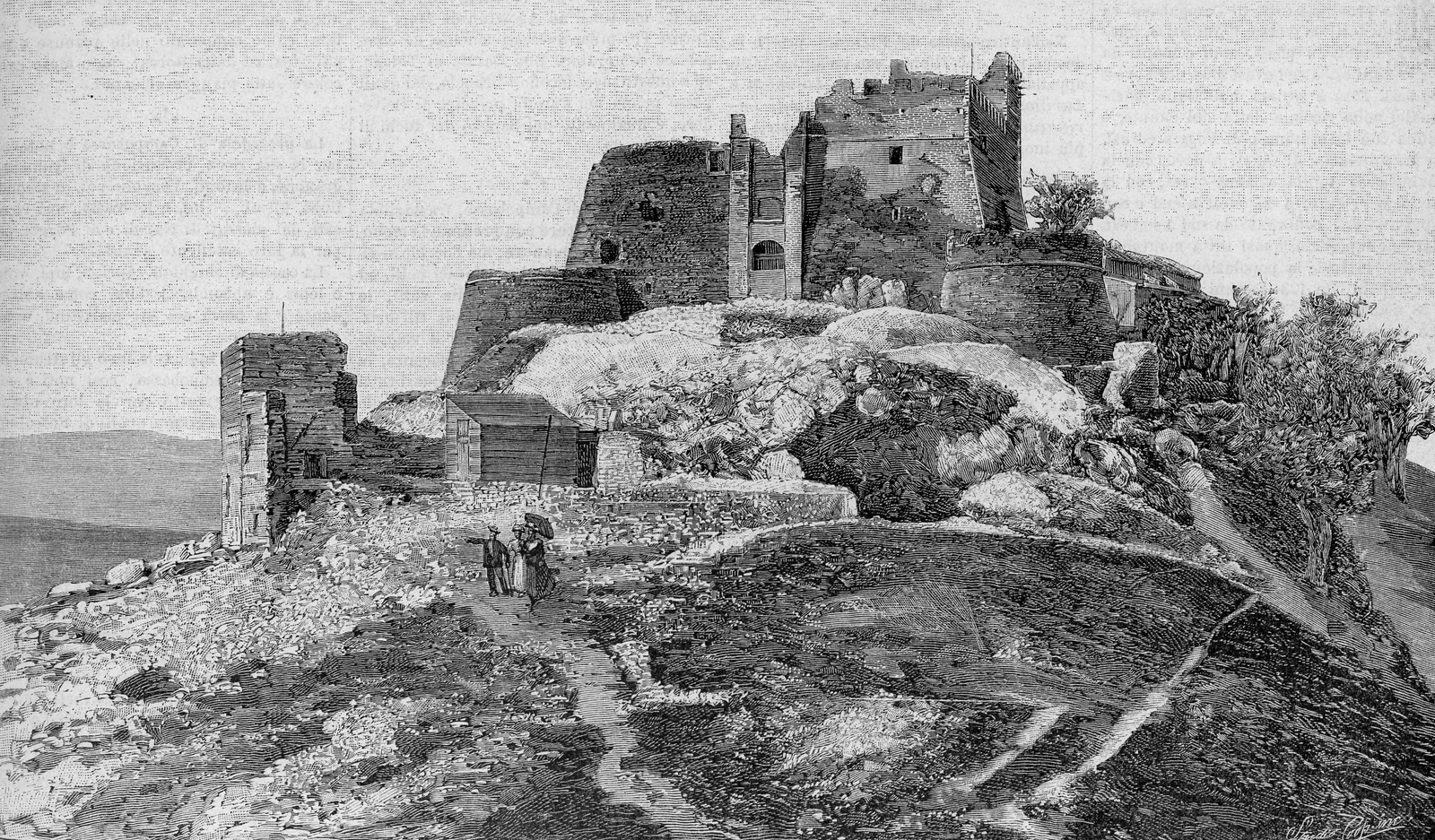
Photo: Studio Coop inc. / Wikimedia Commons — Public domain · Resized and converted to WebP.
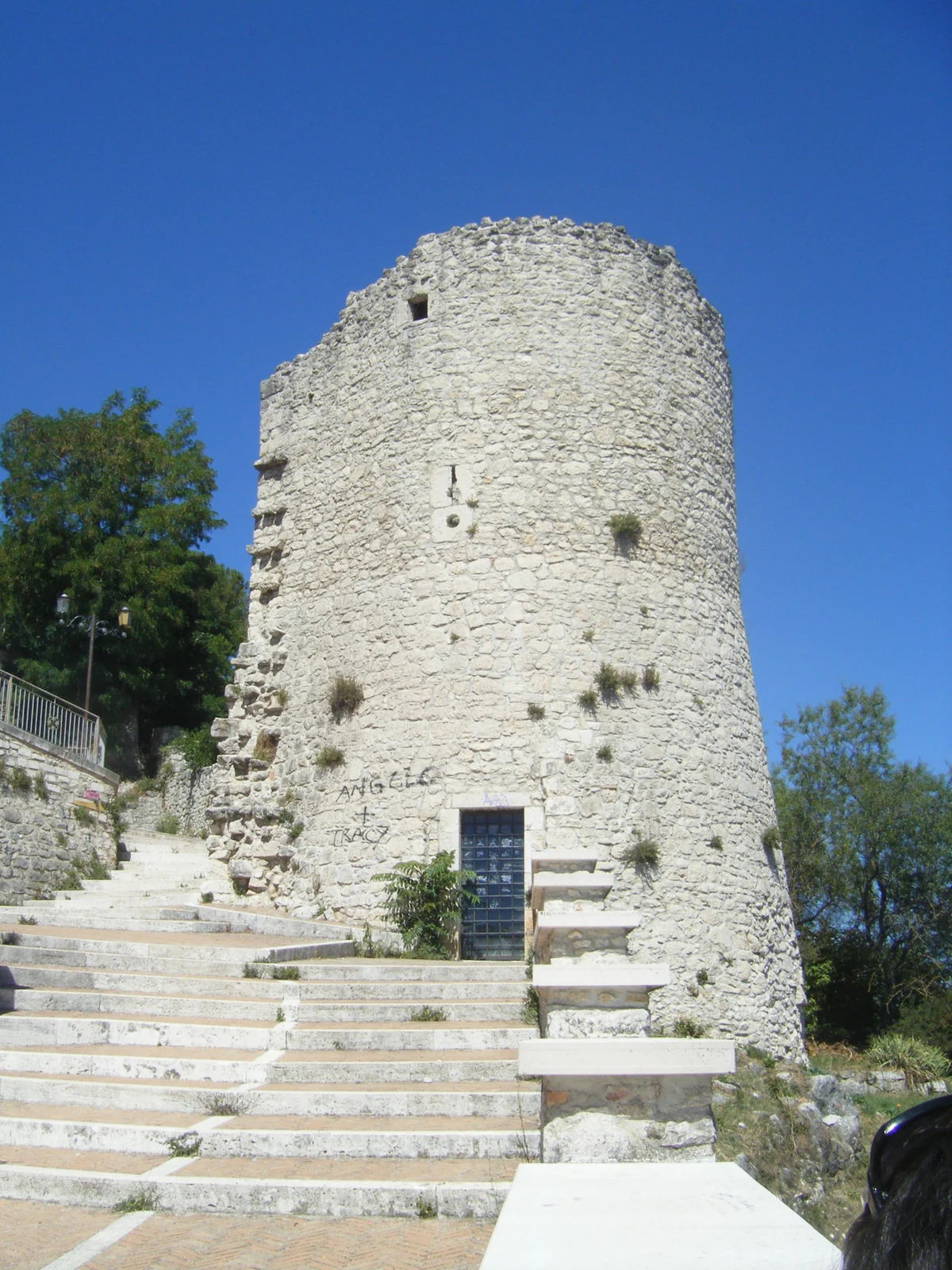
Photo: pms / Wikimedia Commons — CC BY-SA 3.0 · Resized and converted to WebP.
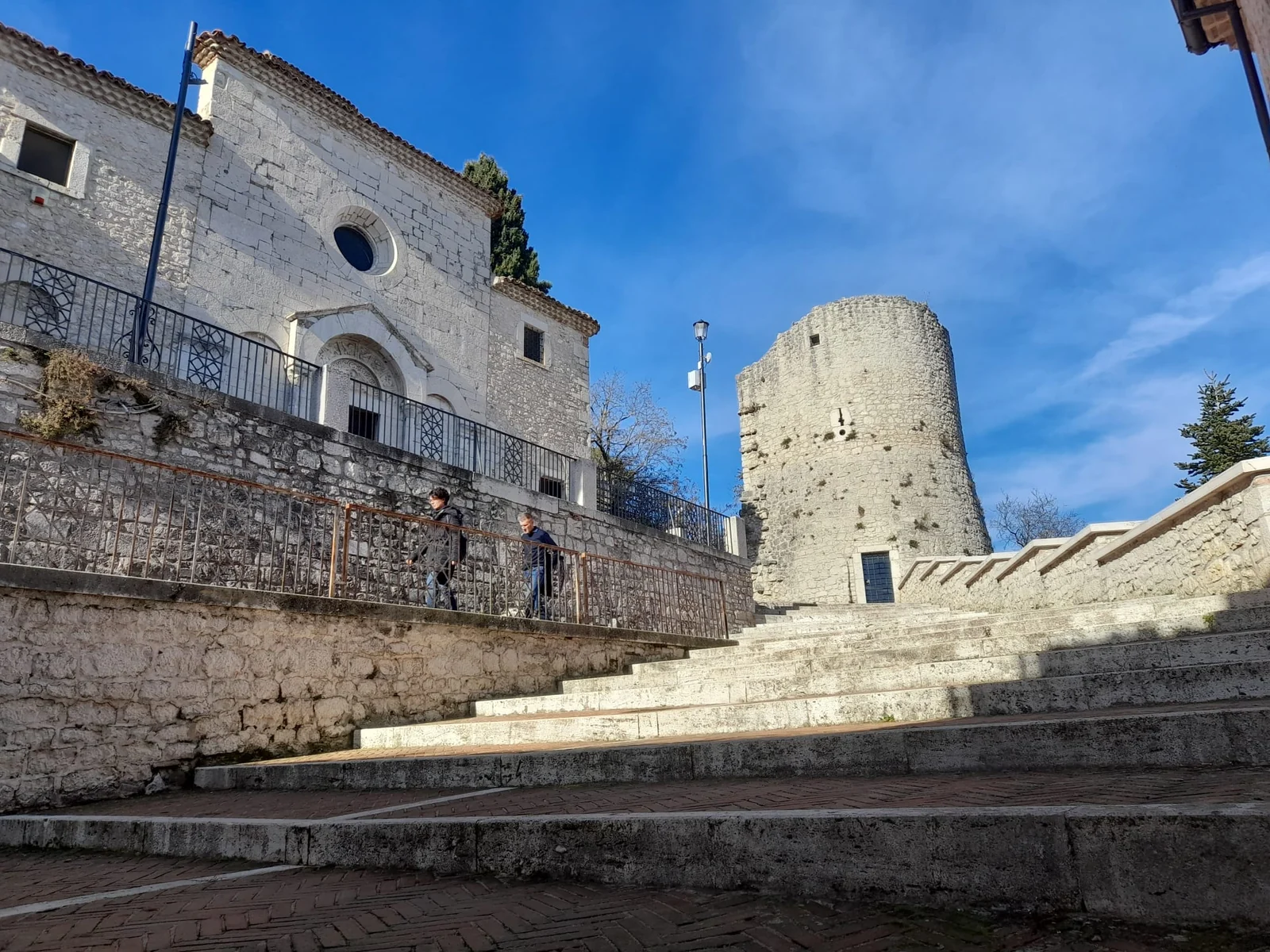
Photo: Toscanelli 73 / Wikimedia Commons — CC BY-SA 4.0 · Resized and converted to WebP.
What to see
Castello Monforte is compact and regular: a square plan, round towers at the corners, a rectangular central block, thick walls with a few square openings and Guelph merlons along the top. Inside is a large open courtyard where traces of stairs and partitions remain; since 1937 one of its halls has been a memorial to the fallen, with wrought-iron elements. From the top, on clear days, the view reaches from the hills to the Matese massif. The Ministry of Culture lists it as a national monument and symbol of the city. The two official listings, the Ministry's and the tourism portal's, do not give the same opening hours today: check them before climbing up.
Walking down from the castle you meet the Romanesque churches. San Giorgio, just below the summit, has a two-pitched façade and a doorway up four steps with a lunette carved from a single block showing the Lamb of God, framed by leaves and vine tendrils and topped by an oculus. The three-aisled interior is late Baroque; on the left the fourteenth-century Ferraguto chapel keeps frescoes of the Doctors of the Church and biblical scenes. The church holds the equestrian statue of Saint George carved by Emilio Labbate in 1858: 78 centimetres wide and 2 metres high and long, it is the largest equestrian group in the region; recently restored, it is missing the dragon's head. Beside the church is the small cemetery, with a skull carved in high relief beneath a little window in the wall.
Further down, San Bartolomeo shows a three-part façade of large blocks of local limestone and a doorway with a pseudo-porch on two slender columns; the lunette shows Christ blessing within a mandorla, held up by two angels, surrounded by the symbols of the Evangelists and eight crouching figures. Inside, after a restoration that removed the Baroque additions, the stone is bare, and there are sculptures by Paolo Saverio Di Zinno; in 2011 a stone cross carved on both faces, with a horizontal arm more than a metre long, returned to the altar. San Leonardo, in the heart of the old town, has a pointed-arch doorway with the Lamb of God in the lunette, a single-light window decorated with intertwined branches and, beside it, a stone bearing the image of an ox.
In the lower town, the cathedral of the Santissima Trinità is Musenga's building, consecrated in 1829: the façade is a six-column Ionic portico with a pediment, and the squat square bell tower ends in an octagonal majolica spire. One chapel keeps stucco decoration from the same phase of works, its dome framed by gilded medallions and rosettes and, at the centre, four radiant doves.
Two museums complete the visit. The Museo Sannitico, in Palazzo Mazzarotta on Via Chiarizia, follows a chronological order: on the ground floor the Bronze Age and early Iron Age, with Final Bronze Age weapons and amber jewellery; on the first floor the Samnites, their sanctuaries and tombs, with a rich collection of votive statuettes of Hercules; on the second, Romanisation, with finds from the Roman town of Sepino, and the early Middle Ages, with the tombs of Bulgar horsemen from the Bojano plain and the reconstructed grave of a warrior with his horse and its silver harness. The Ministry also lists a combined ticket with the Sepino archaeological park. The Museo dei Misteri, in Via Trento, keeps the thirteen machines in its Hall of the Ingegni; admission is by voluntary donation.
Sources: Italia.it (Ministero del Turismo) — Castello Monforte · Ministero della Cultura — Castello Monforte · Arcidiocesi di Campobasso-Bojano — Romanic@mente in Cammino (opuscolo, 2025) · Ministero della Cultura, Catalogo generale dei beni culturali — Chiesa della Santissima Trinità, portale e facciata (scheda 14/00006579) · Ministero della Cultura, Catalogo generale dei beni culturali — Chiesa della Santissima Trinità, decorazione a stucco (scheda 14/00006588) · Ministero della Cultura — Museo archeologico nazionale di Campobasso (Museo Sannitico) · Ministero della Cultura — Museo dei Misteri · Associazione Misteri e Tradizioni — Il Museo dei Misteri
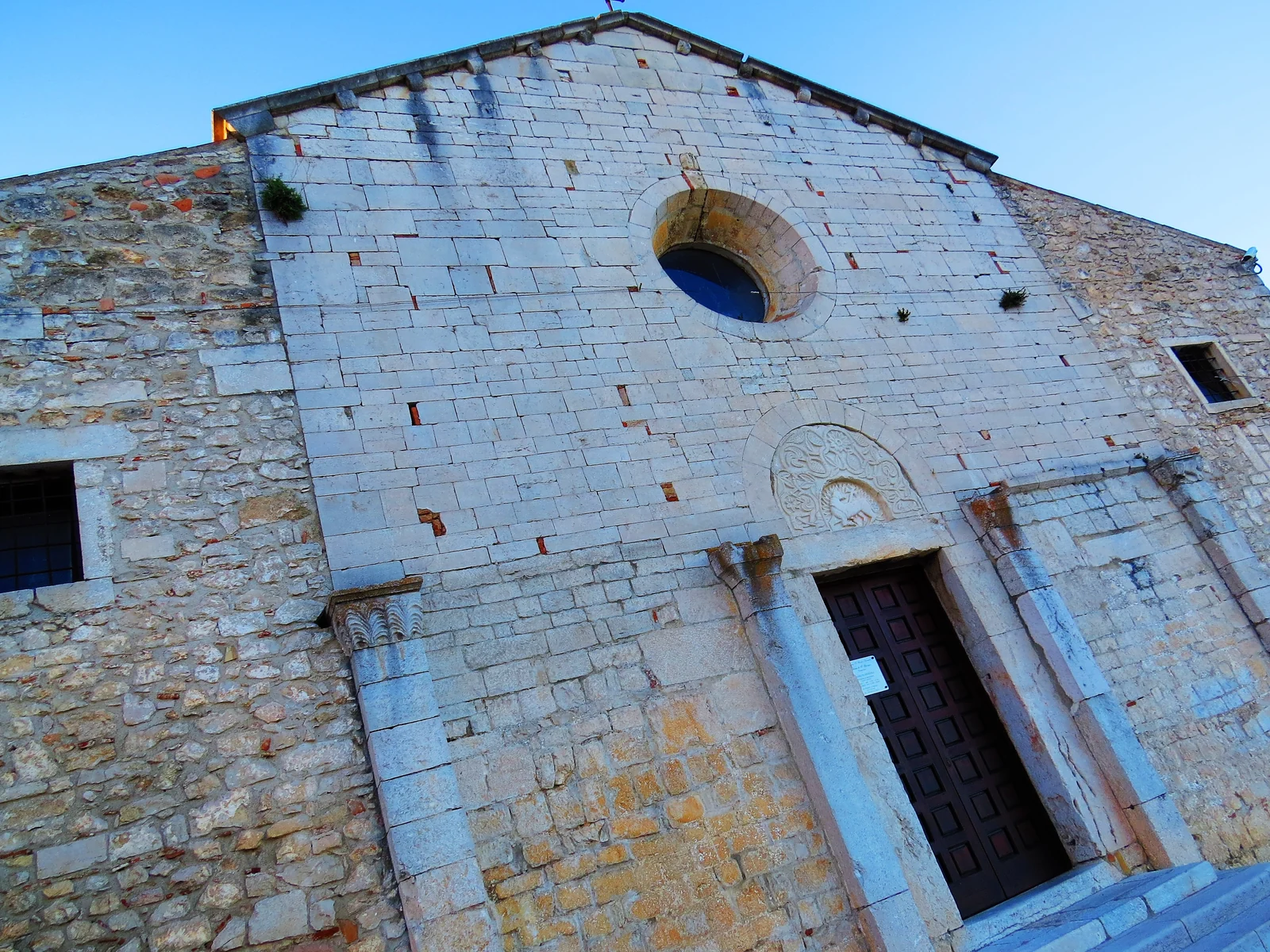
Photo: Gianfranco Vitolo from Sarno (Sa), Italia / Wikimedia Commons — CC BY-SA 2.0 · Resized and converted to WebP.
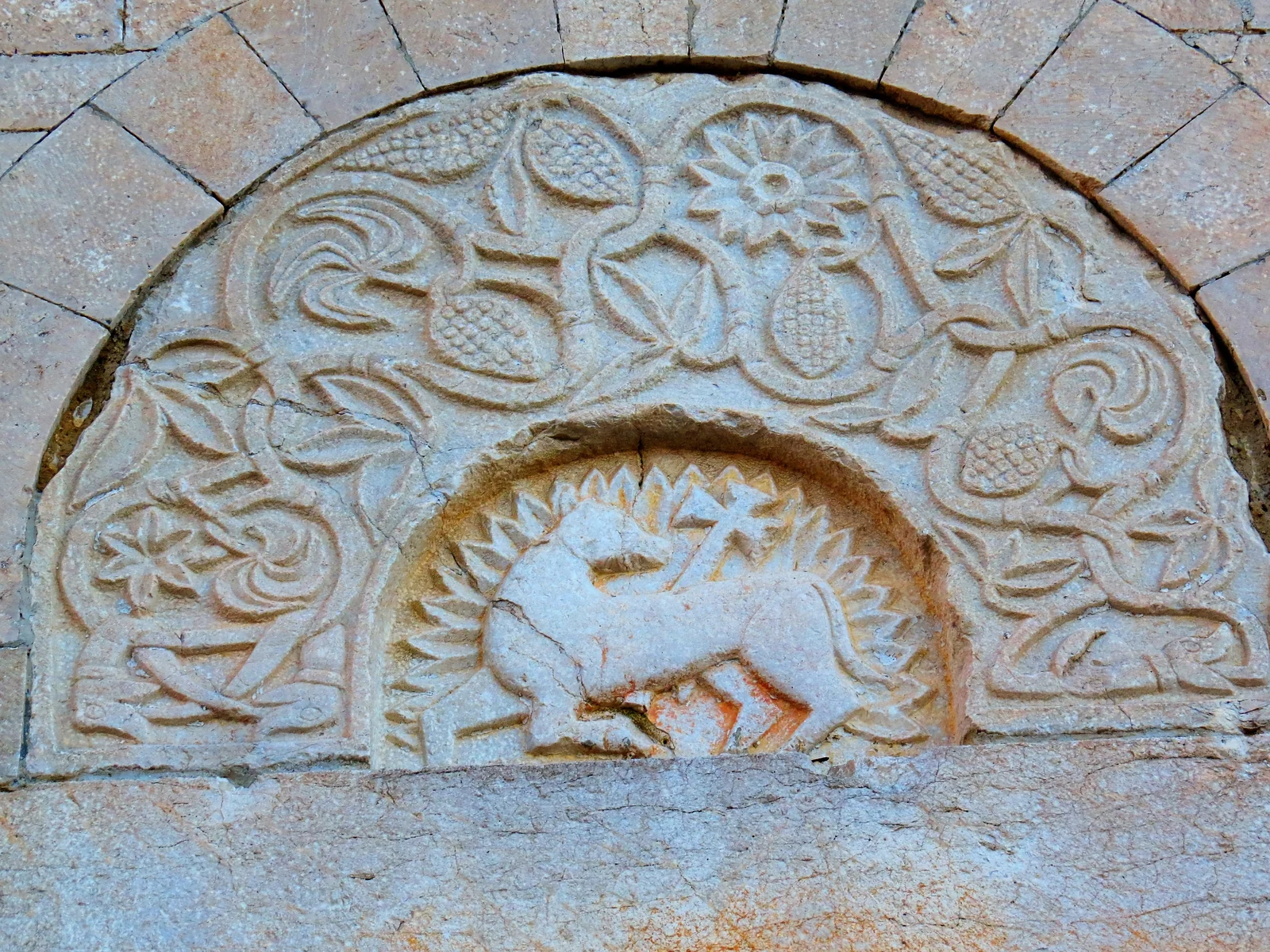
Photo: Gianfranco Vitolo from Sarno (Sa), Italia / Wikimedia Commons — CC BY-SA 2.0 · Resized and converted to WebP.
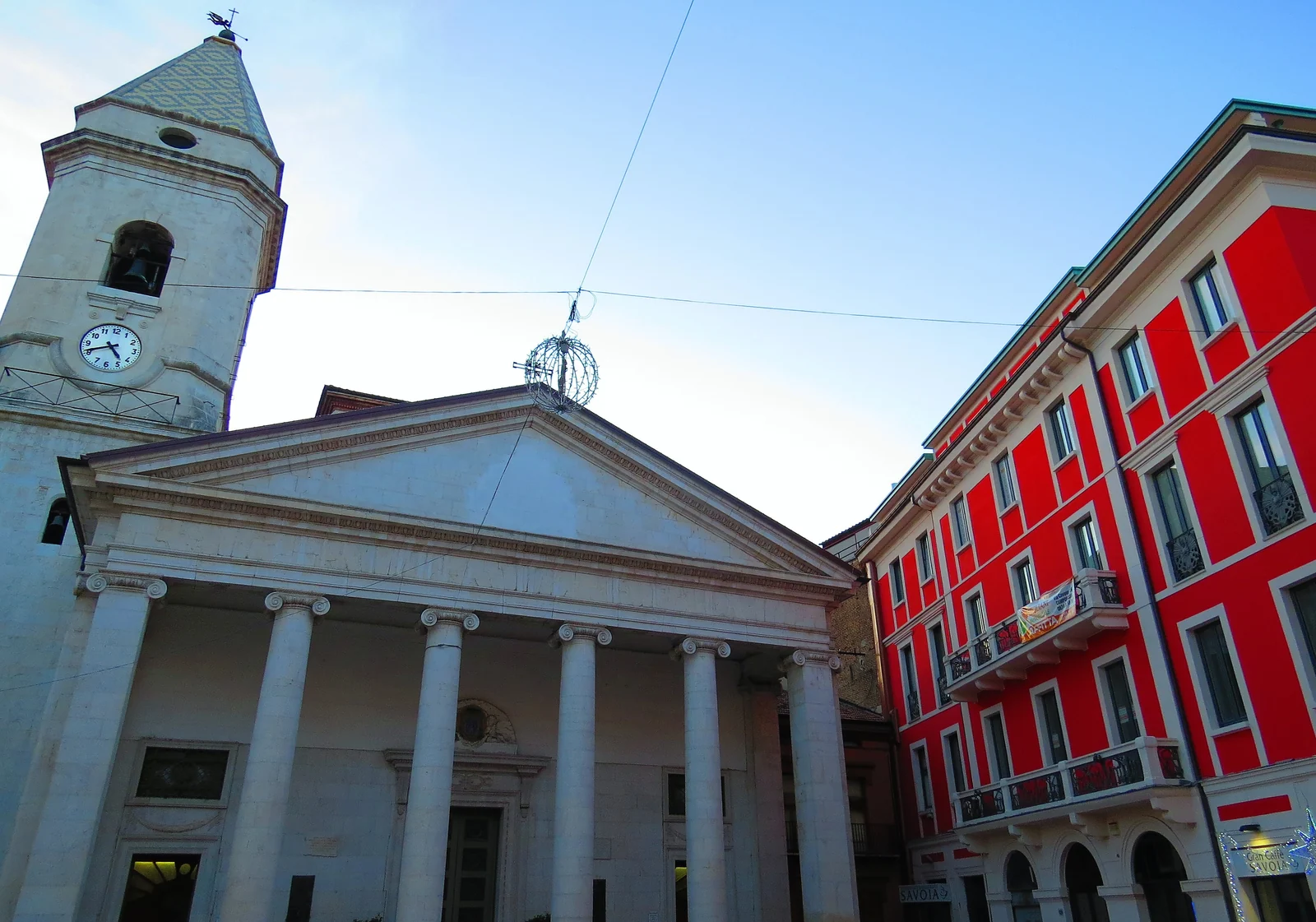
Photo: Gianfranco Vitolo from Sarno (Sa), Italia / Wikimedia Commons — CC BY-SA 2.0 · Resized and converted to WebP.
Flavours
In Campobasso, the tourism portal writes, the welcome comes with "cavatielle e carne e puorche", cavatelli with pork, together with "crjuoli", maccheroni alla chitarra, and the city's classic ragù made with the "brasciola": a slice of meat rolled around hard-boiled eggs, prosciutto fat and sausage. Pasta is the first chapter of Molise cooking, from cavatelli to fusilli, which according to the same source originated in Molise.
The rest of the table is the region's. Among cured meats there are capofreddo, or Molise coppa, and guanciale; among cheeses caciocavallo, soft stretched stracciata and Molise scamorza; then Molise PDO extra virgin olive oil and truffles, the white truffle above all. The wines come from Molise's four DOCs: Tintilia, Biferno, Molise and Pentro. The Archdiocese recalls the area's old dishes, such as cacio e uova and lamb scottadito, home-made pasta such as cavatelli, tagliolini and taccozze, pulses and the tomato of Montagano, and Tintilia as the native grape.
One address with a verifiable recognition is La Grotta da Concetta, in Via Larino: in Slow Food's list of Osterie d'Italia 2026 Snails it is the only osteria awarded in Molise. The guide of the Accademia Italiana della Cucina describes it as an old inn for travellers that became a trattoria of traditional cooking, with a strictly seasonal menu: pulse soups and vegetable broths, a ragù of meatballs, sausages and "tracchiulelle" for hand-made cavatelli, taccozze and crioli, Molise cured meats and cheeses, and mostly regional wines. The dish not to miss, according to the same guide, is pizza e minestra: maize bread with wild greens.
The Misteri have their own flavour too. Until the 1960s many shopkeepers offered their goods to the devils of the procession; of that custom, the Associazione Misteri e Tradizioni says, one dairy maker remains who still gives a smoked caciocavallo to the devils of Saint Michael when that Mistero passes his shop.
Sources: Italia.it (Ministero del Turismo) — Molise, piccolo e gustoso scrigno di pietanze e di prodotti «identitari» · Arcidiocesi di Campobasso-Bojano — Romanic@mente in Cammino (opuscolo, 2025) · Slow Food — Tutte le Chiocciole di Osterie d'Italia 2026, regione per regione · Accademia Italiana della Cucina — Guida ai ristoranti: Concetta, Campobasso · Associazione Misteri e Tradizioni — I Misteri
Things to do
The first experience is the walk up from the lower town to the castle, along the sloping lanes and stairways of the old town, past San Leonardo, San Bartolomeo and San Giorgio to the view over the Matese. The three churches are stages of "Romanic@mente in Cammino", the itinerary of the Archdiocese of Campobasso-Bojano that the Italian Bishops' Conference included in the Giubileo For All programme of inclusive routes of art and faith: a slow walk among the Romanesque churches of central Molise, whose first stage runs from Campobasso to Matrice and Campolieto. For San Giorgio and San Bartolomeo the Archdiocese announces accessibility works with tactile and talking maps and signs and an app.
The second is to take the museums slowly. At the Museo Sannitico the Ministry lists audio guides, guided tours, captions, marked routes, an education room and assistance for visitors with disabilities. At the Museo dei Misteri the 40-seat "Gino Aurisano" screening room shows footage of the procession filmed in 1929, 1948 and later years, including the preparations; for children the Association has published "Coloriamo i Misteri", a colouring book devoted to the machines.
For a break outdoors there is Villa De Capoa, the municipal garden whose railing faces Piazza Falcone e Borsellino. After its purchase in 1929 the park was laid out again with Liberty-style wrought-iron furnishings by the Tucci workshop of Campobasso: Giuseppe Tucci (1884-1947) designed the garden and drew the wrought-iron railing on a low stone wall, with the double main gate between two side gates, that separates it from the city. The railing is a protected heritage item.
The Teatro Savoia holds a piece of art history too: the national heritage catalogue records there a 1925 painting by Arnaldo De Lisio, a dance of women in costume for the harvest festival, with children, wild roses, an accordion, a flute and a lantern.
Photographers can ask the Associazione Misteri e Tradizioni for a special pass to follow the dressing of the Misteri on the morning of Corpus Domini, from first light.
Sources: Arcidiocesi di Campobasso-Bojano — Romanic@mente in Cammino (opuscolo, 2025) · Italia.it (Ministero del Turismo) — Castello Monforte · Italia.it (Ministero del Turismo) — Campobasso · Ministero della Cultura — Museo archeologico nazionale di Campobasso (Museo Sannitico) · Associazione Misteri e Tradizioni — Il Museo dei Misteri · Associazione Misteri e Tradizioni — il sito ufficiale della Sfilata dei Misteri a Campobasso · Ministero della Cultura, Catalogo generale dei beni culturali — Villa De Capoa, cancellata (scheda 14/00081891) · Ministero della Cultura, Catalogo generale dei beni culturali — Teatro Savoia, dipinto di Arnaldo De Lisio (scheda 14/00020892)
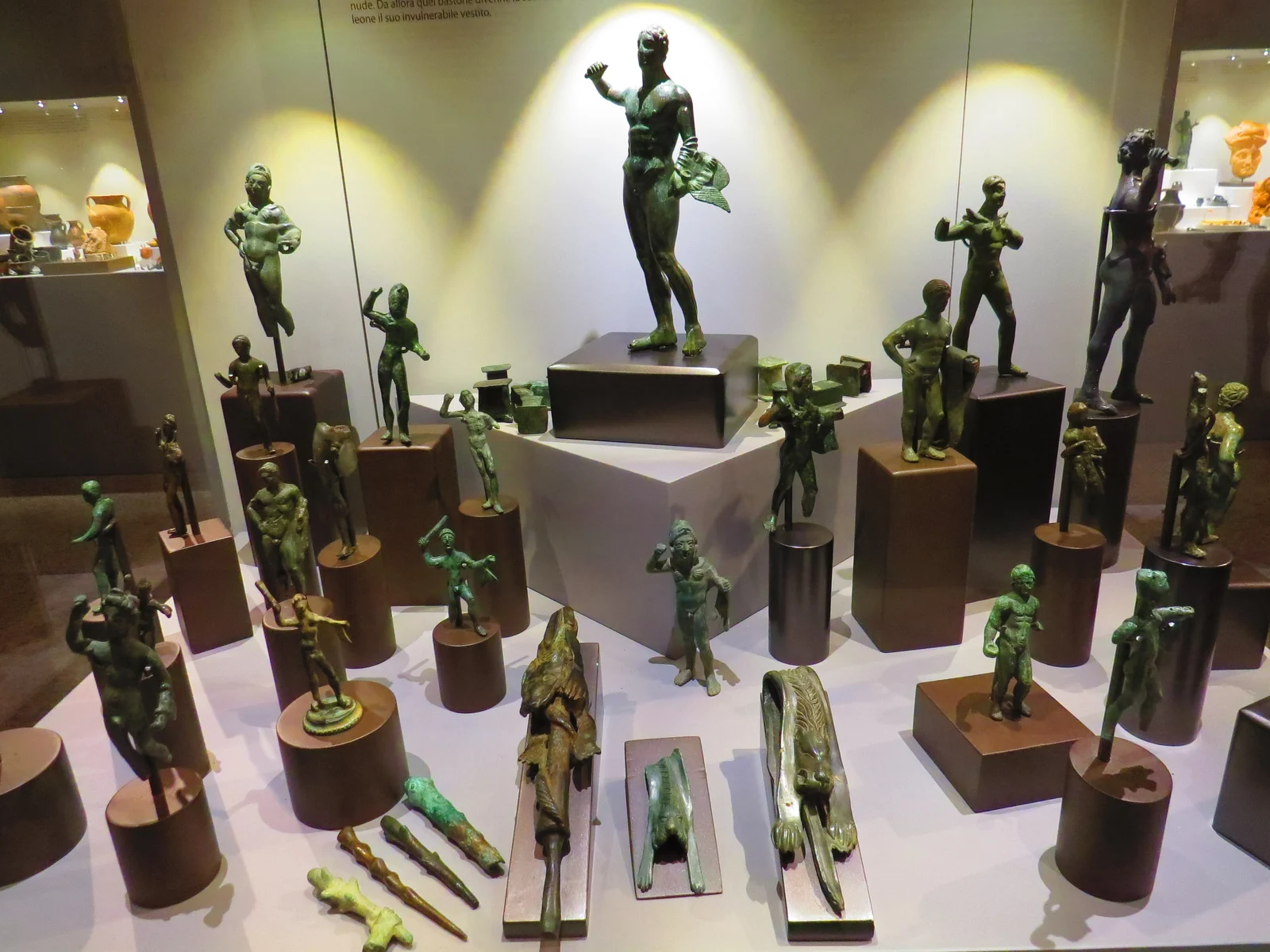
Photo: Gianfranco Vitolo from Sarno (Sa), Italia / Wikimedia Commons — CC BY-SA 2.0 · Resized and converted to WebP.
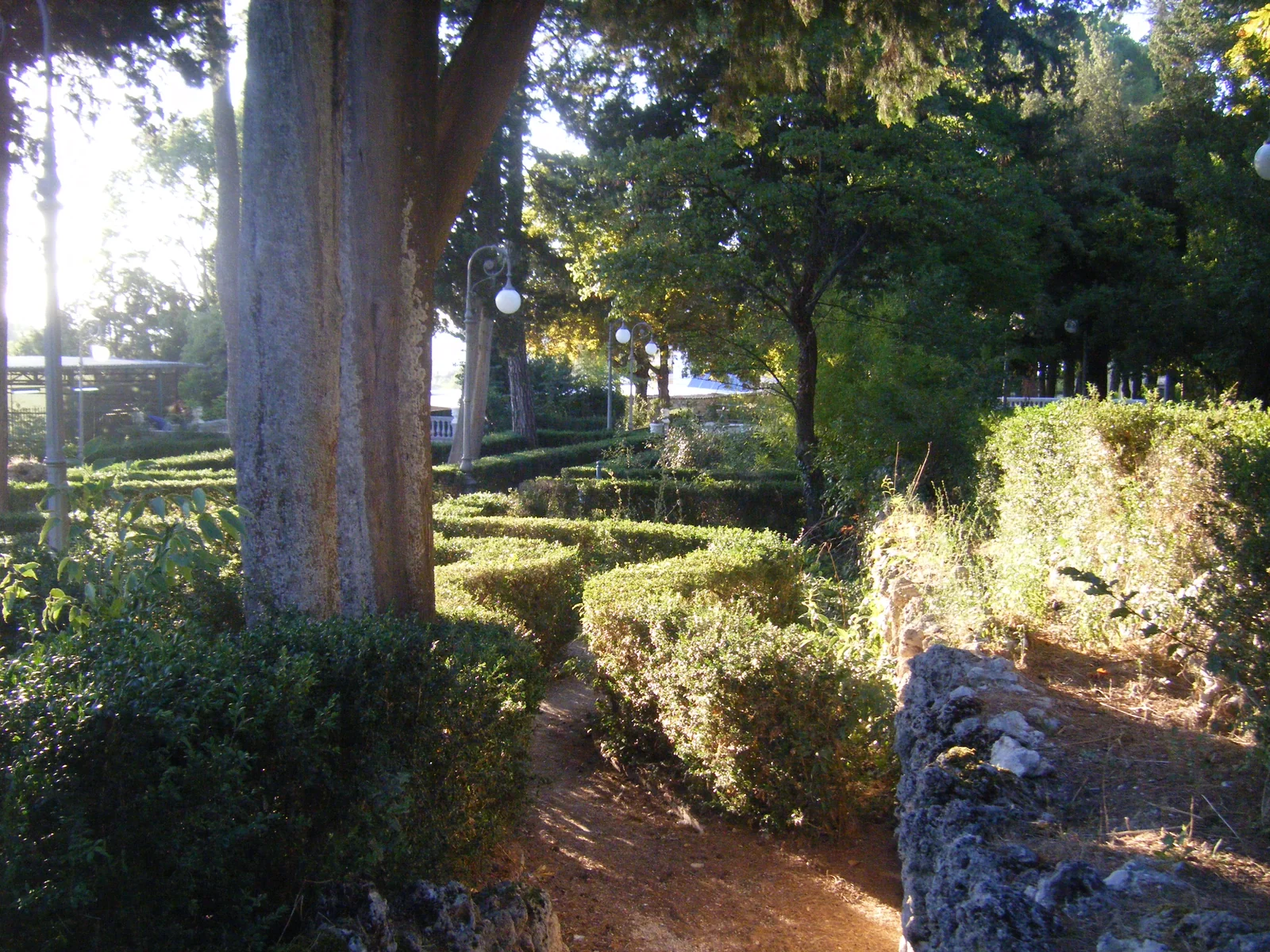
Photo: pms / Wikimedia Commons — CC BY-SA 3.0 · Resized and converted to WebP.
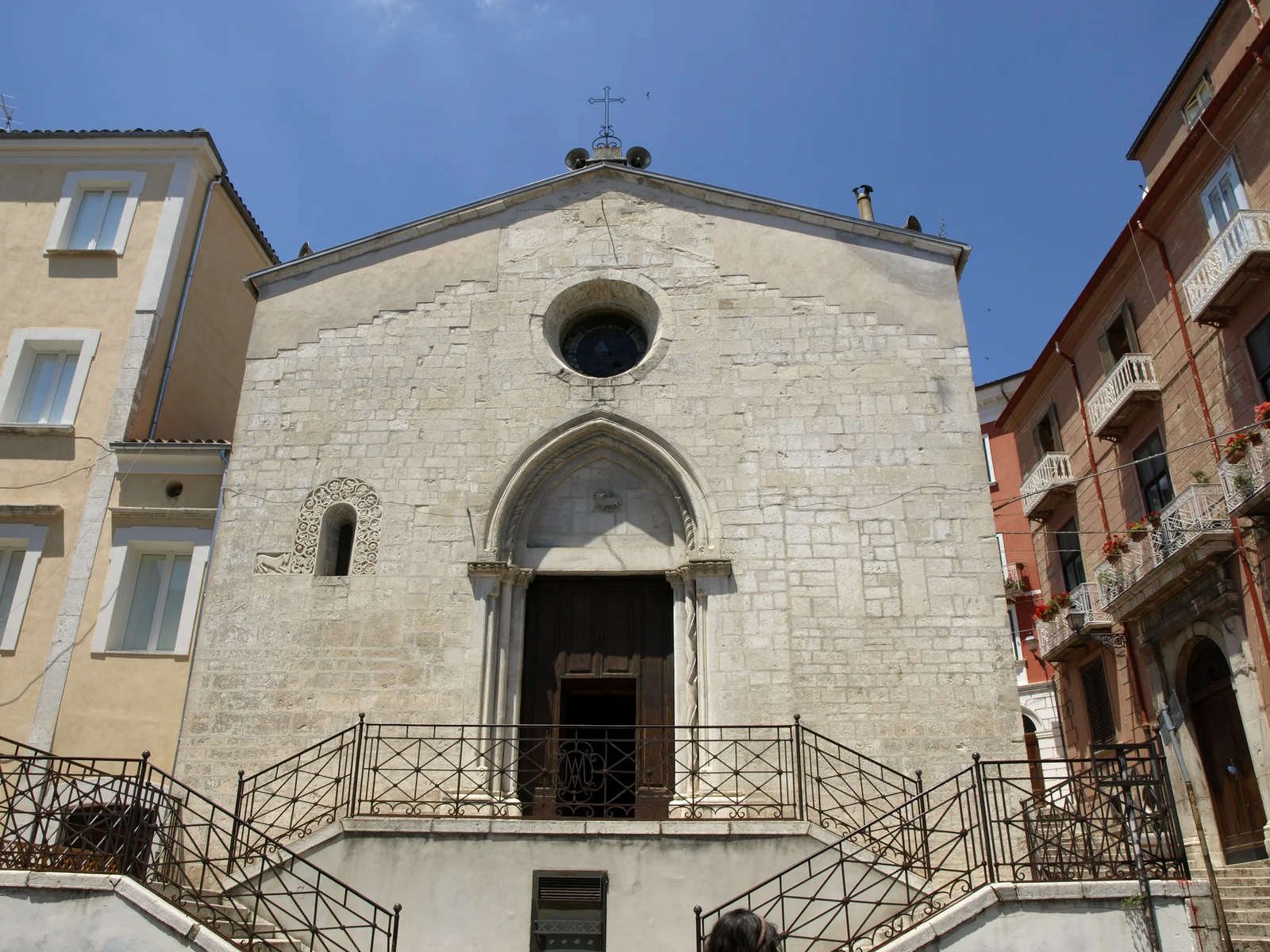
Photo: Itto Ogami / Wikimedia Commons — CC BY 3.0 · Resized and converted to WebP.
When to go
Campobasso can be visited all year: the castle, churches and museums do not depend on the season, while the calendar of traditions gives each time of year a different reason to come.
On 17 January, the feast of Saint Anthony the Abbot, bonfires are lit and animals are blessed in front of the church dedicated to him. On the evening of Good Friday the procession of the dead Christ and Our Lady of Sorrows crosses the streets with a choir of more than 800 people singing "Teco vorrei", set to music by the Campobasso composer Michele De Nigris on a text by Pietro Metastasio: it is the religious event the people of Campobasso feel most deeply. On 31 May the streets of the old town are covered with petal designs for the flower carpet in honour of the Madonna dei Monti, whose statue is carried in procession from the church of Santa Maria Maggiore.
The most awaited day is Corpus Domini Sunday, with the procession of the Misteri. According to the Associazione Misteri e Tradizioni the next one is on 30 May 2027: at 8 am Mass in the museum forecourt, celebrated by the bishop; at 9 the dressing of the figures; at 9.45 the Misteri leave for the city streets; at 1 pm the blessing from the town hall and at 1.30 the return to the museum. The route is about three and a half kilometres long and its most striking stretch is in the old town, where the narrow streets seem to embrace the machines. In all, 76 figures parade, 58 of them children, with 120 band players in five bands and about 270 bearers; at every restart the squad leader shouts "scannétt allért" and strikes the base of the Mistero three times with his staff. The full programme is on the Association's website.
In December, in recent years, the Museo dei Misteri has hosted until Epiphany the nativity scene exhibition curated by Giovanni Teberino, which reached its seventeenth edition in 2025-2026.
Sources: Arcidiocesi di Campobasso-Bojano — Romanic@mente in Cammino (opuscolo, 2025) · Associazione Misteri e Tradizioni — il sito ufficiale della Sfilata dei Misteri a Campobasso · Associazione Misteri e Tradizioni — La sfilata · Associazione Misteri e Tradizioni — I Misteri
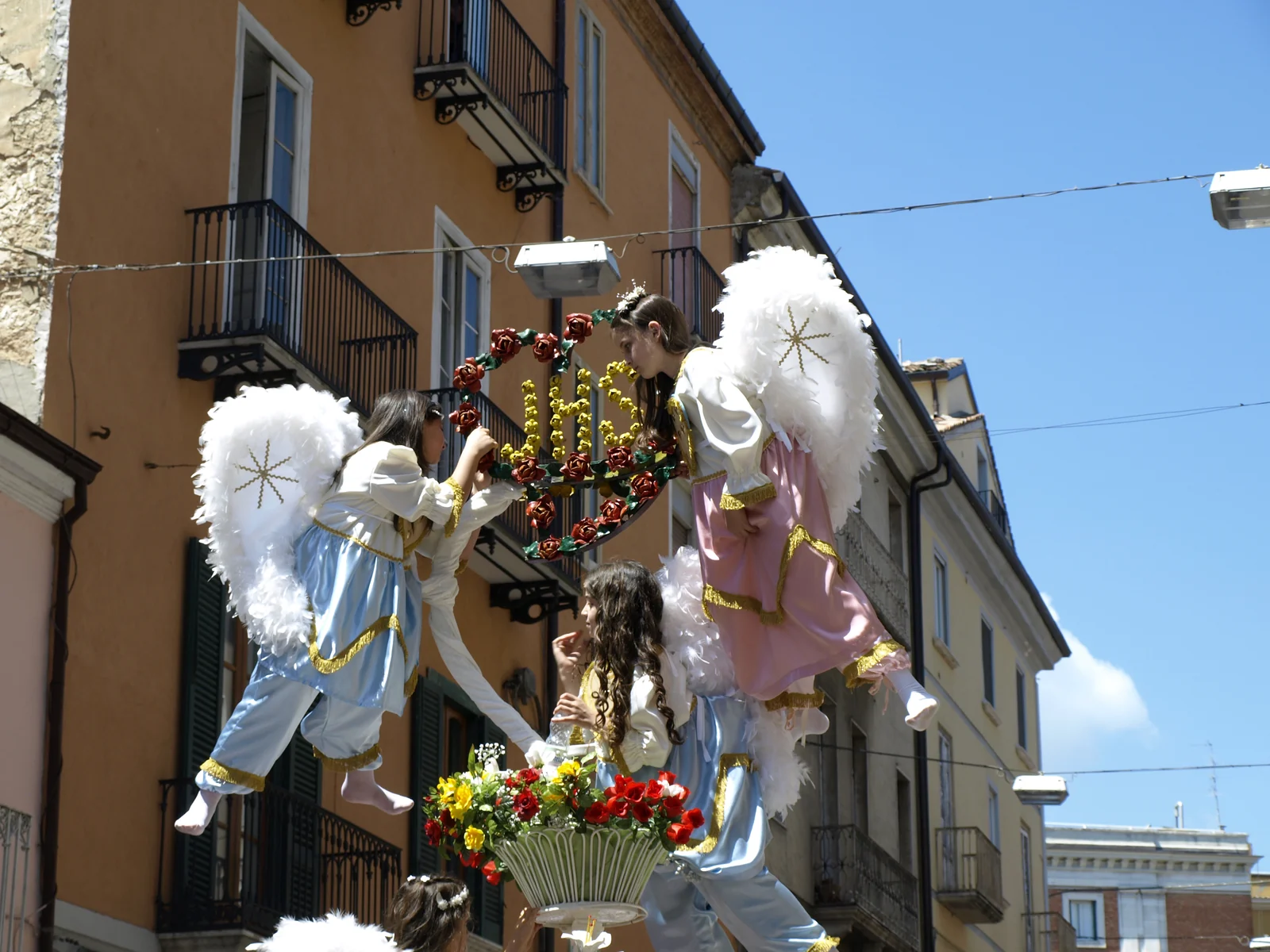
Photo: Itto Ogami / Wikimedia Commons — CC BY 3.0 · Resized and converted to WebP.
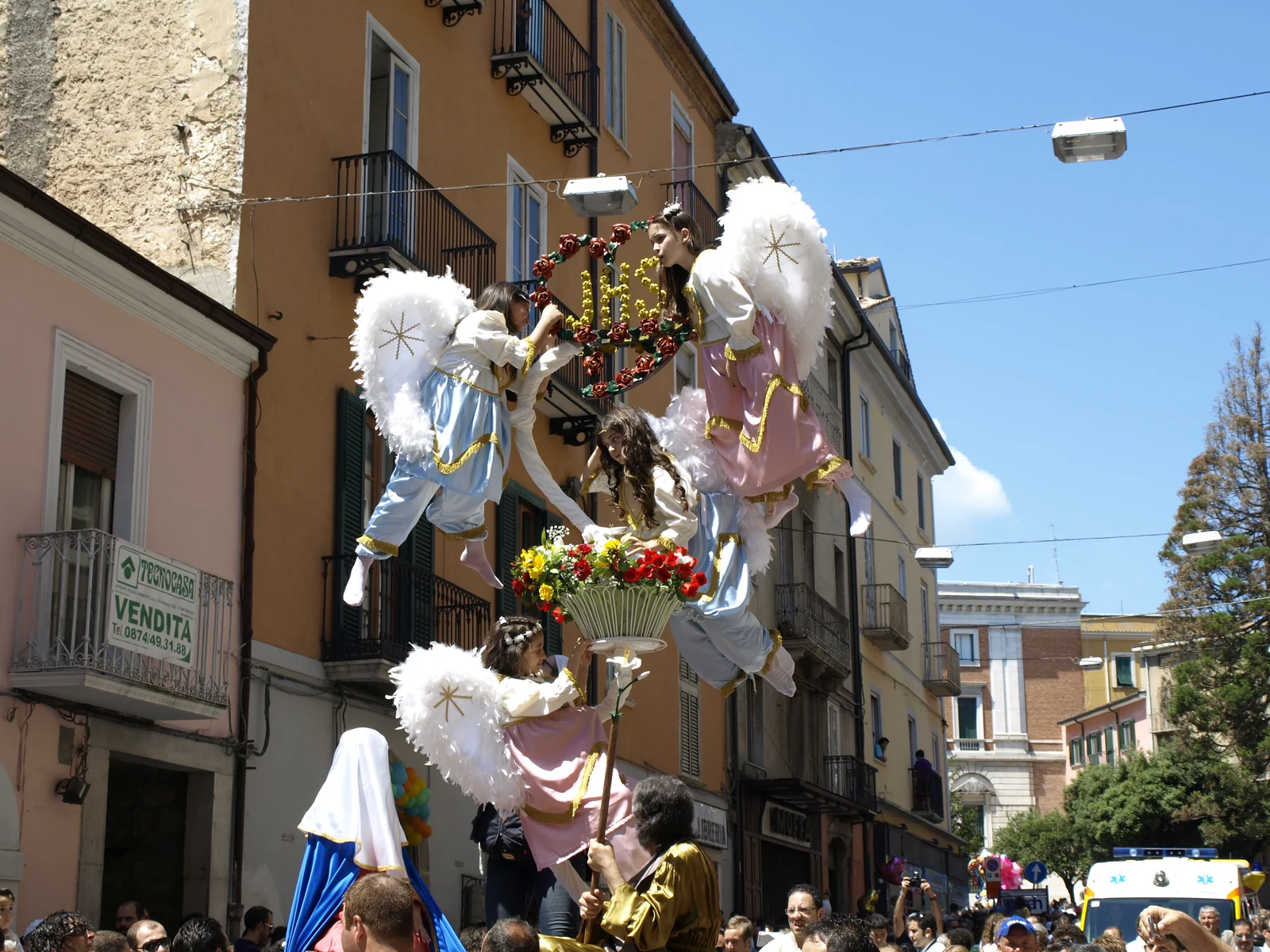
Photo: Itto Ogami / Wikimedia Commons — CC BY 3.0 · Resized and converted to WebP.
Getting there and around
There are no airports in Molise: the Region lists Rome, Naples and Pescara as the nearest, with ground connections from each. By car you arrive on the A1 motorway, exit San Vittore from Rome or Caianello from Naples, or on the A14, exits for Vasto and Termoli, or on the A16, exit Benevento.
By train Campobasso is on the line to Naples; from Rome, the Region notes, the railway reaches Isernia. The RFI station has three passenger tracks, a ticket office, a bar, a newsstand, a bus stop, bicycle parking and charging points for electric cars. It offers assistance to people with disabilities and reduced mobility through the Naples Sala Blu, to be requested up to twelve hours in advance; the platforms are reached by a lift, in service from 4.30 am to 9 pm, and by a tactile path from the entrance, while there are no raised platforms for boarding. There are accessible toilets and reserved parking spaces.
By coach the Azienda Trasporti Molisana links Rome and Campobasso. The Region's portal gives the coach departure points as the forecourt of Tiburtina station in Rome, Piazza Umberto in Naples and the station forecourt in Pescara.
In town it is best to walk between the lower town and the old town, allowing for the climbs and the stairways that lead up to the castle.
The official website of the Comune di Campobasso, registered in IndicePA, the index of the digital addresses of Italy’s public administrations, is the reference for the town council’s offices, opening hours and news. Its address is listed among the sources of this section. For tourist information on the region, the Tourism Department of the Molise Region answers at Via Milano 15 in Campobasso, on +39 0874 437821 and +39 0874 437806.
Sources: Regione Molise, Visit Molise — Come arrivare in Molise (con i contatti dell'Assessorato al turismo) · RFI — Stazione di Campobasso · ATM, Azienda Trasporti Molisana — linea Roma-Campobasso · Italia.it (Ministero del Turismo) — Campobasso · Comune di Campobasso, sito istituzionale · IndicePA (AgID), Indice dei domicili digitali delle pubbliche amministrazioni: dataset Enti
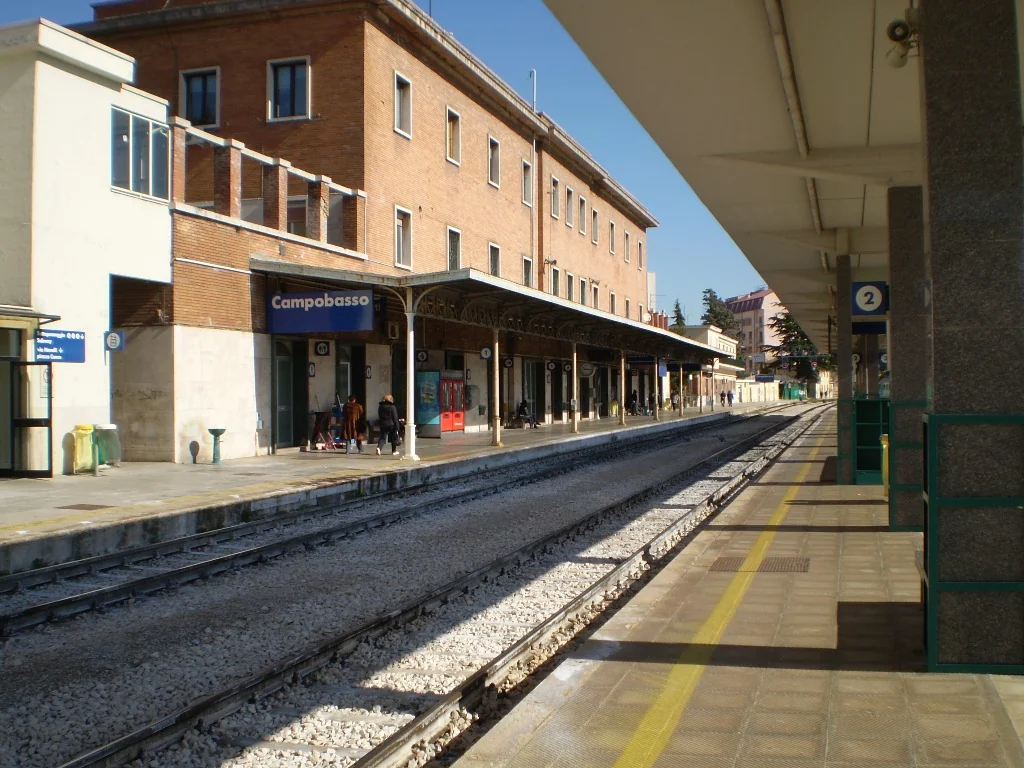
Photo: Mentnafunangann / Wikimedia Commons — CC BY-SA 3.0 · Resized and converted to WebP.
Where to stay
To stay in Campobasso you choose between its two towns. The lower town, the Città Murattiana, gathers public buildings, shops and squares, close to the cathedral, the town hall and the transport stops; in the old town below the castle you sleep among narrow lanes and stairways, a few steps from the Romanesque churches, but with the climbs to reckon with.
In the Ministry of Tourism’s national database of accommodation (BDSR), on 12 October 2026, Campobasso had 167 establishments with a verified national identification code (CIN): 5 hotel-type establishments, 38 non-hotel establishments and 124 other establishments.
On Corpus Domini the procession of the Misteri crosses the city between two walls of people, starting from the museum in Via Trento and passing the town hall and the old town: anyone coming for the Misteri finds the city full and does well to arrange their stay early.
Sources: Italia.it (Ministero del Turismo) — Campobasso · Ministero della Cultura, Catalogo generale dei beni culturali — Chiesa della Santissima Trinità, portale e facciata (scheda 14/00006579) · Associazione Misteri e Tradizioni — La sfilata · Ministero del Turismo – Banca Dati Strutture Ricettive (dashboard pubblica)
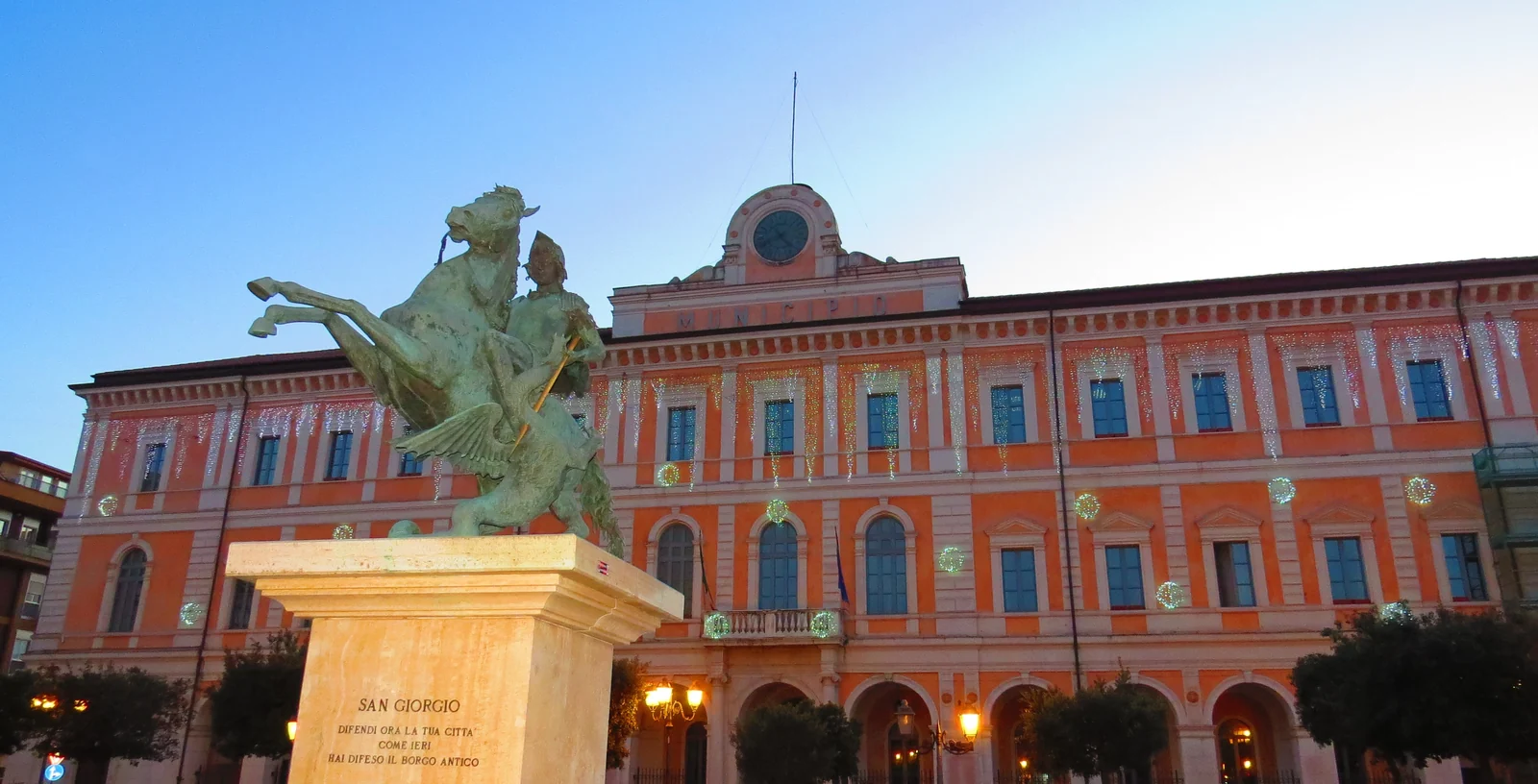
Photo: Gianfranco Vitolo from Sarno (Sa), Italia / Wikimedia Commons — CC BY-SA 2.0 · Resized and converted to WebP.
Nearby
Among the places Apulica already covers, the nearest are Sepino (about 17 km), Frosolone (about 19 km) and Pietrabbondante (about 30 km): straight-line distances between the centres of the municipal territories.
Sepino is the natural complement to the Museo Sannitico: the museum's second floor displays finds from the Roman town, and the Ministry lists a combined ticket for the museum and the archaeological park. The museum also tells the story of the Bojano plain, with the tombs of early medieval Bulgar horsemen; Bojano is also the town of fior di latte mozzarella, the tourism portal notes.
Those with time to walk can follow "Romanic@mente in Cammino" beyond the city: after the stage from Campobasso to Matrice and Campolieto, the Archdiocese's route continues towards Petrella Tifernina and then towards Montagano, Limosano and Sant'Angelo Limosano, among Romanesque churches, stretches of drovers' tracks and woodland paths.
Sources: ISTAT/Openpolis, confini comunali della regione Molise (CC BY 4.0, ISTAT/Openpolis) · Ministero della Cultura — Museo archeologico nazionale di Campobasso (Museo Sannitico) · Italia.it (Ministero del Turismo) — Molise, piccolo e gustoso scrigno di pietanze e di prodotti «identitari» · Arcidiocesi di Campobasso-Bojano — Romanic@mente in Cammino (opuscolo, 2025)
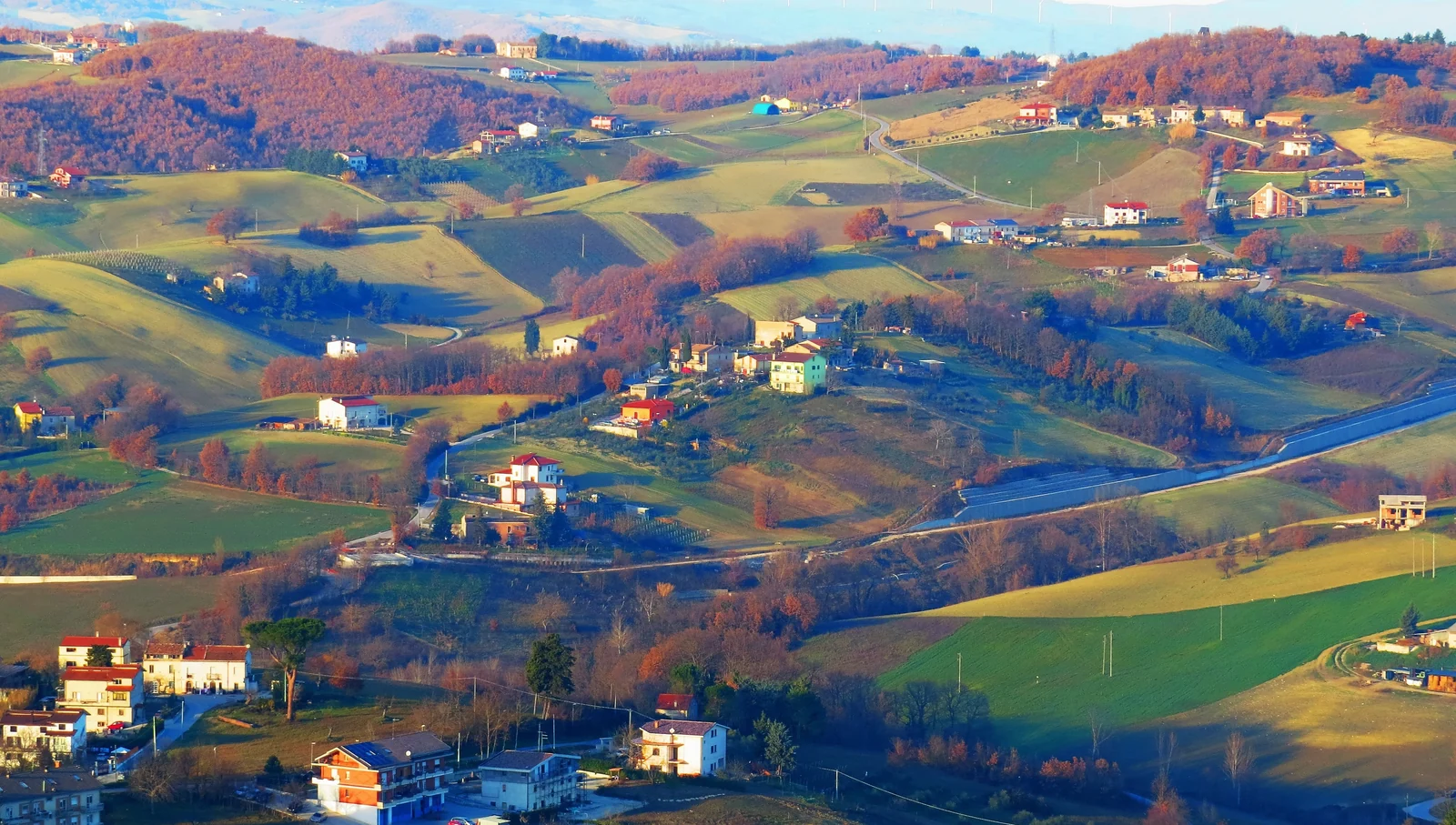
Photo: Gianfranco Vitolo from Sarno (Sa), Italia / Wikimedia Commons — CC BY-SA 2.0 · Resized and converted to WebP.
Where to stay
In the municipality of Campobasso the national database of the Ministry of Tourism lists 167 accommodation businesses with a verified CIN code: 5 hotels, 38 other licensed accommodation and 124 other types such as B&Bs and private rentals.
Ask Apulica for a stay in Campobasso We reply shortly, within a few hours at most, with a proposal for you to consider.
Sources: Ministero del Turismo – Banca Dati Strutture Ricettive (dashboard pubblica), 2026-10-12
YOUR JOURNEY
How to shape a journey here
We can organise a guided visit of the city, from the castle to the museums, or a trip for Misteri Sunday, with transfers to Sepino, Bojano and central Molise. For a trip, a guide or a transfer you can write to Apulica with the button below.
Plan your tripKeep exploring
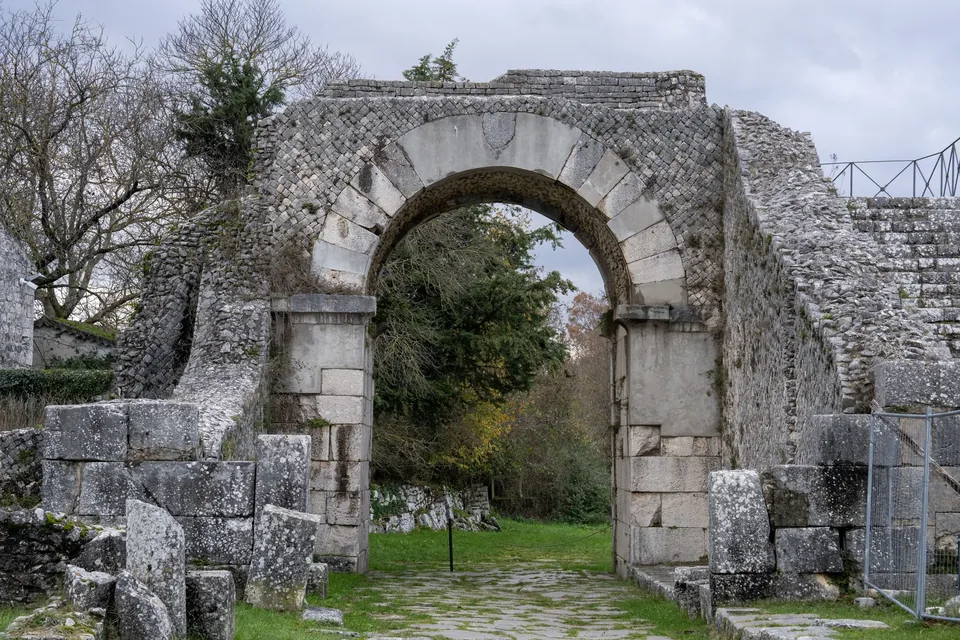
Sepino
The Altilia-Saepinum archaeological area, the medieval village of Sepino and Samnite Terravecchia above the Tammaro valley.
Read the guide →Photo: Stapinium / Wikimedia Commons — CC BY 4.0 · Resized and converted to WebP.

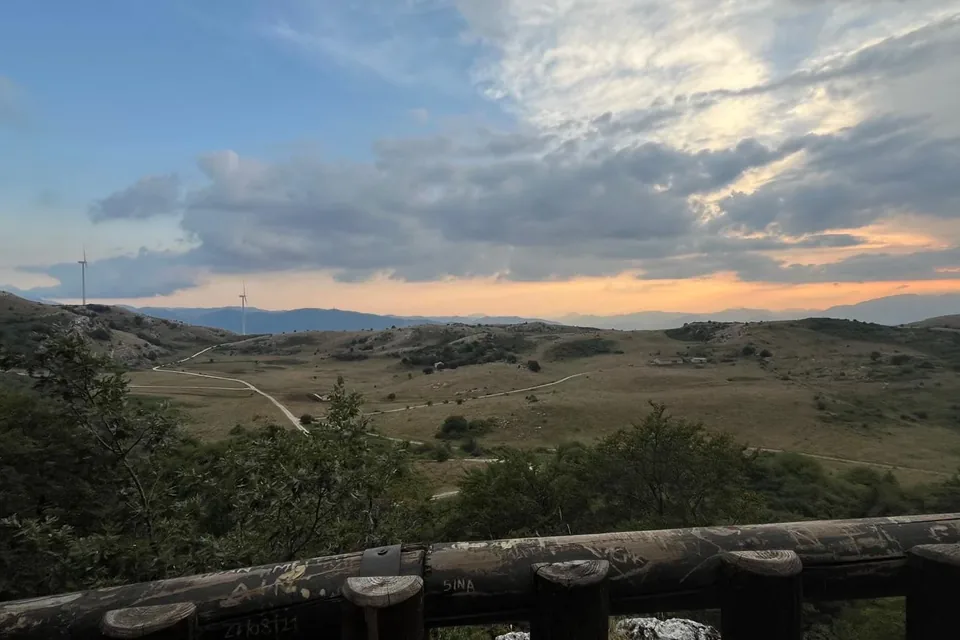
Frosolone
A village of the Molise Apennines among pastures and beech woods, with a tradition of scissors and knives and the arrival of transhumance from Puglia.
Read the guide →Photo: Spivi14 / Wikimedia Commons — CC BY-SA 4.0 · Resized and converted to WebP.

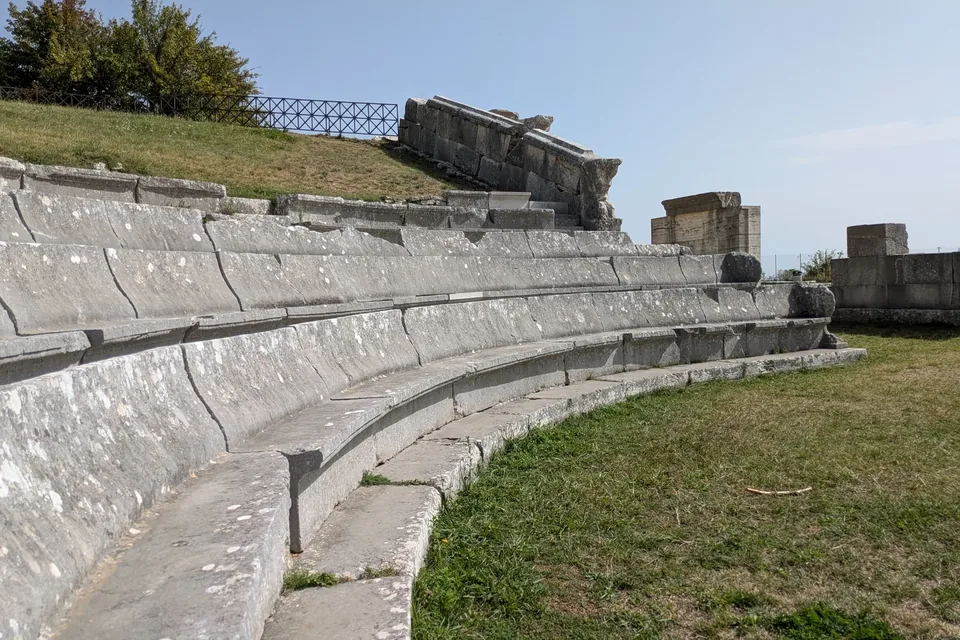
Pietrabbondante
The Italic sanctuary on the slopes of Monte Saraceno: the assembly cavea, the temples and the Samnites’ Domus publica.
Read the guide →Photo: Accurimbono / Wikimedia Commons — CC BY-SA 4.0 · Resized and converted to WebP.

Larino
Larino (CB), Molise: 6,281 residents, 88.77 km². The official facts of the municipality, its town council website and its registered accommodation. The cathedral of 1319 with its rose window, the Roman amphitheatre of Larinum, the Diocesan Museum, the feast of San Pardo with its flower-covered carts drawn by oxen and the “Molise” PDO oil from the Gentile di Larino olive.
Read the guide →Photo: Termauri / Wikimedia Commons — CC BY-SA 4.0 · Resized and converted to WebP.

“Come to Campobasso as a guest, not as a tourist: that is how these places truly let you know them.”