

Why go
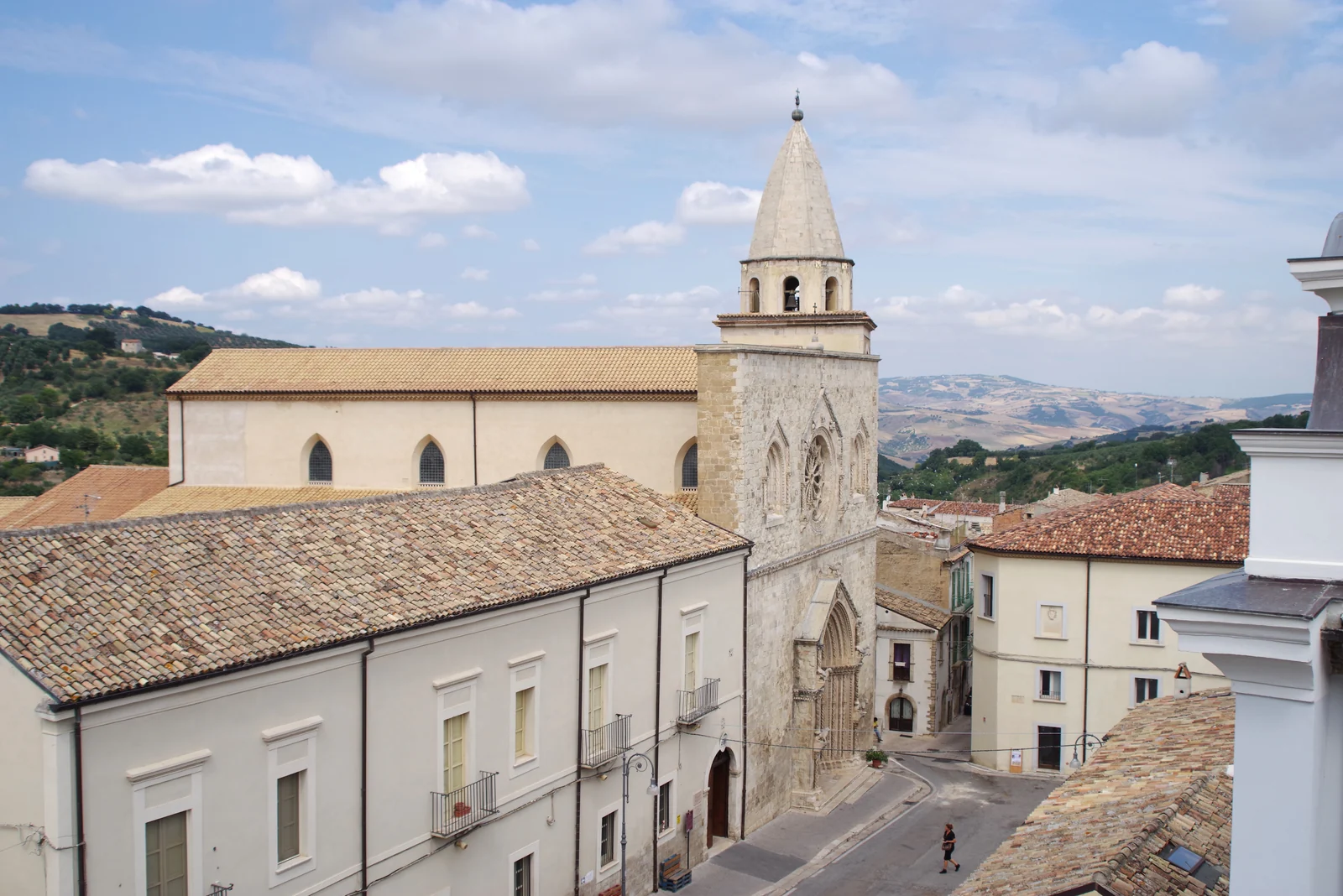
People come to Larino for two towns, one above the other. On the plain lies Larinum, the Roman municipium whose archaeological area is looked after by the Molise heritage superintendency: the amphitheatre of the Flavian age, partly cut into the tufa bedrock, and the mosaics of its houses and baths. On the hill stands the medieval town, which grew up around the cathedral of Santa Maria Assunta e San Pardo, inaugurated in 1319 according to the inscription on the portal’s architrave.
The cathedral’s façade, with its Gothic portal, the Crucifixion lunette and the thirteen-spoke rose window, faces Piazza Duomo, where the Palazzo Ducale, home of the town council and the Civic Museum, and the Bishop’s Palace with the Diocesan Museum also stand. Every year, from 25 to 27 May, the feast of San Pardo fills the streets with more than a hundred carts covered in flowers, many of them drawn by oxen. Larino also gives its name to an olive variety, the Gentile di Larino, one of those of the “Molise” PDO extra virgin olive oil.
Sources: Ministero della cultura, Soprintendenza Archeologia, Belle Arti e Paesaggio per il Molise — Area archeologica di Larino · Diocesi di Termoli-Larino — Inaugurato a Larino il nuovo museo diocesano (29 maggio 2022) · CEI, BeWeB — Cattedrale di Larino: Chiesa di Santa Maria Assunta e San Pardo · Ministero della cultura, Luoghi della cultura — Palazzo ducale di Larino (Museo civico) · Regione Molise — San Pardo, a Larino l’incantevole Carrese dei fiori (maggio 2022) · Diocesi di Termoli-Larino — San Pardo · Diocesi di Termoli-Larino — San Pardo, Patrono di Larino e diocesi: storia, fede e folklore (22 maggio 2023) · MASAF — Disciplinare di produzione dell’olio extravergine di oliva DOP «Molise» (GU n. 193 del 21 agosto 2003)
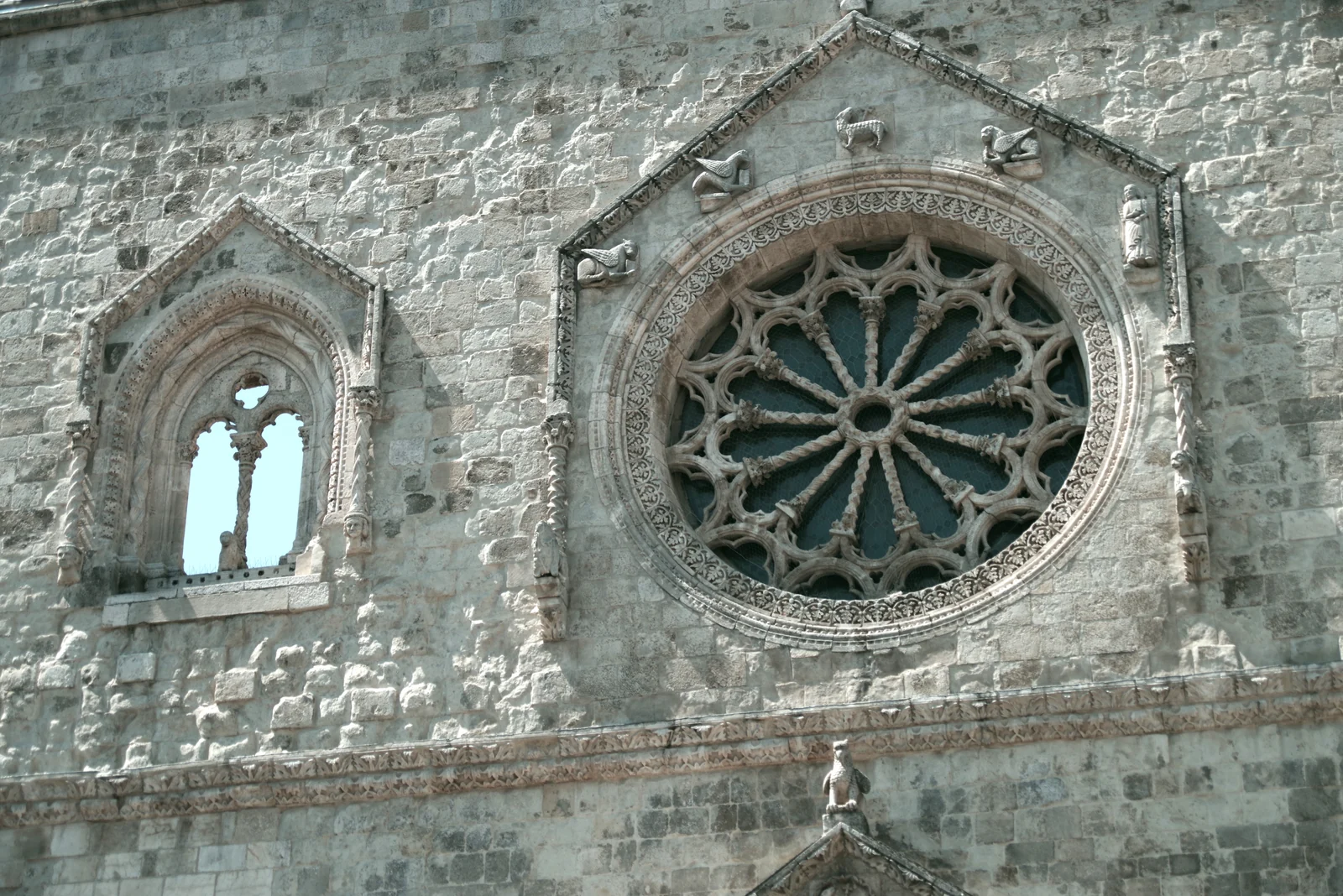
Photo: Termauri / Wikimedia Commons — CC BY-SA 4.0 · Resized and converted to WebP.
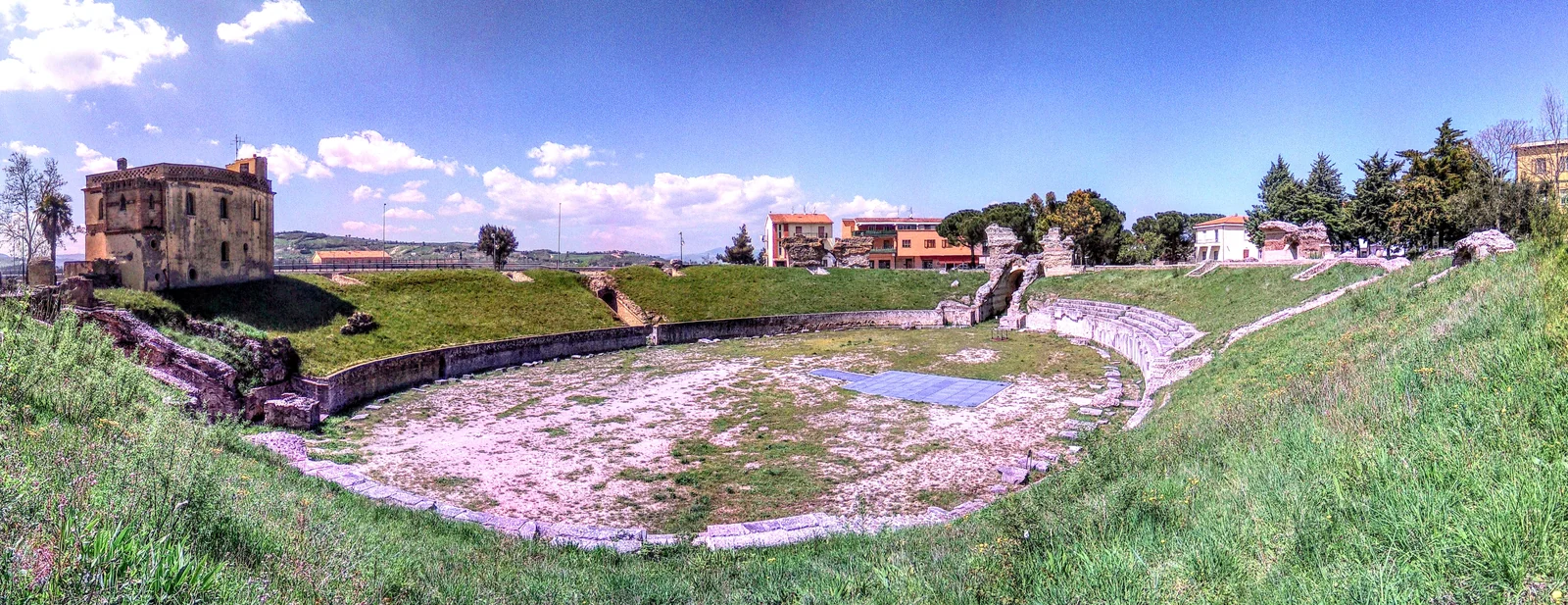
Photo: Trocche100 / Wikimedia Commons — CC BY 4.0 · Resized and converted to WebP.
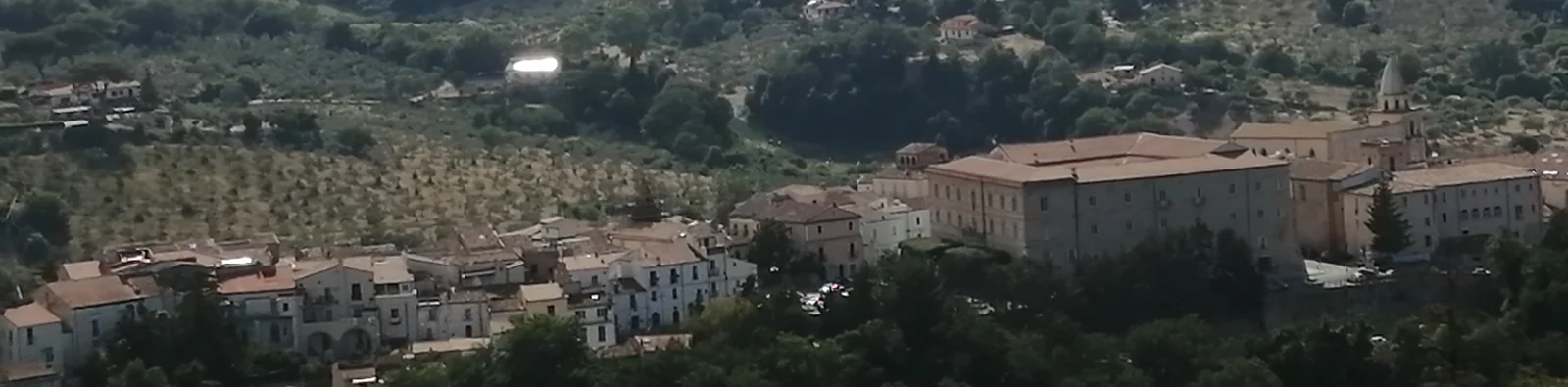
Photo: Anadetti / Wikimedia Commons — CC BY-SA 4.0 · Resized and converted to WebP.
The municipality at a glance
Larino is a municipality in the province of Campobasso, in Molise. Its ISTAT code is 070031. On 1 January 2025 it had 6,281 residents. The municipal territory covers 88.77 km² and ranges from 20 to 605 metres above sea level; the town hall stands at about 350 metres.
The town has two parts: the medieval town on the hill, which grew up around the cathedral after 842, and below it the area of the Roman town of Larinum, with the amphitheatre. According to the superintendency, in antiquity Larino already stood where the roads linking the Adriatic coast with inland Samnium met.
Sources: ISTAT, Codici statistici delle unità amministrative territoriali: elenco dei comuni al 21 febbraio 2026 · ISTAT, Popolazione residente per età, sesso e stato civile al 1° gennaio 2025 (POSAS) · ISTAT, Principali statistiche geografiche sui comuni: superficie e altimetria al 31 dicembre 2021 · CEI, BeWeB — Cattedrale di Larino: Chiesa di Santa Maria Assunta e San Pardo · Ministero della cultura, Soprintendenza Archeologia, Belle Arti e Paesaggio per il Molise — Area archeologica di Larino
History
According to the superintendency, the site was already frequented in prehistory. The first layout of the town, of the archaic age (7th-6th century BC), was regularised in the 4th century BC with a grid plan known as Hippodamian. Larino was an important centre in the territory of the Frentani, in contact with the Daunians, where the roads between the Adriatic coast and inland Samnium met. Between the 3rd and 2nd centuries BC it had its own mint, with coins inscribed in Greek and in the Oscan language.
An ally of Rome from the 3rd century BC, it became a municipium after the Social War (91-88 BC). In 66 BC Cicero delivered the Pro Cluentio in defence of a prominent citizen of Larinum accused of poisoning a rival: the speech, the superintendency says, is a window on the society of the municipium. From the mid-1st century AD the forum area was given monumental buildings, with a temple perhaps dedicated to Mars; in the Flavian age (AD 69-96) the amphitheatre was built.
After a slow decline, the town on the plain was abandoned in the 9th century, when Saracen raids drove the inhabitants up to the hills. According to tradition, on 26 May 842 the people of Larino brought into the town, on a cart drawn by oxen, the body of San Pardo, found near Lucera; the medieval town grew up around the new cathedral. The diocese of Larino is already recorded at the end of the 5th century in a letter of Pope Gelasius; in 1986 it merged with that of Termoli into the diocese of Termoli-Larino.
On 26 January 1564 Bishop Belisario Balduino, back from the Council of Trent, opened the diocesan seminary in Larino, which the diocese remembers as the first founded in the Catholic world. In the eighteenth century Bishop Giovanni Andrea Tria, in office from 1726 to 1741, renewed the cathedral and wrote the “Memorie storiche civili ed ecclesiastiche della città e diocesi di Larino”, printed in Rome in 1744.
Sources: Ministero della cultura, Soprintendenza Archeologia, Belle Arti e Paesaggio per il Molise — Area archeologica di Larino · CEI, BeWeB — Cattedrale di Larino: Chiesa di Santa Maria Assunta e San Pardo · Diocesi di Termoli-Larino — San Pardo, Patrono di Larino e diocesi: storia, fede e folklore (22 maggio 2023) · Diocesi di Termoli-Larino — Il culto di San Pardo, Patrono principale di Larino e diocesi, nei secoli (22 maggio 2021) · Diocesi di Termoli-Larino — Inaugurato a Larino il nuovo museo diocesano (29 maggio 2022) · Comune di Larino — Festa di San Pardo (edizione 2025; aggiornato il 15 febbraio 2026)
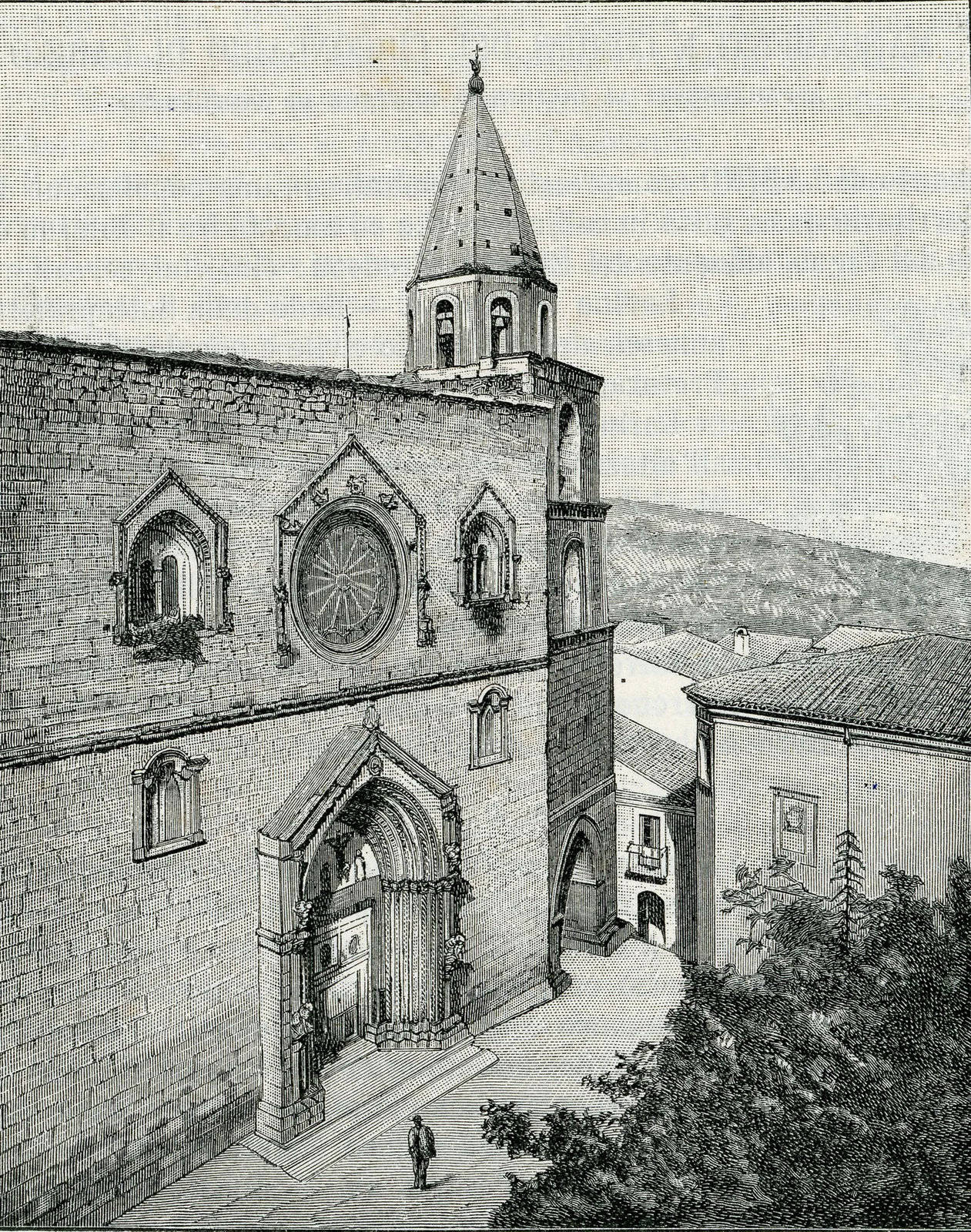
Photo: Unknown author / Wikimedia Commons — Public domain · Resized and converted to WebP.
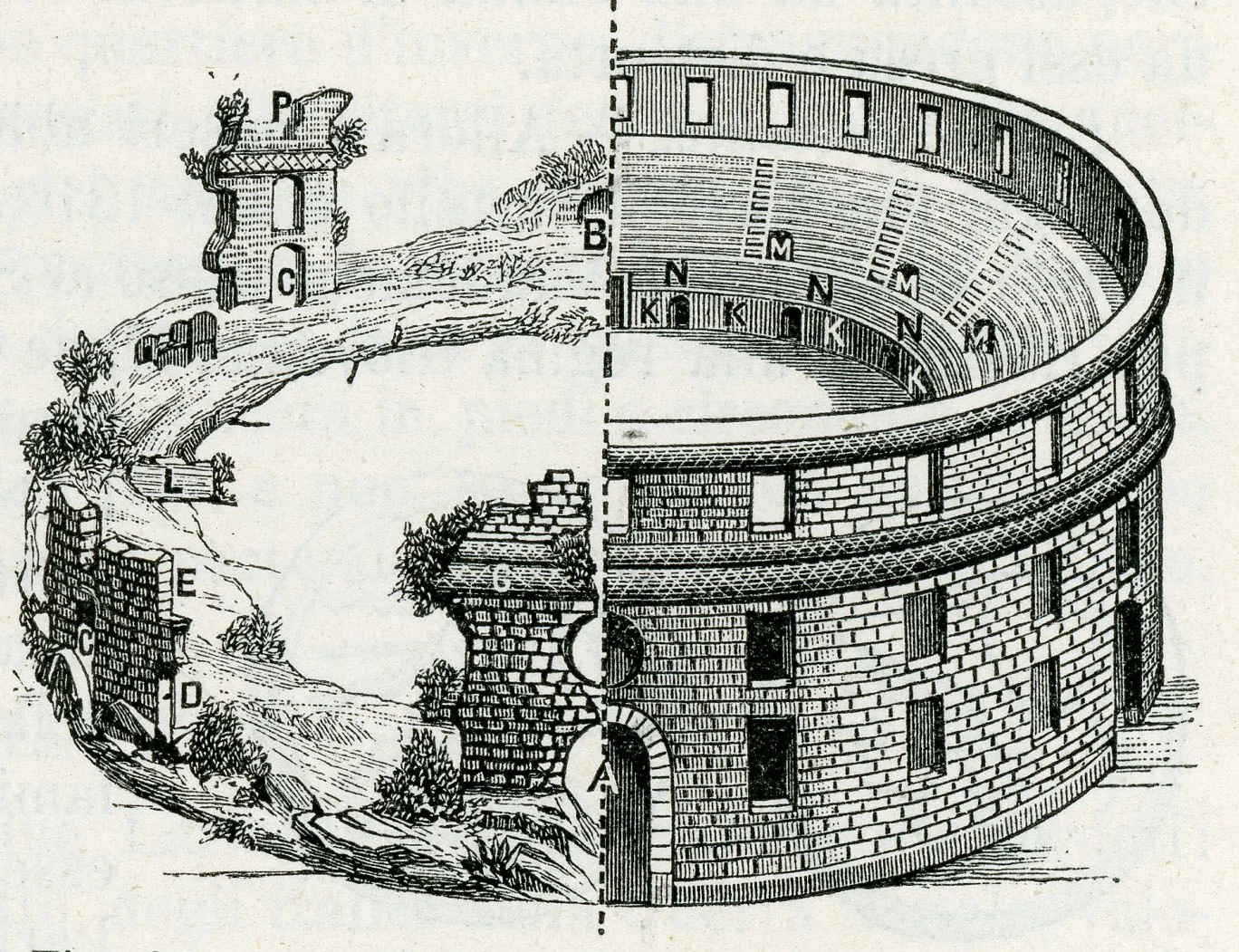
Photo: Unknown author / Wikimedia Commons — Public domain · Resized and converted to WebP.
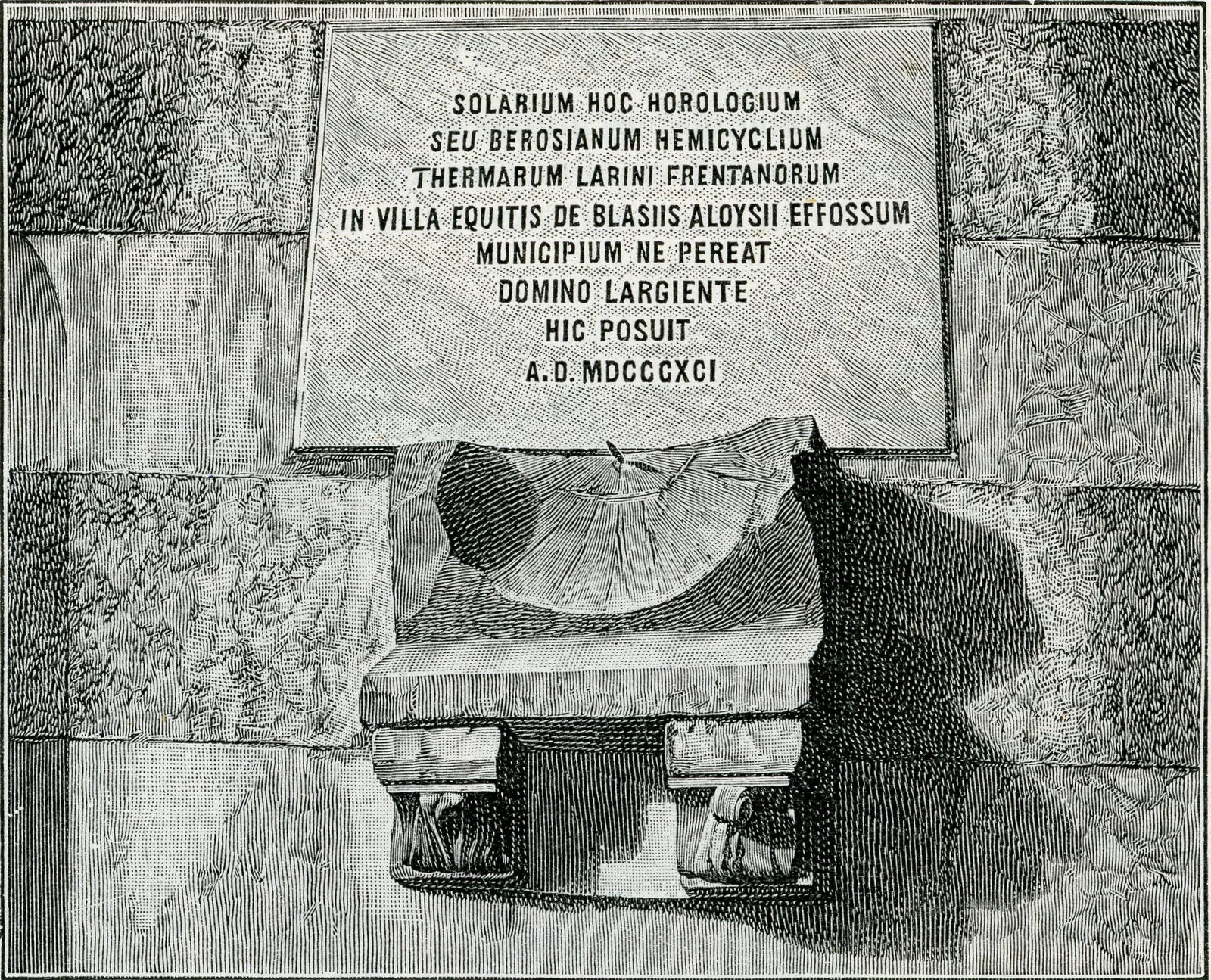
Photo: Unknown author / Wikimedia Commons — Public domain · Resized and converted to WebP.
What to see
The cathedral of Santa Maria Assunta e San Pardo stands in Piazza Duomo, at the heart of the medieval town. It was built between the late 13th and early 14th centuries over the remains of an early medieval building, following the Gothic models of Cistercian architecture; the façade is set at an angle to the axis of the church. The pointed portal has columns with lions and griffins and a lunette with Christ crucified between the Virgin and Saint John and an angel placing the crown on his head; above it is the thirteen-spoke rose window between two twin-light windows opened in the seventeenth century. The bell tower rests on a pointed arch of 1451 and was completed in 1523.
Inside are three naves on piers, fourteenth-century frescoes, including fragments of an Annunciation, a 15th-century crypt, a baptismal font of the 11th-12th century and the bishop’s throne of 1728. In the nineteenth century almost all the Baroque additions were removed to restore the Gothic appearance; in 1928 the church was given the title of minor basilica. The relics of San Pardo lie beneath the high altar.
The “Giovanni Andrea Tria” Diocesan Museum is in the bishop’s palace, at Piazza del Duomo 25: four rooms, also linked by a lift, with works from the 14th to the 19th century, among them a fourteenth-century polychrome wooden statue, canvases by Francesco Solimena, Nicola Visso and Paolo Gamba, more than three hundred liturgical vestments, a silver arm-shaped reliquary of 1492 and a tower clock of 1785. The visit includes the cathedral and the church of San Francesco, from the early fourteenth century, with the Immaculate Conception by Giacomo Colombo and the dome frescoed in 1747 by Paolo Gamba.
The archaeological area, entered from Via Dante Alighieri 5 by Villa Zappone, keeps the arena of the amphitheatre with its podium, the lower seating, some vomitoria and the corridor of the first tier; near the arena stood baths with mosaics of geometric patterns, sea creatures and fantastic animals, and a Republican-era house has yielded the mosaic of groupers and octopuses, on view in the area. Admission is free. In the Palazzo Ducale the Civic Museum houses the permanent archaeological exhibition “Ars et Ingenium”, with objects from the 10th century BC to the 4th century AD and the Roman polychrome mosaics, among them the she-wolf suckling Romulus and Remus, of the 3rd century AD.
Sources: CEI, BeWeB — Cattedrale di Larino: Chiesa di Santa Maria Assunta e San Pardo · Diocesi di Termoli-Larino — Inaugurato a Larino il nuovo museo diocesano (29 maggio 2022) · Diocesi di Termoli-Larino — Il culto di San Pardo, Patrono principale di Larino e diocesi, nei secoli (22 maggio 2021) · Ministero della cultura, Soprintendenza Archeologia, Belle Arti e Paesaggio per il Molise — Area archeologica di Larino · Ministero della cultura, Luoghi della cultura — Palazzo ducale di Larino (Museo civico)
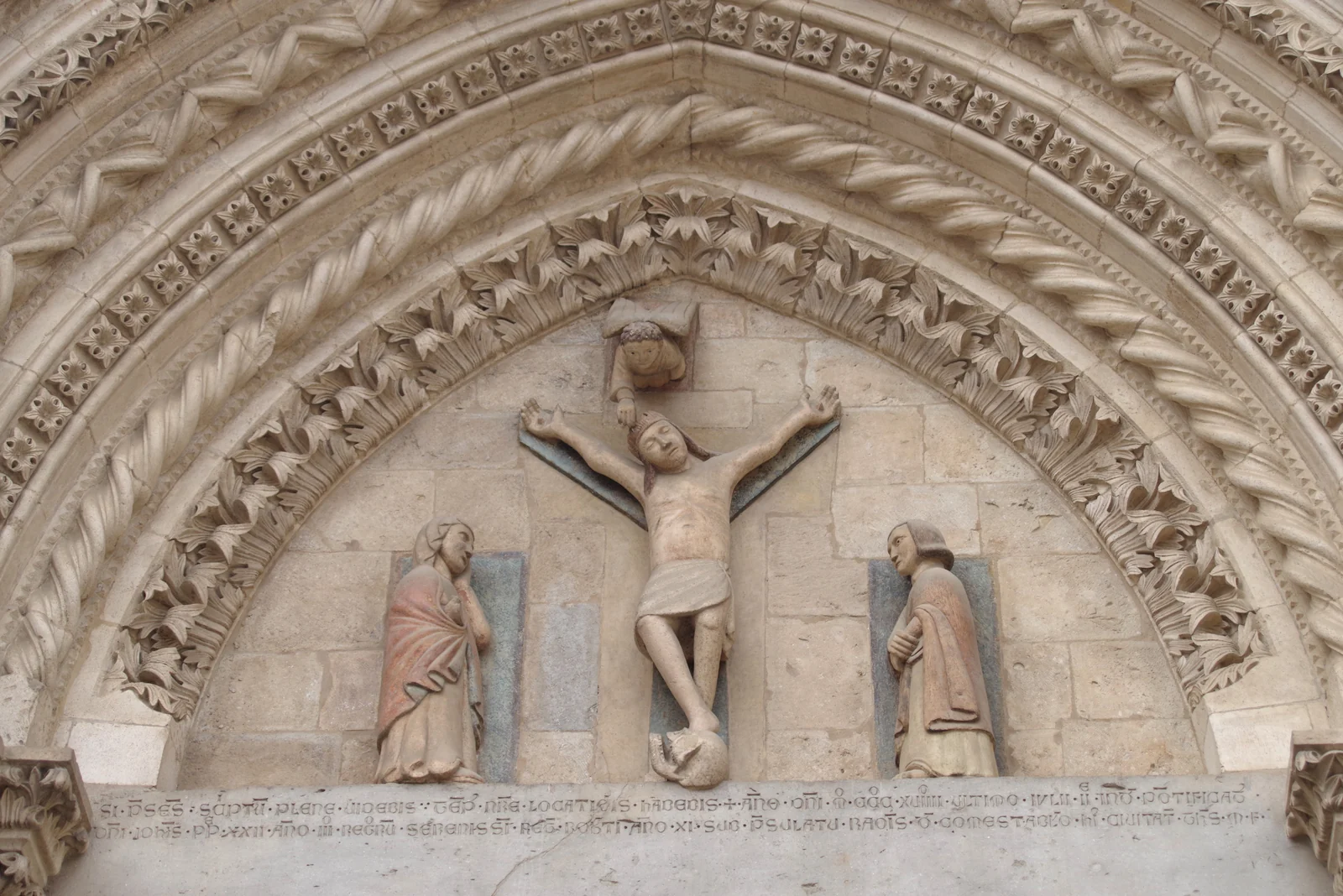
Photo: Termauri / Wikimedia Commons — CC BY-SA 4.0 · Resized and converted to WebP.
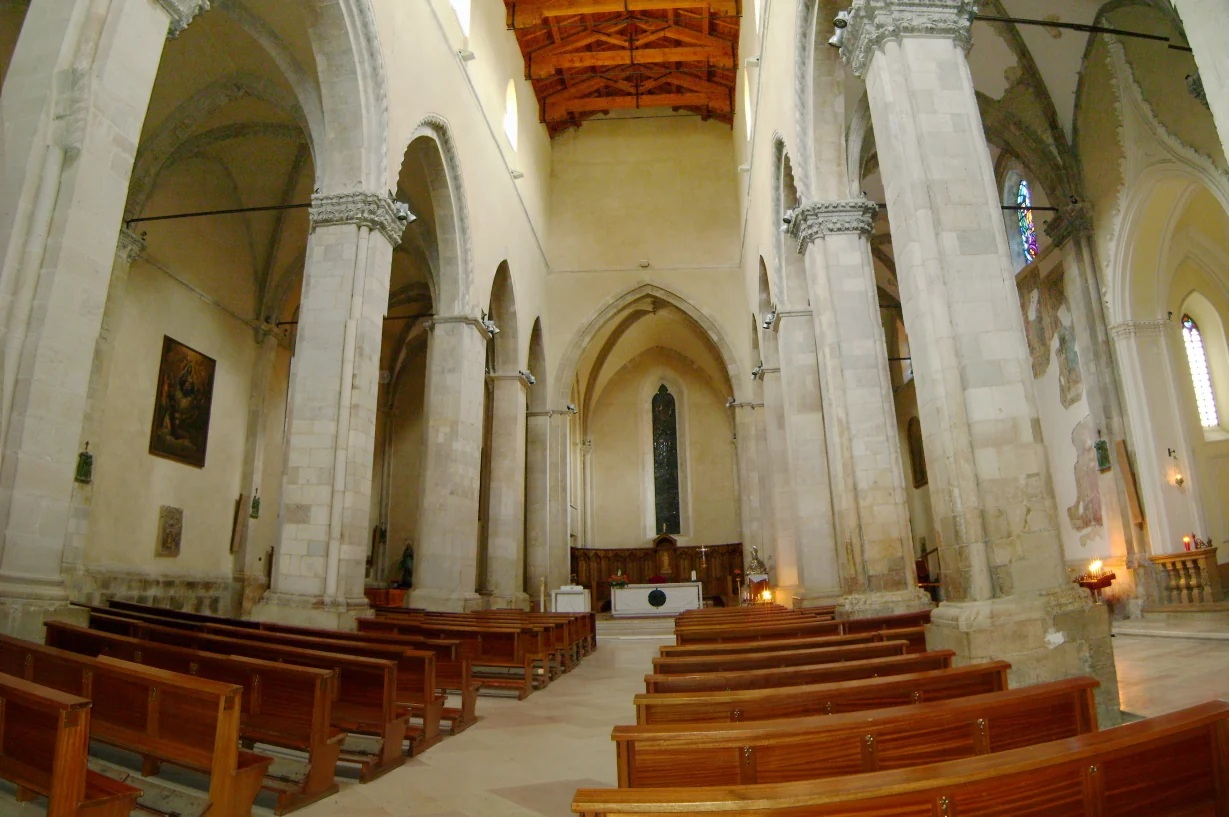
Photo: Zitumassin / Wikimedia Commons — Public domain · Resized and converted to WebP.
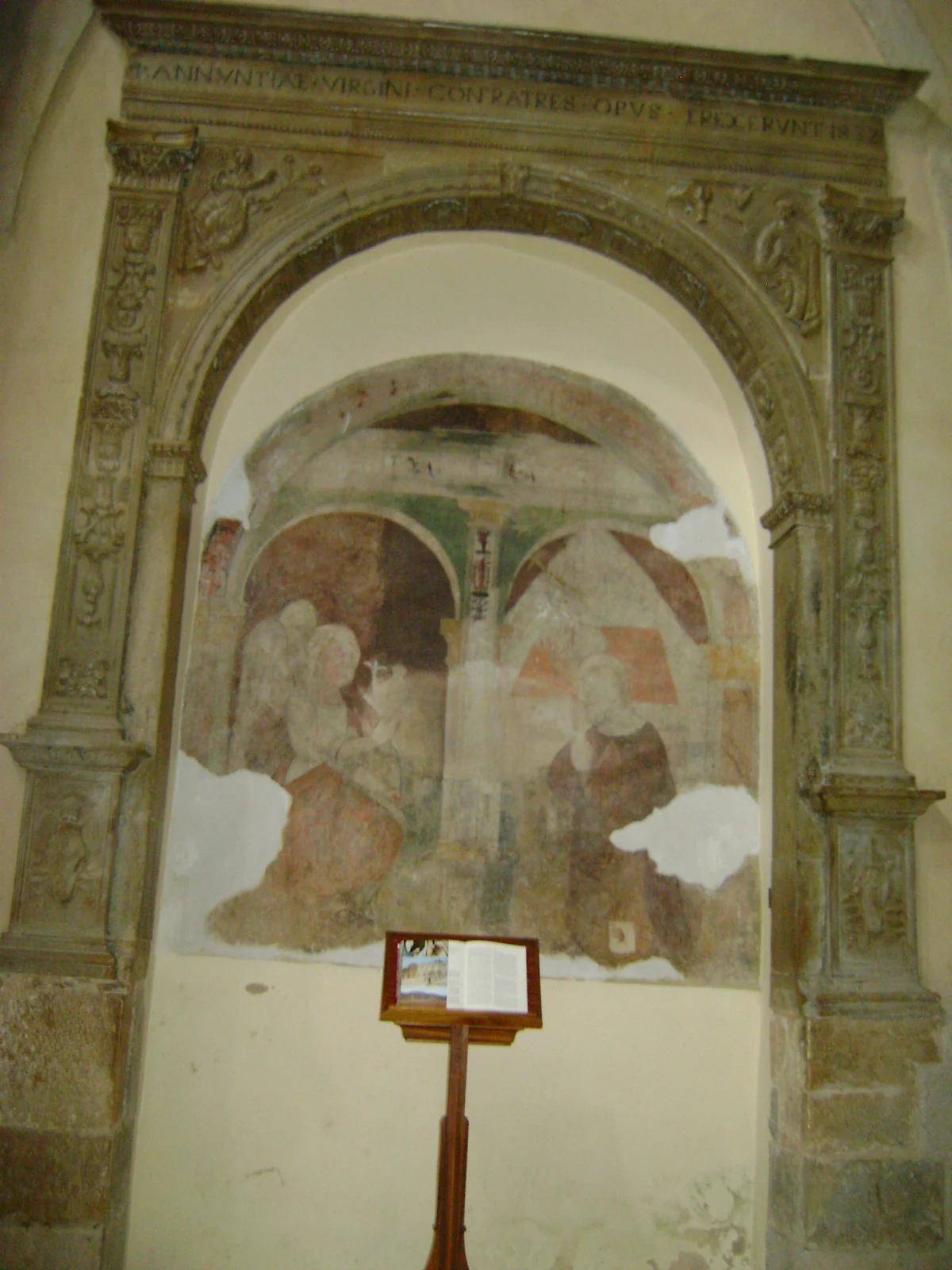
Photo: Zitumassin / Wikimedia Commons — Public domain · Resized and converted to WebP.
Flavours
The territory of Larino lies in the production area of the “Molise” protected designation of origin extra virgin olive oil, registered in the European Union since 2000. According to the product specification, at least 80% of the oil comes from the Aurina (or Licinia), Gentile di Larino, Oliva nera di Colletorto and Leccino varieties, the rest from other native varieties. The olives are picked at veraison, by hand, by stripping or with machines, and packing and bottling take place within the production area.
The same specification recalls that in the territory of Larino, wherever excavations have brought Roman villas to light, large jars sunk into cellar floors have been found, a sign of abundant oil production, and that Cicero, in the Pro Cluentio, praised the industry of the people of Larinum and the fertility of their land. Among the varieties that are the pride of their territories it names “the celebrated Gentile di Larino”.
Sources: MASAF — Disciplinare di produzione dell’olio extravergine di oliva DOP «Molise» (GU n. 193 del 21 agosto 2003) · Commissione europea, eAmbrosia — registro delle indicazioni geografiche (voce «Molise», PDO-IT-0166)
Experiences
The archaeological area of the amphitheatre can be visited free of charge; the superintendency says that anyone wishing to enter outside opening hours can arrange an appointment by telephone (0874 822787) or by e-mail. The entrance is at Via Dante Alighieri 5, by Villa Zappone.
In Piazza Duomo the cathedral, the church of San Francesco and the Diocesan Museum can be seen in a single visit; with the diocesan historical archive and library, the museum forms the diocese’s cultural centre. The Palazzo Ducale has had special openings for the European Heritage Days: in September 2026 booking was recommended, on 0874 828202.
Sources: Ministero della cultura, Soprintendenza Archeologia, Belle Arti e Paesaggio per il Molise — Area archeologica di Larino · Diocesi di Termoli-Larino — Inaugurato a Larino il nuovo museo diocesano (29 maggio 2022) · Ministero della cultura — G.E.P. 2026 al Palazzo Ducale di Larino (Giornate europee del patrimonio, settembre 2026)
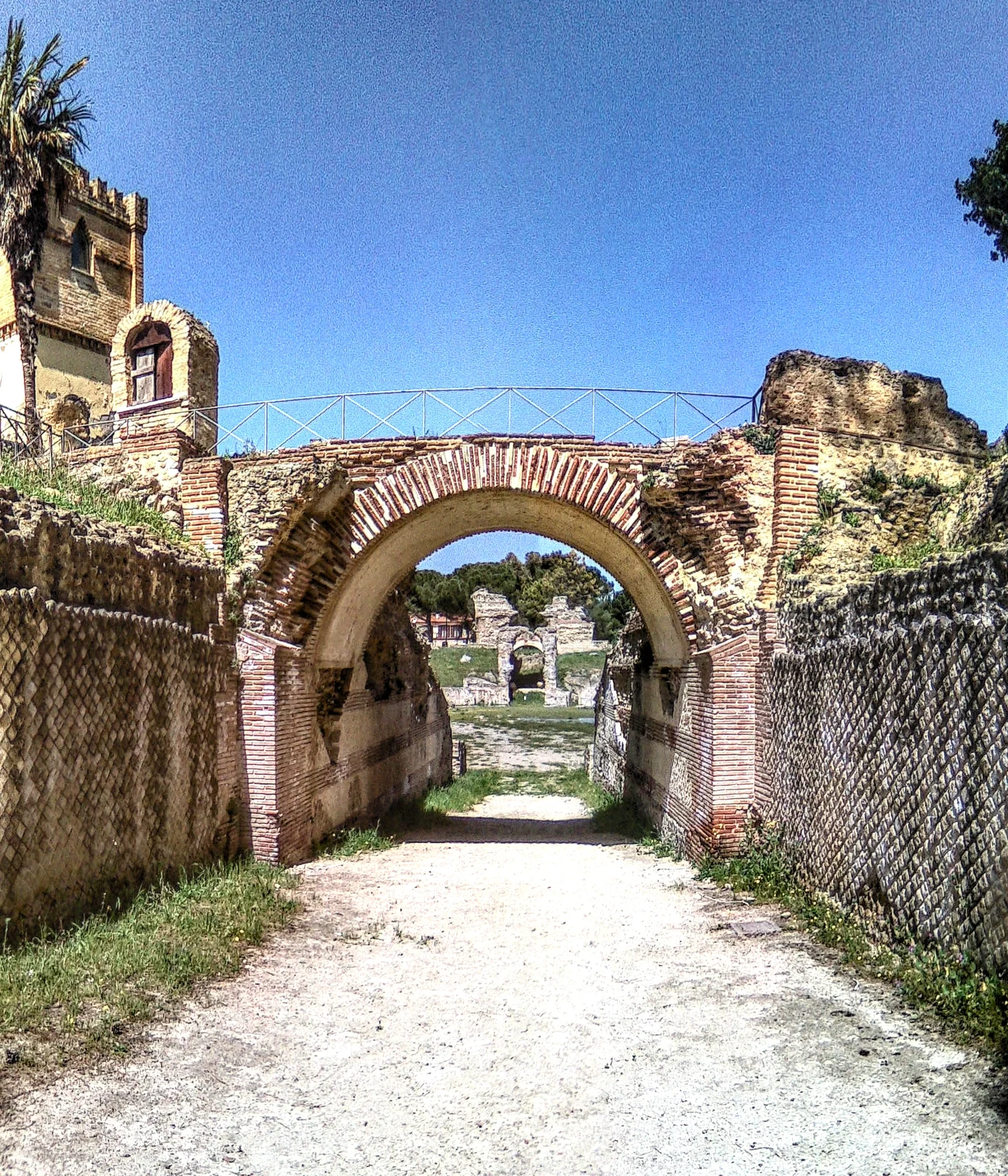
Photo: Trocche100 / Wikimedia Commons — CC BY 4.0 · Resized and converted to WebP.
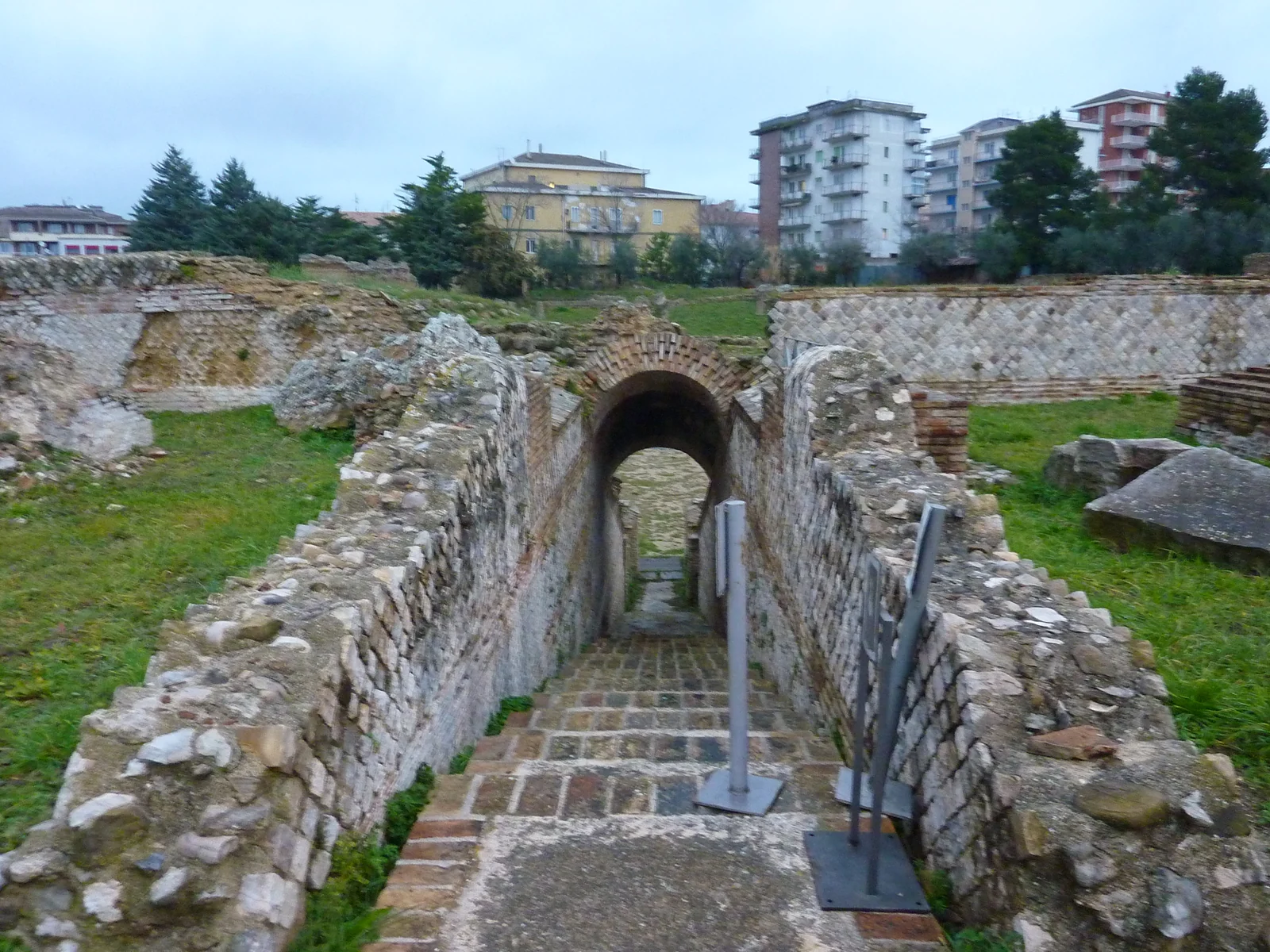
Photo: Pietro Valocchi / Wikimedia Commons — CC BY-SA 2.0 · Resized and converted to WebP.
When to go
Larino’s moment is the feast of San Pardo, from 25 to 27 May. The town council traces it back to 842, when the saint’s remains reached the town on a cart decorated with flowers; the cart, a symbol of the family, is handed down from generation to generation. The diocese counts almost a hundred and thirty carts, shaped as triumphal cars or as huts, many of them drawn by oxen; the Region of Molise writes that the flowers are handmade compositions of crêpe paper.
There are three processions. On the evening of the 25th the carts climb from the old town to the church of San Primiano, where according to tradition Saints Primianus, Firmianus and Castus were martyred under Diocletian, and bring the saint’s statue back during the night, lit by hundreds of small lamps and thousands of torches. On the 26th, the day the relics arrived, the parade winds through the medieval quarter for more than three hours; on the 27th the carts take the statue of San Primiano back to his church. In the 2025 edition the town council’s programme also included the blessing of the carts at noon on the 26th. The diocese recalls that Alexandre Dumas too described the feast, with its gilded-horned oxen.
The saint’s other days are 15 May, the feast of San Primiano, co-patron, and 17 October, the day of San Pardo’s death in the diocese’s liturgical calendar.
Sources: Comune di Larino — Festa di San Pardo (edizione 2025; aggiornato il 15 febbraio 2026) · Diocesi di Termoli-Larino — San Pardo, Patrono di Larino e diocesi: storia, fede e folklore (22 maggio 2023) · Regione Molise — San Pardo, a Larino l’incantevole Carrese dei fiori (maggio 2022) · CEI, BeWeB — Cattedrale di Larino: Chiesa di Santa Maria Assunta e San Pardo · Diocesi di Termoli-Larino — Il culto di San Pardo, Patrono principale di Larino e diocesi, nei secoli (22 maggio 2021)
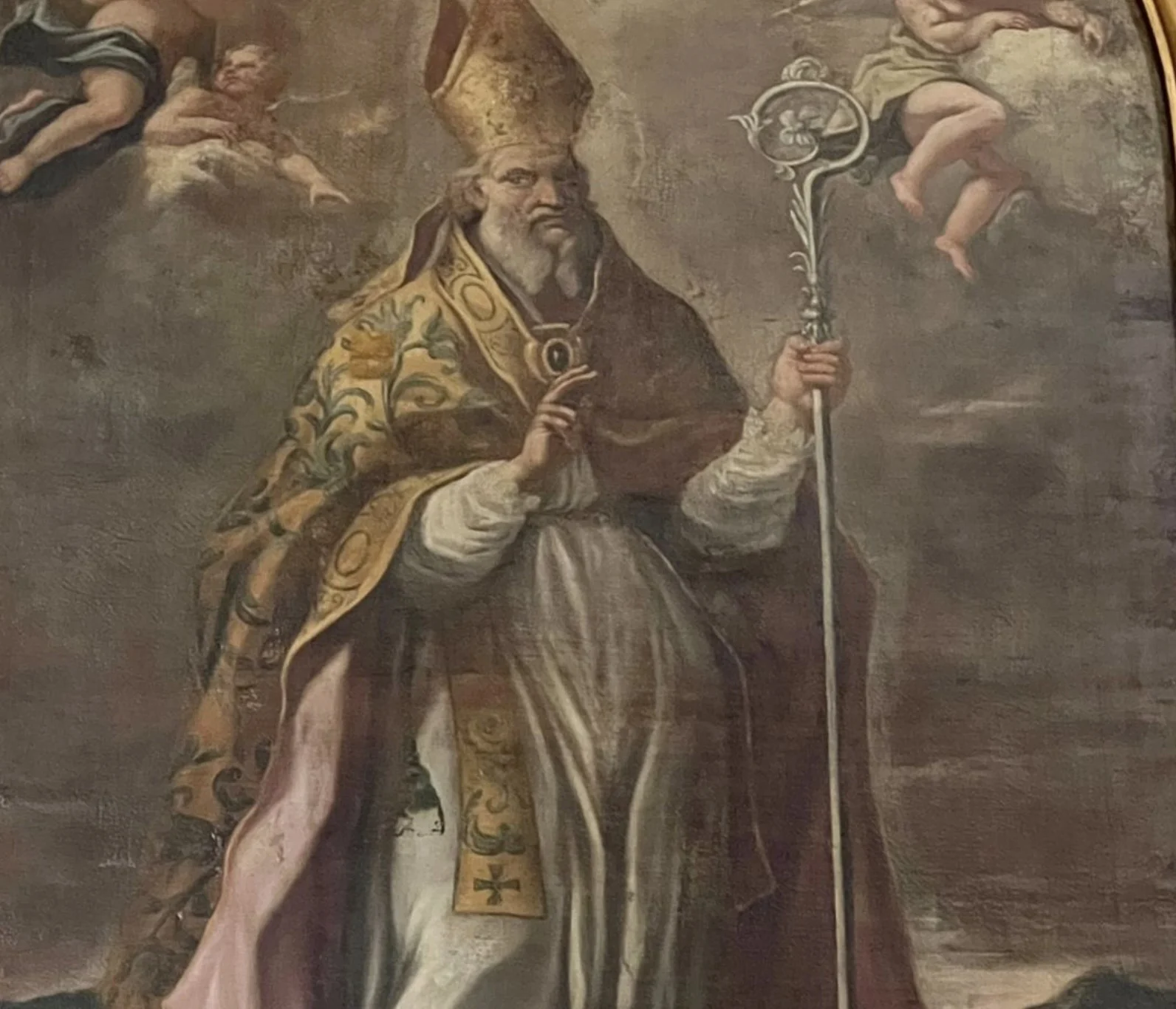
Photo: Anonymus author of the 18th century / Wikimedia Commons — Public domain · Resized and converted to WebP.
Getting there
Larino has a station on the line between Termoli and Campobasso. In the timetable RFI has scheduled for the period from 14 June to 12 December 2026, all services calling at Larino are replacement buses, in both directions: to Termoli the journey takes about forty minutes, to Campobasso, with stops at Casacalenda-Guardialfiera, Ripabottoni-Sant’Elia and Campolieto-Monacilioni, about an hour and a quarter. The timetable lists six services, three in each direction. The station has no assistance service for passengers with reduced mobility.
The town hall, the cathedral and the Diocesan Museum are in Piazza Duomo, in the medieval town; the archaeological area is in the lower part of the town, entered from Via Dante Alighieri 5.
Sources: RFI — Stazione di Larino, quadro orario delle partenze (orario programmato 14 giugno - 12 dicembre 2026) · Comune di Larino — Sede comunale · Diocesi di Termoli-Larino — Inaugurato a Larino il nuovo museo diocesano (29 maggio 2022) · Ministero della cultura, Soprintendenza Archeologia, Belle Arti e Paesaggio per il Molise — Area archeologica di Larino
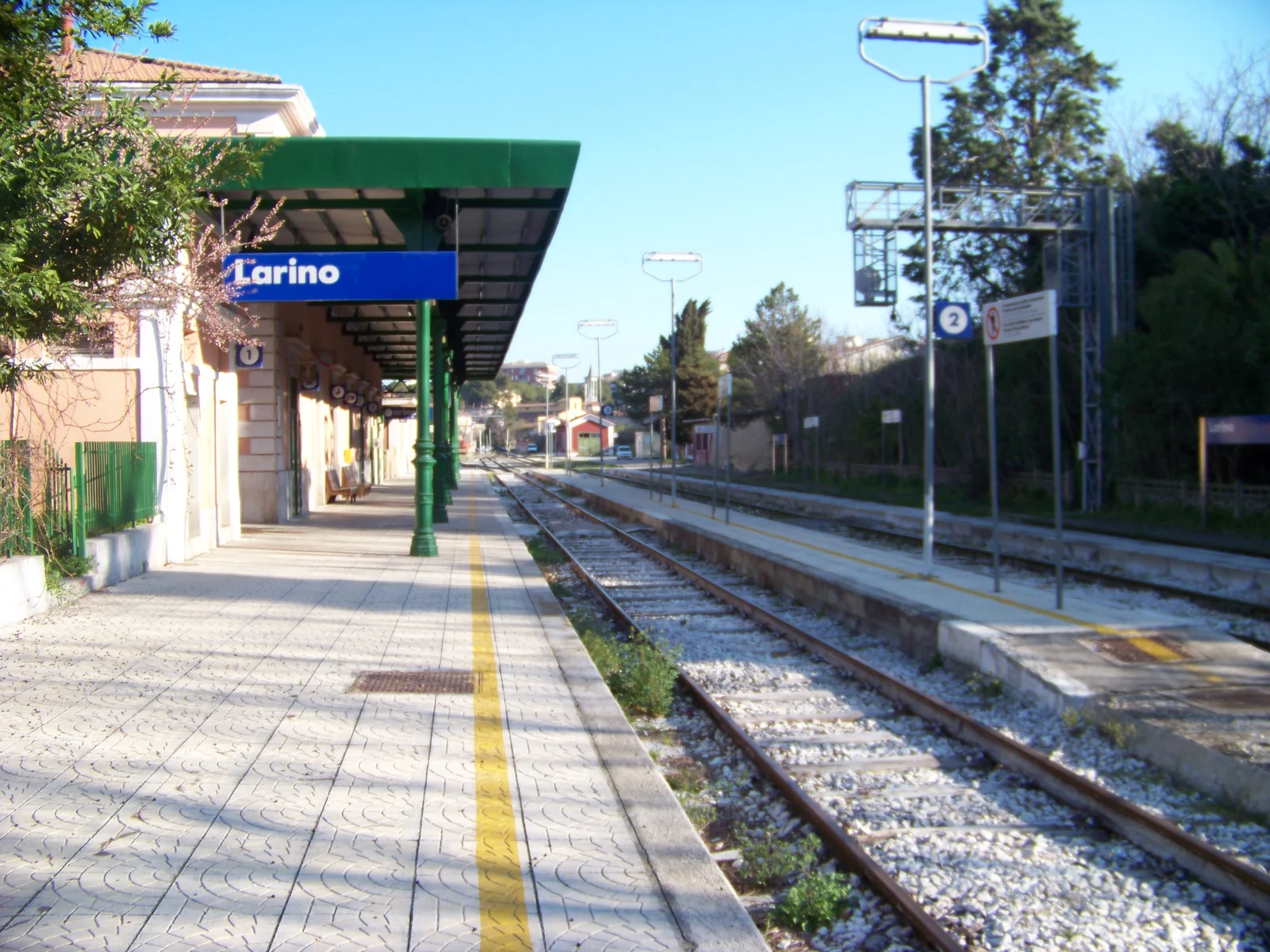
Photo: Alfaveyron / Wikimedia Commons — CC BY-SA 3.0 · Resized and converted to WebP.
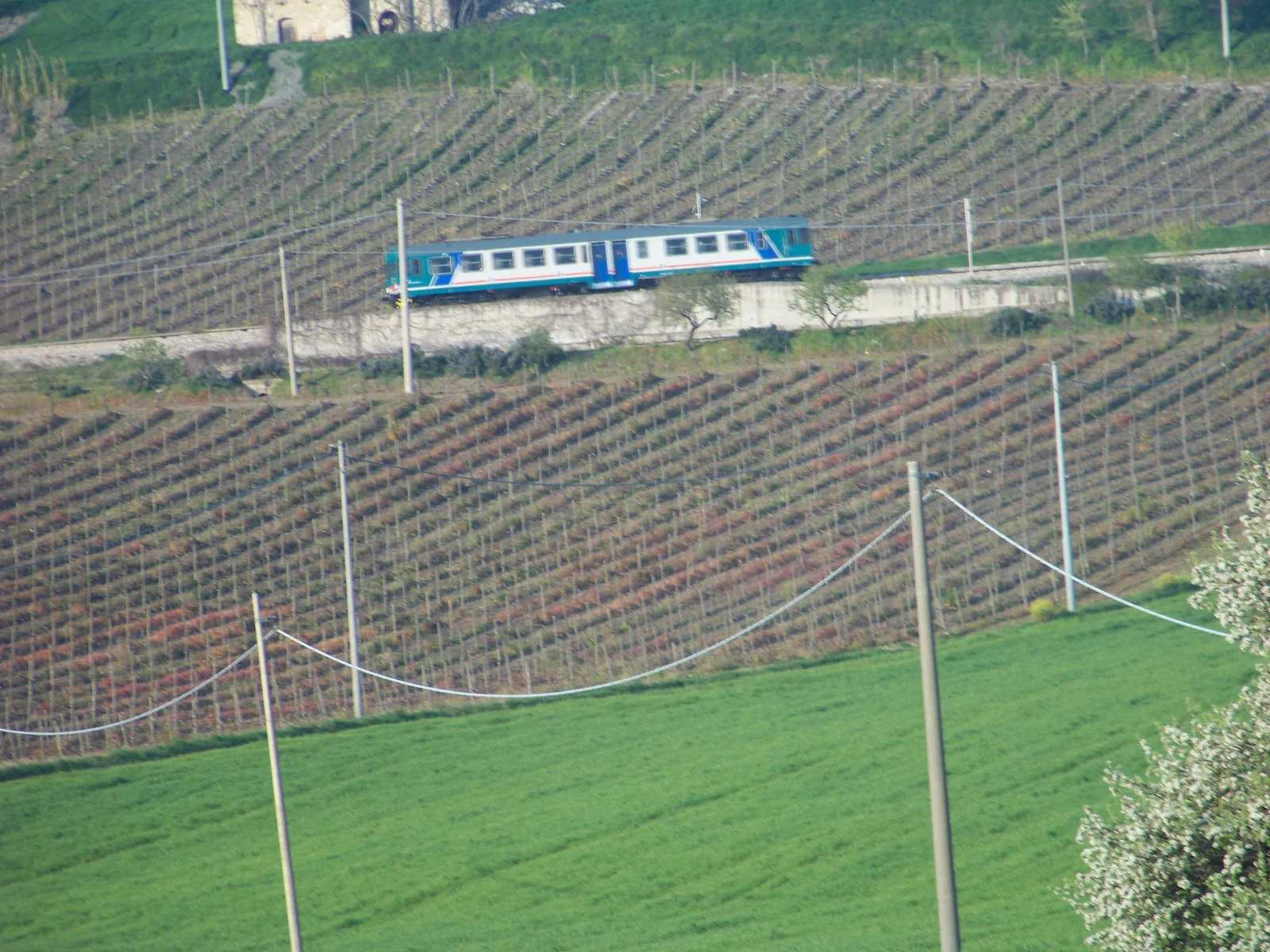
Photo: Alfaveyron / Wikimedia Commons — CC BY-SA 3.0 · Resized and converted to WebP.
Accommodation in figures
In the Ministry of Tourism’s national database of accommodation (BDSR), on 12 October 2026, Larino had 17 establishments with a verified national identification code (CIN): 1 hotel-type establishment, 7 non-hotel establishments and 9 other establishments.
Sources: Ministero del Turismo – Banca Dati Strutture Ricettive (dashboard pubblica)
Nearby
Among the places Apulica already covers, the nearest is Termoli (about 17 km): straight-line distances between the centres of the municipal territories.
On the line to Campobasso the next stops are Casacalenda-Guardialfiera, Ripabottoni-Sant’Elia and Campolieto-Monacilioni. The oldest tie is with Lucera: according to the diocese, the body of San Pardo was found near there, and in Lucera the saint is still venerated, with a fragment of the relics sent from Larino in 1957.
Sources: ISTAT/Openpolis, confini comunali della regione Molise (CC BY 4.0, ISTAT/Openpolis) · RFI — Stazione di Larino, quadro orario delle partenze (orario programmato 14 giugno - 12 dicembre 2026) · Diocesi di Termoli-Larino — San Pardo, Patrono di Larino e diocesi: storia, fede e folklore (22 maggio 2023) · Diocesi di Termoli-Larino — Il culto di San Pardo, Patrono principale di Larino e diocesi, nei secoli (22 maggio 2021)
The town council
The official website of the Comune di Larino, registered in IndicePA, the index of the digital addresses of Italy’s public administrations, is the reference for the town council’s offices, opening hours and news. Its address is listed among the sources of this section.
The town hall is in the Palazzo Ducale, at Piazza Duomo 44, with an entrance accessible to people with disabilities; the switchboard answers on 0874 8281. The Vietri hospital is in Via Adriano Lualdi and answers on 0874 8271.
Sources: Comune di Larino, sito istituzionale · IndicePA (AgID), Indice dei domicili digitali delle pubbliche amministrazioni: dataset Enti · Comune di Larino — Sede comunale · Regione Molise — San Pardo, a Larino l’incantevole Carrese dei fiori (maggio 2022) · Comune di Larino — Ospedale Vietri
Where to stay
In the municipality of Larino the national database of the Ministry of Tourism lists 17 accommodation businesses with a verified CIN code: 1 hotels, 7 other licensed accommodation and 9 other types such as B&Bs and private rentals.
Ask Apulica for a stay in Larino We reply shortly, within a few hours at most, with a proposal for you to consider.
Sources: Ministero del Turismo – Banca Dati Strutture Ricettive (dashboard pubblica), 2026-10-12
YOUR JOURNEY
How to shape a journey here
To include Larino in a trip, or to ask for a guide or a transfer, you can write to Apulica with the button below.
Plan your tripKeep exploring
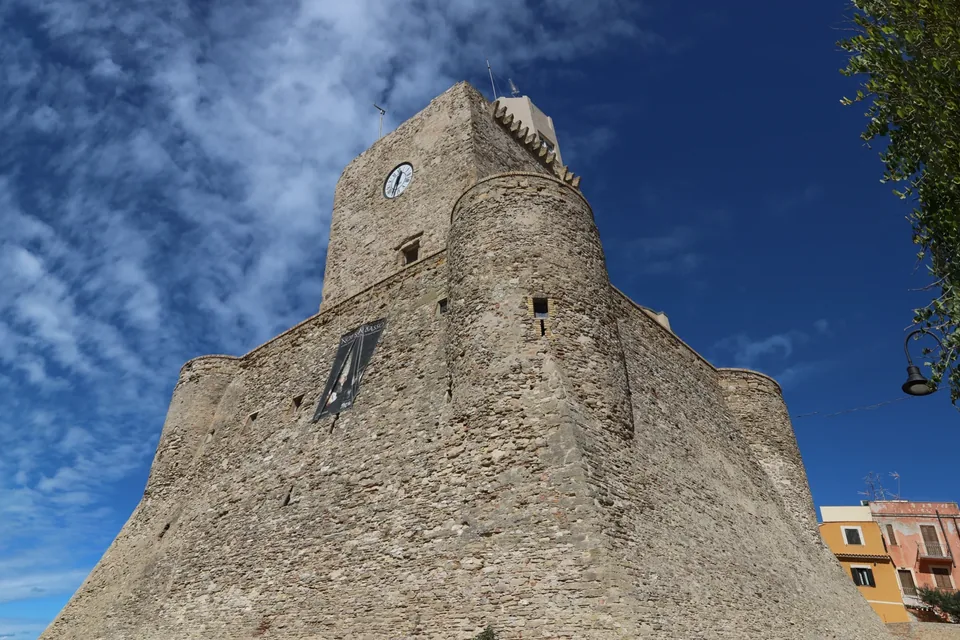
Termoli
An old town on a rocky spur over the sea, the Swabian castle, the cathedral of San Basso and the trabucchi of the Adriatic coast.
Read the guide →Photo: C.lapia / Wikimedia Commons — CC BY-SA 4.0 · Resized and converted to WebP.

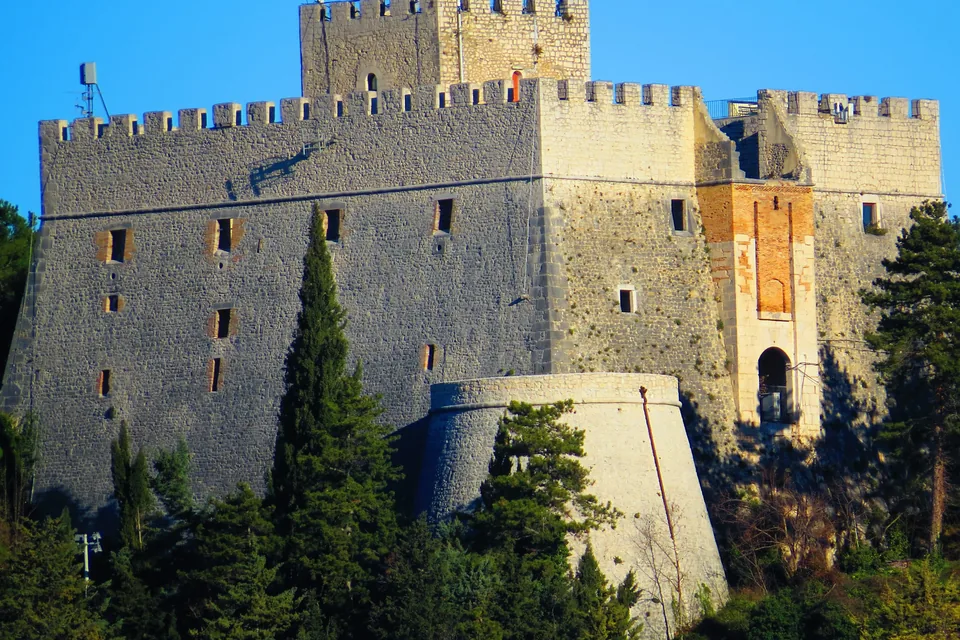
Campobasso
Molise's capital between Castello Monforte and the Città Murattiana: Romanesque churches, the Museo Sannitico, Di Zinno's Misteri parading on Corpus Domini, cavatelli and Tintilia.
Read the guide →Photo: Gianfranco Vitolo from Sarno (Sa), Italia / Wikimedia Commons — CC BY-SA 2.0 · Resized and converted to WebP.

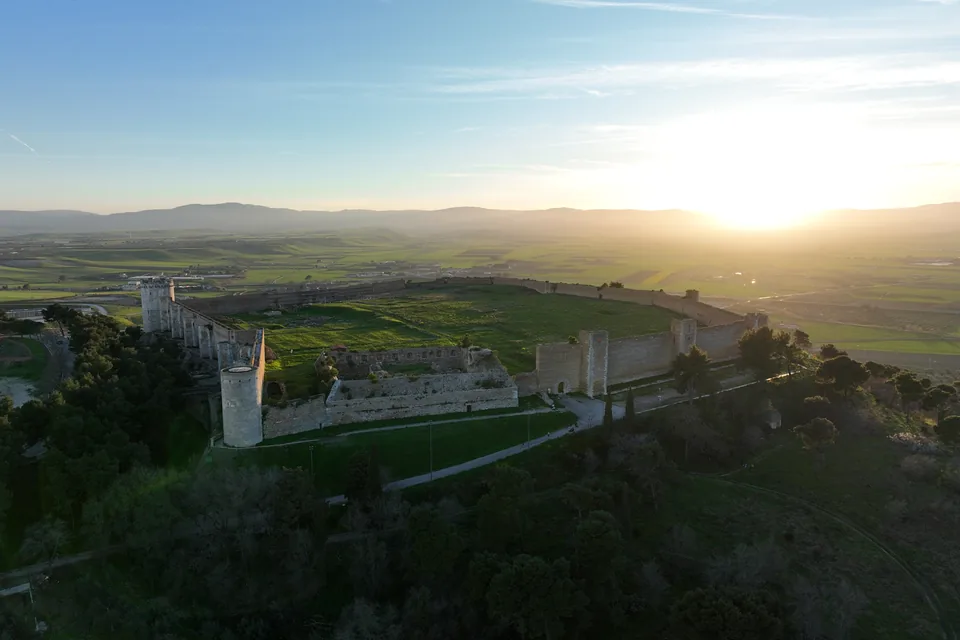
Lucera
Lucera (FG), Puglia: 30,591 residents, 339.79 km². The official facts of the municipality, its town council website and its registered accommodation. The Swabian-Angevin fortress of Frederick II and Charles of Anjou, the Augustan amphitheatre, the Angevin Gothic cathedral, the sanctuary of Saint Francesco Antonio Fasani, the “Cacc’e mmitte di Lucera” DOC wine and the “Dauno” PDO olive oil.
Read the guide →Photo: Paolocibelli / Wikimedia Commons — CC BY-SA 4.0 · Resized and converted to WebP.

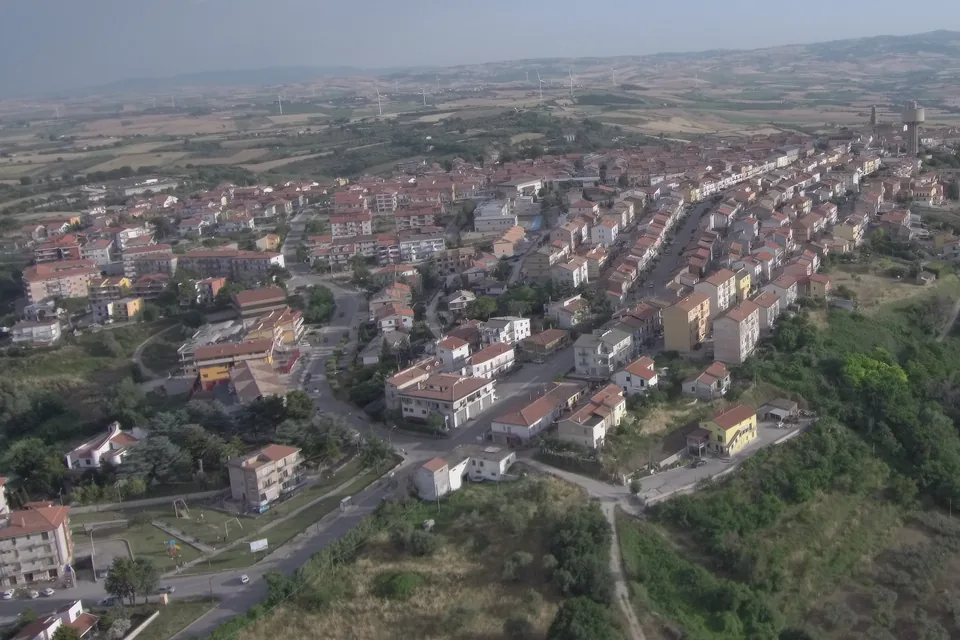
San Martino in Pensilis
San Martino in Pensilis (CB), Molise: 4,417 residents, 100.65 km². The official facts of the municipality, its town council website and its registered accommodation.
Read the guide →Photo: Siloé Mascolo / Wikimedia Commons — CC BY-SA 4.0 · Resized and converted to WebP.

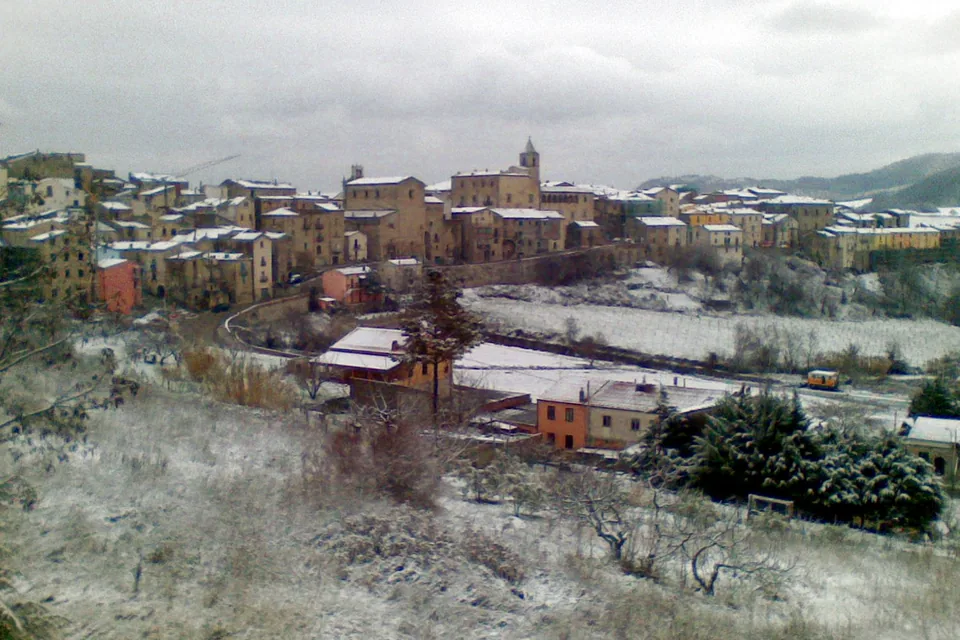
Casacalenda
Casacalenda (CB), Molise: 1,831 residents, 67.28 km². The official facts of the municipality, its town council website and its registered accommodation.
Read the guide →Photo: Casacalendese / Wikimedia Commons — CC BY-SA 3.0 · Resized and converted to WebP.

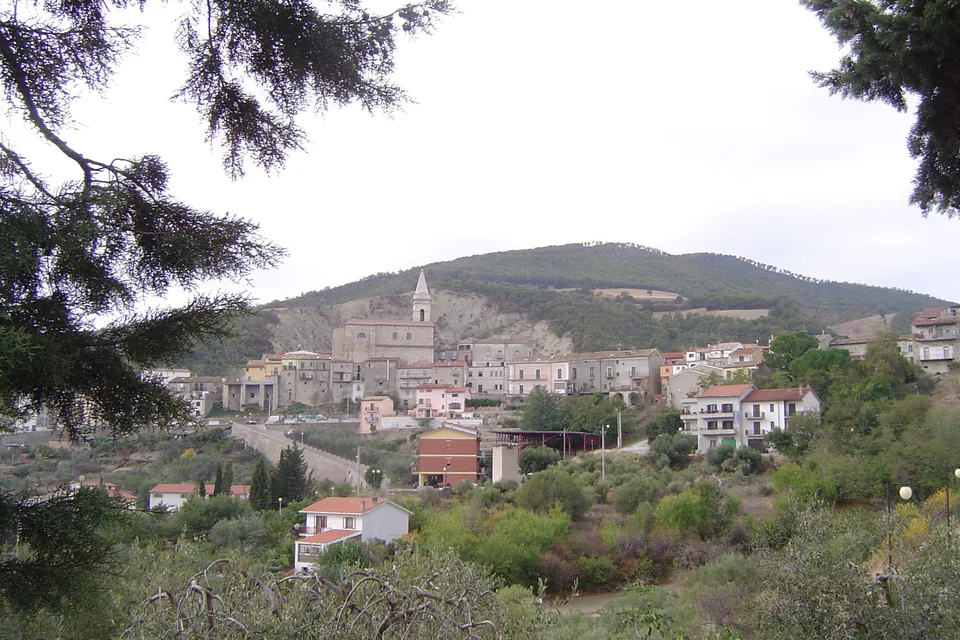
Guardialfiera
Guardialfiera (CB), Molise: 969 residents, 43.53 km². The official facts of the municipality, its town council website and its registered accommodation.
Read the guide →Photo: Microtubules / Wikimedia Commons — CC BY-SA 3.0 · Resized and converted to WebP.

“Come to Larino as a guest, not as a tourist: that is how these places truly let you know them.”