

Why go
Chieti stands on top of a long hill, 330 metres above sea level and 15 kilometres from the coast, between the Adriatic riviera and the massifs of the Majella and the Gran Sasso: that is why it is called the Terrace of Abruzzo. From the ridge of the upper town the view runs to the sea on one side and to the mountains on the other, and along the crest runs Corso Marrucino, straight and level, the urban stretch of the ancient Via Valeria.
It is one of the oldest towns in Abruzzo. Legend says it was founded by the Greek hero Achilles, who named it Teate after his mother Thetis, and Achilles on horseback still appears on the town's coat of arms; history records it as the capital of the Marrucini, the Italic people of the Pescara valley, and then as a Roman town with a forum, a theatre, an amphitheatre and baths. That Teate has left its small temples, the amphitheatre, the cisterns and a network of tunnels beneath the old centre.
The centre is small and easily walked: the Cathedral of San Giustino, the Teatro Marrucino, the palazzi of Corso Marrucino and Piazza Vico. On the edge of the old town, in the Villa comunale, Villa Frigerj holds the Capestrano Warrior, the sixth-century BC statue that has become one of the symbols of ancient Abruzzo. Every year, on the evening of Good Friday, the town holds one of the oldest processions in Italy.
Below the hill, in the valley, lies Chieti Scalo, the new town that grew around the station and the campus of the "G. d'Annunzio" University, now joined to the Pescara area. Chieti is also a base for visiting the Majella and the Costa dei Trabocchi.
Chieti is a municipality in the province of Chieti, in Abruzzo. Its ISTAT code is 069022. It is the capital of the province of Chieti. On 1 January 2025 it had 48,403 residents. The municipal territory covers 59.57 km² and ranges from 11 to 350 metres above sea level; the town hall stands at about 342 metres.
Sources: Italia.it (Ministero del Turismo) — Chieti · Comune di Chieti — Cenni storici · Treccani, Enciclopedia on line — Chieti · Comune di Chieti — Cattedrale di San Giustino · Comune di Chieti — Teatro Marrucino · Comune di Chieti — Museo archeologico nazionale d'Abruzzo · Soprintendenza Archeologia Belle Arti e Paesaggio per le province di Chieti e Pescara — The Good Friday procession in Chieti · Italia.it (Ministero del Turismo) — In Abruzzo, lungo la Costa dei Trabocchi · ISTAT, Codici statistici delle unità amministrative territoriali: elenco dei comuni al 21 febbraio 2026 · ISTAT, Popolazione residente per età, sesso e stato civile al 1° gennaio 2025 (POSAS) · ISTAT, Principali statistiche geografiche sui comuni: superficie e altimetria al 31 dicembre 2021
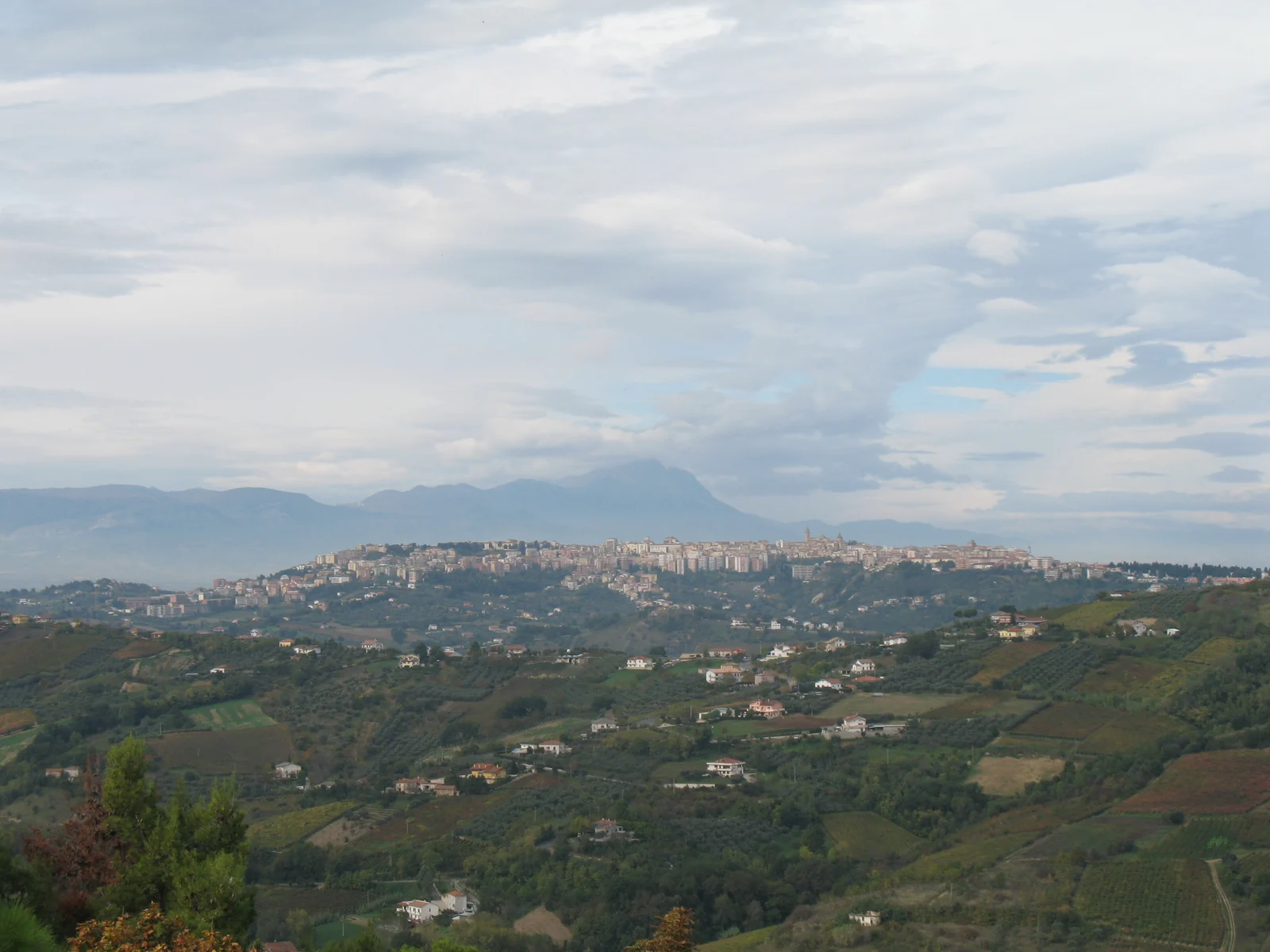
Photo: Cats' photos / Wikimedia Commons — Public domain · Resized and converted to WebP.
History
The oldest traces are Neolithic huts, found at Madonna del Freddo, and a necropolis near Porta Sant'Anna with tombs from the late Iron Age to Roman times. Teate was the main town of the Marrucini; in 91 BC it passed for good into Rome's orbit and became a municipium. The Roman town became the leading economic centre of the region: it had a forum, a theatre about eighty metres across with five thousand seats, an amphitheatre, an aqueduct with channels that also ran underground, and baths supplied by a large cistern of nine chambers.
After the fall of the Empire it was ravaged by the Visigoths and the Heruli and rebuilt by Theodoric; it regained importance under the Lombards, until at the start of the ninth century it was taken by Pippin, King of Italy. Under the Normans it recovered: in 1094 Robert Guiscard proclaimed it "capital city of the Abruzzi", and in October 1097 Pope Urban II preached the crusade here. It stayed loyal to the Swabians, with Manfred spending Christmas 1255 here, and under the Angevins and above all the Aragonese it grew again, with the right to mint its own coins.
In 1443 King Alfonso of Aragon granted it the title that still appears on its coat of arms: "Theate Regia Metropolis Utriusque Aprutinae Provinciae Princeps", royal city and capital of both provinces of the Abruzzi. In 1526 it became an archbishop's see and around 1550 it was fortified by the viceroy, the Duke of Alba. In the seventeenth century, in the climate of the Counter-Reformation, the Church put up large buildings such as the Seminary palace, and the town took the shape it still has; of the medieval walls the names of the four gates remain, Sant'Anna, Santa Maria, Napoli and Pescara, recalled by the four keys on the coat of arms.
In 1799 and 1806 Chieti was occupied and sacked by French troops. In 1818 the Real Teatro San Ferdinando opened; in 1861, after Unification, it took the name Teatro Marrucino in memory of the Italic people. In 1873 the opening of the Pescara-Sulmona railway brought the station down to the valley floor, and around Chieti Scalo grew industrial, commercial and residential districts, then the university, the stadium and the new hospital. In 1959 Villa Frigerj became the Museo archeologico nazionale d'Abruzzo. Chieti was the birthplace of the sculptor Costantino Barbella (1852-1925), of the explorer Giovanni Chiarini, to whom d'Annunzio dedicated "Primo vere", and of the writer Giuseppe Mezzanotte.
Sources: Treccani, Enciclopedia on line — Chieti · Comune di Chieti — Cenni storici · Comune di Chieti — Teatro Marrucino · Ministero della Cultura — Museo archeologico nazionale d'Abruzzo, Villa Frigerj · Comune di Chieti — Grandi Teatini
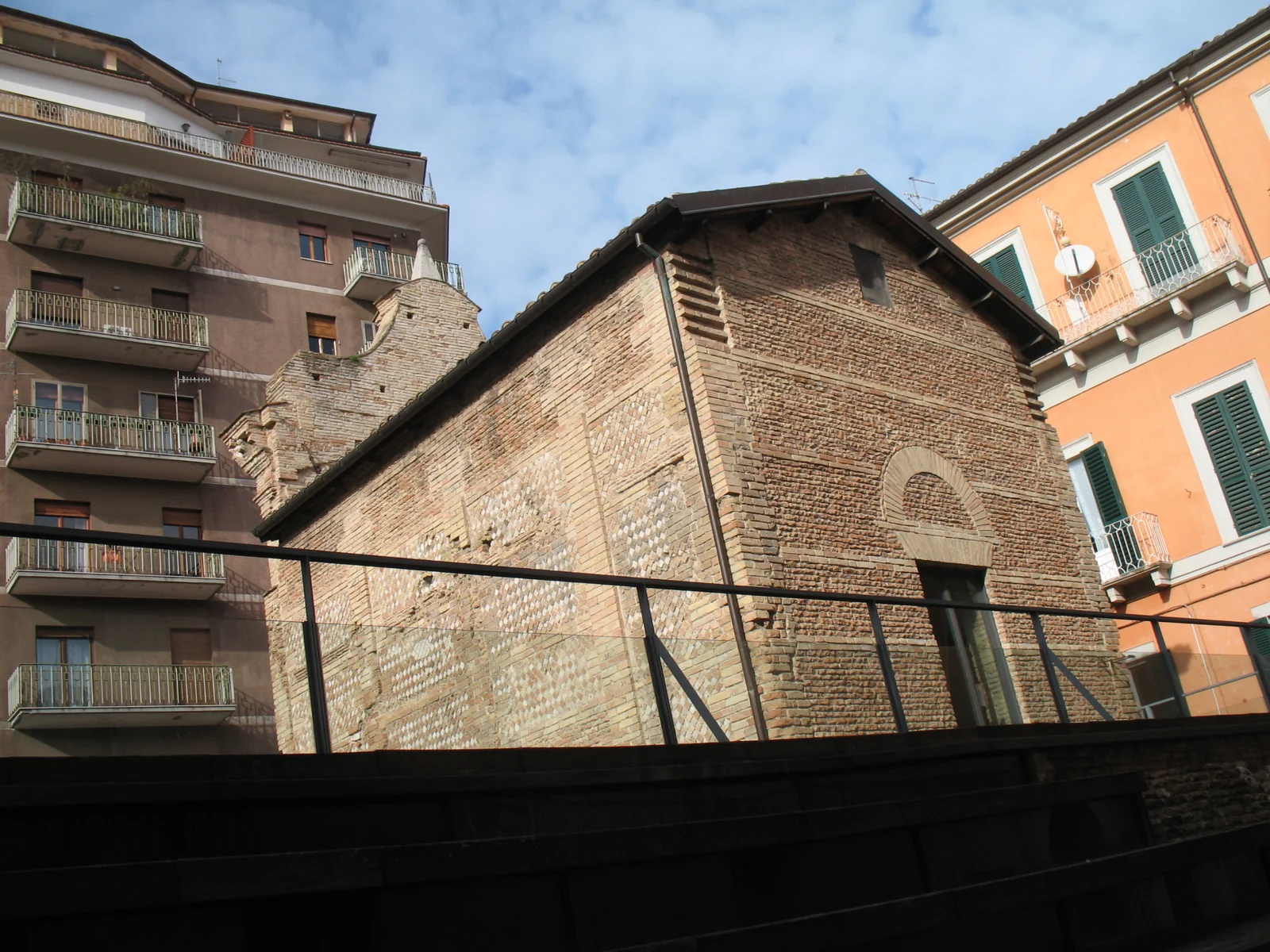
Photo: Cats' photos / Wikimedia Commons — CC BY-SA 4.0 · Resized and converted to WebP.
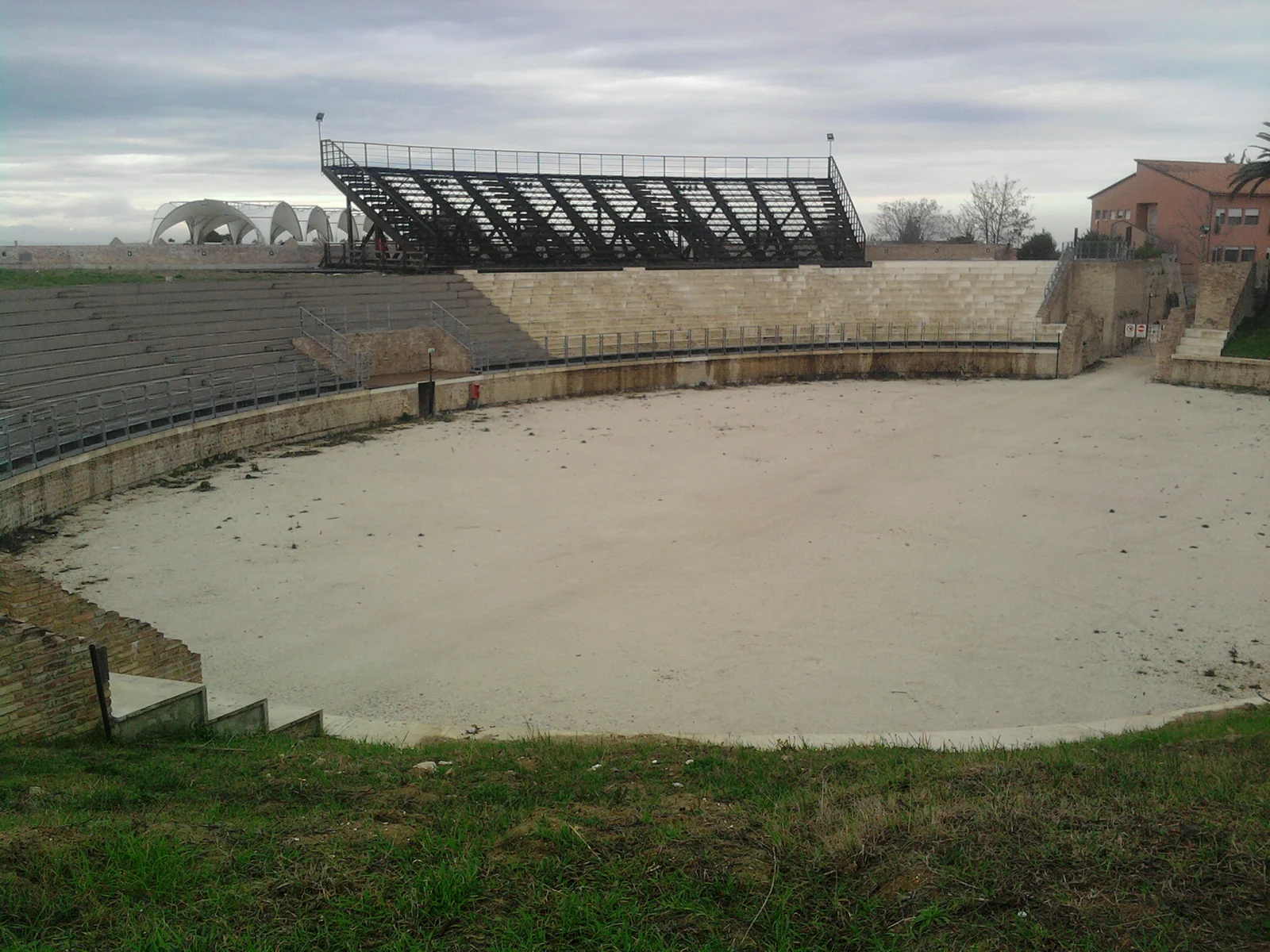
Photo: Poecus / Wikimedia Commons — Public domain · Resized and converted to WebP.
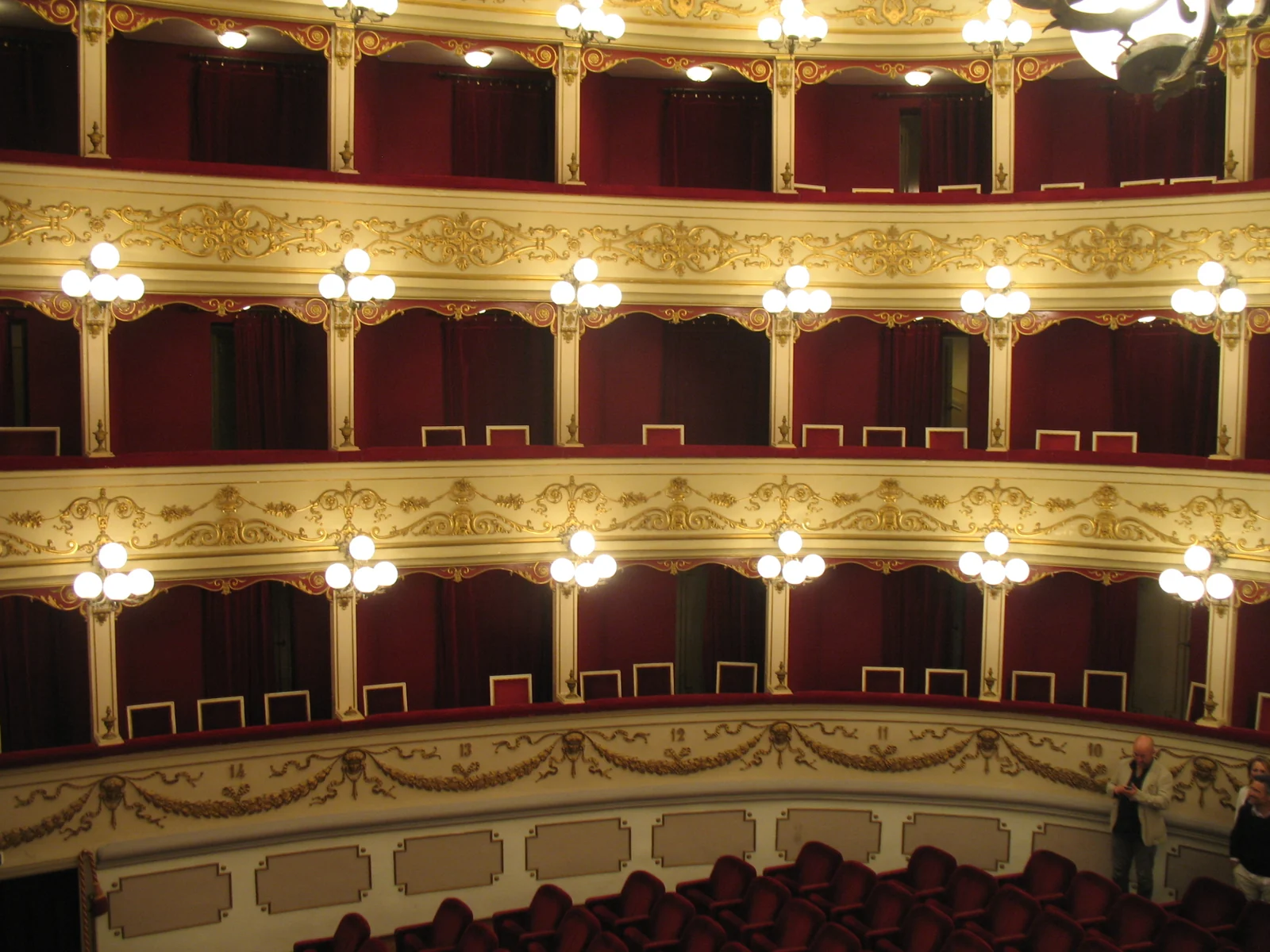
Photo: Cats' photos / Wikimedia Commons — CC BY-SA 4.0 · Resized and converted to WebP.
What to see
The Museo archeologico nazionale d'Abruzzo occupies Villa Frigerj, the neoclassical villa designed by the Neapolitan architect Errico Riccio for Baron Ferrante Frigerj in 1830, on the small rise of the Villa comunale. It holds the region's most important archaeological collection, from prehistory to the late imperial age. On the ground floor, in the room "Al di là del tempo" designed by the artist Mimmo Paladino, stands the Capestrano Warrior, the life-size sixth-century BC statue of a king of the Vestini; alongside are the coin collection and the nineteenth-century Pansa collection. The first floor shows finds from the cemeteries and sanctuaries of the Vestini, Paeligni, Marrucini and Carricini, and then those of the Sabines, Frentani, Aequi and Marsi. The museum is closed on Mondays.
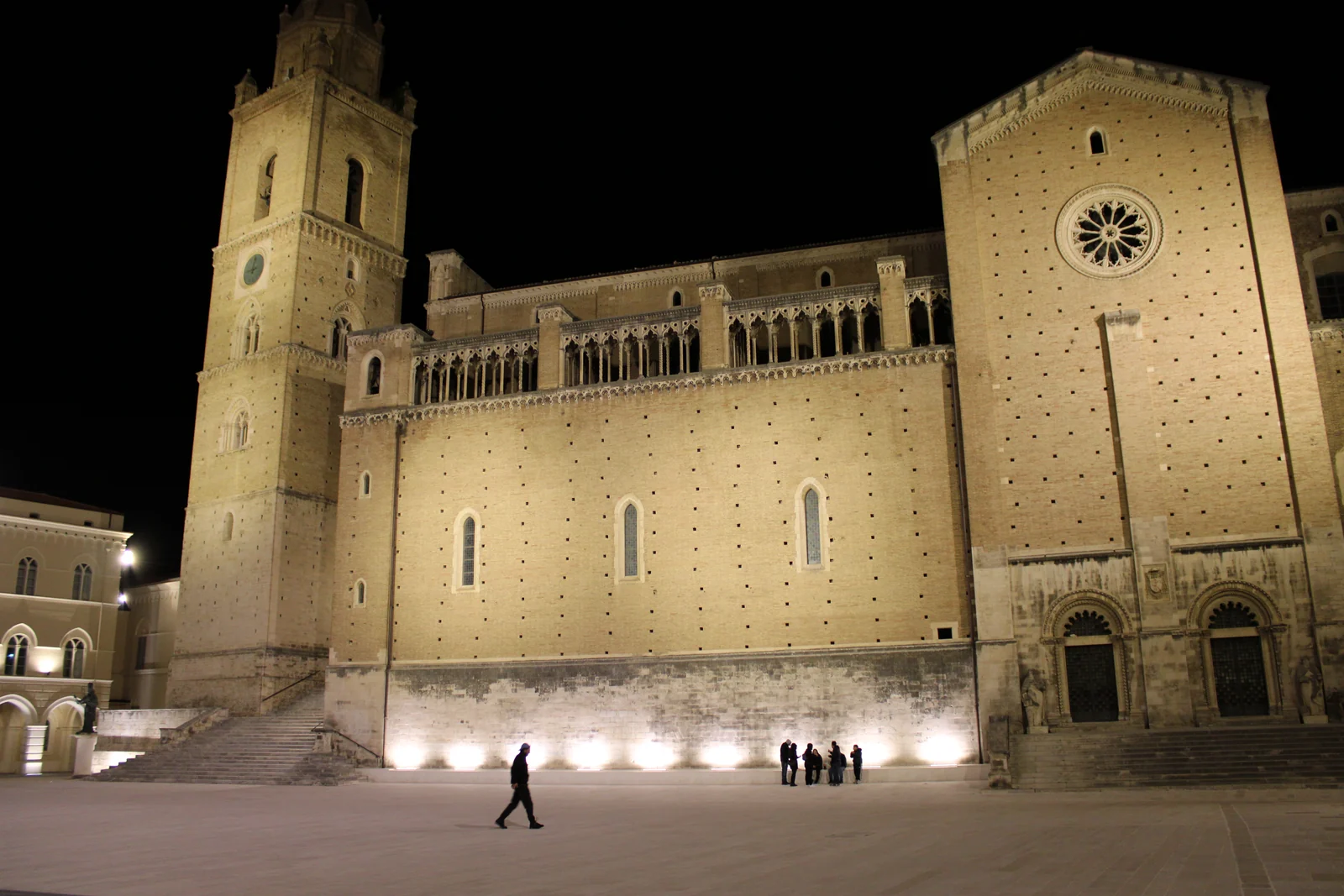
The Cathedral of San Giustino, dedicated to the town's patron saint, to the apostle Thomas and to the Virgin of the Assumption, was built on the remains of a pagan temple and consecrated in 1609, after centuries of rebuilding. It has three naves and a transept with a dome; in the presbytery are the canvases of Saverio Persico, a pupil of Francesco Solimena, with the Incredulity of Saint Thomas, and on the altar of San Giustino the wooden crucifix carved in 1485 by Nicola Teutonico. In the transept is the saint's silver bust. The medieval crypt, which holds the relics, has two facing apses and keeps traces of frescoes. Next door, the oratory of the Sacro Monte dei Morti, all gilded stucco, keeps the Dead Christ carried in procession on Good Friday.
On Corso Marrucino stands the Teatro Marrucino, built between 1813 and 1817 to a design by Eugenio Michitelli of Teramo and handed back to the town on 7 October 2021 after restoration. In 1904 it hosted the first Abruzzo performance of "La figlia di Iorio", and d'Annunzio gave the theatre the manuscript of the script. A little further on, the thirteenth-century church of San Francesco al Corso is still closed after the damage of the earthquake of 6 April 2009.
In the centre you can also visit the Museo d'arte Costantino Barbella, in the seventeenth-century Palazzo Martinetti, with Barbella's sculptures, paintings from the fifteenth to the nineteenth century and Castelli majolica; Palazzo de' Mayo, owned by the Fondazione Banco di Napoli, with its modern art gallery and a copy of Francesco Paolo Michetti's "La figlia di Iorio"; and the University Museum, with over 19,000 items of natural science, palaeontology and the history of medicine. On Piazzale Tricalle the octagonal church of Santa Maria del Tricalle, from 1317, the first octagonal church in Abruzzo dedicated to the Virgin, is now a cultural production centre.
Sources: Ministero della Cultura — Museo archeologico nazionale d'Abruzzo, Villa Frigerj · Comune di Chieti — Museo archeologico nazionale d'Abruzzo · Italia.it (Ministero del Turismo) — Chieti · Comune di Chieti — Cattedrale di San Giustino · Comune di Chieti — Oratorio del Sacro Monte dei Morti · Comune di Chieti — Teatro Marrucino · Comune di Chieti — Chiesa di San Francesco d'Assisi · Comune di Chieti — Museo d'arte Costantino Barbella · Comune di Chieti — Museo Palazzo de Mayo · Comune di Chieti — Museo universitario · Comune di Chieti — Chiesa di Santa Maria del Tricalle
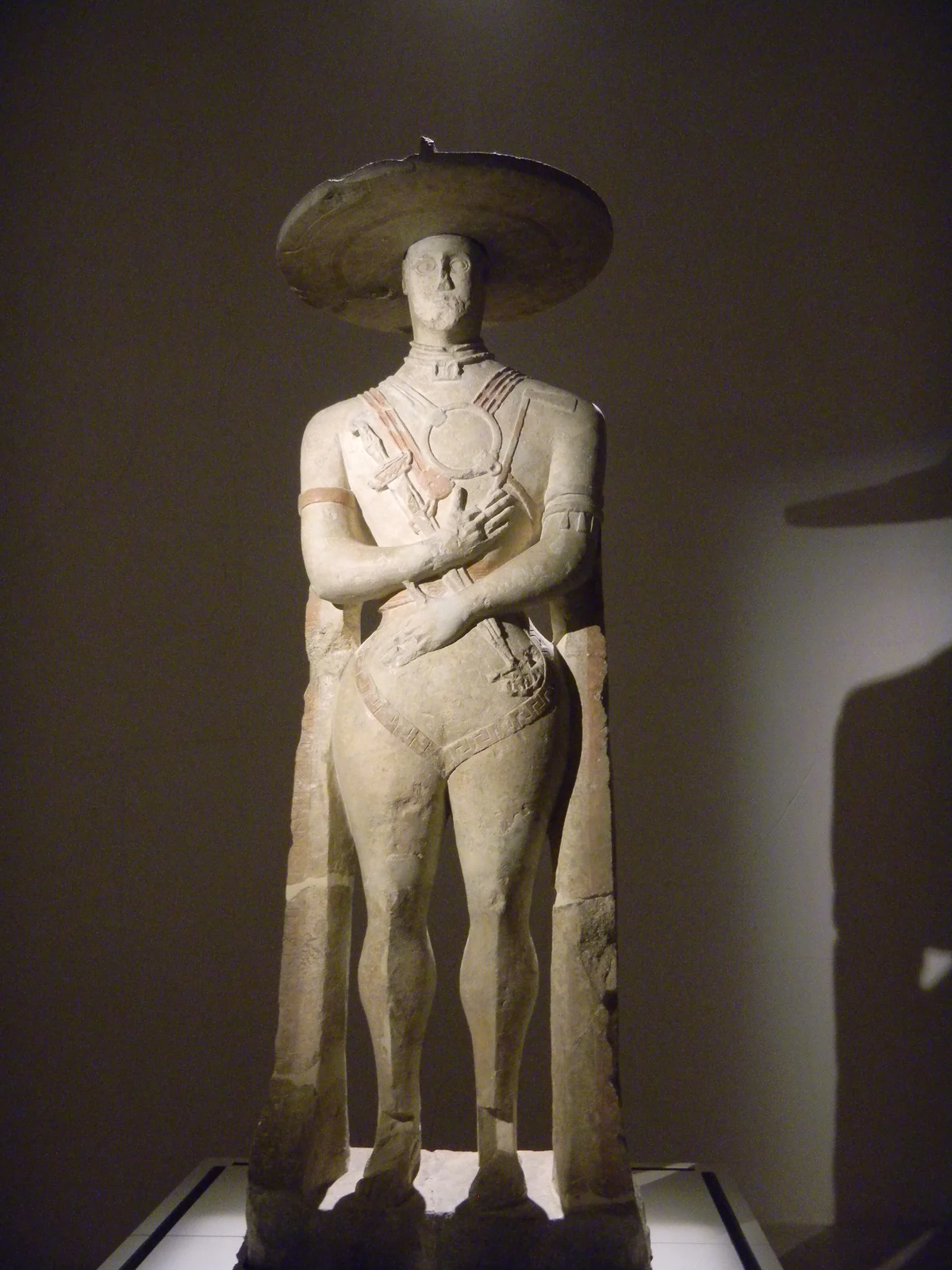
Photo: Elisa Triolo / Wikimedia Commons — CC BY-SA 2.0 · Resized and converted to WebP.
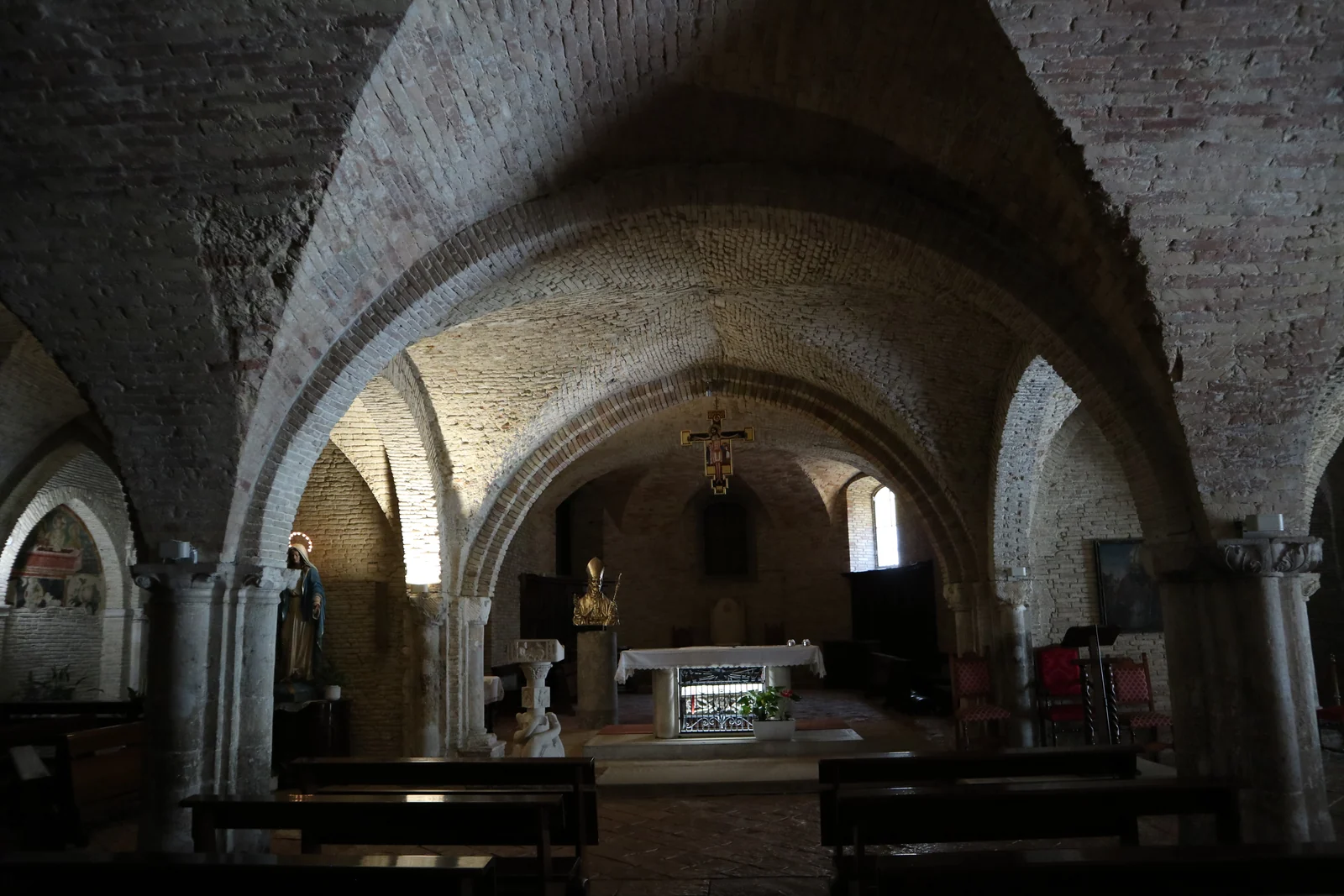
Photo: Parsifall / Wikimedia Commons — CC BY 4.0 · Resized and converted to WebP.
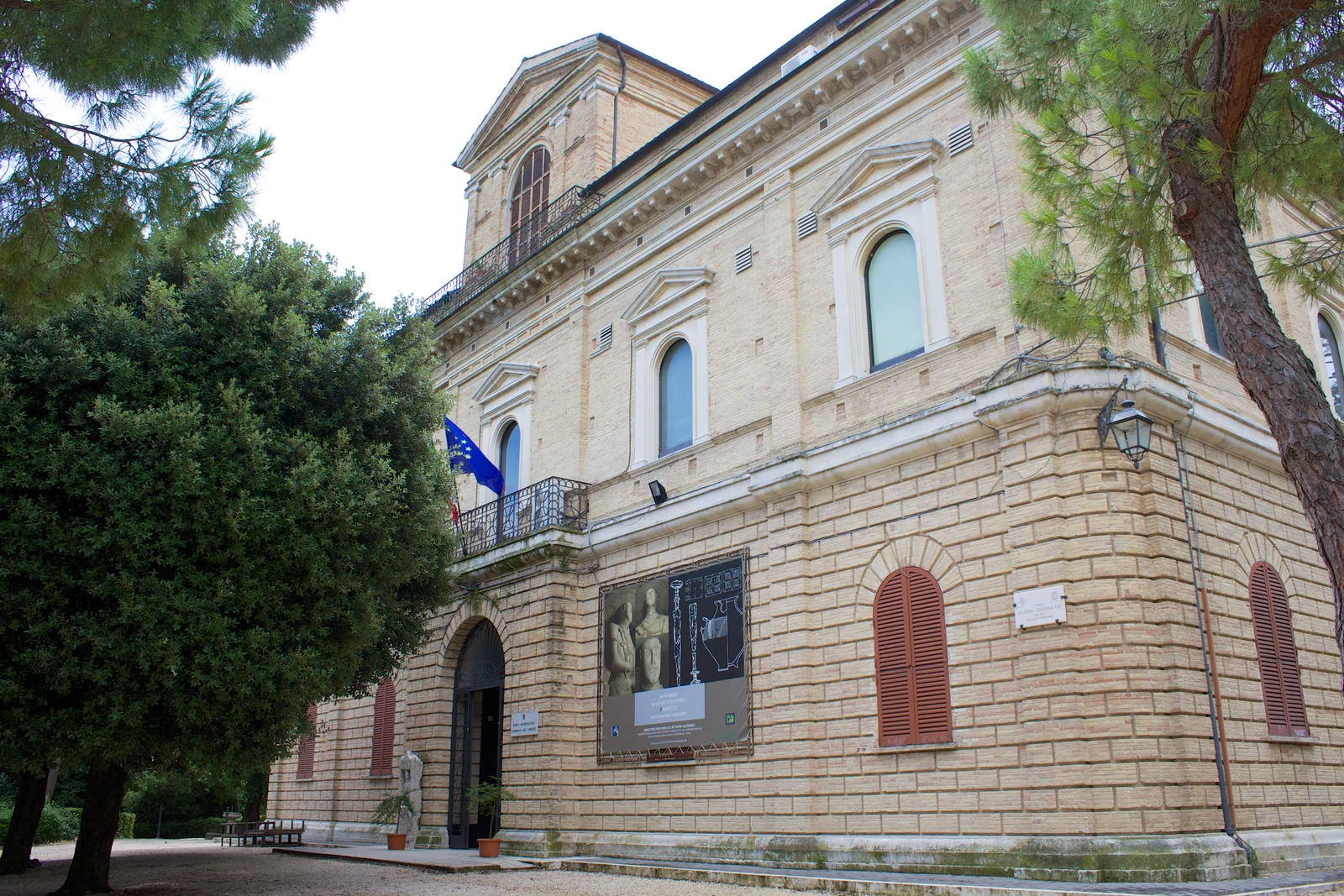
Photo: Incola / Wikimedia Commons — CC BY-SA 4.0 · Resized and converted to WebP.
Flavours
Chieti's cooking is that of the Abruzzo that lies between mountains and sea. The Ministry of Tourism's portal lists pasta alla chitarra, cut on the distinctive wooden frame strung with wires, ngrecciata, a soup of broad beans and artichokes, and pallotte cac'e ove; then game dishes, wild boar above all, and farmyard animals cooked in the pan or the oven with vegetables, and among the fish dishes polipi in purgatorio. The wine is Montepulciano d'Abruzzo, with Cerasuolo, its rosé version, and Trebbiano.
Sweets follow the calendar: cicerchiata, little balls of fried dough bound with honey and candied fruit, is the queen of Carnival; all year round there are neole, also called pizzelle or ferratelle, wafers made with eggs, flour, white wine, sugar and aniseed.
In Chieti Scalo, on Viale dell'Unità d'Italia, the Fermenta pizzeria works with Abruzzo produce: Pera d'Abruzzo tomatoes, Farindola pecorino, a Slow Food presidium, and flours beyond plain wheat, such as spelt and nettle.
Fermenta (pizzeria), one of the food places featured by Apulica, is based in Chieti.
Sources: Italia.it (Ministero del Turismo) — Chieti · Italia.it (Ministero del Turismo) — I prodotti e i piatti tipici dell'Abruzzo · Fermenta, sito ufficiale
Things to do
A walk begins along Corso Marrucino and continues to the Villa comunale, the town's main park, laid out on several terraces: at the top, near the museum, an Italian garden and a small wood; on the middle level the monumental fountain; lower down the shady avenues and the ponds, with stone bridges and a statue of Neptune. Along the avenue stands the Great War memorial by Pietro Canonica, unveiled on 19 June 1924. From the Villa and the hill of Villa Frigerj you can see the skyline of the old town and the Majella.
Roman Chieti can also be discovered underground. Beneath the old centre runs a system of cisterns and tunnels dug to bring water to Teate, still partly intact, which served as an air-raid shelter during the Second World War; the most mysterious stretch is the Via Tecta, an underground road more than four metres high that passes beneath Corso Marrucino and whose purpose is still not known for certain. You can also see the baths of the second century AD, with the Neptune mosaic in the atrium, and the great nine-chambered cistern set against the hill.
At the top of the ancient acropolis, the La Civitella archaeological museum tells the birth and growth of Teate along three routes, with reconstructions of temple pediments in painted terracotta and stone tools about 400,000 years old; the museum looks out over the Majella. Next to it lie the remains of the first-century AD amphitheatre, elliptical in shape, where gladiators fought. In Piazza dei Templi Romani, the three small temples known as the temples of San Paolo are the town's oldest place of worship.
Sources: Comune di Chieti — Villa comunale · Ministero della Cultura — Museo archeologico nazionale d'Abruzzo, Villa Frigerj · Comune di Chieti — Chieti sotterranea · Comune di Chieti — Terme romane · Comune di Chieti — Museo archeologico La Civitella · Italia.it (Ministero del Turismo) — Chieti · Comune di Chieti — Anfiteatro romano della Civitella · Comune di Chieti — Tempietti romani
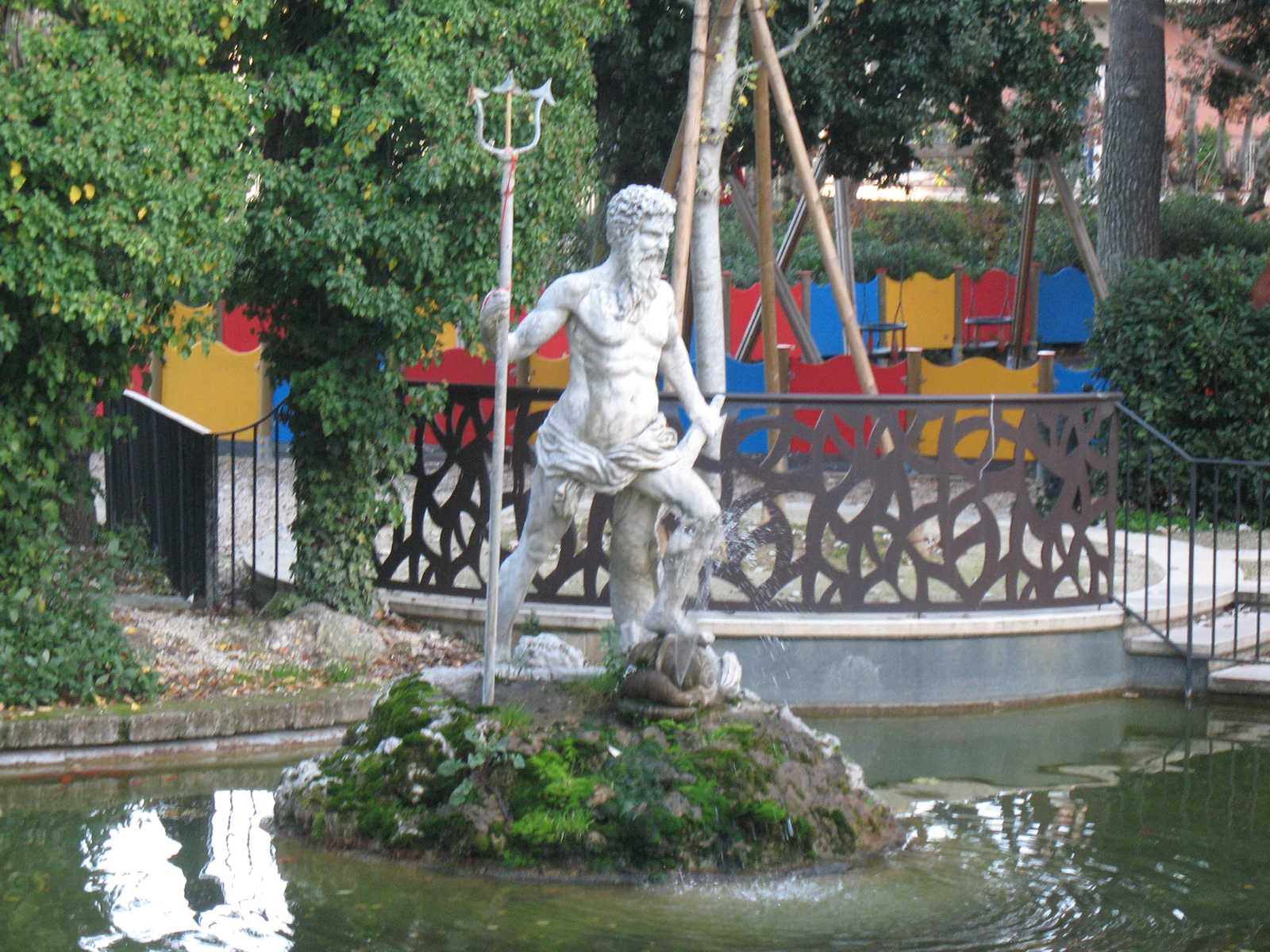
Photo: Cats' photos / Wikimedia Commons — CC BY-SA 4.0 · Resized and converted to WebP.
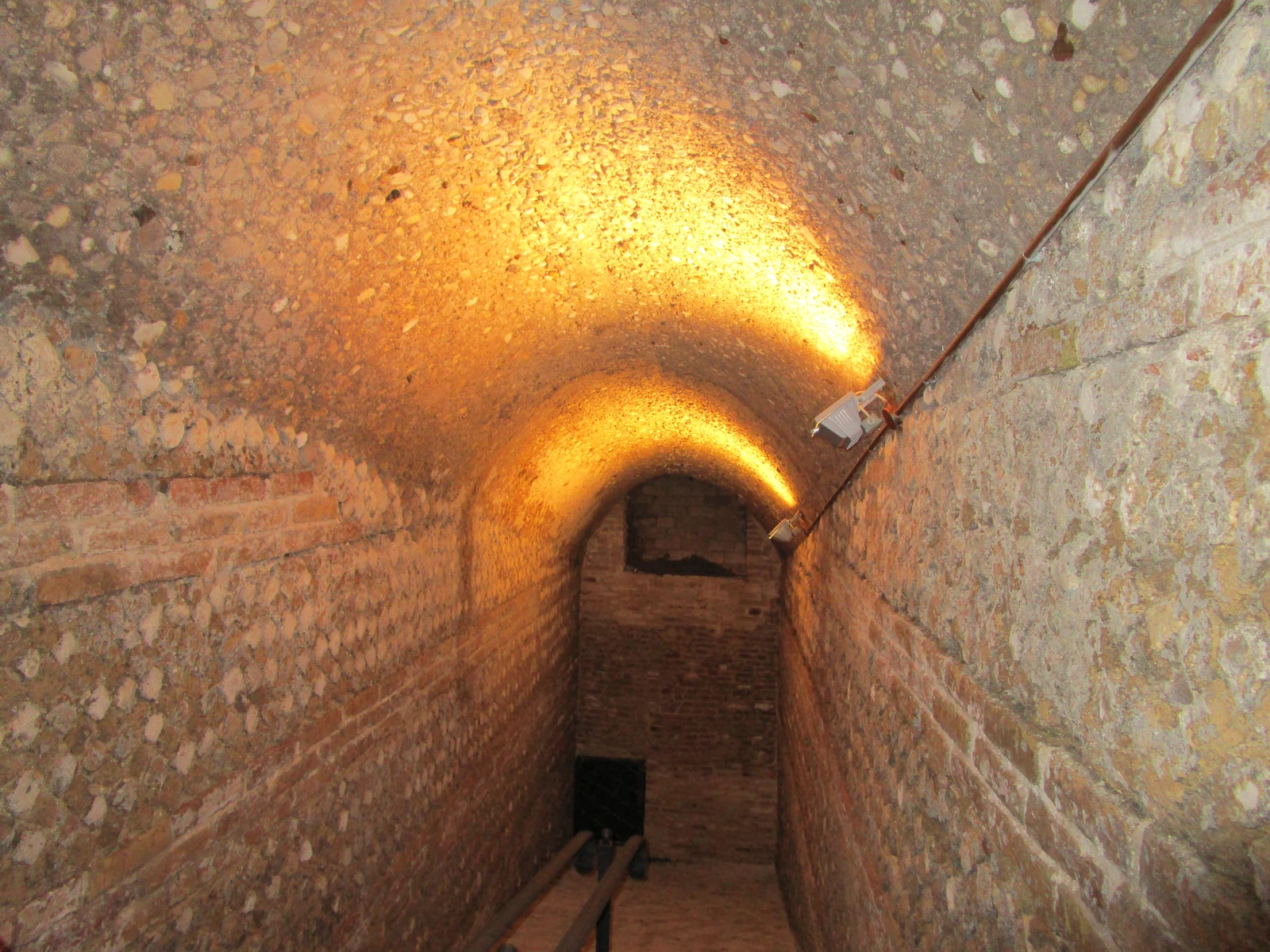
Photo: Cats' photos / Wikimedia Commons — Public domain · Resized and converted to WebP.
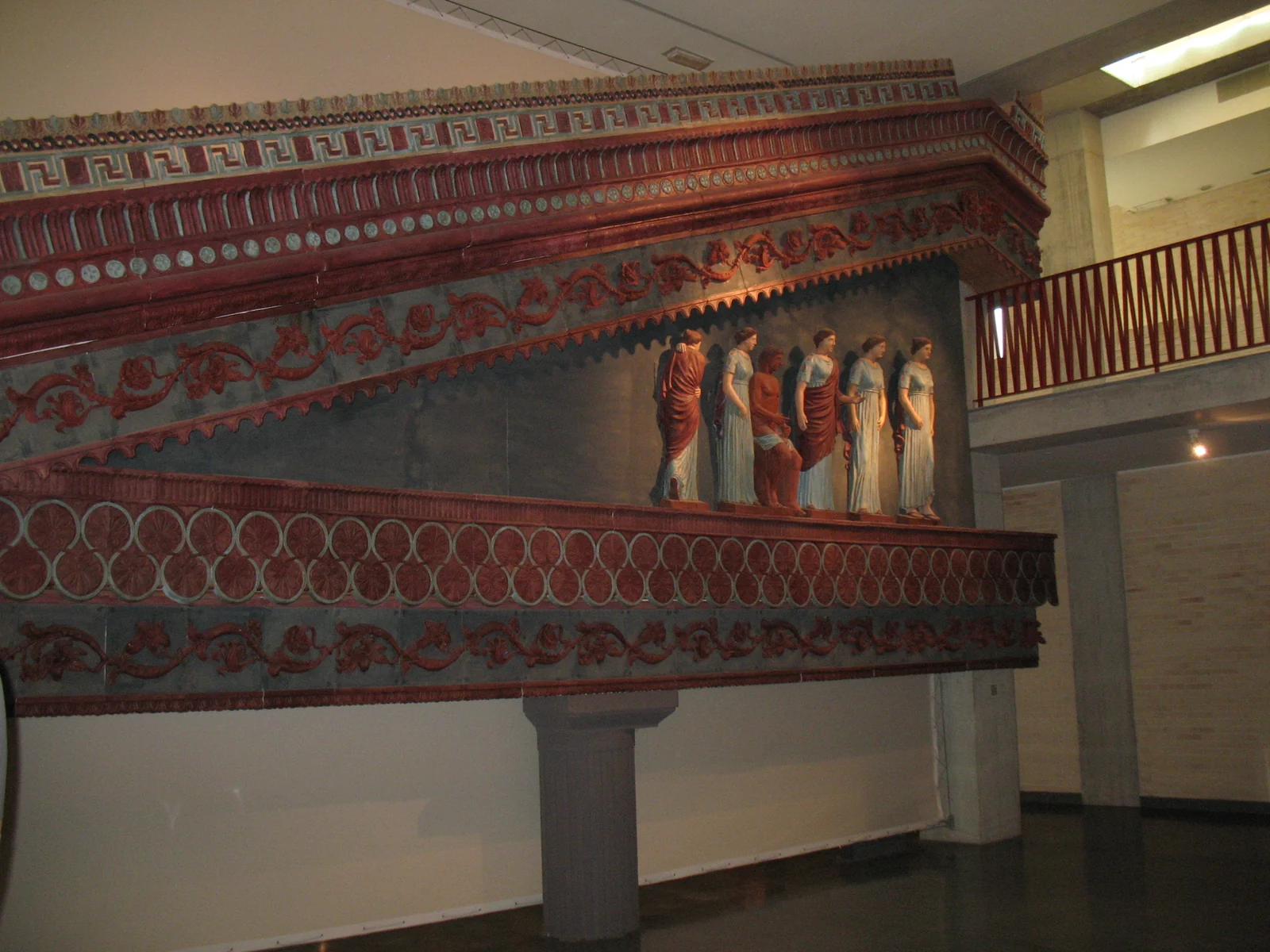
Photo: Cats' photos / Wikimedia Commons — CC BY-SA 4.0 · Resized and converted to WebP.
When to go
The most intense moment of the year is the evening of Good Friday. Chieti's procession, organised by the Arciconfraternita del Sacro Monte dei Morti, the oldest of the town's confraternities, is among the oldest in Italy, although its present form dates from the seventeenth century. After sunset it leaves the cathedral and crosses the old centre, lit by burning tripods, with the seven symbols of the Passion made by the Chieti artist Raffaele Del Ponte, the Dead Christ and Our Lady of Sorrows; it is accompanied by an orchestra of about 150 musicians and a choir of 160 tenors and basses singing the Miserere composed in the first half of the eighteenth century by Saverio Selecchy, chapel master of the cathedral.
Summer is the season of the Estate Teatina. In 2026 the fifth edition of "Chieti sotto le Stelle" brought concerts from 31 July to 27 August to Piazza Vico, the Villa comunale, Piazzale Marconi and Piazza San Giustino, and the "Sere d'estate" series, from 30 July to 30 September, filled the cloister of San Giovanni, the Civitella museum and the Villa comunale with art, music, theatre and cinema, free of charge unless stated otherwise. Each year's programme is on the town council's pages.
In every season the town, set between the riviera and the massifs of the Majella and the Gran Sasso, looks out over the sea and the mountains. Museums and monuments have varying hours and some, like the Roman theatre, are temporarily closed: it is worth checking before you set off.
Sources: Soprintendenza Archeologia Belle Arti e Paesaggio per le province di Chieti e Pescara — The Good Friday procession in Chieti · Comune di Chieti — Oratorio del Sacro Monte dei Morti · Comune di Chieti — Chieti sotto le Stelle, quinta edizione (2026) · Comune di Chieti — Sere d'estate 2026 · Comune di Chieti — Cenni storici · Comune di Chieti — Teatro romano
Getting there and around
Chieti is split between the upper town and Chieti Scalo: the railway station is in Chieti Scalo, on the Rome-Pescara line, and buses climb from the valley floor to Chieti centre. Those arriving on the Adriatic Bologna-Bari line get off at Pescara and take the bus to Chieti, or the train towards Rome, getting off at Chieti station, the first after Pescara. Chieti station offers RFI assistance for people with disabilities and reduced mobility, with the Sala Blu of reference in Ancona.
Abruzzo Airport, in Pescara, is a few kilometres away: TUA buses leave every 15 minutes and stop at the "G. d'Annunzio" University, Chieti Scalo and Chieti centre; there is also a SATAM bus every two hours. By car, leave the A14 motorway at Pescara Ovest - Chieti and take the dual carriageway to Chieti centre or the Tiburtina Valeria road; from Rome you come on the A25. In the upper town the old centre is small and easy to walk.
The official website of the Comune di Chieti, registered in IndicePA, the index of the digital addresses of Italy’s public administrations, is the reference for the town council’s offices, opening hours and news. Its address is listed among the sources of this section.
Sources: Comune di Chieti — Anfiteatro romano della Civitella · Comune di Chieti — Cenni storici · RFI — Stazione di Chieti · Aeroporto d'Abruzzo — Trasporti · Italia.it (Ministero del Turismo) — Chieti · Comune di Chieti, sito istituzionale · IndicePA (AgID), Indice dei domicili digitali delle pubbliche amministrazioni: dataset Enti
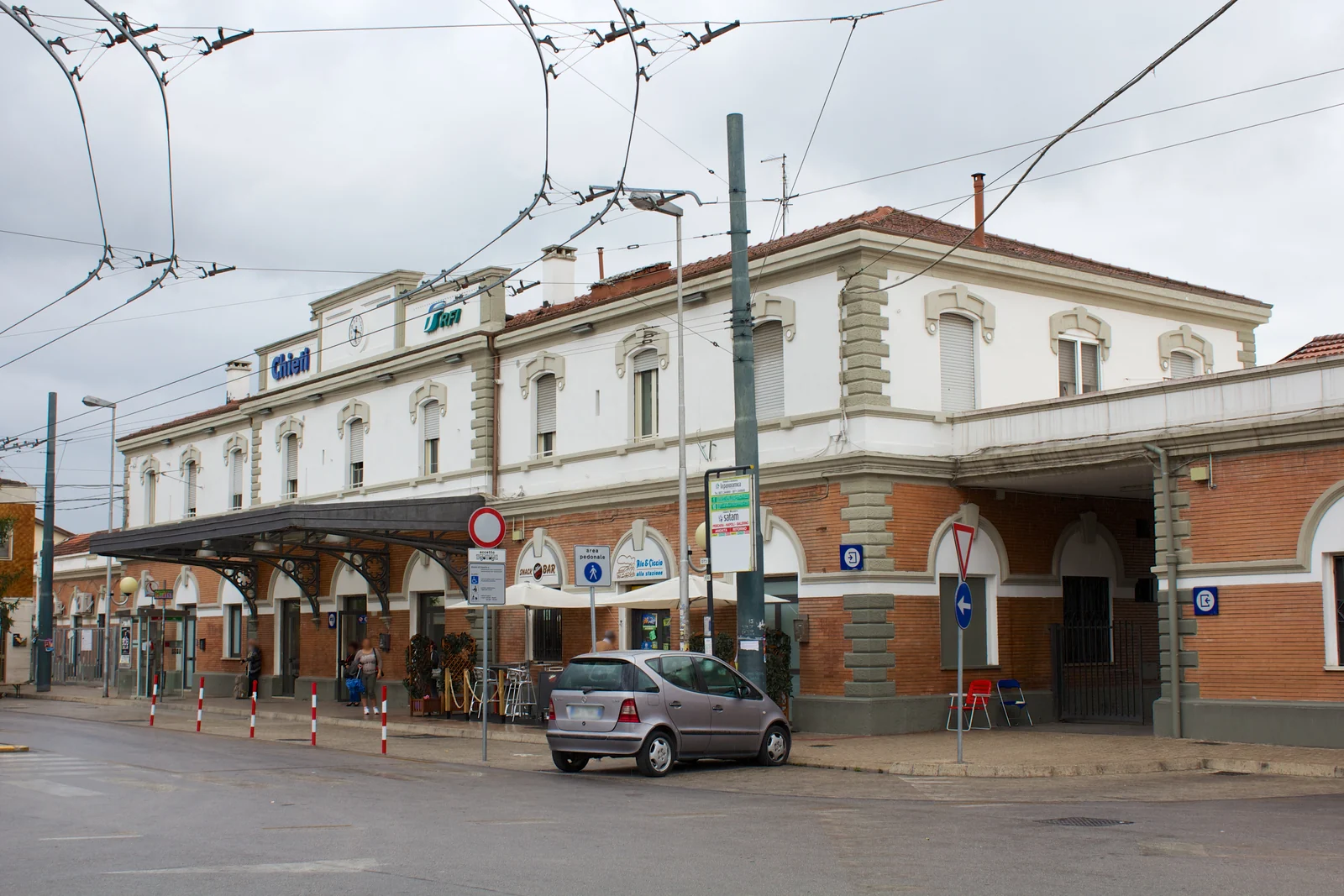
Photo: Incola / Wikimedia Commons — CC BY-SA 4.0 · Resized and converted to WebP.
Where to stay
For a visit on foot it is best to stay in the upper town, between Corso Marrucino, the cathedral and the Villa comunale, where the museums and monuments are; those arriving by train or wanting to head for Pescara, the coast and the airport can choose Chieti Scalo, the new town around the station and the university, linked to the centre by bus.
In the Ministry of Tourism’s national database of accommodation (BDSR), on 12 October 2026, Chieti had 174 establishments with a verified national identification code (CIN): 4 hotel-type establishments, 32 non-hotel establishments and 138 other establishments.
Apulica does not publish paid placements: for an organised stay, with a guide or transfers, you can write using the button at the bottom of the page.
Sources: Comune di Chieti — Cenni storici · Italia.it (Ministero del Turismo) — Chieti · Ministero del Turismo – Banca Dati Strutture Ricettive (dashboard pubblica)
Nearby
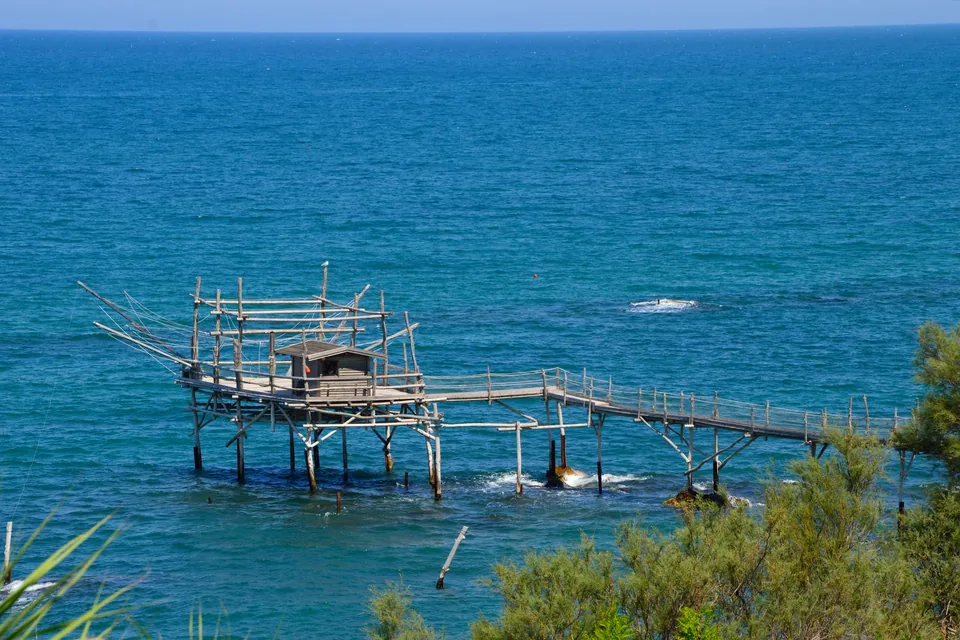
Chieti makes a good base for the surrounding area. Pescara lies at the end of the valley, linked by frequent buses; along the coast between Ortona and Vasto stretches the Costa dei Trabocchi, with its old fishing machines on stilts, many of which now house restaurants, and the places where d'Annunzio lived for a time and set "Il trionfo della morte".
Inland lies the Majella National Park, established in 1991; the Gran Sasso massif can also be seen from the town. In the rooms of the National Archaeological Museum you meet the places the finds came from, from Capestrano to Guardiagrele, where the stelae of the grave goods shown at Villa Frigerj were found.
Sources: Aeroporto d'Abruzzo — Trasporti · Italia.it (Ministero del Turismo) — Chieti · Italia.it (Ministero del Turismo) — In Abruzzo, lungo la Costa dei Trabocchi · Treccani, Enciclopedia on line — Chieti · Comune di Chieti — Museo archeologico nazionale d'Abruzzo
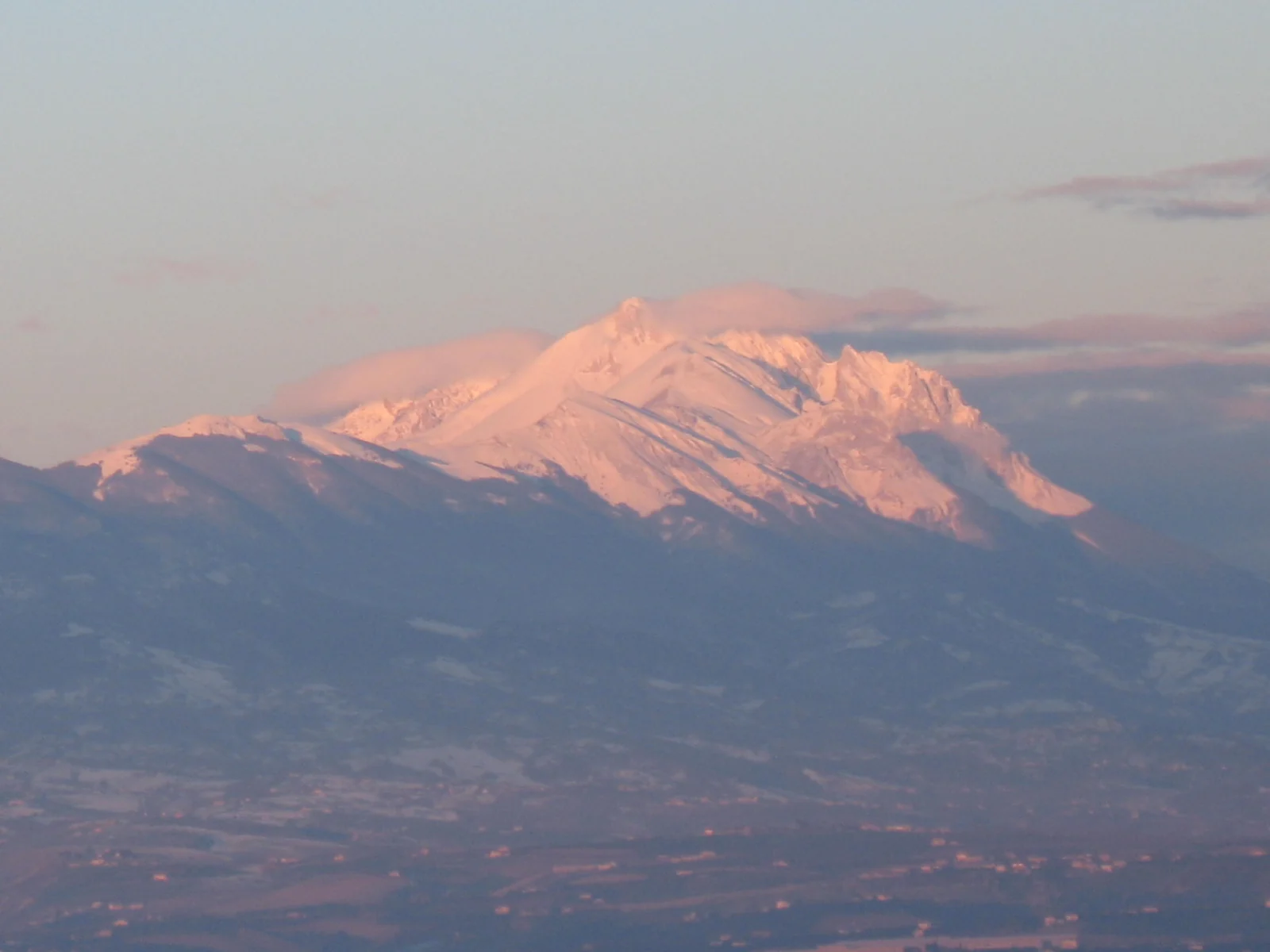
Photo: Cats' photos / Wikimedia Commons — CC BY-SA 4.0 · Resized and converted to WebP.
Where to stay
In the municipality of Chieti the national database of the Ministry of Tourism lists 174 accommodation businesses with a verified CIN code: 4 hotels, 32 other licensed accommodation and 138 other types such as B&Bs and private rentals.
Ask Apulica for a stay in Chieti We reply shortly, within a few hours at most, with a proposal for you to consider.
Sources: Ministero del Turismo – Banca Dati Strutture Ricettive (dashboard pubblica), 2026-10-12
YOUR JOURNEY
How to shape a journey here
We can organise a day in Chieti with a guide, among the archaeological museums, the cathedral and the underground town, or use the town as a base for Pescara, the Costa dei Trabocchi and the Majella, with transfers from the airport. For a trip, a guide or a transfer you can write to Apulica with the button below.
Plan your tripKeep exploring
Trabocchi Coast
The Chieti coastline between Ortona and Vasto, with some thirty wooden trabocchi and the hermitage where D’Annunzio stayed.
Read the guide →Photo: Francesca Piersanti / Wikimedia Commons — CC BY-SA 4.0 · Resized and converted to WebP.

Gran Sasso and Monti della Laga National Park
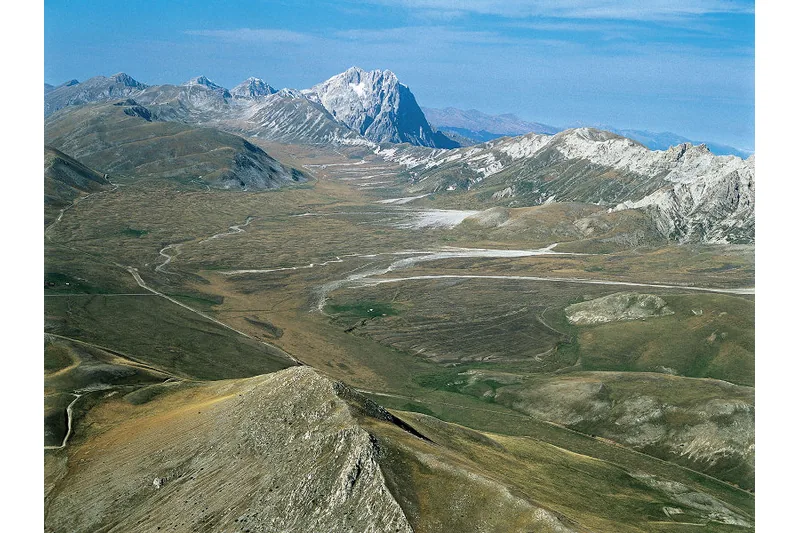
The park of Corno Grande and Campo Imperatore: three mountain groups, 44 municipalities, stone villages, Laga forests and the food of transhumance.
Read the guide →Photo: Ente Parco Nazionale del Gran Sasso e Monti della Laga · Resized and converted to WebP.
Sulmona and the Majella
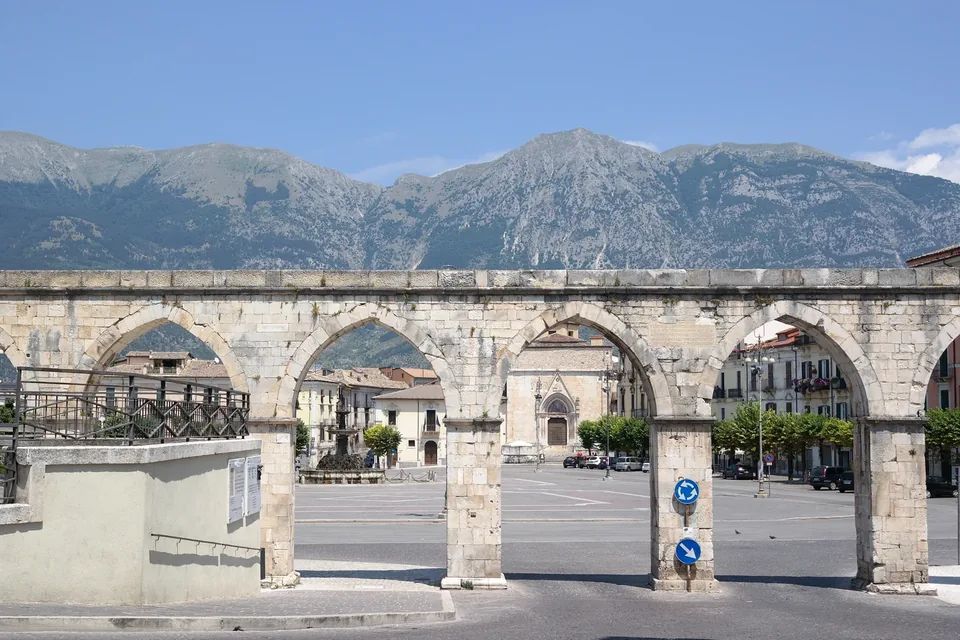
A historic centre in the Peligna basin, surrounded by the Majella park and the starting point of the Way of Celestine.
Read the guide →Photo: Luca Aless / Wikimedia Commons — CC BY-SA 4.0 · Resized and converted to WebP.

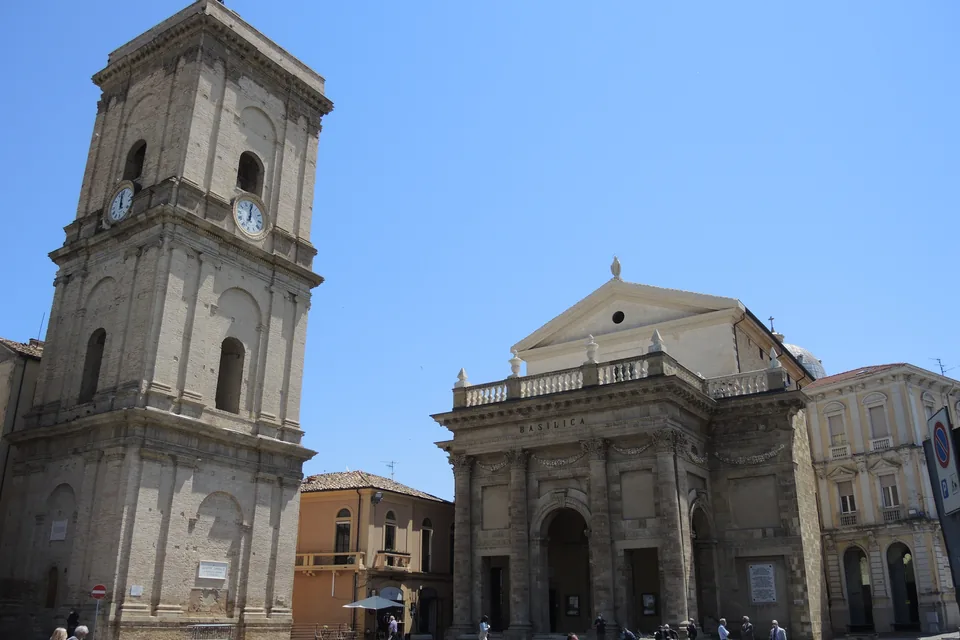
Lanciano
Lanciano (CH), Abruzzo: 33,917 residents, 66.96 km². The official facts of the municipality, its town council website and its registered accommodation. The sanctuary of the Eucharistic Miracle, the cathedral of the Madonna del Ponte above the Diocletian bridge, underground Lanciano, the Torri Montanare, the four historic quarters, the Mastrogiurato and the September feasts.
Read the guide →Photo: Pietro / Wikimedia Commons — CC BY-SA 4.0 · Resized and converted to WebP.

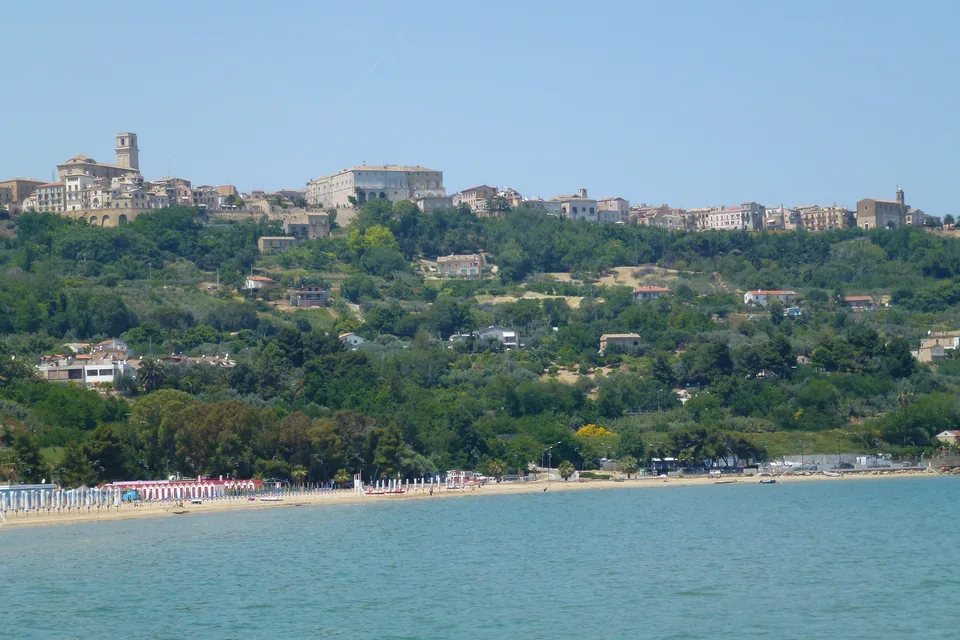
Vasto
Vasto (CH), Abruzzo: 40,861 residents, 71.37 km². The official facts of the municipality, its town council website and its registered accommodation. Palazzo d’Avalos with the civic museums and the Neapolitan garden, the Caldoresco Castle, the Roman baths, Vasto Marina and the Punta Aderci nature reserve, the “Colline Teatine” PDO olive oil with the “Vastese” mention and the feast of San Michele.
Read the guide →Photo: maury3001 / Wikimedia Commons — CC BY 3.0 · Resized and converted to WebP.

“Come to Chieti as a guest, not as a tourist: that is how these places truly let you know them.”