

Why go
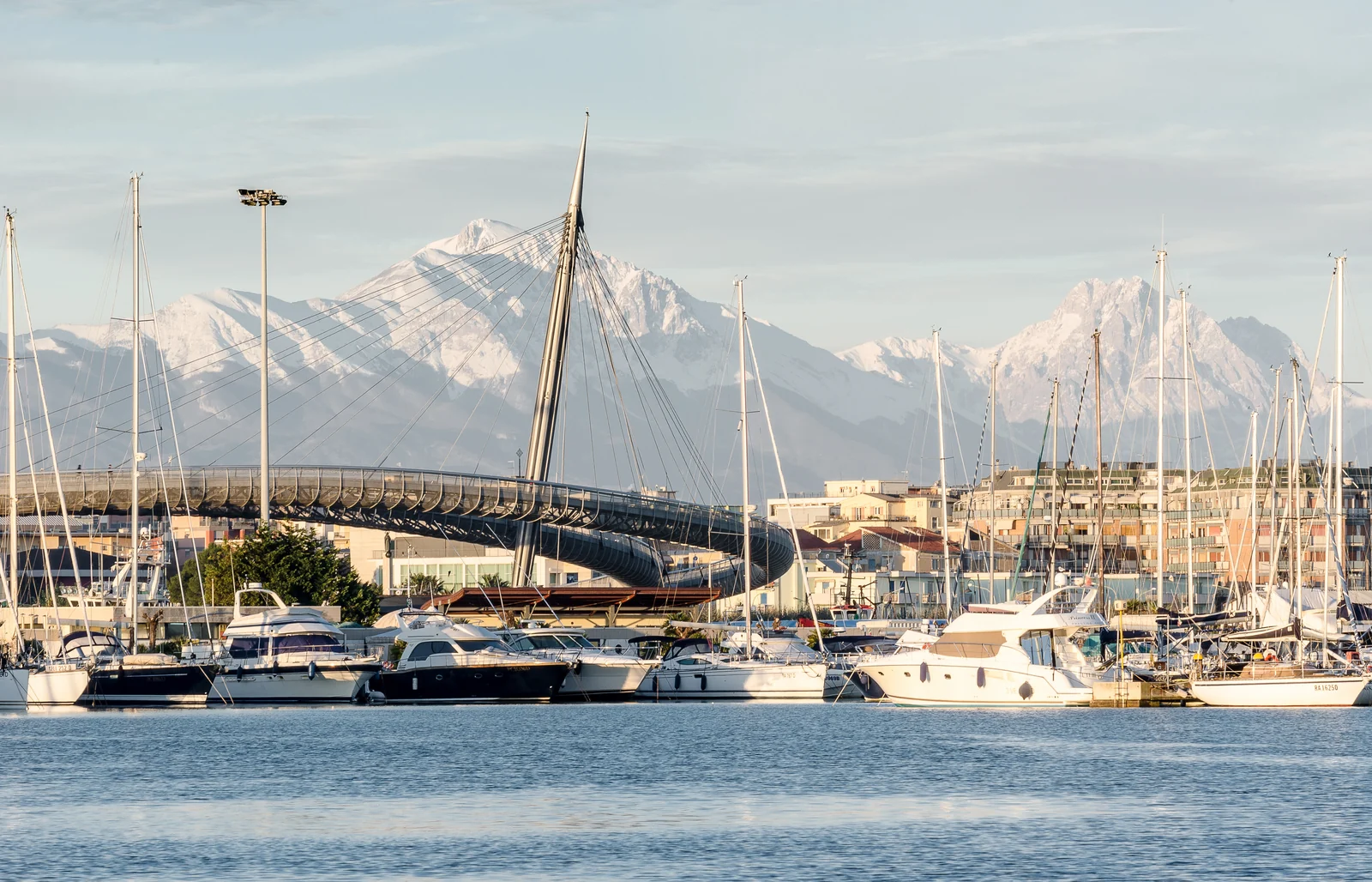
Pescara is the Abruzzo city that stands on the sea and on a river at once. The Adriatic riviera runs for kilometres of beach and seafront promenade, and halfway along it Pietro Cascella's Nave, a galley of white Carrara marble 15 metres long, has become the symbol of the city. The Pescara river, called the Aterno upstream, reaches the sea in the middle of town: at its mouth the Ponte del Mare, a 466-metre cycle and footbridge, is the largest bridge of its kind in Italy, and from its curve the view runs from the Adriatic to the mountains of the Apennines.
Today's city is young. It was born in 1927 from the union of two towns, Pescara on the right bank of the river and Castellammare Adriatico on the left; it was largely destroyed by the bombing of the Second World War and grew again from the 1950s towards the hills and along the coast. Yet inside this modern city the old Pescara survives, once enclosed in the fortress built for Charles V: it was there, on Corso Manthonè, that Gabriele d'Annunzio was born on 12 March 1863, in the house that is now a state museum.
Pescara also gave the world Ennio Flaiano, the writer and screenwriter born here in 1910, to whom the city has devoted international prizes since 1973, and a musical tradition that since 1969 has brought the great names of jazz here every summer. The centre lives around Corso Umberto I and Piazza della Rinascita, the city's "drawing room", with its cafés and bars; the museums range from the peoples of Abruzzo, told in the rooms of the old Bourbon prison, to the contemporary art of the Imago Museum. Pescara is easy to visit on foot and by bicycle, between the sea, the riverside and the pine forest.
Pescara is a municipality in the province of Pescara, in Abruzzo. Its ISTAT code is 068028. It is the capital of the province of Pescara. On 1 January 2025 it had 118,313 residents. The municipal territory covers 34.42 km² and ranges from -9 to 184 metres above sea level; the town hall stands at about 11 metres.
2027 is a special year for the city. The centenary website, Pescara100, recalls that the two banks of the river have been a single town since 1927 and names 2 January 2027 as Pescara's birthday; and from 1 January 2027, under a merger set by a 2023 regional law, Pescara, Montesilvano and Spoltore become a single new municipality, which keeps the name Pescara.
Sources: Italia.it (Ministero del Turismo) — Pescara · Comune di Pescara — Nave di Cascella · Comune di Pescara — Ponte del Mare · Treccani, Enciclopedia on line — Pescara · Ministero della Cultura — Museo casa natale di Gabriele d'Annunzio · Treccani, Enciclopedia on line — Ennio Flaiano · Premi Internazionali Flaiano — sito ufficiale · Ente Manifestazioni Pescaresi — Pescara Jazz, festival internazionale · Comune di Pescara — Piazza della Rinascita · Fondazione Genti d'Abruzzo — La storia del Museo delle Genti d'Abruzzo · Comune di Pescara — Imago Museum · ISTAT, Codici statistici delle unità amministrative territoriali: elenco dei comuni al 21 febbraio 2026 · ISTAT, Popolazione residente per età, sesso e stato civile al 1° gennaio 2025 (POSAS) · ISTAT, Principali statistiche geografiche sui comuni: superficie e altimetria al 31 dicembre 2021 · Pescara100: i cento anni di Pescara · Comune di Pescara: il nuovo Comune di Pescara
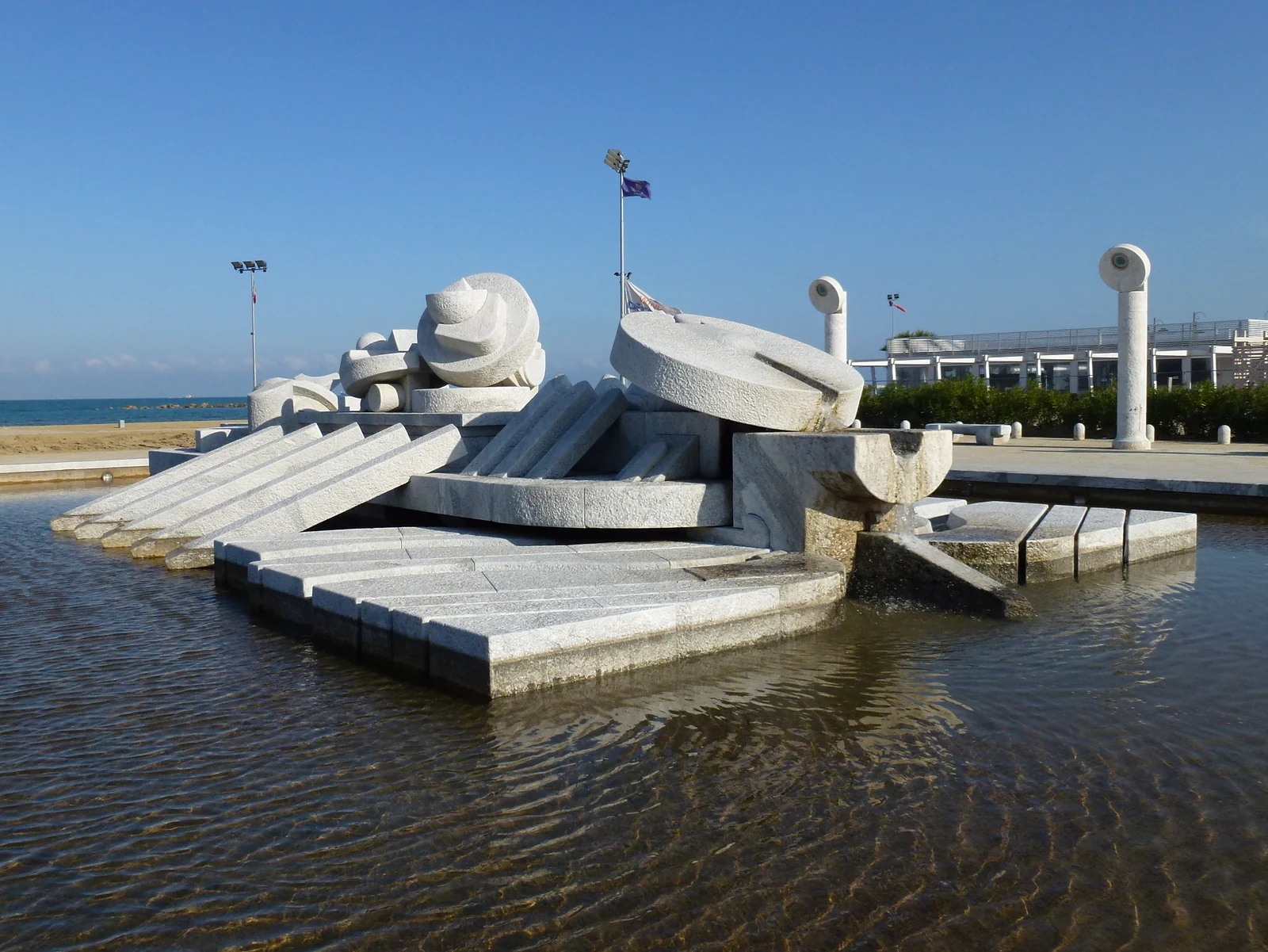
Photo: maury3001 / Wikimedia Commons — CC BY 3.0 · Resized and converted to WebP.
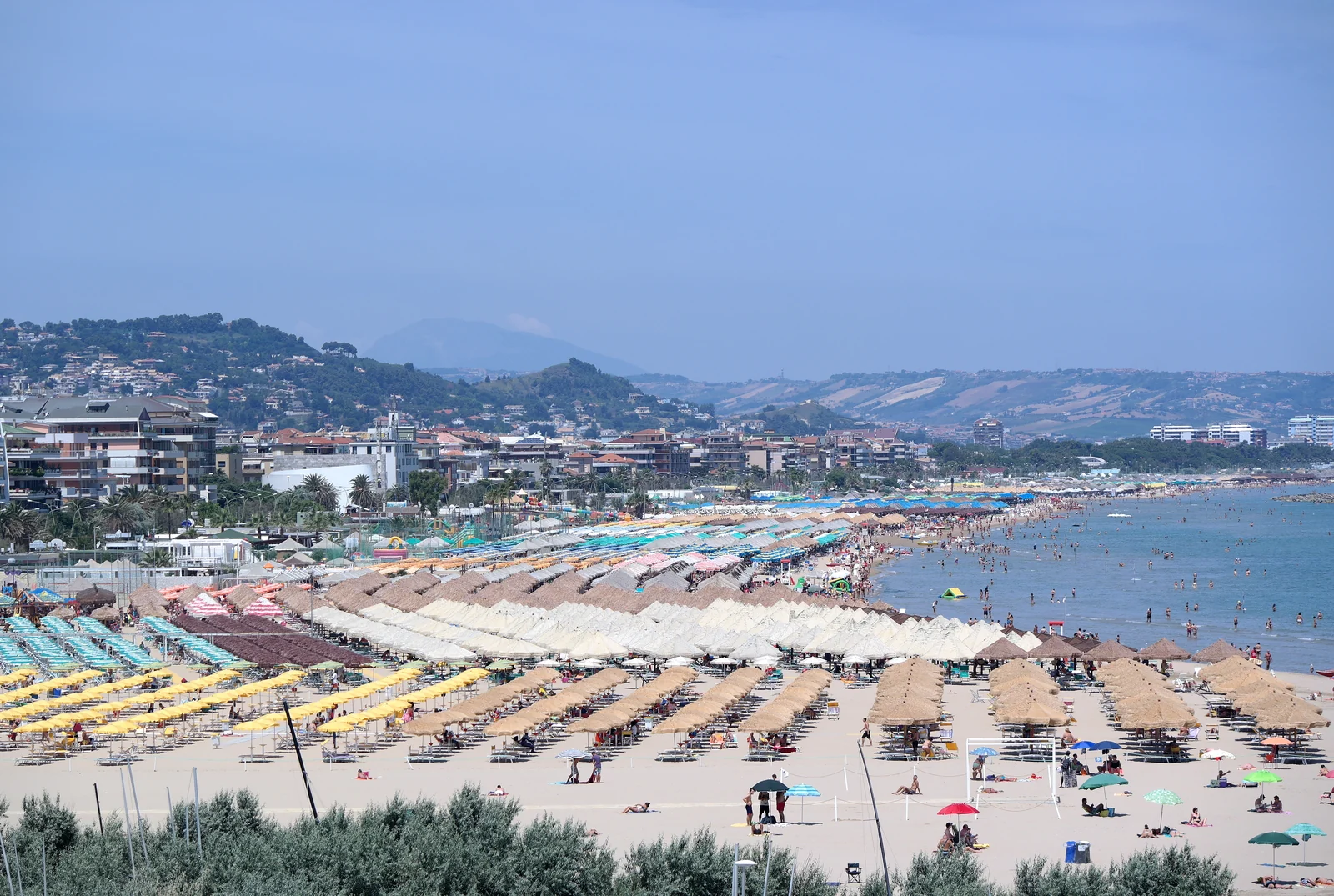
Photo: Luca Aless / Wikimedia Commons — CC BY-SA 4.0 · Resized and converted to WebP.
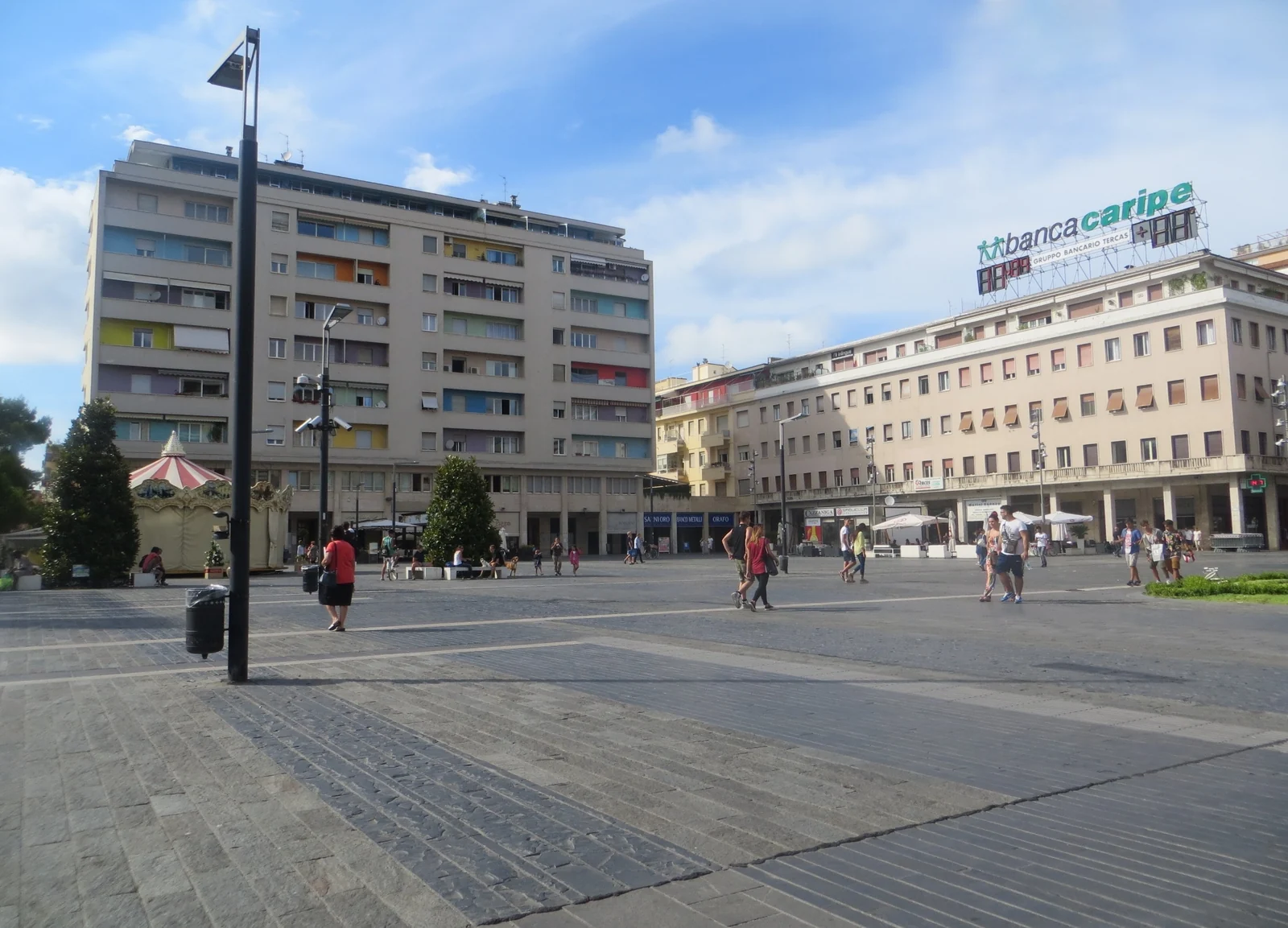
Photo: Luca Aless / Wikimedia Commons — CC BY-SA 4.0 · Resized and converted to WebP.
History
In antiquity the city was called Aternum, like the river: it was the shared port of three Italic peoples, the Vestini, the Marrucini and the Paeligni, and a place to embark for Dalmatia. Almost destroyed by the invasions and by the Lombards, it rose again in the early Middle Ages under the name of Piscaria. Its castle was destroyed by Otto IV in 1209 and rebuilt by Ladislaus, King of Naples, in 1409; in the fifteenth century the town was fought over by the Angevins and the Aragonese, Alfonso I took it in 1442, and it then passed to the Ávalos family, who became marquesses of Pescara in 1528. The family name has stayed with the pine forest, which locals still call the Pineta d'Avalos.
In the sixteenth century Pescara became a stronghold. The fortress, wanted by Charles V and continued by the Duke of Alba, was designed by the architect Erardo Barleduc and completed around 1557: an irregular pentagon with bastions at its corners. In 1566 it withstood the attacks of 105 Turkish galleys, in 1707 it had to surrender to Austrian troops, and in 1734 it held out for two months against the siege of Charles of Bourbon. What remains of the fortress is the infantry barracks built by the Bourbons, on Via delle Caserme: its lower floor became a penal prison, where between 1850 and 1860 many patriots of the Abruzzo Risorgimento were locked up, chained in pairs to common criminals. Many drowned in the flood of 1853, and in 1865 cholera broke out there. In 1867 the citadel was dismantled.
The modern city grew around the railway: the station was built in 1863, and Corso Umberto I, which runs from there to the sea, filled with cafés and literary circles in the early twentieth century. In 1910 the town council wanted to turn the pine forest area into a seaside resort and had the engineer Antonino Liberi build the Kursaal, a name coined by d'Annunzio, opened on 14 August 1910 with a banquet for five hundred guests. The project never took off, and in 1919 the building was bought by the Pomilio family, who moved there the distillery of Aurum, the orange liqueur that d'Annunzio named. In 1938 the architect Michelucci designed the extension of the factory, today a cultural centre.
In 1927 Pescara and Castellammare Adriatico were merged into a single municipality, and in the same year d'Annunzio's birthplace was declared a national monument, at the poet's own request. In 1938 work was completed on the new church of San Cetteo, which d'Annunzio had championed and where he had his mother buried; the poet died on the night of 1 March that year. In 1943 bombing struck the seafront, Via Fabrizi and the Corso and destroyed most of the buildings in the centre. The reconstruction of 1947-1950 created Piazza della Rinascita, designed by Luigi Piccinato and named after the material, social and economic rebirth of the city; San Cetteo, with its façade rebuilt, became a cathedral in 1949. Today the city holds the Gold Medal for Civil Merit.
From the 1950s Pescara grew rapidly, passing 130,000 inhabitants in 1981 and forming a single large conurbation with Montesilvano, Francavilla al Mare and the neighbouring towns. In the same years it became a cultural centre: the jazz festival was born in 1969, the Flaiano Prizes in 1973, the Museo delle Genti d'Abruzzo in May 1973. In the mid-1980s the marina was built beside the canal port, and on 8 December 2009 the Ponte del Mare, designed by the Tyrolean architect Walter Pichler, was opened.
D'Annunzio's birthplace passed to the State property office in 1958 and then into the care of the Ministry. The poet lived there until he was eleven, when he left to study in Prato, and later came back for short visits to his mother, who stayed on alone in the house.
Ennio Flaiano was a novelist, playwright and screenwriter: he wrote stories for films by Fellini and Antonioni and coined expressions such as «la dolce vita», «paparazzo» and «vitelloni». His books include «Tempo di uccidere», «Diario degli errori» and «Un marziano a Roma». The Flaiano International Prizes, founded in 1973 by Edoardo Tiboni, reward fiction, cinema, theatre, television and radio; the Superflaiano for fiction is chosen by the «Giuria dei 100», a jury of one hundred, and the writers invited to Pescara have included future Nobel laureates such as Seamus Heaney, José Saramago, Derek Walcott and Imre Kertész. In 2026 the prizes reached their 53rd edition.
Sources: Treccani, Enciclopedia on line — Pescara · Comune di Pescara, sito istituzionale · Comune di Pescara — Riserva naturale Pineta dannunziana · Fondazione Genti d'Abruzzo — La storia del Museo delle Genti d'Abruzzo · Comune di Pescara — Piazza della Rinascita · Comune di Pescara — Aurum, la storia · Ministero della Cultura — Museo casa natale di Gabriele d'Annunzio · Comune di Pescara — Cattedrale di San Cetteo · Ente Manifestazioni Pescaresi — Pescara Jazz, festival internazionale · Premi Internazionali Flaiano — sito ufficiale · Comune di Pescara — Ponte del Mare · Direzione regionale musei nazionali dell'Abruzzo: Museo casa natale di Gabriele d'Annunzio · Premi Internazionali Flaiano: la storia
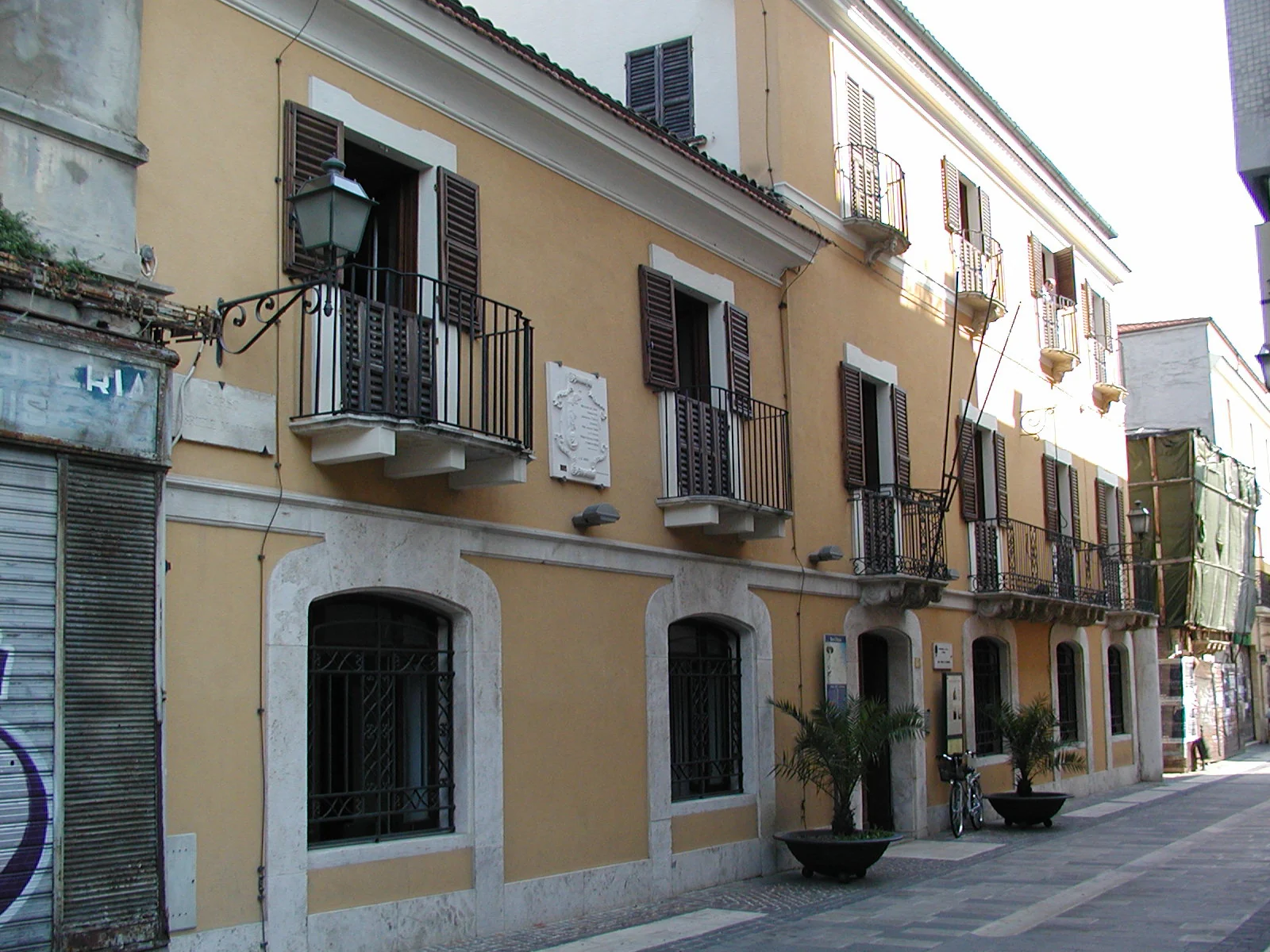
Photo: User:Raboe001 / Wikimedia Commons — CC BY-SA 2.5 · Resized and converted to WebP.
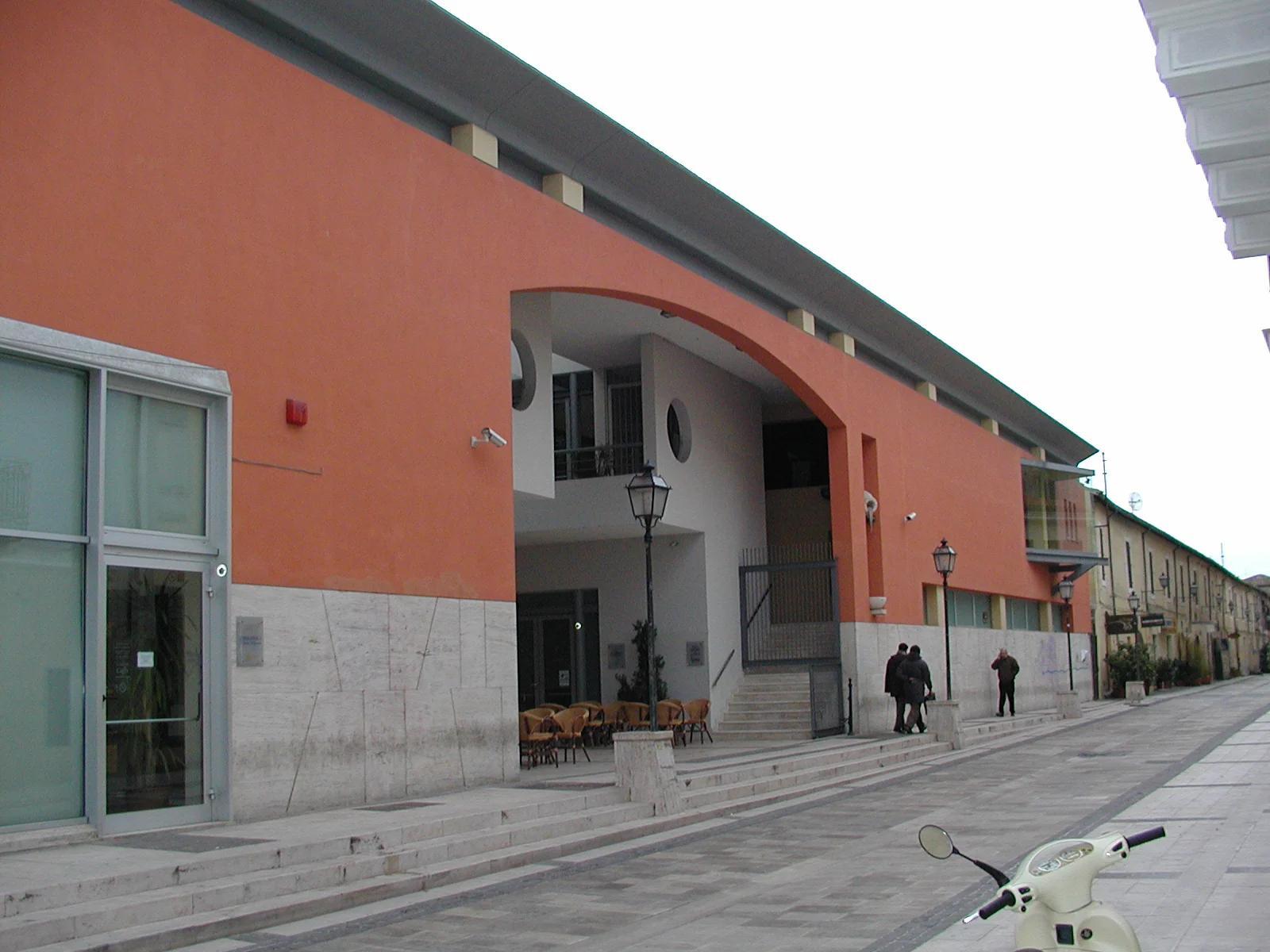
Photo: Ra Boe / Wikimedia Commons — CC BY-SA 2.5 · Resized and converted to WebP.
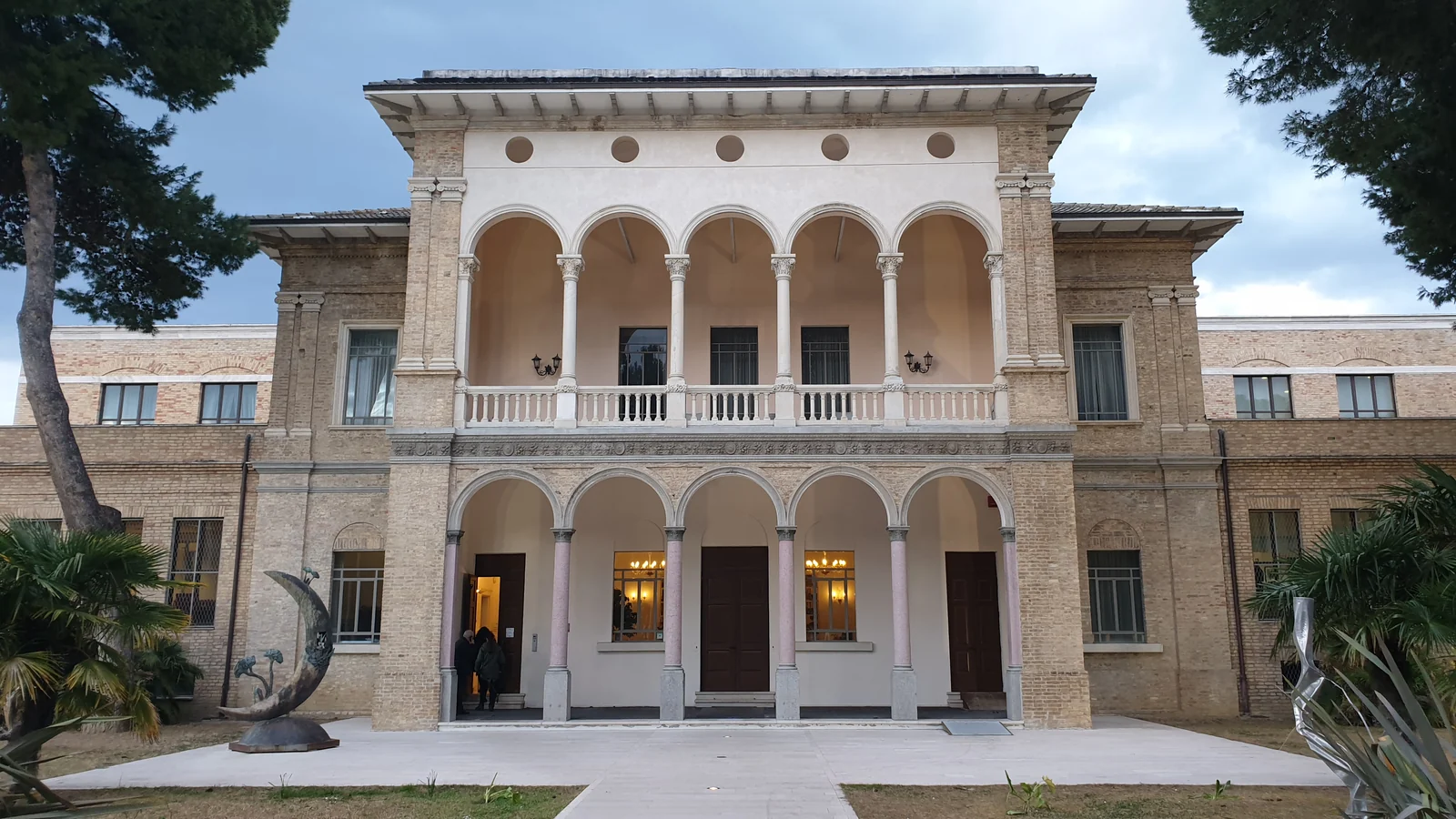
Photo: Pietro / Wikimedia Commons — CC BY-SA 4.0 · Resized and converted to WebP.
What to see
A visit begins at Gabriele d'Annunzio's birthplace, at Corso Manthonè 116, on the main street of old Pescara. It is a museum of the Ministry of Culture: on the first floor are the five rooms of the nineteenth-century middle-class home, with period furniture and paintings and vaults decorated in tempera in the mid-nineteenth century, the oldest painted decoration surviving whole in the city; then the poet's wardrobe, with the red hunting coat and the golden sandals, the illustrated first editions, the casts of his face and hand made by Arrigo Minerbi on the night of his death, and the room of the soldier poet. On the ground floor is the stable, in memory of his first horses. The museum is closed on Mondays and admission is free on the first Sunday of the month.
Nearby, at Via delle Caserme 24, the Museo delle Genti d'Abruzzo occupies the Bourbon barracks, whose basement belonged to the sixteenth-century fortress: it tells the story of people in Abruzzo from the Palaeolithic hunter to the Italic peoples and on to the objects, costumes and festivals that have come down to us, over about 3,500 square metres. A combined ticket also covers the Museo civico Basilio Cascella.
The Cathedral of San Cetteo, on Piazza San Cetteo, was built in place of a small seventeenth-century church that d'Annunzio described in his Novelle della Pescara. It has an Abruzzo Romanesque-style façade with three portals, the central one with a mosaic of Christ Pantocrator, three naves and a raised transept. On the left is the chapel of the patron saint, with a silver bust by Luciano Primavera; on the right the tomb of Luisa De Benedictis, the poet's mother, with its monument by Arrigo Minerbi; among the works is a Saint Francis adoring the crucifix by Guercino, a gift from d'Annunzio. On the hills above the city stands the sanctuary of the Madonna dei Sette Dolori, founded in the seventeenth century.
In the centre, at Corso Vittorio Emanuele II 270, the Imago Museum of the Fondazione Pescarabruzzo occupies the rationalist building put up in 1933 for the headquarters of the Banco di Napoli: 1,200 square metres of modern, contemporary and photographic art, with a large retrospective of Mario Schifano, the most notable collection of Danish art in Italy, from 1877 to 1946, and works by Larry Rivers and José Ortega. It is open Tuesday to Sunday. In the new town there are also the Museo Paparella Treccia Devlet, with ceramics by the great artists of Castelli in the late nineteenth-century Villa Urania, and the Museo Vittoria Colonna on Piazza I Maggio, with temporary exhibitions.
On the seafront, at Largo Mediterraneo, stands Cascella's Nave: made in 1986, shown for some months in Piazza Santa Croce in Florence and donated to the city by the sculptor, it measures 15 by 9.3 by 4 metres and its prow points towards the city. It recalls Pescara's seafaring tradition and the prisoners of the Bourbon jail used as oarsmen on Spanish ships until 1859; the Ministry has recognised it as a site of cultural interest. Above the fountain in Piazza Italia there is a sculpture dedicated to d'Annunzio.
On the seafront, next to the pine wood, the Gabriele D'Annunzio Monument Theatre was built in 1963, the centenary of the poet's birth: it is an open-air theatre facing the sea, with seating for 2,000, and beside it an indoor hall of 500 seats, the Auditorium Flaiano, used all year round. It is run by the Ente Manifestazioni Pescaresi.
In Villa Urania, at the start of viale Regina Margherita, the Paparella Treccia Devlet Museum shows 151 pieces of Castelli maiolica from the 16th to the 19th century, collected over forty years by Professor Raffaele Paparella Treccia and donated in 1997, together with the villa, to the foundation named after him and his wife Margherita Devlet: there are works by Francesco Grue and his descendants, Gesualdo Fuina, Carmine Gentili, Candeloro Cappelletti and Silvio De Martinis. It opens Tuesday to Sunday, and on Mondays by booking.
The CLAP Museum of the Fondazione Pescarabruzzo is the only exhibition venue in the city devoted entirely to comics: on two levels it shows 324 works by Andrea Pazienza, illustrations, paintings and sketches, gathered partly thanks to his teacher at the Misticoni art school in Pescara, Sandro Visca; the other two floors hold temporary exhibitions. It opens Tuesday to Sunday, mornings and afternoons.
Sources: Ministero della Cultura — Museo casa natale di Gabriele d'Annunzio · Fondazione Genti d'Abruzzo — La storia del Museo delle Genti d'Abruzzo · Fondazione Genti d'Abruzzo — Orari, biglietti e informazioni · Comune di Pescara — Cattedrale di San Cetteo · Italia.it (Ministero del Turismo) — Pescara · Comune di Pescara — Imago Museum · Comune di Pescara — Nave di Cascella · Ente Manifestazioni Pescaresi: l'Ente e il Teatro monumento Gabriele D'Annunzio · Comune di Pescara — Piazza della Rinascita · Comune di Pescara: Museo Paparella Treccia Devlet · Comune di Pescara: CLAP Museum
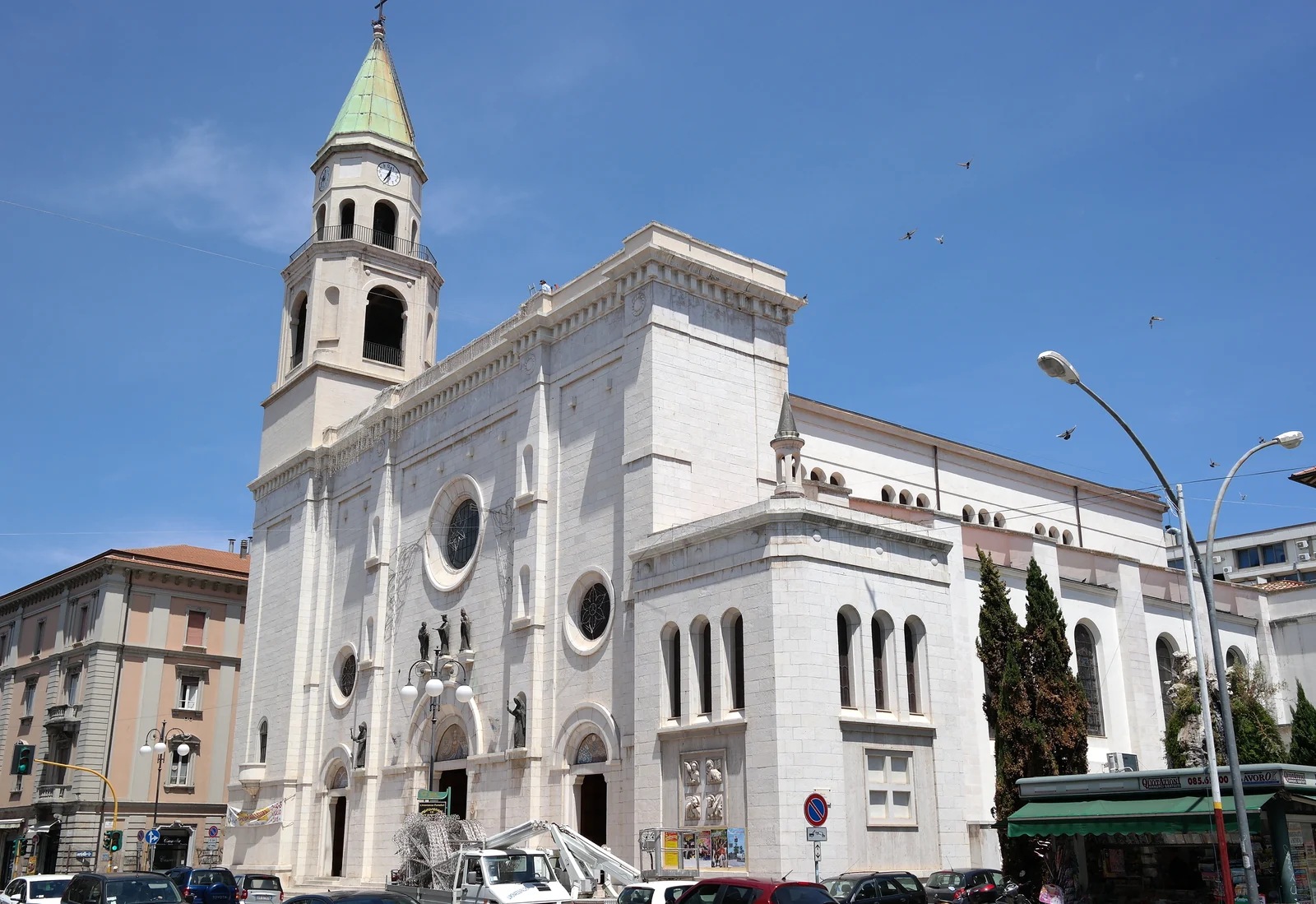
Photo: Luca Aless / Wikimedia Commons — CC BY-SA 4.0 · Resized and converted to WebP.
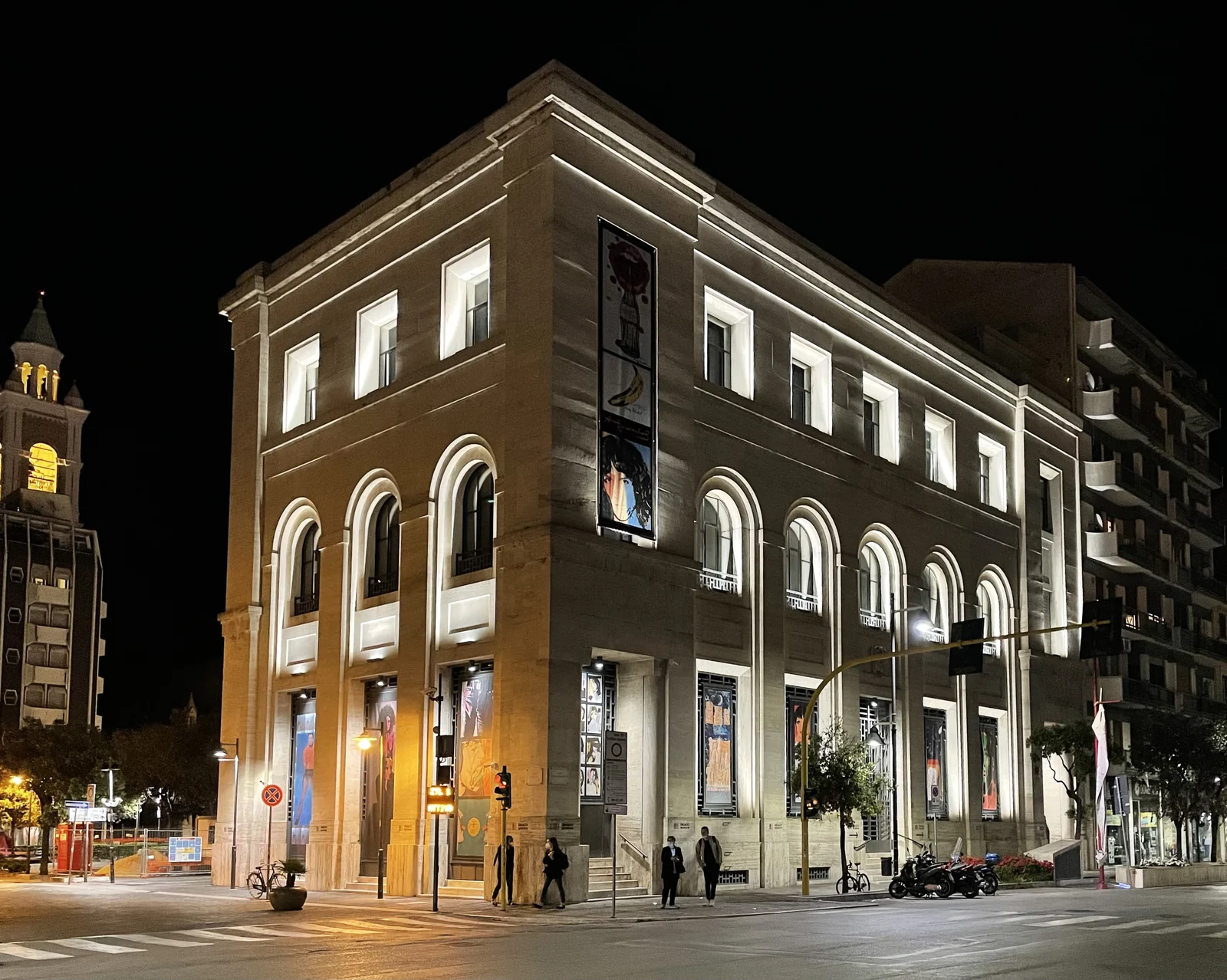
Photo: Sinaida Adriani / Wikimedia Commons — CC BY-SA 4.0 · Resized and converted to WebP.
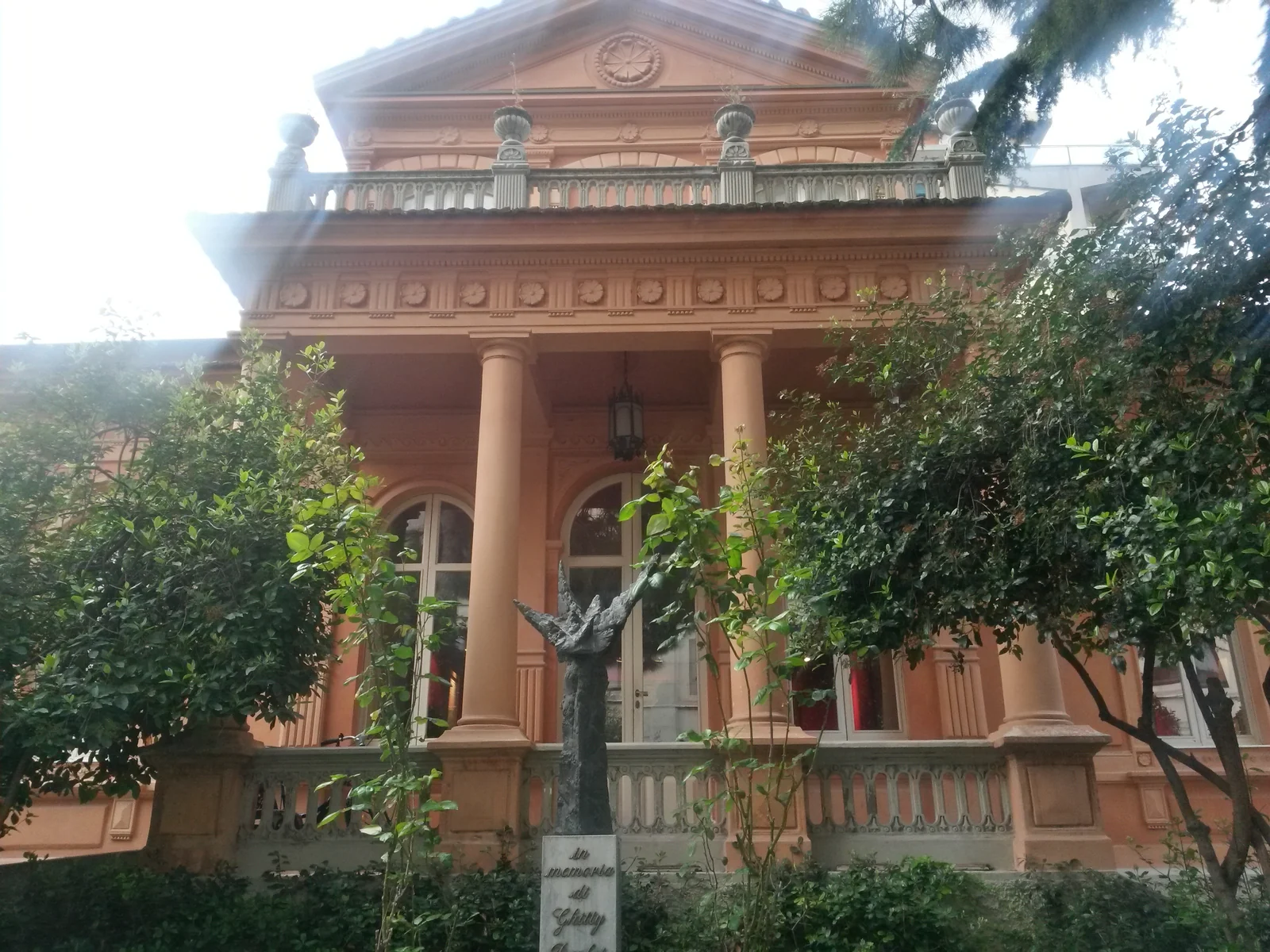
Photo: Titti77302 / Wikimedia Commons — CC BY-SA 4.0 · Resized and converted to WebP.
Flavours
In Pescara the cooking of Abruzzo comes from the sea and the mountains on the same day. From the sea comes fish brodetto, called vrudett around Pescara; from the mountains come arrosticini, the mutton skewers that are the region's best-known dish, seasoned with olio santo, extra virgin olive oil in which chillies have been steeped. The first course above all others is maccheroni alla chitarra, square-section spaghetti cut on the frame of steel wires that gives them their name, whose first prototype dates from 1860; they are often served with pallottine, small meatballs. The wine is Montepulciano d'Abruzzo, with Cerasuolo d'Abruzzo, its rosé version, and Trebbiano d'Abruzzo among the whites.
One speciality belongs to the city itself. Aurum is the liqueur born in the Pomilio family distillery in the pine forest, blending a distillate of fine wines with one of oranges and ageing it in oak casks; d'Annunzio named it, for its golden colour and for the orange, arantium in Latin. From the Abruzzo tradition comes parrozzo, a cake shaped like a focaccia, made with maize flour, eggs, butter and sugar and covered in chocolate; its name, of uncertain origin, has been read as "pane rozzo", rustic bread.
To eat regional cooking, in old Pescara, at Corso Manthonè 46, there is Taverna 58, open since 1980 on the street where d'Annunzio and Flaiano were born: it is the only osteria in the city among Slow Food's 2026 Chiocciole, with historic dishes on the menu since the 1980s and the cured meats and cheeses of Abruzzo, from pecorino marcetto to ventricina. In the province the same guide honours La Corte in Spoltore and La Bilancia in Loreto Aprutino. For a stroll among shops and bars there is Corso Umberto I, which opens onto Piazza della Rinascita.
The Abruzzo Region's list of traditional food products, in its 2023 update, includes arrosticini, parrozzo, maccheroni alla chitarra and pallotte cace e ove.
Fish comes in through the canal port. The wholesale fish market, built in 1957 and refurbished in 1997, belongs to the municipality: about 70% of the catch landed in the port of Pescara goes through it, and the best-selling species are hake, langoustines and red mullet. The retail fish market has been closed since 4 March 2025.
For food shopping there are two covered markets: in piazza Muzii, Monday to Saturday from 7.30 am to 1.30 pm, with the Galleria Food open Wednesday to Sunday from 7.30 am to midnight, and in via dei Bastioni, Monday to Saturday from 8 am to 1.30 pm. Open-air markets run from 7 am to 2 pm: on Monday in via Pepe, on Tuesday in via Rio Sparto, on Wednesday in via Diaz and in the car park between via Michelangelo and via Silvio Pellico.
Sources: Italia.it (Ministero del Turismo) — I prodotti e i piatti tipici dell'Abruzzo · Italia.it (Ministero del Turismo) — Storia dei maccheroni alla chitarra e altre meraviglie dell'Abruzzo a tavola · Comune di Pescara — Aurum, la storia · Treccani, Vocabolario on line — parrozzo · Taverna 58, Pescara — sito del ristorante · Italia.it (Ministero del Turismo) — Pescara · Slow Food — Tutte le Chiocciole di Osterie d'Italia 2026, regione per regione · Regione Abruzzo: elenco dei prodotti agroalimentari tradizionali, aggiornamento 2023 · Comune di Pescara: mercato ittico all'ingrosso · Comune di Pescara: mercati coperti · Comune di Pescara: mercato coperto di piazza Muzii · Comune di Pescara: mercato coperto di via dei Bastioni · Comune di Pescara: mercato di via Pepe · Comune di Pescara: mercato di via Rio Sparto · Comune di Pescara: mercato scoperto di via A. Diaz · Comune di Pescara: mercato scoperto fra via Michelangelo e via S. Pellico
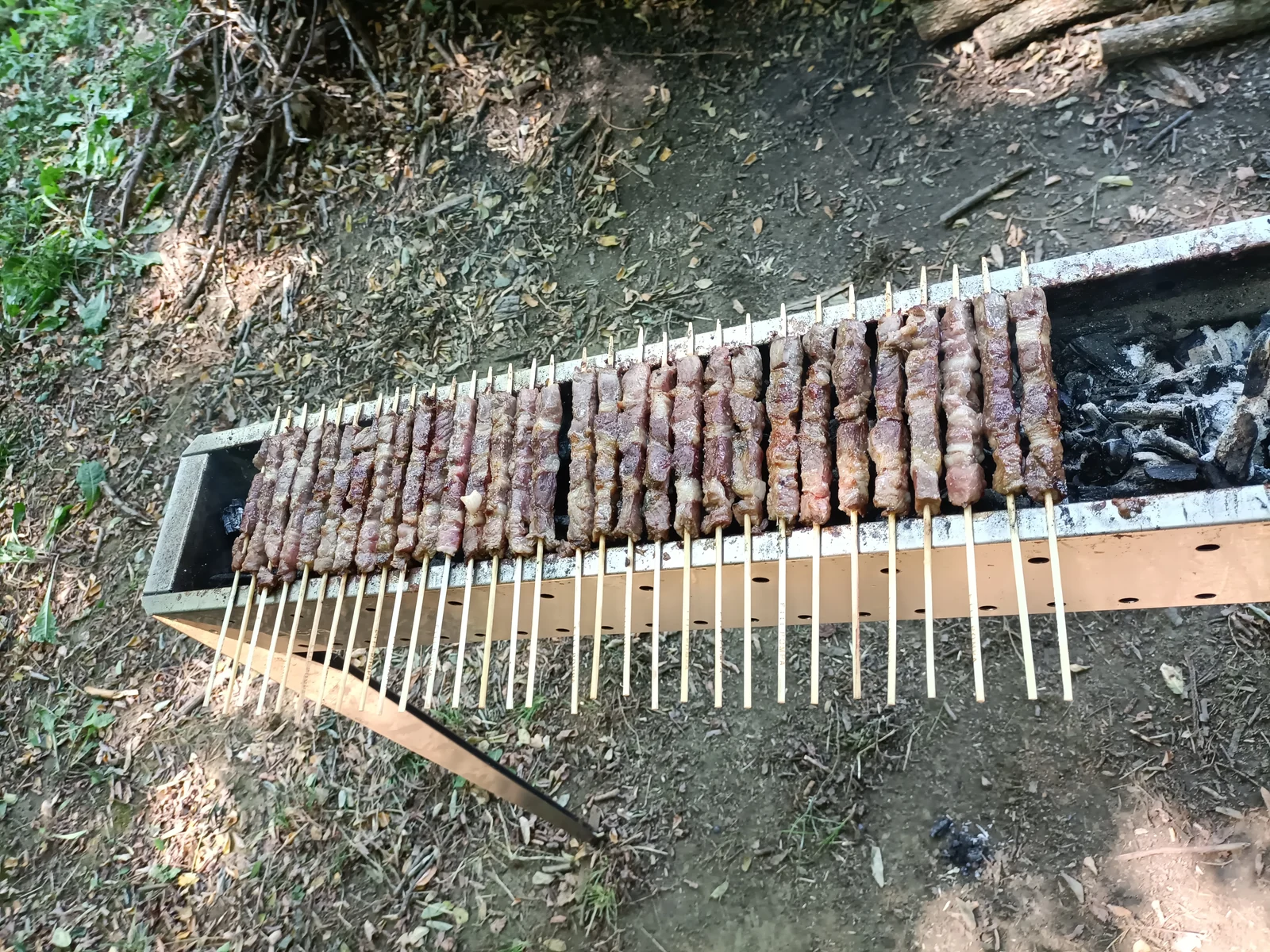
Photo: Superchilum / Wikimedia Commons — CC BY 4.0 · Resized and converted to WebP.
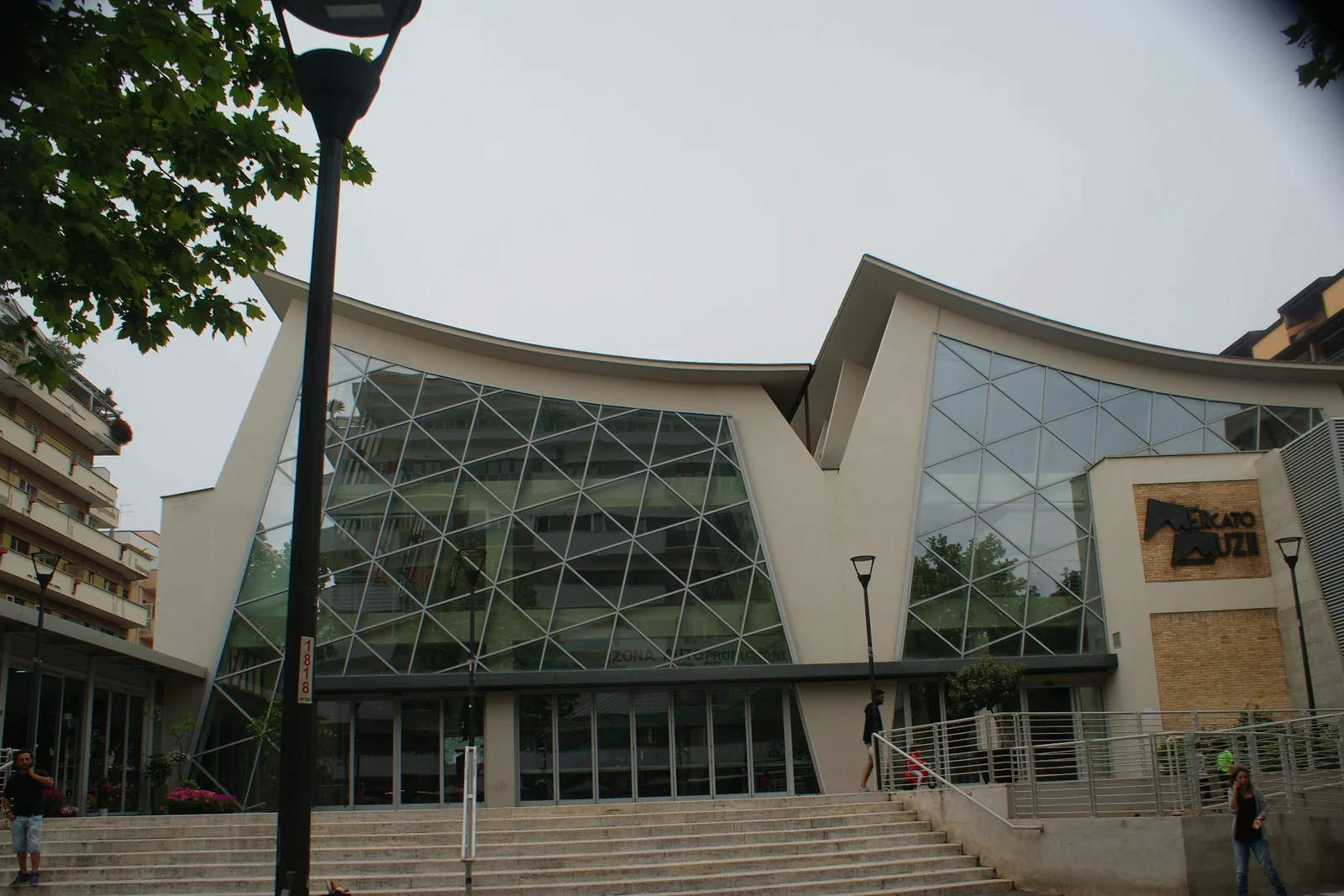
Photo: Alan & Flora Botting / Wikimedia Commons — CC BY-SA 2.0 · Resized and converted to WebP.
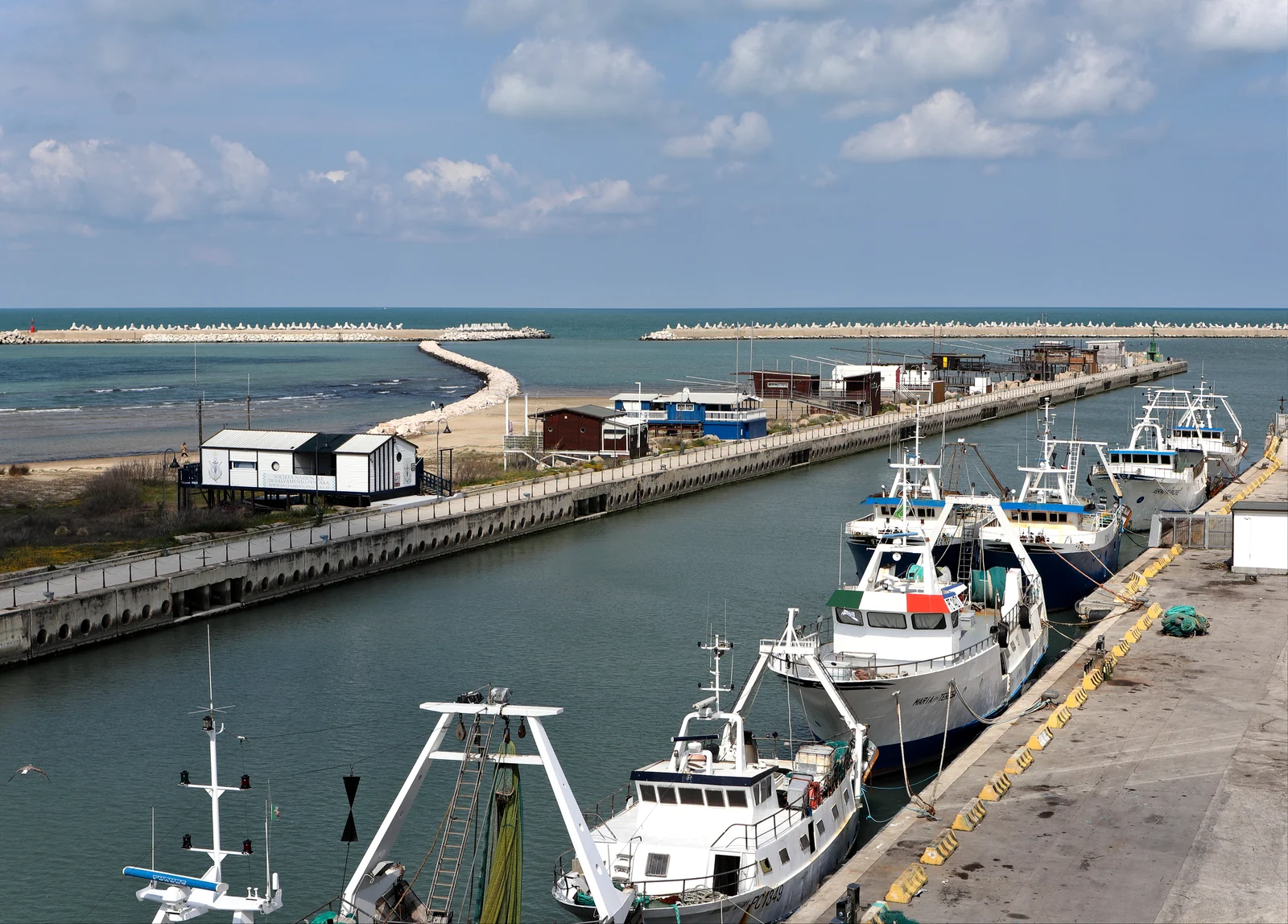
Photo: Terragio67 / Wikimedia Commons — CC BY-SA 4.0 · Resized and converted to WebP.
Things to do
The finest walk is on the Ponte del Mare: it starts by the Rotonda della Madonnina and reaches the Lungomare Papa Giovanni XXIII, with a cycle lane and a footpath that split across its two branches and join again at the ends, hanging from a slightly leaning central pylon. From the bridge you can see the canal port and the marina built beside it in the 1980s; from the other end you carry on along the riviera, with its wide beaches, as far as Cascella's Nave.
A few minutes from the sea, the Pineta dannunziana nature reserve, the Pineta d'Avalos of the locals, protects 56 hectares, 35 of them left in their natural state: Aleppo, maritime and stone pines, downy oaks, holm oaks and an undergrowth of myrtle, bay and mastic, with over a hundred species of birds, many of them migratory. Admission is free, and people come to walk or for a picnic, under the pines where d'Annunzio himself once spent time. At the heart of the pine forest the Aurum, free to enter, hosts exhibitions, concerts and open-air cinema in the circular Piazzale Michelucci, and on the ground floor Getulio Alviani's Tunnel, an environment of optical illusions left from the 1995 "Fuori Uso" show.
In the evening people go to Piazza della Rinascita, the "drawing-room square", closed to traffic and repaved in 2006 in lava stone and white stone, for an aperitivo at the tables of its bars: the city's big events are held here too. The courtyard of Palazzo Testa holds sculptures by Vicentino Michetti, and his Elefantino stands nearby. The Imago Museum runs guided tours for groups of up to 15 people, and the Museo delle Genti d'Abruzzo has educational workshops and activities for schools and families.
By bike, the city has more than 20 kilometres of cycle paths. The Bike to Coast route runs the whole length of the seafront: 4.2 km from Montesilvano to the Ponte del Mare, in about a quarter of an hour, and 3.1 km from the bridge to the boundary with Francavilla al Mare, in about 13 minutes. The Dannunziana cycle route, 2.4 km long, links the centre to the seafront.
Next to the canal port, the Marina di Pescara covers more than 200,000 square metres, with 107,000 square metres of water and 1,000 berths on fixed and floating pontoons: it is among the largest marinas on the Adriatic and has held the Blue Flag for marinas without a break since 1990.
Sources: Comune di Pescara — Ponte del Mare · Treccani, Enciclopedia on line — Pescara · Italia.it (Ministero del Turismo) — Pescara · Comune di Pescara — Riserva naturale Pineta dannunziana · Comune di Pescara — Aurum · Comune di Pescara — Aurum, la storia · Comune di Pescara — Piazza della Rinascita · Comune di Pescara — Imago Museum · Fondazione Genti d'Abruzzo — Orari, biglietti e informazioni · Comune di Pescara: muoversi in bici · Comune di Pescara: Biciplan, rete portante e principali ciclovie · Porto turistico Marina di Pescara: sito ufficiale
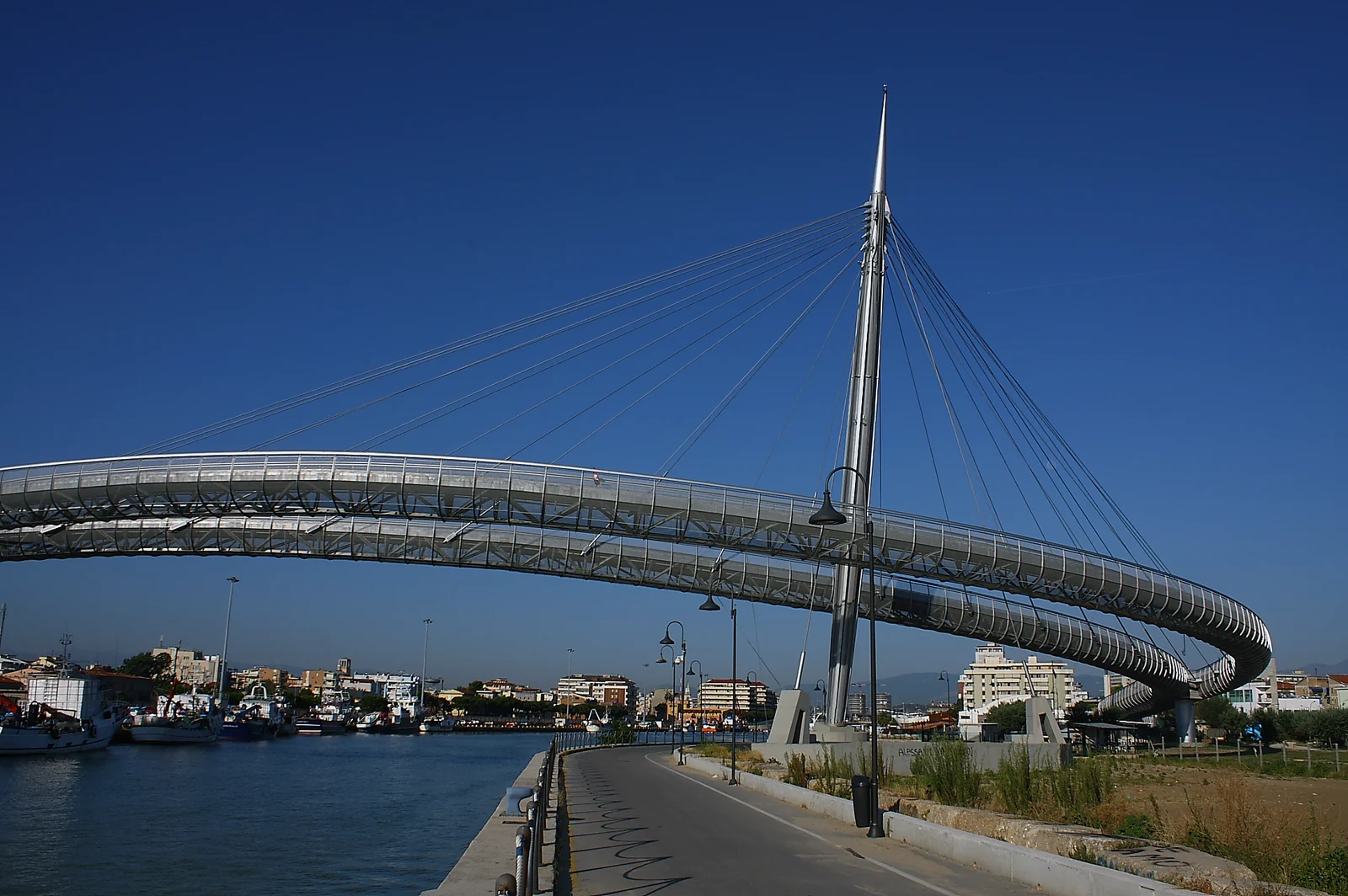
Photo: Bruno / Wikimedia Commons — CC BY-SA 2.0 · Resized and converted to WebP.
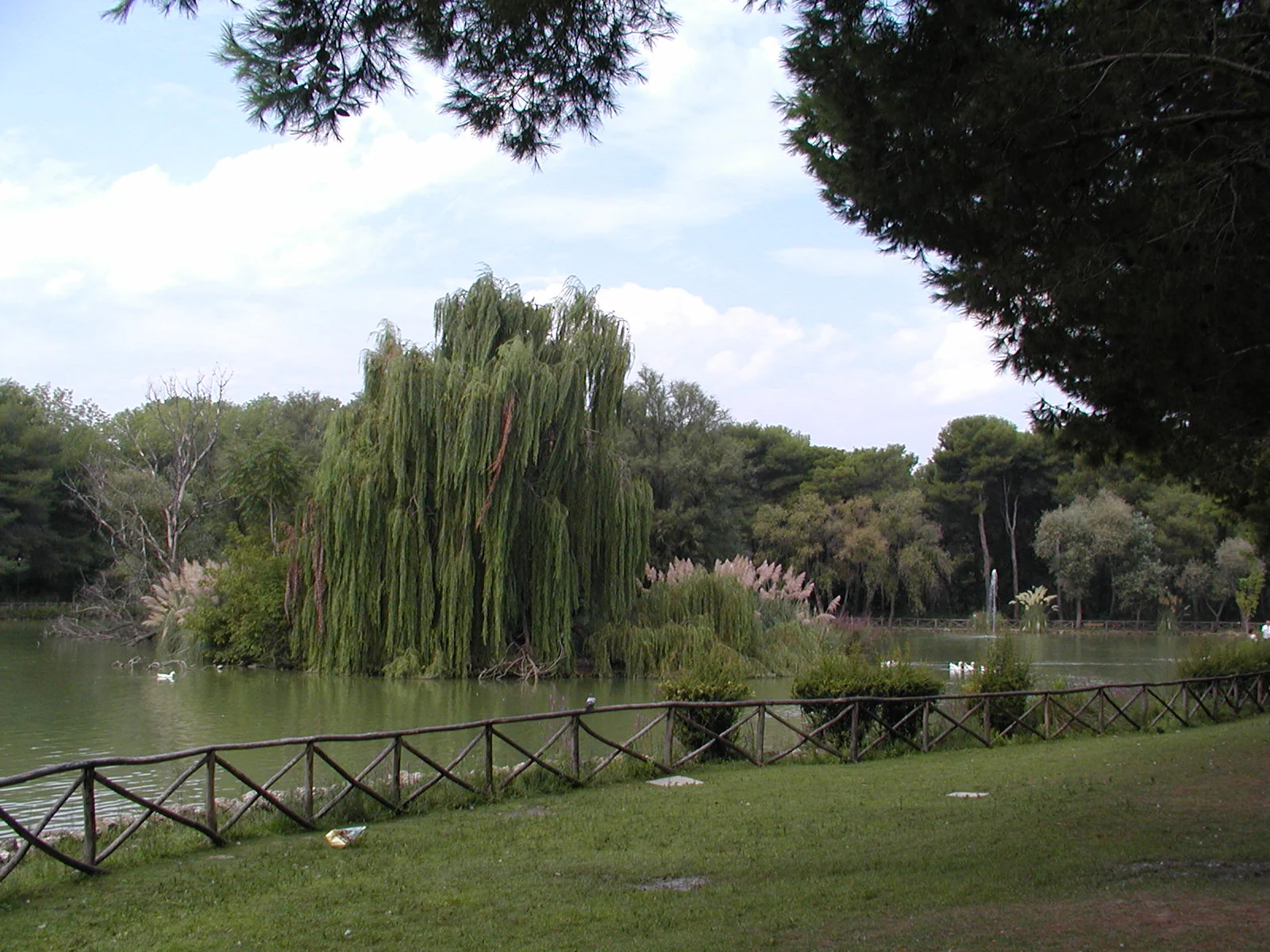
Photo: User:Raboe001 / Wikimedia Commons — CC BY-SA 2.5 · Resized and converted to WebP.
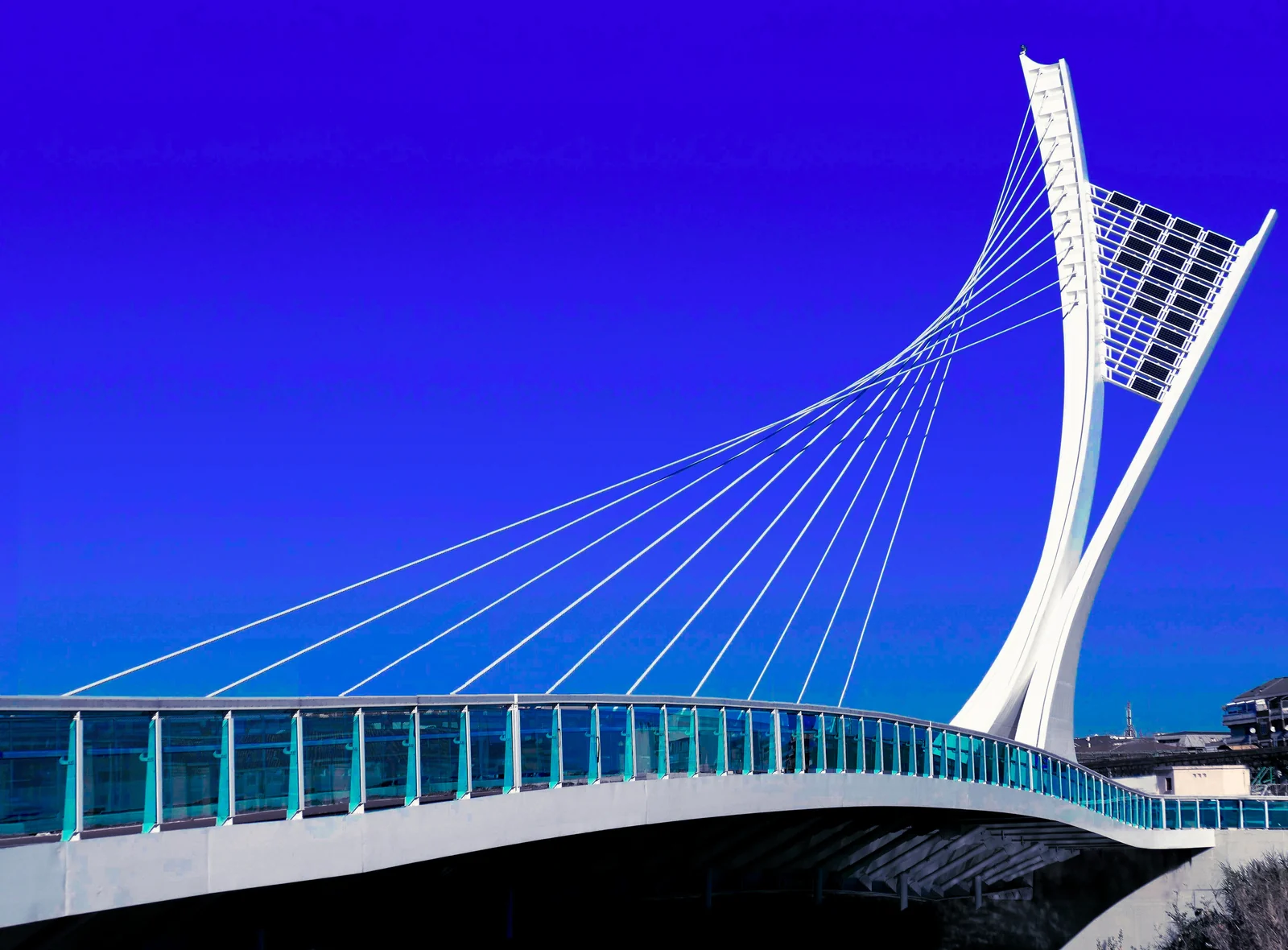
Photo: Tommaso Camplone / Wikimedia Commons — CC BY-SA 4.0 · Resized and converted to WebP.
When to go
Summer is the season of the sea and of the festivals. Pescara Jazz, organised by the Ente Manifestazioni Pescaresi, has brought the greats of jazz to the city for half a century: since 1969 musicians have come here from the early days of jazz, such as Earl Hines and Red Norvo, through to Sun Ra and Cecil Taylor; each year's programme is on the festival's website. At the end of summer the Festival dannunziano celebrates the poet's legacy with shows, music, theatre, literature and talks: in 2025 it ran from 30 August to 7 September.
On 10 October the city celebrates San Cetteo, patron saint of Pescara and of the diocese, with a solemn Mass in the cathedral. Autumn is the season of books and short films: in early November FLA, the Festival di Libri e Altrecose, reached its twenty-fourth edition in 2026, with events at the Polo bibliotecario Aternino too, and at the end of November the Flaiano Prizes hold the international short film festival "Scrittura e immagine" at the Auditorium Petruzzi, now in its 27th edition.
At Christmas the centre comes alive until Epiphany: in the 2025-2026 edition the ice rink was in Piazza della Rinascita, the Christmas market in Piazza Sacro Cuore, and for 6 January the programme announced the Befana arriving from the sea at the marina, one of the city's historic events. The museums are open all year, with different summer and winter hours: it is worth checking them on the official websites before setting off.
Pescara's beach has held the paediatricians' Green Flag, for child-friendly resorts, without a break since 2016: in 2026, 11 beaches in Abruzzo received it. On 10 May 2021 the city also won the Blue Flag, for which it had applied in December 2020. During the bathing season ARTA Abruzzo tests the water and reports the results to the mayors; on the basis of those tests, in 2025 the municipality several times banned swimming for a few days along the stretch in front of via Leopardi.
Jazz in Pescara goes back to before 1950, with the town's Hot Club; in January 1968 the local tourist board announced the first international festival, entrusted to Lucio Fumo. Since then the stage has hosted, among others, Duke Ellington, Miles Davis, Charles Mingus, Ella Fitzgerald and Dizzy Gillespie, and more recently Herbie Hancock, Wynton Marsalis and Pat Metheny. The 2026 edition, the 54th, opened on 12 July at the Auditorium Flaiano and the marina, under the artistic direction of Angelo Valori. The Ente Manifestazioni Pescaresi, which organises it, was founded on 10 January 1950 and also runs PeFest, the Pescara International Arts Festival, with jazz, opera, drama, ballet and circus.
Pescara is a sporting city too. The Rampigna ground hosted the first regional football tournament in 1925 and several finishes of the Giro d'Italia, and the Trofeo Matteotti cycle race was born in 1945. From 1951, with the 1960 Olympics in view, the Italian Olympic Committee gave Pescara the task of building the Stadio Adriatico, to a first design by Luigi Piccinato: here in 1977 Pescara's football club was promoted to Serie A for the first time, and the stadium has hosted the Italian athletics championships and the 16th Mediterranean Games. Today it also bears the name of the Pescara athlete Giovanni Cornacchia. On 17 May 2022 the tenth stage of the Giro d'Italia started from Pescara, bound for Jesi.
Sources: Ente Manifestazioni Pescaresi — Pescara Jazz, festival internazionale · Premi Internazionali Flaiano — sito ufficiale · Comune di Pescara — Festival dannunziano · Arcidiocesi di Pescara-Penne — Solennità di San Cetteo · Fondazione Genti d'Abruzzo — FLA, Festival di Libri e Altrecose 2026 · Comune di Pescara — Pescara d'incanto 2025, gli eventi di Natale · Comune di Pescara: Bandiera Verde 2026 · Comune di Pescara: percorso Bandiera Blu · ARTA Abruzzo: acque di balneazione · Comune di Pescara: acque di balneazione, stagione 2025 · Comune di Pescara: dal 12 luglio la 54ª edizione del Pescara Jazz · Ente Manifestazioni Pescaresi: l'Ente e il Teatro monumento Gabriele D'Annunzio · Fondazione Pescarabruzzo: «Dal Rampigna all'Adriatico», presentazione del volume · Comune di Pescara: Giro d'Italia 2022, tappa Pescara-Jesi
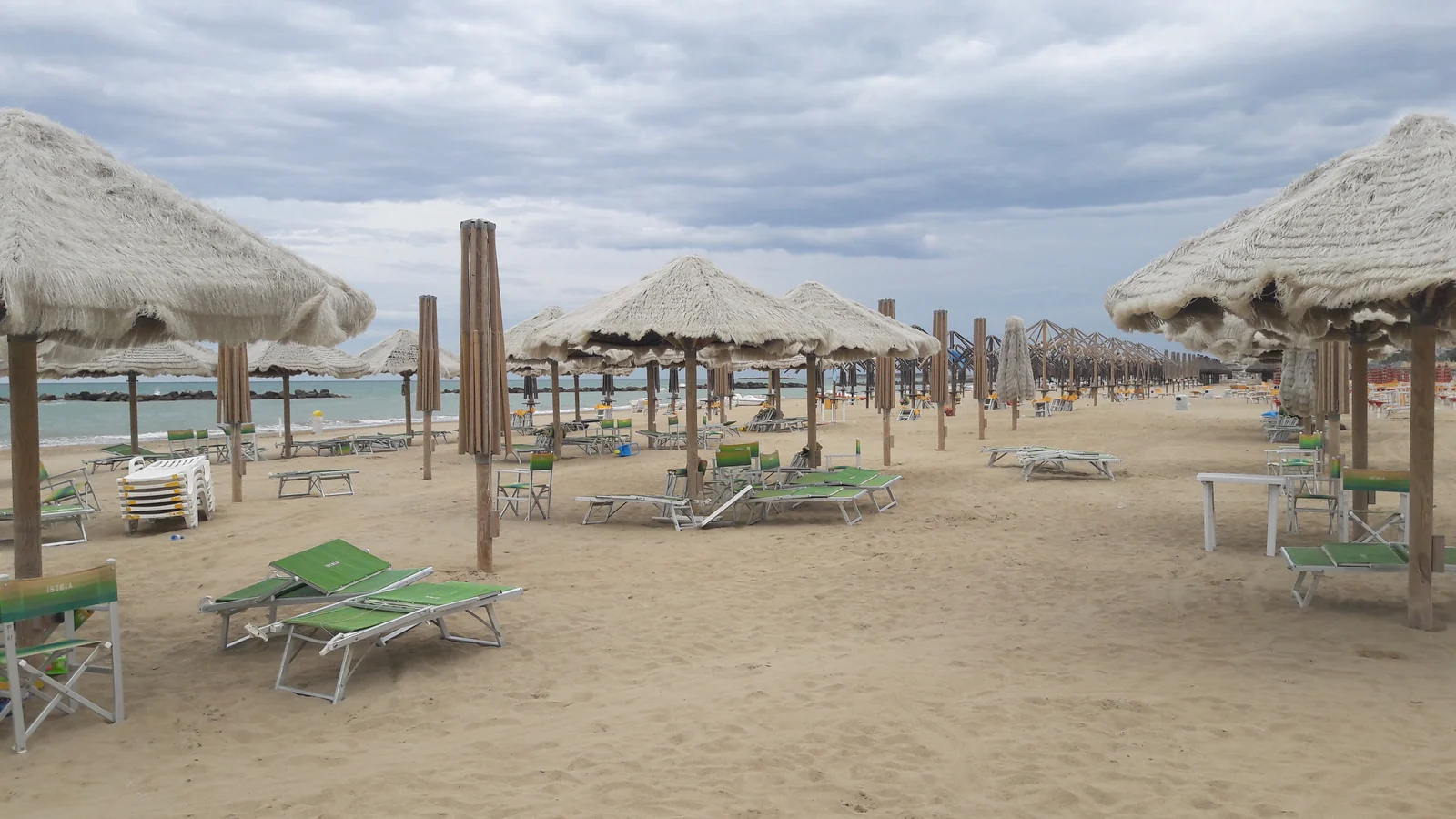
Photo: maury3001 / Wikimedia Commons — CC BY 3.0 · Resized and converted to WebP.
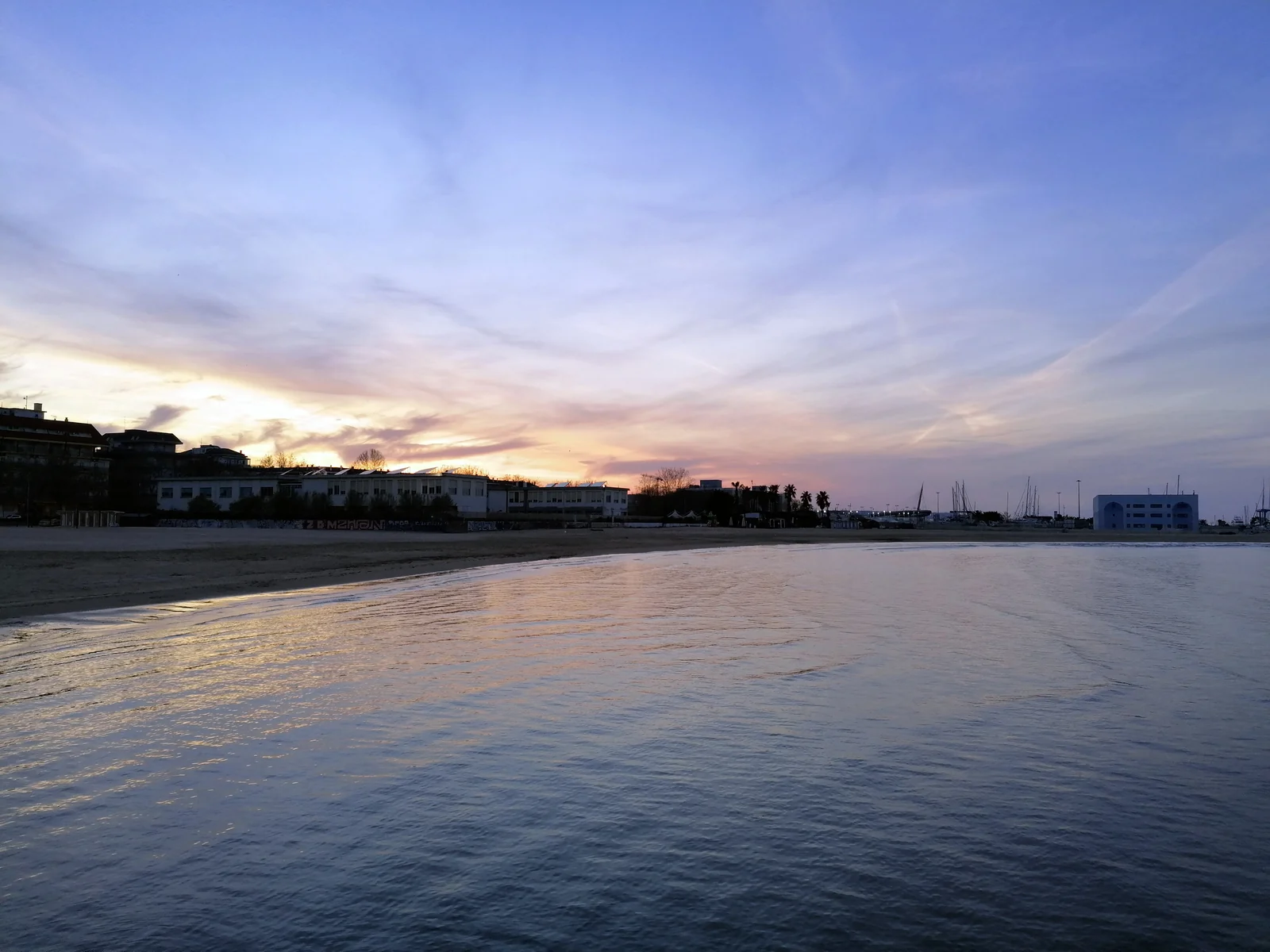
Photo: Horcrux / Wikimedia Commons — CC BY-SA 4.0 · Resized and converted to WebP.
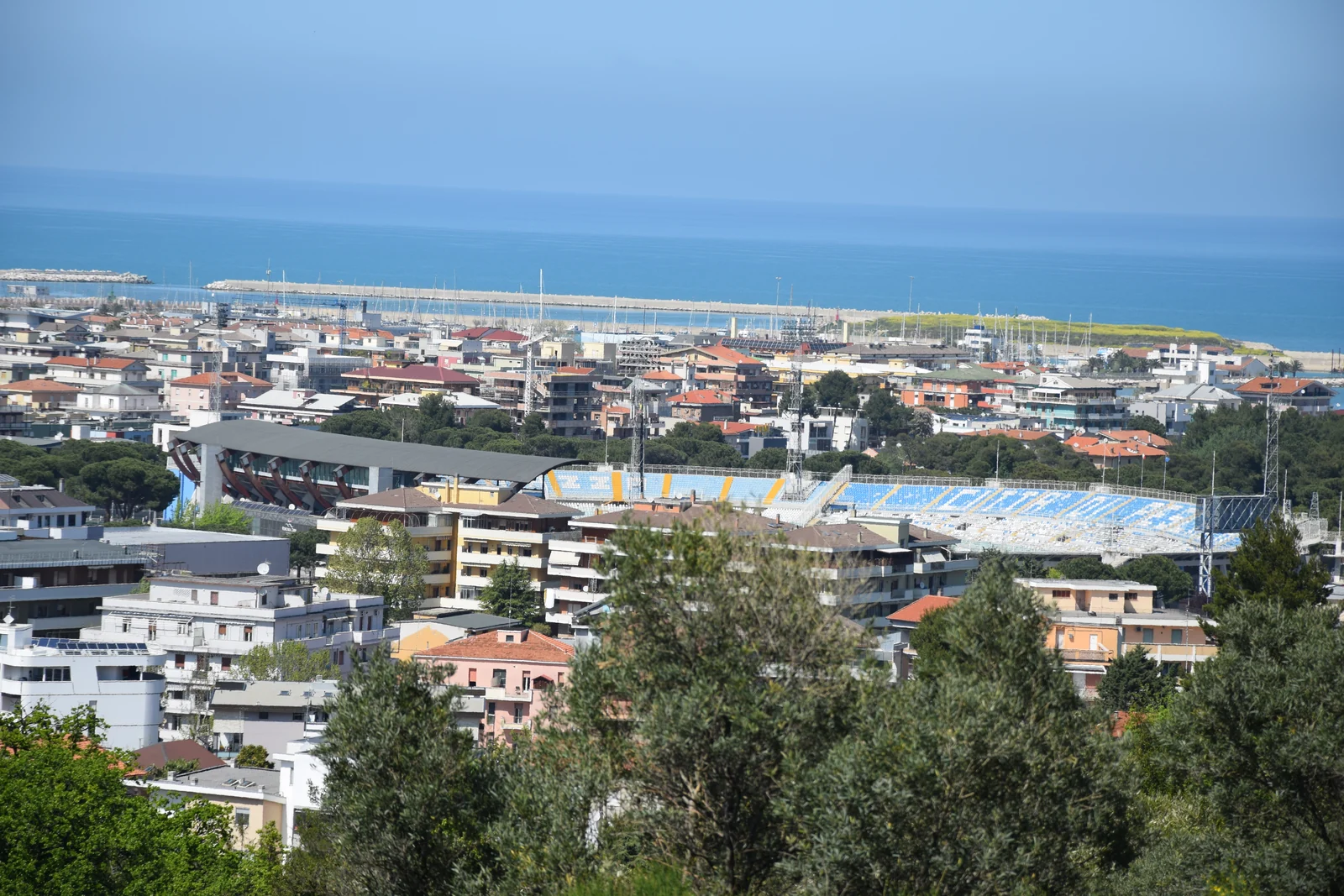
Photo: Sayatek / Wikimedia Commons — CC BY-SA 4.0 · Resized and converted to WebP.
Getting there and around
Abruzzo Airport is in Pescara, on the Via Tiburtina: from the airport the TUA urban lines 8 and 38, one bus every 20 minutes, run to the centre and to Pescara Centrale station. The station is the place to change for buses to the rest of the region: to Chieti there is one every 15 minutes, also calling at the airport, to L'Aquila one every hour, and there are lines to Teramo, Ortona, Vasto, Sulmona and Rome. Pescara Centrale has ten tracks and offers RFI assistance for people with disabilities and reduced mobility, with the Sala Blu of reference in Ancona. By car you arrive on the A14 motorway, Pescara Ovest - Chieti exit, or on the A25 from Rome.
The city is easy to get around on foot and by bicycle, along the riviera and the Ponte del Mare. D'Annunzio's birthplace is in a limited traffic zone: the nearest car park, as the museum points out, is in the riverside area about a hundred metres away, reached from the roundabout of Piazza Unione or from Via Orazio; from the station buses 6, 7, 11 and 13 go there, stopping on Via Conte di Ruvo or Via d'Annunzio.
The official website of the Comune di Pescara, registered in IndicePA, the index of the digital addresses of Italy’s public administrations, is the reference for the town council’s offices, opening hours and news. Its address is listed among the sources of this section.
Since 1 July 2026 the TUA4FLY link between the airport and the Pescara Centrale terminal, in the railway underpass, costs 3 euros and is valid for 90 minutes across the Pescara-Chieti metropolitan area: it is sold in the TuaGO app or on board by card, not cash, and must be activated before boarding. Trenitalia passengers can buy it together with their train ticket through the Airlink service. Taxis from the airport have fixed fares: 20 euros to central Pescara, 25 to the outskirts, 35 to Chieti.
On TUA's city buses, at the fares in force since 1 July 2025, a single ride costs 1.30 euros, the 90-minute ticket 1.40 and the day ticket 3.20; across the Pescara-Chieti metropolitan area the integrated UNICO tickets apply, with the timed BIT ticket at 1.40 euros and the BIG day ticket at 3.60. The V1 La Verde trolleybus links Pescara and Montesilvano on a reserved lane, and you pay on board by tapping a contactless card or phone on the validator.
Entering the limited traffic zone requires an authorisation from the municipality's Mobility Department: the temporary permit needs a 16-euro revenue stamp plus fees of 9.20 euros for one hour, 23.80 for six hours and 29.75 for longer. Parking in the blue bays, run by Pescara Multiservice, can be paid with the free SostaP app. Cyclists will find at Pescara Portanuova station a bike station with badge-controlled guarded storage, CCTV and e-bike charging.
Sources: Aeroporto d'Abruzzo — Trasporti · RFI — Stazione di Pescara Centrale · Comune di Pescara — Ponte del Mare · Ministero della Cultura — Museo casa natale di Gabriele d'Annunzio · Comune di Pescara, sito istituzionale · IndicePA (AgID), Indice dei domicili digitali delle pubbliche amministrazioni: dataset Enti · TUA: TUA4FLY, collegamento fra l'Aeroporto d'Abruzzo e Pescara Centrale · Trenitalia: Pescara Air Link · TUA: tariffe dei servizi urbani, suburbani e interurbani dal 1° luglio 2025 · TUA: filovia La Verde, linea V1 · Comune di Pescara, sportello telematico: permesso temporaneo per la ZTL · Comune di Pescara: SostaP, la app per pagare il parcheggio · Comune di Pescara: velostazione di Pescara Portanuova
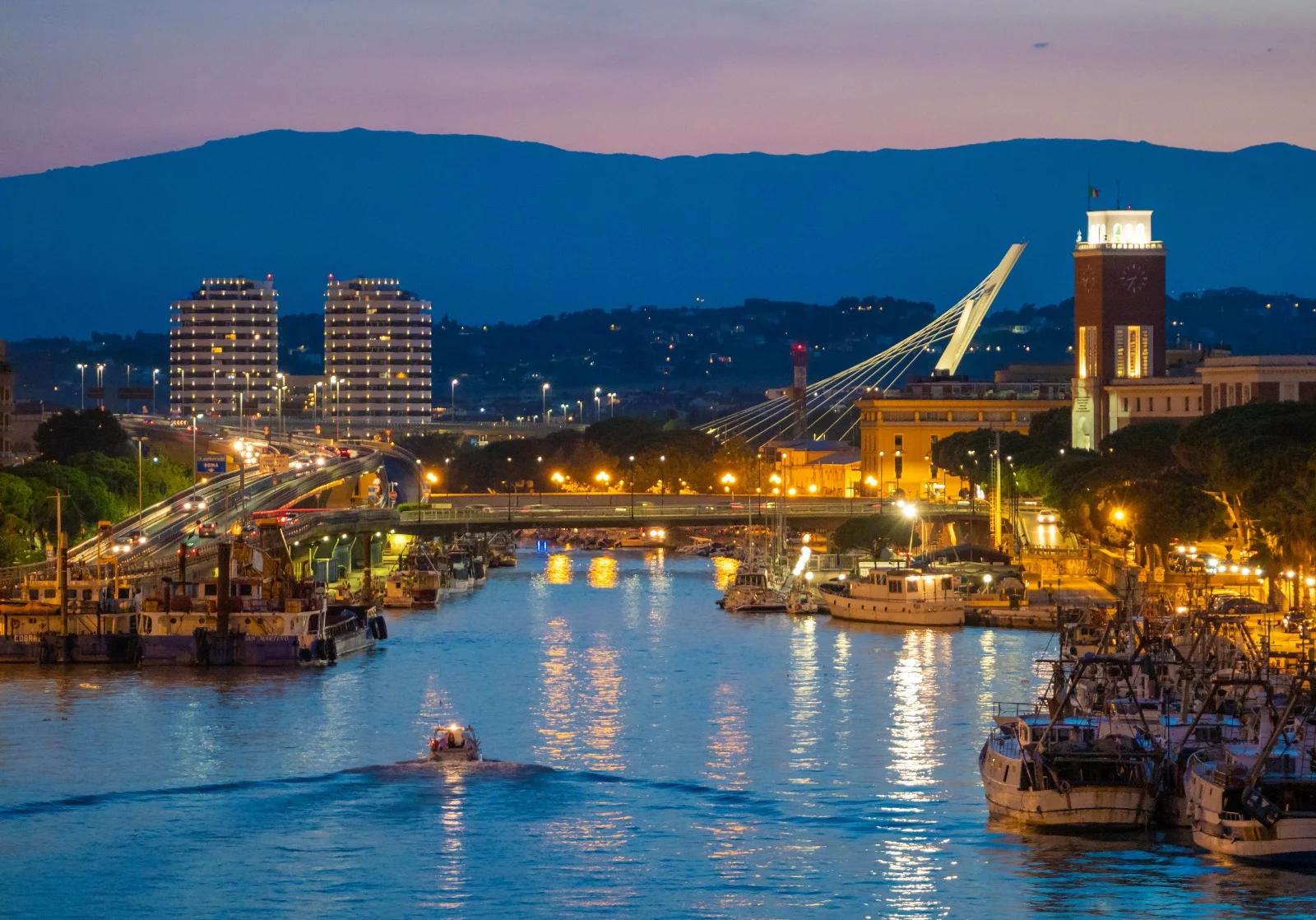
Photo: Visit Abruzzo / Wikimedia Commons — CC BY-SA 2.0 · Resized and converted to WebP.
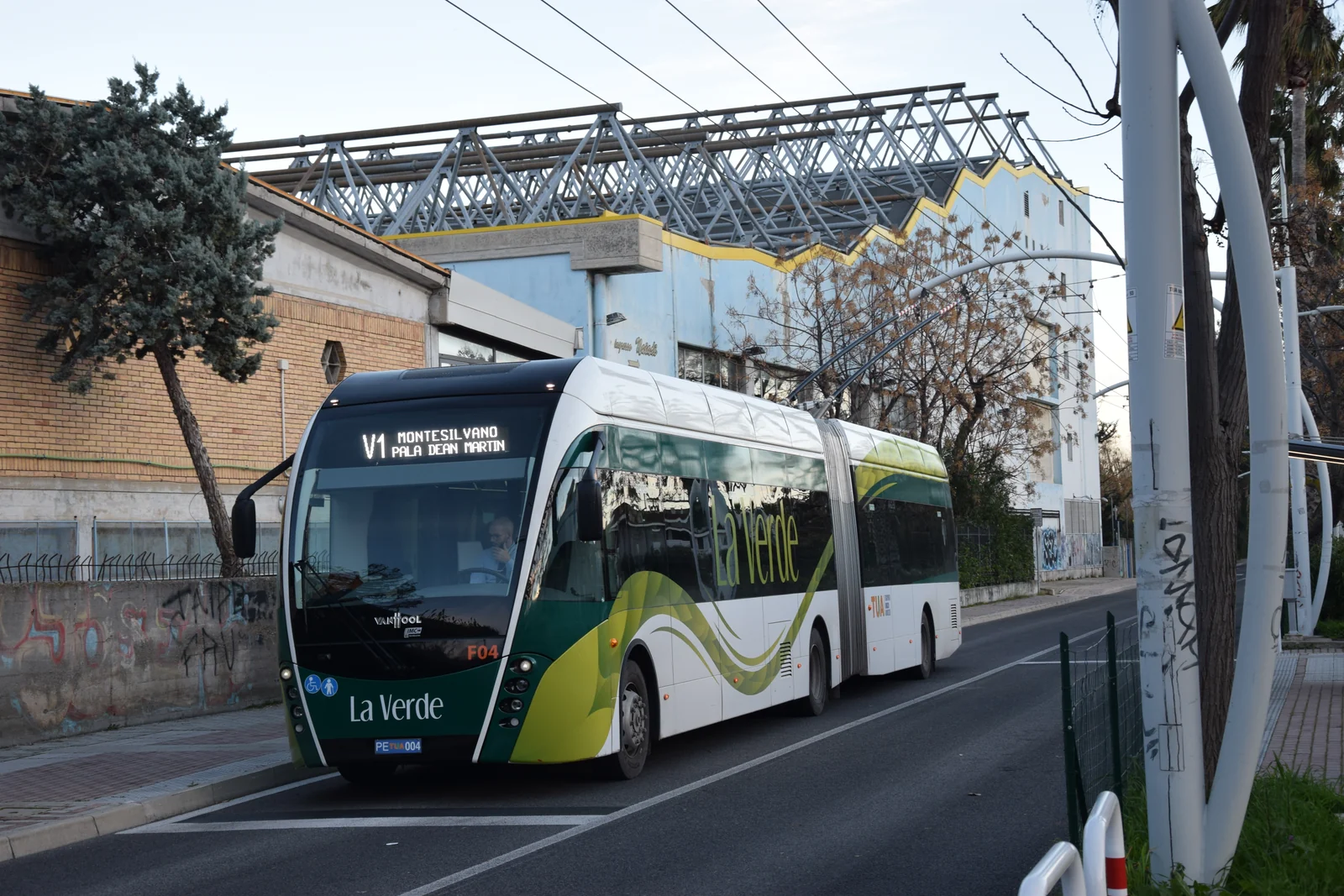
Photo: Sayatek / Wikimedia Commons — CC BY 4.0 · Resized and converted to WebP.
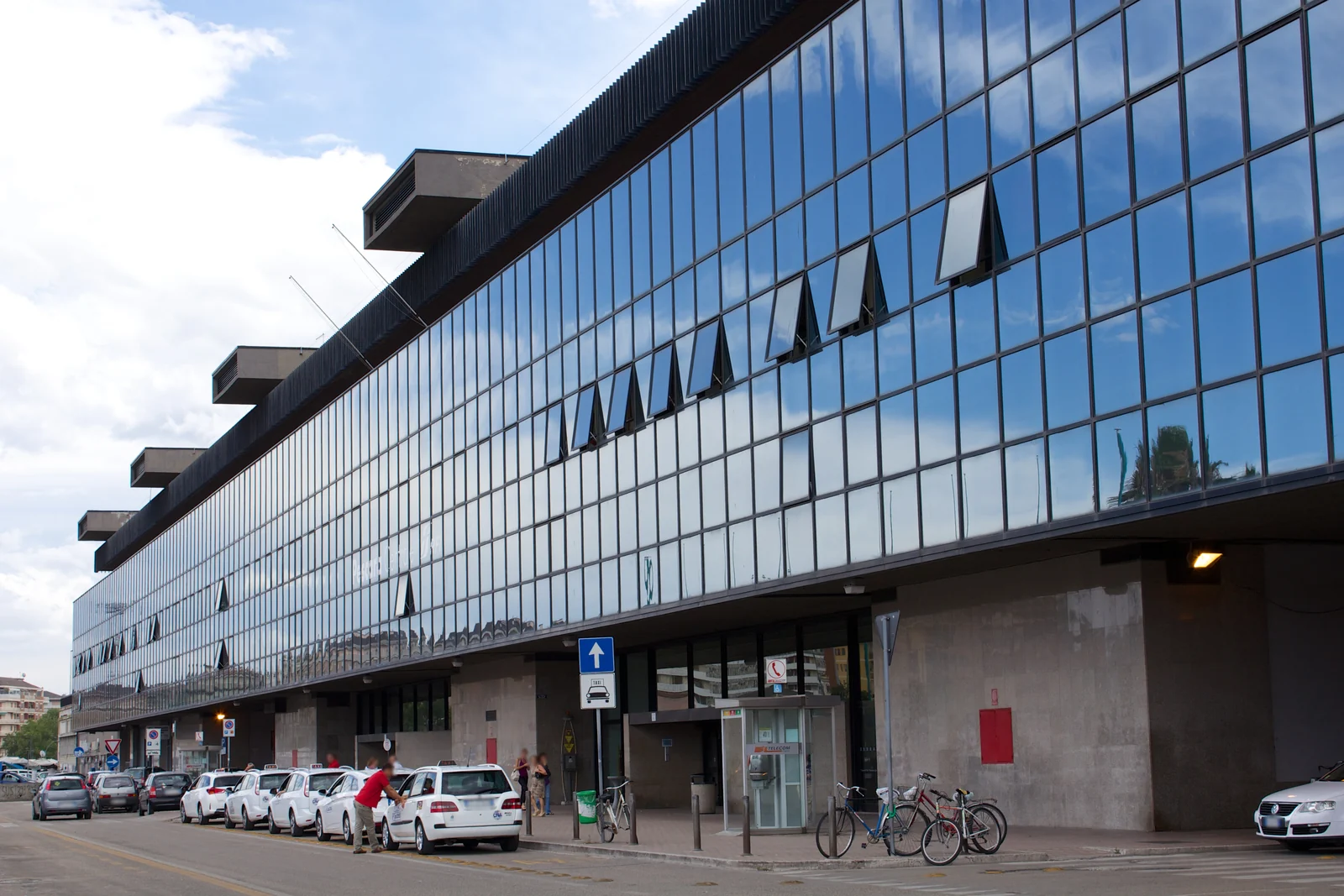
Photo: Incola / Wikimedia Commons — CC BY-SA 4.0 · Resized and converted to WebP.
Tourism
Anyone staying overnight in Pescara who is not a resident, in any kind of accommodation in the city, pays the tourist tax, per person and per night, for up to seven consecutive nights. Exempt, among others, are children until their twelfth birthday, those who have turned seventy, people with disabilities who receive the attendance allowance and one companion for each patient in hospital in the city, who declares it to the host. With the rates set by the council’s executive in April 2025 the tax is 2 euros a night in three- to five-star hotels and in non-hotel accommodation such as B&Bs, holiday homes, guest rooms, farm stays, hostels and campsites, 1.50 euros in two-star hotels and 1 euro in one-star hotels. It is paid to the host, who issues a receipt or shows it on the invoice.
On the beaches the Abruzzo Region’s 2026 beach ordinance applies, which set the bathing season from 23 May to 20 September. In the five-metre strip from the water’s edge you do not stop to sunbathe: it stays free for passage and rescue, and during the season no umbrellas, sunbeds or deckchairs go there and no one smokes. In those months dogs and other pets may be on the shoreline and the free beaches only before 8 am and after 7 pm, while beach establishments that have set up the service admit them. On the beaches there is no camping or sleeping overnight, no fires or stoves, and no litter; on the free beaches umbrellas, sunbeds and chairs are not left after sunset, because they are treated as abandoned waste. Through the beach establishments access to the shoreline is free of charge, but from 9 pm to 5 am the concession beaches may be used only with the operator’s consent.
Sources: Comune di Pescara — Imposta di soggiorno (soggetti, esenzioni, tariffe, obblighi del gestore) · Comune di Pescara — Delibera di Giunta comunale n. 317 del 29 aprile 2025, «Imposta di soggiorno – rimodulazione tariffe», pubblicata dal Dipartimento delle Finanze il 20 maggio 2025 · Regione Abruzzo, Ufficio Demanio marittimo — Ordinanza balneare 2026 (D.D. DPC032/67 dell’11 marzo 2026, rettificata con D.D. DPC032/118 del 21 maggio 2026) · Regione Abruzzo — D.D. DPC032/168 del 14 luglio 2026, modifiche e integrazioni all’Ordinanza balneare 2026 (animali d’affezione in spiaggia)
“Come to Pescara as a guest, not as a tourist: that is how these places truly let you know them.”
Where to stay
For a visit on foot it is best to stay between the station and the sea, around Corso Umberto I and Piazza della Rinascita, which you reach by train and by bus from the airport too; those looking for the old town choose the Corso Manthonè area, a short walk from d'Annunzio's birthplace and the Museo delle Genti d'Abruzzo. The riviera, with its beach clubs and promenade, is the choice for summer; the pine forest area, around the Aurum, is quieter and greener.
In the Ministry of Tourism’s national database of accommodation (BDSR), on 12 October 2026, Pescara had 1,114 establishments with a verified national identification code (CIN): 12 hotel-type establishments, 116 non-hotel establishments and 986 other establishments.
Apulica does not publish paid placements: for an organised stay, with a guide or transfers, you can write using the button at the bottom of the page.
For medical emergencies the city hospital is the Santo Spirito of the Pescara health authority (ASL), which publishes the live status of its emergency department on its website; the ASL switchboard is 085 4251. The municipality publishes the list of the city's pharmacies with their addresses.
Sources: Comune di Pescara — Piazza della Rinascita · Aeroporto d'Abruzzo — Trasporti · Taverna 58, Pescara — sito del ristorante · Ministero della Cultura — Museo casa natale di Gabriele d'Annunzio · Comune di Pescara — Aurum · Ministero del Turismo – Banca Dati Strutture Ricettive (dashboard pubblica) · ASL di Pescara: Ospedale «Santo Spirito» · ASL di Pescara: situazione del Pronto Soccorso · Comune di Pescara: le farmacie
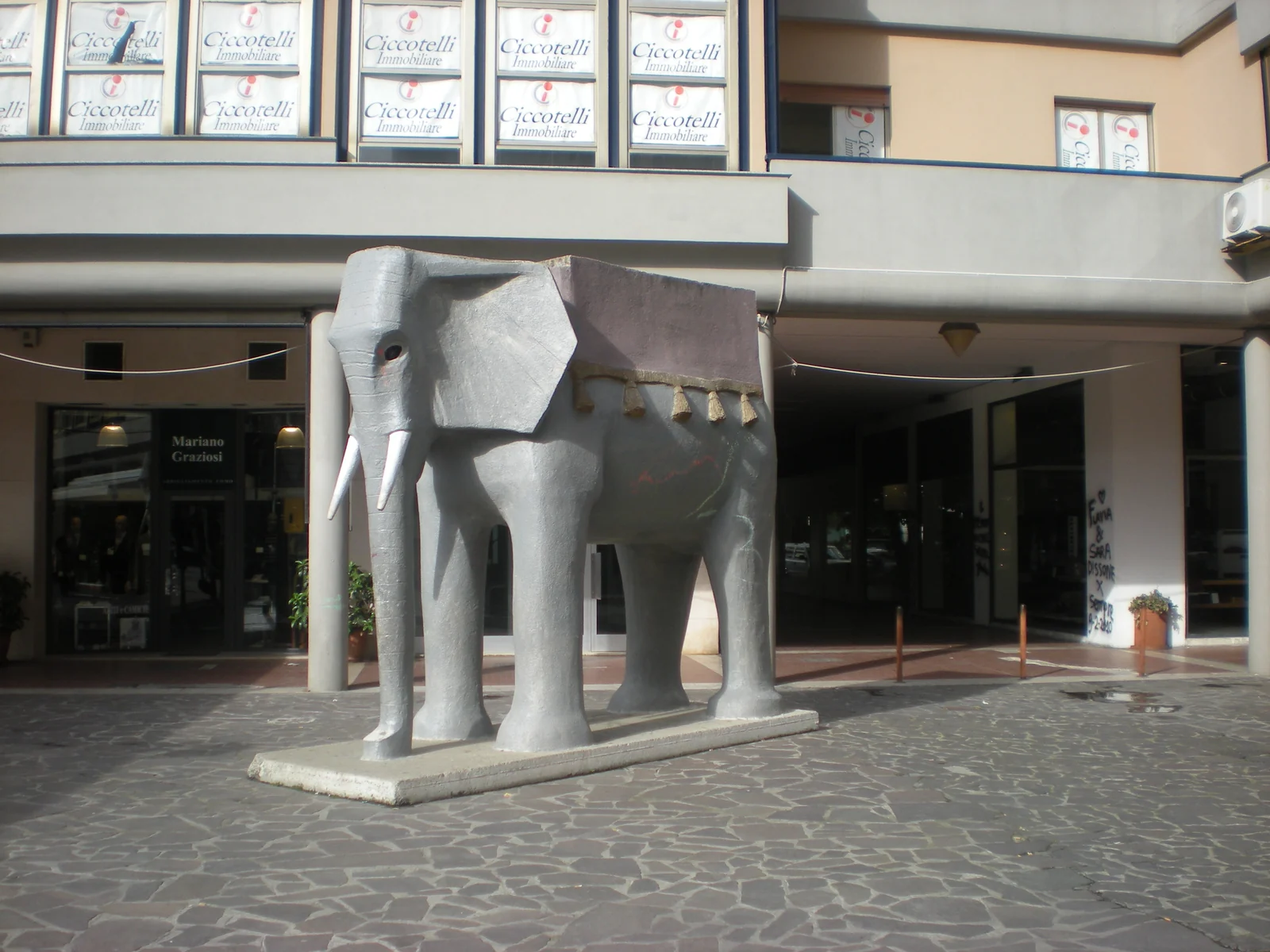
Photo: G&NiO / Wikimedia Commons — CC BY-SA 4.0 · Resized and converted to WebP.
Nearby
Chieti, the valley's other provincial capital, is linked to Pescara by buses every fifteen minutes, calling at the airport and at the "G. d'Annunzio" University in Chieti Scalo; in the 1960s the industrial area of the Pescara valley almost joined the two cities. Along the coast towards Chieti lies Francavilla al Mare, where Antonino Liberi, d'Annunzio's brother-in-law, built Palazzo Sirena, and further on, on the Chieti coast, the Costa dei Trabocchi, with some thirty old wooden fishing machines anchored to the rocks.
Inland the hills rise to the villages of the Pescara area: Loreto Aprutino and Spoltore, with two osterie honoured by Slow Food, Penne for trippa alla pennese, Farindola for its pecorino made with pig's rennet. Higher up are the mountains of the Apennines, seen beyond the city from the Ponte del Mare: the Majella National Park, recommended by the Ministry of Tourism's portal for hikes and walks, and the Gran Sasso.
Sources: Aeroporto d'Abruzzo — Trasporti · Treccani, Enciclopedia on line — Pescara · Comune di Pescara — Aurum, la storia · Italia.it (Ministero del Turismo) — In Abruzzo, lungo la Costa dei Trabocchi · Slow Food — Tutte le Chiocciole di Osterie d'Italia 2026, regione per regione · Italia.it (Ministero del Turismo) — I prodotti e i piatti tipici dell'Abruzzo · Italia.it (Ministero del Turismo) — Storia dei maccheroni alla chitarra e altre meraviglie dell'Abruzzo a tavola · Comune di Pescara — Ponte del Mare · Italia.it (Ministero del Turismo) — Pescara
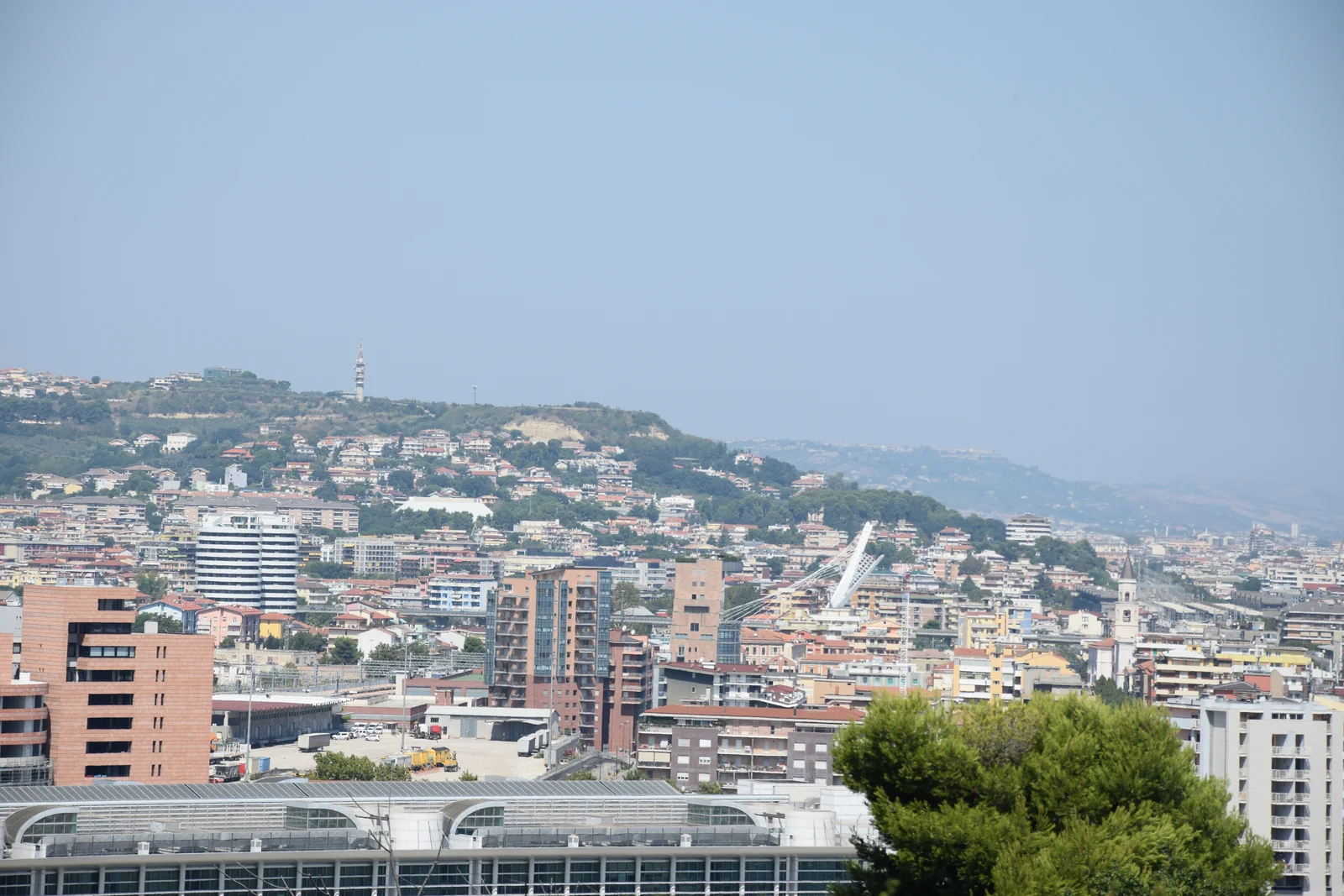
Photo: Sayatek / Wikimedia Commons — CC BY-SA 4.0 · Resized and converted to WebP.
Where to stay
In the municipality of Pescara the national database of the Ministry of Tourism lists 1114 accommodation businesses with a verified CIN code: 12 hotels, 116 other licensed accommodation and 986 other types such as B&Bs and private rentals.
Ask Apulica for a stay in Pescara We reply shortly, within a few hours at most, with a proposal for you to consider.
Sources: Ministero del Turismo – Banca Dati Strutture Ricettive (dashboard pubblica), 2026-10-12
YOUR JOURNEY
How to shape a journey here
We can organise a day in Pescara with a guide, from d'Annunzio's house to the museums and the Ponte del Mare, or use the city as a base for Chieti, the Costa dei Trabocchi and the Majella, with transfers from the airport. For a trip, a guide or a transfer you can write to Apulica with the button below.
Plan your tripKeep exploring
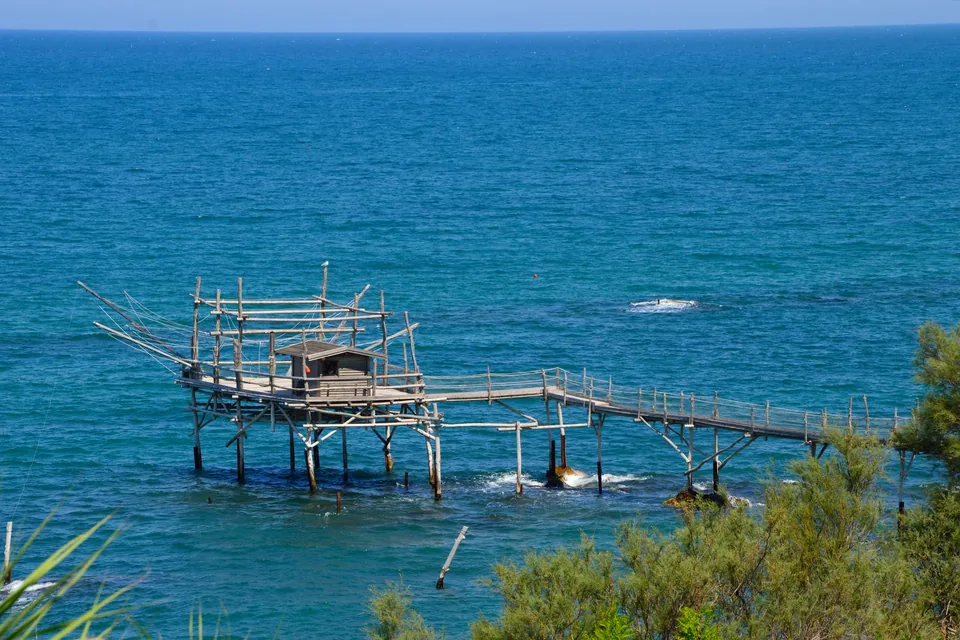
Trabocchi Coast
The Chieti coastline between Ortona and Vasto, with some thirty wooden trabocchi and the hermitage where D’Annunzio stayed.
Read the guide →Photo: Francesca Piersanti / Wikimedia Commons — CC BY-SA 4.0 · Resized and converted to WebP.

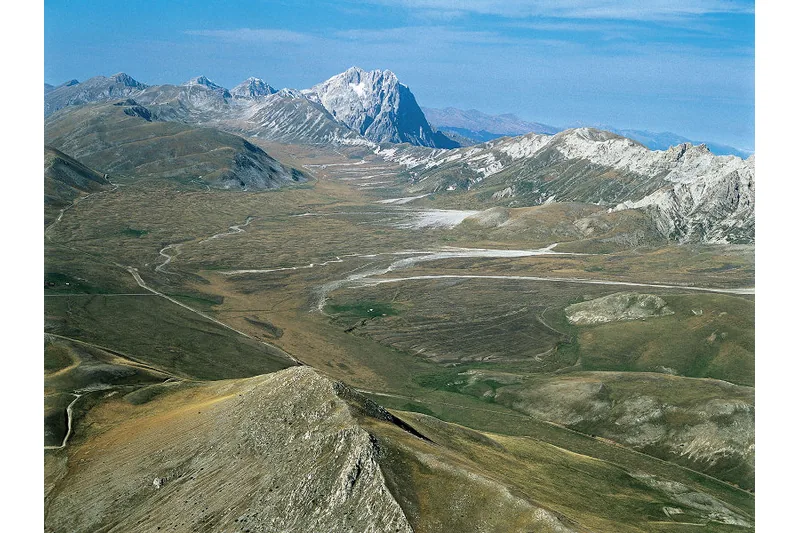
Gran Sasso and Monti della Laga National Park
The park of Corno Grande and Campo Imperatore: three mountain groups, 44 municipalities, stone villages, Laga forests and the food of transhumance.
Read the guide →Photo: Ente Parco Nazionale del Gran Sasso e Monti della Laga · Resized and converted to WebP.
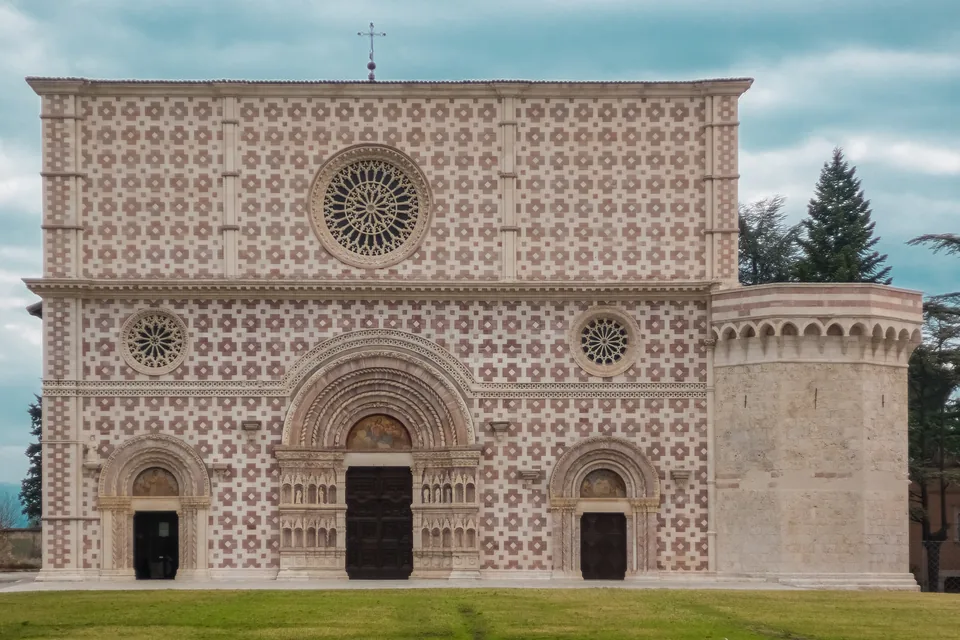
L’Aquila
A capital between the Gran Sasso and the Monti della Laga, with the UNESCO-listed Celestinian Forgiveness and reconstruction still under way.
Read the guide →Photo: Verdenex84 / Wikimedia Commons — CC BY-SA 4.0 · Resized and converted to WebP.

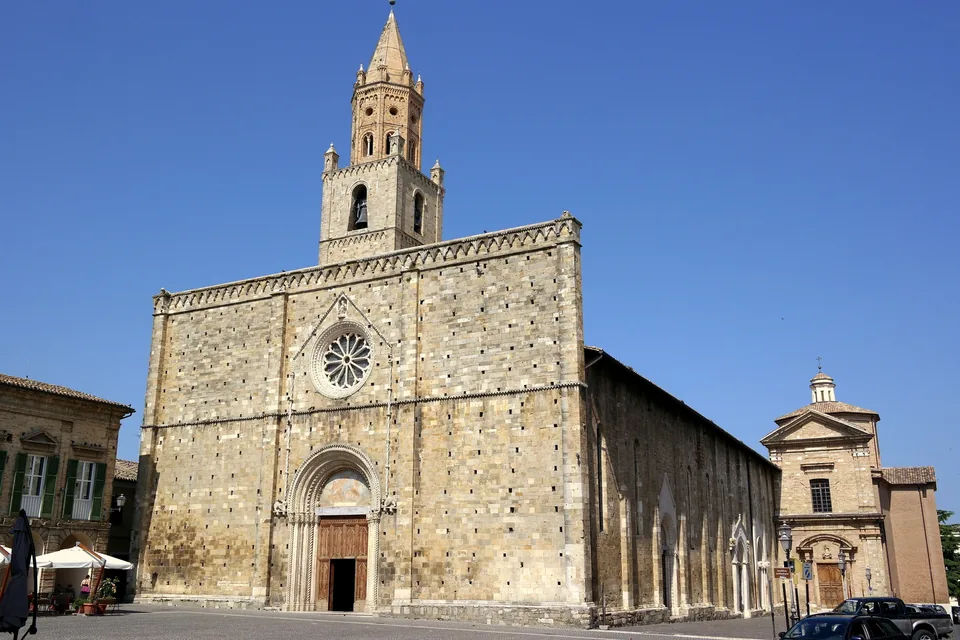
Atri
Atri (TE), Abruzzo: 9,846 residents, 92.18 km². The official facts of the municipality, its town council website and its registered accommodation. The cathedral of Santa Maria Assunta with Andrea De Litio’s frescoes and its Holy Door, the ducal palace of the Acquaviva, the Teatro Comunale, the Roman cisterns, the badlands of the WWF Oasis, liquorice and the night of the Faugni.
Read the guide →Photo: Luca Aless / Wikimedia Commons — CC BY-SA 4.0 · Resized and converted to WebP.

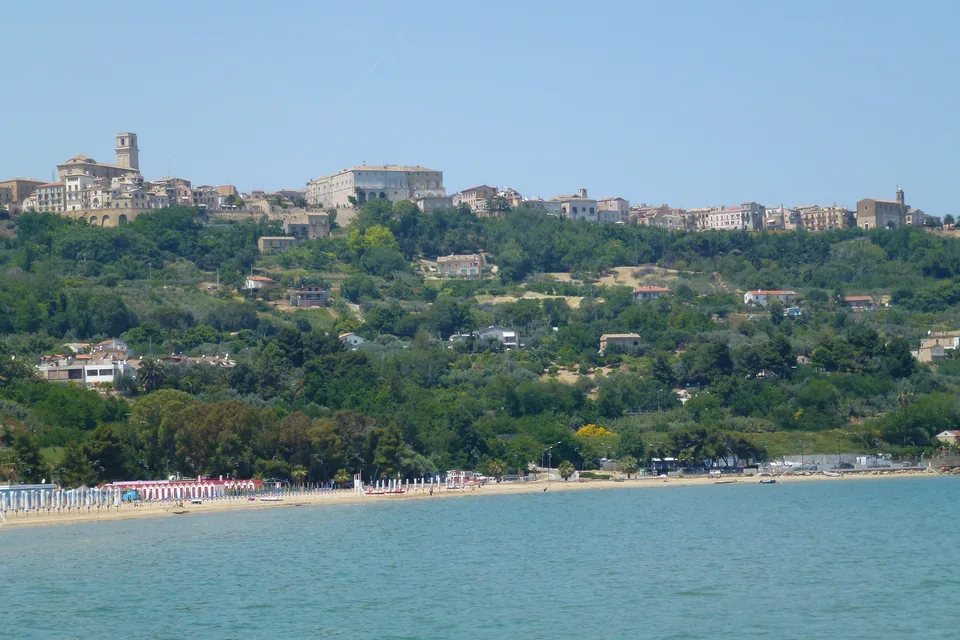
Vasto
Vasto (CH), Abruzzo: 40,861 residents, 71.37 km². The official facts of the municipality, its town council website and its registered accommodation. Palazzo d’Avalos with the civic museums and the Neapolitan garden, the Caldoresco Castle, the Roman baths, Vasto Marina and the Punta Aderci nature reserve, the “Colline Teatine” PDO olive oil with the “Vastese” mention and the feast of San Michele.
Read the guide →Photo: maury3001 / Wikimedia Commons — CC BY 3.0 · Resized and converted to WebP.
